

• Regeln für den Video-Bereich:

    In den Börsenbereich gehören nur Angebote die bereits den Allgemeinen Regeln entsprechen.

    Einteilung

    - Folgende Formate gehören in die angegeben Bereiche:
    - Filme: Encodierte Filme von BluRay, DVD, R5, TV, Screener sowie Telesyncs im Format DivX, XviD und x264.
    - DVD: Filme im Format DVD5, DVD9 und HD2DVD.
    - HD: Encodierte Filme mit der Auflösung 720p oder darüber von BluRay, DVD, R5, TV, Screener sowie Telesyncs im Format x264.
    - 3D: Encodierte Filme von BluRay, die in einem 3D Format vorliegen. Dies gilt auch für Dokus, Animation usw.
    - Serien: Cartoon/Zeichentrick, Anime, Tutorials, Dokumentationen, Konzerte/Musik, Sonstiges sind demnach in die entsprechenden Bereiche einzuordnen, auch wenn sie beispielsweise im High Definition-Format oder als DVD5/DVD9/HD2DVD vorliegen. Ausnahme 3D.
    - Bereich Englisch: Englische Releases gehören immer in diesen Bereich.
    - Bereich Talk: Der Bereich, in dem über die Releases diskutiert werden kann, darf, soll und erwünscht ist.


    Angebot/Beitrag erstellen

    - Ein Beitrag darf erst dann erstellt werden, wenn der Upload bei mindestens einem OCH komplett ist. Platzhalter sind untersagt.
    - Bei einem Scenerelease hat der Threadtitel ausschließlich aus dem originalen, unveränderten Releasenamen zu bestehen. Es dürfen keine Veränderungen wie z.B. Sterne, kleine Buchstaben o.ä. vorgenommen werden. Ausnahme Serienbörse:
    - Bei einem Sammelthread für eine Staffel entfällt aus dem Releasename natürlich der Name der Folge. Beispiel: Die Simpsons S21 German DVDRip XviD - ITG
    - Dementsprechend sind also u.a. verboten: Erweiterungen wie "Tipp", "empfehlenswert", "only", "reup", usw. / jegliche andere Zusatzinformation oder Ergänzung, welche nicht in obiger Beschreibung zu finden ist.

    Aufbau des Angebots und Threadtitel

    Der Titel nach folgendem Muster erstellt zu werden. <Name> [3D] [Staffel] [German] <Jahr> <Tonspur> [DL] [Auflösung] <Quelle> <Codec> - <Group>
    Beispiel: The Dark Knight German 2008 AC3 DVDRip XviD - iND
    Beispiel: The Dark Knight 2008 DTS DL BDRip x264 - iND
    Beispiel: The Dark Knight 2008 AC3 DL BDRip XviD - iND
    Beispiel: The Dark Knight German 2008 AC3 720p BluRay x264 iND
    Beispiel: The Dark Knight 2008 DTS DL 1080p BluRay x264 iND
    Beispiel: Die Simpsons S01 German AC3 DVDRip XviD iND
    Beispiel: Die Simpsons S20 German AC3 720p BluRay x264 iND
    Beispiel: Sword Art Online II Ger Sub 2014 AAC 1080p WEBRip x264 - peppermint
    Entsprechend sind also u.a. verboten: Sonderzeichen wie Klammern, Sterne, Ausrufezeichen, Unterstriche, Anführungszeichen / Erweiterungen wie "Tipp", "empfehlenswert", "only", "reup", usw. / jegliche andere Zusatzinformation oder Ergänzung, welche nicht in obiger Beschreibung zu finden ist
    Ausnahmen hiervon können in den Bereichen geregelt sein.

    Die Beiträge sollen wie folgt aufgebaut werden:
    Überschrift entspricht dem Threadtitel
    Cover
    kurze Inhaltsbeschreibung
    Format, Größe, Dauer sind gut lesbar für Downloader außerhalb des Spoilers zu vermerken
    Nfo sind immer Anzugeben und selbige immer im Spoiler in Textform.
    Sind keine Nfo vorhanden z.B. Eigenpublikationen, sind im Spoiler folgende Dateiinformationen zusätzlich anzugeben :
    Quelle
    Video (Auflösung und Bitrate)
    Ton (Sprache, Format und Bitrate der einzelnen Spuren)
    Untertitel (sofern vorhanden)
    Hosterangabe in Textform außerhalb eines Spoiler mit allen enthaltenen Hostern.
    Bei SD kann auf diese zusätzlichen Dateiinformationen verzichtet werden.

    Alle benötigten Passwörter sind, sofern vorhanden, in Textform im Angebot anzugeben.
    Spoiler im Spoiler mit Kommentaren :"Schon Bedankt?" sind unerwünscht.


    Releases

    - Sind Retail-Release verfügbar, sind alle anderen Variationen untersagt. Ausnahmen: Alle deutschen Retail-Release sind CUT, in diesem Fall sind dubbed UNCUT-Release zulässig.
    - Im Serien-Bereich gilt speziell: Wenn ein Retail vor Abschluss einer laufenden Staffel erscheint, darf diese Staffel noch zu Ende gebracht werden.62
    - Gleiche Releases sind unbedingt zusammenzufassen. Das bedeutet, es ist zwingend erforderlich, vor dem Erstellen eines Themas per Suchfunktion zu überprüfen, ob bereits ein Beitrag mit demselben Release besteht. Ist dies der Fall, ist der bereits vorhandene Beitrag zu verwenden.
    - P2P und Scene Releases dürfen nicht verändert oder gar unter einem iND Tag eingestellt werden.


    Support, Diskussionen und Suche

    - Supportanfragen sind entweder per PN oder im Bereich Talk zu stellen.
    - Diskussionen und Bewertungen sind im Talk Bereich zu führen. Fragen an die Uploader haben ausschließlich via PN zu erfolgen, und sind in den Angeboten untersagt.
    - Anfragen zu Upload-Wünschen sind nur im Bereich Suche Video erlaubt. Antworten dürfen nur auf Angebote von MyBoerse.bz verlinkt werden.


    Verbote

    - Untersagt sind mehrere Formate in einem einzigen Angebotsthread, wie beispielsweise das gleichzeitige Anbieten von DivX/XviD, 720p und 1080p in einem Thread. Pro Format, Release und Auflösung ist ein eigener Thread zu eröffnen.
    - Grundsätzlich ebenso verboten sind Dupes. Uploader haben sich an geeigneter Stelle darüber zu informieren, ob es sich bei einem Release um ein Dupe handelt.
    - Gefakte, nur teilweise lauffähige oder unvollständige Angebote sind untersagt. Dies gilt auch für eigene Publikationen, die augenscheinlich nicht selbst von z.B. einer DVD gerippt wurden. Laufende Serien, bei denen noch nicht alle Folgen verfügbar sind, dürfen erstellt und regelmäßig geupdatet werden.
    - Untersagt sind Angebote, welche nur und ausschließlich in einer anderen Sprache als deutsch oder englisch vorliegen. Ausnahmen sind VORHER mit den Moderatoren zu klären.


    Verstoß gegen die Regeln

    - Angebote oder Beiträge, die gegen die Forenregeln verstoßen, sind über den "Melden"-Button im Beitrag zu melden.
  • Bitte registriere dich zunächst um Beiträge zu verfassen und externe Links aufzurufen.

*** Bestes IPTV *** bester Preis *** gratis Test ***


Hashicorp Terraform - The Ultimate Beginner'S Guide With Labs

babymore87

MyBoerse.bz Pro Member

761afc7b0f65a16382c66a1e8ddf008c.avif

Free Download Hashicorp Terraform - The Ultimate Beginner'S Guide With Labs
Published: 3/2025
MP4 | Video: h264, 1920x1080 | Audio: AAC, 44.1 KHz
Language: English | Size: 5.64 GB | Duration: 9h 54m
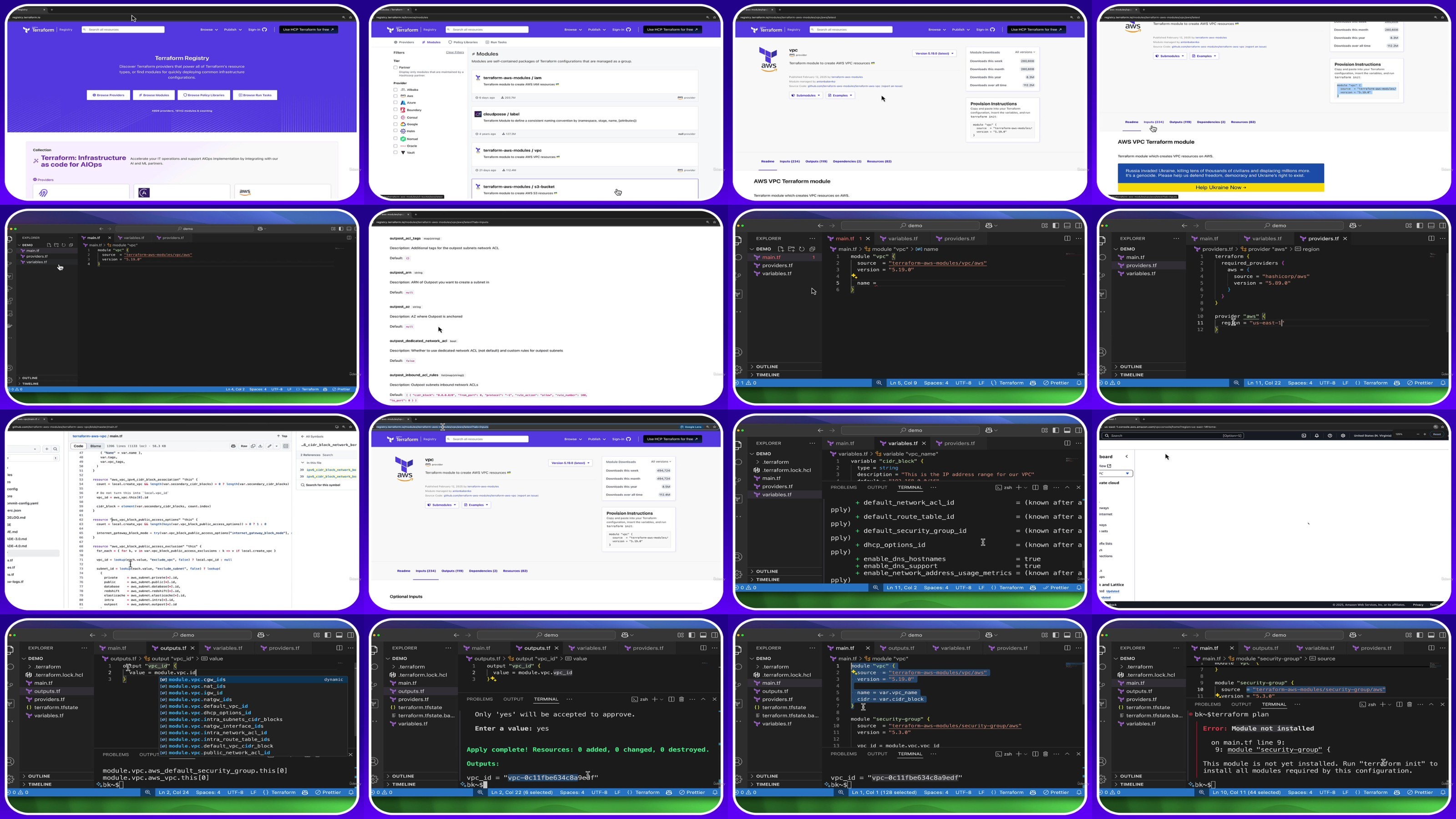
Learn Terraform and OpenTofu - Build, Automate, and Scale Infrastructure with Hands-On Labs for AWS, Azure, and GitHub

What you'll learn
Students will learn installation, provider setup, and CLI commands to manage Terraform configurations
Build by a HASHICORP AMBASSADOR and PRINCIPAL CONSULTANT with over 10 years experience working with HashiCorp products.
Students will be introduced to IaC principles and understand how to define and manage infrastructure with Terraform.
Learn how to build reusable code and refactor existing code using locals and DRY practices.
Students will learn from a HASHICORP AUTHORIZED INSTRUCTOR and EXAM CONTRIBUTOR.
Scale and Build infrastructure using Terraform to automate workflows with a focus on repeatability.
Requirements
Basic computer and command line skills and familiarity with a text editor or IDE
A general understanding of IT infrastructure concepts and cloud providers.
No prior Terraform or IaC experience required - I'll teach ALL in this course!
Access to an AWS, Azure, or GitHub account to go through the included hands-on labs in the course.
Description
Unlock the power of Terraform and OpenTofu to automate, manage, and scale AWS, Azure, and GitHub resources like a pro! This course provides actionable, hands-on experience in Infrastructure as Code (IaC) using HCL-the language that powers Terraform. By the end of this course, you'll confidently create reusable, modular infrastructure with Terraform and OpenTofu, building your skills through practical labs and real-world demos that mirror on-the-job challenges. If you're looking for a comprehensive, expertly taught course to jumpstart your IaC journey, this is it!This course includes access to hands-on labs to gain experience as you go through the course. Each lab is offered on three different platforms - AWS, Azure, and GitHub - so you can choose your own path based on your skillset and comfortability.This course includes tons of information, including:Introduction to Terraform and OpenTofu - Overview of tools, benefits of IaC, and course objectivesSetting Up Your Environment - Installing Terraform and OpenTofu, configuring AWS and other providersUnderstanding HCL (HashiCorp Configuration Language) - Syntax, structure, and key concepts for writing IaCCore Terraform Concepts - Providers, resources, data sources, variables, and outputsState Management - Understanding Terraform state, backends, and state management best practicesCreating Reusable Infrastructure with Modules - Building and using reusable modules for scalable codeProvisioners and Dependencies - Configuring resources using provisionersReal-World Demos and Hands-On Labs - Exercises that simulate real-world infrastructure challenges and solutions.**What is Terraform?**Terraform is an open-source tool by HashiCorp that enables you to define and provision infrastructure as code (IaC) across a wide range of cloud providers, including AWS, Azure, and Google Cloud. Using its declarative language, HCL (HashiCorp Configuration Language), Terraform allows you to create, modify, and version infrastructure safely and efficiently. By automating the setup and management of cloud resources, Terraform helps teams scale and manage complex environments, reduce manual work, and ensure consistency across deployments. It's a powerful solution for anyone looking to streamline cloud infrastructure management and embrace the principles of IaC.**About the Instructor**With over 7 years of HashiCorp consulting, deep involvement in the HashiCorp community, and contributions to the official Terraform certification exams, I bring unmatched industry expertise to guide you every step of the way. I've been teaching HashiCorp solutions for over 5 years and have an instructor rating of 4.7 with 150,000+ enrollments around the world.
Overview
Section 1: Introduction
Lecture 1 Course Introduction
Lecture 2 Udemy Course Ratings & Reviews
Lecture 3 Introduction to Terraform
Lecture 4 Core Components and Benefits of Terraform
Lecture 5 Learn the Basics of HashiCorp Configuration Language (HCL)
Lecture 6 Introduction to OpenTofu
Lecture 7 How to Use OpenTofu in This Course
Section 2: Preparing Your Environment
Lecture 8 Section Intro - Preparing Your Environment
Lecture 9 Installing Terraform on MacOS and Linux
Lecture 10 Installing Terraform on Windows
Lecture 11 Installing Terraform Auto-Complete
Lecture 12 Installing OpenTofu on Your Local Machine
Lecture 13 Installing Microsoft Visual Studio Code (IDE)
Lecture 14 Setting Up Credentials for Terraform and OpenTofu - AWS
Lecture 15 Setting Up Credentials for Terraform and OpenTofu - Azure
Lecture 16 Setting Up Credentials for Terraform and OpenTofu - GitHub
Section 3: Terraform File Structure and Organization
Lecture 17 Terraform File Structure and Organization
Section 4: Understanding Terraform State
Lecture 18 Section Intro - Terraform State
Lecture 19 Introduction to Terraform State
Lecture 20 Where Can I Store Terraform State?
Section 5: Terraform Workflow
Lecture 21 Section Intro - Terraform Workflow
Lecture 22 Terraform Init
Lecture 23 Terraform Plan
Lecture 24 Terraform Apply
Lecture 25 Terraform Destroy
Section 6: Terraform CLI
Lecture 26 Section Intro - Terraform CLI
Lecture 27 Introduction to the Terraform CLI
Lecture 28 Demo - Terraform CLI
Lecture 29 Making the Most of the Terraform CLI
Lecture 30 Demo - Making the Most of the Terraform CLI
Section 7: Terraform Block Types
Lecture 31 Section Intro - Terraform Block Types
Lecture 32 Introduction to Terraform Block Types
Lecture 33 Provider Block
Lecture 34 Resource Block
Lecture 35 Data Block
Lecture 36 Variable Block
Lecture 37 Variable Block - Types of Variables
Lecture 38 Variable Block - Assigning Values to Variables
Lecture 39 Output Block
Lecture 40 Terraform Block
Lecture 41 Module Block
Lecture 42 Import Block
Section 8: Writing Your First Terraform Configurations
Lecture 43 Section Intro - Writing Your First Terraform Configurations
Lecture 44 Hands-On Lab # 1 - Getting Started with Terraform Configuration
Lecture 45 Hands-On Lab # 2 - Creating Your First Resource with Terraform
Lecture 46 Hands-On Lab # 3 - Working with Variables and Outputs
Lecture 47 Hands-On Lab # 4 - Managing Multiple Resources and Dependencies
Lecture 48 Hands-On Lab # 5 - Working with State, Data Sources, and CLI Commands
Section 9: Using Terraform Documentation
Lecture 49 Learn How to Use Terraform Documentation
Section 10: Making Code Reusable
Lecture 50 Section Intro - Making Code Reusable
Lecture 51 The "Why" Behind Reusability
Lecture 52 Enhancing Code with Dynamic Values
Lecture 53 Demo - Enhancing Code with Dynamic Values
Lecture 54 Hands-On Lab # 6 - Refactor Code with Dynamic Values
Lecture 55 Using Locals to Avoid Code Duplication
Lecture 56 Demo - Using Locals to Avoid Code Duplication
Lecture 57 Hands-On Lab # 7 - Using Locals for Repeated Values
Lecture 58 Meta-Arguments - Write Less Code, Deploy More Efficiently
Lecture 59 Using the count Meta-Argument
Lecture 60 Demo - Using the count Meta-Argument
Lecture 61 Hands-On Lab # 8 - Deploying Multiple Resources with count
Lecture 62 Using the for_each Meta-Argument
Lecture 63 Demo - Using the for_each Meta-Argument
Lecture 64 Hands-On Lab # 9 - Deploying Multiple Resources with for_each
Lecture 65 Using the depends_on Meta-Argument
Lecture 66 Demo - Using the depends_on Meta-Argument
Lecture 67 Hands-On Lab # 10 - Managing Explicit Dependencies
Lecture 68 Using the provider Meta-Argument
Lecture 69 Demo - Using the provider Meta-Argument
Lecture 70 Hands-On Lab # 11 - Deploying to Multiple Regions
Lecture 71 Using the lifecycle Meta-Argument
Lecture 72 Demo - Using the lifecycle Meta-Argument
Lecture 73 Hands-On Lab # 12 - Managing the Lifecycle of Resources
Lecture 74 Using Built-In Functions to Standardize Code
Lecture 75 Hands-On Lab # 13 - Using Built-In Functions to Standardize Code
Section 11: Introduction to Modules
Lecture 76 Section Intro - Modules
Lecture 77 Introduction to Modules
Lecture 78 Using the Terraform Registry
Lecture 79 Hands-On Lab #14 - Using Modules from the Terraform Registry
Lecture 80 Writing and Using Your Own Modules
Lecture 81 Hands-On Lab #15 - Write Your Own Terraform Module
Section 12: Managing and Maintaining Your Terraform Code
Lecture 82 Section Intro - Managing and Maintaining Your Code
Lecture 83 More Coming Soon!
Section 13: BONUS
Lecture 84 Course Discounts and Links
This course is designed for IT professionals, developers, and cloud enthusiasts who are new to Terraform and Infrastructure as Code,Developers eager to incorporate code-driven cloud deployments using Terraform or OpenTofu into their workflows.,Beginners to Infrastructure as Code who want to build a solid Terraform foundation.,DevOps engineers seeking to expand their skill set with Terraform.

Homepage:


DOWNLOAD NOW: Hashicorp Terraform - The Ultimate Beginner'S Guide With Labs

Recommend Download Link Hight Speed | Please Say Thanks Keep Topic Live
No Password - Links are Interchangeable

 

fd5c42bd3aadd5ec596b7a8eb5610d5b.jpg

HashiCorp Terraform: The Ultimate Beginner's Guide with Labs
2025-03-25
MP4 | Video: h264, 1920x1080 | Audio: AAC, 44.1 KHz
Language: English (US) | Size: 6.27 GB | Duration: 10h 30m​

Learn Terraform and OpenTofu - Build, Automate, and Scale Infrastructure with Hands-On Labs for AWS, Azure, and GitHub

What you'll learn
Students will learn installation, provider setup, and CLI commands to manage Terraform configurations
Build by a HASHICORP AMBASSADOR and PRINCIPAL CONSULTANT with over 10 years experience working with HashiCorp products.
Students will be introduced to IaC principles and understand how to define and manage infrastructure with Terraform.
Learn how to build reusable code and refactor existing code using locals and DRY practices.
Students will learn from a HASHICORP AUTHORIZED INSTRUCTOR and EXAM CONTRIBUTOR.
Scale and Build infrastructure using Terraform to automate workflows with a focus on repeatability.

Requirements
Basic computer and command line skills and familiarity with a text editor or IDE
A general understanding of IT infrastructure concepts and cloud providers.
No prior Terraform or IaC experience required - I'll teach it ALL in this course!
Access to an AWS, Azure, or GitHub account to go through the included hands-on labs in the course.

Description
Unlock the power of Terraform and OpenTofu to automate, manage, and scale AWS, Azure, and GitHub resources like a pro! This course provides actionable, hands-on experience in Infrastructure as Code (IaC) using HCL-the language that powers Terraform. By the end of this course, you'll confidently create reusable, modular infrastructure with Terraform and OpenTofu, building your skills through practical labs and real-world demos that mirror on-the-job challenges. If you're looking for a comprehensive, expertly taught course to jumpstart your IaC journey, this is it!This course includes access to hands-on labs to gain experience as you go through the course. Each lab is offered on three different platforms - AWS, Azure, and GitHub - so you can choose your own path based on your skillset and comfortability.This course includes tons of information, including:Introduction to Terraform and OpenTofu - Overview of tools, benefits of IaC, and course objectivesSetting Up Your Environment - Installing Terraform and OpenTofu, configuring AWS and other providersUnderstanding HCL (HashiCorp Configuration Language) - Syntax, structure, and key concepts for writing IaCCore Terraform Concepts - Providers, resources, data sources, variables, and outputsState Management - Understanding Terraform state, backends, and state management best practicesCreating Reusable Infrastructure with Modules - Building and using reusable modules for scalable codeProvisioners and Dependencies - Configuring resources using provisionersReal-World Demos and Hands-On Labs - Exercises that simulate real-world infrastructure challenges and solutions.**What is Terraform?**Terraform is an open-source tool by HashiCorp that enables you to define and provision infrastructure as code (IaC) across a wide range of cloud providers, including AWS, Azure, and Google Cloud. Using its declarative language, HCL (HashiCorp Configuration Language), Terraform allows you to create, modify, and version infrastructure safely and efficiently. By automating the setup and management of cloud resources, Terraform helps teams scale and manage complex environments, reduce manual work, and ensure consistency across deployments. It's a powerful solution for anyone looking to streamline cloud infrastructure management and embrace the principles of IaC.**About the Instructor**With over 7 years of HashiCorp consulting, deep involvement in the HashiCorp community, and contributions to the official Terraform certification exams, I bring unmatched industry expertise to guide you every step of the way. I've been teaching HashiCorp solutions for over 5 years and have an instructor rating of 4.7 with 150,000+ enrollments around the world.

Who this course is for:
This course is designed for IT professionals, developers, and cloud enthusiasts who are new to Terraform and Infrastructure as Code, Developers eager to incorporate code-driven cloud deployments using Terraform or OpenTofu into their workflows., Beginners to Infrastructure as Code who want to build a solid Terraform foundation., DevOps engineers seeking to expand their skill set with Terraform.

For More Courses Visit & Bookmark Your Preferred Language Blog
From Here: - - - - - - - -


Znz7apTX_o.jpg

 
Zurück
Oben Unten