




Garbage Collection Algorithms
MP4 | Video: h264, 1280x720 | Audio: AAC, 44.1 KHz, 2 Ch
Genre: eLearning | Language: English + .srt | Duration: 17 lectures (2h 13m) | Size: 412.3 MB
Automatic memory management techniques What you'll learn:
Algorithms and data structures behind Automatic Memory Management in computer programs.
Memory management history: Static, Stack, Heap allocations
Virtual memory and Memory Layout
Tracing vs. Direct collectors
Semantic vs. Syntactic garbage
Mark-Sweep garbage collector
Mark-Compact collector
Reference counting collector
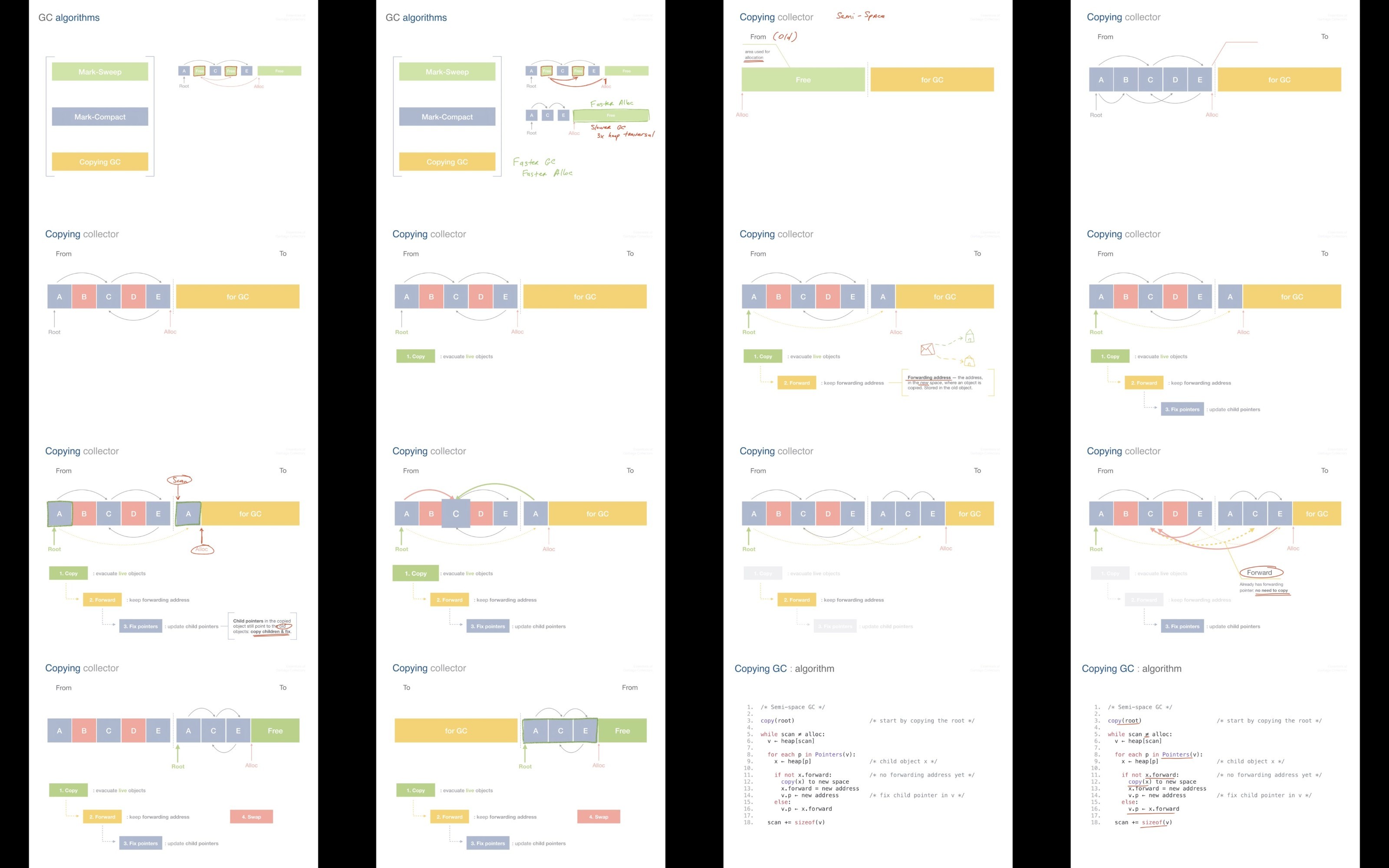
Copying collector
Generational collector
Parallel, Incremental, Concurrent collectors
Tri-color abstraction and marking
GC Barriers
Requirements
Basic data structures and algorithms (trees, graphs, linked lists, etc)
Basic knowledge about computer memory (bytes, addresses, pointers)
Description
Essentials of Garbage Collectors
Memory leaks and dangling pointers are the main issues of the manual memory management. You delete a parent node in a linked list, forgetting to delete all its children first - and your memory is leaking. You delete an object chain in correct order - but suddenly your program crashes since you forgot about second owner of this resource, which now tries to dereference a null-pointer.
To avoid these issues, most of the modern high-level programming languages implement automatic memory management. You allocate objects manually, however don't bother with their deallocation: a special program, garbage collector, knows how to automatically deallocate them correctly, and reclaim for future reuse.
In the Essentials of Garbage Collectors class we study all different techniques and algorithms related to the automatic memory management, which are used today on practice.
Who this class is for?
First of all, for compiler engineers.
In implementing your programming language, there is a very high chance you'll need to implement a garbage collector. Even languages which initially were positioned as "memory-safe", such as Rust, eventual implemented automatic reference counting (ARC) and other collectors.
To reiterate: in most of the modern high-level programming languages, a garbage collector module (or multiple GC modules, like in Java) is pretty much a requirement today.
What if I don't implement programming languages every day?
If you are not a compiler engineer, then the class can still be interesting for you. Implementing a garbage collector or a memory manager in general, is a pretty advanced engineering task. It's a simple trick: you take some complex project (such as a garbage collector, compiler, interpreter, etc), and while building it, you learn all different data structures and algorithms. And then come back to "every-day programming", improved as a better engineer, with the transferable generic knowledge of complex systems.
Do I need C or C++ for this project?