• Regeln für den Dokumente-Bereich:

    In den Börsenbereich gehören nur Angebote die bereits den Allgemeinen Regeln entsprechen.

    Allgemeines:

    Nicht erlaubt im Dokumente-Bereich sind:

    - indizierte Titel (inkl. Comics)
    - extremistische Werke, Zeitschriften und Comics (egal, welche Richtung)
    - jegliche Art von Pornographie
    - Anleitungen zu kriminellen Handlungen, gleich welcher Art
    - sadistische, menschenverachtende oder ähnliche Werke

    Nutzt den "Bedanken"-Button, bei Sammelthreads führen jegliche Kommentare, positiv wie negativ, sehr schnell zu einer Unübersichtlichkeit des Threads. Downmeldungen sind an den Uploader zu richten

    Vor dem Einstellen zu beachten:

    - Suchfunktion

    Vergewissert euch, dass es euer Dokument noch nicht im Board gibt, Doppelposts werden kommentarlos gelöscht. Ist es schon vorhanden, tragt es als Mirror im bestehenden Post ein.

    - Threadtitel

    Idealerweise ist sofort zu erkennen um was es sich handelt. Verseht euren Titel mit den relevanten Informationen, das hilft euch und damit auch uns und allen Suchenden erheblich weiter.

    Beispiel: [Thriller] Dan Brown - Inferno oder bei Magazinen:

    Computerbild - 14/2014 (es muss ersichtlich sein, um welche Ausgabe und welches Magazin es sich handelt)

    Folgende Präfixe stehen im Unterforum "Unterhaltung" zur Verfügung:

    [Humor]
    [Drama]
    [Erotik]
    [Fantasy]
    [Krimi]
    [Roman]
    [Thriller]
    [Horror]
    [Science Fiction]

    Inhalt des Beitrags:

    Folgende Pflichtangaben gilt es einzuhalten:

    - Autor
    - Titel
    - Präfix
    - Cover
    - Genre
    - Inhaltsbeschreibung
    - enthaltene Formate
    - Gesamtgröße des Downloads
    - Hoster
    - ggf. Passwort

    Nicht erlaubt sind alle Dateien, die den Download unnötig aufblähen um eine Affiliategrenze zu erreichen, wie zB. mp3-files, übergroße Bilder, etc.

    Ebenso nicht erlaubt sind sämtliche Dateien mit DRM, persönlichen Daten, etc., diese werden kommentarlos zu eurem eigenem Schutz gelöscht.

    Achtet bitte bei der Konvertierung der Formate auf die Lesbarkeit, ein epub, was nur einfach durch Calibre gejagt wird um ein PDF zu erhalten, ist zu 99% eben nicht lesbar. Wenn ihr es nicht könnt, dann lasst es besser oder lest euch ein, wie man es richtig macht.


    Unterforum Comics:

    Threadtitel:

    Ähnlich, wie bei Unterhaltung und Magazinen, sollte der Titel alle relevanten Informationen enthalten, hier bitte

    - den Titel des Comics
    - den Verlag (einige Comics sind in verschiedenen Verlagen erschienen)
    - das Erscheinungsjahr

    Erlaubt sind folgende Formate:

    - CBR
    - CBZ

    Grundsätzlich gilt: jede Version eines Comics erhält einen eigenen Thread, Ersteller eines Comics können ihre Bände gerne mit dem Zusatz (Original-Release) versehen.

    Bei Unsicherheiten zur korrekten Benennung bitte die Informationen von www.comicguide.de nutzen.

    Inhalt des Beitrags:

    Pflichtangaben hier sind:

    - Titel des Bandes und ggf. Nummer
    - Cover
    - falls bekannt technische Daten (DPI, Breite, Speicherqualität)
    - Größe des Downloads
    - Hoster
    - ggf. Passwort
    - falls bekannt Releasenamen
  • Bitte registriere dich zunächst um Beiträge zu verfassen und externe Links aufzurufen.

*** Bestes IPTV *** bester Preis *** gratis Test ***


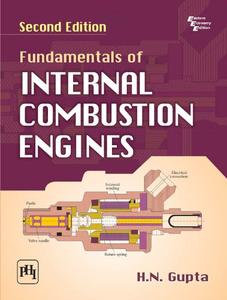
Fundamentals of Internal Combustion Engines

visoft

MyBoerse.bz Pro Member
b97525ea2b86a7570a190b4ab36e0abd.jpeg

Free Download H.N. Gupta, "Fundamentals of Internal Combustion Engines"
English | 2013 | ISBN: 8120346807 | PDF | pages: 675 | 4.5 mb
Providing a comprehensive introduction to the basics of Internal Combustion Engines, this book is suitable for:​

* Undergraduate-level courses in mechanical engineering, aeronautical engineering, and automobile engineering.
* Postgraduate-level courses (Thermal Engineering) in mechanical engineering.
* A.M.I.E. (Section B) courses in mechanical engineering.
* Competitive examinations, such as Civil Services, Engineering Services, GATE, etc.
In addition, the book can be used for refresher courses for professionals in automobile industries.
COVERAGE INCLUDES
Analysis of processes (thermodynamic, combustion, fluid flow, heat transfer, friction and lubrication) relevant to design, performance, efficiency, fuel and emission requirements of internal combustion engines.
Special topics such as reactive systems, unburned and burned mixture charts, fuel-line hydraulics, side thrust on the cylinder walls, etc.
Modern developments such as electronic fuel injection systems, electronic ignition systems, electronic indicators, exhaust emission requirements, etc.
The Second Edition includes new sections on geometry of reciprocating engine, engine performance parameters, alternative fuels for IC engines, Carnot cycle, Stirling cycle, Ericsson cycle, Lenoir cycle, Miller cycle, crankcase ventilation, supercharger controls and homogeneous charge compression ignition engines. Besides, air-standard cycles, latest advances in fuel-injection system in SI engine and gasoline direct injection are discussed in detail. New problems and examples have been added to several chapters.

Links are Interchangeable - Single Extraction
 

84edaafe925f86e5946c9573c52250ae.jpg

Fundamentals of Internal Combustion Engines
MP4 | Video: h264, 1280x720 | Audio: AAC, 44100 Hz
Language: English | Size: 2.58 GB | Duration: 9h 15m​

Engine Performance, Power, Torque, Efficiency, Compression Ratio, Otto, Diesel, Dual, Miller cycles and more

What you'll learn
Understand How a Car Engine Work: Four-Stroke and Two-Stroke Engines
Recognize Engine Geometry and Related Terminology: Piston, TDC, BDC, Bore, Stroke, Connecting Rod, Crankshaft Arm, Crank Angle, Intake and Exhaust Valves
Identify and Calculate Important Engine Performance Parameters: Power, Torque, Efficiency, Mean Effective Pressure, Volumetric Efficiency, Specific Fuel Consumption
Perform Engine Kinematics Calculations such as the instantaneous Piston Speed
Evaluate the performance of heat engine cycles for which the working fluid remains a gas throughout the entire cycle
Develop simplifying assumptions applicable to engines
Solve problems based on the Otto, Diesel, Dual and Miller cycles
Analyze Cycles based on important parameters: Efficiency vs compression ratio, imep vs compression ratio and engine load and more
Compare Otto, Diesel and Miller cycles at various operating conditions
Learn how to draw P-V and T-S diagrams for each cycle
Perform a complete analysis for an Ideal Four Stroke Engine Cycle
Model the Intake and Exhaust Strokes and Evaluate the effect of residual fraction on cycle efficiency
Requirements
A Strong Background in Engineering Thermodynamics is Required.
Knowing How to Use Microsoft Excel is Also Required.
Description
The internal combustion (IC) engine is a heat engine that converts chemical energy in a fuel into mechanical energy, usually made available on a rotating output shaft. Chemical energy of the fuel is first converted to thermal energy by means of combustion or oxidation with air inside the engine. This thermal energy raises the temperature and pressure of the gases within the engine, and the high-pressure gas then expands against the mechanical mechanisms of the engine. This expansion is converted by the mechanical linkages of the engine to a rotating crankshaft, which is the output of the engine.

The main focus of this course is on the application of the engineering sciences, especially the thermal sciences, to internal combustion engines. The goals of the course are to familiarize the student with engine nomenclature, describe how internal combustion engines work, and provide insight into how engine performance can be modeled and analyzed.

In this course, we discuss the engineering parameters that are used to characterize the overall performance of internal combustion engines. Major engine cycles are covered such as Otto, Diesel, Dual and Miller cycles. The following lectures will apply the principles of thermodynamics to determine temperatures and pressures throughout an engine cycle, in addition to important engine performance parameters such as: Indicated Thermal Efficiency and the Indicated Mean Effective Pressure. Also we investigate the dependence of engine performance on engine compression ratio and engine load.

An aspect upon which we have put considerable emphasis is the process of constructing idealized models to represent actual physical situations in an engine. Throughout the course, we will calculate the values of the various thermal and mechanical parameters that characterize internal combustion engine operation.

My goal in this course is to help students acquire a solid theoretical background of internal combustion engines. Solved numerical examples are used extensively in this course to help students understand how theory is applied to analyze practical applications.

Who this course is for:
Engineering students interested to learn about engines

KRsXvUdx_o.jpg

 
Zurück
Oben Unten