



• Regeln für den Dokumente-Bereich:

    In den Börsenbereich gehören nur Angebote die bereits den Allgemeinen Regeln entsprechen.

    Allgemeines:

    Nicht erlaubt im Dokumente-Bereich sind:

    - indizierte Titel (inkl. Comics)
    - extremistische Werke, Zeitschriften und Comics (egal, welche Richtung)
    - jegliche Art von Pornographie
    - Anleitungen zu kriminellen Handlungen, gleich welcher Art
    - sadistische, menschenverachtende oder ähnliche Werke

    Nutzt den "Bedanken"-Button, bei Sammelthreads führen jegliche Kommentare, positiv wie negativ, sehr schnell zu einer Unübersichtlichkeit des Threads. Downmeldungen sind an den Uploader zu richten

    Vor dem Einstellen zu beachten:

    - Suchfunktion

    Vergewissert euch, dass es euer Dokument noch nicht im Board gibt, Doppelposts werden kommentarlos gelöscht. Ist es schon vorhanden, tragt es als Mirror im bestehenden Post ein.

    - Threadtitel

    Idealerweise ist sofort zu erkennen um was es sich handelt. Verseht euren Titel mit den relevanten Informationen, das hilft euch und damit auch uns und allen Suchenden erheblich weiter.

    Beispiel: [Thriller] Dan Brown - Inferno oder bei Magazinen:

    Computerbild - 14/2014 (es muss ersichtlich sein, um welche Ausgabe und welches Magazin es sich handelt)

    Folgende Präfixe stehen im Unterforum "Unterhaltung" zur Verfügung:

    [Humor]
    [Drama]
    [Erotik]
    [Fantasy]
    [Krimi]
    [Roman]
    [Thriller]
    [Horror]
    [Science Fiction]

    Inhalt des Beitrags:

    Folgende Pflichtangaben gilt es einzuhalten:

    - Autor
    - Titel
    - Präfix
    - Cover
    - Genre
    - Inhaltsbeschreibung
    - enthaltene Formate
    - Gesamtgröße des Downloads
    - Hoster
    - ggf. Passwort

    Nicht erlaubt sind alle Dateien, die den Download unnötig aufblähen um eine Affiliategrenze zu erreichen, wie zB. mp3-files, übergroße Bilder, etc.

    Ebenso nicht erlaubt sind sämtliche Dateien mit DRM, persönlichen Daten, etc., diese werden kommentarlos zu eurem eigenem Schutz gelöscht.

    Achtet bitte bei der Konvertierung der Formate auf die Lesbarkeit, ein epub, was nur einfach durch Calibre gejagt wird um ein PDF zu erhalten, ist zu 99% eben nicht lesbar. Wenn ihr es nicht könnt, dann lasst es besser oder lest euch ein, wie man es richtig macht.


    Unterforum Comics:

    Threadtitel:

    Ähnlich, wie bei Unterhaltung und Magazinen, sollte der Titel alle relevanten Informationen enthalten, hier bitte

    - den Titel des Comics
    - den Verlag (einige Comics sind in verschiedenen Verlagen erschienen)
    - das Erscheinungsjahr

    Erlaubt sind folgende Formate:

    - CBR
    - CBZ

    Grundsätzlich gilt: jede Version eines Comics erhält einen eigenen Thread, Ersteller eines Comics können ihre Bände gerne mit dem Zusatz (Original-Release) versehen.

    Bei Unsicherheiten zur korrekten Benennung bitte die Informationen von www.comicguide.de nutzen.

    Inhalt des Beitrags:

    Pflichtangaben hier sind:

    - Titel des Bandes und ggf. Nummer
    - Cover
    - falls bekannt technische Daten (DPI, Breite, Speicherqualität)
    - Größe des Downloads
    - Hoster
    - ggf. Passwort
    - falls bekannt Releasenamen
  • Bitte registriere dich zunächst um Beiträge zu verfassen und externe Links aufzurufen.

*** Bestes IPTV *** bester Preis *** gratis Test ***


From Network Structure to Policy Design in Water Protection

visoft

MyBoerse.bz Pro Member

006b492d_medium.jpg

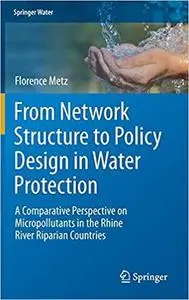
From Network Structure to Policy Design in Water Protection: A Comparative Perspective on Micropollutants in the Rhine River Riparian Countries by Florence Metz
English | May 6, 2017 | ISBN: 3319556924 | 317 pages | PDF | 10 Mb​


The book examines a new concern in water quality policy, namely aquatic micropollutants. Micropollutants are chemicals detected in small concentrations in waterbodies today, originating from pharmaceuticals, cosmetics, or detergents, among others. Since the regulation of micropollutants is a fairly new issue, it has been largely neglected in social sciences. However, the search for appropriate solutions is of high political relevance at both the national and international levels, with many open questions arising that concern the most adequate governance structures and steering mechanisms. Solutions suitable for classical, macro-pollutants, such as nutrients, do not necessarily apply to micropollutants because of the diversity of compounds and sources, and for technical, financial, and societal reasons. The book addresses this knowledge gap by investigating the steering mechanisms at hand and their prospect for problem solving. In this regard, the research provides a systematic depiction and comparison of policy designs in place for the reduction of micropollutants in the Rhine basin. Moreover, the study yields insights into the governance structures in place, into actors' responsibilities and constellations, and policy processes regarding micropollutants.
The study is furthermore embedded into broader theoretical questions of policy research. More precisely, this research is a contribution to policy analysis that aims to achieve more optimal policy results by providing for a better understanding of the nature of policy designs and the social mechanisms behind the choice of them. Despite the intrinsic aim of policy analysis at contributing to more optimal policy outcomes, there remains a lack of research regarding analytical tools that enable an ex-ante assessment of policy designs' problem-solving abilities. To explore such a research path, this book proposes a novel index of policy comprehensiveness for quantifying the prospective performance of policy designs in alleviating an underlying policy issue, e.g. reducing pollutants in waters.
Furthermore, the book uncovers the social mechanisms behind policymaking and turns to the question: In which social settings is it possible to achieve a comprehensive policy design? Compared to purely micro-level explanations, the advantage of the network approach is that it goes beyond the mere aggregation of policy actors' attributes by taking into consideration actors' interdependencies. In order to take the network approach seriously, the study systematically links the structure of a policy network with comprehensive policy designs. Network concepts, such as coalition structure, interconnectedness, and belief similarity, are employed from policy change research here in order to explore the link between structural network characteristics and comprehensive policy design. By studying how network structures affect policy design, the book critically examines the explanatory value of the network approach.
Feel Free to contact me for book requests, informations or feedbacks.
Without You And Your Support We Can't Continue
Thanks For Buying Premium From My Links For Support


Recommend Download Link Hight Speed | Please Say Thanks Keep Topic Live

 
Zurück
Oben Unten