


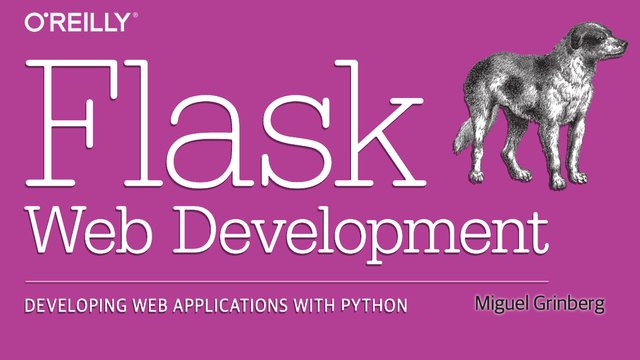
Flask: Web Development With Jinja, Databases, And Apis
Published 5/2025
MP4 | Video: h264, 1920x1080 | Audio: AAC, 44.1 KHz
Language: English | Size: 6.33 GB | Duration: 11h 28m
The Complete Python Flask Web Development: Go from zero to building and deploying real-world dynamic web apps and APIs.
What you'll learn
Understand the fundamentals of the Flask microframework and its core components.
Master Flask routing to map URLs to specific Python functions (views).
Utilize Jinja2 templating to create dynamic and interactive web pages.
Effectively handle user input through HTML forms within Flask applications.
Integrate Flask applications with various databases to store and retrieve data.
Develop and consume RESTful APIs using Flask for backend services.
Build a task management API to practice API design and implementation.
Implement user authentication using Flask-Login for secure user management.
Manage user sessions and cookies to maintain user state across requests.
Integrate Flask with frontend technologies (HTML, CSS, JavaScript) to build complete web applications.
Implement background tasks using Celery to handle long-running operations asynchronously.
Implement effective logging and error handling for robust application development.
Learn the process of deploying Flask applications to production environments.
Gain practical experience by building several real-world web applications (e.g., To-Do List, Blog, Weather App).
Understand how to approach and solve common web development challenges using the Flask framework.
Requirements
Enthusiasm and determination to make your mark on the world!
Description
A warm welcome to the Flask: Web Development with Jinja, Databases, and APIs course by Uplatz.Flask is a micro web framework written in Python. Think of it as a lightweight toolkit that gives you the essential building blocks for creating web applications without imposing a lot of pre-defined structure or dependencies.Here's what makes it stand out:Micro: Unlike "full-stack" frameworks (like Django), Flask provides only the core functionalities. This gives you a lot of flexibility to choose the tools and libraries you want for things like databases, form handling, and authentication.Python-based: It leverages the power and simplicity of the Python language.Extensible: While minimal at its core, Flask's design allows you to easily add extensions for more advanced features.WSGI Toolkit: It's built on top of Werkzeug (a comprehensive WSGI utility library) and Jinja2 (a powerful templating engine), which handle the low-level details of web communication and presentation.How does Flask work?At its heart, Flask follows a request-response cycle, which is fundamental to how web applications operate. Following is a simplified breakdown of the process:The Client (Browser) Sends a Request: When you type a URL into your browser or click a link, your browser sends an HTTP request to the web server where your Flask application is running. This request contains information like the URL you're trying to access (the endpoint), the method (e.g., GET for retrieving data, POST for submitting data), and potentially some data.The Web Server Receives the Request: A web server (like Gunicorn or uWSGI) acts as the intermediary. It receives the incoming HTTP request and passes it on to your Flask application.Flask Handles the Request (Routing): This is where Flask's routing mechanism comes into play. You define routes in your Flask application that map specific URLs (or "endpoints") to Python functions called view functions. When Flask receives a request, it looks at the requested URL and tries to find a matching route.The View Function Executes: Once a matching route is found, the corresponding view function is executed. This function contains the logic to handle the request. It might:Fetch data from a databaseProcess user input from a formPerform calculationsInteract with other servicesThe View Function Returns a Response: The view function needs to return a response that the web server can send back to the client's browser. This response typically includes:HTML: To render web pages. Flask uses the Jinja2 templating engine to dynamically generate HTML.Data (e.g., JSON, XML): Especially for building APIs.HTTP Status Codes: To indicate the outcome of the request (e.g., 200 OK, 404 Not Found).Headers: Additional information about the response.Flask Passes the Response Back to the Web Server: Flask takes the response generated by the view function and passes it back to the web server.The Web Server Sends the Response to the Client: The web server then forwards the HTTP response back to the client's browser.The Client (Browser) Renders the Response: The browser receives the response and renders it. If the response is HTML, it displays the web page to the user. If it's JSON or other data, it can be used by JavaScript running in the browser or by other applications.In brief, Flask acts as the traffic controller and logic handler for your web application:It routes incoming requests to the appropriate Python code.It provides tools to process data and generate responses.It integrates with templating engines to create dynamic web content.Because it's a microframework, Flask gives you the freedom to choose and integrate other components as needed, making it highly adaptable to various web development needs, from simple websites to complex web applications and APIs.Flask - Course CurriculumModule 1: Getting Started with Flask1.1 Introduction to Flask: What is Flask? Advantages of using Flask.1.2 Setting Up Your Environment: Installing Python and pip. Creating and activating virtual environments.1.3 Your First Flask Application: Writing a basic "Hello, World!" Flask app and running it.Module 2: Routing and Views2.1 Flask Routing Basics: Defining routes and associating them with view functions.2.2 Different Routing Methods: Handling various HTTP methods (GET, POST, etc.).2.3 Dynamic Routing: Capturing variable parts in URLs.2.4 Query Parameters: Accessing data passed in the URL.Module 3: Working with Templates using Jinja23.1 Introduction to Jinja2: Understanding the concept of template engines.3.2 Template Syntax: Variables, control structures (if, for), and expressions.3.3 Template Inheritance: Creating reusable template layouts.3.4 Filters and Tests: Modifying and checking data within templates.Module 4: Handling Forms and User Input4.1 HTML Forms in Flask: Creating and rendering HTML forms.4.2 Processing Form Data: Accessing submitted form data in view functions.4.3 Form Validation: Basic techniques for validating user input.4.4 Using Flask-WTF (Optional Introduction): An overview of a more robust form handling library.Module 5: Database Integration with Flask-SQLAlchemy5.1 Introduction to Flask-SQLAlchemy: Setting up and configuring SQLAlchemy with Flask.5.2 Defining Database Models: Creating Python classes to represent database tables.5.3 Performing CRUD Operations: Creating, Reading, Updating, and Deleting data using SQLAlchemy.5.4 Database Migrations (Basic Concepts): Understanding the need for database schema changes.Module 6: Building RESTful APIs with Flask6.1 Introduction to RESTful APIs: Understanding REST principles and concepts.6.2 Designing API Endpoints: Defining URL structures for API resources.6.3 Handling Request and Response Data: Working with JSON data in Flask APIs.6.4 HTTP Methods for APIs: Utilizing GET, POST, PUT, DELETE for API actions.Module 7: Building a Task Management API (Project)7.1 Designing the API Structure: Defining endpoints and data models for a task management system.7.2 Implementing API Endpoints: Creating Flask routes and view functions for task management.7.3 Handling Data Persistence: Integrating with a database to store tasks.Module 8: User Authentication with Flask-Login8.1 Introduction to User Authentication: Understanding the need for user accounts and security.8.2 Implementing User Registration: Creating forms and logic for user signup.8.3 Implementing User Login and Logout: Handling user login sessions.8.4 Using Flask-Login: Integrating the Flask-Login library for secure authentication.8.5 Password Hashing: Securely storing user passwords.Module 9: Session Management and Cookies9.1 Understanding HTTP Sessions: How to maintain user state across multiple requests.9.2 Working with Flask Sessions: Storing and retrieving user session data.9.3 Introduction to Cookies: How cookies are used to store data on the client-side.9.4 Setting and Reading Cookies in Flask: Managing cookies within your application.Module 10: Flask and Frontend Integration10.1 Serving Static Files: Handling CSS, JavaScript, and image files.10.2 Integrating with Bootstrap: Using Bootstrap for responsive and stylish layouts.10.3 Interacting with Vue.js (Basic Concepts): Sending and receiving data between Flask and Vue.js.10.4 Interacting with React (Basic Concepts): Sending and receiving data between Flask and React.10.5 Building APIs for Frontend Consumption: Designing backend APIs that frontend frameworks can use.Module 11: Handling Background Tasks with Celery11.1 Introduction to Background Tasks: Understanding the need for asynchronous operations.11.2 Setting Up Celery: Installing and configuring Celery with Flask.11.3 Defining and Running Tasks: Creating background jobs using Celery.11.4 Task Queues and Workers: Understanding Celery's architecture.Module 12: Logging and Error Handling12.1 Implementing Logging in Flask: Configuring logging to track application behavior and errors.12.2 Different Logging Levels: Understanding and using various log severity levels.12.3 Handling Application Errors: Implementing custom error pages and error handling logic.12.4 Debugging Flask Applications: Using Flask's debugging features.Module 13: Flask Deployment and Production Setup13.1 Deployment Concepts: Understanding different deployment environments.13.2 Choosing a Web Server: Introduction to WSGI servers like Gunicorn and uWSGI.13.3 Basic Deployment on Different Platforms (Overview): Heroku, PythonAnywhere, etc.13.4 Setting up a Production Environment (Basic Security Considerations).Module 14-22: Practical Project DevelopmentModule 14: To-Do List Application: Building a complete to-do list application with database integration and user interaction.Module 15: Blog Website: Creating a basic blog platform with post creation, display, and potentially user comments.Module 16: Weather Application: Integrating with a third-party weather API (e.g., OpenWeather) to display weather information.Module 17: URL Shortener: Building a service to shorten long URLs.Module 18: Simple E-Commerce Site: Developing a basic online store with product listings and potentially a shopping cart.Module 19: Personal Portfolio Website: Creating a website to showcase personal projects and skills.Module 20: Real-Time Chat Application: Implementing a simple real-time chat using technologies like WebSockets (if applicable within the course scope).Module 21: Habit Tracker Application: Building an application to track and visualize personal habits, including user authentication and data charting.Module 22: Simple Polling Application: Creating a web application for creating and participating in polls.Module 23: Flask Interview Questions and Answers23.1 Common Flask Interview Questions: Discussing frequently asked questions related to Flask concepts.23.2 Providing Detailed Answers: Explaining the reasoning and best practices behind the answers.Flask, despite being a microframework, powers a wide range of real-world applications due to its flexibility and extensibility. Here are some common use cases:1. Web Applications (Small to Medium Scale)
 ersonal Websites and Blogs: Many individuals and small organizations use Flask to build their personal websites, portfolios, and blogs due to its simplicity and ease of customization.Internal Tools and Dashboards: Companies often use Flask to create internal web applications for tasks like inventory management, project tracking, data visualization dashboards, and employee portals. These don't always require the full complexity of larger frameworks.Single-Page Applications (SPAs) Backends: Flask can serve as a robust backend API for frontend frameworks like React, Vue.js, and Angular, handling data and logic while the frontend manages the user interface.2. RESTful APIs:Microservices: Flask is a popular choice for building individual microservices in a larger distributed system. Its lightweight nature makes it ideal for creating focused, independent services.Third-Party Integrations: Many companies use Flask to build APIs that allow their applications to communicate and exchange data with other services.Mobile App Backends: Flask can power the backend for mobile applications, providing the necessary data and functionality through APIs.Machine Learning Model Deployment: Flask is frequently used to wrap machine learning models in APIs, allowing other applications to easily interact with and utilize the models' predictions.3. Prototyping and MVPs (Minimum Viable Products):Rapid Development: Flask's simplicity and minimal boilerplate allow developers to quickly build and iterate on prototypes and MVPs to test ideas and gather user feedback.Educational Purposes: Its clear structure makes it an excellent framework for teaching and learning web development concepts.4. Specific Industry Applicationsata Visualization Tools: Flask can be used to build web interfaces for visualizing data from various sources.IoT (Internet of Things) Applications: Flask can serve as the backend for managing and interacting with IoT devices.Financial Technology (FinTech): While security is paramount and might involve more specialized frameworks for core banking systems, Flask can be used for internal tools, reporting dashboards, and specific API integrations within FinTech companies.Scientific Applications: Researchers can use Flask to build web interfaces for their tools and data analysis pipelines.Examples of Companies and Platforms Using Flask (though often as part of a larger stack):Netflix: Uses Flask for some internal tools and microservices.Reddit: While primarily built with Python, parts of its infrastructure have reportedly used Flask.Twilio: Uses Flask for some of its API components.LinkedIn: Utilizes Flask for certain internal applications.Many smaller startups and individual developers rely heavily on Flask for their web applications and APIs.Key Reasons for Flask's Popularity in These Use Cases:Simplicity and Ease of Learning: Its straightforward syntax and minimal core make it relatively easy for developers to pick up.Flexibility and Control: Developers have more freedom to choose the libraries and tools that best suit their specific needs.Extensibility: Flask's extension ecosystem allows developers to easily add features like database integration, authentication, and more.Lightweight Nature: Its minimal overhead makes it performant and suitable for microservices and smaller applications.Large and Active Community: This ensures ample documentation, support, and a wide range of third-party libraries.In conclusion, Flask's versatility makes it a valuable tool for a wide spectrum of web development tasks, from small personal projects to powering components of large-scale platforms. Its balance of simplicity and extensibility allows developers to build exactly what they need without unnecessary bloat.
Overview
Section 1: Introduction to Flask
Lecture 1 Introduction to Flask
Section 2: Flask Routing and Views
Lecture 2 Flask Routing and Views
Section 3: Flask Templates with Jinja2
Lecture 3 Flask Templates with Jinja2
Section 4: Handling Forms and User Input in Flask
Lecture 4 Handling Forms and User Input in Flask
Section 5: Flask Database Integration
Lecture 5 Flask Database Integration
Section 6: Flask API Development with RESTful APIs
Lecture 6 Flask API Development with RESTful APIs
Section 7: Flask Task Management API
Lecture 7 Flask Task Management API
Section 8: User Authentication with Flask-Login
Lecture 8 User Authentication with Flask-Login
Section 9: Flask Session Management and Cookies
Lecture 9 Flask Session Management and Cookies
Section 10: Flask and Frontend Integration
Lecture 10 Flask and Frontend Integration
Section 11: Flask Background Tasks and Celery
Lecture 11 Flask Background Tasks and Celery
Section 12: Flask Logging and Error Handling
Lecture 12 Flask Logging and Error Handling
Section 13: Flask Deployment and Production Setup
Lecture 13 Flask Deployment and Production Setup
Section 14: To-Do List App using Flask
Lecture 14 To-Do List App using Flask
Section 15: Blog Website using Flask
Lecture 15 Blog Website using Flask
Section 16: Weather App using Flask
Lecture 16 Weather App using Flask
Section 17: URL Shortener using Flask
Lecture 17 URL Shortener using Flask
Section 18: Simple E-Commerce Site using Flask
Lecture 18 Simple E-Commerce Site using Flask
Section 19: Personal Portfolio Website using Flask
Lecture 19 Personal Portfolio Website using Flask
Section 20: Real-Time Chat Application using Flask
Lecture 20 Real-Time Chat Application using Flask
Section 21: Habit Tracker using Flask
Lecture 21 Habit Tracker using Flask
Section 22: Simple Polling App using Flask
Lecture 22 Simple Polling App using Flask
Section 23: Flask Interview Questions and Answers
Lecture 23 Flask Interview Questions and Answers
Aspiring Web Developers: Individuals with basic Python knowledge eager to learn backend web development.,Backend Developers Exploring Python: Experienced backend developers from other languages looking to adopt Flask.,Full-Stack Developers Enhancing Skills: Front-end or other backend developers aiming to master Python web development.,Data Science & ML Professionals: Those needing to build web interfaces for their data models and applications.,Students and Programming Enthusiasts: Individuals learning Python and web development as part of their studies or as a hobby.,Developers Focused on API Creation: Those specifically interested in designing and building RESTful APIs using Flask.,DevOps Engineers Learning Python Deployment: Professionals involved in deploying and managing Python web applications.,Individuals Seeking Practical Web Development Skills: Those drawn to the course's hands-on projects (e.g., blog, e-commerce).