• Regeln für den Video-Bereich:

    In den Börsenbereich gehören nur Angebote die bereits den Allgemeinen Regeln entsprechen.

    Einteilung

    - Folgende Formate gehören in die angegeben Bereiche:
    - Filme: Encodierte Filme von BluRay, DVD, R5, TV, Screener sowie Telesyncs im Format DivX, XviD und x264.
    - DVD: Filme im Format DVD5, DVD9 und HD2DVD.
    - HD: Encodierte Filme mit der Auflösung 720p oder darüber von BluRay, DVD, R5, TV, Screener sowie Telesyncs im Format x264.
    - 3D: Encodierte Filme von BluRay, die in einem 3D Format vorliegen. Dies gilt auch für Dokus, Animation usw.
    - Serien: Cartoon/Zeichentrick, Anime, Tutorials, Dokumentationen, Konzerte/Musik, Sonstiges sind demnach in die entsprechenden Bereiche einzuordnen, auch wenn sie beispielsweise im High Definition-Format oder als DVD5/DVD9/HD2DVD vorliegen. Ausnahme 3D.
    - Bereich Englisch: Englische Releases gehören immer in diesen Bereich.
    - Bereich Talk: Der Bereich, in dem über die Releases diskutiert werden kann, darf, soll und erwünscht ist.


    Angebot/Beitrag erstellen

    - Ein Beitrag darf erst dann erstellt werden, wenn der Upload bei mindestens einem OCH komplett ist. Platzhalter sind untersagt.
    - Bei einem Scenerelease hat der Threadtitel ausschließlich aus dem originalen, unveränderten Releasenamen zu bestehen. Es dürfen keine Veränderungen wie z.B. Sterne, kleine Buchstaben o.ä. vorgenommen werden. Ausnahme Serienbörse:
    - Bei einem Sammelthread für eine Staffel entfällt aus dem Releasename natürlich der Name der Folge. Beispiel: Die Simpsons S21 German DVDRip XviD - ITG
    - Dementsprechend sind also u.a. verboten: Erweiterungen wie "Tipp", "empfehlenswert", "only", "reup", usw. / jegliche andere Zusatzinformation oder Ergänzung, welche nicht in obiger Beschreibung zu finden ist.

    Aufbau des Angebots und Threadtitel

    Der Titel nach folgendem Muster erstellt zu werden. <Name> [3D] [Staffel] [German] <Jahr> <Tonspur> [DL] [Auflösung] <Quelle> <Codec> - <Group>
    Beispiel: The Dark Knight German 2008 AC3 DVDRip XviD - iND
    Beispiel: The Dark Knight 2008 DTS DL BDRip x264 - iND
    Beispiel: The Dark Knight 2008 AC3 DL BDRip XviD - iND
    Beispiel: The Dark Knight German 2008 AC3 720p BluRay x264 iND
    Beispiel: The Dark Knight 2008 DTS DL 1080p BluRay x264 iND
    Beispiel: Die Simpsons S01 German AC3 DVDRip XviD iND
    Beispiel: Die Simpsons S20 German AC3 720p BluRay x264 iND
    Beispiel: Sword Art Online II Ger Sub 2014 AAC 1080p WEBRip x264 - peppermint
    Entsprechend sind also u.a. verboten: Sonderzeichen wie Klammern, Sterne, Ausrufezeichen, Unterstriche, Anführungszeichen / Erweiterungen wie "Tipp", "empfehlenswert", "only", "reup", usw. / jegliche andere Zusatzinformation oder Ergänzung, welche nicht in obiger Beschreibung zu finden ist
    Ausnahmen hiervon können in den Bereichen geregelt sein.

    Die Beiträge sollen wie folgt aufgebaut werden:
    Überschrift entspricht dem Threadtitel
    Cover
    kurze Inhaltsbeschreibung
    Format, Größe, Dauer sind gut lesbar für Downloader außerhalb des Spoilers zu vermerken
    Nfo sind immer Anzugeben und selbige immer im Spoiler in Textform.
    Sind keine Nfo vorhanden z.B. Eigenpublikationen, sind im Spoiler folgende Dateiinformationen zusätzlich anzugeben :
    Quelle
    Video (Auflösung und Bitrate)
    Ton (Sprache, Format und Bitrate der einzelnen Spuren)
    Untertitel (sofern vorhanden)
    Hosterangabe in Textform außerhalb eines Spoiler mit allen enthaltenen Hostern.
    Bei SD kann auf diese zusätzlichen Dateiinformationen verzichtet werden.

    Alle benötigten Passwörter sind, sofern vorhanden, in Textform im Angebot anzugeben.
    Spoiler im Spoiler mit Kommentaren :"Schon Bedankt?" sind unerwünscht.


    Releases

    - Sind Retail-Release verfügbar, sind alle anderen Variationen untersagt. Ausnahmen: Alle deutschen Retail-Release sind CUT, in diesem Fall sind dubbed UNCUT-Release zulässig.
    - Im Serien-Bereich gilt speziell: Wenn ein Retail vor Abschluss einer laufenden Staffel erscheint, darf diese Staffel noch zu Ende gebracht werden.62
    - Gleiche Releases sind unbedingt zusammenzufassen. Das bedeutet, es ist zwingend erforderlich, vor dem Erstellen eines Themas per Suchfunktion zu überprüfen, ob bereits ein Beitrag mit demselben Release besteht. Ist dies der Fall, ist der bereits vorhandene Beitrag zu verwenden.
    - P2P und Scene Releases dürfen nicht verändert oder gar unter einem iND Tag eingestellt werden.


    Support, Diskussionen und Suche

    - Supportanfragen sind entweder per PN oder im Bereich Talk zu stellen.
    - Diskussionen und Bewertungen sind im Talk Bereich zu führen. Fragen an die Uploader haben ausschließlich via PN zu erfolgen, und sind in den Angeboten untersagt.
    - Anfragen zu Upload-Wünschen sind nur im Bereich Suche Video erlaubt. Antworten dürfen nur auf Angebote von MyBoerse.bz verlinkt werden.


    Verbote

    - Untersagt sind mehrere Formate in einem einzigen Angebotsthread, wie beispielsweise das gleichzeitige Anbieten von DivX/XviD, 720p und 1080p in einem Thread. Pro Format, Release und Auflösung ist ein eigener Thread zu eröffnen.
    - Grundsätzlich ebenso verboten sind Dupes. Uploader haben sich an geeigneter Stelle darüber zu informieren, ob es sich bei einem Release um ein Dupe handelt.
    - Gefakte, nur teilweise lauffähige oder unvollständige Angebote sind untersagt. Dies gilt auch für eigene Publikationen, die augenscheinlich nicht selbst von z.B. einer DVD gerippt wurden. Laufende Serien, bei denen noch nicht alle Folgen verfügbar sind, dürfen erstellt und regelmäßig geupdatet werden.
    - Untersagt sind Angebote, welche nur und ausschließlich in einer anderen Sprache als deutsch oder englisch vorliegen. Ausnahmen sind VORHER mit den Moderatoren zu klären.


    Verstoß gegen die Regeln

    - Angebote oder Beiträge, die gegen die Forenregeln verstoßen, sind über den "Melden"-Button im Beitrag zu melden.
  • Bitte registriere dich zunächst um Beiträge zu verfassen und externe Links aufzurufen.

*** Bestes IPTV *** bester Preis *** gratis Test ***


Englische Tutorials

507b7387b61c9fe0f59bdff2a585c948.jpg


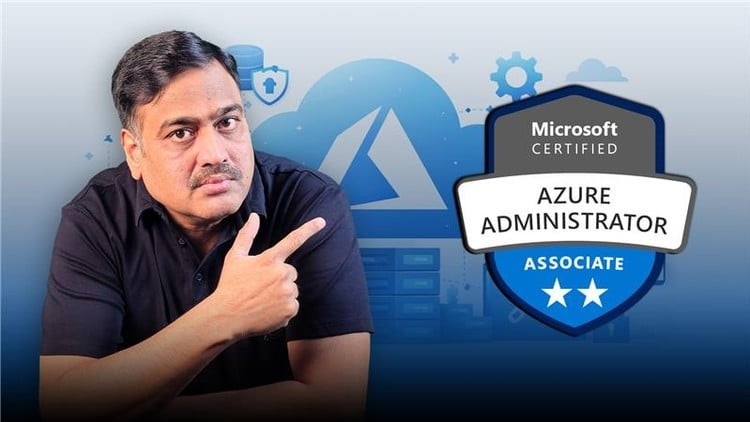
AZ-104 Azure Administrator: Manage Cloud Infrastructure
Published 5/2026
Created by Sandeep Soni
MP4 | Video: h264, 1920x1080 | Audio: AAC, 44.1 KHz, 2 Ch Level: All Levels | Genre: eLearning | Language: English | Duration: 88 Lectures ( 42h 41m ) | Size: 41.1 GB

Master Azure networking, security, compute, storage, identity, and monitoring with hands-on administrative workflows


What you'll learn
⚡ Understand cloud computing concepts and Azure architecture
⚡ Create and manage Azure resources and subscriptions
⚡ Configure virtual networks, subnets, and connectivity
⚡ Implement network security using NSG and routing
⚡ Deploy and manage virtual machines and scale sets
⚡ Configure load balancing and high availability solutions
⚡ Manage Azure storage services and data access
⚡ Deploy and manage App Services and web applications
⚡ Implement identity and access management using Entra ID and RBAC
⚡ Apply Azure governance using policies and blueprints
⚡ Automate tasks using PowerShell and ARM templates
⚡ Configure backup, disaster recovery, and monitoring solutions
⚡ Secure applications and secrets using Azure Key Vault
⚡ Monitor and troubleshoot systems using Azure Monitor and Log Analytics
⚡ Apply skills in real-world Azure administration scenarios

Requirements
❗ Basic understanding of IT concepts (networking, servers, or operating systems)
❗ Familiarity with basic cloud computing concepts (helpful but not mandatory)
❗ Interest in learning Microsoft Azure administration

Description
This course is designed to help you buildpractical, job-ready skills as an Azure Administrator, with a strong focus on managing cloud infrastructure in real-world environments. It also prepares you for theAZ-104 certification, while going beyond exam-focused theory.

Organizations rely on Microsoft Azure to manage infrastructure, secure applications, and ensure high availability. In this course, you will learn how todeploy, manage, and monitor Azure resources across networking, compute, storage, identity, and governance.

You will begin with Azure fundamentals and resource management, then move into core administrative areas such asvirtual networking, network security, load balancing, and connectivity. You will learn how to managevirtual machines, application services, and storage solutions used in enterprise environments.

The course also coversidentity and access management using Microsoft Entra ID, role-based access control (RBAC), and governance tools such as Azure Policy. You will exploreautomation using PowerShell and ARM templates, enabling scalable infrastructure management.

Additionally, you will implementbackup and recovery solutions, secure secrets using Azure Key Vault, and monitor environments using Azure Monitor and Log Analytics.

By the end of this course, you will be able tomanage Azure infrastructure in real-world scenarios, making this course highly relevant for professionals working in cloud and enterprise environments.

Who this course is for
⭐ Azure Administrators
⭐ Cloud Engineers
⭐ System Administrators transitioning to cloud
⭐ DevOps Engineers working with Azure
⭐ IT professionals managing infrastructure
⭐ Students preparing for the AZ-104 certification
⭐ Professionals seeking real-world Azure administration skills


747220501_33-_creating_a_storage_account.jpg


Premium Links


Download from RapidGator


0ac41299307c9c4a33788b94fad30a2d.jpg


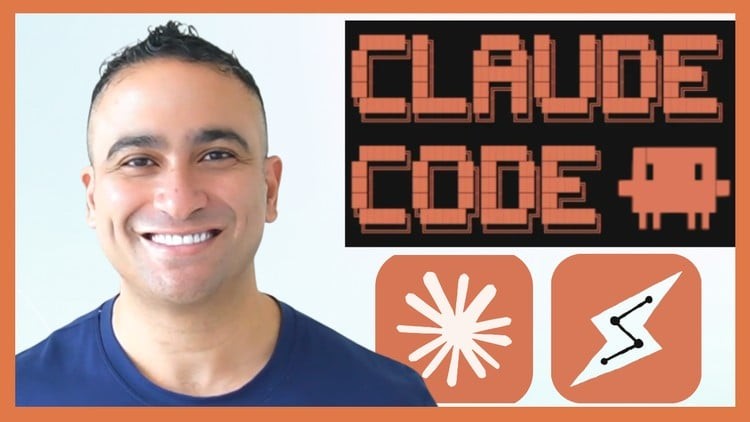
The Complete Claude Code & Claude Cowork Masterclass (2026)
Last updated 5/2026
MP4 | Video: h264, 1280x720 | Audio: AAC, 44.1 KHz
Language: English | Size: 23.88 GB | Duration: 21h 45m

Master Claude Code, Plugins and Skills to Build AI Applications, Automate Business with Cowork, Deploy Autonomous Agents


What you'll learn
Master Claude Cowork Agents to automate tasks in finance, legal, marketing, data analysis, & research.
Build, debug, and deploy full-stack applications and websites using the Claude Code terminal interface and its autonomous agentic capabilities.
Understand the concept of "Agent Skills" and "Plugins" to give Claude agents new capabilities.
Leverage specialized plugins to clean data, perform statistical analysis, and automatically build visual dashboards and comprehensive reports.
Connect Claude to external tools like Gmail, Slack, and Salesforce using the Model Context Protocol (MCP) for cross-platform automation.
Master Claude in Excel to clean data, perform conditional formatting, handle missing values, visualize data, & create dashboards.
Automate the creation of branded PowerPoint presentations and professional executive reports directly from raw data and deep-dive research.
Master prompt engineering & context Engineering techniques to optimize Claude's output for advanced code generation, creative content, & problem-solving.
Construct professional, Wallstreet-level financial models using the combined power of Claude Cowork & Excel.
Design and manage a team of autonomous AI agents to handle end-to-end projects, from initial research phases to final automated email distribution.
Understand the concept of "Subagents" and "Agent Teams" to handle multi-step, advanced complex projects.
Master Claude Code to autonomously scaffold, design, and deploy full-stack websites through terminal-based agentic orchestration and live previews.

Requirements
No programming experience is required, the course is open to anyone with a laptop and internet connection!

Description
LIVE COURSE - CONTINUOUSLY UPDATED

This course evolves in real-time alongside Claude's capabilities. When Anthropic ships new features, we add new lessons so you're never learning yesterday's AI.

Recent Updates

19 May 2026: Added 10 New Automation Blueprints for Claude Code & Cowork

17 May 2026: New section: Building Your Own Personal AI Agents in Claude Code & Cowork

15 May 2026: Added Dispatch Mode: run automations from your phone

In this Claude masterclass, you will transition from simple chat interactions to mastering the next generation of Agentic AI. You'll dive deep into Claude Code for autonomous software development and Claude Cowork for desktop-level automation, learning how to orchestrate AI agents that execute complex tasks directly on your local system. By moving beyond basic prompts, you will gain the skills to build, debug, and deploy full-stack applications and professional workflows with unprecedented speed and efficiency.

The course provides a comprehensive hands-on experience, bridging the gap between technical engineering and professional productivity. You will master the Model Context Protocol (MCP) to connect Claude with tools like Gmail, Slack, and Salesforce, while also leveraging specialized plugins for advanced data analysis and financial modeling in Excel. From automating document reviews in legal and finance to building dynamic dashboards and branded executive presentations, you will learn to turn Claude into a fully integrated "digital workforce."

By the end of this masterclass, you will be equipped to design and manage your own custom "Agent Skills" and deploy multi-agent teams for end-to-end project delivery. Whether you are a startup founder looking to build a "one-person unicorn," a developer mastering "vibe coding," or a professional seeking to automate repetitive digital labor, this course provides the blueprints to stay ahead in the AI economy. You will leave with a portfolio of real-world projects, including automated social media monitors and advanced financial analysis agents.

Who this course is for
AI Enthusiasts & "Vibe Coders": Transition from simple prompting to managing multi-step autonomous agents that execute tasks directly on your local system.
Startup Founders & Solopreneurs: Build MVPs in days, automate investor reporting, and run a "one-person unicorn" by orchestrating multi-agent teams with Claude.
Data Scientists & Analysts: Master agentic workflows to clean datasets, generate predictive models, and build automated dashboards without manual scripting.
Software Developers & Engineers: Learn to use Claude Code for autonomous debugging, repository-wide refactoring, and AI-driven full-stack application building.
Research Scientists & Academics: Leverage Claude to synthesize vast literature, manage research files, and automate the "digital labor" of scientific discovery.
Marketing & Creative Directors: Automate SEO audits, content flywheels, and "vibe marketing" campaigns by connecting Claude to your local design and media asset
Finance & Legal Professionals: Automate complex document reviews, compliance checks, and financial reporting using Claude Cowork's native desktop agent.


747580392_145_-_build_research_team_automation.jpg


Premium Links


Download from RapidGator


e4d7b2cf79379b4d9715c34e9c6f857a.jpg


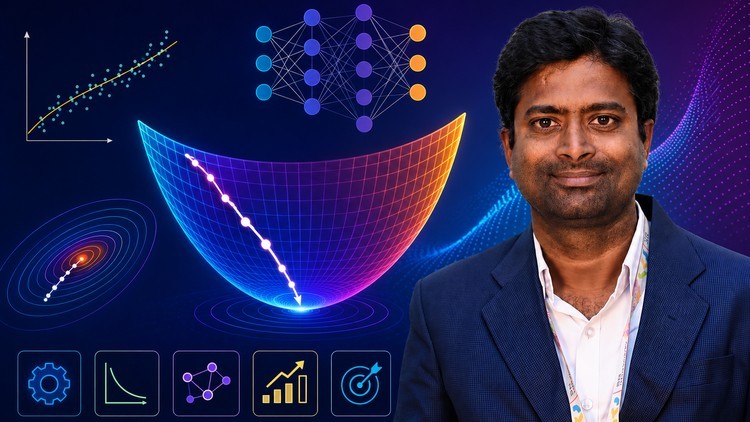
Adaptive Learning Rate Optimization for Machine Learning
Published 5/2026
MP4 | Video: h264, 1920x1080 | Audio: AAC, 44.1 KHz, 2 Ch Language: English | Duration: 19h 35m | Size: 22.12 GB

Adaptive Learning Rate Based Optimization for Machine Learning Using MATLAB and Python


What you'll learn
Understand the mathematical foundations of adaptive optimization algorithms used in machine learning and deep learning.
Implement and compare adaptive optimization techniques such as AdaGrad, RMSProp, ADAM, ADAMAX, ADADELTA, and NADAM using MATLAB and Python.
Analyze convergence behavior, adaptive learning rates, oscillations, and error minimization in regression-based machine learning models.
Design and develop optimization workflows, gradient calculations, and algorithmic flowcharts for practical machine learning applications.

Requirements
Basic understanding of mathematics and algebra.

Description
This course provides a complete and practical understanding of optimization techniques used in machine learning, deep learning, and artificial intelligence. The course is carefully designed to explain optimization algorithms from fundamental concepts to advanced adaptive learning rate optimizers using step-by-step mathematical derivations, intuitive explanations, flowcharts, convergence analysis, and practical implementations. Learners will begin with the basics of optimization, learning rates, gradients, error minimization, and regression modeling. The course gradually introduces batch gradient descent, stochastic gradient descent (SGD), and mini-batch gradient descent and moves toward advanced optimizers such as AdaGrad, RMSProp, AdaDelta, ADAM, ADAMAX, and NADAM. A major focus of this course is understanding how adaptive learning rate strategies improve convergence and optimization efficiency. Learners will learn concepts such as first moment estimation, second moment estimation, bias correction, adaptive parameter updates, gradient sensitivity, convergence behavior, oscillation analysis, and stability of optimizers. The course also includes practical implementations using MATLAB and Python, allowing learners to build optimization algorithms from scratch. Students will analyze convergence plots, compare optimizer performance, and understand why certain optimizers perform better in different situations. In addition to theory and coding, the course includes professionally designed flowcharts, algorithmic workflows, mathematical derivations, numerical examples, and Udemy-style practice questions to strengthen conceptual understanding. By the end of this course, learners will have a strong foundation in modern optimization algorithms and will be able to confidently apply them to machine learning and deep learning problems.

Who this course is for
Students interested in Machine Learning, Deep Learning, and Artificial Intelligence.
Engineering and computer science students who want to understand optimization algorithms from fundamentals to advanced concepts.
Researchers and academicians working on optimization-based machine learning models.
Beginners who want to learn adaptive learning rate optimizers with step-by-step mathematical explanations.
MATLAB and Python learners interested in implementing optimization algorithms practically.
Professionals and developers who want to improve their understanding of modern optimizers used in AI systems.
Anyone interested in understanding how algorithms like RMSProp, ADAM, ADAMAX, ADADELTA, and NADAM work internally.


Homepage

747547420_17-_real_time_case_study_implementation_adagrad_optimizer.jpg


Premium Links


Download from RapidGator


e53f0422f4645f15d5ab1b3639514d85.jpg


We Traded Our Bibles
Published 5/2026
Created by Paul Lynn
MP4 | Video: h264, 1920x1080 | Audio: AAC, 44.1 KHz, 2 Ch Level: All Levels | Genre: eLearning | Language: English | Duration: 155 Lectures ( 23h 48m ) | Size: 38.9 GB

How scripture was replaced by centuries of religious tradition


What you'll learn
⚡ You are about to understand the Bible better than anybody you've probably ever even met.
⚡ Everything in you Bible is about to have a different meaning and level of significance to you.
⚡ If your goal is to live for 'God,' this course is about to change your life.
⚡ Even if you've been going to church for your entire life, you are going to learn SO MUCH in this course.

Requirements
❗ You should be willing to question every cherished belief, tradition, doctrine and assumption you have.

Description
Learning the Bible is EXTREMELY DIFFICULT in our day. There is an abundance of Bible-related information out there, and the vast majority of it is non-Biblical, modern doctrine and vain tradition being passed off as the Bible. By the time most of us were mature enough to really start to care about our spirituality, we had already been inundated for decades with thousands of years worth of (primarily Christian) 'theological innovation' (aka 'deviation from actual scripture').

Now, let's pretend you've been warming pews 2-3 times a week for the past 30 years. Are you going to get anything out of this course? I'm not exaggerating when I tell you that the odds are overwhelming that you're about to feel like you're learning it all for the first time!

What was the fruit Adam and Eve ate? The answer's in there, and, no: it wasn't an apple.

How many of each animal boarded Noah's ark? The answer is NOT 2.

What is the specific role of the Holy Spirit in the new covenant? The Old Testament tells us precisely.

Why was NOBODY in the Bible ever baptized in the name of "the Father, the Son and the Holy Spirit?"

When was the "church" born? The answer is NOT within the time of the New Testament.

Will the lion ever lie down with the lamb? Maybe, but the Bible never says so.

For how many years will YHWH's spirit struggle with man?

Who exactly did Yahshua redeem and from what?

What day did Messiah die on? It wasn't Friday!

According to the Bible, what is "The whole duty of a man?"

How did people actually "Get saved" in the Bible?

What is sin, and why can nobody agree on what is/isn't one?

What precisely is the mark of the beast, and who or what is the antichrist?

What is a Messiah?

On what day will Messiah come back?

What are the holy days of YHWH, and why don't Christians know about or observe them?

Which (if any) commandments should YHWH's people be obeying today?

The answers to all of this and SO MUCH MORE are all waiting for you inside. You're about to understand your Bible probably better than anybody you've ever even met!

Who this course is for
⭐ This course is for anybody wanting to really understand the Bible.
⭐ If your desire is to be in covenant with 'God' and live a life pleasing to Him, you're very much in the right place!


747547377_128-_the_third_century.jpg


Premium Links


Download from RapidGator


5885cf4000f75b3ed44a0e900a91e208.jpg


Fundamentals of Engineering Ethics
Published 5/2026
Created by ACCREVIA International
MP4 | Video: h264, 1920x1080 | Audio: AAC, 44.1 KHz, 2 Ch Level: All Levels | Genre: eLearning | Language: English | Duration: 225 Lectures ( 30h 55m ) | Size: 34.8 GB

Make responsible engineering decisions with professional integrity, public trust, and real-world accountability.


What you'll learn
⚡ Build a clear foundation in ethics, moral agency, professional identity, public trust, business pressure, and the engineer's social role.
⚡ Practice responsible engineering through competence, judgment, documentation, uncertainty management, tradeoff analysis, and learning from failure.
⚡ Put public safety, welfare, stakeholder needs, well-being, inclusion, equity, and justice at the center of engineering decisions.
⚡ Recognize how values enter technical work and resolve conflicts among professional, cultural, economic, environmental, and stakeholder values.
⚡ Make defensible ethical arguments by separating facts from values, testing assumptions, resolving conflicts, and documenting decisions.
⚡ Evaluate consequences, risk, cost-benefit limits, externalities, uncertainty, and precaution while respecting duties and justice.
⚡ Apply duties, rights, autonomy, consent, dignity, and respect for persons to real engineering responsibilities and design choices.
⚡ Strengthen professional character through integrity, courage, humility, accountability, practical wisdom, and resistance to ethical drift.
⚡ Use codes, standards, competence limits, standard of care, foresight, escalation, and professional conduct in daily practice.
⚡ Communicate with integrity through honest records, data, tests, reports, compliance evidence, public statements, testimony, and claims.
⚡ Understand responsibility in organizations, teams, leadership, culture, supervision, reporting systems, complex failures, and ethical escalation.
⚡ Assess hazards, risk, acceptable thresholds, disclosure duties, consent, accident prevention, and when professional action is required.
⚡ Identify and manage conflicts of interest, gifts, bribery, procurement pressure, coercion, special treatment, favoritism, and nepotism.
⚡ Protect privacy, confidentiality, trade secrets, intellectual property, authorship credit, ownership, and responsible disclosure.
⚡ Respond to serious ethical concerns through structured dissent, escalation, protected reporting, whistleblowing, exit ethics, and case analysis.
⚡ Address environmental duties through risk assessment, sustainability, life-cycle thinking, commons problems, long-term impacts, and realistic plans.
⚡ Practice ethical global engineering across laws, cultures, standards, contracts, power gaps, stakeholder processes, and uncompromised safety.
⚡ Maintain research and R&D integrity through honest data, misconduct prevention, independence, fair authorship, mentoring, testing, and publication.
⚡ Apply consulting ethics in client service, fair competition, bidding, service claims, stamping, scope control, safety, liability, and records.
⚡ Manage software, AI, and cyber ethics through safety assurance, data integrity, model limits, risk monitoring, human oversight, security, and dual use.
⚡ Apply discipline-specific ethics across civil, mechanical, electrical, chemical, environmental, biomedical, software, AI, nuclear, and systems work.

Requirements
❗ This course has no strict prerequisites and is suitable for learners with a basic understanding of engineering, technical work, or professional workplace decisions. Learners should be comfortable studying in English and have a genuine interest in engineering ethics, public safety, responsible decision-making, and professional integrity. Prior experience in engineering, operations, safety, research, or project work can be helpful, but it is not required to benefit from this course.

Description
"This course contains the use of artificial intelligence."

Fundamentals of Engineering Ethics is a structured professional course for engineering students, fresh graduates, technical professionals, managers, and organizations that want to strengthen responsible decision-making in engineering practice. It is designed for learners who need more than technical knowledge alone-because real engineering work affects public safety, trust, infrastructure, products, data, communities, the environment, and organizational reputation.

In today's organizations, engineering ethics is not a theoretical subject or a compliance formality. It is a practical professional capability that helps people make sound decisions when there is pressure from cost, time, clients, management, uncertainty, incomplete information, or competing interests. Engineers are often trusted to make decisions that others cannot fully judge, which makes integrity, accountability, clear reasoning, and public responsibility essential to professional practice.

This course builds the mindset and judgment needed to recognize ethical risks early, evaluate difficult tradeoffs, communicate honestly, document decisions clearly, and act responsibly when safety, quality, fairness, privacy, sustainability, or public welfare may be affected. Learners develop a stronger understanding of professional duty, codes and standards, risk communication, conflicts of interest, data integrity, organizational responsibility, whistleblowing, environmental responsibility, global practice, and modern issues such as software, AI, and cybersecurity ethics.

For individual professionals, the course strengthens credibility, confidence, and readiness for real-world engineering roles. It helps learners understand what professional integrity looks like in practice-not only when decisions are easy, but especially when judgment is challenged, risks are uncertain, or organizational pressure is strong. It supports the ability to think clearly, speak responsibly, and defend decisions with evidence, fairness, and professional discipline.

For organizations,Fundamentals of Engineering Ethics supports stronger safety culture, better governance, improved risk awareness, more reliable documentation, and greater trust in technical decisions. It helps teams align engineering work with public welfare, responsible innovation, compliance expectations, and long-term organizational credibility. Whether used for academic preparation, professional development, or internal training, this course provides a practical foundation for ethical engineering practice in modern organizations.

Successful completion of this course earns anAccrevia Certificate of Completion-a verifiable credential with a uniqueQR codeandCertificate IDthat employers and organizations can use to confirm authenticity.

Who this course is for
⭐ Students, Fresh Graduates & Early-Career Learners: For engineering students, fresh graduates, interns, and early-career learners who want to understand how ethical engineering decisions are made in real practice. This course gives them a strong foundation in professional responsibility, public safety, moral judgment, standards, documentation, and the engineer's duty to society.
⭐ Aspiring Professional Engineers & Technical Practitioners: For learners preparing to enter engineering roles across civil, mechanical, electrical, chemical, environmental, biomedical, software, AI, and other technical fields. The course helps them build the ethical mindset needed to work responsibly with risk, safety, uncertainty, competence limits, and stakeholder impact.
⭐ Practicing Engineers Across All Disciplines: For working engineers who make or support technical decisions involving design, testing, inspection, reporting, approvals, maintenance, software systems, infrastructure, products, or process safety. This course strengthens their ability to apply codes, standards, professional judgment, and public-welfare duties in daily work.
⭐ Engineering, Operations, Facilities & Maintenance Teams: For professionals involved in operating, maintaining, monitoring, and improving engineered systems. The course is relevant for teams responsible for reliability, safety, change control, incident prevention, documentation, and ethical decisions under time, cost, and operational pressure.
⭐ Engineering Managers, Supervisors & Technical Leaders: For team leads, supervisors, engineering managers, and decision-makers who guide technical work and influence organizational culture. The course supports ethical leadership, fair supervision, responsible escalation, conflict management, safe reporting, and accountability in complex engineering environments.
⭐ Safety, Risk, Quality & Compliance Professionals: For safety officers, risk managers, quality teams, compliance professionals, auditors, and reviewers who work with hazards, standards, records, investigations, and corrective actions. The course helps them connect technical assurance with ethical responsibility, transparent reporting, and protection of public welfare.
⭐ Project, Procurement & Business Decision-Makers: For project managers, procurement professionals, contract teams, and business leaders involved in engineering-related decisions. The course is valuable for managing conflicts of interest, gifts, bribery risks, supplier pressure, budget constraints, schedule pressure, and ethical tradeoffs without compromising integrity.
⭐ Consultants, Advisors & Professional Service Providers: For consulting engineers, technical advisors, reviewers, and service providers who work directly with clients. The course supports ethical practice in bidding, fair competition, representation of services, stamping or approving work, scope control, client pressure, safety duties, liability awareness, and professional documentation.
⭐ Researchers, R&D Teams & Innovation Professionals: For engineers and technical professionals involved in research, product development, testing, publication, data analysis, and innovation. The course helps them maintain research integrity, avoid misconduct, manage uncertainty, report findings honestly, give fair credit, and handle human, product, and public risks responsibly.
⭐ Software, AI, Data & Cyber Professionals: For professionals working with software-intensive systems, artificial intelligence, automation, cybersecurity, data platforms, and digital engineering. The course is relevant for safety-critical software, model limitations, data integrity, privacy, security, human oversight, responsible disclosure, and dual-use risks.
⭐ Sustainability, ESG & Environmental Practitioners: For professionals working with environmental protection, sustainability, life-cycle impacts, permitting, public communication, and long-term responsibility. The course helps them understand how ethical duties apply to pollution, conservation, climate resilience, community impacts, intergenerational fairness, and credible sustainability decisions.
⭐ Global Engineering & Cross-Border Project Teams: For engineers and technical teams working across different countries, legal systems, cultures, contracts, and standards. The course supports responsible global practice by emphasizing public safety, respectful stakeholder engagement, fair processes, documentation, and ethical decision-making across local constraints.


747296629_1-_introductioin_to_fundamentals_of_engineering_ethics.jpg


Premium Links


Download from RapidGator



aeeac6a3a6705e6b550eb2e1137472b8.jpg


Transformational weight loss program using the neurographics
Published 5/2026
MP4 | Video: h264, 1920x1080 | Audio: AAC, 44.1 KHz, 2 Ch Language: English | Duration: 9h 9m | Size: 21.58 GB

Healthy, normal, natural weight loss through working with your emotions and feelings.


What you'll learn
They will start losing weight calmly, without putting pressure on themselves, because they will work through the emotional causes of their excess weight.
You will stop feeling self-conscious about your excess weight and become more confident in yourself.
You will start losing weight steadily and calmly, without stress or pressure on yourself.
You will reveal your femininity, fall in love with yourself and your body.

Requirements
No drawing skills are required. Neurographics is a creative method of working with your emotions and feelings. All you need are black markers, paper, and colored pencils.

Description
I will help you start a calm and sustainable weight loss process using 7 neurographic practices. You will lose weight without drastic ups and downs or relapses because you will work through emotional blocks, excess weight, and inner obstacles that have been preventing you from achieving your desired figure.

Thanks to this method, I personally lost 24 kilograms (53 lbs) without workouts or strict diets. My entire attitude toward myself and my lifestyle has completely transformed. Now I help other women lose weight using this approach, and they are also getting excellent results - losing up to 12 kilograms (26 lbs) per month while rediscovering their feminine shape, developing deep love and respect for themselves and their bodies, and even advancing in their careers because they've become much more confident.

This program is not just about weight loss. It's about feeling comfortable in your own body, accepting it exactly as it is, and no longer feeling ashamed of it. It's about cultivating genuine love and respect for yourself.

No drawing skills are required for these exercises. You only need to draw lines and shapes. Neurography is a method for working with your mind and subconscious, not an artistic activity.

All you will need are black markers, white paper, colored pencils, and colored markers. Set aside some quiet time for yourself. Immerse yourself fully in the process, feel your body, observe any sensations or "thickening" that arises, catch insights that come to you, and gradually transform your relationship with yourself, your body, and weight loss as a whole.

Who this course is for
A program for women with excess weight. For women who have tried to lose weight many times, but the weight always came back. For women who have been trying to lose excess weight for a long time, but it just won't go away. For women who feel unhappy in their bodies. For women who don't understand how to bring back the version of themselves that was cheerful, energetic, and full of life.
For women who can't get back to their desired body shape after giving birth.


Homepage

747547362_7-_practice_-5_on_the_topic_what_exactly_to_do_for_weight_loss.jpg


Premium Links


Download from RapidGator


Zurück
Oben Unten