


• Regeln für den Video-Bereich:

    In den Börsenbereich gehören nur Angebote die bereits den Allgemeinen Regeln entsprechen.

    Einteilung

    - Folgende Formate gehören in die angegeben Bereiche:
    - Filme: Encodierte Filme von BluRay, DVD, R5, TV, Screener sowie Telesyncs im Format DivX, XviD und x264.
    - DVD: Filme im Format DVD5, DVD9 und HD2DVD.
    - HD: Encodierte Filme mit der Auflösung 720p oder darüber von BluRay, DVD, R5, TV, Screener sowie Telesyncs im Format x264.
    - 3D: Encodierte Filme von BluRay, die in einem 3D Format vorliegen. Dies gilt auch für Dokus, Animation usw.
    - Serien: Cartoon/Zeichentrick, Anime, Tutorials, Dokumentationen, Konzerte/Musik, Sonstiges sind demnach in die entsprechenden Bereiche einzuordnen, auch wenn sie beispielsweise im High Definition-Format oder als DVD5/DVD9/HD2DVD vorliegen. Ausnahme 3D.
    - Bereich Englisch: Englische Releases gehören immer in diesen Bereich.
    - Bereich Talk: Der Bereich, in dem über die Releases diskutiert werden kann, darf, soll und erwünscht ist.


    Angebot/Beitrag erstellen

    - Ein Beitrag darf erst dann erstellt werden, wenn der Upload bei mindestens einem OCH komplett ist. Platzhalter sind untersagt.
    - Bei einem Scenerelease hat der Threadtitel ausschließlich aus dem originalen, unveränderten Releasenamen zu bestehen. Es dürfen keine Veränderungen wie z.B. Sterne, kleine Buchstaben o.ä. vorgenommen werden. Ausnahme Serienbörse:
    - Bei einem Sammelthread für eine Staffel entfällt aus dem Releasename natürlich der Name der Folge. Beispiel: Die Simpsons S21 German DVDRip XviD - ITG
    - Dementsprechend sind also u.a. verboten: Erweiterungen wie "Tipp", "empfehlenswert", "only", "reup", usw. / jegliche andere Zusatzinformation oder Ergänzung, welche nicht in obiger Beschreibung zu finden ist.

    Aufbau des Angebots und Threadtitel

    Der Titel nach folgendem Muster erstellt zu werden. <Name> [3D] [Staffel] [German] <Jahr> <Tonspur> [DL] [Auflösung] <Quelle> <Codec> - <Group>
    Beispiel: The Dark Knight German 2008 AC3 DVDRip XviD - iND
    Beispiel: The Dark Knight 2008 DTS DL BDRip x264 - iND
    Beispiel: The Dark Knight 2008 AC3 DL BDRip XviD - iND
    Beispiel: The Dark Knight German 2008 AC3 720p BluRay x264 iND
    Beispiel: The Dark Knight 2008 DTS DL 1080p BluRay x264 iND
    Beispiel: Die Simpsons S01 German AC3 DVDRip XviD iND
    Beispiel: Die Simpsons S20 German AC3 720p BluRay x264 iND
    Beispiel: Sword Art Online II Ger Sub 2014 AAC 1080p WEBRip x264 - peppermint
    Entsprechend sind also u.a. verboten: Sonderzeichen wie Klammern, Sterne, Ausrufezeichen, Unterstriche, Anführungszeichen / Erweiterungen wie "Tipp", "empfehlenswert", "only", "reup", usw. / jegliche andere Zusatzinformation oder Ergänzung, welche nicht in obiger Beschreibung zu finden ist
    Ausnahmen hiervon können in den Bereichen geregelt sein.

    Die Beiträge sollen wie folgt aufgebaut werden:
    Überschrift entspricht dem Threadtitel
    Cover
    kurze Inhaltsbeschreibung
    Format, Größe, Dauer sind gut lesbar für Downloader außerhalb des Spoilers zu vermerken
    Nfo sind immer Anzugeben und selbige immer im Spoiler in Textform.
    Sind keine Nfo vorhanden z.B. Eigenpublikationen, sind im Spoiler folgende Dateiinformationen zusätzlich anzugeben :
    Quelle
    Video (Auflösung und Bitrate)
    Ton (Sprache, Format und Bitrate der einzelnen Spuren)
    Untertitel (sofern vorhanden)
    Hosterangabe in Textform außerhalb eines Spoiler mit allen enthaltenen Hostern.
    Bei SD kann auf diese zusätzlichen Dateiinformationen verzichtet werden.

    Alle benötigten Passwörter sind, sofern vorhanden, in Textform im Angebot anzugeben.
    Spoiler im Spoiler mit Kommentaren :"Schon Bedankt?" sind unerwünscht.


    Releases

    - Sind Retail-Release verfügbar, sind alle anderen Variationen untersagt. Ausnahmen: Alle deutschen Retail-Release sind CUT, in diesem Fall sind dubbed UNCUT-Release zulässig.
    - Im Serien-Bereich gilt speziell: Wenn ein Retail vor Abschluss einer laufenden Staffel erscheint, darf diese Staffel noch zu Ende gebracht werden.62
    - Gleiche Releases sind unbedingt zusammenzufassen. Das bedeutet, es ist zwingend erforderlich, vor dem Erstellen eines Themas per Suchfunktion zu überprüfen, ob bereits ein Beitrag mit demselben Release besteht. Ist dies der Fall, ist der bereits vorhandene Beitrag zu verwenden.
    - P2P und Scene Releases dürfen nicht verändert oder gar unter einem iND Tag eingestellt werden.


    Support, Diskussionen und Suche

    - Supportanfragen sind entweder per PN oder im Bereich Talk zu stellen.
    - Diskussionen und Bewertungen sind im Talk Bereich zu führen. Fragen an die Uploader haben ausschließlich via PN zu erfolgen, und sind in den Angeboten untersagt.
    - Anfragen zu Upload-Wünschen sind nur im Bereich Suche Video erlaubt. Antworten dürfen nur auf Angebote von MyBoerse.bz verlinkt werden.


    Verbote

    - Untersagt sind mehrere Formate in einem einzigen Angebotsthread, wie beispielsweise das gleichzeitige Anbieten von DivX/XviD, 720p und 1080p in einem Thread. Pro Format, Release und Auflösung ist ein eigener Thread zu eröffnen.
    - Grundsätzlich ebenso verboten sind Dupes. Uploader haben sich an geeigneter Stelle darüber zu informieren, ob es sich bei einem Release um ein Dupe handelt.
    - Gefakte, nur teilweise lauffähige oder unvollständige Angebote sind untersagt. Dies gilt auch für eigene Publikationen, die augenscheinlich nicht selbst von z.B. einer DVD gerippt wurden. Laufende Serien, bei denen noch nicht alle Folgen verfügbar sind, dürfen erstellt und regelmäßig geupdatet werden.
    - Untersagt sind Angebote, welche nur und ausschließlich in einer anderen Sprache als deutsch oder englisch vorliegen. Ausnahmen sind VORHER mit den Moderatoren zu klären.


    Verstoß gegen die Regeln

    - Angebote oder Beiträge, die gegen die Forenregeln verstoßen, sind über den "Melden"-Button im Beitrag zu melden.
  • Bitte registriere dich zunächst um Beiträge zu verfassen und externe Links aufzurufen.

*** Bestes IPTV *** bester Preis *** gratis Test ***


Englische Tutorials

Complete Css, Python And Microsoft Sql Course From Scratch
9w66oelxz8xcrxkvvololhxfkq.jpg


Complete Css, Python And Microsoft Sql Course From Scratch
Published 6/2022
MP4 | Video: h264, 1280x720 | Audio: AAC, 44.1 KHz
Language: English | Size: 9.63 GB | Duration: 23h 48m

Web Design and Development Complete Course with CSS, Python Programming and Microsoft SQL Database


What you'll learn
Build coding for webapps
Get a job as a junior web developer
Create your own stunning, layouts for awesome websites
Start their own online business
Master client-end design using CSS, back-end development Python coding with Microsoft SQL
Apply CSS, Python for data science and Microsoft SQL database queries on real-world tasks
Create fully function web apps using Python, CSS and Microsoft SQL
Requirements
No programming experience needed. You will learn everything you need to know
No software is required in advance of the course (all software used in the course is free)
No pre-knowledge is required - you will learn from basic

Description
In this course, we will learn the basic tools that every Web developer needs to know. We will start from the scratch by learning how to implement modern web development with CSS, Python and Microsoft SQL.Learn to code CSS3, Python and Microsoft SQL is The first step to Coding you need to learn to succeed in web development, it is easy to learn and understand our online CSS, Python and Microsoft SQL Training course is designed for you with the complete steps to require learn Complete Developer topics. Mr. Sekhar Metla[MCP - Microsoft Certified Professional] will explain to you even complex topics to simplify and teach you even beginners can easily understand with real-time examples.At this Development course is without a doubt the most comprehensive web development course available online. Even if you have zero programming experience, this course will take you from beginner to mastery. Here's why:The course is taught by the lead instructor having 20+ years of professional experience.Become a Full-Stack Web Developer with just ONE course. Web Design and Development Complete Course with CSS, Python Programming and Microsoft SQL DatabaseThe course has been updated to be trending technology ready and you'll be learning the latest tools and technologies used at large companies such as Apple, Facebook, Google and Netflix.The curriculum was developed over a period of four years, with comprehensive student testing and feedback who are working and applying these coding examples.We've taught many students how to code and many have gone on to change their lives by becoming professional developers or starting their own tech startup.The course is constantly updated with new content, with new projects and modules determined by students - that's you!We'll take you step-by-step through engaging video tutorials and teach you everything you need to know to succeed as a web developer.The course includes HD video tutorials and builds your programming knowledge while making real-world websites and web apps.Throughout this comprehensive course, we cover a massive amount of tools and technologies, including:CSS3Front-End Web DevelopmentClient-side styleFont stylesBox modelAnimationsFormsShadowsCalculationand more..PythonVariablesData typesStatementsControl flow statementsCode DevelopmentSequencesWeb DesignFunctionsObject oriented programming[OOPs]ClassMethodsInheritancePolymorphismError Handlingand more..Microsoft SQLSQL installationDatabaseTablesSQL functionsSQL statementsSQL operatorsSQL joinsSQL advancedfiltering dataanalyzing datagrouping dataReportsand more..By the end of this course, you will be fluently programming and be ready to make any website you can dream of.Sign up today, and look forward to:HD Video LecturesCode Challenges and Coding ExercisesBeautiful Real-World dynamic ProjectsABOUT YOUR INSTRUCTORSekhar Metla is a software engineer with 20 years of professional experience. He is the author of several online-selling courses with more than 30,000+ students in many countries. He has a Master of Science in Computer Applications as Software Engineering. His students describe him as passionate, pragmatic, and motivational in his teaching.What are you waiting join now to start learning how to make your own Developer Career TODAY :)
Overview
Section 1: Introduction
Lecture 1 Introduction
Lecture 2 How to ask great questions
Lecture 3 Introduction CSS
Lecture 4 Choosing Code Editor
Lecture 5 Installing Code Editor (Sublime Text)
Lecture 6 CSS Syntax
Lecture 7 Creating a first page with CSS Style
Section 2: CSS Basic
Lecture 8 Inline CSS
Lecture 9 Internal CSS
Lecture 10 External CSS
Lecture 11 CSS Classes
Lecture 12 CSS IDs
Lecture 13 Colors
Lecture 14 Backgrounds
Lecture 15 Floating
Lecture 16 PosiPositioning tioning
Lecture 17 Margins
Lecture 18 Padding
Lecture 19 Borders
Section 3: 3. CSS Intermediate
Lecture 20 Styling Text
Lecture 21 Aligning Text
Lecture 22 Styling Links
Lecture 23 Font Family
Lecture 24 Font Styles
Lecture 25 Applying Google Fonts
Lecture 26 Box Model
Lecture 27 Icons
Lecture 28 Tables
Lecture 29 Navigation-Menu
Lecture 30 Dropdowns
Section 4: CSS Advanced
Lecture 31 Advanced Selectors
Lecture 32 Forms
Lecture 33 Website Layout
Lecture 34 Rounded Corners
Lecture 35 Color Keywords
Lecture 36 Animations
Lecture 37 Pseudo Classes
Lecture 38 Gradients
Lecture 39 Shadows
Lecture 40 Calculations
Lecture 41 Creating Responsive Page
Section 5: 5. CSS Expert
Lecture 42 Button Styles
Lecture 43 Pagination
Lecture 44 Multiple Columns
Lecture 45 Image Reflection
Lecture 46 UI - UX Design
Lecture 47 Social Media Icons
Lecture 48 External CSS style adding
Section 6: Python Introduction
Lecture 49 Introduction to Python
Lecture 50 Python vs. Other Languages
Lecture 51 Why Its Popular
Lecture 52 Command Line Basics
Lecture 53 Python Installation (Step By Step)
Lecture 54 PyCharm IDE Installation
Lecture 55 Getting Start PyCharm IDE
Lecture 56 First Python Hello World Program
Section 7: Python Basic
Lecture 57 Variables
Lecture 58 Data Types
Lecture 59 Type Casting
Lecture 60 User Inputs
Lecture 61 Comments
Section 8: Python Strings
Lecture 62 Strings
Lecture 63 String Indexing
Lecture 64 String Slicing
Lecture 65 String Built-in Functions
Lecture 66 Formatting String (Dynamic Data)
Section 9: Python Operators
Lecture 67 Arithmetic Operators
Lecture 68 Assignment Operators
Lecture 69 Comparison Operators
Lecture 70 Logical Operators
Lecture 71 AND Operator
Lecture 72 NOT Operator
Lecture 73 Booleans
Section 10: python Data Structures
Lecture 74 Arrays in Earlier
Lecture 75 Lists
Lecture 76 Add List Items
Lecture 77 Remove List Items
Lecture 78 Sort Lists
Lecture 79 Join Lists
Lecture 80 Tuples
Lecture 81 Update tuples
Lecture 82 Join tuples
Lecture 83 Dictionaries
Lecture 84 Add Dictionary Items
Lecture 85 Remove Dictionary Items
Lecture 86 Nested Dictionaries
Lecture 87 Sets
Lecture 88 Add Set Items
Lecture 89 Remove Set Items
Lecture 90 Join Set Items
Section 11: Python Conditional Statements
Lecture 91 If Statement
Lecture 92 If-else Statement
Lecture 93 If-elif-else Statement
Lecture 94 If Statement Coding Exercise
Section 12: Python control flow statements
Lecture 95 Flow Charts
Lecture 96 While Loops Statement
Lecture 97 For Loops Statement
Lecture 98 The range() Function
Lecture 99 Nested Loops
Lecture 100 2D List using Nested Loop
Section 13: Python core games
Lecture 101 Guessing Game
Lecture 102 Car Game
Section 14: Python functions
Lecture 103 Creating a Function
Lecture 104 Calling a Function
Lecture 105 Function with Arguments
Section 15: Python args, KW args for Data Science
Lecture 106 args, Arbitary Arguments
Lecture 107 kwargs, Arbitary Keyword Arguments
Section 16: Python project
Lecture 108 Project Overview
Lecture 109 ATM Realtime Project
Section 17: 17. Python Object oriented programming[OOPs]
Lecture 110 Introduction to Class
Lecture 111 Create a Class
Lecture 112 Calling a Class Object
Lecture 113 Class Parameters - Objects
Lecture 114 Access Modifiers(theory)
Section 18: Python Methods
Lecture 115 Introduction to methods
Lecture 116 Create a method
Lecture 117 Method with parameters
Lecture 118 Method default parameter
Lecture 119 Multiple parameters
Lecture 120 Method return keyword
Lecture 121 Method Over loading
Section 19: 19. Python Class and Objects
Lecture 122 Introduction to OOPs
Lecture 123 Classes and Objects
Lecture 124 Class Constructors
Section 20: Python Inheritance and Polymorphism
Lecture 125 Introduction
Lecture 126 Inheritance
Lecture 127 Polymorphism
Lecture 128 Assessment Test
Lecture 129 Solution for Assessment Test
Section 21: Python Encapsulation and Abstraction
Lecture 130 Introduction
Lecture 131 Access Modifiers (public, protected, private)
Lecture 132 Encapsulation
Lecture 133 Abstraction
Section 22: Python OOPs Games
Lecture 134 Dice Game
Lecture 135 Card and Deck Game Playing
Section 23: Python Modules and Packages
Lecture 136 PIP command installations
Lecture 137 Modules
Lecture 138 Built-in Modules
Lecture 139 Packages
Lecture 140 Reading CSV files
Section 24: Python Error Handling
Lecture 141 Errors - Types of Errors
Lecture 142 Try - Except Exceptions Handling
Lecture 143 Try-Except-Finally Blocks
Section 25: Microsoft SQL Introduction
Lecture 144 Introduction
Lecture 145 Overview of Databases
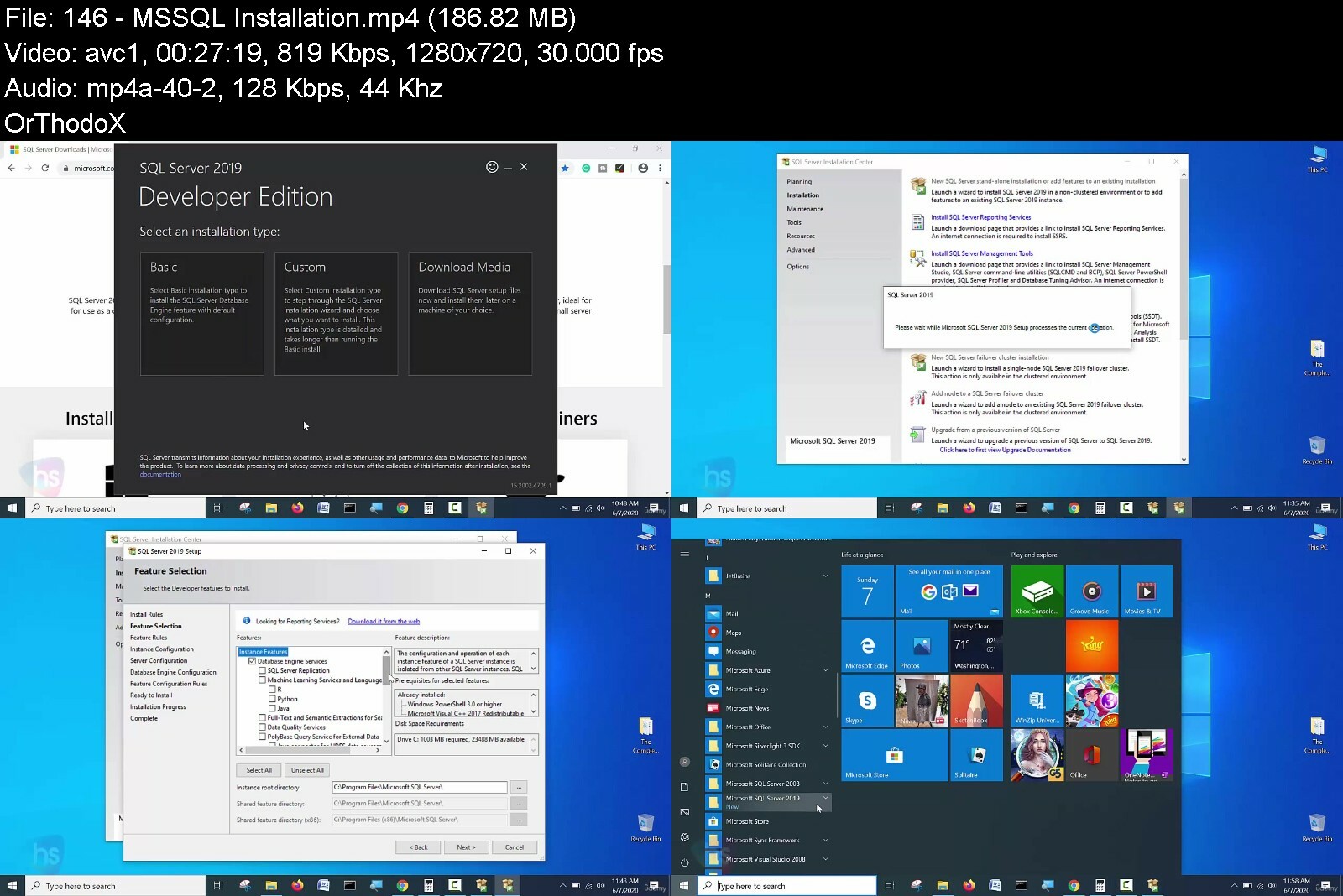
Lecture 146 MSSQL Installation
Lecture 147 MSSQL SSMS Installation
Lecture 148 Connecting to MS-SQL (Windows Authentication)
Lecture 149 Connecting to MS-SQL (SQL Server Authentication)
Section 26: MS SQL Statements
Lecture 150 SQL statement basic
Lecture 151 SELECT Statement
Lecture 152 SELECT DISTINCT
Lecture 153 Column AS Statement
Lecture 154 COUNT
Section 27: MS SQL Filtering Data
Lecture 155 SELECT WHERE Clause - One
Lecture 156 SELECT WHERE Clause - Two
Lecture 157 ORDER BY
Lecture 158 TOP in MSSQL
Lecture 159 BETWEEN
Lecture 160 IN Operator - Condition
Lecture 161 LIKE
Section 28: MS SQL Functions
Lecture 162 Overview of GROUP BY
Lecture 163 Aggregation Function - SUM()
Lecture 164 Aggregation Function - MIN()-MAX()
Lecture 165 GROUP BY - One(theory)
Lecture 166 GROUP BY - Two(practical)
Lecture 167 HAVING
Section 29: MS SQL Joins
Lecture 168 Overview of JOINS
Lecture 169 Introduction to JOINS
Lecture 170 AS Statement
Lecture 171 INNER Join
Lecture 172 Full Outer Join
Lecture 173 Left Outer Join
Lecture 174 Right Outer Join
Lecture 175 Union
Section 30: MS SQL Advanced commands
Lecture 176 Basic of Advanced SQL Commands
Lecture 177 Timestamp
Lecture 178 Extract from Timestamp
Lecture 179 Mathematical Scalar Functions
Lecture 180 String Functions
Lecture 181 SubQuery
Section 31: MS SQL Structure and Keys
Lecture 182 Basic of Database and Tables
Lecture 183 Data Types
Lecture 184 Select Datatype on SSMS
Lecture 185 How to set Primary Key
Lecture 186 How to set Foreign Key
Lecture 187 Create Table using SQL Script
Section 32: MS SQL Queries
Lecture 188 Insert query
Lecture 189 Update query
Lecture 190 Delete query
Section 33: MS SQL Structure queries
Lecture 191 Alter Table
Lecture 192 Drop Table
Section 34: MS SQL Constraints
Lecture 193 Check Constraint
Lecture 194 NOT NULL Constraint
Lecture 195 UNIQUE Constraint
Section 35: MS SQL Backup and Restore
Lecture 196 Overview of Database and Tables
Lecture 197 Creating a Database backup using SSMS
Lecture 198 Restoring a Database from backup using SSMS
Beginner CSS, Python coding and Microsoft SQL developers curious about data science development,Anyone who wants to generate new income streams,Anyone who wants to build websites,Anyone who wants to become financially independent,Anyone who wants to start their own business or become freelance,Anyone who wants to become a Full stack web developer


completecsspythonandmejiyw.jpg


Download from RapidGator


Download from Keep2Share



Math for Electricity and Magnetism

kin064jiivs0hhhrye7ickuctv.jpg


Math For Electricity And Magnetism
Last updated 11/2021
MP4 | Video: h264, 1280x720 | Audio: AAC, 44.1 KHz
Language: English | Size: 10.91 GB | Duration: 10h 18m

Give you the power of Mathematics, with 28 illustrated quiz with answers !


What you'll learn
Vector calculus : The definition of a vector, scalar product, vector product and more
Flux of a vector
Using matrices and determinants in vector calculus
Coordinate system: Cartesian, cylindrical and spherical coordinates
Profound details about the coordinate system like relations between the coordinate system and rotation matrix
Application of trigonometry in vector calculus and coordinate system
Recall about: differential of multivariable function
Infinitesimal line element in cartesian, cylindrical and spherical coordinates
Infinitesimal area element in cartesian, cylindrical and spherical coordinates
Infinitesimal volume element in cartesian, cylindrical and spherical coordinates
Gradient operator
Divergence operator
Curl operator
Other tools will come after, such as the Laplacian operator and more details about the operators.
Requirements
Fundamentals of Mathematics
Basic Analysis (like derivative of function of one variable)

Description
Physics is not hard, but if you don't have the tools for doing Physics, Physics become not just hard but impossible to do it, like a mechanic with not his tools, he can't work!
For example,*Electricity and Magnetism course is filled with strange symbols like grad, div, curl, partial derivative cos and sin combined...etc, and for this reason, this course maybe appears difficult for the first time, and maybe you can abandon physics...
Please don't lose hope, because you need first some tools for doing Physics, this beautiful subject.
Those tools can also help you in mechanics and*engineering.
And for this I represent you some concepts before going in electricity and magnetism course
Vector calculus: Definition of a vector, scalar product, vector productVector calculus: Flux of a vectorCoordinate system: Cartesian coordinatesCoordinate system: Cylindrical coordinatesCoordinate system: Spherical coordinatesCoordinate system: Relations between Cartesian and cylindrical coordinatesCoordinate system: Relations between Cartesian and spherical coordinatesTrigonometryRotation matrixInfinitesimal line element in the three coordinates systemsInfinitesimal area element*in the three coordinates systemsInfinitesimal volume element*in the three coordinates systemsGradient operator*Divergence operatorCurl operatorI promise you further details about operators
I hope that this course will be useful for you, pass 8 hours of video with pleasure!
Overview
Section 1: Vector calculus : Intro
Lecture 1 Introduction 1
Lecture 2 Introduction 2
Lecture 3 Example of a vector
Lecture 4 Equality of two vectors
Lecture 5 Unit vector
Lecture 6 Representation of a vector
Lecture 7 The magnitude of a vector
Lecture 8 Addition of vectors
Lecture 9 Addition of vectors, another notation
Lecture 10 Vector multiplication
Section 2: Vector calculus : Scalar product
Lecture 11 The scalar product of two vectors
Lecture 12 The scalar product of two vectors, part 2
Lecture 13 The scalar product in component representation
Lecture 14 Orthonormality relations
Lecture 15 The scalar product in component representation, part 2
Lecture 16 Flux of a vector
Section 3: Vector calculus : Vector product
Lecture 17 Vector product
Lecture 18 The magnitude of the vector product
Lecture 19 Properties of the vector product
Lecture 20 Rules of calculation
Lecture 21 Determinant
Lecture 22 Triple scalar product
Lecture 23 Geometrical interpretation of triple scalar product
Lecture 24 Properties of the triple scalar product
Section 4: Coordinate system : Cartesian coordinates
Lecture 25 Introduction and the expression of position vector in cartesian coordinates
Lecture 26 More details about cartesian basis
Lecture 27 Representation of x=constant, y=constant and z=constant
Section 5: Coordinate system : Cylindrical coordinates
Lecture 28 Introduction
Lecture 29 Cylindrical basis and more
Lecture 30 Remarks
Section 6: Coordinate system : Relations between cartesian and cylindrical coordinates
Lecture 31 The cartesian coordinates in function of cylindrical coordinates
Lecture 32 e_rho and e_phi in function of cartesian basis
Lecture 33 Remark 1 : e_rho in function of cartesian basis, second method
Lecture 34 e_phi in function of cartesian basis, second method
Lecture 35 e_z in function of cartesian basis, second method
Lecture 36 Remark 2
Lecture 37 Remark 3
Lecture 38 Remark 4 : Rotation matrix, part 1
Lecture 39 Remark 4 : Rotation matrix, part 2
Lecture 40 Remark 4 : Rotation matrix, part 3
Section 7: Coordinate system : Spherical coordinates
Lecture 41 Introduction
Lecture 42 Remark
Lecture 43 Spherical basis
Lecture 44 Remark 1
Lecture 45 Remark 1, part 2
Lecture 46 Remark 1, part 3
Lecture 47 Remark 2
Section 8: Coordinate system : Relations between cartesian and spherical coordinates
Lecture 48 The cartesian coordinates in function of spherical coordinates
Lecture 49 The spherical coordinates in function of cartesian coordinates
Lecture 50 The expression of position vector
Lecture 51 Unit vectors for spherical coordinates
Lecture 52 Unit vectors for spherical coordinates, part 2
Lecture 53 Remark 1
Lecture 54 Remark 2
Lecture 55 Remark 3
Lecture 56 Remark 4 : Rotation matrix in spherical coordinates
Section 9: Infinitesimal displacement vector, Area element and Volume element
Lecture 57 Recall : differential of a function of three variables
Lecture 58 Infinitesimal displacement vector in cartesian coordinates, and area element
Lecture 59 Volume element in cartesian coordinates
Lecture 60 Infinitesimal displacement vector in cylindrical coordinates, and area element
Lecture 61 Area element of a cylinder, exactly the lateral area
Lecture 62 Volume element in cylindrical coordinates
Lecture 63 Infinitesimal displacement vector in spherical coordinates
Lecture 64 Area element of a sphere
Lecture 65 Volume element in spherical coordinates
Section 10: The Gradient, Divergence and Curl
Lecture 66 The Gradient operator
Lecture 67 Gradient operator : Example, part 1
Lecture 68 Gradient operator : Example, part 2
Lecture 69 Gradient operator : Example, part 3
Lecture 70 Gradient operator : Example, part 4
Lecture 71 The divergence operator
Lecture 72 The curl operator
Section 11: Bonus Lectures
Lecture 73 Definition of an operator
Lecture 74 Equipotential surfaces
Lecture 75 Divergence
Lecture 76 Circulation
Lecture 77 Circulation, example
Section 12: Introduction to electrostatics
Lecture 78 Electrical constitution of matter
Lecture 79 Elecrtric charge
Lecture 80 What's electrostatics
Lecture 81 Charges distribution, point charge
Lecture 82 Charges distribution, continuous charge distribution, volume distribution
Lecture 83 Charges distribution, continuous charge distribution, surface distribution
Lecture 84 Charges distribution, continuous charge distribution, Linear distribution
If you beginning an electricity and magnetism course, this course is critical,You can also use those tools for mechanics


mathforelectricityandmhek3.jpg


Download from RapidGator


Download from Keep2Share



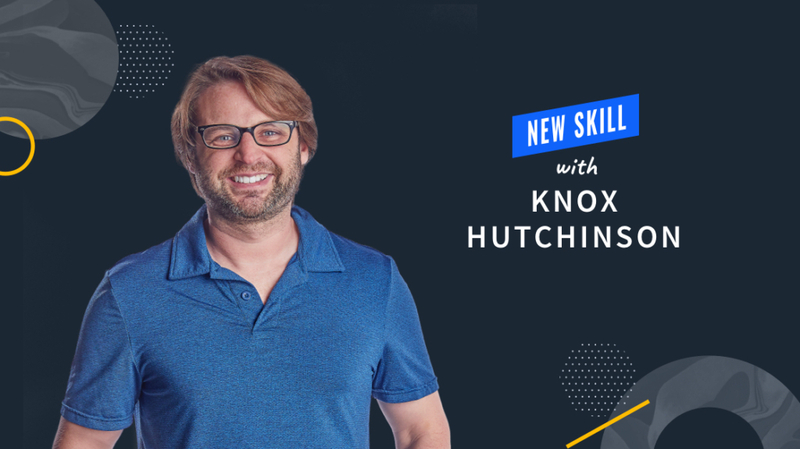
CBTNuggets - Server Administrator Training: Troubleshooting

knoxhutchinson21024x5mqdlj.jpg


CBTNuggets - Server Administrator Training: Troubleshooting
Published 06/2022
MP4 | Video: h264, 1920x1080 | Audio: AAC, 44.1 KHz, 2 Ch
Genre: eLearning | Language: English | Duration: 34 Lessons (4h 24m) | Size: 6.16 GB


This entry-level Server Troubleshooting training prepares network administrators to perform truly excellent troubleshooting so that your networks and systems keep running well and your solutions work the first time, every time.

Many people - both IT and non-IT professionals - often make the mistake of thinking that troubleshooting is a mindless task that anyone can do. This isn't helped by the one-size-fits-all checklists most people think of when they think of troubleshooting. But real troubleshooting is about isolating people's issues with a piece of technology and identifying the real, underlying problems. This training covers the steps to providing excellent troubleshooting and creating solutions that stick.
Once you're done with this CompTIA training, you'll know how to perform truly excellent troubleshooting so that your networks and systems keep running well and your solutions work the first time, every time.
For anyone who leads an IT team, this CompTIA training can be used to onboard new network administrators, curated into individual or team training plans, or as a CompTIA reference resource.
Server Troubleshooting: What You Need to Know
This Server Troubleshooting training has videos that cover troubleshooting techniques topics including
The approaches to providing excellent troubleshooting
Digging deep and identifying problems, not symptoms
Establishing theories and coming up with ways to test them
Choosing the best plan of action based on all your information
Who Should Take Server Troubleshooting Training?
This Server Troubleshooting training is considered administrator-level CompTIA training, which means it was designed for network administrators. This networking skills course is valuable for new IT professionals with at least a year of experience with troubleshooting techniques and experienced network administrators looking to validate their CompTIA skills.
New or aspiring network administrators. If you're a brand new network administrator, get ready to troubleshoot. No matter where you specialize your career or where you work, you'll be spending a lot of it trying to figure out underlying problems and coming up with fixes. This training will make sure you know the steps to follow and the questions to ask so that you can skip the worst parts of troubleshooting.
Experienced network administrators. Server administrators who've been working for a few years already are the people who know that, actually, turning it off and turning it on again works way more often than it probably should. But they're also the ones who know that there's a big difference between good troubleshooting and bad troubleshooting. This course helps you master the steps of great troubleshooting so your users stay online and happy.


serveradministratortr3jd2g.jpg


Download from RapidGator


Download from Keep2Share



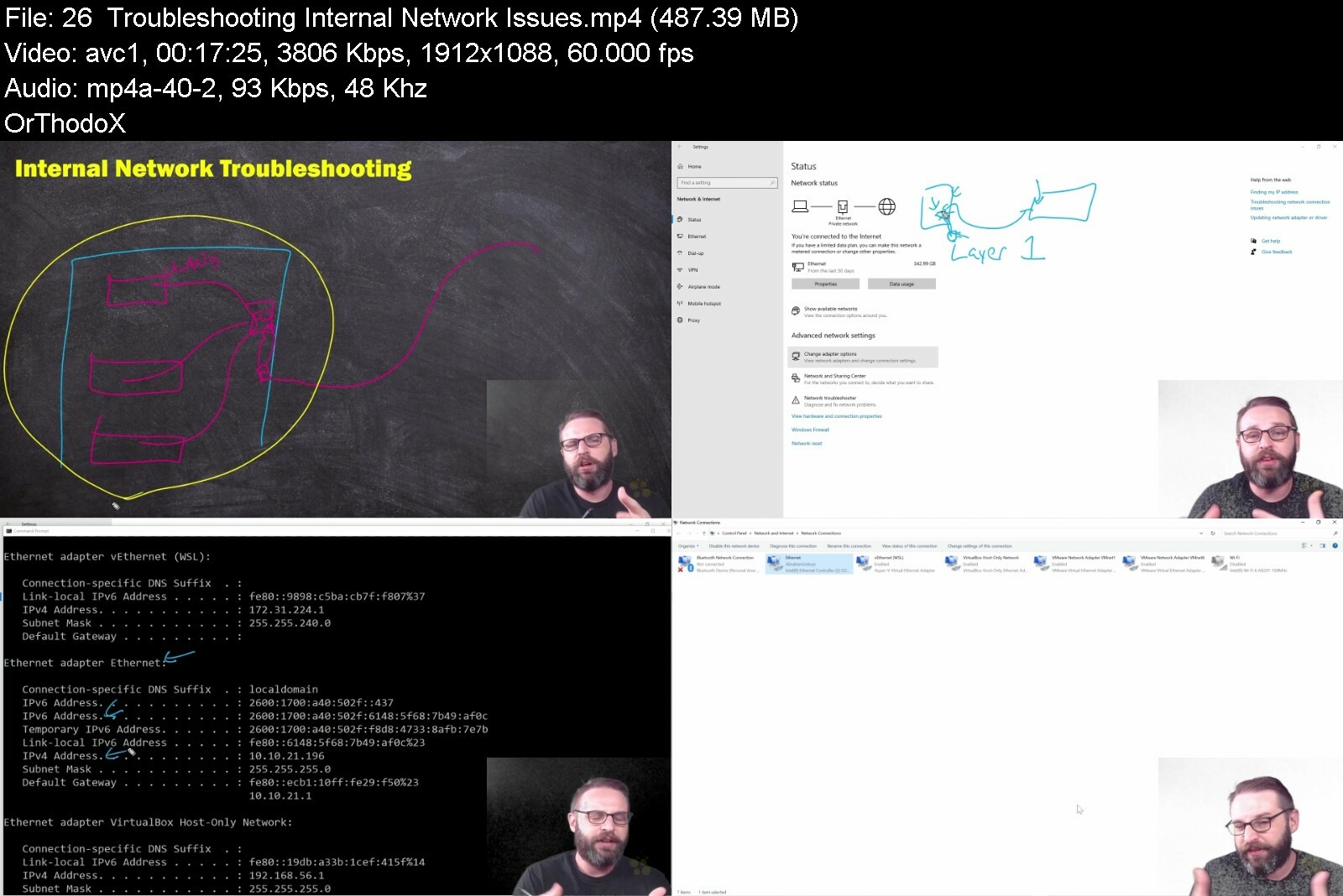
Become a Differential Equations Master

446723064dd2w8iqg.jpg


Become a Differential Equations Master
Published 06/2022
MP4 | Video: h264, 1280x720 | Audio: AAC, 44.1 KHz, 2 Ch
Genre: eLearning | Language: English + srt | Duration: 180 lectures (23h 16m) | Size: 6.33 GB


Learn everything from Differential Equations, then test your knowledge with 680+ practice questions


What you'll learn
First order equations, including linear, separable, and Bernoulli equations
Second order equations, including homogeneous and nonhomogeneous equations, undetermined coefficients, and variation of parameters
Modeling with differential equations, including Euler's method, the logistic equation, exponential growth and decay, electrical series, spring and mass systems
Series solutions, including power series solutions, nonpolynomial coefficients, and Frobenius' Theorem
Laplace transforms, including Laplace and inverse Laplace transforms, the Second Shifting Theorem, Dirac delta functions, and convolution integrals
Systems of differential equations, including solving systems with real and complex Eigenvalues, trajectories and phase portraits, and the matrix exponential
Higher order equations, including nonhomogeneous equations, their Laplace transforms, systems of higher order equations, and their series solutions
Fourier series, including periodic extensions, convergence of a Fourier series, Fourier cosine series and Fourier sine series, and piecewise functions
Partial differential equations, including separation of variables and boundary value problems, the heat equation, and Laplace's equation
Requirements
You should be comfortable with the Fundamentals of Math, like arithmetic (addition, subtraction, multiplication, division) of positive and negative numbers, fractions, and decimals.
You should be comfortable with Algebra, like equation solving, graphing, and factoring, plus exponents and roots.
You should be comfortable with the basic properties of the sine and cosine functions, from Trigonometry
You should be comfortable with simple differentiation and integration, plus the basics of sequences and series, from Calculus 1 and 2
You should be comfortable with simple partial differentiation of multivariable functions, from Calculus 3
Description
HOW BECOME A DIFFERENTIAL EQUATIONS MASTER IS SET UP TO MAKE COMPLICATED MATH EASY
This 260-lesson course includes video and text explanations of everything from Differential Equations, and it includes 76 quizzes (with solutions!) and an additional 9 workbooks with extra practice problems, to help you test your understanding along the way. Become a Differential Equations Master is organized into the following sections
First order equations, including linear, separable, and Bernoulli equations
Second order equations, including homogeneous and nonhomogeneous equations, undetermined coefficients, and variation of parameters
Modeling with differential equations, including Euler's method, the logistic equation, exponential growth and decay, electrical series, spring and mass systems
Series solutions, including power series solutions, nonpolynomial coefficients, and Frobenius' Theorem
Laplace transforms, including Laplace and inverse Laplace transforms, the Second Shifting Theorem, Dirac delta functions, and convolution integrals
Systems of differential equations, including solving systems with real and complex Eigenvalues, trajectories and phase portraits, and the matrix exponential
Higher order equations, including nonhomogeneous equations, their Laplace transforms, systems of higher order equations, and their series solutions
Fourier series, including periodic extensions, convergence of a Fourier series, Fourier cosine series and Fourier sine series, and piecewise functions
Partial differential equations, including separation of variables and boundary value problems, the heat equation, and Laplace's equation
AND HERE'S WHAT YOU GET INSIDE OF EVERY SECTION
Videos: Watch over my shoulder as I solve problems for every single math issue you'll encounter in class. We start from the beginning... I explain the problem setup and why I set it up that way, the steps I take and why I take them, how to work through the yucky, fuzzy middle parts, and how to simplify the answer when you get it.
Notes: The notes section of each lesson is where you find the most important things to remember. It's like Cliff Notes for books, but for math. Everything you need to know to pass your class and nothing you don't.
Quizzes: When you think you've got a good grasp on a topic within a course, you can test your knowledge by taking one of the quizzes. If you pass, great! If not, you can review the videos and notes again or ask for help in the Q&A section.
Workbooks: Want even more practice? When you've finished the section, you can review everything you've learned by working through the bonus workbook. The workbooks include tons of extra practice problems, so they're a great way to solidify what you just learned in that section.
HERE'S WHAT SOME STUDENTS HAVE TOLD ME ABOUT MY COURSES
"King is a thorough teacher, her course is broken up into easily-digestible parts. Do some every day - and before you know it, you have a better understanding of math!" - KDH.
"Once again, just like with Krista King's other courses, I got to enjoy clear explanations, and multiple examples, and discovered an unsuspected passion for math within myself. Highly recommended!" - Juan C.
"Straight forward and time-saving - thank you!" - Luisa B.
YOU'LL ALSO GET
Lifetime access to Become a Differential Equations Master
Friendly support in the Q&A section
Udemy Certificate of Completion available for download
30-day money back guarantee
Enroll today!
I can't wait for you to get started on mastering Differential Equations.
- Krista :)
Who this course is for
Current Differential Equations students, or students about to start Differential Equations who are looking to get ahead
Anyone who wants to study math for fun after being away from school for a while
Anyone who needs Differential Equations as a prerequisite for Machine Learning, Deep Learning, Artificial Intelligence, Computer Programming, Computer Graphics and Animation, Data Analysis, etc.


becomeadifferentialeqirch6.jpg


Download from RapidGator


Download from Keep2Share


 
CBTNuggets - Security Threats, Attacks, and Vulnerabilities Training

keithbarker41024x575c9c1u.jpg


CBTNuggets - Security Threats, Attacks, and Vulnerabilities Training
Released 05/2021
MP4 | Video: h264, 1920x1080 | Audio: AAC, 44.1 KHz, 2 Ch
Genre: eLearning | Language: English | Duration: 70 Lessons (6h 31m) | Size: 6.15 GB


This foundational security training prepares security technicians to recognize, compare, and contrast different types of cybersecurity vulnerabilities and threats and indicators associated with network attacks

Whether you're on your way to earning your CompTIA Security+ certification, working toward a different cybersecurity cert, or just trying to expand your knowledge of digital network security, this training represents a crucial first step in your journey.
You can't keep a computer network or system safe if you don't know what a threat to the system looks like, how different attacks work, or what your network's unique vulnerabilities are. Now you can: learn social engineering techniques, different types of attacks, and network vulnerabilities.
This Security Threats, Attacks and Vulnerabilities training is derived from the first of CompTIA Security+ certification exam's five exam objectives and will prepare you in the broadest way possible.
After finishing the videos in this Security Threats, Attacks, and Vulnerabilities training, you'll know how to recognize, compare, and contrast different types of cybersecurity vulnerabilities and threats and indicators associated with network attacks.
For anyone with security technicians on their team, this CompTIA training can be used to onboard new security technicians, curated into individual or team training plans, or as a CompTIA reference resource.
Security Threats, Attacks, and Vulnerabilities: What You Need to Know
For any security technician looking to improve their proficiency with basic security concepts, this CompTIA course covers topics such as
Comparing and contrasting different types of social engineering techniques
Determining the type of attack, given certain indicators
Recognizing application attacks like injections, cross-site scripting, and more
Understanding the range of options network attackers have for infiltration and penetration
Who Should Take Security Threats, Attacks, and Vulnerabilities Training?
This Security Threats, Attacks, and Vulnerabilities training is considered associate-level CompTIA training, which means it was designed for security technicians with 1 to 3 years of experience -- or no experience at all. This security course is valuable for new or aspiring IT professionals, experienced security technicians looking to validate foundational skills, and non-technical professionals.
Basic security concepts user training. Don't make the mistake of assuming this Security Threats, Attacks and Vulnerabilities training is best for IT professionals. Network and system security professionals are constantly immersed in threats and solutions - it's the people who don't normally work with cybersecurity who need to recognize hacking attempts or spot wireless vulnerabilities. That's how an organization and its networks are kept safe.
New or aspiring IT professionals. If you're a brand new security technician, or you're looking for a chance to break into that career field, consider starting your career off on the right foot with this Security Threats, Attacks and Vulnerabilities training. It's a perfect primer for the many different approaches a hostile actor might take to try and break into your networks. Learning this material early will set you up for long-term success in your cybersecurity career.


securitythreatsattackape3q.jpg


Download from RapidGator


Download from Keep2Share


Embedded Systems Advance Bare-Metal Programming

47173460f302qjc6f.jpg


Embedded Systems Advance Bare-Metal Programming
Published 06/2022
MP4 | Video: h264, 1280x720 | Audio: AAC, 44.1 KHz, 2 Ch
Genre: eLearning | Language: English + srt | Duration: 55 lectures (13h 31m) | Size: 6.94 GB


No Libraries used, Professional CMSIS Standard,RTC,IWDG,WWDG, DMA_ADC,DMA_I2C,DMA_SPI,DMA_UART,DMA_PWM


What you'll learn
Write firmware using only bare-metal embedded-c
Write DMA Analog-to-Digital Converter (ADC) drivers using bare-metal embedded-c
Write DMA PWM drivers using bare-metal embedded-c
Write DMA UART drivers using bare-metal embedded-c
Write DMA SPI drivers using bare-metal embedded-c
Write DMA I2C drivers using bare-metal embedded-c
Develop proficiency in your embedded development skills and confidently take the next steps
Requirements
No programming experience needed - I'll teach you everything you need to know.
We shall be using the STM32 IDE which is FREE.
Description
Are you tired of Copying and Pasting code you don't understand?
With a programming based approach, this course is designed to give you a solid foundation in bare-metal firmware development for ARM-based microcontrollers . The goal of this course is to teach you how to navigate the microcontroller reference manual and datasheet to extract the right information to professionally build peripheral drivers and firmware. To achieve this goal, no libraries are used in this course, purely bare-metal embedded-c and register manipulations.
Still keeping it simple, this course comes in different ARM Cortex-M development boards so that students can put the techniques to practice using an ARM Cortex-M development board of their choice. This version of the course uses the STMicroelectronics STM32F4-NUCLEO which has an ARM Cortex-M4 microcontoller.
So with that understood, let me tell you.
Exactly What You're Getting
This is dramatically different from any course you have ever taken because it's more of a professional hands-on "field guide" to stm32 bare metal firmware development.
The reason why is because there's no fluff or filler. It immediately gets down to the actual subject, showing you exactly what to do, how to do it, and why.
Plus, it's easy.
And you'll immediately "get" the entire mythology I personally use to build firmware for consumer devices in my professional life.
It's About MORE Than Just Getting the Code to Work
See, this course will change your professional life forever. Here is what one student had to say about the course
"I would suggest this course for all the beginners. The concepts have been covered in the right sequence.And also the best part of this lecture series is getting to know how to explore the reference manual and datasheets."
Here is what another student had to say
"Extremly helpful to get to understand the uC programming deeper! For me it is much easier from now to develop code because I undertstand the base behind, so I'm more confident and more experienced to develop and debug the code. Really, this course is very useful to link the hardware knowledge with the coding skills. This fills the gap between them. Thanks for it! :)"
A third student
"I am a professional semiconductor chipset application engineer with 30 years in global embedded product design in system applications. I can say this teacher is very straight forward by sharing his many years knowledge to the students with his true heart. Yes. I love his teaching pace and style!"
Taken by 5000+ Students with 1000+ Reviews
If at least one of the following applies to you then keep reading if not then simply skip this course
" Escape From "
Copying/Pasting code you don't understand
Using third party libraries and header files like HAL, LL and StdPeriph
Experiencing bugs you don't understand
Being afraid of technical documentations like the reference manual and datasheet of the chip
Imposter syndrome
" Arrive At "
Building every single line of code from scratch by writing to the microcontroller's memory space directly.
Using No third party libraries or header files
Understanding and writing every single line of code yourself- no Copy/Paste
Using the debugger effectively to analyze and resolve any bugs
Developing proficiency in your embedded development skills and confidently take the next steps
So like I said, there's more than just getting each piece of code to work.
Here's an overview of what you're getting...
Analyzing the chip documentations
Before developing the firmware for any chip you have to learn how to read the documentation provided by the chip manufacturer.
Defining Peripheral address
All components on the microcontroller have an address range. To write to a component or read from a component you need to locate its address range in the documentation and properly define the addresses in your code.
Creating registers from the address
The addresses in the address range of a component represent the registers of that component. To access these registers you have effectively typecast the addresses.
Understanding CMSIS
Cortex-Microcontroller Interface Standard (CMSIS)CMSIS is a standard developed by Arm for all Cortex-Microcontrollers. This is the standard used in professional firmware development
But it gets better because you're also getting.
Deep Lessons on Developing Peripheral Drivers
You will learn how to develop bare-metal drivers for the following peripherals
Analog-to-Digital Converter (ADC)
​Serial Peripheral Interface (SPI)
Inter-Integrated Circuit (I2C)
Direct Memory Access (DMA)
Nested Vector Interrupt Controller (NVIC)
General Purpose Timers (TIM)
System Tick Timer (SysTick)
General Purpose Input/Output (GPIO)
Specially Designed For People Who Hate Copy/Paste
Listen. If you don't like "Copy/Paste" you're not alone. I can't stand it either. I'd literally rather have a piece of code that I wrote from scratch that doesn't work than someone else's working code I copied and pasted.
And that's why I've spent months designing and recording this course in which I show you how to locate every single register used and the meaning of every hexadecimal value written into the register.
Also it comes with a money back guarantee so you have nothing to loose.
Who this course is for
If you are an absolute beginner to embedded systems, then take this course.
If you are an experienced embedded developer and want to learn how to professionally develop embedded applications for ARM processors, then take this course.


embeddedsystemsadvancnkizx.jpg


Download from RapidGator


Download from Keep2Share


Chess Opening - Keep it simple for Black

470551022152fwdfy.jpg


Chess Opening - Keep it simple for Black
Published 06/2022
MP4 | Video: h264, 1280x720 | Audio: AAC, 44.1 KHz, 2 Ch
Genre: eLearning | Language: English + srt | Duration: 22 lectures (6h 37m) | Size: 5.6 GB


An easy to learn a Complete Black repertoire against everything


What you'll learn
Offer few nasty surprises against Queen's Gambit with tactical weapon Grunfeld!
Against 1.e4, play Sicilian and test your opponents' tactical skills with interesting lines
Break up the London setup by playing with a sharp ...c5 pawn break
Bust the Bird (1.f4) with amusingly annoying moves that will wreck White's kingside
Learn to fight against English in a symmetrical way
Crush 1.b3 with double fianchetto setup
Requirements
The chess player should have at least 1100-1200 online chess rating
Description
Every time when you'll play with a black perspective it would be a little bit difficult because usually White side will chose the opening and you need to know how to react to it in a correct way. And this course will help you to build solid Repertoire for Black against everything White may play.
Every Opening from White covered. That's right - this is a lifetime repertoire covers every possible try from White in 6 hours video and you have the chance to train with PGN files which included inside the course.
So what's inside the course?
You'll learn to fight 1.d4 and even 1.c4 and 1. Nf3 variations. Against 1.d4, your main weapon will be the Grunfeld defence well known for its tactical variations and of course, for one of the thoughest opening White to crack. This tried-and-true opening will stand up to master level play - and even offer a few nasty surprises to your opponents.
Against 1.e4, another opening with full of calculation stands for Sicilian. Well, the reason Sicilian you don't need to do much memorization as other openings and in most cases all you need would be to setup the simple structure. In the Anti-Sicilian variations Black often times plays with e6 structure which helps to cut off some theory and go straight to middlegames with good advantages.
Since this course full Repertoire for Black, of course our journey will stop at these openings. You'll also learn how to
- Break up the London setup by playing with a sharp ...c5 pawn break
- Crush 1.b3 with double fianchetto setup
- Bust the Bird (1.f4) with amusingly annoying moves that will wreck White's kingside
and more!
Who this course is for
Best for amateur and club players
People who has not good opening repertoire with Black perspective
Chess players who wants to build solid repertoire for Black against everything


chessopeningkeepitsimcdfb3.jpg


Download from RapidGator


Download from Keep2Share


Complete CSS, Python and MySQL crash course from scratch

472410681b1vsi1n.jpg


Complete CSS, Python and MySQL crash course from scratch
Published 06/2022
MP4 | Video: h264, 1280x720 | Audio: AAC, 44.1 KHz, 2 Ch
Genre: eLearning | Language: English + srt | Duration: 196 lectures (23h 2m) | Size: 10.1 GB


Design and Development complete course with CSS, Python Programming and MySQL database


What you'll learn
Build coding for webapps
Get a job as a junior web developer
Create your own stunning, layouts for awesome websites
Start their own online business
Master client-end design using CSS, back-end development Python coding with MySQL
Apply CSS, Python for data science and MySQL database queries on real-world tasks
Create fully function web apps using Python, CSS and MySQL
Requirements
No programming experience needed. You will learn everything you need to know
No software is required in advance of the course (all software used in the course is free)
No pre-knowledge is required - you will learn from basic
Description
In this course, we will learn the basic tools that every Web developer needs to know. We will start from the scratch by learning how to implement modern web development with CSS, Python and MySQL.
Learn to code CSS3, Python and MySQL is The first step to Coding you need to learn to succeed in web development, it is easy to learn and understand our online CSS, Python and MySQL Training course is designed for you with the complete steps to require learn Complete Developer topics. Mr. Sekhar Metla[MCP - Microsoft Certified Professional] will explain to you even complex topics to simplify and teach you even beginners can easily understand with real-time examples.
At this Development course is without a doubt the most comprehensive web development course available online. Even if you have zero programming experience, this course will take you from beginner to mastery. Here's why
The course is taught by the lead instructor having 20+ years of professional experience.
Become a Full-Stack Web Developer with just ONE course. Design and Development complete course with CSS, Python Programming and MySQL database
The course has been updated to be trending technology ready and you'll be learning the latest tools and technologies used at large companies such as Apple, Facebook, Google and Netflix.
The curriculum was developed over a period of four years, with comprehensive student testing and feedback who are working and applying these coding examples.
We've taught many students how to code and many have gone on to change their lives by becoming professional developers or starting their own tech startup.
The course is constantly updated with new content, with new projects and modules determined by students - that's you!
We'll take you step-by-step through engaging video tutorials and teach you everything you need to know to succeed as a web developer.
The course includes HD video tutorials and builds your programming knowledge while making real-world websites and web apps.
Throughout this comprehensive course, we cover a massive amount of tools and technologies, including
CSS3
Front-End Web Development
Client-side style
Font styles
Box model
Animations
Forms
Shadows
Calculation
Layouts
and more..
Python
Variables
Data types
Statements
Sequences
Control flow statements
Code Development
Web Design
Functions
Games
Object oriented programming[OOPs]
Class
Methods
Inheritance
Polymorphism
Abstraction
Error Handling
and more..
MySQL
SQL installation
Database
Tables
SQL functions
SQL statements
SQL operators
SQL joins
SQL advanced
filtering data
analyzing data
grouping data
Reports
and more..
By the end of this course, you will be fluently programming and be ready to make any website you can dream of.
Sign up today, and look forward to
HD Video Lectures
Code Challenges and Coding Exercises
Beautiful Real-World dynamic Projects
ABOUT YOUR INSTRUCTOR
Sekhar Metla is a software engineer with 20 years of professional experience. He is the author of several online-selling courses with more than 30,000+ students in many countries. He has a Master of Science in Computer Applications as Software Engineering. His students describe him as passionate, pragmatic, and motivational in his teaching.
What are you waiting join now to start learning how to make your own Developer Career TODAY :)
Who this course is for
Beginner CSS, Python coding and MySQL developers curious about data science development
Anyone who wants to generate new income streams
Anyone who wants to build websites
Anyone who wants to become financially independent
Anyone who wants to start their own business or become freelance
Anyone who wants to become a Full stack web developer


completecsspythonandm4pig3.jpg


Download from RapidGator


Download from Keep2Share


Project Management - Complete Guide For A+ Project Managers

vuq2adshl1vbhwic76ev197i66.jpg


Project Management - Complete Guide For A+ Project Managers
Published 6/2022
MP4 | Video: h264, 1280x720 | Audio: AAC, 44.1 KHz
Language: English | Size: 9.03 GB | Duration: 10h 50m

Complete guide to project management - stakeholders, planning, cost, quality, risks, feasibility, methods & resourcing


What you'll learn
Know the different Project Management Terminologies and Guidelines
Understand the Difference between Project and General Management
Discuss the Difference between Project and Programmes
Learn Key elements of Strategic and Project Management Thinking
Familiarize with the skills needed for Project Managers
Understand the Iron Triangle & Diamond Approach
Discuss the PMBOK and the Project Management Life Cycle
Test Project Feasibility
Determine the who are the Stakeholders and the Project
Learn how to do Stakeholder Analysis and Manage Stakeholders
Know the Outline of a Feasibility Study
Learn Fundamental Project Management Tools and Project Planning
Learn how to put a resource plan together
Know the benefits of resource planning and the work breakdown structure
Learn how to use a mind map to help create a WBS
Know the Project tools - the activity on node network diagram
Learn PERT terminology and creating PERT chart
Learn Activity, Methods, and other Factors
Learn what is Project Cost and Procurement Management
Discuss the Project Operational Plan
Familiarize with the Project Quality Management & Risk
Learn the RACI Matrix Rules and Roles
Learn Project Communication Plan and Project Communications
Know how to manage a team
Assembling the Project Team and Example of Skills Inventory Matrix
Understand what is Conflict Management
Know how to Delegate Project Responsibilities
Learn Project Monitoring and Risk Management
Determine Project Success & Failure
Requirements
There are no requirements or pre-requisites for this course

Description
Get instant access to a 131-page workbook on Project ManagementIntroduce yourself to our community of students in this course and tell us your goals with project managementEncouragement and celebration of your progress every step of the way: 25% > 50% > 75% & 100%10 hours of clear and concise step by step instructions, lessons, and engagementThis course provides the best Project Management topics for college students, freshers, and professionals. Learn how to apply the skills of Project Management in the real world.What you will learn:Know the different Project Management Terminologies and GuidelinesUnderstand the Difference between Project and General ManagementDiscuss the Difference between Project and ProgrammesKey elements of Strategic and Project Management ThinkingFamiliarize with the skills needed for Project ManagersUnderstand the Iron Triangle & Diamond ApproachDiscuss the PMBOK and the Project Management Life CycleTest Project FeasibilityDetermine the who are the Stakeholders and the ProjectStakeholder Analysis and Manage StakeholdersKnow the Outline of a Feasibility StudyFundamental Project Management Tools and Project PlanningResource planningKnow the benefits of resource planning and the work breakdown structureUse a mind map to create a WBSKnow the Project tools - the activity on node network diagramPERT terminology and creating PERT chartActivity, Methods, and other FactorsProject Cost and Procurement ManagementDiscuss the Project Operational PlanFamiliarize with the Project Quality Management & RiskRACI Matrix Rules and RolesProject Communication Plan and Project CommunicationsKnow how to manage a teamAssembling the Project Team and Example of Skills Inventory MatrixUnderstand what is Conflict ManagementKnow how to Delegate Project ResponsibilitiesProject Monitoring and Risk ManagementDetermine Project Success & Failure...and more!Contents and OverviewYou'll start with Project Management Terminologies and Guidelines; Difference between Project and General Management; Difference between Project and Management Functions; Difference between Project and Programmes; Key elements of Strategic and Project Management Thinking; Skills needed for Project Managers; Additional Skills needed for Project Managers; Iron Triangle & Diamond Approach; The PMBOK; Project initiation and Scope; Time, Cost, Quality, and Human Resource; Communication, Risk, Procurement, and Stakeholders; PMBOK Knowledge Areas; The Project Management Life Cycle.We will also cover Stakeholders and the Project; Project Stakeholders and Stakeholder Involvement; Stakeholder Analysis and Other Factors; Managing Stakeholders; Decision tree 1-4 discussion; The Project Charter; The Charter should address; The Feasibility Study; Undertaking a Feasibility Study part 1; Undertaking a Feasibility Study part 2; Outline of Feasibility Study; Fundamental Project Management Tools and Project Planning; Project Goals and Objectives, Project Scope, and its Statement examples; Plan the Project and its examples; Learn about the Resource Plan; Learn how to put a resource plan together; Know the benefits of resource planning and the work breakdown structure; Learn how to use a mind map to help create a WBS; Learn the steps to develop a WBS and example of it; Project tools - the activity on node network diagram; Learn CPM tools; Learn about the 3 Point Estimate; Learn what is Activity Network Diagram; Learn what is project evaluation review technique and creating PERT chart; Learn PERT terminology and creating PERT chart; Advantage and Disadvantage of PERT; Learn Activity, Methods, and other Factors; Learn what is Gantt Chart; Learn what is Project Cost Management; Project Procurement Management; Learn Procurement Management Processes; Discussing Contract Types and Standard Contract.This course will also tackle What is Project Scheduling; Project Operational Plan; Project Crashing; Preparing for Quality Factors on Project Quality Management; Components involved in Project Quality Management; Learn how to implement the quality policy and create quality assurance; Learn how to implement Quality Control; Project Risk Management and Preparing for Quality; Risk Appetite and Tolerance and Risk Strategies; Learn Risk Analysis and the Cost of Risk; Learn Risk Probability; Learn Risk Impact and Effective Risk Management; Potential Benefits of Risk Management; What is RACI and an example of RACI Matrix; Learn the RACI Matrix Rules and Roles; Learn the RACI Matrix Rules and Roles; Learn the RACI Best Practices; Learn Project Communication Plan and Project Communications; Project Communications; Performance Reporting; Performance Reporting and its factors.Next, we will discuss What is Project Team Development?; Project Types; Assembling the Project Team and Example of Skills Inventory Matrix; Performance Reporting and 5 stages of Team Development; Leading Project Team Meetings; What is Conflict Management; Delegating Project Responsibilities; Team Dynamics and Roles; Poor Group Dynamics and Strategies for Improving Group Dynamics; Delegating Project Responsibilities and its factors; Sources of Conflict; Factors on Sources of Conflict; Continuation of Sources of Conflicts; Types of Conflicts; Conflict Resolution; Project Quality Management; Project Execution Components; Continuation of Project Execution and its factors; Deliverables and Questions on Project Execution; Project Execution Elements and their Description; Monitoring and Controlling the Project.Then, Project Closure; Define Project Success or Failure; Project Success; Characteristics of Successful Projects; Factors of Project Failure.Who are the Instructors?Linda Coetzee is your lead instructor - a professional making a living from teaching project management.*As a project management expert, she has joined with content creator Peter Alkema to bring you this amazing new course.You'll get premium support and feedback to help you become more confident as an A+*Project Manager! We can't wait to see you on the course!Enroll now, and we'll help you improve your project manager skills!Peter and Linda
Overview
Section 1: Introduction
Lecture 1 Introduction
Lecture 2 You CAN Be An A+ Project Manager - Your Learning Journey On A Wipeboard
Lecture 3 Introduce Yourself To Your Fellow Students And Tell Everyone What Are Your Goals
Lecture 4 Let's Celebrate Your Progress In This Course: 25% > 50% > 75% > 100%!!
Lecture 5 Download & Briefly Preview The 131 Page A+ Project Management Workbook You Get
Section 2: Fundamentals of Project Management
Lecture 6 Project Management Terminologies and Guidelines
Lecture 7 Difference between Project and General Management
Lecture 8 Difference between Project and Management Functions
Lecture 9 Difference between Project and Programmes
Lecture 10 Key elements of Strategic and Project Management Thinking
Lecture 11 Skills needed for Project Managers
Lecture 12 Additional Skills needed for Project Managers
Section 3: Iron Triangle & Diamond Approach
Lecture 13 Iron Triangle & Diamond Approach
Section 4: PMBOK & Life Cycle
Lecture 14 The PMBOK
Lecture 15 Project initiation and Scope
Lecture 16 Time, Cost, Quality, and Human Resource
Lecture 17 Communication, Risk, Procurement, and Stakeholders
Lecture 18 PMBOK Knowledge Areas
Lecture 19 The Project Management Life Cycle
Section 5: Knowledge Check 1 - Project Management Fundamentals
Section 6: Project Feasibility
Lecture 20 Stakeholders and the Project
Lecture 21 Project Stakeholders and Stakeholder Involvement
Lecture 22 Stakeholder Analysis and Other Factors
Lecture 23 Managing Stakeholders
Lecture 24 Decision tree 1-4 discussion
Lecture 25 The Project Charter
Lecture 26 The Charter should address
Lecture 27 You've Achieved 25% >> Let's Celebrate Your Progress And Keep Going To 50% >>
Lecture 28 The Feasibility Study
Lecture 29 Undertaking a Feasibility Study part 1
Lecture 30 Undertaking a Feasibility Study part 2
Lecture 31 Outline of Feasibility Study
Section 7: Project Planning
Lecture 32 Fundamental Project Management Tools and Project Planning
Lecture 33 Project Goals and Objectives, Project Scope, and its Statement examples
Lecture 34 Plan the Project and its examples
Lecture 35 Learn about the Resource Plan
Lecture 36 Learn how to put a resource plan together
Lecture 37 Know the benefits of resource planning and the work breakdown structure
Lecture 38 Learn how to use a mind map to help create a WBS
Lecture 39 Learn the steps to develop a WBS and example of it
Section 8: Budget Planning, Cost Management, Procurement Management
Lecture 40 Project tools - the activity on node network diagram
Lecture 41 Learn CPM tools
Lecture 42 Learn about the 3 Point Estimate
Lecture 43 Learn what is Activity Network Diagram
Lecture 44 Learn what is project evaluation review technique and creating PERT chart
Lecture 45 Learn PERT terminology and creating PERT chart
Lecture 46 Advantage and Disadvantage of PERT
Lecture 47 Learn Activity, Methods, and other Factors
Lecture 48 Learn what is Gantt Chart
Lecture 49 Learn what is Project Cost Management
Lecture 50 Project Procurement Management
Lecture 51 Learn Procurement Management Processes
Lecture 52 You've Achieved 50% >> Let's Celebrate Your Progress And Keep Going To 75% >>
Lecture 53 Discussing Contract Types and Standard Contract
Section 9: Milestones and Scheduling
Lecture 54 Learn what is Project Scheduling
Lecture 55 Project Operational Plan
Lecture 56 Project Crashing
Section 10: Project Quality Management & Risk
Lecture 57 Preparing for Quality Factors on Project Quality Management
Lecture 58 Components involved in Project Quality Management
Lecture 59 Learn how to implement the quality policy and create quality assurance
Lecture 60 Learn how to implement Quality Control
Lecture 61 Project Risk Management and Preparing for Quality
Lecture 62 Risk Appetite and Tolerance and Risk Strategies
Lecture 63 Learn Risk Analysis and the Cost of Risk
Lecture 64 Learn Risk Probability
Lecture 65 Learn Risk Impact and Effective Risk Management
Lecture 66 Potential Benefits of Risk Management
Section 11: Knowledge Check 2 - Project Planning
Section 12: Plan Communication
Lecture 67 What is RACI and an example of RACI Matrix
Lecture 68 Learn the RACI Matrix Rules and Roles
Lecture 69 RACI Matrix Disadvantages and How to Create a RACI Matrix 1
Lecture 70 Learn the RACI Best Practices
Lecture 71 Learn Project Communication Plan and Project Communications
Lecture 72 Project Communications
Lecture 73 Performance Reporting
Lecture 74 Performance Reporting and its factors
Section 13: Project Team Development
Lecture 75 What is Project Team Development?
Lecture 76 Project Types
Lecture 77 You've Achieved 75% >> Let's Celebrate Your Progress And Keep Going To 100% >>
Lecture 78 Assembling the Project Team and Example of Skills Inventory Matrix
Lecture 79 Performance Reporting and 5 stages of Team Development
Lecture 80 Leading Project Team Meetings
Section 14: Conflict Management
Lecture 81 What is Conflict Management
Lecture 82 Delegating Project Responsibilities
Lecture 83 Team Dynamics and Roles
Lecture 84 Poor Group Dynamics and Strategies for Improving Group Dynamics
Lecture 85 Delegating Project Responsibilities and its factors
Lecture 86 Sources of Conflict
Lecture 87 Factors on Sources of Conflict
Lecture 88 Continuation of Sources of Conflicts
Lecture 89 Types of Conflicts
Lecture 90 Conflict Resolution
Section 15: Knowledge Check 3 - Conflict Management
Section 16: Project Quality Management
Lecture 91 Project Quality Management
Section 17: Project Monitoring and Risk Management
Lecture 92 Project Execution Components
Lecture 93 Continuation of Project Execution and its factors
Lecture 94 Deliverables and Questions on Project Execution
Lecture 95 Project Execution Elements and their Description
Lecture 96 Monitoring and Controlling the Project
Section 18: Project Closure
Lecture 97 Project Closure
Section 19: Project Success & Failure
Lecture 98 Define Project Success or Failure
Lecture 99 Project Success
Lecture 100 Characteristics of Successful Projects
Lecture 101 Factors of Project Failure
Lecture 102 You've Achieved 100% >> Let's Celebrate! Remember To Share Your Certificate!!
Section 20: Knowledge Check 4 - Project Monitoring and Risk Management
Project managers looking to grow their skills and be more consistent with successful projects,Anyone looking for more insights, tips, tricks and techniques about project management,People involved in projects who want to understand more about how projects work


projectmanagementcompzdcio.jpg


Download from RapidGator


Download from Keep2Share


John McIntyre - Drop Dead Copy 2022

4be515dcacca56e8a6a0dd52a2a1168c.jpg

DropDeadCopy - Copywriting Bundle 2021 | 150.45 GB
Here's What You Get From Each Expert:
Bill Mueller's The Story Sales Machine
This digital course + email template pack shows you how to create your Story Sales Machine and start using power of story in your business.

You'll get email-by-email breakdowns, dozens of examples, templates, a 10-email welcome sequence strategy, 212 subject lines, 141 story idea starters, and much more.
Use the Story Sales Machine to write story-based emails in minutes. Plan out and write entire email sequences in the time it currently takes you to write just one email!

Here's what The Story Sales Machine will do for you:
- Get The Story Sales Machine and effortlessly write emails people WANT to open and read while watching email performance skyrocket.
- Use story to engage your prospects emotionally so you can sell more by showing, sell more through "projection," and sell more through relevance.
- Imagine in the time it takes to write one email, having an entire sequence complete (the emails practically write themselves when you know what to say, where, and how) .
- Finally have consistent email marketing because there's no need to wonder "what do I write?" Just reference your Story Sales Machine!
- Accelerate the relationship-building process so subscribers know, like, and trust you faster.
- Picture prospects enjoying your emails so much that they actually reach out to ask, "Hey, is everything okay?" because you "missed" a day.
- PLUS: Get follow-along examples, a 10-step welcome sequence strategy, 212 subject lines, 141 ways to create stories, my best performing email swipe file, and much, much more.

What's included:
- Story Sales Machine Training
- 10-Step Welcome Sequence Strategy
- 212 Subject Lines, Emails, & More
- Bonus #1: Neglected List Study
- Bonus #2: Best Email Swipe File
- Bonus #3: 141 Story Idea Pack
- Bonus #4: 80 Min Story Seminar
- Bonus #5: 1-on-1 Strategy Call

HOmeage:

Screenshots
bd4e5f15eda0922156fc30c08b78b3fe.jpg


Link Download
Extract files with WinRar 5 or Latest !
 
Momentum Stock Options Workshop - Reeds Trader

e95212efc2924b806ff048f1d0e6e5f9.jpg

Reedstrader - Momentum Stock Options Workshop | 8.89 GB
Right Start To Go With The Flow of Options Trading - Momentum Stock Options Workshop

Confusions might have stirred you with whether you should trade options, which are broken down in the Momentum Stock Options Workshop by Reeds Trader from the insightful perspectives of an experienced trader, Chuck Whitman. There will be a space that allows your trading growth as long as you choose the right point of view with a right start.

The course mentions the notable advantages of options trading, such as higher liquidity and multiple strategic alternatives. However, the most fascinating factor of options trading is the minimized risk - taking as long as the right strategy is applied. The improvisation of various trading strategies unlocks the solutions to the market instability.

Some talkings might be dazzling but lack convincing points if there is no reality. As a result, Momentum Stock Options Workshop intertwines the knowledge with illustrations of real case studies. An intimate understanding of Options trading fundamentals builds up a firm footing to deep dive into the trading techniques.
"Be Like Water" to Maintain Options Trading Liquidity

You are introduced to basic options strategies such as long call, short call, long/short put, long/short straddle, etc. Besides, this course equips you with the synthetic equivalents. Once the mastery of such underlying strategies is acquired, you are upgraded to obtain the optimal risk/reward ratio with the practices of flexibility and discipline.

The set of 16 rules are elaborated under the instruction of Chuck Whitman in the Momentum Stock Options Workshop. The disciplined mindset saves you from counting the costs of being affected by the market crisis. The clear view of the market trends is accomplished to set up viable strategies and tactics.

Moreover, the adaptation of powerful tools is packed in the explicit explanation to smooth the process of profit momentum and dwindling risk. The rigorous analysis is crucial to get the upper hand in the options trading market, which is provided with a complete playbook of the Momentum Stock Options Workshop.

As mentioned, the freedom of strategy improvisation is the advantage that helps you master the market volatility. The Momentum Stock Options Workshop serves you how to turbocharge options trading profits, such as getting a right timing of trade start/stop. Besides, the emphasis is put on the guidance of REED$TRADER Mechanical System to trade with objectivity for long - term profitability.

Momentum Stock Options Workshop underlies the "Be Like Water" philosophy when the adaptability and discipline are complementing each other to help you win more in options trading. In other words, you can increase your trading liquidity.

HOmepage:

Screenshots
65efb7419417adcd131670c59e8cf221.jpg


Link Download
Extract files with WinRar 5 or Latest !
 
The Course Builder's Laboratory by Danny Iny

a8a94150241e72b80d91c3d55e6a0e4e.jpg

Danny Iny - Course Builder´s Laboratory | 3.38 GB
Introducing "Course Builder's Laboratory" by Danny Iny
The rigorously tested, step-by-step process for rapidly building products that earn 6- or even 7-figures in 2015 by delivering EXACTLY what your audience wants. all without risking a dime.

If you've ever spent months, or even years, writing an e-book, designing an e-course, or building a membership site that nobody ended up buying, you're in the right place.
(And if you don't want that to ever happen to you, you're in the right place, too!)
.because, for the first time ever, I will reveal the EXACT process I used to repeatably and reliably build blockbuster products that transformed my company from a penniless startup to a thriving 7-Figure Online Business.
It's a proven and repeatable process that once learned, guarantees you'll:
1. Only spend your precious time, energy and cash on creating what your audience will eagerly line up to pay for.
2. Never have to engage in sleazy, high-pressure sales tactics again (you know. the kind that makes you want to take a 2-hour shower just to rinse off the stench).
3. ALWAYS know precisely what to do next in order to scale up your business and take it to the next level (no more one-hit-wonders or blind shots in the dark).
Now I won't mislead you into thinking that achieving this will be easy, but providing you're determined and willing to put in the effort, the 5 Module and 20 - Lesson Course Builder's Laboratory is GUARANTEED to take you all the way.

MODULE 1: Learning What People Want
Lesson 1 - Mining for Pilot Opportunities
Lesson 2 - Digging Deeper with Personal Conversations
Lesson 3 - Listening to What Your Audience is Telling You
Lesson 4 - Generating Solid Ideas
MODULE 2: TEACHING AND DELIVERY
Lesson 5 - Teaching Basics
Lesson 6 - Planning a Curriculum
Lesson 7 - Understanding Online Learning
Lesson 8 - Effective Onboarding
MODULE 3: SELLING PILOTS AND COURSES
Lesson 9 - Timelines and Deadlines
Lesson 10 - Selling through Email, Landing Pages, and Blog Posts
Lesson 11 - Selling with Partners
Lesson 12 - Effective Webinars

Screenshots
dea31ceb6c3e7be14fcb34b148af75dd.jpg


Link Download
Extract files with WinRar 5 or Latest !
 
Zurück
Oben Unten