• Regeln für den Video-Bereich:

    In den Börsenbereich gehören nur Angebote die bereits den Allgemeinen Regeln entsprechen.

    Einteilung

    - Folgende Formate gehören in die angegeben Bereiche:
    - Filme: Encodierte Filme von BluRay, DVD, R5, TV, Screener sowie Telesyncs im Format DivX, XviD und x264.
    - DVD: Filme im Format DVD5, DVD9 und HD2DVD.
    - HD: Encodierte Filme mit der Auflösung 720p oder darüber von BluRay, DVD, R5, TV, Screener sowie Telesyncs im Format x264.
    - 3D: Encodierte Filme von BluRay, die in einem 3D Format vorliegen. Dies gilt auch für Dokus, Animation usw.
    - Serien: Cartoon/Zeichentrick, Anime, Tutorials, Dokumentationen, Konzerte/Musik, Sonstiges sind demnach in die entsprechenden Bereiche einzuordnen, auch wenn sie beispielsweise im High Definition-Format oder als DVD5/DVD9/HD2DVD vorliegen. Ausnahme 3D.
    - Bereich Englisch: Englische Releases gehören immer in diesen Bereich.
    - Bereich Talk: Der Bereich, in dem über die Releases diskutiert werden kann, darf, soll und erwünscht ist.


    Angebot/Beitrag erstellen

    - Ein Beitrag darf erst dann erstellt werden, wenn der Upload bei mindestens einem OCH komplett ist. Platzhalter sind untersagt.
    - Bei einem Scenerelease hat der Threadtitel ausschließlich aus dem originalen, unveränderten Releasenamen zu bestehen. Es dürfen keine Veränderungen wie z.B. Sterne, kleine Buchstaben o.ä. vorgenommen werden. Ausnahme Serienbörse:
    - Bei einem Sammelthread für eine Staffel entfällt aus dem Releasename natürlich der Name der Folge. Beispiel: Die Simpsons S21 German DVDRip XviD - ITG
    - Dementsprechend sind also u.a. verboten: Erweiterungen wie "Tipp", "empfehlenswert", "only", "reup", usw. / jegliche andere Zusatzinformation oder Ergänzung, welche nicht in obiger Beschreibung zu finden ist.

    Aufbau des Angebots und Threadtitel

    Der Titel nach folgendem Muster erstellt zu werden. <Name> [3D] [Staffel] [German] <Jahr> <Tonspur> [DL] [Auflösung] <Quelle> <Codec> - <Group>
    Beispiel: The Dark Knight German 2008 AC3 DVDRip XviD - iND
    Beispiel: The Dark Knight 2008 DTS DL BDRip x264 - iND
    Beispiel: The Dark Knight 2008 AC3 DL BDRip XviD - iND
    Beispiel: The Dark Knight German 2008 AC3 720p BluRay x264 iND
    Beispiel: The Dark Knight 2008 DTS DL 1080p BluRay x264 iND
    Beispiel: Die Simpsons S01 German AC3 DVDRip XviD iND
    Beispiel: Die Simpsons S20 German AC3 720p BluRay x264 iND
    Beispiel: Sword Art Online II Ger Sub 2014 AAC 1080p WEBRip x264 - peppermint
    Entsprechend sind also u.a. verboten: Sonderzeichen wie Klammern, Sterne, Ausrufezeichen, Unterstriche, Anführungszeichen / Erweiterungen wie "Tipp", "empfehlenswert", "only", "reup", usw. / jegliche andere Zusatzinformation oder Ergänzung, welche nicht in obiger Beschreibung zu finden ist
    Ausnahmen hiervon können in den Bereichen geregelt sein.

    Die Beiträge sollen wie folgt aufgebaut werden:
    Überschrift entspricht dem Threadtitel
    Cover
    kurze Inhaltsbeschreibung
    Format, Größe, Dauer sind gut lesbar für Downloader außerhalb des Spoilers zu vermerken
    Nfo sind immer Anzugeben und selbige immer im Spoiler in Textform.
    Sind keine Nfo vorhanden z.B. Eigenpublikationen, sind im Spoiler folgende Dateiinformationen zusätzlich anzugeben :
    Quelle
    Video (Auflösung und Bitrate)
    Ton (Sprache, Format und Bitrate der einzelnen Spuren)
    Untertitel (sofern vorhanden)
    Hosterangabe in Textform außerhalb eines Spoiler mit allen enthaltenen Hostern.
    Bei SD kann auf diese zusätzlichen Dateiinformationen verzichtet werden.

    Alle benötigten Passwörter sind, sofern vorhanden, in Textform im Angebot anzugeben.
    Spoiler im Spoiler mit Kommentaren :"Schon Bedankt?" sind unerwünscht.


    Releases

    - Sind Retail-Release verfügbar, sind alle anderen Variationen untersagt. Ausnahmen: Alle deutschen Retail-Release sind CUT, in diesem Fall sind dubbed UNCUT-Release zulässig.
    - Im Serien-Bereich gilt speziell: Wenn ein Retail vor Abschluss einer laufenden Staffel erscheint, darf diese Staffel noch zu Ende gebracht werden.62
    - Gleiche Releases sind unbedingt zusammenzufassen. Das bedeutet, es ist zwingend erforderlich, vor dem Erstellen eines Themas per Suchfunktion zu überprüfen, ob bereits ein Beitrag mit demselben Release besteht. Ist dies der Fall, ist der bereits vorhandene Beitrag zu verwenden.
    - P2P und Scene Releases dürfen nicht verändert oder gar unter einem iND Tag eingestellt werden.


    Support, Diskussionen und Suche

    - Supportanfragen sind entweder per PN oder im Bereich Talk zu stellen.
    - Diskussionen und Bewertungen sind im Talk Bereich zu führen. Fragen an die Uploader haben ausschließlich via PN zu erfolgen, und sind in den Angeboten untersagt.
    - Anfragen zu Upload-Wünschen sind nur im Bereich Suche Video erlaubt. Antworten dürfen nur auf Angebote von MyBoerse.bz verlinkt werden.


    Verbote

    - Untersagt sind mehrere Formate in einem einzigen Angebotsthread, wie beispielsweise das gleichzeitige Anbieten von DivX/XviD, 720p und 1080p in einem Thread. Pro Format, Release und Auflösung ist ein eigener Thread zu eröffnen.
    - Grundsätzlich ebenso verboten sind Dupes. Uploader haben sich an geeigneter Stelle darüber zu informieren, ob es sich bei einem Release um ein Dupe handelt.
    - Gefakte, nur teilweise lauffähige oder unvollständige Angebote sind untersagt. Dies gilt auch für eigene Publikationen, die augenscheinlich nicht selbst von z.B. einer DVD gerippt wurden. Laufende Serien, bei denen noch nicht alle Folgen verfügbar sind, dürfen erstellt und regelmäßig geupdatet werden.
    - Untersagt sind Angebote, welche nur und ausschließlich in einer anderen Sprache als deutsch oder englisch vorliegen. Ausnahmen sind VORHER mit den Moderatoren zu klären.


    Verstoß gegen die Regeln

    - Angebote oder Beiträge, die gegen die Forenregeln verstoßen, sind über den "Melden"-Button im Beitrag zu melden.
  • Bitte registriere dich zunächst um Beiträge zu verfassen und externe Links aufzurufen.

*** Bestes IPTV *** bester Preis *** gratis Test ***


Englische Tutorials

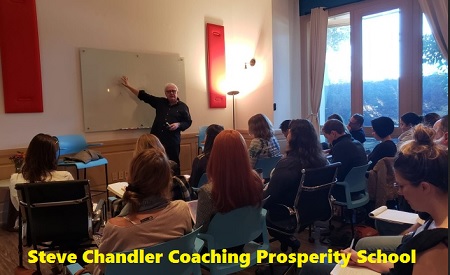
The Steve Chandler Coaching Prosperity School 2022

d1272f3215232ad3c0c2e1baad18af15.jpg

Steve Chandler - Online Coaching Prosperity School | 11.9 GB
All the tips, ideas, strategies and client-enrollment, practice-building principles made famous for over a decade in the live versions of the ACS (Advanced Client Systems) are now captured and thoroughly contained in this comprehensive, content-rich downloadable video and audio program featuring many hours of teaching directly from Steve Chandler and a stellar cast of super-successful coaches all of whom are graduates of this school.

What You Get:
MAIN COURSE
Introduction with Jason Goldberg
Lesson 1 - Selling Without Selling
Lesson 2 - Taking Ownership
Lesson 3 - Great Teaching from Master Coach Rich Litvin.
Lesson 4 - The Ladder
Lesson 5 - LISTENING
Lesson 6 - Master coach Aila Coats on Coaching Teenagers!
Lesson 7 - Tom Chi CREATIVE LISTENING
Lesson 8 - CREATING a COMMUNITY of COACHING PROSPECTS
Lesson 9 - The Referral TRIANGLE
Lesson 10 - Service and the Referral Family Tree
Lesson 11 - Kamin Samuel on WEALTH and Coaching
Lesson 12 - Stephen McGhee and Mind, Body and Spirit of the Coach
Lesson 13 - How to SERVE and GROW RICH
Lesson 14 - Giver vs. Taker and Optimism vs. Pessimism
Lesson 15 - INFORMATION vs. TRANSFORMATION
Lesson 16 - Guest Teacher Carolyn Freyer-Jones
Lesson 17 - The First Three Disciplines
Lesson 18 - Jason Goldberg on GETTING CLIENTS from SOCIAL MEDIA
Lesson 19 - Disciplines 4, 5 and 6
Lesson 20 - Disciplines 7, 8 and 9
Lesson 21 - Practical Spirituality with Tina Quinn
Lesson 22 - Disciplines 10, 11 and 12
Lesson 23 - Disciplines 13, 14 and 15
Lesson 24 - Guest Teacher Michael Neill
Lesson 25 - Disciplines 16, 17 and 18
Lesson 26 - CREATIVELY SERVING with Melissa Ford
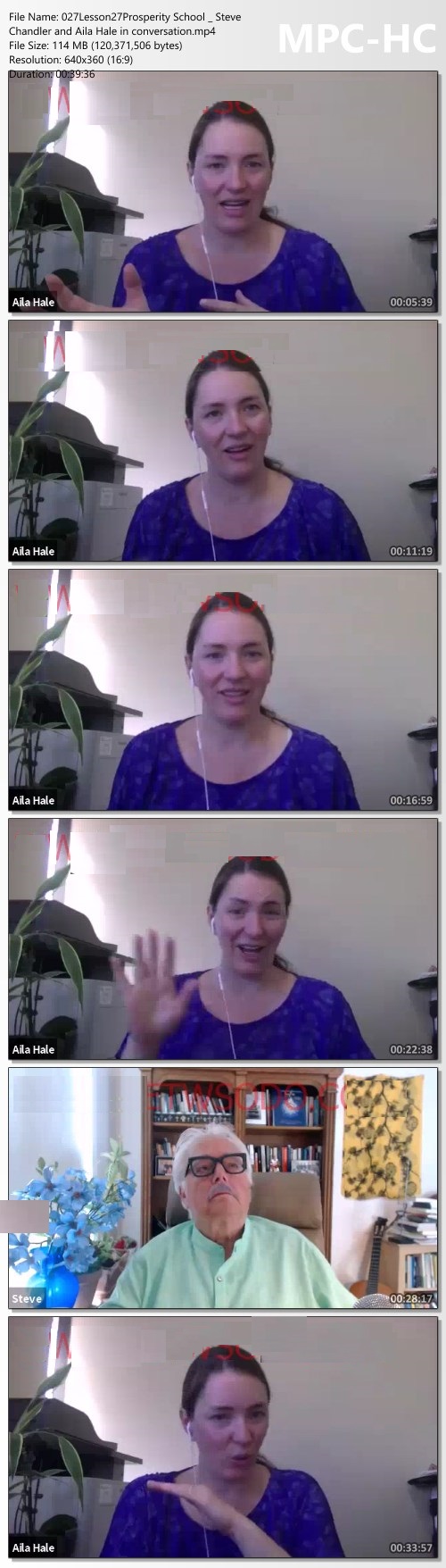
Lesson 27 - Goal Line Soul Line
Lesson 28 - Guest Teacher Interview with Ron Wilder
Lesson 29 - Part TWO of Carolyn Freyer-Jones
Lesson 30 - Devon Bandison Coaching is a Game Changer
Lesson 31 - Karen Davis: The Coaching Accelerator
Lesson 32 - Ankush Jain Three Principles Coaching
Lesson 33 - How Do We Talk About What We Do? with Guest Coach Teena Goble
Lesson 34 - Prosperity through Transformation: Master Coach SIAWASH ZAHMAT
Lesson 35 - Alex Mill: Coaching and Meditation
Lesson 36 - The Power of Commitment
Lesson 37 - Chris Dorris Shares How to Make Today the Best Damn Day of Your Life

HOmpage:

Screenshots
da0f9e4dbacaa99b34169b5455bc02e3.jpg


Link Download
Extract files with WinRar 5 or Latest !
 
Ccnp Enterprise -Encor-350-401 Part1/5

gyz7cqyhyi0c3zjaykudu4fjvg.jpg


Ccnp Enterprise -Encor-350-401 Part1/5
Last updated 4/2022
MP4 | Video: h264, 1280x720 | Audio: AAC, 44.1 KHz
Language: English | Size: 6.24 GB | Duration: 14h 54m

Learn Switching Technologies


What you'll learn
Switching Concepts
Virtual LAN, Trunking
Spanning-tree Protocol, STP, RSTP, MSTP
Switchport Analyser SPAN-RSPAN
Requirements
CCNA Routing & Switching Knowlege CCNA 200-125 or CCNA 200-301

Description
This course is the First Part of CCNP ENTERPRISE ENCOR 350-401 Video Series by Triple CCIE Certified Trainer Sikandar Shaik (CCIEx3 - RS/SP/SEC) The core exam is also the qualifying exam for CCIE Enterprise certification. Passing this exam helps toward earning both of these certificationsThe ENCOR - Implementing and Operating Cisco Enterprise Network Core Technologies v1.0 course gives you the knowledge and skills needed to configure, troubleshoot, and manage enterprise wired and wireless networks. You'll also learn to implement security principles within an enterprise network and how to overlay network design by using solutions such as SD-Access and SD-WAN.This exam tests a candidate's knowledge of implementing core enterprise network technologies including Dual stack (IPv4 and IPv6) architecture,Virtualization,Infrastructure (L2 and L3) Network assurance, SecurityNetwork Automation.This course is the First Part of CCNP ENTERPRISE ENCOR 350-401 Video Series by Triple CCIE Certified Trainer Sikandar Shaik (CCIEx3 - RS/SP/SEC) The core exam is also the qualifying exam for CCIE Enterprise certification. Passing this exam helps toward earning both of these certificationsThe ENCOR - Implementing and Operating Cisco Enterprise Network Core Technologies v1.0 course gives you the knowledge and skills needed to configure, troubleshoot, and manage enterprise wired and wireless networks. You'll also learn to implement security principles within an enterprise network and how to overlay network design by using solutions such as SD-Access and SD-WAN.This exam tests a candidate's knowledge of implementing core enterprise network technologies including Dual stack (IPv4 and IPv6) architecture,Virtualization,Infrastructure (L2 and L3) Network assurance, SecurityNetwork Automation.

Overview

Section 1: About Cisco Certifications

Lecture 1 About Cisco

Lecture 2 Cisco Certifications - Updates

Lecture 3 Cisco Re-Certifications

Lecture 4 CCNP Certifications

Lecture 5 CCIE Certifications

Lecture 6 Cisco Certification Migration Options

Lecture 7 CCNP Required Exams

Section 2: WORKBOOKS DOWNLOAD LINKS - IMAGES DOWNLOAD

Lecture 8 WORKBOOKS DOWNLOAD LINKS - IMAGES DOWNLOAD

Section 3: CCNP ENCOR - 350-401 Overview

Lecture 9 CCNP ENCOR - 350-401 Overview

Lecture 10 ENCOR - 350-401 Contents

Section 4: Labs- VIrtual GNS3

Lecture 11 Cisco Lab Options

Lecture 12 Supported Virtual Images - GNS3- EVE-ng

Lecture 13 About GNS3

Lecture 14 Installing GNS3 - Windows

Lecture 15 GNS3 - IOS Images

Lecture 16 Default Topology - GNS3 - IOS initial Configs

Lecture 17 IOS Default Topology

Lecture 18 GNS3 Topology-HOST Computer

Lecture 19 GNS3 - VMware Setup

Lecture 20 GNS3 - IOSv L2-L3

Lecture 21 GNS3 - ASAv Setup

Lecture 22 GNS3 - IOU-L2-L3

Section 5: EVE-NG Virtual Platform

Lecture 23 EVE-NG Virtual Platform

Lecture 24 IOL Devices - EVE-nG

Lecture 25 Adding Viptela Devices - EVE-NG Lab

Lecture 26 Windows - EVE-NG

Lecture 27 CSR1000v - EVE-NG

Section 6: Basic Switching

Lecture 28 local Area Network

Lecture 29 Ethernet

Lecture 30 SOHO LANs

Lecture 31 Enterprise LAN

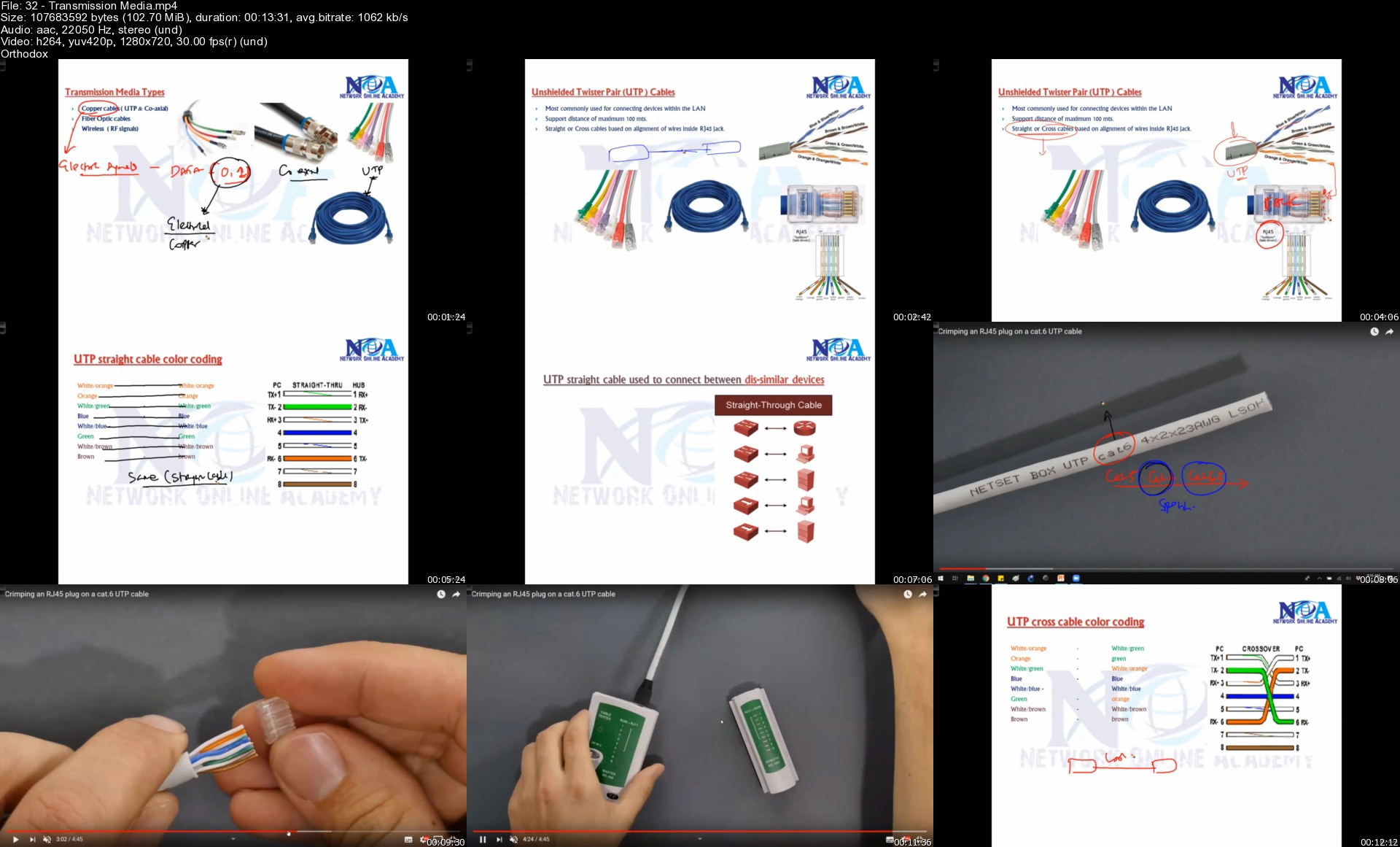
Lecture 32 Transmission Media - UTP Cables

Lecture 33 Fiber Cables - Wireless

Lecture 34 Basic LAN Setup

Lecture 35 Address Resolution Protocol

Section 7: VIrtual VLAN - VLAN

Lecture 36 What is Broadcast Domain

Lecture 37 What is VLAN ?

Lecture 38 VLAN Types

Lecture 39 VLAN Ranges

Lecture 40 Creating VLANs

Lecture 41 VLAN - Assigning Ports

Lecture 42 VLAN Design Best Practices

Lecture 43 Voice VLAN

Lecture 44 Management VLAN

Section 8: Trunking Concepts

Lecture 45 VLAN - Multiple Switches

Lecture 46 Trunk Links

Lecture 47 Access LInks - Trunk Links

Lecture 48 802.3 Ethernet Frame Format

Lecture 49 Frame Tagging - Trunk Links

Lecture 50 Trunking Protocols - ISL - DOT1Q

Lecture 51 Trunk Links - Configuration

Section 9: INTER-VLAN ROUTING

Lecture 52 Forwarding Traffic Between VLANs

Lecture 53 Inter VLAN Routing - Methods

Lecture 54 Inter VLAN Routing - using Physical Gateway

Lecture 55 Inter VLAN Routing - using Physical Gateway - Configuration

Lecture 56 Inter VLAN Routing - using Physical Gateway - Limitations

Lecture 57 Inter VLAN Routing - with SUb Interfaces

Lecture 58 Inter VLAN Routing - with SUb Interfaces - Configuration PART 1

Lecture 59 Inter VLAN Routing - with SUb Interfaces - Configuration PART 2

Lecture 60 Inter VLAN Routing - with SUb Interfaces - Advantages-DisAdvantages

Lecture 61 L3 Routed Ports

Lecture 62 Switch Virtual Interface (SVI) - L3 Switch

Lecture 63 Switch Virtual Interface - Configuration

Lecture 64 Switch Virtual Interface - Multiple Switches

Lecture 65 L3 Routed Ports

Section 10: Logical vs Physical Toplogy

Lecture 66 Default Physical Topology

Lecture 67 Logical Topology - Example 1

Lecture 68 Logical Topology - Example 2

Lecture 69 Logical Topology - Example 3

Lecture 70 Logical Topology - MOCK LAB 1

Lecture 71 Logical Topology - MOCK LAB 2

Lecture 72 Logical Topology - MOCK LAB 3

Lecture 73 Logical Topology - using SUb-Interfaces

Section 11: VLAN Trunking Protocol

Lecture 74 What is VTP

Lecture 75 VTP Modes

Lecture 76 VTP - Configuration

Section 12: Spanning Tree Protocol

Lecture 77 Bridging Loops with Redundant Links

Lecture 78 Bridging Loops and STP

Lecture 79 How STP works

Lecture 80 Selecting Root Bridge

Lecture 81 Root Bridge Verification

Lecture 82 Root Port Selection - PART 1

Lecture 83 Root Port Selection - PART 2

Lecture 84 STP Discussed -Review

Lecture 85 Selecting Designated Ports

Section 13: Spanning Tree Protocol - Terminology

Lecture 86 Root Port (vs) Designated Ports

Lecture 87 STP Hello BPDUs

Lecture 88 STP Convergence

Lecture 89 STP Timers

Lecture 90 STP Interface States

Section 14: Tuning Spanning Tree Protocol

Lecture 91 Hierarchial Campus Network Design

Lecture 92 Manual Selection of Root Bridge - STP

Lecture 93 Tunning STP - COst -Priority - Timers

Lecture 94 EtherChannel - Port Channel - LInk Aggregation

Lecture 95 Spanning Tree Port Fast

Section 15: Rapid Spanning Tree Protocol

Lecture 96 STP default Convergence Time

Lecture 97 Rapid Spanning Tree Protocol

Lecture 98 RSTP Port Roles

Lecture 99 RSTP BPDUs

Section 16: Per VLAN STP - Multiple STP

Lecture 100 Per VLAN STP

Lecture 101 Multiple STP

Lecture 102 LAB- MSTP

Lecture 103 Tuning - MSTP - Port Priority - COST

Section 17: Switch Port Analyser - SPAN - RSPAN - ERSPAN

Lecture 104 Switch Port Analyser - SPAN

Lecture 105 SPAN example -2

Lecture 106 Remote SPAN

Lecture 107 Remote SPAN - Example 2

Lecture 108 Encapsulated Remote SPAN

Lecture 109 SPAN Conditions & Restrictions

Anyone who wants to prepare for the CCNP Enterprise certification exams,Anyone who wants to learn routing at professional level

Homepage


32transmissionmedias2ljqv.jpg


Make-Up For Beginners: Learn Doing Make-Up Like A Pro

h78ssqfphno0bjyrf9perflk2z.jpg


Make-Up For Beginners: Learn Doing Make-Up Like A Pro
Last updated 3/2022
MP4 | Video: h264, 1280x720 | Audio: AAC, 44.1 KHz
Language: English | Size: 7.08 GB | Duration: 6h 25m

Take your make-up skills to a completely new level. In-depth training for all make-up lovers


What you'll learn
Do your own make-ups professionally, so that they last longer and enhance your beautiful features.
Creating various Beauty looks, feeling more confident in working with other women.
Choosing tools for make-up, taking good care of them, and using them for best results
Using color theory principles when choosing colors in make-up.
Hiding skin's imperfections and creating flawless results using different types of foundations.
Contouring and highlighting create the illusion of depth and a more sculpted look.
Shaping eyebrows and enhancing their beautiful shape.
Correcting eye shapes and mastering many eye make-up techniques from natural to more dramatic looks.
Working with different textures of lip products to correct lip shape, achieving a long-lasting result, make lips either stand out or remain more subtle
Requirements
There are no special requirements to taking this course. You might need to purchase professional make-up brush set and tools as well as complete your make-up kit
You can practice all the techniques on yourself. However, if you have a dream of doing makeups professionally, it is best to find model(s) for practice.

Description
This course on professional makeup will help you master many important techniques that professional make-up artists use to create contemporary looks in their everyday work. After completing it you will be able to enhance your own or other women's beautiful features, disguise minor faults in one's appearance and express yourself creatively. The course consists of 30 video tutorials and is designed so that you can master all the techniques gradually, starting from relatively simple techniques and then moving on to the more demanding techniques. From this course you will learn how to: choose your tools, take good care of them, and use them for best results; use color theory principles when choosing colors in make-up when working with different people;use different types of foundations to make skin look flawless;contour and create the illusion of depth on the face and a more sculpted look with makeup;slightly adjust the shape of eyebrows and enhance their beautiful shape with makeup;correct various eye shapes and master many eye make-up techniques that will make eyes stand out;work with different types of lip products to correct lip shape, create lasting results, make them stand out, or remain more subtle (to make eyes look even more expressive). It will take around 10 hours to go through all the video tutorials. Remember, to acquire new practical skills, it is crucial to apply everything you learn in practice. It might take you up to 20 hours to do all the makeups at least once on yourself or on your model(s). However, for best results, it is recommended to do each of the makeups at least 2-3 times. Therefore, mastering all the techniques of this course might take you up to 60 hours. In addition to video tutorials, you'll also receive a comprehensive workbook and a full list of high-quality professional make-up products that are used in the demo lessons and that are highly praised by beauty professionals due to their impeccable quality.

Overview

Section 1: Introduction

Lecture 1 Introduction

Section 2: Professional tools

Lecture 2 Workbook. Tools and cosmetics

Lecture 3 Makeup brushes & tools overview

Lecture 4 Taking care of tools, brushes and make-up products

Section 3: Work ethics

Lecture 5 Workbook. Work ethics

Lecture 6 Work ethics

Section 4: Color theory

Lecture 7 Workbook. Colour theory

Lecture 8 Colour wheel and colour combinations

Lecture 9 Choosing colours in makeup

Section 5: Skin

Lecture 10 Workbook. Skin

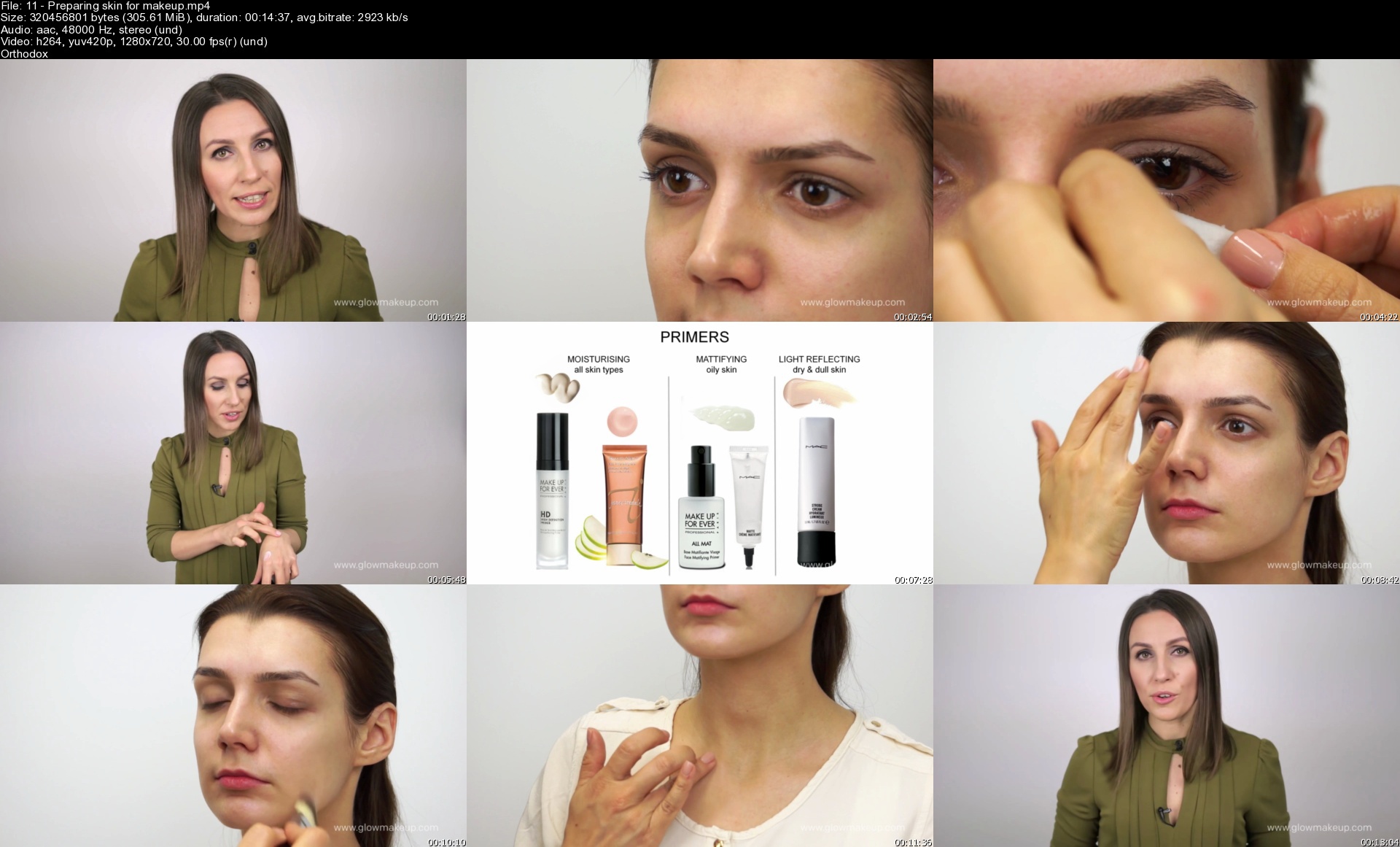
Lecture 11 Preparing skin for makeup

Lecture 12 Perfect base, light coverage

Lecture 13 Perfect base, full coverage

Lecture 14 Perfect base, mineral powders

Lecture 15 Optimal set of foundations

Section 6: Cheeks & Contouring

Lecture 16 Workbook. Cheeks and contouring

Lecture 17 Blush application techniques

Lecture 18 Contouring techniques

Lecture 19 Soft contouring with powders

Lecture 20 Strong contouring with powders

Lecture 21 Professional sculpting with creams and powders

Section 7: Eyebrows

Lecture 22 Workbook. Eyebrows

Lecture 23 Easy eyebrow correction with makeup

Section 8: Eyes

Lecture 24 Workbook. Eyes

Lecture 25 Eye shapes & their correction techniques

Lecture 26 Enhancing lashes

Lecture 27 Natural eye makeup technique

Lecture 28 Classical eyeliner technique (cake eyeliner vs. cream liner)

Lecture 29 Soft smoky eye technique

Lecture 30 White vs. dark water line technique

Lecture 31 Eye makeup with a darker outer corner

Lecture 32 Smokey eye makeup. Single lashes application. 2 variations

Lecture 33 Intense smokey eye technique

Lecture 34 Double eyeliner technique

Lecture 35 Strip lashes application. 2 variations

Lecture 36 Glitter application

Section 9: Lips

Lecture 37 Workbook. Lips

Lecture 38 Lips part one: natural lips, nude lips

Lecture 39 Lips part two: long-lasting and bright-coloured lipsticks

Section 10: Final part

Lecture 40 Tips on practicing your new skills

Lecture 41 Practice work. Eyes & lips

Lecture 42 Full list of products used on the models during the course

Lecture 43 Certificate from Glow International Makeup School

If you like experimenting with makeup and creating stylish and clean looks either on yourself or on others, this course is for you,The course is meant for those starting to develop new skills and perfect their make-up application technique, or those dreaming of an exciting career as a make-up artist,This course can be interesting for those, who already have basic knowledge in make-up, but want to take their skills to a new level,If you already have extensive experience as a make-up artist and looking for more advanced and creative techniques, this course is probably not for you

Homepage


11preparingskinformaki2k7h.jpg


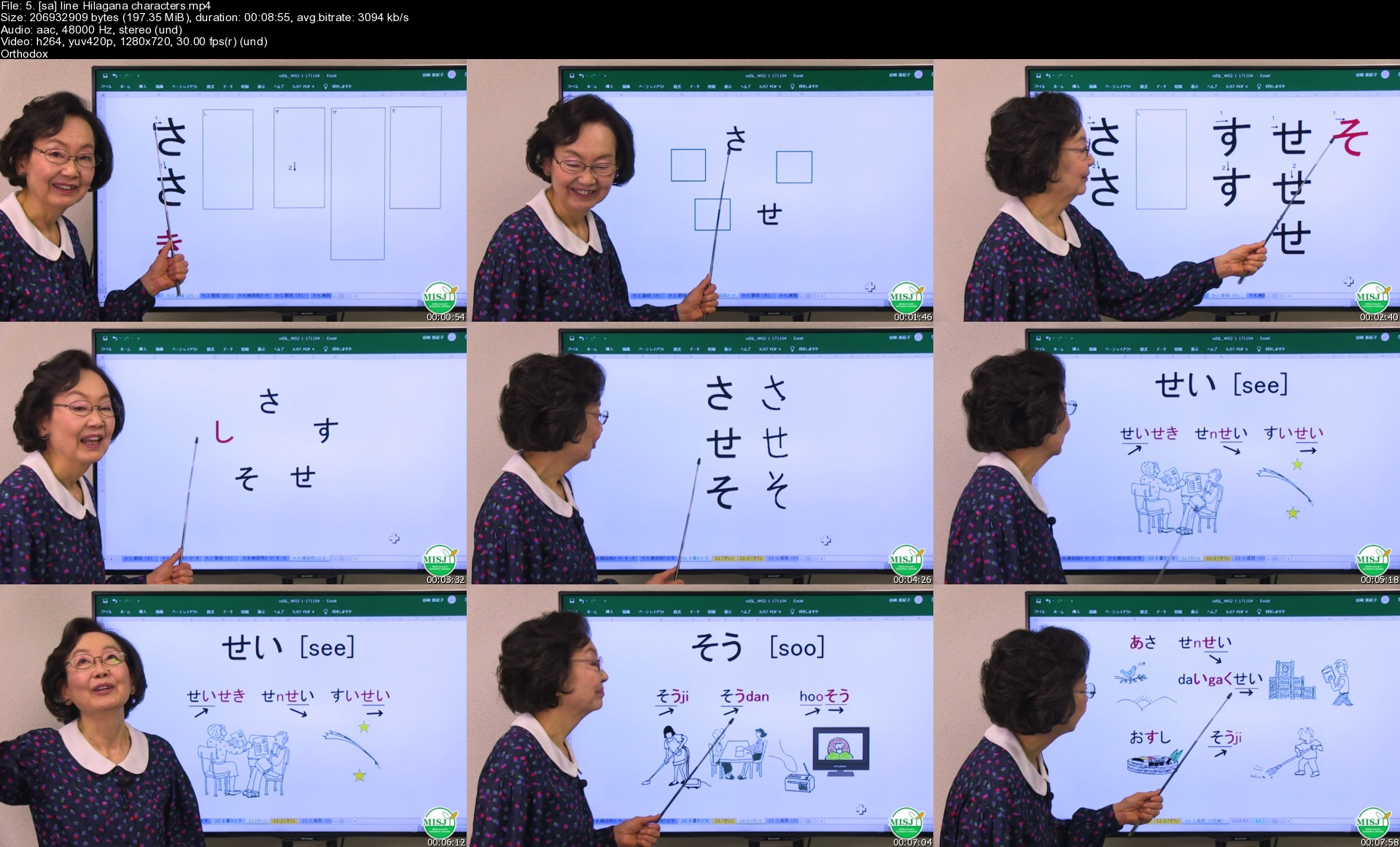
Japanese for beginners based on MISJ WELCOME PROGRAM

37008504fc18djdn.jpg


Japanese for beginners based on MISJ WELCOME PROGRAM
Last Updated 11/2021
MP4 | Video: h264, 1280x720 | Audio: AAC, 44.1 KHz, 2 Ch
Genre: eLearning | Language: English| Duration: 383 lectures (27h 52m) | Size: 37 GB

Learn Japanese with the most experienced instructor in a way just like taking a semi-private lesson


What you'll learn
Basic Japanese pronunciation
Writing and reading of basic Japanese characters: Hiragana and Katakana
Basic knowledge of grammar to make sentences that is essential for creative speech and writing
Sentence-based daily and practical conversation skills which reflect your intelligence
Japanese background culture you have to know to maintain good relationships

Requirements
The willingness to learn Japanese language and culture
Some English listening and reading ability
An open mind to accept the unique approach


Description
This course is the second version of the MISJ WELCOME PROGRAM released for Udemy from 2018 to March 2021. The review rate has always been higher than 4.5 stars ever since. This course is not only for character learning, not only for vocabulary building, not only for learning a bit and bit phrases. You can experience the semi-private lesson of the Japanese language instructor with more than 35 years of experience both in Japan and abroad.

MISJ stands for Mikiko Iwasaki's Systematic Japanese, and it is the most effective, efficient, and enjoyable way to learn Japanese. Ideal for total beginners with no or little skill of character reading. Also, suitable for the people who are looking for a better solution. Speaking ability enough for starting life in Japan or having a trip to Japan is guaranteed if you positively participate in the lesson and obediently follow instructions. Furthermore, writing ability is guaranteed if you spend more time and effort.

At the end of each lesson, you can get the whole package of the review materials, such as the review book, reading material (from Lesson 3), and correspondent sound material. Thus, understanding Japanese grammar & culture is guaranteed if you watch videos, read the review book, and memorize them. Of course, the knowledge of grammar is not sufficient to pass JLPT N5; however, you can learn essential grammar and conversation as a preparation. If you want to continue learning, next-step courses are also available.

To find more about MISJ and Mikiko Iwasaki's career, please watch the promotion video and the video lessons open to the public. There you can see and check what and how you can learn Japanese with this course beforehand.

Who this course is for
MISJ WELCOME PROGRAM is the most suitable for those who want to make a good start of learning Japanese without wasting time, effort, and money. The results are guaranteed if you obediently follow instructions.
It is suitable for anybody who wants to achieve creative speech and writing ability that reflects intelligence.
It is suitable for those who plan to take JLPT in the future. It does not cover everything but is ideal for making a solid foundation quickly.
It is suitable for those who have already studied Japanese and gave up learning or need better and more precise explanations about Japanese grammar, especially PARTICLE and ADJECTIVE usages and VERB conjugation from "DICTIONARY FORM" to "ますFORM."

Homepage


5.salinehilaganacharag7jor.jpg


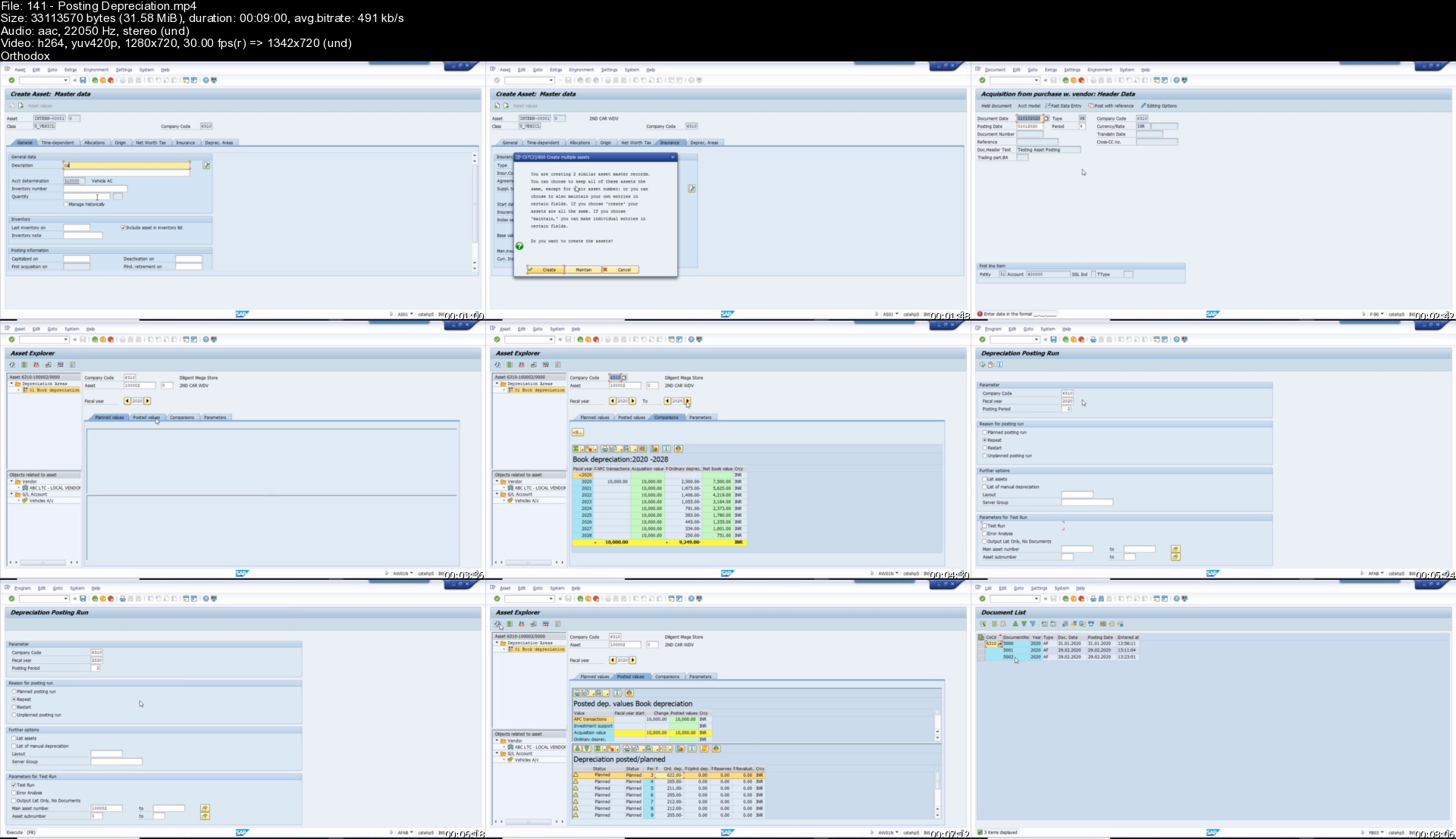
Sap Fico (Finance & Controlling ) Simplified For Beginners

muy8dlqbbzkxwr9ks6fpmiqjr3.jpg


Sap Fico (Finance & Controlling ) Simplified For Beginners
Last updated 6/2022
MP4 | Video: h264, 1280x720 | Audio: AAC, 44.1 KHz
Language: English | Size: 15.35 GB | Duration: 50h 18m

SAP FI CO Comprehensive Training for Beginners /SAP Financial Accounting End-Users to become SAP Consultant ,sap finance


What you'll learn
Complete Practice Notes provided for practice in system.
After Completing this course, you will become SAP FICO Consultant with understanding of logic behind configuration
Learn Complete Configuration of SAP FICO & End-User Activities step by step with Proper Notes
Get hands-on experience of SAP FICO- Complete General Ledger Accounting
Get hands-on experience of SAP FICO- Complete Accounts Payable Accounting
Get hands-on experience of SAP FICO- Complete Accounts Receivable Accounting
Get hands-on experience of SAP FICO- Complete Asset Accounting
Get hands-on experience of SAP FICO- Bank Accounting -House Bank
Get hands-on experience of SAP FICO- Intercompany Postings and Configuration
Get hands-on experience of SAP Material Management (MM) Integration with Finance
Get hands-on experience of SAP Sales & Distribution (SD) Integration with Finance
Learn Complete Year End Activities in SAP For Finance Module
Learn Data Migration Tool -LSWM
Get Hands-on Experience of using SAP Query - User Specific as well as Global
Get Hands-on experience of SAP Validation and Substitution
Learn How to Transport Request will be moved in real-time
Understand How ABAP User-Exit will be implemented ( live implementation done in this course)
Get hands-on experience of different payment method available in SAP ( Practically shown many scenarios)
Get hands-on of Complete Tax on Sales & Purchase Configuration & Testing
Requirements
Basic Accounting Knowledge required

Description
Dear Students,Complete Notes available for reference.please check lecture-17 of section-2 for notes.This course is designed in such a way that any beginners or freshers from any different domain can learn SAP FICO Configuration, Implementation and End-User Activities to crack any sap fico interview.If you observe many faculties are putting more stress on explaining "how to do the configuration" but when you go for interview, the interviewer will asks you about "why to do" i.e. logic behind configuration.In this Course both are covered "how to do" and "why to do" To explore further ,please check preview videos.Who this course is for:Anyone who wants to learn SAP FICO configuration ,End-user Activities, implementation in detailSAP Users who want to extend their knowledge to configure to become SAP FICOAny ERP Consultants who want to learn SAP FICO configuration and implementationSAP FICO ECC Notes Attached to Section-2 Videos Resources .SAP S/4 HANA Notes Attached to Section-19 Video Resource.This Course is designed to become Successful SAP FICO Consultant with practical understanding of All Typical Business Process in SAP FICOComplete Configuration Notes will be Provided for your reference. SAP FI stands for Financial Accounting and it is one of important modules of SAP ERP. It is used to store the financial data of an organization. SAP FI helps to analyze the financial conditions of a company in the market. It can integrate with other SAP modules like SAP SD, SAP PP, SAP MM, SAP SCM, etc.SAP Controlling (CO) is another important SAP module offered to an organization. It supports coordination, monitoring, and optimization of all the processes in an organization. SAP CO includes managing and configuring master data that covers cost and profit centers, internal orders, and other cost elements and functional areas.This tutorial will be extremely useful for professionals who aspire to learn the ropes of SAP FICO and implement it in practice. It is especially going to help consultants who are mainly responsible for implementing Financial Accounting and Cost Accounting with SAP ERP Financials.** Disclaimer ** SAP is a registered trademark of SAP AG in Germany and many other countries. I am NOT associated with SAP.SAP software and SAP GUI are proprietary SAP software. Neither Udemy nor me are authorized to provide SAP Access.

Overview

Section 1: SAP_FICO_Basic Configuration

Lecture 1 SAP Implementation Project Overview

Lecture 2 Understanding SAP LOGON Basics and Tricks

Lecture 3 SAP GUI Installation

Lecture 4 SAP Modules Overview

Lecture 5 Understanding Enterprise Structure

Lecture 6 Enterprise Structure Configuration

Lecture 7 Fiscal Year Variant Concept & Configuration

Lecture 8 Chart of Accounts Concept & Configuration -Operational, Group,Country Specifig

Lecture 9 Posting Period Variant Concept & Configuration

Lecture 10 Document Type & Number Ranges Concept & Configuration

Lecture 11 Field Status Variant Concept & Configuration

Lecture 12 Tolerance Groups Concept & Configuration

Lecture 13 Global Parameter ,Document Splitting & Other Required Config

Lecture 14 Controlling Area Configuration

Lecture 15 FAQ: Currency Issue in CO Area Clarified

Lecture 16 FAQ: Controlling Area Numbers

Section 2: Download Notes

Lecture 17 How to Download Notes for Printing

Section 3: General Ledger Accounting in detail

Lecture 18 Introduction

Lecture 19 Create G/L Master Data

Lecture 20 Create G/L Master Data Continuation-Other Topics

Lecture 21 Group & Country Specific Chart of Accounts Config & Testing

Lecture 22 G/L Account Group Importance

Lecture 23 Delete G/L A/c Concept and Testing

Lecture 24 Real Time Issue

Lecture 25 Real Time Issue Solution

Lecture 26 Understanding Key Field in JV Posting & Posting 1st JV

Lecture 27 Analysis of Posted Document

Lecture 28 Concept & Testing Blocked For Posting

Lecture 29 Testing Open & Close Posting Periods in Detail

Lecture 30 Document Change Rules -Concept & Testing

Lecture 31 Attaching Documents,URL,Notes

Lecture 32 Testing Field Status Variant

Lecture 33 Fast Data Entry- Design Template, Testing

Lecture 34 Texts for Line Items

Lecture 35 Real Time Requirement 1

Lecture 36 Cross Company Code Concept

Lecture 37 Cross Company Code Configuration & Testing

Lecture 38 Display Document

Lecture 39 G/L Reports Understanding

Lecture 40 Creating User & Global Layout

Lecture 41 Real Time issue

Lecture 42 Real Time issue Solution

Lecture 43 Hold Document Concept & Testing

Lecture 44 Sample Document Concept , Configuration & Testing

Lecture 45 Recurring Document Concept, Configuration and Testing

Lecture 46 Concept of Month End Provisions

Lecture 47 Accrual /Deferral Document Configuration & Testing

Lecture 48 Open Item Management - Full Clearing Testing

Lecture 49 Open Item Management - Partial Clearing Testing

Lecture 50 Open Item Management - Residual Clearing

Lecture 51 Clearing Differences Concept, Configuration & Testing

Lecture 52 Clearing Difference Posting - Manually

Lecture 53 Document Reversals- Individual,Mass , Cleared items ,Cross Company

Lecture 54 Negative Postings - Concept , Configuration & Testing

Lecture 55 Foreign Currency -Rate Types & Quotation Method Concept

Lecture 56 Foreign Currency Transactions Configuration & Testing

Lecture 57 Enjoy Transactions

Lecture 58 Interest Calculation Concept

Lecture 59 Interest Calculation - Compound Interest Configuration & Testing

Lecture 60 Interest Calculation -Real Time Requirement

Lecture 61 Simple Interest Calculation -Concept,Configuration, Testing

Section 4: Tax on Sales & Purchases

Lecture 62 Taxes Concept Class

Lecture 63 Tax Configuration & Testing

Lecture 64 Testing Continue...

Section 5: Accounts Payable

Lecture 65 Accounts Payable Concept

Lecture 66 Vendor Master Record

Lecture 67 Accounts Payable Configuration

Lecture 68 Master Data Creation & Understanding Change, History, Block

Lecture 69 Testing Vendor Master Deletion

Lecture 70 Testing Vendor Master Field Status

Lecture 71 Testing Full Clearing Scenario

Lecture 72 Testing Partial Clearing

Lecture 73 Testing Residual Clearing

Lecture 74 Testing Manual Clearing

Lecture 75 One Time Vendor Concept & Testing

Lecture 76 Custom Sort Key Configuration & Testing

Lecture 77 Alternative Reconciliation Account -Configuration & Testing

Lecture 78 Dual Control Functionality Concept

Lecture 79 Dual Control Functionality -Configuration & Testing

Lecture 80 Payment Terms Concept

Lecture 81 Configuration & Testing of Payment Terms

Lecture 82 Cash Discount Concept

Lecture 83 Cash Discount Testing

Lecture 84 Fixed Installment Config & Testing

Lecture 85 Flexible Installment - Amount Split Config & Testing

Lecture 86 Day Limit Config & Testing

Lecture 87 Fixed Baseline Date Config & Testing

Lecture 88 Down Payment Business Process Flow

Lecture 89 Noted Item Business Process Flow

Lecture 90 Vendor Account Statement Correspondance

Lecture 91 Vendor Account Statement Sending Through Email

Lecture 92 Vendor Credit Memo

Section 6: House Bank_Automatic Payment Program(APP)

Lecture 93 House Bank -Concept

Lecture 94 Vendor Payment with Check Process Flow

Lecture 95 Vendor Payment-Issued Check Cancellation Process

Lecture 96 Automatic Payment Program (APP) Concept

Lecture 97 Automatic Payment Program (APP) Configuration

Lecture 98 APP -Scenario_01

Lecture 99 APP -Scenario_02

Lecture 100 APP -Scenario_03

Lecture 101 APP -Scenario_04

Lecture 102 APP -Scenario_05

Lecture 103 APP -Scenario_06

Lecture 104 APP -Scenario_07

Lecture 105 APP -Scenario_08

Lecture 106 APP -Scenario_09

Lecture 107 APP -Scenario_10

Lecture 108 APP -Scenario_11

Lecture 109 APP -Scenario_12- Cross Company Code APP

Lecture 110 APP -Scenario_13- DME

Lecture 111 APP -Scenario_14- Payment Advice Automation

Section 7: Accounts Receivable

Lecture 112 FI-AR -Introduction

Lecture 113 Basic Configuration

Lecture 114 Master Data Creation

Lecture 115 Testing Full Clearing Scenario

Lecture 116 Testing Partial Clearing Scenario

Lecture 117 Testing Manual Clearing Scenario

Lecture 118 Testing Residual Clearing Scenario

Lecture 119 Payment Differences -Reason Code

Lecture 120 Customer as a Vendor Process Flow

Lecture 121 Customer as a Vendor Process Flow-Continued

Section 8: lockbox Configuration and Process Flow

Lecture 122 Lockbox Concept

Lecture 123 Lockbox Configuration

Lecture 124 Lockbox File Format

Lecture 125 Lockbox_Testing_01

Lecture 126 Lockbox_Testing_02

Section 9: Electronic Bank Statement -BAI2

Lecture 127 BAI2_Concept

Lecture 128 BAI2_Configuratin_01

Lecture 129 BAI2_Configuratin_02

Lecture 130 BAI2_File_Format

Lecture 131 BAI2_File_Generation

Lecture 132 BAI2_Uploading_File

Section 10: Asset Accounting

Lecture 133 Introduction

Lecture 134 Basic Configuration

Lecture 135 GL Integration with Asset Accounting

Lecture 136 Depreciation Key Configuration

Lecture 137 Asset Master Creation

Lecture 138 Main Asset Procurement

Lecture 139 Posting Depreciation-SLM

Lecture 140 Sub-Asset Procurement and Depreciation Posting

Lecture 141 Posting Depreciation -WDV

Lecture 142 Sale of an Asset with Customer

Lecture 143 Sale of an Asset without Customer

Lecture 144 Scrapping of an Asset

Lecture 145 Asset Under Construction (AuC)- Concept

Lecture 146 Asset Under Construction (AuC)- Configuration

Lecture 147 Asset Under Construction (AuC)- Settlement

Lecture 148 Asset Procurement Through Purchase Order

Section 11: Withholding Tax /TDS

Lecture 149 Complete Business Process Flow Concept

Section 12: FI Integration with Material Management

Lecture 150 Introduction

Lecture 151 MM Configuration

Lecture 152 FI Configuration

Lecture 153 Master Data Creation for Testing

Lecture 154 Procure-To-Pay - Testing

Lecture 155 Procure To Pay- with Tax Testing 1

Lecture 156 Procure-To-Pay - with Tax Testing 2

Section 13: FI Integration with Sales & Distribution

Lecture 157 Introduction

Lecture 158 SD Configuration

Lecture 159 OBYC GL Integration

Lecture 160 VKOA GL integration

Lecture 161 Master Data Creation for Testing

Lecture 162 Testing

Lecture 163 Order To Cash (OTC) - Testing

Lecture 164 OTC -Test 1

Lecture 165 OTC - Test 2

Lecture 166 OTC - Test 3

Lecture 167 OTC - Test 4

Section 14: MM & SD Additional Concepts for FICO Consultant

Lecture 168 Sales Discount Configuration and Testing

Lecture 169 SD Output Tax VAT/GST -Configuration and Testing

Lecture 170 Purchase Price Variance (V) - Scenario 1

Lecture 171 Purchase Price Variance (V) - Scenario 2

Lecture 172 Purchase Price Variance (V) - Scenario 3

Lecture 173 Purchase Price Variance (S) - Scenario 1

Lecture 174 Purchase Price Variance (S) - Scenario 2

Lecture 175 Deductible Taxes- VAT/GST

Lecture 176 Non-Deductible Taxes - VAT/GST

Section 15: Year End Activities-Concept & Testing

Lecture 177 Year End Activities

Section 16: Validation in SAP

Lecture 178 Ref.Field Validation

Lecture 179 Posting Date Validation

Lecture 180 Business Area Validation with Sets

Section 17: Controlling Configuration (Management Accounting)

Lecture 181 Controlling Module Overview

Lecture 182 Controlling Area Configuration in detail

Lecture 183 Cost Element Categories

Lecture 184 Define Number Ranges for Co Documents

Lecture 185 Versions Importance in CO and Configuration

Section 18: Data Migration Using LSMW

Lecture 186 Introduction

Lecture 187 Understanding End-User Activities

Lecture 188 Understanding Consultant Activities

Lecture 189 Create Project & Record The Transaction

Lecture 190 Adding Missing fields in Destination Structure manually

Lecture 191 Designing Template for uploading

Lecture 192 Maintain Source Structure & Source Fields

Lecture 193 Maintain Structure Relations

Lecture 194 Maintain Field Mapping

Lecture 195 Specify Files

Lecture 196 Assign Files

Lecture 197 Upload Single File & Create Multiple batches

Lecture 198 Testing Foreground

Lecture 199 Testing display error only

Lecture 200 Testing Background

Lecture 201 Using Constant in mapping & Testing

Lecture 202 How to Debug LSMW

Lecture 203 Importing & Exporting LSMW

Section 19: SAP Query (Reports)- User & Global

Lecture 204 User Specific Query

Lecture 205 Global Query

Section 20: Transport Request -Concept & Testing

Lecture 206 TR Concept & Testing

Section 21: Enhancements in SAP

Lecture 207 Line item Report Issue and Solution

Section 22: Bonus Lectures- S4/HANA General Ledger Configuration & Testing

Lecture 208 FICO Module Overview

Lecture 209 System Landscape

Lecture 210 SAP GUI Overview

Lecture 211 SAP GUI Overview Continued

Lecture 212 Organization Structure

Lecture 213 Project Types

Lecture 214 Organization Configuration

Lecture 215 Fiscal Year Variant

Lecture 216 Posting Period Variant

Lecture 217 Field Status Variant

Lecture 218 Chart of Accounts

Lecture 219 Define Number Ranges

Lecture 220 Define Tolerance Group

Lecture 221 Global Settings for Company Code

Lecture 222 Currency Configuration

Lecture 223 Document Splitting Configuration

Lecture 224 Controlling Area Configuration

Lecture 225 Controlling Integration with Finance

Lecture 226 Consistency Check for Company Code

Lecture 227 Profit Center Configuration

Lecture 228 Create Profit Center from GUI

Lecture 229 Create Profit Center From FIORI

Lecture 230 Create Cost Center from GUI

Lecture 231 Create Cost Center From FIORI

Lecture 232 LTMC -Preparing Uploading Template

Lecture 233 LTMC Mass Uploading of Cost Centers

Lecture 234 Understanding Cost Element Categories

Lecture 235 Create General Ledger Accounts from GUI

Lecture 236 Delete GL Account

Lecture 237 Create GL Accounts from FIORI

Lecture 238 Create GL in Two Steps

Lecture 239 Posting First GL Document

Lecture 240 Document Header Text

Lecture 241 Field Status Group

Lecture 242 Posting Document from FIORI APP

Lecture 243 Mass Uploading of JV from FIORI APP

Lecture 244 User Profile

Lecture 245 Document Change Rules

Lecture 246 Line Item Text ID

SAP Consultants,SAP Superuser,G/L Accountant / Controller,AP Accountant,Asset Accountants,AR Accountant,Other Finance Users - Accounting Manger/Finance Manager/Controller,Commerce Graduates -Fresher,Anyone who is interested in the subject

Homepage


141postingdepreciatio5qjlv.jpg


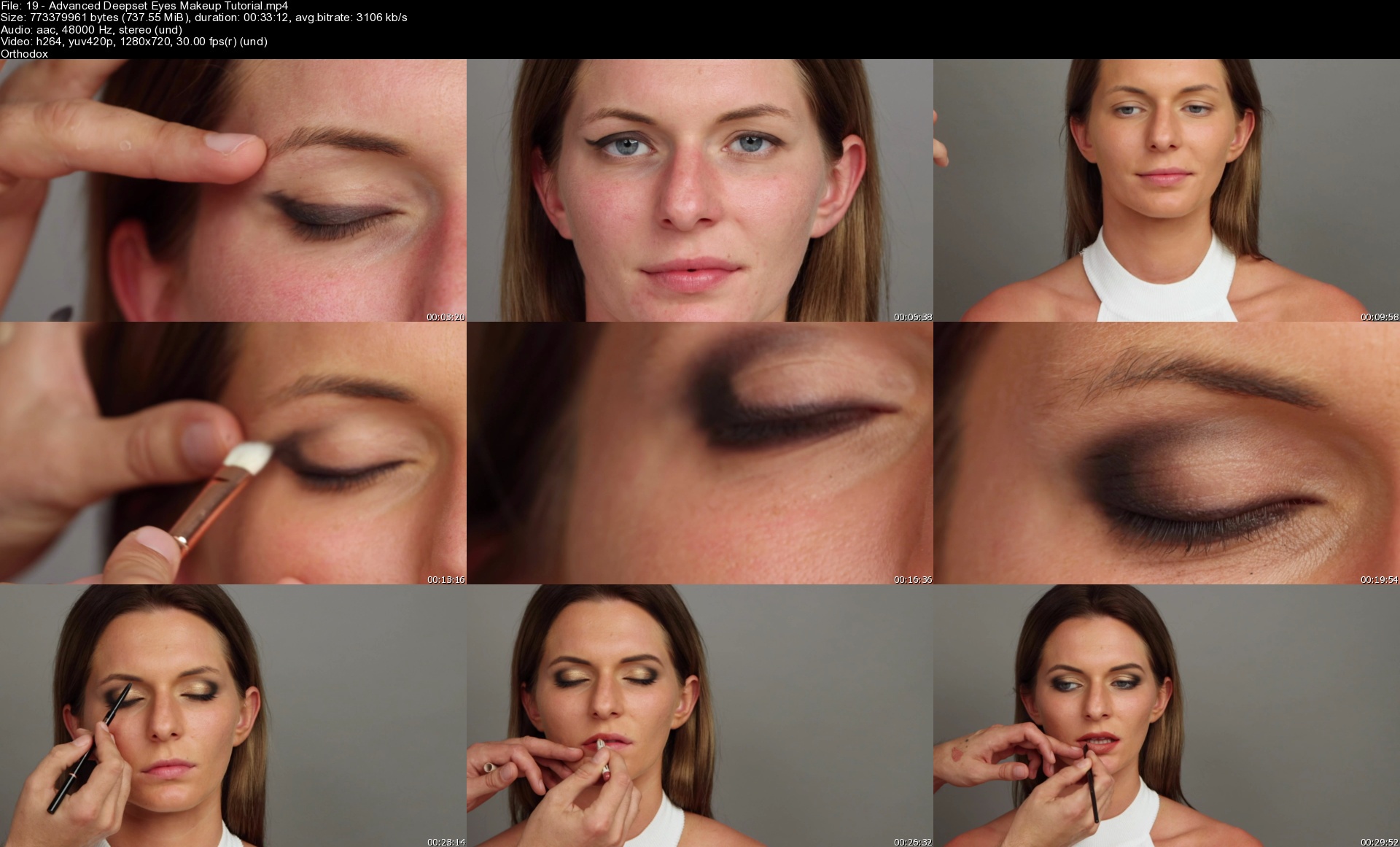
Beauty Makeup From A Technical Guy'S Perspective

dc7peayzd0vs57upokzylemk4v.jpg


Beauty Makeup From A Technical Guy'S Perspective
Last updated 10/2020
MP4 | Video: h264, 1280x720 | Audio: AAC, 44.1 KHz
Language: English | Size: 6.48 GB | Duration: 5h 1m

Become the best version of yourself by learning makeup techniques designed for your unique facial features!


What you'll learn
How To Be The Best Version Of Yourself
How To Recreate Whichever Makeup Look On Your Unique Facial Features
Basic Eye Makeup Techniques For Your Eye Shape
Advanced Eye Makeup Techniques For Your Eye Shape
Contouring Techniques For Your Face Shape
How To Save Money When Buying Makeup
How To Structure Your Makeup Kit
How To Choose The Right Colour Of Foundation
How To Choose The Right Texture Of Foundation
How To Apply Foundation
How To Apply An Eyeliner
How To Buy An Eyeliner
What Are The Essential Makeup Products
What Are The Essential Makeup Brushes And How To Use Them
And Much More...
Requirements
Try not to be in a room full of screaming **** or at a rave party because that might distract you.

Description
I created this beauty makeup course for women who want to look like themselves as I strongly believe we should celebrate our individuality!Therefore I welcome you to WATCH THE INTRODUCTION VIDEO where I thoroughly explain what this makeup course is all about and how it is different to other makeup courses on the market.So click that play button and ...Stop doing it wrong!People working in the beauty industry usually say that there is no right or wrong when it comes to makeup. That you should wear whatever you want, however you want it, while I think the opposite.I firmly believe that beauty is defined by a set of rules. Some beauty rules are universal and some are culturally defined. If you put them together, you get a HARMONY!Some people understand these rules naturally, while others can learn them like one learns mathematics. But it's these rules that help you EXPRESS YOURSELF artistically.That's why I've designed this PERSONALISED online makeup course around a set of universal beauty rules that will help you expose your features and bring out the best of your face. I will teach you makeup tricks and techniques NT MANY OTHER PEOPLE TEACH, and with a little practise I promise that everyone will admire your new self.So... Join our awesome community and spice up your life!

Overview

Section 1: The Basics

Lecture 1 Let's Do This!

Lecture 2 The Makeup Illusion

Lecture 3 Why Less Is More?

Lecture 4 Essential Makeup Products

Lecture 5 Essential Makeup Brushes

Lecture 6 Avoiding Sales Tactics

Lecture 7 How Much Should You Spend For Makeup?

Lecture 8 Structuring Your Makeup Kit

Section 2: Foundation

Lecture 9 Foundation Texture

Lecture 10 Foundation Colour

Lecture 11 Foundation Application

Section 3: Eyeliner

Lecture 12 Buying an eyeliner

Lecture 13 Eyeliner application techniques

Section 4: Eyes

Lecture 14 Upturned Eyes

Lecture 15 Downturned Eyes

Lecture 16 Hooded Eyes

Lecture 17 Non-hooded Eyes

Lecture 18 Basic Deep-set Eyes Makeup Tutorial

Lecture 19 Advanced Deep-set Eyes Makeup Tutorial

Lecture 20 Basic Prominent Eyes Makeup Tutorial

Lecture 21 Bosic Monolid Eyes Makeup Tutorial

Section 5: Contouring

Lecture 22 Classic Forehead

Lecture 23 High Forehead

Lecture 24 Angled Chin

Lecture 25 Angled Chin - Blush

Section 6: Everything Else

Lecture 26 Shaping Eyebrows

Women who want to expose their features and be who they are or professional makeup artists who want to step up their game with a unique and thorough knowledge.

Homepage


19advanceddeepseteyes5dk4j.jpg


Gimp Complete: Gimp Graphic Design, Book Covers And Drawing

ceokrf3ksq0eeey450b7wbhkp3.jpg


Gimp Complete: Gimp Graphic Design, Book Covers And Drawing
Last updated 6/2022
MP4 | Video: h264, 1280x720 | Audio: AAC, 44.1 KHz
Language: English | Size: 17.73 GB | Duration: 40h 9m

GIMP Complete: GIMP Beginner to advanced: Free GIMP graphic design: Free GIMP Book Covers: GIMP Drawing with a tablet


What you'll learn
Install and run the GIMP
Make logos, web graphics and screen shots
Create 2D and 3D book covers
Make memes and distribute them on Facebook
Produce graphics appropriate for use on the 8 major social media websites
Use Wordpress with HTML to display web graphics
Use the GIMP to touch up your photos
GIMP drawing with an inexpensive tablet and stylus
Requirements
You'll need a computer running Windows, Mac OS or Linux to install and use the GIMP
You'll need a functioning browser to download the GIMP and to access images, fonts and other resources.

Description
Learn GIMP photo touch up from a photographer or GIMP graphic design, book covers and drawing from a graphic illustrator. My name is Brian Jackson. I began using the GIMP in 1990, around when my competition was born. Trust me, the GIMP is far more than a photo touch up tool.Hello and welcome to my course, GIMP Complete: GIMP Graphic Design, Book Covers and Drawing, the longest and most comprehensive GIMP course on Udemy.The GNU Image Manipulation Program (GIMP) is a free Photoshop like graphic design software program that runs on Windows, MacOS and Linux.This 40+ hour course is a merge of all 6 of my GIMP courses along with a short course on setting up a WordPress website to display your graphics. I built this course by merging the following Udemy courses:GIMP 2.8/2.10 Beginner-Advanced: Free on Windows/MacOS/LinuxA comprehensive course addressing all features of the GIMP.GIMP for Beginners: Free Book Covers with Free ImagesA course focusing on creating book covers with the GIMP.GIMP Intermediate: Free GIMP Graphic Design SoftwareA course containing tips and tricks, an extension to GIMP for Beginners.GIMP Advanced: Free Graphic Design and 3D Book CoversAdvanced GIMP features, including water reflections and ripples and creating 3D book covers.GIMP/HTML: WordPress Website Development with HTML and GIMPHow to use HTML to display and configure GIMP images.GIMP Digital Drawing: Free GIMP with a Budget TabletA course on how to use the GIMP to draw with a tablet and stylus.Create a WordPress Blog Website: WordPress Blog Step-by-StepA short course on creating a WordPress website to display your GIMP image.In this course, I take you all the way from installing the GIMP to producing banners, book covers and memes that you'll display using Facebook and other social media platforms. I discuss the use of GIMP with WordPress and HTML. I'll even show you photo touch up and how to draw with the GIMP. In fact, I show you everything I know in the natural order in which you should learn it.In this course, you'll learn:Install and configure the GIMPCreate banners and memes for display on social mediaWhere to find free images on the InternetPhoto touch upUse the clone tool to touch up imagesUse layers to produce complex imagesUse layer masks, bump maps and gradientsWrite circular text and text along any pathCreate free book covers using free imagesCreate free 3D box sets and 3D book coversCreate reflections and rippling waterUse HTML and WordPress to display your images on a web pageHow to draw with the GIMP using an inexpensive tablet and stylusLearn how to install your own WordPress websiteAnd much, much more.I ask you; can you afford just 30 minutes a day for a few weeks to learn the most powerful free graphics program (maybe) in the world?Here's what I recommend you do...You can preview all the lectures in the first and second sections of this course for free. Watch the first couple of sections and if you like them, enroll in the course. If you don't like them, then thank you for your time and I wish you the best.I'll see you in the classroom,---Brian

Overview

Section 1: Introduction

Lecture 1 Introduction to the GIMP, the Series and Your Instructor

Lecture 2 GIMP Complete Roadmap

Lecture 3 GIMP 2.10 Changes: How to Make GIMP 2.10 Look Like GIMP 2.8

Lecture 4 How to Watch This Course -- Speed and Bookmarks

Section 2: Install and Use the GIMP to Create Logos and Graphics

Lecture 5 Section Introduction

Lecture 6 GIMP Installation and Configuration

Lecture 7 How to Reconstruct the Standard GIMP 3 Window Layout

Lecture 8 Starting, Stopping and GIMP Windows

Lecture 9 Creating Logos

Lecture 10 Creating Web Graphics

Lecture 11 Screen Shot, Crop, Resize, Save and Export

Lecture 12 Section Project

Lecture 13 Section Conclusion

Section 3: Selection and Layers with a Pool Table and Balls

Lecture 14 Section Introduction

Lecture 15 Pool Table: Selection, Fill and Blur

Lecture 16 Pool Ball: Gradient

Lecture 17 Shadow: Rotate and Layer Mask

Lecture 18 Pool Balls 1: Table and Colored Ball

Lecture 19 Pool Balls 2: Ball Number and Shadow

Lecture 20 Pool Balls 3: Another Ball

Lecture 21 Section Project

Lecture 22 Section Conclusion

Section 4: More Selection and Layers with a Colored Butterfly

Lecture 23 Section Introduction

Lecture 24 Colored Butterfly - Free Selection and Layers

Lecture 25 Cowboy Christmas - Blend

Lecture 26 Transparent Logos - Color Selection

Lecture 27 Section Project

Lecture 28 Section Conclusion

Section 5: GIMP Text to Create Stunning Text Effects

Lecture 29 Section Introduction

Lecture 30 Text Font, Color and Size

Lecture 31 Using Fancy Internet Fonts

Lecture 32 Text with Colored Boxes

Lecture 33 Text and Box Drop Shadows

Lecture 34 Outlining with Text Paths

Lecture 35 Text Toolbox Effects

Lecture 36 Text Effects

Lecture 37 Text in Layer Masks

Lecture 38 Section Project

Lecture 39 Section Conclusion

Section 6: Recreate "The Last Divine" Book Cover

Lecture 40 Recreate "The Last Divine" Part 1

Lecture 41 Recreate "The Last Divine" Part 2

Lecture 42 Recreate "The Last Divine" Part 3

Lecture 43 Recreate "The Last Divine" Part 4

Lecture 44 Recreate "The Last Divine" Part 5

Lecture 45 Section Project

Lecture 46 Section Conclusion

Section 7: Make a Simple Book Cover for Free

Lecture 47 Section Introduction

Lecture 48 Book Cover Size

Lecture 49 Create a White Book Cover

Lecture 50 Scale and Crop Image

Lecture 51 Free and Pay For Images

Lecture 52 Add Text

Lecture 53 Add Colored Boxes

Lecture 54 Make Your Text Pop

Lecture 55 Section Project

Lecture 56 Section Conclusion

Section 8: Make a 3D Book Cover for Free

Lecture 57 Section Introduction

Lecture 58 Work Area and 2D Cover

Lecture 59 Create a Cover Reflection

Lecture 60 Bend the Cover

Lecture 61 Create a Spine

Lecture 62 Cant the Spine Into Place

Lecture 63 Add the Pages

Lecture 64 Add a Shadow

Lecture 65 Section Project

Lecture 66 Section Conclusion

Section 9: GIMP Tips, Tricks and Techniques

Lecture 67 Section Introduction

Lecture 68 Circular Text

Lecture 69 Text Along a Path

Lecture 70 Layer Groups

Lecture 71 Reflection and Water Effects

Lecture 72 Clone Tool

Lecture 73 Section Project

Lecture 74 Section Conclusion

Section 10: Social Media Graphics with Facebook

Lecture 75 Section Introduction

Lecture 76 Create a Facebook Profile Picture

Lecture 77 Create a Facebook Banner

Lecture 78 Create a Facebook Meme

Lecture 79 Making Text Pop

Lecture 80 Free and Pay for Images

Lecture 81 Section Project

Lecture 82 Section Conclusion

Section 11: Intermission

Lecture 83 Please Leave a Course Review

Section 12: More Tips, Tricks and Techniques

Lecture 84 Section Introduction

Lecture 85 Undo, Redo and Undo History

Lecture 86 Selection Addition and Subtraction

Lecture 87 Colored Boxes with Gradients

Lecture 88 Deconstructing Logos

Lecture 89 Bump Maps Using Images

Lecture 90 Bump Maps Using Text

Lecture 91 Colorizing a Layer

Lecture 92 Section Project

Lecture 93 Section Conclusion

Section 13: Photo Manipulation, Enhancement, Touch Up and Correction

Lecture 94 Section Introduction

Lecture 95 Photo Manipulation Basics

Lecture 96 Removing Redeye

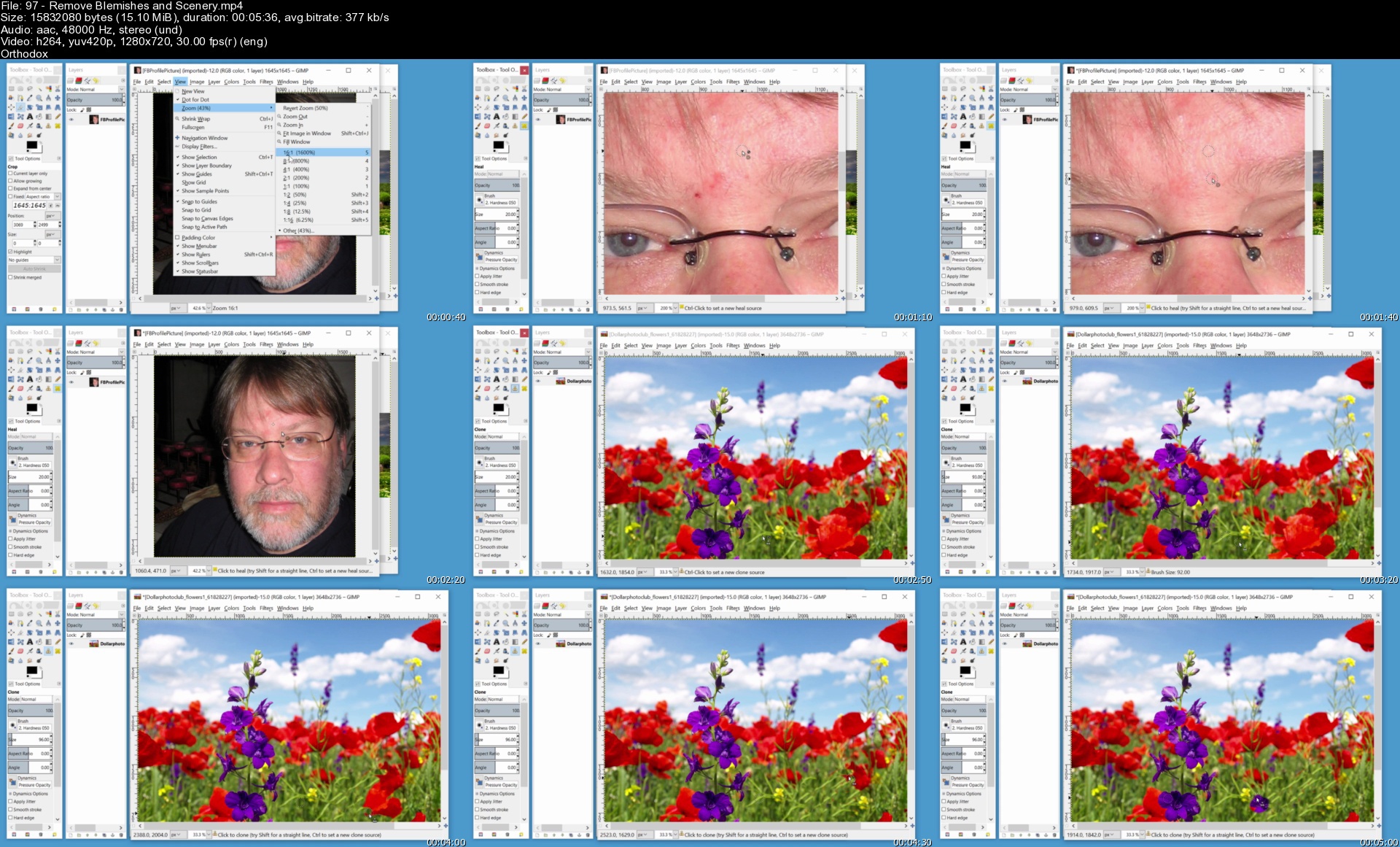
Lecture 97 Remove Blemishes and Scenery

Lecture 98 Add Image Effects

Lecture 99 Adjust Colors and Brightness

Lecture 100 Export Your Work

Lecture 101 Section Project

Lecture 102 Section Conclusion

Section 14: Display GIMP Web Graphics Using Wordpress

Lecture 103 Section Introduction

Lecture 104 GIMP Image Preparation

Lecture 105 GIMP Wordpress Banner Image

Lecture 106 GIMP Wordpress Image Post

Lecture 107 Wordpress Text Editor Mode

Lecture 108 Section Project

Lecture 109 Section Conclusion

Section 15: Display GIMP Web Graphics Using Wordpress & HTML

Lecture 110 Section Introduction

Lecture 111 An Overview of HTML

Lecture 112 An Overview of CSS

Lecture 113 HTML Image Tag and Wordpress

Lecture 114 Graphical Horizontal Rules

Lecture 115 Overlapping Images with the Div Tag

Lecture 116 Image Maps

Lecture 117 Graphical Button State Animation

Lecture 118 Section Project

Lecture 119 Section Conclusion

Section 16: Using a Wacom Drawing Tablet with the GIMP

Lecture 120 Section Introduction

Lecture 121 A Brief Look at Wacom Tablets

Lecture 122 Wacom Tablet Installation

Lecture 123 Wacom Tablet Configuration

Lecture 124 Drawing and Painting in the GIMP with a Wacom Tablet

Lecture 125 Section Project

Lecture 126 Section Conclusion

Section 17: Drawing and Painting Sessions in the GIMP

Lecture 127 Section Introduction

Lecture 128 Freehand Drawing of a Seashore Scene

Lecture 129 Perspective Drawing of a Building

Lecture 130 Easy Shading and Highlighting of Any Shape

Section 18: Single Window, Themes and GIMP Extensions

Lecture 131 Section Introduction

Lecture 132 GIMP Single Window Configuration

Lecture 133 GIMP Standard Themes

Lecture 134 Section Project

Lecture 135 Section Conclusion

Section 19: GIMP Drawing with a Surface Pro 4 Based Tablet

Lecture 136 Section Introduction

Lecture 137 How to Draw Cheaply and Digitally

Lecture 138 Section Project

Lecture 139 Section Conclusion

Section 20: GIMP Drawing Using 3D Perspective

Lecture 140 Section Introduction

Lecture 141 What is Drawing Using 3D Perspective?

Lecture 142 How to Draw Lines in the GIMP

Lecture 143 Drawing without Perspective

Lecture 144 Drawing in Single Point Perspective

Lecture 145 Drawing in Two Point Perspective

Lecture 146 Drawing in Three Point Perspective

Lecture 147 Using the Perspective Tool to Conform Flat Shapes

Lecture 148 Section Project

Lecture 149 Section Conclusion

Section 21: GIMP Frame-by-Frame GIF Animation

Lecture 150 Introduction to GIMP Frame-by-Frame GIF Animation

Lecture 151 Animating a Bouncing Ball

Lecture 152 Adding Physics to the Ball

Section 22: Guide to GIMP Filters

Lecture 153 Introduction to GIMP Filters

Lecture 154 Blurs

Lecture 155 Distorts

Lecture 156 Light and Shadow

Lecture 157 Artistic

Lecture 158 Decor

Section 23: Question and Answer

Lecture 159 Section Introduction

Lecture 160 Side-by-side Pictures Using a GIMP Blend

Lecture 161 Merged Pictures Using Insets

Lecture 162 Leave the Porch Light On - A Layer Mask Gradient

Lecture 163 Seven Sentences to Glory - Layers and Layer Masks

Lecture 164 Create a Udemy Course Card in the GIMP (Part 1)

Lecture 165 Create a Udemy Course Card in the GIMP (Part 2)

Section 24: GIMP for Beginners: Free Book Covers with Free Images

Lecture 166 Overview of the Course

Lecture 167 GIMP 2.10 Changes: How to Make GIMP 2.10 Look Like GIMP 2.8

Lecture 168 Installing the GIMP

Lecture 169 Starting the GIMP, Screen Layout, Exiting the GIMP

Lecture 170 Supplement: Sample Book Covers

Section 25: Creating a Simple Book Cover

Lecture 171 Introduction to Creating a Simple Book Cover

Lecture 172 Creating an Empty Book Cover

Lecture 173 Loading Images From the Internet

Lecture 174 Adding Text

Lecture 175 Saving Your Book Cover

Lecture 176 Creating a Simple Book Cover Section Workshop

Lecture 177 Creating a Simple Book Cover Section Project

Lecture 178 Conclusion to Creating a Simple Book Cover

Section 26: Working with Layers and Selections

Lecture 179 Introduction to Working with Layers and Selections

Lecture 180 Defining and Manipulating Layers

Lecture 181 Selecting Images and Image Components

Lecture 182 Applying Effects to Selections

Lecture 183 Copying, Cutting, and Pasting Selections

Lecture 184 Supplement: More on Layers

Lecture 185 Working with Layers and Selections Section Workshop

Lecture 186 Working with Layers and Selections Section Project

Lecture 187 Conclusion to Working with Layers and Selections

Section 27: Loading Fonts and Using Text Effects

Lecture 188 Introduction to Loading Fonts and Using Text Effects

Lecture 189 Text Manipulation

Lecture 190 Loading Fonts

Lecture 191 Using Fonts

Lecture 192 Blurring and Drop Shadows

Lecture 193 Loading Fonts and Using Text Effects Section Workshop

Lecture 194 Loading Fonts and Using Text Effects Section Project

Lecture 195 Conclusion to Loading Fonts and Using Text Effects

Section 28: Buying and Manipulating Inexpensive/Free Images

Lecture 196 Introduction to Buying and Manipulating Inexpensive/Free Images

Lecture 197 Pixabay: An Early Warning!

Lecture 198 Buying Inexpensive Images Off the Internet

Lecture 199 Manipulating the Images

Lecture 200 Using the Clone Tool

Lecture 201 Buying and Manipulating Inexpensive/Free Images Section Workshop

Lecture 202 Buying and Manipulating Inexpensive/Free Images Section Project

Lecture 203 Conclusion to Buying and Manipulating Inexpensive/Free Images

Section 29: Creating Colored Boxes

Lecture 204 Introduction to Creating Colored Boxes

Lecture 205 Making Colored Boxes

Lecture 206 Sampling Colors

Lecture 207 Using Color Gradients

Lecture 208 Displaying Text Over Colored Boxes

Lecture 209 Creating Colored Boxes Section Workshop

Lecture 210 Creating Colored Boxes Section Project

Lecture 211 Conclusion to Creating Colored Boxes

Section 30: Using Layer Masks and Paths

Lecture 212 Introduction to Using Layer Masks and Paths

Lecture 213 Two Applications of Layer Masks

Lecture 214 Stroking a Path Around Text

Lecture 215 Circular Text

Lecture 216 Making Text Follow an Arbitrary Path

Lecture 217 Using Layer Masks and Paths Section Workshop

Lecture 218 Using Layer Masks and Paths Section Project

Lecture 219 Conclusion to Using Layer Masks and Paths

Section 31: Book Cover Design Theory

Lecture 220 Introduction to Book Cover Design Theory

Lecture 221 Branding

Lecture 222 Satisfying Genre Expectations

Lecture 223 Use of Color

Lecture 224 Use of Images

Lecture 225 Cover Layout

Lecture 226 Making Your Text Pop

Lecture 227 View Your Work in Thumbnail Size

Lecture 228 Analyze Peer Book Covers

Lecture 229 Book Cover Design Theory Workshop

Lecture 230 Book Cover Design Theory Section Project

Lecture 231 Conclusion to Book Cover Design Theory

Section 32: Putting It All Together

Lecture 232 Let's Create a Book Cover, Shall we?

Lecture 233 Making a Space Book Cover

Lecture 234 Making a Book Cover with Colored Boxes

Lecture 235 Downloading the Sample Covers

Section 33: Favorite Tricks and Common Errors

Lecture 236 Favorite Tricks Pt. 1

Lecture 237 Favorite Tricks Pt. 2

Lecture 238 Favorite Tricks Pt. 3

Lecture 239 Common Errors

Section 34: Recreating My Personal Favorite Book Covers: 2017 Course Extension

Lecture 240 A Review of My Past Book Covers

Lecture 241 Using Pixabay for Free Images

Lecture 242 Reinterpreting Existing Popular Covers

Lecture 243 Stretching My GIMP Muscles

Lecture 244 Reinterpreting My "Symphony" Book Cover Pt. 1

Lecture 245 Reinterpreting My "Symphony" Book Cover Pt. 2

Lecture 246 Two Technique Book Cover: Silhouettes and Dark Desaturated Backgrounds

Lecture 247 Drunken and Layer Mask Text -- Very Cool!

Section 35: 2017 Amazon Book Cover Reinterpretation Challenge

Lecture 248 Section Introduction

Lecture 249 Challenge #1 from Kelly

Lecture 250 Challenge #2 from Saundra Pt. 1

Lecture 251 Challenge #2 from Saundra Pt. 2

Lecture 252 Challenge #3 from Harshad Pt. 1

Lecture 253 Challenge #3 from Harshad Pt. 2

Lecture 254 Challenge #4 from Joanne Pt. 1

Lecture 255 Challenge #4 from Joanne Pt. 2

Lecture 256 Challenge #5 from Tania Pt. 1

Lecture 257 Challenge #5 from Tania Pt. 2

Lecture 258 Challenge #6 from Janine Pt. 1

Lecture 259 Challenge #6 from Janine Pt. 2

Lecture 260 Challenge #7 from Janine Pt. 1

Lecture 261 Challenge #7 from Janine Pt. 2

Section 36: Question and Answer

Lecture 262 How to Fill a Layer with Color

Lecture 263 Why a Blur May Not Work

Lecture 264 What Now?

Section 37: GIMP Intermediate: Free GIMP Graphic Design Software

Lecture 265 Course Overview (2018 Version)

Lecture 266 Creating and Saving a GIMP Image for Q&A Project Submittal

Section 38: GIMP Setup

Lecture 267 Introduction to GIMP Setup

Lecture 268 GIMP Installation

Lecture 269 Windows 10 Configuration

Lecture 270 Make GIMP 2.10 Look Like GIMP 2.8

Lecture 271 GIMP Window Layout and Theme Configuration

Lecture 272 GIMP Window Layout Reconstruction

Lecture 273 GIMP Setup Section Workshop

Lecture 274 GIMP Setup Section Project

Lecture 275 Conclusion to GIMP Setup

Section 39: Text and Text Effects

Lecture 276 Introduction to Text and Text Effects

Lecture 277 Simple Text Configuration

Lecture 278 Outlining and Drop Shadows to Make Text Pop

Lecture 279 Shadowed Text, Shadowed Boxes and Ghost Writing

Lecture 280 Text to Image Effects

Lecture 281 Preview: Text Layer Mask Effect

Lecture 282 Text and Text Effects Section Workshop

Lecture 283 Text and Text Effects Section Project

Lecture 284 Conclusion to Text and Text Effects

Section 40: Layers

Lecture 285 Introduction to Layers

Lecture 286 Simple Layers

Lecture 287 Layer Groups

Lecture 288 Layer Opacity and Colorizing a Layer

Lecture 289 Layers Section Workshop

Lecture 290 Layers Section Project

Lecture 291 Conclusion to Layers

Section 41: Selection

Lecture 292 Introduction to Selection

Lecture 293 Text Selection

Lecture 294 Simple and Color Selection

Lecture 295 Adding and Subtracting to and from Selections

Lecture 296 Zooming and Lassoing an Image

Lecture 297 Selection Section Workshop

Lecture 298 Selection Section Project

Lecture 299 Conclusion to Selection

Section 42: Image Manipulation

Lecture 300 Introduction to Image Manipulation

Lecture 301 Resizing Images

Lecture 302 Clone Tool

Lecture 303 Conclusion to Image Manipulation

Section 43: Colored Boxes

Lecture 304 Introduction to Colored Boxes

Lecture 305 Colored Box Designs

Lecture 306 Colored Boxes to Make Text Pop

Lecture 307 Simple Gradients and Opacity

Lecture 308 Drop Shadows and Outlines

Lecture 309 Conclusion to Colored Boxes

Section 44: Layer Masks

Lecture 310 Introduction to Layer Masks

Lecture 311 Blending Images Using Layer Masks

Lecture 312 Layer Masks and Text

Lecture 313 Layer Masks Section Workshop

Lecture 314 Conclusion to Layer Masks

Section 45: Paths

Lecture 315 Introduction to Paths

Lecture 316 Outlining Text

Lecture 317 Circular Text

Lecture 318 Text Along a Path

Lecture 319 Conclusion to Paths

Section 46: Intermediate GIMP

Lecture 320 Outlining and Drop Shadows to Make Text Pop

Lecture 321 Blending Image Layers Using Layer Masks and Opacity

Lecture 322 Using Smeared Red Backgrounds to Highlight Text

Lecture 323 Zooming in and Lassoing an Image

Lecture 324 Adding, Subtracting, Inverting, and Undoing Color Selections

Lecture 325 Constructing and Deconstructing Logos

Lecture 326 Using the Clone Tool to Fix Images

Lecture 327 Applying Filters

Lecture 328 A Colored Butterfly Amongst a Black and White Garden

Section 47: Continuing Education

Lecture 329 Shadowed Text, Shadowed Boxes and Ghost Writing

Lecture 330 GIMP Window Configuration

Lecture 331 Circular Text

Lecture 332 Colorizing a Layer

Lecture 333 Layer Groups

Lecture 334 Smooth Merging of Multiple Images

Section 48: GIMP Advanced: Free Graphic Design and 3D Book Covers

Lecture 335 Overview of the Course

Section 49: 3D Book Covers

Lecture 336 3D Boxed Set: Finished Product

Lecture 337 3D Boxed Set Pt. 1: A Stack of Book Spines

Lecture 338 3D Boxed Set Pt. 2: Flip, Shadow, and Cover

Lecture 339 3D Boxed Set Pt. 3: Create the 3D Box Effect

Lecture 340 3D Boxed Set: Clean Up

Lecture 341 3D Book Covers: Finished Product

Lecture 342 3D Book Covers Pt. 1: Cover, Reflection, and Bend

Lecture 343 3D Book Covers Pt. 2: Spine, Reflection, and Cant

Lecture 344 3D Book Covers Pt. 3: Pages and Shadow

Section 50: Tricks My Grandpa Taught Me About the GIMP

Lecture 345 Bump Maps Pt. 1: Using Images

Lecture 346 Bump Maps Pt. 2: Using Text

Lecture 347 Water Reflection Effect

Lecture 348 Filters: Homework Assignment

Section 51: Additional Lectures

Lecture 349 Things I Forgot to Mention

Lecture 350 Wait a Second, That Happened Too Fast

Section 52: Bonus Material

Lecture 351 Creating a Book Cover Pt. 1

Lecture 352 Creating a Book Cover Pt. 2

Lecture 353 Creating a Book Cover Pt. 3

Section 53: GIMP/HTML: Wordpress Website Development with HTML and GIMP

Lecture 354 Course Overview

Lecture 355 Downloading, Installing, and Running the GIMP

Lecture 356 Finding an HTML Editor

Section 54: The GIMP and Web Graphics

Lecture 357 Creating 3D Sphere's and Bullets

Lecture 358 Obtaining Free and Inexpensive Images

Lecture 359 Cutting Out Images

Lecture 360 Image Manipulation

Lecture 361 Creating Graphical Horizontal Rules and Separators Pt. 1

Lecture 362 Creating Graphical Horizontal Rules and Separators Pt. 2

Lecture 363 Creating Graphical Horizontal Rules and Separators Pt. 3

Lecture 364 Touching Up Photos and Adding Effects

Lecture 365 Creating Banners Pt. 1

Lecture 366 Creating Banners Pt. 2

Lecture 367 Creating Company Logos

Lecture 368 Creating Banners and Overlaying Images

Section 55: Adding Image Effects with HTML

Lecture 369 Writing Well Formed HTML

Lecture 370 Inserting Images Using the HTML "img" Tag

Lecture 371 Creating Banners and Overlaying Images Pt. 2 ("div" Tag Positioning)

Lecture 372 Review of "table" Tag Based Positioning

Lecture 373 An Introduction to CSS

Lecture 374 Using Background Images

Lecture 375 Creating Image Maps

Lecture 376 Creating Button Effects

Section 56: WordPress and HTML

Lecture 377 Introduction to WordPress and HTML

Lecture 378 Where You Can Place HTML in Wordpress

Lecture 379 Enabling Text or HTML Mode While Editing Posts and Pages

Lecture 380 Creating Pure HTML Pages in WordPress

Lecture 381 Wordpress HTML Highlighter Options

Lecture 382 WordPress and HTML Section WorkShop

Lecture 383 WordPress and HTML Section Project

Lecture 384 Conclusion to WordPress and HTML

Lecture 385 Course Wrap-up and What Now

Section 57: GIMP Digital Drawing: Free GIMP with a Budget Tablet

Lecture 386 Course Overview

Section 58: Tablet Fundamentals

Lecture 387 Introduction to Tablet Fundamentals

Lecture 388 Selecting the Perfect Tablet

Lecture 389 Configuring Your Wacom Tablet Using Windows 10

Lecture 390 From Paper/Mouse to a Tablet

Lecture 391 Tablet Fundamentals Workshop

Lecture 392 Tablet Fundamentals Section Project

Lecture 393 Conclusion to Tablet Fundamentals

Section 59: GIMP Fundamentals

Lecture 394 Introduction to GIMP Fundamentals

Lecture 395 Installing the GIMP

Lecture 396 Starting the GIMP

Lecture 397 Screen Layout and Configuration

Lecture 398 New, Save, Open, Close, Export and Quit

Lecture 399 Simply Drawing Using a Digital Pen

Lecture 400 Undo and Undo History

Lecture 401 Finger Gestures: Zoom, Pan and Rotate

Lecture 402 GIMP Fundamentals Workshop

Lecture 403 GIMP Fundamentals Section Project

Lecture 404 Conclusion GIMP Fundamentals

Section 60: Drawing Using Layers

Lecture 405 Introduction to Drawing Using Layers

Lecture 406 What Are Layers?

Lecture 407 Adding, Moving, Copying, Deleting, Renaming and Grouping Layers

Lecture 408 Reference Images and Tracing

Lecture 409 Background Layers and Gradients

Lecture 410 Two Layer Mask Applications

Lecture 411 Drawing Using Layers Section Project

Lecture 412 Conclusion to Drawing Using Layers

Section 61: Digital Drawing and Editing

Lecture 413 Introduction to Digital Drawing and Editing

Lecture 414 Selecting, Deleting, Moving, Copying, Resizing and Rotating

Lecture 415 Drawing Straight Lines

Lecture 416 Drawing Rectangles, Squares, Ovals and Circles

Lecture 417 Creating Picture Frames and Matting Your Work

Lecture 418 Digital Drawing and Editing Workshop

Lecture 419 Digital Drawing and Editing Section Project

Lecture 420 Conclusion to Digital Drawing and Editing

Lecture 421 What's Next?

Section 62: Create a Wordpress Blog Website: Wordpress Blog Step-by-Step

Lecture 422 Course Overview

Section 63: Installing Your Website

Lecture 423 Purchase Web Hosting

Lecture 424 Install Your SSL Certificate

Lecture 425 Install Wordpress

Section 64: Configuring Your Website

Lecture 426 Install Your Theme

Lecture 427 Customize Your Website

Lecture 428 Install Your Plugins

Section 65: Creating Your Website

Lecture 429 Create Your About Page

Lecture 430 Create Your Contact Page

Lecture 431 Create Your First Blog Post

Section 66: Configuring Navigation

Lecture 432 Configure Your Primary Menu

Lecture 433 Configure Your Widgets

Lecture 434 Install a Mailing List Signup Form

Section 67: Additional Material

Lecture 435 Create a Second Wordpress Website for the Cost of a Domain Name

Lecture 436 Use the Elementor Page Builder

Lecture 437 Perform Blog Post SEO with Yoast SEO

Lecture 438 Monetize Your Blog

Section 68: Conclusion

Lecture 439 What Now?

Lecture 440 Bonus Lecture

Anyone on a budget with a need to produce graphics,Authors in need of free book covers,Bloggers, Facebook posters and web site administrators

Homepage


97removeblemishesandskokoq.jpg


✅ Full stack Web Development Bootcamp 2022 | course v2.2
450510485925afjci.jpg


✅ Full stack Web Development Bootcamp 2022 | course v2.2
Last Updated 07/2022
MP4 | Video: h264, 1280x720 | Audio: AAC, 44.1 KHz, 2 Ch
Genre: eLearning | Language: English + srt | Duration: 648 lectures (76h 27m) | Size: 34 GB

The only course you need to become a full-stack web developer. It covers HTML, CSS, JS, Node, MongoDB, APIs, & more!


What you'll learn
Build 26+ projects plus new project every week
Build real world Authentication app from scratch
Build full-stack web applications from scratch
Build a blog application from scratch using Node, Express, and MongoDB.
Master Node JS module system
Build your own typing game app using vanilla Javascript
Build book API using only Node js file system
Build Employees database using MongoDB and Mongoose
Build your first basic portfolio project
Build beautiful and responsive website for book directory website using html/css/js
Build your own Youtube search app using html/css/js
Build Image Gallery App using Node js and mongodb
Build Full stack Book Directory app using html, css, javascript, node js, mongodb
Build Expenses Tracker Application using html, css and javascript
Build Music Finder app using html, css and javascript
Build a fulls tack Blog app using html, css, javascript, node js and mongodb
Build a Responsive Navbar from scratch
Build Book Directory API using Node js and Mongodb
Build Temperature Converter App using html, css and javascript
Build Image Expander App using html, css and javascript
Build modern responsive Blog website HTML Template using html, css and javascript
Build Student Grade Calculator using html, css and javascript
Build Task Manager App using html, css and javascript
Build Random Joke Generator using html, css and javascript
Build Counter App using html, css and javascript
Build Random User app using html, css and javascript
Build Alarm Clock App using html, css and javascript
Build very basic Quiz App using html, css and javascript
Build Background Color Changer app using html, css and javascript
Basic concepts of HTML and CSS
Learn how to build RESTful API using Node JS
Advance concepts of HTML and CSS
Introduction to Javascript
Learn how to make decision with code
Understand the basics of Github
Master Authentication & Authorization
Use NodeJS to write server-side JavaScript
Use common JS data structures like Arrays and Objects
Master how to make HTTP Request
Use Postman to develop and test APIs
Advanced topics in Javascript
Make REAL web applications using cutting-edge technologies
Use NPM to install all sorts of useful packages
Become a DOM (Document Object Model) Master
Understand JavaScript variables, conditionals, loops, functions, arrays, and objects
Understand Javascript number methods
Master Express Js to build fast node js application
Master Mongodb and Mongoose
Understand import and export in Node JS
Learn how to upload file to cloudinary using Node js
Implement responsive navbars on websites
Master Database relationship
Understand and master Express js middleware
Master Asynchronous programming in JS
Master FLEXBOX to layout content easily
Learn how to deploy application easily
Learn how to use EJS template engine
Learn how to serve static file using node js
Learn how to use Bootstrap

Requirements
No programming experience is needed. You will learn everything from scratch
No computer related course is required


Description
This course is perfect for anyone looking to learn web development in 2022. It covers all the latest technologies and frameworks that you'll need to know to build today's modern websites and web applications.

We'll start by learning HTML, CSS, and JavaScript, the fundamental technologies of the web. Then we'll move on to more advanced topics like React, Node js, and MongoDB. By the end of the course, you'll have built 26+ different projects ranging from a simple website to a fully-fledged web app.

This course is designed for you to build your own business or a new career, and become an expert web developer. You don't need any previous experience in website development or programming as this course is designed in such a way that it can be done even if you have no coding or web development background.

It's all explained in an easy to understand way with step by step instructions, video tutorials, and live examples. This is a hands-on course, where you get immediate access to every lesson,

So whether you're a complete beginner or an experienced web developer looking to stay up-to-date with the latest changes, this course is for you. Enrol now and let's get started!

Who this course is for
Have a computer with Internet
No knowledge in programming is required
Anyone interested to become a web developer
Beginner or advance programmers

Homepage


5.commonhtmltagsseojdq.jpg


Reportlab Python Complete Tutorial|Python Pdf Processing

3li6okie1xn4zhzjr7awjkcd0b.jpg


Reportlab Python Complete Tutorial|Python Pdf Processing
Last updated 9/2020
MP4 | Video: h264, 1280x720 | Audio: AAC, 44.1 KHz
Language: English | Size: 13.16 GB | Duration: 20h 56m

PDF REPORTING USING PYTHON


What you'll learn
The fundamental objective of this course is "How To Create PDFs with Python".
It will be step by step tutorial on reportlab using python.
This tutorial will help students to learn , master and implement the different aspects of reportlab while generating pdf dashboards/ reports with few lines of python code .
Requirements
Basics of python

Description
The ReportLab Toolkit is an Open Source Python library for generating PDFs and graphics.The tutorial is all about "How To Create PDFs with Python". Anyway, the premier PDF library in Python is Reportlab. It is not distributed with that standard library, so you'll need to download it if you want to run the examples in this tutorial. There will also be at least one example of how to put an image into a PDF, which means you'll also need the Pillow package (PIL).

Overview

Section 1: Introduction

Lecture 1 Introduction

Section 2: Installation & Basic pdf file creation

Lecture 2 Reportlab Installation & creating out First pdf file

Section 3: Creating Password Protected Pdf

Lecture 3 Password Protected Pdf using Reportlab & Python

Section 4: How to use Fonts & Colour in Reportlab

Lecture 4 How To Use Reportlab Fonts & Color for reporting

Section 5: How To Use Custom Font in Reortlab by downloading from public repository

Lecture 5 How to use custom Arabic Font in Reportlab

Section 6: String & Text alignment in Reportlab

Lecture 6 String & Text Alignment

Section 7: String & Text Rotation in Reportlab

Lecture 7 Text & String Rotation Methods

Section 8: How To draw shapes in Reportlab

Lecture 8 Drawing lines using different methods in Reportlab

Section 9: How to draw rectangle in Reportlab

Lecture 9 Drawing Rectangle In Reportlab

Section 10: HOW TO DRAW CIRCLE,ELLIPSE ,WEDGE IN REPORTLAB

Lecture 10 DRAW CIRCLE ,ELLIPSE AND WEDGE USING REPORTLAB PYTHON

Section 11: HOW TO DRAW IMAGE IN PDF USING REPORTLAB

Lecture 11 DRAW IMAGE IN PDF USING REPORTLAB & PYTHON

Section 12: REPORTLAB TEXT OBJECT

Lecture 12 reportlab text object with example python code

Section 13: REPORTLAB TEXT OBJECT CHARACTER SPACING

Lecture 13 TEXT OBJECT CHARACTER SPACING IN REPORTLAB

Section 14: REPORTLAB TEXT OBJECT WORD SPACING

Lecture 14 REPORTLAB TEXT OBJECT WORD SPACING

Section 15: HOW TO CREATE SUPERSCRIPT & SUBSCRIPT USING TEXTOBJECT SETRISE()

Lecture 15 HOW TO CREATE SUPERSCRIPT & SUBSCRIPT USING TEXTOBJECT SETRISE() METHOD

Section 16: Introduction To Reportlab Platypus,reportlab platypus tutorial

Lecture 16 Introduction to Reportlab Platypus and Reportlab flowables using simple code

Section 17: Reportlab Paragraph:Introduction to Reportlab Paragraph

Lecture 17 HANDS ON EXAMPLE ON HOW TO CREATE MULTI LINE PARAGRAPH IN PDF

Section 18: Introduction To Reportlab Paragraph Markup

Lecture 18 Example use case of reportlab paragraph markup bold & break

Section 19: More Examples On Reportlab Paragraph Markup

Lecture 19 Hands On Example Using Underline & Strikethrough Markup

Section 20: Reportlab Pdf Hyperlink Using Python

Lecture 20 how to create hyperlink in pdf file using python & reportlab

Section 21: Reportlab Paragraph with custom fonts ,size & color

Lecture 21 how to use custom font , color & size to create pdf paragraph using reportlab

Section 22: How to embed image in reportlab paragraph

Lecture 22 how to embed inline image inside reportlab paragraph

Section 23: Introduction To Reportlab Platypus Frames

Lecture 23 Hands on with the different use cases of reportlab platypus frames

Section 24: Reportlab Paragraph Sequencing using seq Tag

Lecture 24 How to add sequence number to your paragraph using reportlab seq tag

Section 25: How to add bullets in pdf using reportlab & python

Lecture 25 Example on how to add bullets in pdf using python ,reportlab

Section 26: Introduction To Reportlab Table

Lecture 26 HANDS ON EXAMPLE OF REPORTLAB TABLE WITH PYTHON CODE

Section 27: Reportlab Table:How to add image in table

Lecture 27 How to add images inside pdf table using reportlab python

Section 28: Reportlab Table:How to create table with span data

Lecture 28 hands on example of creating table in pdf file with row span ,column span

Section 29: Pdf Table Alignment using python, reportlab

Lecture 29 Create Pdf Table With Different Alignments Using Python ,Reportlab

Section 30: Reportlab Generate Table with Row Background & Column Background

Lecture 30 how to generate chess board layout in pdf file using python reportlab

Section 31: CSV File To Pdf Table

Lecture 31 hands on example of creating pdf table from csv file using python reportlab

Section 32: CSV File To Multi Page Pdf Table

Lecture 32 hands on example on multi page pdf table from csv file using python reportlab

Section 33: CSV File To Multi Page Pdf Table Inside Frame

Lecture 33 hands on example of creating pdf table inside frame from csv file

Section 34: How to generate page number in pdf file using python

Lecture 34 Hands-on Example on how to generate page number in pdf using python

Section 35: How to generate index page in pdf using python

Lecture 35 Hands on example on creating index page in pdf file using python reportlab

Section 36: Introduction to Reportlab Graphics Package

Lecture 36 hands on example of the uses of reportlab graphics package

Section 37: How to export png from pdf using python

Lecture 37 hands on example on exporting png file using pdf

Section 38: How to add multiple shapes in pdf using graphics

Lecture 38 Hands on example of creating multiple drawing shapes

Section 39: How To Generate Barcode In PDf Using Reportlab

Lecture 39 hands on example of barcode generator using python and reportlab

Section 40: Generate barcode from csv list using reportlab & python

Lecture 40 Hands on example of generating barcode from csv

Section 41: How to generate QR code using reportlab

Lecture 41 hands on example of creating QR code using reportlab and python

Section 42: How to set annotations in pdf file using python and reportlab

Lecture 42 hands on example of adding annotations in pdf file

Section 43: How to add bookmark page in pdf using python

Lecture 43 hands on example of creating bookmark page in pdf file using python & reportlab

Section 44: How to add textbox in pdf using python

Lecture 44 hands on example of adding editable text in pdf using reportlab & python

Section 45: How to add checkbox in pdf file using python ,reportlab

Lecture 45 hands on example of adding checkbox in pdf using reportlab & python

Section 46: how to add combo box in pdf using python ,reportlab

Lecture 46 hands on example of adding combo box in pdf file using python , reportlab

Section 47: How to add editable listbox in pdf using python ,reportlab

Lecture 47 hands on example on creating list box using reportlab and python

Section 48: How to add watermark in pdf file using python

Lecture 48 hands on example on creating watermark in pdf using python

Section 49: how to create different orientations in pdf using python

Lecture 49 hands on example on creating different orientations in pdf using python

Section 50: How to create portrait & landscape orientations in same pdf using python

Lecture 50 hands on example of creating portrait & landscape orientations in same pdf

Section 51: How to generate pdf report from database using python

Lecture 51 Hands on example on generating pdf report using python & reportlab

Section 52: How to generate header & footer in pdf using python

Lecture 52 hands on exercise on creating header & footer in pdf using python

Section 53: How to generate multiple frames in pdf page using reportlab python

Lecture 53 hands on example of adding multiple frames in pdf page with code snippet

Section 54: How to generate nested frames in pdf page using reportlab python

Lecture 54 hands on example of adding nested frames in pdf page with code snippet

Section 55: How to generate multiple tables in pdf page using reportlab python

Lecture 55 hands on example of adding multiple tables in pdf page with code snippet

Section 56: How to generate pdf report from json using python

Lecture 56 hands on example of creating pdf report from json using reportlab & python

Section 57: How to generate multiple frames in pdf page using reportlab pagination

Lecture 57 Hands on example of multi page pdf generation using pagination

Section 58: How to generate custom pdf template using reportlab python

Lecture 58 hands on example custom pdf template using reportlab python

Section 59: hands on example custom pdf template using reportlab python:part 2

Lecture 59 hands on example custom pdf template using reportlab python

Section 60: hands on example custom pdf template using reportlab python:part 3

Lecture 60 hands on example custom pdf template using reportlab python

Section 61: Generate payslips from csv using reportlab python

Lecture 61 hands on example on how to generate payslips from csv using reportlab python

Anyone

Homepage


8drawinglinesusingdifoodru.jpg


Cook Real Food: How To Make Simple Plant-Based Meals

h63ykdrfnzazvdy43ncp1y6c4c.jpg


Cook Real Food: How To Make Simple Plant-Based Meals
Last updated 1/2020
MP4 | Video: h264, 1280x720 | Audio: AAC, 44.1 KHz
Language: English | Size: 6.14 GB | Duration: 6h 49m

Learn how to cook whole plant foods to make quick, easy, and healthy vegan meals for practical everyday eating.


What you'll learn
How to set up a kitchen with the right tools and appliances for healthy eating.
Which foods to stock regularly for healthy and wholesome plant-based meals.
How to cook whole plant foods in a quick, easy, healthy, and minimally destructive way.
How to work with starchy and non-starchy vegetables, grains, legumes, mushrooms, fruits, nuts and seeds, and herbs and spices.
How to make simple, delicious, quick, and easy plant-based meals for breakfast, lunch, or dinner.
How to use meal templates for practical everyday meal preparation.
How to make wholesome sauces to complement plant-based meals.
How to make delicious, quick, and easy snacks and treats using whole plant foods.
Requirements
PREREQUISITE: It is highly recommended that you have taken the "Eat Real Food: How to Eat a Whole-Food, Plant-Based Diet" course (here on Udemy) before taking this one.
Students should have general knowledge about the health and nutrition benefits of whole plant foods.
Students must have access to high-speed internet, an up-to-date modern browser, and an appropriate computer, laptop, or tablet in order to properly watch the video lessons and access the accompanying downloadable resources.
Students must have access to a kitchen that includes a stove, cookware, dishware, fridge/freezer, a high-quality blender, food processor, and basic utensils in order to prepare the foods and meals in this course.
Students must have access to a variety of whole plant foods in order to prepare the foods and meals in this course.

Description
Knowing how to feed ourselves in a way that supports our health and fits with our modern constraints is one of the most valuable and essential skills to have today! When you make the choice to eat and cook real food that is most optimal for the human body, as whole plant foods are, you are making the choice to take responsibility for your wellbeing and positively contribute to our entire Earth. When you make the choice to create homemade meals from whole plant foods you are making the choice to avoid the health dangers of processed and convenience foods and their many harmful ingredients and cooking methods. Cooking your own food also helps you save money, bring more balance into your life, and build stronger bonds with family members whom you share your meals with.Cook Real Food takes you on a journey of self-empowerment to build your confidence, comfort, and creativity to work with whole plant foods in your kitchen.You will learn how to:Feed yourself in a way that is easy, doable, economical, and sustainable. Feed yourself in a way that nourishes and heals your body from the inside out. Feed yourself in a quick way, where the average meal takes 15 minutes.Work with common, fresh, whole plant food ingredients that you can get from your local grocery store.Cook various starchy and non-starchy vegetables, grains, legumes, and mushrooms.Incorporate fruits, nuts, seeds, herbs, and spices into meals in easy and healthy ways.Create simple, yet delicious and satisfying, meals and treats. Approach plant-based, vegan cooking in a positive way based on mindfulness and gratitude.Cook Real Food is a practical course with a holistic foundation. The course features 12 sections that provide over 60 lessons, along with practice activities in the form of worksheets and quizzes, and a course assignment to help you apply what you learned. All lessons include either summary sheets, worksheets, or recipes that you can download and print for quick reference and use. You will benefit from over 6 hours of content and a set of skills for life.You will gain skills to know how to:Obtain, select, and store whole plant foods.Set up and stock your kitchen for healthy plant-based cooking and eating.Cook foods in the least nutritionally-destructive manner.Not rely on any animal foods, oils, or high-heat cooking methods.Adapt your plant-based meals for special needs like gluten-free and nut-free diets.Flavor your plant-based meals in satisfying ways.Fix problem plant-based meals and avoid food waste.Cook Real Food is not a fad-diet or a trendy recipe course but a way of living.Your teacher, Evita Ochel, brings you over 10 years of research and personal experience in the field of plant-based nutrition and nearly 20 years in the field of optimal health, and will teach you how to use the power of your food with everyday wholesome, plant-based meals. Instead of focusing on recipes, which can be limiting in many ways, you will be guided with meal templates to create an infinite number of meal and flavor combinations, no matter what your personal limitations may be.Be sure to look through the course curriculum to know what the specific lesson topics are, and watch the free video lectures to best know if this is the right course for your current needs.

Overview

Section 1: Introduction

Lecture 1 Introduction

Lecture 2 My Plant-Based Journey

Lecture 3 The Holistic Approach to Whole Plant Foods

Lecture 4 The Nutrition Approach to Whole Plant Foods

Lecture 5 Cooking Methods to Avoid

Lecture 6 Cooking Methods to Adopt

Section 2: Part 1: Food Preparation

Lecture 7 Get the Right Tools

Lecture 8 Get the Right Food

Lecture 9 Get the Right Mindset

Section 3: How to Cook Non-Starchy Vegetables

Lecture 10 Non-Starchy Vegetable Cooking Basics

Lecture 11 Broccoli

Lecture 12 Asparagus

Lecture 13 Eggplant

Lecture 14 Summer Squashes (Zucchini)

Section 4: How to Cook Starchy Vegetables

Lecture 15 Starchy Vegetable Cooking Basics

Lecture 16 Potatoes

Lecture 17 Sweet Potatoes

Lecture 18 Cassava (Yuca)

Lecture 19 Winter Squashes

Section 5: How to Cook Grains

Lecture 20 Grain Cooking Basics

Lecture 21 Whole Rice (Black, Brown, Red)

Lecture 22 Quinoa

Lecture 23 Millet

Lecture 24 Buckwheat

Section 6: How to Cook Legumes

Lecture 25 Bean Cooking Basics

Lecture 26 Chickpeas (Garbanzo Beans)

Lecture 27 Navy Beans

Lecture 28 Mung Beans

Lecture 29 Soybean: Sprouts, Edamame, Tempeh & Tofu

Section 7: How to Cook Mushrooms

Lecture 30 Mushroom Cooking Basics

Lecture 31 Button/Crimini Mushrooms

Lecture 32 Shiitake Mushrooms

Lecture 33 Oyster Mushrooms

Section 8: Part 2: Meal Preparation

Lecture 34 Introduction to Meal Preparation

Lecture 35 Fruits in Meals

Lecture 36 Nuts & Seeds in Meals

Lecture 37 Herbs and Spices in Meals

Section 9: Meal Templates

Lecture 38 Green Smoothie Template

Lecture 39 Green Smoothie Example

Lecture 40 Whole Meal Salad Template

Lecture 41 Whole Meal Salad Example

Lecture 42 STAR Meal Template

Lecture 43 STAR Meal Examples

Lecture 44 Coconut Curry Template

Lecture 45 Coconut Curry Examples

Lecture 46 Puréed Creamy Soup Template

Lecture 47 Puréed Soup Example (Butternut Squash)

Lecture 48 Hearty Soup Template

Section 10: Sauces and Dips

Lecture 49 Creamy Sauce Template

Lecture 50 Creamy Cilantro Cashew Sauce

Lecture 51 Creamy Garlic Tahini Sauce

Lecture 52 Creamy Savory Peanut Sauce

Lecture 53 Chickpea Hummus

Section 11: Snacks and Treats

Lecture 54 All-Purpose Treat Template

Lecture 55 Hemp - Carob Balls

Lecture 56 Fudge Walnut Brownies

Lecture 57 miMIC Cake Template

Lecture 58 Strawberry - Banana miMIC Cake

Lecture 59 Chocolate - Vanilla miMIC Cake

Lecture 60 Fruit Infused Coconut Spread

Lecture 61 Banana - Peanut Butter Nice Cream

Section 12: Concluding Tips

Lecture 62 How to Avoid Food Waste

Lecture 63 How to Fix Problems in Meals

Lecture 64 Resources & Next Steps

Beginner students who do not know how to cook or work with whole plant foods or make meals with them.,Intermediate students who would like to gain more skills and knowledge in order to make quick, easy, and simple plant-based meals.,Expert students who would like to gain more tips and ideas in order to optimize their use of whole plant foods and meals with them.

Homepage


22quinoasp8fa7.jpg


Adobe Creative Cloud 2022 Ultimate Guide

vszbbyqmwtkjgqp4agkuoybi61.jpg


Adobe Creative Cloud 2022 Ultimate Guide
Updated 04/2022
Genre: eLearning | MP4 | Video: h264, 1280x720 | Audio: AAC, 44.1 KHz
Language: English | Size: 10.1 GB | Duration: 746 lectures • 27h 17m

Ultimate A-Z Guide for Adobe Creative Cloud Go From Basic to Advanced with 10 Projects From Scratch.


What you'll learn
Setup Creative Cloud Account
Creative Cloud Plans
Creative Cloud Web
Apps
Categories
Creative Cloud Express
Resource Links
Right Side Menu
Files
Discover
Stock & Marketplace
Project #1 - Logo
Project #2 - YouTube Thumbnail
Project #3 - Facebook Cover
Project #4 - Facebook Post
Project #5 - Instagram Post
Project #6 - Instagram Stories
Project #7 - Business Card
Project #8 - Flyer
Project #9 - Poster
Project #10 - Wallpaper

Requirements
Willingness to learn and Have Fun!
No Prior Experience Required. Will walk you through the basics to get Adobe Creative Cloud Account with Free Trial
No Prior Experience Required. Will walk you through how to get access to Creative Cloud Web.

Description
Have you always wanted to learn Adobe Creative Cloud but don't know where to start?

Would you like to make amazing Designs and bring your ideas to life?

Then Adobe Creative Cloud 2022 Ultimate Course is for you!

Hi, I'm your instructor Josh Werner and I'll be leading you through this course.

Adobe Creative Cloud is an in-demand skill in 2022.

The course begins with the basics.

I'll take you through everything you need to know to start working with Adobe Creative Cloud like an expert.

You'll learn all the fundamentals of Adobe Creative Cloud 2022.

This is great for students starting or for Designers that need a refresher course on Adobe Creative Cloud 2022.

There are no requirements necessary to enroll I only ask that you come open minded and ready to learn

Feel Free to look through the course description and checkout some of my preview videos

The course is packed with over 27 hours of hands-on tutorials

Here's What You'll Learn

01. Introduction

01. Overview

02. Plans

02. Overview

03. Individuals

04. Business

05. Students & Teachers

06. Schools & Universities

07. Summary

03. Setup Creative Cloud Account

08. Overview

09. Setup Account

10. Creative Cloud Web

11. Summary

04. Apps

12. Overview

13. All Apps

14. Desktop

15. Mobile

16. Web

17. Updates

18. Summary

05. Categories

19. Overview

20. Creative Cloud Express

21. Photos

22. Graphic Design

23. Video

24. Illustration

25. UI and UX

26. 3D and AR

27. Acrobat and PDF

28. Summary

06. Creative Cloud Express

29. Overview

30. Home

31. Projects

32. Brands

33. Libraries

34. Learn

35. All Templates

36. Quick Action

37. Summary

07. Resource Links

38. Overview

39. Stock

40. Fonts

41. Tutorials

42. Portfolio

43. Behance

44. Support Community

45. Summary

08. Right Side Menu

46. Overview

47. Get Help

48. Ask Community

49. Contact Us

50. Notifications

51. Account

52. Web Apps & Services

53. Adobe Website

54. Summary

09. Files

55. Overview

56. Your Files

57. Your Libraries

58. Shared with You

59. Deleted

60. Go to Lightroom

61. Cloud Storage

62. Summary

10. Discover

63. Overview

64. Featured

65. How-to

66. Learn

67. Challenges

68. Livestreams

69. Inspiration

70. Free Assets

71. Career Resources

72. Summary

11. Stock & Marketplace

73. Overview

74. Photos

75. Illustration

76. Vectors

77. Videos

78. Audio

79. Templates

80. Free

81. Premium

82. Editorial

83. Fonts

84. Plugins

85. 3D

86. Sell

87. Pricing

88. Summary

So what are you waiting for? I look forward to going through the course with you I'll see you inside!

Who this course is for
Beginner to Advanced Students wanting to Learn Adobe Creative Cloud

Homepage


003projectstadnc.jpg


SAP S/4HANA FICO- Configuration & End User (FREE Server Acc)

4726662922221sclv.jpg


SAP S/4HANA FICO- Configuration & End User (FREE Server Acc)
Published 06/2022
MP4 | Video: h264, 1280x720 | Audio: AAC, 44.1 KHz, 2 Ch
Genre: eLearning | Language: English + srt | Duration: 16 lectures (23h 27m) | Size: 15.5 GB

This course masters the core configuration and end-user design elements for SAP S/4HANA Finance and Controlling


What you'll learn
Configuration and Implementation of SAP S/4HANA Finance
Ability to take SAP S/4HANA Finance 1909 Certification Exam
SAP FIORI S/4HANA Finance Applications & Tiles
General Ledger Accounting (G/L)
Settings in AP and AR
Asset Accounting (FI-AA)
Consolidation, Down Payment, Vendor Credit Memo
Cost Element Accounting (CO-OM-CEL)
Profit Center Accounting (EC‑PCA)
Profitability Analysis (CO-PA)
Detailed implementation and configuration steps on SAP FICO system
Reference Documents, Reversal of Document, Open Item Management
Become an SAP FICO Consultant or End User
Accounts Receivables (FI-AR) and Account Payable (FI-AP)
Special Purpose Ledger (FI-SL)
Fundamental Factors such as Constant Assets, Accrual, Bank, Money Journal, Inventory, Tax Accounting, Widely Wide-Spread Ledger, B/R
Integration of SAP FICO with SAP MM and SAP SD
Travel Management
Cost Center Accounting (CCA)
Bank Accounting (FI-BL)
Controlling and Products Cost Controlling (CO-PC)
Reports and MIS
Product Costing, Profitability Analysis
Accounting & Profitability Segment

Requirements
Basic knowledge of Accounting and Finance Business Processes
Access to SAP ERP system (Optional)


Description
SAP FICO Course will prepare the students to learn and understand all the end-to-end implementation steps to configure SAP FI and CO modules for any organization.

SAP Finance and Controlling (SAP FI) is exceptionally based totally on pure accounting thoughts which offers core accounting and reporting skills and ensures the most up to date balances and reporting accuracy via complete integration between the General Ledger (GL) and the Accounts Receivable (AR) and Accounts Payable (AP) and Asset Accounts (AA). Its flexible configure as per united states special necessities of Reporting, Tax and Depreciation.

The SAP FICO module is the core module in SAP ERP it integrates with exclusive modules such as Controlling, Sales and Distribution, Purchasing and Materials Management and Human Resources. Document transactions taking place inner these modules generate account postings via way of account strength of mind tables. Reports of this Modules are patron for exterior purpose such as Balance sheet and Profit and Loss of each monetary year.

SAP FI comprises of the following sub-components-

Finance Accounting General Ledger.

Finance Accounting Accounts Receivable and Payable.

Finance Accounting Asset Accounting.

Finance Accounting Bank Accounting.

Finance Accounting Travel Management.

Finance Accounting Fund Management.

Finance Accounting Legal Consolidation

SAP FI module enables you to manage financial accounting data within an international framework of multiple companies, currencies, and languages. SAP FI module mainly deals with the following financial components −

Fixed asset

Accrual

Cash journal

Accounts receivable and payable

Inventory

Tax accounting

General ledger

Fast close functions

Financial statements

Parallel valuations

Master data governance

Disclaimer: SAP and other products of SAP mentioned in the training is a trademark or registered trademark of SAP SE, Germany. I am not related or affiliated with that.

Who this course is for
SAP FI / SAP CO Consultants
SAP FICO Analysts & Consultants
SAP Finance End Users
Beginners and newbies aspiring for a career in SAP FICO
SAP FICO Functional Consultants
Accountants and Senior Accountants
Chartered Financial Analysts (CFA) & Chartered Accountants (CA)
Managers, Project Finance
SAP S/4HANA Finance Consultants & Managers
Accounts Payable / Accounts Receivable / Asset Accounting Analysts
Senior Solution Designers (SAP) - Finance, Data & Analytics
ERP Professionals
Students wishing for a career in Finance & Accounting
Finance Consultants and Managers
Finance Professionals who understand and work on financial accounting
Finance, CA and ICWA students
Anyone who wants to learn SAP FICO configuration and implementation
ERP Consultants wishing to learn SAP FICO configuration and implementation
Business Analysts
Other Interested Professionals

Homepage


1.introductions1sid7.jpg


Zurück
Oben Unten