• Regeln für den Video-Bereich:

    In den Börsenbereich gehören nur Angebote die bereits den Allgemeinen Regeln entsprechen.

    Einteilung

    - Folgende Formate gehören in die angegeben Bereiche:
    - Filme: Encodierte Filme von BluRay, DVD, R5, TV, Screener sowie Telesyncs im Format DivX, XviD und x264.
    - DVD: Filme im Format DVD5, DVD9 und HD2DVD.
    - HD: Encodierte Filme mit der Auflösung 720p oder darüber von BluRay, DVD, R5, TV, Screener sowie Telesyncs im Format x264.
    - 3D: Encodierte Filme von BluRay, die in einem 3D Format vorliegen. Dies gilt auch für Dokus, Animation usw.
    - Serien: Cartoon/Zeichentrick, Anime, Tutorials, Dokumentationen, Konzerte/Musik, Sonstiges sind demnach in die entsprechenden Bereiche einzuordnen, auch wenn sie beispielsweise im High Definition-Format oder als DVD5/DVD9/HD2DVD vorliegen. Ausnahme 3D.
    - Bereich Englisch: Englische Releases gehören immer in diesen Bereich.
    - Bereich Talk: Der Bereich, in dem über die Releases diskutiert werden kann, darf, soll und erwünscht ist.


    Angebot/Beitrag erstellen

    - Ein Beitrag darf erst dann erstellt werden, wenn der Upload bei mindestens einem OCH komplett ist. Platzhalter sind untersagt.
    - Bei einem Scenerelease hat der Threadtitel ausschließlich aus dem originalen, unveränderten Releasenamen zu bestehen. Es dürfen keine Veränderungen wie z.B. Sterne, kleine Buchstaben o.ä. vorgenommen werden. Ausnahme Serienbörse:
    - Bei einem Sammelthread für eine Staffel entfällt aus dem Releasename natürlich der Name der Folge. Beispiel: Die Simpsons S21 German DVDRip XviD - ITG
    - Dementsprechend sind also u.a. verboten: Erweiterungen wie "Tipp", "empfehlenswert", "only", "reup", usw. / jegliche andere Zusatzinformation oder Ergänzung, welche nicht in obiger Beschreibung zu finden ist.

    Aufbau des Angebots und Threadtitel

    Der Titel nach folgendem Muster erstellt zu werden. <Name> [3D] [Staffel] [German] <Jahr> <Tonspur> [DL] [Auflösung] <Quelle> <Codec> - <Group>
    Beispiel: The Dark Knight German 2008 AC3 DVDRip XviD - iND
    Beispiel: The Dark Knight 2008 DTS DL BDRip x264 - iND
    Beispiel: The Dark Knight 2008 AC3 DL BDRip XviD - iND
    Beispiel: The Dark Knight German 2008 AC3 720p BluRay x264 iND
    Beispiel: The Dark Knight 2008 DTS DL 1080p BluRay x264 iND
    Beispiel: Die Simpsons S01 German AC3 DVDRip XviD iND
    Beispiel: Die Simpsons S20 German AC3 720p BluRay x264 iND
    Beispiel: Sword Art Online II Ger Sub 2014 AAC 1080p WEBRip x264 - peppermint
    Entsprechend sind also u.a. verboten: Sonderzeichen wie Klammern, Sterne, Ausrufezeichen, Unterstriche, Anführungszeichen / Erweiterungen wie "Tipp", "empfehlenswert", "only", "reup", usw. / jegliche andere Zusatzinformation oder Ergänzung, welche nicht in obiger Beschreibung zu finden ist
    Ausnahmen hiervon können in den Bereichen geregelt sein.

    Die Beiträge sollen wie folgt aufgebaut werden:
    Überschrift entspricht dem Threadtitel
    Cover
    kurze Inhaltsbeschreibung
    Format, Größe, Dauer sind gut lesbar für Downloader außerhalb des Spoilers zu vermerken
    Nfo sind immer Anzugeben und selbige immer im Spoiler in Textform.
    Sind keine Nfo vorhanden z.B. Eigenpublikationen, sind im Spoiler folgende Dateiinformationen zusätzlich anzugeben :
    Quelle
    Video (Auflösung und Bitrate)
    Ton (Sprache, Format und Bitrate der einzelnen Spuren)
    Untertitel (sofern vorhanden)
    Hosterangabe in Textform außerhalb eines Spoiler mit allen enthaltenen Hostern.
    Bei SD kann auf diese zusätzlichen Dateiinformationen verzichtet werden.

    Alle benötigten Passwörter sind, sofern vorhanden, in Textform im Angebot anzugeben.
    Spoiler im Spoiler mit Kommentaren :"Schon Bedankt?" sind unerwünscht.


    Releases

    - Sind Retail-Release verfügbar, sind alle anderen Variationen untersagt. Ausnahmen: Alle deutschen Retail-Release sind CUT, in diesem Fall sind dubbed UNCUT-Release zulässig.
    - Im Serien-Bereich gilt speziell: Wenn ein Retail vor Abschluss einer laufenden Staffel erscheint, darf diese Staffel noch zu Ende gebracht werden.62
    - Gleiche Releases sind unbedingt zusammenzufassen. Das bedeutet, es ist zwingend erforderlich, vor dem Erstellen eines Themas per Suchfunktion zu überprüfen, ob bereits ein Beitrag mit demselben Release besteht. Ist dies der Fall, ist der bereits vorhandene Beitrag zu verwenden.
    - P2P und Scene Releases dürfen nicht verändert oder gar unter einem iND Tag eingestellt werden.


    Support, Diskussionen und Suche

    - Supportanfragen sind entweder per PN oder im Bereich Talk zu stellen.
    - Diskussionen und Bewertungen sind im Talk Bereich zu führen. Fragen an die Uploader haben ausschließlich via PN zu erfolgen, und sind in den Angeboten untersagt.
    - Anfragen zu Upload-Wünschen sind nur im Bereich Suche Video erlaubt. Antworten dürfen nur auf Angebote von MyBoerse.bz verlinkt werden.


    Verbote

    - Untersagt sind mehrere Formate in einem einzigen Angebotsthread, wie beispielsweise das gleichzeitige Anbieten von DivX/XviD, 720p und 1080p in einem Thread. Pro Format, Release und Auflösung ist ein eigener Thread zu eröffnen.
    - Grundsätzlich ebenso verboten sind Dupes. Uploader haben sich an geeigneter Stelle darüber zu informieren, ob es sich bei einem Release um ein Dupe handelt.
    - Gefakte, nur teilweise lauffähige oder unvollständige Angebote sind untersagt. Dies gilt auch für eigene Publikationen, die augenscheinlich nicht selbst von z.B. einer DVD gerippt wurden. Laufende Serien, bei denen noch nicht alle Folgen verfügbar sind, dürfen erstellt und regelmäßig geupdatet werden.
    - Untersagt sind Angebote, welche nur und ausschließlich in einer anderen Sprache als deutsch oder englisch vorliegen. Ausnahmen sind VORHER mit den Moderatoren zu klären.


    Verstoß gegen die Regeln

    - Angebote oder Beiträge, die gegen die Forenregeln verstoßen, sind über den "Melden"-Button im Beitrag zu melden.
  • Bitte registriere dich zunächst um Beiträge zu verfassen und externe Links aufzurufen.

*** Bestes IPTV *** bester Preis *** gratis Test ***


Englische Tutorials

Anime Academy: Traditional Anime Drawing!

368429698a95edjua.jpg


Anime Academy: Traditional Anime Drawing!
Last Updated 02/2022
MP4 | Video: h264, 1280x720 | Audio: AAC, 44.1 KHz, 2 Ch
Genre: eLearning | Language: English + srt | Duration: 117 lectures (29h 5m) | Size: 37.4 GB


Learn to draw Anime characters and illustrations traditionally with Pencil and Paper, Watercolor, and Colored Pencils!


What you'll learn
How to draw anime girls and guys
How to draw different hairstyles
How to draw different types of eyes
How to use watercolor
How to ink properly
How to draw basic body proportions
How to draw different body types
Requirements
Have fun drawing
Have at least most of the materials, if not, substitute what you can
Description
This course is your guide to traditional anime drawing and painting. You will learn how to draw the male and female face and body, how to use different mediums like water color and colored pencils, and making full illustrations from sketch to finish.
This course will take you from not knowing how to draw with the pencil, to learning how to make illustrations using different traditional mediums.
So what else is in it for you?
You'll create 3 different projects in this course that will take you from not knowing how to draw anime, to drawing your own illustrations traditionally step by step!
You'll gain instant access to all 15 sections of the course.
The course is designed to take you through step by step, the process of drawing with the pencil, inking with pens, and coloring with the medium of your choice. It will equip you with the fundamentals so you can apply them to your own drawings and illustration!
Don't believe me? I offer you a full money back guarantee within the first 30 days of purchasing the course.
Here's what you get with the course
You'll get access to the 15 sections of the course that will teach you the step by step process of drawing anime and traditional illustrations from the basics. The course is supported with over 25 hours of clear and effective content that I guide you through each step of the way.
All yours instantly
The course starts with the basics. I will be going over drawing basics necessary to go through the course with such as line, mass, and forms.
Next, you will get an in-depth understanding of anime characters, starting from basic shapes, to building poses using simple shapes. You will also go through how to draw a variety of heads, facial features, hair, etc.
You will learn how to easily construct the body with a new method.
I will also be teaching you an easy way to draw boxes that will be necessary for you to build the human body.
Then, you will be drawing a variety of male and female poses with clothes on. I will teach you the seven basic folds as well as how to integrate them onto the body. You will be drawing standing, sitting, and dynamic poses for each.
After poses, you will learn how to shade simply with the pencil and the different hatches.
Following that, you will be learning how to color with Crayola colored pencils, and Prismacolor pencils, as well as watercolor.
To create your illustrations, I will also be teaching you how the illustration process works from thumbnails, to rough, to inking.
For the final 3 projects, you will be following me every step of the way in making illustrations using Crayola pencils, Prismacolor, and Watercolor, using sketchbook, toned, and watercolor paper.
Over the 15 sections you will learn
How to draw anime bodies
How to use watercolor
How to use colored pencils
How to shade
How to draw anime heads
Perspective
Anatomy
How to draw clothes
Faces and Hair
Color
Illustration Making Processes
What else will you get?
- Personal contact with the instructor through udemy
- Lifetime access to course materials
- Real time tutorials
- Very in depth commentary
This all comes under one convenient easy to use platform. In addition, you will get fast, friendly, responsive support on the Udemy Q&A section of the course or direct message.
Can't wait to see what you come up with!
So what are you waiting for? Sign up now and get started on your traditional anime journey!
Who this course is for
Beginner artists that want to draw anime
Beginner artists that want to learn how to draw traditionally
Beginner artists that want to learn different mediums
People who can't afford digital programs or materials


animeacademytraditionphjvk.jpg


Download from RapidGator


Download from Keep2Share



GCP - Google Cloud Professional Cloud Network Engineer

nbjzisfh7dnk8fdqcc6qn7bj3v.jpg


GCP - Google Cloud Professional Cloud Network Engineer
Published 06/2022
Genre: eLearning | MP4 | Video: h264, 1280x720 | Audio: AAC, 44.1 KHz
Language: English | Size: 5.94 GB | Duration: 131 lectures • 15h 1m


What you'll learn
Learn networking on GCP in depth
15+ Hours of Video content having 90+ Hands-on Lab
Different GCP Networking Services & Products
How to Implement VPC, Subnet, Firewall inside GCP Network
Cloud IAP to secure app
Implement Cloud VPN, Static Routing & Dynamic Routing
GCP inter network communication with Network Peering & Shared VPC
Implement how to privately access resources from GCP network
Learn how to manage different types of IP & configure them
Distribute traffic with Cloud Load balancer
Secure app with Cloud Armor
Connect On-premises with GCP using Interconnect
How to implement Cloud DNS & CDN setup for your application
Monitor flow logs, Service tiers
Requirements
Basic knowledge of Google cloud having associate or foundation level certification
Enthusiasm to learn Networking in Google cloud
Credit or debit card for Google cloud free trial account

Description
Google Cloud Platform GCP is Fastest growing Public cloud. Professional Cloud Network engineer certification is the one which help you to advance your career in Cloud Computing & learn about Google cloud networking.
Welcome to my course on Google Cloud Professional Network Engineer Certification, Which is one of most updated best course on internet.
This course has 15 Hours of insanely great video content with 90 plus hands-on Lab (Most Practical Course)
Do you want to learn about the network at planet scale.
You want to deploy application in a network where Google biggest application like search, YouTube, Play store has been deployed.
Do you want to learn about network in the context of Google cloud.
Do you want to learn about different Google cloud networking services and product like VPC, cloud load balancer, firewall, route, NAT, hybrid connectivity, cloud interconnect, cloud VPN.
If yes, You are at right place.
Cloud is the future and GCP is Fastest growing Public cloud.
87 percentage of Google Cloud certified individuals are more confident about their cloud skills.
More than 1 in 4 of Google Cloud certified individuals took on more responsibility or leadership roles at work.
Google Cloud Professional Network Engineer Certification is the best to invest time and energy to enhance your knowledge about GCP Networking.
So, I created most practical comprehensive course will prepare you for Professional Cloud Network Engineer certification.
I am all exited to help you on your journey towards Google Cloud Professional Cloud Network Engineer Certification.
and So, Designed most comprehensive training on GCP, having 15 hours of HD quality video content.
I believe in learning by doing and it's very much practical course
90 plus Hands-on Demo
80 percentage Practical + 20 percentage Theory - Highly Practical course
Highly relevant to exam topics
Covers all major topics related to VPC, routes, firewall, network peering, shared vpc, cloud vpn, hybrid connectivity, cloud interconnect, cloud load balancer, cloud Armor, IAP, private service connector.
Minimum on Slides + Maximum on GCP cloud console
Have a look at course curriculum, to see depth of Course coverage.
Major Theme of course topics
1. GCP Basics, VPC & Subnets
In this module I will teach you GCP account setup, regions, zones, Setup Virtual private cloud, Default VPC, Subnet creation in automate & custom mode.
2. VPC Network Peering & centralized VPC
In this module I will teach you how to setup connectivity between two different VPC using VPC Network Peering & How to share network with shared VPC, so one network can be used in multiple projects.
3. VPC Firewall
Here we will learn how to implement firewall rule to deny or allow traffic based on different protocol having IP, Tag, Service account based.
4. Configure Private access
In this module we will learn about how to access different GCP services or outside services privately with just internal IP address from VPC network resource.
5. Cloud IAP
In this module we will learn how to secure app athttp, TCP & SSH level using Identity aware proxy.
6. IP address
In this section we will learn different types of IP address like internal, static, external, ephemeral, address ranges like primary IP & Secondary IP ranges & how to configure these concept with compute engine & kubernetes engine.
7. Hybrid Networking
In these set of section we learn about how to connect on-premise data center to Google cloud network using different hybrid connectivity networking products like cloud interconnect, Cloud VPN, state routing, dynamic routing.
8. Cloud load balancer + Cloud DNS
In this few section we will be learning how to setup cloud load balancer with hands-on demo onhttp/https based load balancer to set up for static content on cloud storage, unmanaged instance group, managed instance group and attach with a cloud DNS
9. Cloud CDN
In this section we will see how to configure cloud CDN to reduce your response for serving traffic
10. Cloud Armor
Hindi section we will learn about network security product cloud armor to protect your application with advance web application layer firewall protection and DDos attack prevention.
11. Logging
Here will see how to configure for flow log at subnet level so that you can better track all the packets & network service tiers.
This course also comes with
Lifetime access to all course material & updates
Q&A Section
A 30 Day Money Back Guarantee - "No Questions Asked"
Udemy Certificate of Completion
So, What are you waiting for, Enroll NOW and I will see you inside course.
Regards
Ankit Mistry
Who this course is for
Anyone want to pass Google Cloud Professional Cloud Network Engineer Certification
Anyone want to learn Networking in Google Cloud
Anyone want to deploy secure app via networking


gcpgooglecloudprofessl2kl3.jpg


Download from RapidGator


Download from Keep2Share


 
3D Architecture with Maya and 3Ds Max

p0wxorbfngkfs4pw2tbqclqjd3.jpg


3D Architecture With Maya And 3Ds Max
Published 6/2022
MP4 | Video: h264, 1280x720 | Audio: AAC, 44.1 KHz
Language: English | Size: 10.38 GB | Duration: 13h 24m

Learn how to use Maya tools specific to understanding setting up the floor and then 3D's Max for interior modeling


What you'll learn
Learn numerous techniques on creating 3D models from the basic level to the most polished ones
The approach of the 3D Architecture Tutorial is entirely practical and it counts on real-time education
The learners will be given practical knowledge about the process of Architecture
The 3D Architecture Tutorial highlights the all-important fundamentals of the software that a student can use without any confusion
Requirements
Basic knowledge about computers is a must. Prior knowledge of 3D space will help the learner to understand 3D technology quickly. Since the 3D Architecture Tutorial is based on workable knowledge teamed with various examples and techniques, the student needs to have a prior understanding of the minor basic needs of it. A passion for creating and modeling interiors and exteriors with lots of ideas and imagination is a much-needed pre-requisite before starting this 3D Architecture Tutorial. There should be a desire and dedication to study the software through this course, then only the results would be positive

Description
3D Architecture or Architectural Visualization is the art of creating 2D and 3D images that contain the attributes of a proposed architectural design. Today, 3D rendering and architectural visualization software help the architects and designers to appraise proportions and scales using interactive 3D modeling and perform the effects of lighting, rendering and others.Using powerful 3D architectural and rendering software architects, designers and 3D artists can control designs in real-time, quickly transforming between concepts and reality by making and creating multiple versions of the designs. Maya, 3D Max, Rhino, VRay, Mental Ray, AutoCAD are some of the powerful 3D modeling and rendering software, that make amazing designs and attracts numerous clients today.3ds Max is a computer graphics program for creating 3D models, animations and digital images. It is one of the most popular programs in the industry today, having a great toolset for 3D artists. 3ds Max is an important part of many professional studios and is loaded with an efficient workflow and powerful modeling tools that is a time saver for most of the game artists.The real estate and architectural industries use 3ds Max to create photorealistic images of buildings in the design phase. The software creates seamless 3D geometry taken from the imported raw CAD files which are in the form of curves and paths.Maya is a 3D application software that is used to create animations and models with motion effects. Maya is used by creative professionals across the globe for producing visual effects for various Film and Television commercials to creating complex animations and effects. Maya software can also be used to create 3D models as well as interior design parts that can be used as digital prototypes. The modeling workflow built into Maya is designed to maximize the productivity of the users and enhance the design experience by having creativity and increased efficiency. Maya is also loaded with powerful tools that make complex animations easier to construct that is impossible to create manuallyThis 3D Architecture Tutorial aims to teach numerous techniques on creating 3D models from the basic level to the most polished ones. Learning high-end software 3DS Max is not an easy task, especially, when the user is a beginner. But keeping all this in mind, this course is designed to learn and master the software applications in easy and interesting steps. The approach of the 3D Architecture Tutorial is entirely practical and it counts on real-time education that will help us to know and master the industry standards.The learners will be given practical knowledge about the process of Architecture, and by the end of the course, the learners are made ready to create their artwork. The 3D Architecture Tutorial highlights the all-important fundamentals of the software that a student can use without any confusion. These valuable methods will help the learner to enhance the technical skills and have a good basic knowledge of the same.This program focuses on various applications & features of 3d Architecture for developing interiors and exteriors with Max and Maya. It helps the student in mastering the basics of the same. By learning these techniques, the learner can improve their skills at a major level. From Beginners to intermediate students, anyone can take up this course who is interested in learning 3d Architectural concepts on the software 3d Max and Maya.Students will go through a step by step process to create various interiors with the help of the lectures and sessions in the 3D Architecture Tutorial. With this training, the students will be able to master skills on Maya, 3ds Max, Bedroom Interiors, Basic Modelling, Interfaces of 3ds Max, Interior Modelling, Lighting and Rendering with Mental Ray & Texturing
Overview
Section 1: Maya 3D Architecture PreVisualization
Lecture 1 Setting Up Image Floor Plan
Lecture 2 Creating 3D Structure
Lecture 3 Creating Frame for Window
Lecture 4 Creating Window and Doors
Lecture 5 Creating Window Frames for **** Room
Lecture 6 Creating Window Frames for **** Room Continue
Lecture 7 Creating Window Frames for Master Bedroom
Lecture 8 Toilets and Dining Area
Lecture 9 Creating terrace Attached with Living Room
Lecture 10 Creating Dry Balcony Attached with Kitchen
Lecture 11 Creating Walls for Door Frames
Lecture 12 Creating Wooden Frames for Main Door
Lecture 13 Creating Wooden Frames for Bedrooms and Toilets
Lecture 14 Creating Doors
Lecture 15 Modify Center Pivot
Lecture 16 Creating Sliding Door for Balcony
Lecture 17 Creating Window Grills
Lecture 18 Creating Sliding Door for Window
Lecture 19 Introduction to the Bedroom Interiors
Lecture 20 Creating Children Bedroom
Lecture 21 Creating 3D Bed Droors
Lecture 22 Creating Pillows
Lecture 23 Creating Bedsheet Using Cloth
Lecture 24 Creating Corner Desk with Drawer
Lecture 25 Creating Corner Desk with Drawer Continues
Lecture 26 Creating Study Table
Lecture 27 Creating Seat, Back Rest and Base of Chair
Lecture 28 Creating Arm Rest and Smoothing the Chair
Lecture 29 Creating Dining Table
Lecture 30 Creating Dining Chair
Lecture 31 Creating Dining Chair Continues
Lecture 32 Creating Sofa Set
Lecture 33 More on Creating Sofa Set
Lecture 34 Creating Box for Sofa
Lecture 35 Creating Centre Table
Lecture 36 Creating Table Lamp for Corner Desk
Lecture 37 Creating Table Lamp for Corner Desk Continues
Lecture 38 Working on Top Corner of Lamp
Lecture 39 Creating Rocking Chair for Balcony
Lecture 40 Creating Rocking Chair for Balcony Continues
Lecture 41 Import Living and Dining Interiors
Lecture 42 Introduction to Creating and Bathroom Interiors
Lecture 43 Creating Base Platform for Kitchen
Lecture 44 Creating Platform with Sections
Lecture 45 Making Drawers for the Platform
Lecture 46 Creating Sink on the Platform
Lecture 47 Creating Faucet for the Sink
Lecture 48 Creating Faucet for the Sink Continues
Lecture 49 Creating Microwave Oven
Lecture 50 Creating Microwave Oven Continues
Lecture 51 Creating Refrigerator
Lecture 52 Adding Divisions for Refrigerator
Lecture 53 Creating Gas Stove
Lecture 54 More on Creating Gas Stove
Lecture 55 Creating Protection Rings
Lecture 56 Creating Protection Rings Continues
Lecture 57 Working on Poly Cylinder
Lecture 58 Creating Water Closet
Lecture 59 Creating Wash Basin
Lecture 60 Creating Shower
Lecture 61 Master Room Toilet
Lecture 62 Bathroom - Modifying the windows
Lecture 63 Introduction to Topics
Lecture 64 Putting All Elements In Different Layers
Lecture 65 Texturing the Sofaset
Lecture 66 Texturing the Center Table and Corner Desk
Lecture 67 Texturing the Tv Cabinet and Tv
Lecture 68 Texturing the Dining Table and Chairs
Lecture 69 Texturing the Rocking Chair
Lecture 70 Texturing the Lampshade
Lecture 71 Texturing the Kitchen Cabinet
Lecture 72 Texturing the Kitchen Cabinet Continue
Lecture 73 Texturing Microwave Oven
Lecture 74 Texturing the Gas Stove
Lecture 75 Texturing the Refrigerator
Lecture 76 Texturing All the Doors
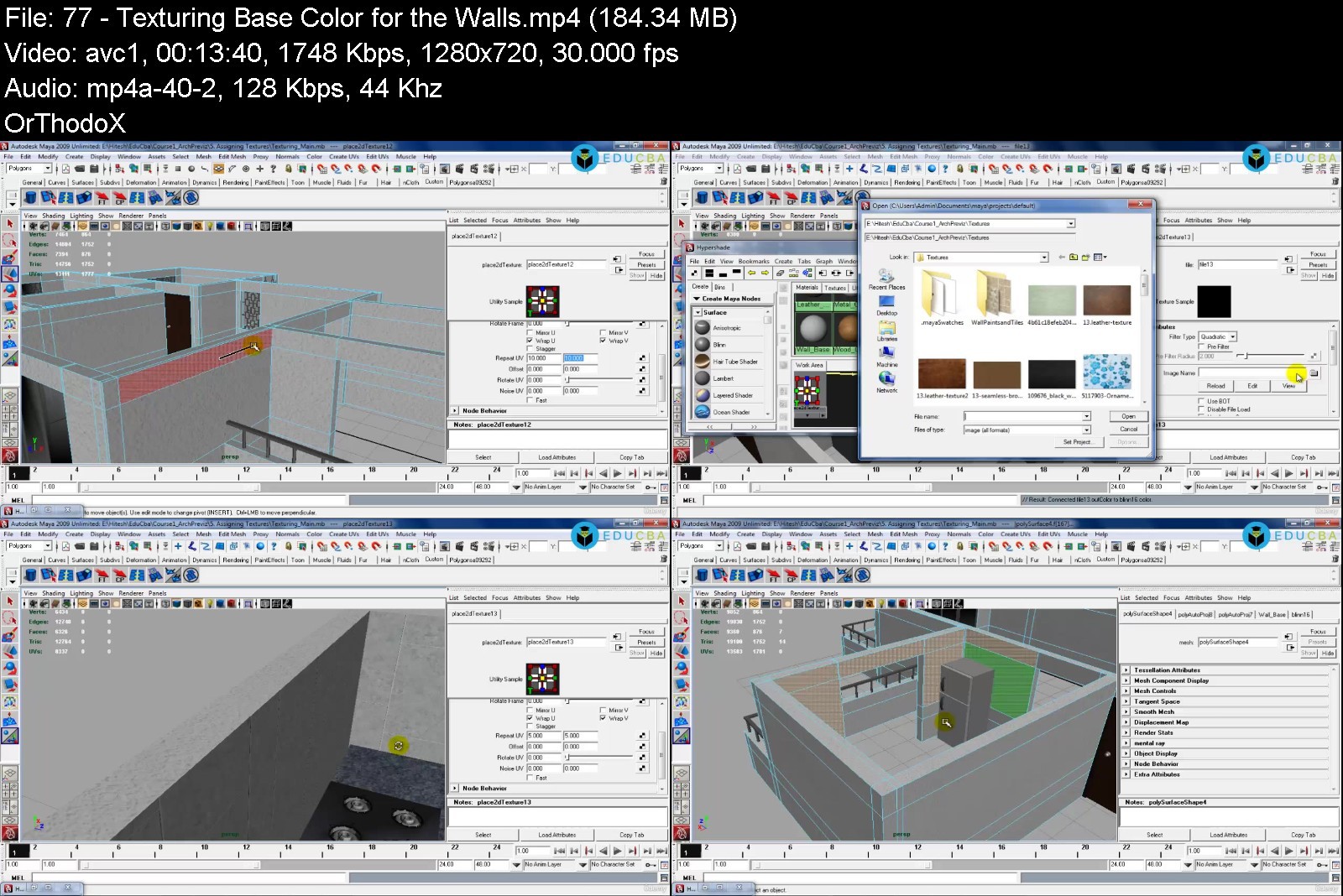
Lecture 77 Texturing Base Color for the Walls
Lecture 78 Texturing the Living Room Walls
Lecture 79 Texturing the Inner walls of the Bathroom
Lecture 80 Texturing Main Walls
Lecture 81 Texturing Main Walls Continues
Lecture 82 Texturing â€" Master Bedroom
Lecture 83 More on Master Bedroom
Lecture 84 Texturing **** Room
Lecture 85 Creating Floor for the Flat
Lecture 86 Making Divisions
Lecture 87 Texturing Individual Room Floors
Lecture 88 Introduction to Lighting and Rendering
Lecture 89 Assigning Basic Lights
Lecture 90 Adjusting Different Parameters
Lecture 91 Mental Ray Setup
Lecture 92 Occlusion Shader
Lecture 93 Editing the Reflection of the BG
Lecture 94 Conclusion
Learners from CAD backgrounds, who desire to move forward into the 3D world can gain maximum knowledge from this training. Their prior experience with the 3D interface and understand of 3d drawings and blueprints will help the learners understand the software easily. This 3D Architecture Tutorial is not limited to any audience. A beginner or an intermediate both can use this training. The 3D Architecture Tutorial is aimed at the audiences who are dedicated to learn and grasp the skills in no time The students who aspire to become 3D Architectural Designers can take up this 3D Architecture Tutorial. It will help as a foundation to take them into the 3D world and introduce them to the most used features of the software. The Engineering students can take up this course as it will help them to re-create their CAD drawings and give them a complete finished look. Industrial designers can also opt for this course the teachings of 3ds Max are not limited to Architecture only.


3darchitecturewithmaycsjlj.jpg


Download from RapidGator


Download from Keep2Share



Learn How to Code: The Complete Core Java Programming Course

iakv1.jpg


Learn How to Code: The Complete Core Java Programming Course
Instructors: Mayur Deshmukh
14 Lessons | Duration: 10h 20m
Video: MP4 1892x1080 48 KHz | English
Updated: May 2022 | Size: 5.7 GB

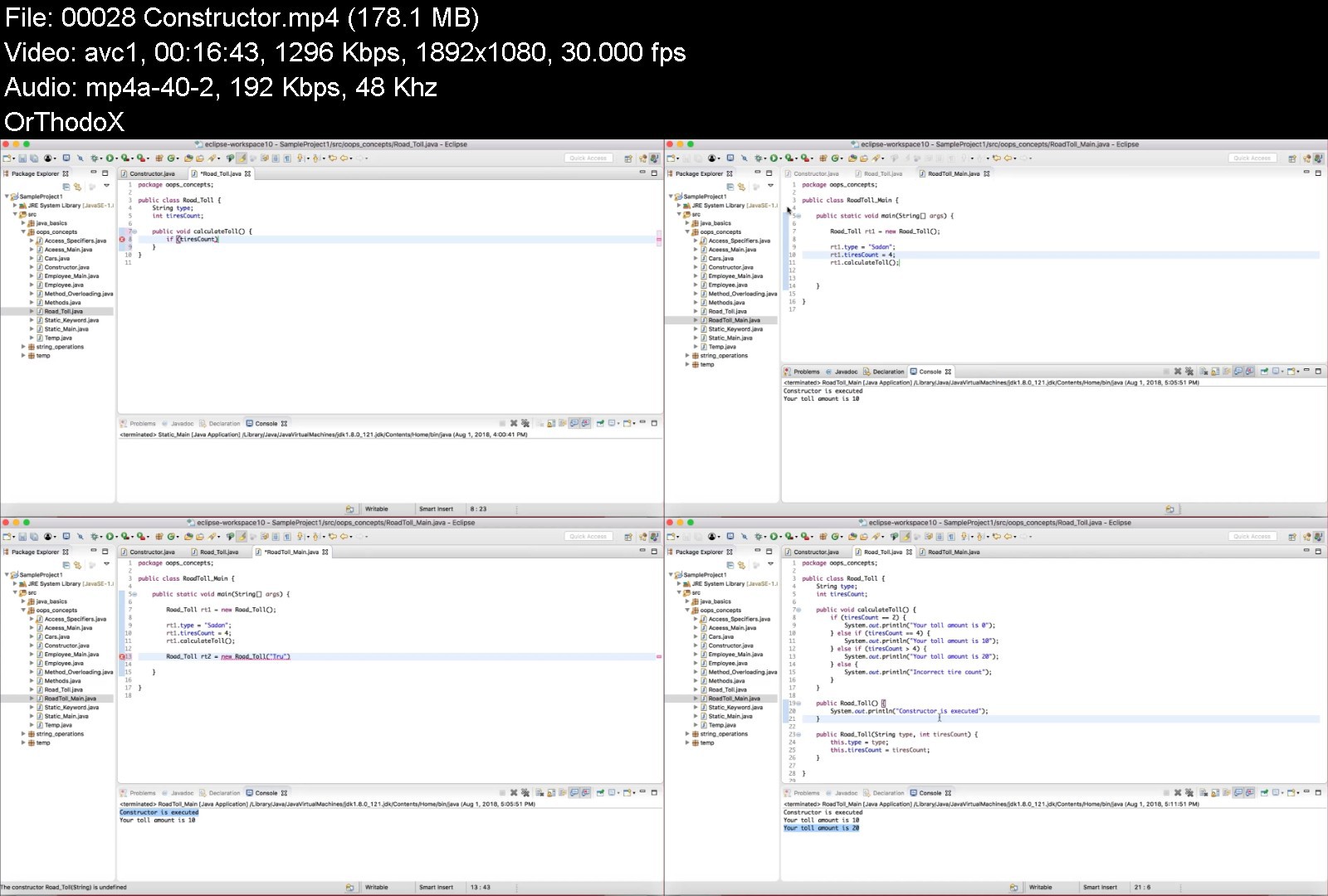
The course starts with the basics of Java, including installation and the environment. Furthermore, we will explore object-oriented programming in Java, data encapsulation, inheritance, and abstraction in Java. We will also look at data structures in Java such as arrays, linked lists, hash sets, linked hash sets, and so on. Moving on, we will which regular expressions in Java and exception handling in Java.
This course is designed to take you through the core Java concepts with the help of practical examples and coding exercises to ensure you learn effectively. In addition to this, you will also explore the concept of object-oriented programming, gradually building on your skills. Later, the course will show you how to effectively work with the file system in Java.
By the end of this course, you will be well-versed in Java programming and be able to apply your skills in the real world.
All resources and code files are placed here: About the Author
Mayur Deshmukh
Mayur Deshmukh is an instructor and the founder of De ZINNIA Learning. De ZINNIA provides industry-standard training relating to software automation testing tools and programming languages. Their programs include extensive and hands-on training in Java, C#, Python, Selenium WebDriver, Appium, TestNG, Cucumber (BDD), Continuous Integration (CI), Jenkins, REST, and SOAP API Automation, WireMock, and Gatling Load Testing.
Mayur constantly motivates his students to keep up a learner's attitude as it is very important to adopt new technologies to sustain and grow in this ever-changing world of software technology.

learnhowtocodethecompz5jrj.jpg


Download from RapidGator


Download from Keep2Share


 
CompTIA A+ CompTIA A+ 220-1101, CompTIA A+ 220-1102 Prep Lab

x7tycyxt6bpzfymh5icjyx8k2c.jpg


CompTIA A+ CompTIA A+ 220-1101, CompTIA A+ 220-1102 Prep Lab
Published 06/2022
Genre: eLearning | MP4 | Video: h264, 1280x720 | Audio: AAC, 44.1 KHz
Language: English | Size: 5.59 GB | Duration: 191 lectures • 10h 51m


What you'll learn
The CompTIA A+ certification has been the first step in a successful career for many IT professionals.
CompTIA A+ 220-1001 exam covers mobile devices, networking technology, hardware, virtualization and cloud computing and network troubleshooting.
CompTIA A+ certification is the internationally-recognized industry standard and it's the first step to getting a great job in IT support and be IT professional
The A+ certification will test your knowledge of PC hardware, mobile device hardware, operating systems, security, cloud computing, and troubleshooting hardware
CompTIA A+ 220-1002 covers mobile devices, network technology, hardware, virtualization, and cloud computing and network troubleshooting.
What is the CompTIA A+ exam? Why is the CompTIA A+ course important?
All information on CompTIA A+ exam topics.
What are Attacks, Threats and Vulnerabilities?
What are network topologies and network attacks?
What Are Social Engineering Attacks?
What is the threat, what are the types of threats, and how is the threat analysis done?
What are the programs used for the attack?
What should be the architecture and design under CompTIA A+?
What is a database, and how is database security provided?
You will learn about computer components.
What is IoT & Mobile?
You will learn about cables
You will learn Linux and Windows fundamentals
You will learn to troubleshoot hardware, network and software
You will learn about Wi-Fi
Requirements
Desire to learn comptia a, comptia a+, comptia a 220-1001 exam.
Desire to pass Comptia A+ 220-1001 and 220-1002 Practice Exams and get Comptia A+ certification
Watching the lecture videos completely, to the end and in order.
Any device you can watch the course, such as a mobile phone, computer or tablet.
Internet Connection
Determination and patience to learn.
Nothing else! It's just you, your computer and your ambition to get started today.
LIFETIME ACCESS, course updates, new content, anytime, anywhere, on any device.

Description
Hello there,
Welcome to the "CompTIA A+ CompTIA A+ 220-1101, CompTIA A+ 220-1102 Prep Lab" course.
Comptia A+ Certification, CompTIA A+ 220-1101 Comptia A+220-1102 exam topics, linux, comptia it fundemantal for IT staff
Join thousands of other learners who have taken Oak Academy's CompTIA A+ training to prepare for their certification exams. Real-world instructors will guide you step-by-step through the skills you'll need as an IT professional. And you won't just memorize; you'll really learn through practice tests, quizzes and hands-on exercises. comptia a, comptia a+, a+, comptia, comptia a 220-1101, comptia a 220-1102, comptia a practice exam, a+ certification, comptia a 220-1001, comptia a 220-1002, IT support, linux, linux administration, comptia it fundemantal, comptia itf+
The CompTIA A+ certification is a globally-recognized certification in the Information Technology industry. Issued by IT association CompTIA, the A+ certification is widely accepted as an industry standard certification often used to kickstart a career in IT. The CompTIA A+ certification is designed to help you land an entry-level position in IT by ensuring you know the basics of working with hardware, networks, and computer systems.
Enroll in this CompTIA A+ certification course to prepare for your exam. This certification is the internationally-recognized industry standard - and it's the first step to getting a great job in IT support. Find out from real-world experts how to troubleshoot everything from networks to mobile devices to the basics (and more) of operating systems.
Most employers will require their IT staff to have this certification before they authorize training in any other IT field. According to CompTIA itself, approximately 1.2 million IT-certified professionals have the A+ cert! To work as an HP, Dell, or Intel technician, you will need the CompTIA A+.
CompTIA A+ certified professionals are proven, problem solvers. They support today's core technologies from security to cloud to data management and more. CompTIA A+ is the industry standard for launching IT careers into today's digital world.
CompTIA A+ is the only industry recognized credential with performance testing to prove pros can think on their feet to perform critical IT support tasks. It is trusted by employers around the world to identify the go-to person in end point management & technical support roles. CompTIA A+ appears in more tech support job listings than any other IT credential.
The CompTIA A+ Core Series requires candidates to pass two exams: Core 1 (220-1101) and Core 2 (220-1102) covering the following new content, emphasizing the technologies and skills IT pros need to support a hybrid workforce.
Increased reliance on SaaS applications for remote work
More on troubleshooting and how to remotely diagnose and correct common software, hardware, or connectivity problems
Changing core technologies from cloud virtualization and IoT device security to data management and scripting
Multiple operating systems now encountered by technicians on a regular basis, including the major systems, their use cases, and how to keep them running properly
Reflects the changing nature of the job role, where many tasks are sent to specialized providers as certified personnel need to assess whether it's best to fix something on site, or to save time and money by sending proprietary technologies directly to vendors
The new CompTIA A+ Core Series includes expanded content on these growing parts of the IT support role
A general expansion of baseline security topics core to the IT support role, including physical versus logical security concepts and measures, malware and more
A dramatically different approach in defining competency in operational procedures including basic disaster prevention and recovery and scripting basics
A greater dependency on networking and device connectivity
This course walks you through all the things you need to pass the CompTIA A+ (220-1101) exam, step by step.
You can pass the CompTIA A+ exam by studying the topics covered throughout the course.
By the way, you don't need to know anything for this course.
We will tell you all the things you need to pass the CompTIA A+ (220-1101) exam.
Our course points too much topics.
However, in order to better understand the topics, these basic topics are divided into parts and explained in 21 small chapters.
Each of the sections is important on its own. It also relates to other departments.
As you follow the course, you will hear the same terms in different lessons. This is because many terms in the field of Security can be used in relation to each other in different subjects.
For example, the subject of encryption is mentioned in many places.
Although the basic meaning is the same, usage types can gain different meanings on different platforms.
The narration of the topics is brief and for the exam.
We will make sample applications for some of the topics covered in our course.
We will create a virtual Lab for the application.
If you wish, you can improve yourself by using the topics covered in the lessons.
Because at the end of the course, you will see all the topics used in the field of Security.
All you have to do is search the subject on the internet and continue learning.
This course is for CompTIA A+ (220-1101).
Basically in CompTIA A+ (220-1101) exam;
1. Attacks, Threats, and Vulnerabilities
2. Knowledge of the computer components
3. Implementation
4. Operations and Incident Response
5. Risk, Threat
Questions are asked from the fields. Throughout the course, topics related to these areas are explained.
In this course you will learn;
Passing the CompTIA A+ certification exam with confidence
Understand computer security, its functions, and its components
Performing basic security configurations
Network topologies
Threat analysis
Top Reasons to Get CompTIA A+ Certified
When you're ready to take your CompTIA certification exam, you can follow these steps
Prove Your Knowledge: Certification validates your skills and is proof that you have mastered the knowledge covered in training.
Earn the Industry Standard: CompTIA A+ certification is the industry standard for establishing a career in IT and is the preferred qualifying credential for technical support and IT operational roles.
Get Your Foot in the Door: Having IT certifications makes a great first impression when you're looking for a job. According to the International Data Corporation (IDC), 96 percent of human resources managers use IT certifications as screening or hiring criteria during recruitment. Learn more about all the places you career can go with CompTIA certifications.
Make an Impact: IT professionals with CompTIA A+ or CompTIA Security+ perform at a higher level than those who are not certified.
Progress Along with a Career Roadmap: Not sure where an IT certification can take you? Browse IT careers for professionals, navigate certifications and discover jobs in areas that interest you, and open doors to opportunity and success.
What is the CompTIA A+ certification?
The CompTIA A+ certification can be considered an entry-level certificate for IT professionals. Getting a CompTIA A+ certificate can lead to a successful IT career. CompTIA created this certificate for people seeking employment as a help desk, support, service center, or networking technician. The CompTIA A+ certification exam covers PC and laptop hardware, software installation, the configuration of computer and mobile operating systems, basic networking, troubleshooting, and security skills. Many enterprises require a CompTIA A+ certificate for their entry-level information technology jobs. Passing the CompTIA A+ certification exam can also serve as a springboard toward other technology certificates and career advancements.
Do I need CompTIA A+ for Network+?
Getting the CompTIA A+ certification is not a requirement to get a Network+ certification. Each certification covers a separate area of computer technology. The A+ certification will test your knowledge of PC hardware, mobile device hardware, operating systems, security, cloud computing, and troubleshooting hardware and network connectivity. It consists of two tests. You can acquire the Network+ plus certification by passing one test. This test validates a student's knowledge of wired and wireless networks and their understanding of topics like unified communications and virtualization. While having both the CompTIA A+ certification and the Network+ certification will give an IT technician more opportunities when looking for a job, neither certification is a prerequisite for the other.
Why Should I Get CompTIA A+ Certified?
CompTIA A+ will either help you get your start in IT or help you get promoted in your current job. It is the industry standard for establishing a career in IT and is the preferred qualifying credential for technical support and IT operational roles.
IT pros with CompTIA A+ have jobs like IT support specialist, IT field service technician, desktop support analyst, and help desk tier 2 support. And, companies like Intel, Dell, Ricoh, Nissan, Blue Cross, and Blue Shield, and HP all look for CompTIA A+ certification when hiring.
How hard is the CompTIA A+ exam?
The difficulty of the test will depend in large part on your interest and experience in the subject. If you are taking the CompTIA A+ exam because you have already been building and fixing computers for a while and have a working knowledge of operating systems, especially Windows, you should have no problem passing the test. The exam consists of two tests. Each has 90 questions, which consist of multiple-choice questions, drag-and-drop questions, and performance-based questions. For each test, you get an hour and a half.
How many questions are on the CompTIA A+ exam and what is a passing score?
The CompTIA A+ exam consists of two tests of 90 questions each. The problems include multiple-choice questions, drag-and-drop questions, and performance-based questions. The first exam covers hardware, networking technology, mobile devices, cloud computing, virtualization, and networking troubleshooting. The second exam tests the knowledge of software troubleshooting, installing operating systems, configuring operating systems, and security. The passing score for the first exam, 220-1001, is 675 out of a scale of 100-900. For the second exam, 220-1002, a passing score is 700 out of a scale of 100-900. This means that to pass the first test, you need to answer at least 69 out of 90 questions correctly. Whereas for the second test, you need to have 70 correct out of 90.
Is CompTIA A+ worth it?
Many entry-level IT jobs require A+ certification. It proves to the business you are applying to that you have basic IT knowledge. They want to know that you can do the work and don't need basic training. If you have no experience in the industry, having a CompTIA A+ certificate can get you an entry-level job. After that, you can specialize, add other certifications, and advance in your career. The CompTIA A+ certificate has been the first step in a successful career for many IT professionals.
What's next after the CompTIA A+?
For many IT professionals, the CompTIA A+ is the first of many certifications earned over the course of their careers. Since the A+ certification is fairly general, you may choose to move into an IT specialization, like networking, cybersecurity, or cloud computing. CompTIA offers more advanced certifications in these fields, as do many other reputable organizations. Take a look at this IT certification roadmap to inspire your next career goal.
What are the objectives of the CompTIA A+ exam?
The test objectives are to ensure that an aspiring IT professional has the basic knowledge for an entry-level information technology job. CompTIA A+ applicants should be able to assemble components based on customer requirements. The exam tests applicants on their ability to install, configure and maintain PCs, mobile devices, and software. They should know the basics of networking and security forensics. CompTIA A+ applicants should have basic troubleshooting skills to diagnose, resolve, and document common hardware and software issues. They should know how to provide essential customer support. They should also understand the basics of scripting, virtualization, desktop imaging, and deployment.
What jobs can I get with CompTIA A+?
The CompTIA A+ certification is the industry standard for a career in IT and is the preferred credential for technical support and IT operational roles. One job a person with an A+ certificate may choose is IT support specialist. An IT support specialist is responsible for installing and configuring computer hardware and software, monitoring and maintaining computer networks, and providing technical support across a company. Another role someone with A+ certification may choose is help desk technician. A help desk technician diagnoses and supports hardware and software issues across a company. Other job titles that require A+ certification include service desk analyst, technical support specialist, field service technician, network engineer, data support technician, desktop support administrator, help desk technician, and system support specialist.
Which should you choose CompTIA A+ or CompTIA IT Fundamentals (ITF+)?
CompTIA offers two separate entry-level certifications, the CompTIA A+, and the CompTIA IT Fundamentals, or ITF+. They're slightly different. The CompTIA A+ is billed as a certification that will test you on the knowledge needed to land an entry-level IT job. The ITF+, on the other hand, is designed for students and professionals who want to see if IT is a right career fit for them. The ITF+ exam is also used by non-IT professionals who want a broad introduction to the field. If you're still on the fence about whether you'd like a job in IT, getting the ITF+ can be a good way to test the waters. If you know you want to commit to IT work and are ready to gain job-ready skills, the A+ certification is probably a better path.
How long will it take to get CompTIA A+ certified?
The length of time it takes to get a CompTIA A+ certification depends on your current experience level and whether you take any courses to prepare for the exam. If you already know most of what the study material covers, it's possible to earn the certification in just a couple of months. However, for a beginner, it typically takes about a year to become familiar enough with the exam topics to pass. To receive certification, you must demonstrate knowledge in nine key areas. CompTIA A+ provides study materials that help prepare you for the exam, and you can work through these at your own pace. However long it takes you to get certified, it's worth the time. As one of the most highly valued qualifying credentials for anyone seeking a role in IT operations, CompTIA A+ certification can take your career to new heights. A course on Udemy can help get you there.
No prior knowledge is needed!
Why would you want to take this course?
Our answer is simple: The quality of teaching.
When you enroll, you will feel our seasoned instructors' expertise.
Video and Audio Production Quality
All our videos are created/produced as high-quality video and audio to provide you the best learning experience.
You will be,
Seeing clearly
Hearing clearly
Moving through the course without distractions
You'll also get
Lifetime Access to The Course
Fast & Friendly Support in the Q&A section
Udemy Certificate of Completion Ready for Download
Dive in now "CompTIA A+ CompTIA A+ 220-1101, CompTIA A+ 220-1102 Prep Lab" course
Comptia A+ Certification, CompTIA A+ 220-1101 Comptia A+220-1102 exam topics, linux, comptia it fundemantal for IT staff
We offer full support, answering any questions.
See you in the course!
Who this course is for
Anyone looking to pass CompTIA A+ 220-1001 exam and get the CompTIA A+ Certification.
Anyone who wants to improve their skills as a computer or IT technician, IT professional.
Anyone interested in security
Those who have a basic knowledge of security and want to take it to higher levels.
Those who have a career goal in the field of security.
Those who want to step into the world of security.


comptiaacomptiaa22011jkkxe.jpg


Download from RapidGator


Download from Keep2Share


 
Mastering Odoo Development - Technical Fundamentals

uaigzoba0kwzeemqqeyoh2mkcr.jpg


Mastering Odoo Development - Technical Fundamentals
Last updated 6/2021
MP4 | Video: h264, 1280x720 | Audio: AAC, 44.1 KHz
Language: English | Size: 5.86 GB | Duration: 10h 21m

Everything you need to get started developing Odoo applications. No previous Python experience required.


What you'll learn
Learn how to setup your Ubuntu server for development
Install Odoo source code from github
Understand the Odoo framework
Customize Odoo using developer mode
Develop custom Odoo Applications
Understand enough Python to make basic Odoo applications
Learn to Create Calculated and Related Fields
Create a custom report using qweb templates
Use Python to translate and import data into Odoo
Have a solid foundation for developing more advanced Odoo applications
Requirements
Basic computer skills
You should understand the basics of using Odoo from a functional perspective
You should be able to edit files
Previous experience in programming is helpful but not required
It is also helpful to understand a little bit about XML
You should be reasonably computer savvy

Description
New Video Lecture added June 15th, 2021 - WSL*Development Environment setupWSL*allows you to create a local ubuntu environment inside of Windows easily and efficiently. The new video added to the course walks you through the process.New May 23, 2021 - An updated build for Odoo 14 with some new cool features is now attached to the resources in the first lecture. Mastering Odoo Development - Technical Fundamentals is a comprehensive Odoo Technical Training course from Odoo Class that is designed to take you from the beginning of installing Odoo all the way up to developing Odoo Applications. At the end of this course you will understand how the Odoo Framework fits together and have a strong foundation for building real Odoo applications. The course now includes the complete application built in Odoo 14! Also includes FREE*ODOO*14 Installation Guide! As the API*has not changed fundamentally since Odoo 8... this course can be utilized in versions Odoo 8 to Odoo 14 with relatively small changes. If you are following along with the course you may wish to use Odoo 9 to make things just a bit easier. However, versions of Odoo development past Odoo 8 are very similar so you should be able to make the transition without too much difficulty.*OdooClass continues to produce updated videos for Odoo and we hope in the future to bring more of them to the Udemy platform.NOTICE - If you are an active Odoo Class subscriber, this video is included with your subscription. Please login to your Odoo Class subscription to get access to this course. Odoo Class is recognized as the #1 source of Odoo Video Training and Workshops. If you Google for Odoo Class, you will quickly see that this is certainly not our first successful video course.If you want to Learn to Customize Odoo or become an Odoo Developer, you have come to the right place! If you are looking to learn how to develop in Odoo or want a complete comprehensive course to help you fill in some of the missing pieces you have been picking up trying to self teach yourself Odoo development... this is the course for you!We have created over 100 Odoo videos over the past two years. Now we've created the definitive Odoo Development Master Course and made it available here on Udemy.Here are some testimonials from Odoo Class Video subscribers:I just wanted to say that the videos are great and have really opened my eyes to the capabilities with Odoo.- Joey K.I recommend Odoo Class for anyone want to learn Odoo, they have a very high quality videos for both functional and technical- Vyas S.I find your videos real easy to follow and often revert back to them as a point of reference.- Peter Y.First off I want to comment on all of the quality video editions you have recently added to your library. They have been tremendously helpful and I have been recommending your service to many people.- John P.Now we have taken what we have learned from creating more than 100 video training courses for Odoo and brought that knowledge here to create our first Udemy full length course, Mastering Odoo 9 Development.Remember, if you are an Odoo Class subscriber you already have access to this course as part of your subscription.What makes this Odoo course special?1. We make it easy for those that are new to programmingWhile it certainly will be a little easier for someone who already knows some Python, this course does not require you to have any previous knowledge of Python.Even if you have virtually no experience in computer programming we walk you through learning the Odoo framework in such a way that even a relative beginner can understand. In fact we show you several ways you can customize Odoo without even writing a single line of Python code! If you are new to Python, we teach you how to add fields to any Odoo model, customize Odoo views, and creating you own menus and actions. Already know Python? That will make it all the easier. Just because we assume you don't know Python doesn't mean the course moves slowly. Within the 30 minutes of finishing your Odoo install you will be on your way to customizing Odoo!2. The course helps you get Odoo installed and developing RIGHT NOW!Even if you have never used Ubuntu before, we show you the basics on how to get around Ubuntu and enter the required commands to setup an Odoo server right on your Windows machine. You learn how to setup your Ubuntu server with Odoo. Naturally if you have never setup Ubuntu, you may need to watch the video more than once, Google a few commands, or ask a few questions in our help forum. If you wish to run a production Odoo server you will need to supplement your skills. Still, if you don't know Ubuntu... this video will help you get started and you can follow along step-by-step with this course. 3. This Video is Designed to Help you Understand the Odoo frameworkInstead of just showing you code examples we begin by going through the Odoo Framework and explaining how models, views and actions work together to make Odoo applications. You learn to customize Odoo without writing code making it easy to both understand the framework and prepare you for building powerful Odoo Applications. We cover major development topics you will need for real Odoo customization and development.Learn the power of the Odoo FrameworkSee how to customize Odoo applications without writing a single line of code!Create your own Odoo Application from scratchLearn to extend Odoo models with your own custom fieldsModify views to display the information the users requireCreate your own custom search filtersLearn how to create your own custom menus.Add functional fields to your models that can perform calculationsLearn how to use domain and context to limit data and create dynamic applicationsWrite utility scripts in Python to quickly translate and import data into OdooLearn how to modify Odoo reportsGet a solid foundation you can use to create powerful Odoo ApplicationsWill this video teach you everything you need to know about Odoo? No. The purpose is to give you a solid foundation and understanding of the Odoo framework and give you essential knowledge in Mastering Odoo Development. 4. Mastering Odoo Development uses a Real Business ExampleWhile this is our first Udemy course, Odoo Class has created more than 100 professional Odoo videos. In all our video courses we always look at how to use Odoo to solve real world business problems. Unlike many video courses that just show you a set of disconnected examples or walk you through a tutorial that is already on other websites... this video is based on a real world example. Using a requirements driven approach we see how to extend product records with far more detailed information. 5. Updated Content - A strong foundation for becoming an expert Odoo DeveloperThis video course will continue to be updated to include all the important topics for becoming a solid Odoo Developer. With this course you will have a solid foundation to begin exploring more advanced topics and videos that we will produce both here on Udemy and on Odoo Class. Please provide us feedback and additional content and future course videos we can continue to provide to the Odoo community.
Overview
Section 1: Welcome to Mastering Odoo Development - Technical Fundamentals
Lecture 1 Introduction
Section 2: Setting up an Ubuntu Server and Installing Odoo 9
Lecture 2 NEW! Setup WSL & Install Ubuntu 20.04
Lecture 3 Downloading VMware virtual environment and Ubuntu 14.04 Desktop
Lecture 4 Install Ubuntu 14.04
Lecture 5 Finish updating Ubuntu and installing Postgres Server
Lecture 6 Installing Odoo Dependencies
Lecture 7 Downloading the Odoo 9 source code and starting the Odoo Server
Section 3: Understanding the Odoo framework and basic Odoo customization
Lecture 8 Introducing our development example and creating our development database
Lecture 9 Understanding Odoo models using the Odoo Debug Mode
Lecture 10 Learning more about Odoo models
Lecture 11 Backup and Restore your Odoo Database
Lecture 12 Understanding models in Odoo - Creating our first field
Lecture 13 Understanding and modifying Odoo Views in Debug Mode
Lecture 14 Add custom fields to tree views and learn to position fields in views
Lecture 15 Learn about Odoo actions and how they work with models and views
Lecture 16 Learn how Odoo menus, actions, and views fit together
Lecture 17 Learn how to customize Odoo search views
Lecture 18 Create a custom menu and action in Odoo
Section 4: Create your first Odoo Application
Lecture 19 Learn the fundamentals for creating an Odoo application in 10 minutes
Lecture 20 Installing your custom Odoo Application
Lecture 21 Adding a custom field to your Odoo application
Lecture 22 Create a custom view to display your new field
Lecture 23 Exercise: Add new fields to your Odoo model and Tree view
Lecture 24 Add a customized form view to your Odoo application
Section 5: Odoo Python Primer
Lecture 25 Getting Started with Python Development
Lecture 26 Learn to Import Libraries and Create Basic Loops
Lecture 27 Creating and Looping through Lists in Python
Lecture 28 Exercise: Create your own list of Toys in Python and Print them
Lecture 29 Understanding the Basics of Python Dictionaries
Lecture 30 Creating Custom Methods to Organize your Python Code
Section 6: Improving your Odoo Development Skills
Lecture 31 Installing Eclipse to Improve your Odoo Development Environment
Lecture 32 Looking at the Odoo source code and Understanding the Odoo Framework
Lecture 33 Adding a Custom Menu and Action to your Odoo Application
Lecture 34 Learn to use Domain to Filter Records in Odoo Actions
Lecture 35 Improve the Application Design using the Odoo Framework
Section 7: Intermediate Odoo Development
Lecture 36 Adding a New Model to your Odoo Application
Lecture 37 Add a Menu and an Action to your New Odoo Model
Lecture 38 Learn to use Related Models and Many2One Fields
Lecture 39 Create a Custom Form for your New Models
Lecture 40 Using a Notebook and Page to Display your Related Model
Lecture 41 Learn How to Create Computed and Functional Fields
Lecture 42 Exercise: Modify Compute Field and Create a Tree View
Lecture 43 Improving your Tree View and Putting a Total in a Column
Section 8: Expanding Your Odoo Application
Lecture 44 Creating Two New Related Models in Your Application
Lecture 45 Exercise - Create a new Menu and Action for your Model
Lecture 46 Using View Inheritance to Add a Page to the Product Notebook
Lecture 47 Using ir.model.access.csv to Configure Model Security
Lecture 48 Adding a Related Field To Your Model
Lecture 49 Creating a Computed Field with More Complex Calculations
Lecture 50 Learn to use the OnChange Decorator to Create Dynamic Applications
Section 9: Creating Custom Odoo Reports
Lecture 51 Creating the Basic Template and Print Menu for your Custom Report
Lecture 52 Updating Wkhtmltopdf to Eliminate Odoo Report Warning
Lecture 53 Learn to Report Data from Related Models in Odoo Reports
Section 10: Understanding the Odoo API
Lecture 54 Learn to Connect to the Odoo API
Lecture 55 Authenticating to the API and using search_count
Lecture 56 Learn How to Filter Data using the Odoo API
Lecture 57 Importing Data from a CSV File into Odoo
Lecture 58 Improve your Import Routine to Prevent Duplicate Records
Lecture 59 Search for Records using the Odoo API
Lecture 60 Exercise - Update Data Using the Odoo API
Anyone wishing to learn how to develop Odoo Applications,Anyone wishing to customize Odoo,Anyone who would like to better understand the Odoo Framework


masteringodoodevelopmvbkuk.jpg


Download from RapidGator


Download from Keep2Share


 
JavaScript Programming Inside Out : The Complete Reference

tyszeupsgiper5ulnjccqj3ju5.jpg


JavaScript Programming Inside Out : The Complete Reference
Published 06/2022
Genre: eLearning | MP4 | Video: h264, 1280x720 | Audio: AAC, 44.1 KHz
Language: English | Size: 49.6 GB | Duration: 51 lectures • 49h 50m


What you'll learn
This course is primarily intended for the practicing software professional who is making a great career by learning things on their own . Anybody can enroll.
Our course outlines the basic philosophy of JavaScript as a language intended for creating rich web applications . It will aid you in creating web pages easily
The course envisages a thorough understanding of the JavaScript language . Discusses the basic principles of scripting languages and projects JavaScript No 1.
This course on JavaScript is an elaborate analysis on the language. It discusses html projects mainly, but stand alone JavaScript programs are also dealt in .
Requirements
In fact there is no programming experience needed to start this course. At best high school education is preferred . A background in basic mathematics and science will be an added advantage . An aptitude for logical analysis is all that is required .

Description
Introduction to JavaScript. How to setup Environment for running JS code. Basic examples explained. Types of JS comments. Single line and multiline. Examples on keyword let. JS basic operators. Examples of special operators. JS if-else statement . JS looping constructs. JS do-while loop. Difference between while and do-while. JS break and continue statements. Functions explained. Using Object constructor.
JS Events. JS Strings. JS String slice() function. JS Math. constants and methods. JS Number, JS Boolean etc. JS Arrays. Popping and pushing in arrays. JS Array methods. Using splice() to remove elements. Sorting Arrays in JS. Finding lowest and highest element in an array. JS array iteration methods. Using Map. JS Arrow functions and ES6 version. 'this' in JS. filter() function in JS. Window Object. Methods of Window Object. JS Screen Object. JS DOM methods. JS innerHTML.
Examples of Numeric input validation. JS Classes. JS Class Inheritance. Oops in JS . Polymorphism in JS. Cookies in JS. The Cookie String. JS addEventListener() method. JS onclick event. JS onload event. Exception handling in JS. The throw, try-catch block. JS functions Call() and Apply(). The "use strict" Directive. JS Promise, Methods in Promise. Benefits of Promise. Examples on <span> tag . A Digital Clock Example.
The Cookies an important concept in JavaScript. JavaScript is popularly used in Web based programming. Even though our course concentrates on html files, we can create stand alone JavaScript programs with a .js extension. These programs can be run in the terminal window of our development environment namely Visual Studio Code.
Who this course is for
As we already mentioned this is a course for anybody who has a strong desire to learn new things. A basic high school education is all that is needed . In short if you have an attitude to think in a logical sense, that is all what is required for a career in software.


javascriptprogramminglljhy.jpg


Download from RapidGator


Download from Keep2Share


Java Se 11 Developer (1Z0-819) : Java 11 Ocp

kb9bme7nmcrda459ehb25w4jq8.jpg


Java Se 11 Developer (1Z0-819) : Java 11 Ocp
Published 6/2022
MP4 | Video: h264, 1280x720 | Audio: AAC, 44.1 KHz
Language: English | Size: 5.37 GB | Duration: 11h 46m

Mastering Advanced Java Concepts


What you'll learn
Understand and apply functional programming techniques in Java i.e. lambda expressions (including method references) and Streams.
Obtain the knowledge of many advanced Java concepts such as Concurrency, Generics/Collections, Localization, JDBC and IO/NIO.2.
Master the new Java 9, 10 and 11 topics - local variable type inference, private interface methods, Annotations, Security and Modules.
Acquire the skills to pass the Oracle Java 11 OCP (1Z0-819) exam.
Requirements
Ideally, have completed my Java 8 OCA (1Z0-808) Course here on Udemy (or any Java course). This course starts at lambda expressions.
Access to an IDE such as Netbeans, Eclipse or IntelliJ.
If preparing for Java 11 OCP certification, ideally, you would use Enthuware in parallel (for excellent MCQ training).

Description
This course is a systematic approach to teaching advanced Java concepts up to and including Java 11 OCP Certification. This course is a successor to my highly popular Java 8 OCA (1Z0-808) Course. As a result, the course starts with lambdas i.e. fundamentals such as types, operators and methods are not in this course. A full Java 11 "from scratch" course will follow soon. This course is not the same as the Java 11 OCP Upgrade exam (1Z0-817)*- this course is broader. To explain, this course covers all the topics (beyond the Java 8 OCA) in Java 8 OCP (1Z0-809)*exam; whereas, the 1Z0-817 exam does not. Therefore, this course is perfect if you have Java 8 OCA Certification (1Z0-808) and want to upgrade to Java 11 OCP (1Z0-819). However, prior certification is not at all mandatory before taking this course.The theory of the topic is explained with lots of code examples used to reinforce the topic. The videos are annotated in detail to help the learner follow my explanations i.e. I keep the mouse movement to an absolute minimum. I have made all the code examples available - this is a great learning aid as you can get the code running and see what happens if you change it.Topics include:· Lambda Expressions· Streams· Generics· Collections· Concurrency· JDBC· File IO· NIO.2· Serialisation· Localisation· private interface methods· LVTI (local variable type inference)· Annotations· Security· ModulesBy way of background, I am a lecturer since 2002 and I have exclusively taught the OCA and OCP syllabii since 2013 on behalf of a highly regarded software company. On completion of my training, graduates then face the company's own internal Java Certification exam (similar in style to Oracle's). I have no visibility into the questions they will face. It is a 3 hour long intensive exam. The company are delighted with the results; otherwise I wouldn't still be teaching on it :) .I love teaching and this course has all my experience in explaining advanced concepts of Java. In addition, I have a strong attention to detail which lends itself perfectly to the Oracle Java Certification exams. I am delighted that Enthuware, in their explanations, have linked to my YouTube channel.
Overview
Section 1: Lambda Expressions
Lecture 1 Lambdas - Introduction
Lecture 2 Lambdas - using a custom Functional Interface (in code)
Lecture 3 Lambdas - using Predicate (in code)
Lecture 4 API Functional Interfaces - Predicate and BiPredicate
Lecture 5 API Functional Interfaces - Supplier
Lecture 6 API Functional Interfaces - Consumer and BiConsumer
Lecture 7 API Functional Interfaces - Function and BiFunction
Lecture 8 API Functional Interfaces - UnaryOperator and BinaryOperator
Lecture 9 Lambdas - final and 'effectively final'
Lecture 10 Method References
Lecture 11 Bound Method References
Lecture 12 Unbound Method References
Lecture 13 Static Method References
Lecture 14 Constructor Method References
Lecture 15 The Importance of Context for Method References
Section 2: Streams
Lecture 16 Introduction and Stream Pipelines
Lecture 17 Stream Laziness
Lecture 18 Creating Streams
Lecture 19 Terminal Operations
Lecture 20 Terminal Operations - reduce()
Lecture 21 Terminal Operations - collect()
Lecture 22 Terminal Operations - collect() - Collectors.toMap()
Lecture 23 Terminal Operations - collect() - Collectors.groupingBy()
Lecture 24 Terminal Operations - collect() - Collectors.partitioningBy()
Lecture 25 Intermediate Operations - filter(), distinct(), limit()
Lecture 26 Intermediate Operations - map(), flatMap(), sorted()
Lecture 27 Primitive Streams - Creating
Lecture 28 Primitive Streams - API
Lecture 29 Primitive Streams - Functional Interfaces
Lecture 30 Primitive Streams - Mapping Streams
Lecture 31 Code - mappingObjectStreams()
Lecture 32 Code - mappingPrimitiveStreams()
Lecture 33 Optionals
Lecture 34 Parallel Streams
Section 3: Collections and Generics
Lecture 35 Collections - Introduction
Lecture 36 Common Collection Methods in Code
Lecture 37 List
Lecture 38 Lists in Code
Lecture 39 Set
Lecture 40 Sets in Code
Lecture 41 Maps
Lecture 42 Maps in Code
Lecture 43 Queue and Deque
Lecture 44 Queue and Deque in Code
Lecture 45 PriorityQueue
Lecture 46 Sorting - Comparable and Comparator
Lecture 47 Code: Comparable - Product
Lecture 48 Code: Comparable and Comparator - Sorting Arrays and Lists - Dog
Lecture 49 Code: Sorting by Multiple Fields
Lecture 50 Code: TreeSet Comparable issue - how to resolve with Comparator
Lecture 51 Code: Binary Search
Lecture 52 Generics - Introduction
Lecture 53 Generics - polymorphism, extends, super
Lecture 54 Generics - super and extends (in detail)
Lecture 55 Generic Classes and Interfaces
Lecture 56 Generic Methods
Lecture 57 equals()
Lecture 58 hashCode()
Lecture 59 Hashing in code
Lecture 60 Watch out for mutable fields in hashing
Section 4: Concurrency
Lecture 61 Introduction
Lecture 62 Creating Threads
Lecture 63 sleep() and join()
Lecture 64 ExecutorService (Introduction)
Lecture 65 ExecutorService (code)
Lecture 66 Submitting Task Collections (code)
Lecture 67 Scheduling Tasks
Lecture 68 Thread Safety - Introduction
Lecture 69 Data Race Demo
Lecture 70 Atomic Classes
Lecture 71 AtomicInteger example (code)
Lecture 72 synchronized keyword
Lecture 73 synchronized example (code)
Lecture 74 Lock interface
Lecture 75 Lock example (code)
Lecture 76 Concurrent Collections - Introduction
Lecture 77 Concurrent Collections - API
Lecture 78 Concurrent Collections - SkipList Collections
Lecture 79 Concurrent Collections - CopyOnWriteCollections
Lecture 80 Concurrent Collections - BlockingQueue
Lecture 81 Concurrent Collections - synchronized collections
Lecture 82 Concurrency - Threading problems - Race Condition
Lecture 83 Concurrency - Threading problems - Deadlock
Lecture 84 Concurrency - Threading problems - Livelock and Starvation
Section 5: Localisation
Lecture 85 Introduction and Creating locales
Lecture 86 Localising Numbers and Currencies (Introduction)
Lecture 87 Localising Numbers and Currencies
Lecture 88 Localising numbers using custom formats
Lecture 89 Localising Dates
Lecture 90 Locale.Category enums
Lecture 91 Resource Bundles, Property Files and Searching
Lecture 92 Resource Bundle Searching - Example
Section 6: JDBC
Lecture 93 JDBC Introduction
Lecture 94 Banking Example Setup
Lecture 95 Connecting to a Database
Lecture 96 PreparedStatement
Lecture 97 BankService - SELECT one
Lecture 98 BankService - SELECT all
Lecture 99 Bank Service DELETE one/all
Lecture 100 BankService - INSERT
Lecture 101 BankService - UPDATE
Lecture 102 CallableStatement
Lecture 103 Resource Leaks
Section 7: Java I/O API
Lecture 104 IO
Lecture 105 NIO.2
Section 8: Local Variable Type Inference (LVTI)
Lecture 106 Local Variable Type Inference (LVTI)
Section 9: Private Interface Methods
Lecture 107 Private Interface Methods
Section 10: Annotations
Lecture 108 Annotations
Section 11: Security
Lecture 109 Security
Section 12: Modules
Lecture 110 Introduction
Lecture 111 Compiler and Runtime flags
Lecture 112 Hello World Example
Lecture 113 Dependencies
Lecture 114 opens and requires transitive
Lecture 115 Operations on a Module
Lecture 116 Services
Lecture 117 Services - SoftDrink Example
Lecture 118 Types of Modules
Lecture 119 Migration Strategies
Anyone preparing for the Java 11 (1Z0-819) Certification exam. Absolutely perfect for those who are Java 8 OCA (1Z0-808) certified and never took the OCP exam.,Software professionals with Java experience who want to understand advanced Java topics.,Students who want to take their Java beyond the fundamentals.


javase11developer1z085yku8.jpg


Download from RapidGator


Download from Keep2Share


 
The Legacy Method

wqlnhetj8zbqfcli0eomc4nj76.jpg


The Legacy Method
Published 6/2022
MP4 | Video: h264, 1280x720 | Audio: AAC, 44.1 KHz
Language: English | Size: 7.51 GB | Duration: 6h 3m

The EXACT system that has helped me to build 6-figures in sales businesses and a multiple 6-figure coaching business.


What you'll learn
You will learn the EXACT system that has helped me to build 6-figures in sales businesses and a multiple 6-figure coaching business.
You will learn how to master your mindset.
You will learn my wealth creation techniques.
You will learn my intentional growth system.
You will learn my proven personal development plan that has helped me and many others achieve numerous breakthroughs
Requirements
No experience necessary, but have an online business and a desire to win.

Description
This is the EXACT system that has helped me to build 6-figures in sales businesses and a multiple 6-figure coaching business.This is a PREMIUM course that should retail for much, much more..Inside you will learn:How to master your mindset.My mindset mastery and wealth creation training.My intentional growth system.My proven personal development plan that has helped me and others achieve numerous breakthroughs.All over:46 never before seen videos8 modules with homeworkPlus:3 additional trainingsThe course is aimed at online business owners and entrepreneurs who want to grow a LEGACY business. Yes, this course was created for the Direct Sales, Network Marketing/MLM distributors but the principals do apply to all manner of online businesses.The strategies cover everything that you should be doing on a consistent and daily basis in order to grow both your business results and also personally too!Business growth relies on a mindset that is developed and prepared for the growth, else eventually your results will settle back to the level at which your mindset is developed to.The strategies include topics such as: Setting the Foundations, Understanding where you are at right now, Levelling up, Working Towards Self-Mastery, Growth, Building the Business Foundation and my signature Legacy 5x5x5 Tracker.Each strategy is taught in a no-nonsense and straight to the point manner.Accompanying each module is 'growth work'. Like homework, this is designed to help you to implement the knowledge that you have acquired throughout the module.I look forward to your successes!Elsa
Overview
Section 1: Congratulations you just pivoted!
Lecture 1 Welcome to the Legacy Method
Lecture 2 It is my time
Lecture 3 Why did I make the Legacy Method?
Lecture 4 How can you maximise your results?
Lecture 5 Start thinking "BIG"
Lecture 6 Growthwork
Section 2: Setting the Foundations
Lecture 7 Expect Breakthroughs
Lecture 8 Why is scheduling so important?
Lecture 9 How I schedule my days
Lecture 10 Why routines are important for success
Lecture 11 My morning routine
Lecture 12 My evening routine
Lecture 13 Growthwork
Section 3: Understanding where you are at right now
Lecture 14 Understanding what is your zone of competancy
Lecture 15 How to identify your zone of competancy
Lecture 16 What is your zone of genius?
Lecture 17 Identifying your zone of genius
Lecture 18 Prioritising your zone of genius
Lecture 19 Growthwork
Section 4: The Level Up
Lecture 20 What to expect in the level up
Lecture 21 Your vision: What can you see?
Lecture 22 Putting together your vision board
Lecture 23 How to "ACE" your personal development
Lecture 24 Why routines are important
Lecture 25 Intentionally growing every day
Lecture 26 Why having a personal development plan is important
Lecture 27 Growthwork
Section 5: Working Towards Self-Mastery
Lecture 28 The truth about growth
Lecture 29 You cannot control what you cannot control
Lecture 30 Three ways to build your confidence
Lecture 31 Why it is important to have a good relationship with money
Lecture 32 Growthwork
Section 6: Growth - It Hurts
Lecture 33 What to expect
Lecture 34 Mastering your energy
Lecture 35 Environment is stronger than willpower
Lecture 36 Healing your inner child
Lecture 37 Consistency is the secret sauce
Lecture 38 Growthwork
Section 7: Building the Business Foundation
Lecture 39 Mastering the inner chatter
Lecture 40 How to establish goals and targets
Lecture 41 Knowing your numbers
Lecture 42 What if you only had one hour everyday
Lecture 43 What to do at the start of the week
Lecture 44 Converting cold leads into warm leads
Lecture 45 How to finish the month at strength
Lecture 46 Growthwork
Section 8: The Legacy 5x5x5 Tracker
Lecture 47 Creating new conversations
Lecture 48 Follow-up and close
Lecture 49 Add new people
Lecture 50 Power of 5 and Social Media
Lecture 51 Social media
Lecture 52 Personal development - ACE it!
Lecture 53 Life tracker
Lecture 54 Growthwork
Section 9: Additional Trainings
Lecture 55 How to time-block
Lecture 56 Wealth & Mindset Mastery
Lecture 57 Follow up & Close
Online business owners.,Network Marketing/MLM Distributors.,Direct Sales Distributors.


thelegacymethodinjrb.jpg


Download from RapidGator


Download from Keep2Share



Professional Game Development in C++ and Unreal Engine

0tebc0ebayxxqn5zw9nmpp8j9b.png


Professional Game Development in C++ and Unreal Engine
MP4 | Video: h264, yuv420p, 1920x1080 | Audio: aac, 44100 Hz | Duration: 25h 11m | 9.88 GB
Genre: eLearning | Language: English

Hands-on game development in C++ with Unreal Engine. A project-based course where you build a third-person action game and gain a solid understanding of the Unreal Engine C++ game development architecture that will boost your game development career!
It doesn't matter if you have been programming for a decade or barely a year...we can master the Unreal Engine together! The course has been designed to onboard those with some basic programming skills so we can get up to speed quickly to the most exciting parts of programming C++ with Unreal Engine 4 & 5!
Even today there is very little information about Unreal C++ available. This course packs every bit of information I could possibly include from 8+ years of experience into a curated learning path for a wide range of students.

Homepage

professionalgamedevelp0jz3.jpg


Download from RapidGator


Download from Keep2Share



Simpler Trading - Phoenix Finder Targets Hot Stock Picks

simplertradingphoenixs4k1l.png


Simpler Trading - Phoenix Finder Targets Hot Stock Picks
MP4 | Video: 1920x1080 | Audio: AAC 48 Khz , 2ch | Duration: 19h 36 min | Language: English | 5.7 GB

Here's the course you've been searching for to ignite your trading portfolio by revealing the most profitable stocks in the hottest markets.
No matter what markets you're in now.
Even if you have little trading experience.
Even if you don't know what stocks or markets to consider.
This is the course that delivers the tools, tactics, and strategies to grow your trading account.
How does $1,000 profit in an hour sound?
That's the power of the Phoenix Finder Tool and Strategy created by Danielle Shay, Director of Options and head of Simpler Foundation at Simpler Trading.
This trading system is designed to energize your trading plan whether you're new to trading or a seasoned pro. It's simple. It's widely used by professionals and novices alike.
And it has yielded 50%, 100%, even 200% gains.
How strong is the latest "hot" stock?
Which stocks are most advantageous to get into in any market . even a very volatile one?
How do I pick a profitable stock in a crazy market?
As the volatile markets throw ticker trackers into chaos, the Phoenix Finder rises above the mayhem to provide answers to critical stock selection and deliver strong picks for consistent gains.
What is the Phoenix Finder?
In any market it's essential to know the true strength (or weakness) of a stock relative to others in its industry group. Before, ranking the strength of a security (stock, ETF, etc.) was difficult to visualize using individual charts. Until now.
With the Phoenix Finder Tool and Strategy, it becomes clear at a glance which stocks are ripe for a rally and which are ready to drop like a rock. Targeting 50 to 200 percent short-term gains becomes possible when you can identify when money flows in (or out) to key securities in carefully chosen industries.

simplertradingphoenixhlk2v.jpg


Download from RapidGator


Download from Keep2Share
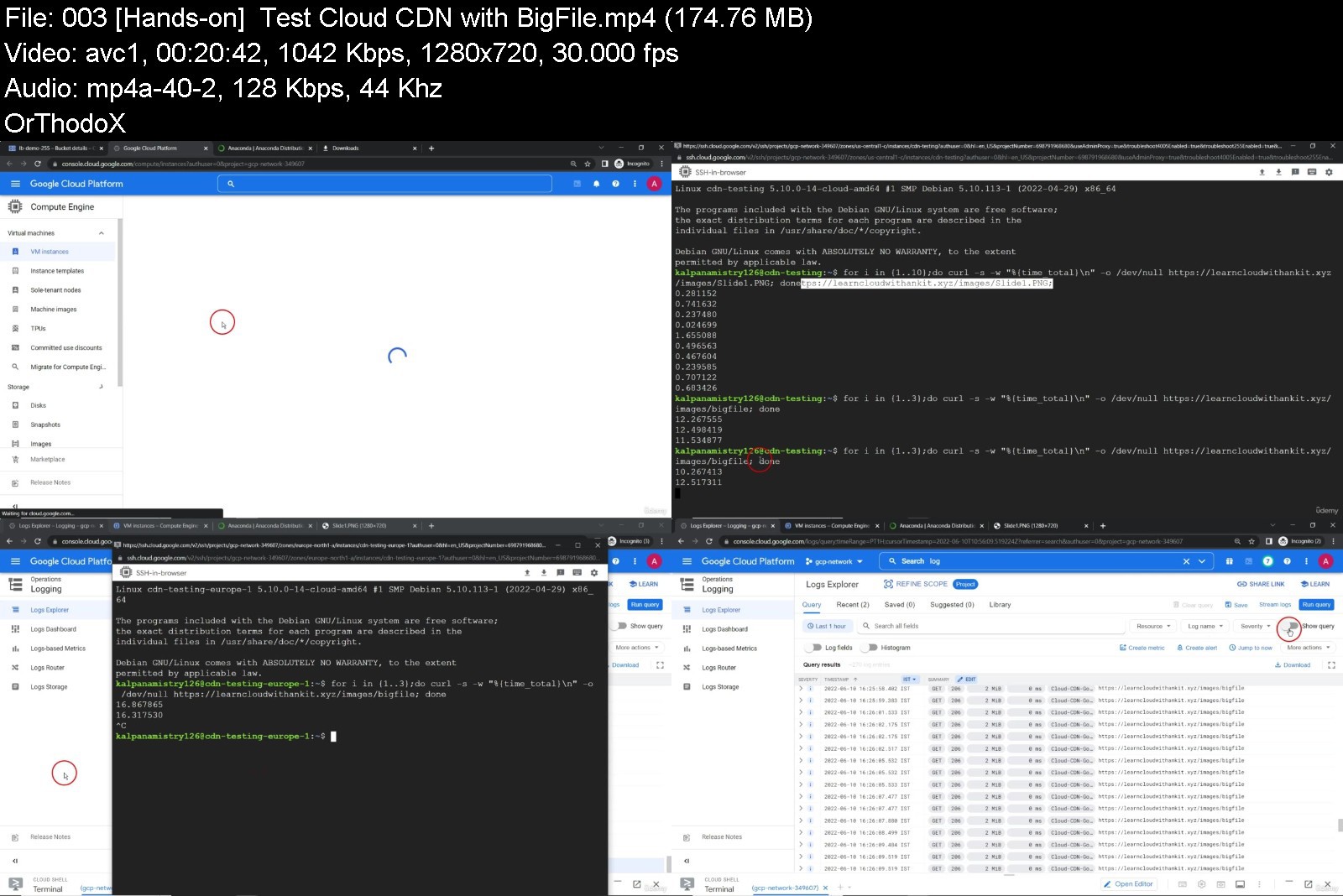

 
Deep Learning Masterclass With Tensorflow 2 Over 15 Projects

1tica3nzhcjnrgik3nhzbxikqy.jpg


Deep Learning Masterclass With Tensorflow 2 Over 15 Projects
Published 6/2022
MP4 | Video: h264, 1280x720 | Audio: AAC, 44.1 KHz
Language: English | Size: 18.00 GB | Duration: 43h 40m

Master Deep Learning with TensorFlow 2 with Computer Vision,Natural Language Processing, Sound Recognition & Deployment


What you'll learn
Introductory Python, to more advanced concepts like Object Oriented Programming, decorators, generators, and even specialized libraries like Numpy & Matplotlib
Mastery of the fundamentals of Machine Learning and The Machine Learning Developmment Lifecycle.
Linear Regression, Logistic Regression and Neural Networks built from scratch.
TensorFlow installation, Basics and training neural networks with TensorFlow 2.
Convolutional Neural Networks, Modern ConvNets, training object recognition models with TensorFlow 2.
Breast Cancer detection, people counting, object detection with yolo and image segmentation
Generative Adversarial neural networks from scratch and image generation
Recurrent Neural Networks, Modern RNNs, training sentiment analysis models with TensorFlow 2.
Neural Machine Translation, Question Answering, Image Captioning, Sentiment Analysis, Speech recognition
Deploying a Deep Learning Model with Google Cloud Function.
Requirements
Basic Math
No Programming experience. You will learn everything you need to know

Description
In this course, we shall look at core Deep Learning concepts and apply our knowledge to solve real world problems in Computer Vision and Natural Language Processing using the Python Programming Language and TensorFlow 2. We shall explain core Machine Learning topics like Linear Regression, Logistic Regression, Multi-class classification and Neural Networks. If you've gotten to this point, it means you are interested in mastering Deep Learning For Computer Vision and Deep Learning, using your skills to solve practical problems.You may already have some knowledge on Machine learning, Computer vision, Natural Language Processing or Deep Learning, or you may be coming in contact with Deep Learning for the very first time. It doesn't matter from which end you come from, because at the end of this course, you shall be an expert with much hands-on experience.You shall work on several projects like object detection, image generation, object counting, object recognition, disease detection, image segmentation, Sentiment Analysis, Machine Translation, Question Answering, Image captioning, speech recognition and more, using knowledge gained from this course.If you are willing to move a step further in your career, this course is destined for you and we are super excited to help achieve your goals!This course is offered to you by Neuralearn. And just like every other course by Neuralearn, we lay much emphasis on feedback. Your reviews and questions in the forum, will help us better this course. Feel free to ask as many questions as possible on the forum. We do our very best to reply in the shortest possible time.Here are the different concepts you'll master after completing this course.Fundamentals Machine Learning.Essential Python ProgrammingChoosing Machine Model based on taskError sanctioningLinear RegressionLogistic RegressionMulti-class RegressionNeural NetworksTraining and optimizationPerformance MeasurementValidation and TestingBuilding Machine Learning models from scratch in python.Overfitting and UnderfittingShufflingEnsemblingWeight initializationData imbalanceLearning rate decayNormalizationHyperparameter tuningTensorFlow InstallationTraining neural networks with TensorFlow 2Imagenet training with TensorFlowConvolutional Neural NetworksVGGNetsResNetsInceptionNetsMobileNetsEfficientNetsTransfer Learning and FineTuningData AugmentationCallbacksMonitoring with TensorboardBreast cancer detectionObject detection with YOLOImage segmentation with UNETsPeople countingGenerative modeling with GANsImage generationIMDB Dataset Sentiment AnalysisRecurrent Neural Networks.LSTMGRU1D ConvolutionBi directional RNNWord2VecMachine TranslationAttention ModelTransformer NetworkVision TransformersLSH AttentionImage CaptioningQuestion AnsweringBERT ModelHuggingFaceDeploying A Deep Learning Model with Google Cloud FunctionsWho this course is for:Beginner Python Developers curious about Applying Deep Learning for Computer vision and NLPComputer Vision practitioners who want to learn how state of art computer vision models are built and trained using deep learning.Anyone who wants to master deep learning fundamentals and also practice deep learning for computer vision using best practices in TensorFlow.Deep Learning for Computer vision Practitioners who want gain a mastery of how things work under the hood.NLP practitioners who want to learn how state of art Natural Language Processing models are built and trained using deep learning.Anyone who wants to master deep learning fundamentals and also practice deep learning for NLP using best practices in TensorFlow 2.Deep Learning for NLP Practitioners who want gain a mastery of how things work under the hood.ENjoy!!!Let's make this course as interactive as possible, so that we still gain that classroom experience.
Overview
Section 1: Introduction
Lecture 1 Welcome
Lecture 2 General Introduction
Lecture 3 Applications of Deep Learning
Lecture 4 About this Course
Section 2: Essential Python Programming
Lecture 5 Python Installation
Lecture 6 Variables and Basic Operators
Lecture 7 Conditional Statements
Lecture 8 Loops
Lecture 9 Methods
Lecture 10 Objects and Classes
Lecture 11 Operator Overloading
Lecture 12 Method Types
Lecture 13 Inheritance
Lecture 14 Encapsulation
Lecture 15 Polymorphism
Lecture 16 Decorators
Lecture 17 Generators
Lecture 18 Numpy Package
Lecture 19 Matplotlib Introduction
Section 3: Introduction to Machine Learning
Lecture 20 Task - Machine Learning Development Life Cycle
Lecture 21 Data - Machine Learning Development Life Cycle
Lecture 22 Model - Machine Learning Development Life Cycle
Lecture 23 Error Sanctioning - Machine Learning Development Life Cycle
Lecture 24 Linear Regression
Lecture 25 Logistic Regression
Lecture 26 Linear Regression Practice
Lecture 27 Logistic Regression Practice
Lecture 28 Optimization
Lecture 29 Performance Measurement
Lecture 30 Validation and Testing
Lecture 31 Softmax Regression - Data
Lecture 32 Softmax Regression - Modeling
Lecture 33 Softmax Regression - Errror Sanctioning
Lecture 34 Softmax Regression - Training and Optimization
Lecture 35 Softmax Regression - Performance Measurement
Lecture 36 Neural Networks - Modeling
Lecture 37 Neural Networks - Error Sanctioning
Lecture 38 Neural Networks - Training and Optimization
Lecture 39 Neural Networks - Training and Optimization Practicals
Lecture 40 Neural Networks - Performance Measurement
Lecture 41 Neural Networks - Validation and testing
Lecture 42 Solving Overfitting and Underfitting
Lecture 43 Shuffling
Lecture 44 Ensembling
Lecture 45 Weight Initialization
Lecture 46 Data Imbalance
Lecture 47 Learning rate decay
Lecture 48 Normalization
Lecture 49 Hyperparameter tuning
Lecture 50 In Class Exercise
Section 4: Introduction to TensorFlow 2
Lecture 51 TensorFlow Installation
Lecture 52 Introduction to TensorFlow
Lecture 53 TensorFlow Basics
Lecture 54 Training a Neural Network with TensorFlow
Section 5: Introduction to Deep Computer Vision with TensorFlow 2
Lecture 55 Tiny Imagenet Dataset
Lecture 56 TinyImagenet Preparation
Lecture 57 Introduction to Convolutional Neural Networks
Lecture 58 Error Sanctioning
Lecture 59 Training, Validation and Performance Measurement
Lecture 60 Reducing overfitting
Lecture 61 VGGNet
Lecture 62 InceptionNet
Lecture 63 ResNet
Lecture 64 MobileNet
Lecture 65 EfficientNet
Lecture 66 Transfer Learning and FineTuning
Lecture 67 Data Augmentation
Lecture 68 Callbacks
Lecture 69 Monitoring with TensorBoard
Lecture 70 ConvNet Project 1
Lecture 71 ConvNet Project 2
Section 6: Introduction to Deep NLP with TensorFlow 2
Lecture 72 Sentiment Analysis Dataset
Lecture 73 Imdb Dataset Code
Lecture 74 Recurrent Neural Networks
Lecture 75 Training and Optimization, Evaluation
Lecture 76 Embeddings
Lecture 77 LSTM
Lecture 78 GRU
Lecture 79 1D Convolutions
Lecture 80 Bidirectional RNNs
Lecture 81 Word2Vec
Lecture 82 Word2Vec Practice
Lecture 83 RNN Project
Section 7: Breast Cancer Detection
Lecture 84 Breast Cancer Dataset
Lecture 85 ResNet Model
Lecture 86 Training and Performance Measurement
Lecture 87 Corrective Measures
Lecture 88 Plant Disease Project
Section 8: Object Detection with YOLO
Lecture 89 Object Detection
Lecture 90 Pascal VOC Dataset
Lecture 91 Modeling - YOLO v1
Lecture 92 Error Sanctioning
Lecture 93 Training and Optimization
Lecture 94 Testing
Lecture 95 Performance Measurement - Mean Average Precision (mAP)
Lecture 96 Data Augmentation
Lecture 97 YOLO v3
Lecture 98 Instance Segmentation Project
Section 9: Semantic Segmentation with UNET
Lecture 99 Image Segmentation - Oxford IIIT Pet Dataset
Lecture 100 UNET model
Lecture 101 Training and Optimization
Lecture 102 Data Augmentation and Dropout
Lecture 103 Class weighting and reduced network
Lecture 104 Semantic Segmentation Project
Section 10: People Counting
Lecture 105 People Counting - Shangai Tech Dataset
Lecture 106 Dataset Preparation
Lecture 107 CSRNET
Lecture 108 Training and Optimization
Lecture 109 Data Augmentation
Lecture 110 Object Counting Project
Section 11: Neural Machine Translation with TensorFlow 2
Lecture 111 Fre-Eng Dataset and Task
Lecture 112 Sequence to Sequence Models
Lecture 113 Training Sequence to Sequence Models
Lecture 114 Performance Measurement - BLEU Score
Lecture 115 Testing Sequence to Sequence Models
Lecture 116 Attention Mechanism - Bahdanau Attention
Lecture 117 Transformers Theory
Lecture 118 Building Transformers with TensorFlow 2
Lecture 119 Text Normalization project
Section 12: Question Answering with TensorFlow 2
Lecture 120 Understanding Question Answering
Lecture 121 SQUAD dataset
Lecture 122 SQUAD dataset preparation
Lecture 123 Context - Answer Network
Lecture 124 Training and Optimization
Lecture 125 Data Augmentation
Lecture 126 LSH Attention
Lecture 127 BERT Model
Lecture 128 BERT Practice
Lecture 129 GPT Based Chatbot
Section 13: Automatic Speech Recognition
Lecture 130 What is Automatic Speech Recognition
Lecture 131 LJ- Speech Dataset
Lecture 132 Fourier Transform
Lecture 133 Short Time Fourier Transform
Lecture 134 Conv - CTC Model
Lecture 135 Speech Transformer
Lecture 136 Audio Classification project
Section 14: Image Captioning
Lecture 137 Flickr 30k Dataset
Lecture 138 CNN- Transformer Model
Lecture 139 Training and Optimization
Lecture 140 Vision Transformers
Lecture 141 OCR Project
Section 15: Image Generative Modeling
Lecture 142 Introduction to Generative Modeling
Lecture 143 Image Generation
Lecture 144 GAN Loss
Lecture 145 GAN training and Optimization
Lecture 146 Wasserstein GAN
Lecture 147 Image to Image Translation Project
Section 16: Shipping a Model with Google Cloud Function
Lecture 148 Introduction
Lecture 149 Model Preparation
Lecture 150 Deployment
Beginner Python Developers curious about Applying Deep Learning for Computer vision and Natural Language Processing,Deep Learning for Computer vision Practitioners who want gain a mastery of how things work under the hood,Anyone who wants to master deep learning fundamentals and also practice deep learning for computer vision using best practices in TensorFlow.,Computer Vision practitioners who want to learn how state of art computer vision models are built and trained using deep learning.,Natural Language Processing practitioners who want to learn how state of art NLP models are built and trained using deep learning.,Anyone wanting to deploy ML Models,Learners who want a practical approach to Deep learning for Computer vision, Natural Language Processing and Sound recognition


deeplearningmasterclaqhk15.jpg


Download from RapidGator


Download from Keep2Share



Zurück
Oben Unten