• Regeln für den Video-Bereich:

    In den Börsenbereich gehören nur Angebote die bereits den Allgemeinen Regeln entsprechen.

    Einteilung

    - Folgende Formate gehören in die angegeben Bereiche:
    - Filme: Encodierte Filme von BluRay, DVD, R5, TV, Screener sowie Telesyncs im Format DivX, XviD und x264.
    - DVD: Filme im Format DVD5, DVD9 und HD2DVD.
    - HD: Encodierte Filme mit der Auflösung 720p oder darüber von BluRay, DVD, R5, TV, Screener sowie Telesyncs im Format x264.
    - 3D: Encodierte Filme von BluRay, die in einem 3D Format vorliegen. Dies gilt auch für Dokus, Animation usw.
    - Serien: Cartoon/Zeichentrick, Anime, Tutorials, Dokumentationen, Konzerte/Musik, Sonstiges sind demnach in die entsprechenden Bereiche einzuordnen, auch wenn sie beispielsweise im High Definition-Format oder als DVD5/DVD9/HD2DVD vorliegen. Ausnahme 3D.
    - Bereich Englisch: Englische Releases gehören immer in diesen Bereich.
    - Bereich Talk: Der Bereich, in dem über die Releases diskutiert werden kann, darf, soll und erwünscht ist.


    Angebot/Beitrag erstellen

    - Ein Beitrag darf erst dann erstellt werden, wenn der Upload bei mindestens einem OCH komplett ist. Platzhalter sind untersagt.
    - Bei einem Scenerelease hat der Threadtitel ausschließlich aus dem originalen, unveränderten Releasenamen zu bestehen. Es dürfen keine Veränderungen wie z.B. Sterne, kleine Buchstaben o.ä. vorgenommen werden. Ausnahme Serienbörse:
    - Bei einem Sammelthread für eine Staffel entfällt aus dem Releasename natürlich der Name der Folge. Beispiel: Die Simpsons S21 German DVDRip XviD - ITG
    - Dementsprechend sind also u.a. verboten: Erweiterungen wie "Tipp", "empfehlenswert", "only", "reup", usw. / jegliche andere Zusatzinformation oder Ergänzung, welche nicht in obiger Beschreibung zu finden ist.

    Aufbau des Angebots und Threadtitel

    Der Titel nach folgendem Muster erstellt zu werden. <Name> [3D] [Staffel] [German] <Jahr> <Tonspur> [DL] [Auflösung] <Quelle> <Codec> - <Group>
    Beispiel: The Dark Knight German 2008 AC3 DVDRip XviD - iND
    Beispiel: The Dark Knight 2008 DTS DL BDRip x264 - iND
    Beispiel: The Dark Knight 2008 AC3 DL BDRip XviD - iND
    Beispiel: The Dark Knight German 2008 AC3 720p BluRay x264 iND
    Beispiel: The Dark Knight 2008 DTS DL 1080p BluRay x264 iND
    Beispiel: Die Simpsons S01 German AC3 DVDRip XviD iND
    Beispiel: Die Simpsons S20 German AC3 720p BluRay x264 iND
    Beispiel: Sword Art Online II Ger Sub 2014 AAC 1080p WEBRip x264 - peppermint
    Entsprechend sind also u.a. verboten: Sonderzeichen wie Klammern, Sterne, Ausrufezeichen, Unterstriche, Anführungszeichen / Erweiterungen wie "Tipp", "empfehlenswert", "only", "reup", usw. / jegliche andere Zusatzinformation oder Ergänzung, welche nicht in obiger Beschreibung zu finden ist
    Ausnahmen hiervon können in den Bereichen geregelt sein.

    Die Beiträge sollen wie folgt aufgebaut werden:
    Überschrift entspricht dem Threadtitel
    Cover
    kurze Inhaltsbeschreibung
    Format, Größe, Dauer sind gut lesbar für Downloader außerhalb des Spoilers zu vermerken
    Nfo sind immer Anzugeben und selbige immer im Spoiler in Textform.
    Sind keine Nfo vorhanden z.B. Eigenpublikationen, sind im Spoiler folgende Dateiinformationen zusätzlich anzugeben :
    Quelle
    Video (Auflösung und Bitrate)
    Ton (Sprache, Format und Bitrate der einzelnen Spuren)
    Untertitel (sofern vorhanden)
    Hosterangabe in Textform außerhalb eines Spoiler mit allen enthaltenen Hostern.
    Bei SD kann auf diese zusätzlichen Dateiinformationen verzichtet werden.

    Alle benötigten Passwörter sind, sofern vorhanden, in Textform im Angebot anzugeben.
    Spoiler im Spoiler mit Kommentaren :"Schon Bedankt?" sind unerwünscht.


    Releases

    - Sind Retail-Release verfügbar, sind alle anderen Variationen untersagt. Ausnahmen: Alle deutschen Retail-Release sind CUT, in diesem Fall sind dubbed UNCUT-Release zulässig.
    - Im Serien-Bereich gilt speziell: Wenn ein Retail vor Abschluss einer laufenden Staffel erscheint, darf diese Staffel noch zu Ende gebracht werden.62
    - Gleiche Releases sind unbedingt zusammenzufassen. Das bedeutet, es ist zwingend erforderlich, vor dem Erstellen eines Themas per Suchfunktion zu überprüfen, ob bereits ein Beitrag mit demselben Release besteht. Ist dies der Fall, ist der bereits vorhandene Beitrag zu verwenden.
    - P2P und Scene Releases dürfen nicht verändert oder gar unter einem iND Tag eingestellt werden.


    Support, Diskussionen und Suche

    - Supportanfragen sind entweder per PN oder im Bereich Talk zu stellen.
    - Diskussionen und Bewertungen sind im Talk Bereich zu führen. Fragen an die Uploader haben ausschließlich via PN zu erfolgen, und sind in den Angeboten untersagt.
    - Anfragen zu Upload-Wünschen sind nur im Bereich Suche Video erlaubt. Antworten dürfen nur auf Angebote von MyBoerse.bz verlinkt werden.


    Verbote

    - Untersagt sind mehrere Formate in einem einzigen Angebotsthread, wie beispielsweise das gleichzeitige Anbieten von DivX/XviD, 720p und 1080p in einem Thread. Pro Format, Release und Auflösung ist ein eigener Thread zu eröffnen.
    - Grundsätzlich ebenso verboten sind Dupes. Uploader haben sich an geeigneter Stelle darüber zu informieren, ob es sich bei einem Release um ein Dupe handelt.
    - Gefakte, nur teilweise lauffähige oder unvollständige Angebote sind untersagt. Dies gilt auch für eigene Publikationen, die augenscheinlich nicht selbst von z.B. einer DVD gerippt wurden. Laufende Serien, bei denen noch nicht alle Folgen verfügbar sind, dürfen erstellt und regelmäßig geupdatet werden.
    - Untersagt sind Angebote, welche nur und ausschließlich in einer anderen Sprache als deutsch oder englisch vorliegen. Ausnahmen sind VORHER mit den Moderatoren zu klären.


    Verstoß gegen die Regeln

    - Angebote oder Beiträge, die gegen die Forenregeln verstoßen, sind über den "Melden"-Button im Beitrag zu melden.
  • Bitte registriere dich zunächst um Beiträge zu verfassen und externe Links aufzurufen.

*** Bestes IPTV *** bester Preis *** gratis Test ***


Englische Tutorials

Microsoft AZ-900 Microsoft Azure Fundamentals by ITU

46116602e5984jy2.jpg


Microsoft AZ-900 Microsoft Azure Fundamentals by ITU
MP4 | Video: h264, 1280x720 | Audio: AAC, 44.1 KHz, 2 Ch
Genre: eLearning | Language: English + srt | Duration: 48 lectures (8h 15m) | Size: 6.23 GB

Understanding how the Cloud works and operates through Azure


What you'll learn
Learn an introductory, high-level view of the Azure platform
Develop your Azure understanding and build confidence in your ability to navigate the Azure console and use the various resources within.
Learn what the Cloud is, different ways to utilize the Cloud, and a variety of the resources that are available in the Azure console
Understand how the Cloud works and operates
Requirements
There are no requirements or prerequisites needed to take this course
Description
Vision Training Systems will teach students how to use Azure, Microsoft's Cloud solution. This introductory-level course prepares students for the AZ-900 Azure Fundamentals exam and will go over topics such as Cloud computing fundamentals, compute, networking, Databases, Azure solutions, Administration, pricing and service level agreements, and more. Course comes with practice questions and flashcards. This course is intended for everyone regardless of experience, who is interested in learning about the Cloud and working with Microsoft Azure.
You will further develop your Azure understanding and build confidence in your ability to navigate the Azure console and use the various resources within. In this day and age, Cloud computing is almost a necessity. With more businesses switching over to the Cloud, it is more important than ever to learn about Azure. Understanding how the Cloud works and operates will further your career and help you become more marketable. With this course, you will learn what the Cloud is, different ways to utilize the Cloud, and a variety of the resources that are available in the Azure console. In this course, we will go over several different modules.
If you have never heard of Azure or Cloud technology, if you are familiar with other Cloud technologies, if you are anywhere in-between, this class is for you. This class is designed for all and provides a high-level overview of what Azure has to offer and how it can best help you and your company become more efficient and cost-effective. You will learn an introductory, high-level view of the Azure platform while preparing for the AZ-900 exam.
Who this course is for
If you have never heard of Azure or Cloud technology, if you are familiar with other Cloud technologies, if you are anywhere in-between, this class is for you


microsoftaz900microsowzj02.jpg


Download from RapidGator


Download from Keep2Share



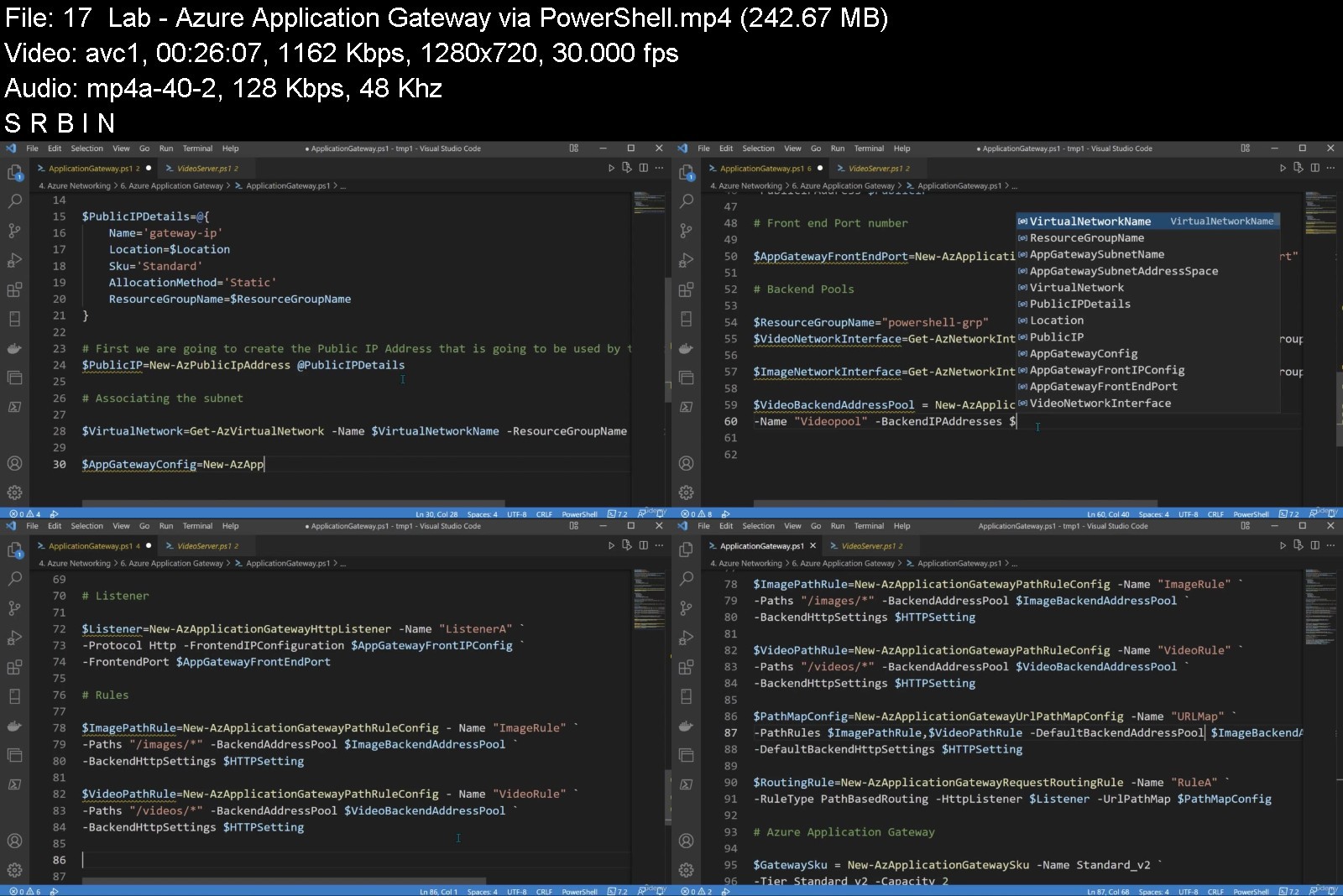
Mastering Azure PowerShell

45741504af38gkqo.jpg


Mastering Azure PowerShell
Updated 04/2022 MP4 | Video: h264, 1280x720 | Audio: AAC, 44.1 KHz, 2 Ch
Genre: eLearning | Language: English + srt | Duration: 135 lectures (19h 50m) | Size: 8.5 GB

Using Azure PowerShell to work with Azure-based services


What you'll learn
Students will learn how to build Infrastructure on Azure with the use of PowerShell
Students can develop PowerShell Scripts that can work with a variety of resources
Students can also learn how to manage Infrastructure on Azure with the use of PowerShell
Students will also know some practical examples on how to developer PowerShell scripts when working with Azure
Requirements
The student should be aware on the basics of building Infrastructure on Azure
The student also have an Azure Account to work with Azure-based resources. The student can always create an Azure Free Account
Description
This course is meant to help students use Azure PowerShell modules to work with Azure-based services.
A lot of students have requested to have a course on how to create PowerShell scripts to work with Azure-based services. So here it is.
In this course , we will learn a lot including the following
Some basic concepts when it comes to working with PowerShell. We need to learn some important concepts when it comes to variables , statements, arrays and objects. We will cover all of this in our introductory section.
Next we will focus on working with Azure Storage Accounts. But before this , we will learn how to create and use an Application Object that will be used for authorization from within our scripts.
After looking at Azure Storage Accounts, we will work with Azure Virtual Machines. We will look at
Creating the various components linked to an Azure VM
How to manage data disks
How to use custom script extensions
Using the Azure Key vault to store the Administrator account password
Using the Azure Bastion Host
How to create multiple Azure Virtual Machines
Making machines part of an Availability Set or an Availability Zone
Next we will focus on Azure Web Apps and Azure SQL databases. We will see
How to create Azure Web Apps
Deploy code from GitHub onto the Azure Web App
Deploy an Azure SQL database
Azure SQL Database auditing
Azure SQL Database backup and restore and import/export as well
How to deploy Azure SQL Server Virtual Machine
Then we will move onto Azure Networking where we will cover
Working with the Azure Load Balancer
Using the Azure Virtual Machine Scale Set
Azure Public DNS Zones
In Identity Management , Monitoring and Governance
We will look at locking resources and resource tags
Creating alert rules
Using the Log Analytics workspace
Who this course is for
This course is meant for students who want to know how to use PowerShell to build Azure Infrastructure
Students who also want to learn how to manage their Azure Infrastructure via PowerShell


masteringazurepowershy7jf1.jpg


Download from RapidGator


Download from Keep2Share



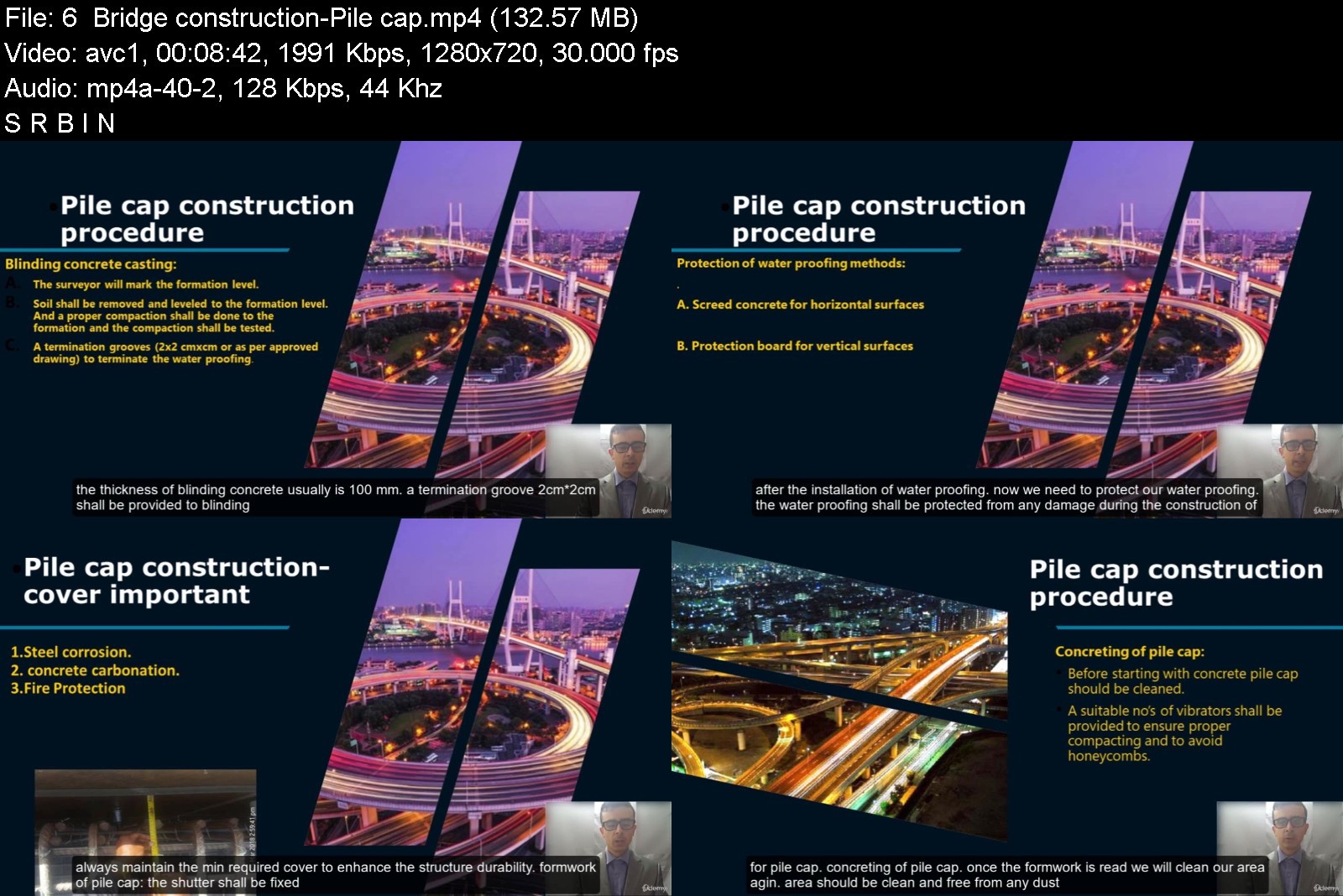
Civil Engineering: Basics of construction works

461078053d3lhkt3.jpg


Civil Engineering: Basics of construction works
MP4 | Video: h264, 1280x720 | Audio: AAC, 44.1 KHz, 2 Ch
Genre: eLearning | Language: English | Duration: 102 lectures (7h 21m) | Size: 5.5 GB

Basics of road, concrete, bridge, presstressed concrete construction and site management


What you'll learn
Road construction
Concrete as a material and it is properties
Bridge construction
Prestressed concrete construction
Site construction management
Requirements
No pre-requirement
Description
This course designed to expand your practical side of engineering knowledge. This concentrating on various constructions fileds.
firstly, This course is concentrating on the construction of roads. Here you will learn how the road constructed. The construction stages such as protection of existing services, clearing the area, future utilities, preparing the road subgrade, then placing different pavement layers such as sub-base, base course, and asphaltic courses. Also, we will discuss the types of asphaltic course and the common defects of asphaltic pavement, such as permanent deformation, fatigue cracking, and low-temperature cracking. Also, I will show a typical cross-section of road and road profiles.
Also, I will explain what the prime coat is, why the prime coat is used, and the proper way of applying, preparing the surface of the pavement layer before applying the prime coat, and the curing time for a prime coat. Tack coat, what is the Tack coat, why the Tack coat used, where the tack coat is used, and the proper way of applying of tack coat.
This course will explain the process of placing the various pavement layers, spreading of these layers, compacting then testing of the laid layers. Each layer will be tested to determine the in-situ density, level, thickness, and surface smoothness. Also, the course will discuss the various tests conducted on asphalt courses such as density, degree of compaction, stability, flow, and thickness. This course will discuss the Marshall method, Marshall method used to select the suitable bitumen content for a specific gradation of aggregates by testing specimens to assess their properties and suitability.
Secondely, in this course you will learn almost everything about concrete. Concrete is the most used material in construction worldwide. We can find material almost in everything around us. Therefore, we need to understand the properties and behavior of this material and what the reason behind using it intensively in construction. In this course, we will study the different ingredients of concrete. Also, I will explain the admixture and how various admixtures can alter concrete properties. Recently the using of pozzolans increased sharply, adding of pozzolans to the concrete mix will enhance concrete properties. We will discuss the different type of pozzolans and their effects on concrete. Also, in this course, you gain knowledge regarding SCC and fiber reinforced concrete.
Concrete cant survives without being reinforced with concrete. Here I will explain the reason behind reinforcing concrete and the grades and types of rebar. Also, we will discuss cracks in concrete and the prevention and repairing methods. The prestressing of concrete is relatively new. Here we will discuss the concept of concrete prestressing, the different between post-tensioning and pretention and the benefits of concrete prestressing.
Thirdly, in this course you will know how a bridge is built, Bridges are a crucial part of the traffic system, and it is used mainly to reduce the traffic jam and to connect areas where the terrain like rivers and mountain exists. The construction of bridges is essential in modern life to accommodate the massive increase in the number of vehicles. In this course, we will discuss the steps of construction Box Girder Bridge. We will discuss components of bridge such as pilling: method of executing piles and tests used to verify pile quality and ability to transfer the structure load. Also, bearings are an essential element, and it transfers the loads from superstructure to substructure. Also, provide flexibility to the structure by allowing rotation and movement. We will discuss the reason behind using bearing, bearing types, bearing component, presetting, articulation of bearings and tests for bridge bearing.Finally, expansion joint's, reasons behind using an expansion joint, types, and the component of expansion joint and method of installing the expansion joint.
Fourthly, The course will discuss the prestressed concrete. The use of prestressed concrete has_been_increasing sharply in recent years. This increased use of prestressed concrete is attributed to the significant improvements in the properties of the structure. Using prestressed concrete resulted in considerable enhancement of structure's resistance capacity. Also, prestressing concrete will improve the durability of structures by decreasing or eliminating the service cracks. We will tackle the concept of prestressed concrete. This course is one of the four courses I discussed earlier to assist in understanding the practical side of engineering. This aims to increase your knowledge of how prestressing improve the concrete's properties. Also, you will understand the benefits and types of prestressed concrete systems and the difference between them. also, we will discuss
1. The component of a prestressed concrete system, the equipment used in performing prestressing of concrete, the procedure of constructing post-tensioning, and pre-tensioning systems.
2. It will discuss the process of tendon grouting and the benefits of grouting prestressing tendons. and,
3. We will discuss the jacking methods, jacking force, elongation of tendons, calibration of equipment, friction loss, and the prestressing force losses.
This course is not limited to the construction of prestressed concrete. It will not only_covers_ the problems associated with prestressing concrete but also to be oriented on how it will be prevented. To cite, what to do when you encounter issues in the grouting process of prestressing tendons and what will be the best way to avoid this. Furthermore, we will discuss the external prestressing system and the circular prestressing of concrete.
Finaly, This course designed to expand your practical side of engineering knowledge. This course concentrating on the practical side of the construction field. in the field, the construction work will be completed with the assist of the contract document such as contract drawing, specification, BOQ, shop drawing, method statement, and inspection test and plan. In this course, you will see samples for different contract documents, and you will know the importance of these documents and how to use it. This course will discuss other important topics, such as NOC. NOC is essential for almost all construction projects, this course identifying the NOC, the importance of NOC, and how to acquire it.
Also, we will discuss here trial trenches and boreholes. A trial trench is an excavation used to explore underground, and it is used extensively at the beginning of the construction project. On the other hand, boreholes are used to acquire soil samples to determine soil bearing capacity for the design of the structure foundation. We will discuss these subjects here in detail.
This course will discuss other important topics such as earthwork, waterproofing, dewatering, reinforcement steel. As a person working in construction, you need to know these topics. In the construction field, you will deal with 90% of these topics. In his course, you will acquire essential practical knowledge. This knowledge will help in managing your construction field. Part, this course will discuss the supporting of deep excavation and the different methods such as sheet pile, secant piles, and kingpost wall. This course intends to bridge the gap between practical life and academic life by presenting concepts that can't be found easily in books or academic study.
Who this course is for
For civil engineer, personal who is interested in construction


civilengineeringbasicokjki.jpg


Download from RapidGator


Download from Keep2Share


 
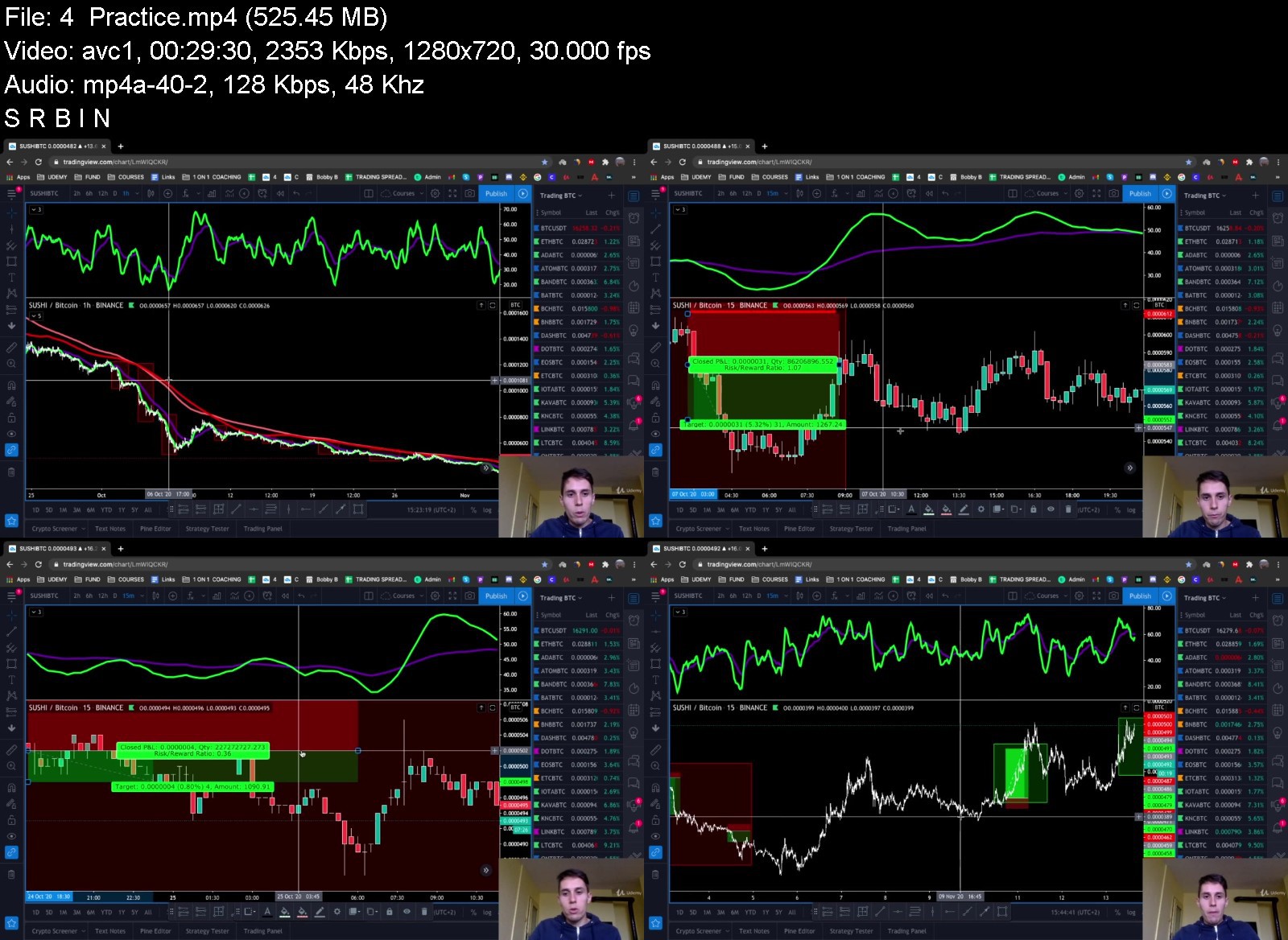
Day trading & Scalping strategies in 2021 (5-Course Bundle)

363593820062zfj9n.jpg


Day trading & Scalping strategies in 2021 (5-Course Bundle)
MP4 | Video: h264, 1280x720 | Audio: AAC, 44.1 KHz, 2 Ch
Genre: eLearning | Language: English + srt | Duration: 42 lectures (7h 31m) | Size: 7 GB

Day trading&scalping strategies that I invented.Trade Forex&Stock market&Bitcoin.Only my students know these strategies


What you'll learn
Trading strategies that no one else knows except the students in the courses
Day trading & Scalping on multiple timeframes
Professional trading strategies with an EDGE
Clear criteria for entries, stop losses, exits
The incredible results the strategies are giving
The profits of the strategies
The win rate of the strategies
How to backtest them
Requirements
Previous experience in trading
Description
Hello,
My name is Bobby B and I am a full time trader. I am trading full time since 2017 and I have plenty of experience in this field.
With this bundle you will get 5 of my Day trading & Scalping courses.
The courses you will get are
Professional Day trading/Scalping strategy with MACD in 2021
Day trading / scalping PRO strategy with Moving averages
Day trading / scalping strategy with RSI and EMA's
Day trading strategies with Stochastic indicator and EMA's
2 Scalping/ Day trading strategies for Crypto/Forex/Stocks
You will get 7 complete strategies for Day trading and Scalping. Out of this 7 , 5 are invented by me. So no one else really have and trade this 5 strategies except of the students who are in this courses. This 5 strategies will give you an absolute EDGE in the markets because no one else have them + I invented them based on my understanding of how the market moves.
My class is for anyone! From beginners to advanced traders.
My requirement to you is to have at least basic understanding of trading with technical analysis.
Who this course is for
From beginners ( with at least basic understanding of trading with technical analysis) to advanced traders who wants to learn my strategy


daytradingscalpingstrpvjm1.jpg


Download from RapidGator


Download from Keep2Share


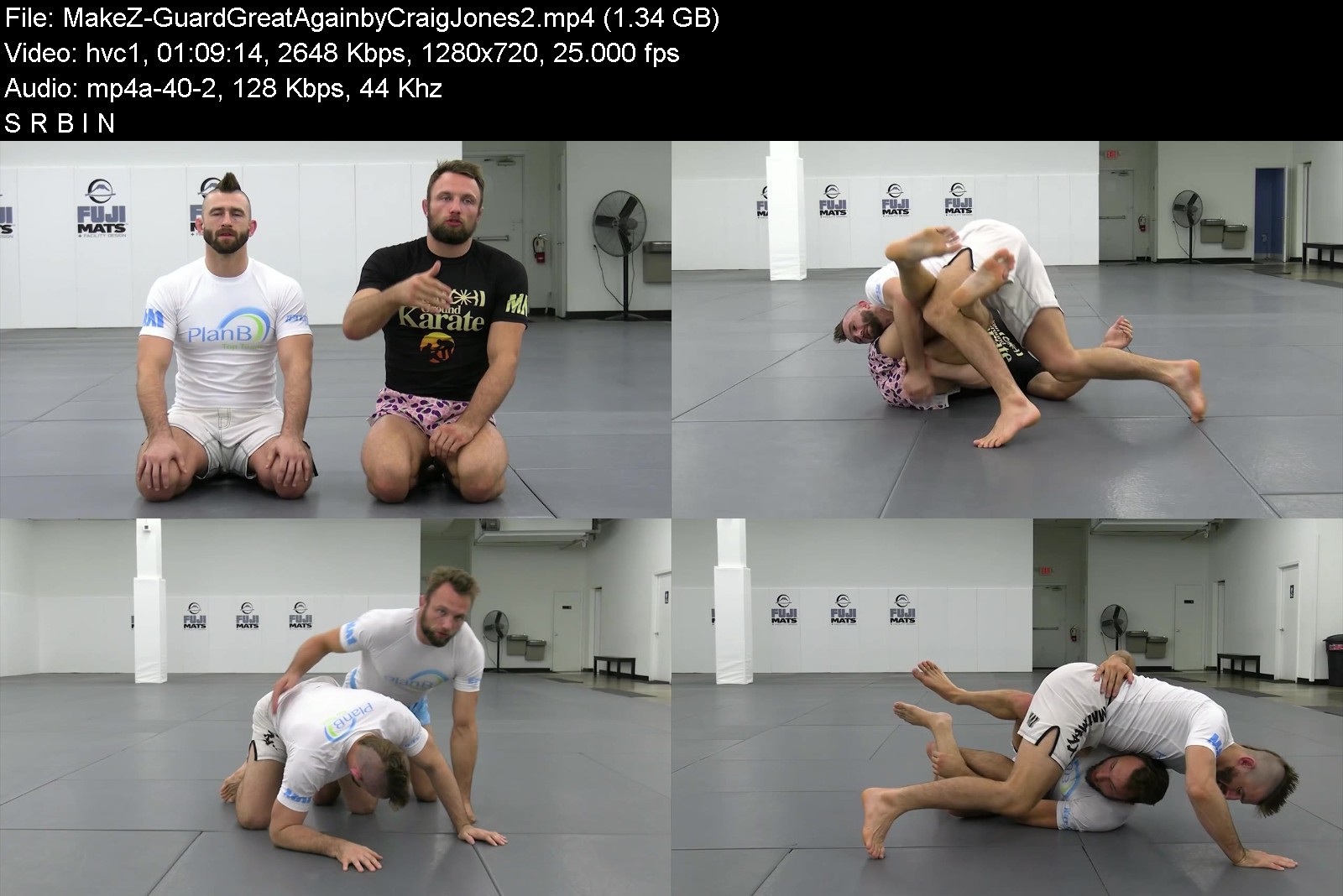
BJJ Fanatics - Make Z Guard Great Again

wuvytil62ho1rfvih2skv2qkxx.jpg


BJJ Fanatics - Make Z Guard Great Again
Craig Jones | Duration: 5h 10m | Video: H264 1280x720 | Audio: AAC 44,1 kHz 2ch | 6,03 GB | Language: English

Craig Jones is one of the most popular and in-demand instructors in the game today, with an exciting style that has secured him many elite wins and a teaching method that is detailed and thorough
• Craig shows you the most common passes to z guard, then how to counter each one in turn so you can establish your guard for long periods of time.
• Set up a strong and sticky half guard game that can help you move from submissions to sweeps as you defend against strong top players.
• The Z guard is a dynamic half guard game that lets Craig set up triangles, kimura, arm locks, leg locks, and more - each one broken down in step-by-step detail for grapplers of all levels.
• Lean how to transition in and out of Z guard so that you can make this a common and dependable part of your style, just like Craig does at the elite level of competition grappling.


makezguardgreatyrjs6.jpg


Download from RapidGator


Download from Keep2Share



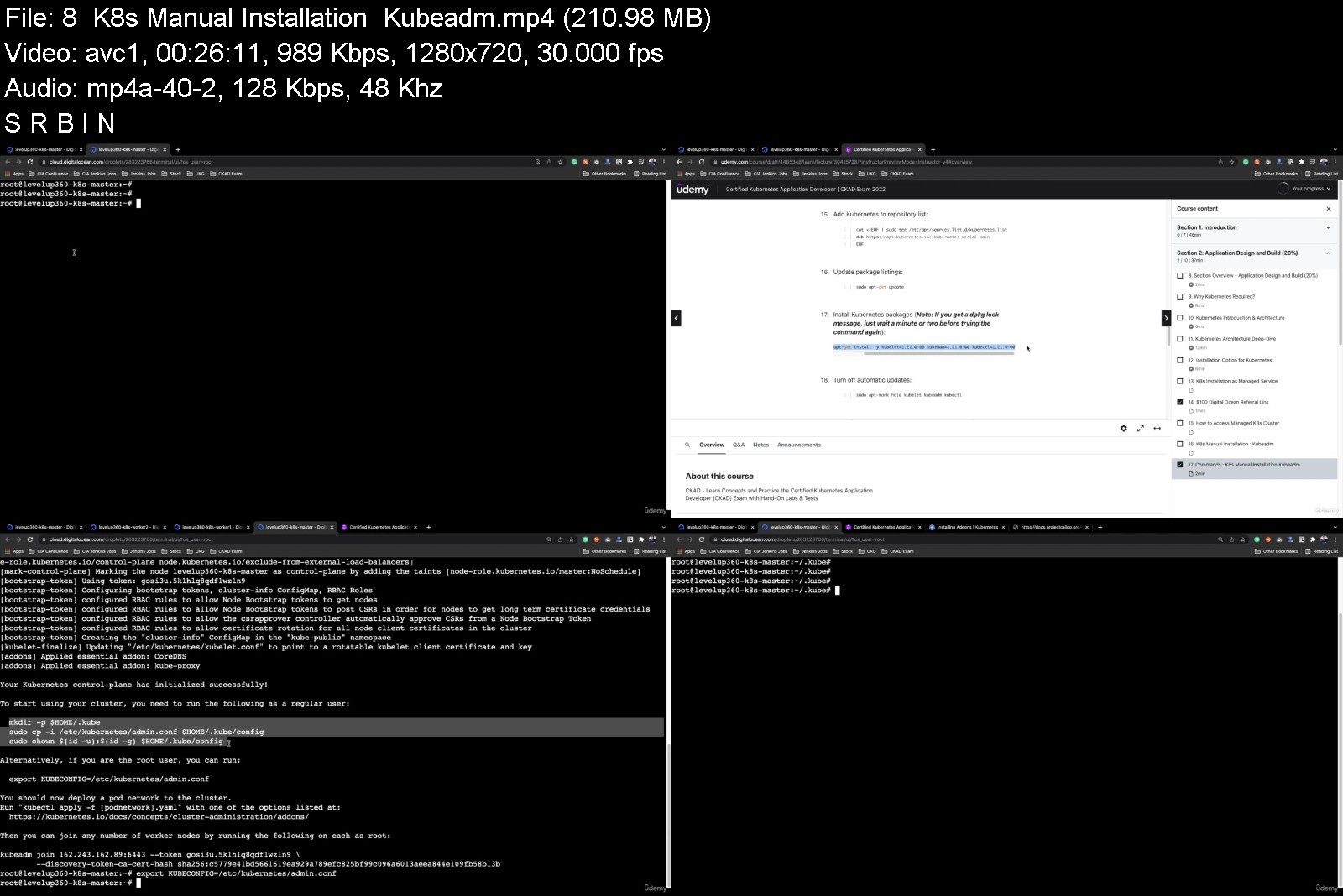
Certified Kubernetes Application Developer | CKAD Exam 2022

44853483cf925cjjy.jpg


Certified Kubernetes Application Developer | CKAD Exam 2022
MP4 | Video: h264, 1280x720 | Audio: AAC, 44.1 KHz, 2 Ch
Genre: eLearning | Language: English + srt | Duration: 116 lectures (14h 3m) | Size: 5.64 GB

CKAD - Learn Concepts and Practice the Certified Kubernetes Application Developer (CKAD) Exam with Hand-On Labs & Tests


What you'll learn
Prepartion for Certified Kubernetes Application Developer certification
CERTIFICATION PREPARATION : Goal is to help you prepare every CKAD individual topic thoroughly, including Demos, Practice Test, and more.
Learn "Easy-First-Strategy" to solve the tasks efficiently in the Certified Kubernetes Application Developer Exam.
Once you complete the course, you will have the knowledge& confidence to pass the CKAD exam AND the good pay raise.
Strong Fundamentals of Kubernetes.
Deploying Applications to Kubernetes.
Requirements
Docker Container (Basics)
YAML Basics
Description
Certified Kubernetes Application Developer | CKAD Certification can take your career to a whole new level. Learn, practice, and get certified on Kubernetes with hands-on labs.
This course is specifically designed for the aspirants who intend to give the "Certified Kubernetes Application Developer" certification and the individuals who intend to gain a strong foundation on Kubernetes from absolute scratch.
The journey of this course begins with Understanding the basics of Container Orchestration technologies, and then the deep dive journey into Kubernetes begins.
Besides Developers, CKAD certification will add a good weightage to anyone working with Kubernetes - including Administrators, Engineers, and Architects. Also, for the beginners who want to get into the DevOps space.
Now, there might be many questions popping up in your mind - How to get CKAD certified? Where to get started? Is self-preparation is sufficient? or do you need to enroll in any course? If so, which course?
With tons of practicals, easy-to-understand videos, and a dedicated exam preparation section, this course is all you need to gain a deeper understanding of Kubernetes and ace the official Certified Kubernetes Application Developer" certification.
With this exciting set of learnings and practicals, I look forward to seeing you in this course and being part of your journey into Kubernetes.
With that, I'm very excited to be part of your CKAD Journey. Let's get it to start!
Who this course is for
Individuals intend to learn Kubernetes
Individuals aiming for CKAD certification
SREs (Site Reliability Engineers)
DevOps Engineers


certifiedkubernetesapoxj44.jpg


Download from RapidGator


Download from Keep2Share

 
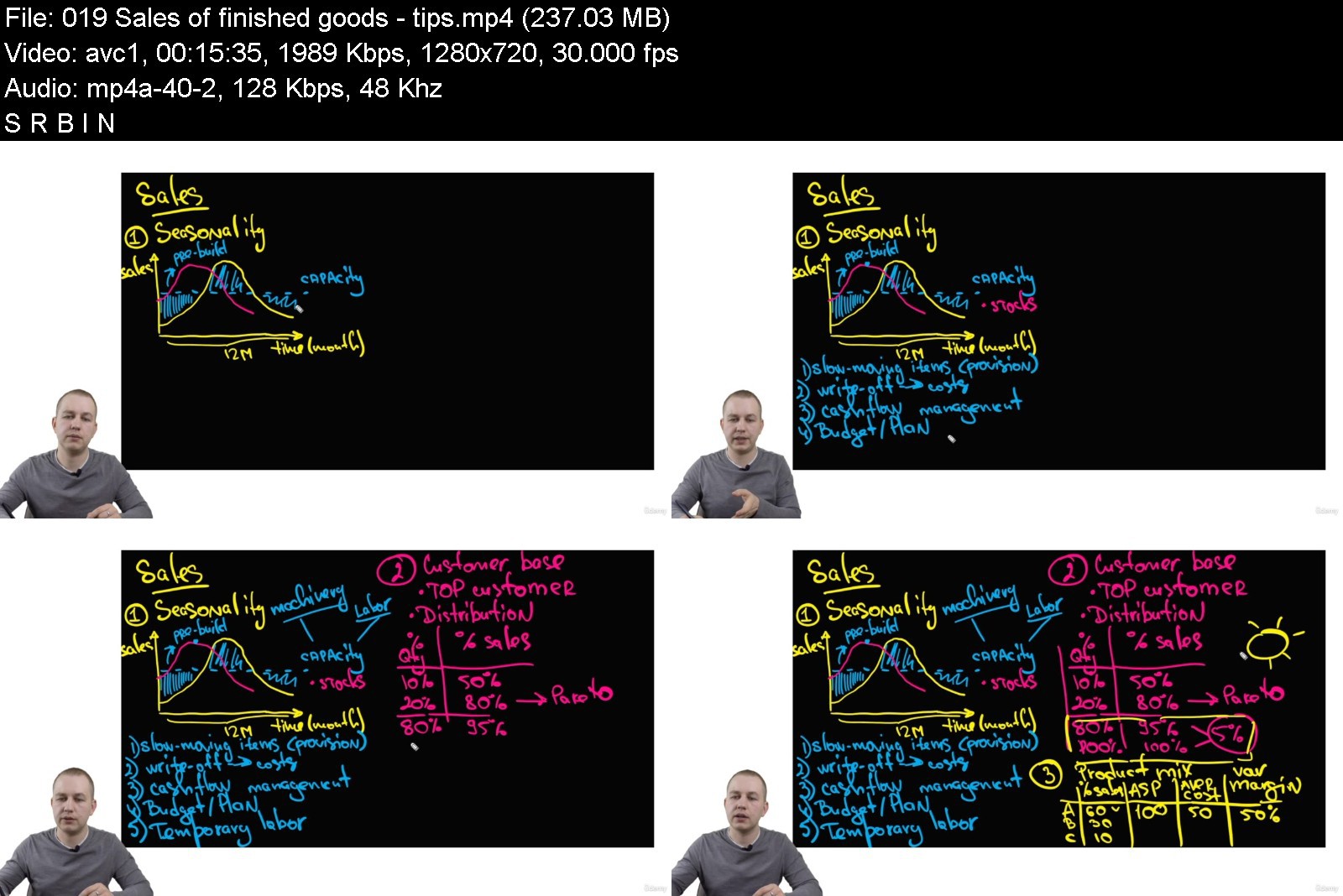
Finance controlling of Material costs

v2ef0pqdd3ex1ff8z4ja0nhjxw.jpg


Finance controlling of Material costs
MP4 | Video: h264, 1280x720 | Audio: AAC, 44.1 KHz
Language: English | Size: 5.17 GB | Duration: 5h 49m

All you need to know about material cost controlling in a manufacturing environment


What you'll learn
Reporting of material costs (raw materials, packaging, consumables etc.)
Proper inventory valuation according to IAS 2
Operational efficiency analysis (usage variance, recipe variance)
Control over correctness and timeliness of financial postings related to material movements
Materials' liquidity control and creation of necessary provisions
Understanding of material module architecture in accounting systems: BOMs, storage locations, material types, material movements etc.
Standard costing fundamentals; calculation of planned/standard costs
Requirements
Financial accounting fundamentals
Passion for learning and desire to dive deep into manufacturing financials

Description
All the material objects that surround us are manufactured at production sites - factories and plants. In these places during the conversion process materials (raw materials, packaging, consumables etc.) are transformed into semi-finished products with the addition of labor, energy and equipment operation, and then into finished products.
In general manufacturing businesses are material-intensive: the share of raw materials in total costs can reach 60-70%. That is why reporting, analysis, planning and control of material costs form an important set of tasks, that is critical for a modern enterprise.
Financial controllers, analysts and production economists are the ones engaged in solving these tasks. Such specialists should have a wide range of skills and competencies, be familiar with variety of accounting systems, understand the scope of all plant departments, its responsibility areas and interrelations.
In this course you will go through the following subject areas
Typical configuration of the production site (factory layout)
Architecture of material module in financial systems: storage locations, material types, material movements, etc.
Standard/planned prices, principles of its calculation and the impact on the financial result (standard costing methodology)
Analysis of purchasing activity, what is PPV (purchase price variance)
Inventory accounting and stock value calculation in accordance with IFRS (IAS 2). The process of stock revaluation
Analysis inventory turnover, calculation of necessary reserves (write-off provision)
Types of inventory stock-takes, the role of the financial controller
Assessment of the production operational efficiency using variance analysis: usage variance, recipe (BOM) variance
Through the course you will live a 4-month business cycle of a confectionery factory. During this time, together with the plant, you will purchase materials, produce semi-finished products and finished goods, perform an annual stock-take, manage slow-moving inventories, analyze production efficiency and, of course, prepare and deeply analyze financial statements related to material costs.
The course is ideal for everyone who works in manufacturing environment - first of all, financial directors and controllers of production sites, as well as anyone who is interested in this professional area. This course is not on accounting, but on controlling - nevertheless, it would be of value for accountants
Who this course is for
Finance controllers and CFOs of manufacturing companies and plants
Finance business-partners and analysts
Business planners; supply planners
Material cost accountants
All who are interested in factory finance


financecontrollingofmo0k8c.jpg


Download from RapidGator


Download from Keep2Share


 
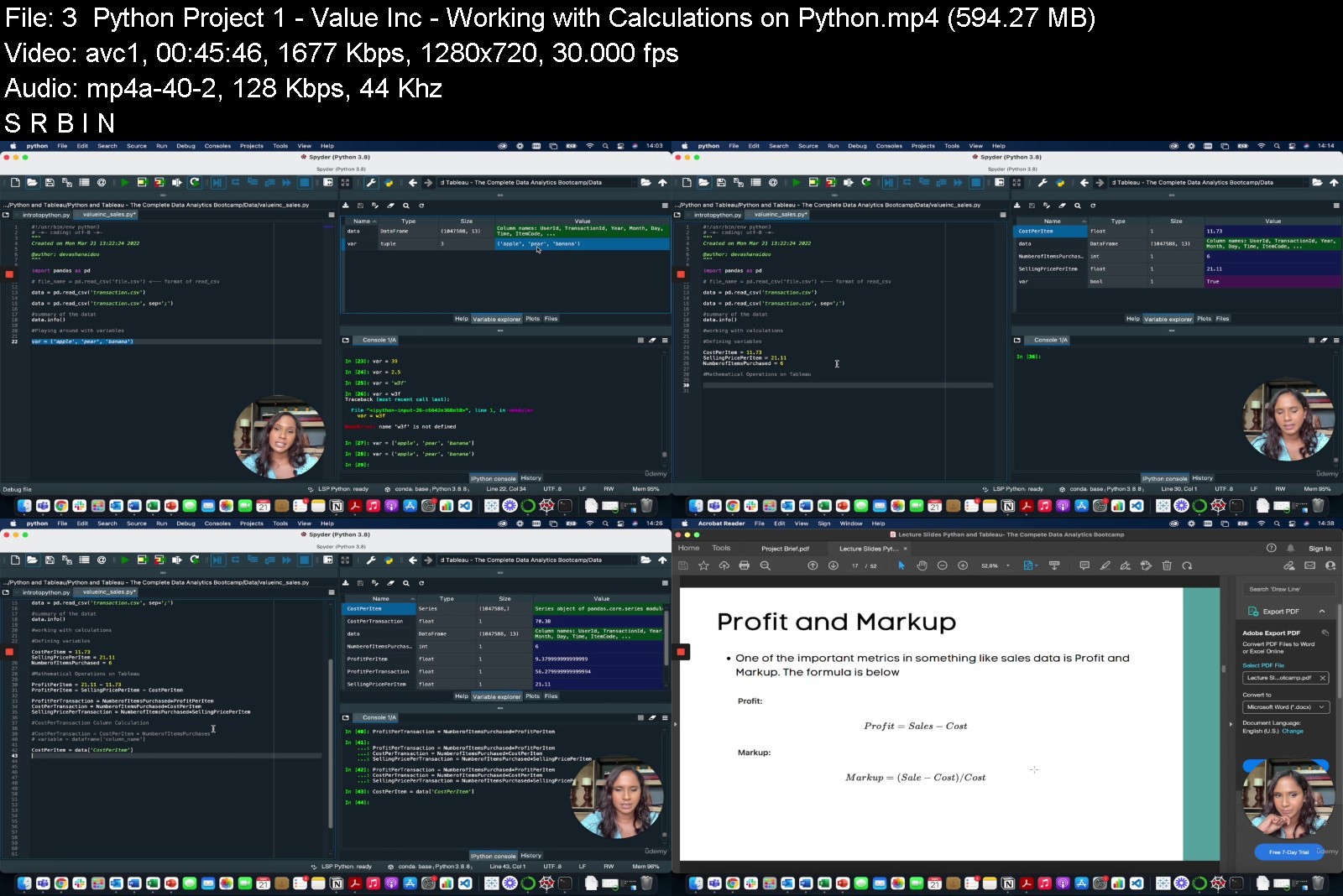
Python and Tableau: The Complete Data Analytics Bootcamp!

46120883026tqjwf.jpg


Python and Tableau: The Complete Data Analytics Bootcamp!
MP4 | Video: h264, 1280x720 | Audio: AAC, 44.1 KHz, 2 Ch
Genre: eLearning | Language: English + srt | Duration: 40 lectures (11h 8m) | Size: 6.4 GB

Become a master at Data Analytics with Python and Tableau - Build 3 Projects, share on your resume and learn by doing!


What you'll learn
In this course you'll understand the inner workings of the data analytics pipeline from using Python for Data Cleaning & Analysis and Tableau for Data Visuals
Be able to program in Python and execute code
Create Interactive Charts and Dashboards on Tableau
Create a portfolio of 3 real life Python/Tableau projects to apply for data analytics jobs
Learn how to perform Data Analytics on Python with Pandas, Numpy, Matplotlib and Others
Requirements
Basic Knowledge of Computers
Internet
Microsoft Excel if Possible
Description
Welcome to the most comprehensive Data Analytics course available on Udemy! When you become a Data Analyst, there are two things that you should be skilled at in order to be a master data analyst.
This course is a great choice for beginners looking to expand their skills in Data Analytics. You also create a solid portfolio of your work online and can link it on your resume.
At 11+ hours, this Python and Tableau course will teach your the core principles of Data Analytics at every stage in the pipeline. Even if you have no programming experience, this course will take you from beginner to professional.
Why you should take this course
Our learning is going to be project-centric: we will tackle the core concepts in Python and Tableau as it comes up in the real life projects we'll be working on.
You get experience in both Python and Tableau - the two powerhouses in the data analytics community
You also understand how you can clean/analyze data in Python and then visualize it in Tableau - an end-to-end process that many data analysts use today.
You get a chance to showcase your work in a portfolio online
What are the Projects you will work on?
Sales Analysis for Value Inc: We're going to be working on a Sales Analysis for a popular retail company called Value Inc.
Here we use Python for the following to clean our data and we use popular libraries like pandas and learn how to work with dataframes, perform calculations and much more. We are then going to extract that data to Tableau where we learn how to create calculations, parameters and develop a dashboard for the sales manager.
Loan Analysis for Blue Bank: We're also going to be working on a Loan Analysis for a bank. Using Python and Tableau, blue bank wants to see an analysis of people who have taken loans but might have issues paying back. We learn how to read JSON files, work with lists, dictionaries, Numpy and if statements. We also learn how to do exceptions, for loops and plots in Python. Once that's done, we extract the data to Tableau and build charts, work with Tableau Calculations and create an interactive dashboard.
Sentiment and Keyword Analysis: We're also going to be doing a sentiment and keyword analysis for Blog Me. A blogging website that would like us to analyze news headlines and extract a sentiment from these articles. Here, we use a Natural Language Processing Library called Vader, that can extract sentiment on Python. We also learn about functions and classes on Python. Once we extract the data to Tableau, we learn how to perform Tableau Joins, work with sets and context filtering and finally create an interactive dashboard.
In this course you will learn the following
Python
Install and Set Up Anaconda
Learn about python variables and data types
Learn about strings, integers
Using lists, tuples and dictionaries
Creating functions
Using if statements and for/while loops
Creating exception handling
Using the exponent function
Working with comments
Reading and writing files
Scripting classes and objects
Sentiment Analysis
Tableau
Connecting to a data source
Understanding tableau joins and unions
Rename a data field
Assign an alias to a data value
Assign a geographic role to a data field
Change data type for a data field
Change default aggregation properties
Bar Chart
Line Chart
Map
Dual Axis
Create a set
Add a filter
Manual and computed sorts
Reference lines
Table calculations
Bins and Histograms
Calculated fields
Parameters
Create a dashboard
Add dashboard actions
Download dashboards
By the time you complete this course, you'll be a highly proficient Python and Tableau user. You will be using your skills as a data analyst to extract knowledge from data so you can analyze and visualize data with ease.
Who this course is for
This course is for anyone who wants to kickstart their career in Data Analytics
This course is for anyone who wants to learn more about Tableau
This course is for anyone who wants to learn more about Python


pythonandtableauthecoy4kq2.jpg


Download from RapidGator


Download from Keep2Share


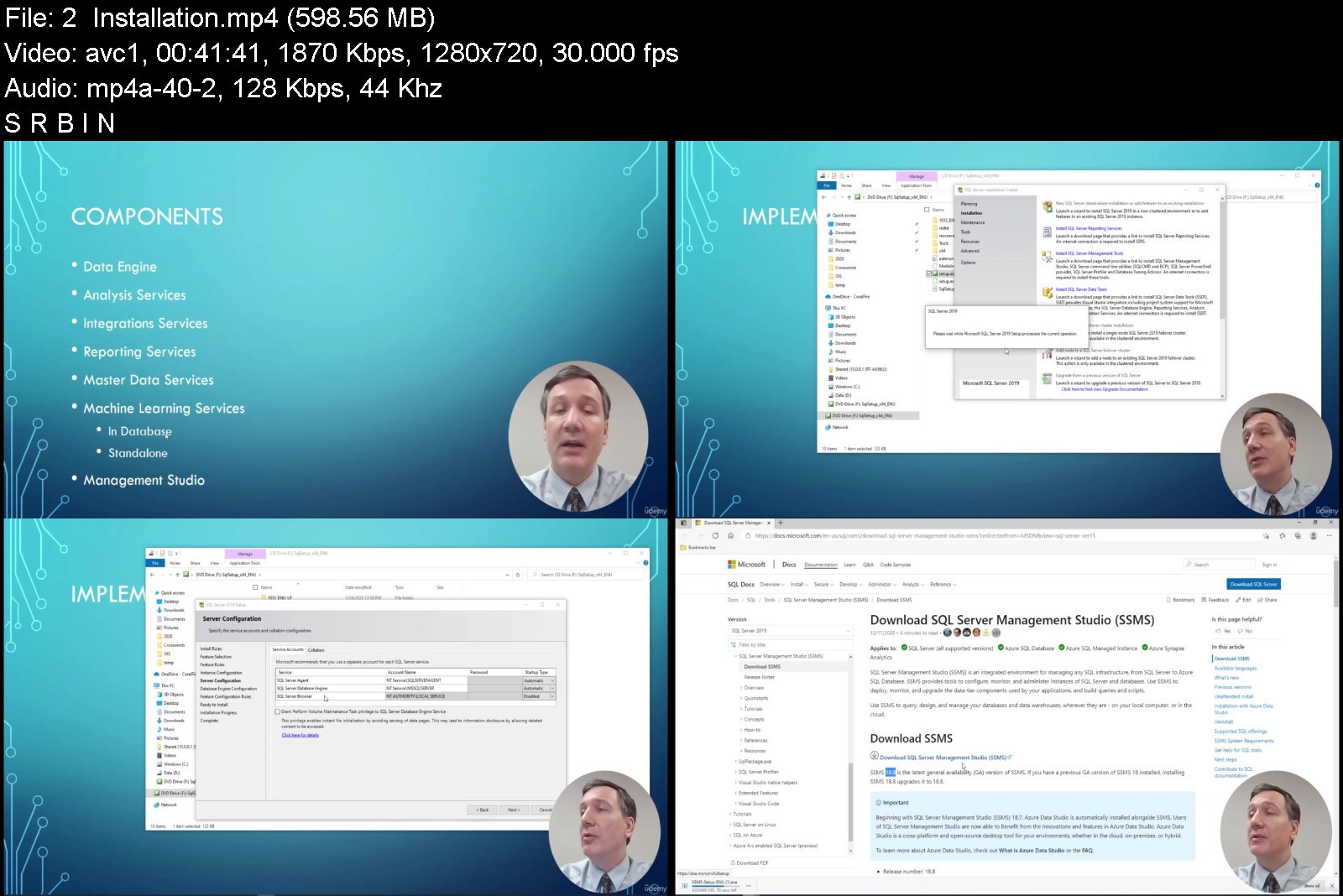
Microsoft SQL Server 2019 Administration

4612908f066pkknw.jpg


Microsoft SQL Server 2019 Administration
MP4 | Video: h264, 1280x720 | Audio: AAC, 44.1 KHz, 2 Ch
Genre: eLearning | Language: English + srt | Duration: 41 lectures (7h 37m) | Size: 5.3 GB

SQL Server installation, data storage, data recovery, monitoring, security, and maintenance


What you'll learn
Install and Configure SQL Server 2019.
Work with Databases and Storage.
Plan and Implement a Backup Strategy.
Restore SQL Server 2019 Databases.
Requirements
None.
Description
With this course, students can learn about SQL Server installation, data storage, data recovery, monitoring, security, and maintenance.
This Microsoft SQL Server 2019 Admin course is specifically for obtaining working IT skills and is not certification-specific training.
The primary audience for this course is individuals who administer and maintain SQL Server databases. These individuals perform database administration and maintenance as their primary area of responsibility or work in environments where databases play a key role in their primary job. The secondary audience for this course is individuals who develop applications that deliver content from SQL Server databases.
Install and Configure SQL Server 2019
Work with Databases and Storage
Plan and Implement a Backup Strategy
Restore SQL Server 2019 Databases
Import and Export Data
Monitor SQL Server 2019
Manage SQL Server Security
Audit Data Access and Encrypt Data
Perform Ongoing Database Maintenance
Automate SQL Server 2019 Management
Monitor SQL Server 2019 by Using Alerts and Notifications
Microsoft SQL Server is a relational database management system (RDBMS) that supports a wide variety of transaction processing, business intelligence, and analytics applications in corporate IT environments. Microsoft SQL Server is one of the three market-leading database technologies, along with Oracle Database and IBM's DB2.
Like other RDBMS software, Microsoft SQL Server is built on top of SQL, a standardized programming language that database administrators (DBAs) and other IT professionals use to manage databases and query the data they contain. SQL Server is tied to Transact-SQL (T-SQL), an implementation of SQL from Microsoft that adds a set of proprietary programming extensions to the standard language.
This course provides students with the knowledge and skills to maintain a Microsoft SQL Server 2019 database. The training focuses on teaching individuals how to use SQL Server 2019 product features and tools related to maintaining the server environment and the databases it contains and is designed for customers who are interested in learning SQL Server 2016, SQL 2017, or SQL Server 2019. It covers the new features in SQL Server 2019, but also the important capabilities across the SQL Server data platform.
Topics include Installation, Data Storage, Data Maintenance and Recovery, Monitoring, Security, and Server Maintenance. This course requires that you meet the following prerequisites: Basic knowledge of the Microsoft Windows operating system and its core functionality. Working knowledge of Transact-SQL. Working knowledge of relational databases. Some experience with database design is recommended.
Who this course is for
Beginner professionals.


microsoftsqlserver201khki8.jpg


Download from RapidGator


Download from Keep2Share


 
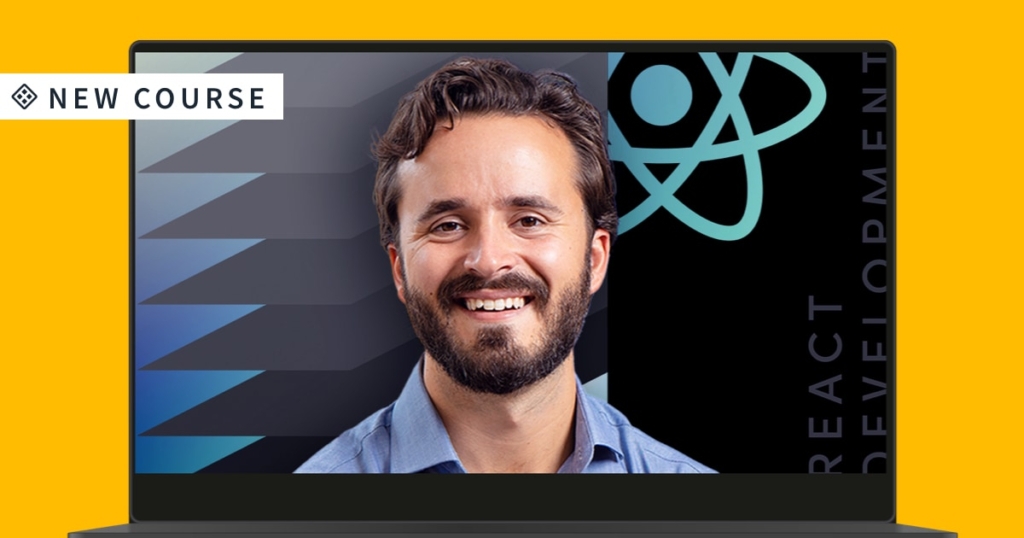
CBTNuggets - ReactJS Online Training

mgetpblog1024x538v6k7l.jpg


CBTNuggets - ReactJS Online Training
MP4 | Video: h264, 1920x1080 | Audio: AAC, 44.1 KHz, 2 Ch
Genre: eLearning | Language: English | Duration: 263 Lessons (38h 11m) | Size: 13.9 GB

This foundational React Fundamentals training prepares learners to create applications in ReactJS with excellent UIs and that can respond to data without refreshing the page.
For those who don't know ReactJS, it's a user interface framework developed by Facebook which they released as an open source product. It creates UIs particularly well, but it's also gained popularity as a versatile view library that allows designers to build their own frameworks however they want to.
With this React Fundamentals training, you'll learn how to read and write ReactJS. You'll see how easy it is to build web applications with solid UIs that are uniquely capable of taking in new data without needing a refresh.
For anyone who manages network designers, this React training can be used to onboard new network designers, curated into individual or team training plans, or as a React reference resource.
React Fundamentals: What You Need to Know
For any network designer looking to improve their proficiency with Javascript frontend libraries, this React course covers topics such as
Dynamically creating elements and giving them styles
Understanding React components and how to pass them data
Extending CSS with modules in ReactJS
Choosing between stateful and stateless components
Who Should Take React Fundamentals Training?
This React Fundamentals training is considered foundational-level React training, which means it was designed for someone with no React experience at all.
React training. ReactJS is a tool for building the interfaces users interact with as they use your product. If you're a non-technical professional working alongside developers, this course can illustrate what exactly a framework is, how React differs from other programming languages, and how to navigate the frameworks your devs create. This course will make you more comfortable with contributing to conversations about the interface and its development.
New or aspiring devs. If you're just starting off in your career as a network designer, you might have heard a lot of bad things about ReactJS. Trash-talking ReactJS is a popular pastime, but it's not deserved. There aren't many better frameworks for building your own UI components and executing them individually. Take this course to learn what React does best and how to make it a part of your toolbelt.


reactjsonlinetrainingi9k0b.jpg


Download from RapidGator


Download from Keep2Share


The Complete Guide to American English Pronunciation

grfjllft0xzmp00draafvusjms.jpg


The Complete Guide to American English Pronunciation
Genre: eLearning | MP4 | Video: h264, 1280x720 | Audio: AAC, 44.1 KHz
Language: English | Size: 10.8 GB | Duration: 8h 29m


What you'll learn
Pronounce accurately all 38 important sounds of American English
Learn American English spelling rules
Learn the International Phonetic Alphabet symbols for each sound
Learn proper location of articulators for each sound

Description
Is English not your first language? Are people constantly asking you to repeat yourself? Do you want to advance in your career or business, but you feel like your foreign accent is holding you back?
Then this course is for you.
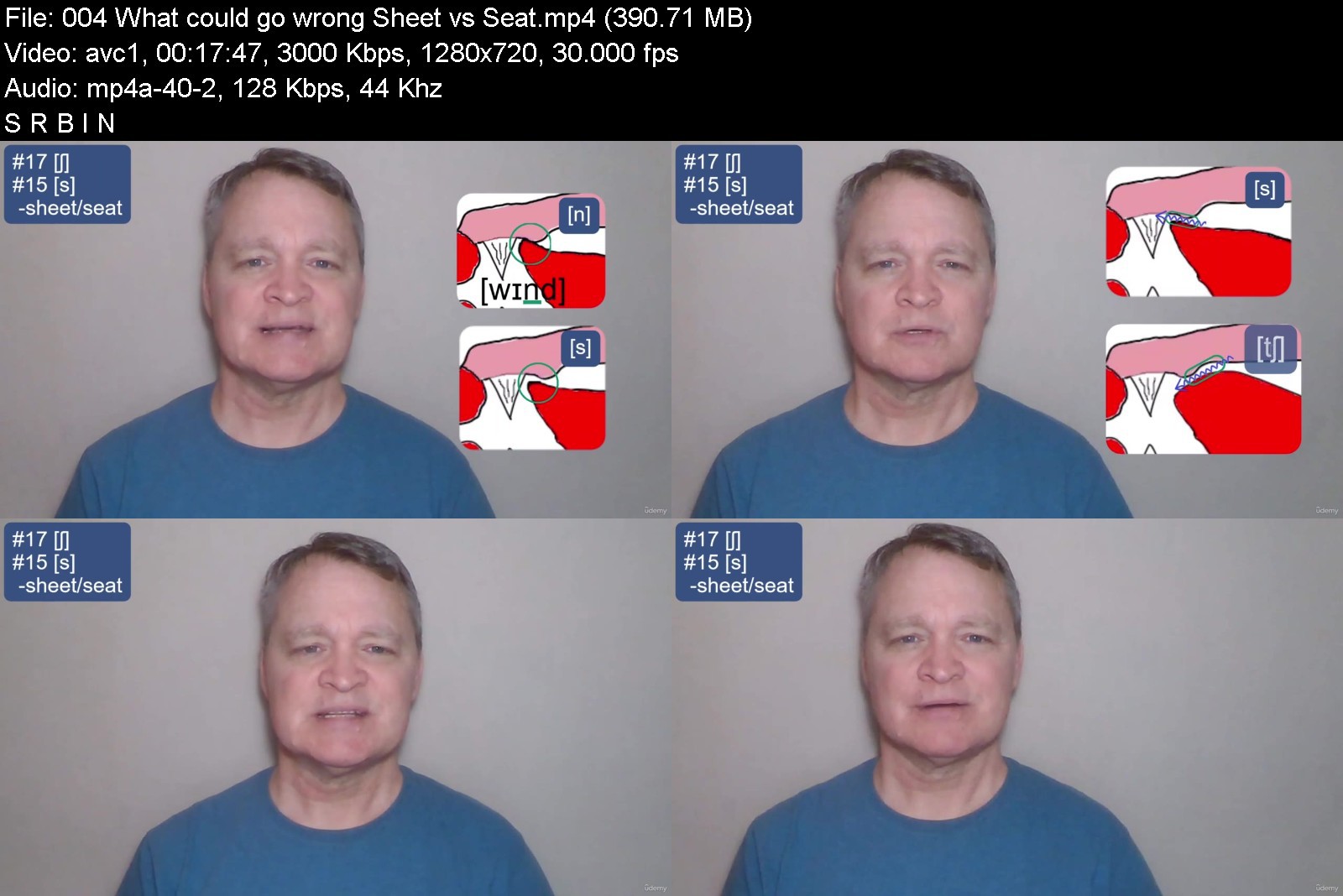
Hi. We hope you choose the complete guide to American English pronunciation. In it, I'll take you through all 38 important sounds of American English, one at a time, to help you better pronounce each one. Each sound is produced for you to mimic, alone and in sample words, and illustrated with an animated mouth diagram where applicable. Then learn American English spelling rules for each sound. Also learn the International Phonetic Alphabet symbol for each sound.
Then, you further practice the sound next to other similar sounds. For this we use minimal pairs--These are pairs of words that have one sound distinct in them, for example: pin / fin, tanks / thanks, bad / bat. In these lessons, we'll focus on how to make each word in the pair sound distinct and correct. Each lesson ends in a test to make sure that you can hear the difference between each pair of words. All this to help you to learn to pronounce American English more like a native speaker. Give it a go.
Who this course is for
Anyone who wants to improve their English pronunciation


thecompleteguidetoame7kjvk.jpg


Download from RapidGator


Download from Keep2Share



TTC - How to Play the Violin

402203mj6f.jpg


TTC - How to Play the Violin
MP4 | Video: h264, 1280x720 | Audio: AAC, 44.1 KHz, 2 Ch
Genre: eLearning | Language: English | Duration: 24 Lessons (5h 38m) | Size: 4.87 GB

Have you ever been to a wedding where a violinist plays the beautiful, well-known melody from Pachelbel's "Canon" and thought to yourself, "I wish I could do that"? For most of us, learning to play an instrument from scratch feels out of reach and too intimidating to attempt. But it doesn't have to be that way.
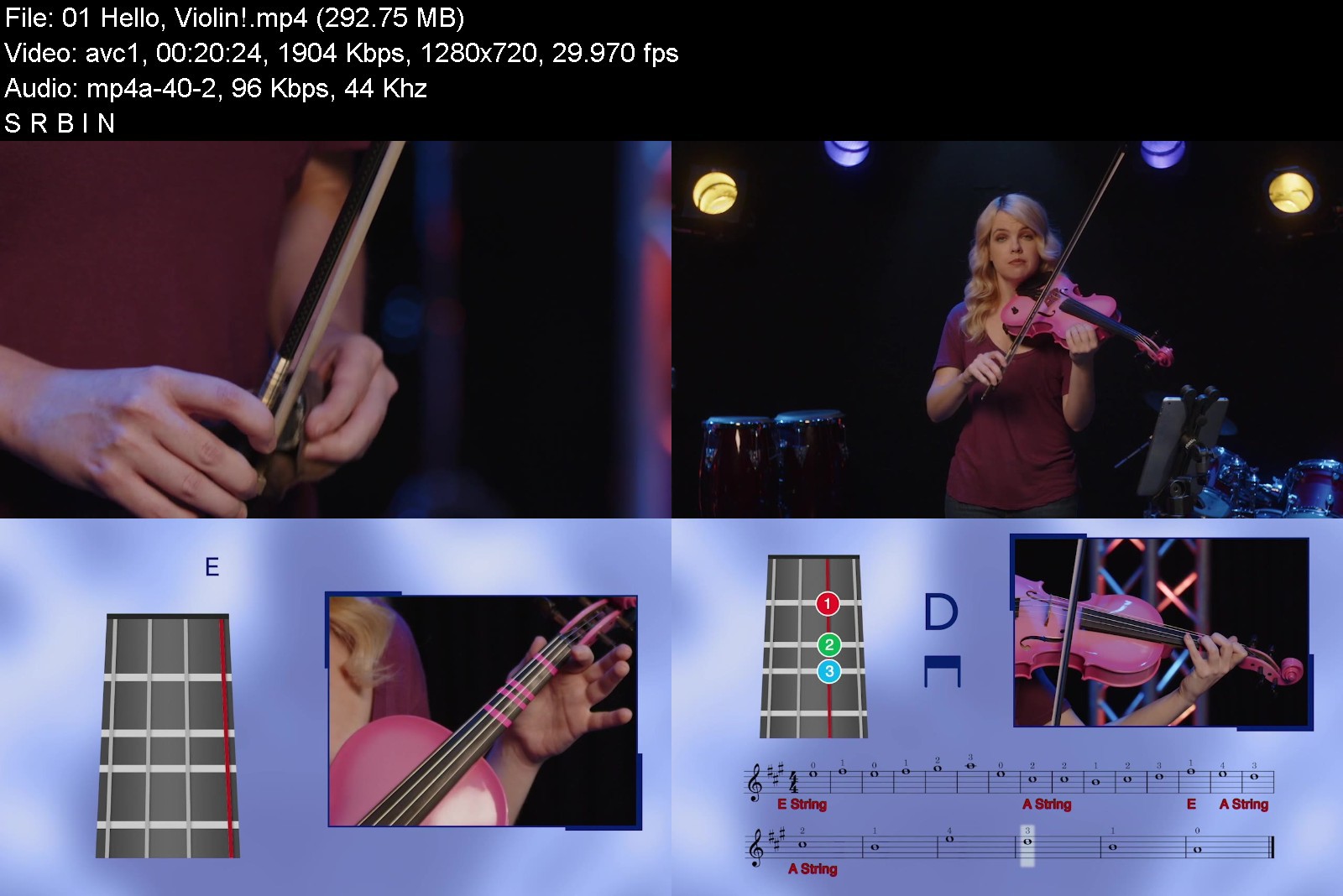
Now, in the comprehensive 24-lesson course How to Play the Violin, professional musician and instructor Jules Whelpton, from the Youth Arts Academy, will hold your hand step by step through everything you need to know to go from never having held a violin before to performing with confidence. This well-paced series not only covers the basics, but also sets you on the path to having the versatility to comfortably play both popular and classical music on the violin.
From the very first class, you will be picking up your bow and playing real music-some by ear and some by note-reading. Your instructor also utilizes fun exercises she has composed to teach proper technique. By the end of this course, you will be capable of playing musical scales, classical melodies, and even improvisational pieces based in Americana and folk music.
Building Your Basics
Begin by taking a close look at violin anatomy and learning how to pick the instrument that is the correct size for your age and arm length. You will also find out how to care for your violin and determine the proper tools and accessories you will need to do so, such as rosin for your bow, a tuner, and a shoulder rest.
Fundamental aspects of mastering the violin are knowing how to tune your instrument well and how to develop your listening skills to facilitate proper tuning. Jules will walk you through the core steps of using a fine tuner to get your strings ready to play with great sound. Some of the other beginner techniques covered in the first half of the series include
Pitches: Learn to play the musical alphabet by sight as well as by ear. Sight-reading the alphabet requires learning the lines and notations to decipher the music, while playing by ear involves matching and repeating back the pitches you hear. You will use finger tapes at first to memorize the hand and finger positions needed to play each note and then you will progress to playing without them.
Rhythm: Master reading, hearing, and playing note values, such as whole, half, quarter, and eighth notes, as well as how to incorporate the idea of musical rests or moments of silence in your music. Understanding rhythm well is crucial to prepare yourself to tackle the fine art of articulation and complex rhythms like syncopation.
Bowing Techniques: You will start by practicing essential techniques in first position, such as legato (smooth) and staccato (short) bowing. These early bowing styles will further lead to more advanced techniques, such as ornaments like trills and tremolo and chord-playing skills like double-stops and more.
Dynamics: The concept of musical volume changes. Mastery of this is what brings significant artistry to your playing, as dynamics can evoke a myriad of powerful emotions in a listener. One can tell a beginner violinist from a more advanced player due to the range of dynamics the player performs in a piece. Train yourself to recognize and execute the four main dynamics: forte (loud), piano (quiet), mezzo forte (medium loud), and mezzo piano (medium quiet.)
Fiddle Music: Dive into 10th century medieval Europe to educate yourself on the origins of the violin and the fiddle and grasp the difference between the two. You will then use the call and response method to learn the "Swallowtail Jig," a famous old fiddle melody.
Filling Your Musical Toolbox
Even if you have never played a musical instrument prior to this course, you have probably heard musicians playing scales before.
Scales are not only a great warm-up and skill-building exercise for every musician from beginner to advanced, but they also help determine the key signatures that you play in. Scales are the foundation of Western styles of music with a set order and rules. With Jules's help, you will accustom yourself to the fundamental major and minor key signatures in Western music.
In the beginning, you will play the scales very slowly for your ear to learn note pitches and to familiarize yourself with the finger positions for each note. As your ear and finger techniques improve, it is vital to increase the speed of your scales practice. Playing scales quickly will prepare your fingers for playing any combination of notes on your instrument at a moment's notice.
This is why Jules calls scales your "musical toolbox," as becoming well-versed in them in every aspect will provide the base for everything you will ever need to play in the Western style of music.
Developing Yourself as Musician and Performer
In the latter half of this course, you will be exposed to these and other advanced violin techniques
Playing Arpeggios and Chords. These require bowing on two neighbor strings at once to create harmony.
Vibrato Basics. Learn to use wrist motion to cause a slight fluctuation in pitch to produce a rich and deep tone.
Second, Third, and Fourth Positions. Getting the knack of the higher notes requires your entire left hand to move up and down the board with ease.
Improvisation. Practice your improvisation skills using Americana ensemble music.
You will also be introduced to the concept of "resonant tuning," which is the art of hearing your strings physically vibrate other strings of similar pitches. Resonant ringing will give you an indication of whether your instrument is in tune as you are playing it. Knowing how to utilize it is a mark of a more advanced violinist. Along with this, you will now take your finger tapes off as you sharpen your ability to play the correct pitches without needing a visual guide.
Using Your Musical Roadmap
With How to Play the Violin, Jules will ensure that you thoroughly grasp every basic concept you need to learn to play any violin piece you would like to on your own. Now, it is up to you to use the roadmap you've been given to continually review and practice each technique with patience and dedication so that you can achieve mastery of your instrument. By the end of this course, you will not only be playing Pachelbel's "Canon" with ease, but you will also be well on your way to performing on any stage, whether solo or in an ensemble!
What Will You Learn?
Take a close look at violin anatomy and discover how to pick the instrument that is the correct size for your age and arm length
Find out how to care for your violin and determine the proper tools and accessories you will need to do so, such as rosin for your bow, a tuner, and a shoulder rest
Discover how to tune your instrument well and how to develop your listening skills to facilitate proper tuning
Learn to play the musical alphabet by sight as well as by ear
Master reading, hearing, and playing note values, such as whole, half, quarter, and eighth notes, as well as how to incorporate the idea of musical rests or moments of silence in your music
Dive into essential bowing techniques, such as legato (smooth) and staccato (short) bowing, then move on to more advanced techniques such as such as ornaments like trills and tremolo and chord-playing skills like double-stops and more


howtoplaytheviolin4njd7.jpg


Download from RapidGator


Download from Keep2Share

 
Zurück
Oben Unten