




• Regeln für den Video-Bereich:

    In den Börsenbereich gehören nur Angebote die bereits den Allgemeinen Regeln entsprechen.

    Einteilung

    - Folgende Formate gehören in die angegeben Bereiche:
    - Filme: Encodierte Filme von BluRay, DVD, R5, TV, Screener sowie Telesyncs im Format DivX, XviD und x264.
    - DVD: Filme im Format DVD5, DVD9 und HD2DVD.
    - HD: Encodierte Filme mit der Auflösung 720p oder darüber von BluRay, DVD, R5, TV, Screener sowie Telesyncs im Format x264.
    - 3D: Encodierte Filme von BluRay, die in einem 3D Format vorliegen. Dies gilt auch für Dokus, Animation usw.
    - Serien: Cartoon/Zeichentrick, Anime, Tutorials, Dokumentationen, Konzerte/Musik, Sonstiges sind demnach in die entsprechenden Bereiche einzuordnen, auch wenn sie beispielsweise im High Definition-Format oder als DVD5/DVD9/HD2DVD vorliegen. Ausnahme 3D.
    - Bereich Englisch: Englische Releases gehören immer in diesen Bereich.
    - Bereich Talk: Der Bereich, in dem über die Releases diskutiert werden kann, darf, soll und erwünscht ist.


    Angebot/Beitrag erstellen

    - Ein Beitrag darf erst dann erstellt werden, wenn der Upload bei mindestens einem OCH komplett ist. Platzhalter sind untersagt.
    - Bei einem Scenerelease hat der Threadtitel ausschließlich aus dem originalen, unveränderten Releasenamen zu bestehen. Es dürfen keine Veränderungen wie z.B. Sterne, kleine Buchstaben o.ä. vorgenommen werden. Ausnahme Serienbörse:
    - Bei einem Sammelthread für eine Staffel entfällt aus dem Releasename natürlich der Name der Folge. Beispiel: Die Simpsons S21 German DVDRip XviD - ITG
    - Dementsprechend sind also u.a. verboten: Erweiterungen wie "Tipp", "empfehlenswert", "only", "reup", usw. / jegliche andere Zusatzinformation oder Ergänzung, welche nicht in obiger Beschreibung zu finden ist.

    Aufbau des Angebots und Threadtitel

    Der Titel nach folgendem Muster erstellt zu werden. <Name> [3D] [Staffel] [German] <Jahr> <Tonspur> [DL] [Auflösung] <Quelle> <Codec> - <Group>
    Beispiel: The Dark Knight German 2008 AC3 DVDRip XviD - iND
    Beispiel: The Dark Knight 2008 DTS DL BDRip x264 - iND
    Beispiel: The Dark Knight 2008 AC3 DL BDRip XviD - iND
    Beispiel: The Dark Knight German 2008 AC3 720p BluRay x264 iND
    Beispiel: The Dark Knight 2008 DTS DL 1080p BluRay x264 iND
    Beispiel: Die Simpsons S01 German AC3 DVDRip XviD iND
    Beispiel: Die Simpsons S20 German AC3 720p BluRay x264 iND
    Beispiel: Sword Art Online II Ger Sub 2014 AAC 1080p WEBRip x264 - peppermint
    Entsprechend sind also u.a. verboten: Sonderzeichen wie Klammern, Sterne, Ausrufezeichen, Unterstriche, Anführungszeichen / Erweiterungen wie "Tipp", "empfehlenswert", "only", "reup", usw. / jegliche andere Zusatzinformation oder Ergänzung, welche nicht in obiger Beschreibung zu finden ist
    Ausnahmen hiervon können in den Bereichen geregelt sein.

    Die Beiträge sollen wie folgt aufgebaut werden:
    Überschrift entspricht dem Threadtitel
    Cover
    kurze Inhaltsbeschreibung
    Format, Größe, Dauer sind gut lesbar für Downloader außerhalb des Spoilers zu vermerken
    Nfo sind immer Anzugeben und selbige immer im Spoiler in Textform.
    Sind keine Nfo vorhanden z.B. Eigenpublikationen, sind im Spoiler folgende Dateiinformationen zusätzlich anzugeben :
    Quelle
    Video (Auflösung und Bitrate)
    Ton (Sprache, Format und Bitrate der einzelnen Spuren)
    Untertitel (sofern vorhanden)
    Hosterangabe in Textform außerhalb eines Spoiler mit allen enthaltenen Hostern.
    Bei SD kann auf diese zusätzlichen Dateiinformationen verzichtet werden.

    Alle benötigten Passwörter sind, sofern vorhanden, in Textform im Angebot anzugeben.
    Spoiler im Spoiler mit Kommentaren :"Schon Bedankt?" sind unerwünscht.


    Releases

    - Sind Retail-Release verfügbar, sind alle anderen Variationen untersagt. Ausnahmen: Alle deutschen Retail-Release sind CUT, in diesem Fall sind dubbed UNCUT-Release zulässig.
    - Im Serien-Bereich gilt speziell: Wenn ein Retail vor Abschluss einer laufenden Staffel erscheint, darf diese Staffel noch zu Ende gebracht werden.62
    - Gleiche Releases sind unbedingt zusammenzufassen. Das bedeutet, es ist zwingend erforderlich, vor dem Erstellen eines Themas per Suchfunktion zu überprüfen, ob bereits ein Beitrag mit demselben Release besteht. Ist dies der Fall, ist der bereits vorhandene Beitrag zu verwenden.
    - P2P und Scene Releases dürfen nicht verändert oder gar unter einem iND Tag eingestellt werden.


    Support, Diskussionen und Suche

    - Supportanfragen sind entweder per PN oder im Bereich Talk zu stellen.
    - Diskussionen und Bewertungen sind im Talk Bereich zu führen. Fragen an die Uploader haben ausschließlich via PN zu erfolgen, und sind in den Angeboten untersagt.
    - Anfragen zu Upload-Wünschen sind nur im Bereich Suche Video erlaubt. Antworten dürfen nur auf Angebote von MyBoerse.bz verlinkt werden.


    Verbote

    - Untersagt sind mehrere Formate in einem einzigen Angebotsthread, wie beispielsweise das gleichzeitige Anbieten von DivX/XviD, 720p und 1080p in einem Thread. Pro Format, Release und Auflösung ist ein eigener Thread zu eröffnen.
    - Grundsätzlich ebenso verboten sind Dupes. Uploader haben sich an geeigneter Stelle darüber zu informieren, ob es sich bei einem Release um ein Dupe handelt.
    - Gefakte, nur teilweise lauffähige oder unvollständige Angebote sind untersagt. Dies gilt auch für eigene Publikationen, die augenscheinlich nicht selbst von z.B. einer DVD gerippt wurden. Laufende Serien, bei denen noch nicht alle Folgen verfügbar sind, dürfen erstellt und regelmäßig geupdatet werden.
    - Untersagt sind Angebote, welche nur und ausschließlich in einer anderen Sprache als deutsch oder englisch vorliegen. Ausnahmen sind VORHER mit den Moderatoren zu klären.


    Verstoß gegen die Regeln

    - Angebote oder Beiträge, die gegen die Forenregeln verstoßen, sind über den "Melden"-Button im Beitrag zu melden.
  • Bitte registriere dich zunächst um Beiträge zu verfassen und externe Links aufzurufen.

*** Bestes IPTV *** bester Preis *** gratis Test ***


Englische Tutorials

RJYvt0ABY7QxNHfJ3N8Ek2cVFjHMdwoV.jpg

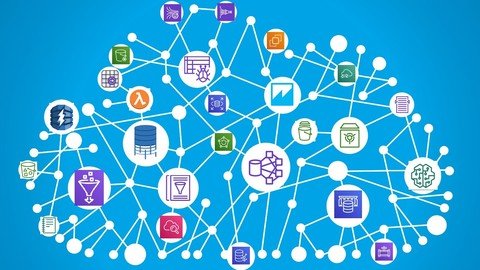
AWS Data Architect Bootcamp - 43 Services 500 FAQs 20+ Tools
MP4 | Video: h264, 1280x720 | Audio: AAC, 44.1 KHz
Language: English | Size: 7.79 GB | Duration: 30h 26m
AWS Databases, EMR, SageMaker, IoT, Redshift, Glue, QuickSight, RDS, Aurora, DynamoDB, Kinesis, Rekognition & much more​

What you'll learn
Confidently architect AWS solutions for Ingestion, Migration, Streaming, Storage, Big Data, Analytics, Machine Learning, Cognitive Solutions and more
Learn the use-cases, integration and cost of 40+ AWS Services to design cost-economic and efficient solutions for a variety of requirements
Answer detailed technical questions of your design and development teams regarding implementation and build
Practice hands-on labs on complex AWS services like IoT, EMR, SageMaker, Redshift, Glue, Comprehend and many more
Requirements
A computer with admin access, internet, and AWS Account to practice labs. Some labs may cost $$.
Basic working knowledge of AWS like AWS Console, S3, EC2, VPC and similar basic concepts.
Experience of working with at least one database, basic SQL, conceptual understanding of topics like replication, streaming, backups, key-value, index etc.
None of these are show-stoppers. Having this pre-requisite knowledge will make your journey through the course smoother with lesser questions
Description
Hi! Welcome to the AWS Data Architect Bootcamp course, the only course you need to learn everything about data architecture on AWS and play the role of an Enterprise Data Architect. This is the most-comprehensive AWS course related to AWS data architecture on the market. Here's why
This is the only online course taught by an Enterprise Cloud Architect, who leads large teams of junior architects in the real world, who has an industry experience of close to two decades in the IT industry, who is a published author, and leads technology architecture of XXX million dollar projects on cloud for multi-national clients. Data Architects draw a salary in the range of $150K - $250K on an average. This course trains you for that job! This is my 10th course on Udemy, 3rd on AWS topics (previous 2 are best-sellers).
Typical AWS classroom trainings on data architecture which contains a fraction of the topics covered in this course, costs $3000 - $5000. And this course teaches you 5 to 7 times more topics than AWS Training (40+ AWS Services) in the fraction of the cost.
Everything covered in this course is kept latest. Services which are in Beta and launched in Re-invent (last Nov) are already covered in the course . AWS innovates and adds features to their stack very fast, and I keep my course constantly updated with those changes. Think of this course as a Architecture Updates subscription.
Developers have questions, Architect's have questions, Clients have questions - All technical curious minds have questions. And this course also has 500+ questions and answers (FAQs) curated from AWS FAQs, to equip you with as many ready-to-use answers as you would need in your architect role.
The entire course is formed of 40+ services. Every service is composed of the below listed sections, with their proportion in each section / service.
Architecture (12%) - Diagrams, Integration, Terminology
Use-Cases (6%) - Whether and When to use the AWS Service
Pricing (2%) - Cost estimation methods to assess overall solution cost
Labs (75%) - To-the-point labs for architectural understanding covering all major and important features
Frequently Asked Questions (5%) - Selected question from AWS FAQs explained concisely. (Total 500+)
Apart from AWS Services, we will use a number of client tools to operate on AWS Services, Databases and other technology stack. Here is a list of the tools that we would be using
1. EC2 2. Putty 3. Cloud9, 4. HeidiSQL 5. MySQL Workbench 6. Pgadmin 7. SSMS
8. Oracle SQL Developer 9. Aginity Workbench for Redshift 10. SQL Workbench / J
11. WinSCP 12. AWS CLI 13. FoxyProxy 14. Oracle Virtualbox 15. Linux Shell Commands
16. FastGlacier 17. Rstudio 18. Redis Client 19. Telnet 20. S3 Browser
21. Juypter Notebooks
Below is a detailed description of the curriculum as AWS Services we will be learning to understand how they fit in the overall cloud data architecture on AWS and address various use-cases. If you have any questions, please don't hesitate to contact me.
AWS Transfer for SFTP (Nov 2018 Release) - We will start our journey in this course with this service and learn how to ingest files in self-service manner using an sFTP server on AWS and sFTP tools on-premise to ingest file based data on AWS.
AWS Snowball - Large data volumes spanning hundreds of TBs are not ideal for ingestion via network. Using this service, we will learn how to ingest mega volume data using device based offline data transport mechanism to AWS cloud.
AWS Kinesis Data Firehose - One of the data ingestion mechanism is streaming. We will learn how to channel streamed data from Kinesis Data Streams to AWS Data Storage & Analytics Repositories like S3, Redshift, ElasticSearch and more using this service.
AWS Kinesis Data Streams - Clients can have streaming infrastructure or even devices (IoT) which may stream data continuously. Using this service we will learn how to collect streaming data and store it on AWS.
AWS Managed Streaming for Kafka (MSK) (Nov 2018 Release) - AWS recently added Kafka to their technology stack, which has lot of similarities with Kinesis. Learn comparative features as well as the method of standing up Kafka cluster on AWS to accept streaming data in AWS.
AWS Schema Conversion Tool - Database migration is a complex process and can be homogeneous (for ex. SQL Server on-premise to SQL Server on AWS) or heterogeneous ( for ex. MySQL to PostgreSQL). We will use this offline tool to learn about assessing migration complexities, generate migration assessment reports, and even perform schema migration.
AWS Database Migration Service (DMS) - Database Migration / Replication is a very common need for any federated data solution. We will use this service to learn how to migrate and/or replicate on-premise data from databases to AWS hosted relational databases on AWS RDS.
AWS Data Sync (Nov 2018 Release) - Continuous synchronization of data from on-premise to cloud hosted data repositories becomes a key requirement in environments where data is generated or changes very fast. We will use to service to learn how it can solve this requirement.
AWS Storage Gateway - This service has striking resemblance with AWS Data Sync, and is one of the alternatives for standing cached volumes and stored volumes on AWS to build a bridge between on-premise data storage and AWS. We will briefly learn similarities between AWS Data Sync and AWS Storage Gateway.
AWS ElastiCache ( Memcached ) - After covering most of the mechanisms of data ingestion, we will shift focus on caching data before moving on the databases. We will start learning about caching with Memcached flavor of this service which offers powerful caching capabilities for simpler data types.
AWS ElastiCache ( Redis ) - We will learn comparative difference between Memcached and Redis for caching, and learn how to use Redis flavor of caching which can build cache clusters and can host complex data types.
AWS S3 (Advanced) - AWS S3 is the basis of data storage and data lake in AWS. We will learn advanced tactics like locking data for legal compliance, cross-region global replication, data querying with S3 Select feature, Life-cycle management to move data to cold storage etc.
AWS Glacier - Data keep accumulating on cloud and can increase storage costs dramatically. Infrequently used data is suitable for cold storage, where this service comes into play. We will learning archival, archive retrieval and archive querying using this service.
AWS Relational Database Service (MariaDB) - We will be focusing heavily on AWS Service, which consists of 6 different types of databases. We will learn basic concepts of AWS RDS using MariaDB, stand-up an instance and query it with a client tool.
AWS Relational Database Service (SQL Server) - Data needs to be imported and exported between data-centers and cloud hosted database instances. We will learn such tactics for dealing with backups and restores across cloud using SQL Server database on RDS with a client tool.
AWS Relational Database Service (Oracle) - We will spend some time to learn how to stand up Oracle on AWS RDS, especially for Oracle professionals.
AWS Relational Database Service (MySQL) - After spending time on practicing basic concepts, with MySQL database on AWS RDS, we will start practicing advanced concepts for High-Availability and Performance, like Read Replicas and Performance Insights features.
AWS Relational Database Service (PostgreSQL) - There can be use-cases where there may be need to convert one database to another on cloud, for example convert PostgreSQL to MySQL. We will learn about some compatibility features where we can create a MySQL read replica from a PostgreSQL instance and make a read replica as an independent database.
AWS Relational Database Service (Aurora) - Aurora on AWS RDS is a native database service from AWS. It comes in two flavors - cluster hosted and serverless, which is suitable for different use-cases. Also the storage architecture of Aurora is shared by various other AWS services like AWS Neptune and DocumentDB. We will learn this service in-depth.
AWS Neptune - Relational databases is just one of the types of databases in the industry as well as on AWS. Graph is special use-case for very densely connected data where the value of relationships is much higher than normal. We will learn graph theory of RDF vs Property Graph, and learn how Neptune fits in this picture, stand-up a Neptune Server as well as client, and operate on it with query languages like Gremlin ( Tinkerpop ) and SPARQL.
AWS DocumentDB (Nov 2018 Release) - MongoDB is one of the industry leader in NoSQL Document Databases. AWS has recently introduced this new service which is a native implementation of AWS to provide an equivalent database with MongoDB compatibility. We will learn details of the same.
AWS DynamoDB - Key-value databases are important for housing voluminous data typically logs, tokens etc. We will learn document database implementation in depth with advanced features like streaming, caching, data expiration and more.
AWS API Gateway - REST APIs are today's standard mechanism of data ingestion. We will learn how to build data ingestion and access pipeline with APIs using this service with AWS DynamoDB.
AWS Lambda - Microservices are often tied with APIs, and are the cornerstone of any programmatic integration with AWS Services, typically AWS's Artificial Intelligence and Machine Learning Services. We will learn developing Lambda functions
AWS CloudWatch - System logging is at the center of all programmatic logic execution, and it ties very closely with microservices and metrics logging for a variety of AWS Services. We will learn how to access and log data from microservices in CloudWatch logs.
AWS Internet of Things (IoT) - Today IoT is one of the fastest growing areas, and from a data perspective, its one of the most valued source of data. The first challenge enterprises phase is the mechanism of ingesting data from devices and then processing it. With prime focus on ingestion, we will learn how to solution this using an end-to-end practical example which reads data from a device and sends text messages on your cell phone.
AWS Data Pipeline - With Data Lakes already overflowing with data, moving data within cloud repositories and from on-premises to AWS requires an orchestration engine which can move the data around with some processing. We will learn how to solve this use-case with this service.
Amazon Redshift and Redshift Spectrum - All stored data in relational or non-relational format needs to be analyzed and warehoused. We will learn how to cater the requirement for a peta-byte scale, massively parallel data warehouse using this service.
AWS ElasticSearch - ElasticSearch is one of the market leaders in search framework along with its alternative Apache Solr. AWS provides its own managed implementation of ElasticSearch, which can be used as one of the options to search data from different repositories. We will learn how to use this service for addressing search use-cases, and understand how tools like Logtash and Kibana fits in the overall solution.
AWS CloudSearch - Standing up an AWS ElasticSearch needs some ElasticSearch specific understanding. For use-cases which needs a more managed solution, AWS provides an alternative packaged solution for search based on Apache Solr. We will learn how to stand up this service and use if for standing up search solutions in an express manner.
AWS Elastic MapReduce (EMR) - After spending sufficient time on Ingestion, Migration, Storage, Databases, Search and Processing, now we will enter the world of Big Data Analytics where we will spend significant amount of time learning how to standup a Hadoop based cluster and process data with frameworks like Spark, Hive, Oozie, EMRFS, Tez, Jupyter Notebooks, EMR Notebooks, Dynamic Port Forwarding, RStudio on EMR, Read and Process data from S3 in EMR, Integrate Glue with Hive, Integrate DynamoDB with Hive and much more.
AWS Backup (Nov 2018 Release) - Creating backup routines of various data repositories is a Standard Operating Procedure of production environments. AWS made this job easier for support team with this brand new service. We will learn about the details of this service.
AWS Glue - AWS has centralized Data Cataloging and ETL for any and every data repository in AWS with this service. We will learn how to use features like crawlers, data catalog, serde (serialization de-serialization libraries), Extract-Transform-Load (ETL) jobs and many more features that addresses a variety of use-cases with this service.
AWS Athena - Serverless data lake is formed using four major services : S3, Glue, Redshift, Athena and QuickSight. This service is at the tail end of the process, and acts like a query engine for the data lake. We will learn how it serves that purpose and completes the picture.
AWS QuickSight - AWS filled the gap of a cloud-native reporting service in 2017 with the launch of this service. We will learn how it fits in the Serverless Data Lake picture and allows to create reports and dashboards.
AWS Rekognition - We will start our journey into the world of cognitive services powered by Artificial Intelligence with this service. Images and Video are vital source of data, and extracting information from these data sources and processing that data in a programmatic manner has various applications. We will learn how to perform this integration with Rekognition.
AWS Textract (Nov 2018 Release) - Optical Character Recognition is another vital source of data, for ex. we are very much used to scanning of bar codes, tax forms, ebooks etc. We will learn how to extract text from documents using this AI powered brand new service form AWS.
AWS Comprehend - Natural Language Processing (NLP) is a very big practice area of data analytics, typically performed using data science languages like R and Python. AWS makes the job of NLP easier by wrapping up a AI powered NLP service. We will learn the use of this service and understand how it complements services like Textract and Rekognition.
AWS Transcribe - One major source of data that we have not touched so far is Speech to Text. We will learn how to use this AP powered service to extract text from speech, and how it can be effectively used for a number of use-cases.
AWS Polly - We would have covered many use-cases of processing textual data from one form to another, but processing text to speech, which is the exact opposite function of Transcribe, we will learn to perform that with this AI powered service from AWS. We will also learn the use of Speech Synthesis Language to control the details of the speech that gets generated.
AWS SageMaker - After comfortably using AI powered service, which abstracts the complexity of machine learning models from end-users, we will now venture in the world of machine learning with this service. We will execute a machine learning model end-to-end and learn how to access data from S3, create a model, create notebooks for executing code to explore and process data, train - build - deploy machine learning model, tune hyper-parameters, and finally accessing it from a load balanced infrastructure using API endpoints.
AWS Personalize - Recommendation Engines requires building a reinforced deep learning neural network. Amazon has been in the business of recommending products to customers since decades. They have packages their method of recommendation as a product and launched it as a service, which is making a debut in the form of Personalize. We will perform an end-to-end exercise to understand how to use this service for generating recommendations.
AWS Lake Formation (Nov 2018 Release) - As forming data lakes is a tedious process, AWS has introduce a set of orchestration steps in the form of service to expedite the generation of Data Lakes. As this service is in early preview (Beta) and is subject to change, we will look at a preview of the GUI of this service before concluding the curriculum of this course.
If you are not sure whether this course is right for you, feel free to drop me a message and I will be happy to answer your question related to suitability of this course for you. Hope you will enroll in the course. I hope to see you soon in the class !
Who this course is for
Database professionals who are starting new on the AWS platform or are looking to learn a variety of AWS Services to widen their knowledge
Beginner or Experienced Data Architects who want to increase the breadth of their knowledge on AWS to start working at the next level
Technology Executives who want to quickly assess the suitability of any given AWS services for their use-cases
AWS Professionals who are preparing for Big Data Specialty Certification or preparing for a technical interview
Screenshots









zpGPJ13Hkn5JEivxTwT3iqjgp7tsgnY5.jpg

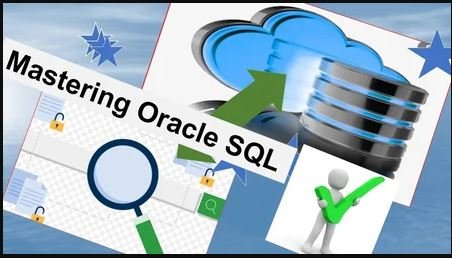
Become Oracle SQL expert using Oracle Cloud Infrastructure(OCI) - Autonomous Database
MP4 | Video: h264, 1280x720 | Audio: AAC, 44.1 KHz
Language: English | Size: 1.53 GB | Duration: 5h 21m​

The big question is - is SQL still relevant and should you learn it? Well, the answer is: Yes.
SQL has established itself as the de-facto data access language used across many different industries. This means that SQL is no longer just used by developers,but folks from many different parallel technical fields that need to store, manipulate, and access large volumes of data - analyse it with slice and dice concept to derive meaningful business information so as to have the business in competitive edge.
For this reason, SQL isn't going anywhere. Its stable in popularity and still dwarfs NoSQL databases on a side by side comparison.
With this course, you can learn how to provision the latest Oracle Cloud Autonomous Database 19c which is provided on Oracle cloud infrastructure as always free tier. You can also learn SQL by going through the video, if have access to Oracle SQL environment
Towards Oracle SQL learning this course has following topics of coverage.
Different Oracle DB environment to Learn & Practice Oracle SQL
How to get access to Oracle Cloud Free tier.
An Overview about all new Oracle Autonomous Cloud Database.
Provisioning Oracle Autonomous Database on OCI
Accessing the Oracle Cloud Autonomous DB for SQL - web and client version.
Oracle HR dataset installation using Oracle APEX.
Data Retrieval using SQL Select statements. -Where Clause. -Functions. -Character Manipulation. -Conversion and Conditional Expression - NVL, CASE, DECODE. -Aggregate functions and group by clause. -Table joins for retrieving data from multiple table. -Subqueries.
Data Definition Language and Constraints
Data Manipulation Language.
What is Oracle Data Dictionary.
Other DB Objects - Sequence, Index, Synonyms & Views.
Database User Privilege & Roles
Understanding Correlated Subqueries. First step to become expert in Oracle SQL !! Happy Learning! ....
Screenshots


j0fM7BG3ZVmsQB60lFl2CZpoFfUUB9MS.jpg

Card Payments Industry: The Complete Guide
MP4 | Video: h264, 1280x720 | Audio: AAC, 44.1 KHz
Language: English | Size: 250 MB | Duration: 49m
Learn all about card payments. Enhance your career and professional development.
What you'll learn​

Understand the card payments industry with one of the most comprehensive courses in this field and excel in your job.
Identify all participants in the industry and learn about their business models. Identify or define your role in the payments ecosystem.
Learn about acquiring and issuing.
Understand the scheme fees and interchange fees of the leading card schemes.
Requirements
No prior knowledge is necessary.
No prior technical skills are necessary.
A willingness to understand new concepts.
Description
This is one of the most comprehensive programs covering the card payments industry. Initially, it was part of the Certificate in Finance and Technology but it grew fast as a stand-alone educational program. Professionals from leading technology companies and financial institutions have excelled in their jobs and have enhanced their careers after choosing this program.
In this course you will learn the fundamentals of the card payments industry.
In the first section you will learn to identify the main players in card payments. You will understand their business models in the cards value chain and you will learn how to explain the card transaction cycle.
In the second section you will learn who the main players in the credit card industry are. You will understand the relationships between them in the four-party-model and we will cover the lifecycle of a transaction. In this section you will also calculate network assessment fees.
In the third section we will discuss the different types of value chain models and you will learn how to calculate the interchange fee of a transaction.
This course will help you understand the success factors in this business and how to apply them.
The author of the course is a professional in the fields of payments and has worked for companies like Commerzbank, BNP Paribas, Wirecard, UniCredit and many other financial institutions.
Who this course is for
Payments industry professionals and beginners
Developers curious about business processes in the card payments industry
Professionals focused on business curious about the technology behind card payments
Screenshots


tQQhczwj4k9rgQYfMpRaB3LkUbhvso95.jpg

Create a simple cinematic in Blender [SHORT FILM]
MP4 | Video: h264, 1280x720 | Audio: AAC, 44.1 KHz
Language: English | Size: 1.98 GB | Duration: 2h 33m​

This is an introduction to the world of cinematic short films in 3D Blender.
This tutorial teaches the whole process of cinematic scene production, a simple short film very fit for beginners to give you an introduction to the world of cinematic building.
In this course I'll teach you everything you need to know to create cinematic animations in Blender. We gonna start looking at some reference photos and get an idea about what we want to build together. Then it is time to actual start working on this and we gonna get going with the modeling part. Here we gonna have the modeling lessons divided in two separate lessons. In the first one we gonna model and sculpt the wall, window, table, bottles, candle, plates. In part two we will be focusing on modeling the wind chimes and the book. After that we will bring our focus to the level design and creating the curtains. In the next section all our focus will be on lighting the scene and creating the force of the wind also animating the scene.
Next, texturing will be our main priority. This is divided in two parts where texturing the curtains and the book is gonna be in the center of our attention and in the second part we will texture everything else we have in the scene. After that we will be creating the outside world adding trees and fog to create an mysterious and atmospheric environment. We will set up the camera and animate the camera. And at the end I will show you how you can render this animation and make it look even better.
This course if for you if you want to dive in creating a simple cinematic. This is an introduction to the world of filmmaking in 3D Blender.
Screenshots


[SHORT_FILM].part1.rar.html
[SHORT_FILM].part2.rar.html
[SHORT_FILM].part3.rar.html


9466c5df-ff1e-4cb6-b6a1-34dfeb095924.png

DP-200: Implementing Azure Data Solution Exam Preparation
MP4 | Video: h264, 1280x720 | Audio: AAC, 44.1 KHz, 2 Ch
Genre: eLearning | Language: English | Duration: 155 lectures (11h 6m) | Size: 5.12 GB

Pass DP-200: Learn Azure SQL Database,CosmosDB, Data warehouse, Data Lake, Data Factory, Data Bricks in 10 hours
What you'll learn
You Will Master Azure Data Factory
How To Create Data Flows And Control Flows In Azure Data Factory
How To Use Parameters and Variables In Azure Data Factory
How To Implement Different Data Storage Solutions In Azure
implement a solution that uses Data Lake Storage Gen2
How To Create Azure SQL Databases
How To Configure Azure Data Bricks( A Service To Perform Big Data Analysis Using Azure Cloud)
How To Access Azure Data Lake From Azure DataBricks (With Python Code)
How To Connect To Azure SQL Data Base From On premise Using SSMS
How To Execute Query Against Azure SQL Data Base Using Azure Query Editor
How Migrate Data Base From On Premise To Azure Using SSMS
How To Move Data To Azure Data Lake From On-premise Using Storage Explore
How To Access On premise Environment Using Self Hosted Integration Run time From ADF
How To Create Data Set and Connections In ADF (Azure Data Factory)
How To Create Pipeline In Azure Data Factory (ADF)
How To Implement a solution that uses Azure Blob storage
Implement Storage Systems With High Availability, Disaster Recovery, And Global Distribution With Geo Replications
How To Create Elastic Pool And Deploy Multiple Data Bases In single Server
Provide Access To Data To Meet Security Requirements
How To Create Azure SQL Data Warehouse (Azure Synapse Analytics)
configure elastic pools, configure geo-replication, implement PolyBase
Learn to use PolyBase external tables to load data from Azure Data Lake Storage
Create database objects required to load from Data Lake Storage
Connect to a Data Lake Storage directory (With Credential and secret)
implement Copy Activity within Azure Data Factory, create linked services and datasets
Develop batch processing solutions using Data Factory and Azure Databricks
Create pipelines and activities, implement Mapping Data Flows in Azure Data Factory
Learn to implement Azure Databricks clusters creations
Learn to ingest data into Azure Databricks
Learn to implement Azure Databricks notebooks, jobs, and autoscaling,
Requirements
Internet connection to watch this videos
Laptop or PC to practice this LAB (Optional)
Headphone For Audio
Description
Microsoft Azure (formerly Windows Azure) is a cloud computing service created by Microsoft for building, testing, deploying, and managing applications and services through Microsoft-managed data centers.
Azure Provides Three services
software as a service (SaaS),
platform as a service (PaaS).
infrastructure as a service (IaaS)
Azure supports many different programming languages, tools, and frameworks, including both Microsoft-specific and third-party software and systems. Azure was announced in October 2008, started with the codename "Project Red Dog", and released on February 1, 2010, as "Windows Azure" before being renamed "Microsoft Azure" on March 25, 2014.
In this course, you will learn
How To Use The Azure Data Factory.
How To Use The Azure SQL Database.
How To Use Azure Blob Storage.
How To Use Azure Data Lake.
How To Use Azure DataBricks.
How To Use Different Azure Data Services In Different applications.
Exam DP-200: Implementing an Azure Data Solution
Candidates for this exam must be able to implement data solutions that use the following Azure services
Azure Cosmos DB.
Azure SQL Database.
Azure Synapse Analytics (formerly Azure SQL DW).
Azure Data Lake Storage.
Azure Data Factory.
Azure Stream Analytics.
Azure Databricks.
Azure Blob storage.
Topics We Cover In This Course
Azure SQL Database.
Azure Cosmos DB.
Azure Data Lake Storage.
Azure Data Factory.
Azure Databricks.
Azure Blob storage.
Azure Synapse Analytics (formerly Azure SQL DW).
Upcoming Modules;
Azure SQL failover groups
Azure Data Lake Analytics
Introduction To Power BI
HDinsight.
Candidates for Exam DP-200: Implementing an Azure Data Solution are Microsoft Azure data engineers who identify business requirements and implement proper data solutions that use Azure data services like Azure SQL Database, Azure Cosmos DB, Azure Data Factory, Azure Databricks, Azure data warehouse (Azure Synapse Analytics)
This course covers, how to provisioning data storage services like Azure SQL, Storage account, Data lakes. In the Azure Data factory section, we cover how to transform your data, identifying performance bottlenecks, and accessing external data sources including on-premise SQL server and file systems.
Azure Data Factory (ADF)
The Azure Data Factory service is a fully managed service for composing data storage, processing, and movement services into streamlined, scalable, and reliable data production pipelines. The Azure Data Factory (ADF) is a service designed to allow developers to integrate disparate data sources. ADF or Azure Data Factory is a platform somewhat like SSIS or Alteryx in the Azure environment to manage the data you have both on-prem and in the cloud.
It provides access to on-premises data with the help of a software. By using this link we could connect to the on-premise file system as well as to on-premise SQL databases. From Azure Data Factory, you could access almost all azure services without any difficulties.
Access to on-premises data is provided through a data management gateway that connects to on-premises SQL Server databases and we will show you how to install this software and how to connect your on-premises environment with Azure cloud.
If you ever created any data transfer activities in Azure, or in SSIS, you will find it a similar tool. If you use ADF, you could focus on your data-the serverless integration service does the rest.
Topics In Azure Data Factory
Append Variable Activity
Execute Pipeline activity
ForEach activity
Get Metadata activity
If Condition activity
Lookup activity
Set variable activity
Until activity
Validation activity
Data Flow activity
Mapping data flow
Aggregate transformation.
Alter row transformation.
Conditional split transformation.
Derived column transformation.
Exists transformation.
Join transformation.
Lookup transformation.
The new branch mapping data flow transformation.
Select transformation.
Sink transformation.
Source transformation.
Azure Data Factory union transformation.
Parameterizing
Trigger In Azure Data Factory.
Manual Trigger.
Scheduled Trigger.
Tumbling window
Event Trigger.
Dynamic Data processing And Pipeline Execution Based on External Event.
and many more (with real-life scenarios). Check out our course descriptions for updated information.
SQL Database -Cloud Database as a Service
Azure SQL Database is a fully managed relational database with built-in intelligence supporting self-driving features such as performance tuning and threat alerts. According to Wiki, Microsoft Azure SQL Database is a managed cloud database provided as part of Microsoft Azure. A cloud database is a database that runs on a cloud computing platform, and access to it is provided as a service. Managed database services take care of scalability, backup, and high availability of the database.
Azure SQL Database: Azure SQL Database is a relational database-as-a-service (DBaaS) based on the latest stable version of Microsoft SQL Server. It is a fully managed Platform as a Service (PaaS) Database Engine that handles most of the database management functions such as upgrading, patching, backups, and monitoring without user involvement.
In this course, we will show you how to launch the Azure SQL database in five minutes, with and without sample data. We will show you, how to use SQL elastic pools.
Elastic pools help you manage and scale multiple Azure SQL databases. According to Azure documentation, SQL Database elastic pools are a simple, cost-effective solution for managing and scaling multiple databases that have varying and unpredictable usage demands. With an elastic pool, you determine the amount of resources that the elastic pool requires to handle the workload of its databases, and the amount of resources for each pooled database.
Azure SQL Database is always running on the latest stable version of the SQL Server Database Engine and patched OS with 99.99% availability.
The databases in an elastic pool are on a single Azure SQL Database server and share a set number of resources at a set price. By the end of this course, you will have a clear idea about how to configure SQL elastic pool.
Geo-Replication
Active geo-replication is an Azure SQL Database feature that allows you to create readable secondary databases of individual databases on a SQL Database server in the same or different data center (region). We will show you how you could configure a Geo-replication and force failover to the secondary database manually.
Azure Cosmos DB
Azure Cosmos DB is Microsoft's globally distributed, multi-model database service. With a click of a button, Cosmos DB enables you to elastically and independently scale throughput and storage across any number of Azure regions worldwide. In our course, we will see.
How you could create a cosmos DB account,
How to Create Databases inside your cosmosDB account
How to insert data into CosmsoDB containers.
How to Restive data that you saved in cosmos DB tables or containers by using SQL
Introduction to Azure Storage
Azure Storage is Microsoft's cloud storage solution for modern data storage scenarios. Azure Storage offers a massively scalable object store for data objects, a file system service for the cloud, a messaging store for reliable messaging, and a NoSQL store.
In this course, we will cover how to create a storage account, how to create containers and file systems and how to upload data into these services and how to access these storage services from different azure data solutions services like data factory, data bricks, and SQL databases.
Azure Data Lake Storage
Azure Data Lake Storage, is a fully-managed, elastic, scalable, and secure file system that supports HDFS semantics and works with the Hadoop ecosystem. ‎Azure Data Lake Storage Gen2 is a set of capabilities dedicated to big data analytics, built on Azure Blob storage. Data Lake Storage Gen2 is the result of converging the capabilities of our two existing storage services, Azure Blob storage and Azure Data Lake Storage Gen1.
In this course we will see, how to create data lakes, How to move CSV data from azure blob storage to azure data lake using azure data factory. How to read your data (Azure Data lake) using azure Databricks.
Azure Databricks
Azure Databricks provides the latest versions of Apache Spark and allows you to seamlessly integrate with open source libraries. Spin up clusters and build Bigdata applications. According to Databricks documents, Azure Databricks is a fast, easy, and collaborative Apache Spark™ based analytics platform optimized for Azure. Azure Databricks supports Python, Scala, R, Java, and SQL, as well as data science frameworks and libraries including TensorFlow, PyTorch, and scikit-learn.
In this course, we will show you how to configure Azure Data bricks, How to launch a cluster, how to create notebooks.
Azure Synapse Analytics (Azure SQL Data Warehouse)
Azure Synapse is a limitless analytics service that brings together enterprise data warehousing and Big Data analytics. Azure Synapse is Azure SQL Data Warehouse evolved. In this course, you will learn how to create an Azure SQL pool, access a data lake storage account (how to use PolyBase external tables to load data from Azure Data Lake Storage). Will demonstrate how to create a master key and database scoped credential. How to create external tables and external data sources. Finally, we will see how to load data into Azure Data Warehouse from an external table by using the create table as a select command.
Demo 1
Create a Pipeline in Azure Data Factory.
Create Input Connections to a source.
Create Input Data Set.
Create Output Connections to destinations.
Create an Output Data set.
Create A copy Activities to copy data from on-premise to Azure Blob storage.
Create A copy Activities to copy data from Blob to Azure SQL Database.
Create A copy Activities to copy data from on-premise to SQL Database.
Run Your Copy Activities and validate all the settings
Demo-2
Migrate Data from On-premise SQL Server to Azure SQL database Without any external services.
Demo 3
Create An Azure DataBricks.
Connect To Azure Data Lake.
Create a Cluster To Run our notebook
Configure Azure Databricks Data lake configurations.
Assign permission to your external Applications.
Read CSV data saved inside Azure Data lake using a Python notebook.
Demo 4
Create Your First Data Flow In Azure Data Factory.
Configure The Source Data flow.
Learn To use Filter Conditions.
Learn To configure Sink (Destinations) in Azure.
Run your Azure Data flow and copy data from Azure Blob Data Store And Save filtered result In Azure Data lake.
Demo 5
Access On-premise SQL Server.
Create Different Data Set by Executing Custom Stored Procedure By Passing Dynamic Parameter
Save This Data Set Into Data Lake By Creating Custom Filename.
Trigger this action Azure Data Factory.
Demo 6
Create dynamic result with help of custom parameters and in for each activity.
Save the result into Azure Data lake with a dynamic name.
Demo 7;
Run your activities N times with the help of Until loop (Do loop concepts of programming language)
Demo 8
Create an Azure Data warehouse Pool by using Azure Portal.
Create an Azure Data warehouse by using SQL statements from SSMS.
Connect and execute SQL statements against Azure SQL Data warehouse.
Execute SQL statements against Data in Azure Data lake using PolyBase external tables And load data from Azure Data Lake Storage into Azure Data warehouse.
Learn to use external tables and external data sources in Azure SQL Data warehouse.
Who this course is for
Any student Who Plan To Take DP 200 Certifications
Any Student Who Want To Implement Data Solutions In Azure Cloud
Homepage


HMFAP3x3YxPUpCqC3UgdULuap2n4jZ8U.jpg

FinTech - Practitioner course on Payment Gateway and QR Code
MP4 | Video: h264, 1280x720 | Audio: AAC, 44.1 KHz
Language: English | Size: 1.33 GB | Duration: 3h 40m
A strategic course on Payment Gatway and QR Code Payments E-Commerce.FinTech, Digital Banking, Mobile Payments​

What you'll learn
Practical challenges, Business Negotiation and Strategies.
Become a Payment Gateway Business practitioner
Parties in a Payment Gateway (PG) Transaction
Smart Tips for Strategy and Negotiations
Verified by VISA and Mastercard secure code
Type of digital transactions
Three tiers and Transaction flow
PCI DSS and Five Integration models
Chargeback and Refunds
Critical Evaluation Factors
FinTech Digital Banking, Digital Finance, Financial Technology
BharatQR, mVISA, Masterpass, Alipay and We chat Pay QR code system
QR Code Vs NFC payment
Customer and Merchant presented QR
Payment Processing
Requirements
Basic understanding of digital payments
Patience to listen and reflect on the points discussed during the course
Description
It will help you immensely if you are a Product or a Project manager, Strategic alliance lead, fresher to the payment gateway or digital payment industry, a trainer, or just curious to know about the Payment Gateway and QR code.
Please go through the curriculum thoroughly before purchasing the course"
A most important aspect of any digital and cash lite economy is its adoption by merchants and customers, and both prefer the simplest, cheapest and efficient system. Among such digital payment tools Payment Gateway & QR Code is a few preferred tool to accept online or card not present transactions.
In this business-oriented course we will learn;
- Basics of Payment Gateway, Parties in a PG, Type of Transactions, CP, CNP Three tiers, Transaction flow, PCI DSS in PG - Integration models, Chargeback and refunds, Processing Clearing Settlement, Fund Flow settlement. Critical Evaluation Factors, Risk, Verified by VISA and Mastercard secure code, Strategy and negotiations. Payment Processing
- Basics of QR code, it's components, Static, dynamic and one time use QR code, QR code payment, closed and interoperable QR code, authentication in QR code, global adoption data and examples, EMV Co QR code process for customer and merchant presented QR code, backend transaction flow, security and challenges and a comparison between QR code and NFC. BharatQR, mVISA, Masterpass, Alipay and We chat Pay QR code system.
FinTech Digital Banking, Digital Finance, Financial Technology
There are two separate courses on Payment Gateway and QR code as well, so if you want to learn only about payment gateway or QR code you can opt those, this is a combo course with the same content.
After completing and reflecting well on the discussed points, you will have a good understanding of Payment Gateway and QR Code business and its back end processes and challenges.
Look forward to meeting you in the course.
Thanks
Team - Global Fintech Academy
"Our aim is to deliver good quality and 5 Star training to our students and clients".
Who this course is for
Anyone interested to know how Payment Gateway and QR code Works
Payment Gateway and QR Code Product and Project Managers
Strategic alliance people
Freshers to digital payment industry
Interested in Digital Payment
Learn about FinTech and Digital Payment
Screenshots


RydWY3oSUp9oolz5vxKlO0Wf89zlmNov.jpg

Fintech : Buy Now Pay Later (BNPL)
MP4 | Video: h264, 1280x720 | Audio: AAC, 44.1 KHz
Language: English | Size: 1.04 GB | Duration: 2h 33m
A new Payment or credit system. Comprehensive course on the Buy Now Pay Later (BNPL) model- Fintech​

What you'll learn
About Buy Now Pay Later, BNPL
BNPL, business model and economics
Growth of Buy Now Pay Later, BNPL
Regulator and credit bureau on Buy Now Pay Later, BNPL
Requirements
Interest and basic experience or desire to learn about digital payments and fintech
Description
Buy Now Pay Later (BNPL) is a new payment and credit system which has created a huge disruption in both the lending and payments industry. Everyone is talking about it and it is loved by all the stakeholders like Customers, Merchants Investors, and BNPL companies for sure. Regulators across the globe are keeping a close eye on the development and its impact on the consumers and ecosystem as a whole.
Course content - Buy Now Pay Later, BNPL, Pay in four 4, COVID and BNPL, Klarna, Market size of BNPL, Data points and trends, Global market and players, business models of BNPL companies, changing dynamics due to BNPL, transaction flow, popularity and reasons, consumer insights, credit culture and BNPL, credit card VS BNPL, BNPL's impact on our credit bureau report, soft and hard check enquiry on the credit bureau and what do these mean, risks in the business model, regulatory risk, benefits for the shoppers, merchants, how do BNPL makes money, the economics of the model, regulators on BNPL.
Please go through the curriculum and the introduction video thoroughly before purchasing the course
The course will be of immense benefits if you are
- Product and Project Manager
- Practitioner and Enthusiast
- Students, Researchers, Trainers and Teachers
So, see you in the course..
Thanks
Global Fintech Academy
"Our aim is to deliver good quality and 5 Star training to our students and clients".
Who this course is for
Product Managers, CEOs interested to learn about about Buy Now Pay Later, BNPL
Students wanting to learn about Buy Now Pay Later, BNPL
Teachers wanting to learn about Buy Now Pay Later, BNPL
Practitioners
Digital finance Strategic alliance professionals
Course on Buy Now Pay Later, BNPL
Screenshots


iv2yZcyMzAUwOhWrG5cvYRLIsjYRc3SD.jpg

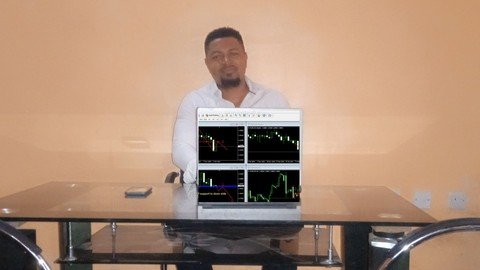
Forex Trading If You Work Full Time
MP4 | Video: h264, 1280x720 | Audio: AAC, 44.1 KHz
Language: English | Size: 2.50 GB | Duration: 7h 37m
Learn The 3 Profitable Forex Trading Strategies Which Will Make You A Profitable Forex Trader Overnight, Guaranteed!​

What you'll learn
Learn how to trade Forex without affecting your normal daily routine, so that you can trade Forex without stress
Understand Forex emotional market play, so that you don't go into the 90% loser category
Learn one of the best kept secrets which the pro traders and brokers don't want you to know - The 13 Alphabets (Not found on the internet).
Learn how to conduct weekend market analysis, so that you know what currency pairs to track for the upcoming week
Position yourself with market movers - Banks, Funds, etc, so that you are only going to market when the big boys are going in
Implement robust risk management policy, so that you can protect your account from disaster
Learn how to manage your trades for maximum profits, so that you can see you Forex account consistently grow
See some of my recorded Live trades with detailed explanations so you can understand my thought process
And more...
Requirements
Access to a Forex broker with any platform - MT4, Web, etc.
Able to open a Forex Demo account for practice
Able to commit 20 min per day to do chart analysis
Description
In this course, I'll Personally teach you 3 Profitable Forex Trading Strategies (Including some Live Trades), designed for people who have a Full-Time Job / Business, which will make you a Profitable Forex Trader Overnight, Guaranteed!.
This course if for people who cannot seat in front of the computer 24 hours a day, waiting for a trade setup. I'll take you from an Absolute Beginner, to a Market Professional who knows what to look for in any of the 28 Currency Pairs.
The strategy you will learn Includes one of the best kept secrets which the Brokers and Pro Traders don't want the average private trader to know - The 13 Alphabets (Not found on the Internet).
Knowing this, you'll be able to participate in the liquidity pool of Investment Banks, Hedge Funds, etc. by only BUYING when they are BUYING and SELLING when they are SELLING. This is how you become a Profitable Forex Trader.
Joining this course, you'll also be invited to join our Private Student Community on Slack where you can receive Live on-going student support. I'll be there too, so you can ask me any questions.
So, look no further. This is the only Forex course you'll ever need to join the winning 10% of Forex traders. Join Today.
See you in the program
- Don
Who this course is for
People who want to trade Forex without needing to be glued to their trading terminals 24 hours a day, waiting for trade setups
People who finally realised that trying to trade Forex from their Forex Mobile App whilst at work just wouldn't cut it
People tired of losing money in Forex
Beginner Forex trader looking to learn the right and profitable Forex trading strategy
Experienced Forex trader looking for a better, stress-free and profitable trading strategy
People who work full time and want to trade Forex
People who run a business during the day and want to trade Forex
Screenshots


B17AuQ91nsxLp60OjU6vnIuEf21S2Q8A.jpg

Forex Trading; A complete Guide to Technical Price Patterns
MP4 | Video: h264, 1280x720 | Audio: AAC, 44.1 KHz
Language: English | Size: 2.30 GB | Duration: 4h 59m
How to Trade from a higher time frames to a lower time frames
What you'll learn​

Students will learn basics of forex trading and simple version of technical analysis with the help of my two simple strategies
They will Learn simple entry price action
They will be able to analyze market from a higher time frame to a lower time frames
After the course student will know when exactly to enter a trade and when to stay out
Requirements
The course uses MT4 platform to teach the concept. The concepts can be used on any trading platform
Demo trading exprience placing trades with targets and stops is highly recommended as well as the how to position size trades to limit risk
Description
This Course is arranged to educate forex traders both new and experienced, the easy way to trade without stress, emotion, or unnecessary confusion whenever they open their platform.
in this course, l summarized technical trading in two forms ;
These two strategy will make you see forex from a different angle. this strategy does not only work in forex but in stocks and cryptocurrencies.
l specifically choose these two strategies because l don"t want to make this course difficult rather l want it to be simple and easy to understand. because what makes forex seems difficult is too many strategies, it makes traders especially new traders get so much confused whenever they open their chart. just the taught of executing a trade makes them sweat heavily but this simple strategy that l have been using over the years makes forex trading much clearer and simpler. you don't need macd, rsi , stochastic, moving average , bolinga band, etc. all you need is your naked chart, that's all. we don't trade with indicators because we don't want to be among the 90% of forex traders that lose their money.
the course uses the MT4 platform to teach the concepts. the concepts can be used on any trading platform. but, firstly l strongly recommend demo trading. demo trading experience placing trades with targets and stops is highly recommended as well as the how-to position size trades to limit risk.
if you are interested in forex, stocks, and cryptos, why not join us to see a difference.
Who this course is for
All Levels
Screenshots


35700724-1793-48d6-8312-28c0c1daa1c0.png

How remote access tools work
MP4 | Video: h264, 1280x720 | Audio: AAC, 44.1 KHz, 2 Ch
Genre: eLearning | Language: English + srt | Duration: 4 lectures (52m) | Size: 504.5 MB

How remote access tools work properly with crypters
What you'll learn
Fundamentals of Hacking
Fundamentals of Cybersecurity
Fundamentals of Malware Analysis
Fundamentals of Ratting
Requirements
No Requirements. We will Guide you through each step.
Description
In this course, we will be teaching the fundamentals of remote access tools. Many Ethical hackers wish to learn something more beyond CEH. We will teach you how Remote Access tools work and which are the most successful ones and we will dive deep in the intro to crypters. We will teach you how to create FUD files and test them in a safe education environment with proper labs. We will teach you the important of VPS.
In ethical hacking, It is important to learn how to hack a machine. It can be done graphically and manually. In this course we will be teaching graphically, which means we will be using tools and softwares to generate the files we need to create instead of creating them manually which can take time. Also by using graphically, we have more powerful tools so we can get the most out of our skills.
We will guide you on how RATS work. We will create malware from the tools and learn how to make them FUD - Fully UnDetectable. Almost all malware created gets recognized by good Anti Virus. We will learn how to bypass it with a very good crypter.
Hope you enjoy the course.
Who this course is for
Beginner Hacking Course
Homepage


Te6wKVoBsVIZo1zMzXEQMAwnsEn4RoQl.jpg

IVR Based Secured Digital Payments - FinTech
MP4 | Video: h264, 1280x720 | Audio: AAC, 44.1 KHz
Language: English | Size: 568 MB | Duration: 1h 47m
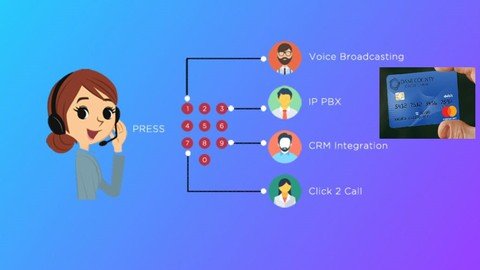
An Introduction to Interactive Voice Response (IVR) Based Digital Payments Processing- FinTech
What you'll learn​

IVR Based Payment.
Digital Payment
PCI DSS compliance and Non Compliance
DTMF tones
Payment Processing
Requirements
Basic understanding of digital payments
Patience to listen and reflect on the points discussed in the course
Description
The most important aspect of any digital and cash lite economy is its adoption by merchants and customers, and both prefer the simplest, cheapest and efficient system. Among such mobile payment tools, IVR based payment meets these criteria, here the customer doesn't need a smartphone, it can be done through basic telephone, feature or smartphone as well.
Please go through the curriculum thoroughly before purchasing the course"
In this business-oriented introductory course we will learn;
- Basics of IVR based payment, DTMF Tones, Digital Payments, Mobile Payment, Payment processing, Types of IVR solutions, Steps of IVR based payment, Backend Process, Types of IVR payments, PCI DSS models, Market and Players, Risks and challenges, Risk Mitigation points Future of IVR, Artificial Intelligence (AI) and IVR, Payment Processing
FinTech Digital Banking, Digital Finance, Financial Technology.
After completing and reflecting well on the discussed points, you will have a good understanding of IVR based payments, the back end processes and challenges. After completing and reflecting well on the discussed points, you will have a good understanding of IVR based payments, the back end processes and challenges.
Look forward to meeting you in the course.
Thanks
Team - Global Fintech Academy
"Our aim is to deliver good quality and 5 Star training to our students and clients".
Who this course is for
Anyone who wants to understand the potential of IVR based payments
People intereseted to understand how does a IVR based payment work in digital and cashlite economy
FinTech Digital Payment Processing
Screenshots


rW6I2rN5XgnMFeS6v7F5ir8n7f4heW77.jpg

Ichimoku Kinkō Hyō - Advanced course for serious traders.
MP4 | Video: h264, 1280x720 | Audio: AAC, 44.1 KHz
Language: English | Size: 1.85 GB | Duration: 2h 17m
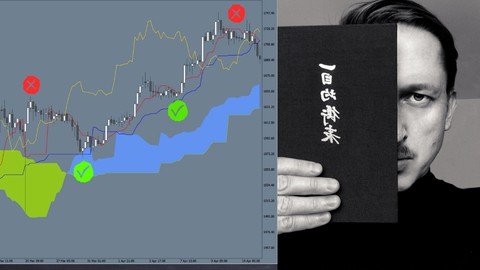
Learn about all Three Ichimoku Kinkō Hyō Theories - Time, Waves and Price Observation Theories. Become Ichimoku Master​

What you'll learn
Choose the right platform for trading Ichimoku
Identify all 5 Ichimoku Lines
Understand what each Ichimoku line indicates and apply this knowledge to student's trading.
Acknowledge existence of three theories in Ichimoku trading
Learn about Wave Theory and how to identify end of trend
Learn about Time Theory and identify day of change on the market and when to take your profits
Learn about Price targets and levels of potential profit taking
Learn how to put entire philosophy of Ichimoku together to have a professional approached to trading markets to
Requirements
This is an advanced course of Ichimoku Kinko Hyo so it would be good if student knew already basics of reading charts, what are candlesticks and how to open and close position. Also Knowledge about Forex markets would be usefull.
Description
This is the only course on Udemy about Ichimoku Kinkō Hyō where you will learn from Original Ichimoku Kinkō Hyō writings.
I will teach you earthing there is to know about all Ichimoku lines, why they are on the chart, what they mean and how they can help you become a profitable trader. On top of that you will learn about Time Theory - when to take trade and when to exit trade, the concept of time trading is very unique to Ichimoku and not a lot of people understand it. Goichi Hosoda was very proud of his discovery and high rank business people of Tokyo payed him a fortune to learn what he knows. Today you can get access to the same knowledge for fraction of the price it's worth. I will teach you how to observe price levels to your advantage as well how many waves there has to be before you can take close your successful trade and maximise profits. You will learn not only theory on historical examples but I will show you live trading with hundreds of pips profits and what is professional traders mindset when using Ichimoku Kinkō Hyō. You can apply knowledge from this course to Forex markets, Stock Market as well as Cryptocurrency market.
Who this course is for
This Advanced Ichimoku Kinko Hyo course is for Forex, Stock or Cryptocurrency traders that want to maximise their profits through understanding how the markets are changing according to Three Theories of Ichimoku - Time, Wave and Price range. If you feel frustrated trading never knowing when to enter or when to close your trade to maximise profits then this course is for you.
Screenshots


Zurück
Oben Unten