• Regeln für den Video-Bereich:

    In den Börsenbereich gehören nur Angebote die bereits den Allgemeinen Regeln entsprechen.

    Einteilung

    - Folgende Formate gehören in die angegeben Bereiche:
    - Filme: Encodierte Filme von BluRay, DVD, R5, TV, Screener sowie Telesyncs im Format DivX, XviD und x264.
    - DVD: Filme im Format DVD5, DVD9 und HD2DVD.
    - HD: Encodierte Filme mit der Auflösung 720p oder darüber von BluRay, DVD, R5, TV, Screener sowie Telesyncs im Format x264.
    - 3D: Encodierte Filme von BluRay, die in einem 3D Format vorliegen. Dies gilt auch für Dokus, Animation usw.
    - Serien: Cartoon/Zeichentrick, Anime, Tutorials, Dokumentationen, Konzerte/Musik, Sonstiges sind demnach in die entsprechenden Bereiche einzuordnen, auch wenn sie beispielsweise im High Definition-Format oder als DVD5/DVD9/HD2DVD vorliegen. Ausnahme 3D.
    - Bereich Englisch: Englische Releases gehören immer in diesen Bereich.
    - Bereich Talk: Der Bereich, in dem über die Releases diskutiert werden kann, darf, soll und erwünscht ist.


    Angebot/Beitrag erstellen

    - Ein Beitrag darf erst dann erstellt werden, wenn der Upload bei mindestens einem OCH komplett ist. Platzhalter sind untersagt.
    - Bei einem Scenerelease hat der Threadtitel ausschließlich aus dem originalen, unveränderten Releasenamen zu bestehen. Es dürfen keine Veränderungen wie z.B. Sterne, kleine Buchstaben o.ä. vorgenommen werden. Ausnahme Serienbörse:
    - Bei einem Sammelthread für eine Staffel entfällt aus dem Releasename natürlich der Name der Folge. Beispiel: Die Simpsons S21 German DVDRip XviD - ITG
    - Dementsprechend sind also u.a. verboten: Erweiterungen wie "Tipp", "empfehlenswert", "only", "reup", usw. / jegliche andere Zusatzinformation oder Ergänzung, welche nicht in obiger Beschreibung zu finden ist.

    Aufbau des Angebots und Threadtitel

    Der Titel nach folgendem Muster erstellt zu werden. <Name> [3D] [Staffel] [German] <Jahr> <Tonspur> [DL] [Auflösung] <Quelle> <Codec> - <Group>
    Beispiel: The Dark Knight German 2008 AC3 DVDRip XviD - iND
    Beispiel: The Dark Knight 2008 DTS DL BDRip x264 - iND
    Beispiel: The Dark Knight 2008 AC3 DL BDRip XviD - iND
    Beispiel: The Dark Knight German 2008 AC3 720p BluRay x264 iND
    Beispiel: The Dark Knight 2008 DTS DL 1080p BluRay x264 iND
    Beispiel: Die Simpsons S01 German AC3 DVDRip XviD iND
    Beispiel: Die Simpsons S20 German AC3 720p BluRay x264 iND
    Beispiel: Sword Art Online II Ger Sub 2014 AAC 1080p WEBRip x264 - peppermint
    Entsprechend sind also u.a. verboten: Sonderzeichen wie Klammern, Sterne, Ausrufezeichen, Unterstriche, Anführungszeichen / Erweiterungen wie "Tipp", "empfehlenswert", "only", "reup", usw. / jegliche andere Zusatzinformation oder Ergänzung, welche nicht in obiger Beschreibung zu finden ist
    Ausnahmen hiervon können in den Bereichen geregelt sein.

    Die Beiträge sollen wie folgt aufgebaut werden:
    Überschrift entspricht dem Threadtitel
    Cover
    kurze Inhaltsbeschreibung
    Format, Größe, Dauer sind gut lesbar für Downloader außerhalb des Spoilers zu vermerken
    Nfo sind immer Anzugeben und selbige immer im Spoiler in Textform.
    Sind keine Nfo vorhanden z.B. Eigenpublikationen, sind im Spoiler folgende Dateiinformationen zusätzlich anzugeben :
    Quelle
    Video (Auflösung und Bitrate)
    Ton (Sprache, Format und Bitrate der einzelnen Spuren)
    Untertitel (sofern vorhanden)
    Hosterangabe in Textform außerhalb eines Spoiler mit allen enthaltenen Hostern.
    Bei SD kann auf diese zusätzlichen Dateiinformationen verzichtet werden.

    Alle benötigten Passwörter sind, sofern vorhanden, in Textform im Angebot anzugeben.
    Spoiler im Spoiler mit Kommentaren :"Schon Bedankt?" sind unerwünscht.


    Releases

    - Sind Retail-Release verfügbar, sind alle anderen Variationen untersagt. Ausnahmen: Alle deutschen Retail-Release sind CUT, in diesem Fall sind dubbed UNCUT-Release zulässig.
    - Im Serien-Bereich gilt speziell: Wenn ein Retail vor Abschluss einer laufenden Staffel erscheint, darf diese Staffel noch zu Ende gebracht werden.62
    - Gleiche Releases sind unbedingt zusammenzufassen. Das bedeutet, es ist zwingend erforderlich, vor dem Erstellen eines Themas per Suchfunktion zu überprüfen, ob bereits ein Beitrag mit demselben Release besteht. Ist dies der Fall, ist der bereits vorhandene Beitrag zu verwenden.
    - P2P und Scene Releases dürfen nicht verändert oder gar unter einem iND Tag eingestellt werden.


    Support, Diskussionen und Suche

    - Supportanfragen sind entweder per PN oder im Bereich Talk zu stellen.
    - Diskussionen und Bewertungen sind im Talk Bereich zu führen. Fragen an die Uploader haben ausschließlich via PN zu erfolgen, und sind in den Angeboten untersagt.
    - Anfragen zu Upload-Wünschen sind nur im Bereich Suche Video erlaubt. Antworten dürfen nur auf Angebote von MyBoerse.bz verlinkt werden.


    Verbote

    - Untersagt sind mehrere Formate in einem einzigen Angebotsthread, wie beispielsweise das gleichzeitige Anbieten von DivX/XviD, 720p und 1080p in einem Thread. Pro Format, Release und Auflösung ist ein eigener Thread zu eröffnen.
    - Grundsätzlich ebenso verboten sind Dupes. Uploader haben sich an geeigneter Stelle darüber zu informieren, ob es sich bei einem Release um ein Dupe handelt.
    - Gefakte, nur teilweise lauffähige oder unvollständige Angebote sind untersagt. Dies gilt auch für eigene Publikationen, die augenscheinlich nicht selbst von z.B. einer DVD gerippt wurden. Laufende Serien, bei denen noch nicht alle Folgen verfügbar sind, dürfen erstellt und regelmäßig geupdatet werden.
    - Untersagt sind Angebote, welche nur und ausschließlich in einer anderen Sprache als deutsch oder englisch vorliegen. Ausnahmen sind VORHER mit den Moderatoren zu klären.


    Verstoß gegen die Regeln

    - Angebote oder Beiträge, die gegen die Forenregeln verstoßen, sind über den "Melden"-Button im Beitrag zu melden.
  • Bitte registriere dich zunächst um Beiträge zu verfassen und externe Links aufzurufen.

*** Bestes IPTV *** bester Preis *** gratis Test ***


Englische Tutorials

0e613ffb9b355570a2be12d049732374.jpg

Complete WiFi Hacking Course: Beginner to Advanced
Genre: eLearning | MP4 | Video: h264, 1280x720 | Audio: AAC, 44.1 KHz
Language: English | Size: 806 MB | Duration: 1h 46m​

Learn how to Hack WiFi Networks and Create the Most Effective Evil Twin Attacks using Captive Portals.

What you'll learn
Perform a Denial of Service Attack and Find Hidden Wireless Networks.
Use various tools like: Aircrack-ng, Wifite, Crunch, Cowpatty, Pyrit, Reaver.
Hack Wireless Networks (WEP, WPA, WPA2).
Create a Fake Wi-Fi Network.
Create a Fake Captive Portal and use it to Steal Login Information.
How to Sniff and Inject Packets into a Wireless Network.
Perform an Evil Twin Attack with Airgeddon.
Stealing Social Media Accounts using a Captive Portal.
Stealing Login Credentials from a WPA Enterprise Network.
Detect and Secure Your System from Evil Twin Attacks.

Requirements
A basic understanding of computers.
Computer with at least one wireless card to act as an access point.
Desire to learn.
Description
This course is all about Wi-Fi and the security of wireless networks. You will study the different threats, weaknesses and attack methods.

No special skills are required as the course covers everything from the very basics including the installation of Kali Linux.

You'll learn how to break any type of Wi-Fi encryption (WEP, WPA/WPA2) using various tools like: Aircrack-ng, Wifite, Crunch, Cowpatty, Pyrit, Reaver.

This course is for all levels. I will take you from beginner to advance level, and you will learn how to perform advanced evil twin attacks on targets using a wide variety of tools, and create a captive portal that effectively steals the login credentials.

The following topics will be covered during the course

How Wireless Networks Work.

Important Settings to Change on Your Router.

How to Install Kali Linux in VMware Player.

Useful Linux Commands with Examples.

Perform a Denial of Service Attack and Find Hidden Wireless Networks.

How to Hack Wireless Networks (WEP, WPA, WPA2).

Use various tools like: Aircrack-ng, Wifite, Crunch, Cowpatty, Pyrit, Reaver.

Set Up an Access Point with a Captive Portal.

Create a Fake Captive Portal and use it to Steal Login Information.

Customizing the Captive Portal Page.

How to Sniff and Inject Packets into a Wireless Network.

Use Wireshark Filters to Inspect Packets.

Perform an Evil Twin Attack with Airgeddon.

Stealing Social Media Accounts using a Captive Portal.

How to use Dns Spoofing and BeEF using WiFi Pumpkin.

Stealing Login Credentials from a WPA Enterprise Network.

Detect and Secure Your System from Evil Twin Attacks.

By the time you've completed this course, you will be confident with breaking all types of Wi-Fi encryption methods, and how to create and customize your own evil twin attack for different scenarios.

Who this course is for
Anyone who just simply wants to learn all cool Wi-Fi hacking tricks.


77fa31e979e9ae27f62f842417faa980.jpg

The Full Adobe XD UI/UX Course - Design Apps & Prototypes
Genre: eLearning | MP4 | Video: h264, 1280x720 | Audio: AAC, 48.0 KHz
Language: English | Size: 4.24 GB | Duration: 8h 28m​

Learn how to design mobile apps & websites from scratch using Adobe XD and creating a user-friendly prototypes

What you'll learn
How to install and use Adobe XD on macOS or Windows
Designing a full mobile app mockup (UI Design)
Building an interactive prototype that you can use on your device or desktop.
Learning how to create a design for a landing page.
Using components to make our design process faster & more efficient
Sharing our designs with our clients/teams from Adobe XD

Description
In this course, you'll learn how to create beautiful mobile & web user interfaces that you can then turn into real usable prototypes with the help of Adobe XD.

Adobe XD is a vector-based user experience design tool for web apps and mobile apps, developed by Adobe Inc. It's available for macOS and Windows.

In this course, we'll work with a fictional client called Healthy Bites to design a mobile app and a landing page for their food ordering app.

Is this course for you?

You're in the right place if any of these apply to you

You're interested in user interface & user experience design (UI/UX) but not sure where to start.

You're an entrepreneur with an app idea and want to turn your idea from a sketch to a realistic mockup and prototype.

You want to brush up your design skills to get the job that you want at companies like Airbnb, Google, Apple, etc.

You're already designing and want to jump into Adobe XD and further your knowledge of more design software.

You're interested in earning income as a freelance designer.

You simply want to enter a new career path, and graphic design has interested you.

By the end of this course

You will learn many useful design tools available in XD and how to design complete mobile apps and landing pages from scratch. You will also gain the skill to turn your designs into usable prototypes that you can share with your team members, colleagues, or clients.

What do I need?

This course is for both beginners & experienced designers looking to expand their skills.
All you need is a computer (macOS or Windows), an Adobe Account, and a web browser (to Install Adobe Creative Cloud).

About your instructor

This course is taught by entrepreneur & designer Nima Tahami. Nima has more than 12 years of experience designing and developing dozens of mobile apps and web apps for both clients and startups of his own. Nima's latest startup, ShiftRide, has been covered in many news outlets, including Forbes, where his app was highlighted for its ease of use.

Nima has created this course to help people become the best designer they can be. Design is part of the foundation of many things from great products & websites to great advertisements and everything in between. Nima has also designed and developed an open-source iPhone development library by the name of FCAlertView, helping 350,000+ app developers use beautiful customizable alert prompts within their applications.

Course Overview

The course is broken down into 4 main parts: Getting Introduced to Adobe XD, Designing a Full Mobile Mockup, Creating a Usable Prototype, and Designing a Landing Page.

Getting Introduced to Adobe XD

Installing Adobe XD and Creating Files.

Understanding the layout and menu options.

Creating shapes, lines, paths, and text.

Aligning & distributing objects.

Using Wireframe UI Kits.

Designing a Full Mobile Mockup

Introducing a food ordering app project called Healthy Bites.

Creating wireframes from our app requirements.

Designing the pages required for the app.

Designing cards and inputting sample data.

Using repeat grid & stacks.

Using components to reuse objects.

Using plugins to speed up our design process.

Using responsive resize to create designs.

Exporting and sharing our designs.

Developer handoff

Creating a Usable Prototype

Adding interactivity to our designs and turning them into a prototype.

Creating scrollable pages.

Previewing our app on the desktop.

Browsing our prototype on our mobile devices.

Recording and sharing prototypes

Adding animations to our prototypes.

Designing a Landing Page

Designing a landing page with multiple sections

Creating beautiful backgrounds

Adding images & text to our landing page

So what are you waiting for?

Let's get started learning how to design real-world projects using Adobe XD and take our design skills to a whole new level together.

Who this course is for
Beginner-level designers interested in user interface & user experience design (UI/UX)
Beginner/Intermediate designers interested in earning income as a freelance designer
Any-level designers looking to get into web & mobile app designs (graphical user interface)
Entrepreneurs wanting to turn their app ideas from a sketch to a realistic mockup and prototype.
Anyone looking to jump into a new exciting career with graphic design.
Designers looking to switch to Adobe XD from other design softwares for their career


add993e8006986974da1b5a9ec8cbfdb.jpg

10 Amazing Logo Tutorials in Adobe Illustrator on the iPad
Genre: eLearning | MP4 | Video: h264, 1280x720 | Audio: AAC, 48.0 KHz
Language: English | Size: 4.19 GB | Duration: 3h 35m​

Create Incredible Logos - No Drawing Skill Required

What you'll learn
Create professional logos, designs and icons using tools such as the Shape Builder
Draw your own shapes and manipulate them using the Pen, Pencil & Pathfinder tools
How to create logos and icon custom shapes
Learn to create eye-catching and amazing digital vector artwork with stunning color
Create amazing artwork with Radial & Mirror Repeats
Work with your own custom gradients and swatches
Create designs for use in print, packaging, advertising, social media, websites and mobile graphics
Create your own custom brushes to get a hand-drawn feel to your lines
Work with custom type to create interesting typographic designs
Fill type with your own photographic textures

Requirements
An iPad
An Apple Pencil if you have it - it makes for a better learning experience
Adobe Illustrator for iPad (single subscription or via Creative Cloud Suite subscription)
Eagerness to learn!
Basic knowledge of Illustrator or having done some of my Zero to Hero course
No drawing ability required
Description
Learn to Create Beautiful Logos and Icons using Adobe Illustrator on the iPad

This is a step-by-step tutorial course in Illustrator on the iPad. In this course I take you through all the stages of creating logos and icons using Illustrator on the iPad.

This course is comprised of 10 separate standalone projects where I show you the techniques for creating stunning logos and graphics in Illustrator on the iPad. Whilst I will take you through every stage of the process, it might be helpful for you to do my Illustrator on the iPad (Zero to Hero) course first before starting these, however it is not essential.

I will be using a wide range of tools from brushes, pens, pencils through to basic shapes as well as the Type tool. For coloring up we will use flat color and gradients with transparency so you get used to using a full range of tools. For some of the projects you will need to work with great accuracy and others will be more free. We will also be spending a lot of time in Layers, Properties, Alignments, Combined Shapes and Repeat panels, Swatches and Gradients.

All the projects rely on different techniques, so the Illustrator side is not just repeating the same thing each time.

Whether you want to get paid for your Illustrator skills, or you're doing this for fun / self-improvement, this course and the projects will help you build confidence to be able to translate into your own work.

All the content can be adapted for both print or web.

During the videos there will also be key phrases that appear to help you remember tools, shortcuts and techniques.

At the end of this course you will have created 10 different types of logos and graphics, all of them using slightly different techniques. You will then be able to adapt these techniques for your own artwork.

Who this course is for
Anyone who want to expand their knowledge of Illustrator on the iPad
Anyone who want to learn how to create logos, icons and graphics
Anyone who want to learn how to create amazing digital artwork
Anyone who plans to enter graphic design
Anyone who wants to draw using vector software
Illustrator Desktop users who wish to be more mobile and work on the iPad


f1be47ada01c89e0504ee97c8745759d.jpg

Become a Pro Wordpress Custom Theme Developer
Genre: eLearning | MP4 | Video: h264, 1280x720 | Audio: AAC, 44.1 KHz
Language: English | Size: 1.88 GB | Duration: 3h 7m​

Learn to convert any static HTML, CSS template into a fully functional Custom Wordpress Theme in a step by step approach

What you'll learn
You will learn to convert any Static template(HTML, CSS/Bootstrap) to a Custom Wordpress Theme
You will learn the basics of Wordpress as Content Management System
You will learn to Create and Use Custom Post Type
You will learn to Create and Use Custom Taxonomy Type
You will learn to Create and Use Custom Fields on your Custom Post Type
You will learn to create custom sidebar widgets and use them on custom theme
You will learn to create custom Front Page, custom Page templates with sidebar and no sidebar
You will learn many custom configuration and methods of wordpress core engine needed to work with custom theme
You will to organize the files and folders of the custom wordpress them

Description
In this hands-on course you will learn to convert any static HTML, CSS template into a fully functional Custom Wordpress Theme which will ready to use in production for any website.

We will learn everything in a step by step approach as mentioned below

1.1-Installing the software xampp and vscode

1.2-Downloading Wordpress engine

1.3-Setting up wordpress config and database

1.4-Setting up wordpress through its installer

1.5-What is a content management system

1.6-Taking closer look at wodpress

1.7-Detailed walk through of the wordpress backend

1.8-Downloading the static html template

1.9-Static Html tempplate walk through

2.1-Creating all the theme files

2.2-Adjusting the static html template to fit our theme layout

2.3-Moving static markup to header.php footer.php and front-page.php

2.4-Setting up theme information and theme preview image

2.5-Copying main.css to style.css of theme

2.6-wp_head and wp_footer function

2.7-enqueue style file and include header and footer to fornt-page

2.8-enqueue all the javascript files

2.9-fixing the console error for missing javascript files

3.1-Adding multiple theme support capability to our custom theme

3.2-Adding body_class function to header file

3.3-Making site title websiye link and description dynamic

3.4-Displaying website logo uploaded via dashboard

3.5-Making navigation menu items dynamic

3.6-Styling the Menu and Sub menu

3.7-Removing unwanted section from Footer

3.8-Registering Main Sidebar in functions php file

3.9-Registering 3 Footer Widgets in functions php file

3.10-Calling footer widgets and passing dynamic content to from Dashboard

4.1-Fetching Posts from Wordpress Dashboard via WP_Query

4.2-Creating Posts from dashboard

4.3-Display Post Information for each Post

4.4-Creating custom post type

4.5-looping over custom post type on front page

4.6-Displaying Portfolio information for each portfolio and doing wp-reset-postdata

Who this course is for
Anyone who wants to become a Pro Wordpress Custom theme Developer


b7bf39c968a3f37a0a45d43ff91838e1.jpg

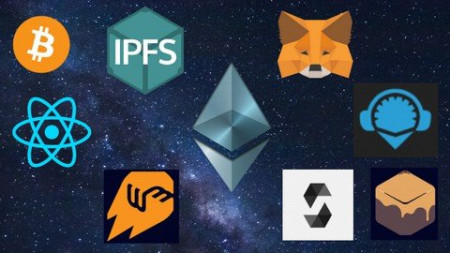
Blockchain: Practical dApps Development using Solidity
Genre: eLearning | MP4 | Video: h264, 1280x720 | Audio: AAC, 44.1 KHz
Language: English | Size: 7.74 GB | Duration: 16h 9m​

Using Ethereum, Solidity, and Smart Contracts to build dApss with Web3, React and IPFS

What you'll learn
Ethereum Blockchain Techology
Solidity Programming Language
Development Tools for dApps
Write Smart Contracts for ERC20, ERC721, ERC1155, and Escrow Services
Smart Contract Security Issues and Solutions
Write front-end Web3 application to interact with Smart Contracts and IPFS

Description
This course is designed for anyone new to Blockchain technology and Solidity programming. You will learn and use Solidity to write Smart Contract and deploy it on Ethereum as a Decentralized application - dApps.

DApp is a new trend of writing programs which have the benefit of enforcing the contract rules based on the program logic and execute automatically by transferring Ether based on the conditions and rules.

DApp do not require intermediaries like banks or institutions as it is able to validate, authorize and settle transactions and record them on the immutable Blockchain. It's essentially a 'Trust Machine' where transaction is open, verifiable and permanent on the blockchain.

Blockchain is the most promising technology of the future since the invention of the Internet.

What you will learn in this course

Ethereum Blockchain Techology

Solidity Programming Language

Development Tools for dApps

Write Smart Contracts for ERC20, ERC721, ERC1155, and Escrow Services

Smart Contract Security Issues and Solutions

Write front-end Web3 application to interact with Smart Contracts and IPFS

The Blockchain technology that we are learning in this course was actually inspired by the innovative and successful implementation of Bitcoin system.

Bitcoin was invented by Satoshi Nakamoto in his / her paper titled "Bitcoin: A Peer-to-Peer Electronic Cash System". ( 2009 ) Bitcoin is both a digital currency and direct peer-to-peer payment system. (i.e. no banks or governments involved in the transfer)

Interestingly, the word 'Blockchain' was not mentioned in the white paper. It was later discovered by developers and communities that this Bitcoin is running on a new technology (we call it Blockchain) which solved the 'Double Spending' problem where many earlier electronic cash proposal failed.

The Bitcoin Blockchain proposed and implemented by Nakamoto essentially fuse together the following technologies which were known at that time

Cryptographic hash function,

Proof-of-work consensus protocol,

Decentralized Network Architecture

The ideas and innovation was quite ingenious. Together with the participation of the Miners in the system, every block is inspected and validated and Miners compete to have the right to add the new Block by solving a cryptographic puzzle first.

The Miners who first solved the puzzle with broadcast to the Peers and a 'Proof-of-Work" is demonstrated and verified by other Miners. The Miner who solved the puzzle then got the right to add the new Block and the process continue on.

So, every attempt by malicious to attack to the Bitcoin network (ie. essentially wants to re-write the transaction log) will need to compete with the entire network of Validators.

It has been shown that it is very difficult to cheat or bring down the Bitcoin network.

With the success of this innovative Blockchain technology, the developers and corporations started to evaluate whether we can use Blockchain to decentralized other assets beside money (i.e Bitcoin).

Assets such as property title, certification record, voting system, supply-chain system, artworks etc., becomes feasible as each of the asset requires a trusted recording (i.e. a trusted public Distributed Ledger System)

The idea of a trusted DLS where transactions are verified by the peer nodes continuously through cryptographic hash keys protection, and decentralized network architecture with no single point of failure - is an attractive proposition for new decentralized applications (dApps).

However, it was discovered by Vitalik Buterin that Bicoin blockchain has inherent limitation as it is not a 'Turing Complete' machine. (ie. you can write scripts on Bitcoin blockchain but it is limited to transfer of Bitcoin and not able to implement more complex applications.

In 2013, Vitalik proposed to implement Ethereum - a decentralized, open-source blockchain system with Smart Contract functionality. Essentially the proposal is to build a EVM (Ethereum Virtual Machine) - a Turing Complete machine - that will run on each Node / Client computer on the network. And Smart Contracts are just program written in, Solidity, a programming language that target the EVM for deployment and execution.

With Ethereum blockchain system, developer can design Smart Contract, compile it, and deploy on the Ethereum network. This is quite an amazing innovation. The Ethereum blockchain thus become a Global, Open, Super Computer -where Smart Contract programs are deployed and executed for various kind of decentralized applications.

We will be learning Solidity programming language for Smart Contracts development and examine the language, examples and application in detail during the course.

In short, Ethereum is a programmable Blockchain. A platform for running Smart Contracts (beside the ability to send / receive the native crypto currency Ether)

We will learn a range of Development Tools for writing Smart Contracts, compilation, deployment and testing in the course.

In the sequent practical sessions, we will look at ERC20, ERC721 and ERC1155 as examples of industrial standard contracts and write our own tokens using these standards.

As Ethereum blockchain has a native crytocurrency (ETH Ether), the transfer and exchange of money is integrated with the Solidity programming code. Hence, it is therefore possible to automate agreements and execute them based on verified events and rules of the contract to send monry (i.e. Ether) directly to each other - thereby eliminating the intermediaries (ie. Banks, Insurance company, (i.e. noteL a Smart Contract can hold Ether values as well beside EOA (Externally Owned Account) by users.

The possibilities and use cases of Smart Contracts are endless and we are limited only my our imagination.

However, with the possibility of financial transactions can be executed automatically by Smart Contracts - it opens up the risks of malicious Hackers to exploit the errors or bugs in a Smart Contract. History had shown incidents of cybercrime where millions are stolen from Smart Contracts / Account Holders.

Therefore, every Smart Contract developer must have a good grounding on Smart Contract Security and know how to write code to protect the Owner and Contract itself. We will look at the classic attack of Smart Contract in the last session and how to overcome it.

Benefits to you for learning this course

Gain knowledge and skills of Blockchain technology and dApps development

Prepare yourself for many high-demand job opportunities in Blockchain technology

Kick-start your opportunities to launch Start-up projects using Blockchain and dApps

What's the difference of this course with other courses on Blockchain

This course is designed with total beginner in mind and simplify complex topics

We first cover the fundamental concepts of Blockchain and related topics before diving into coding

We avoid confusion and courses which use outdated tools

Learn by coding is the key to go in depth into the technology

Come, join us today!

Yours faithfully,

Abel Choy, Software Engineer / Lecture in Computer Science

Who this course is for
Anyone who wants to learn dApps development and Blockchain technology












7014fbf82486b991550e5719884caec0.jpg

Complete Ansible Course - Zero to Expert
Genre: eLearning | MP4 | Video: h264, 1280x720 | Audio: AAC, 44.1 KHz
Language: English | Size: 1.49 GB | Duration: 4h 22m​

Learn Ansible basics, and run playbooks in Linux Machines

What you'll learn
Introduction to Ansible Automation
Automate Linux Servers with Ansible
Learn with Hands-on Examples
Learn Ansible with +20 Projects

Requirements
Basic Knowledge of Linux Systems
No Coding Required !!!
Description
Why we need for Network Automation?

As a network/system engineer, future will be different. Not just login devices with SSH tools. We must automate the network with scripts.

Ansible is simple, easy to learn and very powerful tool to automate networks. With Ansible you can do very fast operations and collecting logs.

In this course, you will start from beginning. Than as below playbooks (aka scripts), you will learn how to collect logs from device and configure devices. All playbooks are work related and prepare for REAL LIFE networking.

What will you do after course?

There are 22 of hands-on projects about Network Automation. You can directly use all of codes in your real network.

Modules

- Copy, File, Apt, Service, Shell

- User, Script, Git, Replace

Concepts

- Data Types (List, Dictionary, String, etc.)

- Debugging

- Installing Packages

- Loops & Conditions

- Execure Scripts

Why Is Ansible?

Ansible is a powerful network automation tool. Without any coding experience, you can automate your network easily with just couple of lines of playbooks.

For example you can collect 10 devices CPU levels in couple of minutes. But what about 100, 1K+ devices. It's almost imposible to do it one-by-one. Ansible shows its power here. With a very basics script, you can collect hunderds of devices logs, or configure them.

Who this course is for
System Administrators
DevOps Engineers
Network Engineers
Cloud Engineers
Automation Engineers


5b50cb41ffe705c48340457fff6f80d0.jpg

Complete Tailwind CSS : Beginner to Advanced (with Project)
Genre: eLearning | MP4 | Video: h264, 1280x720 | Audio: AAC, 48.0 KHz
Language: English | Size: 593 MB | Duration: 1h 8m​

Learn to build modern website fast with Tailwind CSS (v3.0). Become a TailwindCSS expert with project in 1 hour.

What you'll learn
Establish yourself as a skilled professional designer & developer
Learn a Modern way to style websites with live practical
Become a master of Tailwind CSS all concepts
Create styles 10 times faster than vanilla CSS
Build Full Responsive Websites Using Breakpoints
Build real-world Tailwind application on your own
Create clean and lightweight websites
Learn to build "Tesla" landing page with Tailwind CSS
Master the best practices
And much more

Requirements
Must be familiar with basics of HTML & CSS
Description
Tailwind CSS is basically a utility-first CSS framework for rapidly building custom user interfaces. It is a highly customizable, low-level CSS framework that gives you all of the building blocks you need to build bespoke designs without any annoying opinionated styles you have to fight to override.

Tailwind CSS is the most popular and best CSS framework to make your styling process fast and It will automatically make your website lightweight. "Want to know how?" - I will show you that in this course.

This course includes the latest version of Tailwind CSS which is version 3.0 (v3.0). and I will regularly update this course with tailwind's updates. So you don't need to buy any other courses. This course is best for learning Tailwind CSS on Udemy from scratch. Not only that, but I will also teach you best practices and shortcuts to help you become a better developer.

Every section comes with a few bite-sized video lectures and a quiz or programming exercises. These exercises are carefully chosen from academic and real-world examples to train your "programming brain". If you want to be a successful programmer, who has many high-paid job offers and the freedom to "choose", you need to learn how to think like a programmer. And this is what you're going to get out of these exercises. All exercises come with solutions, so you can compare your solutions with Me to find areas for improvement.

There are plenty of free tutorials and videos that teach you TailwindCSS and they are great if all you want to learn is Tailwind Basics. But if you want to learn TailwindCSS and become a better web developer with a bright future and lots of options, this is the course for you. For every topic, not only will you learn the whats, but you'll also learn the whys and hows.

By the end of the course, you'll create a beautiful-looking Tesla landing page with Tailwind CSS.

30-DAY FULL MONEY-BACK GUARANTEE

This course comes with a 30-day full money-back guarantee. Take the course, watch every lecture, and do the exercises, and if you feel like this course is not for you, ask for a full refund within 30 days. All your money back, no questions asked.

Do you want to start learning Tailwind CSS now?

Join the other happy students who have taken this course and start coding within a few minutes.

Who this course is for
Anyone who wants to style web content with the most modern tool out there
Developers who want to learn best CSS Framework for future
Students who know CSS and want to learn how to use Tailwind
Developers who want an alternative to Bootstrap or Foundation


a05d2524527c0c7803cc60e68353ad79.jpg

Embedded System Design with Xilinx Zynq SoC and Vitis IDE
Genre: eLearning | MP4 | Video: h264, 1280x720 | Audio: AAC, 44.1 KHz
Language: English | Size: 4.5 GB | Duration: 9h 29m​

Using Xilinx Vivado Design Suite and Vitis 2020.2

What you'll learn
Embedded System Design flow for Zynq AP SoC using Xilinx VITIS
Fundamentals strategies to use Xilinx Drivers
Development of C applications for Zynq Devices
Software Profiling with Vitis
Software and Hardware Debugging Strategies
Working with Interrupts
Requirements
Understanding of Digital Electronics
Fundamentals of Computer Architecture
Fundamentals of C

Description
Xilinx Zynq SoC's are know to provide maximum performance per watt along with maximum reconfiguration flexibility. Zynq family features Dual-Core ARM Cortex A9 processors tightly coupled with the 7-series FPGA to enable faster communication interfaces development with ARM Design flow and hardware acceleration. Zynq devices are available in two categories viz. Zynq-7000s family FPGA for the cost-effective application such as IoT related applications while Zynq 7000 family FPGA are best for high-performance applications such as Embedded Vision etc. The Zynq 7000s comes with Single core ARM while Zynq 7000 comes with Dual-Core ARM.

This course covers fundamentals of Popular Xilinx drivers viz. UART, AXI Timers, UART16550, AXI GPIO, AXI BRAM, etc. The course also illustrates the usage of the AXI interrupt controller for handling Interrupts. Also to felicitate incorporation of Hardware accelerators with Zynq based design few examples on building Custom AXI Peripherals are also included. Software and Hardware Debugging, Profiling fundamentals are demonstrated with Zynq to felicitate performance measurement.

This course will create the foundation necessary to quickly start building applications on Zynq FPGA devices without prior experience in this domain. The entire course is a Lab-based course with a major focussed on building skills necessary to handle simple peripherals such as GPIO, Intermediate Peripherals such as UART PS, AXI BRAM, and complex Peripherals such as AXI Interrupt Controller, AXI Timers, GIC etc.

Who this course is for
Anyone wish to build expertise in Xilinx Zynq APSOC and Xilinx VITIS Environment
Embedded System Design with FPGA Processors


102eb0883647ece750d6878f05c8d48b.jpg

Financial Modeling Bootcamp: Financial Forecasting in Excel
Genre: eLearning | MP4 | Video: h264, 1280x720 | Audio: AAC, 44.1 KHz
Language: English | Size: 2.59 GB | Duration: 5h 18m​

Create your first financial forecasting model in Excel and become an expert in no time!

What you'll learn
Come to understand the basics of financial modeling and forecasting using Excel
Know the purpose of financial forecasting
Build your first financial forecasting model in Excel
Learn how to build a sound financial model
Know the role of forecasting in strategic planning
Go through the three financial statements (balance sheet, income statement, and cash flow statement)
Learn how to define your forecasting objectives
Identify key variables and drivers
Analyze financial forecasts using ratio analysis
Learn about future trends in forecasting

Requirements
Excel installed in a PC or Mac
A good understanding of Excel and Excel formulas
Basic knowledge of accounting principles is beneficial
Description
***Exercise and demo files included***

Forecasting the financial performance of a business is crucial for its success. Both established companies and entrepreneurs use financial forecasting to determine how to allocate their resources to address expected expenditures in the coming years. It is essential to use tools that can generate a clear and reliable forecast for the business.

Financial modeling and forecasting can improve your business decision-making, and the best way to create a financial model is using a widely familiar application such as Microsoft Excel.

This course will discuss a fictional company, for which we will build our financial model and forecast. Coming into the course, you will need to have a basic understanding of Excel. General familiarity with accounting principles will also be beneficial.

You'll enjoy 5 hours of video tutorials divided into 38 bite-sized video lessons. The course includes instructor files and exercise files so you can practice what you've learned and gain confidence as you go.

In this course, you will

Come to understand the basics of financial modeling and forecasting using Excel

Know the purpose of financial forecasting

Build your first financial forecasting model in Excel

Learn how to build a sound financial model

Know the role of forecasting in strategic planning

Go through the three financial statements (balance sheet, income statement, and cash flow statement)

Learn how to define your forecasting objectives

Identify key variables and drivers

Analyze financial forecasts using ratio analysis

Learn about future trends in forecasting.

This course includes

5+ hours of video tutorials

38 individual video lectures

Course and exercise files to follow along

Certificate of completion

Who this course is for
Business owners and entrepreneurs who wants to have a data-driven business decision-making
Individuals working in the finance industry who want to learn how financial forecasting works
Those who aspire to become company/business analysts and financial analysts
Investors and lenders
Business and financial consultants


11cfe471fd717c3b9cac7b89e7379a43.jpg

Hands On Clickteam Fusion 2.5 Mini-Degree
Genre: eLearning | MP4 | Video: h264, 1280x720 | Audio: AAC, 48.0 KHz
Language: English | Size: 576 MB | Duration: 1h 4m​

An in-depth guide to Clickteam Fusion 2.5 from 2D to 3D

What you'll learn
Working with 2D and 3D assets
Gameplay flow with ClickCode
Player and Enemy Combat
Item Collection and UI Systems
FPS, RPG, Strategy, and Platformer Mechanics

Description
If you want to build games with a lightweight engine that's completely free, open-source, and that can be modified to fit your project's needs, look no further than Clickteam Fusion 2.5. Designed to get you to prototype your games quickly and easily. With its custom visual coding, or as I like to call it, Click Code language, Clickteam Fusion 2.5 is both easy to learn for beginners and flexible enough to keep more experienced developers engaged.

The Hands-on Clickteam Fusion 2.5 Mini-Degree will give you the skills needed to create cross-platform 2D and 3D games. You'll learn by building real portfolio-ready projects, including 2D platformers, FPS games, RPGs, strategy games, and more - all while mastering in-demand skills that will set you up for success as a game developer.

- Learn how to design a game by working on the game mechanics

- Learn how to put game ideas to the test by making quick and easy prototypes and testing them before moving into full production

- Learn how to use scripting to empower your game with the power of programming

- Learn the best practices of the industry

- Learn the best sources for obtaining and making assets like 3D models, sounds, music, and animations

Who this course is for
This course is for anyone looking to either get into, or further their education in Clickteam Fusion 2.5. Whether you are a complete beginner or even an advanced user, there is something for everyone in this course.


de0f4a0043644f537ca2d0c522722e4e.jpg

Introduction to Arduino Nano RP2040 Connect
Genre: eLearning | MP4 | Video: h264, 1280x720 | Audio: AAC, 48.0 KHz
Language: English | Size: 1.01 GB | Duration: 2h 45m​

Learn the fundamentals of Arduino Nano RP2040 Connect and build various embedded and IoT projects from scratch.

What you'll learn
Get an overview of Arduino Nano RP2040 Connect Board
Learn how to start working with Arduino Nano RP2040 Board
Develop various Embedded and IoT Projects
Gain in-depth knowledge related to Arduino Nano RP2040 Connect
Be confident to designing and deploying your own Embedded & IoT projects

Requirements
Basic understanding of electronics and related concepts
A fair idea of setting up Arduino IDE & Arduino Boards
Basic familiarity with the programming in Arduino IDE
Basic understanding of Python and Embedded C
Description
Hello learners!

Welcome to MAKERDEMY's "Introduction to Arduino Nano RP2040 Connect" course.

This is a beginner level course that will teach you to build your own embedded and IoT projects using Arduino Nano RP2040 Connect. This course will help you to get an overview of Arduino Nano RP2040 Connect and give you hands-on experience in implementing some of the embedded and IoT projects using this Arduino board. This course will teach you to begin with Arduino Nano RP2040 and learn through demonstrations and projects. Do you wish to explore the newly launched Arduino Nano RP2040 Connect? Want to learn how to work with Arduino Nano RP2040 Connect and implement various embedded and IoT projects?

This course is a one stop destination for getting started with Arduino Nano RP2040 Connect. By the end of the course, you will become very confident with using Arduino Nano RP2040 Connect and develop your own embedded and IoT Solutions. You will learn through demonstrations on getting started with Arduino Nano RP2040 Connect and then move onto working with onboard peripherals followed by external peripherals. If you complete all sections in the course and the course assignments, you are sure to gain in-depth knowledge related to Arduino Nano RP2040 Connect and implementation.

Throughout the course, we have provided a curated collection of original resources. These resources include links to documents for in-depth learning, links, videos, and more. At MAKERDEMY, we have a dedicated instructor team who will promptly answer any of your course-related queries.

So, what are you waiting for?! Come, join me in this course. I look forward to being your instructor for this course and introduce you to Arduino Nano RP2040 Connect!

Who this course is for
An engineer who wants to explore Arduino Nano RP2040 Connect
IoT enthusiasts who wish to work with new boards & create IoT Projects
Electronics hobbyists who look forward to exploring the world of Embedded Systems & IoT
A student who wants to build Embedded & IoT projects using Arduino Nano RP2040
Anyone with basic programming experience and an interest to learn


6ef1d0a8914758f871e27aa4bdb0e9d3.jpg

Popular Algorithms Coding Interview Questions
Genre: eLearning | MP4 | Video: h264, 1280x720 | Audio: AAC, 44.1 KHz
Language: English | Size: 2.92 GB | Duration: 2h 17m​

Practice algorithms coding interview questions for companies like Google, Microsoft, Facebook, Apple & Amazon

What you'll learn
Solve easy to hard difficulty problems
How to solve some of the most popular coding interview questions asked by major tech companies
Solve commonly asked interview questions
Step by step guide to common coding interview questions

Requirements
Basic Knowledge of fundamental data structures and algorithms
Basic Knowledge of any one programming language
A Computer or Smartphone with internet connection
Description
Welcome to "Popular Algorithms Coding Interview Questions" Course!

This course is intended for beginners to advanced learners who are preparing for their software engineer programming interviews. If you're nervous about your first coding interview, or anxious about applying to your next job, this is the course for you. I got tired of interviewers asking coding questions that can only be answered if you've seen the problem before, so I made this course. This video course will teach you the most common interview questions that you'll see in a coding interview, giving you the tools you need to ace your next whiteboard interview. I work through on whiteboard and I explained the intuition behind each coding problems so you can understand the solution.

I know, coding interviews are notoriously intimidating, but there is one method in order to perform well and that is practice. This course is going to not only give you coding interview questions to practice on, but it will also make sure that you understand the intuition behind solving each problem, so you'll be able to perform well in a real interview. We discuss everything from the easy algorithm questions all the way to the hard algorithm questions.

If you think you're ready for this course, watch the preview videos and see if you can solve those problems!

See you inside!

Who this course is for
People who want to develop their problem solving skills
Developers getting ready for their technical interviews
People who want to get better at competitive coding
Students getting ready for their internship coding interviews


Zurück
Oben Unten