• Regeln für den Video-Bereich:

    In den Börsenbereich gehören nur Angebote die bereits den Allgemeinen Regeln entsprechen.

    Einteilung

    - Folgende Formate gehören in die angegeben Bereiche:
    - Filme: Encodierte Filme von BluRay, DVD, R5, TV, Screener sowie Telesyncs im Format DivX, XviD und x264.
    - DVD: Filme im Format DVD5, DVD9 und HD2DVD.
    - HD: Encodierte Filme mit der Auflösung 720p oder darüber von BluRay, DVD, R5, TV, Screener sowie Telesyncs im Format x264.
    - 3D: Encodierte Filme von BluRay, die in einem 3D Format vorliegen. Dies gilt auch für Dokus, Animation usw.
    - Serien: Cartoon/Zeichentrick, Anime, Tutorials, Dokumentationen, Konzerte/Musik, Sonstiges sind demnach in die entsprechenden Bereiche einzuordnen, auch wenn sie beispielsweise im High Definition-Format oder als DVD5/DVD9/HD2DVD vorliegen. Ausnahme 3D.
    - Bereich Englisch: Englische Releases gehören immer in diesen Bereich.
    - Bereich Talk: Der Bereich, in dem über die Releases diskutiert werden kann, darf, soll und erwünscht ist.


    Angebot/Beitrag erstellen

    - Ein Beitrag darf erst dann erstellt werden, wenn der Upload bei mindestens einem OCH komplett ist. Platzhalter sind untersagt.
    - Bei einem Scenerelease hat der Threadtitel ausschließlich aus dem originalen, unveränderten Releasenamen zu bestehen. Es dürfen keine Veränderungen wie z.B. Sterne, kleine Buchstaben o.ä. vorgenommen werden. Ausnahme Serienbörse:
    - Bei einem Sammelthread für eine Staffel entfällt aus dem Releasename natürlich der Name der Folge. Beispiel: Die Simpsons S21 German DVDRip XviD - ITG
    - Dementsprechend sind also u.a. verboten: Erweiterungen wie "Tipp", "empfehlenswert", "only", "reup", usw. / jegliche andere Zusatzinformation oder Ergänzung, welche nicht in obiger Beschreibung zu finden ist.

    Aufbau des Angebots und Threadtitel

    Der Titel nach folgendem Muster erstellt zu werden. <Name> [3D] [Staffel] [German] <Jahr> <Tonspur> [DL] [Auflösung] <Quelle> <Codec> - <Group>
    Beispiel: The Dark Knight German 2008 AC3 DVDRip XviD - iND
    Beispiel: The Dark Knight 2008 DTS DL BDRip x264 - iND
    Beispiel: The Dark Knight 2008 AC3 DL BDRip XviD - iND
    Beispiel: The Dark Knight German 2008 AC3 720p BluRay x264 iND
    Beispiel: The Dark Knight 2008 DTS DL 1080p BluRay x264 iND
    Beispiel: Die Simpsons S01 German AC3 DVDRip XviD iND
    Beispiel: Die Simpsons S20 German AC3 720p BluRay x264 iND
    Beispiel: Sword Art Online II Ger Sub 2014 AAC 1080p WEBRip x264 - peppermint
    Entsprechend sind also u.a. verboten: Sonderzeichen wie Klammern, Sterne, Ausrufezeichen, Unterstriche, Anführungszeichen / Erweiterungen wie "Tipp", "empfehlenswert", "only", "reup", usw. / jegliche andere Zusatzinformation oder Ergänzung, welche nicht in obiger Beschreibung zu finden ist
    Ausnahmen hiervon können in den Bereichen geregelt sein.

    Die Beiträge sollen wie folgt aufgebaut werden:
    Überschrift entspricht dem Threadtitel
    Cover
    kurze Inhaltsbeschreibung
    Format, Größe, Dauer sind gut lesbar für Downloader außerhalb des Spoilers zu vermerken
    Nfo sind immer Anzugeben und selbige immer im Spoiler in Textform.
    Sind keine Nfo vorhanden z.B. Eigenpublikationen, sind im Spoiler folgende Dateiinformationen zusätzlich anzugeben :
    Quelle
    Video (Auflösung und Bitrate)
    Ton (Sprache, Format und Bitrate der einzelnen Spuren)
    Untertitel (sofern vorhanden)
    Hosterangabe in Textform außerhalb eines Spoiler mit allen enthaltenen Hostern.
    Bei SD kann auf diese zusätzlichen Dateiinformationen verzichtet werden.

    Alle benötigten Passwörter sind, sofern vorhanden, in Textform im Angebot anzugeben.
    Spoiler im Spoiler mit Kommentaren :"Schon Bedankt?" sind unerwünscht.


    Releases

    - Sind Retail-Release verfügbar, sind alle anderen Variationen untersagt. Ausnahmen: Alle deutschen Retail-Release sind CUT, in diesem Fall sind dubbed UNCUT-Release zulässig.
    - Im Serien-Bereich gilt speziell: Wenn ein Retail vor Abschluss einer laufenden Staffel erscheint, darf diese Staffel noch zu Ende gebracht werden.62
    - Gleiche Releases sind unbedingt zusammenzufassen. Das bedeutet, es ist zwingend erforderlich, vor dem Erstellen eines Themas per Suchfunktion zu überprüfen, ob bereits ein Beitrag mit demselben Release besteht. Ist dies der Fall, ist der bereits vorhandene Beitrag zu verwenden.
    - P2P und Scene Releases dürfen nicht verändert oder gar unter einem iND Tag eingestellt werden.


    Support, Diskussionen und Suche

    - Supportanfragen sind entweder per PN oder im Bereich Talk zu stellen.
    - Diskussionen und Bewertungen sind im Talk Bereich zu führen. Fragen an die Uploader haben ausschließlich via PN zu erfolgen, und sind in den Angeboten untersagt.
    - Anfragen zu Upload-Wünschen sind nur im Bereich Suche Video erlaubt. Antworten dürfen nur auf Angebote von MyBoerse.bz verlinkt werden.


    Verbote

    - Untersagt sind mehrere Formate in einem einzigen Angebotsthread, wie beispielsweise das gleichzeitige Anbieten von DivX/XviD, 720p und 1080p in einem Thread. Pro Format, Release und Auflösung ist ein eigener Thread zu eröffnen.
    - Grundsätzlich ebenso verboten sind Dupes. Uploader haben sich an geeigneter Stelle darüber zu informieren, ob es sich bei einem Release um ein Dupe handelt.
    - Gefakte, nur teilweise lauffähige oder unvollständige Angebote sind untersagt. Dies gilt auch für eigene Publikationen, die augenscheinlich nicht selbst von z.B. einer DVD gerippt wurden. Laufende Serien, bei denen noch nicht alle Folgen verfügbar sind, dürfen erstellt und regelmäßig geupdatet werden.
    - Untersagt sind Angebote, welche nur und ausschließlich in einer anderen Sprache als deutsch oder englisch vorliegen. Ausnahmen sind VORHER mit den Moderatoren zu klären.


    Verstoß gegen die Regeln

    - Angebote oder Beiträge, die gegen die Forenregeln verstoßen, sind über den "Melden"-Button im Beitrag zu melden.
  • Bitte registriere dich zunächst um Beiträge zu verfassen und externe Links aufzurufen.

*** Bestes IPTV *** bester Preis *** gratis Test ***


Englische Tutorials

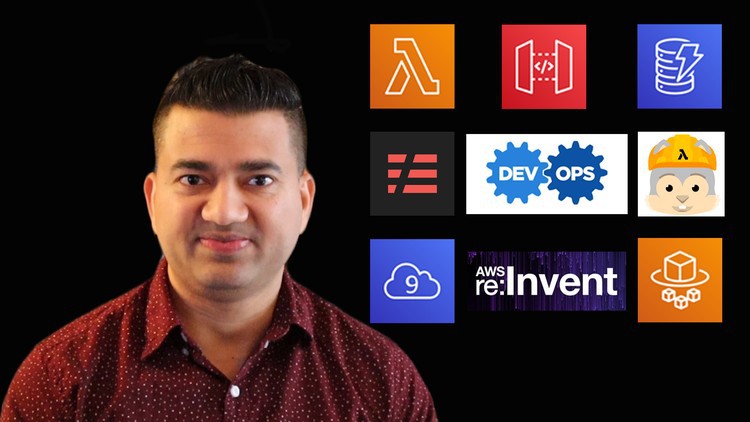
Rocking AWS Serverless - A Real World Guide
19433943031682kzk.jpg


Rocking AWS Serverless - A Real World Guide
MP4 | Video: h264, 1280x720 | Audio: AAC, 44.1 KHz, 2 Ch
Genre: eLearning | Language: English + srt | Duration: 196 lectures (19h 19m) | Size: 6.74 GB

Learn AWS Serverless Architecture, Lambda, API Gateway, DevOps, CI/CD, DynamoDB, SAM, Cloud9, Serverless Frameworks


What you'll learn
Master AWS Lambda, API Gateway, Serverless Databases (DynamoDB, Aurora Serverless), Cloud9, Step Function
Learn DevOps and AWS CI/CD Services - CodeCommit, CodeBuild, CodeDeploy, CodePipeline and CodeStar
Simplify Serverless deployment with AWS SAM and various Serverless Frameworks (Yes, there is more than one!)
Secure Serverless using Cognito, Secrets Manager, Resource Policy, API Key, Resource Policy, Lambda Authorizer
Design Serverless Architecture based on best practices and limitations!
Course up to date with all recent announcements - Lambda Layers, CloudWatch Insights, Lambda VPC Improvements, X-Ray and more!
Serverless Vs Container discussion, including ECS Vs EKS Vs Fargate
Requirements
Very basic understanding of the AWS (Amazon Web Services) Cloud would be advantageous
Willingness to learn lots of new and exciting things!
Description
**[Nov 2021] Updated with all newest features - Lambda Container Image, re:Invent 2020 Changes, Step Function Visual Workflow, EFS Lambda, RDS Proxy, Custom Domain, HTTP API with Demos, EventBridge Deep Dive **
Serverless computing is the future of Cloud Computing. You can deploy AWS Lambda functions in Amazon Web Services that infinitely scale without managing any servers! Serverless is the tool that you need to grow your career.
How is this course different?
This course will teach you the ENTIRE Serverless ecosystem. We will start with
Understand, Develop and Deploy AWS Lambda
Create REST APIs using Lambda and API Gateway
Learn DevOps and entire AWS CI/CD Services (CodeCommit, CodeBuild, CodeDeploy, Code Pipeline, CodeStar)
AWS SAM (Serverless Application Model)
Serverless Vs Container
The Serverless Framework
Serverless Best Practices and Architecture Patterns
But it doesn't stop there. We will learn
Debugging and Pair Programming using AWS Cloud9
Tracing using X-Ray, CloudWatch Log Insights to gain performance insights on our Lambdas and APIs
Lambda Layers
Ways to secure our design with in-depth lectures and demo. This includes
API Key and Usage Plans
AWS Cognito User Pools
AWS Secrets Manager
Lambda Resource Policies
Lambda Authorizer (Custom Authorizer)
API Gateway Resource Policies
Encrypting data using CMK (Customer Managed Keys)
And more!
Other relevant AWS Services such as Step Functions, Comprehend etc
Databases that complement Serverless - DynamoDB and Serverless Aurora
A real world news sentiment analysis project
Limitations of Serverless (Yes, there are indeed some!)
And much much more!
About the instructor
Rajdeep Saha is an AWS-Professional Certified Solutions Architect working at a leading cloud provider, he has worked in Fortune top 20 companies as Distinguished Cloud Architect. Unlike pen and paper architects, Rajdeep has migrated real enterprise projects into cloud - both in VMs (EC2) and Serverless. He has published blogs and presented well received talks in Serverless Conferences.
Rajdeep often uses real-world analogy to explain AWS concepts in this course, which makes it easier for the students to understand and retain the knowledge. Rajdeep also presents and attends in all major cloud conferences and keeps up to date in his domain. You are in capable hands! All opinions are Rajdeep's own.
This is the course that could take your career to next level. Serverless is the way of future and you can get started today and become an expert.
Let's have some fun and build some awesome stuff in cloud together!
Who this course is for
Anyone who wants to focus on services, not servers and create highly scalable and extremely cost optimized Apps and APIs
Anyone who wants to learn about AWS Lambda and the Serverless ecosystem
Solution Architects who wants to understand the design principles of Serverless Architectures, including the limitations of Serverless!
Any engineer who wants to gain detailed hands on understanding of cloud security, especially for Serverless


rockingawsserverlessa8bjgg.jpg


Download from RapidGator


Download from Keep2Share



Kotlin Android Training - Beginner Android App Development

4365954c92d4llkwo.jpg


Kotlin Android Training - Beginner Android App Development
MP4 | Video: h264, 1280x720 | Audio: AAC, 44.1 KHz, 2 Ch
Genre: eLearning | Language: English + srt | Duration: 88 lectures (26h 31m) | Size: 8.2 GB


What you'll learn
Kotlin Fundamentals
Android Studio UI Training
Android SDK's
Developing Android Apps
Requirements
No experience need
Description
Even though Kotlin is a full-fledged functional programming language, it preserves most of the object-oriented nature of Java as an alternative programming style, which is very handy when converting existing Java code. Kotlin has classes with constructors, along with nested, inner, and anonymous inner classes, and it has interfaces like Java 8. Kotlin does not have a new keyword. To create a class instance, call the constructor just like a regular function. We saw that in the screenshot above.
Kotlin has single inheritance from a named superclass, and all Kotlin classes have a default superclass Any, which is not the same as the Java base class java.lang.Object. Any contains only three predefined member functions: equals(), hashCode(), and toString().
Kotlin classes have to be marked with the open keyword in order to allow other classes to inherit from them; Java classes are kind of the opposite, as they are inheritable unless marked with the final keyword. To override a superclass method, the method itself must be marked open, and the subclass method must be marked override. This is all of a piece with Kotlin's philosophy of making things explicit rather than relying on defaults. In this particular case, I can see where Kotlin's way of explicitly marking base class members as open for inheritance and derived class members as overrides avoids several kinds of common Java errors.
Then, you'll learn how to create apps and run them on virtual devices through guided exercises. You'll cover the fundamentals of Android development, from structuring an app to building out the UI with Activities and Fragments and various navigation patterns. Progressing through the chapters and lectures, you'll delve into Android's RecyclerView to make the most of displaying lists of data and become comfortable with fetching data from a web service and handling images. You'll then learn about mapping, location services, and the permissions model before working with notifications and how to persist data. Moving on, you'll get to grips with testing, covering the full spectrum of the test pyramid. You'll also learn how AAC (Android Architecture Components) are used to cleanly structure your code and explore various architecture patterns and the benefits of dependency injection. The core libraries of RxJava and Coroutines are covered for asynchronous programming. The focus then returns to the UI, demonstrating how to add motion and transitions when users interact with your apps. Towards the end, you'll build an interesting app to retrieve and display popular movies from a movie database, and then see how to publish your apps on Google Play. By the end of this course, you'll have the skills and confidence needed to build fully-fledged Android apps using Kotlin.
Are you trying to start a career in Android programming, but haven't found the right way in? Do you have a great idea for an app, but don't know how to make it a reality? Or maybe you're just frustrated that to learn Android, you must already know Kotlin. If so, then this course is for you
When Android first arrived in 2008, it was a bit drab compared to the much more stylish iOS on the Apple iPhone/iPad. But, quite quickly, through a variety of handset offers that struck a chord with practical, price-conscious consumers, as well as those who are fashion-conscious and tech-savvy, Android user numbers exploded. For many, myself included, developing for Android is the most rewarding pastime and business, bar none. Quickly putting together a prototype of an idea, refining it, and then deciding to run with it and wire it up into a fully-fledged app, is such an exciting and rewarding process. Any programming can be fun - I have been programming all my life - but creating for Android is somehow extraordinarily rewarding..
Kotlin is the most succinct language, and therefore is the least error-prone, which is great for beginners. Kotlin is also the most fun language, mainly because the succinctness means you can get results faster and with less code. Google considers Kotlin an official (first-class) Android language. There are some other advantages to Kotlin that make it less error-prone and less likely to make mistakes that cause crashes. We will discover the details of these advantages as we proceed.
Kotlin is an object-oriented language. This means that it uses the concept of reusable programming objects. If this sounds like technical jargon, another analogy will help. Kotlin enables us and others (like the Android API development team) to write code that can be structured based on real-world things, and here is the important part - it can be reused.
Who this course is for
Beginner Kotlin Developers


kotlinandroidtrainingyhjz1.jpg


Download from RapidGator


Download from Keep2Share



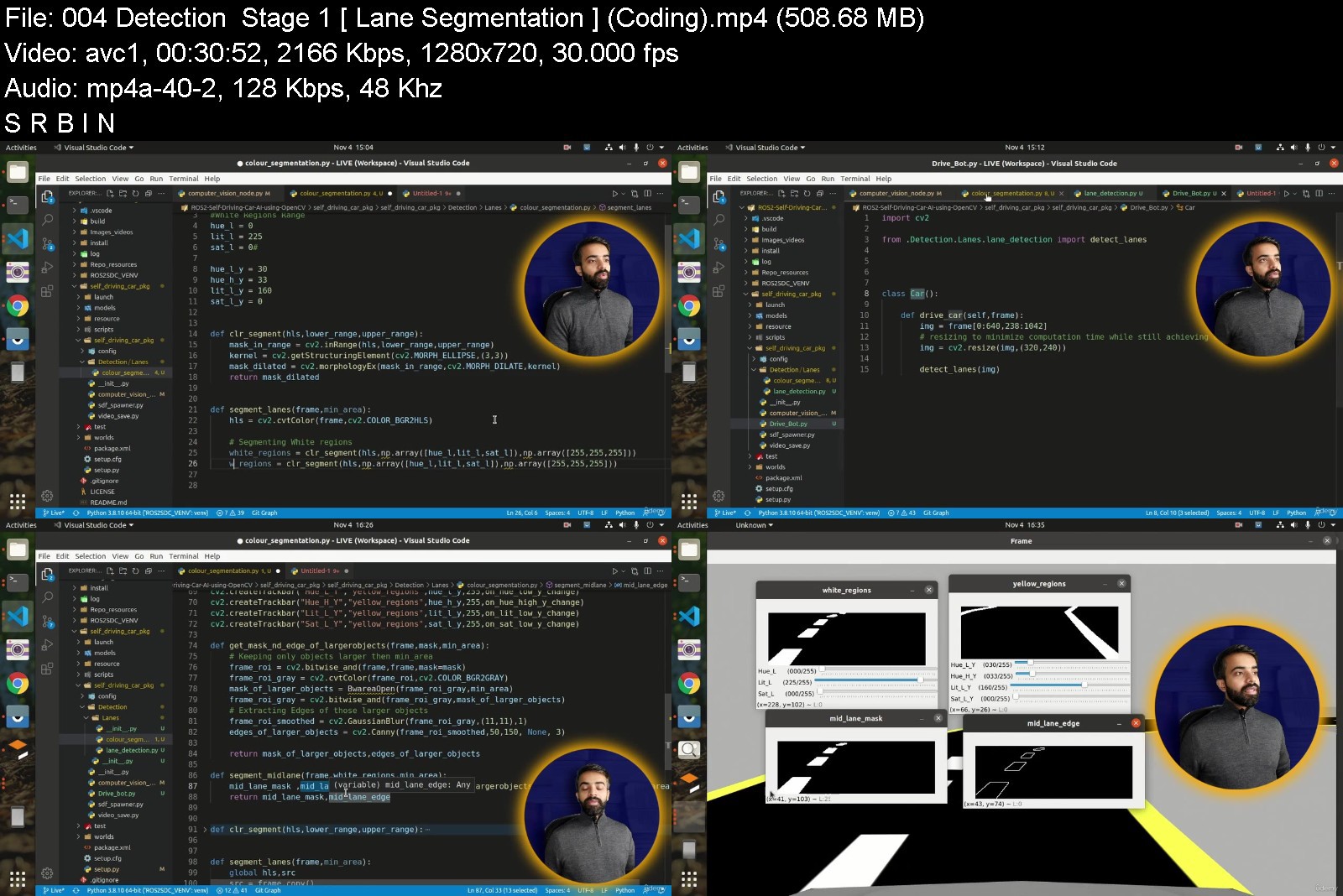
ROS2 Self Driving Car with Deep Learning and Computer Vision

426918077d65h3jon.jpg


ROS2 Self Driving Car with Deep Learning and Computer Vision
MP4 | Video: h264, 1280x720 | Audio: AAC, 44.1 KHz, 2 Ch
Genre: eLearning | Language: English + srt | Duration: 80 lectures (8h 17m) | Size: 7 GB

Autonomous Car using tensor flow and Computer Vision for Beginners


What you'll learn
Build your own Self Driving Car
Learn (Divide and Conquer Approach) of solving complex problems i.e. Detection -> (Localization + Classification)
Segment Lane Lines using Computer Vision techniques i.e. Canny Edge detection & Color Thresholding
Localize objects in images based on specific shapes using Algorithms i.e. ShapeApproxPoly and HoughCircles
Requirements
3D model's STL files printing
Basic Python programming and OpenCV
Description
This is course is involves both the hardware and the software part for building your custom car
Topics Which Will be Covered in the Course are
Hardware Part
Raspberry Pi Setup with Raspbian
Raspberry pi and Laptop VNC Setup
Hardware GPIO Programming
Led Controlling with Python Code
Motor Control
Camera Interfacing Video Feed
Software Part
Video Processing Pipeline setup
Lane Detection with Computer Vision Techniques
Sign Detection using Artificial Deep Neural Network
Sign Tracking using Optical Flow
Control
Course Flow (Self-Driving[Development Stage])
We will quickly get our car running on Raspberry Pi by utilizing 3D models ( provided in the repository) and car parts bought from links provided by instructors. After that, we will interface raspberry Pi with Motors and the camera to get started with Serious programming.
Then by understanding the concept of self-drive and how it will transform our near future in the field of transportation and the environment. Then we will perform a case study of a renowned brand in self-driving (Tesla) ;).After that, we will put forward our proposal of which (autonomous driving level) self-driving vehicle do we want to build.
The core development portion of the course will be divide into two parts. In each of this portion and their subsection, we will look into different approaches. program them and perform an analysis. In the case of multiple approaches for each section, we will do a comparative analysis to sort out which approach best suits our project requirements.
1) Detection: responsible for extracting the most information about the environment around the SDV
Here we will understand how to tackle a large problem by breaking it down into smaller more manageable problems e.g in the case of Detection. we will divide it into 4 targets
a) Segmentation
b) Estimation
c) Cleaning
d) Data extraction
2) Control: actions will be performed based on the information provided by the detection module.
Starting by defining the targets of this module and then implementation of these targets such as
a) Lane Following
b) Obeying Road Speed Limits
In the end, we will combine all the individual components to bring our Self Driving (Mini - Tesla) to life. Then a Final Track run along with analysis will be performed to understand its achievement and shortcoming.
We will conclude by describing areas of improvement and possible features in the future version of the Self-driving (Mini-Tesla)
Hardware Requirements
Raspberrypi 3b or greater
Geared Dc motors 12V (single)
12V lipo Battery
Base of car + steering mechanism
Software Requirements
Python 3.6
Opencv 4.2
TensorFlow
Motivated mind for a huge programming Project
- Before buying take a look into this course Github repository or message
( if you do not want to buy get the code at least and learn from it :) )
Who this course is for
Self Driving Cars Enthusiasts looking to build one of their own
Engineers wanting to embark in the fields of Computer Vision, Artificial Intelligence and Robotics


ros2selfdrivingcarwittfkgo.jpg


Download from RapidGator


Download from Keep2Share



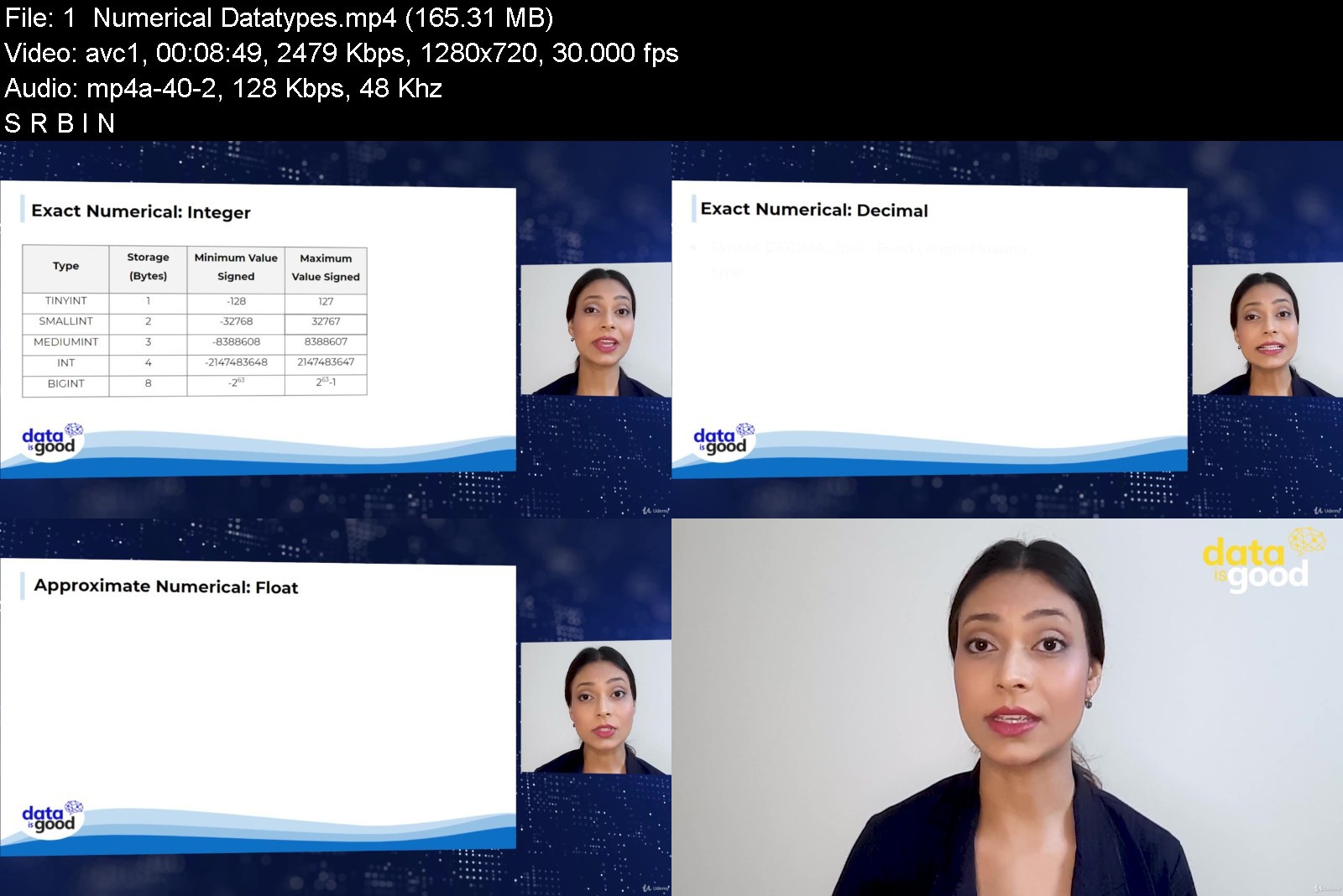
SQL Masterclass for Data Analysis with BigData (Updated 12/2021)

4139386bc062lcjtq.jpg


SQL Masterclass for Data Analysis with BigData (Updated 12/2021)
Created by Data Is Good Academy | Last updated 12/2021 Duration: 7h 58m | 10 sections | 85 lectures | Video: 1280x720, 44 KHz | 5.5 GB
Genre: eLearning | Language: English + Sub


What you'll learn
Learn about creating databases and tables in SQL.
Learn about building basic SQL queries.
Learn about Numerical, string functions in SQL.
Learn about HAVING clause.
Learn about filtering using LIKE operator in SQL.
Learn about different DDL and DML commands.
Learn about the different datatypes in SQL.
Learn about Constraints and how to use in SQL.
Learn about primary key and foreign key.
Learn about the different Joins in SQL- LEFT, RIGHT, INNER, COMPOUND, MULTIPLE.
Learn about subqueries in SQL.
Learn connecting Python and MySQL.
Become a Master SQL Developer.
Use SQL to perform data analysis.
Learn Advanced Querying Techniques.
Knowledge of all the essential SQL commands.
Become competent in using sorting and filtering commands in SQL.
Solid understanding of SQL.
Hands on Real-World examples.

Description
Welcome to the best online course on SQL.
SQL stands for Structured Query Language.
It is designed for managing data in a relational database management system (RDBMS). SQL is a database language, it is used for database creation, deletion, fetching rows, and modifying rows, etc.
SQL is needed for Data Scientists to get data and to work with that data.
Without databases, data science is meaningless.
A Data Analyst can use SQL to access, read, manipulate and analyze the data stored in a database and generate useful insights to drive an informed decision making process.
This course is best for you to learn SQL.
It covers basic to advanced level SQL concepts.
In this course, you will cover:-
Learn about creating databases and tables in SQL
Learn about building basic SQL queries
Learn about Numerical, string functions in SQL
Learn about HAVING clause
Learn about filtering using LIKE operator in SQL
Learn about different DDL and DML commands
Learn about the different datatypes in SQL
Lear about Constraints
Learn about primary key and foreign key
Learn about the different Joins in SQL- LEFT, RIGHT, INNER, COMPOUND, MULTIPLE.
Learn about subqueries in SQL
Learn connecting Python and MySQL
Get tips and knowledge that is usually only learned through years of SQL experience.
And much more...
Not only this, you will get to practice lots and lots of exercises from the world famous coding platform "HackerRank".
After finishing this course, you will become an expert in SQL.
We are also providing quizzes.
You will also have access to all the resources used in this course.
Instructor Support - Quick Instructor Support for any queries.
Enroll now and make the best use of this course.
Who this course is for
Data Analysts.
Data Scientists.
Business Analysts.
Job-seekers.
College Graduates.
Marketers.
Anyone interested in learning how to effectively analyze data using SQL.
Anyone who wants to explore data science.
Students and profe

sqlmasterclassfordata4tjvn.jpg


Download from RapidGator


Download from Keep2Share


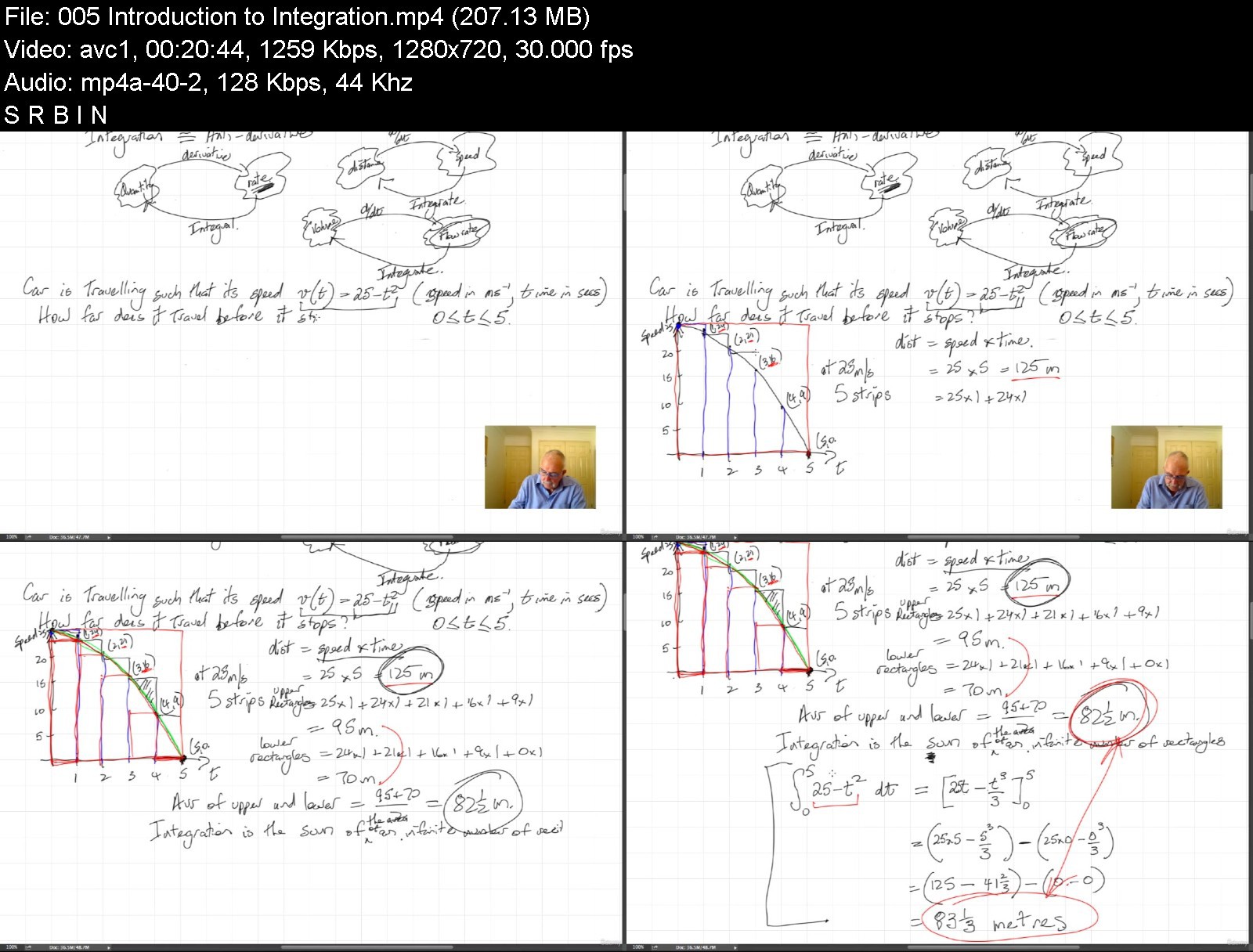
Maths Bridging Course: Prepare for University

44331027fd3kej5r.jpg


Maths Bridging Course: Prepare for University
MP4 | Video: h264, 1280x720 | Audio: AAC, 44.1 KHz, 2 Ch
Genre: eLearning | Language: English + srt | Duration: 97 lectures (15h 24m) | Size: 6.9 GB


What you'll learn
Essential life changing content starting from basic number through to Calculus
Must know techniques of factorisation, simplifying and working with a variety of number types
Core foundational topics such as number, logarithmic laws, algebra and linear equations.
Advanced foundational topics such as advanced algebra, trigonometry, functions, transformations, differentiation and integration.
Requirements
Some experience with high school mathematics needed. You will learn everything else you need to arrive at University 'maths ready'.
Description
This course is designed to have you ready and prepared to study mathematics, science or engineering at university. It follows a carefully crafted sequence of lessons that build upon each other. It starts at working with integers and finishes with integral calculus and covers all the major topics that you will need. You will be able to work through the course form start to finish or jump in with the topics that you need to brush up on.
The majority of the tutorial videos are no more then 10 minutes saving you time. All modules have a single A4 concept map which summarise all the key information for you saving you time.
Taking this course will ensure you are ready for university and will put you in a great position to achieve your goals. You will have access to all learning videos topic summary's and checks of understanding.
This course will ensure you have the foundational mathematics knowledge to thrive at University. You will cover must know techniques of factorisation, simplifying and working with a variety of number types and foundational topics such as number, logarithmic laws, algebra and linear equations. You will then progress onto more advanced topics such as advanced algebra, trigonometry, functions, transformations, differentiation and integration.
NOTE: In accordance with UDEMY policy those under 18 may use the services only if a parent or guardian opens their account, handles any enrollments, and manages their account usage.
Who this course is for
Anyone who will be studying maths, science and/or engineering at university.
Students who want to truly master the essential topics before arriving at university.
Anyone who need to brush up on key topics that they didn't master in high school.
High School students studying advanced mathematics who could benefit from some expert teaching.
Those with an interest in mathematics who love learning for the fun of it.


mathsbridgingcourseprc9jyz.jpg


Download from RapidGator


Download from Keep2Share



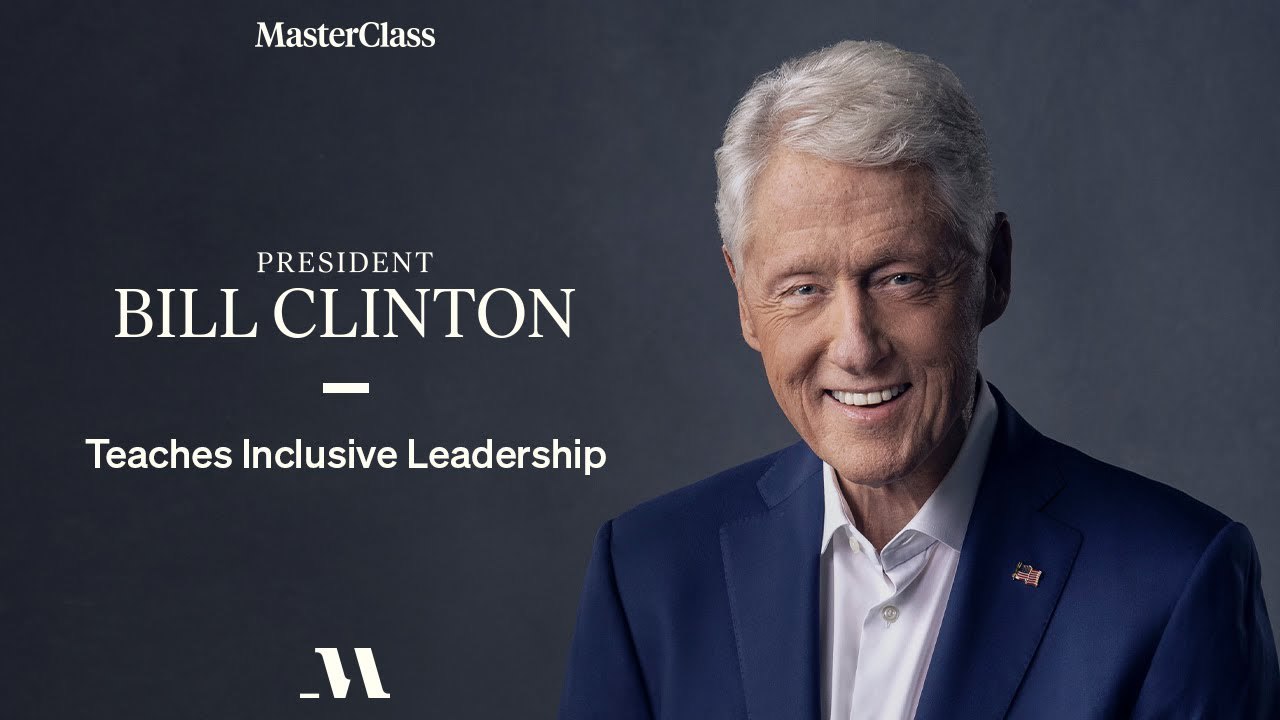
MasterClass - President Bill Clinton Teaches Inclusive Leadership

maxresdefaultyzkd7.jpg


MasterClass - President Bill Clinton Teaches Inclusive Leadership
MP4 | Video: h264, 1920x1080 | Audio: AAC, 44.1 KHz, 2 Ch
Genre: eLearning | Language: English | Duration: 14 Lessons (2h 32m) | Size: 6.75 GB

Commander in chief from 1993 to 2001, Bill Clinton has spent a lifetime navigating complex challenges and bridging deep divides. Now the 42nd president of the United States teaches you how to be an effective, empathetic leader. Learn how to assemble, inspire, and empower diverse teams, mediate conflict, manage criticism-and create a personal framework to guide you and your team toward a shared vision.


presidentbillclintontcjkht.jpg


Download from RapidGator


Download from Keep2Share


The Art of Political Persuasion

izu9xhguqxeqhotx1exp1r0j98.jpg


The Art of Political Persuasion
MP4 | Video: h264, 1280x720 | Audio: AAC, 44.1 KHz
Language: English | Size: 11.6 GB | Duration: 8h 59m

How to Win Supporters - Not Just Arguments.


What you'll learn
Why and how people form their political opinions
How to change someone's political views - yes, seriously.
How to win supporters for a cause, rather than just arguments
Requirements
You need only a decent level of English and an open mind.

Description
Being right is one thing. Being persuasive is another.
Facts, logic and solid argument are not enough. If they were, America would be united - and everyone would already agree with you.
The Art of Political Persuasion will show you how people form their opinions and how to hack that process; how their current "knowledge" will affect how they hear what you're saying - and what you can do about it; how to avoid zero-sum arguments where the other guy has to lose for you to win - and replace them with an approach that doesn't raise his cognitive defenses.
You can't change minds if you don't know how minds are made up.
Not only will The Art of Political Persuasion teach you exactly that: it will transform your ability to win support for a political cause or idea in any situation.
Who this course is for
People who want to change the world
People who need to improve their ability to persuade others
People who want to sow unity where there is dischord
Political activists
Political writers/authors


theartofpoliticalpersqjkwe.jpg


Download from RapidGator


Download from Keep2Share


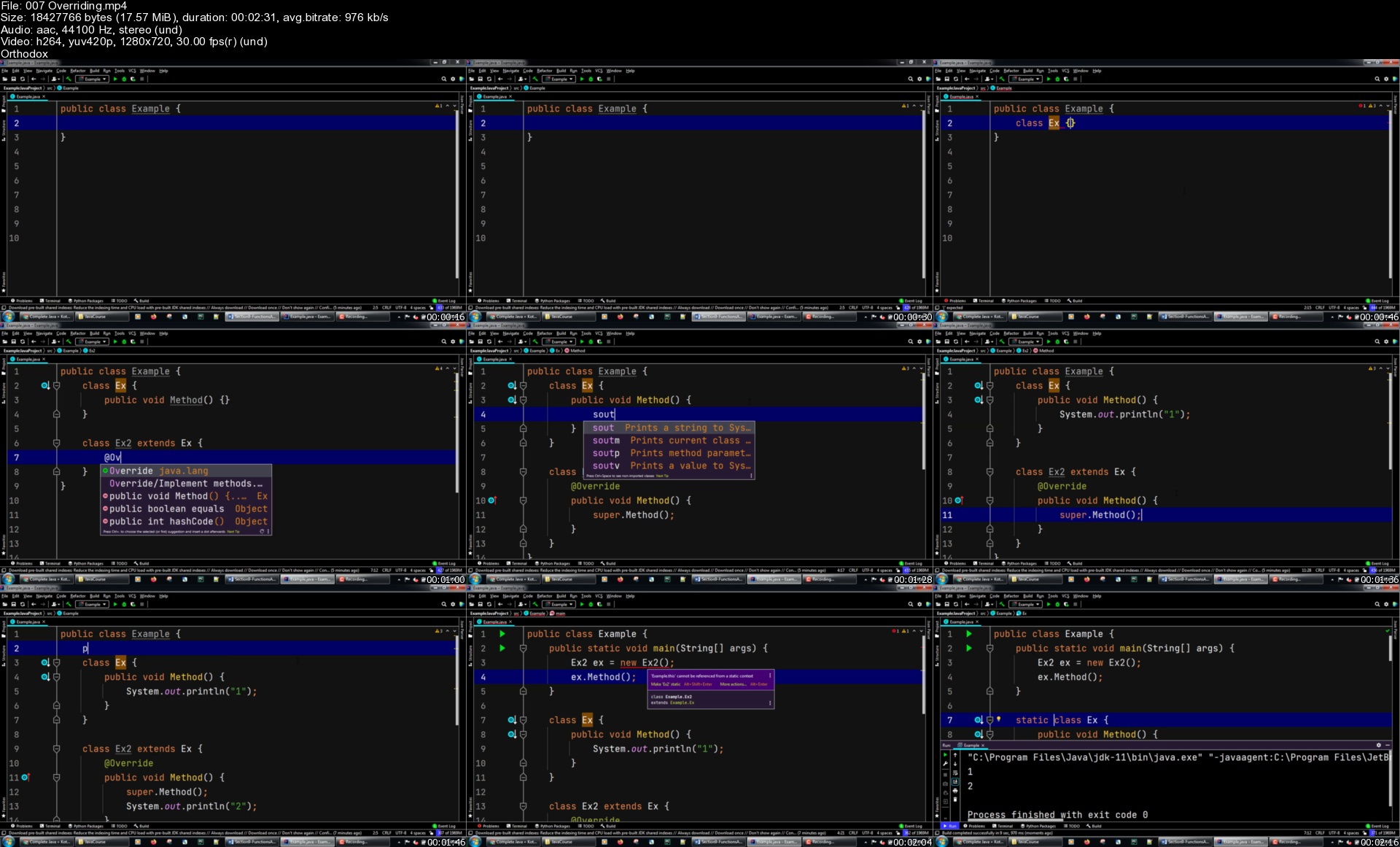
Complete Java + Kotlin + Android 2021 - Beginner to Expert

3847316cb6995yk8k.jpg


Complete Java + Kotlin + Android 2021 - Beginner to Expert
MP4 | Video: h264, 1280x720 | Audio: AAC, 44.1 KHz, 2 Ch
Genre: eLearning | Language: English + srt | Duration: 399 lectures (15h 54m) | Size: 8.42 GB

Learn professional Java and Kotlin coding! 20 Hours of Content, Build 5 Java apps and 5 Kotlin apps, 18 Coding Exercises


What you'll learn
Master Java and Kotlin programming hands-on
Create 10 Android apps - 5 in Java and 5 in Kotlin
Java Apps: Rick and Morty app, Calculator app, Flappy Bird app, Pokemon Quiz app, and Notes app
Kotlin Apps: Harry Potter app, Marvel app, DC Comics app, Sonic app, and X-Men app
Learn searching and sorting algorithms in Java and Kotlin
Learn MVC, MVP, MVVM, and MVI Android App Architectures
Implement all 23 Gang of Four Design Patterns in Java and Kotlin
Master Android UI development with views and layouts
Understand collections and data types in Java and Kotlin
Get hands-on experience coding Project Euler problems to build your math and problem solving skills!
Start from Zero and go to hero with this all in one, comprehensive Java, Kotlin, and Android course!
Master working with Activities and Fragments in Android

Requirements
A computer with Windows, Mac, or Linux
Eagerness and willingness to learn Java and Kotlin programming and build some awesome Android apps
I recommend that you take this course alongside my Mastering IntelliJ IDEA and Android Studio course, since we use those programs heavily in this course, but that is NOT REQUIRED!
Note: All software and programs for this course are FREE and I walk you through installing them step-by-step


Description
The goal of this course is to give you a comprehensive look at Java, Kotlin, and Android app development.

Whether you want to

Build the skills you need to land your first Android developer job

Move to a more senior software developer position

Ace a coding interview at a top tier tech company like Google, Apple, Facebook, or Microsoft

Build professional quality Android app using Android Studio, Java, and Kotlin

.this complete Java, Kotlin, and Android tutorial is the course you need to do all of this, and more.

Why should you learn native Android development?

Android developers make a high salary and are in huge demand in the industry

The mobile app industry is booming and jobs are opening up all over

Mastering both Java and Kotlin will make you much more likely to get an outstanding Android dev job and open up many opportunities for you

I've broken this course down into three main topics: Java, Kotlin, and Android. Here is a breakdown of the material

Java

Setup and Install IntelliJ IDEA and Android Studio

Computer Science Basics

Expressions and Assignment

Boolean Expressions

Control Flow Statements and Loops

Data Types

Working with Date and Time Data in Java

Collections

Functions and Methods

Working with Strings

Trees

Graphs

Parsing XML using Java

Object Oriented Programming

Interfaces

Abstract Classes

File I/O

Advanced Java Programming

Cryptography

Regular Expressions (REGEX)

Bitwise Operations in Java

Threading, Multithreading, and Concurrency in Java

Searching and Sorting in Java

Design Patterns in Java and Android App Architectures

Coding Challenges: Project Euler

Debugging and Testing

Android

Android App Development Basics

Android UI

Hands-On: Building a Rick and Morty App (Java App #1)

Hands-On: Building a Calculator App (Java App #2)

Hands-On: Building a Flappy Bird App (Java App #3)

Hands-On: Building a Pokemon Quiz App (Java App #4)

Hands-On: Building a Notes App (Java App #5)

Kotlin

Kotlin Fundamentals

Searching and Sorting in Kotlin

Design Patterns in Kotlin

Hands-On: Building a Harry Potter App (Kotlin App #1)

Hands-On: Building a Marvel App (Kotlin App #2)

Hands-On: Building a DC Comics App (Kotlin App #3)

Hands-On: Building a Sonic App (Kotlin App #4)

Hands-On: Building an X-Men App (Kotlin App #5)

Keywords and FAQs for Java, Kotlin, and Android

How is this course different than the other Android courses in Udemy?

This course is a thorough, comprehensive tutorial on Android development using the Java and Kotlin programming languages.

Some courses teach you the theory, others teach through hands-on projects. This course combines both approaches.

In addition to teaching beginner, intermediate, and advanced Java and Kotlin, this course also teaches you how to implement all 23 Gang of Four Design Patterns and the major searching and sorting algorithms using both languages.

Are there real-world project in this course where you can apply the skills you learn hands-on?

There are! In fact, you will build 10 hands-on Android apps in this course!

You will use your Java skills to develop

A Rick and Morty App in Java

A Calculator App in Java

A Flappy Bird App in Java

A Pokemon Quiz App in Java

A Notes App in Java

You will use your Kotlin skills to develop

A Harry Potter App in Kotlin

A Marvel App in Kotlin

A DC Comics App in Kotlin

A Sonic App in Kotlin

An X-Men App in Kotlin

Who is your instructor?

My name is Rob Gioia and I have four years of experience as an Android mobile developer in New York City with 10 professionally published apps to the Play Store. I love Java and Kotlin, and am excited at the opportunity to teach them to students through hands-on learning.

What if you have questions?

Any questions you have can be posted to the Q&A forum or messaged to me on Udemy. I check my Udemy account every day to see if students have questions, and do my best to be as responsive and helpful as possible.

If you get stuck at any point during this course, send me a message and I will get you unstuck!

Who this course is for
Anyone that wants to learn the Java programming language
Anyone that wants to learn the Kotlin programming language
Anyone that wants to learn how to build awesome Android apps

Homepage


007overridingsfkkxc.jpg


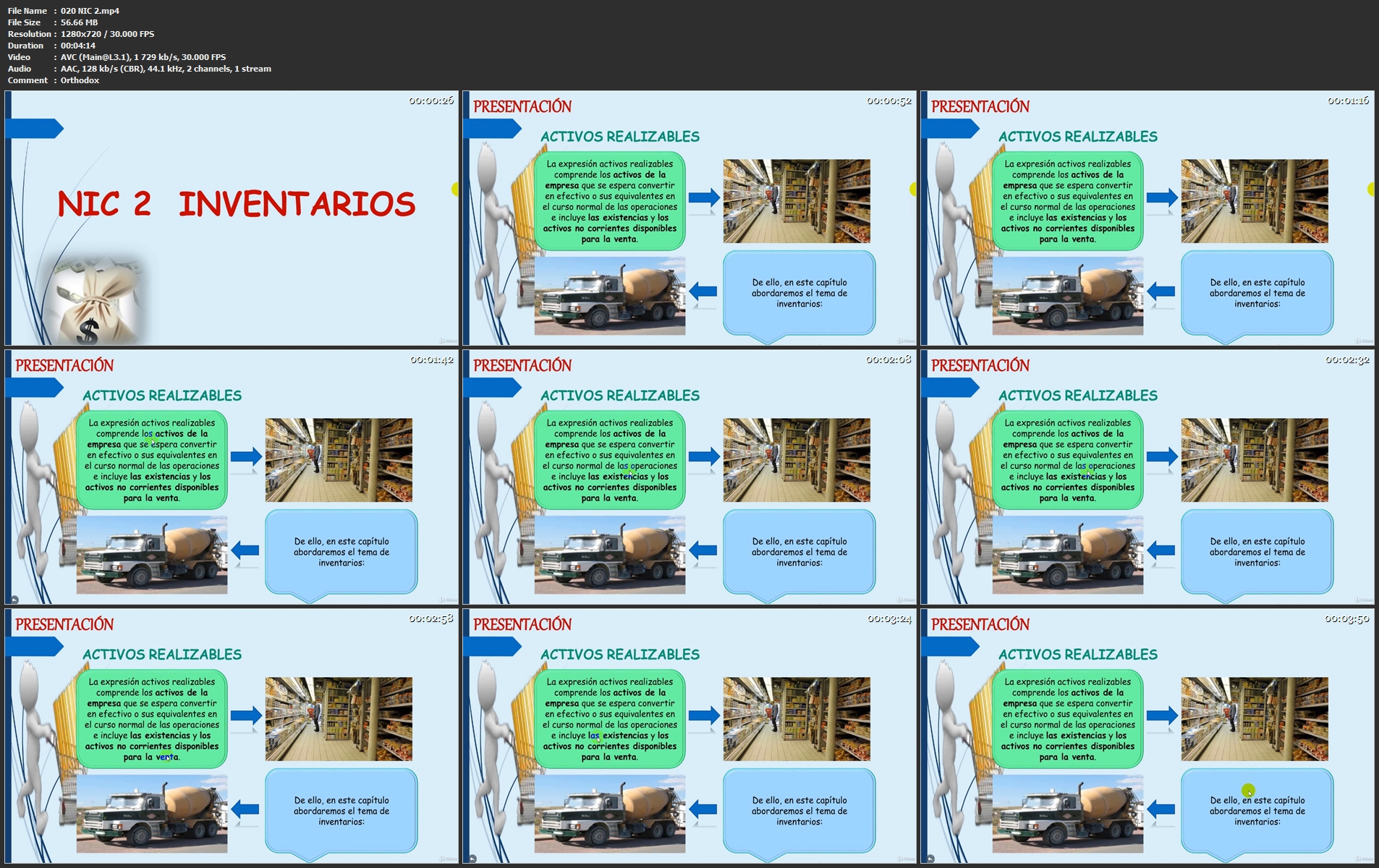
Asistente Contable

fdwkkzgxfm4bjqobkosz7dakct.jpg


Asistente Contable
MP4 | Video: h264, 1280x720 | Audio: AAC, 44.1 KHz
Language: Spanish | Size: 23.1 GB | Duration: 34h 5m

Elaboración y Presentación de Estados Financieros paso a paso, de acuerdo a NICs


What you'll learn
Manejo de los conceptos y proceso contable
Preparación de Estados Financieros de acuerdo a las NICs
Presentación de Estados Financieros de acuerdo a las NICs
Determinación del Impuesto a la Renta de Tercera Categoría
Declaración de Impuestos
Requirements
Estudiantes de contabilidad, Contadores, Administradores, Economistas

Description
Pensando el amplio campo laboral, nuestra Institución lanza el siguiente programa de especialización para poder capacitar a las personas que se encuentran laborando, o están pensando en postular al puesto laboral de ASISTENTE CONTABLE, porque es uno de los cargos de mayor demanda y donde se concentra la carga laboral de la empresa, además de estar en constantes cambios normativos y tecnológicos.

Who this course is for
Contadores, Administradores, Economistas

Homepage


020nic2.mp4igj9p.jpg


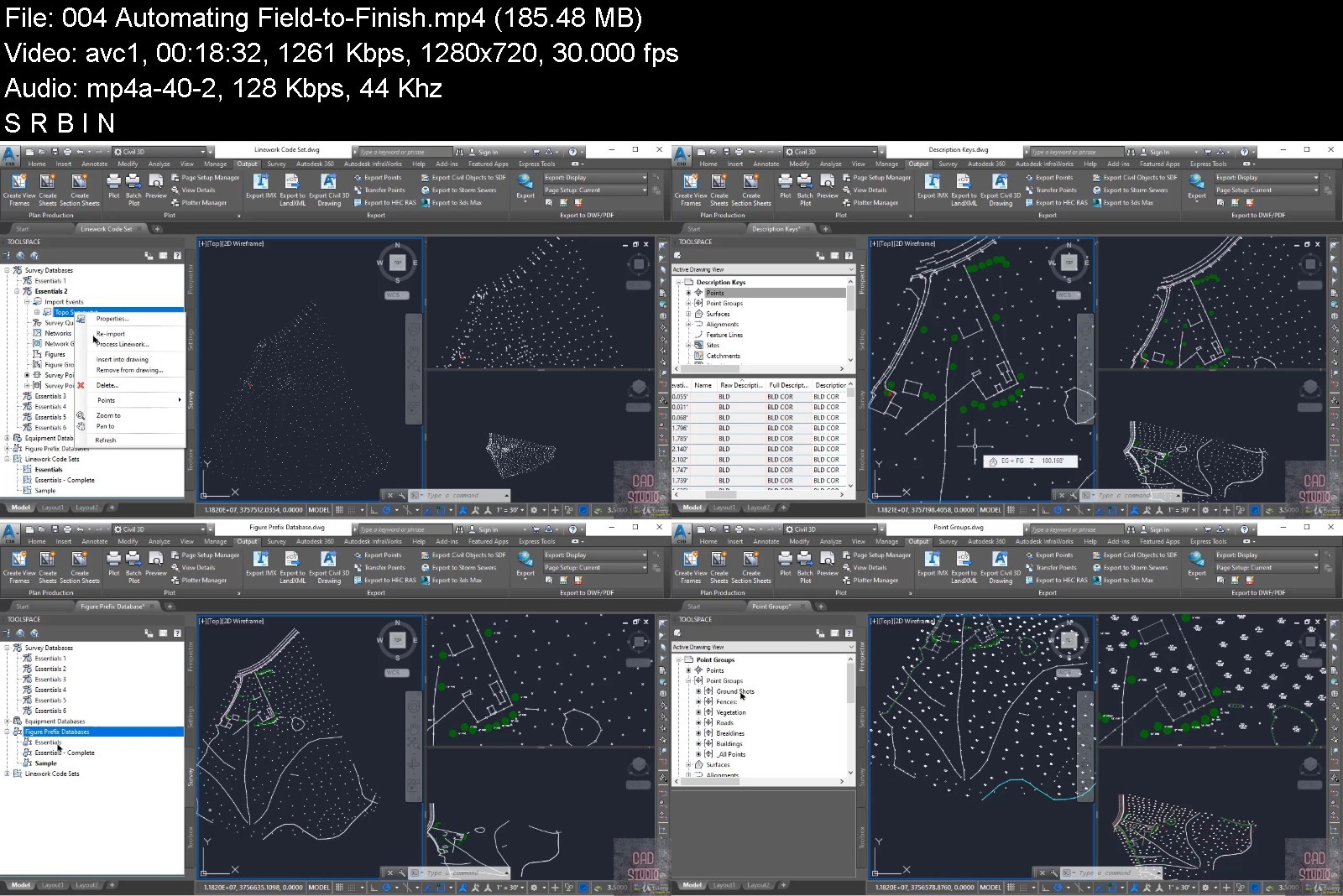
The Complete AutoCAD Civil 3D 2016 - 2021 Essentials Course

vkz1ibnivblpjpyargzdn5fjf1.jpg


The Complete AutoCAD Civil 3D 2016 - 2021 Essentials Course
MP4 | Video: h264, 1280x720 | Audio: AAC, 44.1 KHz
Language: English | Size: 5.25 GB | Duration: 8h 23m

Learn AutoCAD Civil 3D from scratch to a professional level with the help of real life example Project.


What you'll learn
Basic skills and concepts needed to begin using Civil 3D.
Understanding AutoCAD Civil 3D the User Interface.
Learning about the Dynamic Environment of AutoCAD Civil 3D.
Establishing Existing Conditions Using Survey Data.
Modelling the Existing Terrain Using Surfaces.
Designing the Horizontal Alignments.
Displaying and Annotating Alignments.
Designing the Profiles.
Displaying and Annotating Profiles.
Designing Assemblies, Corridors, Corridor Surfaces etc.
Creating Design Cross Sections of the Design.
Displaying and Annotating Sections.
Designing and Analyzing Boundaries Using Parcels.
Displaying and Annotating Parcels.
Designing Gravity Pipe Networks.
Designing Pressure Pipe Networks.
Displaying and Annotating Pipe Networks.
Designing New Terrain / Creating a Design Surface.
Analyzing, Displaying, and Annotating Surfaces
Requirements
There are plenty of exercises that you will do during this course. So you must have Installed AutoCAD Civil 3D 2016 or above on your computer or laptop.
A basic understanding of AutoCAD.
Background of Civil Engineering, Transportation Engineering, Surveying, City and Regional Planning or any other related discipline.
Knowledge of basic terminologies related Auto CAD, Land Development Projects, Highway Design, Surveying etc.

Description
About the Instructor
I am a professional Engineer with degree in Transportation Engineering. Working in a multinational Consultancy Firm as a Senior Highway Design Engineer. I have been a part of many Mega projects of National and International Importance.
As a Highway Design Engineer, AutoCAD Civil 3D is my primary design tool. I have excellently developed my skills on AutCAD Civil 3D over a period of many years, working on several Highway Design projects.
Key Features of This Course
One of the most comprehensive AutoCAD Civil 3D course online with around 90 video lectures.
Around 8.5 hours of video lectures for your extensive learning.
All lesson files included for download.
Taught by a Professional Engineer having extensive hands-on experience of AutoCAD Civil 3D.
Course is based on a real life example Residential Land Development Project.
Project-oriented Course
The course lessons are project-oriented and all of the tools and commands are taught with their real-world applications. As you work your way through this course, you are going to take a journey through the completion of a residential land development project from start to finish. The topics are presented as though you have never touched a CAD program before. Whatever you learn and practice in this course will be relevant to the real life practices.
Which version of AutoCAD Civil 3D is used?
I have used AutoCAD Civil 3D 2018 for recording this course but it is equally good for AutoCAD Civil 3D 2015 and later versions. But it is recommended that you have at least installed AutoCAD Civil 3D 2016 on your computer as the practice files are compatible with AutoCAD Civil 3D 2016 and higher versions.
What Topics are Covered in This Course?
This course is organized to provide you with the knowledge needed to master the essentials of AutoCAD Civil 3D. This course is divided into eighteen (18) chapters/sections as described below
Section 1: Navigating the User Interface Familiarizes you with the AutoCAD Civil 3D environment so that you can navigate more easily in the software.
Section 2: Leveraging a Dynamic Environment Demonstrates the dynamic AutoCAD Civil 3D environment to establish its importance and encourage you to take full advantage of it whenever possible. This chapter focuses on important relationships between different components of a typical design model.
Section 3: Establishing Existing Conditions Using Survey Data Demonstrates how to convert survey field measurements into a AutoCAD Civil 3D drawing while focusing on the survey functions of AutoCAD Civil 3D. This chapter covers creating a survey database, importing data, and processing the data to create a map of the project.
Section 4: Modeling the Existing Terrain Using Surfaces Demonstrates how to create a model of the existing terrain of the project while focusing on the surface functions of AutoCAD Civil 3D. This chapter covers creating a new surface and adding data to it to form a 3D model of the before-construction condition of the project.
Section 5: Designing in 2D Using Alignments Demonstrates how to perform basic 2D layout while focusing on the alignment functions of AutoCAD Civil 3D. This chapter covers creating alignments, applying design criteria, and editing alignments.
Section 6: Displaying and Annotating Alignments Demonstrates how to control the appearance of alignments and provide annotation while focusing on AutoCAD Civil 3D alignment styles and alignment labels. This chapter covers applying alignment styles, creating alignment labels, and creating alignment tables.
Section 7: Designing Vertically Using Profiles Demonstrates how to design the vertical aspect of a linear feature while focusing on the profile functions of AutoCAD Civil 3D. This Section covers creating profiles, applying design criteria, editing profiles, and displaying profiles in profile views.
Section 8: Displaying and Annotating Profiles Demonstrates how to control the appearance of profiles and provide annotation while focusing on AutoCAD Civil 3D profile styles and profile labels. This Section covers applying profile styles, creating profile labels, and object projection.
Section 9: Designing in 3D Using Corridors Demonstrates how to design a 3D model of a linear feature while focusing on the corridor functions of AutoCAD Civil 3D. This Section covers creating assemblies, creating and editing corridors, and creating corridor surfaces.
Section 10: Creating Cross Sections of the Design Demonstrates how to generate and display cross sections of your design while focusing on the sample line and section functions of AutoCAD Civil 3D. This Section covers creating sample lines, sampling various sources, and creating section views.
Section 11: Displaying and Annotating Sections Demonstrates how to control the appearance of sections and provide annotation while focusing on AutoCAD Civil 3D section styles and section labels. This Section covers applying section styles, creating section labels, and object projection.
Section 12: Designing and Analyzing Boundaries Using Parcels Demonstrates how to design a lot layout for a residential land development project while focusing on the parcel functions of AutoCAD Civil 3D. This Section covers creating and editing parcels.
Section 13: Displaying and Annotating Parcels Demonstrates how to control the appearance of parcels and provide annotation while focusing on AutoCAD Civil 3D parcel styles and parcel labels. This Section covers applying parcel styles, creating parcel labels, and creating parcel tables.
Section 14: Designing Gravity Pipe Networks Demonstrates how to design underground gravity pipe systems for a residential land development project while focusing on the pipe network functions of AutoCAD Civil 3D. This Section covers creating and editing pipe networks.
Section 15: Designing Pressure Pipe Networks Demonstrates how to design underground pressure pipe systems for a residential land development project while focusing on the pressure pipe network functions of AutoCAD Civil 3D. This Section covers creating and editing pressure pipe networks.
Section 16: Displaying and Annotating Pipe Networks Demonstrates how to control the appearance of pipe networks (both gravity and pressure) and provide annotation while focusing on AutoCAD Civil 3D pipe styles, structure styles, fitting styles, appurtenance styles, and pipe network labels. This Section covers displaying pipe networks in profile view, creating pipe network labels, and creating pipe network tables.
Section 17: Designing New Terrain Demonstrates how to design a proposed ground model for a residential land development project while focusing on the feature-line and grading functions of AutoCAD Civil 3D. This Section covers creating and editing feature lines and grading objects.
Section 18: Analyzing, Displaying, and Annotating Surfaces Demonstrates how to perform surface analysis and display the results as well as annotate design surfaces. This Section covers managing multiple surfaces, labeling surfaces, and analyzing surfaces.
The course is easy to follow; all of the resources needed are posted in the course content. What are you waiting for....! register now.
Instructor support for questions
I understand that students will have questions related to the course and it is necessary also for a healthy learning process hence I encourage students to ask their questions related to the course in the Q&A section of the course. I answer each and every question as soon as possible on Udemy Q&A section.
Who this course is for
Civil Engineers, Transportation Engineers, City and Regional Planners, Land Developers, Surveyors, etc.
High-school students following a design-related educational track
College students learning to be designers or engineers
Employees who have joined a company that utilizes Civil 3D
Employees who work for companies that have recently implemented Civil 3D
Experienced Civil 3D users who are self-taught and who want to fill in gaps in their knowledge base
Who this course is for
Civil Engineers, Transportation Engineers, City and Regional Planners, Land Developers, Surveyors, etc.
High-school students following a design-related educational track
College students learning to be designers or engineers
Employees who have joined a company that utilizes Civil 3D
Employees who work for companies that have recently implemented Civil 3D
Experienced Civil 3D users who are self-taught and who want to fill in gaps in their knowledge base


thecompleteautocadciv9ajwh.jpg


Download from RapidGator


Download from Keep2Share


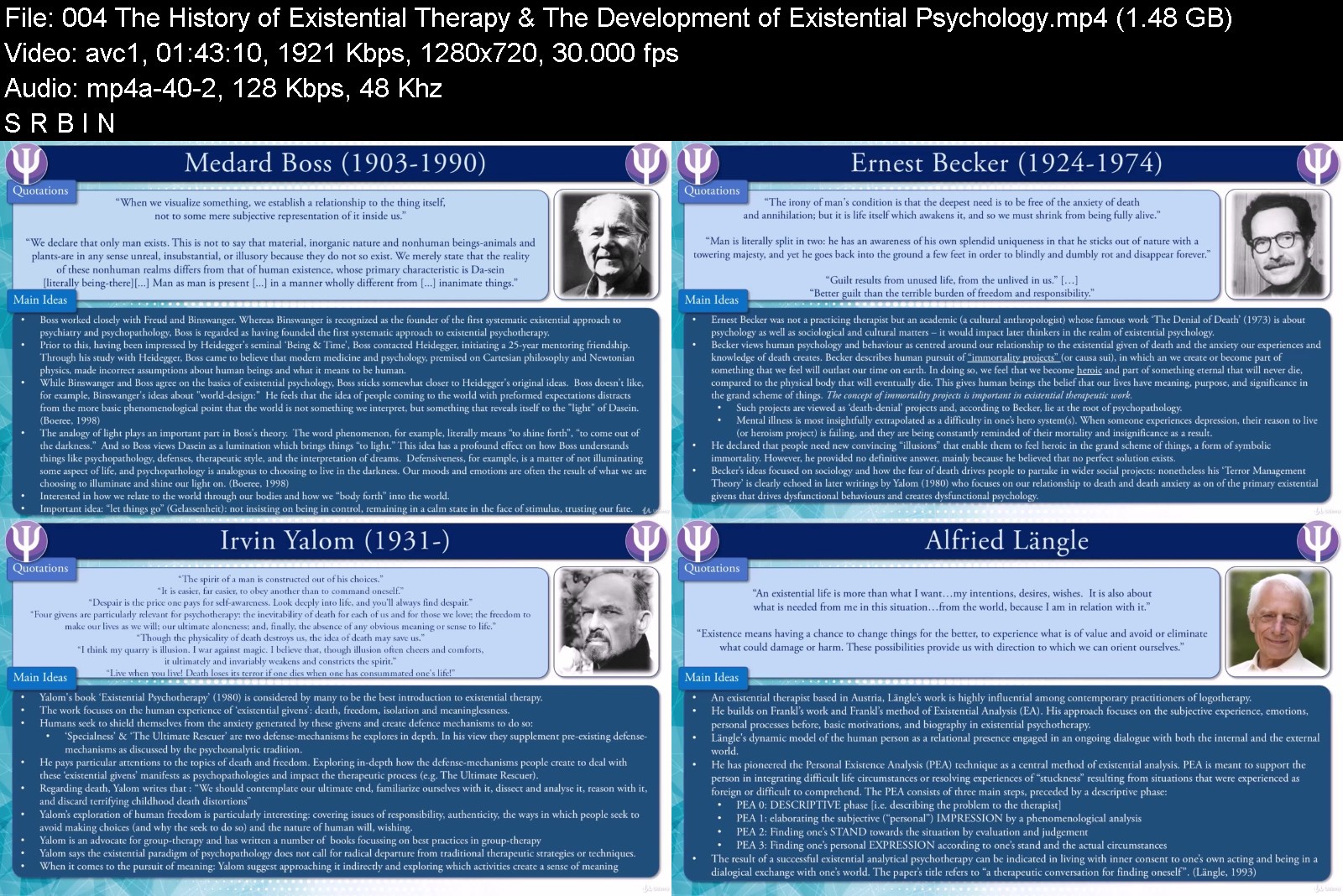
Existential Therapy, Psychotherapy & Counselling

qb76xrxantqaoj0hpme0fpyjox.jpg


Existential Therapy, Psychotherapy & Counselling
MP4 | Video: h264, 1280x720 | Audio: AAC, 44.1 KHz
Language: English | Size: 14.4 GB | Duration: 18h 22m

Helping Individuals to Live Meaningful, Free & Authentic Lives


What you'll learn
How to help people find a sense of meaning and purpose in their lives
The central theories and concepts underpinning different approaches to Existential Therapy (ET)
A wide variety of therapeutic activities and techniques from the different branches of Existential Therapy
The historical development of different approaches to Existential Therapy
Theories & practices associated with Logotherapy, Existential-Humanistic Therapy & Existential-Phenomenological Therapy
The implications of phenomenology for clinical practice: the importance of subjectivity & inter-subjectivity
How to guide those with whom you work towards more authentic, free and empowered modes of living
Recent developments in Existential Therapy such as Existential Positive Psychology & Positive Psychology 2.0
Possible avenues for integrating ideas from Existential Therapy with Cognitive Behavioural Therapy
Existentially-informed techniques, approaches and practices to use in your professional practice
Requirements
This course is primarily aimed at qualified mental health professionals
Specialist language is used throughout
The ability to print the accompanying course materials

Description
This course serves as a comprehensive overview of the central theories and practices of contemporary Existential Therapy (ET).
It is ideal for anyone working in the mental health sector and is especially valuable to qualified
psychotherapists
counsellors
psychiatrists
clinical psychologists
life coaches and pastoral workers.
As well as those training towards such professions.
Whilst the course may also of interest to non-professionals with a personal interest in psychology and philosophy: specialist academic language is used throughout the course and it is pitched at a postgraduate level; it is mainly intended for mental health professionals and refers to therapeutic techniques and strategies throughout.
The Goals of Existential Therapy
Existential therapies have different goals to more conventional approaches to mental health, principle goals include
Helping people to live more authentic lives and avoid various forms of inauthentic behaviour
Maximising autonomy and freedom by encouraging people to assume responsibility for their choices (and their lives)
Helping people to find (or construct) a sense of meaning, purpose and value in life
Cultivating wisdom and the pursuit of philosophical truth: overcoming self-deception and harmful delusions
Helping people to face reality and certain "existential givens" (such as death/mortality) so that they can live more full and engaged lives
Existential therapies are firmly rooted in existential philosophy and often draw on the ideas of prominent existential philosophers such as Kierkegaard, Buber, Nietzsche & Sartre - most of whom were writing in a time where the distinction between philosophy and psychology was less rigid than it is today. Likewise, existential therapies tend to be heavily influenced by phenomenology and phenomenological philosophers (such as Hegel and Heidegger) .
Due to this influence of phenomenology existential therapies tend to emphasise subjectivity and inter-subjectivity; the nature and significance of phenomenology are something explored in this course. Helping people to reconnect with the subjective nature of their lives (instead of viewing themselves as passive objects or labels or in terms of overly reductionist biographical narratives) is both an important goal and a central method of many approaches to existential therapy.
Furthermore, these approaches to therapy emphasise the role of will, choice, and volition in the challenges (and sometimes symptoms) that present in the lives of patients/clients and in the therapeutic process: they are, in part, a reaction to overly-deterministic and reductionist accounts of human behaviour and psychology.
In truth, there is no single 'Existential Therapy' but multiple 'existential therapies' - different branches of therapy and psychotherapy that are informed by different existential philosophers and existential psychologists: the course covers the three most prominent existentially-orientated approaches to therapy and psychotherapy
Logotherapy
Existential-Humanistic Therapy
Existential Phenomenological Therapy (and 'The British School')
It also takes an in-depth look at the model of existential psychotherapy developed by Irvin Yalom and explores more recent developments in the field: Existential-Positive Psychology, Positive Psychology 2.0, and potential avenues for integrating existential therapy with Cognitive Behavioural Therapy (CBT)
The Aims of The Course
This course focuses on outlining, describing and explaining the central concepts, theories and practices of Existential Therapy: it does not pretend to present a particularly critical or evaluative analysis, it does not explore the evidential basis of existential therapy nor does it attempt to 'sell you' Existential Therapy. Critical appraisal of the value of existential therapy is something I will leave to you.
What I can promise, however, is that you will have a firm grasp of Existential Therapy by the end of this course as well as some new, existentially-informed, therapeutic techniques to experiment with in your practice as a mental health professional. Moreover, I can promise you that the course is well-researched and that I have done my utmost to do this fascinating and unique approach to therapy justice and to represent it both fairly and comprehensively.
Aside from my hope that this course will enhance your practice as a therapist and bring great benefit to those with whom you work, it is also my hope that you will find the concepts and theories of the course personally relevant, engaging, and perhaps even challenging!
Finally: one of my aims is to offer good value - this desire is borne partly out of my own frustration at how expensive high-quality training is for counsellors and psychotherapists and how limited exposure to these theories and ideas is as a result. This course is a fraction of the price of more established training courses for Existential Therapy and my ambition is not only to match those courses but to surpass them in quality.
Important Information & Considerations
The course includes twenty video-learning sessions*. Aside from containing in-depth explanations of Existential Therapy these sessions also include various learning and reflection activities that you should engage in if you hope to maximise your learning.
Included in the course is a printable workbook** that features learning and reflection tasks: this workbook should be printed off and either bound as a booklet or kept together in a file prior to beginning the first learning session. Every learning-session has its own double-sided worksheet (as a section of the workbook) and engaging with these worksheets and learning activities is something expected of students who wish to get the most out of this course.
This course asks that you utilise an 'active learning' approach and, in true existential fashion, asks that you take responsibility for getting the most out of it. If you are looking for a course in which you passively absorb information - as if listening to an audio book - this course is not for you! Likewise: if you cannot print the workbook/worksheets because you do not have access to a printer - that will be an obstacle to learning.
Each learning session also includes additional links to relevant external resources such as articles and videos: these are intended to support your learning and taking the time to explore these additional resources will help you to perfect your expertise in existential approaches to therapy.
My intention is to create expertise: this means it is heavy on theory and doesn't 'pull any punches' when it comes to detailed exploration of complicated ideas and concepts. It is not a 'dumbed-down' course and aims to be intellectually and academically rigorous and challenging.
Those who complete the video learning-sessions will receive a certificate of completion automatically from Udemy: an 'Advanced Certificate in Existential Therapy, Psychotherapy & Counselling' can also be claimed (at no additional cost) by students who successfully complete the course and additional assessment tasks (outlined in the aforementioned printable workbook). At the time of release (July, 2020) the Advanced Certificate is not formally accredited though it is my intention to remedy this in due course.
*If the course is sufficiently popular and well-received, I intend to expand upon it and add new learning sessions over time.
**The printable workbook is attached to Lecture 1, once registered you should download it there.
Who this course is for
Psychotherapists
Clinical Psychologists
Counsellors
Psychiatrists
Life Coaches
Pastoral Workers
Mental Health Professionals (e.g. Mental Health Nurses)
Students of Psychology & Philosophy


existentialtherapypsytpjgf.jpg


Download from RapidGator


Download from Keep2Share


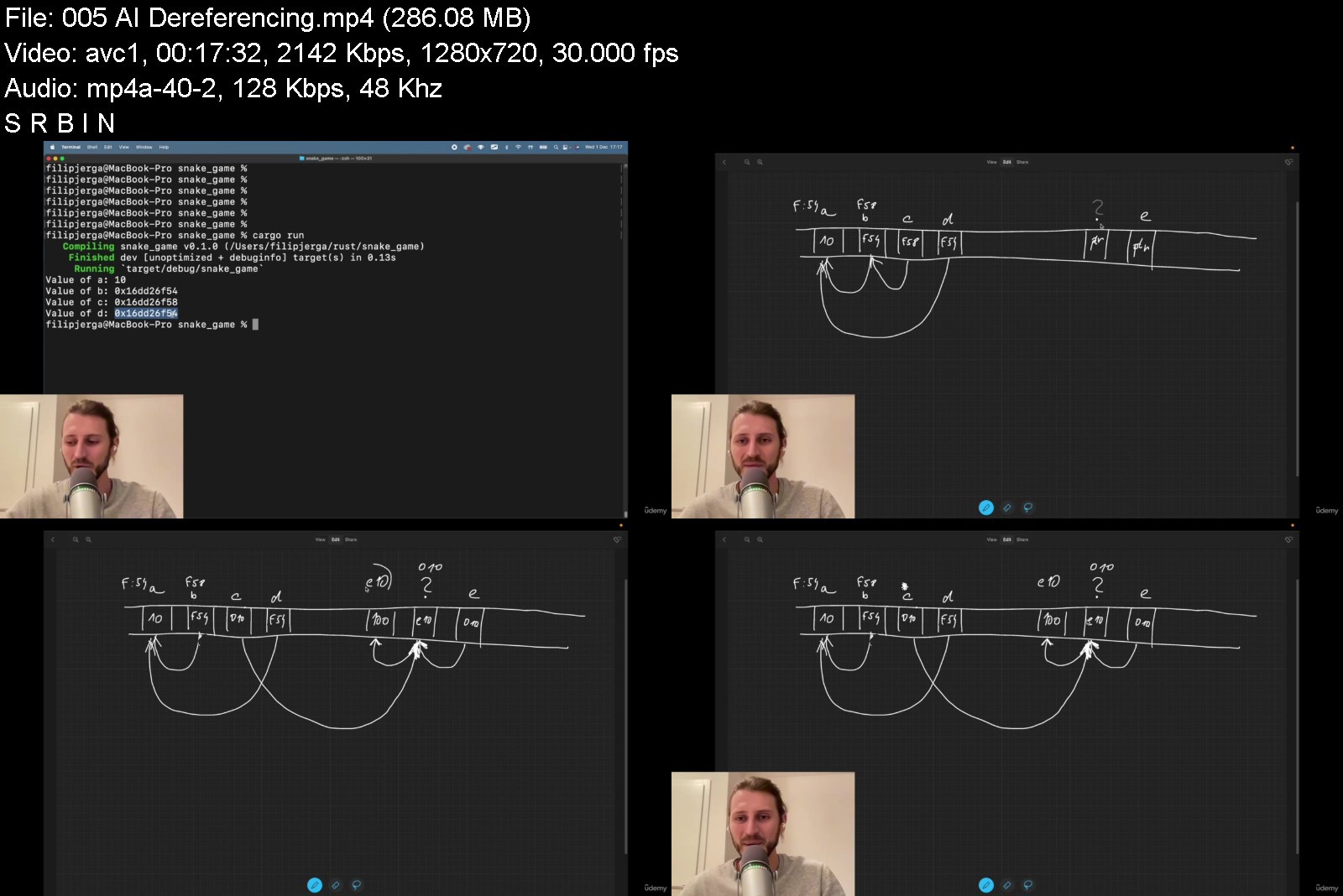
Rust & WebAssembly with JS (TS) - The Practical Guide

4423122beb3fjkk3.jpg


Rust & WebAssembly with JS (TS) - The Practical Guide
MP4 | Video: h264, 1280x720 | Audio: AAC, 44.1 KHz, 2 Ch
Genre: eLearning | Language: English + srt | Duration: 113 lectures (13h 24m) | Size: 6.3 GB

Learn to code in Rust. Compile the code to WebAssembly. Prepare JS/TS frontend and create browser-based Snake game


What you'll learn
Create a browser game made in Rust/WebAssembly and Javascript
Understand Rust language in practical and fun way
Use gained knowledge to create your own applications
Establish yourself in the field of the exciting Rust development environment
Requirements
Basic programming knowledge
Description
What is Rust?
Rust is a programing language. Rust is blazingly fast and memory-efficient: with no runtime or garbage collector, it can power performance-critical services, run on embedded devices, and easily integrate with other languages.
What is WebAssembly?
WebAssembly is a new type of code that can be run in modern web browsers - it is a low-level assembly-like language with a compact binary format that runs with near-native performance and provides languages such as C/C++, C#, and Rust with a compilation target so that they can run on the web. It is also designed to run alongside JavaScript, allowing both to work together.
Is this course right for you?
If you plan to start your career as a developer or improve your programming skills, this course is right for you. Learn how to build a browser game with minimal JS and Rust code compiled into WebAssembly instructions.
You will get the confidence and skills required to start your projects during this course. In addition, you will get the right mindset to apply for a developer career.
What are you going to work on?
You will build the Snake game from scratch. You will learn to write code in Rust language, static type, compiled language.
The course starts with an explanation and practical examples of the Rust language. You will learn Rust-specific features such as "moving" and "copying"
Rust doesn't have a garbage collector. Memory is cleared when the values are getting out of the scope. You will learn how to manage this concept with ease.
The next feature you will learn of is borrowing and references. Through references, you will be able to access values without owning them.
In the beginning lectures, we will also talk about memory management in Stack and the Heap structures, modularity, strings, and other essential topics.
After Rust's introduction lectures, you will start building your Snake game. You will learn how to structure the application modular and cleanly.
You will build your own JS frontend, exposed through a simple Webpack development server. Later, you will transform JS implementation into TS (Typescript). This will specify types and be on the same page as Rust code.
You will build your rust backend code, the backbone of our game. You will learn how to compile Rust code into WebAssembly code. WebAssembly is code that can run in the browser. It's faster (almost Native speed) and more efficient than JS.
At the end of the course, we will create a production server and deploy our game to Heroku, so anybody on the internet can play our game.
Who this course is for
Beginners as well as experienced devs interested in Rust and C++ like languages
People looking for the practical Rust/WebAssembly/TS development guide.
This course is for everyone eager to understand how to build an app from scratch


rustwebassemblywithjsfnj9y.jpg


Download from RapidGator


Download from Keep2Share


Zurück
Oben Unten