• Regeln für den Video-Bereich:

    In den Börsenbereich gehören nur Angebote die bereits den Allgemeinen Regeln entsprechen.

    Einteilung

    - Folgende Formate gehören in die angegeben Bereiche:
    - Filme: Encodierte Filme von BluRay, DVD, R5, TV, Screener sowie Telesyncs im Format DivX, XviD und x264.
    - DVD: Filme im Format DVD5, DVD9 und HD2DVD.
    - HD: Encodierte Filme mit der Auflösung 720p oder darüber von BluRay, DVD, R5, TV, Screener sowie Telesyncs im Format x264.
    - 3D: Encodierte Filme von BluRay, die in einem 3D Format vorliegen. Dies gilt auch für Dokus, Animation usw.
    - Serien: Cartoon/Zeichentrick, Anime, Tutorials, Dokumentationen, Konzerte/Musik, Sonstiges sind demnach in die entsprechenden Bereiche einzuordnen, auch wenn sie beispielsweise im High Definition-Format oder als DVD5/DVD9/HD2DVD vorliegen. Ausnahme 3D.
    - Bereich Englisch: Englische Releases gehören immer in diesen Bereich.
    - Bereich Talk: Der Bereich, in dem über die Releases diskutiert werden kann, darf, soll und erwünscht ist.


    Angebot/Beitrag erstellen

    - Ein Beitrag darf erst dann erstellt werden, wenn der Upload bei mindestens einem OCH komplett ist. Platzhalter sind untersagt.
    - Bei einem Scenerelease hat der Threadtitel ausschließlich aus dem originalen, unveränderten Releasenamen zu bestehen. Es dürfen keine Veränderungen wie z.B. Sterne, kleine Buchstaben o.ä. vorgenommen werden. Ausnahme Serienbörse:
    - Bei einem Sammelthread für eine Staffel entfällt aus dem Releasename natürlich der Name der Folge. Beispiel: Die Simpsons S21 German DVDRip XviD - ITG
    - Dementsprechend sind also u.a. verboten: Erweiterungen wie "Tipp", "empfehlenswert", "only", "reup", usw. / jegliche andere Zusatzinformation oder Ergänzung, welche nicht in obiger Beschreibung zu finden ist.

    Aufbau des Angebots und Threadtitel

    Der Titel nach folgendem Muster erstellt zu werden. <Name> [3D] [Staffel] [German] <Jahr> <Tonspur> [DL] [Auflösung] <Quelle> <Codec> - <Group>
    Beispiel: The Dark Knight German 2008 AC3 DVDRip XviD - iND
    Beispiel: The Dark Knight 2008 DTS DL BDRip x264 - iND
    Beispiel: The Dark Knight 2008 AC3 DL BDRip XviD - iND
    Beispiel: The Dark Knight German 2008 AC3 720p BluRay x264 iND
    Beispiel: The Dark Knight 2008 DTS DL 1080p BluRay x264 iND
    Beispiel: Die Simpsons S01 German AC3 DVDRip XviD iND
    Beispiel: Die Simpsons S20 German AC3 720p BluRay x264 iND
    Beispiel: Sword Art Online II Ger Sub 2014 AAC 1080p WEBRip x264 - peppermint
    Entsprechend sind also u.a. verboten: Sonderzeichen wie Klammern, Sterne, Ausrufezeichen, Unterstriche, Anführungszeichen / Erweiterungen wie "Tipp", "empfehlenswert", "only", "reup", usw. / jegliche andere Zusatzinformation oder Ergänzung, welche nicht in obiger Beschreibung zu finden ist
    Ausnahmen hiervon können in den Bereichen geregelt sein.

    Die Beiträge sollen wie folgt aufgebaut werden:
    Überschrift entspricht dem Threadtitel
    Cover
    kurze Inhaltsbeschreibung
    Format, Größe, Dauer sind gut lesbar für Downloader außerhalb des Spoilers zu vermerken
    Nfo sind immer Anzugeben und selbige immer im Spoiler in Textform.
    Sind keine Nfo vorhanden z.B. Eigenpublikationen, sind im Spoiler folgende Dateiinformationen zusätzlich anzugeben :
    Quelle
    Video (Auflösung und Bitrate)
    Ton (Sprache, Format und Bitrate der einzelnen Spuren)
    Untertitel (sofern vorhanden)
    Hosterangabe in Textform außerhalb eines Spoiler mit allen enthaltenen Hostern.
    Bei SD kann auf diese zusätzlichen Dateiinformationen verzichtet werden.

    Alle benötigten Passwörter sind, sofern vorhanden, in Textform im Angebot anzugeben.
    Spoiler im Spoiler mit Kommentaren :"Schon Bedankt?" sind unerwünscht.


    Releases

    - Sind Retail-Release verfügbar, sind alle anderen Variationen untersagt. Ausnahmen: Alle deutschen Retail-Release sind CUT, in diesem Fall sind dubbed UNCUT-Release zulässig.
    - Im Serien-Bereich gilt speziell: Wenn ein Retail vor Abschluss einer laufenden Staffel erscheint, darf diese Staffel noch zu Ende gebracht werden.62
    - Gleiche Releases sind unbedingt zusammenzufassen. Das bedeutet, es ist zwingend erforderlich, vor dem Erstellen eines Themas per Suchfunktion zu überprüfen, ob bereits ein Beitrag mit demselben Release besteht. Ist dies der Fall, ist der bereits vorhandene Beitrag zu verwenden.
    - P2P und Scene Releases dürfen nicht verändert oder gar unter einem iND Tag eingestellt werden.


    Support, Diskussionen und Suche

    - Supportanfragen sind entweder per PN oder im Bereich Talk zu stellen.
    - Diskussionen und Bewertungen sind im Talk Bereich zu führen. Fragen an die Uploader haben ausschließlich via PN zu erfolgen, und sind in den Angeboten untersagt.
    - Anfragen zu Upload-Wünschen sind nur im Bereich Suche Video erlaubt. Antworten dürfen nur auf Angebote von MyBoerse.bz verlinkt werden.


    Verbote

    - Untersagt sind mehrere Formate in einem einzigen Angebotsthread, wie beispielsweise das gleichzeitige Anbieten von DivX/XviD, 720p und 1080p in einem Thread. Pro Format, Release und Auflösung ist ein eigener Thread zu eröffnen.
    - Grundsätzlich ebenso verboten sind Dupes. Uploader haben sich an geeigneter Stelle darüber zu informieren, ob es sich bei einem Release um ein Dupe handelt.
    - Gefakte, nur teilweise lauffähige oder unvollständige Angebote sind untersagt. Dies gilt auch für eigene Publikationen, die augenscheinlich nicht selbst von z.B. einer DVD gerippt wurden. Laufende Serien, bei denen noch nicht alle Folgen verfügbar sind, dürfen erstellt und regelmäßig geupdatet werden.
    - Untersagt sind Angebote, welche nur und ausschließlich in einer anderen Sprache als deutsch oder englisch vorliegen. Ausnahmen sind VORHER mit den Moderatoren zu klären.


    Verstoß gegen die Regeln

    - Angebote oder Beiträge, die gegen die Forenregeln verstoßen, sind über den "Melden"-Button im Beitrag zu melden.
  • Bitte registriere dich zunächst um Beiträge zu verfassen und externe Links aufzurufen.


Englische Tutorials

1387d77787555a81cb483549463dbcf2.jpg

Electricity - Electrician of Electric
MP4 | Video: h264, 1280x720 | Audio: AAC, 44.1 KHz
Language: English | Size: 1.07 GB | Duration: 1h 31m
English​

What you'll learn
Introduction to Electron
Wireless Electric/Radiology
Electricity/ Electronic
World Physics Electronic
Requirements
Read and listen english is required.
Description
This course have huge information about Fun science, extinct science, and all about electronic information which hardly can be found in internet world.
This is the Ultimate course to learn the Electric, The physics of electric, radiology, will obtain the knowledge of how the electron act, Radar, Radio , Ionosphere and we will talk how is everything about electric in the world is seperate from physics.
Radio wave, electromagnetic wave, electromagnetic field, and so on!!! They are all discuss inside the course.
Do you know?
Do you know, that the human body can broadcast like a radio station, and our human body can react by the electric?
Do you know the way to dry a soak paper with electron?
To learning this course will be benefit you, to having a idea to startup a business,just like...
You know the Radio wave act, you know how the business of TV station and Radio station act;
You know the Radio wave, you know how the wireless technology act;
And there are alot in the course will solve your curiousity beyond your question toward the electric !
In this course will be podcasting
Word, images and videos resources will be combine in video with no face revealance.
Note: This is 20th century information.
Who this course is for
Student of study Radiology
For interest in Fun Science
Researcher
Screenshots


2ec0fed8af498688303a6e5428852745.jpg

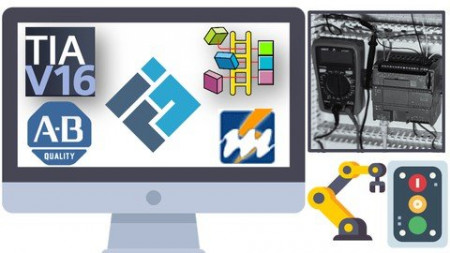
Complete PLC & Automation control (Software/Hardware)Designs
MP4 | Video: h264, 1280x720 | Audio: AAC, 44.1 KHz
Language: English | Size: 10.7 GB | Duration: 20h 54m
Hands on PLC |Automation controlling systems using A-B RSLogix,Siemens TIA Portal,Logixpro,FactoryI/O &Hardware projects​

What you'll learn
Design the different automation controlling circuit using switches , Relays , Contactors timers & circuit breakers
Design complete PLC ladder codes using Siemens TIA Portal , RSLogix500 , LogixPro
Implement factoryI/O sorting by height PLC automation system (COURSE PROJECT)
Implement the 2 out of 4 Automatic Transfer Switch( ATS) (COURSE PROJECT)
Learn about the PLC analog and digital signals and how to control each of them
Design the PLC temperature controlling system using Lm35 temp. sensor (software/hardware design)
Design the PLC temperature controlling system using PT100 temp. sensor (software/hardware design)
Design the PLC S7-1200 analog input ladder codes
Implement the Siemens S7-1200 PLC hardware wiring & configuration
Design the PLC Start/Stop controlling system (software/hardware design)
Implement the PLC industrial fans interlocking system (software/hardware design)
Implement the PLC industrial fans one-way automation system (software/hardware design)
Design the Door Automation system PLC design on Logixpro
Design the Silo Automation system PLC design on Logixpro
Get your hands on the basic & advanced Allen-Bradley PLC programming on RSLogix500 & logixpro simulator
Get your hands on the basic & advanced Siemens PLC programming on TIA Portal & PLCSIM simulator
Implement the industrial fans sequential operation PLC automation system (software/hardware design)
Implement the industrial fans closed loop PLC automation system (software/hardware design)
Implement the single bush button start/stop PLC automation system (software/hardware design)
Learn about the different types of proximity sensors (software/hardware design)
designs classic controlling system on EKTS software
Design the Start/Stop classic controlling system (software/hardware design)
Design the Three phase induction motor direction controlling system (software/hardware design)
Design the dahlander motor controlling system
Design the start/Delta classic controlling system (software/hardware design)
Understand the working operation of different types of classic controlling timers TON ,TOF , TOR
Implement the optimized Star/Delta classic controlling system (software/hardware design)
Design the motors Closed loop controlling system (software/hardware design)
Design the motors one way controlling system (software/hardware design)
Implement the optimized Forward/Reverse classic controlling system (software/hardware design)
Requirements
computer !
passion to learn !
Description
here you will start from scratch practicing PLC programming & controlling software designs to be more confident with
your PLC experience and skills.
"PLC , Automation controlling systems are one of the most important system for
any industrial system or factory ".
Hello there,
If the word 'PLC' baffles your mind and you want to master it, then this is for you.
If you want to start your career in PLC and classic controlling systems design and make money from it, then is for you.
If you want to learn how to design PLC automation system for any Project, then this course is for you.
If you get bored of the word 'this course is for you', then this course is for you.
if you love the controlling engineering.
Well, PLC and classing controlling systems are becoming widely-used words on everybody's tongue, and this is reasonable as most the buildings and industrial systems and factories must include the PLC for automation and classic controlling systems .
So we introduce to you the "Complete PLC & classic control (software/hardware) designs" course that you need in order to get your hand on the PLC and Automation design as this course collects most of the knowledge that you'll need in your journey.
We believe that the brain loves to keep the information that it finds applicable, and that's what we're doing here in UNITED ENGINEERING, we give you years of practice from our instructor that have been gathered in just one an interesting dose.
Our course is structured as follows
Discuss the different types of controlling switches (software/hardware) design .
Discuss the different types of controlling Relays (software/hardware) design.
Discuss the different types of controlling Contactors (software/hardware)design.
Learn about the Overcurrent relays.
Learn about the different kinds of circuit breakers.
Learn about the PLC programming fundamental.
Implement the PLC start stop controlling system(software/hardware) design.
Design the Siemens S7-1200 PLC configuration, wiring & programming on TIA Portal.
Design the industrial fans interlocking PLC automation system (software/hardware) design.
Design the industrial fans One-way PLC automation system (software/hardware) design.
Implement the Door PLC automation system on Logixpro simulator.
Implement the Silo PLC automation system on Logixpro simulator.
Learn about the Allen-Bradley PLC timers.
Design the industrial fans sequential operation PLC automation system (software/hardware) design.
Learn about the Allen-Bradley PLC counters.
Design the single pushbutton Start/Stop PLC project (software/hardware)design.
Discuss the different types of proximity sensors(software/hardware)design.
Discuss the PLC analog signals controlling fundamentals & hardware applications.
Design the PLC temperature controlling system using Lm35 temp. sensor (software/hardware) design.
Design the PLC temperature controlling system using the RTD PT100 temp. sensor (software/hardware )design.
Learn the Allen-Bradley advanced PLC programming with RSLogix500.
Learn the Siemens advanced PLC programming with TIA portal.
Implement the "advanced sorting by height" Factory I/O PLC automation system (first course project ).
Design the Start/stop classic controlling system (software/hardware) design.
Design the Three phase induction motor direction controlling system.
Implement the Star/delta classic controlling system (software/hardware) design.
Learn about the Dahlader motor Classic controlling system.
Lean about the timers in classic controlling systems (software/hardware) design.
Optimize the star/Delta classic controlling system (software/hardware) design.
Design the motors closed loop classic controlling system(software/hardware) design.
Design the motors one way controlling system(software/hardware) design.
Optimize the Forward/Reverse classic controlling system (software/hardware) design.
Implement the 2 out of 4 ATS (automatic transfer switch) controlling system (second course project ).
** At this course
These tracks would be like a piece of cake to you.
You will start practicing yourself by solving excrescences and coding assignments to get your hands on PLC programing and
real world projects implementation.
We'll take you from the Scratch of Designing and Analysis.
You'll learn with practical exciting method in order to understand without being bored.
All you need is an open mind and the passion to be successful!
** Our help in United Engineering is always available to you if you get stuck or have a question - our support is legendary in Udemy
--> So don't hesitate and click " Buy Now " button so you can begin on the right path!
Who this course is for
Anyone who wants to learn and practice PLC and different Automation controlling systems & designs from scratch to the advanced level
Electrical ,Controlling ,Electronics engineers
maintenance engineers
Industrial , production engineers
PLC programmers
electrical technicians
Automation systems designers
Screenshots










e824506e9641f4c86d9bc699a36524a7.jpg

Cognitive Psychology - Udemy
MP4 | Video: h264, 1280x720 | Audio: AAC, 44.1 KHz
Language: English | Size: 3.52 GB | Duration: 3h 29m
Learn the fundamentals of cognitive psychology, neuroscience, and how the mind works
What you'll learn​

What cognitive psychology is and how the mind works
Perception, action, attention, language, emotion and consciouseness
Short-term and long-term memory
Problem solving, decision-making and learning
Research methods, neuroscience, and how we study the brain
Requirements
No previous knowledge of psychology is required as everything will be explained from foundations
Students are encouraged to make notes and complete the exercises to reinforce learning
Description
Cognitive psychology is the study of mental processes: understanding how the mind works. In this course, we will introduce all of the key concepts in the field of cognitive psychology including perception, attention, memory, decision making and much more.
We'll start by exploring how we perceive the world and how our senses translate our experiences into a model of the world. We will then explore how we use this to guide our actions and pay attention. We'll explore how memory works and how this relates to learning, before exploring higher cognitive processes such as language, problem-solving and decision making.
We will see cognitive psychology in action looking at how mental imagery is used in sport and how condition and emotion interact with mental health. Finally, we'll explore research methods: how do we look inside the brain and understand what is going on, drawing on the latest insights from neuroscience and neuropsychology.
Topics covered in this course
What is cognitive psychology
Visual perception
Pattern recognition
Mental imagery
Perception and action
Change blindness
Attention
Memory
Learning
Language
Problem solving
Decision-making
Cognition and emotion
Consciousness
Research methods
Throughout the course, we will use exercises and examples to explore how our own minds work. For example, what happens to visual stimuli in our blind spot? How can we read words partially obscured? How do we know how far away something is? How well can we multitask? What causes speech errors? And what mental shortcuts may throw off our decision-making?
We'll do all of this through videos, readings, exercises and quizzes, so whatever your learning style there will be something in this course for you. By the end of the course, you will be familiar with all the key topics in the field of cognitive psychology. Please note that this is not a course on cognitive behavioural therapy (CBT), nor it is a personal development course.
I can't wait to see you inside the course!
Who this course is for
Psychology students who want an introduction to cognitive concepts
Anyone who would like to learn cognitive psychology
This is not a CBT or personal development course
Screenshots


f39e6d68416019519e254e357fb71db9.png

Chess for Absolute Beginners by Manuel Ocantos
MP4 | Video: h264, 1280x720 | Audio: AAC, 44.1 KHz, 2 Ch
Genre: eLearning | Language: English + srt | Duration: 41 lectures (3h 44m) | Size: 1.89 GB
​


Learn Chess From Scratch and Start Playing Today
What you'll learn
Learn all the chess rules
How chess pieces move and capture
Learn chess notation, allowing you to read and discuss about chess games much more easily
How to set up the chess board
How a game is won
How a game is lost
How a game is drawn
Identify the stages of a chess game, and know their keys ideas to improve your play
Master the most important chess tactics in order to gain a decisive advantage
Why playing or studying chess is beneficial to you
Most common checkmates
Key checkmates to master when playing against a lone king
Practical skills after working on the activities
How to play chess online with very simple steps
How to play in over the board tournaments all around the world
Understand all the most common chess terms, such as check, stalemate, castling, fork, sacrifices and many more
Improve your analytical skills
Requirements
Any device with access to the internet, such as a mobile or a laptop
No software required - all the material to do the course will be provided here
No previous knowledge is chess is needed
Description
Welcome to my Chess for Absolute Beginners Course, the only course you need to learn chess from scratch allowing you to have a solid understanding of this lovely game and to start playing today.
We'll take you step-by-step through engaging video tutorials and teach you everything you need to know to become a chess player. This course includes practical activities to make sure that you'll test your new knowledge and a summary of all the ideas that you'll learn so that you can keep them in one place and use them straight away.
This course is not just about the chess rules.
Here are some of the additional topics that you will learn
Benefits of playing and studying chess
Legend about the origin of chess
Chess Notation (both algebraic and descriptive)
Common Checkmates against a lone king
The 2 most fundamental chess tactics that you should master
The key ideas in the 3 stages of the game
How you can start playing online in just a few minutes in 2 different sites
How you can easily find and play in over the board tournaments all around the world
Throughout this comprehensive course, you'll become familiar with a lot of chess terms, including
Passed pawns
Sacrifices
Opening
Endgame
Short Castling
Long Castling
Active King
Ranks
Middlegame
Promotion
Pin
Fork
Files
Kingside
Queenside
Central files
Threefold repetition
Promotion
Light squares
Back-rank checkmate
Underpromotion
Algebraic notation
Stalemate
Timeout
Blitz
Bullet
Strategy
Perpetual Check
Double Check
Zugzwang
Opposition
FIDE
By the end of this course, you will see chess from a totally new perspective, allowing you to play or to enjoy it by understanding many of the complexities of this near infinite game.
Sign up today, and look forward to
Video Lectures
Practical Activities
Downloads
A Summary of what you'll learn
No risk for you
If you're not happy with the purchase, you have 30 days to get a refund.
I'm waiting for you inside the course so that together you can start your chess journey now!
Who this course is for
Anyone who is new to chess
If you played chess many years ago and want to get back to it
If you want to start playing, either competitively or in friendly games
If you want to study chess, follow and understand chess events all over the world
Homepage


f30ed2832bfee5c5f091864b98ebe783.jpg

Build Inventory Management Web App Using Laravel
Genre: eLearning | MP4 | Video: h264, 1280x720 | Audio: AAC, 44.1 KHz
Language: English | Size: 1.98 GB | Duration: 3h 27m
Laravel | Create Inventory Management System
​

What you'll learn
Build Inventory Management System Using Laravel
How to install PHP
How to Install Local Server
How to setup Database
How to use Blade template
How to add products to your database
How update product quantity
How to update product information
How to upload product image
How to get all products and display them in dashboard
How to paginate products
How to search for products
How to login and register
And much more....
Description
Laravel is one of the best PHP frameworks. It can be used to create small, medium and large web app projects. A lot of start-ups and companies have started using it to create different types of web apps. Thus, the demand for PHP developers is increasing everyday and adding Laravel to your portfolio will get you a job much easier, let alone specializing in Laravel framework!
In this course you will learn how to build your own inventory management system using Laravel framework. The management system can be adapted to fit any type project. For example, you can use system for your own short-term projects or for other peoples projects and ideas, etc. Moreover, you will learn best practices, how to avoid bad practices when working on a Laravel project, how to debug your code, and most of all how to write a clean organized code in Laravel that you can get back to it, understand it or fix it and also let others understand it.
Note: This course will take you step by step so that you don't get confused. I start with the most basic topics and gradually move forward toward advanced topics. You should have good understanding of OOP and PHP.
What you'll learn in this course will make you able to start creating your own Laravel projects and not just simple projects build medium-sized to big-sized web apps. Hence, after the end of this course you will definitely have a robust, unbeatable portfolio that you can use to start applying for Laravel jobs confidently.
Note: In this course you'll also get downloadable source code. You will also be provided with an exercise or quiz at the end of each lecture to test your understanding.
Topics covered in this course
How to create a Laravel Project
How to install composer and XAMP
Laravel views
Laravel Blade templates
Add a template to your project
Laravel migrations and databases
Controllers
Forms
Connecting to Database
Template inheritance
CRUD operations
and much much more...
What is expected after this course?
After successfully finishing this course, you will
Have your own Laravel inventory management system.
Have solid understanding of Laravel framework.
Be able to create web apps using Laravel.
Start your Career as a Laravel Developer.
I wish you a successful journey during this course.
Good luck!
NOTE: This course is for intermediate web developers, however, basics of Laravel are taught at the beginning of the course. So it assumes you have good understanding of PHP and OOP.
Screenshots


182be218522a35780b01f8316c9a7870.jpg

Azure Devops and Internet of Things Essentials
MP4 | Video: h264, 1280x720 | Audio: AAC, 44.1 KHz
Language: English | Size: 591 MB | Duration: 1h 14m
Microsoft Power Automate, Azure IOT , Azure Edge , Azure IOT Central , Azure Devops Fundamentals and resources​


What you'll learn
Implementations in Azure IOT Services
Introductions to Microsoft Power Automate
Introduction to Virtual Machines
Introduction to Internet of Things
Introduction and Implementations with Azure Devops Services
Requirements
No Programming Experience required , Agile learning Series
Description
The DevOps movement began around 2007 when the software development and IT operations communities raised concerns about the traditional software development model, where developers who wrote code worked apart from operations who deployed and supported the code. The term DevOps, a combination of the words development and operations, reflects the process of integrating these disciplines into one, continuous process.
Despite the mythical tone of some of the stories about its origins, DevOps was not created out of whole cloth. Rather, the seeds of DevOps were planted long ago and have been nurtured by forward-thinking IT experts in a number of disciplines. The two primary antecedents of DevOps are
Enterprise systems management (ESM). Many of the people involved in the initial definition of DevOps were system administrators. These operations experts brought key ESM best practices to DevOps, including configuration management, system monitoring, automated provisioning, and the toolchain approach.
Agile development. One observer notes, "DevOps can be interpreted as an outgrowth of Agile-agile software development prescribes close collaboration of customers, product management, developers, and (sometimes) QA to fill in the gaps and rapidly iterate towards a better product ...[DevOps acknowledges that] service delivery and how the app and systems interact are a fundamental part of the value proposition to the client as well, and so the product team needs to include those concerns as a top-level item. From this perspective, DevOps is simply extending Agile principles beyond the boundaries of the code to the entire delivered service."
As DevOps is intended to be a cross-functional mode of working, those who practice the methodology use different sets of tools-referred to as "toolchains"-rather than a single one.[17] These toolchains are expected to fit into one or more of the following categories, reflective of key aspects of the development and delivery process.
Coding - code development and review, source code management tools, code merging.
Building - continuous integration tools, build status.
Testing - continuous testing tools that provide quick and timely feedback on business risks.
Packaging - artifact repository, application pre-deployment staging.
Releasing - change management, release approvals, release automation.
Configuring - infrastructure configuration and management, infrastructure as code tools.
Monitoring - applications performance monitoring, end-user experience.
Who this course is for
Developers , Seeking to find something to start with.
Screenshots


e6890f6fb3a972bc0cd10a6cf42991d2.jpg

AWS Redshift - A Comprehensive Overview
MP4 | Video: h264, 1280x720 | Audio: AAC, 44.1 KHz
Language: English | Size: 1.30 GB | Duration: 5h 15m
Practical learning on Redshift, Core Features, Data & Cluster Management, Spectrum, Federated Query, Redshift ML & More.
What you'll learn​

Redshift - Core Components and Features
Loading and Querying Data - Query Editor, SQL Client Tools, BI Tools, CLI, APIs
Automated Table Design, Data Distribution, Sorting and Workload Management
Cluster Resizing, Relocation, Pause, Shutdown, Backup
Security, Logging and Monitoring in Redshift
Redshift Spectrum - Querying the Datalake
Federated Queries - Querying RDS (relational database)
Redshift ML - Advanced analytics with Redshift & Sagemaker
Stored Procedures, Materialized Views
Requirements
Software Engineering
Data Warehousing
SQL
Description
Amazon or AWS Redshift is a fast, easy to use, cost-effective, peta-byte level, cloud data warehousing solution. In this course we will learn multiple features of Redshift in a step-by-step approach. This tutorial is well supported by hands-on lab exercises and the set of Interview Questions.
The course is divided in following core areas
Overview - Brief introduction to AWS Redshift, Datawarehouse Systems & evolution of related technologies
Getting Started - We will get started on Amazon Redshift by loading and querying sample data. We will understand the bare minimum of redshift ecosystem including Redshift Console, Query Editor and Configurations needed to integrate an external SQL Client - DBeaver.
How does it work - We will jump into the core mechanics of Redshift where we will understand the core components, functions of redshift including Redshift Cluster, Nodes, Distribution Key, Sort Key, Results Cache, AQUA, RA3 Instances, etc.
Manage Data - We will move to manage data section where we will understand the redshift data types, data loading & data querying options, automated table design, stored procedures, materialized views and workload management.
AWS Services - In this section, we will understand some advanced features of Redshift including Redshift Spectrum, Redshift ML and Federated Queries. We will also understand the integration aspects of redshift with other AWS services such as data-lake formation, aws EMR, AWS glue, Amazon Kinesis, Amazon Quicksight, AWS Sagemaker, etc.
Manage Cluster - In this section, we will understand the management aspects of redshift including the basic cluster operations, snapshots as backups, monitoring, logging & data security.
Conclude - In the last section, we will understand the redshift cost and pricing, best practices, reading references, etc.
----------------------------------------------------------------------------------------------
** SPECIAL OFFER ** FREE COUPON CODE : F0DB5110A0C0AD1D6F37 ** EXPIRES SOON **
----------------------------------------------------------------------------------------------
Who this course is for
Software Professionals who want to understand AWS Redshift
Screenshots


d4e29f027f658210df5a6045ddf6630b.jpg

Linux Administration 2022 - Deep Dive
MP4 | Video: h264, 1280x720 | Audio: AAC, 44.1 KHz, 2 Ch
Genre: eLearning | Language: English + srt | Duration: 55 lectures (8h) | Size: 3.9 GB
​


Linux Administration - Mastery over Linux Commands, User-File-Process Management, Networking, ACLs, Iptables & LDAP
What you'll learn
Management of Users & Groups in Linux Environment
Working with User Management Files like passwd, shadow
Adding, Deleting and Changing User and Group Credentials
Managing File Permissions -Set/Revoke/Change File Permissions
Understand using Special Linux Permissions - SGID, SUID, Sticky Bit
Understand how Processes works in Linux
Use SIGNALS to control working of Processes
Dynamically view Process and use Job Controls to manage Processes
Working with Access Control Lists (ACLs)
Understanding Network Interfaces and their properties
Network Configuration and Management in Linux
Configuring IPTABLES to ensure network security
Woking with Lightweight Directory Access Protocol (LDAP)
Understand in detail How OpenLDAP works
Install & Configure LDAP server
Requirements
Basics of Linux
PC/Laptop with Internet
Description
This course has been designed to give you an in-depth understanding of critical aspects of Linux Administration which primarily includes User Management, File Management and Process Management.
In this course, you get to completely deep dive into the major concepts covered under the Linux Administration to gain complete mastery over Linux Command Line as well as Server Management too. This course will not just introduce all advanced concepts to you, it will make you work towards gaining expertise in all sections i.e., User and Group Management, Process Management, Network Configuration and everything you should be knowing as a Linux Administrator.
This course gives you also a detailed explaination of topics like Access Control Lists (ACLs), Firewall Configuration using IPTABLES and Lightweight Directory Access Protocol (LDAP) in Linux that actually boosts your understanding about this Subject. Under the topic ACLs, you learn how ACLs are applied to files and more ways to play around with the ACLs on your files using multiple variants of commands and options. Under the topic LDAP, I take you on a joy ride of understanding everything about LDAP, in much much details, and further, you get to learn installing an LDAP server and adding/removing users to your LDAP tree. Note that these topics are not explained by any instructor in any of the available courses available on Udemy.
Who this course is for
Basic level Linux Administrators
Aspirants of Linux+ (CompTIA), LPIC (LPI), Oracle Linux OCA/OCP, GCUX (SANS GIAC)
Beginners or Pro users willing to master the basics fundamentals of Linux Adminstration
Anyone willing to start a career in Linux based Environment
Computer Science and IT Students will to update their resume with Linux Course Certificte
Anyone working in IT Sector
Homepage


76dc349b9714e6dc3f27160bf42c7630.jpg

Make a Web App with Clojure - Foundational Basics
Genre: eLearning | MP4 | Video: h264, 1280x720 | Audio: AAC, 48.0 KHz
Language: English | Size: 729 MB | Duration: 1h 36m
Everything you need to know to get started creating web apps using Clojure, ClojureScript and Postgres.
​

What you'll learn
Debugging techniques for common errors. One of the most pervasive issues with beginner coding is not having an understanding of how to fix bugs.
How to use the Mac Terminal with all the most used commands in general and specifically for use with Clojure, ClojureScript and Postgres.
How to download absolutely everything you need and set up your environment to get started, including setting up and getting started with the text editor Emacs.
How to create a static website or blog in Clojure using a static site generator and how to customize it to suit your needs.
How the main web app components all work together: the database (PostgreSQL), back-end (Clojure) and front-end (ClojureScript).
Setting up a very basic web app with all the main parts connected and working together using a template.
Understanding how the file structure needs to be organized and understanding namespaces and their common errors..
Basic customization to your web app such as changing the site title, favicon and home page content.
Description
What this course includes:
In this course you will learn many topics carefully selected to be a strong foundation for moving forward in your learning journey. You will learn how to use the terminal along with all the most used commands specific to PostgreSQL, Clojure and ClojureScript. You will also learn how to download absolutely everything that you'll need to get started, and you will get your text editor set up (we are using Emacs in this course) and will configure everything to work nicely with Clojure.
Once you have your environment completely set up and ready to use, we will create two starter projects that can be built on in the future. First, will be a static website or blog set up using Cryogen with a complete walkthrough on setting it up and how to customize it to your specific needs. Next, we will set up a web app using the Luminus template and start customizing it at a very basic level.
Most importantly, we will also cover some topics that are generally forgotten about in most tutorials. These include debugging techniques so that you are armed with many of the best tools to solve issues moving forward, understanding how the filesystems must be set up, common errors and pitfalls for beginners, and understanding what namespaces are and how to use them. You will also understand how all the pieces work together, meaning the database (PostgreSQL), the back end files (Clojure) and the front end files (ClojureScript). All of this together will give you a strong understanding and foundation to build on top of and help you as you move on to more advanced topics.
What this course does NOT include:
This course does not include adding your own features from scratch. That is a more advanced topic that will hopefully be added in a future course. This course is to give you a foundational understanding from which to be able to begin learning those more advanced topics. This course also does not cover deployment of your website or app to public domains, which is another topic I hope to cover in more advanced courses in the future.
Note that this course is geared toward Mac users. There may be some slight differences if you are using Windows or another operating system. If you would like a course that is geared towards Windows or another OS, please contact me about it at my email and I'm happy to help you with it and potentially add that content in a future course.
Who this course is for
This course if for complete beginners who would like to get started on creating static sites and web apps in Clojure using templates and have a good foundational understanding of how things work.
Screenshots


550c36a64edb0fb109d6452500e21a69.jpg

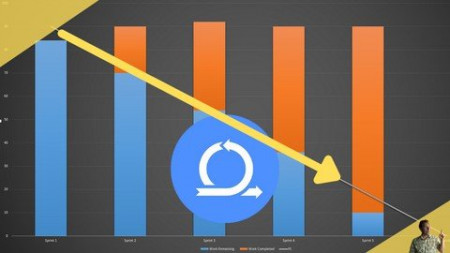
Master Burndown Charts: Use & Create Burndown Chart in Scrum
MP4 | Video: h264, 1280x720 | Audio: AAC, 44.1 KHz
Language: English | Size: 570 MB | Duration: 53m​

Complete Burndown Charts training: Create and Use Burndown Charts in Agile and Scrum from A to Z
What you'll learn
What is the burndown chart in Scrum?
Types of burndown charts in Scrum
Work remaining vs. Work completed burndown chart
Adjustable Floor burndown chart in Scrum
Creating a Release burndown chart from scratch Step-By-Step Guide
Creating a Release burndown chart from scratch in Excel
Online tools for burndown charts in Scrum
Pro's, Cons, and Common Burndown Chart Mistakes and much more...
Requirements
Basic knowledge of Scrum Framework
Basic knowledge of Microsoft Excel
Description
My name is Dejan. I am a Product Owner, Scrum Master, and Agile Coach. In this course, you will learn How to Implement Burndown Charts in Agile and Scrum, even if you don't have any experience at all.
I will show you
What is BurnDown Chart is in Scrum?
What are the Dependencies of the BurnDown Chart is in Scrum?
How to achieve an accurate forecast?
What types of Burndown charts are there in Scrum?
We will deep dive into the step-by-step process of creating our Burndown chart from scratch in Microsoft Excel.
And this is not all, in the resource section, I will provide you sample Burndown, Template for Product Backlog, Sprint Backlog, and Burndown chart and data we will use to create our Burndown chart.
Before we finish, it is your turn to do the work, to repeat all steps, and to create your release burndown chart with 2 different methods.
This course is for traditional project managers also, and anyone else who wants to learn how and why the Burndown chart is used with guidance on how to leverage it in your teams.
We will also answer all these questions
What's the burndown chart?
Who creates a burndown chart?
Are burndown charts useful?
Why burndown chart?
Is the burndown chart a scrum artifact?
When should the burndown chart be updated?
How to create a burndown chart?
After this course, you will have all skills needed to implement the burndown charts in your scrum team!
Let's get started.
-------------------------------------------
Keywords and Keyphrases
-------------------------------------------
burndown chart,
Jira burndown chart,
sprint burndown chart,
burndown chart excel,
what is a burndown chart,
burndown chart template,
agile burndown chart,
what is burndown chart,
excel burndown chart,
burndown chart Jira,
scrum burndown chart,
burndown chart excel template,
burndown chart scrum,
burndown chart generator,
how to create a burndown chart in excel,
burndown chart example,
release burndown chart,
risk burndown chart,
Work remaining vs. Work completed burndown,
Adjustable Floor burndown,
iteration burndown chart,
product burndown chart,
burndown chart in agile,
how to create a burndown chart,
sample burndown chart,
how to make a burndown chart,
scrum burndown chart excel
Who this course is for
Product Owners
Scrum Masters
Developers in Scrum
Project Managers
Release Engineers
Anyone who want to increase the efficiency and effectiveness of Agile to lead high performing teams
People who are preparing for Scrum Certifications, exams PSPO, PSM...
People who got their first Scrum job and don't know where to start tracking their work
People who want to learn Scrum, Agile, and Agile Software development
Senior executives who wish to actively promote agile concepts across business teams and to link those concepts directly to business-related outcomes
Product Stakeholders who want to understand how to highlight key performance indicators at any point in the development cycle
Agile team members who manage epics, stories, bugs, and tasks
Programmers, Testers, analysts, product managers...
Screenshots


9c72c0b339031d7541f91d48ed0bb562.jpg

Oracle Cloud EPM Planning (EPBCS) Advanced Course
MP4 | Video: h264, 1280x720 | Audio: AAC, 44.1 KHz
Language: English | Size: 2.87 GB | Duration: 7h 45m
Configuration and Customization of Oracle Cloud EPM Planning (EPBCS) Financials, Workforce and Capital Modules​

What you'll learn
Configure Oracle EPM Planning Cloud (EPBCS) Financials Configuration and Customization
Configure Oracle EPM Planning Cloud (EPBCS) Workforce Configuration and Customization
Configure Oracle EPM Planning Cloud (EPBCS) Capital Configuration and Customization
Functional understanding of Financials, Workforce and Capital modules including features enablement
Customization of driver based planning along with out-of-box features
Setup Global Assumptions and Create Variables and Dimension import
Actual Data Load and assumptions
Revenue Planning types and Driver Based Revenue Planning
Adding Custom Revenue Drivers
Trend Based Assumptions and Revenue Planning Direct Entry
Cost of Sales Planning
High level concepts of expense planning
Facilities Expense planning
Travel and Entertainment Expenses
Valid Intersections
Set Salary Defaults and Workforce Assumptions
Configure Benefits and car allowances
Add New Hire Requisition
Configure Social Security Tax
Configure Federal Tax
Configure Bonus Pay
Load Existing Employees details into plan
Change Hiring Requisition
Transfer Employee - One and Two step
Partial Payment Factor
Configure Merit Based Planning
Calculated Merit Details
Data Maps from Workforce to Financials
Capital - Add New Tangible Asset
Calculate Other Expenses
Add New Intangible Asset
Import existing Assets data
Retire an Existing Asset
Transfer Assets
Convert new assets to existing assets
Add New Leased Asset
Import Existing Leased Assets
Push Capital expenses to Financials
Data Management
Cloning Environments
EPM Automate
Description
This course has been designed to provide the required knowledge and expertise to implement the Planning, budgeting and reporting systems using Oracle Cloud EPM Planning (EPBCS). This course covers in detail, implementation life cycle of planning and budgeting project using built-in configurable business processes called Financials, Workforce and Capital Modules.
Data Integration between different modules is also covered in detail along with data management configuration. Out of box business rules associated with different business processes are explained in detail. Instructor would provide the required functional knowledge along with technical aspects of the planning project implementation.
Some of the high level features are
Setup Global Assumptions and Create Variables and Dimension import
Actual Data Load and assumptions
Revenue Planning types and Driver Based Revenue Planning
Driver based, Direct entry and Trend based Revenue and Expense Planning
Facilities, Travel and Entertainment Expenses
Valid Intersections
Configure Benefits and car allowances
Add New Hire Requisition
Configure Social Security and Federal Tax
Load Existing Employees details into plan
Change Hiring Requisition
Transfer Employee and Partial Payment Factor
Configure Merit Based Planning and Calculated Merit Details
Data Maps from Workforce to Financials
Capital - Add New Tangible Asset
Calculate Other Expenses
Add New Intangible Asset
Import existing Assets data
Retire an Existing Asset
Transfer Assets
Convert new assets to existing assets
Add New Leased Asset
Import Existing Leased Assets
Push Capital expenses to Financials
Data Management
Cloning Environments
EPM Automate
Who this course is for
Oracle Cloud EPM Planning (EPBCS) Architects, Configurators, Administrators
Hyperion Essbase or Planning Architects, Configurators, Administrators
Hyperion Essbase or Planning Developers
Oracle EPM Planning Users


d5b53f7c92782ad01a0a37378e186338.jpg

Remove Background in Photoshop
MP4 | Video: h264, 1280x720 | Audio: AAC, 44.1 KHz
Language: English | Size: 363 MB | Duration: 25m
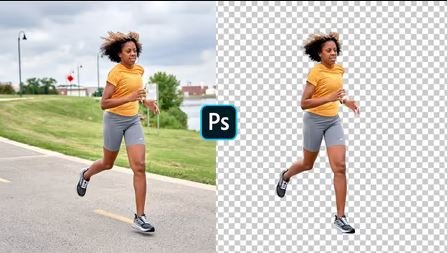
My name is Solomon and in today's course, am going to show you how to remove backgrounds in Photoshop. This course is meant for beginners and that means am going to go slow and deliver all the information so that you can follow along.​

Hy there,
My name is Solomon and in today's course, am going to show you how to remove backgrounds in Photoshop. This course is meant for beginners and that means am going to go slow and deliver all the information so that you can follow along.
In fact there is a lot of ways of removing backgrounds in photoshop. What am going to show you is a technique that works in most cases and if it doesn't all you need to do is to finetune your image a little further should work.
Keep in mind there is a lot of ways of removing backgrounds in Adobe Photoshop. Am just showing you a technique that I think it works in most cases and is actually very simple. Let me show you how that works .......................
We'll cover the following topics;
The select and mask workspace
Make a selection with the quick selection tool
Make a selection with select subject
Make a selection with the object selection tool
Refine your selection
Refine the Mask Edge with the Global Refinement Sliders
Refine the Hair
Add a New Solid Color Background
Remove Background Button
Add a New Background
Final Words
Screenshots


Zurück
Oben Unten