• Regeln für den Video-Bereich:

    In den Börsenbereich gehören nur Angebote die bereits den Allgemeinen Regeln entsprechen.

    Einteilung

    - Folgende Formate gehören in die angegeben Bereiche:
    - Filme: Encodierte Filme von BluRay, DVD, R5, TV, Screener sowie Telesyncs im Format DivX, XviD und x264.
    - DVD: Filme im Format DVD5, DVD9 und HD2DVD.
    - HD: Encodierte Filme mit der Auflösung 720p oder darüber von BluRay, DVD, R5, TV, Screener sowie Telesyncs im Format x264.
    - 3D: Encodierte Filme von BluRay, die in einem 3D Format vorliegen. Dies gilt auch für Dokus, Animation usw.
    - Serien: Cartoon/Zeichentrick, Anime, Tutorials, Dokumentationen, Konzerte/Musik, Sonstiges sind demnach in die entsprechenden Bereiche einzuordnen, auch wenn sie beispielsweise im High Definition-Format oder als DVD5/DVD9/HD2DVD vorliegen. Ausnahme 3D.
    - Bereich Englisch: Englische Releases gehören immer in diesen Bereich.
    - Bereich Talk: Der Bereich, in dem über die Releases diskutiert werden kann, darf, soll und erwünscht ist.


    Angebot/Beitrag erstellen

    - Ein Beitrag darf erst dann erstellt werden, wenn der Upload bei mindestens einem OCH komplett ist. Platzhalter sind untersagt.
    - Bei einem Scenerelease hat der Threadtitel ausschließlich aus dem originalen, unveränderten Releasenamen zu bestehen. Es dürfen keine Veränderungen wie z.B. Sterne, kleine Buchstaben o.ä. vorgenommen werden. Ausnahme Serienbörse:
    - Bei einem Sammelthread für eine Staffel entfällt aus dem Releasename natürlich der Name der Folge. Beispiel: Die Simpsons S21 German DVDRip XviD - ITG
    - Dementsprechend sind also u.a. verboten: Erweiterungen wie "Tipp", "empfehlenswert", "only", "reup", usw. / jegliche andere Zusatzinformation oder Ergänzung, welche nicht in obiger Beschreibung zu finden ist.

    Aufbau des Angebots und Threadtitel

    Der Titel nach folgendem Muster erstellt zu werden. <Name> [3D] [Staffel] [German] <Jahr> <Tonspur> [DL] [Auflösung] <Quelle> <Codec> - <Group>
    Beispiel: The Dark Knight German 2008 AC3 DVDRip XviD - iND
    Beispiel: The Dark Knight 2008 DTS DL BDRip x264 - iND
    Beispiel: The Dark Knight 2008 AC3 DL BDRip XviD - iND
    Beispiel: The Dark Knight German 2008 AC3 720p BluRay x264 iND
    Beispiel: The Dark Knight 2008 DTS DL 1080p BluRay x264 iND
    Beispiel: Die Simpsons S01 German AC3 DVDRip XviD iND
    Beispiel: Die Simpsons S20 German AC3 720p BluRay x264 iND
    Beispiel: Sword Art Online II Ger Sub 2014 AAC 1080p WEBRip x264 - peppermint
    Entsprechend sind also u.a. verboten: Sonderzeichen wie Klammern, Sterne, Ausrufezeichen, Unterstriche, Anführungszeichen / Erweiterungen wie "Tipp", "empfehlenswert", "only", "reup", usw. / jegliche andere Zusatzinformation oder Ergänzung, welche nicht in obiger Beschreibung zu finden ist
    Ausnahmen hiervon können in den Bereichen geregelt sein.

    Die Beiträge sollen wie folgt aufgebaut werden:
    Überschrift entspricht dem Threadtitel
    Cover
    kurze Inhaltsbeschreibung
    Format, Größe, Dauer sind gut lesbar für Downloader außerhalb des Spoilers zu vermerken
    Nfo sind immer Anzugeben und selbige immer im Spoiler in Textform.
    Sind keine Nfo vorhanden z.B. Eigenpublikationen, sind im Spoiler folgende Dateiinformationen zusätzlich anzugeben :
    Quelle
    Video (Auflösung und Bitrate)
    Ton (Sprache, Format und Bitrate der einzelnen Spuren)
    Untertitel (sofern vorhanden)
    Hosterangabe in Textform außerhalb eines Spoiler mit allen enthaltenen Hostern.
    Bei SD kann auf diese zusätzlichen Dateiinformationen verzichtet werden.

    Alle benötigten Passwörter sind, sofern vorhanden, in Textform im Angebot anzugeben.
    Spoiler im Spoiler mit Kommentaren :"Schon Bedankt?" sind unerwünscht.


    Releases

    - Sind Retail-Release verfügbar, sind alle anderen Variationen untersagt. Ausnahmen: Alle deutschen Retail-Release sind CUT, in diesem Fall sind dubbed UNCUT-Release zulässig.
    - Im Serien-Bereich gilt speziell: Wenn ein Retail vor Abschluss einer laufenden Staffel erscheint, darf diese Staffel noch zu Ende gebracht werden.62
    - Gleiche Releases sind unbedingt zusammenzufassen. Das bedeutet, es ist zwingend erforderlich, vor dem Erstellen eines Themas per Suchfunktion zu überprüfen, ob bereits ein Beitrag mit demselben Release besteht. Ist dies der Fall, ist der bereits vorhandene Beitrag zu verwenden.
    - P2P und Scene Releases dürfen nicht verändert oder gar unter einem iND Tag eingestellt werden.


    Support, Diskussionen und Suche

    - Supportanfragen sind entweder per PN oder im Bereich Talk zu stellen.
    - Diskussionen und Bewertungen sind im Talk Bereich zu führen. Fragen an die Uploader haben ausschließlich via PN zu erfolgen, und sind in den Angeboten untersagt.
    - Anfragen zu Upload-Wünschen sind nur im Bereich Suche Video erlaubt. Antworten dürfen nur auf Angebote von MyBoerse.bz verlinkt werden.


    Verbote

    - Untersagt sind mehrere Formate in einem einzigen Angebotsthread, wie beispielsweise das gleichzeitige Anbieten von DivX/XviD, 720p und 1080p in einem Thread. Pro Format, Release und Auflösung ist ein eigener Thread zu eröffnen.
    - Grundsätzlich ebenso verboten sind Dupes. Uploader haben sich an geeigneter Stelle darüber zu informieren, ob es sich bei einem Release um ein Dupe handelt.
    - Gefakte, nur teilweise lauffähige oder unvollständige Angebote sind untersagt. Dies gilt auch für eigene Publikationen, die augenscheinlich nicht selbst von z.B. einer DVD gerippt wurden. Laufende Serien, bei denen noch nicht alle Folgen verfügbar sind, dürfen erstellt und regelmäßig geupdatet werden.
    - Untersagt sind Angebote, welche nur und ausschließlich in einer anderen Sprache als deutsch oder englisch vorliegen. Ausnahmen sind VORHER mit den Moderatoren zu klären.


    Verstoß gegen die Regeln

    - Angebote oder Beiträge, die gegen die Forenregeln verstoßen, sind über den "Melden"-Button im Beitrag zu melden.
  • Bitte registriere dich zunächst um Beiträge zu verfassen und externe Links aufzurufen.

++ Premium IPTV ++ 7000 Live Sender ++ UHD Qualität ++ Mediathek mit 18.000 Inhalten ++


VenneTV


Englische Tutorials

Futuristic Game Environment in Blender

2fzxlp7mqatnfd9rxxsl577jpd.jpg


Futuristic Game Environment in Blender
Emiel Sleegers | Duration: 18h 57m | Video: H264 1920x1016 | Audio: AAC 44,1 kHz 2ch | 11,1 GB | Language: English

Learn How to Create a Game-Ready Environment Using Blender, Substance Painter & Unreal

Finding a Blender course on creating a game environment that will take your skills to a whole new level can be hard to find. But don't worry, I am here to show you my workflow that will guide you in creating a professional environment like you see in AAA video games that you play today.

In this course, we will go through the entire pipeline of creating a game-ready environment. The major topics we will be covering are:

• High Poly to Low Poly Modeling using Blender
• Proper UV unwrapping in Blender
• Baking maps in Marmoset Toolbag
• Detailing & Texturing in Substance Painter
• Scene setup, lighting, & post effects in Unreal Engine
• By the end of this course, you will be able to create a clean and amazing futuristic game environment.

Before beginning this course, you should have a basic knowledge of Blender, Substance Painter, Marmoset Toolbag and Unreal Engine.

If you want to be a 3D environment artist, you need to know the latest tools, methods, and strategies to better strengthen your skills to get closer to your goal. This course will put you ahead of 99.9% of all beginners out there when it comes to game environment creation. In this course, you will learn the proper workflow and techniques that will allow you to build a complete production-ready scene.

Homepage
catrnmo3p1i5rtreq792v2qjo2.jpg


Full Stack Mobile Application Development - Master Class

nhwgmab5sxmivdtyfwjefnhjxt.jpg


Full Stack Mobile Application Development - Master Class
Genre: eLearning | MP4 | Video: h264, 1280x720 | Audio: AAC, 44.1 KHz
Language: English | VTT | Size: 8.66 GB | Duration: 10h 36m

Native Android,Native IOS,Flutter,React Native,Xamarin


What you'll learn
You will learn about Full Stack Mobile App Development with native and Hybrid mobile apps framework.
Android with Java and Kotlin
IOS with Swift
Flutter with Dart
React Native with JavaScript
Xamarin with C#
Tools - Android Studio - Xcode - Visual Studio and Visual Studio Code
Weekly Updates with new Material on demand


Description
There's strong motivation for companies to find someone who can "do it all".

This Course explores the features of full-stack mobile development environments and covers several core native and hybrid mobile alternatives and the factors that influence the selection of each platform.

Full-stack mobile app development lies at the nexus of content and technology. Billions of people worldwide now use smartphones and tablets, which form the client side of the full-stack app. The server side is often a distributed collection of microservices, authenticating servers, and CDN assets that are compiled at runtime each time an application is opened. Between the two lies the processes that connect them, including testing, continuous integration and continuous deployment, scaling and containerization, and proprietary device requirements.

To be a full-stack mobile developer, you need to have an understanding, or vision, of the big picture in app development.

This includes:

The look and feel in devices

The servers and containers that are accessed to provide content and data processing

Development processes like testing and debugging

Reasons and trade-offs behind choosing solutions among many alternatives

This course will provide an overview of some of the most popular tools (in 2021) for developing full-stack mobile apps. I touched on some of the core concepts, considerations, dependencies, and ecosystems, while leaving the heavy lifting to upcoming articles and tutorials.

What you will learn in this course ?

App development lifecycle Introduction

Android and IOS Layout and Widgets

Android and IOS MultiMedia

Android and IOS Maps

Android and IOS Networking

Android and IOS Storage

Android and IOS Firebase

Android and IOS GraphQL

Android and IOS Camera

Android and IOS Best Practices for coding and design pattern

Git and GitHub Intro

Android and IOS Mobile Application Security Tips

Android and IOS App Publication

Programming Language Used

Java

Kotlin

Swift

Dart

C#

JavaScript

XML and XMAL

SQL and GraphQL


Homepage

005iostableviewcontrox2jje.jpg


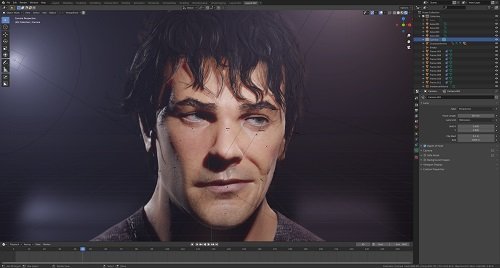
Face Rigging in Blender 2.8 Tutorial

tt4dmqby6ohgc0xomzp1phuk4k.jpg


Face Rigging in Blender 2.8 Tutorial
MP4 | Video: h264, yuv420p, 1920x1080 | Audio: aac, 48000 Hz | Duration: 6h 39min | File Size: 6.03 GB
Genre: eLearning | Language: English

In this course, I'll present to you my workflow of creating realistic Face Rig based on shape keys. In the begging, after a small introduction to Face Action Coding system and some advice on organizing the work, I will walk you through the process of sculpting necessary expressions. I'll show you how to utilize references, and give some tips and tricks on forming the face, managing stretches and sculpting important wrinkles. In the sculpting process I will be using ZBRUSH, but after some minor workflow adjustments you can without a problem do it in BLENDER (I show how to sculpt realistic face just in Blender in my "Realistic Face Creation in Blender" course.

Afterward, we will take all of the expressions sculpted in Zbrush and implement them to the face rig. Face deformations will be made by shape keys driven by the bones. Moreover, we will use high detail information made in Zbrush to create Dynamic Wrinkle System in Eevee (it works in Cycles as well).
Then I'll show you how to make your animation work way more convenient, by creating puppeteering systems for a more intuitive animating process.
In the end, I'll present to you, how to prepare your rig for the export to Unreal Engine. And how to set up the Dynamic Wrinkle system in it as well.

01. Introduction.mp4
02. Exp. Smile And Sad.mp4
03. Exp. Contempt And Angry.mp4
04. Exp. Disgust And Surprise.mp4
05. Additional Shape Keys.mp4
06. Additional Shape Keys.mp4
07. Additional Shape Keys.mp4
08. Additional Shape Keys.mp4
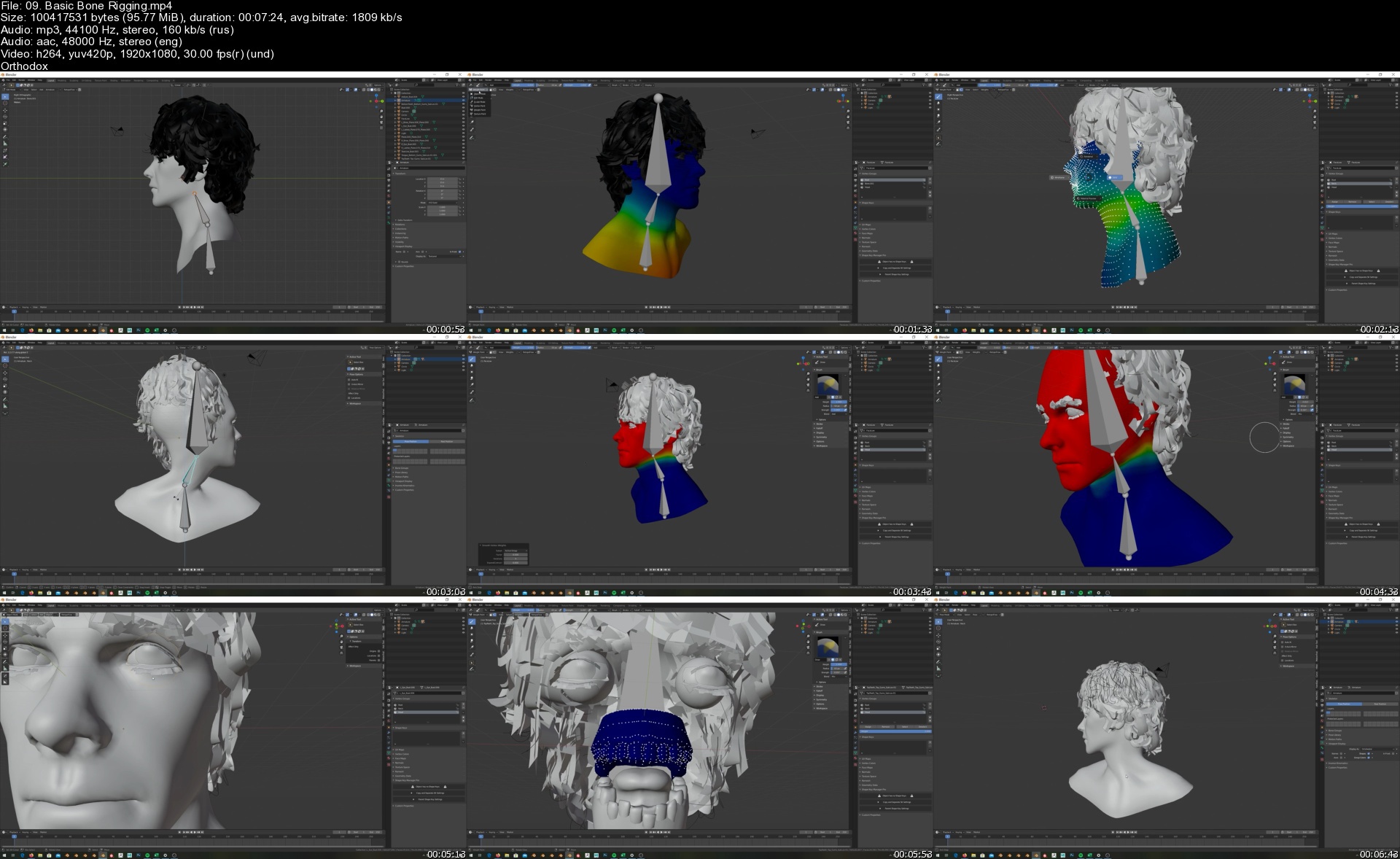
09. Basic Bone Rigging.mp4
10. Importing Shape Keys - Part 1.mp4
11. Importing Shape Keys - Part 2.mp4
12. Corrective Shape Keys.mp4
13. Bones And Drivers Setup.mp4
14. Visual Controlers Setup.mp4
15. Wrinkle Map Preparation.mp4
16. Eevee Dynamic Wrinkle System.mp4
17. Eyes Shape Keys And Facial Hair.mp4
18. Face Rig Puppeteering System.mp4
19. Rig Preparation To Export.mp4
20. Unreal Dynamic Wrinkle System.mp4

Homepage

09.basicboneriggingsl7kuk.jpg


Embedded Systems STM32 Low-Layer APIs(LL) Driver Development

rxqp3nr0u9kgmkghoghz7x1jw2.jpg


Embedded Systems STM32 Low-Layer APIs(LL) Driver Development
MP4 | Video: h264, 1280x720 | Audio: AAC, 44.1 KHz, 2 Ch
Genre: eLearning | Language: English + srt | Duration: 73 lectures (25h 41m) | Size: 11.7 GB

STM32 Low-Level (LL) Drivers: ADC,UART,TIMERS, GPIO,SPI,I2C,RTC,WWDG,IWDG,RCC etc

What you'll learn:
Write firmware using only Low-Level Functions
Understand the Cortex-M Architecture
Write Analog-to-Digital Converter (ADC) drivers using Low-Level Functions
Write PWM drivers using Low-Level Functions
Write UART drivers using Low-Level Functions
Write TIMER drivers using Low-Level Functions
Write Interrupt drivers using Low-Level Functions
Write SPI drivers using Low-Level Functions
Write I2C drivers using Low-Level Functions
Write RTC drivers using Low-Level Functions
Write DMA drivers using Low-Level Functions
Write RCC drivers using Low-Level Functions
Write WWDG drivers using Low-Level Functions
Write IWDG drivers using Low-Level Functions

Requirements
No programming experience needed - I'll teach you everything you need to know.
STM32F411-NUCLEO
We shall be using the STM32CubeIDE which is FREE.


Description
Welcome to the Embedded Systems STM32 Low-Layer APIs(LL) Driver Development course.

The STM32 Low-Layer APIs ( as known as LL) offers a fast light-weight expert-oriented layer which is closer to the hardware than the HAL APIs (Hardware Abstraction Layer). The LL offers low-level APIs at the register level with better optimization. These require deep knowledge of the MCU and peripheral specifications which we shall cover in this course.

With a programming based approach, this course is designed to give you a solid foundation in firmware and peripheral driver development for the STM32 family of microcontrollers. The goal of this course is to teach you how to navigate the microntroller reference manual and datasheet to extract the right information to professionally build peripheral drivers and firmware using the STM32 Low-Layer APIs

By the end of this course you will be able to develop drivers for peripherals like the ADC, UART,PWM, GPIO, TIMER,I2C, SPI, RTC, WWDG, IWDG, RCC, EXTI etc. You will also master the STM32 architecture and how to build professional embedded firmware for STM32 microcontrollers.

Please take a look at the full course curriculum.

REMEMBER : I have no doubt you will love this course. Also it comes with a FULL money back guarantee for 30 days! So put simply, you really have nothing to loose and everything to gain.

Sign up and let's start toggling some register bits.

--------------------------------------Some highlights------------------------------------

Write Analog-to-Digital Converter (ADC) drivers using Low-Level functions

Write PWM drivers using Low-Layer functions

Write UART drivers using Low-Layer functions

Write TIMER drivers using Low-Layer functions

Write Interrupt drivers using Low-Layer functions

Write SPI drivers using Low-Layer functions

Write I2C drivers using Low-Layer functions

Write RTC drivers using Low-Layer functions

Write DMA drivers using Low-Layer functions

Write RCC drivers using Low-Layer functions

Write WWDG drivers using Low-Layer functions

Write IWDG drivers using Low-Layer functions

Who this course is for
If you are an absolute beginner to embedded systems, then take this course.
If you are an experienced embedded developer and want to learn how to professionally develop embedded applications for ARM processors, then take this course.

Homepage

002codinginputinterru61j47.jpg


Delta VFD Real Applications With Plc - Modbus -HMI -VFDSoft

ewpnvfdbw7di1sbmbyqtcuxjzi.jpg


Delta VFD Real Applications With Plc - Modbus -HMI -VFDSoft
MP4 | Video: h264, 1280x720 | Audio: AAC, 44.1 KHz, 2 Ch
Genre: eLearning | Language: English + srt | Duration: 69 lectures (7h 4m) | Size: 5.33 GB

Learn Delta AC Drive Applications with Real Hardware and AS200 Plc - DOP 100 HMIs - RS-485 Communication - VFDSoft

What you'll learn:
Delta AC Drives
Modbus Communication
HMI Programming
DOPSoft
ISPSoft
Plc Programming Basics
Motor Control Basics
AS200 Series Plc Basics
Technical Informations About Industrial Automation
Applications and Realities
VFD Basics
PID Control of VFD
VFDSoft

Requirements
You need to be willing to learn and be patience .You need to keep following instructions and applications carefully


Description
Dear friends,

In this course, we made applications for you by using delta vfds and real hardware.

You will see how we can control a 3 phase motor.

You will see how the parameters of delta vfds affect the motor.

We read all the values ​​of the vfd over Modbus communication and wrote the values ​​to the vfd.

We run the vfd with the keypad on it.

We run the vfd with the buttons on it.

We run the vfd frequency with digital potentiometer or up and down keys.

At the same time, we checked the vfd with the external terminals.

We wrote a frequency value to the vfd with an external potentiometer.

We controlled the vfd with serial communication over PLC and wrote all frequency values ​​over communication.

At the same time, we gave the forward-reverse and stop-run commands of the vfd over communication.

We have programmed the terminals on the vfd and made applications for you to do almost any application.

We did PID control with the vfd.

We applied different voltages to the vfd and the motor, applied dc brakes and monitored all results.

With the Dopsoft program, we checked the vfd via hmi.

While learning dopsoft on the one hand, we showed all the values ​​of the vfd on the screen with dopsoft on the other hand.

And we wrote to the vfd from the screen.

We learned about plc programming by making small applications with basic plc programming training.

With the VFDSoft program, we connected to the vfd and checked the vfd on the computer.

We backed up the vfd parameters and uploaded the backed-up parameters to the vfd.

We watched and recorded the vfd's information with the trend.

We have seen how we can easily change the parameters of the vfd with vfdsoft.

In short, what you will learn in this training;

- Delta AC Vfds

- Delta VFD Parameters and Applications

- VFDSoft

- ISPSoft

- Basics of Plc Programming

- AS200 Series Plc

- DOPSoft

- DOP 100 HMI Basics

- Complete Modbus (RS-485) Communication

- PID Control

- Motor Control for Different Conditions and Applications

And much more than these.

The most important point for this course is that all the information is included in the course practically.

All technical details are practically demonstrated and applied.

Who this course is for
Anyone wanting full control of delta vfds
Anyone who wants to do modbus communication with Delta vfds
Anyone who wants to use delta vfds in all kinds of applications
Anyone who wants to improve plc programs and applications

Homepage

004outputfrequencycuru9k2g.jpg


Database Engineer/DBA - (PostgreSQL, IBM-DB2, MariaDB,NoSQL)

obvkjyzg17rvtvkhrrne7lnkzr.jpg


Database Engineer/DBA - (PostgreSQL, IBM-DB2, MariaDB,NoSQL)
MP4 | Video: h264, 1280x720 | Audio: AAC, 44100 Hz
Language: English | Size: 5.45 GB | Duration: 18h 16m


What you'll learn
Installing Database Servers
Creating Databases
Creating Tables
Extracting and joining data from multiple tables
Dropping and Truncating Tables
Performing CRUD Operations
Sorting and Filtering Data
Creating Stored Procedures
Querying database with various operators
Creating Triggers
Creating Views
Implementing Database Security
Backing up and restoring database
Aggregating data with Aggregate Functions
Analyzing data with Analytic Functions
Creating NoSQL Databases
Interacting with NoSQL Databases

Requirements
A Computer is required + Internet connection

Description
Database engineers design new databases based on company needs, data storage needs, and the number of users accessing the database. Monitor Databases and Programs. Database engineers continuously monitor databases and related systems to ensure high functionality.

Database administrator ensures that data is available, protected from loss and corruption, and easily accessible as needed. Also they oversee the creation, maintenance and security of your databases. manages, backs up and ensures the availability of the data.

PostgreSQL is commonly known as Postgres and it is also open source database. PostgreSQL is a powerful, open source object-relational database system.

IBM Db2 is a family of related data management products,including relational database servers, developed and marketed by IBM.

MariaDB is great for its open-source innovation and enterprise-grade reliability, as well as its modern relational database.

SQL -Structured Query Language is an internationally recognized language used to communicate and manipulate various database systems.

Data is everywhere and growing at a rapid rate. Most Software application we interact with daily deals with stored data . From our interaction with our banks to social media applications like Facebook and Instagram..

Due to the relevance and dependency on data , professionals that are skilled in SQL are always in high demand to help interact with various databases to help business intelligence and other sectors that relies on data.

NoSQL (Non-SQL or Not-only-SQL) databases are increasing in popularity due to the growth of data as they can store non-relational data on a super large scale, and can solve problems regular databases can't handle. They are widely used in Big data operations. Their main advantage is the ability to handle large data sets effectively as well as scalability and flexibility issues for modern applications.


Who this course is for:
Beginner Database Engineers
Beginner Database Administrators
Beginner Data Analyst


Homepage

003creatingviewss3ejcy.jpg


Create a Laravel server with mobile integration

yipc26bgml0sonsr5tylrhxkkz.jpg


Create a Laravel server with mobile integration
MP4 | Video: h264, 1280x720 | Audio: AAC, 44.1 KHz, 2 Ch
Genre: eLearning | Language: English + srt | Duration: 29 lectures (10h 23m) | Size: 5.3 GB

Integration between laravel and a ionic mobile framework.

What you'll learn:
How to setup a laravel server aplication.
Mobile integration with a laravel backend server.
Basic of api request.
Laravel Sanctum.
Login logic for a mobile aplication.
Basic of ionic framework.

Requirements
Basic knowledge of laravel.
Basic knowledge of javascript
Composer tool
Npm tool
Basic knowledge of vue js.
Basic knowledge of php.
Basic knowledge of mysql.


Description
In this course you are going to learn how to create a Web Server application with Laravel Framework using a clean laravel packages structure. I am going to teach you how to use a basic login system , api auth with laravel sanctum, and custom middleware, basic laravel commands structure for installation and packages resource import and export. At the beggining of the course, I am going to show you a basic structure with tailwind and vue js preset , features such as a basic login which you can find in the course's resources.

Later on, we are going to focus on the Mobile Application and on how to use ionic framework with vue js, axios, local storage, basic vue js setup, simple token storage and authentications with the laravel server using axios requests, simple project organizations.

This course is good for anyone who wants to learn how to create a mobile application side by side with a server. The skills required for this course are: basic laravel knowledge such as request validations, model creations, controllers resources ,routes setup, migrations, and some basic knowledge of javascript, vue js 3 , axios, javascript local storage.

At the end of this course, you will be able to create any kind of mobile application working side by side with a backend laravel server.

Who this course is for
Laravel Developers
Front end Developers
Backend Developers
Medium Developers.
Laravel Migrations.
Laravel packa

Homepage

019finishtosetuploginphkq0.jpg


Artificial Intelligence In Python: Build 6 AI Projects

jzxzwssvmgzqysvjjlpgjikk7j.jpg


Artificial Intelligence In Python: Build 6 AI Projects
MP4 | Video: h264, 1280x720 | Audio: AAC, 44100 Hz
Language: English | Size: 17.9 GB | Duration: 20h 49m


What you'll learn
Machine Learning
Deep Learning
Natural Language Processing
Artificial Neural Network
Convolutional Neural Network
Recurrent Neural Network

Requirements
For taking up this course you need to be enthusiastic and self confident.
You need to have good knowledge of programming and basic mathematical skills.

Description
Are you ready to master Artificial Intelligence skills?

Artificial intelligence (AI) refers to the simulation of human intelligence in machines that are programmed to think like humans and mimic their actions.

It is the simulation of natural intelligence in machines that are programmed to learn and mimic the actions of humans. These machines are able to learn with experience and perform human-like tasks. As technologies such as AI continue to grow,

they will have a great impact on our quality of life.

Artificial intelligence (AI) is one of the top tech fields to be in right now!

Financial institutions, legal institutions, media companies, and insurance companies are all figuring out ways to use artificial intelligence (ai) to their advantage. From fraud detection to writing news stories with natural language processing(NLP) and reviewing law briefs, AI's reach is extensive.

If you want to build super-powerful applications in artificial intelligence(ai).

Then, you are at the right place.

This course will provide you with in-depth knowledge on a very hot topic i.e., Artificial Intelligence(AI).

The purpose of this course is to provide you with knowledge of key aspects of modern AI without any intimidating mathematics and in a practical, easy, and fun way. The course provides students with practical hands-on experience using real-world datasets.

This course will cover the following topics:-

1. Natural Language Processing (NLP).

2. Artificial Neural Network (ANN).

3. Convolutional Neural Network (CNN).

4. Recurrent Neural Network. (RCN)

5. Machine Learning (ML).

6. Deep Learning (DL).

This course will take you through the basics to an advanced level in all the mentioned four topics.

After taking this course, you will be confident enough to work independently on any projects on these topics.

There are lots and lots of exercises for you to practice In this Python Data Science Course and also a 5 Bonus Data Science Project "Sentiment Analysis", "Drug Prescription", "Detecting Pneumonia from X-rays", "Stock Market Prediction", "Fruits Recognition" and "Face emotion Recognition".

In this Sentiment Analysis project, you will learn how to Extract and Scrap Data from Social Media Websites and Extract out Beneficial Information from these Data for Driving Huge Business Insights.

In this Drug Prescription project, you will learn how to Deal with Data having Textual Features, you will also learn NLP Techniques to transform and Process the Data to find out Important Insights.

In this Detecting Pneumonia from X-rays project, you will learn how to solve Image Classification Tasks using Deep Neural Networks such as ResNet which is a High Level CNN Architectures.

In this Stock Market Prediction project, you will learn to analyze and the Stock Market Prices using Time Series Forecasting, Advanced Deep Learning Models and different Statistical features.

In this Fruits Recognition project, you will learn how to solve a complicated Image Classification Task with Multiple Classes using various Deep Learning Architectures and Compare the Result.

In this Face Expression Recognizer project, you will learn to use Computer Vision Techniques to detect Human Emotions such as Angry, Sad, Happy, Disgust, Fear etc. to build a Facial Emotion Detector.

You will have access to all the resources used in this course.


Who this course is for:
This course is for everyone who wants to master AI skills.
This course is for students who have already good knowledge of machine learning and have good programming skills.


Homepage

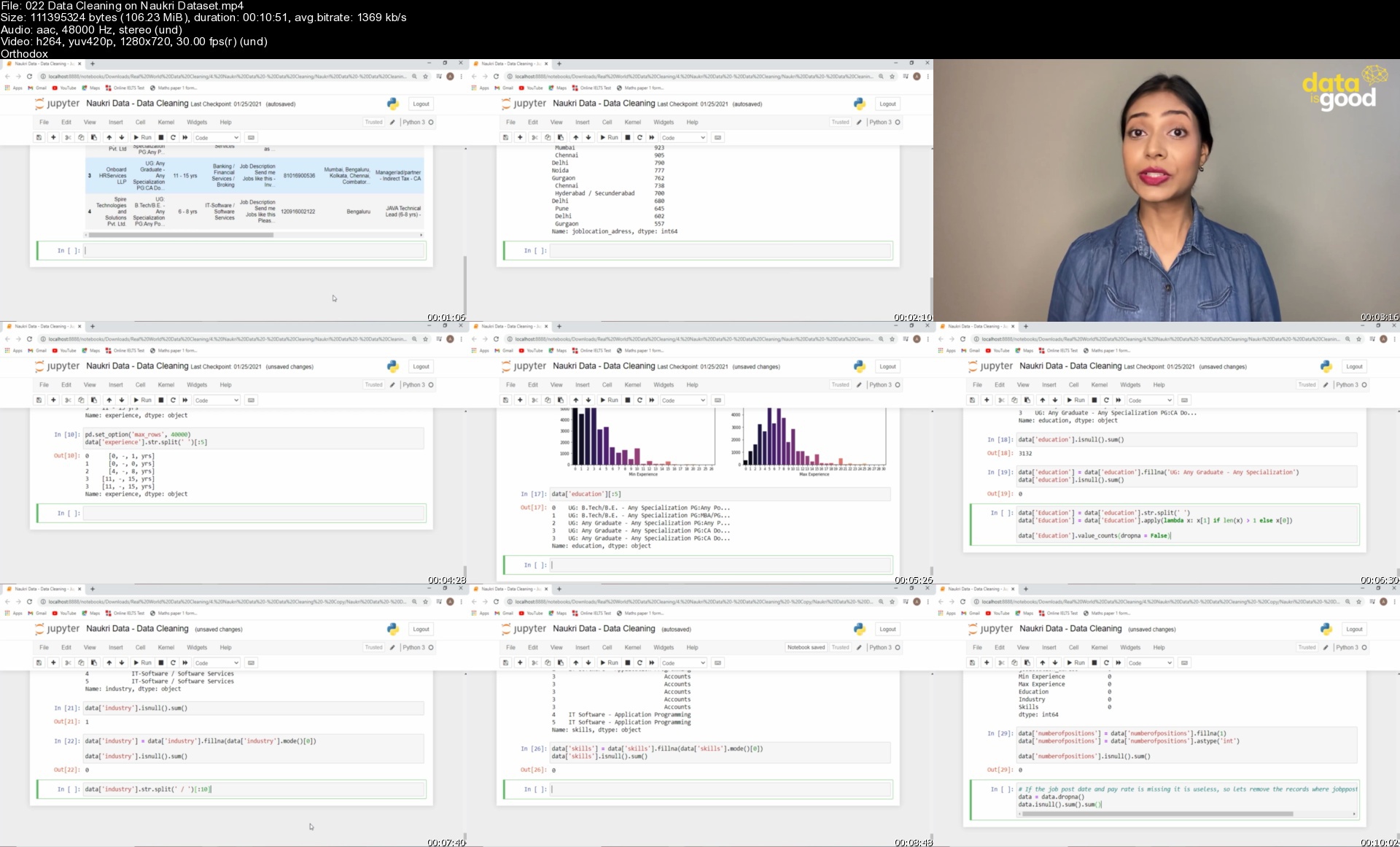
022datacleaningonnaukdvj3u.jpg


Advanced Java ( JDBC,SERVLETS,JSP,JSTL ) For Web Development

1jvgj69w7nepzrewepcuspbk5m.jpg


Advanced Java ( JDBC,SERVLETS,JSP,JSTL ) For Web Development
MP4 | Video: h264, 1280x720 | Audio: AAC, 44.1 KHz, 2 Ch
Genre: eLearning | Language: English + srt | Duration: 38 lectures (8h 17m) | Size: 5.12 GB

Direct Class Room Videos to get complete knowledge on Advanced Java

What you'll learn:
Students can get complete in-depth knowledge on Advanced Java concepts like JDBC, SERVLETS,JSP, JSTLand EL etc

Requirements
Basic Idea on Computer


Description
Welcome to 'Advanced Java (JDBC,SERVLETS,JSP,JSTL) For Web Development':

------------------------------------------------------------------------------------

Payed Courses:

1. Complete Core Java in Simple Way

2. Learn Object Oriented Programming (OOPs) Concepts in Java

3. Complete Core Java In Simple Way Part-2

4. Learn Java Multithreading In Simple Way

5. Advanced Java (JDBC,SERVLETS,JSP,JSTL) For Web Development[New]

Free Courses:

1. Learn Java Wrapper Classes in Simple Way - Free Course

2. Learn 'this' Keyword in Java - Free Course

JDBC[Java Database Connectivity]

SERVLETS

JSP[JAVA Server Pages]

JSTL[Jsp Standard Tag Library]

EL[Expression Language]

Benefits of this course:

1. This Course will provide completeness on every topic.

2. This Course will make you to Strong on Theoritically and

Programmatically

3. This Course will provide Good Platform for the Advanced

Technologies and Frameworks Hibernate, JPA, Spring,......

4. This Course includes almost all the interview Questions

and Answers as part of the Course internally.

5. This Course will provide Downloadable Material for all the

topics which are provided in Course Content.

STORAGE AREAS

As part of the Enterprise Application development it is essential to manage the organizations

data like Employee Details, Customer Details, Products Details..etc

To manage the above specified data in enterprise applications we have to use storage areas

(Memory elements). There are two types of Storage areas.

1) TEMPORARY STORAGE AREAS:

These are the memory elements, which will store the data temporarily

Eg: Buffers, Java Objects

2) PERMANENT STORAGE OBJECTS:

These are the memory elements which will store data permanently.

Eg: FileSystems, DBMS, DataWareHouses.

File Systems:

It is a System, it will be provided by the local operating System.

Due to the above reason File Systems are not suitable for platform independent

technologies

like JAVA.

File Systems are able to store less volume of the data.

File Systems are able to provide less security.

File Systems may increases data Redundancy.

In case of File Systems Query Language support is not available. So that all the database

operations are complex.

DBMS:

Database Management System is very good compare to file System but still it able to store less data

when compared to DataWareHouses.

DBMS is very good at the time of storing the data but which is not having Fast Retrieval

Mechanisms

Who this course is for
Academic Students who are having Java Course in their Curriculum
Software Professionals who are very fancy about Java Programming

Homepage

012type1driverpart2sikkzi.jpg


A-Z Python Bootcamp(2021)-Basics to Data Science (50+ Hours)

x9nzkulqyyblcvrndocohldjbr.jpg


A-Z Python Bootcamp(2021)-Basics to Data Science (50+ Hours)
MP4 | Video: h264, 1280x720 | Audio: AAC, 44.1 KHz, 2 Ch
Genre: eLearning | Language: English + srt | Duration: 463 lectures (50h 43m) | Size: 13.1 GB

Python Basic, Data Structure, API, Scraping, Regex, Pandas, Numpy, Matplotlib, Scikit Learn, Supervised Learning

What you'll learn:
Python basic to advanced in One course
Create your first python project
Create your own data science project
Create your project using Django

Requirements
Willingness to learn Python
Decent computer configuration


Description
Learn python basics by practicing Basic syntax, Regular Expression, Data structure & Algorithm and API

This course is aimed at complete beginners who have never programmed before, as well as existing programmers who pursue to increase their career options by learning Python.

Python is one of the most popular programming languages in the world - Huge companies like Google, amazon use it in mission critical applications like Google Search.

By the end of the course you'll be able to code with confidence using Python programming. This will help you understanding the usage of python in different circumstance.

Become a Junior Python Programmer and land a job in silicon valley.

Get access to all the codes used in the course.

This course will contain all 80+ videos explaining necessary things a beginner needs to know in a programming language.

This course will get continuously updated for beginners to get learn more. I promise to get at least 1 video section to be added per quarter for the next 2 years.

Objective of the Python basic content:

Giving confidence that any student they can be a programmer.

Detailed Installation process

Covers syntax in Python.

Decision making and loops

Python basics like Data types, functions, Modules.

Excel Operation

Python file handling.

Regular Expression.

Programming with OOPS Concept.

Tools required for a Junior python developer job.

This course will teach you Python in a practical manner, with every lecture comes a full coding screen cast and a corresponding code notebook! Learn in whatever manner is best for you!

Help you in enabling processing the data from different source.

File handling from different sources.

The course covers basic algorithmic techniques and ideas for computational problems arising frequently in practical applications: sorting and searching, divide and conquer, greedy algorithms, dynamic programming.

You will learn a lot of theory: how to sort data and how it helps for searching. How to break a large problem into pieces and solve them recursively and it makes sense to proceed greedily.

Objective of the Python data structure content:

Recursion.

Algorithm run time analysis

Arrays

Stack

Linked list

Data Structure

Binary Tree

Binary Search Tree

AVL Tree

Heap tree

Queue

Sorting

Hash Table

Graph Theory

Magic Framework

Computer Programming

Dynamic Programming

Regular expression (Regex):

Fetch the textual information from logs.

Perform the changes in the existing textual information for re-using.

API Python:

This section help you understand the working on API and how to implement the same using Python.

Here we will learn how to get and post the request using API and implement the same.

Will create a simple currency conversion calculator.

We will also cover API for website which we need to sign in. We will be using the API keys and ID to login and fetch the details.

We will explain how to structure and export the data in CSV using Pandas.

Scraping:

Fetch the dat from the URL

Get the information from Robot protected the website.

Fetch the information using pagination

Fetch the information by crawling the pages and storing it in DB.

Pandas:

Creation of Data representation

Data filtering

Data framework

Selection and viewing

Data Manipulation

Numpy:

Datatypes in Numpy

Creating arrays and Matrix.

Manipulation of data.

Standard deviation and variance.

Reshaping of Matrix.

Dot function

Mini-project using Numpy and Pandas package

Matplotlib:

Creation Plots - Line, Scatter, bar and Histogram.

Creating plots from Pandas and Numpy data

Creation of subplots

Customization and saving plots

Scikit Learn

End to end Implementation of Data science and Machine Learning model using Scikit-Learn(SKLearn)

Explained the option of improving the results by changing parameters and Hyper-parameter in a model.

Getting data ready

Choosing estimators

Fitting the data

Predicting values

Evaluation of results

Improving the results of the model

Saving the model.

Supervised Learning

Data analysis and Basic Plotting

Data Correlation in modelling

Getting data ready for modelling

Model explained in Detail

Improving the Model Randomized SearchCV

Grid Search CV

Unsupervised Learning

K-Means Clusterng

Finding Distance between Clusters

Hierarchial Clusterng

Mini-Project

Who this course is for
Beginners who are willing to learn to Code or program
People willing to learn programming from scratch
Get all python related information in a single course

Homepage

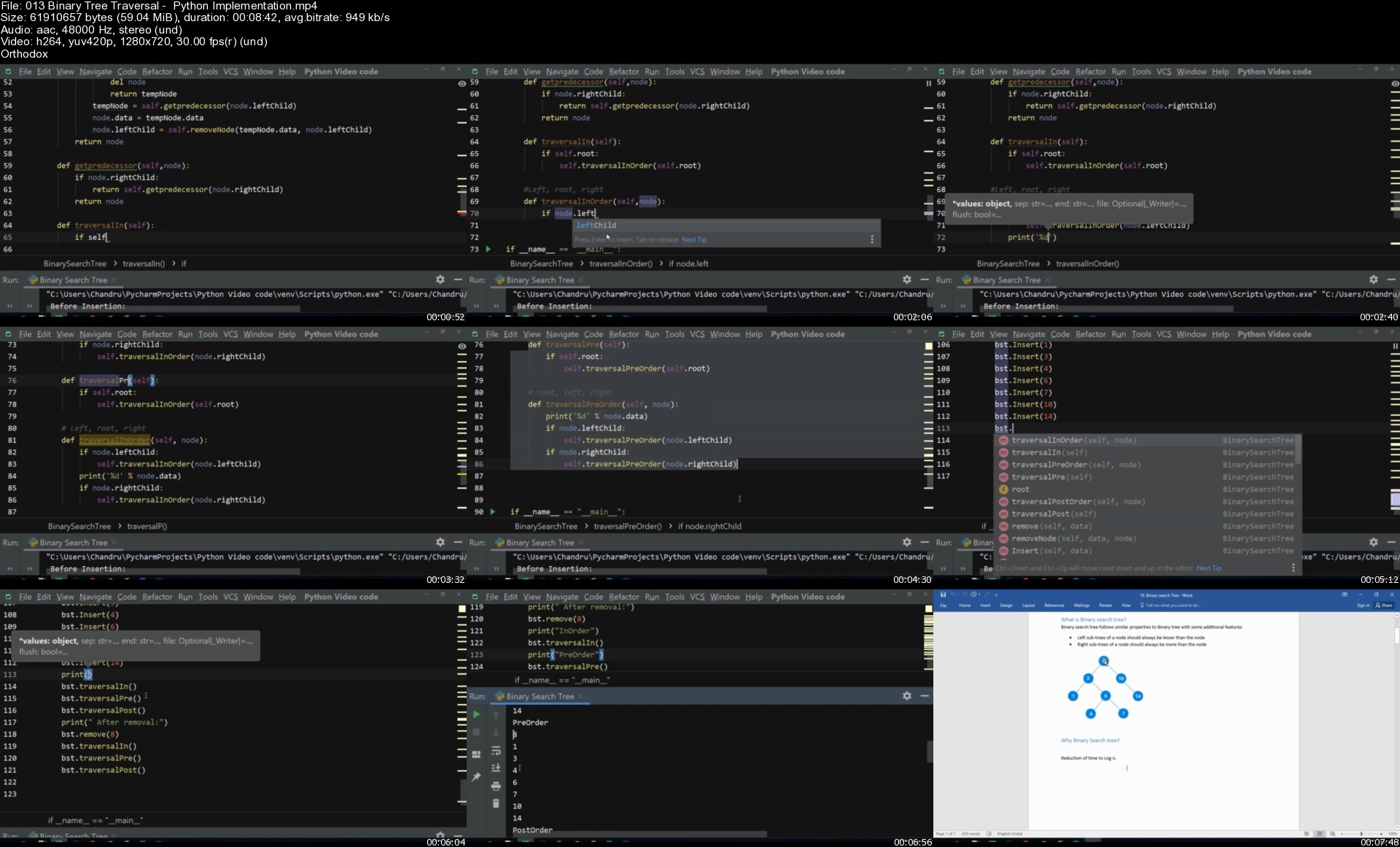
013binarytreetraversat0kv1.jpg


Linkedin Learning Azure Storage Essential Training-XQZT

216664383_01-01-introduction_to_azure_storage_c.jpg


Linkedin Learning Azure Storage Essential Training-XQZT | MKV | 339.52 MiB

602 kb/s 1280x720 | AAC 160 kb/s 2 CH eng


NFO:
File List:

File: 01.01-introduction_to_azure_storage.mkv
Size: 4323772 bytes (4.12 MiB), duration: 00:00:57, avg.bitrate: 607 kb/s
Audio: aac, 48000 Hz, stereo (eng)
Video: h264, yuv420p, 1280x720, 30.00 fps(r) (eng)
Subtitles: eng


Download ( Size: 339.52 MiB ):
Filehosts: Nitroflare, Rapidgator


oHeopzn.png

1 Link/s
6F693FD526.png


5hSo1Ay.png

1 Link/s
37B925C5BC.png


Linkedin Learning Ethical Hacking Hacking Web Servers and Web Applications UPDATE 20210621-XQZT

216673277_06-03-training_in_the_web_security_dojo_c.jpg


Linkedin Learning Ethical Hacking Hacking Web Servers and Web Applications UPDATE 20210621-XQZT | MKV | 243.95 MiB

1 226 kb/s 1280x720 | AAC 160 kb/s 2 CH eng


NFO:
File List:

File: 01.01-testing_to_make_sure_your_website_is_safe.mkv
Size: 11139101 bytes (10.62 MiB), duration: 00:01:12, avg.bitrate: 1238 kb/s
Audio: aac, 48000 Hz, stereo (eng)
Video: h264, yuv420p, 1280x720, 30.00 fps(r) (eng)
Subtitles: eng


Download ( Size: 243.95 MiB ):
Filehosts: Nitroflare, Rapidgator


oHeopzn.png

1 Link/s
883207E6D6.png


5hSo1Ay.png

1 Link/s
7695FAA0FE.png


Zurück
Oben Unten