


• Regeln für den Video-Bereich:

    In den Börsenbereich gehören nur Angebote die bereits den Allgemeinen Regeln entsprechen.

    Einteilung

    - Folgende Formate gehören in die angegeben Bereiche:
    - Filme: Encodierte Filme von BluRay, DVD, R5, TV, Screener sowie Telesyncs im Format DivX, XviD und x264.
    - DVD: Filme im Format DVD5, DVD9 und HD2DVD.
    - HD: Encodierte Filme mit der Auflösung 720p oder darüber von BluRay, DVD, R5, TV, Screener sowie Telesyncs im Format x264.
    - 3D: Encodierte Filme von BluRay, die in einem 3D Format vorliegen. Dies gilt auch für Dokus, Animation usw.
    - Serien: Cartoon/Zeichentrick, Anime, Tutorials, Dokumentationen, Konzerte/Musik, Sonstiges sind demnach in die entsprechenden Bereiche einzuordnen, auch wenn sie beispielsweise im High Definition-Format oder als DVD5/DVD9/HD2DVD vorliegen. Ausnahme 3D.
    - Bereich Englisch: Englische Releases gehören immer in diesen Bereich.
    - Bereich Talk: Der Bereich, in dem über die Releases diskutiert werden kann, darf, soll und erwünscht ist.


    Angebot/Beitrag erstellen

    - Ein Beitrag darf erst dann erstellt werden, wenn der Upload bei mindestens einem OCH komplett ist. Platzhalter sind untersagt.
    - Bei einem Scenerelease hat der Threadtitel ausschließlich aus dem originalen, unveränderten Releasenamen zu bestehen. Es dürfen keine Veränderungen wie z.B. Sterne, kleine Buchstaben o.ä. vorgenommen werden. Ausnahme Serienbörse:
    - Bei einem Sammelthread für eine Staffel entfällt aus dem Releasename natürlich der Name der Folge. Beispiel: Die Simpsons S21 German DVDRip XviD - ITG
    - Dementsprechend sind also u.a. verboten: Erweiterungen wie "Tipp", "empfehlenswert", "only", "reup", usw. / jegliche andere Zusatzinformation oder Ergänzung, welche nicht in obiger Beschreibung zu finden ist.

    Aufbau des Angebots und Threadtitel

    Der Titel nach folgendem Muster erstellt zu werden. <Name> [3D] [Staffel] [German] <Jahr> <Tonspur> [DL] [Auflösung] <Quelle> <Codec> - <Group>
    Beispiel: The Dark Knight German 2008 AC3 DVDRip XviD - iND
    Beispiel: The Dark Knight 2008 DTS DL BDRip x264 - iND
    Beispiel: The Dark Knight 2008 AC3 DL BDRip XviD - iND
    Beispiel: The Dark Knight German 2008 AC3 720p BluRay x264 iND
    Beispiel: The Dark Knight 2008 DTS DL 1080p BluRay x264 iND
    Beispiel: Die Simpsons S01 German AC3 DVDRip XviD iND
    Beispiel: Die Simpsons S20 German AC3 720p BluRay x264 iND
    Beispiel: Sword Art Online II Ger Sub 2014 AAC 1080p WEBRip x264 - peppermint
    Entsprechend sind also u.a. verboten: Sonderzeichen wie Klammern, Sterne, Ausrufezeichen, Unterstriche, Anführungszeichen / Erweiterungen wie "Tipp", "empfehlenswert", "only", "reup", usw. / jegliche andere Zusatzinformation oder Ergänzung, welche nicht in obiger Beschreibung zu finden ist
    Ausnahmen hiervon können in den Bereichen geregelt sein.

    Die Beiträge sollen wie folgt aufgebaut werden:
    Überschrift entspricht dem Threadtitel
    Cover
    kurze Inhaltsbeschreibung
    Format, Größe, Dauer sind gut lesbar für Downloader außerhalb des Spoilers zu vermerken
    Nfo sind immer Anzugeben und selbige immer im Spoiler in Textform.
    Sind keine Nfo vorhanden z.B. Eigenpublikationen, sind im Spoiler folgende Dateiinformationen zusätzlich anzugeben :
    Quelle
    Video (Auflösung und Bitrate)
    Ton (Sprache, Format und Bitrate der einzelnen Spuren)
    Untertitel (sofern vorhanden)
    Hosterangabe in Textform außerhalb eines Spoiler mit allen enthaltenen Hostern.
    Bei SD kann auf diese zusätzlichen Dateiinformationen verzichtet werden.

    Alle benötigten Passwörter sind, sofern vorhanden, in Textform im Angebot anzugeben.
    Spoiler im Spoiler mit Kommentaren :"Schon Bedankt?" sind unerwünscht.


    Releases

    - Sind Retail-Release verfügbar, sind alle anderen Variationen untersagt. Ausnahmen: Alle deutschen Retail-Release sind CUT, in diesem Fall sind dubbed UNCUT-Release zulässig.
    - Im Serien-Bereich gilt speziell: Wenn ein Retail vor Abschluss einer laufenden Staffel erscheint, darf diese Staffel noch zu Ende gebracht werden.62
    - Gleiche Releases sind unbedingt zusammenzufassen. Das bedeutet, es ist zwingend erforderlich, vor dem Erstellen eines Themas per Suchfunktion zu überprüfen, ob bereits ein Beitrag mit demselben Release besteht. Ist dies der Fall, ist der bereits vorhandene Beitrag zu verwenden.
    - P2P und Scene Releases dürfen nicht verändert oder gar unter einem iND Tag eingestellt werden.


    Support, Diskussionen und Suche

    - Supportanfragen sind entweder per PN oder im Bereich Talk zu stellen.
    - Diskussionen und Bewertungen sind im Talk Bereich zu führen. Fragen an die Uploader haben ausschließlich via PN zu erfolgen, und sind in den Angeboten untersagt.
    - Anfragen zu Upload-Wünschen sind nur im Bereich Suche Video erlaubt. Antworten dürfen nur auf Angebote von MyBoerse.bz verlinkt werden.


    Verbote

    - Untersagt sind mehrere Formate in einem einzigen Angebotsthread, wie beispielsweise das gleichzeitige Anbieten von DivX/XviD, 720p und 1080p in einem Thread. Pro Format, Release und Auflösung ist ein eigener Thread zu eröffnen.
    - Grundsätzlich ebenso verboten sind Dupes. Uploader haben sich an geeigneter Stelle darüber zu informieren, ob es sich bei einem Release um ein Dupe handelt.
    - Gefakte, nur teilweise lauffähige oder unvollständige Angebote sind untersagt. Dies gilt auch für eigene Publikationen, die augenscheinlich nicht selbst von z.B. einer DVD gerippt wurden. Laufende Serien, bei denen noch nicht alle Folgen verfügbar sind, dürfen erstellt und regelmäßig geupdatet werden.
    - Untersagt sind Angebote, welche nur und ausschließlich in einer anderen Sprache als deutsch oder englisch vorliegen. Ausnahmen sind VORHER mit den Moderatoren zu klären.


    Verstoß gegen die Regeln

    - Angebote oder Beiträge, die gegen die Forenregeln verstoßen, sind über den "Melden"-Button im Beitrag zu melden.
  • Bitte registriere dich zunächst um Beiträge zu verfassen und externe Links aufzurufen.

++ Premium IPTV ++ 7000 Live Sender ++ UHD Qualität ++ Mediathek mit 18.000 Inhalten ++


VenneTV


Englische Tutorials

Complete Angular 9 from Zero to Hero | Get Hired (Updated 6/2020)
00798e2f.jpg


Complete Angular 9 from Zero to Hero | Get Hired
Video: .mp4 (1280x720, 30 fps(r)) | Audio: aac, 44100 Hz, 2ch | Size: 13.3 GB
Genre: eLearning Video | Duration: 164 lectures (30 hour, 32 mins) | Language: English

All Angular 9 (Angular 2+,Angular 4, Angular 6, 7, 8) topics with Fire-base, Typescript 4, Bootstrap 4 [4 Projects].


What you'll learn

All Angular topics in one course with loads of Examples
Full Understanding Angular Framework & Build many real Angular Applications
Full Understanding Components, Directives, Pipe, Service Layer and Observable data stream
Consuming HTTP services
Full understanding of authentication using JSON Web Tokens (JWT)
Complete Responsive Angular 9 Project Step by Step
Typescript 4.0
Angular interview questions with answers. Tips and tricks. Daily work tasks.
Bootstrap 4.0 & FontAwesome


Requirements

We will start at a basic level and gradually move up to an expert level
Basic HTML 5 and CSS-3 knowledge helps, but isn't a must-have

Description

Join Now Because it's time to get started The Angular Course with loads of Examples and projects.

it's covers everything and will be contentiously updated. with more lectures every period.

Let's Build an Online Store real-world Single Page Applications [Completed Project] from A-Z Step by Step, not just Theoretical and ABC examples.

This course is recommended as it covers not only angular topics But additional material and concepts of Object orientated Programming and Data structure and Design Pattern

The course Cover:-

Object-Oriented Programming

All Angular topics in one course.

Angular Component

Angular Module

Angular Directive

Angular Services

Angular Routing

State Management

Angular view

Angular pipe

Connect with FireBase [ CRUD Operation ]

Angular Authentication & Authorization

JWT Token

REST API, HTTP Request

Dependency Injections

Typescript 4.0

Bootstrap 4.0 & Font-awesome

interview questions with answers.

Tips and tricks.

Daily work tasks.

Are There Lots of Examples? There are loads of examples

Pay once, benefit a lifetime! with 30 Days money-back guarantee. Certification after course completion


Who this course is for:

This course is for people who want to learn the latest version of Angular 9 from scratch
This course is for people who have some JavaScript experience

00798e30.jpg


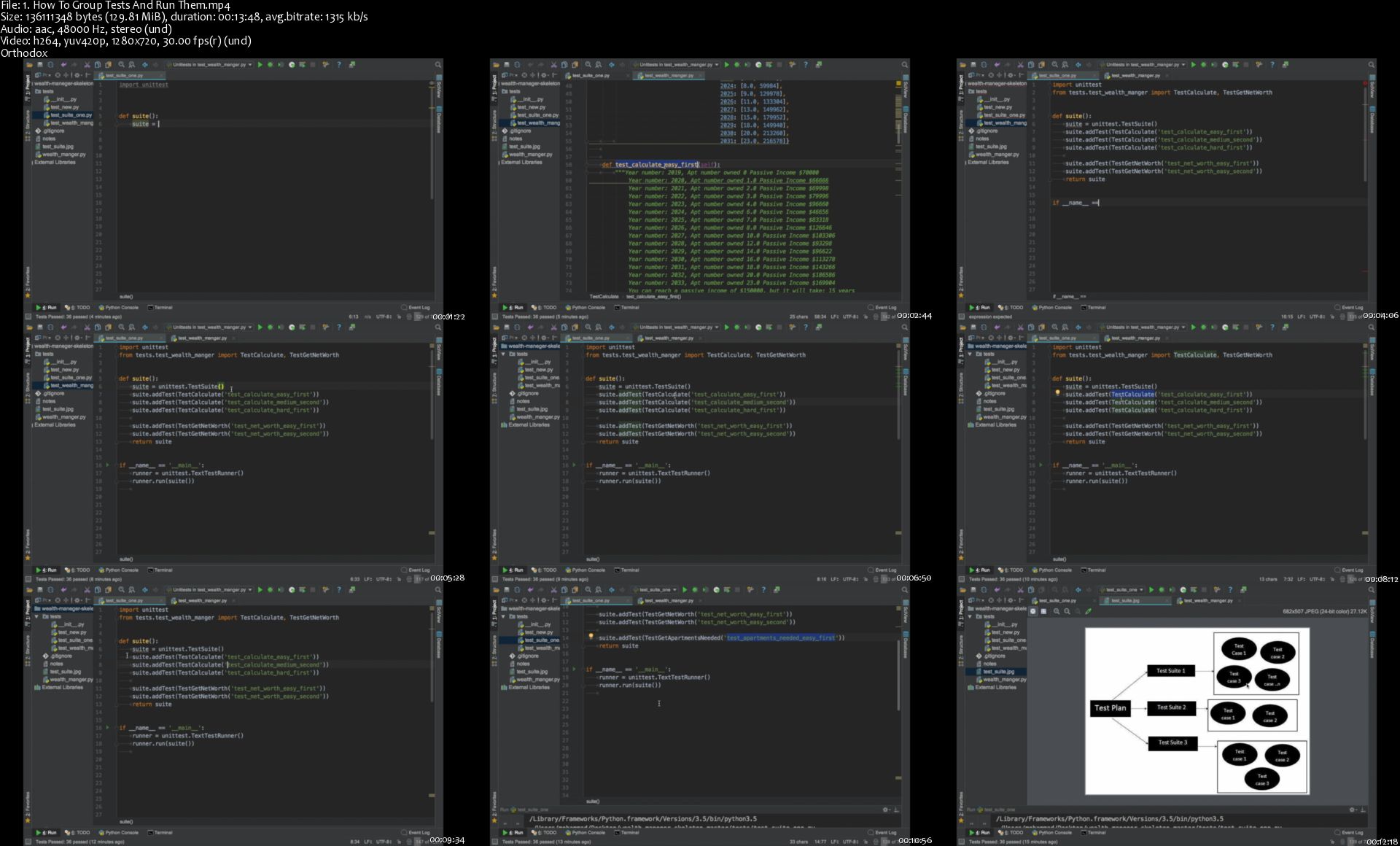
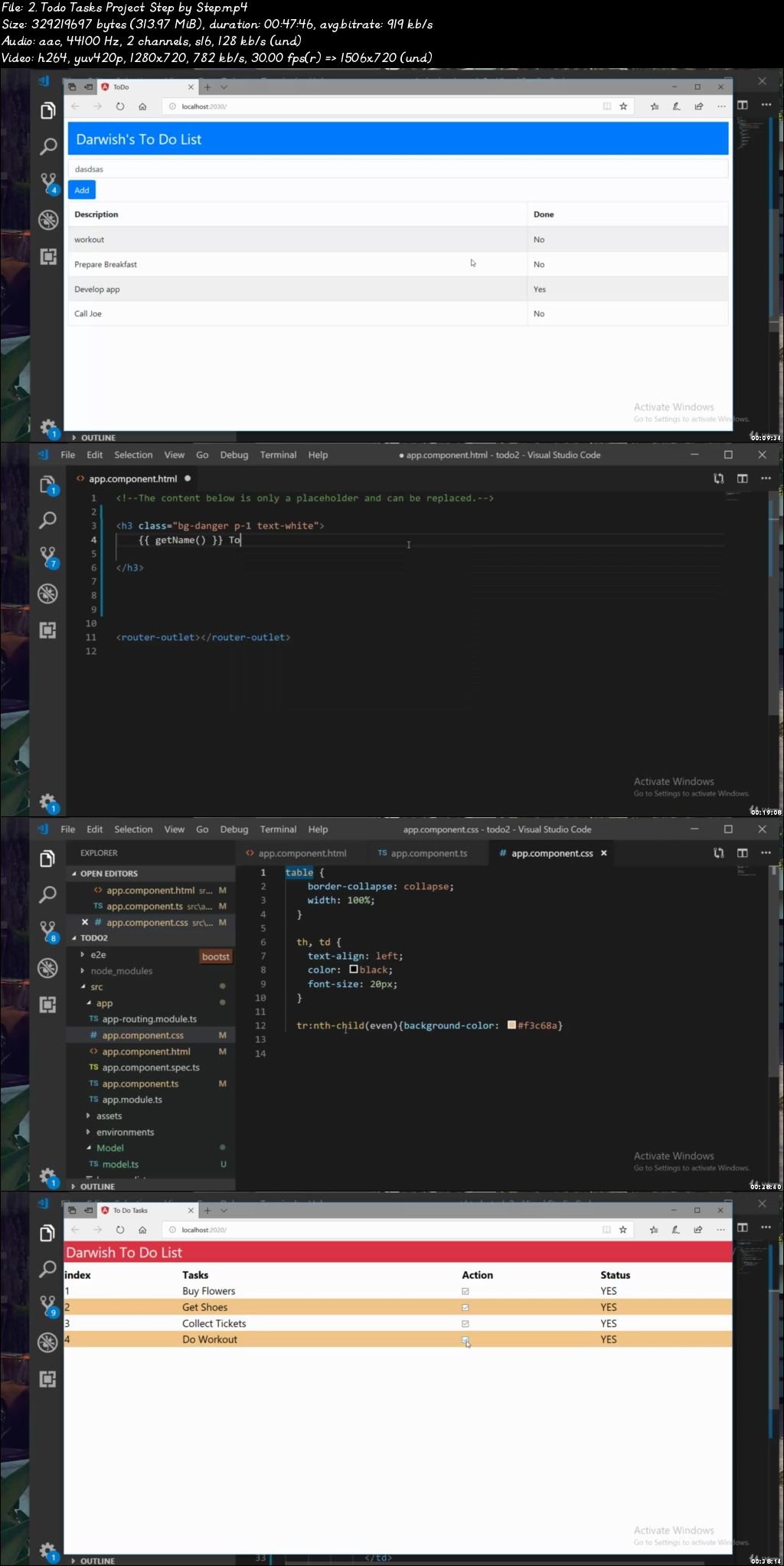
The Ultimate Python Unit Testing Course

t7q2q-EKXZpkz2t-QGe-OVa9y2us-Gpl-UQ7-M.jpg


The Ultimate Python Unit Testing Course
h264, yuv420p, 1280x720 |ENGLISH, aac, 48000 Hz, 2 channels | 8h 33mn | 5.03 GB

This course is all you need to become a master python tester.

What you'll learn

You will learn how to write professional Unit Tests in python
You will learn how to write compete programs given only Unit Tests
You will learn how to write effective tests that ensures that your code works
You will learn best practices on how to organize your Unit Tests

Requirements

Minimum 3 months programming in Python

Description

No software products should ever be shipped to the user without being tested. Making sure that your code works by writing effective, powerful, and sophisticated tests is a must in today's competitive world. This course is designed to turn you from a complete beginner to an expert in using the python Unit Test library. You will learn:

1- how, why, and when should you test your project?

2- how to test functions, classes, efficiency, and console print output?

3- how to organize your test files and test cases?

4- what, when, why, and how to use the test driven development method?

And more!

This course will be the best investment that you've ever made since we will build 11 projects that will ensure that you're extremely comfortable with testing.

Who this course is for:

Anyone new to Unit Testing and who wants to master Unit Testing
Anyone who wants to build better quality software with fewer bugs
Any developers who want to transition to a senior level

1-How-To-Group-Tests-And-Run-Them-s.jpg


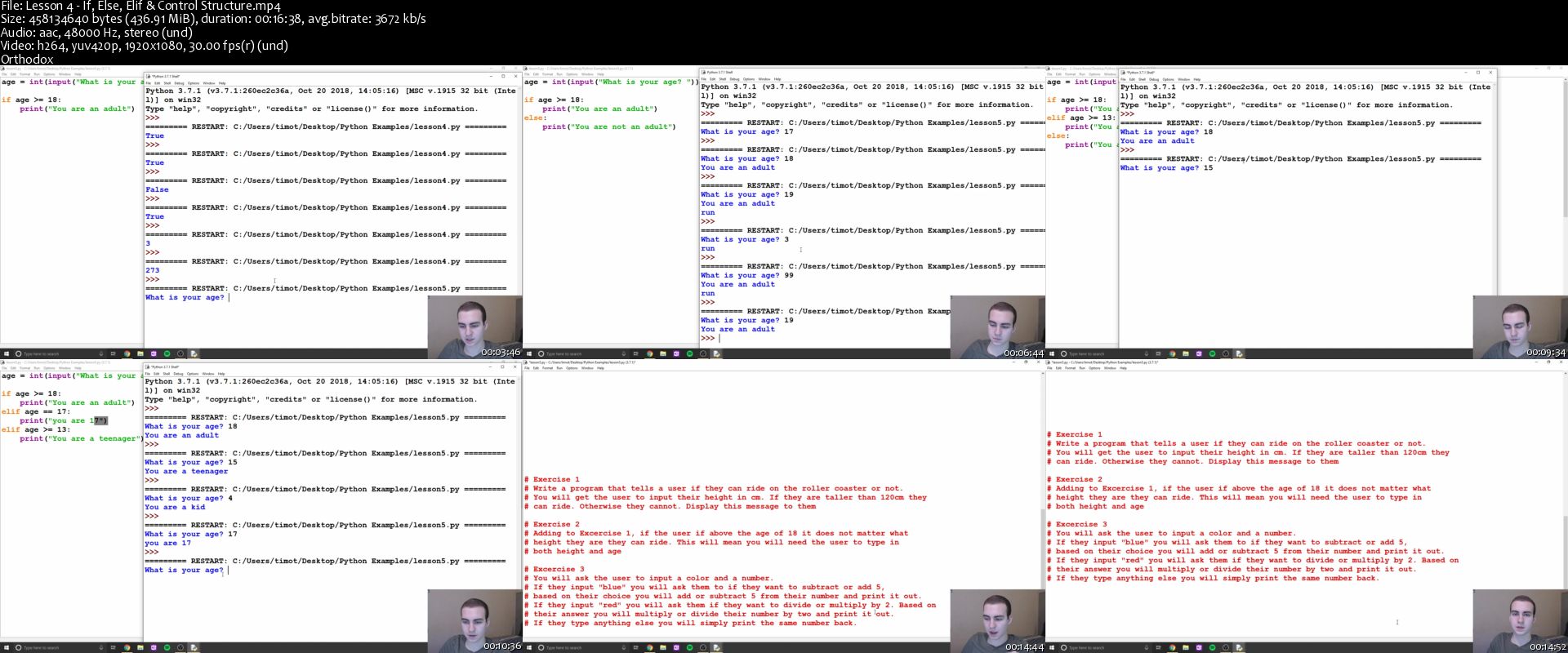
The Fundamentals of Programming with Python

s-Hc-UGkhrby9-HC5-T3-RXh-QZY25-Nng-Wtemu.png


The Fundamentals of Programming with Python
MP4 | Video: h264, 1920x1080 | Audio: AAC, 44.1 KHz, 2 Ch
Genre: eLearning | Language: English | Duration: 19 lectures (4h) | Size: 7 GB

Aimed towards eager beginners looking to build a foundation in programming and the python language This course is aimed at teaching and applying fundamental programming concepts. These concepts will help you to develop a very strong foundation in programming that will allow you to move on to more advanced concepts and topics.

One of the largest issues with teaching yourself programming is missing or skipping fundamental programming concepts. These are the concepts that allow you to develop a strong foundation in programming and continue to learn new skills. Far too often I see students stuck and unmotivated when attempting to learn more advanced topics. 99% of the time the cause for this is the lack of fundamental knowledge. I cannot stress how important it is to learn these skills before progressing.

Unfortunately, many courses and project videos skip or skim over these fundamental concepts and students end up just typing along without truly understanding. This course aims to solve this problem.

The course is made up of a variety of interactive lessons as well as 2 sets of programming exercises and a final project, hand graded by me . I decided to implement a final project that encapsulates all of the course content. Once you've finished it you can send it directly to me for feedback and revisions. I've done this to ensure my students understand everything taught in the course and have access to me to ask questions and clear up misunderstandings.

Many of the concepts taught in the course are NOT specific to python. This means you can take this knowledge with you to any programming language allowing you to easily pickup on it. As an experienced programmer my knowledge of these topics has helped me learn entire programming languages like JavaScript and C# in a matter of a few hours. Once you have the concepts down all that's left is the syntax, and that's the easy part.

After completing this course, you will be ready to tackle more advanced topics and broaden your skill set. Trying to learn other python modules or more advanced topics is next to impossible without the knowledge taught here. It's like trying to learn calculus without multiplication... not going to happen.

Homepage

Lesson-4-If-Else-Elif-Control-Structure-s.jpg


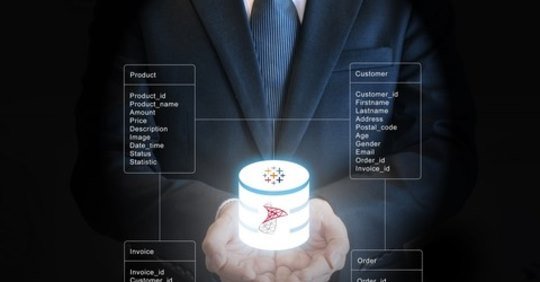
SQLServer 2019 Data Analytics & Tableau Data Visualisation

k-QKX2j-Ijk-HMht-Qor-V9-ZXHXJwwlv-KB1a6.jpg


SQLServer 2019 Data Analytics & Tableau Data Visualisation
Genre: eLearning | MP4 | Video: h264, 1280x720 | Audio: aac, 44100 Hz
Language: English | VTT | Size: 9.59 GB | Duration: 21.5 hours


What you'll learn
Become highly competent in writing all types of SQL (simple to complex) preparing you for your BI Projects
With SQL skills learned here you can extract data from any Relational Database including Oracle,PostgreSQL,MySQL and many more
How to visualise the data using Tableau the most popular data visualisation & business intelligence tool out there
Write DDL, DCL, TCL code so you can create and manage your own database(s) from scratch
Be proficient in using SQL Server Management Studio to develop your data analysis solutions
Work with scenarios that prepare you for the questions that users will ask of their data, including gnarly & complex questions
Code table Joins from simple to complex so you will never be stuck in this again, a common stumbling block for SQL coders
Learn to create Primary and Foreign key constraints for data integrity
Learn the aggregation functions in SQL preparing data for visualisation
Write powerful Window functions such as LAG()
Every lecture is followed with an exercise for you to practice what you have learned in the previous lecture
Quizzes at the end of each section to test your knowledge
Develop Tableau worksheets to incorporate into dashboards
Create your own dashboard based on your own learning from the course
Showcase a project dashboard based on your ideas and show this to anyone including prospective employers
Approaching interviews and their inherent catch and scenario questions
Did I mention Triggers and Stored procedures ? Yes learn these too!
Understand the difference between old style dated SQL and ANSI SQL best practice
Learn how to make queries work better with Indexes for query performance enhancement
What are Common Table Expressions (CTE) find out how to code these and exploit them.
User defined functions and Table functions are very useful, you will learn to create and use these as well
Learn to code Cross Joins and how to leverage these in analysis
Learn about the SQL Server Architecture and SET Theory
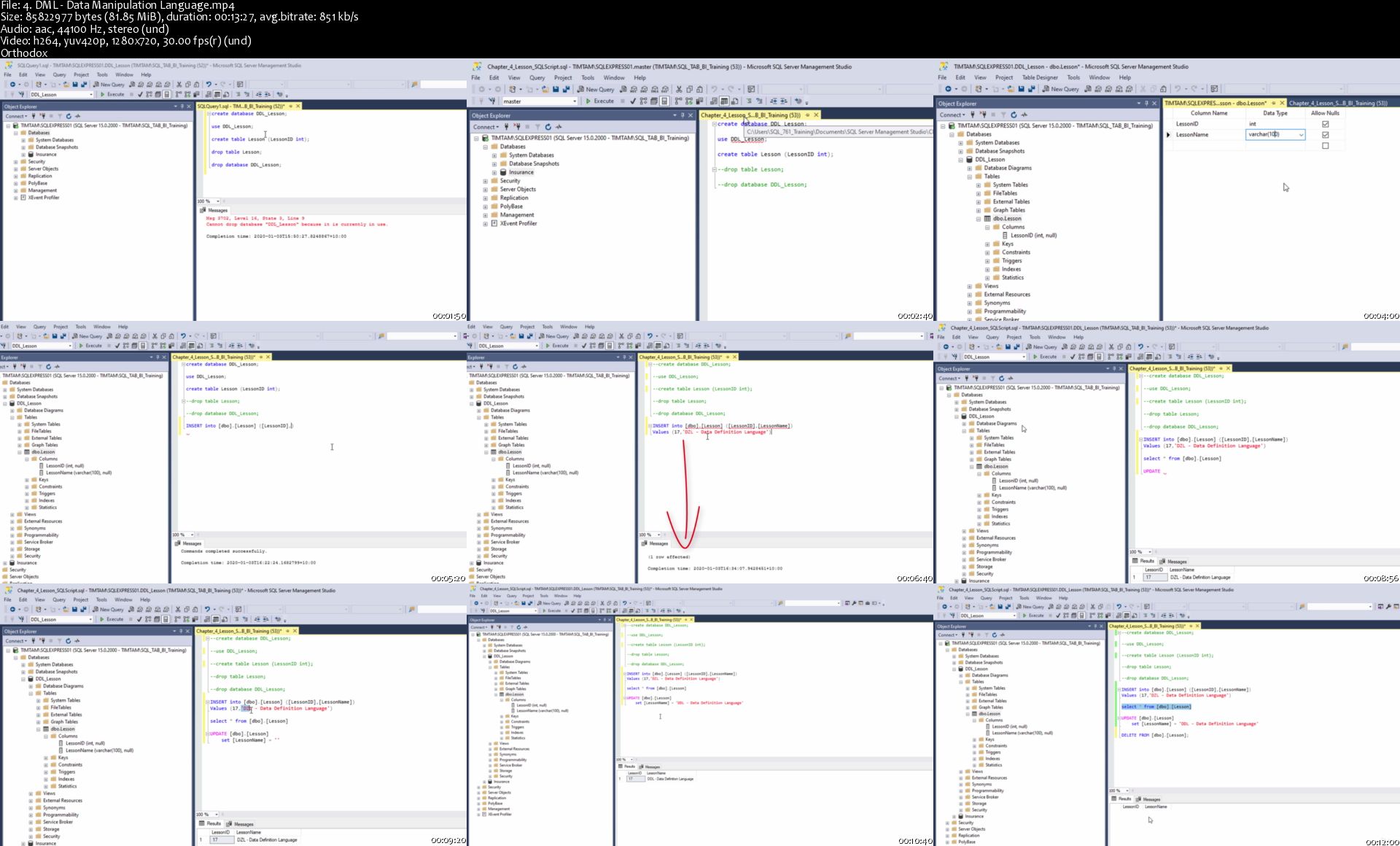
How to Insert , Update and Delete data
Learning SQL also means you are becoming proficient in T-SQL
Data wrangling like you would do in the corporate environment
And many more topics

Requirements
You love a challenge and the chance to practice solving real problems
No prior experience is required as we will start from the very basics.
A desire to have fun and enjoy the learning experience, no dull monotonic/robotic lectures in this course at all
Description
Knowledge is power , right ?

Not quite ! , it's potential power, like a battery , electrical charge waiting to be used in a device.

The same applies to your knowledge!

Do you think database design, SQL Knowledge and data visualisation is important in our age of big data and analytics ?

Well it is ! in fact SQL accounts for 90% of the requirements to perform data analysis and then how do we present the data ?

100% of the time us analysts present data graphically using software for example Tableau, QlikSense, Python, R, SAS and more

Are there enough people to fill the current job market in the data analysis world ?

No, the demand is growing ! And until relational databases die off then we will always need SQL Skills !

For the most part Data Analysts can command 6 figure salaries and more if you are top of the game. My pay for 2019 was the top end of 6 figures!

Are you concerned that you have no experience in this area , yet !?

Don't be ! everyone heading into Data Analysis and Visualisation has to start somewhere !

So why buy this course as there is a lot to choose from !?

Because this course is comprehensive , in other words it is detailed enough to get started and gradually work up to the advanced concepts

Yes all courses say theirs is the best ! But I will leave it to you to look at the sections and see just how much learning material is here for you to absorb and build your knowledge.

In summary this course ...

Is very comprehensive at every level

Starts with easy topics and builds up to complex topics

Tons of practice assignments after each lecture to reinforce your knowledge and skills

Includes large sample data sets for download used during the course (and after for you to research more)

Learn to develop data visualisations with Tableau and assignments for you to participate in

Section quizzes to further test how you think you would go at interviews and job reviews

Achievement awards based on your Quiz results

In my humble opinion

This course is the most comprehensive and practical that you can buy.

It is a culmination of my real world work experience in the data analysis and visualisation world.

It will get you going with your career expectations

I have helped 85,000+ students achieve their skills requirements through my courses here on Udemy.

Here is a quote from one of my QlikView students back in March 2020 ...

I just wanted to let you know that thanks to your training, I've got a new job in Zurich as a Business Intelligence and Qlikview Developer.

I was working as BI Specialist and Data Scientist before but I was learning QlikView thanks to your course.

Are you keen to enrol ?

Well, check out the other courses first to compare to and you will see the difference , you be the judge

If you buy this course and it turns out is not for you there is the 30 day money back guarantee, a win win for you.

Looking forward to seeing you in the course.

Paul

Data Analyst and Visualisation Engineer


Who this course is for:
Looking to start a career in Business Intelligence and Data Analysis
Anyone looking to learn SQL from scratch to becoming highly competent
Anyone that wants develop their potential power in Data Analysis and Business Intelligence with confidence
Anyone looking to refresh or enhance existing skills
Those that are curious about how Business Intelligence and Data Visualisation (using Tableau) works
Those that need to know about specific subjects of relational databases e.g. Indexing, Window functions etc
Students that demand detailed instruction and practice assignments
Students that expect their questions to be answered properly

Homepage

4-DML-Data-Manipulation-Language-s.jpg


Procreate: Draw, Sketch, Paint, and Design on Your iPad (Update)

m-Vi-CXLI60-MTyw-Gh-Yo-Jh-Gxi3j4l-Bjc-Jlm.jpg


Procreate: Draw, Sketch, Paint, and Design on Your iPad (Update)
Bestseller | h264, yuv420p, 1280x720 |ENGLISH, aac, 48000 Hz, 2 channels | 16h 01mn | 11.89 GB

Learn how to draw on your iPad with this complete Procreate course! Bring your imaginations to life with digital art!

What you'll learn

You will be confident using Procreate
Learn all of the tools and brushes available
Save and export your Procreate drawings
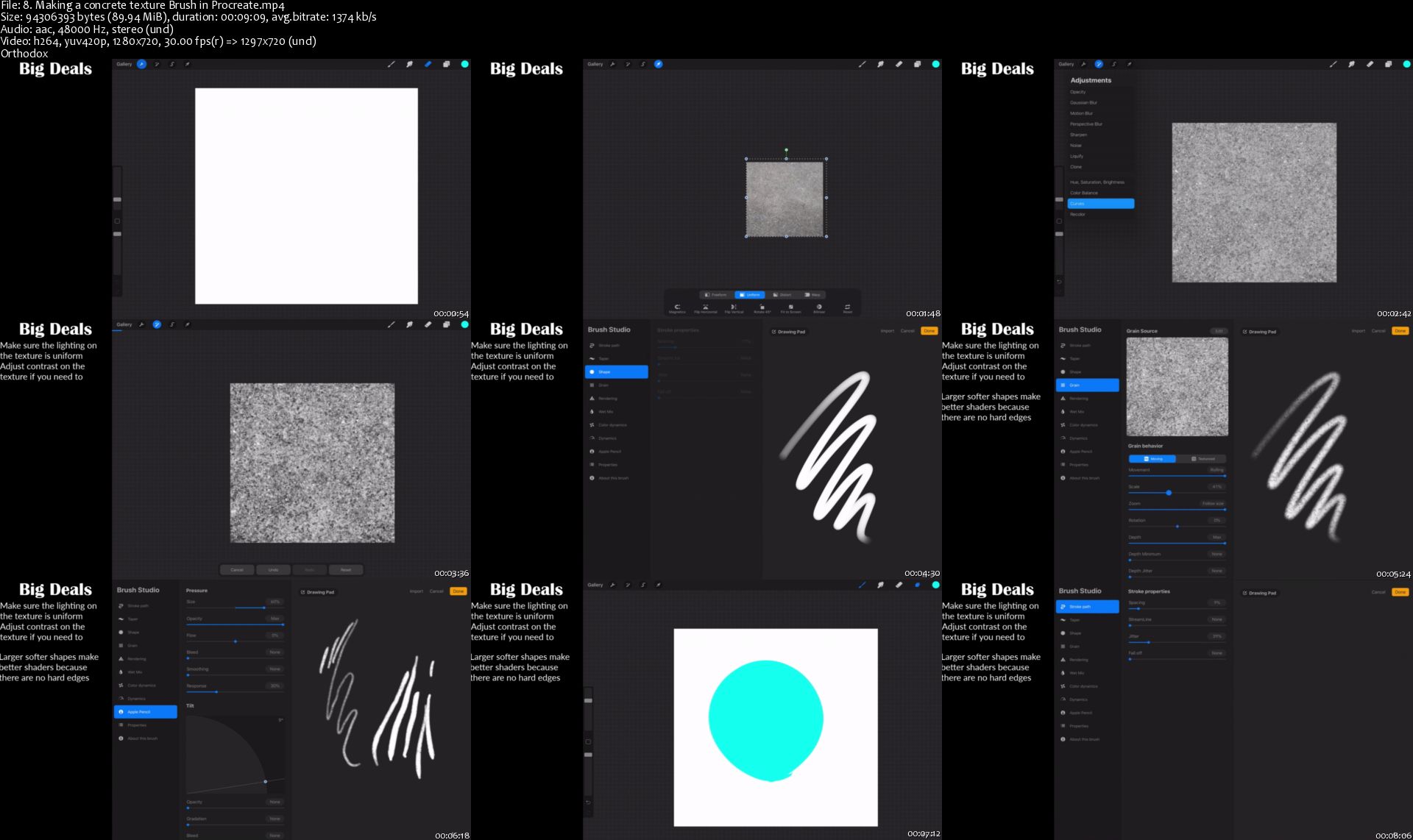
Import and create your own brushes
Improve your artwork with shading and advanced tools
Create video timelapses of your drawings

Requirements

You should have an iPad with the Procreate application installed
You do NOT need any experience drawing or using Procreate to take this course

Description

If you want to sketch, paint, and illustrate on your iPad, Procreate is the perfect app for you!

And, if you want to learn how to use Procreate for your own digital art, this is the perfect course for you!

This complete Procreate course will teach you how to use the powerful tools and features so that you can bring your imaginations to life. With easy-to-follow tutorials and real-world examples, you'll enjoy learning while taking action.

WHAT WILL YOU LEARN?

Getting started with Procreate
Be confident using the canvas
Using basic tools & brushes
Adding shading with brushes
Working with layers

8-Making-a-concrete-texture-Brush-in-Procreate-s.jpg


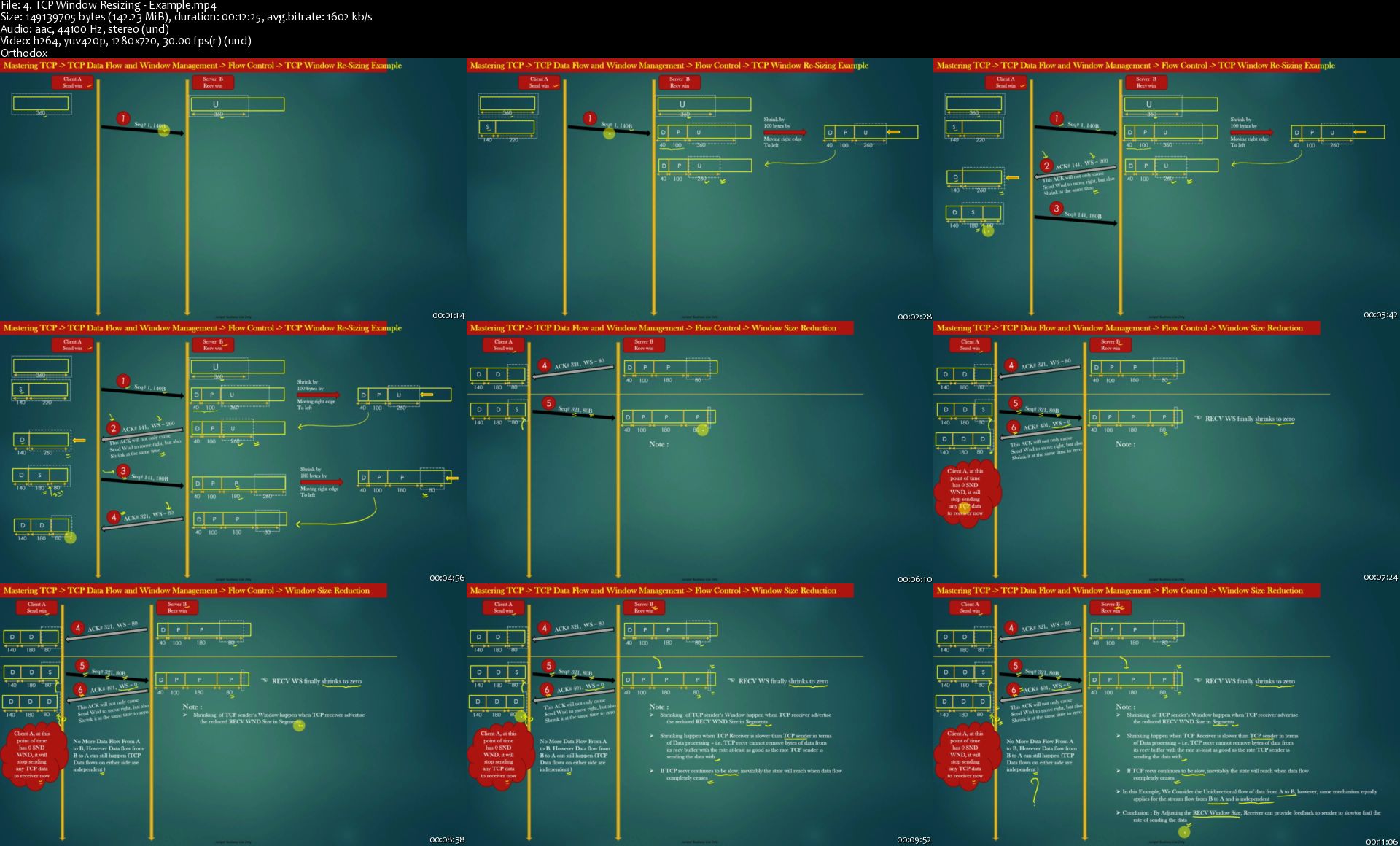
Master Class : TCP/IP Mechanics from Scratch to Expert

UOr-KZ0-LNJWZYT5-AJsimnx-Dgyi0-Kfqp6-A.jpg


Master Class : TCP/IP Mechanics from Scratch to Expert
Genre: eLearning | MP4 | Video: h264, 1280x720 | Audio: aac, 44100 Hz
Language: English | VTT | Size: 5.60 GB | Duration: 94 lectures (09:03:16)


What you'll learn
Difference between Connection-Oriented and Connection-less state
Difference between Byte oriented and datagram oriented protocols
TCP Internal functionality and Mechanism
Understand how TCP is designed and why
TCP congestion control, Flow control and Window Mechanism
Understand TCP graphs and why they look like they are !
Various other complexties of TCP protocol explained in a simplest possible way
Assignments and Questions to practice TCP concepts

Requirements
Basic knowledge of Transport Layer - UDP and TCP is required
Basic knowledge of Network Layer of OSI model is a plus
Description
This is Master Class course on TCP/IP protocol - Transmission Control Protocol. Since it is Master Class course, this course discusses the internal design and functioning of complex transport layer protocol - TCP.

Almost all traffic on internet today is transported by TCP protocol. TCP, as where it stands today, mature and solid, is the result of over 25 yrs of research by network gurus. TCP is complicated and difficult to understand, therefore i have paid utmost attention to present the concept in most simplest way as possible without any loss of information.

In this course, we unwrap internals of TCP and try to understand how it works and why it is so designed. So, be ready and place yourself in first gear !

TCP is difficult to understand and confusing if not done in the right way. In this course, I shall be covering all aspects of TCP internal functioning STEP BY STEP with beautiful diagrams, Assignments, Questions and exercises. At no point you shall be left with doubts is my promise. There is no programming in this course.

This is a little Advanced Course, if you are absolute beginner in networking, I would recommend you to first enroll in my other course "Networking course - Network Concepts and Programming from Scratch" and cover important sections on L2 routing, L3 routing, and Transport Layer at-least before jumping into this course. If you are already familiar with this much networking basics, then you are all set to sail through this course.

Table Of Contents:

Section 1 : Basics

1. Agenda of the course

2. General overview of OSI model and TCP/IP stack

3. TCP IP Stack layer functions

4. Transport Layer Goals

5. User Datagram Protocol (UDP)

6. Transmission Control Protocol (TCP)

7. UDP Vs TCP

8. Summary

Section 2 : TCP Preliminaries

1. TCP Vs Other Protocols

2. TCP ARQ Challanges

3. TCP Byte Circular Buffers

4. Segments and Sequence Numbers

5. TCP Segments Type

6. TCP Reliable Delivery

7. TCP Retransmission Timer Illustration

8. TCP together with IP Protocol

9. Summary

From here on we shall dive deep into specifics of TCP

Section 3 : TCP Connection Management

1. Who is Client and Who is Server ?

2. TCP - 4-tuples

3. TCP Connection Open - 3-way handshake Explained

4. TCP Connection Closing - 4-way handshake

5. Sequence Numbers Consumption Rules

6. TCP Connection Timeout and Exponential Backoff

Section 4 : TCP Timeout and Retransmission

1. TCP Retransmission

2. TCP RTO Problems if computed Wrongly

3. Expectations from TCP when Segment loss occurs

4. TCP Exponential backoff - When consecutive segment loss occurs

5. TCP RTO Value Estimation

6. TCP Retransmission Ambiguity Problem

7. Karn's Algorithm

8. Karn's Algorithm Illustration

9. Karns Algorithm Analysis

9. Concept of Fast Retransmission

10. TCP handling out of order segments

11. TCP holes Problem and its remedy

12. Redundant Retransmission due to dupACK

13. Fast Re-transmission Vs Timer based Re-transmissions

14. Selective Acknowledgement (SACKs)

15. SACKs Example

16. Cumulative Acknowledgement

Section 5 : TCP Data flow and Window Management

1. TCP Send and Recv Windows

2. TCP Send and Recv Window Layout

3. TCP Flow control

4. TCP Window Advertisement

5. Sliding Window Rules

6. Window Management Example

7. Data Accumulation - TCP Nagle Algorithm

9. TCP Window Size Resizing

10. TCP Zero Window

11. TCP Probe Segments

12. Problem of Silly Window Syndrome (SWS)

13. Silly Window Syndrome Solution (SWS - Solution)

14. SWS - Complete Example

Section 6 : TCP Congestion Control Procedures

1. TCP - Congestion Control Procedures

2. TCP - CCP Goals

3. TCP - 3 Parts of CCP

4. Introducing Congestion Window

5. Congestion Control Algorithms

a. Slow Start

b. Congestion Avoidance

6. Slow Start Algorithm

7. Slow Start Algorithm in Action

8. Slow Start Algorithm Summary and SSthrash

9. Congestion Avoidance Algorithm With Example

10. Congestion Control Algorithm Selection and Switching

11. Typical TCP Graph

12. Concept of Fast Recovery

13. Algorithm Selection Flowchart

Good Luck ! Hope you Enjoy the course.


Who this course is for:
Students, job seekers, professionals
those trying to switch into Networking Development Roles

Homepage

4-TCP-Window-Resizing-Example-s.jpg


Udemy: Java Servlets

007993e8.jpg


Java Servlets
Video: .mp4 (1280x720, 30 fps(r)) | Audio: aac, 44100 Hz, 2ch | Size: 8.16 GB
Genre: eLearning Video | Duration: 31 lectures (12 hour, 33 mins) | Language: English

Comprehensive course on Java Servlet with practical examples and coding on the go. Develop useful web-based applications.


What you'll learn

Deep-dive into the world of Java Servlets
Become a top web programmer with Java Servlet programming skills
Java Servlet Architecture
Important terms related to Java Servlets
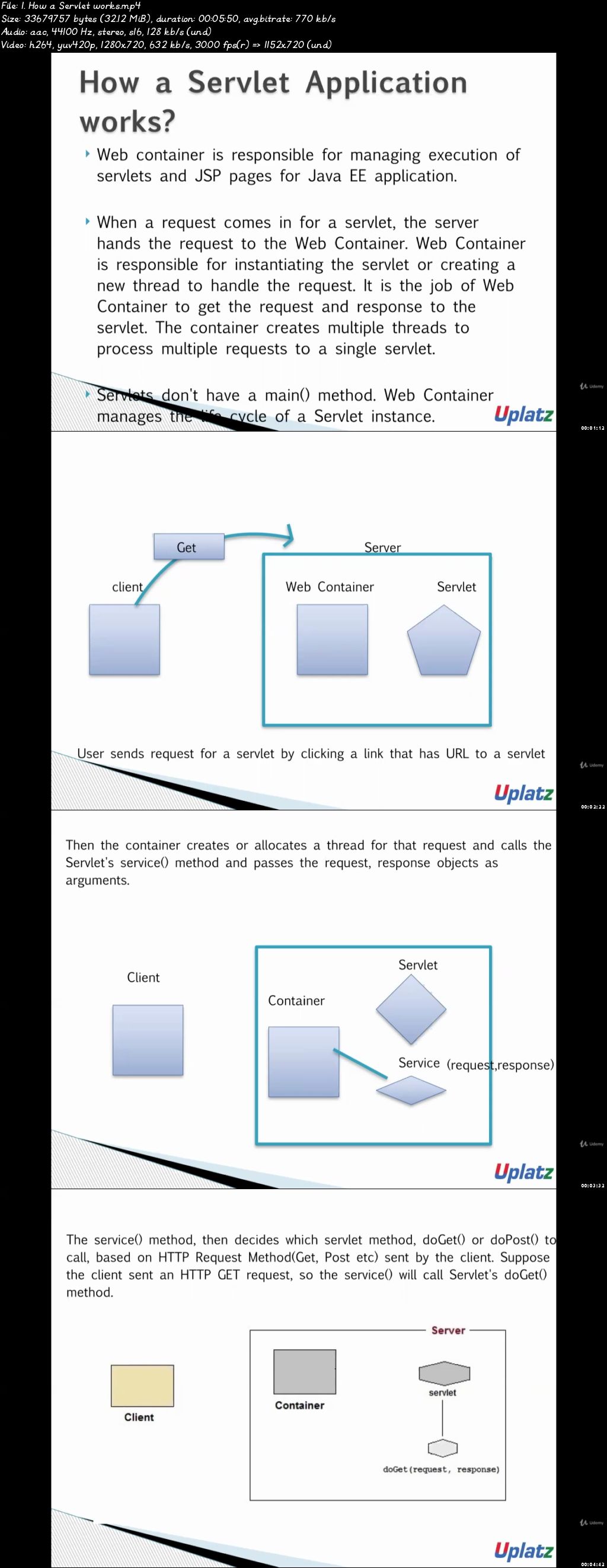
How Servlet works and Servlet Life Cycle
ServletRequest, ServletResponse, ServletConfig, and ServletContext
Steps to configure and deploy Servlet
Servlet Collaboration
Understand Java EE - Servlets, JSP, Scriptlets, JSTL, web-xml and EL
Understand static and Dynamic webpages
Create complex web applications using servlets
Servlet interface, Generic and HttpServlet interfaces
Annotation and Xml based configuration in Servlets
Difference between Get & Post
Load On Startup Configuration
Request Scope in Servlets
RequsetDispatcher interface
Interservlet communication using Response sendRedirect
Session Tracking using cookies
HiddenFormFields, Url Rewriting, HttpSession
Filters in servlets, FilterConfig
Database connection in servlets
CRUD operations using servlets to mysql database
Events and Listeners in servlets
ServletContext Listener and HttpSessionListener
Understand the basics of using Maven, Tomcat and Eclipse
Run Web Applications in Tomcat


Requirements

Enthusiasm and determination to make your mark on the world!

Description

A Servlet is a Java Programming language class that is used to extend the capabilities of servers that host applications accessed by means of a request-response programming model. Although servlets can respond to any type of request, they are commonly used to extend the applications hosted by web servers. It is also a web component that is deployed on the server to create a dynamic web page.

Servlet Technology resides at server side and it generates dynamic web page, used to create web application. Java Servlets are programs that act as a middle layer between a requests coming from a Web browser / HTTP client and databases or the applications on the HTTP server.

Servlet is a Java class that runs inside the container. It allows you to process the HTTP request and generate dynamic web pages, but it's more Java then HTML like you need to code HTML inside Java, which is both erroneous and not recommended. Servlet is mainly used as a Controller in web applications created using the MVC design pattern. One of the famous examples of that is the DispatcherServlet of Spring MVC framework, which acts as a front controller. Its job is to receive request and process it, but the view generate or dynamic web page generation functionality is passed down to JSP. Though it provides the data that need to be shown in JSP, which makes the view part of the Model View Controller (MVC) design pattern.

Before servlets, we had CGI i.e. Common Gateway Interface. It is a standard way for a Web server to pass a user's request to an application program and receives the response to forward to the user. When the user requests a Web page, the server sends back the requested page. However, when a user fills out a form on a Web page and sends it in, it is processed by an application program. The Web server typically passes the form information to a small application program. This program processes the data and sends back a confirmation message. This process of passing data back and forth between the server and the application is called the common gateway interface (CGI). It is part of the Web's Hypertext Transfer Protocol.

This practical, application-oriented Java Servlets training by Uplatz teaches Java Servlets technology and shows how to use it to develop simple to complex web applications. It is intended for both the beginners as well as experienced Java (J2SE) programmers who want to build web applications or J2EE components and systems.

The Java Servlet course begins with an overview of server-side Java programming and web protocols. Then students learn the Java Servlets architecture, the request/response cycle, and servlet life cycle, and how to build interactive web applications that parse and/or generate HTML forms. Several prominent patterns for servlet application architecture are considered. Sessions are studied as a means to developing sophisticated client/server conversations over several HTML pages. Multi-tier applications are developed using servlets and JDBC for access to relational databases.

This Java Servlet training develops the important concept of the separation of programmatic and declarative development: use of configuration and context information in lieu of hard-coded values, resource locations, etc., to make the web application as portable and easy to administer as possible. The course introduces JavaBeans as a standard for business and data objects that can be shared among servlets and JSPs, and develops techniques for sharing such objects at session scope or by request forwarding. Finally, students learn how to implement filters to adapt existing servlets by pre- and post-processing the request and response.


Java Servlets - course syllabus

Introduction to WorldWideWeb

Understanding static and Dynamic webpages

How to create a HelloWorld application using servlets

Servlet interface, Generic and HttpServlet interfaces

Annotation and Xml based configuration in Servlets

Difference between Get & Post

How Servlet works (Life cycle)

Load On Startup Configuration

Request Scope in Servlets

RequsetDispatcher interface

Interservlet communication using Response.sendRedirect

ServletConfig

ServletContext

Session Tracking using cookies

HiddenFormFields

URL Rewriting

HttpSession

Filters in servlets

FilterConfig

Database connection in servlets

CRUD operations using servlets to mysql database

Events and Listeners in servlets

ServletContext Listener

HtttpSessionListener


What you will learn in this Java Servlets course

Understand and appreciate the role of Java Servlets in the overall Java 2 Enterprise Edition architecture, and as the best Java solution to HTTP application development

Use request and response objects provided to a servlet to read CGI parameters and to produce an HTML response

Develop interactive web applications using HTML forms and servlets

Manage complex conversations with HTTP clients using session attributes

Understand the role of JDBC in Java persistence code, and use JDBC for persistence in servlet applications

Preserve portability and ease of administration for a servlet application by parameterizing servlet code, using initialization parameters, properties files, and JNDI

Use JavaBeans classes to share complex business data between components

Implement filters to adapt existing servlets with new features, and to maximize the decomposition of logic between vertical business functions and horizontal facilities

Understand and manage HTTP sessions in a web application

Create servlet filters and listeners

Write pages created with JavaServer Pages technology (JSP pages)

Create easy-to-maintain JSP pages using the Expression Language and theJSP Standard Tag Library (JSTL)

Use integrated development environments (IDEs) and application serversfor Java EE development and deployment

Write servlets using the Java programming language (Java servlets)


Java Servlets: Servlet Architecture

The Java Servlet architecture includes communication interface, protocol used, requirements of client and server, the programming with the languages and software involved. Basically, it performs the below-mentioned tasks.

First, it reads the explicit data sent by the clients (browsers). This data can include an HTML form on a Web page, an applet or a custom HTTP client program. It also reads implicit HTTP request data sent by the clients (browsers). This can include cookies, media types and compression schemes the browser understands, and so forth.

After that, the servlet processes the data and generate the results. This process may require communicating to a database, executing an RMI, invoking a Web service, or computing the response directly.

After processing, it sends the explicit data (i.e., the document) to the clients (browsers). This document can be sent in a variety of formats, including text (HTML or XML), binary (GIF images), or Excel formats.

Finally, it also sends the implicit HTTP response to the clients (browsers). This includes telling the browsers or other clients what type of document is being returned


Servlet Life Cycle

The Servlet life cycle mainly includes the following four stages,

Loading a Servlet

Initializing the Servlet

Request handling

Destroying the Servlet


Java Servlets: Steps to Create Servlet

Create a directory structure

Create a Servlet

Compile the Servlet

Add mappings to the web.xml file

Start the server and deploy the project

Access the servlet


Who this course is for:

Java Developers, J2EE and Java EE Developers
Application Developers and Senior Java/Application Developers
Technical Architects
Beginners who wish to make their career in Web Development/Programming
Lead Java Developers Spring / J2EE
Full Stack Java Developers and Programmers
Engineering Managers (JavaScript & Java)
Java Developers API - Technologists
Android Developers
Software Engineers and Senior Software Engineers
Individuals & Enthusiasts who wish to develop their own sophisticated web applications

007993e9.jpg


Udemy: IoT with Python (Updated 6/2020)

007997f9.jpg


Udemy: IoT with Python (Updated 6/2020)
Video: .mp4 (1280x720, 30 fps(r)) | Audio: aac, 44100 Hz, 2ch | Size: 10 GB
Genre: eLearning Video | Duration: 25 lectures (28 hour, 2 mins) | Language: English

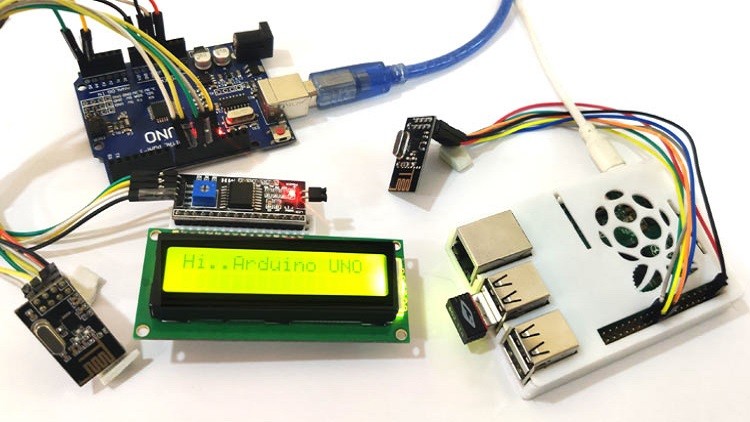
Internet of Things with Python and Raspberry Pi


What you'll learn

The aim of this course is to introduce Python to those with little or very little programming knowledge, and then to take them through to become an experienced Python developer.
You will have an introduction to Computers, Programming and Internet of Things.
We take you through the basics of Hardware and Software
We teach you how computers store data and how a program works
We will introduce you to advanced concepts such as functional programming, object orientation, and exception handling.
You will be able to Rapidly prototype even complex IoT applications with Python and put them to practical use
You will enhance your IoT skills with the most up-to-date applicability in the field of wearable tech, smart environments, and home automation
You will interact with hardware, sensors, and actuators and control your DIY IoT projects through Python

Requirements

We assume very little knowledge or experience of Python or programming or IoT

Description

Learn Python, the language for IoT

How great would it be to write your own computer program? Or, design a web or desktop application that millions of people could enjoy? Both are a possibility if you learn how to code in Python. Python is the very versatile, object-oriented programming language used by startups and tech giants, Google, Facebook, Dropbox, and IBM. Python is also recommended for aspiring young developers who are interested in pursuing careers in Security, Networking, and Internet-of-Things.


Raspberry Pi development comes in many flavors, but Python is common and powerful. In this project-based course, learn how to work with this highly readable language-along with a Raspberry Pi board-to build a secure ecosystem of interconnected IoT devices. We will be reviewing the basics of IoT smart devices, as well as several important IoT communication models.

You will work on 4 Development kits as part of this Hands-on IoT with Python course:

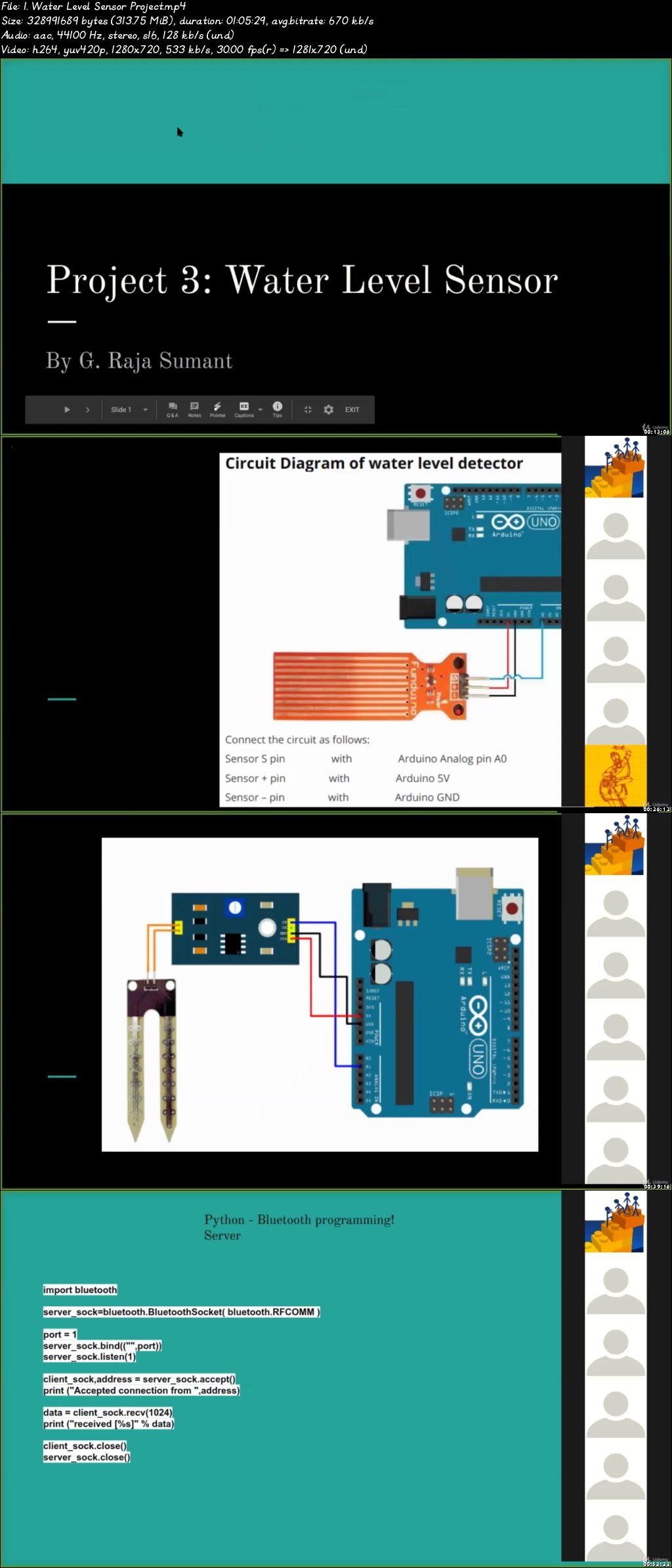
•Live Weather monitoring

•Motion detection in a room and image capture

•Tank alarm using Water level detection sensor

•Smart trashcan


What you'll learn:

Problem-solve using an algorithmic approach.

Understand programmer's work in the software development process.

Gain knowledge on how a program is executed in a computer environment

Hardware considerations

IoT communication protocols

Internet security and cryptography

Designing the project architecture

Integrating sensors with Raspberry Pi


Who this course is for:

Children with age groups 8-15 years
College grads who need a solid introduction to IoT and Python

007997f8.jpg


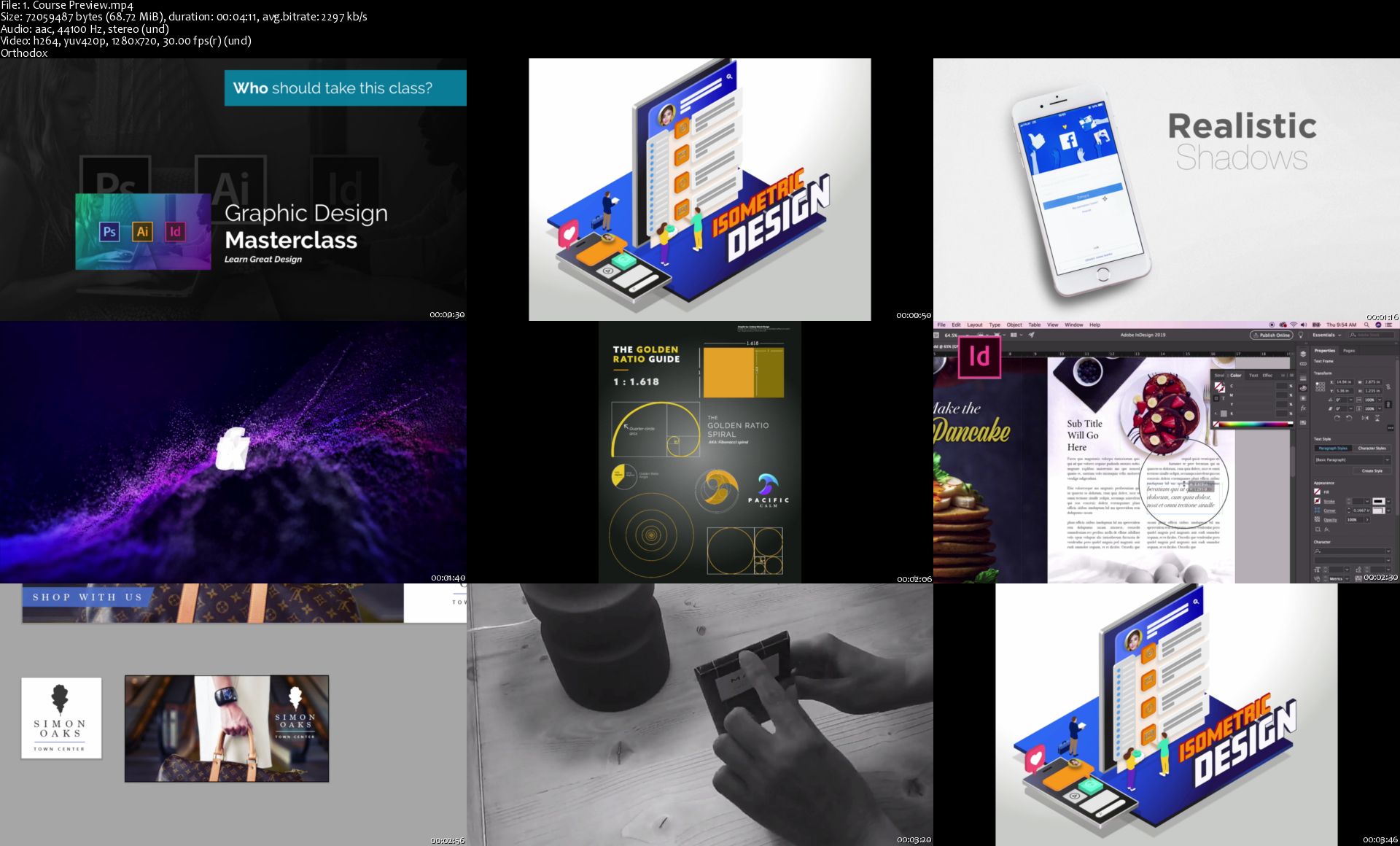
Graphic Design Masterclass Intermediate: The NEXT Level

6kfrv8-QE6-CYe1d0-E6199-CQRta0-SIw-WQD.jpg


Graphic Design Masterclass Intermediate: The NEXT Level
h264, yuv420p, 1280x720 |ENGLISH, aac, 44100 Hz, 2 channels | 14h 06mn | 10.26 GB

Up Your Graphic Design Skills: Logo Design, Photo Manipulation, Package Design, Infographics, Portfolio Building, Grids!

What you'll learn

You will be able to create polished and practical Logo designs and brand assets
Be able to create images for a full digital marketing campaign, including Facebook and Instagram
Produce complex photo manipulations for the use of ad design and understand solid layout and design principles
Create realistic shadows and be able to do intermediate level photo retouching
Sketch logo design and concepts with ease and understand the golden ratio and how to incorporate that in your design process
Create and build a strong graphic design portfolio both in pdf and online
Understand some of the many ways of making money by selling creative content and resources
Understand how to use more intermediate tools in Adobe Illustrator and Photoshop
Explore what makes compelling advertising
Study the Golden Ratio and create a graphic illustration with it
Go through the entire package design process for a chocolate bar wrapper
Create a typography only poster
Learn what makes compelling infographics and take boring data and make it come alive.
Create a magazine front cover and article spread using InDesign and talk about more intermediate topics like using photos and headlines to help craft stories
Work through the ENTIRE logo Design process including how to present your work to clients, export files. We will work through a logo design worksheet together in this section.

Requirements

This is an intermediate level course: Basic working knowledge of Adobe Photoshop, Illustrator and InDesign - Some familiarity with basic tools and functionality
Adobe Creative Cloud Highly Suggested, but older versions can still be used. Some tools like the content aware and shapebuilder tools will not be available on CS 5.5 or earlier versions.

Description

NEW CONTENT ADDED FREQUENTLY!

May 2020 - New - Logo Design Presentation Template!
April 2020 - New - Adobe InDesign Portfolio Building Template!
Feb 2020 - New - The Full Logo Design Process and Downloadable Logo Design Worksheet Template
Feb 2020 - New - Mastering Isometric Grids!
Feb 2020 - New Portfolio Building Section - How to Build Strong Design Portfolios
Jan 2020 - New InDesign Project Added - Creating a Magazine Front Cover and Article Spread
Jan 2020 - New full page ad design project and Photoshop section added!
June 2019 - Create Compelling Infographics! (Section 11)
Nov 2018 - How to Price Your Freelance Projects! Updated lessons (Section 19)
Nov 2018 - New Package Design Lessons! Design a chocolate bar wrapper from start to finish
Oct 2018 - Project: Create a Poster Using Only Typography

1-Course-Preview-s.jpg


Complete React 16 from Zero to Hero | Get Hired

0079910a.jpg


Complete React 16 from Zero to Hero | Get Hired
Duration: 17:31:21 | .MP4 1280x720, 30 fps(r) | AAC, 44100 Hz, 2ch | 7.81 GB
Genre: eLearning | Language: English


Complete E-commerce Project Admin & User Panels (Props and State, React-Apollo, Redux, GraphQL)


What you'll learn
React Props, State, Routes
React Redux, axios, apollo-boost, react-apollo, GraphQL
Complete E commerce Project using Reactjs
Single Component, Multi-Component

Description
Join Now Because it's time to get started The REACT Course with loads of Examples and projects.
Let's Build an Online Store real-world Single Page Applications [Completed Project] from A-Z Step by Step, not just Theoretical and ABC examples.
This course is recommended as it covers not only React topics, But additional material and concepts of Object orientated Programming and Data structure and Design Pattern
The course Cover:-
E-Commerce Online Store have both Admin and End-User Panel:-
Admin Panel
Add Product,
Update Product
Delete Product
Products List
Orders List
End-User Panel
Category Filteration
Products Listing
Cart
Cart Summary
Placing Order
Registering Form
REST Data API
GraphQL Web Server
Node Server
URL Configuration
Object-Oriented Programming
All React topics in one course.
State
Props
Routing
Component
JSX
REST API,
GraphQL Web Server, GraphiQL
Node Server
React-Apollo
Express.js
HTTP Request
Dependency Injections
ES6
Typescript 4.0
Bootstrap 4.0 & Font-awesome
interview questions with answers.
Tips and tricks.
Daily work tasks.


Who this course is for:
This course is for people who want to learn the latest version of React from scratch
Full Stack Developers,
Front End Developer
Web Developer
JavaScript Developer

0079910e.jpg


Chen Style Tai Chi Competition Routine - 56 Postures

00798e7f.jpg


Chen Style Tai Chi Competition Routine - 56 Postures
Video: .mp4 (1280x720, 30 fps(r)) | Audio: aac, 44100 Hz, 2ch | Size: 6.34 GB
Genre: eLearning Video | Duration: 57 lectures (5 hour, 23 mins) | Language: English

A Well-Balanced Tai Chi Workout for Mind Focusing, Body Flexibility, Muscle strength, Body-Mind-Focusing-Coordination.


What you'll learn

Chen Style Tai Chi Competition Routine - 56 Postures
Self defense skills using Tai Chi
Apply Tai Chi into sweating workout.
to build your muscle strength and flexibility
To keep mental and physical fitness

Requirements

Have Sound Physical fitness
Have sound mind
Be determined to achieve your target!

Description

Chen Style Tai Chi Competition Routine - 56 Postures combines the agile body movement, the punching skills, the elbow strike and even wrestling skills! It is a Well-Balanced Tai Chi Workout. There are 3 reasons:

1. It combines almost all Chen Style postures from Traditional Frame and New Frame.

2. It balances well between energy consuming kicking and jumping movements and graceful slow Tai Chi Movements.

3. It trains both left handed postures with right handed postures.

It is good aerobic sweating Workout. It will take you 30-60 hours to master it! You can take the individual posture to practice many times as aerobic sweating Workout. It will help to build your muscle strength and flexibility!


Tai Chi or Shadow Boxing, another school of Kungfu in Chinese martial art culture, was born in Henan Province, 70km north to David Yao's native place.

Tai chi, short for T'ai chi ch'üan or Tàijí quán (Chinese: 太极拳,太極拳; pinyin: Tàijí quán), is a traditional Chinese martial art which combines mind and awareness of our body, the deep diaphragmatic breathing and Qi, the inherent vital energy, through graceful movements to achieve mindfulness and relaxation. Tai chi is practiced for both its defense training, its health benefits and meditation.

Qigong, qi gong, chi kung, or chi gung (simplified Chinese: 气功 qìgōng literally: "Life Energy Cultivation") is a holistic system of coordinated body posture and movement, breathing, and meditation used in belief it promotes health, spirituality, and martial arts training. Qigong practice typically involves moving meditation, coordinating slow flowing movement, deep rhythmic breathing, and calm meditative state of mind. Qigong can be viewed as a medicinal movement practice, combining breath work, relaxation, movement and self-massage all in one.

In Chen Style Traditional 74 Form LJ1 (陈氏太极拳老架一路 Chén shì tàijí quán lǎo jià yīlù Chen Style Tai Chi Traditional Form One; Chen Style Tai Chi Old Form Set One) is the foundation of all Chen Style Tai Chi which keeps the kicking, jumping and leaping movements which will apply in fighting. Base on Chen Style Traditional 74 Form LJ1, I will show more advance skills - Chen Tai Chi Fighting Style which combines mind, awareness and traditional Martial Art Kong Fu Skills You May Never Seen! The features of Original Chen Style Old Form Two are the agile body movement, the punching skills, the elbow strike and even wrestling skills!


What makes Chen Style Tai Chi unique? It is 发力 fā lì, (releasing power; releasing power in explosive way), It integrates whole body power and keep body in a relax states when release the power in very short and explosive way. The hitting point can be fist, elbow or knee. This Fali is different with boxing or kickboxing. You can take some movements to practice in fast speed and this can be very good sweating workout for you.


This will take you around 3 month to finish it. However, you can just take a single posture to practice.


Tai Chi Strengthens Mind and Body

Tai Chi's focus on posture and body placement may add benefits beyond what cardiovascular or resistance-training can provide.

Tai Chi, a moving Yoga, does more than burn calories and tone muscles. It will enable you to gain flexibility and strength, reducing stress and allowing for greater relaxation. It's a total mind-body workout that combines strengthening and stretching poses with deep breathing and meditation or relaxation.

The health benefits of tai chi

This gentle form of exercise can help maintain strength, flexibility, and balance, and could be the perfect activity for the rest of your life.

Tai chi is often described as "meditation in motion, moving Yoga," which originated in China as a martial art. The Chen Style Tai chi is the oldest and parent form of the five traditional family styles of Tai chi. Chen-style is characterized by Silk reeling, alternating fast/slow motion and bursts of power. The Chen Style is Originated in Hen Nan Chen Jia Gou, 70 KM at north of David Yao's birth place.

There is growing evidence that this mind-body practice, has value in treating or preventing many health problems. And you can get started even if you aren't in top shape or the best of health. In this low-impact, slow-motion exercise, you go without pausing through a series of motions. As you move, you breathe deeply and naturally, focusing your attention - as in some kinds of meditation - on your bodily sensations. Tai chi differs from other types of exercise in several respects. The movements are usually circular and never forced, the muscles are relaxed rather than tensed, the joints are not fully extended or bent, and connective tissues are not stretched. Tai chi can be easily adapted for anyone, from the most fit to people confined to wheelchairs or recovering from surgery.


Who this course is for:

Who want learn Tai Chi to achieve Fitness
Who want Keep mental and physical fitness
Who want learn Self defense skills using Tai Chi

1-Introduction-s.jpg


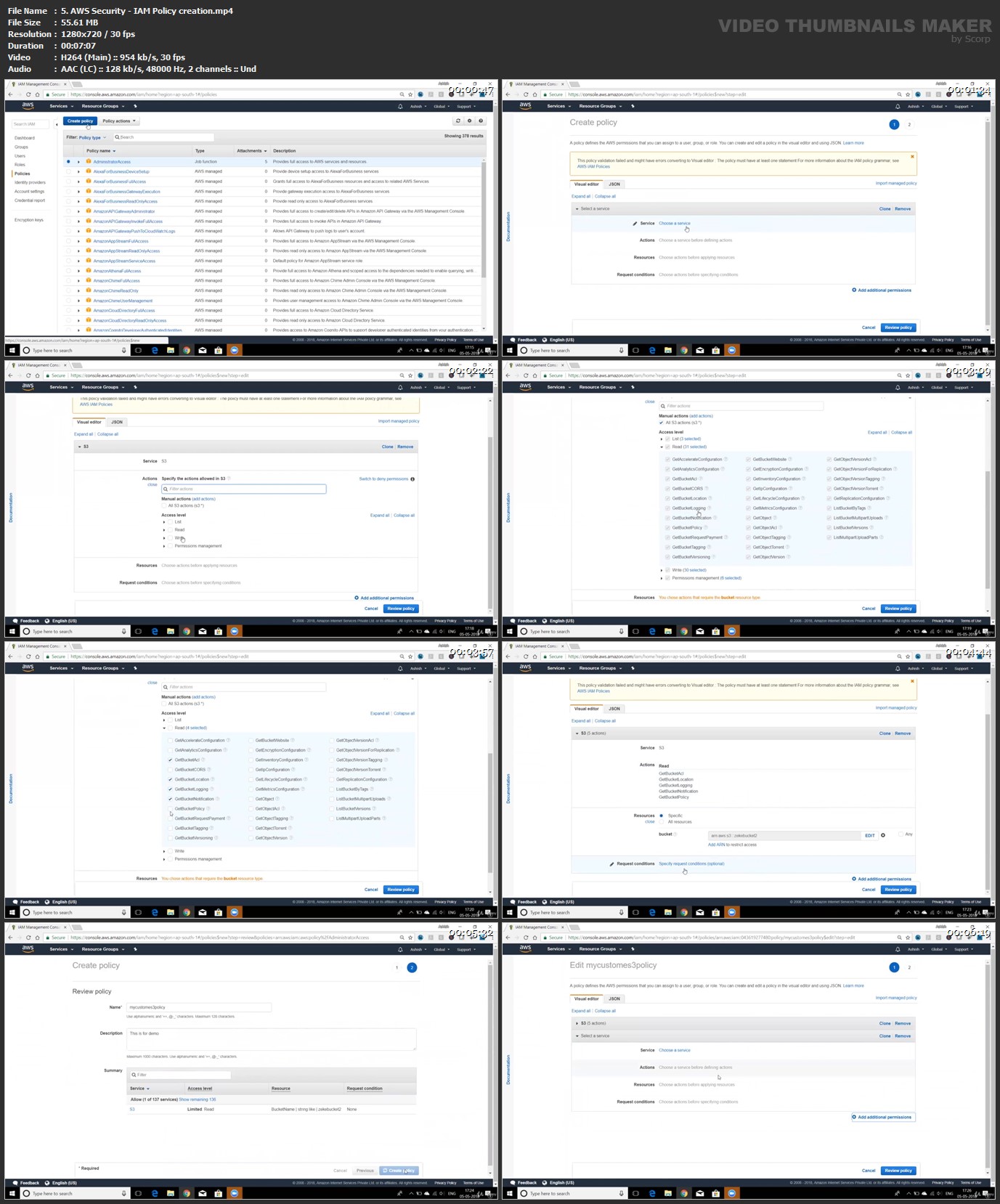
AWS Services for Solutions Architect Associates

0079957e.jpg


AWS Services for Solutions Architect Associates
Duration: 11:00:32 | .MP4 1280x720, 30 fps(r) | AAC, 44100 Hz, 2ch | 8.40 GB
Genre: eLearning | Language: English


The best guide for various AWS certifications such as AWS Solutions Architect, AWS SysOps and AWS Developer Associates


What you'll learn
Learn about various cloud services provided by Amazon Web Services (AWS)
Learn how to create and configure AWS services
Learn how to integrate various AWS services together to present a holistic cloud solution
Learn the use cases of the AWS services, Do's and Dont's while using those services and best practices

Requirements
Basic knowledge of Linux commands
Common IT knowledge

Description
***UPDATE: New Content ALERT!!! Around 50+ video content added to the course!***
AWS is a public cloud and a pioneer in the cloud computing domain. It provides every kind of service models like IAAS, PAAS, and SAAS. In this course, I will discuss various cloud services provided by Amazon Web Services (AWS).
Here we will elaborate on the features of AWS services, their use cases, how to create those services, how to configure them and how to integrate various services together to present a holistic cloud solution.
This series is useful for anyone starting their cloud journey as well as cloud practitioners. However, it is especially useful for learners who are preparing for various AWS certifications such as AWS Solutions Architect, AWS SysOps Associate and AWS Developer Associates. We discuss use cases of the services, Do's and Dont's while using those services and best practices.


Who this course is for:
Beginners who want to start their journey in cloud domain
IT professionals who want to become cloud practitioners
Developers who want to deploy an application on AWS
Candidates preparing for various AWS certifications such as AWS Solutions Architect, AWS SysOps Associate and AWS Developer Associates

00799593.jpg


Zurück
Oben Unten