• Regeln für den Video-Bereich:

    In den Börsenbereich gehören nur Angebote die bereits den Allgemeinen Regeln entsprechen.

    Einteilung

    - Folgende Formate gehören in die angegeben Bereiche:
    - Filme: Encodierte Filme von BluRay, DVD, R5, TV, Screener sowie Telesyncs im Format DivX, XviD und x264.
    - DVD: Filme im Format DVD5, DVD9 und HD2DVD.
    - HD: Encodierte Filme mit der Auflösung 720p oder darüber von BluRay, DVD, R5, TV, Screener sowie Telesyncs im Format x264.
    - 3D: Encodierte Filme von BluRay, die in einem 3D Format vorliegen. Dies gilt auch für Dokus, Animation usw.
    - Serien: Cartoon/Zeichentrick, Anime, Tutorials, Dokumentationen, Konzerte/Musik, Sonstiges sind demnach in die entsprechenden Bereiche einzuordnen, auch wenn sie beispielsweise im High Definition-Format oder als DVD5/DVD9/HD2DVD vorliegen. Ausnahme 3D.
    - Bereich Englisch: Englische Releases gehören immer in diesen Bereich.
    - Bereich Talk: Der Bereich, in dem über die Releases diskutiert werden kann, darf, soll und erwünscht ist.


    Angebot/Beitrag erstellen

    - Ein Beitrag darf erst dann erstellt werden, wenn der Upload bei mindestens einem OCH komplett ist. Platzhalter sind untersagt.
    - Bei einem Scenerelease hat der Threadtitel ausschließlich aus dem originalen, unveränderten Releasenamen zu bestehen. Es dürfen keine Veränderungen wie z.B. Sterne, kleine Buchstaben o.ä. vorgenommen werden. Ausnahme Serienbörse:
    - Bei einem Sammelthread für eine Staffel entfällt aus dem Releasename natürlich der Name der Folge. Beispiel: Die Simpsons S21 German DVDRip XviD - ITG
    - Dementsprechend sind also u.a. verboten: Erweiterungen wie "Tipp", "empfehlenswert", "only", "reup", usw. / jegliche andere Zusatzinformation oder Ergänzung, welche nicht in obiger Beschreibung zu finden ist.

    Aufbau des Angebots und Threadtitel

    Der Titel nach folgendem Muster erstellt zu werden. <Name> [3D] [Staffel] [German] <Jahr> <Tonspur> [DL] [Auflösung] <Quelle> <Codec> - <Group>
    Beispiel: The Dark Knight German 2008 AC3 DVDRip XviD - iND
    Beispiel: The Dark Knight 2008 DTS DL BDRip x264 - iND
    Beispiel: The Dark Knight 2008 AC3 DL BDRip XviD - iND
    Beispiel: The Dark Knight German 2008 AC3 720p BluRay x264 iND
    Beispiel: The Dark Knight 2008 DTS DL 1080p BluRay x264 iND
    Beispiel: Die Simpsons S01 German AC3 DVDRip XviD iND
    Beispiel: Die Simpsons S20 German AC3 720p BluRay x264 iND
    Beispiel: Sword Art Online II Ger Sub 2014 AAC 1080p WEBRip x264 - peppermint
    Entsprechend sind also u.a. verboten: Sonderzeichen wie Klammern, Sterne, Ausrufezeichen, Unterstriche, Anführungszeichen / Erweiterungen wie "Tipp", "empfehlenswert", "only", "reup", usw. / jegliche andere Zusatzinformation oder Ergänzung, welche nicht in obiger Beschreibung zu finden ist
    Ausnahmen hiervon können in den Bereichen geregelt sein.

    Die Beiträge sollen wie folgt aufgebaut werden:
    Überschrift entspricht dem Threadtitel
    Cover
    kurze Inhaltsbeschreibung
    Format, Größe, Dauer sind gut lesbar für Downloader außerhalb des Spoilers zu vermerken
    Nfo sind immer Anzugeben und selbige immer im Spoiler in Textform.
    Sind keine Nfo vorhanden z.B. Eigenpublikationen, sind im Spoiler folgende Dateiinformationen zusätzlich anzugeben :
    Quelle
    Video (Auflösung und Bitrate)
    Ton (Sprache, Format und Bitrate der einzelnen Spuren)
    Untertitel (sofern vorhanden)
    Hosterangabe in Textform außerhalb eines Spoiler mit allen enthaltenen Hostern.
    Bei SD kann auf diese zusätzlichen Dateiinformationen verzichtet werden.

    Alle benötigten Passwörter sind, sofern vorhanden, in Textform im Angebot anzugeben.
    Spoiler im Spoiler mit Kommentaren :"Schon Bedankt?" sind unerwünscht.


    Releases

    - Sind Retail-Release verfügbar, sind alle anderen Variationen untersagt. Ausnahmen: Alle deutschen Retail-Release sind CUT, in diesem Fall sind dubbed UNCUT-Release zulässig.
    - Im Serien-Bereich gilt speziell: Wenn ein Retail vor Abschluss einer laufenden Staffel erscheint, darf diese Staffel noch zu Ende gebracht werden.62
    - Gleiche Releases sind unbedingt zusammenzufassen. Das bedeutet, es ist zwingend erforderlich, vor dem Erstellen eines Themas per Suchfunktion zu überprüfen, ob bereits ein Beitrag mit demselben Release besteht. Ist dies der Fall, ist der bereits vorhandene Beitrag zu verwenden.
    - P2P und Scene Releases dürfen nicht verändert oder gar unter einem iND Tag eingestellt werden.


    Support, Diskussionen und Suche

    - Supportanfragen sind entweder per PN oder im Bereich Talk zu stellen.
    - Diskussionen und Bewertungen sind im Talk Bereich zu führen. Fragen an die Uploader haben ausschließlich via PN zu erfolgen, und sind in den Angeboten untersagt.
    - Anfragen zu Upload-Wünschen sind nur im Bereich Suche Video erlaubt. Antworten dürfen nur auf Angebote von MyBoerse.bz verlinkt werden.


    Verbote

    - Untersagt sind mehrere Formate in einem einzigen Angebotsthread, wie beispielsweise das gleichzeitige Anbieten von DivX/XviD, 720p und 1080p in einem Thread. Pro Format, Release und Auflösung ist ein eigener Thread zu eröffnen.
    - Grundsätzlich ebenso verboten sind Dupes. Uploader haben sich an geeigneter Stelle darüber zu informieren, ob es sich bei einem Release um ein Dupe handelt.
    - Gefakte, nur teilweise lauffähige oder unvollständige Angebote sind untersagt. Dies gilt auch für eigene Publikationen, die augenscheinlich nicht selbst von z.B. einer DVD gerippt wurden. Laufende Serien, bei denen noch nicht alle Folgen verfügbar sind, dürfen erstellt und regelmäßig geupdatet werden.
    - Untersagt sind Angebote, welche nur und ausschließlich in einer anderen Sprache als deutsch oder englisch vorliegen. Ausnahmen sind VORHER mit den Moderatoren zu klären.


    Verstoß gegen die Regeln

    - Angebote oder Beiträge, die gegen die Forenregeln verstoßen, sind über den "Melden"-Button im Beitrag zu melden.
  • Bitte registriere dich zunächst um Beiträge zu verfassen und externe Links aufzurufen.

*** Bestes IPTV *** bester Preis *** gratis Test ***


Englische Tutorials


1811121227080083.jpg

Angular and Node.js Integration
MP4 | Video: AVC 1280x720 | Audio: AAC 44KHz 2ch | Duration: 1.5 Hours | Lec: 16 | 202 MB
Genre: eLearning | Language: English

Learn to Integrate Angular with Node.js
This is a very short course designed to help you integrate Angular and Node.js. We are going to create an Angular Project with the Angular CLI, then we are creating a server with Node.js. We are going to be setting up our Node.js API's to make calls from the Angular front end. This a great short course for those looking to finally learn to put this two together.


1811121227100095.jpg


Recommend Download Link Hight Speed | Please Say Thanks Keep Topic Live

 

1811121227170084.jpg

TCP/IP Fundamentals
MP4 | Video: AVC 1280x720 | Audio: AAC 44KHz 2ch | Duration: 8 Hours | 24.5 GB
Genre: eLearning | Language: English

Introduction
Module 1: TCP/IP Overview and History
Lesson 1: Networking Fundamentals
Learning objectives
1.1 Revisiting a Little "Byte" of History
1.2 Introducing Network Types and Attributes
1.3 Reviewing Network Performance Concepts
1.4 Examining Networking Standards and Organizations
1.5 Understanding Applied Binary and Hexadecimal Mathematics
Lesson 2: The OSI Reference Model
Learning objectives
2.1 Introducing the International Organization for Standardization
2.2 Exploring General Concepts of the OSI Model
2.3 Examining the OSI Model Layers
Lesson 3: TCP/IP Protocol Suite and Architecture
Learning objectives
3.1 Getting Familiar with the Network Interface Layer
3.2 Getting Familiar with the Internet Layer
3.3 Getting Familiar with the Transport Layer
3.4 Getting Familiar with the Application Layer
Module 2: Lower Layer Core Protocols and Services
Lesson 4: Point-To-Point Protocol (PPP)
Learning objectives
4.1 Pondering the Purpose of PPP
4.2 Examining the PPP Core Protocols
4.3 Introducing PPP Feature Protocols and EAP
4.4 Exploring the PPP Frame Formats
4.5 Demonstrating PPP and EAP Behavior
Lesson 5: TCP/IP Address Resolution Protocols
Learning objectives
5.1 Understanding the Need for Address Resolution
5.2 Examining the MAC Address
5.3 Examining the TCP/IP ARP Protocol
5.4 Looking at Reverse ARP
5.5 Demonstrating MAC addressing and ARP
Module 3: The Internet Protocol
Lesson 6: IP Version 4
Learning objectives
6.1 Reviewing IP Concepts and Versions
6.2 Understanding IPv4 Addressing Concepts
6.3 Working with Classful Addressing
6.4 Exploring IP Subnetting
6.5 Using Classless Inter-domain Routing
6.6 Examining Practical Addressing in Amazon Web Services
6.7 Examining IP Datagram Characteristics
Lesson 7: IP Version 6
Learning objectives
7.1 Understanding Why We Need a New IP Version
7.2 Comparing IPv4 to IPv6
7.3 Examining IPv6 Addressing
7.4 Examining IPv6 Distinctives
Module 4: IP Support Protocols
Lesson 8: IP Support and Management Protocols
Learning objectives
8.1 Getting Familiar with ICMP
8.2 Getting Familiar with ICMPv6
8.3 Getting Familiar with IP Security (IPsec)
8.4 Demonstrating ICMP
Lesson 9: TCP/IP Routing Protocols
Learning objectives
9.1 Understanding Static and Dynamic Routing
9.2 Examining Routing Information Protocol (RIPv2 and RIPng)
9.3 Examining Open Shortest Path First (OSPF)
9.4 Examining Enhanced Interior Gateway Routing Protocol (EIGRP)
9.5 Examining Border Gateway Protocol
9.6 Demonstrating BGP in Amazon Web Services
Module 5: Transport Layer Protocols
Lesson 10: Transmission Control Protocol (TCP)
Learning objectives
10.1 Understanding Ports and Sockets
10.2 Examining TCP Behavior and Characteristics
10.3 Examining TCP Operations
10.4 Demonstrating TCP Operations
Lesson 11: User Datagram Protocol (UDP)
Learning objectives
11.1 Comparing UDP to TCP
11.2 Understanding UDP Ports
11.3 Exploring Common UDP Services
11.4 Demonstrating Datagram TLS
Module 6: TCP/IP Application Layer Protocols
Lesson 12: Surveying the Application Layer Protocols and Services
Learning objectives
12.1 Introducing the Domain Name System (DNS)
12.2 Introducing the File Transfer Protocol (FTP)
12.3 Introducing Dynamic Host Configuration Protocol (DHCP)
12.4 Introducing the Simple Network Management Protocol (SNMP)
12.5 Introducing Electronic Mail Systems
12.6 Introducing Hypertext Transfer Protocol (HTTP)
12.7 Introducing Hypertext Transfer Protocol Secure (HTTPS)
12.8 Demonstrating the Wireshark Packet Sniffer Tool
Summary


1811121227190083.jpg


Recommend Download Link Hight Speed | Please Say Thanks Keep Topic Live
 

f4bad32b0ff9594c37f87eba3369ae46.jpg


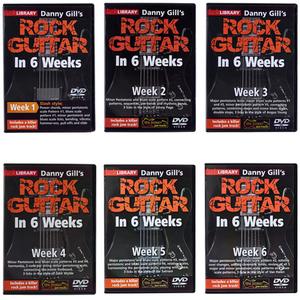
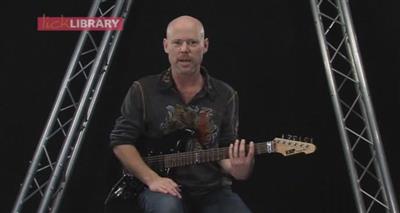
Rock Guitar In 6 Weeks: Weeks 1-6
6xDVDRip's | English | AVI + MP3 Jam tracks | 688 x 368 | XviD ~524 kbps | 25 fps
MP3 128 Kbps 48.0 KHz | 2 channels | 07:07:17 + jam tracks: 00:25:05 | 2.03 GB
Genre: eLearning Video / Guitar lesson
This course is designed to focus your practice towards realistic goals achievable in six weeks. Each week provides you with guitar techniques, concepts and licks to help you play and understand rock guitar playing at a manageable easy to follow pace. The material is presented to you in easy to absorb sections which progress in a sensible logical order. Stick with this course and we guarantee you will improve.​

Includes:

Week 1 - 1:03:04 (Slash Style)

Introduction (0:43)
Lessons:
The Minor Pentatonic & Blues Scale Pattern 1 (11:55)
Vibrato & Bends (9:00)
Hammer-ons, Pull-offs & Slides (6:38)
Phrases, Licks & Sequences (13:36)
Power Chords (4:17)
Slash Style Lick 1 (5:27)
Slash Style Lick 2 (5:59)
Slash Style Lick 3 (4:25)
Conclusion (0:58)
Jam Track (4:10)

Week 2 - 1:00:47 (Jimmy Page Style)

Introduction (0:38)
Lessons:
The Minor Pentatonic & Blues Scale Pattern 2 (7:39)
Connecting Patterns 1 & 2 (6:36)
Sequences (25:02)
Rhythmic Bending & Pre-Bending (8:59)
Jimmy Page Style Lick 1 (3:08)
Jimmy Page Style Lick 2 (4:19)
Jimmy Page Style Lick 3 (3:40)
Conclusion (0:42)
Jam Track (4:58)

Week 3 - 1:00:26 (Angus Young Style)

Introduction (0:51)
Lessons:
The Major Pentatonic Scale (12:16)
Combining The Major & Minor Pentatonic Scale (9:35)
Major & Minor Pentatonic Pattern 5 (12:22)
Double Stops (13:22)
Angus Young Style Lick 1 (4:13)
Angus Young Style Lick 2 (3:06)
Angus Young Style Lick 3 (4:02)
Conclusion (0:35)
Jam Track (4:18)

Week 4 - 1:03:59 (Zakk Wylde Style)

Introduction (0:50)
Lessons:
E Minor Pentatonic & Blues Scale Pattern 4 (9:24)
E Minor Pentatonic & Blues Scale Pattern 3 (10:45)
Connecting The Neck (10:36)
Harmonics (8:16)
Three Note Per String Pentatonic Scale (7:47)
Zakk Wylde Style Lick 1 (6:44)
Zakk Wylde Style Lick 2 (3:29)
Zakk Wylde Style Lick 3 (4:56)
Conclusion (1:09)
Jam Track (4:05)

Week 5 - 1:15:41 (Joe Satriani Style)

Introduction (0:48)
Lessons:
E Major Pentatonic & Blues Scale Pattern 4 (9:28)
Adding The Blues Note To Pattern 4 (9:01)
Relative Scales (9:08)
The Major Pentatonic & Blues Scale Pattern 3 (4:18)
Combining The Major & Minor Pentatonic Scale (11:13)
Chords Used In The Backing Track (4:43)
Harmonizing The Major Pentatonic Scale (11:27)
Playing With Space (2:27)
Joe Satriani Style Lick 1 (4:19)
Joe Satriani Style Lick 2 (4:03)
Joe Satriani Style Lick 3 (3:34)
Conclusion (1:06)
Jam Track (4:00)

Week 6 - 1:43:20 (Eddie Van Halen Style)

Introduction (0:49)
Lessons:
Major Pentatonic With The Blues Note Pattern 2 (11:16)
Chords Used In The Backing Track (6:08)
Soloing Over Changes Part 1 (16:54)
Soloing Over Changes Part 2 (14:39)
Dominant Arpeggios (15:04)
Eddie Van Halen Style Lick 1 (6:18)
Eddie Van Halen Style Lick 2 (7:03)
Eddie Van Halen Style Lick 3 (4:40)
Scale Review (19:35)
Conclusion (0:49)
Jam Track (3:34)

Screenshots


14402365d0e61dafa30e1aa7956f4b14.jpg


8a7c5ae9183523a270fd4e9105c802c9.jpg


e4f08e71d2f911965a01c71b7c49e4fa.jpg


5662b76d97f8cc181366cec1c24461e9.jpg


Recommend Download Link Hight Speed | Please Say Thanks Keep Topic Live
 

1811121227570089.jpg

Oracle PL/SQL Database Administration: 11g/12c DBA Developer
MP4 | Video: AVC 1280x720 | Audio: AAC 44KHz 2ch | Duration: 2.5 Hours | Lec: 27 | 386 MB
Genre: eLearning | Language: English

Oracle PLSQL Database Administration: Become A Oracle DBA 11g, Goldengate 12c Developer, Advanced SQL Java Certification
PL/SQL is a procedural language designed specifically to embrace SQL statements within its syntax. The program units are compiled by the Oracle Database server and stored inside the database. An application that uses Oracle Database is worthless unless only correct and complete data is persisted. This approach is generally called the thick database paradigm, but if you are not familiar with Oracle PL/SQL, you will miss the opportunity to have proper code management.
What if you could change that?
My complete PL/SQL course will show you the exact techniques and strategies you need to work with Oracle database, build stored procedures, implement system event triggers and declare PL/SQL variables. For less than a movie ticket, you will get over 4 hours of video lectures and the freedom to ask me any questions regarding the course as you go through it. :)
What Is In This Course?
Your Oracle PL/SQL Will Never Be The Same.
Except if you're an expert at Oracle PL/SQL, know types of PL/SQL program units, use the nested program blocks, work with the triggers, create and maintaining packages, work with stored procedures & functions, you are going to lose many job/career opportunities or even miss great trades.
As what Jim Highsmith, an American software engineer and author of books, says "The best way to get a project done faster is to start sooner."
You can try it with no financial risk.
In This Oracle PL/SQL Training, You'll Learn:
Types Of Pl/SQL Program Units
Understanding The Language Features
Structure Of A Program Block
Using The Nested Program Blocks
Software Development, Web Development
Standard Functions
Working With The Triggers
Creating The Different Types Of Trigger
Applying Triggers, System Event Triggers Within An Application
Maintaining The Database Triggers
Creating And Maintaining Packages
The Cursor & Advanced Cursor Techniques
Stored Procedures & Functions
---------------------------------------------------
Is This For You?
Do you want organized code management?
Are you wondering how you can implement changes easily?
Do you understand what it takes to have better performance?
Then this course will definitely help you.
This course is essential to all Application designers and developers, SQL Developer, Database administrators, and anyone looking to learn PL/SQL.
I will show you precisely what to do to solve these situations with simple and easy techniques that anyone can apply.
---------------------------------------------------
Why To Master Oracle PL/SQL?
Let Me Show You Why To Master Oracle PL/SQL:
1. You will work with Oracle database.
2. You will build stored procedures.
3. You will implementing system event triggers.
4. You will declare PL/SQL variables.


1811121228000079.jpg


Recommend Download Link Hight Speed | Please Say Thanks Keep Topic Live

 
1811101107520105.jpg

AutoCAD Map 3D Essential Training (Update 11.2018)
.MP4, AVC, 300 kbps, 1280x720 | English, AAC, 160 kbps, 2 Ch | 2h 29m | 661 MB
Instructor: Gordon Luckett

AutoCAD Map 3D enriches your map data, making it more visual and intelligent. With AutoCAD 2019, the Map 3D toolset ships free, bringing an intelligent geographic information system (GIS) to every AutoCAD drawing. Join Gordon Luckett in this course, where he shows how to use this powerful program to edit data within existing AutoCAD drawings and connect to outside databases for new sources of information. He also shows how to connect to, style, and analyze GIS data, and publish your data and final maps to a web-based map book. All of this and more is possible with AutoCAD Map 3D. Start watching, and learn how to bring the power of geodata to your DWGs.
Topics include:
Creating object data definitions
Modifying object data
Connecting to a database
Using project drawings
Performing queries
Adding images
Styling AutoCAD objects
Importing and exporting GIS data
Connecting to GIS data
Styling, editing, and analyzing GIS data
Merging and splitting GIS data
Using coordinate systems
Publishing map books
More Info


1811101107550091.jpg


Recommend Download Link Hight Speed | Please Say Thanks Keep Topic Live

 
651b23239ba4a6932c6563b9ad2d5f77.jpg

Cucumber Selenium MasterClass Design BDD Framework
.MP4 | Video: h264, 1280x720 | Audio: AAC, 48 KHz, 2 Ch
Genre: eLearning | Language: English | Duration: 6 hours | Size: 2.33 GB​

Docker Training: Docker Containers by learning Docker Ecosystem, creating Docker images using Dockerfiles, Docker Swarm
What you'll learn
How to use Docker and Compose on your machine for better software building and testing.
Create a multi-node highly-available Swarm cluster on Linux and Windows.
Hand's-on with best practices for making Dockerfiles and Compose files like a Pro!
Build and publish your own custom images.
Experience using multi-host logging and event monitoring for Docker Swarm.
Update your containers using rolling updates, healthchecks, and rollbacks.
Requirements
No paid software required - Just install your favorite text editor and browser!
Local admin access to install Docker for Mac/Windows/Linux.
Have a GitHub and Docker Hub account.
Knowledge of Git and Linux will be preferred but NOT required.
Description
Docker Training: Become Job Ready in Docker Containerization by learning Docker Ecosystem, creating Docker images using Dockerfiles, Installing Ubuntu Linux and CentOS Linux, Granting Docker Control to Non-root Users, Security, Orchestration, Network Configuration Files, etc. You will also get an exposure to industry based real-time projects in various verticals.
This course covers all the fundamentals about Docker software and teach you everything you need to know about developing and deploying modern applications with Docker software.
Be ready for the Dockerized future, where nearly all software is developed and deployed in containers. Welcome to the most complete and up-to-date course for learning and using Docker end-to-end, from development and testing, to deployment and production.
Just starting out with Docker? Perfect. This course starts out assuming you're new to containers.
This is a living course, and will be updated as Docker features and workflows change.
This course is designed to be fast at getting you started but also get you deep into the "why" of things. Simply the fastest and best way to learn the latest docker skills. Look at the scope of topics in the Session and see the breadth of skills you will learn.
Why shall we learn Docker technologies:
Docker software is on the bleeding edge of technology today. It is also one of the most compelling technologies of the last decade in terms of its disruption to software development, operations, systems architecture, testing and compliance practices.
Docker is becoming a must tool for developers. containers and the Docker's approach gives you the opportunity to work without any need of dependencies. Docker allows developers to focus on the things which actually matters without worrying about the environment where the application runs.
Tons of companies are using docker in production, today you have the access to that same virtualization technology right on your desktop.
Why DevOps skills?
Nowadays DevOps engineers are in great demand in the IT industry. Companies are looking for developers who can both develop and deploy the applications.
The average salary of a DevOps engineer is about $140,000 per year in Silicon Valley area which is 20% higher than the salary of a software engineer.
Master DevOps Skills means you will be staying ahead in the competitive job market!
Some of the many cool things you'll do in this course:
Edit web code on your machine while it's served up in a container
Lock down your apps in private networks that only expose necessary ports
Create a 3-node Swarm cluster in the cloud
Use Virtual IP's for built-in load balancing in your cluster
Optimize your Dockerfiles for faster building and tiny deploys
Build/Publish your own custom application images
Create your own image registry
Use Swarm Secrets to encrypt your environment configs, even on disk
Deploy container updates in a rolling always-up design
Create the config utopia of a single set of YAML files for local dev, CI testing, and prod cluster deploys
And so much more...
After taking this course, you'll be able to:
Use Docker in your daily developer and/or sysadmin roles
Make Dockerfiles and Compose files
Build multi-node Swarm clusters and deploying H/A containers
Build a workflow of using Docker in dev, then test/CI, then production with yaml
Protect your keys, TLS certificates, and passwords with encrypted secrets
Keep your Dockerfiles and images small, efficient, and fast
Develop locally while your code runs in a container
Protect important persistent data in volumes and bind mounts
Lead your team into the future with the latest Docker container skills!
Who is the target audience?
Software developers, sysadmins, IT pros, and operators at any skill level.
Anyone who makes, deploys, or operates software on servers.

2b800eec3bf8e176ca719a73121035b2.jpg


Recommend Download Link Hight Speed | Please Say Thanks Keep Topic Live
 

1811121227400093.jpg

TTC Video - Capitalism vs. Socialism: Comparing Economic Systems
Course No. 5006 | .MP4, AVC, 200 kbps, 640x360 | English, AAC, 96 kbps, 2 Ch | 24x30 mins | + PDF Guidebook | 1.5 GB
Lecturer: Edward F. Stuart, Ph.D.

All of the tradeoffs in competing economic systems-capitalism, socialism, and communism-are controversial. These systems and ideologies have undeniably shaped the way people view both the world today and modern history. But where does capitalism begin and socialism end? In short, it's about choice and compromise.

Capitalism and socialism turn on the major societal issues of education, healthcare, social services, and taxation. And they raise civil liberties tradeoffs that weigh individual freedom against the social safety net and collective security. Because economics focuses on these pocketbook issues, many people believe the field is simply about money when, in reality, money is merely a means to an end. Economics is really about people and their lives, and societies have been in pursuit of the ideal system for centuries, one that can balance these ongoing, competing desires for freedom versus security. No one has found perfect equilibrium-the debates rage on and economies are in constant flux-but some major contenders have emerged, all of which are variations of capitalism and socialism in differing degrees and combinations. Determining which, if any, is the best possible option in a definitive way, however, is a Sisyphean task and one riddled with complications.
Understanding and endeavoring to solve these perpetual dilemmas is the job of comparative economics. By looking at the many economies around the world-their histories, their failures and successes-comparative economics attempts to uncover the influences, systems, and decisions that can do the most good for the most people. Guiding you through this complex web of values and theories is Edward F. Stuart, Professor Emeritus of Economics at Northeastern Illinois University, who is a specialist in both comparative economics and Russian and Eastern European studies. Professor Stuart has been traveling, teaching, and learning about these economic systems-in the former Soviet Union, the former Eastern Bloc, China, Scandinavia, and Europe-for more than 30 years. It could even be argued that he was born to be a comparative economist, raised in a household defined by the very debates he analyzes as personified in the libertarian views of his father and his mother's social progressivism. This familial link to his subject offers a personal dimension to his approach, one that demonstrates his ongoing passion for the ways these debates play out on a global scale.
Economists venture to understand immensely complex systems that encompass not only finance and trade, but social structures, governments, family arrangements, geography, and more. The illuminating 24 lectures of Capitalism vs. Socialism: Comparing Economic Systems will show you the many ways the most influential modern economic theories were developed, how they function (or don't), and how they manage to operate both together and in opposition to each other, from the rise of Soviet communism to the future of the European Union and beyond. As you compare and contrast the many ways societies tackle economic issues, Professor Stuart demonstrates that even the most controversial economic decisions boil down to a deceptively simple question: What makes a good society?
Measuring Success
One of the first misconceptions Professor Stuart clarifies is that there is no definitive way to determine if an economy is objectively "good" or "bad." Rather, there are many statistics and data points economists can use to measure the relative health of a given system. From gross domestic product (GDP) to unemployment rates to inflation and even life expectancy, there is no shortage of measuring tools. The greatest difficulty lies not just in translating complex metrics, but in choosing which of these measurements matter. While discussion of GDP is common in the news, not everyone holds it as the absolute yardstick for economic success. And while few people would argue that low unemployment and low rates of inflation are good things for an economy, even fewer can agree as to whether either is a significant statistic to measure prosperity. As Professor Stuart notes, "people can argue forever using whatever statistics prove their point."
If there are no foolproof conclusions to draw from the wealth of information available, how do we know when an economy "works"? What is more important, economic equality or rapid growth? Low inflation or infant mortality rates? As you progress through the history of capitalism, socialism, communism, and mixed-economies-and look at their manifestations across the world today-Professor Stuart will demonstrate that absolutes in economics are much like those in culture or politics: impossible and ultimately unhelpful. Rather, it is in finding balance, making comparisons and compromises, that economies discover how to prosper, stagnate, or, in some cases, collapse.
The Paradoxes of Prosperity
On the surface, the study of economics can seem like purely a numbers game, relying as it does on large-scale, impersonal statistics to focus attention on broad trends. This "big picture" approach can sometimes mean that the human costs of prosperity can be dismissed as simply the cost of doing business. Slavery and exploitation. Unsafe working conditions. Child labor. Government oppression. Rather than gloss over these and other issues, Capitalism vs. Socialism will take you across centuries and around the world to show you both sides of the story, diving into the history of economic systems and the individuals and groups that shaped them, whether they be famous industrialists like Josiah Wedgewood, notable economic thinkers like Adam Smith and Karl Marx, political leaders such as Stalin, FDR, or Otto von Bismarck, or the many nameless workers and citizens whose time and labor form the backbone of any economy.
If people are the real heart of economics, then it should be unsurprising that there are many paradoxes inherent in economic systems. Professor Stuart takes you through the many developments of modern economics and highlights that, while there are a host of advantages and disadvantages that must be balanced in any system, some roadblocks can arise from unexpected or counterintuitive elements. Some of these paradoxes include:
The necessity of strong government in free market systems. Successful, large-scale capitalist enterprise requires a strong central government to enforce property and contract laws.
The "paradox of thrift." While it is smart for individuals and businesses to save and build up cash reserves to survive a recession, when the behavior becomes widespread it will eventually negatively affect total spending, incomes, production, employment, etc.
More money doesn't equal more spending. Known as "marginal propensity to consume," wealthy individuals demonstrate unstable spending habits, while poor people will almost always spend 100% (or even slightly more) of their income.
"All animals are equal, but some animals are more equal than others." Professor Stuart highlights how, in his allegorical novel Animal Farm, George Orwell underscores an irony of communism in practice, wherein everyone is said to be equal but a rigid hierarchy of power exists nonetheless.
Economic History
Capitalism and socialism (and by extension, communism) are often treated as if they are always in opposition to each other, but by looking at their origins and development, you will discover that this is far from the truth; they are, in fact, inextricably connected. Many social, political, and even religious factors intersected to support the birth of capitalism at a time when new, more democratic political systems were emerging from under the oppressive shadow of feudalism. In turn, modern socialism is the direct result of the pitfalls of free-market capitalism in the 18th and 19th centuries-the exploitation and dangerous, impoverished conditions workers were often subjected to inspired reformers and political thinkers to envision new ways to create a better, more equal society. Meanwhile, other nations took socialist ideology to an extreme in various forms of authoritarian communism. Professor Stuart looks closely at these systems and their histories, revealing their strengths and weaknesses and demonstrating why there is no pure capitalist (or pure socialist) system working in the world today.
As Professor Stuart guides you through the origins and evolutions of economic thought, you will look at some of the greatest experiments and failures of the last few centuries, including the creation of early American socialist experiments, the far-reaching economic implications of World War I, how the Great Depression highlighted the instability of post-war markets, the rise and fall of Soviet communism, the mixed-model economies of Europe, the rising tide of Asian market economies, and much more. Along the way, he also shares insightful personal stories and reveals unexpected connections between economics and other facets of modern life and culture. Throughout the lectures, you will find answers to questions like:
Where do phrases like "when my ship comes in" and "there's no such thing as a free lunch" originate?
What is the correlation between the average physical height of a population and economic growth?
Why are the goldsmiths of the middle ages so important in the history of modern economics?
Where does the concept of the money-back guarantee come from?
What is the link between a 19th-century socialist experiment and the microwave?
How did novelists like Theodore Dreiser, Upton Sinclair, Charles Dickens, and George Orwell influence the arguments surrounding various economic systems?
What can rock music and the Rubik's cube tell us about post-World War II capitalism?
The End of History?
In the end, what does make a good society? If every nation, every community, and even every individual across the globe assigns a different value to the tradeoffs of social solidarity and individual freedom that define economic systems, how do we predict the future of world economies? Hundreds of economies operate side by side and every single one has advantages and disadvantages that cannot be objectively measured.
As Professor Stuart observes, we are not at the end of history; many of the questions we ask today will continue to be asked far into the future. What comparative economics promises is not a "final" form of human government or the ultimate economic plan, but rather the opportunity to uncover the ways societies have shaped-and will continue to shape-the world to fit the boundless ideals that make a good society, and what each option can tell us about ourselves, the world we live in, and the world we want to create.


1811121227420081.jpg


More Info


1811121227430078.jpg


Recommend Download Link Hight Speed | Please Say Thanks Keep Topic Live
 

1811051155430096.jpg


Wordpress for Beginners up to Advanced
MP4 | Video: AVC 1280x720 | Audio: AAC 44KHz 2ch | Duration: 1 Hours | Lec: 26 | 234 MB
Genre: eLearning | Language: English

Master Wordpress / Learn how to Control ANY Wordpress Website / Create Make Build a professional website

Warning, Web Professionals - You May Find This Course Too Basic. We do not cover creating custom themes or working with codes. This course is intended for entreprenuers, marketers, brand owners and small business people - not developers.

You're here because you want to create your own website isn't it?

This is the perfect place to start. This complete course is designed for beginners like you who have never built a WordPress website (or any website for that matter).

While WordPress might seem scary from the outside, once you get started, it's fairly intuitive. Everything from hosting to installing a theme, then actually building your first pages can be learned in the first few lessons of this course.

Why learn from my course?

I've been building WordPress websites for years. Just like you, there was a time when I was a complete newbie! I was honestly scared of starting a WordPress website because it seemed so daunting.

Now I like WordPress! I wouldn't recommend using any other web-building tool.

Why Take This Course ?

Learn To Create A WordPress Website in Less Than 1 Hour

The Wordpress Website Will Be Fully Responsive (Mobile Friendly)

Learn To Create A Logo For Free!

USING A FREE Wordpress theme

Master wordpress

Learn All the ins And outs of Wordpress

Learn how to Create an Professional Blog with Wordpress

Using Most Up To Date Version of WordPress

I have got 4+ Years experience of working with WordPress

Learn From a Top Instructor in Wordpress Find out why!


1811051155450090.jpg


Recommend Download Link Hight Speed | Please Say Thanks Keep Topic Live

 
1811071004280090.jpg

InDesign Quick Start
MP4 | Video: AVC 1280x720 | Audio: AAC 44KHz 2ch | Duration: 22M | 67 MB
Genre: eLearning | Language: English

Learn Adobe InDesign, the world's most powerful page-layout application, on your lunch break. This short introductory course teaches you the basics of InDesign in under 30 minutes. Once you have these fundamental techniques out of the way, you can move on to more in-depth training and hone your skills in the areas you want to focus. Start here to learn how to add and edit text and graphics, move objects around your layout, and print your design or export it as a PDF for digital sharing.
Looking for a more complete tutorial? Check out instructor David Blatner's follow-up course, InDesign Essential Training.


1811071004300102.jpg


Recommend Download Link Hight Speed | Please Say Thanks Keep Topic Live
 

1811051155230089.jpg


Boost Your Reading Speed and Memory From Scratch
MP4 | Video: AVC 1280x720 | Audio: AAC 44KHz 2ch | Duration: 1 Hours | Lec: 17 | 229 MB
Genre: eLearning | Language: English

Learn to boost reading speed and memory from scratch

Become an Active Learner. Unlike high school, in college you can't learn all of the material by just reading over it a couple of times. You need to write and recite the information to get it into long-term memory.

* Participate in Class. If you feel a bit uncomfortable participating in class, set a goal to either ask or answer one question during each class. Once you begin participating, you'll feel more a part of the class and will become more actively involved in the learning process.

* Get to Know Your Instructors. Take a few minutes and stop to talk with your instructor before or after class or during offi ce hours. Ask a question about the material or check on your progress in the course. If you get to know your instructors, you may feel more comfortable asking for help when you need it.


1811051155240095.jpg


Recommend Download Link Hight Speed | Please Say Thanks Keep Topic Live
 

1811051155290105.jpg


How FlexBox and CSS Grid replaces CSS Floats? with Example
MP4 | Video: AVC 1280x720 | Audio: AAC 44KHz 2ch | Duration: 1 Hours | Lec: 7 | 132 MB
Genre: eLearning | Language: English

CSS Floats are dead! It's time you check this video and learn about FlexBox (the present) and CSS Grid (the future).

You can't be a professional web designer/developer without the power of FlexBox and CSS Grid with you. If you already know the basics of HTML and CSS, this course is for you to give insights on how FlexBox and CSS Grid works in CSS. Both, FlexBox and CSS Grid is used to create layouts and arranging blocks/divisions properly. So if you hate floats, you will love this course for sure.

With the power of FlexBox and CSS Grid under your belt, you will be a UI/UX designer on steroids to design any kind of layout. Further, FlexBox also has support in React Native, if you are Mobile app developer.

Covers:

Creating layout using Float
Creating layout using FlexBox
Creating layout using CSS Grid


1811051155300102.jpg


Recommend Download Link Hight Speed | Please Say Thanks Keep Topic Live
 
1811051502390101.jpg


Learn to Build SQL Query| Ultimate SQL and DataBase Concepts
MP4 | Video: AVC 1280x720 | Audio: AAC 44KHz 2ch | Duration: 2.5 Hours | Lec: 27 | 286 MB
Genre: eLearning | Language: English

Learn SQL and Database Core Concepts: This SQL Tutorial will cover all Major SQL concepts to write Query from Scratch.

SQL developers are earning higher salary in IT industry, but, its not about writing queries its about understanding and applying the right query at right time and this course will let you understand complex SQL Statements in an easy way .

Moreover, This Course will teach you how to extract Data from Database and write complex queries to a database This course will focus on a wider scale by Covering Structure Query Language SQL concepts as a whole, whether Students work with MySQL, Microsoft SQL Server, Oracle Server, etc.

This course have 5 Chapters in which you will learn

Chapter 1 Fundamentals
Fundamentals
Building Blocks
Selecting Records from DB
Working with Arithmetic Expressions
Chapter 2 Conditioning Sorting and Operators
Logical Operators
Comparison Operators
Operator Precedence
Sorting Results
Chapter 3 Functions
Character Functions
Number Functions
Date Functions
Conversions
General Purpose Functions
Nesting Functions
Chapter 4 Grouping
Multiple Row Functions on a single Table
Multiple Row Functions on Many Table
Chapter 5 Joins
Understanding Primary Key
Understanding Foreign Key
Understanding Need of Joins
Cartesian Product
Equie Join Simple Join Self Join
Non Equie Join
Outer Join
Self Join


1811051502400104.jpg


Recommend Download Link Hight Speed | Please Say Thanks Keep Topic Live
 
Zurück
Oben Unten