• Regeln für den Video-Bereich:

    In den Börsenbereich gehören nur Angebote die bereits den Allgemeinen Regeln entsprechen.

    Einteilung

    - Folgende Formate gehören in die angegeben Bereiche:
    - Filme: Encodierte Filme von BluRay, DVD, R5, TV, Screener sowie Telesyncs im Format DivX, XviD und x264.
    - DVD: Filme im Format DVD5, DVD9 und HD2DVD.
    - HD: Encodierte Filme mit der Auflösung 720p oder darüber von BluRay, DVD, R5, TV, Screener sowie Telesyncs im Format x264.
    - 3D: Encodierte Filme von BluRay, die in einem 3D Format vorliegen. Dies gilt auch für Dokus, Animation usw.
    - Serien: Cartoon/Zeichentrick, Anime, Tutorials, Dokumentationen, Konzerte/Musik, Sonstiges sind demnach in die entsprechenden Bereiche einzuordnen, auch wenn sie beispielsweise im High Definition-Format oder als DVD5/DVD9/HD2DVD vorliegen. Ausnahme 3D.
    - Bereich Englisch: Englische Releases gehören immer in diesen Bereich.
    - Bereich Talk: Der Bereich, in dem über die Releases diskutiert werden kann, darf, soll und erwünscht ist.


    Angebot/Beitrag erstellen

    - Ein Beitrag darf erst dann erstellt werden, wenn der Upload bei mindestens einem OCH komplett ist. Platzhalter sind untersagt.
    - Bei einem Scenerelease hat der Threadtitel ausschließlich aus dem originalen, unveränderten Releasenamen zu bestehen. Es dürfen keine Veränderungen wie z.B. Sterne, kleine Buchstaben o.ä. vorgenommen werden. Ausnahme Serienbörse:
    - Bei einem Sammelthread für eine Staffel entfällt aus dem Releasename natürlich der Name der Folge. Beispiel: Die Simpsons S21 German DVDRip XviD - ITG
    - Dementsprechend sind also u.a. verboten: Erweiterungen wie "Tipp", "empfehlenswert", "only", "reup", usw. / jegliche andere Zusatzinformation oder Ergänzung, welche nicht in obiger Beschreibung zu finden ist.

    Aufbau des Angebots und Threadtitel

    Der Titel nach folgendem Muster erstellt zu werden. <Name> [3D] [Staffel] [German] <Jahr> <Tonspur> [DL] [Auflösung] <Quelle> <Codec> - <Group>
    Beispiel: The Dark Knight German 2008 AC3 DVDRip XviD - iND
    Beispiel: The Dark Knight 2008 DTS DL BDRip x264 - iND
    Beispiel: The Dark Knight 2008 AC3 DL BDRip XviD - iND
    Beispiel: The Dark Knight German 2008 AC3 720p BluRay x264 iND
    Beispiel: The Dark Knight 2008 DTS DL 1080p BluRay x264 iND
    Beispiel: Die Simpsons S01 German AC3 DVDRip XviD iND
    Beispiel: Die Simpsons S20 German AC3 720p BluRay x264 iND
    Beispiel: Sword Art Online II Ger Sub 2014 AAC 1080p WEBRip x264 - peppermint
    Entsprechend sind also u.a. verboten: Sonderzeichen wie Klammern, Sterne, Ausrufezeichen, Unterstriche, Anführungszeichen / Erweiterungen wie "Tipp", "empfehlenswert", "only", "reup", usw. / jegliche andere Zusatzinformation oder Ergänzung, welche nicht in obiger Beschreibung zu finden ist
    Ausnahmen hiervon können in den Bereichen geregelt sein.

    Die Beiträge sollen wie folgt aufgebaut werden:
    Überschrift entspricht dem Threadtitel
    Cover
    kurze Inhaltsbeschreibung
    Format, Größe, Dauer sind gut lesbar für Downloader außerhalb des Spoilers zu vermerken
    Nfo sind immer Anzugeben und selbige immer im Spoiler in Textform.
    Sind keine Nfo vorhanden z.B. Eigenpublikationen, sind im Spoiler folgende Dateiinformationen zusätzlich anzugeben :
    Quelle
    Video (Auflösung und Bitrate)
    Ton (Sprache, Format und Bitrate der einzelnen Spuren)
    Untertitel (sofern vorhanden)
    Hosterangabe in Textform außerhalb eines Spoiler mit allen enthaltenen Hostern.
    Bei SD kann auf diese zusätzlichen Dateiinformationen verzichtet werden.

    Alle benötigten Passwörter sind, sofern vorhanden, in Textform im Angebot anzugeben.
    Spoiler im Spoiler mit Kommentaren :"Schon Bedankt?" sind unerwünscht.


    Releases

    - Sind Retail-Release verfügbar, sind alle anderen Variationen untersagt. Ausnahmen: Alle deutschen Retail-Release sind CUT, in diesem Fall sind dubbed UNCUT-Release zulässig.
    - Im Serien-Bereich gilt speziell: Wenn ein Retail vor Abschluss einer laufenden Staffel erscheint, darf diese Staffel noch zu Ende gebracht werden.62
    - Gleiche Releases sind unbedingt zusammenzufassen. Das bedeutet, es ist zwingend erforderlich, vor dem Erstellen eines Themas per Suchfunktion zu überprüfen, ob bereits ein Beitrag mit demselben Release besteht. Ist dies der Fall, ist der bereits vorhandene Beitrag zu verwenden.
    - P2P und Scene Releases dürfen nicht verändert oder gar unter einem iND Tag eingestellt werden.


    Support, Diskussionen und Suche

    - Supportanfragen sind entweder per PN oder im Bereich Talk zu stellen.
    - Diskussionen und Bewertungen sind im Talk Bereich zu führen. Fragen an die Uploader haben ausschließlich via PN zu erfolgen, und sind in den Angeboten untersagt.
    - Anfragen zu Upload-Wünschen sind nur im Bereich Suche Video erlaubt. Antworten dürfen nur auf Angebote von MyBoerse.bz verlinkt werden.


    Verbote

    - Untersagt sind mehrere Formate in einem einzigen Angebotsthread, wie beispielsweise das gleichzeitige Anbieten von DivX/XviD, 720p und 1080p in einem Thread. Pro Format, Release und Auflösung ist ein eigener Thread zu eröffnen.
    - Grundsätzlich ebenso verboten sind Dupes. Uploader haben sich an geeigneter Stelle darüber zu informieren, ob es sich bei einem Release um ein Dupe handelt.
    - Gefakte, nur teilweise lauffähige oder unvollständige Angebote sind untersagt. Dies gilt auch für eigene Publikationen, die augenscheinlich nicht selbst von z.B. einer DVD gerippt wurden. Laufende Serien, bei denen noch nicht alle Folgen verfügbar sind, dürfen erstellt und regelmäßig geupdatet werden.
    - Untersagt sind Angebote, welche nur und ausschließlich in einer anderen Sprache als deutsch oder englisch vorliegen. Ausnahmen sind VORHER mit den Moderatoren zu klären.


    Verstoß gegen die Regeln

    - Angebote oder Beiträge, die gegen die Forenregeln verstoßen, sind über den "Melden"-Button im Beitrag zu melden.
  • Bitte registriere dich zunächst um Beiträge zu verfassen und externe Links aufzurufen.

*** Bestes IPTV *** bester Preis *** gratis Test ***


Englische Tutorials


1811121227070100.jpg

Data Quality Insights
MP4 | Video: AVC 1280x720 | Audio: AAC 44KHz 2ch | Duration: 39M | 78 MB
Genre: eLearning | Language: English

The Economist magazine says the world's most valuable resource is no longer oil, but data. Hence organizations world over are looking at having quality data so that they can get good insights and make the right business decisions. While almost everyone talks of quality data, each one has his or her own interpretation of quality data. Very few can exactly define what quality data is all about. In this backdrop, this training - Data Quality Insights has 3 main parts. The first part talks about the definition of data, the key characteristics of enterprise data, and the three ways business data can be classified. The second section looks at the data quality such as the three key attributes of sample data and the twelve key dimensions of data quality. The third part will summarize the discussion and talk about the next steps.


1811121227090094.jpg


Recommend Download Link Hight Speed | Please Say Thanks Keep Topic Live

 
1811110458570090.jpg

Internationally Accredited Diploma Certificate in Nutrition
MP4 | Video: h264, 1280x720 | Audio: AAC, 44.1 KHz, 2 Ch
Genre: eLearning | Language: English + .VTT | Duration: 2.5 Hours | Size: 1.59 GB​

Learn how to eat healthy and understand the fundamentals of nutrition science
What you'll learn
Understand what the Macronutrients are and the role they play in our bodies
Understand the role Micronutrients, Fiber, Probiotics & Water play in our bodies
Understand Energy Balance. Figure out easy ways to determine BMR, TDEE
Learn the Top Carbohydrates/Proteins/Fat sources and figure out their estimated daily requirements
Requirements
Passion for Nutrition
Willingness to help and motivate others to eat healthy
Description
Now earn your Internationally Accredited Diploma in Nutrition accredited by CPD Certification Service, which is an independent body that ensures qualifications are in line with the most current professional standards.
This means this course comply with universally accepted principles of Continual Professional Development (CPD) and have been structured to meet the criteria of personal development plans.
CPD certification means that the content and structure of the courses have been independently assessed and approved for multi-disciplinary and industry-wide continuing personal and professional development purposes.
Pass Mark: 50% to secure your certificate!
Course Pre-requisite: None
Course Duration: 1-4 weeks
Course Lectures:
See Below.
Quizzes & Graded Exam:
Graded Exam
Certificate:
Internationally Accredited by CPD (Details in the course)
Course & Exam Location: Online
Course Description
We are facing an obesity epidemic where almost 2 billion people worldwide are overweight and 650 million are obese. This is hugely contributing to a significant increase in chronic diseases like type-2 diabetes and heart related conditions. These chronic ailments are largely preventable by following a healthy diet combined with an active lifestyle.
This diploma in nutrition will be of great interest to all learners and healthcare professional who would like to learn the fundamentals of nutrition science. It provides an in-depth look into macronutrients and micronutrients and understand how they are essential for our bodies to grow and remain healthy.
Module-1: Introduction to Nutrition will start off by discussing nutrition and nutrients. You will understand the concept of Energy Balance, BMR asal Metabolic Rate, TDEE [Total Daily Energy Expenditure], figure out how to calculate them using certain equations and formulas.
Module-2: Macronutrients will dive deep into three macronutrients i.e. carbohydrates, proteins and fats. We will learn everything about them, including their classifications, types, food sources and their functions and requirements.
Module 3: Micronutrients will discuss fat-soluble and water soluble vitamins, minerals, fiber, probiotics and water. We will do an in-depth discussion in the important functions that these micronutrients play in human body, their best food sources and symptoms which may occur in case their is a deficiency of a respective nutrient in our diet. You will be also be provided a table, that depicts their daily values, adequate limit, and upper tolerable limits.
Along with visually pleasing lecture slides, you will find a voiceover presentation which explains all the slides in detail plus you will find the accompanying script in case you want to read [Helpful for people who are hearing impaired]
Module 4 will provide you with 14 Nutritional Guidelines and 15 Healthy Snack Ideas and at least few diet plans both vegetarian and non-vegetarian.
Who is the course for?
-Anyone who wants to learn how to eat healthy and understand the fundamentals of nutritional science
-Health & Fitness Professionals who want to help their clients with general nutrition tips/guidelines
By the end of this course, what will you Learn?
-Understand what the Macronutrients are and the role they play in our bodies
-Understand the role Micronutrients, Fiber, Probiotics & Water play in our bodies
-Understand Energy Balance. Figure out easy ways to determine BMR, TDEE
-Learn the Top Carbohydrates/Proteins/Fat sources and figure out their estimated daily requirements.
& much more!
Lastly, you there is Bonus section which provides 'additional' readings and resources to in-case you want more in-depth understanding of the concepts provided.
Who is the target audience?
Anyone who wants to learn how to eat healthy and understand the fundamentals of nutritional science
Health & Fitness Professionals who want to help their clients with general nutrition tips/guidelines

1811110458570100.jpg


Recommend Download Link Hight Speed | Please Say Thanks Keep Topic Live
 
8b7de28ddbeeeed1527d1aed89cba49b.jpg

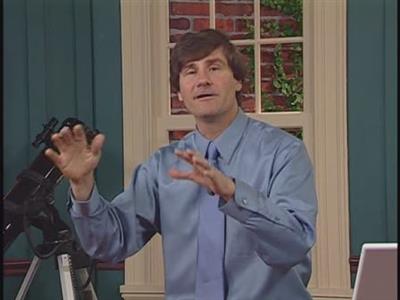
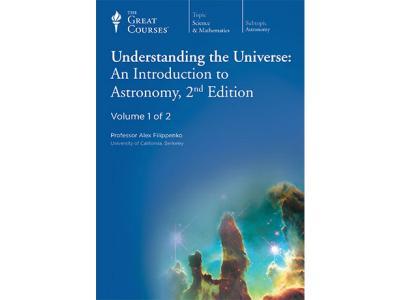
Understanding the Universe: An Introduction to Astronomy, 2nd Edition
96xDVDRip | AVI/XviD, ~429 kb/s | 400x304 | 49:50:54 | English: MP3, 105 kb/s (2 ch) | 10.88 GB
Genre: eLearning Video / Astronomy
Who has not gazed with wonder at the night sky, especially from a dark site far away from city lights? The great canopy of stars stretching overhead suggests that our world is part of a vastly larger cosmos. But how large is it? Where do we fit in? And how did it all begin? These questions have puzzled stargazers for thousands of years, and the search for answers helped spark the great advances of the scientific revolution in the 16th and 17th centuries. But only in our own time has the full picture of the true immensity, variety, and surpassing strangeness of the Universe come into focus.​

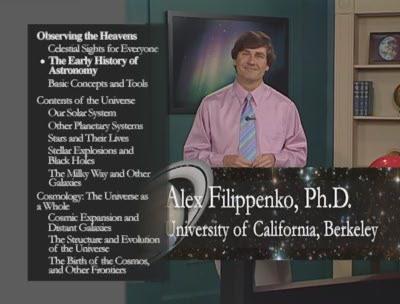
Understanding the Universe: An Introduction to Astronomy, 2nd Edition is a nontechnical description of where that picture stands today. In 96 richly illustrated half-hour lectures, you will survey the main concepts, methods, and discoveries in astronomy in-depth from the constellations drawn by the ancients, to the latest reports from planetary probes in the Solar System, to the most recent images offered by telescopes probing the farthest frontiers of space and time.
These lectures fully update Professor Alex Filippenko's 1998 edition of this course and his companion course from 2003. All of the material in this course is integrated so that one topic builds on another as you develop the conceptual tools that allow you to explore the Universe. For example, the study of the Solar System leads naturally to the investigation of planets around other stars and the possibility of life elsewhere in the cosmos. Likewise, rainbows and similar atmospheric phenomena introduce the subject of light, and light is the key to unraveling the mysteries of stars and galaxies.
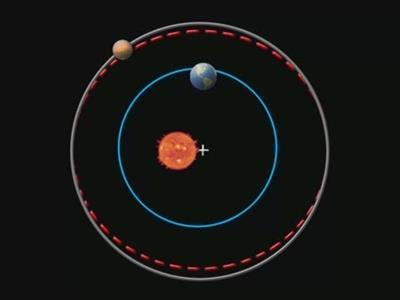
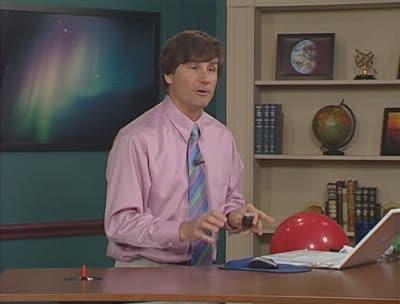
Dr. Filippenko uses thousands of diagrams and photographs. There are almost 300 short movies and computer animations that make astronomical phenomena easier to understand, and they put planets, stars, and galaxies into context as you zoom through the cosmos. A showman in the classroom, Dr. Filippenko delights in simple, easily reproducible demonstrations that use tennis balls, apples, paper plates, and other objects to explain scientific concepts. Furthermore, he has a gift for analogies: at one point, he makes the energy content of one erg vivid by comparing it to one fly doing one push-up!
Altogether, this course is an unrivalled opportunity to experience a full-year introductory college course on astronomy, delivered by a five-time winner of "Best Professor" on campus at the University of California, Berkeley, who himself is a leading participant in some of the groundbreaking discoveries at the forefront of the field. Professor Filippenko is both a world-class teacher and researcher: In 2006 he was named one of four national Professors of the Year by The Carnegie Foundation for the Advancement of Teaching, and in 1998 his international team of astronomers was credited with the top "science breakthrough of the year" for their amazing discovery that the expansion of the Universe is speeding upa finding that is now shaking the foundations of physics.
The Universe Is more Exciting than Ever
Much has happened in astronomy in a few short years. Many of these new discoveries are scientifically sophisticated, but the comprehensive scope of this course allows you to absorb the background you will need to grasp exciting recent developments such as:
* Martian "blueberries": The Spirit and Opportunity rovers on Mars have found clues in tiny, blue spherical stones nicknamed "blueberries" that indicate liquid water was once abundant on the red planet.
* Water on Enceladus: The Cassini spacecraft now orbiting Saturn has turned up evidence of liquid water just beneath the frozen surface of Saturn's moon Enceladus. Where there's water, there may be life.
* Is Pluto a planet? In August 2006, Pluto was demoted from the planetary status it had enjoyed since its discovery in 1930. Professor Filippenko discusses the persuasive reasons for this changeand his misgivings about how it was done.
* Exoplanets: Astronomers continue to find new planets orbiting other stars at a rate of about 20 per year. They are rapidly approaching the Holy Grail of planet hunters: extra-solar planets the size of Earth.
* Gamma-ray bursts: Thanks to NASA's Swift satellite, astronomers know more than ever about the most luminous and baffling events in the cosmos: gamma-ray bursts. They have found strong indications that many such bursts probably represent the birth cries of black holes.
* Dark energy: A mysterious force is causing the Universe to expand at an accelerating rate. The nature of this "dark energy" is now better understood thanks to recent observations that have narrowed down exactly when this speed-up began.
* Supermassive black holes: Once considered highly speculative, gigantic black holes are now known to be at the centers of most galaxies. These objects, from millions to billions of times more massive than the Sun, can produce vast jets of material moving outward at nearly the speed of light.
A Science for Everyone
As befits its subject matter, astronomy is perhaps the most diverse science there is. It teaches you about natural phenomena that we all experience, such as the seasons, rainbows, and phases of the Moon. It teaches you about tools of the trade, such as telescopes, spectrographs, and space probes. It teaches you about different areas of science, such as optics, physics, and chemistry. It also poses one of the most profound questions in the field of biology, namely, is there life elsewhere in the Universe?
Because astronomy has played a leading role in the development of science since antiquity, it is filled with key discoveries in the history of science, such as Copernicus's heliocentric model of the Solar System, Newton's universal law of gravitation, and Einstein's theory of relativity.
And, of course, astronomy serves as a field guide for understanding the night sky:
* The prominent star Betelgeuse in the constellation Orion is a red supergiant, hundreds of times the diameter of the Sun.
* The brightest star in the sky, Sirius, is orbited by a stellar corpse called a white dwarf, which points to the ultimate fate of the Sun.
* The beautiful Crab Nebula is the remnant of a supernova, whose explosion was observed by Chinese astronomers on July 4, 1054, and that at its center is an immensely dense, rapidly spinning neutron star.
At Home in the Universe
There is no doubt that we live in a golden age of astronomy. At this moment, space probes are on their way to new destinations, innovative new telescopes are on the drawing board, experiments are underway to test bold ideas about the cosmos, and powerful new tools for probing the nature of matter are about to come online. Astronomers everywhere are watching the skies with instruments of every size and type, searching for clues that will extend our knowledge of the Universe.
Armed with the wide-ranging and unified view of astronomy that this course offers, you will truly appreciate these future findings as they are announced. Moreover, you will feel at home in our wondrous Universe in a deeply satisfying way.
Should I Buy Audio or Video?
Images are presented by the hundreds and are so integral to the course's content, we are offering it only on DVD.


Alex Filippenko is Professor of Astronomy at the University of California, Berkeley. He received his Bachelor's degree in Physics from the University of California, Santa Barbara, and earned his Ph.D. in Astronomy from the California Institute of Technology.
Dr. Filippenko's research accomplishments, documented in more than 500 scientific publications and 600 abstracts and astronomical circulars, are among the most highly cited in the world. He has been recognized with several major awards, including the 1992 Newton Lacy Pierce Prize of the American Astronomical Society, the 1997 Robert M. Petrie Prize of the Canadian Astronomical Society, and the 2007 Richtmyer Memorial Award of the American Association of Physics Teachers. He was a Guggenheim Fellow in 2001 and a Phi Beta Kappa Visiting Scholar in 2002.
Science magazine credited Professor Filippenko and his international team of astronomers with the top "Science Breakthrough of 1998" for research on exploding stars (supernovae), which shows that the universe is expanding at an accelerating rate, propelled by mysterious "dark energy." Professor Filippenko also leads the world's most successful robotic search for exploding stars.
At UC Berkeley, Dr. Filippenko's teaching awards include the Donald S. Noyce Prize for Excellence in Undergraduate Teaching in the Physical Sciences and the Distinguished Teaching Award. He was also voted the Best Professor on Campus in student polls in 1995, 2001, 2003, 2004, and 2006.
At the end of 2006, he was honored nationally as the "Outstanding Doctoral and Research Universities Professor of the Year" by the Carnegie Foundation for the Advancement of Teaching and the Council for Advancement and Support of Education.
Dr. Filippenko is coauthor of The Cosmos: Astronomy in the New Millennium, now in its third edition, and winner of the 2001 Texty Excellence Award for best new textbook in the physical sciences.
Lectures:
1. A Grand Tour of the Cosmos
2. The Rainbow Connection
3. Sunrise, Sunset
4. Bright Objects in the Night Sky
5. Fainter Phenomena in the Night Sky
6. Our Sky through Binoculars and Telescopes
7. The Celestial Sphere
8. The Reason for the Seasons
9. Lunar Phases and Eerie Lunar Eclipses
10. Glorious Total Solar Eclipses
11. More Eclipse Tales
12. Early Studies of the Solar System
13. The Geocentric Universe
14. Galileo and the Copernican Revolution
15. Refinements to the Heliocentric Model
16. On the Shoulders of Giants
17. Surveying Space and Time
18. Scale Models of the Universe
19. Light-The Supreme Informant
20. The Wave-Particle Duality of Light
21. The Colors of Stars
22. The Fingerprints of Atoms
23. Modern Telescopes
24. A Better Set of Eyes
25. Our Sun, the Nearest Star
26. The Earth, Third Rock from the Sun
27. Our Moon, Earth's Nearest Neighbor
28. Mercury and Venus
29. Of Mars and Martians
30. Jupiter and Its Amazing Moons
31. Magnificent Saturn
32. Uranus and Neptune, the Small Giants
33. Pluto and Its Cousins
34. Asteroids and Dwarf Planets
35. Comets-Gorgeous Primordial Snowballs
36. Catastrophic Collisions
37. The Formation of Planetary Systems
38. The Quest for Other Planetary Systems
39. Extra-Solar Planets Galore!
40. Life Beyond the Earth
41. The Search for Extraterrestrials
42. Special Relativity and Interstellar Travel
43. Stars-Distant Suns
44. The Intrinsic Brightnesses of Stars
45. The Diverse Sizes of Stars
46. Binary Stars and Stellar Masses
47. Star Clusters, Ages, and Remote Distances
48. How Stars Shine-Nature's Nuclear Reactors
49. Solar Neutrinos-Probes of the Sun's Core
50. Brown Dwarfs and Free-Floating Planets
51. Our Sun's Brilliant Future
52. White Dwarfs and Nova Eruptions
53. Exploding Stars-Celestial Fireworks!
54. White Dwarf Supernovae-Stealing to Explode
55. Core-Collapse Supernovae-Gravity Wins
56. The Brightest Supernova in Nearly 400 Years
57. The Corpses of Massive Stars
58. Einstein's General Theory of Relativity
59. Warping of Space and Time
60. Black Holes-Abandon Hope, Ye Who Enter
61. The Quest for Black Holes
62. Imagining the Journey to a Black Hole
63. Wormholes-Gateways to Other Universes?
64. Quantum Physics and Black-Hole Evaporation
65. Enigmatic Gamma-Ray Bursts
66. Birth Cries of Black Holes
67. Our Home-The Milky Way Galaxy
68. Structure of the Milky Way Galaxy
69. Other Galaxies-"Island Universes"
70. The Dark Side of Matter
71. Cosmology-The Really Big Picture
72. Expansion of the Universe and the Big Bang
73. Searching for Distant Galaxies
74. The Evolution of Galaxies
75. Active Galaxies and Quasars
76. Cosmic Powerhouses of the Distant Past
77. Supermassive Black Holes
78. Feeding the Monster
79. The Paradox of the Dark Night Sky
80. The Age of the Universe
81. When Geometry Is Destiny
82. The Mass Density of the Universe
83. Einstein's Biggest Blunder?
84. The Afterglow of the Big Bang
85. Ripples in the Cosmic Background Radiation
86. The Stuff of the Cosmos
87. Dark Energy-Quantum Fluctuations?
88. Dark Energy-Quintessence?
89. Grand Unification & Theories of Everything
90. Searching for Hidden Dimensions
91. The Shape, Size, and Fate of the Universe
92. In the Beginning
93. The Inflationary Universe
94. The Ultimate Free Lunch?
95. A Universe of Universes
96. Reflections on Life and the Cosmos

a01308c17314effe6679078be231d0ed.jpg


1caec7c783b200830a0631e5862bcffe.jpg


db3f3c0fcea4965cfd3426acc5521da6.jpg


18b1c36ab978979255df9ff192a95045.jpg


9379b69bca167a6561866e91a8f9c9fc.jpg


af40e9d2cba96eca21e9828967c007a2.jpg


190486b24ce1c44204aafe94a928c071.jpg


Recommend Download Link Hight Speed | Please Say Thanks Keep Topic Live
 
1811110459230099.jpg

Microsoft Azure Developer: Implementing Application Logging with Diagnostic Logs
.MP4, AVC, 700 kbps, 1280x720 | English, AAC, 64 kbps, 2 Ch | 1h 34m | 305 MB
Instructor: Jeff Hopper

Diagnostics Logs can help you walk through what has occurred so that you can diagnose user error reports. In this course, you will learn how to monitor your production applications using Microsoft Azure's Diagnostic Logs.
Supporting web applications is hard, especially when a user reports a bug that is not easy to reproduce. Having access to server and application logs can help you walk through what has occurred to help you diagnose what went wrong. In this course, Microsoft Azure Developer: Implementing Application Logging with Diagnostic Logs, you'll learn how to capture and analyze the activity of your application through logging. First, you'll see the different types of logs available through Azure's App Service Diagnostic Logs. Next, you'll explore how to create your own application messages. Finally, you'll discover several tools to help analyze the logs being created by your application. When you're finished with this course, you'll have a foundational knowledge of Microsoft Azure's Diagnostic Logs that will help you as you troubleshoot issues with your applications.
More Info

1811110459250090.jpg


Recommend Download Link Hight Speed | Please Say Thanks Keep Topic Live

 
1811091027300088.png

Andrew Kroeze & Quentin G Panchura - Stupid Simple Client Acquisition
.MP4 | Language English | 4.89 GB
Genre: eLearning Video / Business, Sales, Marketing / Traffic​

Welcome to Stupid Simple Client Acquisition with Andrew Kroeze!
Brought to you by Andrew Kroeze
Digital Marketer, Bot Expert & Creator of Agency Acceleration Secrets.
Congratulations & Welcome to the family!

Here's What You'll Get:
Stupid Simple Client Acquisition Premium Home-Study Course - Full, Unrestricted Access to all Course Materials & Updates for LIFE ($2,997 Value)
MODULE #1: Prospecting - Find your dream clients at the snap of your fingers with these free prospecting tools ($997 Value)
MODULE #2: Client Acquisition - TEMPLATES & SCRIPTS GALORE! Cold Email, Cold Call, Cold FB Messenger Video, LinkedIn, BNI, Presentation Slides.YOU GET IT ALL!($1,997 Value)
MODULE #3: Closing The Deal - The Questions, Presentation, And The Proposal To Close Deals With Ease ($2,497 Value)
MODULE #4: Scaling - How to bring in a consistent flow of new clients on autopilot without any extra work ($997 Value)
MODULE #5: Winning Campaign Walk Throughs - The EXACT campaigns that have made my clients $10k+ profit (Ad Copy, Funnel, Bot, & Follow Up) ($1,997 Value)
COURSE BONUS #1: Exclusive, Never Before Seen Interviews With 10k Per Month Marketers on Client Acquisition ($1,497 Value)
COURSE BONUS #2: Weekly group coaching & mentorship calls to keep you accountable & on track ($2,997 Value)
COURSE BONUS #3: Have a question? Get it answered immediately. Exclusive, training & instant answer messenger group chat ($1,997 Value)

Total Value: $17,973
"Yes, I Want To Accelerate My Business Growth With These Client Acquisition Strategies!"
s
Homepage:
Code:
1811061305180104.jpg


Recommend Download Link Hight Speed | Please Say Thanks Keep Topic Live

 
1811110459060097.jpg

Monday Productivity Pointers (Update 5.11.2018)
.MP4, AVC, 200 kbps, 1280x720 | English, AAC, 160 kbps, 2 Ch | 24h 25m | 4.39 GB
Instructors: Jess Stratton, Garrick Chow, Nick Brazzi

In this weekly series on being productive with technology, authors Jess Stratton, Garrick Chow, and Nick Brazzi introduce tools and tips to help make today's software and devices work more efficiently and powerfully for you. With everything from pointers on using Microsoft Office and Google platforms to learning social networking skills and discovering the most useful apps for your iPhone or Android device, there's something for everyone.
More Info

1811110459070099.jpg


Recommend Download Link Hight Speed | Please Say Thanks Keep Topic Live
 
f775d3c2425b2e0f5fb29f153445de7e.jpg

Learning Amazon Web Services (AWS) for Developers
MP4 | Video: AVC 1280x720 | Audio: AAC 44KHz 2ch | Duration: 1.5 Hours | 244 MB
Genre: eLearning | Language: English

Amazon Web Services (AWS) is the leading cloud service provider today, ahead of competitors such as Microsoft Azure and Google Cloud Platform. It is seen by many as the standard for functional, reliable, interoperable, and affordable cloud services. Developers need to understand what it means to develop on and migrate to the cloud-and comprehend the overall landscape of AWS before diving into the platform. This training course provides a high-level overview just for developers, focusing on the AWS features and services of the most interest to them. Instructor Bear Cahill introduces AWS Lambda, DynamoDB, ElastiCache, Elastic Bean Stalk, S3, SQS, IAM, EC2, CloudFront, CloudFormation, and many more key features and services.


3902a0cfde4843ecb680a46df09b7009.jpg


Recommend Download Link Hight Speed | Please Say Thanks Keep Topic Live
 

1811121228190082.jpg

Matlab for Scientists a Beginners Course
MP4 | Video: h264, 1280x720 | Audio: AAC, 48 KHz, 2 Ch
Genre: eLearning | Language: English + .VTT | Duration: 1.5 Hours | Size: 847 MB
An application-based course designed for people in research​

What you'll learn
You will be able to explore and visualize your data using linegraphs, barDescriptions, etc.
You will be able to adjust your data to your needs (load data, change data values, create dummy data, etc.).
You will be able to extract important summaries of your data (mean, variance, median, etc.).
You will be able to apply fundamental Matlab functions (for-loops, if-statements).
You will be able to differentiate vectors, matrices, cells, and structures. Besides, you will know their individual benefits.
Requirements
Matlab should be installed on your computer.
Your computer should run on Windows.
No prior knowledge in Matlab required.
Description
This Matlab course will help you to get started in your career as a student, researcher or scientist working with Matlab. Whether you need to pass an exam or apply data analysis on behavioral or physiological data, this course is definitely made for you. You will master the basics of Matlab in no time. You will be able to automate repetetive tasks and visualize your data in less than two hours. Very concise videos make it possible.
To introduce myself: I am a researcher myself (PhD student in sleep research, nice to meet you), who has worked and taught Matlab for more than 3 years now. I have realized how important it is to master Matlab to analyse your data yourself. Especially as a person completely new to programming, learning Matlab can be a quite exhausting experience. In this course, however, you will learn from application-based material, which is both concise and fun. I created this online course so that your Matlab journey is both as smooth and delightful as possible.
So have a nice trip, let me guide you through Matlab wonderland and enjoy the ride!
P.S.: This course will be continously improved with the feedback you give. I'm sure I can still learn a lot in respect to producing high-quality videos. As your enrollment guarantees access for all your life, you will benefit from it yourself, as well.
Who is the target audience?
Students, PhD students, scientists and researchers who have no or very little knowledge about Matlab and only a very basic understanding of programming itself.
Students, PhD students, scientists and researchers in need to analyze quantitative data.
Students, PhD students, scientists and researchers who attend real life courses and need supplement for e.g. passing an exam.
1811121228200101.jpg


Recommend Download Link Hight Speed | Please Say Thanks Keep Topic Live

 
04cb77b7e6f0c48b1d1aad083c5acb60.jpg

4 Important Aspects of Photography, Every Photographer Must Know To Take Good Photo
MP4 | Video: AVC 1280x720 | Audio: AAC 44KHz 2ch | Duration: 33M | 479 MB
Genre: eLearning | Language: English​

If you are new to taking photos, these are the 4 most important aspects of photography that you must know to take good photos from your camera

531bc4e29e48e975db4cb22d0e931504.jpg


Recommend Download Link Hight Speed | Please Say Thanks Keep Topic Live
 
2b41dcc28c7873ae6f8aca7e4f438fda.jpg

Revit: Creating C# Plugins
MP4 | Video: AVC 1280x720 | Audio: AAC 44KHz 2ch | Duration: 3.5 Hours | 703 MB
Genre: eLearning | Language: English

Autodesk Revit is a powerful BIM platform, but it can be automated, customized, and expanded even further with plugins. With the Revit Application Programming Interface (API) and an understanding of C#, any motivated Revit user, BIM manager, architect, or engineer can create their own custom plugins. This training course starts with an overview of the plugin development workflow, using a simple example that retrieves an element ID. Once you know how to create commands and compile and debug the plugin code, instructor Jeremy Graham shows you how to work with elements (aka Revit families). Learn how to create elements, filter elements, and get and set element parameters. Then find out how to edit element geometry through code-binding intersections and projecting arrays-and automate common tasks related to views and sheets. Finally, Jeremy shows an advanced way to execute your commands with custom user interfaces known as external applications.


ca0790a80c9fe1753607a837bf2e5b19.jpg


Recommend Download Link Hight Speed | Please Say Thanks Keep Topic Live
 
eeb5776ab8a6e6f9cf125e8b1374c5be.jpg

CSS - The Complete Guide (incl. Flexbox, Grid and Sass)
.MP4, AVC, 380 kbps, 1920x1080 | English, AAC, 128 kbps, 2 Ch | 20h 42m | 4.65 GB
Instructors: Manuel Lorenz, Maximilian Schwarzmüller

Learn CSS for the first time or brush up your CSS skills and dive in even deeper
Every web developer has to know CSS. CSS, short for Cascading Style Sheets, is a "programming language" you use to turn your raw HTML pages into a really beautiful website. This course covers it all. We start at the very basics and gradually dive in deeper and deeper. We do this by showing you both practical examples and the theory behind them.
Getting started with CSS might look easy, but there actually is a lot of depth to CSS, so this course provides different "Tracks" or "Entry points" to exactly meet your demands and reflect your current knowledge level:
The Basics Track: Start from scratch and learn CSS from the ground up. You start with lecture 1 and simply follow through to the end.
The Advanced Track: You already know the CSS basics, you know what selectors are and how it works, but you want to dive in deeper and learn some advanced features and usages.
The Expert Track: You got the advanced knowledge, too, but you want to dive into things like Flexbox, CSS Grid, CSS Variables, or Sass. This track is for you.
In the course project, we'll build the front end (no back end) of a fictional web hosting company. We'll have a starting screen with different sections, a responsive design with an animated side-drawer, modals and forms, and lot of CSS animations, font styles, and more!
All the code and supporting files for this course are available at: Style and Approach
This course offers the theory and practical examples - we'll build an entire real course project throughout the course - but there also are multiple assignments, quizzes, and challenges for you to practice individual concepts taught throughout the course.
What You Will Learn
Know the basics of selectors and combinators, and how you set up styling rules in general
Properties, values, and declarations
How specify and inheritance work and why it's called "Cascading Style Sheets"
Important theoretical concepts such as the "Box Model"
How the default position of elements can be changed
Styling backgrounds (such as gradients) and images
Which units and dimensions you typically use in CSS (px, rem, %, and more)
How JavaScript and CSS interact
Responsive design and what "Mobile First" means
Styling forms and form inputs
Work with text, fonts, and text styles
Flexbox! How it works and how to use it
Use the CSS Grid and see how it differs from Flexbox
Transform and animate HTML elements with the help of CSS
Write future-proof CSS with features such as CSS variables or best-practice class names
Use Sass and know what it's all about
More Info

e7681d1487658458f2805c96373a5f68.jpg


Recommend Download Link Hight Speed | Please Say Thanks Keep Topic Live
 
1811051502470089.jpg


Learn the basics of C++ fast! Learn how to Develop Software
MP4 | Video: AVC 1280x720 | Audio: AAC 44KHz 2ch | Duration: 2 Hours | Lec: 34 | 262 MB
Genre: eLearning | Language: English

Learn the basics of C++ from scratch, watch video tutorials and do quizzes to learn C++

Will be adding more content as time moves on!

This course covers the basics of C++. We begin with the complete basics, such as:

- Printing text to the console

- Taking input from the user

- Variables

We move on to the if statement, creating loops and working with files.

Then we work with files, create functions, classes and structures.

In the end of this course, we will learn about header files and pointers.

C++ is one of the most amazing programming languages to learn, and C++ is widely used, ranging from creating games to developing anti-viruses.

If you are an absolute beginner at C++, this course is definitely for you!


1811051502490099.jpg


Recommend Download Link Hight Speed | Please Say Thanks Keep Topic Live
 
Zurück
Oben Unten