• Regeln für den Video-Bereich:

    In den Börsenbereich gehören nur Angebote die bereits den Allgemeinen Regeln entsprechen.

    Einteilung

    - Folgende Formate gehören in die angegeben Bereiche:
    - Filme: Encodierte Filme von BluRay, DVD, R5, TV, Screener sowie Telesyncs im Format DivX, XviD und x264.
    - DVD: Filme im Format DVD5, DVD9 und HD2DVD.
    - HD: Encodierte Filme mit der Auflösung 720p oder darüber von BluRay, DVD, R5, TV, Screener sowie Telesyncs im Format x264.
    - 3D: Encodierte Filme von BluRay, die in einem 3D Format vorliegen. Dies gilt auch für Dokus, Animation usw.
    - Serien: Cartoon/Zeichentrick, Anime, Tutorials, Dokumentationen, Konzerte/Musik, Sonstiges sind demnach in die entsprechenden Bereiche einzuordnen, auch wenn sie beispielsweise im High Definition-Format oder als DVD5/DVD9/HD2DVD vorliegen. Ausnahme 3D.
    - Bereich Englisch: Englische Releases gehören immer in diesen Bereich.
    - Bereich Talk: Der Bereich, in dem über die Releases diskutiert werden kann, darf, soll und erwünscht ist.


    Angebot/Beitrag erstellen

    - Ein Beitrag darf erst dann erstellt werden, wenn der Upload bei mindestens einem OCH komplett ist. Platzhalter sind untersagt.
    - Bei einem Scenerelease hat der Threadtitel ausschließlich aus dem originalen, unveränderten Releasenamen zu bestehen. Es dürfen keine Veränderungen wie z.B. Sterne, kleine Buchstaben o.ä. vorgenommen werden. Ausnahme Serienbörse:
    - Bei einem Sammelthread für eine Staffel entfällt aus dem Releasename natürlich der Name der Folge. Beispiel: Die Simpsons S21 German DVDRip XviD - ITG
    - Dementsprechend sind also u.a. verboten: Erweiterungen wie "Tipp", "empfehlenswert", "only", "reup", usw. / jegliche andere Zusatzinformation oder Ergänzung, welche nicht in obiger Beschreibung zu finden ist.

    Aufbau des Angebots und Threadtitel

    Der Titel nach folgendem Muster erstellt zu werden. <Name> [3D] [Staffel] [German] <Jahr> <Tonspur> [DL] [Auflösung] <Quelle> <Codec> - <Group>
    Beispiel: The Dark Knight German 2008 AC3 DVDRip XviD - iND
    Beispiel: The Dark Knight 2008 DTS DL BDRip x264 - iND
    Beispiel: The Dark Knight 2008 AC3 DL BDRip XviD - iND
    Beispiel: The Dark Knight German 2008 AC3 720p BluRay x264 iND
    Beispiel: The Dark Knight 2008 DTS DL 1080p BluRay x264 iND
    Beispiel: Die Simpsons S01 German AC3 DVDRip XviD iND
    Beispiel: Die Simpsons S20 German AC3 720p BluRay x264 iND
    Beispiel: Sword Art Online II Ger Sub 2014 AAC 1080p WEBRip x264 - peppermint
    Entsprechend sind also u.a. verboten: Sonderzeichen wie Klammern, Sterne, Ausrufezeichen, Unterstriche, Anführungszeichen / Erweiterungen wie "Tipp", "empfehlenswert", "only", "reup", usw. / jegliche andere Zusatzinformation oder Ergänzung, welche nicht in obiger Beschreibung zu finden ist
    Ausnahmen hiervon können in den Bereichen geregelt sein.

    Die Beiträge sollen wie folgt aufgebaut werden:
    Überschrift entspricht dem Threadtitel
    Cover
    kurze Inhaltsbeschreibung
    Format, Größe, Dauer sind gut lesbar für Downloader außerhalb des Spoilers zu vermerken
    Nfo sind immer Anzugeben und selbige immer im Spoiler in Textform.
    Sind keine Nfo vorhanden z.B. Eigenpublikationen, sind im Spoiler folgende Dateiinformationen zusätzlich anzugeben :
    Quelle
    Video (Auflösung und Bitrate)
    Ton (Sprache, Format und Bitrate der einzelnen Spuren)
    Untertitel (sofern vorhanden)
    Hosterangabe in Textform außerhalb eines Spoiler mit allen enthaltenen Hostern.
    Bei SD kann auf diese zusätzlichen Dateiinformationen verzichtet werden.

    Alle benötigten Passwörter sind, sofern vorhanden, in Textform im Angebot anzugeben.
    Spoiler im Spoiler mit Kommentaren :"Schon Bedankt?" sind unerwünscht.


    Releases

    - Sind Retail-Release verfügbar, sind alle anderen Variationen untersagt. Ausnahmen: Alle deutschen Retail-Release sind CUT, in diesem Fall sind dubbed UNCUT-Release zulässig.
    - Im Serien-Bereich gilt speziell: Wenn ein Retail vor Abschluss einer laufenden Staffel erscheint, darf diese Staffel noch zu Ende gebracht werden.62
    - Gleiche Releases sind unbedingt zusammenzufassen. Das bedeutet, es ist zwingend erforderlich, vor dem Erstellen eines Themas per Suchfunktion zu überprüfen, ob bereits ein Beitrag mit demselben Release besteht. Ist dies der Fall, ist der bereits vorhandene Beitrag zu verwenden.
    - P2P und Scene Releases dürfen nicht verändert oder gar unter einem iND Tag eingestellt werden.


    Support, Diskussionen und Suche

    - Supportanfragen sind entweder per PN oder im Bereich Talk zu stellen.
    - Diskussionen und Bewertungen sind im Talk Bereich zu führen. Fragen an die Uploader haben ausschließlich via PN zu erfolgen, und sind in den Angeboten untersagt.
    - Anfragen zu Upload-Wünschen sind nur im Bereich Suche Video erlaubt. Antworten dürfen nur auf Angebote von MyBoerse.bz verlinkt werden.


    Verbote

    - Untersagt sind mehrere Formate in einem einzigen Angebotsthread, wie beispielsweise das gleichzeitige Anbieten von DivX/XviD, 720p und 1080p in einem Thread. Pro Format, Release und Auflösung ist ein eigener Thread zu eröffnen.
    - Grundsätzlich ebenso verboten sind Dupes. Uploader haben sich an geeigneter Stelle darüber zu informieren, ob es sich bei einem Release um ein Dupe handelt.
    - Gefakte, nur teilweise lauffähige oder unvollständige Angebote sind untersagt. Dies gilt auch für eigene Publikationen, die augenscheinlich nicht selbst von z.B. einer DVD gerippt wurden. Laufende Serien, bei denen noch nicht alle Folgen verfügbar sind, dürfen erstellt und regelmäßig geupdatet werden.
    - Untersagt sind Angebote, welche nur und ausschließlich in einer anderen Sprache als deutsch oder englisch vorliegen. Ausnahmen sind VORHER mit den Moderatoren zu klären.


    Verstoß gegen die Regeln

    - Angebote oder Beiträge, die gegen die Forenregeln verstoßen, sind über den "Melden"-Button im Beitrag zu melden.
  • Bitte registriere dich zunächst um Beiträge zu verfassen und externe Links aufzurufen.


Englische Tutorials


1a99fbdb6a3819e350e34a9424b32c9b.jpg

The Spartacus Workout - 4 DVD's
4xDVDRip | English | MP4 | 720 x 404 | AVC ~2180 kbps | 29.970 fps
MP3 | 128 Kbps | 48.0 KHz | 2 channels | 05:08:10 | 3.33 GB​

Genre: eLearning Video / Cardio Workout, Fitness, Sports, Health
The NEW Spartacus Workout is here! It will make you sweat. It will make your muscles burn. And it will kick your butt-to help you achieve the best results of your life. Now, for the first-time ever, you can experience The Spartacus Workout on video-with The Spartacus Workout program! It's like having America's top trainer in your living room.

The Spartacus Workout uses the science of "metabolic circuits" to crank up your calorie burn for the most efficient and effective fat loss workout ever designed. You'll alternate between lower- and upper-body resistance exercises at a fast pace to maximize your time, speed your results, and leave you so exhilarated, you'll be counting down the minutes until your next workout. This incredible fitness routine will help you discover how to:

Get in shape faster!
Burn calories at a blistering pace!

Estimates from the University of Southern Maine show that Spartacus-style workouts can torch as many calories as running at a 6-minute-per-mile pace.

* Lose up to 40% more fat!

A study at the University of Connecticut found that when you use resistance training-like in The Spartacus Workout-you lose up to 40% more fat over aerobic exercise alone! How? By protecting metabolism-revving muscle.

* Get in shape faster!

A study at the University of Hawaii found that a Spartacus-style circuit workout raises your heart rate 15 beats per minute higher than running at 60 to 70% of your maximum heart rate does.

PLUS: To do The Spartacus Workout, all you need is a pair of dumbbells and about 6 feet of open space. So you can do it almost anywhere! It's simple. It's convenient. It WORKS!
So we ask: Are YOU ready for The Spartacus Workout?
Transform Your Body Forever!

Workout: Body-Weight Revolution!

Get the Lean Body You Want!

This routine isn't just a revolt against body fat; it's a revolutionary way to train every inch of your body at home"with no equipment! The Spartacus Workout: Body-Weight Revolution allows you to turn your body into the ultimate fitness machine"to burn calories, turbocharge your metabolism, and sculpt every muscle.

In this routine, you'll work for 30 seconds, rest for 30 seconds, and repeat for a sensational 30-minute sweat session. And just for fun, you can make your fat cells cry a little more by taking on a special 3-minute bonus routine.

The Spartacus Workout: 20-Minute Body-Fat Torchers!

Burn Fat Faster Than Ever!

Twenty is plenty when you do The Spartacus Workout: 20-Minute Fat Torchers. Each routine packs more work into a 20-minute session than most people do in an entire hour at the gym. So make no mistake: These workouts aren't easy"they're intense!

The Belly Crusher demolishes fat fast by having you do a series of five total-body exercises, each performed for 30 seconds with 30 seconds of rest in between. Doing three total rounds of this high-intensity workout will smoke every muscle and set your metabolism ablaze.

The Sweat Storm uses just three exercises to incinerate hundreds of calories. For each exercise, you'll work for 45 seconds and rest for 15 seconds, creating a heart- and lung-busting routine you can do in just minutes each day.

The Gladiator Gauntlet is a metabolic nightmare that will light your muscles on fire. With just one pair of dumbbells, you'll take on a ferocious five exercise circuit in which you will do each movement for 30 seconds with no rest in between"and repeat for a total of four fat-frying rounds!

The Spartacus Workout: Total-Body Blitz! & Triple-Set Scorcher!
2 DVD Set
Make Your Body Fat Disappear!

Get ready to sizzle and chisel with two cutting edge Spartacus Workouts: The Total-Body Blitz and the Triple-Set Scorcher. Both of these fast-paced routines crank up the metabolic heat to melt away stubborn belly flab and define every single muscle.

The Total-Body Blitz is a 30-minute routine that features a high-intensity 10-exercise circuit. You'll go all-out for 20 seconds, rest for 40 seconds, and repeat"over and over. The result: A brutal assault on your body fat. And the topper is a 5-minute "guns and buns" bonus round to finish off your arms, butt, and thighs.

The Triple-Set Scorcher is a 29-minute workout that'll leave you standing in a puddle of your own sweat. You'll work for 40 seconds and rest for 20 seconds, as you blast your way through two rounds of three exercises. Then you'll rest and repeat two more times, using new movements each time. The upshot: You'll turn your fat-burning furnace to high and scorch calories faster than ever.

The Spartacus Workout: Ab Attack!

Sculpt Your Abs!

Forget every ab workout you've ever tried! The Spartacus Workout: Ab Attack uses the latest exercise science and core training techniques to give you an amazing new way to lose the belly fat that covers your six-pack. That's because this intense workout challenges your whole body to blast calories at a blistering pace. But even better, every single exercise is designed to hit your core hard"and from every angle. So you'll mold your midsection into a rock-solid work of art"all while skyrocketing your fitness levels.

In this 33-minute workout, you'll perform an exercise for 40 seconds, rest for 40 seconds, and repeat, through a series of 10 of the toughest (and coolest) exercises. Then you'll do it all again. And if you have anything left, you can take on the bonus 5-minute ab-burning routine to carve your core even more!

The Spartacus Workout - 4 DVD's

About The Spartacus Workout: Three years ago, the producers of Starz asked Men's Health and Women's Health to create a workout worthy of the name Spartacus, the network's hit original series. With the help of Rachel Cosgrove, CSCS, an Ironman triathlete, co-owner of America's #1 fat-loss gym, and the 2012 IDEA Personal Trainer of the Year, we did just that. And it became the most popular workout in Men's Health and Women's Health history.

Now we've taken the Spartacus Workout to an all-new level. With routines co-created by Cosgrove and world-renowned performance coach David Jack"who instructs you on camera and adds his own "finisher" to the end of each routine"these never-before-seen Spartacus Workouts are guaranteed to get you in the best shape of your life.

Recommend Download Link Hight Speed | Please Say Thanks Keep Topic Live ​

 

73e1a6f9fbd9c663b04d28f7b70500a3.jpg

The Star Wars Effect: Create the Chromakey Effect and animate an Image
MP4 | Video: AVC 1280x720 | Audio: AAC 44KHz 2ch | Duration: 12M | 233 MB
Genre: eLearning | Language: English​

In this course you learn how to create the Star Wars Effect. We will use Final Cut Pro to animate an image and then add the Chromakey Effect to put it over our project.

The effect is amazing and, even better, you can use it for whatever project you like.

You do not need to use the blurry lights video in the background or the website code but whatever you prefer.

Recommend Download Link Hight Speed | Please Say Thanks Keep Topic Live ​

 

e646278856f1452050bfe2567ce70994.jpg

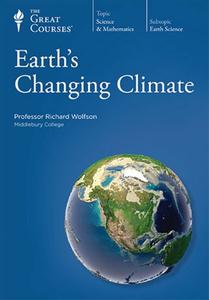
TTC Video - Earth's Changing Climate
12xWEBRip | English | AVI + PDF Guidebook | 720 x 480 | DX50 ~2830 kbps | 29.970 fps
MP3 | 128 kbps | 44.1 KHz | 2 channels | 06:04:48 | 7.31 GB​

Genre: eLearning / Climate, Earth, Environment
In 2007 the Intergovernmental Panel on Climate Change concluded that "warming of the climate system is unequivocal, as is now evident from observations of increases in global average air and ocean temperatures, widespread melting of snow and ice, and rising global mean sea level." Representing a consensus of hundreds of scientists, the report went on to note that human activity is "very likely" the cause.

This course of 12 half-hour lectures reviews the most up-to-date research on climate change, explaining the concepts, tools, data, and analysis that have led an overwhelming number of climate scientists to conclude that Earth is warming and that we humans are in great part responsible.

Behind the Consensus

Whatever your views on climate change, it's important to understand how the current scientific consensus on global warming evolved out of basic physical principles and a broad range of observations. In a lucid presentation designed for nonscientists, you will learn about:

The difference between climate and weather
The concept of energy balance, which governs the natural warming of the planet by the Sun and is the key to a stable climate
The greenhouse effect, which makes Earth warmer and more hospitable than it would otherwise be due to naturally occurring gases in the atmosphere, such as carbon dioxide and water vapor
The carbon cycle, which controls the rate at which carbon dioxide released by fossil-fuel combustion accumulates in the atmosphere, and how long it remains to enhance the natural greenhouse effect.

Along with these and other concepts, you will investigate the "fingerprints" of global climate change, ranging from borehole temperatures to melting glaciers to the altered behavior of plant and animal species. These and other indicators show that Earth has been warming at an unprecedented rate in recent decades.

You will also explore the physical mechanisms behind these changes and their connections to the increasing concentration of greenhouse gases in the atmosphere since the start of the Industrial Revolution. And you will look at the techniques for projecting future climates, along with the options for switching to alternative energy technologies to avoid the most disruptive scenarios that now seem possible.

Your Personal Scientific Briefing

Earth's Changing Climate addresses only scientific issues and makes no policy recommendations. Instead, this course is designed to serve as your personal scientific briefing to equip you to engage knowledgeably in one of the most important environmental issues of our time. In Lectures 1-6 you will focus on the scientific basis of climate; then in Lectures 7-12 you will come to understand the human role in climate change and explore projections of future climate.

Professor Richard Wolfson is no stranger to this subject. A physicist who has written and taught extensively about climate change, in 1996 he taped an earlier course for The Teaching Company titled, Energy and Climate: Science for Citizens in the Age of Global Warming. Professor Wolfson's new course is completely updated and represents the latest research and analysis in this fast-changing field.

A master at making difficult concepts understandable, Dr. Wolfson's other Teaching Company courses are Physics in Your Life, hailed by Library Journal as "a wonderful series of lectures that make learning physics fun and interesting," and Einstein's Relativity and the Quantum Revolution, which one listener said was "as exciting as a suspense thriller!"

In Earth's Changing Climate, Dr. Wolfson brings these educational gifts to bear on a subject that, at times, can be complex and controversial. You will find his presentation clear, objective, engaging, and illustrated with fascinating examples and analogies.

The Evidence Mounts

Like many scientific problems, the gradual assembly of a detailed picture of past, present, and future climates has involved creative detective work. For example, scientists traditionally test their theories by changing different variables, but this has not been possible with theories about climate change on Earth for two reasons: It's unwise to transform the planet just to see what will happen, and there are not multiple Earths to serve as test subjects.

However, researchers have identified cases where nature has done the experiments for us:

Mars: Mars's atmosphere has only about 1 percent the density of Earth's and provides a test for the theory of the greenhouse effect-in this case, for a planet with a thin atmosphere. As theory predicts, Mars has negligible greenhouse warming.
Venus: Venus's atmosphere has 100 times the density of Earth's and is about 96 percent carbon dioxide. Here, the greenhouse effect has struck with a vengeance-just as theory forecasts-driving temperatures to 500°C, hot enough to melt lead.
Mt. Pinatubo: The eruption of the volcano Mt. Pinatubo in 1991 poured massive amounts of dust into the upper atmosphere and allowed scientists to test their climate models. The fall in average global temperature over the following few years was in close agreement with what the models predicted.
Ice Cores: Deep ice cores from Greenland and Antarctica preserve a nearly million-year-old record of Earth's past temperature and atmospheric composition, showing a correlation between temperature and carbon dioxide concentration.

Using such clues, scientists are able to connect the 0.65°C rise in average global temperature since the start of the 20th century with the increase in atmospheric carbon dioxide over the same period. Looking ahead, they project a global temperature rise in the range of 1.5°C to 4.5°C during the 21st century, depending on the extent of worldwide economic growth and the rate of fossil fuel consumption.

An increase of a few degrees may not seem serious, but Professor Wolfson stresses that this is a global average. The rise will be more substantial in certain areas-particularly in the polar regions and over almost all land. He further notes that about 6°C separates the present-day climate from the depths of an ice age. Thus, an increase of a few degrees in global temperature is climatologically significant and may lead to many more extreme events, such as heat waves, intense precipitation, droughts, and intense tropical storms. At the same time, the sea level will be rising due to the thermal expansion of the oceans and the melting of land-based glaciers and ice sheets.

Over the longer term, a cause for worry is "surprise" events that could be initiated by as-yet poorly understood processes. These include the sudden slipping of a large land-based ice sheet into the sea with a resulting surge in sea level, or a major upset in patterns of ocean circulation.

As the evidence mounts, scientists will continue to refine their picture of what the climate is doing and where it is heading, and society will continue to grapple with this problem. You can begin to address it yourself-intelligently and prudently-by investing six stimulating and rewarding hours with this course.

Lectures:

01-Is Earth Warming?
02-Butterflies, Glaciers, and Hurricanes
03-Ice Ages and Beyond
04-In the Greenhouse
05-A Tale of Three Planets
06-Global Recycling
07-The Human Factor
08-Computing the Future
09-Impacts of Climate Change
10-Energy and Climate
11-Energy-Resources and Alternatives
12-Sustainable Futures?

Recommend Download Link Hight Speed | Please Say Thanks Keep Topic Live ​

 

e6f4fee66af8a90c1d81e660fbbd48ac.jpg

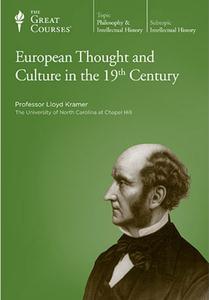
TTC Video - European Thought and Culture in the 19th Century
24xWEBRip | English | AVI + PDF Guidebook | 640 x 432 | XviD ~545 kbps | 29.970 fps
MP3 | 128 kbps | 48.0 KHz | 2 channels | 12:14:01 | 3.58 GB​

Genre: eLearning / History, Culture
This course is an opportunity to explore the major thinkers and historic challenges that shaped the mind of Europe in the 19th century. Intellectual history emphasizes the exchanges of ideas and debates that went on among people from other places and times. But it also stresses the importance of a continuing dialogue between the present and the past.

This course in intellectual history, therefore, seeks to expand our capacity for engaging in informed "dialogue" with the intellectual world of 19th-century Europe.

The thoughts of that world are still with us today, powerful forces in the cultural, intellectual, and political debates of the early 21st century.

In fact, 19th-century Europe was the crucible for most of the ideas, institutions, and "isms" that now shape the life of our entire planet, including:

nationalism
capitalism
democracy
socialism
conservatism
liberalism
feminism
bureaucracy.

And the list goes on.

Thought and Life from the French Revolution to the Fin de Siècle

How did these ideas begin?

Who first thought of them, and why?

How did the particular conditions of Europe between the French Revolution and the First World War shape these thinkers' ideas, the thoughts of their critics, the progress of the debates that went on between them, and the wider hearing that all received?

Professor Lloyd Kramer takes a judicious, dynamic approach to these questions. Through his lectures you follow the ebbs and flows of European thought during this key period.

Ideas and Social Experience

Professor Kramer's goal throughout these lectures is threefold:

to help you deepen your understanding of the ideas of influential 19th-century European intellectuals
to reflect on the interactions between ideas and social experience
to think critically and creatively about how the ideas of 19th-century Europe's leading thinkers and writers still raise a host of cogent questions for our own time.

To make for the most comprehensive treatment possible within a 24-lecture framework, you will examine not only famous thinkers like Marx, Darwin, and Nietzsche, but a number of important though less well remembered figures.

These include the romantic author Germaine de Staël,the positivist Auguste Comte, the novelist and feminist George Sand, the political theorist Benjamin Constant, and many others.

In no case does Professor Kramer treat a thinker in isolation. Instead, each is placed in a context and linked both to other creative thinkers and the major issues of the time.

Consciousness and Context

In inviting you to view intellectual history as a series of overlapping, interconnected dialogues, Professor Kramer makes two important assumptions:

It is ideas-like Hegel's, for example-that shape history.
Social, political, and economic realities-like the Industrial Revolution, for example-affect how those ideas appear, gain influence, and become, like Hegel's thoughts, historical forces in their own right.

This approach allows you to avoid the twin dangers of reductionism, which collapses consciousness into context, and abstraction, which ignores the connection between ideas and the full complexity of lived human experience.

While important texts cannot be said simply to "reflect" the contexts in which they appear, it remains true that creative thinkers have always interpreted and reacted to the concrete historical world in which they live.

From this course you learn to grasp in detail precisely how that process of interpretation, redefinition, and "dialogue" with reality takes place in the still-vibrant works of many of the best minds modern European civilization has ever produced.

Three Dialogues: Enlightenment, Revolution, and the City

Your approach to the topic is organized around three key themes:

the response by educated Europeans to the cultural legacy of the Enlightenment
the questions raised by the massive social and political impact of the French Revolution and its aftermath
the broad issue of the Industrial Revolution and the challenges posed on many levels by the rise of modern urban, industrial mass society.

Professor Kramer begins by laying out basic premises and explaining what makes intellectual history a distinct field of study.

He then continues with three lectures exploring the 18th-century Enlightenment, its legacy, and its connection to the French Revolution.

That uprising is still the "framing event" for modern political life. It is the source, in fact, of commonplace political references like "left," "right," and "ideology."

Professor Kramer then devotes a set of six lectures to the political and cultural theories offered by writers such as Burke, Goethe, Bentham, Fichte, and Herder in response to the Enlightenment and the Revolution.

These ideas shaped the famous "isms"-conservatism, liberalism, nationalism, romanticism, etc.-that interpreted the new post-Revolutionary social and political world, and which remain current today as the symbols we use to organize our reality.

Industrialism, Feminism, and the Problem of Mass Culture

Beginning with Lecture 11, you turn to the cultural impact of the other great upheaval of the era, the Industrial Revolution.

Interpretations of the new economy ranged from the pro-capitalist responses of classical economists to the critiques of various strains of socialism. You examine the full range from Adam Smith to Karl Marx.

This section also considers the movement for human rights in the new industrial society, including the rights of women, as championed by John Stuart Mill and George Sand.

And you examine several cultural issues raised by modern, urban "mass" societies that go beyond the large institutional questions about economic and political arrangements:

What was the individual's place in this new impersonal, rationalized world?
Would new forms of literature come forth to describe it?
Should positive science, or perhaps history, be the key to understanding and guiding the human situation?
Was heroism still possible?

Closing the Circle

The European dialogue touched on all these issues and more, and Professor Kramer analyzes the contributions of figures that range from John Stuart Mill, Alexis de Tocqueville, and Matthew Arnold to Fyodor Dostoyevsky, Gustave Flaubert, Herbert Spencer, and Auguste Comte.

The section and the course close with a lecture on Friedrich Nietzsche.

Professor Kramer explains how you can use Nietzsche's thought as a vantage point, either looking forward to the 20th-century themes that already preoccupied him, or back to the dialogue with the Enlightenment he had in mind while formulating his own view of what he called "the crisis of European civilization."

Lectures:

01. What is Intellectual History?
02. The Scientific Origins of the Enlightenment
03. The Emergence of the Modern Intellectual
04. The Cultural Meaning of the French Revolution
05. The New Conservatism in Post-Revolutionary Europe
06. The New German Philosophy
07. Hegel's Philosophical Conception of History
08. The New Liberalism
09. The Literary Culture of Romanticism
10. The Meaning of the "Romantic Hero"
11. The Industrial Revolution and Classical Economics
12. Early Critiques of Industrial Capitalism
13. Hegelianism and the Young Marx
14. Marx's Social Critique
15. Feminism in Nineteenth-Century Culture
16. Women's Rights in a Man's World
17. Tocqueville and Mill-Rethinking Liberal Theory
18. Nationalisms and National Identities
19. The Novel as Art and Social Criticism
20. Science and Its Literary Critics
21. Charles Darwin and the New Biology
22. The Controversies of Social Darwinism
23. The Heroic Critic in Mass Society
24. Nietzsche's Critique of European Culture

Recommend Download Link Hight Speed | Please Say Thanks Keep Topic Live ​
 

fe6d55d913dd8af65f131f521abb4080.jpg

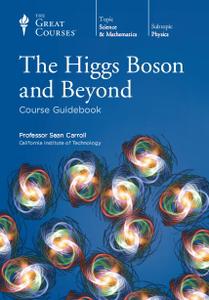
TTC Video - The Higgs Boson and Beyond
12xWEBRip | English | M4V + PDF Guidebook | 640 x 360 | AVC ~2000 kbps | 29.970 fps
AAC | 128 kbps | 44.1 KHz | 2 channels | 06:22:33 | 5.69 GB​

Genre: eLearning / Science, Physics, Quantum Mechanics
The search for, and ultimate discovery of, the Higgs boson is a triumph of modern physics-a global, half-century effort whose outcome would make or break the vaunted Standard Model of particle physics. The hunt for the Higgs was the subject of wide media attention due to the cost of the project, the complexity of the experiment,

and the importance of its result. And, when it was announced with great fanfare in 2012 that physicists has succeeded in creating and identifying this all-important new particle, the discovery was justly celebrated around the world.
And yet, virtually no one who happily read that news could tell you what, exactly, the Higgs boson was, and why its discovery was so important that we had to spend 10 billion dollars and build the single largest and most complex device in the history of mankind in order to find it. When you truly understand the details, this story ranks as one of the most fascinating, important, and thrilling in the history of modern physics.

Now, in The Higgs Boson and Beyond, award-winning theoretical physicist Sean Carroll returns to The Great Courses to guide you through the details of this incredible story. A brilliant researcher working at the very forefront of physics, as well as a gifted speaker who excels in explaining difficult and esoteric scientific concepts to the public, Professor Carroll is perfectly positioned to tell this story. In this 12-lecture masterpiece of scientific reporting, you'll learn everything you need to know to fully grasp the significance of this scientific discovery, including:

the basics of quantum mechanics;
the four forces that comprise the Standard Model of particle physics;
how these forces are transmitted by fields and particles; and
the importance of symmetry in physics.

In addition, Professor Carroll offers an in-depth view of the Large Hadron Collider-the largest machine ever built, and the device responsible for finally revealing the concept of the Higgs boson as reality. By the end, you'll understand how the Higgs boson verifies the final piece in the Standard Model of particle physics, and how its discovery validates and deepens our understanding of the universe.

A Discovery of Mass Importance
It's hard to overstate the importance of the Higgs field to the structure of our world and the universe itself. First postulated to exist in 1964 by Peter Higgs, the Higgs field and the particle associated with it explain one of the most fundamental concepts of reality itself-how elementary particles get mass. In addition, the discovery of the Higgs boson has importance for a huge number of unanswered questions and exciting avenues of research in modern physics, including:

insight into the nature of the universe and its ultimate fate;
the existence of scalar fields-fields with a zero "spin" that, prior to the discovery of the Higgs field, were only theoretical in nature;
insight into cosmic inflation-a theory that describes exponential expansion of space during the first few moments of the universe;
new understandings of how symmetry and symmetry breaking works; and
new approaches to understanding dark matter and possible extra dimensions.

In addition, you'll come to understand how the Large Hadron Collider, which was built specifically for the task of creating a Higgs boson, has immense value in future experiments in physics.

A Feast for the Eyes and the Mind

Professor Carroll's Higgs Boson and Beyond is a feast for the eyes as well as the mind. Produced on a virtual set, the course utilized purpose-built graphics and 3-D models as an incredible aid to understanding the material, allowing somewhat abstract and unusual concepts to be clearly rendered before your eyes. This is an experience like no other, a presentation beyond anything that you could experience in a traditional classroom.

A theoretical physicist of significant standing in the scientific community, Professor Carroll followed the hunt for the Higgs boson with rapt attention and was present at CERN on the day they announced the discovery. Between his access to the researchers working on the project, and his expertise in modern physics, he has a uniquely clear view of the subject. He also has an exceptional ability to explain complex scientific concepts in a way that makes them clear and comprehensible to any motivated learner. All of these factors make Professor Carroll the perfect guide to this complex and rewarding story.

The Higgs Boson and Beyond will expand your understanding of the universe by taking you on a tour of its most fundamental components. With the insightful guidance of Professor Carroll, you'll soon be able to understand one of the most important discoveries of our age.

Lectures:

1 The Importance of the Higgs Boson
2 Quantum Field Theory
3 Atoms to Particles
4 The Power of Symmetry
5 The Higgs Field
6 Mass and Energy
7 Colliding Particles
8 Particle Accelerators and Detectors
9 The Large Hadron Collider
10 Capturing the Higgs Boson
11 Beyond the Standard Model of Particle Physics
12 Frontiers: Higgs in Space

Recommend Download Link Hight Speed | Please Say Thanks Keep Topic Live ​
 

dcc988a96b3ccb94564f06ff0d579d12.jpg

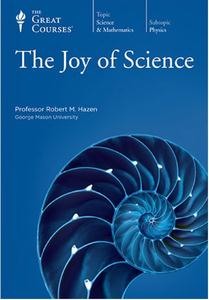
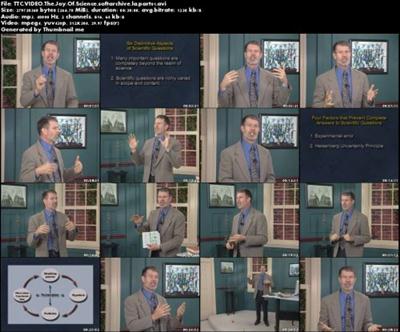
TTC Video - The Joy of Science
60xWEBRip | English | AVI | 512 x 384 | XviD ~1128 kbps | 29.970 fps
MP3 | 108 kbps | 48.0 KHz | 2 channels | 30:27:57 | 15.9 GB​

Genre: eLearning / Science
English novelist and scientist C. P. Snow classed certain scientific ideas with the works of Shakespeare as something every educated person should know. One such idea, according to Snow, was the second law of thermodynamics, which deals with the diffusion of heat and has many profound consequences. He might well have added Newton's laws, the periodic table of elements, the double-helix structure of DNA, and scores of other masterpieces of scientific discovery.

Now, Professor Robert M. Hazen introduces these and other great ideas in 60 lectures that explore the fundamental discoveries and principles of all of the physical and biological sciences-physics, genetics, biology, astronomy, chemistry, meteorology, thermodynamics, and more.

A Passion for Teaching and Science
Professor Hazen is an apostle of science education for non-scientists, and he has few peers at rendering the most complex ideas simple, without being simplistic.

View more
"I have a passion as a teacher," he says, "and that passion is to share with you the joy of science, the astonishing discoveries, the mind-bending insights, and the transforming applications of science as well."

A research scientist, professor, and advisor to public television's NOVA science series, Dr. Hazen helped draft the National Science Education Standards (National Academy of Sciences, 1997). These Standards represent a consensus among thousands of scientists and educators regarding the most effective approaches for teaching and learning about science.

These lectures have been specifically designed to introduce and review all of the scientific principles that are included in the Content Standards portion of the National Science Education Standards.

The result is a comprehensive and integrated introduction to all of science. By devoting just 30 minutes a day, you can complete this entire course in two months and discover an enhanced understanding of the physical world that will be a source of endless wonder and intellectual joy.

A Special Learning Opportunity

This course offers a special learning opportunity because:

It steers clear of the jargon and mathematical abstractions that so often bedevil science education.
It features an integrated approach that allows you as a learner to transcend artificial disciplinary boundaries in order to gain a panoramic view of the whole scientific enterprise in all its breathtaking scope.

The key to these achievements is Professor Hazen's insight that only a course organized around the common principles of scientific inquiry can put science in its proper light as a unique way of knowing.

Four Reasons to Become Scientifically Literate

Dr. Hazen cites four reasons why you should strive to become scientifically literate:

Scientific literacy helps you as a consumer make informed decisions-about health care, diet, nutrition, exercise, environmental issues, and the plethora of technological choices that we all face.
Many of today's jobs depend directly or indirectly on science as well as on technologies that are developed from scientific discoveries.
Scientific literacy helps you provide your children with a firm foundation as they study science in school.
Learning about science allows you to share the joy of humanity's greatest ongoing adventure of discovery and exploration.

What You'll Learn

Part I Highlights (Lectures 1-12):

Dr. Hazen begins by explaining the four-step cycle that defines the "scientific method" of knowing. He introduces you to five pivotal figures in early-modern science: Nicolas Copernicus, Tycho Brahe, Johannes Kepler, Galileo Galilei, and Isaac Newton. Astoundingly, during a single rural sojourn in 1665-66, Newton discovered calculus, many of the basic laws of optics, the three laws of motion, and the law of gravity. Newton's discoveries unified the supposedly separate domains of terrestrial and celestial motions.

Part II Highlights (Lectures 13-24):
Dr. Hazen introduces you to H. C. Oersted, the little-known figure who paved the way for a revolution in technology with his finding that electricity can produce a magnetic field. Out of this discovery came the electromagnet, the telegraph, the telephone, the electric motor, the generator, and many other inventions. You will also learn how James Clerk Maxwell offered the first mathematically rigorous description of the close connection between electricity and magnetism-and how Einstein, pondering a paradox that arose from Maxwell's equations, proposed and explored the principle of relativity.

Dr. Hazen shifts the focus of his lectures to the nature of matter, paying particular attention to atoms and quantum mechanics. He explains the chemical bonding of atoms, the different states of matter, and the principal force of change in the world of matter: chemical reactions.

Part III Highlights (Lectures 25-36):
Dr. Hazen then turns to the explanation of how specific physical systems work. Such systems manifest themselves in the properties of materials, as well as in the characteristics of atomic isotopes and their energy-producing nuclear reactions. You will learn about astronomy, the Big Bang theory, the solar system, and today's burgeoning field of extra-solar planetary systems.

Part IV Highlights (Lectures 37-48):
Dr. Hazen devotes lectures to the constant recycling of Earth's materials-water, air, and rock. He explores the question, "What is life?" You'll examine life's molecular building blocks: carbohydrates, lipids, proteins, and nucleic acids. You'll learn how biological information is passed from parents to offspring, processes first quantified by the Czechoslovakian monk Gregor Mendel.

Part V Highlights (Lectures 49-60):
Mendel's discoveries lead Dr. Hazen to focus on the great unifying biological principles of genetics, evolution, and ecosystems. He argues that no scientific discovery of the 20th century has had a greater impact than the deciphering of the genetic code, embedded in the double-helix structure of DNA first described in 1952 by James Watson and Francis Crick. Dr. Hazen goes on to address troubling ethical questions raised by genetic engineering. He examines both the chemical and biological evolution of life before delving into the interdependent communities of species and their physical environments known as ecosystems.

Dr. Hazen also raises questions about claims that science is approaching its end-that all there is of significance to be learned about the natural world will soon be known.

Lectures:

01. The Nature of Science
02. The Scientific Method
03. The Ordered Universe
04. Celestial and Terrestrial Mechanics
05. Newton's Laws of Motion
06. Universal Gravitation
07. The Nature of Energy
08. The First Law of Thermodynamics
09. The Second Law of Thermodynamics
10. Entropy
11. Magnetism and Static Electricity
12. Electricity
13. Electromagnetism
14. The Electromagnetic Spectrum, Part I
15. The Electromagnetic Spectrum, Part II
16. Relativity
17. Atoms
18. The Bohr Atom
19. The Quantum World
20. The Periodic Table of the Elements
21. Introduction to Chemistry
22. The Chemistry of Carbon
23. States of Matter and Changes of State
24. Phase Transformations and Chemical Reactions
25. Properties of Materials
26. Semiconductors and Modern Microelectronics
27. Isotopes and Radioactivity
28. Nuclear Fission and Fusion Reactions
29. Astronomy
30. The Life Cycle of Stars
31. Edwin Hubble and the Discovery of Galaxies
32. The Big Bang
33. The Ultimate Structure of Matter
34. The Nebular Hypothesis
35. The Solar System
36. The Earth as a Planet
37. The Dynamic Earth
38. The Plate Tectonics Revolution
39. Earthquakes, Volcanoes, and Plate Motions Today
40. Earth Cycles-Water
41. The Atmospheric Cycle
42. The Rock Cycle
43. What Is Life?
44. Strategies of Life
45. Life's Molecular Building Blocks
46. Proteins
47. Cells-The Chemical Factories of Life
48. Gregor Mendel, Founder of Genetics
49. The Discovery of DNA
50. The Genetic Code
51. Reading the Genetic Code
52. Genetic Engineering
53. Cancer and Other Genetic Diseases
54. The Chemical Evolution of Life
55. Biological Evolution-A Unifying Theme of Biology
56. The Fact of Evolution-The Fossil Record
57. Charles Darwin and the Theory of Natural Selection
58. Ecosystems and the Law of Unintended Consequences
59. The Ozone Hole, Acid Rain, and the Greenhouse Effect
60. Science, the Endless Frontier

5c9b00681b8e61d600c211584fb874d4.jpg


---------------------------------------------------------------------------------------------------------------------------------------
Get an Premium Account NitroFlare, Rapidgator For Faster & Unlimited Download,with NO Waiting Time!
---------------------------------------------------------------------------------------------------------------------------------------[/center]

Download (NitroFlare)

---------------------------------------------------------------------------------------------------------------------------------------

Please Don't forget to rate my post if you like it ...
3771a5cc16196fd8904cfdd1db2cbb0b.jpg


Recommend Download Link Hight Speed | Please Say Thanks Keep Topic Live ​
 

a13c82fb76630d384621add7e77981ee.jpg

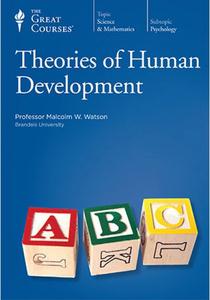
TTC Video - Theories of Human Development
24xWEBRip | English | AVI + PDF Guidebook | 720 x 544 | XviD ~941 kbps | 29.970 fps
MP3 | 160 kbps | 48.0 KHz | 2 channels | 12:18:39 | 5.62 GB​

Genre: eLearning / Human, Society, Evolution, Psychology
Have you ever wondered where the terms "terrible twos'' and "identity crisis" come from? Did you know that the notion that children are different from adults, and require special care, is only about 200 years old? Did you know we can trace most of our modern ideas about children to just two renowned thinkers of the 17th and 18th centuries?

These are just a few of the fascinating aspects of the field of "human development": the science that studies how we learn and develop psychologically, from birth to the end of life. To a large extent, the study of human development is the study of child development, because the most significant changes take place from infancy through adolescence. This very young science not only enables us to understand children and help them develop optimally, but also gives us profound insights into who we are as adults.

In Theories of Human Development, Professor Malcolm W. Watson introduces you to the six theories that have had perhaps the greatest influence on this field. You will meet the people who formulated each theory, become familiar with their philosophical backgrounds and the historical contexts in which they worked, and study the specific processes of human development that each theory describes.

Along the way, you will evaluate the strength and weaknesses of each theory. How do these six great theories complement or contradict one another? What do they tell us, as a whole, about human development?

Six Theories of How We Become Who We Are

The six major theories have had a pervasive impact on the way we, both scientists and the general public, see ourselves. They are:

Sigmund Freud's Psychodynamic Theory. The lectures discuss this theory, the earliest of the six, including such concepts as the Oedipus Complex and Freud's five stages of psycho-sexual development. Although now widely disputed, Freudian thinking is deeply imbedded in our culture and constantly influences our view of human nature.

Erik Erikson's Psycho-Social Theory. This is the theory that gave rise to the term "identity crisis." Erikson was the first to propose that the "stages" of human development spanned our entire lives, not just childhood. His ideas heavily influenced the study of personality development, especially in adolescence and adulthood.

John Bowlby and Mary Ainsworth's Integrated Attachment Theory.This was the first theory to focus primarily on the formation of parent-child relationships. It explains the connection between relationships that occur early in our lives and those that happen later, including romantic ones. Attachment theory has generated thousands of scientific studies, and has led to changes in many childcare policies, such as those allowing parents to stay with their children in hospitals.

Albert Bandura's Social Learning Theory. This theory modified traditional learning theory developed by such behaviorists as B. F. Skinner, which was based on stimulus-response relationships. It considered learning to be no different among infants, children, adults, or even animals. Bandura's approach is influential in such areas as the effect of media violence on children, and the treatment of problem behaviors and disorders.

Jean Piaget's Cognitive-Developmental Theory. Piaget's influence created a revolution in human development theory. He proposed the existence of four major stages, or "periods," during which children and adolescents master the ability to use symbols and to reason in abstract ways. This has been the most influential of the six major theories. In the 1970s and 1980s, it completely dominated the study of child development.

Lev Vygotsky's Cognitive-Mediation Theory. Alone among the major theorists, Vygotsky believed that learning came first, and caused development. He theorized that learning is a social process in which teachers, adults, and other children form supportive "scaffolding" on which each child can gradually master new skills. Vygotsky's views have had a large impact on educators.

Early Theorists: Locke, Rousseau, and even Darwin

To give you the best understanding of these theories, this course also explores the general history of the study of child development. It touches on the work of other important researchers, such as John Watson of Johns Hopkins University, who developed behaviorism, and Arnold Gesell of Yale, from whose work sprang such well-worn phrases as "just going through a stage" and "the terrible twos."

Professor Watson also discusses the era of observational research on children, which marked the beginnings of child study as a true science. This period was pioneered by scientists who began publishing detailed accounts of the development of their own children. These early "baby biographers" included Alfred Binet, who first developed intelligence testing in France, and even Charles Darwin.

You may be struck not only by how much we have learned about child development, but also by how much our attitudes toward children have changed. Until the beginning of the 19th century, there was no interest in child study and, in fact, no concern for children. Such factors as poverty and high infant mortality created an atmosphere in which children were barely tolerated, or used for labor.

In Paris in 1750, 33 percent of all newborns were left in foundling homes or on doorsteps; most died. In England, boys and girls as young as four were often sent to work in mines.

You will see how attitudes toward children gradually improved, due mostly to the efforts of physicians and religious leaders. And you will appreciate the tremendous contribution that two renowned philosophers, John Locke (1632-1704) and Jean-Jacques Rousseau (1712-1778), have made to the field of child development. Their ideas about children-whether they are inherently good or bad, or whether they actively shape their environments or passively react to stimuli-still form much of the basis of our modern theories.

The lessons of this course are not simply about learning, behavior, and relationships in youth, but at any age. Taken as a whole, they provide our best answers to the questions of human nature-how we learn, adapt, and become who we are at every stage in life.

Lectures:

01. Introduction-The Value of Theories
02. The Early History of Child Study
03. Two Worldviews-Locke vs. Rousseau
04. Later History-Becoming Scientific
05. Freud's Psychodynamic Theory
06. How We Gain Contact with Reality-The Ego
07. Freud's Psycho-Sexual Stages
08. Erikson's Psycho-Social Theory
09. Erikson's Early Stages
10. Identity and Intimacy
11. Erikson's Later Stages-Adult Development
12. Bowlby and Ainsworth's Attachment Theory
13. How Nature Ensures That Attachment Will Occur
14. Development of Secure and Insecure Attachments
15. Early Attachments and Adult Relationships
16. Bandura's Social Learning Theory
17. Bandura's Self-Efficacy Theory
18. Piaget's Cognitive-Developmental Theory
19. Piaget's Early Stages
20. Concrete Operations
21. Piaget's Last Stage
22. Vygotsky's Cognitive-Mediation Theory
23. Vygotsky's Zone of Proximal Development
24. Conclusions-Our Nature and Development

Recommend Download Link Hight Speed | Please Say Thanks Keep Topic Live ​
 

cd318a66a5e2cad42e6804dc93a7240f.jpg

ViperChill - Marketing Inc 2.0 with Glen Allsopp
WEBRip | English | FLV + MP4 + Project files | 960 x 540 | AVC ~134 kbps | 30 fps
AAC | 104 Kbps | 44.1 KHz | 2 channels | ~7 hours | 643 MB​

Genre: eLearning Video / Business, Sales, Marketing
Learn How Marketing Inc Will Help You Make Money Online The Internet seems like a very easy platform for making money, doesn't it? You just build a website, offer a cool product, wait for people to visit and buy it, and voila! you make money.

You don't need employees, and you don't even have to constantly monitor everything that goes on in your website. You can make lots of money even while you're sipping champagne at the beach, while your automated website does all the work for you.

If only it's this easy, then the world would be a better place, at least for us. The problem is, you're not the only one who thought it would be this easy, so you have a lot more competition than you think. Whatever it is you're selling, hundreds and even thousands of other people are selling it too.

And you probably never even thought it would take so much time and effort. Marketing your website alone can be very difficult. And the greatest pain of all is that you use so much of your time, expend so much of your energy, and even spend so much of your money-and you end up with nothing. Zero. Zilch. Nada.

You end up with broken dreams. If you're an optimist, you may think about the entire debacle as a learning experience. It's a pretty expensive learning experience, but at least you don't end up empty-handed. Of course, it's not always guaranteed that you learned the right lessons so your next Internet investment is going to be a gamble again.

But WHAT IF you can get the right lessons at the very start? What if you actually get a worthwhile training that shows you precisely what to do so you don't have to make any mistakes at the onset? What if you get trained by actual experts who are now successful Internet entrepreneurs?

That's where Marketing Inc comes in.

What's Marketing Inc?
The original Marketing Inc is an online course that's available for anyone from anywhere in the world who wants to build a client-based business. Its instructor is Glen Allsopp, a guy in his 20s who was a whiz kid marketing manager for Nissan, Land Rover, and HP when he was just 19 years old. He started his own Internet marketing business and after a couple of failed attempts began making 5-figure profits online through the use of niche sites and the sale of software.

The course is quite comprehensive. You get more than 4 hours of videos, along with 20,000 words of unique content. You can find all these at their membership site, where you can also have one-on-one access with the instructors and read over 11,000 posts. The instructors themselves have made more than 2,000 forum posts combined.

It covers a wide array of topics, which beginners can really use. Even experienced marketers have expressed appreciation for how the course has filled some gaps in their education. The typical Marketing Inc review is very positive, to say the very least. On one web site alone, the total number enrollees for Marketing Inc has reached 5,576 students.

Course Coverage
The topics covered by the videos include:

* How they built their $60k marketing company in just 8 months
* The fastest growing business model they recommend you use
* Real-world examples of how their funnels (agency funnel, SEO funnel and "secret" funnel) work
* An extensive guide to SEO for Google
* A guide on how to close deals with clients
* How you can build your own marketing firm even if you work part-time

You get lifetime access to the online community, and you also get a written guide on the marketing secret used by the Inc 5000. There's even a bonus video on the more than ten tools the instructors use every day for their online business.

Marketing Inc 2
There's a sequel called Marketing Inc 2, and by all accounts it's another winner. If you're starting an agency from scratch, this will be invaluable. It offers additional tools that you can use to really get you started and get you going. These important tools include:

* Marketing System. This is one of the main areas of concern when you have an online business. In the real world, you put up a shop and everyone who walks by sees your shop so some of them may be tempted to come in and look around.

On the Internet, marketing your website is crucial because no one really just drops in out of the blue. Visitors are led to your site in several ways, primarily through organic search so that means your website needs to be on the first page of results when someone uses Google and enters keywords that are relevant to your website. Other methods, such as using paid ads and social networking, may also be used.

* Landing Pages. This is the page on your website that visitors "arrive" at when they click a link from another site. They may be used to convince visitors to click through other pages on the site, or even to buy something from the site.

* Automated Sales Funnel. A sales funnel describes the process of how a lead can become a confirmed client. Here the entire process can actually be automated.

* Capture Pages. These are web pages designed to "capture" names and email addresses for marketing purposes.

* Autoresponder. As you begin to get more email addresses and messages you'll begin to realize that you can't manually do everything. That's why you need an autoresponder, which can automate the sending of emails even while setting a personalized tone to each email.

* Training. Like the original Marketing Inc, Marketing Inc 2 gives you detailed instructions on what to do so that you can become more efficient in your work as you continue to maximize your profits.

Marketing Inc 2 is also exclusively for members only, and again you get exceptional training which will equip you for success online. It's a lot more comprehensive and exhaustive, as it builds on the original version with more info and tools added. It helps people save a lot of time and effort, and at the same time it gives them a greater chance of achieving success.

With this thread will be about Marketing Inc 2. We're going to cover (1) What is Marketing Inc (2) who is Marketing in For (3) How does Marketing Inc 2 work?
First off, here's a quick FAQ About Marketing Inc 2.

Who is Glen & Diggy!
We also have to discuss about Glen Allsopp who is the founder of Marketing Inc with Diggy. Both of them are cool dudes who make a whole lot of profit from SEO. They created the course to help their own close friend make some money online and that's how Marketing Inc was formed.

What's different about Marketing Inc?
It's a course that actually works, formulated for the purpose of teaching it all to a friend. It was intended so anyone new, and even the experienced folks can use to generate a profit as many have (with the former Marketing Inc course already). Importantly what differentiated Marketing Inc 2 from all the other SEO courses you find online is Marketing Inc 2 isn't a SEO course.

It is more of a community coaching program and you get to connect with one of the top SEO EXPERTs of all time currently. I do not say this lightly. I am a huge fan of Glen Allsopp and that's why I can say his stuff is SOLID. This guy is honest, down to earth and truly seeks to deliver value. (Note as well that Marketing Inc 2 is more than a SEO course; it's a complete program to help you make money online, relatively quickly too though it requires work and may not be the $1000s in X days. Glen and Diggy's Marketing Inc helps you from learning SEO to using it for profits as an offline consultant.)

Is Marketing Inc 2 trust worthy?
Glen Allsopp of Marketing Inc isn't the person who would seek to make a few quick bucks. This guy gives loads of free information on this blog that actually works. Case studies that have helped people in search engine optimization and money making techniques. Don't take my word for it, jump to his blog at ViperChill.com
He follow ups and create trends on his blog that actually help his readers generate significant amount of revenue.

You're not learning from any newbie with rehash information. This is as pro as it gets. He walks the talk and he loves to help people. Following up on some of his SEO posts have helped me a lot (I like to learn from others and do our own thing too). So basically, you can trust this guy will deliver and it's not rehash information (it'll cover the basics) and share the advance information you need that can provide you with an advantage.

Marketing Inc 2 In Summary
I am confident in saying Marketing Inc 2 is a course that can really make people money online if they apply it. Here's the brief highlight of the points mentioned above if you want to recap what is Marketing Inc. Now, let's get into the meatier information of Marketing Inc 2

What is Marketing Inc 2?
Marketing Inc 2 is THE ideal course for anyone interested in SEO or making money online as an offline consultant. If you like working with businesses and getting profit (with results).then Marketing Inc 2 is what you'd be interested in. It helps you deliver results for your clients, real and reliable results over time so you can generate a fair profit in return.

It has helped many internet marketers make a full time income online and also jolted many member's results who were already working with offline businesses. It's very well the ONLY course you should get in 2015 and I do not say this lightly; Glen and Diggy truly stuff the box with all they can find, even the kitchen sink (metaphorically - if you really want a kitchen sink and stay in the Vancouver area, I'd be happy to send you one though) into Marketing Inc 2.

Who is Marketing Inc for?
Marketing Inc 2 is ideal for anyone looking to get their feet wet with internet marketing and making money online or any offline consultant looking to freshen up their skills.

Recommend Download Link Hight Speed | Please Say Thanks Keep Topic Live ​
 

01ca2eaad4e4ddd7cfd18cbaab7047ab.jpg

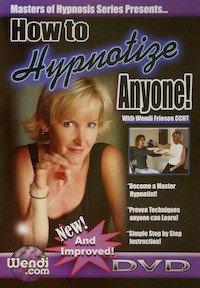
Wendi Friesen - How to Hypnotize Anyone
DVDRip | English | AVI | 640 x 464 | XviD ~786 kbps | 29.970 fps
MP3 | 128 Kbps | 48.0 KHz | 2 channels | 01:45:29 | 698 MB​

Genre: eLearning Video / Hypnosis, NLP, Self Improvement
Learn the basic and most important principles of hypnosis from this entertaining video. Professionally edited, fast paced and fun... Wendi will show you how to master the inductions,

suggestions, language patterns, suggestibility tests, hypnotic voice training, rules of the mind, post-hypnotic suggestions, compounding suggestions, ideo-motor responses, dream programming, metaphor creation, and more. This video includes the famous Dave Elman Induction. Eliminate Stress, lower blood pressure and relieve pain, in just a few minutes.

Recommend Download Link Hight Speed | Please Say Thanks Keep Topic Live ​

 

f6cad9998760612b41edbb78380de907.jpg

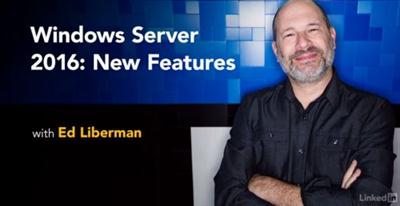
Windows Server 2016: New Features
MP4 | Video: AVC 1280x720 | Audio: AAC 48KHz 2ch | Duration: 1 Hours 14M | 118 MB
Genre: eLearning | Language: English​

Learn what's new in Windows Server 2016. The latest version of Microsoft's enterprise-level server operating system offers major improvements in cloud and virtualization support. This course reviews what's available in the newest version, including Nano Server (a small-scale, remotely administered version of Windows Server), Hyper-V enhancements, Active Directory improvements for cloud and hybrid deployments, and new PowerShell and SDN features. Plus, get a look at improvements to security, storage, and networking. If you're considering upgrading to Windows Server 2016, this course is a must watch.

Recommend Download Link Hight Speed | Please Say Thanks Keep Topic Live ​
 

c003a2a155fcb830c0c9b9fa9c881a63.jpg

WintellectNOW - Application Pen-Testing, Complete Bundle (4 Courses)
HDRips | MP4/AVC, ~675 kb/s | 1920x1080 | Duration: 03:38:48 | English: AAC, 235 kb/s (2 ch) | 1,2 GB
Genre: Development / Programming​

Bill Sempf is a software security architect. His breadth of experience includes business and technical analysis, software design, development, testing, server management and maintenance, and security.

Course 1: Introduction and Tools

Checking an application for security vulnerabilities is a daunting but necessary task. In the inaugural video in this landmark series on software penetration testing, Bill demonstrates how to identify security vulnerabilities safely, on your own machine, using purposefully vulnerable applications and popular tools such as Burp Suite and OWASP's Broken Web Applications virtual machine. And he does it all without a single PowerPoint slide; it's hands-on from start to finish!

Course 2: Security Threats, Principles, and Fundamentals

Security is priority #1 when it comes to writing software. If it isn't, it should be. In this session, Bill introduces some of the most common types of attacks as well as solutions for defending against them.

Course 3: The OWASP Top 10

In Part 2, Bill walks through the OWASP Top 10 and shows how he tests for common vulnerabilities using WebGoat and other tools. And once more, he does it without a single PowerPoint slide. It's hands-on from start to finish, and it's the ONE video every software developer should watch if they lack a Ph.D. in software security.

Course 4: Putting Your Skills to Work

In Part 3 in the series, Bill uses the tools and techniques introduced in the previous two sessions to perform a live penetration test against an early version of Wordpress, which was once "a poster child for application vulnerabilities."

Recommend Download Link Hight Speed | Please Say Thanks Keep Topic Live ​

 

daa3688af03cee0a1c933029594ded2a.jpg

Writers Who Launch: Break Into Freelance Writing Fast
MP4 | Video: AVC 1280x720 | Audio: AAC 44KHz 2ch | Duration: 1 Hours | Lec: 10 | 407 MB
Genre: eLearning | Language: English​

Earn $1,000 or More a Month Within 60 Days!

Make real money as a freelance writer - even if you've never been able to before.

Taught by a freelance writer with over 15-years of experience. My work has been published in Global Traveler Magazine, The Sydney Herald, Pregnancy & Newborn Magazine, Atlanta Weddings, The Huffington Post xoJane, The Frisky, NY Metro Parents, The LA Times, The Boston Globe and numerous other magazines, newspapers and websites.

You don't need a big blog following with loyal fans, be well-connected, or even have much talent to break into freelance writing. You also don't need dozens of clips to launch your new career to potentially command $1,000 a month as a new writer. And that's with the possibility to skyrocket your income as you gain experience. But it won't happen overnight.

All you really need is to know is exactly how to position yourself to attract paying clients who want your work.

That's exactly how I earn between $100 on up to $1,500 an assignment. I can show you the ins and outs of breaking in, navigating your way to a client's inbox and landing work.

So stop wasting your time paying dues and playing the "send and wait" game with query letters. There's a better way to launch a successful freelance writing career for magazines, websites, newspapers and more.

I've been a freelance writer for nearly 15 years and have also worked as a video editor and Multimedia Director.

And while I am persistent, none of the following worked for me in breaking into freelance writing and staying there.

I DIDN'T have connections in the publishing industry.
I DIDN'T have impeccable talent and writing skills. I didn't wait around to gather a lot of clips before breaking into markets like The LA Times.
I DIDN'T get an MFA or take a lot of writing workshops.
I DIDN'T break in with a bunch of high-end, glossy magazines. But I was also able to leverage clips in huge newspapers and big magazines in just a few short months (once I finally broke in).

It took a few years to perfect my approach, but I've gotten to a point now where I can just introduce myself and land work. And it's not just because of my clips, though I have those now. And it's not because I languished around in content mills.

There's a reason why most reasonably talented writers spend years breaking in instead of just taking command and getting there. And the ones who seem to break through early all know the same thing about why talent is underrated and action is everything.

MOST writers struggle for so long because it's completely overwhelming to know where to start and when to have enough faith to take bigger leaps into new markets. It's hard to think you can quit writing for peanuts and start landing lucrative clients to give you that flexibility and creative outlet you crave.

Are you a frustrated freelance writer who is still:

Sending out queries and waiting for weeks or months only to be rejected by a form letter?
Trying to break into tiny markets with no success?
Drowning in a sea of information with no idea how to track down the right people?
Getting advice from everyone around you - even though they've never tried to be a freelance writer? Or maybe got a few rejections and gave it up?
Wondering why "real" writers consistently come up with irresistible ideas everyone wants?
Afraid you'll never get ahead of your competition?
Let's get brutally honest. It takes a lot more than talent to break into the world of freelance writing and more importantly - stay there.

Even the most talented writers may never see their name in print without a few key steps to keep them ahead of the game. In fact, it's often less talented writers that continually land clients. What do they know that you don't?

Learn how to develop a lasting craft that includes:

Breaking into the industry without clips.
Getting quality clips from reputable businesses and publications lightning fast!
Leveraging creativity and flexibility to get ahead instead of writing talent.
Stopping the cycle of fear and rejection and using your competition to do your homework for you.
Taking advantage of rejection and turning it into a success story.
Tracking down the right people who will buy your work and learn who they really want to work with.
Leveraging your life experience for success. It matters way more than your writing talent.

****

rl=#collapse_15510Readmorerl I'm a freelance writer with nearly 15-years of experience across travel guidebooks, iPhone app content, magazine articles, newspapers, websites and commercial scripts. I've also worked as a naming consultant and video editor on national commercials and films. I earn a living freelance writing and thrive in doing creative work every day. But at the end of the day, what I really love doing is:

Helping new writers crush obstacle and break into freelance writing - even if they've never been able to before.

But I didn't walk into my career with a roster of clients and assignments in hand. Instead I came stumbling into the arena and spent nearly 10 years breaking through with my first big clip and getting my freelance writing career rolling. Sure I had a few hits, but mostly misses, and couldn't figure out why I hadn't "made it." It was endless years of frustration. I nearly lost hope that I would ever figure it out.

Like many struggling freelance writers out there, I followed all of the traditional advice like sending out query letters and endless waiting.

Nothing really worked. It felt like I was missing key pieces from a jigsaw puzzle. I could see the big picture, but not the pieces to get there.

It wasn't until I stumbled upon a few key methods that I ended up skyrocketing my freelance writing success.

It took a lot of trial and error that took years to perfect. I pulled all that knowledge together in one place to help you crush barriers (and your competition) in just a few short months.

I write for a living and if I can't get my idea from A to Z then my whole family suffers. This is the livelihood I picked (and love!) to stay home with my young children and still make ends meet. So I really didn't have a choice but to light a fire under myself and take some action.

There's no sitting around waiting for an assignment to come to you, at least not in the early months and years of freelancing. You have to go out and take control of your career and build the life you want.

***

Here's more to think about. Is writing a dying career? Hardly. According to the Bureau of Labor Statistics, the median pay of writers was $55,940 and related employment is projected to grow 3 percent until 2022.

Companies need content. They need web pages and case studies just to scratch the surface. And while magazines may move towards the web, editorial writing is still in demand. I have a little secret I share with you for how I tap dozens of magazines that are only known to select groups but pay more than many national publications.

Think you need an advertising agency title to be a copywriter? You're wrong. If you don't think you're "qualified" to be a writer, think about this. Does the wine store down the street that needs some web copy and flyers want an expensive ad agency? Do they want to pay for a six-figure copywriter?

No. All they want is a decent and reliable writer. And that's why just about anyone with reasonable talent and ambition can cobble together a freelance writing career without paying dues for years.
Languishing away and torturing yourself over why you can't break into a market like the New York Times or People Magazine is a waste of time. It's pointless. Sure, you might break into a huge market on your first try, but there are a thousand other avenues that are easier, more profitable and usually yield a higher reward (like ongoing work).

Your neighborhood alone probably has thousands of dollars in untapped writing revenue.
Your city probably has editorial work ranging from glossy magazines to corporate pieces at nearby hospitals.
And instead of going out there and asking for work, you're still hoping for a big break, even though the big break is right in front of you.

By not acting, you're missing out acting on a dream and embracing that flexible lifestyle you crave. You can take your writing with you. You can work it into your career as a side income stream while continuing a part-time or full-time job. And if you're like me, you can stay home with your children while contributing financially and tapping into your creativity at the same time.

The hard part is figuring out how to launch yourself and get started. There will be ups and downs, but once you have the techniques to land clients, you can keep applying it again and again while refining your approach. Let's get started.

Who this course is for:

Aspiring and struggling freelance writers looking to take break down fears and barriers and launch their careers.
Writers with fluent English-speaking and writing skills. You won't achieve the same success from this program if you don't have reasonable skills.
Writers who aren't afraid to dive right in and do the hard work necessary to succeed.
Writers interested in learning about a variety of markets. While many techniques in this course will work for copywriting and corporate clients, it is not the main focus.
Writers who are willing to take the time to develop their craft and learn the business without losing their patience after a few short weeks.
Creative types who enjoy animated videos by way of learning. There are also PDF transcripts you can use.

Recommend Download Link Hight Speed | Please Say Thanks Keep Topic Live ​
 
Zurück
Oben Unten