• Regeln für den Video-Bereich:

    In den Börsenbereich gehören nur Angebote die bereits den Allgemeinen Regeln entsprechen.

    Einteilung

    - Folgende Formate gehören in die angegeben Bereiche:
    - Filme: Encodierte Filme von BluRay, DVD, R5, TV, Screener sowie Telesyncs im Format DivX, XviD und x264.
    - DVD: Filme im Format DVD5, DVD9 und HD2DVD.
    - HD: Encodierte Filme mit der Auflösung 720p oder darüber von BluRay, DVD, R5, TV, Screener sowie Telesyncs im Format x264.
    - 3D: Encodierte Filme von BluRay, die in einem 3D Format vorliegen. Dies gilt auch für Dokus, Animation usw.
    - Serien: Cartoon/Zeichentrick, Anime, Tutorials, Dokumentationen, Konzerte/Musik, Sonstiges sind demnach in die entsprechenden Bereiche einzuordnen, auch wenn sie beispielsweise im High Definition-Format oder als DVD5/DVD9/HD2DVD vorliegen. Ausnahme 3D.
    - Bereich Englisch: Englische Releases gehören immer in diesen Bereich.
    - Bereich Talk: Der Bereich, in dem über die Releases diskutiert werden kann, darf, soll und erwünscht ist.


    Angebot/Beitrag erstellen

    - Ein Beitrag darf erst dann erstellt werden, wenn der Upload bei mindestens einem OCH komplett ist. Platzhalter sind untersagt.
    - Bei einem Scenerelease hat der Threadtitel ausschließlich aus dem originalen, unveränderten Releasenamen zu bestehen. Es dürfen keine Veränderungen wie z.B. Sterne, kleine Buchstaben o.ä. vorgenommen werden. Ausnahme Serienbörse:
    - Bei einem Sammelthread für eine Staffel entfällt aus dem Releasename natürlich der Name der Folge. Beispiel: Die Simpsons S21 German DVDRip XviD - ITG
    - Dementsprechend sind also u.a. verboten: Erweiterungen wie "Tipp", "empfehlenswert", "only", "reup", usw. / jegliche andere Zusatzinformation oder Ergänzung, welche nicht in obiger Beschreibung zu finden ist.

    Aufbau des Angebots und Threadtitel

    Der Titel nach folgendem Muster erstellt zu werden. <Name> [3D] [Staffel] [German] <Jahr> <Tonspur> [DL] [Auflösung] <Quelle> <Codec> - <Group>
    Beispiel: The Dark Knight German 2008 AC3 DVDRip XviD - iND
    Beispiel: The Dark Knight 2008 DTS DL BDRip x264 - iND
    Beispiel: The Dark Knight 2008 AC3 DL BDRip XviD - iND
    Beispiel: The Dark Knight German 2008 AC3 720p BluRay x264 iND
    Beispiel: The Dark Knight 2008 DTS DL 1080p BluRay x264 iND
    Beispiel: Die Simpsons S01 German AC3 DVDRip XviD iND
    Beispiel: Die Simpsons S20 German AC3 720p BluRay x264 iND
    Beispiel: Sword Art Online II Ger Sub 2014 AAC 1080p WEBRip x264 - peppermint
    Entsprechend sind also u.a. verboten: Sonderzeichen wie Klammern, Sterne, Ausrufezeichen, Unterstriche, Anführungszeichen / Erweiterungen wie "Tipp", "empfehlenswert", "only", "reup", usw. / jegliche andere Zusatzinformation oder Ergänzung, welche nicht in obiger Beschreibung zu finden ist
    Ausnahmen hiervon können in den Bereichen geregelt sein.

    Die Beiträge sollen wie folgt aufgebaut werden:
    Überschrift entspricht dem Threadtitel
    Cover
    kurze Inhaltsbeschreibung
    Format, Größe, Dauer sind gut lesbar für Downloader außerhalb des Spoilers zu vermerken
    Nfo sind immer Anzugeben und selbige immer im Spoiler in Textform.
    Sind keine Nfo vorhanden z.B. Eigenpublikationen, sind im Spoiler folgende Dateiinformationen zusätzlich anzugeben :
    Quelle
    Video (Auflösung und Bitrate)
    Ton (Sprache, Format und Bitrate der einzelnen Spuren)
    Untertitel (sofern vorhanden)
    Hosterangabe in Textform außerhalb eines Spoiler mit allen enthaltenen Hostern.
    Bei SD kann auf diese zusätzlichen Dateiinformationen verzichtet werden.

    Alle benötigten Passwörter sind, sofern vorhanden, in Textform im Angebot anzugeben.
    Spoiler im Spoiler mit Kommentaren :"Schon Bedankt?" sind unerwünscht.


    Releases

    - Sind Retail-Release verfügbar, sind alle anderen Variationen untersagt. Ausnahmen: Alle deutschen Retail-Release sind CUT, in diesem Fall sind dubbed UNCUT-Release zulässig.
    - Im Serien-Bereich gilt speziell: Wenn ein Retail vor Abschluss einer laufenden Staffel erscheint, darf diese Staffel noch zu Ende gebracht werden.62
    - Gleiche Releases sind unbedingt zusammenzufassen. Das bedeutet, es ist zwingend erforderlich, vor dem Erstellen eines Themas per Suchfunktion zu überprüfen, ob bereits ein Beitrag mit demselben Release besteht. Ist dies der Fall, ist der bereits vorhandene Beitrag zu verwenden.
    - P2P und Scene Releases dürfen nicht verändert oder gar unter einem iND Tag eingestellt werden.


    Support, Diskussionen und Suche

    - Supportanfragen sind entweder per PN oder im Bereich Talk zu stellen.
    - Diskussionen und Bewertungen sind im Talk Bereich zu führen. Fragen an die Uploader haben ausschließlich via PN zu erfolgen, und sind in den Angeboten untersagt.
    - Anfragen zu Upload-Wünschen sind nur im Bereich Suche Video erlaubt. Antworten dürfen nur auf Angebote von MyBoerse.bz verlinkt werden.


    Verbote

    - Untersagt sind mehrere Formate in einem einzigen Angebotsthread, wie beispielsweise das gleichzeitige Anbieten von DivX/XviD, 720p und 1080p in einem Thread. Pro Format, Release und Auflösung ist ein eigener Thread zu eröffnen.
    - Grundsätzlich ebenso verboten sind Dupes. Uploader haben sich an geeigneter Stelle darüber zu informieren, ob es sich bei einem Release um ein Dupe handelt.
    - Gefakte, nur teilweise lauffähige oder unvollständige Angebote sind untersagt. Dies gilt auch für eigene Publikationen, die augenscheinlich nicht selbst von z.B. einer DVD gerippt wurden. Laufende Serien, bei denen noch nicht alle Folgen verfügbar sind, dürfen erstellt und regelmäßig geupdatet werden.
    - Untersagt sind Angebote, welche nur und ausschließlich in einer anderen Sprache als deutsch oder englisch vorliegen. Ausnahmen sind VORHER mit den Moderatoren zu klären.


    Verstoß gegen die Regeln

    - Angebote oder Beiträge, die gegen die Forenregeln verstoßen, sind über den "Melden"-Button im Beitrag zu melden.
  • Bitte registriere dich zunächst um Beiträge zu verfassen und externe Links aufzurufen.

*** Bestes IPTV *** bester Preis *** gratis Test ***


Englische Tutorials

50062503f323awdp3.jpg


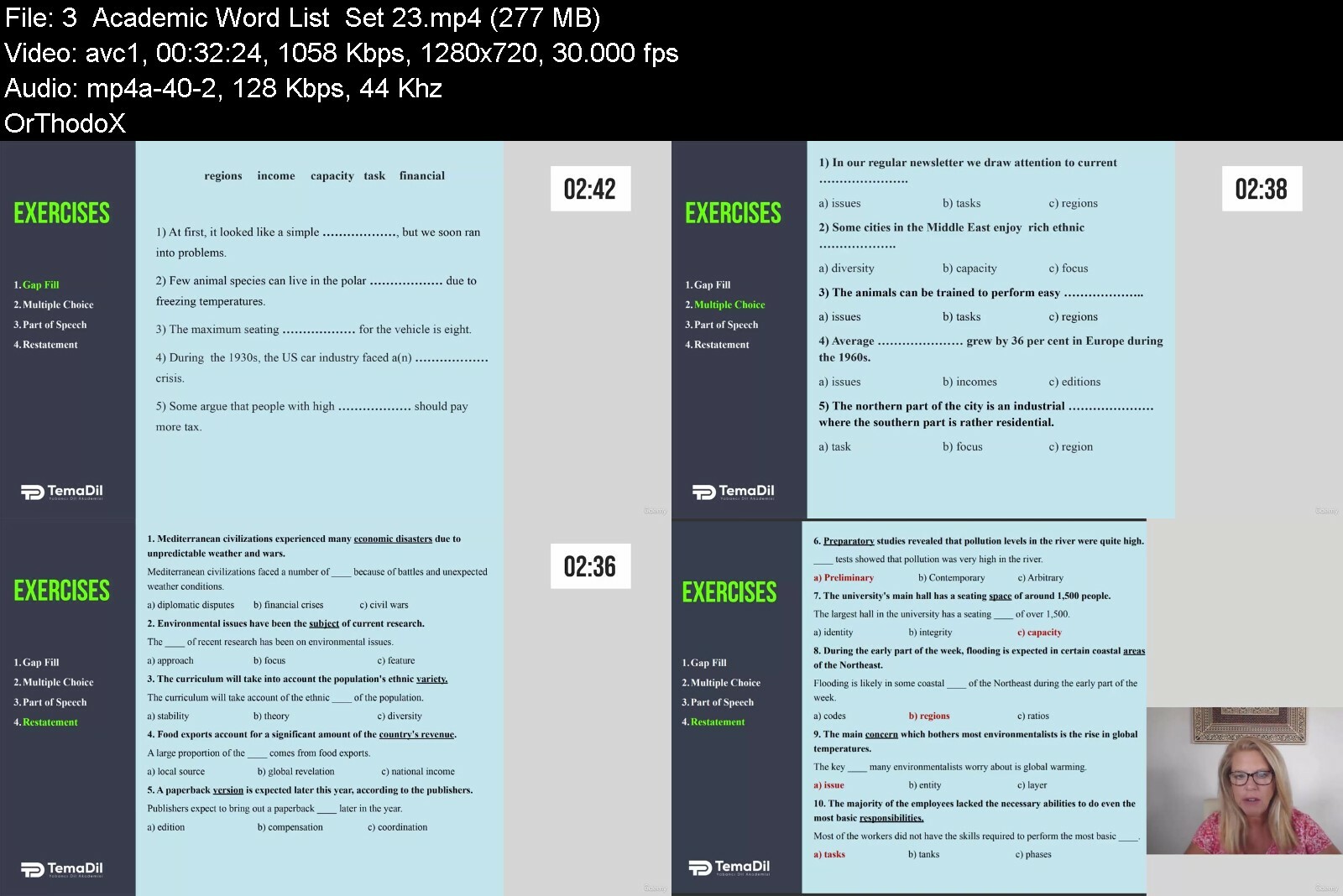
Master Academic Vocabulary | Academic Word List
Published 12/2022
Created by TemaDil TemaDil
MP4 | Video: h264, 1280x720 | Audio: AAC, 44.1 KHz, 2 Ch
Genre: eLearning | Language: English | Duration: 55 Lectures ( 28h 38m ) | Size: 12.7 GB


Most Frequently Used Academic Words


What you'll learn
Most frequently used words in academic contexts
Collocations of words
Pronunciation of words
Use of words in different sample sentences

Requirements
B1 Level of English is required

Description
Academic Word List (AWL) is a 55-lesson course designed to equip students with essential vocabulary required to understand academic contexts. Mastering AWL is key to succeeding in standard English tests such as TOEFL IBT, IELTS, PTE Academic, OET and proficiency tests. Therefore, candidates planning to take one of those tests should definitely know these words. Each of the lessons has ten target words. However, with collocations and sample sentences, students will have learnt up to sixty to seventy words upon completion of a single lesson. AWL course consists of 55 lessons each of which includes five parts.1. Pronunciation: The correct pronunciation of the word is presented.2. Collocations and sample sentences: Each word is presented with its synonyms, collocations and a sample sentence.3. Gap Fill: There are ten questions in this part and students fill in the gaps with the words within given time. Then, answers are both shown and read aloud.4. Multiple Choice: This part includes ten questions. Students choose the best choice among three options. Answers are presented visually and orally.5. Restatement (Paraphrasing): In this part, students are given another set of ten sentences and they are asked to find the word or the phrase which restates the given sentences.

Who this course is for
For TOEFL, IELTS, PTE etc candidates
For academicians
For those who read academic texts
For those who write essays
For students who need to master a proficiency test


masteracademicvocabuldac9a.jpg


xixutl1cz1sh9rsawyyfkepfph.jpg


Design Of Steel Structures, Practice Exams Ii
Last updated 2/2021
MP4 | Video: h264, 1280x720 | Audio: AAC, 44.1 KHz
Language: English | Size: 13.06 GB | Duration: 15h 52m

Practice Exams II


What you'll learn
How to design Steel Structures
Practice Exams
Steel Girders design
Exams-Exams-Exams

Requirements
Basics of structural analysis

Description
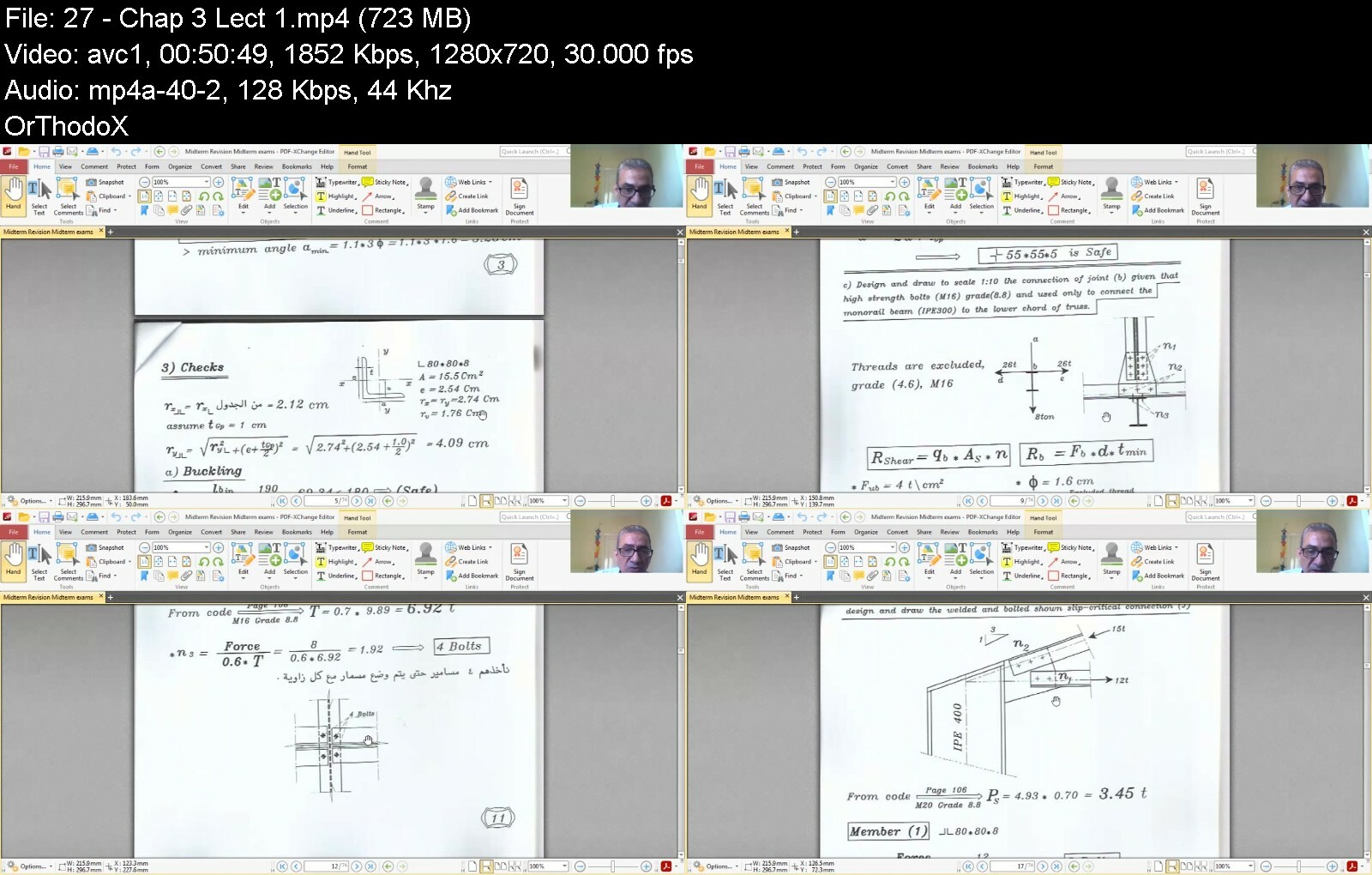
Practice exams on the design of the different elements of a steel structure. Design of both cold formed and hot rolled steel elements. Design of both welded and bolted connections. Design of the tension and compression members. Design of Beams. Design of eccentric connections. Showing details of steel trusses. Design of beams and columns. Design of bracing systems. This course consists of these chapters: 1-General layout 2-Design of purlins (Hot - Rolled) 03-CRANE GIRDER 3-1 Cold-Formed Sections 04-Eccentric connections-torsion 05-Connections-welded 06- Eccentric connections-BOLTED 07-Buckling Length 08-Columns 8-Bolted Connections 10- Truss details 11-Lacing Bars 13- Welded connections 14- Design of beams 14-Portal Frames 15-Girts, Bracing, and Columns 16-Systems Part 1 17-Systems Part 2 18- Lecture Notes and Ideas Column Bases Design Of Compression Members Design of Tension _ Compression members (Summary) Design of tension members (parts 1-2) Loads Calculations Midterm Revision Examples _ Ideas Midterm Revision Midterm exams and Quizzes. Practice exams on the design of the different elements of a steel structure. Design of both cold formed and hot rolled steel elements. Design of both welded and bolted connections. Design of the tension and compression members. Design of Beams. Design of eccentric connections. Showing details of steel trusses. Design of beams and columns. Design of bracing systems.

Who this course is for
Civil Engineering students and Architectural students


designofsteelstructurjydlu.jpg


z5fbb1eln5svev7xng7tbwicfr.jpg


Learn Easy Complete Comprehensive Sanskrit For Competency
Last updated 6/2021
MP4 | Video: h264, 1280x720 | Audio: AAC, 44.1 KHz
Language: English | Size: 47.68 GB | Duration: 130h 18m

Take a Step Further to Competency in Sanskrit Language


What you'll learn
Adjective and Adverbs with Declension and Practice Sessions
Most frequently used Vowel and Consonant Ending Nouns and Declension in all Seven Cases
Passive voice sentence Construction and derivation of Verb forms
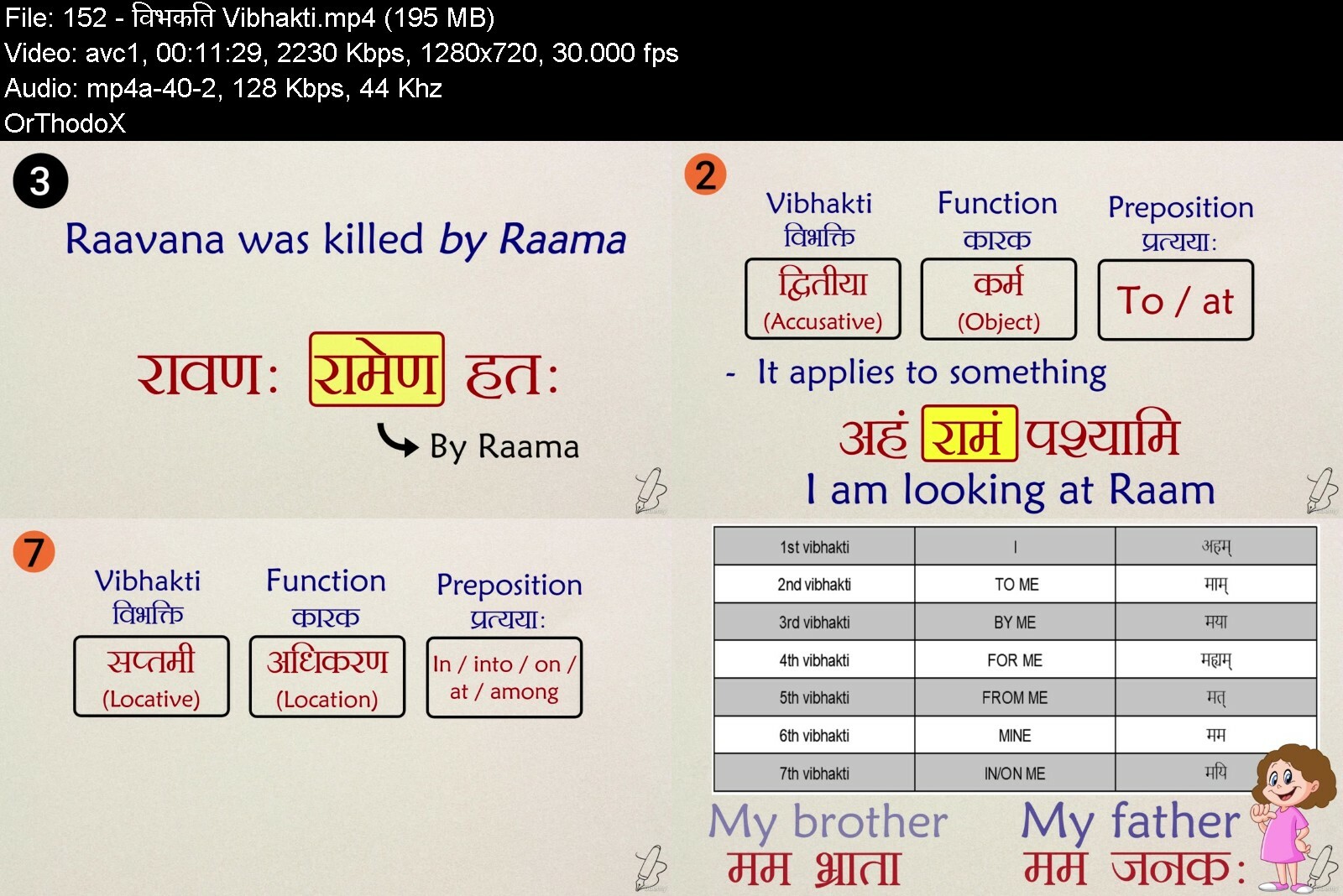
Nouns, Pronouns, Verbs, Tenses, Adjectives, Numbers, Time, Vibhakti (Cases) etc.
Usage of Upasarga (Prefixes) and derivation of Verb forms in different tense and moods
Krtanta Shabda like Shatru Shanach and Kta
Over hundreds of Verbs, Nouns and Indeclinable
Present, Past, Future and Order-Request Complete Verb Forms of Atmanapada
Over hundred and fifty Subhashitam Word by Word Analysis and meanings
All these with exercises and practice sessions using over 150 plus lectures
And over 50 Story Comprehensions with Word by Word meaning and analysis

Requirements
Basic Preliminary Knowledge of Sanskrit to read and write
Or those who are familiar with my Beginner's Course Topics
Or those who took my Beginner's Course
Able to Spare an hour a day for learning Sanskrit
And follow my methodologies, Tips and Tricks to quickly learn this Ancient Language

Description
This Course is mainly designed with the objectives of taking your Sanskrit Language Knowledge to a level further, so as to get complete and comprehensive understanding of this language structure and sentence constructions, with a lot of hands on sessions of basic Topics, Subhashitam Analysis and Story Comprehension with Word by Word explanation.With basic elementary knowledge of Sanskrit, from this course you can get the maximum by dedicating an hour daily, and following my methodologies, to get a fine grip on this Ancient Sanskrit Language.This course is divided in to two levels, in continuation of my earlier course-1 namely "Complete Comprehensive and Easy Sanskrit for Beginners", where we already learned in three levels the basics of Sanskrit Language.In Level-4 of this course, you will be taken in to the frequently used Vowel ending and Consonant ending words found in many Sanskrit texts and how to decline all such words in all the seven cases. And, we will study more Indeclinable than what we studied in Beginners Course-1. Moreover, frequently encountered Sarvanama Padam (Pronoun) will be explained with hands on exercises and by analyzing in stories and subhashitam.Also, you will be introduced to online Sanskrit Dictionary and Tools, to immediately refer for meanings and Declension Table of Nouns and also, Infliction of Verbs, and how to effectively use such resources.In Level-5 of this course, You will get complete and comprehensive knowledge of Atmanepada Verbs, Upasarga and how to derive different Passive Forms of Verbs with or without Upasarga. How the Commonly encountered verbs with Upasarga are derived in Present, Past, Future and Order/Request Mood tenses will become clear after completion of this course.We will explore the Adjectives, Chit/Chana Pratyaya, Kta, Shatru/Shanach Krudanta Words, Ordinal Numbers and how to derive the forms in seven cases with lot of exercises and how the usages are employed in Subhashitam and Stories by word by word analysis.We will study the Passive Voice Construction of sentences, which is one of the most confusing or perplexing topic for the beginner. With step by step explanation and followed by hands on sessions, and further analyzing the sentence constructions in stories, we will get thorough idea on this topic.Over 150 Subhashitam and 50 Story Comprehension are analyzed for Word by Word meaning and sentence constructions, in this course.Overall, by completing this course, you will be competent in comprehending different Sanskrit Texts on your own, and a step closer to explore the World of Sanskrit Texts. You will be further learning more on this language from my third course mainly focused on Sandhi, Noun Derivation, Verb Derivation and most frequently used Krdanda and Taddhidanda Words, in five different levels.By completing all my three courses, arranged in ten different levels, you will be equipped well to explore the Sanskrit Text on your own without the help of others and you will start teaching this Ancient Language to others...Wish you all the Best.. Give a try...

Overview
Section 1: Introduction to Level-4 and Level-5 of this course Competency in Sanskrit

Lecture 1 Introduction to this Course Objectives and Contents Level-4 and Level-5

Section 2: Ajanta Shabda - Different Vowel Ending Masculine Words Introduction Level-4

Lecture 2 Introduction to Frequent Masculine Vowel Ending Words in Sanskrit Part-1

Lecture 3 Introduction to Frequent Masculine Vowel Ending Words in Sanskrit Part-2

Lecture 4 Introduction to Frequent Masculine Vowel Ending Words in Sanskrit Part-3

Lecture 5 Introduction to Frequent Masculine Vowel Ending Words in Sanskrit Part-4

Lecture 6 Story Analysis for Masculine Vowel Ending Words in Sanskrit Part-1

Lecture 7 Story Analysis for Masculine Vowel Ending Words in Sanskrit Part-2

Lecture 8 Introduction to Easy Sanskrit Online Dictionary and Tools site

Section 3: Ajanta Shabda - Different Vowel Ending Feminine Words Introduction Level-4

Lecture 9 Introduction to Frequent Feminine Vowel Ending Words in Sanskrit Part-1

Lecture 10 Introduction to Frequent Feminine Vowel Ending Words in Sanskrit Part-2

Lecture 11 Introduction to Frequent Feminine Vowel Ending Words in Sanskrit Part-3

Lecture 12 Introduction to Frequent Feminine Vowel Ending Words in Sanskrit Part-4

Section 4: Ajanta Shabda - Different Vowel Ending Netuer Words Introduction Level-4

Lecture 13 Introduction to Frequent Neuter Vowel Ending Words in Sanskrit Part-1

Lecture 14 Introduction to Frequent Neuter Vowel Ending Words in Sanskrit Part-2

Lecture 15 Introduction to Frequent Neuter Vowel Ending Words in Sanskrit Part-3

Section 5: Recitation Practice Table of Ajanta ALL Linga Shabda Level-4

Lecture 16 Recitation Practice Table of Ajanta ALL Linga Shabda

Section 6: Halanta Shabda - Different Consonant Ending Masculine Words Introduction Level-4

Lecture 17 Introduction to Frequent Masculine Consonant Ending Words in Sanskrit Part-1

Lecture 18 Introduction to Frequent Masculine Consonant Ending Words in Sanskrit Part-2

Lecture 19 Introduction to Frequent Masculine Consonant Ending Words in Sanskrit Part-3

Lecture 20 Introduction to Frequent Masculine Consonant Ending Words in Sanskrit Part-4

Lecture 21 Introduction to Frequent Masculine Consonant Ending Words in Sanskrit Part-5

Lecture 22 Introduction to Frequent Masculine Consonant Ending Words in Sanskrit Part-6

Section 7: Halanta Shabda - Different Consonant Ending Feminine Words Introduction Level-4

Lecture 23 Introduction to Frequent Feminine Consonant Ending Words in Sanskrit Part-1

Lecture 24 Introduction to Frequent Feminine Consonant Ending Words in Sanskrit Part-2

Lecture 25 Introduction to Frequent Feminine Consonant Ending Words in Sanskrit Part-3

Section 8: Halanta Shabda - Different Consonant Ending Neuter Words Introduction Level-4

Lecture 26 Introduction to Frequent Neuter Consonant Ending Words in Sanskrit Part-1

Lecture 27 Introduction to Frequent Neuter Consonant Ending Words in Sanskrit Part-2

Lecture 28 Introduction to Frequent Neuter Consonant Ending Words in Sanskrit Part-3

Section 9: Recitation Practice Table of Halanta ALL Linga Shabda Level-4

Lecture 29 Recitation Practice Table of Halanta ALL Linga Shabda

Section 10: All Ajanta and Halanta Shabda Story and Subhashitam Analysis Level-4

Lecture 30 All Ajanta and Halanta Shabda Story and Subhashitam Analysis Part-1

Lecture 31 All Ajanta and Halanta Shabda Story and Subhashitam Analysis Part-2

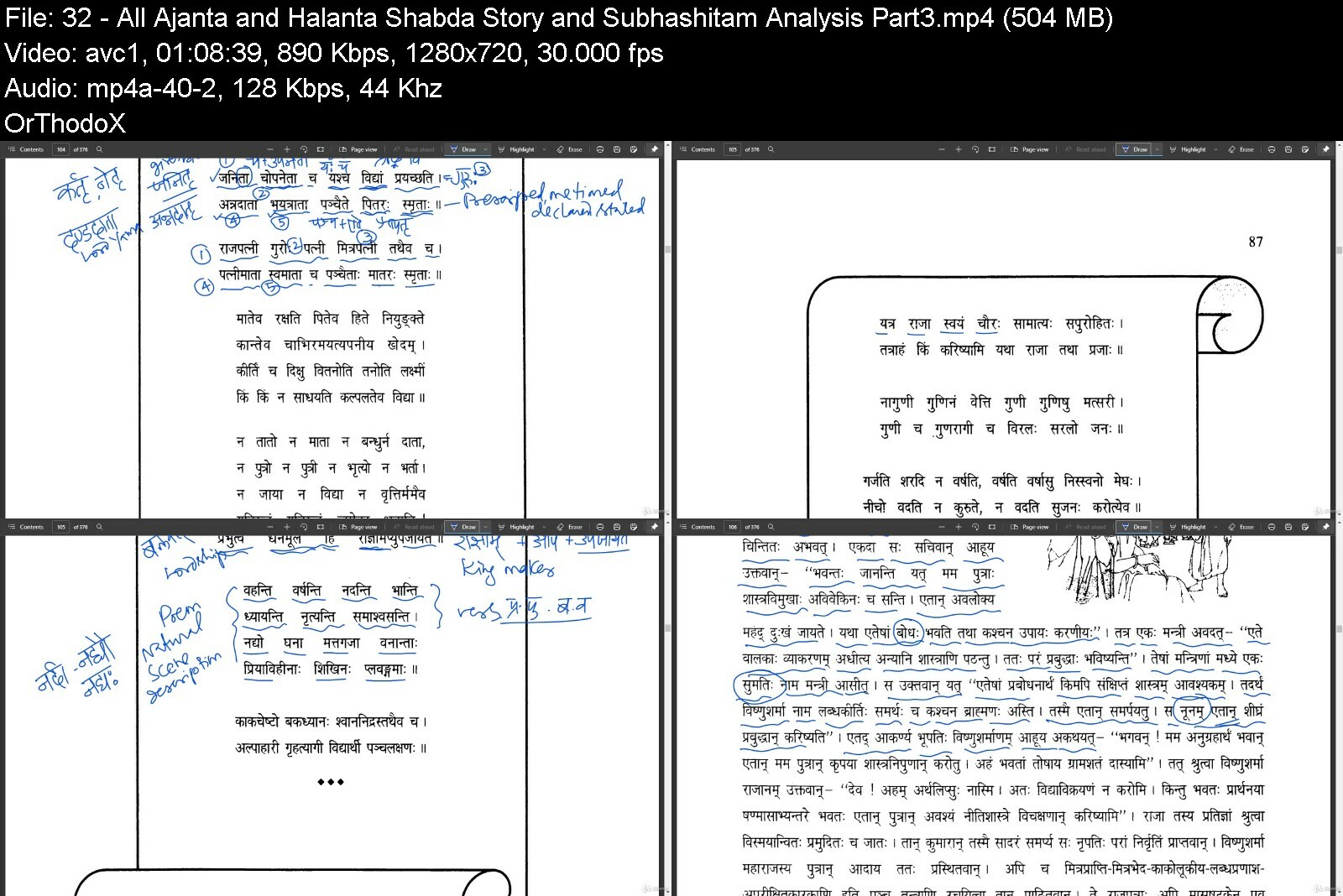
Lecture 32 All Ajanta and Halanta Shabda Story and Subhashitam Analysis Part-3

Section 11: Dvitiya Vibhakti - Accusative Case of all Vowel-Consonant ending words intro L-4

Lecture 33 Dvitiya Vibhakti - Accusative Case of all Vowel-Consonant ending words part-1

Lecture 34 Dvitiya Vibhakti - Accusative Case of all Vowel-Consonant ending words part-2

Lecture 35 Dvitiya Vibhakti - Accusative Case of all Vowel-Consonant ending words part-3

Lecture 36 Dvitiya Vibhakti - Accusative Case of all Vowel-Consonant ending words part-4

Lecture 37 Dvitiya Vibhakti - Accusative Case of all Vowel-Consonant ending words part-5

Lecture 38 Dvitiya Vibhakti - Accusative Case of all Vowel-Consonant ending words part-6

Lecture 39 Dvitiya Vibhakti - Accusative Case of all Vowel-Consonant ending words part-7

Lecture 40 Dvitiya Vibhakti - Accusative Case of all Vowel-Consonant ending words part-8

Section 12: Tritiya Vibhakti - Instrument Case of all Vowel-Consonant ending words intro L-4

Lecture 41 Tritiya Vibhakti - Instrument Case of all Vowel-Consonant ending words part-1

Lecture 42 Tritiya Vibhakti - Instrument Case of all Vowel-Consonant ending words part-2

Lecture 43 Tritiya Vibhakti - Instrument Case of all Vowel-Consonant ending words part-3

Lecture 44 Tritiya Vibhakti - Instrument Case of all Vowel-Consonant ending words part-4

Lecture 45 Tritiya Vibhakti - Instrument Case of all Vowel-Consonant ending words part-5

Lecture 46 Tritiya Vibhakti - Instrument Case of all Vowel-Consonant ending words part-6

Lecture 47 Tritiya Vibhakti - Instrument Case of all Vowel-Consonant ending words part-7

Lecture 48 Tritiya Vibhakti - Instrument Case of all Vowel-Consonant ending words part-8

Lecture 49 Tritiya Vibhakti - Instrument Case of all Vowel-Consonant ending words part-9

Section 13: Caturti Vibhakti - Dative Case of all Vowel-Consonant ending words intro Level-4

Lecture 50 Caturti Vibhakti - Dative Case of all Vowel-Consonant ending words part-1

Lecture 51 Caturti Vibhakti - Dative Case of all Vowel-Consonant ending words part-2

Lecture 52 Caturti Vibhakti - Dative Case of all Vowel-Consonant ending words part-3

Lecture 53 Caturti Vibhakti - Dative Case of all Vowel-Consonant ending words part-4

Lecture 54 Caturti Vibhakti - Dative Case of all Vowel-Consonant ending words part-5

Lecture 55 Caturti Vibhakti - Dative Case of all Vowel-Consonant ending words part-6

Section 14: Pancami Vibhakti - Abalative Case of all Vowel-Consonant ending words intro L-4

Lecture 56 Pancami Vibhakti - Abalative Case of all Vowel-Consonant ending words part-1

Lecture 57 Pancami Vibhakti - Abalative Case of all Vowel-Consonant ending words part-2

Lecture 58 Pancami Vibhakti - Abalative Case of all Vowel-Consonant ending words part-3

Lecture 59 Pancami Vibhakti - Abalative Case of all Vowel-Consonant ending words part-4

Lecture 60 Pancami Vibhakti - Abalative Case of all Vowel-Consonant ending words part-5

Lecture 61 Pancami Vibhakti - Abalative Case of all Vowel-Consonant ending words part-6

Section 15: Shashti Vibhakti - Possessive Case of all Vowel-Consonant ending words intro L-4

Lecture 62 Shashti Vibhakti - Possessive Case of all Vowel-Consonant ending words part-1

Lecture 63 Shashti Vibhakti - Possessive Case of all Vowel-Consonant ending words part-2

Lecture 64 Shashti Vibhakti - Possessive Case of all Vowel-Consonant ending words part-3

Lecture 65 Shashti Vibhakti - Possessive Case of all Vowel-Consonant ending words part-4

Lecture 66 Shashti Vibhakti - Possessive Case of all Vowel-Consonant ending words part-5

Lecture 67 Shashti Vibhakti - Possessive Case of all Vowel-Consonant ending words part-6

Lecture 68 Shashti Vibhakti - Possessive Case of all Vowel-Consonant ending words part-7

Section 16: Saptami Vibhakti - Locative Case of all Vowel-Consonant ending words intro L-4

Lecture 69 Saptami Vibhakti - Locative Case of all Vowel-Consonant ending words part-1

Lecture 70 Saptami Vibhakti - Locative Case of all Vowel-Consonant ending words part-2

Lecture 71 Saptami Vibhakti - Locative Case of all Vowel-Consonant ending words part-3

Lecture 72 Saptami Vibhakti - Locative Case of all Vowel-Consonant ending words part-4

Lecture 73 Saptami Vibhakti - Locative Case of all Vowel-Consonant ending words part-5

Section 17: SambodhanaVibhakti - Vocative Case of all Vowel-Consonant ending words intro L-4

Lecture 74 Sambodhana Vibhakti - Vocative Case of all Vowel-Consonant ending words part-1

Lecture 75 Sambodhana Vibhakti - Vocative Case of all Vowel-Consonant ending words part-2

Section 18: Sarvanamapadam - Intro to more Pronouns Level-4

Lecture 76 Sarvanamapadam - Intro to more Pronouns Part-1

Lecture 77 Sarvanamapadam - Intro to more Pronouns Part-2

Lecture 78 Sarvanamapadam - Intro to more Pronouns Part-3

Lecture 79 Sarvanamapadam - Intro to more Pronouns Part-4

Lecture 80 Sarvanamapadam - Intro to more Pronouns Part-5

Lecture 81 Sarvanamapadam - Intro to more Pronouns Part-6

Lecture 82 Sarvanamapadam - Intro to more Pronouns Part-7

Lecture 83 Sarvanamapadam - Intro to more Pronouns Part-8

Section 19: Intro to More Indeclinable - Avyayam Level-4

Lecture 84 Intro to More Indeclinable - Avyayam Part-1

Lecture 85 Intro to More Indeclinable - Avyayam Part-2

Lecture 86 Intro to More Indeclinable - Avyayam Part-3

Lecture 87 Intro to More Indeclinable - Avyayam Part-4

Lecture 88 Intro to More Indeclinable - Avyayam Part-5

Section 20: Recap of all Vibhakti in Subhashitam and Story Level-4

Lecture 89 Recap of all Seven Vibhakti in Subhashitam and Story

Section 21: Intro to Atmanepada Verbs in Present Tense - Level5

Lecture 90 Intro to Atmanepada Verbs in Present Tense - Part1

Lecture 91 Intro to Atmanepada Verbs in Present Tense - Part2

Lecture 92 Intro to Atmanepada Verbs in Present Tense - Part3

Lecture 93 Intro to Atmanepada Verbs in Present Tense Story Comprehension - Part4

Lecture 94 Story analysis Atmanepada and Parasmaipada Sanskrit Verbs in Present Tense

Section 22: Intro to Atmanepada Verbs in Order-Request Mood - Level5

Lecture 95 Intro to Atmanepada Verbs in Order-Request Mood Part1 - Level5

Lecture 96 Intro to Atmanepada Verbs in Order-Request Mood Part2 - Level5

Section 23: Intro to Atmanepada Verbs in Future Tense - Level5

Lecture 97 Intro to Atmanepada Verbs in Future Tense Part1 - Level5

Lecture 98 Intro to Atmanepada Verbs in Future Tense Part2 - Level5

Section 24: Intro to Atmanepada Verbs in Past Tense - Level5

Lecture 99 Intro to Atmanepada Verbs in Past Tense Part1 - Level5

Lecture 100 Intro to Atmanepada Verbs in Past Tense Part2 - Level5

Section 25: Exercise, Subhashitam and Story Comprehension of All Tense and Mood - Level5

Lecture 101 Story Comprehension and Exercises of All Tense and Mood of Atmanepada - Level5

Lecture 102 Exercise, Subhashitam and Story Comprehension of All Tense and Mood P2 - Level5

Lecture 103 Exercise, Subhashitam and Story Comprehension of All Tense and Mood P3 - Level5

Lecture 104 Exercise, Subhashitam and Story Comprehension of All Tense and Mood P4 - Level5

Section 26: Intro to Sanskrit Upasarga Level-5

Lecture 105 Intro to 22 Upasarga in Sanskrit Part-1

Lecture 106 Intro to 22 Upasarga in Sanskrit Part-2

Lecture 107 Intro to 22 Upasarga in Sanskrit Part-3

Lecture 108 Intro to 22 Upasarga in Sanskrit Part-4

Lecture 109 Intro to 22 Upasarga in Sanskrit Part-5

Lecture 110 Intro to 22 Upasarga in Sanskrit Part-6

Lecture 111 Intro to 22 Upasarga in Sanskrit Part-7

Lecture 112 Intro to 22 Upasarga of Sanskrit in Story Comprehension Part-8

Lecture 113 Intro to 22 Upasarga of Sanskrit in Subhashitam and Panchatantra Story Part-9

Section 27: Karmani and Bhave Prayoga - Passive and Impersonal Voice in Sanskrit Level-5

Lecture 114 Karmani Bhave Prayoga - Passive and Impersonal Voice in Sanskrit Part-1

Lecture 115 Karmani Bhave Prayoga - Passive and Impersonal Voice in Sanskrit Part-2

Lecture 116 Karmani Bhave Prayoga - Passive and Impersonal Voice in Sanskrit Part-3

Lecture 117 Karmani Bhave Prayoga - Passive and Impersonal Voice in Sanskrit Part-4

Lecture 118 Karmani Bhave Prayoga - Passive and Impersonal Voice in Sanskrit Part-5

Lecture 119 Karmani Bhave Prayoga - Passive and Impersonal Voice in Sanskrit Part-6

Lecture 120 Karmani Bhave Prayoga - Passive and Impersonal Voice in Sanskrit Part-7

Lecture 121 Karmani Bhave Prayoga - Passive and Impersonal Voice in Sanskrit Part-8

Lecture 122 Karmani Bhave Prayoga - Passive and Impersonal Voice in Sanskrit Part-9

Lecture 123 Karmani Bhave Prayoga - Passive and Impersonal Voice in Sanskrit Part-10

Lecture 124 Karmani Bhave Prayoga - Passive and Impersonal Voice in Sanskrit Part-11

Lecture 125 Karmani Bhave Prayoga - Passive and Impersonal Voice in Sanskrit Part-12

Lecture 126 Karmani Bhave Prayoga - Passive and Impersonal Voice in Sanskrit Part-13

Lecture 127 Karmani Bhave Prayoga - Passive and Impersonal Voice in Sanskrit Part-14

Lecture 128 Karmani Bhave Prayoga - Passive and Impersonal Voice in Sanskrit Part-15

Lecture 129 Karmani Bhave Prayoga - Passive and Impersonal Voice in Sanskrit Part-16

Lecture 130 Karmani Bhave Prayoga - Passive and Impersonal Voice in Sanskrit Part-17

Lecture 131 Karmani Bhave Prayoga - Passive and Impersonal Voice in Sanskrit Part-18

Lecture 132 Karmani Bhave Prayoga - Passive and Impersonal Voice in Sanskrit Part-19

Lecture 133 Karmani Bhave Prayoga - Passive and Impersonal Voice in Sanskrit Part-20

Lecture 134 Karmani Bhave Prayoga - Passive and Impersonal Voice in Sanskrit Part-21

Lecture 135 Karmani Bhave Prayoga - Passive and Impersonal Voice in Sanskrit Part-22

Lecture 136 Karmani Bhave Prayoga - Passive and Impersonal Voice in Sanskrit Part-23

Lecture 137 Karmani Bhave Prayoga - Passive and Impersonal Voice in Sanskrit Part-24

Lecture 138 Karmani Bhave Prayoga - Passive and Impersonal Voice in Sanskrit Part-25

Lecture 139 Karmani Bhave Prayoga - Passive and Impersonal Voice in Sanskrit Part-26

Section 28: Visheshana-Vishesha-Bhava Adjectives and Noun relation in Sanskrit Level-5

Lecture 140 Visheshana-Vishesha-Bhava Adjectives and Noun relation in Sanskrit Part-1

Lecture 141 Visheshana-Vishesha-Bhava Adjectives and Noun relation in Sanskrit Part-2

Lecture 142 Visheshana-Vishesha-Bhava Adjectives and Noun relation in Sanskrit Part-3

Lecture 143 Visheshana-Vishesha-Bhava Adjectives and Noun relation in Sanskrit Part-4

Lecture 144 Visheshana-Vishesha-Bhava Adjectives and Noun relation in Sanskrit Part-5

Lecture 145 Visheshana-Vishesha-Bhava Adjectives and Noun relation in Sanskrit Part-6

Lecture 146 Visheshana-Vishesha-Bhava Adjectives and Noun relation in Sanskrit Part-7

Lecture 147 Visheshana-Vishesha-Bhava Adjectives and Noun relation in Sanskrit Part-8

Section 29: cit-cana of sapta-kakara indefinite-pronoun and its use in sentence Level-5

Lecture 148 cit-cana of sapta-kakara indefinite-pronoun and its use - part1

Lecture 149 cit-cana of sapta-kakara indefinite-pronoun and its use in sentence - part2

Lecture 150 cit-cana of sapta-kakara indefinite-pronoun and its use in sentence - part3

Lecture 151 cit-cana of sapta-kakara indefinite-pronoun and its use in sentence - part4

Lecture 152 cit-cana of sapta-kakara indefinite-pronoun and its use in sentence - part5

Lecture 153 cit-cana of sapta-kakara indefinite-pronoun and its use in sentence - part6

Lecture 154 cit-cana of sapta-kakara indefinite-pronoun and its use in sentence - part7

Section 30: Ordinal-Cardinal Numbers in Sanskrit as Adjectives and Declension of it Level-5

Lecture 155 Ordinal-Cardinal Numbers in Sanskrit as Adjectives and Declension of it Part-1

Lecture 156 Ordinal-Cardinal Numbers in Sanskrit as Adjectives and Declension of it part-2

Lecture 157 Ordinal-Cardinal Numbers in Sanskrit as Adjectives and Declension of it part-3

Lecture 158 Ordinal-Cardinal Numbers in Sanskrit as Adjectives and Declension of it part-4

Lecture 159 Ordinal-Cardinal Numbers in Sanskrit as Adjectives and Declension of it part-5

Lecture 160 Ordinal-Cardinal Numbers in Sanskrit as Adjectives and Declension of it part-6

Lecture 161 Ordinal-Cardinal Numbers in Sanskrit as Adjectives and Declension of it part-7

Lecture 162 Ordinal-Cardinal Numbers in Sanskrit as Adjectives and Declension of it part-8

Lecture 163 Ordinal-Cardinal Numbers in Sanskrit as Adjectives and Declension of it part-9

Lecture 164 Ordinal-Cardinal Numbers in Sanskrit as Adjectives and Declension of it part-10

Lecture 165 Ordinal-Cardinal Numbers in Sanskrit as Adjectives and Declension of it part-11

Lecture 166 Ordinal-Cardinal Numbers in Sanskrit as Adjectives and Declension of it part-12

Section 31: Shatru-Shanach in Sanskrit and using it as Adjectives - Level5

Lecture 167 Shatru-Shanach in Sanskrit and using it as Adjectives Part-1

Lecture 168 Shatru-Shanach in Sanskrit and using it as Adjectives Part-2

Lecture 169 Shatru-Shanach in Sanskrit and using it as Adjectives Part-3

Lecture 170 Shatru-Shanach in Sanskrit and using it as Adjectives Part-4

Lecture 171 Shatru-Shanach in Sanskrit and using it as Adjectives Part-5

Lecture 172 Shatru-Shanach in Sanskrit and using it as Adjectives Part-6

Lecture 173 Shatru-Shanach in Sanskrit and using it as Adjectives Part-7

Lecture 174 Shatru-Shanach in Sanskrit and using it as Adjectives Part-8

Lecture 175 Shatru-Shanach in Sanskrit and using it as Adjectives Part-9

Lecture 176 Shatru-Shanach in Sanskrit and using it as Adjectives Part-10

Lecture 177 Shatru-Shanach in Sanskrit and using it as Adjectives Part-11

Lecture 178 Shatru-Shanach in Sanskrit and using it as Adjectives Part-12

Lecture 179 Shatru-Shanach in Sanskrit and using it as Adjectives Part-13

Lecture 180 Shatru-Shanach in Sanskrit and using it as Adjectives Part-14

Lecture 181 Shatru-Shanach in Sanskrit and using it as Adjectives Part-15

Lecture 182 Shatru-Shanach in Sanskrit and using it as Adjectives Part-16

Lecture 183 Shatru-Shanach in Sanskrit and using it as Adjectives Part-17

Lecture 184 Shatru-Shanach in Sanskrit and using it as Adjectives Part-18

Lecture 185 Shatru-Shanach in Sanskrit and using it as Adjectives Part-19

Lecture 186 Shatru-Shanach in Sanskrit and using it as Adjectives Part-20

Lecture 187 Shatru-Shanach in Sanskrit and using it as Adjectives Part-21

Lecture 188 Shatru-Shanach in Sanskrit and using it as Adjectives Part-22

Section 32: Course Completion and Intro to Next Course Contents

Lecture 189 Course Completion and Intro to Next Course Contents

Anyone with basic knowledge of Sanskrit Alphabets and preliminary knowledge,Those who want to explore Sanskrit Texts on their own,Those who like to take up different Exams conducted by Samskruta Bharati NGO and other such Institutions or School Exams




learneasycompletecomp9jcon.jpg


epdz5xdze4jwfyxchma1dc0ima.jpg


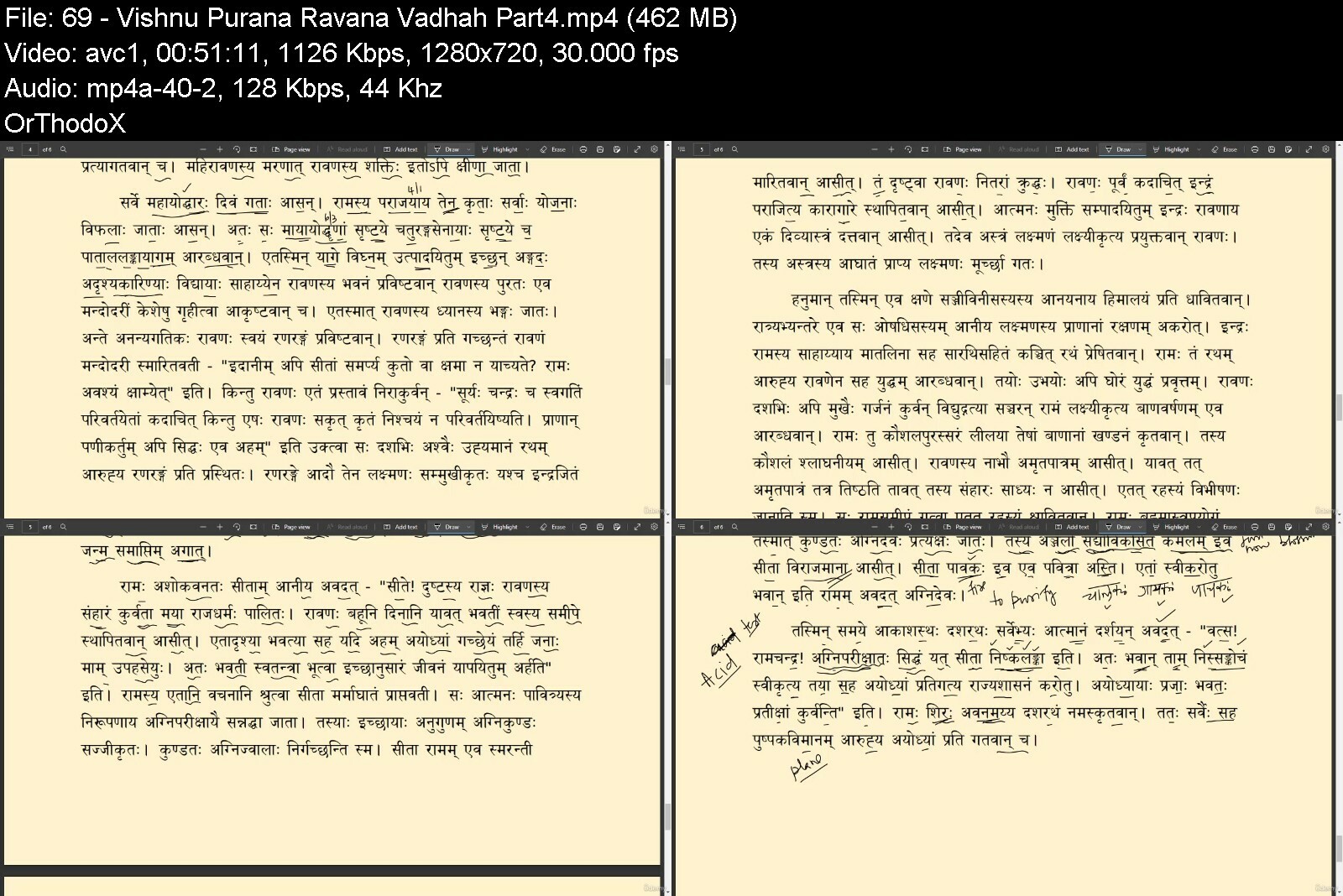
Samasa In Sanskrit And Its Analysis Using Vishnu Puranam
Last updated 9/2022
MP4 | Video: h264, 1280x720 | Audio: AAC, 44.1 KHz
Language: English | Size: 28.73 GB | Duration: 57h 0m

Learn by Analysis


What you'll learn
Different types of Samasa in Sanskrit terms and definition
How Samasa is formed and how to identify different types of Samasa in Sanskrit
Analyze different Sanskrit Samasa using Vishnu Puranam texts
Exercise and Study Materials to understand the Sanskrit Samasa concepts

Requirements
General Topic Knowledge as discussed in the Introduction Lecture

Description
Samasa in Sanskrit is one of the Important Topic to know, because Samasa is found every where in the Scriptures, Sutra, Purana, Kavya and in our day to day Classical Sanskrit Language.Samasa in Sanskrit may look a bit confusing for the beginner but, with proper explanation and repeated analysis with the Vishnu Purunam text running over 100 pages, you will understand well, the different types easily and clearly.Samasa in Sanskrit are classified under different categories like Tatpurasha, Dviguhu, Dvandah and Avyayibhavah and further subdivided in each category.You will learn 29 different types of Samasa which are most common and frequently you would come across in many texts.Samasa in Sanskrit is one of the powerful ways of expressing a complex and detailed information in simple words and is a must to know subject of the Sanskrit language structure, if you want to read Kavya, Purana, Sutra and Shastra, Stories because Samasa is very native to Sanskrit language.I already discussed the basic Sanskrit Language Structure in my earlier courses and my courses are numbered to progress sequentially in order as a beginner.Please complete the Beginners Course (course-1), the Competency Course (course-2), Fluency Course (course-3) and the Story Analytics Course (course-6) before attempting this course, since most of the topics discussed in my earlier courses are to be well understood to easily understand this course. I may be referring some of the topics discussed in my earlier course while discussing the concerned lessons in this course.Or, if you already have the subject knowledge of my earlier courses, you will find it easier to understand the lessons in this course. Please go through the topics I discussed in my earlier courses to get an idea of the subject knowledge familiarity needed to grasp the topics discussed in this course.I welcome you to explore this topic with me, which will further enhance your Sanskrit Language Structure knowledge.With regards,I am your co-student, Shankar Iyer

Overview
Section 1: Introduction

Lecture 1 Introduction to Samasa in Sanskrit

Lecture 2 Introduction to Samasa in Sanskrit Cont...

Section 2: Study Materials

Lecture 3 Samasa Notes, Exercises and Vishnupuranam 24 episodes

Section 3: Samanya Tatpurusha Samasa in Sanskrit and its varieties

Lecture 4 Samanya Tatpurusha Samasa Part-1

Lecture 5 Samanya Tatpurusha Samasa Part-2

Lecture 6 Samanya Tatpurusha Samasa Part-3

Section 4: Karmadharaya Samasa in Sanskrit and its varieties

Lecture 7 Karmadharaya Samasa in Sanskrit Part-1

Lecture 8 Karmadharaya Samasa in Sanskrit Part-2

Lecture 9 Karmadharaya Samasa in Sanskrit Part-3 and Dviguh Samasa

Lecture 10 Nan Prabhrtayah Samasa in Sanskrit

Section 5: Bahuvrihi Samasa in Sanskrit and its Varieties

Lecture 11 Bahuvrihi Samasa in Sanskrit Part-1

Lecture 12 Bahuvrihi Samasa in Sanskrit Part-2

Section 6: Dvanda and Avyayibhava Samasa in Sanskrit

Lecture 13 Dvanda and Avyayibhava Samasa in Sanskrit

Section 7: How to approach Sanskrit Puranam an Intro

Lecture 14 Intro to Basics of Puranam and Samasa Analysis using Vishnu Puranam

Section 8: Vishnu Purana Prathama Avatara

Lecture 15 Vishnu Purana Prathama Avatara Part-1

Lecture 16 Vishnu Purana Prathama Avatara Part-2

Lecture 17 Vishnu Purana Prathama Avatara Part-3

Lecture 18 Vishnu Purana Prathama Avatara Part-4

Lecture 19 Vishnu Purana Prathama Avatara Part-5

Section 9: Vishnu Purana Matsya Avatara

Lecture 20 Vishnu Purana Matsya Avatara Part-1

Lecture 21 Vishnu Purana Matsya Avatara Part-2

Lecture 22 Vishnu Purana Matsya Avatara Part-3

Section 10: Vishnu Purana Druvanarayana Avatara

Lecture 23 Vishnu Purana Druvanarayana Avatara Part-1

Lecture 24 Vishnu Purana Druvanarayana Avatara Part-2

Lecture 25 Vishnu Purana Druvanarayana Avatara Part-3

Section 11: Vishnu Purana Kurma Jahanmohini Avatara

Lecture 26 Vishnu Purana Kurma Jahanmohini Avatara Part-1

Lecture 27 Vishnu Purana Kurma Jahanmohini Avatara Part-2

Lecture 28 Vishnu Purana Kurma Jahanmohini Avatara Part-3

Lecture 29 Vishnu Purana Kurma Jahanmohini Avatara Part-4

Section 12: Vishnu Purana Varaha Narasimha Avatara

Lecture 30 Vishnu Purana Varaha Narasimha Avatara Part-1

Lecture 31 Vishnu Purana Varaha Narasimha Avatara Part-2

Lecture 32 Vishnu Purana Varaha Narasimha Avatara Part-3

Lecture 33 Vishnu Purana Varaha Narasimha Avatara Part-4

Section 13: Vishnu Purana Vamana Trivikrama Avatara

Lecture 34 Vishnu Purana Vamana Trivikrama Avatara Part-1

Lecture 35 Vishnu Purana Vamana Trivikrama Avatara Part-2

Lecture 36 Vishnu Purana Vamana Trivikrama Avatara Part-3

Lecture 37 Vishnu Purana Vamana Trivikrama Avatara Part-4

Section 14: Vishnu Purana Vamana Dattareyakatha

Lecture 38 Vishnu Purana Vamana Dattareyakatha Part-1

Lecture 39 Vishnu Purana Vamana Dattareyakatha Part-2

Lecture 40 Vishnu Purana Vamana Dattareyakatha Part-3

Section 15: Vishnu Purana Parashurama Avatara

Lecture 41 Vishnu Purana Parashurama Avatara Part-1

Lecture 42 Vishnu Purana Parashurama Avatara Part-2

Lecture 43 Vishnu Purana Parashurama Avatara Part-3

Lecture 44 Vishnu Purana Parashurama Avatara Part-4

Section 16: Vishnu Purana Rama Avatara

Lecture 45 Vishnu Purana Rama Avatara Part-1

Lecture 46 Vishnu Purana Rama Avatara Part-2

Lecture 47 Vishnu Purana Rama Avatara Part-3

Lecture 48 Vishnu Purana Rama Avatara Part-4

Section 17: Vishnu Purana Durvasasah Garvabhangah

Lecture 49 Vishnu Purana Durvasasah Garvabhangah Part-1

Lecture 50 Vishnu Purana Durvasasah Garvabhangah Part-2

Lecture 51 Vishnu Purana Durvasasah Garvabhangah Part-3

Lecture 52 Vishnu Purana Durvasasah Garvabhangah Part-4

Section 18: Vishnu Purana Seetaramayoh Vivahah

Lecture 53 Vishnu Purana Seetaramayoh Vivahah Part-1

Lecture 54 Vishnu Purana Seetaramayoh Vivahah Part-2

Lecture 55 Vishnu Purana Seetaramayoh Vivahah Part-3

Lecture 56 Vishnu Purana Seetaramayoh Vivahah Part-4

Section 19: Vishnu Purana Seetarama Vanavasah

Lecture 57 Vishnu Purana Seetarama Vanavasah Part-1

Lecture 58 Vishnu Purana Seetarama Vanavasah Part-2

Lecture 59 Vishnu Purana Seetarama Vanavasah Part-3

Lecture 60 Vishnu Purana Seetarama Vanavasah Part-4

Lecture 61 Vishnu Purana Seetarama Vanavasah Part-5

Section 20: Vishnu Purana Seeta Anveshanam

Lecture 62 Vishnu Purana Seeta Anveshanam Part-1

Lecture 63 Vishnu Purana Seeta Anveshanam Part-2

Lecture 64 Vishnu Purana Seeta Anveshanam Part-3

Lecture 65 Vishnu Purana Seeta Anveshanam Part-4

Section 21: Vishnu Purana Ravana Vadhah

Lecture 66 Vishnu Purana Ravana Vadhah Part-1

Lecture 67 Vishnu Purana Ravana Vadhah Part-2

Lecture 68 Vishnu Purana Ravana Vadhah Part-3

Lecture 69 Vishnu Purana Ravana Vadhah Part-4

Section 22: Vishnu Purana Rama Rajyam

Lecture 70 Vishnu Purana Rama Rajyam Part-1

Lecture 71 Vishnu Purana Rama Rajyam Part-2

Lecture 72 Vishnu Purana Rama Rajyam Part-3

Section 23: Vishnu Purana Krishnavatarah

Lecture 73 Vishnu Purana Krishnavatarah Part-1

Lecture 74 Vishnu Purana Krishnavatarah Part-2

Lecture 75 Vishnu Purana Krishnavatarah Part-3

Section 24: Vishnu Purana Krishnasya Vijayah

Lecture 76 Vishnu Purana Krishnasya Vijayah Part-1

Lecture 77 Vishnu Purana Krishnasya Vijayah Part-2

Lecture 78 Vishnu Purana Krishnasya Vijayah Part-3

Section 25: Vishnu Purana KrishnaPandaviyam

Lecture 79 Vishnu Purana KrishnaPandaviyam Part-1

Lecture 80 Vishnu Purana KrishnaPandaviyam Part-2

Lecture 81 Vishnu Purana KrishnaPandaviyam Part-3

Section 26: Vishnu Purana Bhatavatgita

Lecture 82 Vishnu Purana Bhatavatgita Part-1

Lecture 83 Vishnu Purana Bhatavatgita Part-2

Lecture 84 Vishnu Purana Bhatavatgita Part-3

Section 27: Vishnu Purana Kaliyugadevatatvena

Lecture 85 Vishnu Purana Kaliyugadevatatvena Part-1

Lecture 86 Vishnu Purana Kaliyugadevatatvena Part-2

Lecture 87 Vishnu Purana Kaliyugadevatatvena Part-3

Section 28: Vishnu Purana Buddhaavaratah

Lecture 88 Vishnu Purana Buddhaavaratah Part-1

Lecture 89 Vishnu Purana Buddhaavaratah Part-2

Lecture 90 Vishnu Purana Buddhaavaratah Part-3

Section 29: Vishnu Purana Ahimsajyotihi

Lecture 91 Vishnu Purana Ahimsajyotihi Part-1

Lecture 92 Vishnu Purana Ahimsajyotihi Part-2

Lecture 93 Vishnu Purana Ahimsajyotihi Part-3

Section 30: Vishnu Purana Bhagavan Buddhah

Lecture 94 Vishnu Purana Bhagavan Buddhah Part-1

Lecture 95 Vishnu Purana Bhagavan Buddhah Part-2

Lecture 96 Vishnu Purana Bhagavan Buddhah Part-3

Section 31: Vishnu Purana Kalkehe Avatarah

Lecture 97 Vishnu Purana Kalkehe Avatarah Part-1

Lecture 98 Vishnu Purana Kalkehe Avatarah Part-2

Lecture 99 Vishnu Purana Kalkehe Avatarah Part-3

This Course is designed in the Beginners Perspective


samasainsanskritandito5dqa.jpg


4e0x9wsii6yjocxndnb15t5c23.jpg


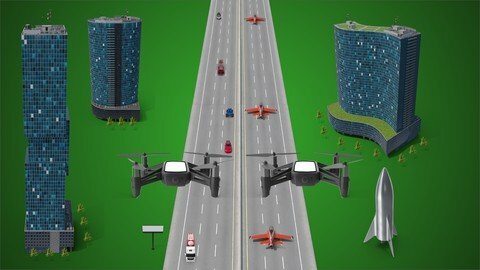
Applied Control Systems 3: Uav Drone (3D Dynamics & Control)
Last updated 8/2022
MP4 | Video: h264, 1280x720 | Audio: AAC, 44.1 KHz
Language: English | Size: 10.96 GB | Duration: 27h 22m

Modeling + state space systems + Model Predictive Control + feedback control + Python simulation: UAV quadcopter drone


What you'll learn
mathematical modelling of a UAV quadcopter drone
obtaining kinematic equations: Rotation & Transfer matrices
obtaining Newton-Euler 6 DOF dynamic equations of motion with rotating frames
going from equations of motion to a UAV specific state-space equations
understanding the gyroscopic effect & applying it to the UAV model
understanding the Runge-Kutta integrator and applying it to the UAV model
mastering & applying Model Predictive Control algorithm to the UAV
mastering & applying a feedback linearization controller to the UAV
combining Model Predictive Control and feedback linearization in one global controller
simulating the drone's trajectory tracking in Python using the MPC and feedback linearization controller

Requirements
Basic Calculus: Functions, Derivatives, Integrals
Vector-Matrix multiplication
Udemy course: Applied Control Systems 1: autonomous cars (Math + PID + MPC)

Description
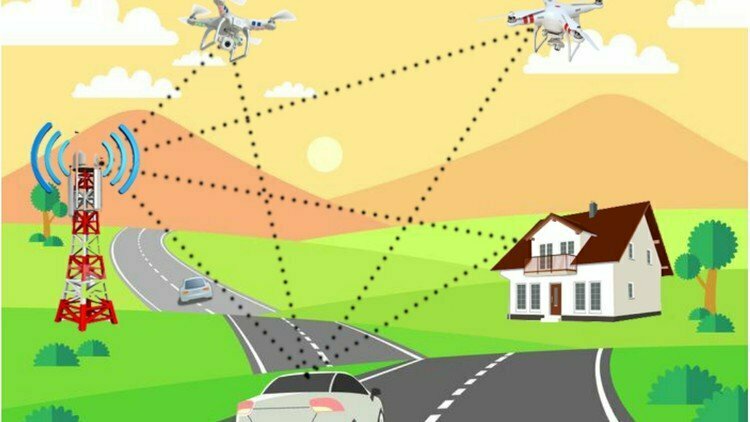
One of the greatest transformations that we will see in the next couple of decades is going to be the advent of autonomous drones. While being used extensively already, the applications of quadcopters will only grow in time. Drones will be used in delivery services, entertainment, medicine, military, rescue, structural quality inspection - places that people cannot reach easily, and in many other fields. In many cases, there will be a predefined trajectory in a 3D space that the UAV needs to follow without human help. In fact, humans might simply give a simple command for the drone to go somewhere, and then, a specific trajectory will be generated by a computer in that direction and the UAV's control algorithms will need to determine EXACTLY how fast each rotor should turn in order to make the drone follow that trajectory with high-degree precision. And that's what this course is all about - its about DESIGNING, MASTERING, and APPLYING these control algorithms together with deriving the dynamics equations for the quadcopter.In this course, you will receive a full package when it comes to learning about how to model and control a UAV drone and make it follow a trajectory in a 3D environment. Not only you will learn how to model a UAV system mathematically by deriving the equations of motion using the principles of 3D Dynamics, but you will also be exposed to some of the most powerful control techniques out there such as Model Predictive Control and feedback linearization.In 3D dynamics, you will learn the fundamental math and physics behind the UAV quadcopter drone modelling. You will learn how to describe the position and orientation of a UAV quadcopter drone in a 3D space using rotation and transfer matrices, Newton - Euler 6 Degree of Freedom equations of motion, widely used Runge - Kutta integrator in engineering and propeller dynamics.In the end of the course, I will also explain to you the code in the Python simulator.Understanding the material in this course fundamentally, being able to quantify it mathematically, and knowing how to apply it using coding - that will give you an advantage in your engineering career that you cannot even imagine yet. It will give you a competitive edge that you need in the labor market. I'm very excited to start working with you. Take a look at some of my free preview videos, and if you like what you see, then ENROLL in the course, and let's get started right now!

Overview

Section 1: Drone architecture from Control Systems point of view

Lecture 1 Introduction

Lecture 2 UAV configuration + inertial VS body frame

Lecture 3 Inputs and outputs of a 6 Degree of Freedom UAV drone

Lecture 4 Propeller rotation directions 1

Lecture 5 Propeller rotation directions 2 - Helicopter example

Lecture 6 1st control action - Thrust

Lecture 7 2nd control action - Roll

Lecture 8 3rd control action - Pitch (exercise)

Lecture 9 3rd control action - Pitch (solution) + 4th control action - Yaw (exercise)

Lecture 10 4th control action - Yaw (solution)

Lecture 11 Rotation vector direction

Lecture 12 Clarification on measuring with respect to body or inertial frames

Lecture 13 Global view of the drone's control architecture

Lecture 14 Follow up!

Section 2: Fundamental kinematics & dynamics equations for a 6 DOF system (Newton - Euler)

Lecture 15 Kinematics VS Dynamics

Lecture 16 Measuring the UAV's position (exercise)

Lecture 17 Measuring the UAV's position (solution)

Lecture 18 Intro to describing attitudes 1 (exercise)

Lecture 19 Intro to describing attitudes 2 (solution + new exercise)

Lecture 20 2D rotation matrix formulation (solution + new exercise)

Lecture 21 From 2D to 3D rotations (solution + new exercise)

Lecture 22 3D rotation matrix formulation about the Z axis 1 (solution)

Lecture 23 3D rotation matrix formulation about the Z axis 2 (solution)

Lecture 24 Projecting from 3D to 2D (exercise)

Lecture 25 Projecting from 3D to 2D (solution) + constructing Rx and Ry matrices (exercise)

Lecture 26 Constructing Ry matrix (solution)

Lecture 27 Constructing Rx matrix (solution)

Lecture 28 Orthonormal matrices (exercise)

Lecture 29 Orthonormal matrices (solution)

Lecture 30 3D rotation sequence 1 (exercise)

Lecture 31 3D rotation sequence 2 (solution)

Lecture 32 3D rotation sequence - example (exercise)

Lecture 33 3D rotation sequence - example (solution)

Lecture 34 Intro to Euler angles (rotation about moving body frames)

Lecture 35 Intuition on different conventions

Lecture 36 Fixed VS Moving body frame rotations 1 (exercise)

Lecture 37 Fixed VS Moving body frame rotations 2 (solution + new exercise)

Lecture 38 Fixed VS Moving body frame rotations 3 (solution)

Lecture 39 Rotation matrix conventions - Intro

Lecture 40 Rotation matrix conventions - R_XYZ matrix product

Lecture 41 Rotation matrix conventions - R_ZYX matrix product

Lecture 42 Rotation matrix conventions - R_XYX matrix product

Lecture 43 Rotation matrix conventions - R_XYZ vs R_ZYX example

Lecture 44 Rotation matrix conventions - R_XYZ vs R_XYX example

Lecture 45 Rotation matrix application to the UAV 1

Lecture 46 Rotation matrix application to the UAV 2

Lecture 47 Why is a special Transfer matrix needed 1

Lecture 48 Why is a special Transfer matrix needed 2

Lecture 49 Why is a special Transfer matrix needed 3

Lecture 50 Transfer matrix derivation 1 (exercise)

Lecture 51 Transfer matrix derivation 2 (solution + new exercise)

Lecture 52 Mathematical derivation of the Rzyx (moving frame) rotation matrix

Lecture 53 Transfer matrix derivation 4 (solution)

Lecture 54 Transfer matrix derivation 5

Lecture 55 Rotation & Transfer matrix application 1 - Kinematics wrap up

Lecture 56 Rotation & Transfer matrix application 2 - Kinematics wrap up

Lecture 57 Intro to Dynamics

Lecture 58 Dot product 1 + Application

Lecture 59 Dot product 2 +Application

Lecture 60 Dot product 3 + Application (exercise)

Lecture 61 Dot product 4 + Application (solution)

Lecture 62 Cross Product 1

Lecture 63 Cross Product 2 (Exercise)

Lecture 64 Cross Product 3 (Solution)

Lecture 65 Cross Product Application 1

Lecture 66 Cross Product Application 2 (exercise)

Lecture 67 Cross Product Application 2 (Solution)

Lecture 68 Mass moments of inertia & inertia tensor 1

Lecture 69 Mass moments of inertia & inertia tensor 2 (exercise)

Lecture 70 Mass moments of inertia & inertia tensor 3 (solution)

Lecture 71 Mathematical formulas of mass moments of inertia

Lecture 72 Mathematical formulas of products of inertia

Lecture 73 Principal axis

Lecture 74 Mass moment of inertia applied to the UAV

Lecture 75 Dynamics: Translational Motion (Inertial Frame)

Lecture 76 Dynamics: Translational Motion (Body Frame) 1

Lecture 77 Dynamics: Translational Motion (Body Frame) 2

Lecture 78 Dynamics: Translational Motion (Body Frame) 3

Lecture 79 Angular momentum VS angular velocity 1

Lecture 80 Angular momentum VS angular velocity 2

Lecture 81 Dynamics: Rotational Motion (Inertial frame)

Lecture 82 Dynamics: Rotational Motion (Body frame) 1

Lecture 83 Dynamics: Rotational Motion (Body frame) 2

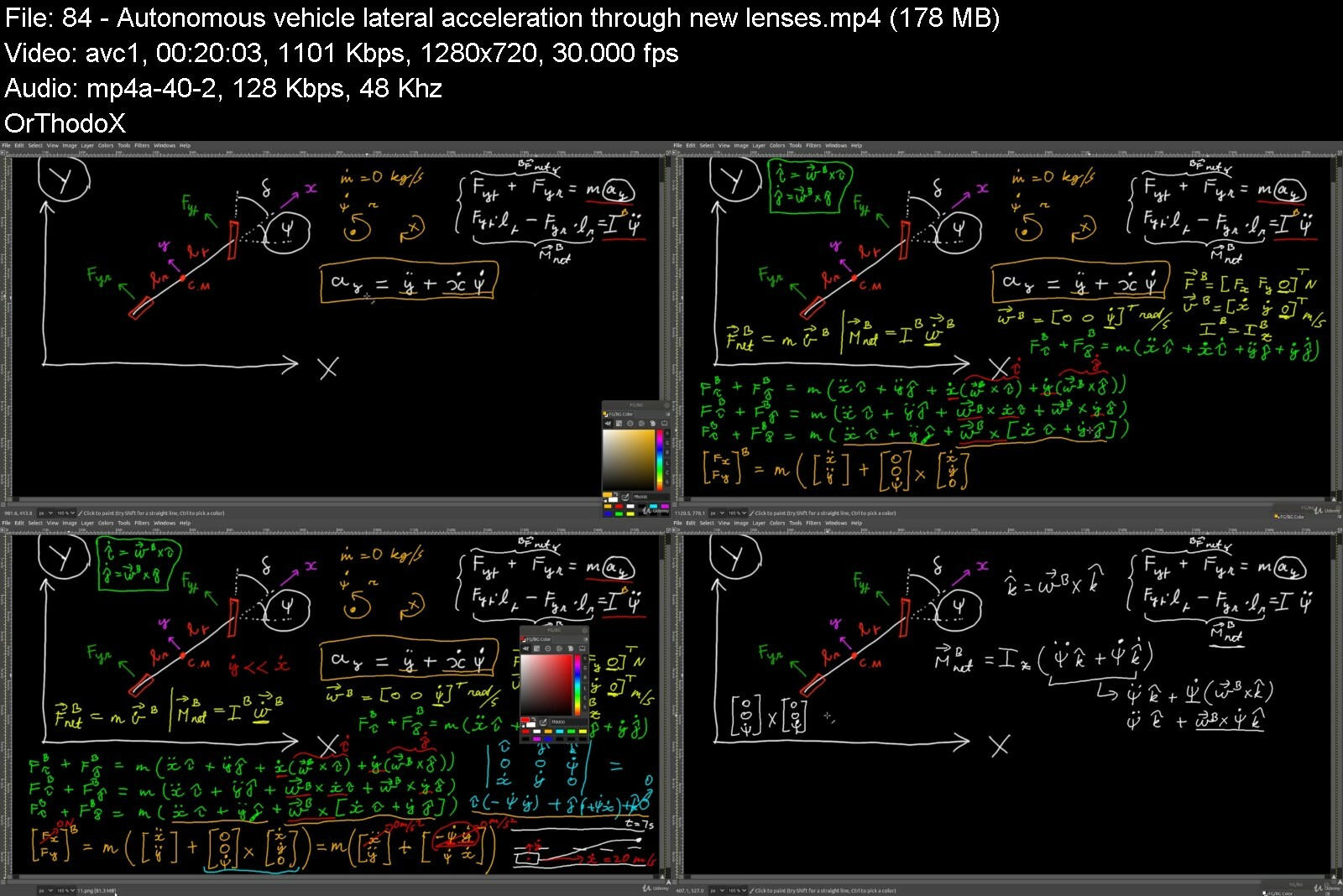
Lecture 84 Autonomous vehicle lateral acceleration through new lenses

Lecture 85 Dynamics: Rotational Motion (Body frame) - alternative form (exercise)

Lecture 86 Dynamics: Rotational Motion (Body frame) - alternative form (solution)

Section 3: Specific UAV plant model

Lecture 87 From 6 DOF Newton-Euler to state-space (exercise)

Lecture 88 From 6 DOF Newton-Euler to state-space (solution)

Lecture 89 Applying Force of gravity to the UAV (exercise)

Lecture 90 Applying Force of gravity to the UAV (solution)

Lecture 91 Applying control inputs to the UAV (exercise)

Lecture 92 Gyroscopic effect intuition + control inputs (solution)

Lecture 93 Gyroscopic effect on a UAV intuition 1 (exercise)

Lecture 94 Gyroscopic effect on a UAV intuition 2 (solution)

Lecture 95 Gyroscopic effect on a UAV - Math 1 (exercise)

Lecture 96 Gyroscopic effect on a UAV - Math 2 (solution)

Lecture 97 Gyroscopic effect on a UAV - Math 3

Lecture 98 Gyroscopic effect on a UAV - Math 4

Lecture 99 From 6 DOF Newton-Euler to state-space - Math 1 (exercise)

Lecture 100 From 6 DOF Newton-Euler to state-space - Math 2 (solution)

Lecture 101 UAV plant model schematics 1 (exercise)

Lecture 102 UAV plant model schematics 2 (solution)

Lecture 103 Euler state integrator

Lecture 104 Runge - Kutta integrator 1

Lecture 105 Runge - Kutta integrator 2

Lecture 106 Runge - Kutta integrator 3

Lecture 107 Runge - Kutta integrator 4

Lecture 108 Runge - Kutta integrator 5

Lecture 109 Runge - Kutta integrator 6

Lecture 110 Runge - Kutta integrator 7

Lecture 111 Runge - Kutta integrator 8

Lecture 112 From control inputs to rotor angular velocities - blade element theory 1

Lecture 113 From control inputs to rotor angular velocities - blade element theory 2

Lecture 114 From control inputs to rotor angular velocities - blade element theory 3

Lecture 115 From control inputs to rotor angular velocities - blade element theory 4

Lecture 116 From control inputs to rotor angular velocities - blade element theory 5

Lecture 117 From control inputs to rotor angular velocities - blade element theory 6

Lecture 118 From control inputs to rotor angular velocities - blade element theory 7

Lecture 119 From control inputs to rotor angular velocities - blade element theory 8

Lecture 120 From control inputs to rotor angular velocities - blade element theory 9

Lecture 121 From control inputs to rotor angular velocities - blade element theory 10

Lecture 122 From control inputs to rotor angular velocities - blade element theory 11

Lecture 123 From control inputs to rotor angular velocities - blade element theory 12

Lecture 124 From control inputs to rotor angular velocities - blade element theory 13

Section 4: Recap of Applied Control Systems 1 - autonomous cars (Math + PID + MPC)

Lecture 125 Detailed recap 1: car & bicycle lateral equations of motion

Lecture 126 Detailed recap 2: LTI state - space equations

Lecture 127 Detailed recap 3: continuous VS discrete LTI

Lecture 128 Detailed recap 4: system input calculation using Model Predictive Control

Section 5: The UAV's global control architecture

Lecture 129 The global control architecture scheme - Intro

Lecture 130 The elements of the sequential/cascaded controller

Lecture 131 Different tasks of each sub-controller

Lecture 132 The Planner

Lecture 133 Stronger VS weaker dynamics 1

Lecture 134 Stronger VS weaker dynamics 2

Lecture 135 Reference trajectory equations in the planner

Lecture 136 The affect of the control inputs on future states

Section 6: The MPC attitude controller

Lecture 137 Review of the global control structure

Lecture 138 Review of the state space equations of the autonomous vehicle

Lecture 139 The UAV's dynamics and kinematics equations revisited

Lecture 140 Zero angle roll and pitch assumption 1

Lecture 141 Zero angle roll and pitch assumption 2

Lecture 142 Putting the state space equations in the Linear format 1

Lecture 143 Putting the state space equations in the Linear format 2

Lecture 144 Putting the state space equations in the Linear format 3

Lecture 145 Putting the state space equations in the Linear format 4

Lecture 146 Linear Parameter Varying form 1

Lecture 147 Linear Parameter Varying form 2

Lecture 148 Review of the steps from the equations of motion to the plant

Lecture 149 The dimensions of the state space equation matrices

Lecture 150 Future state prediction formula 1: simplified LPV-MPC

Lecture 151 Future state prediction formula 2: simplified LPV-MPC

Lecture 152 Future state prediction formula 3: nonsimplified LPV-MPC

Lecture 153 Future state prediction formula 4: nonsimplified LPV-MPC

Lecture 154 Future state prediction formula 5: nonsimplified LPV-MPC

Lecture 155 Cost function 1

Lecture 156 Cost function 2

Lecture 157 Cost function 3

Lecture 158 Cost function 4

Lecture 159 Cost function 5

Lecture 160 Cost function 6

Lecture 161 Cost function 7

Lecture 162 Cost function 8

Lecture 163 Cost function 9

Lecture 164 Cost function 10

Lecture 165 Cost function 11

Section 7: Feedback Linearization Controller

Lecture 166 Equations of motion for position control (inertial frame) - exercise

Lecture 167 Equations of motion for position control (inertial frame) - solution

Lecture 168 General feedback control architecture

Lecture 169 Feedback Linearization Controller schematics - Part 1

Lecture 170 Differential Equations - intro

Lecture 171 Differential Equations & the control law

Lecture 172 Solving differential equations - real roots 1

Lecture 173 Solving differential equations - real roots 2

Lecture 174 Solving differential equations - real roots 3

Lecture 175 Solving differential equations - complex roots 1

Lecture 176 Solving differential equations - complex roots 2

Lecture 177 Solving differential equations - complex roots 3

Lecture 178 Solving differential equations - complex roots 4

Lecture 179 Using the exponent for controlling a system - exercise

Lecture 180 Using the exponent for controlling a system - solution

Lecture 181 Poles & Laplace domain

Lecture 182 From poles to differential equation constants - exercise

Lecture 183 From poles to differential equation constants - solution

Lecture 184 From differential equations to state-space representation

Lecture 185 Eigenvalues in control engineering & Determinants

Lecture 186 Computing eigenvectors

Lecture 187 Laplace VS Fourier frequency domain

Lecture 188 Moving poles

Lecture 189 Feedback Linearization Controller schematics - Part 2

Lecture 190 Simulation results with real & complex poles 1

Lecture 191 Simulation results with real & complex poles 2

Lecture 192 Simulation results with real & complex poles 3

Lecture 193 Feedback Linearization Controller schematics - Part 3

Lecture 194 Final Stretch - computing the final control inputs - Part 1

Lecture 195 Final Stretch - computing the final control inputs - Part 2

Lecture 196 Recommended reading: Great article about Kalman Filters

Section 8: The simulation code explanation

Lecture 197 Intro to (Linux & macOS Terminal) & (Windows Command Prompt)

Lecture 198 Python installation instructions

Lecture 199 Python installation instructions - Windows 10

Lecture 200 Python installation instructions - Ubuntu

Lecture 201 Python installation instructions - macOS

Lecture 202 Simulation analysis & code explanation 1

Lecture 203 Simulation analysis & code explanation 2

Lecture 204 Simulation analysis & code explanation 3

Lecture 205 Simulation analysis & code explanation 4

Lecture 206 Simulation analysis & code explanation 5

Lecture 207 Simulation analysis & code explanation 6

Lecture 208 Simulation analysis & code explanation 7

Lecture 209 Simulation analysis & code explanation 8

Lecture 210 Simulation analysis & code explanation 9

Lecture 211 Simulation analysis & code explanation 10

Lecture 212 Simulation analysis & code explanation 11

Lecture 213 Simulation analysis & code explanation 12

Lecture 214 Simulation analysis & code explanation 13

Lecture 215 Simulation analysis & code explanation 14

Lecture 216 Simulation analysis & code explanation 15

Lecture 217 Basic intro to Python animations tools

Lecture 218 Simulation codes & course summary document

Section 9: Extra: MPC constraints applied to the UAV

Lecture 219 Recap of MPC constraints in autonomous cars 1

Lecture 220 Recap of MPC constraints in autonomous cars 2

Lecture 221 Recap of MPC constraints in autonomous cars 3

Lecture 222 Recap of MPC constraints in autonomous cars 4

Lecture 223 Recap of MPC constraints in autonomous cars 5

Lecture 224 Application of MPC constraints to UAV drone 1

Lecture 225 Application of MPC constraints to UAV drone 2

Lecture 226 Application of MPC constraints to UAV drone 3

Lecture 227 Application of MPC constraints to UAV drone 4

Lecture 228 Application of MPC constraints to UAV drone 5

Lecture 229 No solution example (autonomous cars) 1

Lecture 230 No solution example (autonomous cars) 2

Lecture 231 Installation of solver libraries - Intro

Lecture 232 Installation of solver libraries - Windows 10

Lecture 233 Installation of solver libraries - Ubuntu

Lecture 234 Installation of solver libraries - MacOS

Lecture 235 UAV drone Python files WITH MPC constraints

Lecture 236 MPC constraints for UAV drone - code explanation 1

Lecture 237 MPC constraints for UAV drone - code explanation 2

Lecture 238 MPC constraints for UAV drone - code explanation 3

Lecture 239 MPC constraints for UAV drone - analysis of simulation results

Section 10: Last Words

Lecture 240 Thank You!

Lecture 241 Well done! You've done it! But don't stop here! Keep going forward!

Science and Engineering students,Working Scientists and Engineers,Control Engineering enthusiasts


appliedcontrolsystemshfeoy.jpg


k3fj0sbayrgadz9jzjs5igsiuo.jpg


Signals And Systems Fundamentals
Published 12/2022
MP4 | Video: h264, 1280x720 | Audio: AAC, 44.1 KHz
Language: English | Size: 10.31 GB | Duration: 37h 18m

Learn Signals and Systems Fundamentals from Scratch and Master the theoretical foundations required to process signals


What you'll learn
Understand the fundamentals of the systems sub-area within the field of electrical engineering so as to get excited about the area
Understand and apply the continuous time Fourier transform, discrete time Fourier transform, Laplace transform, and z-Transform, to the analysis and description
Apply the concepts of Fourier series representations to analyze continuous and discrete time periodic signals.
To take advanced courses in the signals and systems area as well as applying the obtained knowledge into practical applications


Requirements
Desire to learn the subject of signals and systems
Knowledge of the Basics to electrical and computer engineering concepts


Description
Course Description of Signals and Systems FundamentalsThe course provides students with a comprehensive detailed introduction to the analysis of continuous and discrete-time signals and systems.Linear time-invariant systemsSignals Convolution and CorrelationFourier series representations of periodic signalsContinuous time and discrete time Fourier transformsLaplace transformZ-transform conceptFast Fourier transform (FFT) The COURSE GOALS are basically to provide an introduction to sophomores in the field of electrical engineering to the fundamental concepts in the sub-area of signals and systems. This course will be one of five fundamentals courses required of all electrical engineering majors. Another goal is to prepare students to take some more advanced courses in the area of signals and systems, namely in signal and image processing, and networks, communication and control.COURSE OBJECTIVES: When a student completes this course, s/he should be able to: Understand the fundamentals of the systems sub-area within the field of electrical engineering so as to get excited about the area. Understand linear time invariant systems. Apply the concepts of Fourier series representations to analyze continuous and discrete time periodic signals. Understand and apply the continuous time Fourier transform, discrete time Fourier transform, Laplace transform, and z-Transform, to the analysis and description of LTI continuous and discrete-time systems. To take advanced courses in the systems area.DETAILED COURSE TOPICS:1. Signals and Systems: Continuous-time and discrete-time signals; commonly encountered signals; unit impulse and unit step functions; sampling and aliasing; continuous-time and discrete-time systems; basic properties.2. Linear Time-Invariant (LTI) Systems: The convolution sum; the convolution integral; properties; difference and differential equations.3. Fourier Series Representation of Periodic Signals: Continuous and discrete-time periodic signals; properties of continuous and discrete-time Fourier series; Fourier series and LTIsystems.4. Continuous-Time Fourier Transform: Properties; convolution and multiplication properties.5. Discrete-Time Fourier Transform: Properties; convolution and multiplication properties.6. Laplace Transform: Region of convergence; inverse Laplace transform; properties; analysis of LTI systems using the Laplace transform.7. z-Transform: Region of convergence; inverse z-transform; properties; analysis of LTI systems using the z-transform.COMPUTER USAGE: Programming assignments using MATLAB on PCs to reinforce concepts learned in class.HOMEWORK ASSIGNMENTS: Homeworks to reinforce the concepts learned in class .REQUIRED TEXT: A. V. Oppenheim and A. S. Willsky (with S. H. Nawab), Signals and Systems , Prentice Hall, 2 nd edition, 1997.PREREQUISITES BY TOPIC: Basic introduction to electrical engineering concepts

Overview
Section 1: Introduction and review of pre-requisite concepts in signal and systems

Lecture 1 Fourier transform of rectangular pulse

Lecture 2 Autocorrelation function and Power Spectral Density

Lecture 3 Frequency response and impulse response

Lecture 4 Impulse response and causality

Lecture 5 Relation between Laplace transform Fourier transform z-transform DTFT DFT & FFT

Lecture 6 Why cant an ideal filter be implemented in practice

Lecture 7 Time domain sampling - analytical representation

Section 2: Signals and Systems

Lecture 8 L1 Real sinusoidal and exponential signals

Lecture 9 L2 Complex exponential unit impulse and unit step signals

Lecture 10 L3 Complex exponential unit impulse and unit step functions

Lecture 11 L4 Periodic signals even and odd signals.mp4

Lecture 12 L5 Transformation of Independent variable - continuous time.mp4

Lecture 13 L6 Transformation of independent variable- Continuous time and discrete time exa

Lecture 14 L7 Transformation of independent variable - Discrete Time example.mp4

Lecture 15 L8 Relationship between Unit impulse and unit step functions Introduction to sys

Lecture 16 L9 System properties - memory invertibility and causality.mp4

Lecture 17 L10 System properties - Stability Time Invariance and Linearity.mp4

Lecture 18 L11 Linearity and linear systems with examples.mp4

Lecture 19 L12 LTI systems - impulse response and convolution.mp4

Lecture 20 L13 Convolution in Discrete Time.mp4

Lecture 21 L14 Convolution continuous time.mp4

Lecture 22 L15 Properties of LTI systemsconvolution.mp4

Lecture 23 L15 Properties of LTI systemsconvolution.mp4

Lecture 24 L17 Unit step response and introduction to Fourier series.mp4

Lecture 25 L18 Fourier series motivation and theory.mp4

Lecture 26 L19 Fourier series - Exponential form and sine-cosine form.mp4

Lecture 27 L20 Dirichlets conditions and properties of Fourier series.mp4

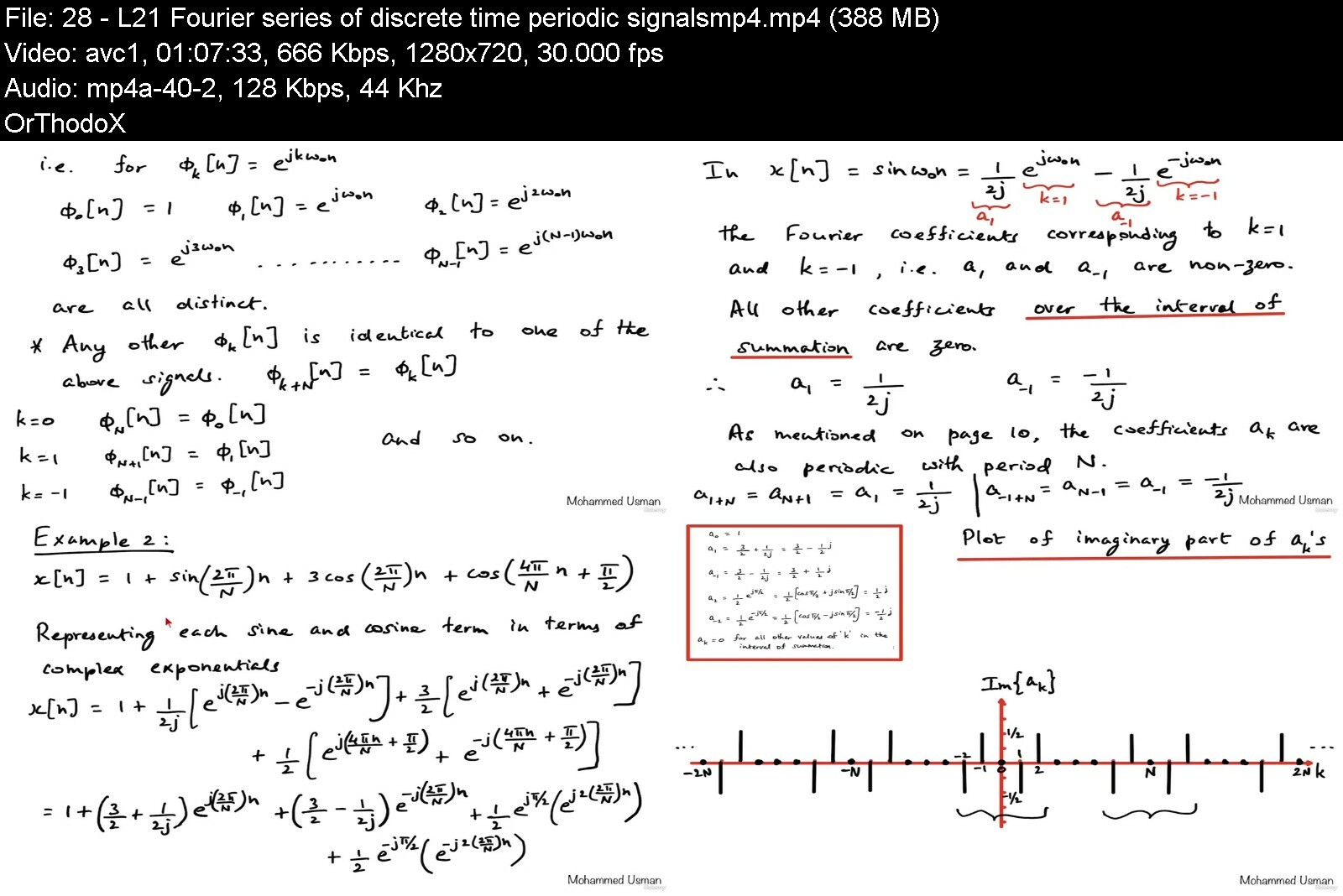
Lecture 28 L21 Fourier series of discrete time periodic signals.mp4

Lecture 29 Fourier series coefficient calculations

Lecture 30 Geometric representation of signals

Lecture 31 Gram Schmidt orthogonalization

Section 3: Digital Communication Fundamentals

Lecture 32 Introduction to Digital Communication

Lecture 33 Sampling reconstruction & Aliasing

Lecture 34 Quantization quantization noise signal to quantization noise power ratio

Lecture 35 Quantization SNR and PCM

Lecture 36 PCM word size and Baseband signaling - Line codes

Lecture 37 Processing gain in DPCM and Delta Modulation

Lecture 38 Slope overload in Delta Modulation

Lecture 39 Gaussian noise

Lecture 40 White Gaussian Noise

Lecture 41 Signal detection in the presence of AWGN - Binary Unipolar

Lecture 42 Error probability with binary polar signaling

Lecture 43 Error probability for M-ary signaling with M = 4

Lecture 44 Error probability with M-ary signaling over AWGN channel

Lecture 45 '

Lecture 46 Spectrum - Fourier analysis

Computer Engineering Students,Electrical Engineering Students,Telecommunication Engineering Students,Signal app developers and programmers


Homepage


signalsandsystemsfundkjdji.jpg


4965362a7baraefr.jpg


English for Elementary| Beginner Level (A1) (2022)
Published 12/2022
Created by Andrew Semchenko
MP4 | Video: h264, 1280x720 | Audio: AAC, 44.1 KHz, 2 Ch
Genre: eLearning | Language: English | Duration: 221 Lectures ( 24h 32m ) | Size: 28.9 GB


English for Elementary | Beginner Level


What you'll learn
Basic English lexis
Rules of pronunciation
Grammar rules
Words and expressions that are often misused

Requirements
No language experience needed. You will learn everything you need to know.

Description
English Club TV is dedicated to teaching English online by integrating a ground breaking approach to self-learning. Elementary (A1) shows offer educational material designed by experts based in the UK. Each module is designed to ensure students understand English, learn grammar effortlessly, overcome language barriers and learn exact words and terms.Students looking to improve English will find English lessons based on their current comprehension levels. Self-evaluation determines these levels on a test categorized into five distinct levels i.e. Elementary, Pre-Intermediate, Intermediate, Upper-Intermediate and Advanced.The Elementary level also known as A1, covers four base modules: Listening Skills, Speaking Skills, Vocabulary Expansion and Grammar. Each level imparts its knowledge in specially designed English video lessons as shows and episodes centering on current affairs and day to day interactions.The English Club Global is a group of production, education and distribution companies that operates worldwide in the field of the English language, teaching under the brands ENGLISH CLUB TV and ECTV. English Club TV is an educational channel for those who study English. All programmes have been developed by experienced methodologists and have an educational aspect. The English Club TV channel is covering European, Asian and African continents. English Club TV HD is the high definition simulcast of the English Club TV channel. English Club TV HD was launched in January 2013.

Who this course is for
Everybody who wants to learn English language


englishforelementarybikibr.jpg


987d84bf3091e6f6cd2619liau.jpg


TTC - Learning German: A Journey through Language and Culture
Last updated 12/2022
MP4 | Video: h264, 1280x720 | Audio: AAC, 44.1 KHz, 2 Ch
Genre: eLearning | Language: English | Duration: 30 Lessons (13h 36m) | Size: 11.4 GB


Learning a new language is an adventure like no other. Sounds that were once gibberish start to make sense. Words and cultures come alive. And visions of foreign travel begin to take shape

And yet, the first step in learning a new language can be daunting. Maybe you've convinced yourself into believing, I'm just not good at languages, or My days of learning are behind me. Or maybe you've decided that, It's just too much work to start from scratch.

While it's true that there is no effortless route to learning a language, an inspiring teacher makes all the difference. With the right instructor to guide you, these doubts and hesitations disappear. And what can be an ordeal of memorization and drills turns into an accessible and entertaining adventure!

Consider German. It's one of the world's most important conversational, commercial, and literary languages and also one of the most challenging to master, which makes a superb teacher truly vital. On the one hand, German and English are both Germanic languages and share a lot of vocabulary: Mutter, Vater, Hund, and Katze are probably words you already recognize. On the other hand, unlike the Romance languages, German has case endings, three grammatical genders, and very particular rules for its word order.

German, you might say, has gotten a reputation for being difficult.

But Keine Panik! (Don't panic!) says award-winning Professor James Pfrehm in Learning German: A Journey through Language and Culture. With crystal-clear explanations and a cache of insider tricks, he conducts you through a full year of college-level German in 30 delightful, half-hour lessons. And with Professor Pfrehm's engaging and entertaining teaching style, you will actually want to repeat each lesson!

You'll learn all the skills needed to understand and speak basic German: from its sounds and vocabulary to its wondrously challenging grammar. You'll be able to engage with films, literature, and other media in German. And most important, you'll be ready to travel to any German-speaking country whether it's Germany, Austria, Switzerland, or others. The signs, menus, greetings, and customs will be more meaningful to you, and you'll be equipped to converse at an elementary level.

In short, you'll be well on your way to forging your very own journey through the German language!

Learner-Friendly Features

An Associate Professor of German and Linguistics at Ithaca College in Upstate New York, Professor Pfrehm enlivens his presentation with learner-friendly features, such as these

Take It Slowly: Rather than just throwing you into the deep end with an overwhelming full immersion experience, Professor Pfrehm mixes authentic examples of German with straightforward explanations in English. As the course proceeds, the examples get longer, the vocabulary richer, and the grammar more complex, but he never leaves you floundering or feeling lost.
Travel Tips: Many lessons in this course include a short dialogue starring two animated German tourists, Ralf and Mia, voiced by German actors whose accents can help you develop your own. You'll get to know new grammar, along with Rolf and Mia's foibles, as they take in urban, natural, and cultural attractions in Germany, Austria, and Switzerland, giving you a preview of popular points of interest for your own travels.
Learning Should Be Fun: Professor Pfrehm has perfected the art of educating through entertainment. He dresses up as Father Christmas and sings a carol to demonstrate a new type of dependent clause; delivers a newscast on current events featuring genitive case constructions; and in a pair of lessons, he narrates a thrilling animated fairy tale to drive home the simple past tense.
Workbook: To get the most out of the course, you'll want to use the accompanying workbook. Each lesson has a grammar summary, grammar exercises, vocabulary, vocabulary exercises, answer keys, and the German text of the dialogues along with translations. The workbook also includes a resources section with recommended German dictionaries, cultural books, and language apps.
Throughout Learning German: A Journey through Language and Culture, vocabulary and grammar examples appear on-screen in German with translations, allowing you to pause the video to review new material and let it sink in. An especially valuable feature is that the listening-comprehension element a standard component of most language courses is baked in, meaning that it's integrated directly into the lessons. As a result, you hear increasingly long extracts of spoken German via the dialogues, stories, skits, and other pieces, always with Professor Pfrehm's explanations in English before and after.

A Cultural and Linguistic Journey

Professor Pfrehm is an American who fell in love with the German language in college and has visited German-speaking countries repeatedly ever since. Impressively fluent, he has absorbed the culture with enthusiasm and understanding. And since he remembers the frustrations of being a beginner, he tailors his lessons to anticipate the most frequent pitfalls and trouble spots, doing this with a teaching approach that echoes the exciting experience of learning German in a natural setting.

For example, you start the course with the all-purpose greeting, Guten Tag (Good Day), paying attention to German's pure u tone, which is unlike the yew sound in English. But let's say you're in southern Germany or Austria. There, the usual salutation is Gr Gott, which has (u with an umlaut). Professor Pfrehm demonstrates how to move your lips and tongue to make this very distinctive German sound. Accordingly, you proceed through the alphabet, learning useful vocabulary and how to pronounce it like a native speaker. And if you know nothing else, a simple Guten Tag or Gr Gott is a surefire way to break the ice during your travels in the German-speaking world.

Of course, you go much, much farther in Learning German: A Journey through Language and Culture. You'll plunge deep into the fascinating grammar and sentence structure of the language, along the way picking up cultural pointers such as these

Berlin, City of Contrasts: Devasted during World War II and divided by the Berlin Wall during the Cold War, Berlin is now the glittering capital of a reunited Germany. In the course of a lesson on the subjunctive mood, Professor Pfrehm gives you detailed suggestions on what to do in this endlessly interesting city.
Out on the Town: Other cities you visit include Munich, Hamburg, Vienna, Salzburg, and Z rich. Your lessons in urban adventure include ordering drinks and coffee; toasting your new friends at Munich's Oktoberfest; visiting a Swiss chocolate factory; listening to popular German recording artists; and previewing three, must-see German films.
Practical Skills: Professor Pfrehm instructs you in Germany's many typical civic duties and activities. Your vocabulary lessons also feature shopping for clothes, names for parts of the body, how to tell a doctor what's ailing you, giving directions and understanding them, telling time, and counting up to a billion.
A Remarkable Walk: When you visit Germany's North Sea coast, you'll want to take off your shoes, roll up your trousers, and venture out into a vast intertidal zone called the Wattenmeer. Butseid bitte vorsichtig (please be careful) an imperative instruction you learn in this lesson since you don't want to get caught by the rising tide!
Professor Pfrehm refers to these 30 lessons as a journey rather than a course or class. That's because learning a foreign language really is a journey. A journey has twists and turns. Milestones and mistakes. And most of all, journeys are full of surprises. Your biggest surprise with Learning German: A Journey through Language and Culture may be that the language is easier and more rewarding than you ever imagined.

What Will You Learn?
Discover the beauty of the German language and the rigor of its grammar.

Explore major cities and tourist destinations in Germany, Austria, and Switzerland.

Encounter German native speakers and gain insights into their culture.

Learn tricks for mastering German case endings and irregular verb forms.

Get tips on the hottest German pop stars and must-see German films.

Hear a gruesome fairy tale with a happy ending-in German.


learninggermanajourne8air2.jpg


wirelesscommunicationpmiyf.jpg


Wireless Communications: From Theory to Practice
Last Updated 12/2022
Genre: eLearning | MP4 | Video: h264, 1280x720 | Audio: AAC, 44.1 KHz
Language: English | Size: 15.1 GB | Duration: 74 lectures 22h 1m


What you'll learn
Learn the fundamentals of Statistical analysis and characteristics of communication channels.
Learn multiple access schemes, diversity, equalization, modulation, and coding concepts.
Learn the Estimation of capacity and performance for wireless channels.
Acquire the ability to interpret and design multi-carrier (OFDM) digital cellular systems.
Learn Probabilistic analysis and synthesis of wireless and cellular communication systems.
Acquire the ability to interpret and design multi-input multi-output (MIMO) systems.


Requirements
True desire to learn about wireless communications
Basic knowledge in Mathematics
Basic knowledge in signal processing
Familiarity with coding or programing

Description
Wireless Communication Principles Basics to Advanced.

If you want to prepare yourself to work in companies like NOKIA, HUAWEI, SAMSUNG, APPLE, GOOGLE, FACEBOOK, MICROSOFT, ERICSSON, QUALCOMM, INTEL, ZTE, etc. Then, this course is just for you.

Introduction to wireless communication covers IMPORTANT topics related to transceiver structure and wireless medium characteristics including path loss and shadowing, statistical multi-path channel models, the capacity of wireless channels, digital modulation techniques and their performance analyses in the wireless medium, diversity methods, coding techniques, multicarrier systems (OFDM), multiple antennas (MIMO) and Spatio-temporal analysis, multi carrier-based modulation, spread spectrum analysis, multi-user systems, cellular systems, and wireless networks.

More specifically, the covered topics in the course are listed as follows

L0 The course content (main topics) and some details about evaluation criteria

19:27

L1 P1 Brief introduction to wireless communication and background

41:56

L1 P2 Brief introduction to wireless communication and background

1:05:36

L1 -P3 Introduction to wireless mobile communication systems

35:05

L2 Wireless Propagation Characteristics: (Large scale / Path-loss & Shadowing Models)

56:38

L3 Wireless Propagation characteristics: shadowing, outage performance, & measurement vs statistical models

14:24

L4 Wireless Propagation Characteristics: (Multipath Narrow-Band Model)

33:30

L5 Wireless Propagation Characteristics: (Multipath Wide-Band Model, Time-varying Impulse Response & Delay-Doppler Model)

29:23

L6 Wireless Propagation Characteristics: Fading, Power Delay Profile & Doppler Power Spectrum Density

54:00

L7: Capacity of Flat-Fading Channels

42:49

L8: Capacity of Frequency Selective Fading Channels

53:13

L9: Linear Modulation and Outage Probability over Fading Channels

13:20

L10: Effect of Fading, Doppler, and Delay Spread on Average Outage Probability

13:27

L11: Diversity in wireless communication: concept and techniques

1:22:51

L12: Adaptive Modulation in wireless communication: concept and approaches

48:25

L13: Multiple Input Multiple Output (MIMO) Systems

43:45

L14: Techniques for Overcoming Interference in Wireless Systems: OFDM, WCDMA, Equalization, Multiuser Networks (multiple access and random access)

52:41

L15: Spread spectrum and multi-user communication in wireless cellular systems

50:57

L16 OFDM in Details. Why should you know it? What is it? and What are its merits/advantages & demerits?

1:17:00

L17 OFDM Simulation Using Matlab Software: Full Tutorial

1:44:35

L18: Wireless Channel Estimation

39:03

L19: Multi-layer precoding for MIMO

17:03

L20: Modelling Wireless Channels

15:07

L21: Building a complete OFDM model that can send and receive real-time signals carrying IP packets

20:17

L22: Build Advance NFM SCOPE Receiver with real-time Recorder GNU-RADIO Win10

1:16:38

The Story of communication systems evolution from an information theory perspective

======== About the Insturctor =

Jehad M. HAMAMREH is the Founder and Director of WISLABi/com, Editor at Researcherstore/com & RS-OJICT journal, as well as A. Professor with Electrical and Computer Engineering Department, Antalya International (Bilim) University. He earned his Ph.D. degree in Telecommunication Engineering and Cyber-Systems from Medipol University. Previously, he worked as a Researcher at the Department of Electrical and Computer Engineering at Texas A&M University. He is the inventor of more than 20 Patents and has authored more than 90 peer-reviewed scientific papers along with several book chapters. His innovative patented works won the gold, silver, and bronze medals in numerous international invention contests and fairs.

His current research interests include Wireless Communication, Wireless Security, Wireless Sensing, O-RAN, 5G/6G, IoT, AI/ML, wireless physical and MAC layers security, orthogonal frequency-division multiplexing (OFDM), multiple-input multiple-output systems (MIMO), advanced waveforms design, multidimensional modulation techniques, and orthogonal/non-orthogonal multiple access schemes for future wireless systems. He is a regular investigator and a referee for various scientific journals as well as a TPC member for several international conferences. He is an Editor at RS-OJICT and Frontiers in Communications and Networks.

Key Research Topics: Wireless Communication, Wireless Security, Wireless Sensing, Open RAN, 5G/6G, IoT-AI

Who this course is for
Anyone interested in the topic of wireless communications
Telecommunication Engineers
Electrical Engineers
Computer Engineers


wirelesscommunicationhxezu.jpg


xku3s72gglvevrgbsltfjoccpa.jpg


Learn Sanskrit Language (Samskrutam) - The Complete Guide
Published 11/2022
MP4 | Video: h264, 1280x720 | Audio: AAC, 44.1 KHz
Language: English | Size: 12.37 GB | Duration: 12h 54m

Learn Sanskrit from scratch and master the language from beginner to advanced level.


What you'll learn
Easy to learn and understand lectures - structured into proper sections for smooth learning
From speaking. writing, pronouncing alphabets to advanced concepts like Tenses and Indeclinables
Complete section on root words ( )
Past-Present-Future tenses with examples
Vowels, Consonants, Visarga & Anuswar (Anunaasik Varna), Vibhakti, Prefixes, etc.
Advanced Sanskrit Grammar topics
More than 150+ quizzes and practical examples on each topic

Requirements
No prior knowledge of Sanskrit language is required.

Description
This course can be considered the ultimate guide for learners who want to learn and master Sanskrit language. This ancient language contains a vast treasure of knowledge which can be practiced and learned to become a PRO!It is meticulously designed keeping in mind the structure of how a language is taught! Following the structure is important so as to get your basics right first and then proceed step by step to more advanced concepts.There are sections dedicated to each topic such as alphabets, vowels, consonants, visarga & anuswar (anunaasik varna), conversations, names (noun), days & time, numbers, actions/verbs, indeclinables, vibhakti, tenses[all essential tenses], participles, prefixes, root words, fables etc.- each section is loaded with examples on how to use them in basic conversations. On top of that, we have drafted smart quizzes for you to test your knowledge about that particular topic. Don t worry if you do not get it all correct at first. Go through the lecture again and have a go at the quiz again!We are confident that by the end of this course (if you have gone through the entire course diligently), you ll be able to easily hold a conversation and read and interpret Sanskrit texts easily!We all know that Sanskrit is widely used in prayers and meditation as well as modern literature and music - let s start a wave of Sanskrit learning which will bring back this ancient language and give it - its due respect!

Overview
Section 1: Introduction -

Lecture 1 Mangalaacharana

Lecture 2 Miraculous fact about Samskrutam

Section 2: Alphabets -

Lecture 3 Ka -

Lecture 4 Kha -

Lecture 5 Ga -

Lecture 6 Gha -

Lecture 7 Ng -

Lecture 8 Cha -

Lecture 9 Chha -

Lecture 10 Ja -

Lecture 11 Jha -

Lecture 12 Nya -

Lecture 13 Ta -

Lecture 14 Tha -

Lecture 15 Da -

Lecture 16 Dha -

Lecture 17 Na -

Lecture 18 Ta -

Lecture 19 Tha -

Lecture 20 Da -

Lecture 21 Dha -

Lecture 22 Na -

Lecture 23 Pa -

Lecture 24 Pha -

Lecture 25 Ba -

Lecture 26 Bha -

Lecture 27 Ma -

Lecture 28 Ya -

Lecture 29 Ra -

Lecture 30 La -

Lecture 31 Va -

Lecture 32 Sha -

Lecture 33 Sha -

Lecture 34 Sa -

Lecture 35 Ha -

Lecture 36 Ksha -

Lecture 37 Jnya -

Section 3: Vowels ( ) & Consonants ( )

Lecture 38 (Vowel), (Consonant) & (Vowel-less consonant)

Lecture 39 Short "U" & long "U" - &

Lecture 40 Short "E" & long "E" - &

Lecture 41 "Ae" & "Ai" sounds - &

Section 4: Basic Conversation -

Lecture 42 Introduction

Lecture 43 Greetings

Lecture 44 How to speak "I am"

Lecture 45 Speaking "You are" for elders or with respect

Lecture 46 Speaking "You are" for younger people or friends

Lecture 47 Practice video 1

Lecture 48 How to speak "He"

Lecture 49 How to speak "She"

Lecture 50 How to speak "It"

Lecture 51 Basic manners

Lecture 52 Practice video 2

Lecture 53 Noun

Lecture 54 Practice video 3

Lecture 55 Gender

Lecture 56 Practice video 4

Lecture 57 Singular, Dual and plural

Lecture 58 Masculine names

Lecture 59 Feminine names

Lecture 60 Neuter names

Lecture 61 Practice video 5

Lecture 62 I/We(2)/We(many)

Lecture 63 Practice video 6

Lecture 64 You are - Singular, dual and plural (Bhavan Bhavati)

Lecture 65 You are 2 - Singular,dual and plural (Tvam)

Lecture 66 Practice video 7

Lecture 67 He - Singular, dual and plural

Lecture 68 She - Singular,dual and plural

Lecture 69 It - Singular,dual and plural

Lecture 70 Practice video 8

Lecture 71 How to speak "Who" (masculine)

Lecture 72 How to speak "Who" (feminine)

Lecture 73 How to speak "Who" (neuter)

Lecture 74 How to speak "The one who does" (masculine)

Lecture 75 How to speak "The one who does" (feminine)

Lecture 76 How to speak "The one who does" (neuter)

Section 5: Names -

Lecture 77 Names of fruits

Lecture 78 Names of dry fruits

Lecture 79 Names of vegetables

Lecture 80 Names of birds

Lecture 81 Names of animals - Part 1

Lecture 82 Names of animals - Part 2

Lecture 83 Names of animals - Part 3

Lecture 84 Body parts - Parts of face

Lecture 85 Body parts - Parts of hand

Lecture 86 Body parts - Parts of torso

Lecture 87 Body parts - Parts of leg

Lecture 88 Names of inner body parts

Lecture 89 Names of flowers

Lecture 90 Names of household items

Lecture 91 Names of kitchen items

Lecture 92 Names of worms and insects

Lecture 93 Sky

Section 6: Days & Time - -

Lecture 94 Time - Part 1

Lecture 95 Time - Part 2

Lecture 96 Time - Part 3

Lecture 97 Week days

Lecture 98 Today, Tomorrow, Day after tomorrow, etc.

Lecture 99 Yesterday, Day before yesterday, etc.

Lecture 100 Everyday

Lecture 101 Numbers 1 to 10

Lecture 102 Numbers 11 to 20

Lecture 103 Numbers 21 to 30

Lecture 104 Numbers 31 to 40

Lecture 105 Numbers 41 to 50

Lecture 106 Numbers 51 to 60

Lecture 107 Numbers 61 to 70

Lecture 108 Numbers 71 to 80

Lecture 109 Numbers 81 to 90

Lecture 110 Numbers 91 to 100

Section 7: Actions/Verbs - Part 1 -

Lecture 111 Introduction

Lecture 112 I am (singular) - Going, Coming & Walking

Lecture 113 You are (singular) - Going, Coming & Walking

Lecture 114 He (singular) - Going, Coming & Walking

Lecture 115 She (singular) - Going, Coming & Walking

Lecture 116 It (singular) - Going, Coming & Moving

Lecture 117 We are (dual) - Going, Coming & Walking

Lecture 118 You are (dual) - Going, Coming & Walking

Lecture 119 He (dual) - Going, Coming & Walking

Lecture 120 She (dual) - Going, Coming & Walking

Lecture 121 It (dual) - Going, Coming & Moving

Lecture 122 We are (plural) - Going, Coming & Walking

Lecture 123 You are (plural) - Going, Coming & Walking

Lecture 124 They (He - plural) - Going, Coming & Walking

Lecture 125 They (She - plural) - Going, Coming & Walking

Lecture 126 It (plural) - Going, Coming & Moving

Lecture 127 Looking

Lecture 128 Cooking

Lecture 129 Drinking

Lecture 130 Eating

Lecture 131 Running

Lecture 132 Speaking

Lecture 133 Throwing

Lecture 134 Writing

Lecture 135 Playing

Lecture 136 Buying

Lecture 137 To be

Section 8: Indeclinables -

Lecture 138 Introduction

Lecture 139 Where -

Lecture 140 When -

Lecture 141 Here -

Lecture 142 Always -

Lecture 143 Also -

Lecture 144 There -

Lecture 145 Everywhere -

Lecture 146 When or whenever and then - -

Lecture 147 / - Or

Lecture 148 Whence (from where) -

Lecture 149 What -

Lecture 150 How -

Lecture 151 From where -

Section 9: Introduction to vibhakti -

Lecture 152 - Vibhakti

Section 10: 2nd Vibhakti -

Lecture 153 Dwitiyaa Vibhakti Inroduction

Lecture 154 To/at me/us - / /

Lecture 155 "To/at you - / / " (for younger people & friends)

Lecture 156 To/at you - / (for elders or with respect)

Lecture 157 To/at him - / / "

Lecture 158 How to speak- "To/at her"?

Lecture 159 How to speak "To/at it"?

Lecture 160 To/at person: ( Noun - Masculine)

Lecture 161 To/at person: ( Noun - Femenine)

Lecture 162 To/at person: ( Noun - Neuter)

Lecture 163 - - (Who, whom, by whom etc.): Introduction

Lecture 164 To/at "Who, whom, whose etc." (Masculine)

Lecture 165 To/at "Who, whom, whose etc." (Feminine)

Lecture 166 To/at "Who, whom, whose etc." (Neuter)

Lecture 167 - - Introduction

Lecture 168 The one whom... - , , (Masculine)

Lecture 169 The one whom...- / / (Feminine)

Lecture 170 The one whom...- / / (Neuter)

Section 11: 3rd Vibhakti -

Lecture 171 Trutiyaa Vibhakti Introduction

Lecture 172 By/with/without me -

Lecture 173 By/with/without you - " (for younger people & friends)

Lecture 174 By/with/without you - / (for elders or with respect)

Lecture 175 How to speak "By/with/without him & it"

Lecture 176 By/with/without her - / /

Lecture 177 By/with/without person or object (Noun - neuter & masculine)

Lecture 178 By/with/without person (Noun - feminine)

Lecture 179 By/with/without who, whom, whose etc. - / / (Masculine & neuter)

Lecture 180 By/with/without who, whom, whose etc. - / / (Feminine)

Lecture 181 By/with/without the one whom... - / / (Feminine)

Section 12: 4th Vibhakti -

Lecture 182 Chaturthee vibhakti introduction

Lecture 183 For me/For (both of) us /Us - / /

Lecture 184 For you - / / (for younger people)

Lecture 185 For you - / (for elders or with respect)

Lecture 186 For him/it/they- / /

Lecture 187 For her/them - / , / , :/

Lecture 188 For person or object: ( Noun - Masculine & neuter)

Lecture 189 For person: ( Noun - Feminine)

Lecture 190 For Who, whom ....... - / / (Masculine & neuter)

Lecture 191 For Who, whom ....... - / / (Feminine)

Lecture 192 For the one whom... - / / (Masculine & neuter)"

Lecture 193 For the one whom... / / (Feminine)

Section 13: 5th Vibhakti -

Lecture 194 Panchamee vibhakti introduction

Lecture 195 Indeclinables used with Panchamee vibhakti

Lecture 196 From me/us - / /

Lecture 197 From you - / / (for younger people & friends)

Lecture 198 For you - / / , / / (for elders)

Lecture 199 From him/it/them - / (Masculine & neuter)

Lecture 200 From her/them - / , / , /

Lecture 201 From person(s) or object(s): (Noun - masculine & neuter)

Lecture 202 From person(s): (Feminine)

Lecture 203 From whom, who, whose etc. - / / (Masculine & neuter)

Lecture 204 From whom, who, whose etc. - / / (Feminine)

Lecture 205 From the one whom... / / (Masculine & neuter)

Lecture 206 From the one whom... - / / (Feminine)

Section 14: 6th Vibhakti -

Lecture 207 Shashthee vibhakti introduction

Lecture 208 Indeclinables used with Shashthee vibhakti

Lecture 209 My,our- , ,

Lecture 210 Your (Singular,dual & plural) - , , (For younger)

Lecture 211 Your (Singular,dual & plural) - \ (For elders or with respect)

Lecture 212 His/it's - / / /

Lecture 213 Her - / , / , /

Lecture 214 Masculine's & neuter's

Lecture 215 Feminine's

Lecture 216 Whose ... - / / (Masculine & neuter)

Lecture 217 Whose... - / / (Feminine)

Lecture 218 The one whose... - / / (Masculine & neuter)

Lecture 219 The one whose... - / / (Feminine)

Section 15: 7th Vibhakti -

Lecture 220 Saptamee vibhakti introduction

Lecture 221 Comparision with the Saptamee vibhakti

Lecture 222 Respect, trust & faith with Saptamee vibhakti

Lecture 223 Verbs used with Saptamee vibhakti

Lecture 224 In/on me/us - / /

Lecture 225 In/on you - / / (For the younger people & friends)

Lecture 226 In/on you - / / , / / (For older people)

Lecture 227 In/on - him/it/them - / / /

Lecture 228 In/on her or In/on them - / , / , /

Lecture 229 In/on person (Noun - masculne & neuter)

Lecture 230 In/on person (Noun - feminine)

Lecture 231 In/on whom or which... / / (Masculine & neuter)

Lecture 232 In/on whom or which - / / (Feminine)

Lecture 233 In/on the one whom or which - / / (Masculine & neuter)

Lecture 234 In/on the one whom - / / (Feminine)

Section 16: Addressing people -

Lecture 235 Sambodhana / Asthmee vibhakti introduction

Lecture 236 Sambodhan for masculine nouns

Lecture 237 Sambodhan for feminine nouns

Section 17: Word endings - &

Lecture 238 - Word ending with a vowel

Lecture 239 - Word ending with a consonant

Lecture 240 & - All genders -

Lecture 241 & - All genders -

Lecture 242 , - All genders -

Lecture 243 - All genders -

Lecture 244 & - All genders -

Lecture 245 & - All genders -

Lecture 246 - All genders -

Lecture 247 & - All genders -

Lecture 248 , & others - All genders -

Lecture 249 - All genders -

Lecture 250 & - All genders -

Lecture 251 & - All genders -

Lecture 252 , & others - All gender -

Lecture 253 - All genders -

Lecture 254 & - All genders -

Lecture 255 - All genders -

Lecture 256 & - All genders -

Lecture 257 & - All genders -

Lecture 258 , & others - All genders -

Lecture 259 - All genders -

Section 18: Introduction to tenses -

Lecture 260 Introduction to tenses -

Lecture 261 Revisiting present tense -

Section 19: Future tense -

Lecture 262 Future tense Introduction -

Lecture 263 (Will go) & (Will come)

Lecture 264 (Will walk) & (Will laugh)

Lecture 265 (Will write) & (Will read)

Lecture 266 (Will drink) & (Will look/see)

Lecture 267 (Will stand) & (Will sit)

Lecture 268 Miscellaneous verbs practice - Part 1

Lecture 269 Miscellaneous verbs practice - Part 2

Section 20: Prefixes -

Lecture 270 : - Prefix

Section 21: Past tense -

Lecture 271 (Went) & (Came)

Lecture 272 (Walked) & (Laughed)

Lecture 273 (Wrote) & (Read)

Lecture 274 (Drank) & (Looked/saw)

Lecture 275 (Stood) & (Sat)

Lecture 276 Miscellaneous verbs - Part 1

Lecture 277 Miscellaneous verbs - Part 2

Section 22: Actions/Verbs - Part 2 -

Lecture 278 To Fall -

Lecture 279 To listen -

Lecture 280 To clean -

Lecture 281 To stand -

Lecture 282 To sit -

Lecture 283 To bring -

Lecture 284 To know -

Section 23: Indeclinables - Part 2 -

Lecture 285 , & - Like

Lecture 286 & - With

Lecture 287 - Without

Learners who want to learn Sanskrit language from scratch.,Sanskrit learning students who want to strengthen their knowledge about the subject.,Learners who want to pursue higher education with Sanskrit as the medium.,Language enthusiasts who want to learn a new language.,Sanskrit language lovers!


learnsanskritlanguagedbfc2.jpg


3trteuihpuaopyhvaayynjef29.png


TTC - Learning Japanese: A Gateway into Culture
Released 11/2022
MP4 | Video: h264, 1280x720 | Audio: AAC, 44.1 KHz, 2 Ch
Genre: eLearning | Language: English | Duration: 36 Lessons (16h 47m) | Size: 13.8 GB


Learn the Language of the Land of the Rising Sun.

Japan attracts tens of millions of travelers from around the world every year. With its spectacular natural beauty, world heritage sites, immensely rich history, global pop culture influence, and the technology allure of cities like Tokyo, it has a little bit of everything. While you don t have to speak Japanese to enjoy this beautiful island nation, learning the language opens the country and culture to you in a way non-Japanese speakers would miss. Now is the time to venture into this fascinating language with Learning Japanese: A Gateway into Culture. In 36 lessons, you will learn not only how to speak, read, and write Japanese on an introductory level, but also to appreciate the culture as revealed in the language a culture built on respect for others and the supreme importance of community.

Your professor, Yuki Sasaki Caldwell, is a native Japanese speaker who has lived and worked in the United States for decades. She teaches with an energy and enthusiasm for her subject that makes learning a new language as fun as it is informative. In addition to hearing the language spoken and seeing it written, this course s on-screen transliteration and graphics make it easy for you to follow along as you increase your Japanese language skills.

Japanese Language Reveals Japanese Culture

Every language reveals aspects of its national culture, and this is especially true of Japanese. Even if you knew absolutely nothing about the country, you would become intimately familiar with Japanese culture by learning the language.

One of the most significant values in Japanese culture is the inclination to be polite; you never want to brag or put another person in an awkward or embarrassing position. This desire for civility, politeness, and respect is paramount in every aspect of Japanese life. Supporting that value, the Japanese language has three separate forms of speech corresponding to three levels of politeness: the plain or dictionary form, the polite form, and the honorific or humble form. Choosing the appropriate form to use while speaking Japanese is a much more complex decision and has greater ramifications than choosing between yep or yes, ma am in English.

In this course, Yuki teaches the three forms and guides you in choosing which form to use in which circumstances. She explains the cultural emphasis on values, such as

Humility. You will notice in conversation that Japanese people deflect compliments. In fact, they will state out loud that they re not very good at the action they re being complimented for, no matter their actual skill level, because being humble is valued much more highly than having achievements.
Respecting Elders. Japan has a long history of showing respect to older people and that is also reflected in the language. The honorific form is always used when speaking to older people meaning anyone older than yourself as a sign of respect and politeness. If you don t know if someone is old enough to deserve that honorific form of speech, it s always best to err on the side of politeness.
Not Saying No. Japanese cultural norms dictate that you never answer a question with a direct no. Instead, Japanese provides other vocabulary for those situations. The appropriate Japanese responses are indirect or incomplete and would be considered hemming and hawing in English. But your native Japanese language partner will understand your meaning and appreciate this approach.

Learning to Write Japanese

Native English speakers learn the Roman (also called Latin) alphabet beginning in preschool, or even sooner. These symbols, which we know as letters, include all the consonants and vowels that are used to create every sound and word in the English language. This alphabet is the only tool they will ever need to write in English.

Japanese, on the other hand, does not use an alphabet. Written Japanese uses two systems of syllabaries and one system of logograms. In a syllabary, each symbol represents a complete syllable, not just a single sound. While English almost always requires at least two symbols to create a syllable, a Japanese syllabary requires only one. In addition to the two syllabaries, Japanese also uses a system of logograms, in which each symbol represents a complete word. Some of the symbols are pictograms, in which the symbol is a picture of the concrete object it represents. Other logograms are symbols that represent complex ideas. While this may sound complicated or overwhelming, Yuki breaks it down into clear and accessible steps, illustrated by useful examples.

In this course, you will see and learn four systems of writing Japanese words

Romaji. Romaji uses the Roman alphabet to transliterate Japanese words. Although not an official Japanese writing system, romaji is a crucial tool for Japanese learners whose native language uses the Roman alphabet. In this course, Japanese is transliterated for you on the screen in romaji making it easy to follow along.
Hiragana. Hiragana is one of the two syllabary systems used in Japanese writing and it s the system school children learn first. In this course, you will learn to write and read all 46 characters of the hiragana syllabary.
Katakana is also a syllabary system with 46 characters, and you will learn them all in this course. Both katakana and hiragana were derived from the same Chinese characters, so you will see some similarities, although the katakana symbols are more angular. Stroke-order diagrams will help you learn to write the characters correctly.
Kanji is a logogram system that uses Chinese characters. Each symbol represents a complete word, not just a syllable, and each word has its own kanji. It is the most complex of the Japanese writing systems. In this course, you will learn to read and write dozens of kanji. But this is just the beginning! Japanese high school graduates know more than 2,000 kanji, and some scholars estimate more than 50,000 kanji are in existence today.

Similarities between English and Japanese

While there are certainly many differences between English and Japanese, there are also some important similarities, as Yuki will point out. These similarities will make it easier for you to intuitively understand some aspects of Japanese. They include

Consonants. Almost all Japanese consonant sounds are the same as English; there are only two new sounds to learn.
Vocabulary. Hundreds of Japanese words are taken directly from English from beer to computer, tennis to restaurant. Once your ear becomes accustomed to the sounds of Japanese speech, that vocabulary will be familiar to you.
Tonal Quality. While spoken Japanese sounds very different than English due to syllable accents and inflection, neither is a tonal language. Unlike Mandarin, Vietnamese, and many others, the meanings of English and Japanese words are not dependent on the tones of the syllables.
Learning anything new is exciting but learning a new language can be especially rewarding as it will open new opportunities for appreciating a rich, vibrant culture. Learning Japanese: A Gateway into Culture gives you a brand-new way of looking at the world and an opportunity to truly understand this alluring land and its people.

What Will You Learn?
Learn conversational Japanese

Grasp the values of Japanese culture as reflected in the language

Understand the forms of speech corresponding to three levels of politeness


learningjapaneseagatem3eez.jpg


rjwequ2rxzhkgwwe9frjhmldvd.jpg


The New Sat Video Series
Last updated 2/2019
MP4 | Video: h264, 1280x720 | Audio: AAC, 44.1 KHz
Language: English | Size: 13.42 GB | Duration: 19h 3m

The NEW SAT Video Series prepares students for the changing SAT and PSAT exams.


What you'll learn
maximize their score on the SAT.
garner skills that can be not only be used on the SAT, but also on the ACT their regular education classes.
Students that take this course must be willing to put in a large amount of work on the side practicing SAT questions. Just by listening and following examples, you will NOT be sufficiently prepared to take the test. When you take the test, you will be doing a grueling marathon of questions in a timed environment, you need to prepare by putting in the hours of work that is required.

Requirements
It is recommended that you purchase the NEW Official SAT Study Guide by College Board for this course. We will provide the instruction, but The Official SAT Study Guide will provide the practice. In addition, while the course provides you with materials for taking notes, you may want to consider purchasing the Master Scholars Student Workbook, on Amazon, if you don't wish to print excessive amounts of copies.
Students taking this class are expected to have basic high school level abilities in math and English. While we will provide you with the strategies needed to maximize your score, it will be expected that you have a basic understanding of the topics being discussed. Don't worry, we will be teaching you, but the things we mention should at least sound familiar to you when we bring them up.

Description
This course provides an in-depth overview of the NEW SAT, which starts with this years PSAT in October 2015 and continues with the SAT in March 2016. Every example and concept directly correlates to concepts that are taught on the new SAT. The SAT is a curved test; College Board first looks at the results from the test makers and fits scores into a "bell curve". Since most students will not be used to the new test, you should begin preparing now and get "ahead of the curve"!Each lesson is taught in a format similar to that of Khan Academy; lessons are taught through video where you can see the instructors work and explanations. It is important that you follow the order of the lessons, as some topics build on each other. After every math lesson, you will be given a chart that correlates to questions in The Official SAT Study Guide (Not affiliated with this course or Master Scholars). Once you learn a new skill, test your new-found knowledge on REAL SAT questions from the source (must purchase separately, but the tests in The Official SAT Study Guide are the same as the four tests released by Khan Academy, which you can download for free on their site).This course has a book that you can purchase which includes all the questions that are covered in the class and the charts for each one. While this book is not required, it could be convenient while you are working through the lessons. Pdf's of each lesson are available in the course if you wish to print each one before working through the lessons in lieu of purchasing the book.This course covers all aspects of the test and gives students strategies and knowledge that they can use to be successful on the test. In order to maximize your score, understand that practice is what will get you there. We are here to guide you on your journey, but you must put in the effort. Good Luck!

Overview
Section 1: SAT Introduction

Lecture 1 Introduction

Lecture 2 Introduction file and Math charts to be used as homework

Section 2: Math Basics

Lecture 3 Math Intro/Plugging In

Lecture 4 Working Backwards

Lecture 5 Converting Equations

Lecture 6 Bite-Sized Pieces

Lecture 7 Process of Elimination

Section 3: Arithmetic

Lecture 8 Rates, Ratios, and Conversions

Lecture 9 Percentages

Lecture 10 Two-Way Frequency Charts

Lecture 11 Mean, Median, Mode, and Range

Lecture 12 Read Data and Make Conclusions

Section 4: Algebra 1

Lecture 13 Solving Equations and Inequalities

Lecture 14 Slope

Lecture 15 Equations of Lines

Lecture 16 Systems of Equations and Inequalities

Lecture 17 Finding a Graph to Match a Situation

Section 5: Geometry

Lecture 18 Geometry Basics/Volume

Lecture 19 Right Triangles

Lecture 20 Triangles

Lecture 21 Circles

Section 6: Algebra 2/Advanced Topics

Lecture 22 Functions and Applications

Lecture 23 Quadratic Functions

Lecture 24 Polynomials

Lecture 25 Exponential Functions

Lecture 26 Radical and Rational Functions

Lecture 27 Complex Numbers

Lecture 28 Line/Curve of Best Fit

Section 7: Reading

Lecture 29 Reading Introduction

Lecture 30 Reading - Passage 1

Lecture 31 Reading - Passage 2

Lecture 32 Reading - Passage 3

Section 8: Writing

Lecture 33 Writing Introduction

Lecture 34 Writing Intro Part 2

Lecture 35 Parts of Speech

Lecture 36 Sentence Structure

Lecture 37 Shorter = Better

Lecture 38 Commas, Colons, Semi-Colons, and Dashes

Lecture 39 Trimming the Fat

Lecture 40 Modifiers

Lecture 41 Nouns and Pronouns

Lecture 42 Verbs

Lecture 43 Faulty Comparisons

Lecture 44 Idioms, Diction, Register

Lecture 45 Adding/Deleting/Revising

Lecture 46 Transitions

Lecture 47 Sentence/Paragraph Order

Lecture 48 Reading Charts

Section 9: Essay

Lecture 49 Essay Intro

Lecture 50 Practice Essay Review Part 1

Lecture 51 Practice Essay Review Part 2

Lecture 52 Practice Essay Review Part 3

Section 10: Practice Test #1 Solutions

Lecture 53 Test 1 Section 1 Passage 1

Lecture 54 Test 1 Section 1 Passage 2

Lecture 55 Test 1 Section 1 Passage 3

Lecture 56 Test 1 Section 1 Passage 4

Lecture 57 Test 1 Section 1 Passage 5

Lecture 58 Test 1 Section 2 Passage 1

Lecture 59 Test 1 Section 2 Passage 2

Lecture 60 Test 1 Section 2 Passage 3

Lecture 61 Test 1 Section 2 Passage 4

Lecture 62 Test 1 Section 3 (#1-6)

Lecture 63 Test 1 Section 3 (#7-11)

Lecture 64 Test 1 Section 3 (#12-17)

Lecture 65 Test 1 Section 3 (#18-20)

Lecture 66 Test 1 Section 4 (#1-8)

Lecture 67 Test 1 Section 4 (#9-13)

Lecture 68 Test 1 Section 4 (#14-19)

Lecture 69 Test 1 Section 4 (#20-25)

Lecture 70 Test 1 Section 4 (#26-30)

Lecture 71 Test 1 Section 4 (#31-38)

It is expected that you have a basic knowledge of High School level math up to at least Algebra 2. If you struggle mightily in math, you may still take this course, but may need to supplement your skills during certain sections. Average to above average students should be able to follow the instruction and quickly apply the skills learned.,This class can be taken with no supplementary materials, but doing so will hinder your progress. Purchase the following book: The Official SAT Study Guide (For the NEW SAT starting in March 2016) by the CollegeBoard. CollegeBoard is the maker of the SAT and is the go to resource for official SAT practice. This course provides gives homework and math concordance charts to The Official SAT Study to practice specific skills. If you don't wish to purchase the book, you can download the tests on Khan Academy. The first four practice tests for the new SAT from Khan Academy are the same as those in The Official SAT Study Guide.


thenewsatvideoseriesoxch2.jpg


Zurück
Oben Unten