• Regeln für den Video-Bereich:

    In den Börsenbereich gehören nur Angebote die bereits den Allgemeinen Regeln entsprechen.

    Einteilung

    - Folgende Formate gehören in die angegeben Bereiche:
    - Filme: Encodierte Filme von BluRay, DVD, R5, TV, Screener sowie Telesyncs im Format DivX, XviD und x264.
    - DVD: Filme im Format DVD5, DVD9 und HD2DVD.
    - HD: Encodierte Filme mit der Auflösung 720p oder darüber von BluRay, DVD, R5, TV, Screener sowie Telesyncs im Format x264.
    - 3D: Encodierte Filme von BluRay, die in einem 3D Format vorliegen. Dies gilt auch für Dokus, Animation usw.
    - Serien: Cartoon/Zeichentrick, Anime, Tutorials, Dokumentationen, Konzerte/Musik, Sonstiges sind demnach in die entsprechenden Bereiche einzuordnen, auch wenn sie beispielsweise im High Definition-Format oder als DVD5/DVD9/HD2DVD vorliegen. Ausnahme 3D.
    - Bereich Englisch: Englische Releases gehören immer in diesen Bereich.
    - Bereich Talk: Der Bereich, in dem über die Releases diskutiert werden kann, darf, soll und erwünscht ist.


    Angebot/Beitrag erstellen

    - Ein Beitrag darf erst dann erstellt werden, wenn der Upload bei mindestens einem OCH komplett ist. Platzhalter sind untersagt.
    - Bei einem Scenerelease hat der Threadtitel ausschließlich aus dem originalen, unveränderten Releasenamen zu bestehen. Es dürfen keine Veränderungen wie z.B. Sterne, kleine Buchstaben o.ä. vorgenommen werden. Ausnahme Serienbörse:
    - Bei einem Sammelthread für eine Staffel entfällt aus dem Releasename natürlich der Name der Folge. Beispiel: Die Simpsons S21 German DVDRip XviD - ITG
    - Dementsprechend sind also u.a. verboten: Erweiterungen wie "Tipp", "empfehlenswert", "only", "reup", usw. / jegliche andere Zusatzinformation oder Ergänzung, welche nicht in obiger Beschreibung zu finden ist.

    Aufbau des Angebots und Threadtitel

    Der Titel nach folgendem Muster erstellt zu werden. <Name> [3D] [Staffel] [German] <Jahr> <Tonspur> [DL] [Auflösung] <Quelle> <Codec> - <Group>
    Beispiel: The Dark Knight German 2008 AC3 DVDRip XviD - iND
    Beispiel: The Dark Knight 2008 DTS DL BDRip x264 - iND
    Beispiel: The Dark Knight 2008 AC3 DL BDRip XviD - iND
    Beispiel: The Dark Knight German 2008 AC3 720p BluRay x264 iND
    Beispiel: The Dark Knight 2008 DTS DL 1080p BluRay x264 iND
    Beispiel: Die Simpsons S01 German AC3 DVDRip XviD iND
    Beispiel: Die Simpsons S20 German AC3 720p BluRay x264 iND
    Beispiel: Sword Art Online II Ger Sub 2014 AAC 1080p WEBRip x264 - peppermint
    Entsprechend sind also u.a. verboten: Sonderzeichen wie Klammern, Sterne, Ausrufezeichen, Unterstriche, Anführungszeichen / Erweiterungen wie "Tipp", "empfehlenswert", "only", "reup", usw. / jegliche andere Zusatzinformation oder Ergänzung, welche nicht in obiger Beschreibung zu finden ist
    Ausnahmen hiervon können in den Bereichen geregelt sein.

    Die Beiträge sollen wie folgt aufgebaut werden:
    Überschrift entspricht dem Threadtitel
    Cover
    kurze Inhaltsbeschreibung
    Format, Größe, Dauer sind gut lesbar für Downloader außerhalb des Spoilers zu vermerken
    Nfo sind immer Anzugeben und selbige immer im Spoiler in Textform.
    Sind keine Nfo vorhanden z.B. Eigenpublikationen, sind im Spoiler folgende Dateiinformationen zusätzlich anzugeben :
    Quelle
    Video (Auflösung und Bitrate)
    Ton (Sprache, Format und Bitrate der einzelnen Spuren)
    Untertitel (sofern vorhanden)
    Hosterangabe in Textform außerhalb eines Spoiler mit allen enthaltenen Hostern.
    Bei SD kann auf diese zusätzlichen Dateiinformationen verzichtet werden.

    Alle benötigten Passwörter sind, sofern vorhanden, in Textform im Angebot anzugeben.
    Spoiler im Spoiler mit Kommentaren :"Schon Bedankt?" sind unerwünscht.


    Releases

    - Sind Retail-Release verfügbar, sind alle anderen Variationen untersagt. Ausnahmen: Alle deutschen Retail-Release sind CUT, in diesem Fall sind dubbed UNCUT-Release zulässig.
    - Im Serien-Bereich gilt speziell: Wenn ein Retail vor Abschluss einer laufenden Staffel erscheint, darf diese Staffel noch zu Ende gebracht werden.62
    - Gleiche Releases sind unbedingt zusammenzufassen. Das bedeutet, es ist zwingend erforderlich, vor dem Erstellen eines Themas per Suchfunktion zu überprüfen, ob bereits ein Beitrag mit demselben Release besteht. Ist dies der Fall, ist der bereits vorhandene Beitrag zu verwenden.
    - P2P und Scene Releases dürfen nicht verändert oder gar unter einem iND Tag eingestellt werden.


    Support, Diskussionen und Suche

    - Supportanfragen sind entweder per PN oder im Bereich Talk zu stellen.
    - Diskussionen und Bewertungen sind im Talk Bereich zu führen. Fragen an die Uploader haben ausschließlich via PN zu erfolgen, und sind in den Angeboten untersagt.
    - Anfragen zu Upload-Wünschen sind nur im Bereich Suche Video erlaubt. Antworten dürfen nur auf Angebote von MyBoerse.bz verlinkt werden.


    Verbote

    - Untersagt sind mehrere Formate in einem einzigen Angebotsthread, wie beispielsweise das gleichzeitige Anbieten von DivX/XviD, 720p und 1080p in einem Thread. Pro Format, Release und Auflösung ist ein eigener Thread zu eröffnen.
    - Grundsätzlich ebenso verboten sind Dupes. Uploader haben sich an geeigneter Stelle darüber zu informieren, ob es sich bei einem Release um ein Dupe handelt.
    - Gefakte, nur teilweise lauffähige oder unvollständige Angebote sind untersagt. Dies gilt auch für eigene Publikationen, die augenscheinlich nicht selbst von z.B. einer DVD gerippt wurden. Laufende Serien, bei denen noch nicht alle Folgen verfügbar sind, dürfen erstellt und regelmäßig geupdatet werden.
    - Untersagt sind Angebote, welche nur und ausschließlich in einer anderen Sprache als deutsch oder englisch vorliegen. Ausnahmen sind VORHER mit den Moderatoren zu klären.


    Verstoß gegen die Regeln

    - Angebote oder Beiträge, die gegen die Forenregeln verstoßen, sind über den "Melden"-Button im Beitrag zu melden.
  • Bitte registriere dich zunächst um Beiträge zu verfassen und externe Links aufzurufen.

*** Bestes IPTV *** bester Preis *** gratis Test ***


Englische Tutorials

How to become a Crypto Technical Analyst and day trader

4644320d4ba49qe9h.jpg


How to become a Crypto Technical Analyst and day trader
Published 09/2022
MP4 | Video: h264, 1280x720 | Audio: AAC, 44.1 KHz, 2 Ch
Genre: eLearning | Language: English + srt | Duration: 28 lectures (11h 23m) | Size: 8.88 GB


How to become a Crypto or forex TA for basic and intermediate level


What you'll learn
Have a strong understanding of what cryptocurrency is
Learning to use TradingView to recognise chart patterns and develop trading/investing strategies.
How to Read and Analyze a Cryptocurrency's Candlestick Chart Effectively
How to use 6-8 Technical Indicator like a pro
How to Protect Your Money When The Market Crashes
How to Trade Cryptocurrencies Profitably Using Candlestick Patterns
How to Read & Analyze a Candlestick The Right Way
How to Trade Cryptocurrencies Profitably Using CHART Patterns
How to be come a profitable trader
How to become a trader and sell your ideas to people
How to Read and Analyze a Cryptocurrency's Chart patterns Effectively
Requirements
You'll learn everything you need to know
Description
Hi There, Thanks for enrolling in this course. I'm Roman Hamaamin a computer scientist and a crypto technical analyst.the digital world has conquered our life nowadays, digital currencies are a part of the digital world, and it's one of the best opportunities to get rich or another way to get money as a second job.I'm here to help you get what you need by teaching you how to be a trader for yourself and learn about making money by using your money. As you well know the digital world has become such an important part of our lives. Every day, we hear about new coins that made some people a millionaire and some of the richest men bought a lot of cryptos or some great companies accepted crypto as payment. it is important to understand how these markets and coins work-- As You never when you could be the victim of it. I believe that by the end of this course you will have a better understanding of concepts and terminologies used in crypto. I hope you have fun and that you enjoy the course. So let's meet in the Course and be a better trader and a technical analyst yourself, If you have any questions don't hesitate to ask me I am always there to answer your question. Finally, If you love this course, PLEASE drop a five Star rating for this course.
This is my first course and i did my best to share my knowledge. if you want to replace any video please feel free to talk to me and I will do my best to provide the batter video. Start Watching and Happy Learning. Wishing You A Very Successful Future.
best regards!!!
Who this course is for
Anyone in ANY country interested in learning EVERYTHING about cryptocurrency and want to be a technical analyst can take this course to become one


howtobecomeacryptoteccbcye.jpg


Download from RapidGator


Download from DDownload



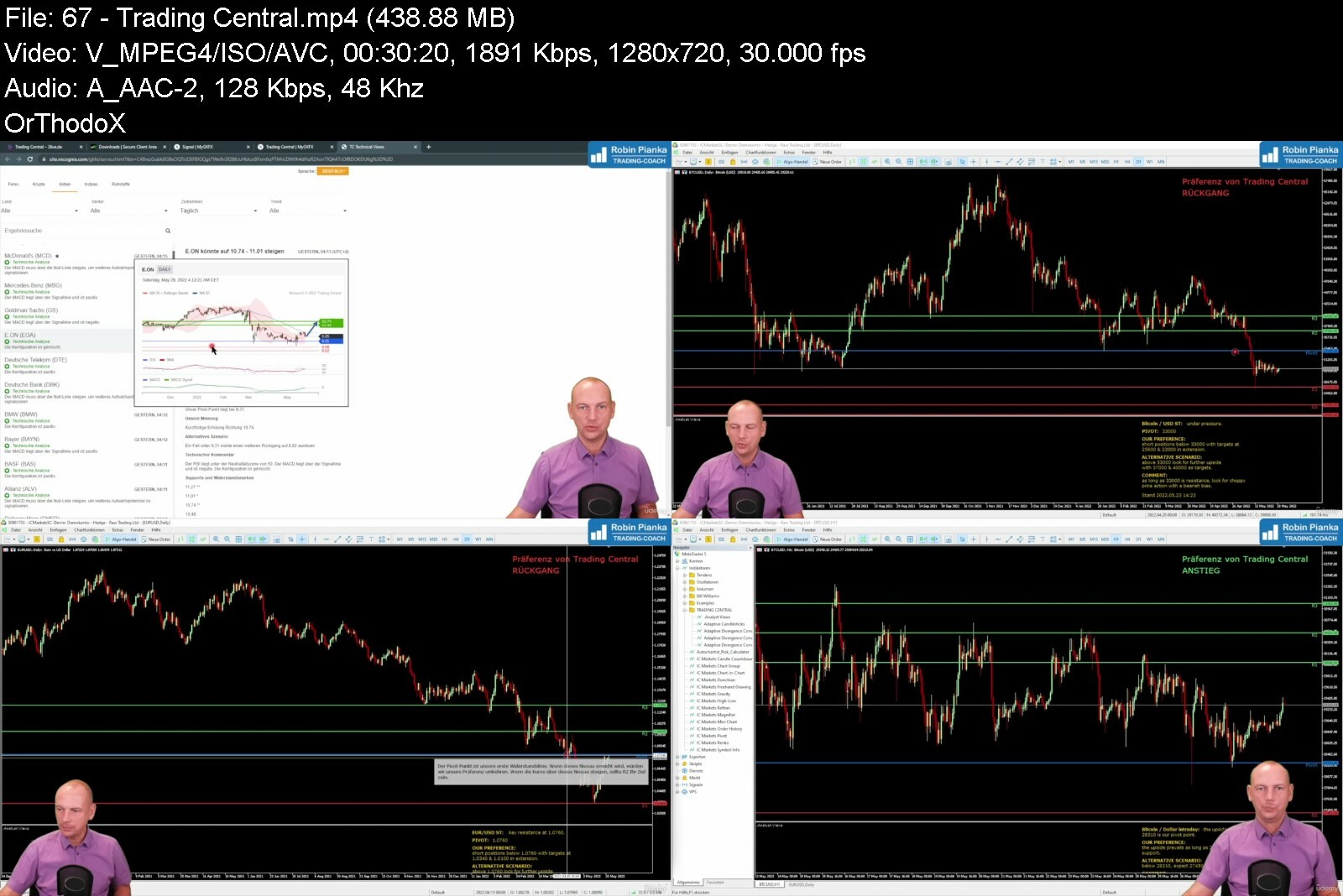
Daytrading Meisterkurs - Chartanalyse, Markttechnik, News

mtac8rwy8nakapp545cryoli50.jpg


Daytrading Meisterkurs - Chartanalyse, Markttechnik, News
MP4 | Video: h264, 1280x720 | Audio: AAC, 48 KHz
Language: German | Size: 5.52 GB | Duration: 8h 3m

Vom Anfänger oder Fortgeschrittener zum Profi-Trader im Day Trading Meisterkurs. Lerne CFDs, Forex, Cryptos, Gold, ÖL...


What you'll learn
Wie du vom Anfänger zum erfolgreichen Daytrader wirst
Empfehlungen für den richtigen Broker
Handelsplattform installieren und einrichten (mit gratis Vorlage)
Daytrading
Swingtrading
Scalping
langfristiges Trading
Basics des Tradens
Chartanalyse
Markttechnik
Fundamentalanalyse
Wirtschaftsindikatoren
Trademanagement
Newstrading
Volumentrading
Indikatoren
Oszillatoren
Korrelationen
Die besten und wichtigsten Strategien
Psychologie
Die Regeln des Tradens mit Checkliste
Value-Cost-Averaging (besonders für Aktien interessant) gratis Software on top
Erweitertes dynamisches Chance-Risiko-Verhältnis gratis Software on top
Kryptowährungen
Selbstvertrauen aufbauen
Trading mit dem Smartphone
Benutzung der Software Trading Central
Benutzung der Software autochartist
u. v. m.

Requirements
keine Vorkenntnisse nötig

Description
Würdest du gerne Geld mit Daytrading, Swingtrading, Scalping oder langfristiges Investment verdienen? Oder möchtest du einfach ortsunabhängig werden und dir einen weiteren Einkommensstrom im Bereich Trading aufbauen? Dann ist dieser Kurs genau das Richtige für dich.In diesem Kurs zeige ich dir Schritt für Schritt wie du professionell mit Forex-, Aktien-, Krypto-, und Rohstoff- Daytrading Strategien erfolgreich an der Börse partizipieren kannst.Schritt-für-Schritt AnleitungErfahrungenSicheres HandelnSelbstvertrauenTipps & TricksSaubere Trade Einstiege und AusstiegeExakte VorgehensweisenTrading Strategien familiäre und beruflich anpassbarFür Anfänger und Fortgeschrittene Intelligent, effizient und modularDu möchtest mit dem Trading von Aktien, Devisen, Rohstoffen oder Kryptowährungen dein Einkommen aufbessern? Ich biete dir eine einzigartige Gelegenheit, dein finanzielles Wohlergehen zu verbessern. Nutze meine Erfahrung und mein Know-how, um erfolgreich zu traden und deine Ziele zu erreichen. In diesem Kurs Du lernst die Grundzüge des Tradings. Du erfährst, welche unterschiedlichen Ansätze es gibt und worauf es beim Trading wirklich ankommt.Lerne bei mir, wie Du mit CFDs und Devisenpaare systematisch tradest. Ich zeige Dir tolle Setups, die sich in der Praxis bewährt haben und wie Du Ein- und Ausstiege planst sowie Kursziele berechnest. Die Grundzüge der technischen Analyse lernst Du ebenso kennen und kannst diese für Dich gewinnbringend einsetzen. Außerdem erfährst Du alles über das richtige Risiko- und Money Management, sowie die wichtigsten psychologischen Hürden auf Deinem Weg zum erfolgreichen Trader.Der Kurs ist stark praxisorientiert und vermittelt anhand zahlreicher Beispiele das konkrete Vorgehen beim Suchen und Finden von geeigneten Setups - egal, ob Aktien, Forex, Rohstoffe oder Cryptos wie Bitcoin oder Ethereum. Außerdem zeige ich Dir, warum Du ein Tradingjournal brauchst und wie Du deine eigene Strategie entwickeln kannst.In diesem Kurs wirst du ein professioneller Daytrader. Du lernst alles über die Handelsplattform, Charteinstellungen, Linien, Widerstände, Range, Order-Arten, Trades eröffnen, Strategien, CRV, Order bearbeiten, absichern, Wirtschaftsnews, Unterstützungen, Widerstände, Wirtschaftskalender, Positionsgröße, Risiko-Money-Management, Mini-Terminal und vieles mehr.Als Extra-Spezial Abschnitt habe ich für dich noch folgendes in den Kurs gepackt:psychologie: Emotionen, Regeln, Geduld, Hoffnung, Erfolg, Nebenberuflich starten, Verluste akzeptieren, Trade nicht allein.Quick-Start-Guide: Dort habe ich dir eine Liste zusammen gestellt, mit Informationen, Links zu kostenlosen Börsennews, Charting und einem Buch.Checkliste: Diese Checkliste mit den wichtigsten Regeln kannst du vor jeden Tradingtag abarbeiten. Sie ist nicht kompliziert und ist schnell erledigt. Du solltest diese Dinge im Blick haben, um auf alles vorbereitet zu sein. Du kannst dir diese Checkliste herunterladen, so dass du sie immer dabei hast.VCA-Rechner: Wenn du klassische Aktien auf längerfristiger Basis tradest, biete ich dir ein von mir selbstprogrammiertes Excel-Tool an, in dem du deine zukünftigen und bestehenden Aktienkäufe eintragen kannst. Diese Software schlägt dir vor, wann du weitere Käufe vornehmen solltest nach dem Value-Cost-Averaging System. Das ist eine ziemlich neue Strategie aus den USA für den klassischen Aktienhandel. Sie wurde von mir optimiert. Mein Erklärvideo gibt es natürlich on Top.Dynamische CRV-Tabelle: Bevor du einen Trade eröffnest, musst du als erstes eine Positionsgröße bestimmen, dies lernst du alles hier im Daytrading Meisterkurs. Zusätzlich habe ich für dich einen speziellen dynamischen Positionsgrößenrechner erstellt, bei dem du dir mehr Verlusttrades in Folge leisten kannst. Auch diese Software ist einzigartig und gibt es mit Erklärvideo nur hier.Kryptowährungen - Was soll ich traden: Und das ist ein Problem. Viele Trader wissen nicht welche Märkte sie traden sollen. Sie öffnen die Tradingsoftware oder die App und wissen nicht, ob sie lieber Kyptowährungen, wie Bitcoin handeln sollen oder lieber Währungen, den Dax, Gold oder Öl? Hast du das schon mal erlebt? Du hast keine Idee und weißt nicht, woran du dich orientieren sollst? Dafür habe ich für dich ein extra Video erstellt, in dem ich dir erkläre, wann du was zu traden hast und was du besser nicht traden solltest und Fallen, in die du nicht tappen solltest. Den Leitfaden, welche Märkte du traden solltest.In diesem Video erfährst du, was Kryptowährungen sind und wie man damit handelt. Bitcoin ist die bekannteste Kryptowährung, aber es gibt Tausende von verschiedenen Kryptowährungen. Viele Menschen investieren in Kryptowährungen, weil sie denken, dass der Wert der Kryptowährungen in Zukunft steigen wird. Aber du solltest damit sehr vorsichtig sein. Kryptowährungen sind sehr volatil, das heißt, der Preis kann sich sehr schnell verändern.Selbstvertrauen aufbauen: Oft habe ich gemerkt, ich gebe den Leuten das beste System, aber du traust es dir nicht zu. Dein Selbstvertrauen ist noch nicht groß genug. Hier lernst du Selbstvertrauen in 3 Monaten aufzubauen. Traue dir das zu.Trading mit dem Smartphone: Eine Variante, mit der du nur mit deinem Smartphone oder Tablet, von unterwegs, egal wo du, traden kannst.Trading Central: Ich zeige und erkläre dir ein Tool, mit dem Banken und die großen Player arbeiten. Ich zeige dir, wie und wo du es kostenlos bekommst und wie man damit arbeitet. Es bringt dich auf ein neues Level, das verspreche ich dir. autochartist das Analysetool: Automatische Chartanalyse, Trends, Unterstützungs- und Widerstandslinien werden von selbst eingezeichnet. Viele Tradingideen von den führenden Tradern. So bekommst du die Software kostenlos und ich zeige dir wie du dir den Tradingtag durch erhebliche Zeiteinsparung leichter machen kannst.TradingView die Charting-Plattform: Tradingview ist eine Online-Plattform, die es dir ermöglicht, Finanzmärkte aus aller Welt zu verfolgen. Aber das ist noch lange nicht alles!Worauf wartest du also noch? Schreibe dich noch heute in diesen Kurs ein und wir beide sehen uns dann gleich im ersten Video.Beste Grüße, Robin Pianka- dein Dozent -
Who this course is for
Dieser Kurs richtet sich an Anfänger oder Fortgeschrittene.


daytradingmeisterkursrxdxn.jpg


Download from RapidGator


Download from DDownload


 
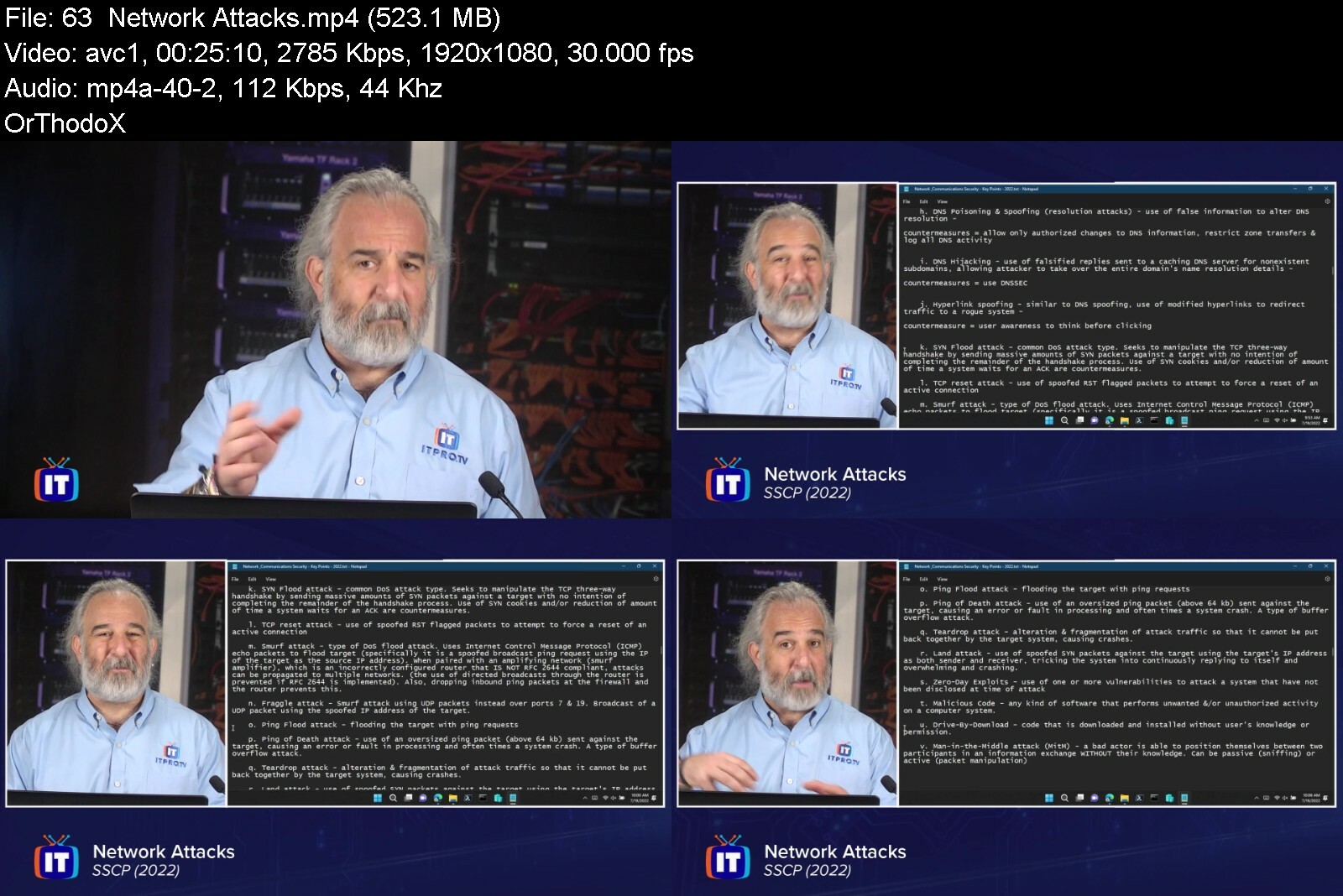
ITProTV - Systems Security Certified Practitioner (2022)

sscpplay7ccmd.png


ITProTV - Systems Security Certified Practitioner (2022)
Released 08/2022
MP4 | Video: h264, 1920x1080 | Audio: AAC, 44.1 KHz, 2 Ch
Genre: eLearning | Language: English | Duration: 77 Lessons (26h 54m) | Size: 22.1 GB

SSCP

ATTENTION ... This is an ACCELERATED VERSION of our SSCP course. What that means for you is that we assume that you have a certain level of prior knowledge, and we move faster through the material We encourage you to try this format and see if it works well for you. The Systems Security Certified Practitioner (SSCP) is ideal for IT administrators, managers, directors and network security professionals responsible for the hands-on operational security of their organization's critical assets. The certification demonstrates that the holder has been working in IT Security for at least one year, has a broad range of knowledge in seven domains related to creating, supporting, and maintaining a secure IT infrastructure and can implement things like risk management and risk identification.

Homepage


systemssecuritycertif77e19.jpg


Download from RapidGator


Download from DDownload



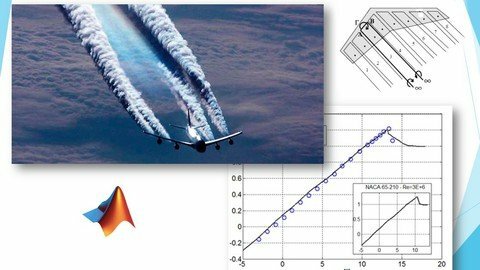
Applied Aerodynamics - Airfoils And Wings

tb213fxbn80sf9wun3wgctti8q.jpg


Applied Aerodynamics - Airfoils And Wings
Last updated 7/2022
MP4 | Video: h264, 1280x720 | Audio: AAC, 44.1 KHz
Language: English | Size: 5.78 GB | Duration: 10h 13m

Aerodynamics, Aerodynamic Modeling, Wing and Airfoil analysis


What you'll learn
In-depth knowledge on aerodynamcs topics, supported by the coding of your own airfoil and wing analyzer
How to evaluate the characteristics of arifoils
Matlab coding applied to aerodynamics analysis
Design, simulate and optimize your own airfoil and wing designs
Vortex panel methods
Weissinger method
Estimate the stall angle of your wing designs
Vortex lattice method

Requirements
Basic Engineering initial curriculum
Willingness to learn one of the most exciting topics in Aeronautical industry

Description
This course starts with a theoretical overview of the famous Navier-Stokes equations and how to simpllify them in order to get easier, yet insightful, potential equations for fast analysis. Then we will focus in using these equations to derive the Vortex Panel Method (we'll cover all maths aspects also) and code it in Matlab. With that in hands, we will perform several analysis of generic airfoils to better understand how key design characteristics affect the overall results.On the next section, we'll go from 2D world to 3D, analysing wings now. Similarly, we'll start with a theoretical review of the Weissinger method for general wings (we'll cover all maths aspects also) and then we'll create a Matlab code to simulate the designs. We'll invistigate how several key parameters, such as sweep, aspect ratio, twist and others, can affect the overall behavior of wings.Finally, we'll include viscous effects on the Weissinger method for a more robust analysis, including flow separation and stall.This course is filled with real examples and is a more hands-on approach on the analysis of airfoils and wings. If your are an engineering student, aviation enthusiast, industry or academic engineer or just want to learn more about how to apply Aerodynamic theory, this is the right course for you.
Overview
Section 1: PART 1: Airfoils
Lecture 1 Instructor Presentation and Course Overview
Lecture 2 From Navier-Stokes to Potential Flow
Lecture 3 Elementary flows
Lecture 4 Airfoil Theory - Part 1
Lecture 5 Airfoil Theory - Part 2
Lecture 6 Vortex Panel Method - Derivation
Lecture 7 Vortex Panel Method Coding: Part 1 - Airfoil drawing
Lecture 8 Vortex Panel Method Coding: Part 2 - Panel geometry
Lecture 9 Vortex Panel Method Coding: Part 3 - Coefficients and Results
Lecture 10 Vortex Panel Method Coding: Part 4 - Streamlines plot
Lecture 11 Panel Method Code
Section 2: PART 2: Wings
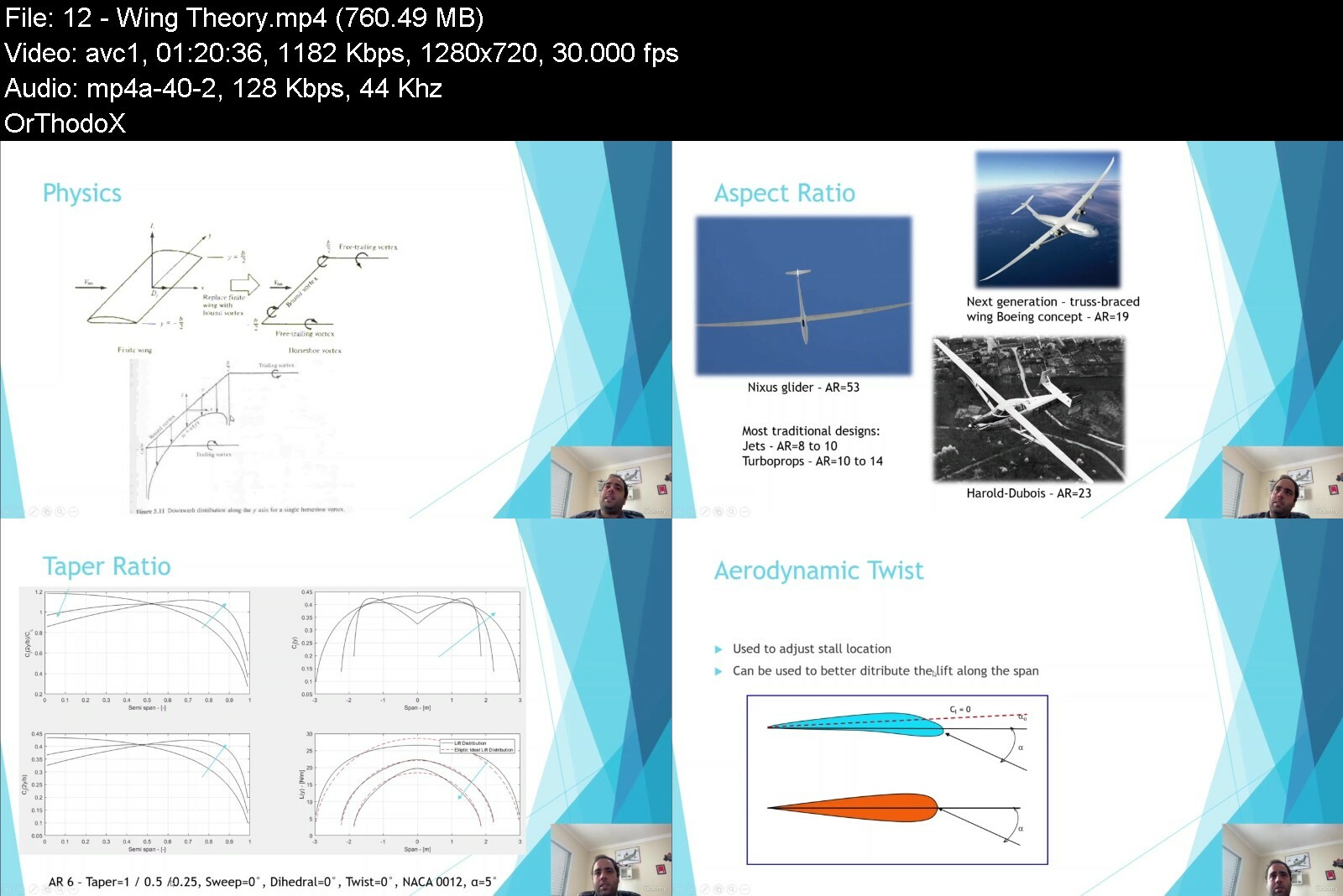
Lecture 12 Wing Theory
Lecture 13 Weissinger Method - Derivation
Lecture 14 Weissinger Method Coding - Part 1: Geometry
Lecture 15 Weissinger Method Coding - Part 2: Lift Calculation
Lecture 16 Weissinger Method Coding - Part 3: Drag Calculation
Lecture 17 Wing Characteristics - Linear
Lecture 18 Wing Geometry Optimization
Lecture 19 Weissinger Method Code
Section 3: PART 3: Viscous Flow on Wings
Lecture 20 The Decambering Method
Lecture 21 Modifying the Weissinger Code and Analysing the Results
Section 4: COURSE REFERENCES
Lecture 22 Reference for Further Knowledge
Lecture 23 Bonus Section
Those who are looking to have an in-depth understanding of aerodynamics,People interested in Engineering,Aviation enthusiasts in general,Those who want to work with Aerospace related Projects,Those who want to see a more applied approach in the topic, different from University,Aerospace Engineers,Mechanical Engineers,Those who want a hands-on experience in MATLAB programming


appliedaerodynamicsai53fc9.jpg


Download from RapidGator


Download from DDownload


 
Skilled Helper Training Course (With Prof. Gerard Egan Phd)

upkvbhd0l2cczh83hjgzv23fn8.jpg


Skilled Helper Training Course (With Prof. Gerard Egan Phd)
Last updated 3/2022
MP4 | Video: h264, 1280x720 | Audio: AAC, 44.1 KHz
Language: English | Size: 12.46 GB | Duration: 7h 10m

Discover how Gerard Egan's Skilled Helper coaching philosophy can help you solve problems and achieve meaningful goals.


What you'll learn
Improve your life by solving problems and identifying areas for growth.
Support people in solving problems and recognizing new opportunities.
Connect meaningfully with people by developing active listening skills.
Use thought-provoking questions to promote constructive discussion.
Cultivating communication and language skills for positive influence.
Assist other people in making significant and complicated decisions.
How to evaluate your perspective, from various alternative viewpoints.
Motivate people to develop and assume responsibility for themselves.
Be accommodating when confronted with views that differ from your own.
And much, much more.

Requirements
You can access your training course on a tablet, smartphone, or desktop.
Additional PDF materials are provided to enhance your learning experience.
You can also listen to the MP3 version if you prefer to learn on the go.
Students can access this training from anywhere with an internet connection.
Students are encouraged to take notes (for self-reflection purposes only).
To enroll in this course, no prior experience or education is required.

Description
The Skilled Helper Model of coaching developed by Gerard Egan provides mentors, counsellors, parents, life coaches and management teams a solution-focused basis for their work. The three-stage model includes essential skills that a Skilled Helper can use to prepare other people for setting and achieving meaningful goals.In this Skilled Helper training, students gain insights into an effective strategy for living life, by knowing how to interpret their life experiences objectively, tackling everyday challenges, solving problems, seeking out new opportunities, and setting inspiring goals. Human growth occurs when people become adept at setting and pursuing meaningful objectives.The Skilled Helper Model is one of the most popular and effective models of counselling skills, leadership, and coaching taught by colleges and universities all over the world. In addition to being taught in many universities, this course is also used in a variety of (formal and informal) counseling settings, including the workplace and public services organizations.The purpose of this course is to provide you with a step-by-step process for helping yourself or other people to formulate a plan of action for goal setting, taking greater responsibility for becoming a more effective person and developing inner resources that will stand you in good stead for heightened productivity and effectiveness for many years to come.Aside from helping you navigate a coaching (or mentoring) session, this model enhances your ability to interact with people in both a professional and social setting. In this unique Skilled Helper Training Course, Gerard Egan combines his 45 years of experience with Kain Ramsay to teach you a framework for solving practical problems and providing skilled help.The following are some of the topics you will learn during this course:Improve your life by solving problems and identifying areas for growth.Support people in solving problems and recognizing new opportunities.Connect meaningfully with people by developing active listening skills.Use thought-provoking questions to promote constructive discussion.Cultivating communication and language skills for positive influence.Assist other people in making significant and complicated decisions.How to evaluate your perspective, from various alternative viewpoints.Motivate people to develop and assume responsibility for themselves.Be accommodating when confronted with views that differ from your own.And much, much more.In this course, you will learn the necessary skills required for any profession that involves guiding, mentoring or influencing others. This training offers practical, change-oriented, and appropriate communication skills that anyone can use to inspire positive behavioural change in people from any age range, educational background or social-cultural background.This course training is led by Gerard Egan, Ph.D., Professor Emeritus of Organization Development and Psychology at the Loyola University of Chicago. His life works include 'The Skilled Helper', 'Skilled Helping Around the World: Addressing Diversity and Multiculturalism', and 'You & Me: The Skills of Communicating and Relating to Others'.The Skilled Helper Training Course will turn you into a more effective person. This course will benefit you personally, your family, friends, coworkers, or any other group as it will positively impact how you understand yourself, other people you know, and the world. In essence, you will receive a highly actionable framework, for simply, helping people.Those seeking to improve their relationship with themselves, eliminate self-doubt, and improve their interactions with others are also provided with methods for achieving personal growth. The course will also provide you with a range of innovative strategies for evaluating your attitudes, gaining personal empowerment, and fostering an attitude of responsibility."This course is highly recommended for anyone who's interested in upgrading their approach to influencing people." - Anne-Marie Butler OBEThis training is part of a larger curriculum of professional development training resources, designed by Kain Ramsay Ltd, and hosted within the Achology community peer-learning environment. The training course is accompanied by a 30-day money back guarantee, so if you're not happy with the format, you can get your money back - no questions asked.
Overview
Section 1: Meet Gerard Egan and his Skilled Helper Model
Lecture 1 Introducing the Fundamentals of Skilled Helping
Lecture 2 Course Support and Frequently Asked Questions (FAQs)
Lecture 3 Join the FREE 'Principles into Practice' Discussion Group
Lecture 4 Introducing the 4 Stage Helping Framework (Part 1)
Lecture 5 Problem State to Hoped for State (Summary so Far)
Lecture 6 Introducing the 4 Stage Helping Framework (Part 2)
Lecture 7 The Achology Problem Solving Workbook
Lecture 8 The Foundations of Helping Competency
Lecture 9 Relationship Principles: The Foundations of Respect
Lecture 10 Skilled Helping Core Communication Skills (Part 1)
Lecture 11 Skilled Helping Core Communication Skills (Part 2)
Lecture 12 The Levels & Stages of Active Communication
Lecture 13 Adapting, Adjusting, and Communication Flexibility
Lecture 14 The Difference Between Challenging & Confronting
Lecture 15 The 7 Stages of Relational Development
Section 2: Learning how to Apply the Skilled-Helper Model
Lecture 16 The Fundamentals of Decision Making
Lecture 17 The Practicalities of Decision Making
Lecture 18 Contrastive Analysis of Effective & Ineffective Helping
Lecture 19 The 7 Step Process as a Basis for Helping Others
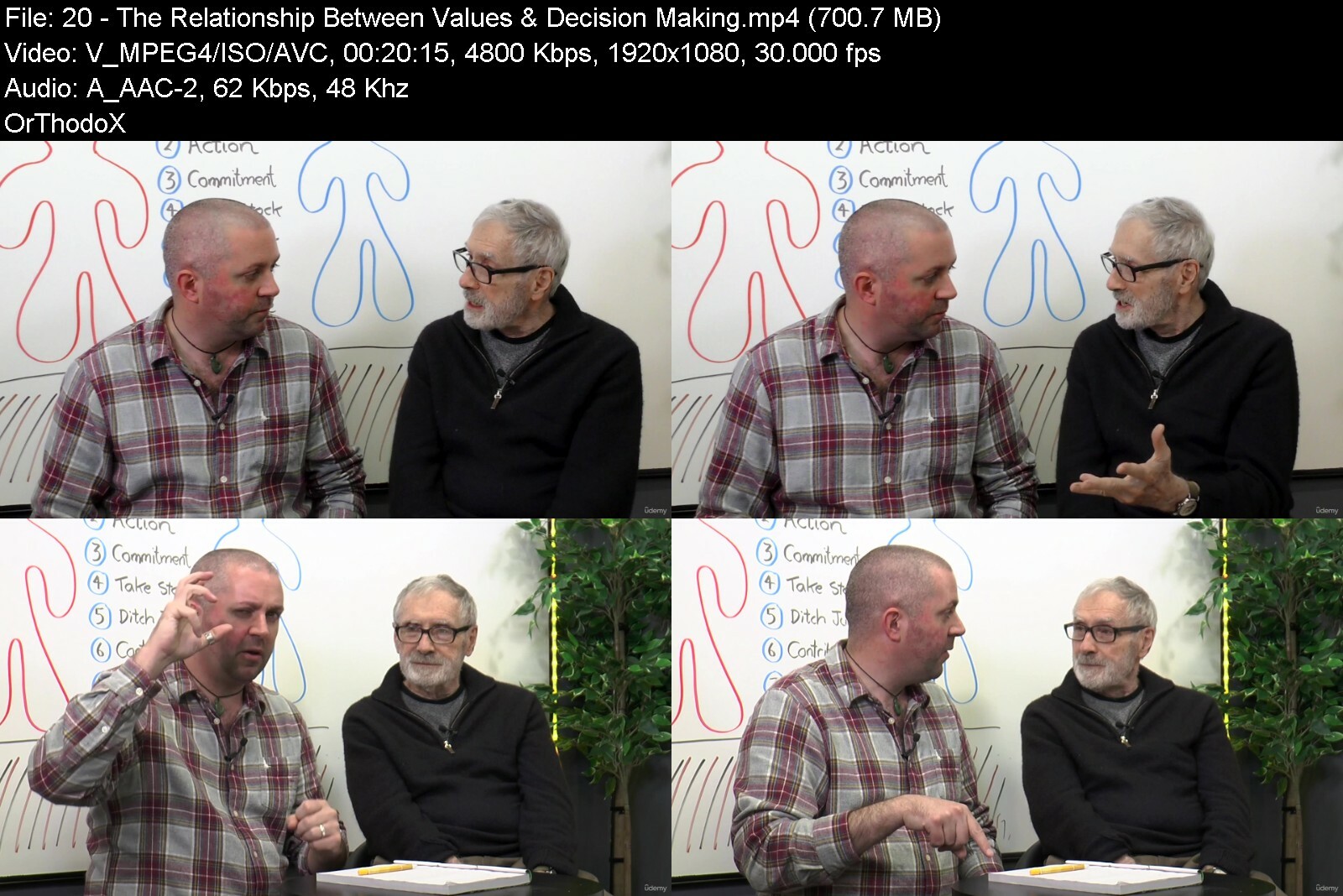
Lecture 20 The Relationship Between Values & Decision Making
Lecture 21 Exercise: A Basis for Wise Decision Making
Lecture 22 The Skilled Helping Process Demo. (Phase 1 - Part 1)
Lecture 23 The Helping Process Demonstration (Phase 1 - Part 2)
Lecture 24 The Helping Process Demonstration (Phase 2 - Part 1)
Lecture 25 The Helping Process Demonstration (Phase 2 - Part 2)
Lecture 26 The Helping Process Demonstration (Phase 3 - Part 1)
Lecture 27 The Helping Process Demonstration (Phase 3 - Part 2)
Lecture 28 Skilled Helping Through the Levels and Stages of Life
Lecture 29 Discussion on the Levels and Stages of Life
Lecture 30 Closing Thoughts and Recommended Reads
Anyone interested in enhancing their personal or professional development.,This course is best suited to students who are interested in improving themselves.,Students with an interest in psychology will find this course particularly interesting.,This course is suitable for men and women, regardless of age or ethnic background.,This course is for students who are dedicated to self-discovery and improvement.,The course can be taken standalone or in conjunction with another Achology training.


skilledhelpertraining17i0s.jpg


Download from RapidGator


Download from DDownload



National 5 Biology: Master Every Topic

eowwfn48lnfmun9cyyfipfmcqj.jpg


National 5 Biology: Master Every Topic
Published 9/2022
MP4 | Video: h264, 1280x720 | Audio: AAC, 44.1 KHz
Language: English | Size: 5.71 GB | Duration: 5h 1m

Fulfil Your National 5 Potential With Our Comprehensive Course Taught By Experts


What you'll learn
Achieve A Top Grade At National 5 Biology
To Understand Every National 5 Biology Topic In The Official SQA Syllabus At A Deep Level
To Use Problem Solving Skills Combined With Biology Knowledge To Complete Questions
Cell Structure: All The Different Types Of Cells And Their Structures
Cell Transport: Membrane Structure, Passive & Active Transport, Osmosis
DNA, mRNA And Protein Production: DNA Structure, The Process Of mRNA And Protein Production
Proteins And Enzymes: Protein Variety & Structure, Enzymes Uses
Genetic Engineering: The Definition And Understanding It's Process
Photosynthesis And Respiration: How Different Cells Produce Energy, ATP, Photosynthesis Process, Aerobic & Anaerobic Respiration
Cells: Organisation, Division, Production, Mitosis, Stem Cells & Their Uses
Control And Communication: Brain Structure & Functions, Nervous System, Hormone Control
Reproduction: Fertilisation, Gamete Production In Animals And Plants
Plant And Animal Transport Systems: Circulatory System, Plant Transportation, Digestive System, Respiratory System
Biodiversity And Ecosystems: Distribution Of Organisms, Energy In Ecosystems, Sampling Techniques, Indicator Species
Evolution: Speciation, The Process Of Evolution

Requirements
A Basic Knowledge Of National 4 Biology Is Desired But Not Essential

Description
Welcome to the most comprehensive National 5 Biology learning resource!I'm Cameron, a university medical student and when I was in high school I realised that there weren't any great comprehensive learning resources that were easy to learn from for Scottish students. So with a few of my smartest university students, we created one.It can be daunting starting national 5's. So we want to make sure when you open your results, that it has the grades on it that you deserve. So with us, you will find learning National 5 Biology easy.Taught By An ExpertBeing a medical student at Edinburgh University means I know the course content inside out and you know that you are learning from an experienced academic. As a student myself I know the best way to teach the content in a clear way that most importantly - you will easily understand. Because just like you, I was a high school student trying to learn the content.Clear Understandable TeachingLearning from textbooks is boring, outdated and simply isn't as effective as learning needs to be - you deserve better. With us, you will learn from high-quality videos teaching all the knowledge in an understandable format that you can watch anytime. It's like having a great in-person lesson where you learn so much, felt involved and didn't get left behind by babbling nonsense - that you can have whenever you need to.Taught using an overhead camera, as I work I give a running explanation of everything I am doing - making it super interactive and easy to follow along.The typical lesson starts by teaching you a new concept and relating it to any previous knowledge. Then I will go over some exam examples.Complete A-Z Of The Official SQA Course SyllabusOur course follows the official SQA course syllabus, teaching the exact content needed for the National 5 Biology exam. No fluff, no added content you don't need, just exactly what you need to know taught well.The Most Effective Ways To LearnFor your exam success not only do you need to understand the content but also remember it. Our course is created with the most effective learning techniques proven by science.Your long-term retention of the knowledge taught is key to exam success, so our online flashcards automatically generate questions for you every day depending on what you need help with. This technique is proven to be the most effective for remembering knowledge over a sustained period. Just 10 minutes a day will dramatically improve your National 5 performance.Anyone Can Do ItYes, it is true that some students are just inherently better at retaining the ton of knowledge needed for biology. However, often students lure themselves into thinking they just can't remember it all, which is probably true with the current techniques they are using - reading notes, highlighting and copying passages are all proven to be terrible ways to remember information. Instead in our course, we use top techniques (like our flashcards and lessons) to make it super simple for you to use top memorisation techniques for all of those pesky facts you have to remember. It's not the student that sucks, just the studying techniques they are using.Students across Scotland have found success with our course and we hope you can too!
Overview
Section 1: Introduction
Lecture 1 How To Learn Effectively
Section 2: Unit 1: Cell Biology
Lecture 2 Cell Structure
Lecture 3 Cell Transport: Membrane Structure
Lecture 4 Cell Transport: Passive Transport
Lecture 5 Cell Transport - Osmosis
Lecture 6 Cell Transport - Active Transport
Lecture 7 DNA Structure
Lecture 8 Protein Production & mRNA
Lecture 9 Protein Variety
Lecture 10 Enzymes
Lecture 11 Genetic Engineering
Lecture 12 Photosynthesis - ATP
Lecture 13 Photosynthesis - General Process
Lecture 14 Photosynthesis - Limiting Factors
Lecture 15 Respiration - Aerobic Respiration
Lecture 16 Respiration - Anaerobic Respiration
Section 3: Unit 2: Multicellular Organisms
Lecture 17 Cell Organisation
Lecture 18 Cell Division
Lecture 19 Cell Division - Mitosis
Lecture 20 Stem Cells
Lecture 21 Control And Communication - Nervous System
Lecture 22 Control And Communication - The Brain
Lecture 23 Control And Communication - Hormone Control
Lecture 24 Gamete Production - Animals
Lecture 25 Reproduction - Fertilisation
Lecture 26 Gamete Production - Plants
Lecture 27 Variation - Discrete & Continuous
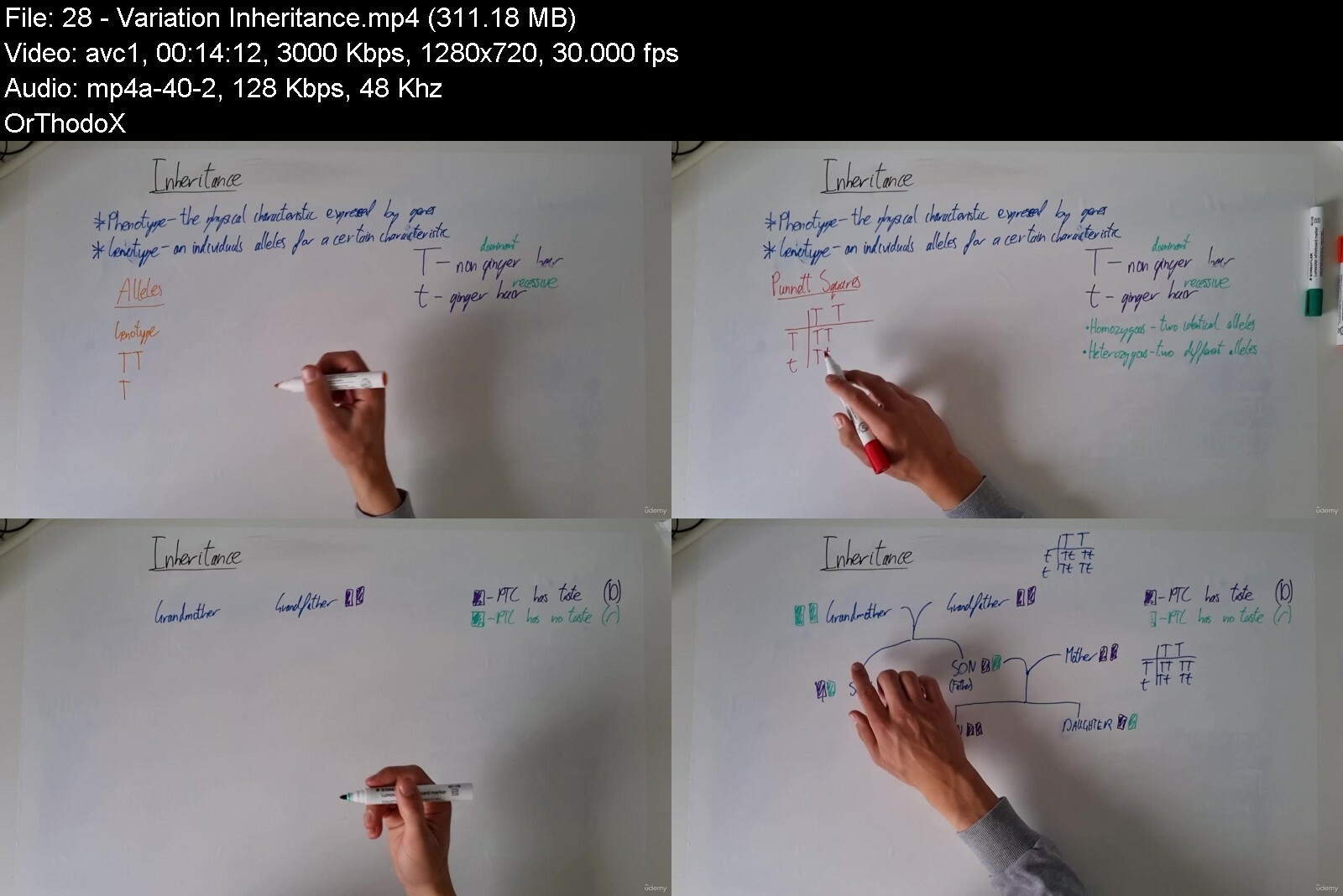
Lecture 28 Variation - Inheritance
Lecture 29 Plant Transport 1
Lecture 30 Plant Transport 2
Lecture 31 Animal Transport - Circulatory System
Lecture 32 Animal Transport - Circulatory System Pathway
Lecture 33 Absorption Of Materials - Respiratory System
Lecture 34 Animal Transport - Digestive System
Section 4: Unit 3: Life On Earth
Lecture 35 Biodiversity - Ecosystems
Lecture 36 Distribution Of Organisms
Lecture 37 Energy In Ecosystems
Lecture 38 Sampling Techniques
Lecture 39 Identifying Organisms
Lecture 40 Indicator Species
Lecture 41 Evolution
Lecture 42 Speciation
Lecture 43 Food Production
Students Currently Studying National 5 Biology


national5biologymasteu6d12.jpg


Download from RapidGator


Download from DDownload
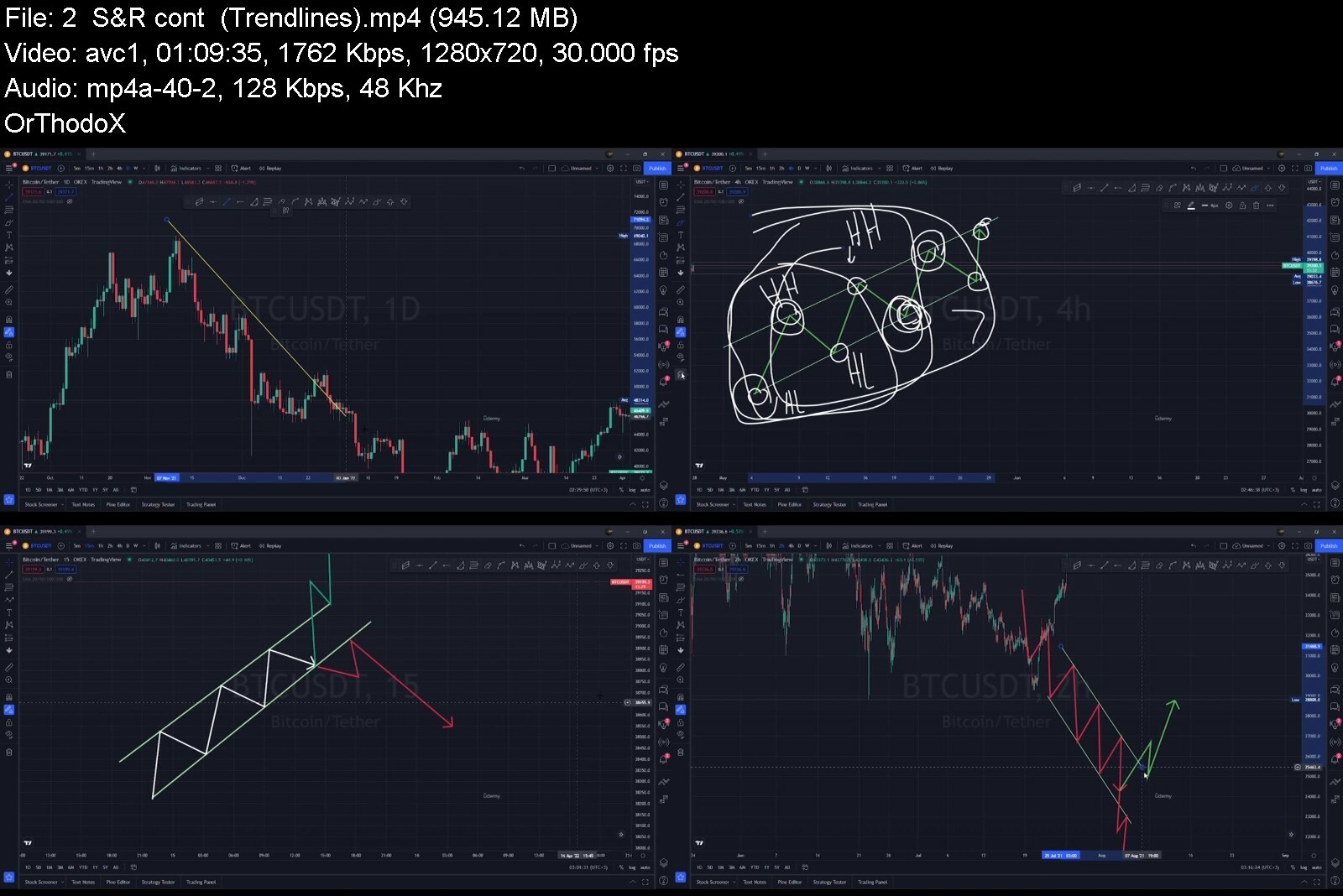

 
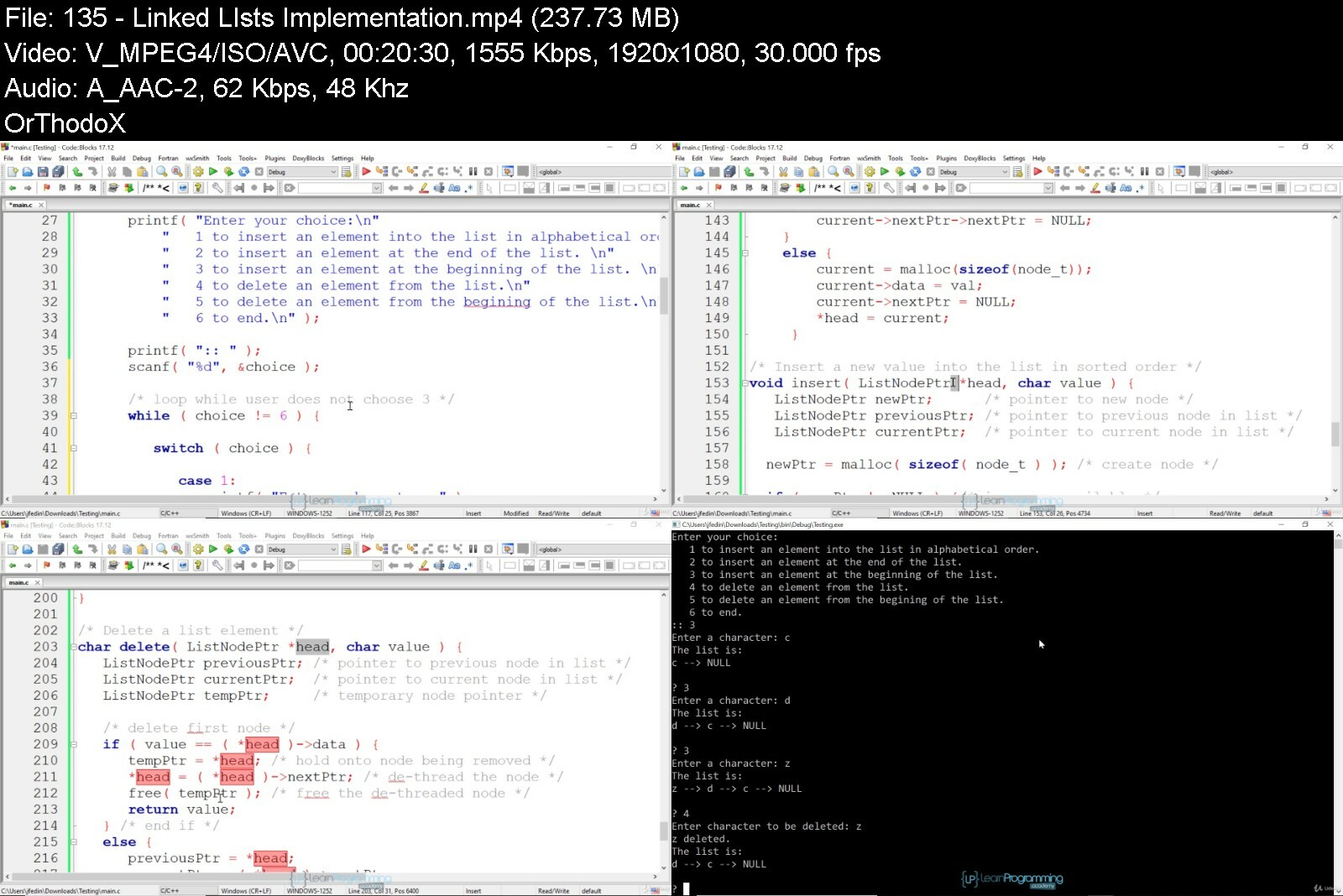
Advanced C Programming Course 2021

280097698e5qjcv4.jpg


Advanced C Programming Course 2021
Last updated 8/2021
MP4 | Video: h264, 1280x720 | Audio: AAC, 44.1 KHz
Language: English | Size: 10.88 GB | Duration: 28h 3m

Become a True Master of the C Programming Language - Confidently Apply for Real Time or Embedded C Jobs or contracts!


What you'll learn
Understand and be able to apply advanced concepts of the C programming language to create advanced C applications.
Understand Function and Double Pointers, Recursion, Bit Manipulation, Macros, Signals and loads more (check curriculam on this page for full list).
Learn all about threads and networking with Sockets.
Master the art of problem solving in programming using efficient, proven methods.
Be able to apply advanced C concepts to other programming languages.
How to write high quality C code, to make yourself more marketable for higher level programming positions and be apply for real-time/embedded programming positions.

Requirements
Basic knowledge of the C programming language (ideally having completed our Beginners course on Udemy).
A computer running Microsoft Windows, Linux or the Mac operating systems.
At least 4GB of ram on your computer.

Description
What you will learn in this course?The C programming language in 2020 is still one of the most popular and widely used languages. Having C programming skills gives you great career options, but learning the C language, particularly some of the trickier advanced stuff can be really difficult.This course is designed to take your basic C skills to the next level and help you obtain mastery of the language by helping you understand advanced concepts of the C programming language, enabling you to master the art of problem-solving in programming using efficient, proven methods.You'll learn how to write high-quality C code and to make yourself more marketable for higher-level programming positions.Just some of the topics in this huge 28-hour course include Threads, Function Pointers, Double Pointers, Recursion, Networking using Sockets, Bit manipulation, Macros, Signals, Storage Classes and loads more. Check the curriculum on this page for full details of what is included in this very comprehensive course.By the end of this course, with your new-found skills, you will be able to apply for real-time/embedded C programming positions or any job that requires mastery of the C programming language and be able to apply your new skills developing your own Advanced C programs.What's different about this course?Jason Fedin is your instructor in this course and this course takes the skills you learned in that course to the next level.This course focuses on the details and a thorough understanding of all advanced C programming concepts. This is not just a how-to course, it is a "why?" course. You will learn how to implement specific advanced C concepts such as multi-threading and double pointers, in addition to learning why they are the best approach and how they make you a high-quality C programmer. Many, many examples, challenges and quizzes are provided to test your understanding of every concept that you have learned. This course is unique to other courses here at Udemy in that the details and the why are explained. We do not just go through projects and provide a how-to.Who is the course aimed at?This is not a beginner's course. It's assumed you have some knowledge of the C programming language, preferably having completed our Beginner course (here on Udemy) or similar training and/or commercial programming experience in C or a similar language.Getting startedIf you are ready to get started, click on the enroll or Add to Cart button on this page and start taking your C Language skills to the next level.
Overview
Section 1: Introduction
Lecture 1 Welcome to Class!
Lecture 2 Class Organization
Lecture 3 The C99 Standard
Lecture 4 The C11 Standard
Section 2: Installing Required Software
Lecture 5 Overview
Lecture 6 Installing the C compiler (Windows)
Lecture 7 Installing the C compiler (Mac)
Lecture 8 Installing Code Blocks (Windows)
Lecture 9 Installing CodeLite (Windows)
Lecture 10 Installing CodeLite (Mac)
Lecture 11 Installing Visual Studio Code (Windows)
Lecture 12 Installing Visual Studio Code (Linux)
Lecture 13 Installing Visual Studio Code (Mac)
Section 3: Starting to Write Code
Lecture 14 Exploring the Code Blocks Environment
Lecture 15 Creating a Project in Code Blocks
Lecture 16 Exploring the Visual Studio Code Environment
Lecture 17 Creating a Workspace and configuring the compiler in Visual Studio Code
Section 4: Working with Larger Programs
Lecture 18 Overview
Lecture 19 Compiling multiple source files from the command line
Lecture 20 Makefiles
Lecture 21 Communication between files
Lecture 22 Using Header files effectively
Lecture 23 Heap and Stack Memory Allocation
Section 5: Storage Classes
Lecture 24 Automatic Variables
Lecture 25 External
Lecture 26 Static
Lecture 27 Register
Lecture 28 (Challenge)
Section 6: Advanced Data Types
Lecture 29 The #define statement (constants)
Lecture 30 Using typedef
Lecture 31 Variable Length Arrays
Lecture 32 (Challenge) Variable Length Arrays
Lecture 33 Flexible Array Members
Lecture 34 (Challenge) Flexible Array Members
Lecture 35 Complex number types
Lecture 36 (Challenge) Complex number types
Lecture 37 Designated Initializers
Lecture 38 (Demonstration) Challenge solutions
Section 7: Type Qualifiers
Lecture 39 const
Lecture 40 volatile
Lecture 41 restrict
Section 8: Bit Manipulation
Lecture 42 Binary numbers and bits
Lecture 43 (Challenge) Binary numbers and Bits
Lecture 44 (Demonstration) Binary numbers and Bits
Lecture 45 Bitwise Operators (Logical)
Lecture 46 Bitwise Operators (Shifting)
Lecture 47 (Challenge) Bitwise Operators
Lecture 48 (Demonstration) Bitwise Operators
Lecture 49 Bitmasks
Lecture 50 Using Bit Operators to pack data
Lecture 51 (Challenge) Setting and Reading bits
Lecture 52 (Demonstration) Setting and Reading bits
Lecture 53 Using Bit Fields to pack data
Lecture 54 (Challenge) Using Bit Fields to pack data
Lecture 55 (Demonstration) Using Bit Fields to pack data
Section 9: Advanced Control Flow
Lecture 56 The goto statement
Lecture 57 (Challenge) The goto statement
Lecture 58 The null statement
Lecture 59 The comma operator
Lecture 60 setjmp and longjmp functions
Lecture 61 (Challenge) setjmp and longjmp functions
Lecture 62 (Demonstration) Advanced Control Flow
Section 10: Input and Output
Lecture 63 char functions (input)
Lecture 64 char functions (output)
Lecture 65 (Challenge) char functions
Lecture 66 (Demonstration) char functions
Lecture 67 string functions
Lecture 68 (Challenge) string functions
Lecture 69 (Demonstration) string functions
Lecture 70 Formatting functions
Lecture 71 (Challenge) Formatting functions
Lecture 72 (Demonstration) Formatting functions
Section 11: Advanced Function Concepts
Lecture 73 Variadic Functions
Lecture 74 va_copy
Lecture 75 (Challenge) Variadic Functions
Lecture 76 (Demonstration) Variadic Functions
Lecture 77 Recursion
Lecture 78 (Challenge) Recursion
Lecture 79 (Demonstration) Recursion
Lecture 80 Inline Functions
Lecture 81 _Noreturn Functions
Section 12: Unions
Lecture 82 Overview
Lecture 83 Defining a Union
Lecture 84 Accessing Union Members
Lecture 85 (Challenge) Unions
Lecture 86 (Demonstration) Unions
Section 13: The Preprocessor
Lecture 87 Overview
Lecture 88 Conditional Compilation
Lecture 89 Include guards and #undef
Lecture 90 #pragma and #error
Section 14: Macros
Lecture 91 Overview
Lecture 92 Macros vs. Functions
Lecture 93 Creating your own Macros
Lecture 94 Preprocessor Operators
Lecture 95 Predefined Macros
Lecture 96 (Challenge) Macros
Lecture 97 (Demonstration) Macros
Section 15: Advanced Debugging, Analysis, and Compiler Options
Lecture 98 GCC Compiler Options (part 1)
Lecture 99 GCC Compiler Options (part 2)
Lecture 100 Debugging with the preprocessor
Lecture 101 Debugging with gdb (part 1)
Lecture 102 Debugging with gdb (part 2)
Lecture 103 core files
Lecture 104 Profiling
Lecture 105 Static Analysis
Lecture 106 (Challenge)
Lecture 107 (Demonstration)
Section 16: Advanced Pointers
Lecture 108 Double pointers (pointer to a pointer)
Lecture 109 Double pointers (pointer to a pointer) Part 2
Lecture 110 (Challenge) Double pointers
Lecture 111 (Demonstration) Double pointers
Lecture 112 Function pointers
Lecture 113 (Challenge) Function pointers
Lecture 114 (Demonstration) Function pointers
Lecture 115 void pointers
Section 17: Static Libraries and Shared Objects
Lecture 116 Overview
Lecture 117 Creating a Static Library (archive)
Lecture 118 (Challenge) Static Library
Lecture 119 (Demonstration) Static Library
Lecture 120 Creating a Dynamic Library (Shared object)
Lecture 121 (Challenge) Dynamic Library
Lecture 122 (Demonstration) Dynamic Library
Lecture 123 Dynamically loading a shared object
Lecture 124 (Challenge) Dynamic Loading
Lecture 125 (Demonstration) Dynamic Loading
Section 18: Useful C Libraries
Lecture 126 Assert
Lecture 127 General Utilities (stdlib.h)
Lecture 128 General Utilities (stdlib.h) part 2
Lecture 129 General Utilities (stdlib.h) part 3
Lecture 130 Date and Time functions
Lecture 131 (Challenge)
Lecture 132 (Demonstration)
Section 19: Data Structures
Lecture 133 Abstract Data Types
Lecture 134 Linked Lists (Overview)
Lecture 135 Linked LIsts (Implementation)
Lecture 136 (Challenge) Linked Lists
Lecture 137 (Demonstration) Linked Lists
Lecture 138 Stacks (Overview)
Lecture 139 Stacks (Implementation)
Lecture 140 Queues (Overview)
Lecture 141 Queues (Implementation)
Lecture 142 Binary Trees (Overview)
Lecture 143 Binary Trees (Implementation)
Section 20: Interprocess Communication and Signals
Lecture 144 Interprocess Communication
Lecture 145 Signals (Overview)
Lecture 146 Raising a Signal
Lecture 147 Handling a Signal using the signal function
Lecture 148 Handling a Signal using sigaction
Lecture 149 The fork() system call
Lecture 150 (Challenge)
Lecture 151 (Demonstration)
Section 21: Threads
Lecture 152 Overview
Lecture 153 Creating a thread
Lecture 154 Passing arguments and returning values
Lecture 155 Common Thread functions
Lecture 156 Thread Synchronization Concepts
Lecture 157 Mutexes
Lecture 158 Condition Variables
Lecture 159 (Challenge)
Lecture 160 (Demonstration)
Section 22: Networking (Sockets)
Lecture 161 Overview
Lecture 162 The Socket API
Lecture 163 Creating a Server Socket
Lecture 164 Creating a Client Socket
Lecture 165 (Challenge)
Lecture 166 (Demonstration)
Section 23: Conclusion
Lecture 167 Course Summary
Section 24: Extra Information - Source code, and other stuff
Lecture 168 Source Codes
Lecture 169 Bonus Lecture and Information
This course is not aimed for beginners. If you have never used C programming before, then I would suggest you purchase our C Programming For Beginners course first, complete it then come back to take this advanced course.,On the other hand, if you already have a basic or prior experience with C programming, then this course is for you!


advancedcprogrammingcjpiwu.jpg


Download from RapidGator


Download from DDownload



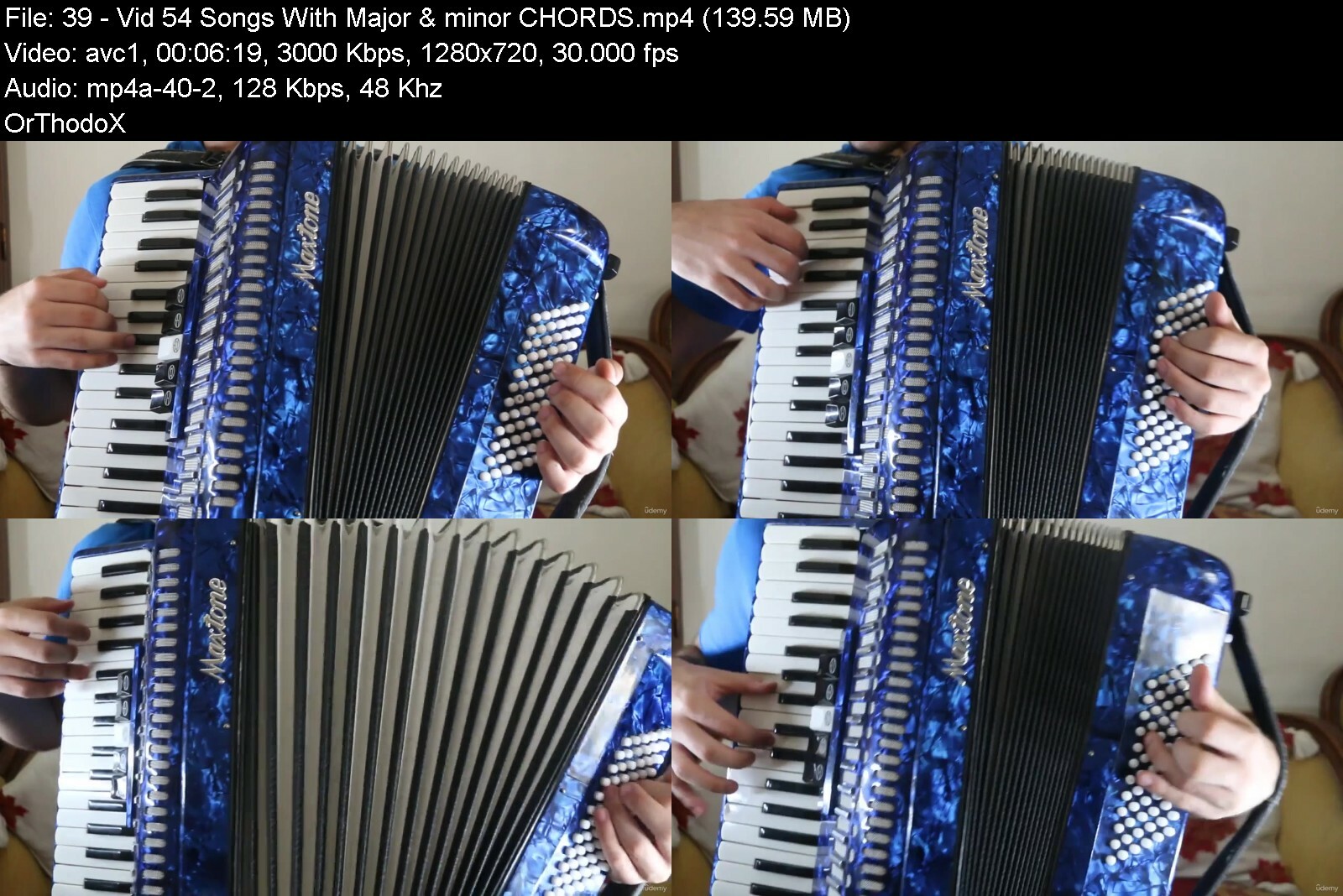
Accordion For Beginners: Learn, Practice & Play Songs

1wnrc0u5jzea2eod0luaqnddv1.jpg


Accordion For Beginners: Learn, Practice & Play Songs
Published 9/2022
MP4 | Video: h264, 1280x720 | Audio: AAC, 44.1 KHz
Language: English | Size: 11.58 GB | Duration: 10h 22m

Learn To Play Accordion As A Beginner While Teaching Yourself How To Play Songs On The Piano Accordion & The Bass Notes


What you'll learn
Understand How To Play ACCORDION From A Complete Beginner
Learn New Skills In The Accordion And Many TIPS & TRICKS!
Mastering Many TECHNIQUES So You Will Be Able To Play Better This AMAZING Instrument
Flex Your Musical Muscles Since The Course Is Carrying A LOT OF CHALLENGES
Create A Unique Personality While Forming Songs: How To Play Your Own MELODY
Play MANY SONGS As Exercises To Understand & Enjoy The Lessons Using A VERY FUN & INTERACTIVE Way!

Requirements
No Accordion Experience Is Needed, YOU WILL LEARN STARTING FROM 0
A Burning Desire To Learn And MASTER The Accordion's Techniques Since They Will Be Plenty Of CHALLENGES Before Graduating FROM MY CLASS!

Description
Music, Once Admitted To The Soul, Becomes A Sort Of Spirit & Never Dies!Accordion has been one of the most important instrument in the world! People will think that these buttons are hard to understand, and there should be a secret recipe to be able to play Accordion!I can assume right now, that this is completely wrong, all you need to know, is just the techniques in the Piano Accordion + some tricks aside of the basics steps In THE BASS NOTES! Starting from this moment, I'm responsible of every step you take forward in your Accordion journey!As you saw in my video, I've helped many students achieving their goals in music, and, in this class, I would love to share everything with you!We made sure that this course has everything you need to take you from a beginner (even with zero music experience) and slowly take you to intermediate and finally become a professional.Section 1- Right Hand Structure:In our first section, we'll start by getting an idea on how to play the right hand (Piano Accordion). We'll start by locating the notes on the piano accordion, understand how the keyboard works, and of course, learn some songs to add some fun & enjoy our lessons! I have also left a big brain test challenge at the end, to test your knowledges at the end of section before moving on to the next one!Section 2- Basics Of Left Hand:It's time to learn how to support our melody with the left hand notes! In this section, we'll learn how to play the bass row & understand how to navigate using the left hand's notes! You will also get an idea on how to accompany the new songs that we will be learning in this section. Of course, I have also left a BBTC(big brain test challenge at the end of this section)Section 3- Important Music Theory Information To Know:Everyone will that music theory is not useful, but trust me, we need it to be able to continue this course! I will make sure to give you just the necessary information so you will be able to continue the course comfortably with me, and never doubting about missing ideas! You will also have a lot of challenges in this section to make sure that every idea that I was giving you will be clear!Section 4- Mastering The Right Hand:In this section, we will learn advanced right hand techniques, so you will be able to master this part of the accordion! We will also learn how to play scales by ear, so you will able to get a better idea of what it looks like to play by ear before directly entering this skill later on in this course! You will also have the chance to learn life hack(music hack) that will make our path easier to be able to arrive to our goal!Section 5- Mastering The Left Hand:It's time to learn advanced lessons in the left hand! We will discover new buttons, and also learn how to put them with the right hand, so they will be able to support our melody! You will understand what is the difference between major and minor, and how to play them using both hands together, while of course, maintaining the correct rhythm!Section 6- Tricks &*Tips With The LEFT HAND:Do you imagine yourself being able to play the left hand in a professional way, but don't know how to put these small details that can even make your music a little bit better and easier to play!In this section, I will teach you how to play some techniques with the left hand, from the Play Stop Technique, to the stronger bass with the major chord and many other additional pitches to the melody so it can sound better!Section 7- Advanced Right Hand Techniques: To able to go way further using the right, I have also add another section for it! In this part, we will be learning new songs, that applying some tricks using the right hand, and also learn how to play chords in the song using not only the left hand, but also play them with the right hand! And the best part is, we will be playing them using inversions some we can mix sounds and make our music better!Section 8- Mastering 7th CHORDS MOVEMENTS:I cannot skip the 7th chords, since they are important chords in our music! In this section, we will be learning how to put them on the power beat, and also create power using this type of chords!We will also learn how to play the dominant 7th chord in both hands, and how to add to our music. This chord creates kind of tension, most of my students love it the most!Section 9- Discovering New Notes In The LEFT HAND:There are still some buttons in the accordion that we didn't discover them yet! The diminished row! Some of you might think that it's unuseful! BUT THIS IS COMPLETELY WRONG, if you will know how to put it correctly in the song, it will sound really good! And this will be our goal in this section + of course, discovering new types of 7th chords like major & minor 7th chords!Section 10- Best Of Chords Progression:One of the most important section in this course, we will learn how to build a sequence of chords progression, that will build a song! Then, we will study a new song, and we will be adding some chords to it:*minor 6th-->Major 4th...and many other types!We will also be facing a lot of challenges, so I can fix these lessons into your head, and really make sure that everything was clear!Section 11- First Steps Of Playing On Your Own:This is one of the most important topic in music: Playing By Ear!In This Section, I will teach you how you will be to play any melody, rhythm and song by ear on the accordion! We will also learn how to add background to our music such as bass notes and also Major & minor chords! You will also be able to discover the melody of any song that you will hear! How Awesome Is This?Section 12- Small Effects To Our Music:Also in music, Small Details Matter! In this section, you will learn how to add many musical effects to our song, so it will sound better! I will also teach you how to add a traveling note, a trill & also how to vibrate your bellow!After this section, you will have more confidence while playing the accordion, because, it contains plenty of challenges that will help you understand &*play better this amazing instrument!Section 13- Boosting Our Song:In this section, we will focus more on editing the rhythm of a song! You will learn first new songs so we will be able to edit the beats in this song! You will leave this section with a better understanding on how to play the rhythm and edit it as you wish! Section 14- Sheet Music:We can't finish a music course, without knowing how to play with sheet music! Because, I do believe that some of us might like to play with sheet music! I have add this section at the end of the course, so if you don't like to play with sheet music, it will not ruin your learnings at the middle of course!What You Will Learn In This Course: Locating Notes (Right Hand)Build ChordsUnderstand Sharps & FlatsPlay Melodies With ArpeggioOctavesUnderstand The Bass RowWhole & Half Steps (Small Idea)Major & minor 3rdMajor & minor ChordsScalesPassing The Thumb TrickLife Hack With Major ScalePlay Scales With The Left HandMajor CHORD WITH THE LEFT HANDHow minor chords workPlay Many Songs Using Major & minor chordsPlay Stop TechniqueInversions Chords Using The Right HandMovements With InversionsTypes Of 7th ChordsDominant 7th ChordCreate Beautiful Ending With The Dominant 7thMajor 7thminor 7thDiminished 7th(Right & Left Hand)I IV V Chord ProgressionAdding minor 6th CHORDMoving From minor 6th To Major 4thDiscover Melodies On Your OwnMatching Chords With The MelodyAdd A Traveling Note To Our MusicTrillsVibrating The BellowGrupetto In Our SongsAppoggiaturaMoving From Chords To ArpeggioBoosting Our SongsAdd Beats To The MelodyLearn Many Form Of Rhythm To Design It!And Of Course, While Learning A Lot Of Songs, So You Will Be Able To Enjoy The Process Improving!Hope you enjoyed the plan of our course, and hopefully see you Inside. What are you waiting, do you want to only read this, Or to take action? PS: Don't Forget To Do THE CHALLENGESI will see you in the first lecture!
Overview
Section 1: Section 1- Right Hand Stucture
Lecture 1 Vid 1.1: Locating Notes
Lecture 2 Vid 1.1.2: Locating Notes Challenge
Lecture 3 Vid 1.2: Idea Of Chords
Lecture 4 Vid 1.2.2: Chords Challenges
Lecture 5 Vid 1.3: Understand Sharps & Flats
Lecture 6 Vid 1.3.2: Challenge With Sharps and Flats
Lecture 7 Vid 1.4: Training With Arpeggio
Lecture 8 Vid 1.5: Beats With Arpeggio!
Lecture 9 Vid 1.6: Playing Our First Song
Lecture 10 Vid 1.7: What Are Octaves?
Lecture 11 Vid 1.8: Big Brain Test Challenge!
Section 2: Section 2- Basics Of Left Hand
Lecture 12 Vid 2.1: Why Do We Use The Left Hand?
Lecture 13 Vid 2.2: Understand The Bass Row!
Lecture 14 Vid 2.2.2: Bass Row Challenge
Lecture 15 Vid 2.3: Songs With The Left Hand
Lecture 16 Vid 2.4: Big Brain Test Challenge!
Section 3: Section 3- Important Music Theory Informations!
Lecture 17 Vid 3.1: Why Do We Need Music Theory?
Lecture 18 Vid 3.2: Whole & Half Steps!
Lecture 19 Vid 3.2.2: Whole & Half Steps Challenge
Lecture 20 Vid 3.3: What Are Interval?
Lecture 21 Vid 3.4: Major & minor 3rd
Lecture 22 Vid 3.4.2: Major & minor 3rd Challenge
Lecture 23 Vid 3.5: How To Build A Chord?
Lecture 24 Vid 3.6: Major VS minor Chord (Right Hand)
Lecture 25 Vid 3.6.2: Major & minor Chord Challenge
Lecture 26 Vid 3.7: Big Brain Test Challenge!
Section 4: Section 4- Mastering The Right Hand
Lecture 27 Vid 4.1: What Is A Scale?
Lecture 28 Vid 4.2: Passing The Thumb Trick!
Lecture 29 Vid 4.3: Playing Some Scales By Ear
Lecture 30 Vid 4.3.2: Scales By Ear Challenge
Lecture 31 Vid 4.4: Life Hack With Major Scale!
Lecture 32 Vid 4.5: Playing Scales With Octaves
Section 5: Section 5- Mastering The Left Hand
Lecture 33 Vid 5.1: Play Scales With The Left Hand (Counter-Bass)
Lecture 34 Vid 5.1.2: Left Hand Scale Challenge!
Lecture 35 Vid 5.2: Play Major Chord With The Left Hand!
Lecture 36 Vid 5.2.2: Major Left Hand Chord Challenge
Lecture 37 Vid 5.3: Play minor Chord With The Left Hand
Lecture 38 Vid 5.3.2: minor Left Hand Chord Challenge!
Lecture 39 Vid 5.4: Songs With Major & minor CHORDS
Section 6: Section 6- Tricks & Tips With The Left Hand
Lecture 40 Vid 6.1: Why Do We Need It?
Lecture 41 Vid 6.2: Play Stop Technique!
Lecture 42 Vid 6.3: New Song Time
Lecture 43 Vid 6.4: Adding Left Hand To It!
Lecture 44 Vid 6.4.2: Challenge Stop Technique
Lecture 45 Vid 6.5: Stronger Bass + Major Chord
Section 7: Section 7- Advanced Right Hand Techniques
Lecture 46 Vid 7.1: Playing New Songs!
Lecture 47 Vid 7.1.2: Adding The Left Hand
Lecture 48 Vid 7.2: Why Songs Are Boring With Only 1 Chord?
Lecture 49 Vid 7.3: What Is An Inversion & Types?
Lecture 50 Vid 7.3.2: Inversions Challenges
Lecture 51 Vid 7.4: Playing Songs With Inversions
Lecture 52 Vid 7.5: Learn New Song!
Lecture 53 Vid 7.5.2: Learn New Song
Lecture 54 Vid 7.6: How Inversions Will Help Us With Movements!
Section 8: Section 8- Mastering 7th Chords Movements
Lecture 55 Vid 8.1: Power Of 7th CHORD
Lecture 56 Vid 8.2: Learn New Song!
Lecture 57 Vid 8.2.2: Learn New Song(2)
Lecture 58 Vid 8.3: Building The Dominant 7th Chord!
Lecture 59 Vid 8.3.2: Building Dominant 7th Challenge
Lecture 60 Vid 8.4: Locating & Playing The Dominant 7th In LEFT HAND!
Lecture 61 Vid 8.5: Create Beautiful Ending With 7th Chord!
Section 9: Section 9- Discovering New Notes In Left Hand
Lecture 62 Vid 9.1: Forming Major & minor 7th!
Lecture 63 Vid 9.1.2: Major & minor Challenge
Lecture 64 Vid 9.2: Diminished 7th Explanation
Lecture 65 Vid 9.2.2: Diminished 7th Challenge!
Lecture 66 Vid 9.3: Locating Diminished 7th In The LEFT HAND
Section 10: Section 10- Best Of Chords Progression
Lecture 67 Vid 10.1: Intro To Chords Progression
Lecture 68 Vid 10.2: Scale Degree Explanation
Lecture 69 Vid 10.2.2- Scale Degree Challenge
Lecture 70 Vid 10.3: Major or minor Chords In The Scale
Lecture 71 Vid 10.3.2: Major or minor Challenge
Lecture 72 Vid 10.4: I IV V Chords Progression
Lecture 73 Vid 10.4.2: I IV V Challenge
Lecture 74 Vid 10.5: Adding minor 6th
Lecture 75 Vid 10.6: Learning New Song
Lecture 76 Vid 10.6.2: Learning New Song
Lecture 77 Vid 10.7: minor 6th To Major 4th
Section 11: Section 11- First Steps Of Playing On Your Own
Lecture 78 Vid 11.1: Introduction
Lecture 79 Vid 11.2: Discovering Melodies (1)
Lecture 80 Vid 11.3: Matching Chords With The Melody (1)
Lecture 81 Vid 11.4: Discovering Melodies (2)
Lecture 82 Vid 11.5: Matching Chords With The Melody (2)
Section 12: Section 12- Small Effects To Our Music
Lecture 83 Vid 12.1: With & Without Them
Lecture 84 Vid 12.2: Travelling Note In Right HAND
Lecture 85 Vid 12.2.2: Right Hand Traveling Note Challenge
Lecture 86 Vid 12.3: Traveling Note In The Left HAND!
Lecture 87 Vid 12.3.2: Left Hand Traveling Challenge!
Lecture 88 Vid 12.4: Put A Trill
Lecture 89 Vid 12.4.2: Challenge With The Trill
Lecture 90 Vid 12.5: Vibrating The Bellow
Lecture 91 Vid 12.6: Adding A Grupetto
Lecture 92 Vid 12.6.2: Grupetto Challenge!
Lecture 93 Vid 12.7: Learn A New Song
Lecture 94 Vid 12.7.2: Learn A New Song!
Lecture 95 Vid 12.8: Appoggiatura
Lecture 96 Vid 12.8.2: Appoggiatura Challenge
Lecture 97 Vid 12.9: Chords To Arpeggios!
Lecture 98 Vid 12.9.2: Chords To Arpeggio Challenge
Section 13: Section 13- Boosting Our Song!
Lecture 99 Vid 13.1: With Or Without Boosting!
Lecture 100 Vid 13.2: Learn New Song!
Lecture 101 Vid 13.2.2: Learn New Song
Lecture 102 Vid 13.3: Adding Beats To Songs
Lecture 103 Vid 13.3.2: Adding Beats To Songs Challenge!
Lecture 104 Vid 13.4: Doum Tak Tak Beat ( Valse)!
Lecture 105 THANKS!
Section 14: 14- Some Sheet Music Basics To Know
Lecture 106 Vid 14.1: Why We Need To Learn Sheet Music?
Lecture 107 Vid 14.2: Quick G Clef Reading
Lecture 108 Vid 14.2.2: G Clef Challenge
Lecture 109 Vid 14.3: Rhythms Subdivision
Lecture 110 Vid 14.3.2: Rhythms Challenge
Lecture 111 Vid 14.4: Dots Explanation
Lecture 112 Vid 14.5: Understand Ties
Lecture 113 Vid 14.6: What Are Rests?
Lecture 114 Vid 14.7: Magic F Clef Reading!
Lecture 115 Vid 14.8: Read Left Hand Code
Lecture 116 Vid 14.9: Understand Time Signature!
Beginners Who Tried To Learn Accordion Before, But Thought That It Was Too DIFFICULT & COMPLICATED!,A Person That Has Played Accordion Before and Has An Idea Of The Basics, But Wants To Improve By Learning How To Play WITH A PROFESSIONAL WAY!,Someone That Wants To Play For Fun Some Songs And Needs A Point To Start!,An OLD Accordionist That Wants To Get Back To This Instrument After A Long Brake!


accordionforbeginnersrlfho.jpg


Download from RapidGator


Download from DDownload



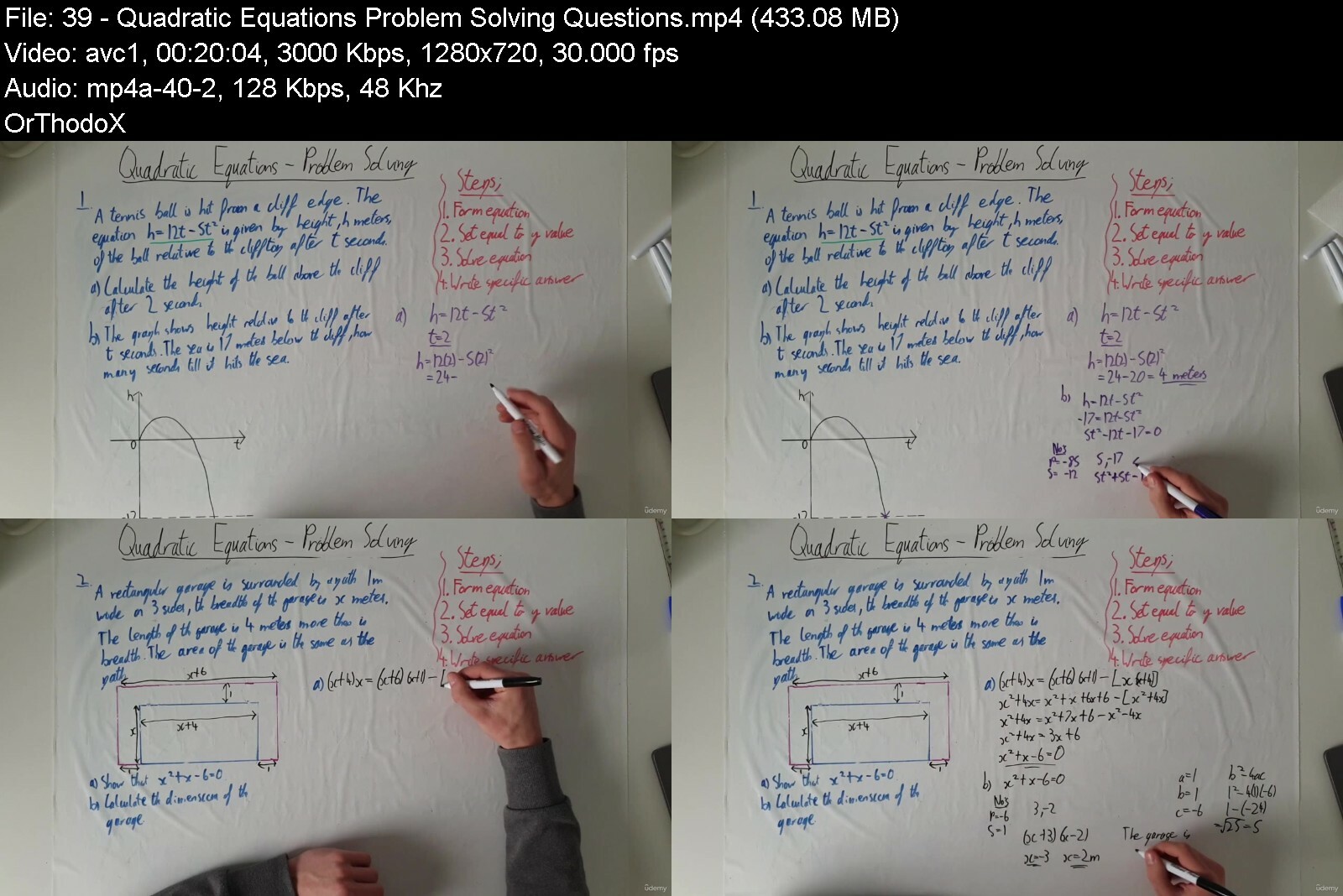
National 5 Maths: Master Every Topic

set4npxfbd1m1ecdrkgawkwibc.jpg


National 5 Maths: Master Every Topic
Published 9/2022
MP4 | Video: h264, 1280x720 | Audio: AAC, 44.1 KHz
Language: English | Size: 16.96 GB | Duration: 13h 18m

Get An Amazing National 5 Maths Grade With Our Comprehensive Course Taught By Experts


What you'll learn
Understand All The Content In The National 5 Syllabus To A High Level
To Achieve An Amazing Grade At National 5 Maths
Algebraic Fractions: Simplify, Add & Subtract, Multiply And Divide
Linear Equations: Straight Line, Equations, Inequations, Simultaneous Equations, Changing The Subject
Quadratic Equations: Solving, Quadratic Formula, Discriminant, Roots & Graphs, Intersecting Lines, Problem Solving
Graphs Of Quadratic Functions: Determining The Equation, Sketching A Quadratic Function, Identifying Features
Lengths, Angles And Similarity: Pythagoras, Shape Properties, Similarity For Lengths And Volume
Graphs And Identities: Graphs Of Trigonometric Functions, Solving Trig Equations, Exact Values, Trig Identities
Fractions & Percentages: Increases And Decreases, Compounding, Reverse Percentages, Dividing Fractions, Mixed Numbers
Analysing Data: Standard Deviation, Semi-Interquartile Range, Scatter Graphs
Other Skills: Gradients, Circles, Volumes, Rounding

Requirements
Basic National 4 Level Understanding Of Mathematics

Description
Welcome to the most comprehensive National 5 Mathematics learning resource!I'm Cameron, a university medical student and when I was in high school I realised that there weren't any great comprehensive learning resources that were easy to learn from for Scottish students. So with a few of my smartest university friends, we created one.It can be daunting starting national 5's and taking exams for the first time. So we want to make sure when you open your results, that it has the grades on it that you deserve. So with us, you will find learning National 5 Maths easy.Taught By An ExpertTaught by myself and Hayden, who is studying maths at university, we both achieved the top grade in advanced higher maths so we both know the course content inside out. As experienced tutors and students ourselves, we know how to teach the content in a clear way because we were in the same position as you. So most importantly you can easily understand it.Clear Understandable TeachingLearning from textbooks is boring, outdated and simply isn't as effective as learning needs to be - you deserve better. With us, you will learn from high-quality videos teaching all the knowledge in an understandable format that you can watch anytime. It's like having a great in-person lesson where you learn so much, felt involved and didn't get left behind by babbling nonsense - that you can access whenever you need to.Taught using an overhead camera, as we work we give a running explanation of everything we are doing - making it super interactive and easy to follow along. If you don't believe me, give one of our free preview lessons a watch!The typical lesson starts by teaching you a new concept and relating it to any previous knowledge, then going over some exam examples with you. They are built to make it extremely easy to understand tricky concepts!Complete A-Z Of The Official SQA Course SyllabusOur course follows the official SQA course syllabus, teaching the exact content needed for the National 5 Mathematics exam. No fluff, no added content you don't need, just exactly what you need to know taught well.The Most Effective Ways To LearnFor your exam success not only do you need to understand the content but also remember it. Our course is created with the most effective learning techniques proven by science. So you can understand more and get the grade you are fully capable and deserving of!Anyone Can Do ItYes, it is true that some students are just inherently better at maths than others. However, I truly believe, because I have seen it many times, that anyone can get a good grade in national 5 maths, you just need to study it in the right way. By trying to just remember what to do you are fighting an uphill battle you won't win because it makes it really difficult for your brain to remember. Instead, evidence shows you have to understand it, which is exactly what we teach in this course.Trust me......... you can do it too.Students across Scotland have found success with our course and we hope you can too!
Overview
Section 1: Introduction
Lecture 1 Introduction: How To Learn Most Effectively
Section 2: Unit 1: Fundamental Skills
Lecture 2 Surds 1
Lecture 3 Surds 2
Lecture 4 Indicies 1
Lecture 5 Indicies 2
Lecture 6 Expanding Brackets 1
Lecture 7 Expanding Brackets 2
Lecture 8 Expanding Brackets 3
Lecture 9 Identifying Like Terms
Lecture 10 Simplifying Algebraic Fractions
Lecture 11 Adding & Subtracting Algebraic Fractions
Lecture 12 Multiplying Algebraic Fractions
Lecture 13 Dividing Algebraic Fractions
Section 3: Unit 2: Linear Equations
Lecture 14 Determining The Equation Of A Straight Line y=mx+c
Lecture 15 Determining The Equation Of A Straight Line y-b=m(x-a)
Lecture 16 Straight Line - Functional Notation
Lecture 17 Straight Line - General Linear Equation
Lecture 18 Straight Line - Finding The Midpoint Of A Line Segment
Lecture 19 Linear Equations
Lecture 20 Linear Inequations
Lecture 21 Simultaneous Equations
Lecture 22 Simultaneous Equations In Context
Lecture 23 Changing The Subject - Adding & Subtracting
Lecture 24 Changing The Subject - Multiplying & Dividing
Lecture 25 Changing The Subjects - Powers, Roots And Brackets
Section 4: Unit 2: Quadratic Relationships
Lecture 26 Equation Of A Quadratic Function - Form 1
Lecture 27 Equation Of A Quadratic Function - Form 2
Lecture 28 Sketching A Quadratic Function - Form 1
Lecture 29 Sketching A Quadratic Function - Form 2
Lecture 30 Sketching A Quadratic Function - Form 3
Lecture 31 Turning Points And Axis Of Symmetry
Lecture 32 Solving Related Problems
Lecture 33 Quadratic Equations - Solving Algebraically
Lecture 34 Quadratic Equations - Using Quadratic Formula
Lecture 35 Quadratic Equations - Algebraic or Quadratic?
Lecture 36 Quadratic Equations - Discriminant
Lecture 37 Quadratic Equations - Roots And Corresponding Graph
Lecture 38 Quadratic Equations - Intersecting Straight Line And Parabolas
Lecture 39 Quadratic Equations - Problem Solving Questions
Section 5: Unit 2: Lengths, Angles & Similarity
Lecture 40 Pythagoras' Theorem
Lecture 41 Shapes And Angles - Shape Properties
Lecture 42 Shapes And Angles - Circle Properties
Lecture 43 Shapes And Angles - Symmetry Calculations
Lecture 44 Shapes And Angles - Circle Dissection
Lecture 45 Shapes And Angles - Polygon Angles
Lecture 46 Using Similarity To Find Lengths
Lecture 47 Similarity - Areas And Volumes
Section 6: Unit 2: Graphs & Identities
Lecture 48 Trigonometry - SOHCAHTOA
Lecture 49 Trigonometry - Sine & Cosine Graphs
Lecture 50 Trigonometry - Amplitudes
Lecture 51 Trigonometry - Periods
Lecture 52 Trigonometry - Combining Amplitudes & Periods
Lecture 53 Trigonometry - Vertical Translation
Lecture 54 Trigonometry - Horizontal Translation
Lecture 55 Trigonometry - Overall Questions
Lecture 56 Trigonometry - Tan Graph
Lecture 57 Trigonometry - Tan Horizontal Transfer
Lecture 58 Solving Trigonometry Equations
Lecture 59 Trigonometry Problem Solving
Lecture 60 Trigonometry Exact Values
Lecture 61 Trigonometry Line Intersection
Lecture 62 Trigonometric Identities
Section 7: Unit 3: Numerical Skills
Lecture 63 Percentages - Increases & Decreases
Lecture 64 Percentages - Compound Interest
Lecture 65 Percentages - Reverse Percentages
Lecture 66 Fractions - Dividing By A Fraction
Lecture 67 Fractions - Operations With Mixed Numbers
Lecture 68 Fractions - Calculations With Mixed Fractions And Operations
Lecture 69 Statistics - Standard Deviation
Lecture 70 Statistics - Semi-Interquartile Range
Lecture 71 Scatter Graphs
Students who are currently learning and will take an exam on SQA National 5 Mathematics


national5mathsmasteref2f9v.jpg


Download from RapidGator


Download from DDownload



Advanced Certificate In Life Coaching (Skills And Practice)

6tzvxttrjxq8ybkiu8lnzyndvq.jpg
aa

Advanced Certificate In Life Coaching (Skills And Practice)
Last updated 12/2021
MP4 | Video: h264, 1280x720 | Audio: AAC, 44.1 KHz
Language: English | Size: 43.39 GB | Duration: 32h 30m

An advanced life coaching training program that prepares you for extensive personal growth and professional advancement.


What you'll learn
Improve your people skills and develop a greater sense of social awareness.
How to make difficult decisions (or how to help others make difficult decisions).
Expand your client's emotional IQ to solve problems and spark their creativity.
Facilitate change by helping people to break their molds of unhelpful behavior.
Establish rapport with others by communicating in a way that establishes trust.
Develop the self-awareness integral to the improvement of social effectiveness.
How to identify and address troublesome beliefs, attitudes and behavior habits.
How to help clients solve their problems and identify new growth opportunities.
A coaching method that inspires change rather than just imparting information.
And much, much more.

Requirements
It is beneficial for students to have coaching experience prior to enrolling in this course.
Students can access this training from anywhere with an internet connection.
Additional PDF materials are provided to enhance your learning experience.
Students are encouraged to take notes (for self-reflection purposes only).
You can access your training course on a tablet, smartphone, or desktop.
You can also listen to the MP3 version if you prefer to learn on the go.

Description
With this advanced life coaching training course, you will learn to implement a broad range of integrative coaching strategies to practice this valuable people skill in a way that will support individuals in their personal, professional, and social development.With a focus on improving mindsets, enhancing communication skills, and developing mature ideals, this Advanced Certificate in Life Coaching enables people to live more empowered lives. In addition to its potential for enhancing individual well-being, coaching is a set of skills that can be applied to a diverse range of social and professional contexts.Life coaches help people navigate life transitions, allowing them to find greater purpose, wellbeing, and connection. The program will present a revolutionary life coaching method that allows individuals to redefine their attitude, mindset, and routines. Advanced life coach training equips you with the skills and knowledge you need to become an expert in the field.In this course, students will learn how to establish and articulate their personal or career goals, as well as demonstrate the ability to translate those goals into tangible outcomes. Identifying and solving client problems and identifying new growth opportunities require a clear understanding of their goals along with crystal clear actions to fulfill those goals.Life coaching is an excellent career choice for those who are interested in helping others to achieve their personal goals and professional aspirations. This course does not teach attendees one specific method, but instead teaches them how to make long-term changes in their thinking and decision making using contemporary life coaching methodologies.Why Should I Take This Course?How to make (or help others make) difficult decisions in difficult circumstances.Expand your client's emotional IQ to solve problems and spark their creativityFacilitate change by helping people to break their molds of unhelpful behavior.Establish rapport with others by communicating in a way that establishes trust.Develop the self-awareness integral to the improvement of social effectiveness.How to identify and address troublesome beliefs, attitudes and behavior habits.How to help clients solve their problems and identify new growth opportunities.A coaching method that inspires change rather than just imparting information.By studying advanced life coach training, you can gain the skills needed to influence positive changes in your personal life, your family, in your workplace, or even in your community. By taking this course, you will gain a more comprehensive understanding of the life coaching process, counselling skills, psychological theory, coaching skills, and interpersonal skills.You will learn everything you need to know about life coaching and how to build a practice that's dedicated to integrity, professionalism, and ethical practice. Based on 15 years of experience teaching coaching and applied psychology, the course instructor will guide you step-by-step through a comprehensive range of easy-to-follow concepts and methodologies.Whether you are looking for a breakthrough in your own life or in your family, friends, or work colleagues, this coaching framework is designed to enable sustainable transformation for you and your coaching clients. The Advanced Certificate in Life Coaching is suitable for those who want to develop coaching competency, but haven't yet chosen a coaching niche.We will provide you with bite-sized modules in this course that are easy to understand and apply. The flexibility to learn anywhere, anytime, on any device means you are in total control. The course is offered by the Academy of Modern Applied Psychology and includes all the essential topics to ensure you gain a clear understanding of the life coaching method."I have benefitted from a life coach for many years, and since taking this training course, now have the confidence to offer my own version of coaching to others" - Alan D. MiddletonThis training is part of a larger curriculum of professional development training resources, designed by Kain Ramsay Ltd, and hosted within the Achology community peer-learning environment. The training course is accompanied by a 30-day money back guarantee, so if you're not happy with the format, you can get your money back - no questions asked.
Overview
Section 1: The Fundamentals and History of Life Coaching
Lecture 1 Course Introductions and Managing Expectations
Lecture 2 A Purpose for the Life Coaching Process
Lecture 3 Course Support and Frequently Asked Questions (FAQs)
Lecture 4 Join the 'Practice makes Permanent' Support Group
Lecture 5 Key Presuppositions for Effective Life Coaching (Part 1)
Lecture 6 The Presuppositions of Effective Life Coaching Part 2
Lecture 7 The Presuppositions of Effective Life Coaching Part 3
Lecture 8 G. Egan's Factors that Impede Effective Listening (Part 1)
Lecture 9 G. Egan's Factors that Impede Effective Listening (Part 2)
Lecture 10 Understanding the Term Life Coaching (Part 1)
Lecture 11 Understanding the Term Life Coaching (Part 2)
Lecture 12 Learning Styles and Obstacles to Personal Growth
Lecture 13 Choosing the 'Right' Coaching Clients (Case Study 1)
Lecture 14 Choosing the 'Right' Coaching Clients (Case Study 2)
Lecture 15 The Standard for Effective Life Coaching
Lecture 16 Article: The Standard (Further Distinctions)
Lecture 17 The Essential Conditions for Relational Practice
Lecture 18 Article: The Core Conditions of Relational Practice
Lecture 19 Exploring Perception & End of Section Wrap-Up
Section 2: The Prerequisites of Self-Awareness and Growth
Lecture 20 Life Balance and Introducing Section Two
Lecture 21 Client Initial Consultation Session (Demonstration Video)
Lecture 22 Self-Awareness and Its Potential (Part 1)
Lecture 23 Self-Awareness and Its Potential (Part 2)
Lecture 24 Human Emotion: A Mother of All Concerns
Lecture 25 Owning Our Assets and Liabilities
Lecture 26 A Conversation about Assets and Liabilities (Part 1)
Lecture 27 A Conversation about Assets and Liabilities (Part 2)
Lecture 28 Identity Crisis: Two Ways of Defining the Identity
Lecture 29 The Timeline of Life: Identity Crisis (Part 1)
Lecture 30 The Timeline of Life: Identity Crisis (Part 2)
Lecture 31 Eleven Counterproductive Thinking Styles (Part 1)
Lecture 32 Eleven Counterproductive Thinking Styles (Part 2)
Lecture 33 Article: Eleven Counterproductive Thinking Styles
Lecture 34 Exercise: Self-Reflection Question No. 1
Lecture 35 Exercise: Self-Reflection Question No. 2
Lecture 36 Exercise: Self-Reflection Question No. 3
Lecture 37 Solution Focussed Frameworks (Part 1): The P.I.E. Model
Lecture 38 Solution Focussed Frameworks (Part 2): The S.T.I.R. Model
Lecture 39 The Three Life Zones (From Comfort to Safety) Part 1
Lecture 40 The Three Life Zones (From Comfort to Safety) Part 2
Lecture 41 Why 'Change' Doesn't Always Mean 'Change'
Lecture 42 Overview of the Coaching Journey (Part 1)
Lecture 43 Overview of the Coaching Journey (Part 2)
Lecture 44 The Essence of Human Existence (Part 1)
Lecture 45 The Essence of Human Existence (Part 2)
Lecture 46 The Human Internalisation Process (Part 1)
Lecture 47 The Human Internalisation Process (Part 2)
Lecture 48 The 4 Stages of Human Maturity and Growth
Lecture 49 Exercise: Self-Reflection Question No. 4
Lecture 50 Exercise: Self-Reflection Question No. 5
Lecture 51 Characteristics of Emotional Health (Part 1)
Lecture 52 Characteristics of Emotional Health (Part 2)
Lecture 53 Traveling through Emotional Time
Lecture 54 End of Section 2 Wrap-Up/Envisioning Exercise
Section 3: Coaching Styles and Principles of Effective Coaching
Lecture 55 Directive and Less Directive Coaching Styles (Part 1)
Lecture 56 Directive and Less Directive Coaching Styles (Part 2)
Lecture 57 Article: Directive and Less Directive Coaching Styles
Lecture 58 Operating Principles for Results Driven Coaching (Part 1)
Lecture 59 Operating Principles for Results Driven Coaching (Part 2)
Lecture 60 Rating Openness & Honesty (Testing Questions)
Lecture 61 Responsible or Victim? (Testing Questions)
Lecture 62 Exercise: Enough About Me, Let's Talk About You!
Lecture 63 The Johari Window of Insight (as a Coaching Tool)
Lecture 64 The Scale of Rapport and Relatability
Lecture 65 Article: The Scale of Rapport & Relatability
Lecture 66 Rapport Centred Life Coaching (Demonstration)
Lecture 67 Exercise: Rapport Contrastive Analysis Worksheet
Section 4: Overcoming Limiting Self-Beliefs and Convictions
Lecture 68 Introducing Beliefs & The Table of Truth
Lecture 69 The Four Stages of Belief Development (Massey)
Lecture 70 A Guide to "Being That Self Which One Is" (Part 1)
Lecture 71 A Guide to "Being That Self Which One Is" (Part 2)
Lecture 72 How to Be Compassionate and Convictional
Lecture 73 Questions to Determine Limiting Beliefs (Set-Up)
Lecture 74 Questions to Source Limiting Beliefs (Demo Part 1)
Lecture 75 Questions to Source Limiting Beliefs (Demo Part 2)
Lecture 76 Demonstration Deconstruction
Lecture 77 Labels and Labeling: The Desire for Conformity
Lecture 78 The Core Identity Coaching Model TM (Part 1)
Lecture 79 The Core Identity Coaching Model TM (Part 2)
Lecture 80 Integrating Social Psychology & Choice Theory
Lecture 81 Article: William Glasser's Choice Theory & The Core Identity Model
Lecture 82 The Core Identity 'Good Enough' Principle
Lecture 83 The Belief Modification Process and Workbook
Section 5: The Core Values and Priority Framework
Lecture 84 An Introduction to Core Values (Hierarchy of Needs) Part 1
Lecture 85 An Introduction to Core Values (Hierarchy of Needs) Part 2
Lecture 86 The Psychology of Difference and Change
Lecture 87 A Discussion on People's Ability to Change
Lecture 88 "The Spider Web of Human Values" (Part 1)
Lecture 89 "The Spider Web of Human Values" (Part 2)
Lecture 90 "The Spider Web of Human Values" (Part 3)
Lecture 91 "The Spider Web of Human Values" (Part 4)
Lecture 92 The Four Stages of Life (and How to Progress) Part 1.
Lecture 93 The Four Stages of Life (and How to Progress) Part 2.
Lecture 94 Exercise: Self-Reflection Question No. 6
Lecture 95 Exercise: Self-Reflection Question No. 7
Lecture 96 Summary of the Life Coaching Process so Far
Lecture 97 The Core Values Workbook & End of Section 5 Wrap-up
Section 6: Core Communication Skills and Language Patterns
Lecture 98 The 4 Levels of Human Interaction
Lecture 99 The Hot-o-Meter of Effective Listening
Lecture 100 Becoming All Things To all People
Lecture 101 Exercise: Self-Reflection Question No. 8
Lecture 102 Bonus Resources Based on Communication
Lecture 103 Listening To Others: Core Communication Skills
Lecture 104 Immediacy: Responding to Intuition and Hunch
Lecture 105 S.I.L.E.N.C.E.
Lecture 106 Immediacy Centred Discussion (Demonstration)
Lecture 107 Immediacy Centred Discussion (Demonstration Deconstruction)
Lecture 108 The Four Levels of Listening and Conversing
Lecture 109 Article: The Four Levels of Active Listening
Lecture 110 The Hierarchy of Judgement and How We Compare
Lecture 111 Introducing Chunking Questions
Lecture 112 Chunking Questions Demonstration
Lecture 113 Introducing Perceptual Shifting
Lecture 114 Perceptual Shifting Demonstration
Lecture 115 The UFFE ELBAEK Model for Self-Reflection
Lecture 116 Reframing and Section Six Wrap-up (Part 1)
Lecture 117 Reframing and Section Six Wrap-up (Part 2)
Section 7: Goal Setting, Action Planning and Life Progression
Lecture 118 The Goal Setting Sweet Spot
Lecture 119 Setting Goals with Structure and Order
Lecture 120 Article: The Seven Deadly Sins of Goal Setting
Lecture 121 Materials: The Goal Setting Workbook
Lecture 122 Materials: The Passions and Purpose Workbook
Lecture 123 Materials: The Mind Mapping Workbook
Lecture 124 Materials: The Action Planning Workbook
Lecture 125 The Eisenhower Matrix Productivity Method
Lecture 126 The Four Approaches to Decision Making
Lecture 127 The Expectation Evaluation Model
Lecture 128 The 'Rubber Band' Dilemma Model
Lecture 129 The Options Overload Model
Lecture 130 The Best Scenario Decision Making Matrix
Lecture 131 The 'When All Else Fails'...Project
Lecture 132 Article: The Seven Stages of Personal Development
Lecture 133 Problems to Fix or Directions to Change
Lecture 134 Exercise: Self-Reflection Question No. 9
Lecture 135 Exercise: Self-Reflection Question No. 10
Lecture 136 Exercise: Self-Reflection Question No. 11
Section 8: End of Course Summary and Suggested Next Steps
Lecture 137 The Four Faces of Effective Life Coaching
Lecture 138 FAQ 1: What is the Best Way to Challenge a Client?
Lecture 139 FAQ 2: How do I set a pricing structure for coaching sessions?
Lecture 140 FAQ 3: How to best prepare for a coaching session?
Lecture 141 FAQ 4: How to find my life coaching niche?
Lecture 142 FAQ 5: How to best work with people who have 'conditions'?
Lecture 143 FAQ 6) How do I end a helping relationship well?
Lecture 144 Recommended Reading List
Lecture 145 End of Course Summary and Wrap-Up
Lecture 146 > Download Your Achology Certificate <
This course is designed coaches who want to further develop their competencies.,The course can be taken independently or in tandem with another Achology training.,Individuals who are interested in developing their skills or advancing their careers.,This course is suitable for all people, regardless of age, sex or ethnic background.,Students with an interest in psychology will find this course particularly interesting.,Management and leadership teams will benefit from this life coaching methodology.


advancedcertificateink0cyk.jpg


Download from RapidGator


Download from DDownload


Hydraulics 102 - Hydraulic Components In Depth

xrhhdua5mo7moxvm620bazdf6j.jpg


Hydraulics 102 - Hydraulic Components In Depth
Last updated 4/2022
MP4 | Video: h264, 1280x720 | Audio: AAC, 44.1 KHz
Language: English | Size: 9.36 GB | Duration: 11h 13m

Hydraulics in mechanical engineering


What you'll learn
Know about the types of hydraulic pumps and how they work
Calculate the parameters of hydraulic pumps and motors
Know about the types of hydraulic motors and how they work
In depth knowledge on how hydraulic cylinders work and the types of hydraulic cylinders
Choosing the right parts and types for the hydraulic system
Learn about hydraulic pipelines and circuits
Know about controling the hydraulic system
Know about hydraulic valves

Requirements
The basics of hydraulics
English at a medium level
Be able to do basic arithmetic operations and a little bit of trigonometry
Hydraulics 101 (my course, recommended but not necessary)

Description
Do you want to learn about hydraulic system components in more detail?*You want to know how do the various pumps and motors function? This is the right course for you!*After making my first course on Udemy Hydraulics 101 I decided to start working on a sequel which will be more detailed and which will go in depth into how do the components in hydraulic systems work. My first course was based on the basic principles, what is the hydraulic system made out of, how do we control the power that goes into a hydraulic system but in this course you will learn how does the pump actually pump the fluid, how does the motor take the fluid flow power and convert it to mechanical power and how we control the fluid with valves and other control components. The course is structured so every section is about a certain group of components, starting with pumps. On the end of each section, there is a quiz which will help you test your gained knowledge. In the first and last section there are 2 quizzes because the sections on hydraulic pumps and valves are long and have a lot of information in them.The sections are:positive displacement pumps - in which you will learn in depth how various types of hydraulic pumps workParameters of positive displacement pumps - in which you will learn about the parameters of hydraulic pumps and how they are calculated.Hydraulic motors - in which you will learn in depth how various types of hydraulic motors workParameters of hydraulic motors - in which you will learn about the parameters of hydraulic motors and how they are calculated.Hydraulic cylinders - in which you will learn about types of hydraulic cylinders, how they work in depth and how their parameters are calculated.Hydraulic circuits - in which you will learn about the ins and outs of an hydraulic circuits and how they operate. Hydraulic valves and control components - in which you will learn how are the hydraulic systems controlled and all of the valves that help us in controlling the system.The course is long and it has a lot of information in it, it requires a lot of attention and in some lessons (like the ones we calculate the parameters of gear and axial pistons and motors) I recommend taking a pen and paper and following the mathematical steps I do.
Overview
Section 1: Positive displacement pumps
Lecture 1 Positive displacement pumps - introduction
Lecture 2 Axial piston pumps part 1
Lecture 3 Axial piston pumps part 2
Lecture 4 Axial piston pumps and motors - sizing (calculation)
Lecture 5 Radial piston pumps
Lecture 6 Gear pumps
Lecture 7 Rotary vane pumps
Lecture 8 Screw pumps
Lecture 9 Gear pumps and motors - sizing (calculation)
Lecture 10 Peristaltic pumps
Section 2: Parameters of positive displacement pumps
Lecture 11 Introduction lesson
Lecture 12 Pump flow
Lecture 13 Pump effort
Lecture 14 Pump efficiency
Lecture 15 Pump power
Lecture 16 Cavitation
Lecture 17 Characteristics of positive displacement pumps
Lecture 18 Regulation of the work parameters
Section 3: Hydraulic motors
Lecture 19 Positive displacement motors - introduction
Lecture 20 Hydraulic cylinders - translation (line) motors
Lecture 21 Axial piston motors
Lecture 22 Radial piston motors
Lecture 23 Rotary vane motors
Lecture 24 Gear motors
Lecture 25 Axial piston motors sizing (calculation)
Lecture 26 Gear motor sizing (calculation)
Section 4: Parameters of hydraulic motors
Lecture 27 Introduction
Lecture 28 Motor characteristics - flow
Lecture 29 Motor characteristics - power
Lecture 30 Motor characteristics - torque
Lecture 31 Motor characteristics - efficiency
Section 5: Hydraulic cylinders
Lecture 32 Introduction
Lecture 33 Types of hydraulic cylinders
Lecture 34 Construction
Lecture 35 Work indicators of hydraulics cylinders
Lecture 36 Piston travel and mounting
Lecture 37 Piston speed
Lecture 38 Piston speed control
Lecture 39 Flow
Lecture 40 Force
Lecture 41 Effort, power and efficiency
Lecture 42 Hydraulic cylinder sizing
Section 6: Hydraulic circuits
Lecture 43 Introduction
Lecture 44 Open loop and closed loop circuits
Lecture 45 Reservoirs
Lecture 46 Hydraulic circuit pipes and fittings
Lecture 47 Hydraulic circuit hoses
Lecture 48 Quick release coupling
Lecture 49 Hydraulic accumulators
Lecture 50 Hydraulic accumulator sizing part 1
Lecture 51 Hydraulic accumulator sizing part 2
Section 7: Hydraulic valves and control components
Lecture 52 Introduction
Lecture 53 Directional control valves (DCVs)
Lecture 54 Monoblock and sectional DCVs
Lecture 55 Discrete directional control valves
Lecture 56 Analog directional control valves
Lecture 57 One way valves
Lecture 58 Shut-off valves
Lecture 59 Pressure control valves
Lecture 60 Flow control valves
Lecture 61 Conclusion (for now)
Mechanical engineering students,Hydraulic technicians,Engineering students,Engineers,People interested in engineering,Mechatronics students,Mechanics,Academics,People interested in engineering,People interested in mechanical engineering


hydraulics102hydrauli1tcib.jpg


Download from RapidGator


Download from DDownload


Complete Cryptocurrency & Blockchain Course | Learn Solidity - Udemy

6tsdf27eizvovo3bkyrn4lhf62.jpg


Complete Cryptocurrency & Blockchain Course | Learn Solidity - Udemy
Last updated 5/2020
MP4 | Video: h264, 1280x720 | Audio: AAC, 44.1 KHz
Language: English | Size: 11.37 GB | Duration: 15h 50m

Use Solidity, Remix, Ganache, Geth, Metamask, Truffle & More To Make Blockchain Dapps! Includes Cryptocurrency Know-How.


What you'll learn
History & Economics Behind Cryptocurrencies
How To Buy, Sell & Invest Cryptocurrencies
About Wallet Types Such As Hot Wallets, Cold Wallets & More
How To Protect Yourself & Your Cryptocurrency Portfolio Online
What The Blockchain Is
Hands-On Developing With Solidity
Build Your Own Interactive Tic-Tack-Toe Game Using The Blockchain
Master Core Development Tools Such As Mist, Geth, & Ethereum Studio

Requirements
No Prior knowledge Is Needed, This Course Provides An A-Z Walkthrough
Just A Computer, This Course, And Your Patience

Description
Welcome to one of the largest, most in-depth cryptocurrency and blockchain courses online!Blockchain developer salaries now command as much as $175k, and average $97,000Over 2018 the number of full-time job openings grew by 400%! *This course gives students the chance to work with cryptocurrencies and the blockchain on a practical level, with step-by-step instructions guiding you through the entire process.The CourseThe first half of this course is a brilliant and insightful introduction to the (often confusing) world cryptocurrency. You'll learn everything you need to know about:The history and economics of cryptocurrencyHow to protect yourself and your investment portfolio online.The key differences between hot and cold walletsHow to buy, sell and invest cryptocurrencyAs well as a dedicated breakdown of various AltCoins (including Litecoin, Etherum, Ripple and more!)The practical second half of the course teaches students how to build their own projects as an ethereum blockchain developer! Going step-by-step with the instructor, you'll:Tackle hands-on developing with solidityBuild your own interactive Tic-Tack-Toe game using blockchain!Test your skills with practical challenges and exercises!Master core development tools such as Mist, Geth, and Ethereum StudioPlus learn advanced Web3 development, how to de-bug your decentralised application, and loads more!Why Learn About Cryptocurrencies & Blockchain Technology?We're in the early adopter stage with cryptocurrency & blockchain technology, so you have the chance to get in at the ground level and become proficient in it before it reaches the next adoption stage!This means there's a huge demand for knowledgable cryptocurrency & blockchain employees! Blockchain developer salaries average $97,000 and the number of full-time job openings grew by 400% in 2018. Kick-start your career with this course!Plus, the cryptocurrency and blockchain communities are some of the most helpful and friendly online, and a great sound of information! This course is a great intro to this world.Who's teaching me?Instructors Ravinder Deol and Thomas Wiesner have taught over 160,000 students to date and are expert lecturers in this area. Ravinder founded B21 Block (on online Cryptocurrency & Blockchain School), while Thomas co-created the industry standard Ethereum certification program CBDE. Both instructors will be on hand throughout the course to answer your questions in the Q&A forum!!Is this course for me?Yes! No prior knowledge is needed, this course is aimed at complete beginnersYes! You get unlimited lifetime access to the courseYes! With a 30-day money back guarantee, enrolling on the course is risk free* and Overview
Section 1: Introduction
Lecture 1 Introduction
Lecture 2 Blockchain Career Playbook
Lecture 3 Course Roadmap - Where To Begin
Section 2: Cryptocurrency Deep Dive
Lecture 4 Section Introduction
Lecture 5 What Are Cryptocurrencies?
Lecture 6 How Cryptocurrencies Came To Be
Lecture 7 How The Cryptocurrency Ecosystem Works
Lecture 8 How Cryptocurrencies Are Created
Lecture 9 What Gives Cryptocurrencies Value?
Lecture 10 The Economic Impact Of Cryptocurrencies
Lecture 11 Will Cryptocurrencies Continue To Have Value?
Lecture 12 How To Use Cryptocurrencies Anywhere
Lecture 13 Cryptocurrency Taxation
Lecture 14 Section Summary
Section 3: Cryptocurrency Wallets
Lecture 15 Section Introduction
Lecture 16 What Are Wallets?
Lecture 17 Which Wallet To Choose
Lecture 18 How To Setup A Wallet
Lecture 19 Buying Your First Cryptocurrency
Lecture 20 Selling Your First Cryptocurrency
Lecture 21 Buying & Selling Cryptocurrencies Using Other Platforms
Lecture 22 Section Summary
Section 4: Investing In Cryptocurrencies
Lecture 23 Section Introduction
Lecture 24 Why Day Trading Should Be Ignored For The Masses
Lecture 25 HODL Strategy
Lecture 26 What Are Initial Coin Offerings?
Lecture 27 Pros & Cons Of Initial Coin Offerings
Lecture 28 Difference Between Utility Tokens & Security Tokens
Lecture 29 Tracking The Cryptocurrency Markets
Lecture 30 Section Summary
Section 5: Securing Your Cryptocurrency
Lecture 31 Section Introduction
Lecture 32 The Importance Of Security
Lecture 33 How To Safeguard Your Portfolio
Lecture 34 Hot Wallets VS Cold Wallets
Lecture 35 Choosing A Cryptocurrency Exchange
Lecture 36 Section Summary
Section 6: AltCoin Deep Dive
Lecture 37 Section Introduction
Lecture 38 Litecoin
Lecture 39 Binance Coin
Lecture 40 Ethereum
Lecture 41 Ripple
Lecture 42 Steem
Lecture 43 Ethereum Classic
Lecture 44 Monero
Lecture 45 Cryptocurrency Reference Guide
Lecture 46 Section Summary
Section 7: Blockchain Theory
Lecture 47 Section Introduction
Lecture 48 What Is The Blockchain?
Lecture 49 Private & Public Blockchains
Lecture 50 Example Use Cases Of Blockchains
Lecture 51 What Are Smart Contracts?
Lecture 52 How Widely Used Are Dapps?
Lecture 53 Introducing Web 3.0
Lecture 54 The Blockchain We'll Be Working With
Lecture 55 Section Summary
Section 8: Smart Contract Development - Solidity
Lecture 56 Introduction to this Section
Lecture 57 Remix Introduction: IDE Overview
Lecture 58 How to get and use the Code Samples for this Course
Lecture 59 Your First Smart Contract
Lecture 60 Starting, Stopping & Interacting with Smart Contracts
Lecture 61 Getter & Setter Functions
Lecture 62 Variables and Addresses
Lecture 63 Global Objects and Payable Functions
Lecture 64 Constructor & Modifiers
Lecture 65 Arrays
Lecture 66 Mappings
Lecture 67 Structs
Lecture 68 View/Pure Functions
Lecture 69 The Concept of Time
Lecture 70 Exceptions: Require, Assert, Revert
Lecture 71 Section Summary and Outlook
Section 9: Define the Game Mechanics
Lecture 72 This Is The Game We'll Develop
Lecture 73 Let's Lay Out The Interfaces
Lecture 74 Basic Game Functionality
Lecture 75 How A Second Player Can Join The Game
Lecture 76 Defining Our Game Board
Lecture 77 Getting The Draw Right
Lecture 78 Winning Part 1: Horizontal and Vertical
Lecture 79 Winning Part 2: Diagonal Checks
Lecture 80 What Happens If A Player Stops Playing?
Lecture 81 Registering High Scores Part 1
Lecture 82 Registering High Scores Part 2: Top 1 Player
Lecture 83 Registering High Scores Part 3: Top 10 Players
Lecture 84 Reading High Scores: Getting The Top 10
Lecture 85 Section Summary and Outlook
Section 10: Understanding the Tools & Ethereum Blockchain
Lecture 86 Ethereum Denominations
Lecture 87 Interacting With Smart Contracts: The ABI Array
Lecture 88 These Are The Ethereum Networks
Lecture 89 Private/Public Key Cryptography
Lecture 90 Understanding the Concept Of Gas
Lecture 91 This Is How Events Work On A Deeper Level
Lecture 92 Section Summary
Section 11: Local Development with Truffle & Web3
Lecture 93 Ganache
Lecture 94 Web3.js
Lecture 95 Truffle
Lecture 96 Truffle Installation with VSCode
Lecture 97 Adapt The Truffle Environment For Our Game
Section 12: Automated Testing
Lecture 98 Let's Add A JS-File For Our Game
Lecture 99 This Is How Testing Works With Truffle
Lecture 100 Let's Test Winning And Losing
Lecture 101 Let's Test A Draw
Lecture 102 Write A Solidity Test Case
Section 13: The Game In HTML/JavaScript
Lecture 103 Let me introduce Truffle-Boxes
Lecture 104 Understand the Truffle Box
Lecture 105 Adapt Truffle Webpack for the Game
Lecture 106 Create The Basic Game Functionality
Lecture 107 Start Game and Join Game Functionality
Lecture 108 Show the Game Board
Lecture 109 Add the HTML Functionality
Lecture 110 Events for Winning and Loosing
Lecture 111 Show the Highscore List
Lecture 112 Beautify Our Game
Lecture 113 Section Summary
Section 14: Hosted Blockchain Nodes (MetaMask)
Lecture 114 MetaMask Intro
Lecture 115 Download & Install MetaMask
Lecture 116 The Definitive Guide to MetaMask
Lecture 117 This is How MetaMask Works with Truffle-Contract
Lecture 118 Play a Game with MetaMask and Ganache
Lecture 119 Deploy our Game to Ropsten using HDWallet Provider
Lecture 120 Let's Play The Game Together
Section 15: Congratulations
Lecture 121 Well Done On Completing This Course
Beginner To Intermediate Blockchain Developers,Those Interested In How Cryptocurrencies & Blockchains Work


completecryptocurrenck8fqu.jpg


Download from RapidGator


Download from DDownload


Zurück
Oben Unten