• Regeln für den Video-Bereich:

    In den Börsenbereich gehören nur Angebote die bereits den Allgemeinen Regeln entsprechen.

    Einteilung

    - Folgende Formate gehören in die angegeben Bereiche:
    - Filme: Encodierte Filme von BluRay, DVD, R5, TV, Screener sowie Telesyncs im Format DivX, XviD und x264.
    - DVD: Filme im Format DVD5, DVD9 und HD2DVD.
    - HD: Encodierte Filme mit der Auflösung 720p oder darüber von BluRay, DVD, R5, TV, Screener sowie Telesyncs im Format x264.
    - 3D: Encodierte Filme von BluRay, die in einem 3D Format vorliegen. Dies gilt auch für Dokus, Animation usw.
    - Serien: Cartoon/Zeichentrick, Anime, Tutorials, Dokumentationen, Konzerte/Musik, Sonstiges sind demnach in die entsprechenden Bereiche einzuordnen, auch wenn sie beispielsweise im High Definition-Format oder als DVD5/DVD9/HD2DVD vorliegen. Ausnahme 3D.
    - Bereich Englisch: Englische Releases gehören immer in diesen Bereich.
    - Bereich Talk: Der Bereich, in dem über die Releases diskutiert werden kann, darf, soll und erwünscht ist.


    Angebot/Beitrag erstellen

    - Ein Beitrag darf erst dann erstellt werden, wenn der Upload bei mindestens einem OCH komplett ist. Platzhalter sind untersagt.
    - Bei einem Scenerelease hat der Threadtitel ausschließlich aus dem originalen, unveränderten Releasenamen zu bestehen. Es dürfen keine Veränderungen wie z.B. Sterne, kleine Buchstaben o.ä. vorgenommen werden. Ausnahme Serienbörse:
    - Bei einem Sammelthread für eine Staffel entfällt aus dem Releasename natürlich der Name der Folge. Beispiel: Die Simpsons S21 German DVDRip XviD - ITG
    - Dementsprechend sind also u.a. verboten: Erweiterungen wie "Tipp", "empfehlenswert", "only", "reup", usw. / jegliche andere Zusatzinformation oder Ergänzung, welche nicht in obiger Beschreibung zu finden ist.

    Aufbau des Angebots und Threadtitel

    Der Titel nach folgendem Muster erstellt zu werden. <Name> [3D] [Staffel] [German] <Jahr> <Tonspur> [DL] [Auflösung] <Quelle> <Codec> - <Group>
    Beispiel: The Dark Knight German 2008 AC3 DVDRip XviD - iND
    Beispiel: The Dark Knight 2008 DTS DL BDRip x264 - iND
    Beispiel: The Dark Knight 2008 AC3 DL BDRip XviD - iND
    Beispiel: The Dark Knight German 2008 AC3 720p BluRay x264 iND
    Beispiel: The Dark Knight 2008 DTS DL 1080p BluRay x264 iND
    Beispiel: Die Simpsons S01 German AC3 DVDRip XviD iND
    Beispiel: Die Simpsons S20 German AC3 720p BluRay x264 iND
    Beispiel: Sword Art Online II Ger Sub 2014 AAC 1080p WEBRip x264 - peppermint
    Entsprechend sind also u.a. verboten: Sonderzeichen wie Klammern, Sterne, Ausrufezeichen, Unterstriche, Anführungszeichen / Erweiterungen wie "Tipp", "empfehlenswert", "only", "reup", usw. / jegliche andere Zusatzinformation oder Ergänzung, welche nicht in obiger Beschreibung zu finden ist
    Ausnahmen hiervon können in den Bereichen geregelt sein.

    Die Beiträge sollen wie folgt aufgebaut werden:
    Überschrift entspricht dem Threadtitel
    Cover
    kurze Inhaltsbeschreibung
    Format, Größe, Dauer sind gut lesbar für Downloader außerhalb des Spoilers zu vermerken
    Nfo sind immer Anzugeben und selbige immer im Spoiler in Textform.
    Sind keine Nfo vorhanden z.B. Eigenpublikationen, sind im Spoiler folgende Dateiinformationen zusätzlich anzugeben :
    Quelle
    Video (Auflösung und Bitrate)
    Ton (Sprache, Format und Bitrate der einzelnen Spuren)
    Untertitel (sofern vorhanden)
    Hosterangabe in Textform außerhalb eines Spoiler mit allen enthaltenen Hostern.
    Bei SD kann auf diese zusätzlichen Dateiinformationen verzichtet werden.

    Alle benötigten Passwörter sind, sofern vorhanden, in Textform im Angebot anzugeben.
    Spoiler im Spoiler mit Kommentaren :"Schon Bedankt?" sind unerwünscht.


    Releases

    - Sind Retail-Release verfügbar, sind alle anderen Variationen untersagt. Ausnahmen: Alle deutschen Retail-Release sind CUT, in diesem Fall sind dubbed UNCUT-Release zulässig.
    - Im Serien-Bereich gilt speziell: Wenn ein Retail vor Abschluss einer laufenden Staffel erscheint, darf diese Staffel noch zu Ende gebracht werden.62
    - Gleiche Releases sind unbedingt zusammenzufassen. Das bedeutet, es ist zwingend erforderlich, vor dem Erstellen eines Themas per Suchfunktion zu überprüfen, ob bereits ein Beitrag mit demselben Release besteht. Ist dies der Fall, ist der bereits vorhandene Beitrag zu verwenden.
    - P2P und Scene Releases dürfen nicht verändert oder gar unter einem iND Tag eingestellt werden.


    Support, Diskussionen und Suche

    - Supportanfragen sind entweder per PN oder im Bereich Talk zu stellen.
    - Diskussionen und Bewertungen sind im Talk Bereich zu führen. Fragen an die Uploader haben ausschließlich via PN zu erfolgen, und sind in den Angeboten untersagt.
    - Anfragen zu Upload-Wünschen sind nur im Bereich Suche Video erlaubt. Antworten dürfen nur auf Angebote von MyBoerse.bz verlinkt werden.


    Verbote

    - Untersagt sind mehrere Formate in einem einzigen Angebotsthread, wie beispielsweise das gleichzeitige Anbieten von DivX/XviD, 720p und 1080p in einem Thread. Pro Format, Release und Auflösung ist ein eigener Thread zu eröffnen.
    - Grundsätzlich ebenso verboten sind Dupes. Uploader haben sich an geeigneter Stelle darüber zu informieren, ob es sich bei einem Release um ein Dupe handelt.
    - Gefakte, nur teilweise lauffähige oder unvollständige Angebote sind untersagt. Dies gilt auch für eigene Publikationen, die augenscheinlich nicht selbst von z.B. einer DVD gerippt wurden. Laufende Serien, bei denen noch nicht alle Folgen verfügbar sind, dürfen erstellt und regelmäßig geupdatet werden.
    - Untersagt sind Angebote, welche nur und ausschließlich in einer anderen Sprache als deutsch oder englisch vorliegen. Ausnahmen sind VORHER mit den Moderatoren zu klären.


    Verstoß gegen die Regeln

    - Angebote oder Beiträge, die gegen die Forenregeln verstoßen, sind über den "Melden"-Button im Beitrag zu melden.
  • Bitte registriere dich zunächst um Beiträge zu verfassen und externe Links aufzurufen.

*** Bestes IPTV *** bester Preis *** gratis Test ***


Englische Tutorials

166fd6bbeb06c7c9099d025241731968.png


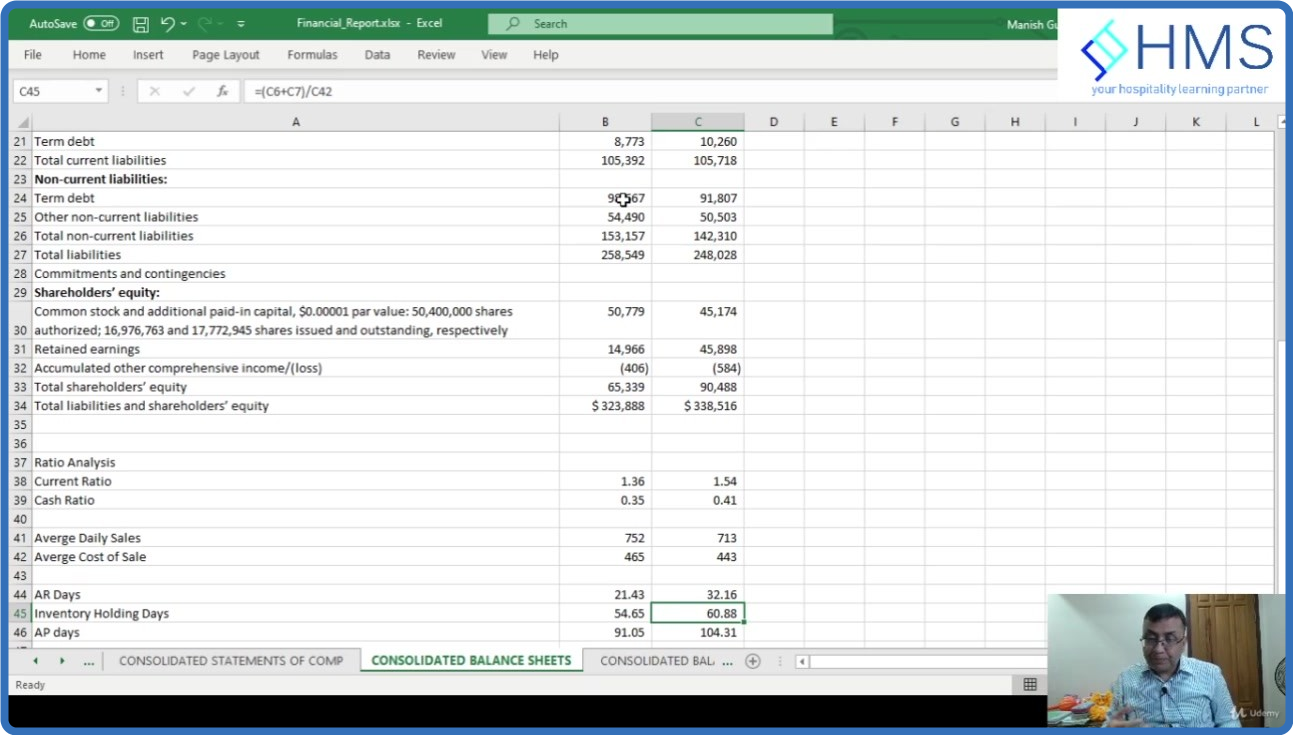
UDEMY.How.to.Read.and.Evaluate.Annual.Reports.of.Listed.Companies.
Language: English
Files Type:mp4, nfo| Size:2.33 GB
Video:02:59:37 | 1280X720 | 1831 Kbps
Audio:mp4a-40-2 | 128 Kbps | AAC
Genre:eLearning


About :

Videos Files :

 
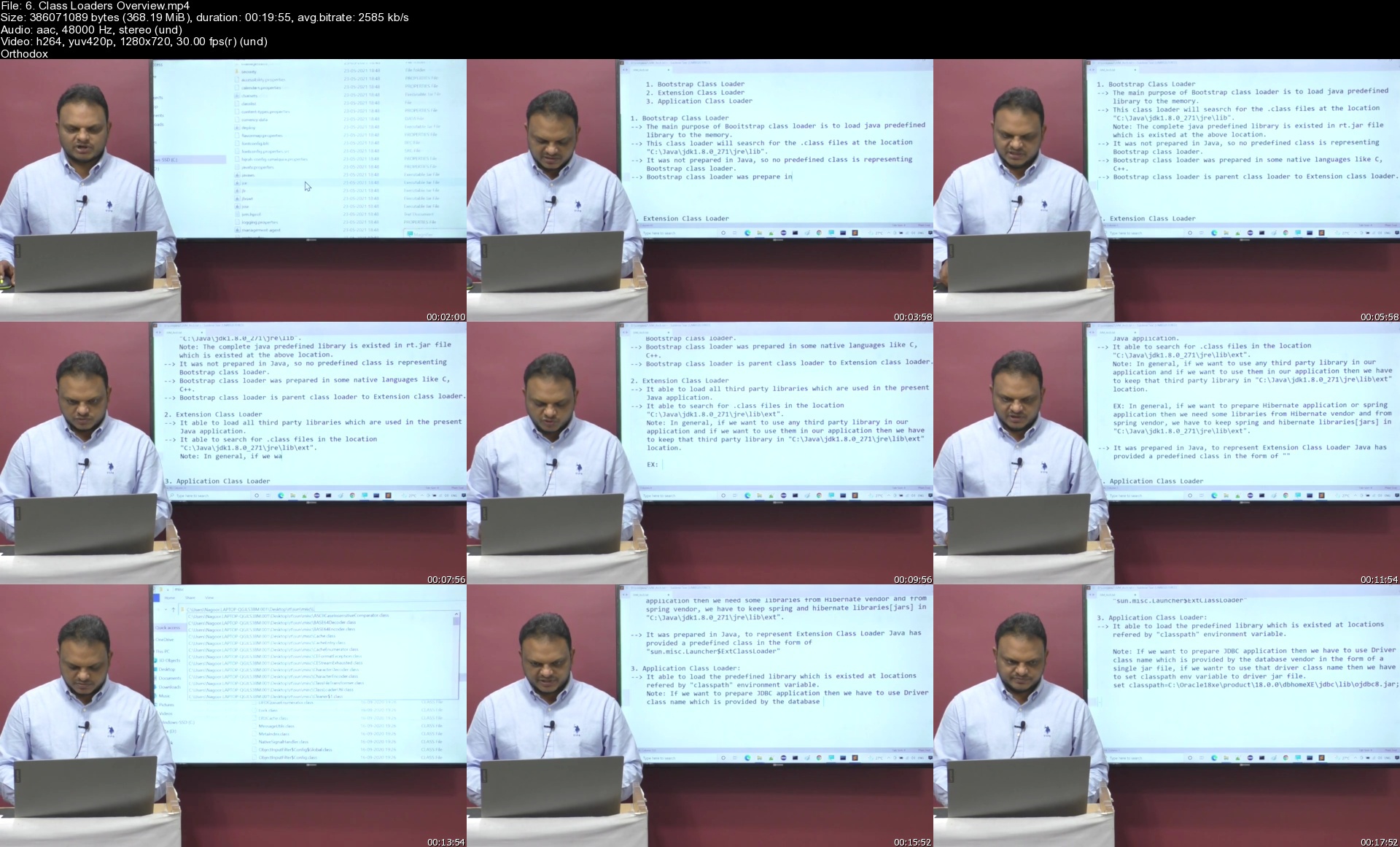
Complete Core Java In Simple Way Part - 2

39227047eafi8knz.jpg


Complete Core Java In Simple Way Part - 2
Last Updated 12/2021
MP4 | Video: h264, 1280x720 | Audio: AAC, 44.1 KHz, 2 Ch
Genre: eLearning | Language: English + srt | Duration: 284 lectures (49h 46m) | Size: 56.8 GB

Direct Class Room Videos to get complete knowledge on java


What you'll learn
Students can get complete in-depth knowledge on java concepts like language fundamentals, operators, flow control, oops concepts etc

Requirements
Basic Idea on Computer


Description
Benefits of this course

---------------------------

1. This Course will provide completeness on every topic.

2. This Course will make you to Strong on Theoretically and Pro grammatically.

3. This Course will provide Good Platform for the Advanced Technologies and Frameworks like Jdbc, Servlets, Jsps, Hibernate, JPA, Spring,..

4. This Course includes almost all the interview Questions and Answers as part of the Course internally.

5. This Course will provide Downloadable Material for all the above specified topics.

JAVA

------

1. J2SE / JAVA SE

2. J2EE / JAVA EE

3. J2ME / JAVA ME

1. J2SE / JAVA SE:[Core Java]

------------------------------

--> Java 2 Standard Edition

--> It will cover only Fundemntals of JAVA.

--> Standalone Applications.

--> If we design and execute any application with out using Client-Server Arch then that application is called as Standalone Application.

--> If we design and execute any application with out distributing application logic over multiple machines then that application is called as "Standalone Application".

--> 5% of the applications are Standalone Applications.

--> It is a dependent PL for J2EE, Testing Tools, Salesforce, SAP, Hadoop,........

--> Introduction, OOPs, Exception Handling, Multi Threadding, IOStreams, Collection Freamework,.......

2. J2EE / JAVA EE

---------------------

--> Java 2 Enterprise Edition

--> It will cover Server side Programming.

--> Distributed Applications / Enterprise Applications

--> If we design and execute any application on the basis of Client-Server Arch or by distributing application logic over Multiple machines then that application is called as Distributed Application or Enterprise Application.

--> 95% of the appl.

--> Servlets, Jsps, Jstl, EL, EJBs, Web Services,..........

3. J2ME / JAVA ME

------------------

--> Java 2 Micro Edition

--> Micro programming

--> Mobile based Applications

--> If we design and execute any appl on the basis of Mobile H/W System then that application is called as Mobile Based Application.

--> less Demand.

Syllabus

----------

1.Multi Threadding

2.Networking

3.RMI

4.Arrays

5.Collection Framework

6.Generics

7.Internationalization[I18N]

8.JVM Arch

9.Garbage Collections

Who this course is for
Academic Students who are having Java Course in their Curriculum
Software Professionals who are very fancy about Java Programming

Homepage


6.classloadersovervie1pjy6.jpg


CompTIA Pentest+ (Ethical Hacking) Course & Practice Exam

1755264944c6ggkzn.jpg


CompTIA Pentest+ (Ethical Hacking) Course & Practice Exam
Last Updated 06/2022
MP4 | Video: h264, 1280x720 | Audio: AAC, 44.1 KHz, 2 Ch
Genre: eLearning | Language: English + srt | Duration: 241 lectures (32h 13m) | Size: 11.7 GB

Pass the CompTIA Pentest+ (PT0-002) exam on your 1st attempt, includes one full-length Pentest+ practice exam!


What you'll learn
Take and pass the CompTIA PenTest+ (PT0-002) certification exam
Understand the penetration testing methodology
Understand how to plan and scope a penetration test
Understand how to conduct information gathering and enumeration
Understand how to exploit networks and systems during a pentest
Understand how to prepare a report and communicate your findings

Requirements
Basic understanding of network and network security
Understand the concepts covered by the Network+ and Security+ exams


Description
*** Taught by a Best Selling Certification Instructor ***

This course provides everything you need in order to study for the CompTIA Pentest+ (PT0-002) exam, including a downloadable PDF study guide to follow along with as you progress through the videos and to review before test day!

Taught by an expert in information technology and cybersecurity with over 20 years of experience, this course is a fun way to learn what you need to know to pass the CompTIA Pentest+ (PT0-002) exam or to better prepare yourself to serve on your organization's cyber defense team or as an independent penetration tester.

The CompTIA Pentest+ (PT0-002) certification is an intermediate-level, vendor-neutral certification that validates your knowledge and ability to plan/scope an assessment, understand the legal/compliance requirements, perform vulnerability scanning/penetration tests, and analyze/report on your findings. This certification was released by CompTIA to fill a gap between the foundational-level CompTIA Security+ exam (for those with about 1 year in the field) and the advanced-level CompTIA Advanced Security Practitioner (for those with at least 5 years in the field). The CompTIA Pentest+ (PT0-002) exam is focused on the technical, hands-on details of the cybersecurity field, including how to emulate a cyber threat, infiltrate a secure network architecture, and conduct a penetration test against your organizational networks (with permission, of course).

This course is designed for penetration testers, IT Security analysts, vulnerability analysts and testers, network security operations personnel, or anyone who is trying to get a better understanding of the concepts involved in conducting a penetration test and its associated toolsets.

The CompTIA Pentest+ (PT0-002) exam covers FIVE domains

14%: Planning and Scoping

22%: Information Gathering and Vulnerability Identification

30%: Attacks and Exploits

18%: Reporting and Communication

16%: Tools and Code Analysis

What Other Students Are Saying About My PenTest+ (Ethical Hacking) Course here on Udemy

I've taken several of Jason's courses and they all have been outstanding. This one is no exception. He provides a clear and concise review of each of the areas covered by the PenTest+ exam. If you have the requisite experience, this course will provide a great refresher for key points as you prepare to sit for the examination. (Steven, 5 stars)

I chose this course because i have recently finished the security+ course and really love the style of the instructor. I have no doubt this course will help and be a great addition to my CompTIA PenTest+ study guide and hands on testing. (Rachel, 5 stars)

Jason Dion is both well-versed in the material as well as a solid teacher. I also took his CySA+ course last year and found it to be excellent. This PenTest+ course is more of the same quality content! (Chris, 5 stars)

Really enjoying this course. This is by far the best course to date. (Simon, 5 stars)

Upon completion of this course, you will earn 30 CEUs towards the renewal of your CompTIA A+, Network+, Security+, Linux+, Cloud+, PenTest+, CySA+, or CASP+ certifications.

Who this course is for
Students preparing for the CompTIA PenTest+ (PT0-002) Certification Exam
Security Analysts
Penetration Testers
Vulnerability Testers
Network Security Operations
Application Security Vulnerability Testers

Homepage


006nmapscriptingengintikdt.jpg


20-Day Vipassana Meditation Course by MindEasy

4675290f6d2267j3s.jpg


20-Day Vipassana Meditation Course by MindEasy
Published 06/2022
MP4 | Video: h264, 1280x720 | Audio: AAC, 44.1 KHz, 2 Ch
Genre: eLearning | Language: English + srt | Duration: 44 lectures (10h 20m) | Size: 13 GB

Clarity, Peace and Focus in Less Than 30 Minutes a Day


What you'll learn
Create a quiet mind.
Heighten awareness.
Manage anxiety.
Become focused on the present.
Learn to accept thoughts & emotions for what they are.
Be able to respond to current and past situations based on their reality instead of anxiety and preconceived notions.

Requirements
No prior experience needed


Description
What's Included

A 20-day meditation jouney designed to teach you everything there is to know about Vipassana meditation.

Guides to help you integrate the daily meditation practice and lessons into your everyday life.

Accredited meditation teacher support to answer questions and provide assistance whenever needed.

Curriculum

In this Vipassana master class, you will learn everything there is to know about insight meditation.

Each meditation session will be accompanied by an audio and written lesson about the art of living and incorporating Buddhist traditions into daily life.

Anapanasati

Part One

First, you will learn some meditation basics followed by Anapanasati (mindful breathing). Here you will learn to follow the natural breath, which will help you focus and quieten the mind.

Introduction to Vipassana

Mindfulness of Breathing

Posture

Position of Strength

Anapanasati

Results

Distractions

Tension and Tiredness

Hindrances

Vippassana

Part Two

The Vipassana (insight) technique will teach you to focus on physical sensation and helps build gradual cultivation in peace, clarity and understanding the true nature of human experience.

Vipassana

A Different Approach

Pace and Observation

Honest Experience

Just What is Present

Theoretical Background

Impermanence As The Key

Effort and Fixed View

Preparation and Walking

Mindful Activity

Building a Sustainable Practice

Testimonials

"Really excellent Thank you. Minimal unobtrusive and to the point. Lovely voice too!"

Beadybonce

"MindEasy has helped me find a consistent, fruitful meditation style that suits me. No other place has kept me meditating and feeling the benefits for even half as long

Jonners Davies

"One of the best guided vipassana meditations, thank you so much! This body scan was exactly what I needed."

luvisacigarette8

"Absolutely lovely. This is an incredible Vipassana. Thank you for this phenomenal meditation!"

DenisZen ASMR

"One of the best no bulls**t meditation! Thanks a lot!"

Anudeep Sinha

"This is probably the only genuine vipassana meditation available online. I have done the 10 day Goenka course, and this guided meditation was very useful"

Hinal Desai

"Your guided meditation activated my sleeping neurons. am feeling more relaxed, thank you ?"

K-VIX PRODUCTIONS"

"Very good way to practice."

RK

"I've attended Goenka's 10 day retreats. This is a great refresher for Vipassana practice. Personally I prefer audio with guided instructions, and this was just what I was looking for."

John Benjamin

Who this course is for
Do you want to experience the many benefits of Vipassana, including; Managing your anxiety, heighten your awareness and gaining equanimity?
Do you want to learn Vipassana from the comfort of your own home at your own pace?
Do you want to learn a transformative, life-changing skill in the next 20 - days?
Do you want to learn Vipassana but don't have the time or recourses to attend a 10-day retreat?

Homepage


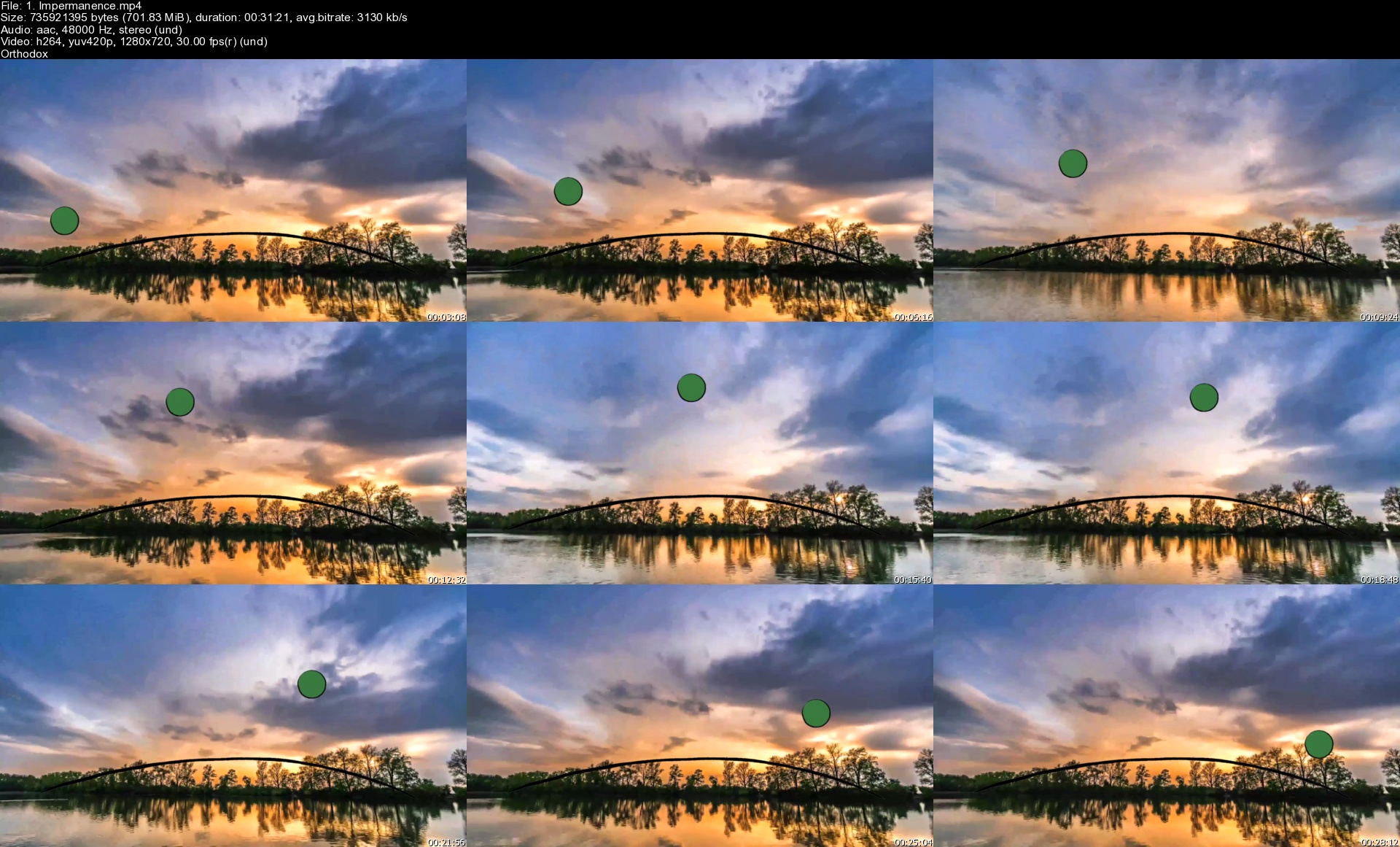
1.impermanencesywksi.jpg


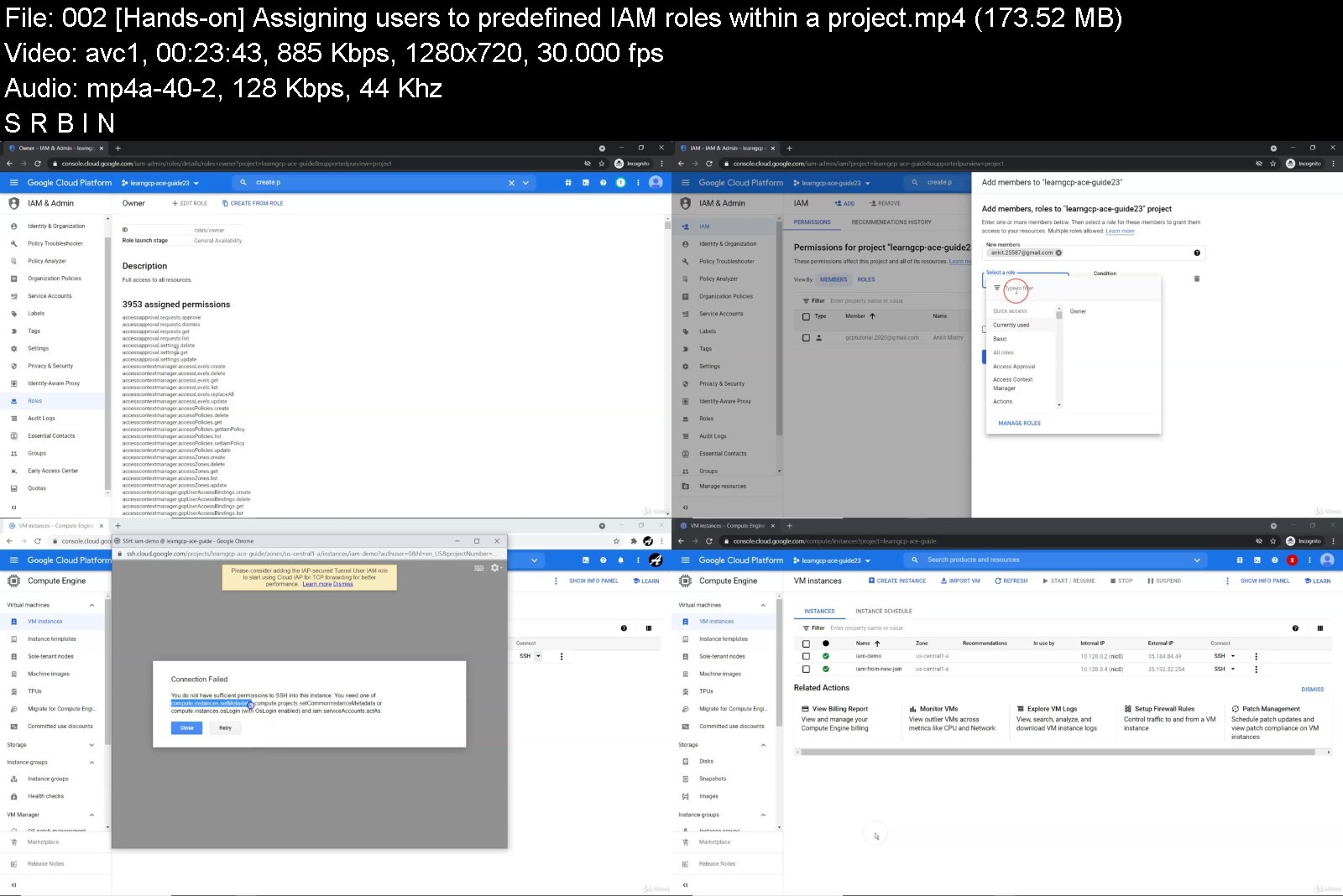
GCP Associate Cloud Engineer Certification : Google Cloud

396246077bb3049jhn.jpg


GCP Associate Cloud Engineer Certification : Google Cloud
Last Updated 03/2022
MP4 | Video: h264, 1280x720 | Audio: AAC, 44.1 KHz, 2 Ch
Genre: eLearning | Language: English + srt | Duration: 169 lectures (18h 39m) | Size: 5.51 GB


Learn Google Cloud - GCP with 90+ Hands-on demo Lab & make yourself fully prepared for GCP Associate Cloud Engineer Exam


What you'll learn
Fully covered exam objective for Associate Cloud Engineer Certification
Complete Hands-on course which prepare you for Associate Cloud Exam
Get hands-on with 90+ demo on Compute, Storage, processing, Monitoring, IAM
Learn How to provision All services inside GCP environment required for this certification
Access Compute, Storage, Database, IAM related products in Google Cloud from Console & Shell gcloud
Create strong fundamental to move towards advance GCP certification
Requirements
Zero Knowledge is required, I will teach From basics of GCP
Enthusiasm & dedication to learn GCP - next Cloud
Google Cloud account - (valid debit or credit card)
Description
Google Cloud Platform GCP is Fastest growing Public cloud. ACE certification is first step to dive in GCP.
This course has 18+ Hours of insanely great video content with 90+ hands-on Lab (Most Practical Course)
------------------------------------------------------------------
Some Feedback about course from STUDENTS
5 ⭐- I absolutely recommend this course for GCP beginner (with zero cloud experience). This course contains a lot of hands-on which is very good. The instructor is Indian but the accent is good enough for me to understand (I'm Vietnamese).
5 ⭐- Really good, I have joined this coz of not only gain fundamental knowledge even practical knowledge as well. And I found it exactly what I want. Thanks for sharing knowledge in such manner.
5 ⭐- Enjoyed instructor teaching, step by step in depth understanding of every single topic in ace exam. highly recommend this course for GCP beginners.
5 ⭐- I've learned a lot about GCP in this course. This is a really nice course. It will prepare you for ACE certification. Great, Lots of Hands-on Demo.
------------------------------------------------------------------
Do you want to Learn cloud where Internet's biggest App like Google Search, YouTube, GMAIL deployed or Database which powers such billion user app.
If you are interested to deploy & learn about planet scale Cloud Infra, you are at right place. I am here to help you prepare and pass ACE certification.
Cloud is the future , & GCP is Fastest growing Public cloud.
87% of Google Cloud certified individuals are more confident about their cloud skills.
More than 1 in 4 of Google Cloud certified individuals took on more responsibility or leadership roles at work.
Google Cloud Associate Engineer Certification is the first step to dive in Google Cloud World.
So, I created course will prepare you for Associate Cloud Engineer and build foundation for advanced Professional GCP certification.
------------------------------------------------------------------
I am all exited to help you on your journey towards Google Cloud Associate Engineer Certification.
and So, Designed most comprehensive training on GCP, having 17+ hours of HD quality video content.
I believe in learning by doing and it's very much practical course
90+ Hands-on Demo
80% Practical's + 20% Theory - Highly Practical course
Quizzes after major concepts/product to test your understanding
This course will cover 100% exam objective of Associate cloud Engineer Exam
Highly relevant to exam topics
Covers all major category of product in GCP Compute, Storage, Database, Networking, IAM.
Minimum on Slides + Maximum on GCP cloud console
------------------------------------------------------------------
Have a look at course curriculum, to see depth of Course coverage.
All Exam objective mapped to one video lecture and in some case more than 1 video to fully explain depth of topics.
Major Theme of certification course topics
------------------------------------------------------------------
1. Setting up a cloud solution environment
In this module I will teach you getting started with Google cloud platform, setting up your first GCP project, associate with billing account and get yourself comfortable with two important tool to access different GCP resources GCP cloud cell and GCP cloud console.
------------------------------------------------------------------
2. Planning and configuring a cloud solution
In this module I will teach you how to select different resources based on your business requirement and technical needs in a compute engine , database, storage category.
------------------------------------------------------------------
3. Deploying and implementing a cloud solution
This module is bit longer where we are going to learn about how to provision different resources inside the Google cloud platform.
Resource in compute engine category like Virtual Machine, kubernetes engine, Google app engine, Cloud run, Cloud function,
Different database and storage products like Cloud Storage, Google cloud SQL, Google cloud spanner, Cloud Bigtable, Bigquery, Pubsub, Data flow, Data proc,
Networking related resources VPC, Subnet, Firewall, VPC Peering
Readymade solution from Cloud Marketplace
Deploy resources with cloud deployment manager template (IAAC - Infrastructure as a code)
------------------------------------------------------------------
4. Ensuring successful operation of a cloud solution
In this module we will learn how to manage operation related to services we provision in module 3. Although many services operation covered in earlier module while learning individual product.
Google cloud monitoring tools to monitor different services
------------------------------------------------------------------
5. Configuring access and security
In this module we get to know about how to give least privilege role to individual user, IAM identity & access management module to secure different GCP resources.
------------------------------------------------------------------
This course also comes with
Lifetime access to all course material & updates
Q&A Section
A 30 Day Money Back Guarantee - "No Questions Asked"
Udemy Certificate of Completion
So, What are you waiting for, Enroll NOW and I will see you inside course.
Regards
Ankit Mistry
Who this course is for
Anyone want to dive into Cloud world
Anyone want to Clear Google cloud Associate Cloud Engineer certification
Anyone want to learn how to play with different resource in Google Cloud


gcpassociatecloudengi26k1e.jpg


Download from RapidGator


Download from Keep2Share


 
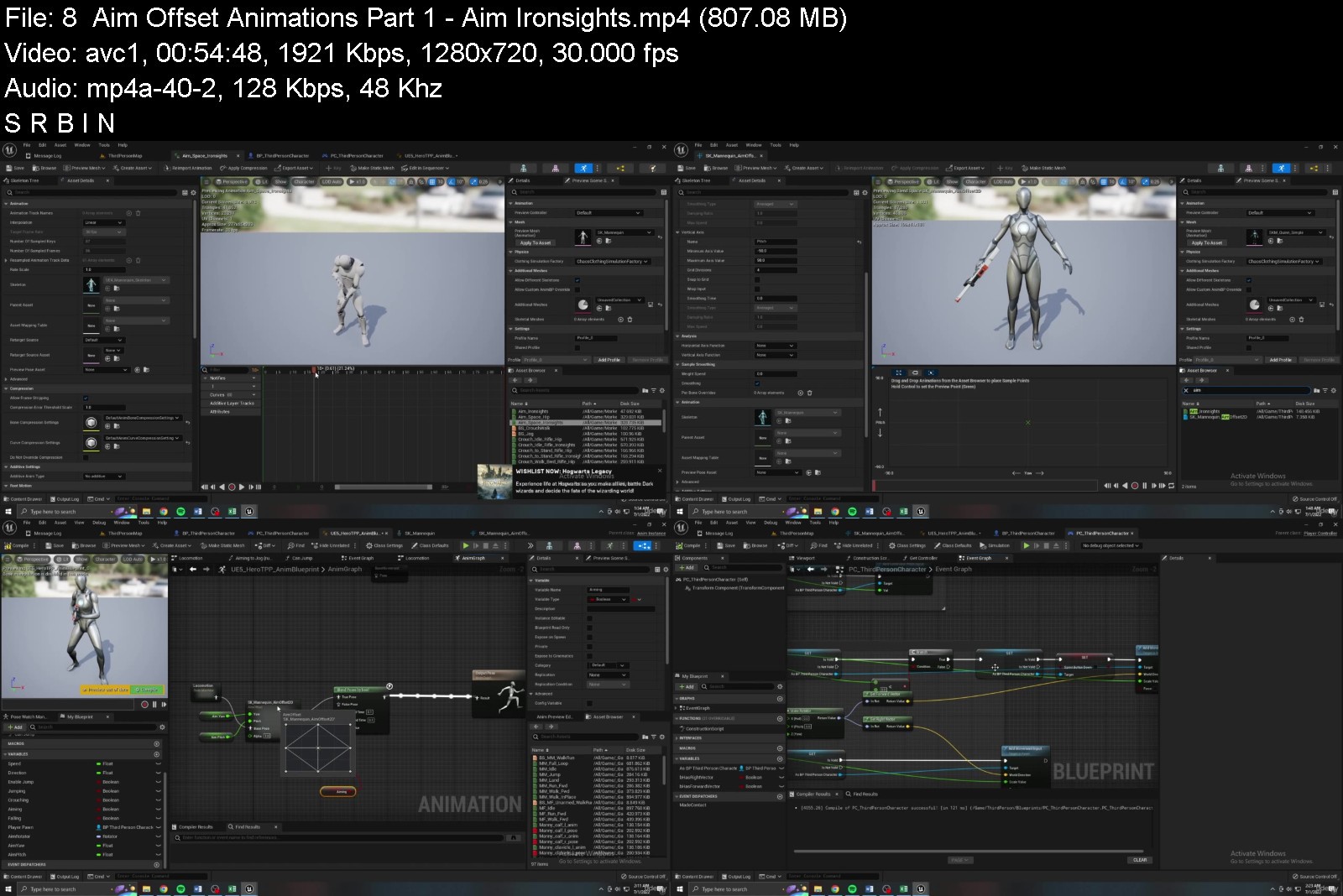
Unreal Engine 5: The Complete Third Person Shooter Course

ofitunjzwfvpiwtlk564gtwkdm.jpg


Unreal Engine 5: The Complete Third Person Shooter Course
Last updated 7/2022
Genre: eLearning | MP4 | Video: h264, 1280x720 | Audio: AAC, 44.1 KHz
Language: English | Size: 9.78 GB | Duration: 48 lectures • 11h 21m


What you'll learn
Learn game development using Unreal Engine 5
Define custom inputs and movements to control characters
Build realistic looking environments for games to take place in
Script logic to define gameplay without needing to know how to code
Create a third person character with movement mechanics and animation
Create hostile enemies, with AI that pursues and attacks the player
Game Mode and HUD with countdown timers, health bars, announcements, game states and score
Weapons and combat with effects including sounds and particle systems
Make a challenging timed game with a goal to clear the area of enemies
Implement Health, ammo pickups and more
Requirements
Recommended: Desktop PC with Windows 7 (or later) 64-bit or a Mac with Mac OS X 10.9.2 or later
Recommended: 8 GB RAM
Recommended: Quad-core Intel or AMD processor, 2.5 GHz or faster
Recommended: DirectX 11 compatible video card
Unreal Engine 5 will run on desktops and laptops with specifications under these, but performance may be affected

Description
Learn game development with Unreal Engine 5. UE5 is the industry-leading 3D game design software that the professionals use to create today's top games. Start your journey towards getting paid to make video games today!
Learn Video Game Development with this Unreal Engine 5 Course for Beginners to Intermediate UE5 Developers .
Begin your game development career with possibly the most up-to-date game dev course on the internet - Unreal Engine 5: The Third Person Shooter Course. Every lecture in this course was filmed using the full version of Unreal Engine 5, released in April 2022.
This course was designed for those who want to learn as much about Unreal Engine 5 as possible. If you're interested in becoming an indie developer or even working for a major studio, then this is a course for you to start with. This course will teach you some beginner to intermidiate skills needed in the workplace.
This course covers the fundamentals that other courses skip, causing you to get confused as you try to learn more advanced topics. The course will cover the following topics in thorough detail
Projects & Levels
Actor Types
Characters & Input
Collisions
Blueprint Logic & Data
User Interfaces
Audio
Develop Games Using Cutting-Edge Game Design Software and Run Them on a State-of-the-Art 3D Game Engine The Unreal Engine has won the "Best Game Engine" award several times from various organizations, including the Develop Industry Excellence Awards and Game Developer Magazine.
The Unreal Engine has been used to develop many blockbuster movies, games and game franchises including the new movie Matrix: Resurrections, Fortnite, BioShock, Gears of War, Splinter Cell, Rainbow 6, Borderlands, Dishonored, Mass Effect, Batman: Arkham Asylum, and hundreds more.
For years, the Unreal Engine was only affordable for large companies, but now, Unreal Engine 5 is completely free to use, as long as you agree to pay Epic Games 5% of your game sales over $1 million.
Learn Unreal Engine 5 in this Video Game Design Course In this course, you will learn the fundamentals of game development using the Unreal Engine 5 through a series of lectures and tutorials.
By the end of the course, you will have built an entire demo game from scratch. The course will start from scratch and -NO- programming knowledge is required, so anyone with basic computer skills can jump in and begin their Unreal Engine 5 training!
The first part of the course will help you get the Unreal Engine 5 up and running and will introduce you to the basic concepts of game development using the Engine. Next, you will learn all the skills you need to craft beautiful environments to stage your games in. Then, you will learn how to script logic for your games so you can define game rules and behaviors, keep track of data such as health and inventory, and create playable characters. You will learn about collisions and damage, key concepts for any action game. You will learn how to create user interfaces using the UMG Editor, so you can add things like menus, load screens, and HUDs to your game. And finally, you will learn how audio works within the Engine so you can add music, dialogue, and sound effects to your game.
Upon completion of the course, you will have the skills necessary to translate ideas for games into playable games that use environments you sculpt and logic that you define, and you will understand how to make a game in Unreal Engine 5.
Who this course is for
This video game development course is for absolute beginners who are interested in making games & learning how to design a game from scratch using UE5
Designed for those who want to become professionals using Unreal Engine 5
No programming experience required


unrealengine5thecomplu3k07.jpg


Download from RapidGator


Download from Keep2Share



Ansys - Finite Element Analysis And Industrial Applications

ckkey0gzypfoph6uhfekj24k0r.jpg


Ansys - Finite Element Analysis And Industrial Applications
Last updated 10/2021
MP4 | Video: h264, 1280x720 | Audio: AAC, 44.1 KHz
Language: English | Size: 14.01 GB | Duration: 24h 3m

Linear Static Analysis with Finite Element Method


What you'll learn
Fundamentals of Ansys Workbench
Defining Materials
Creating and Importing Geometry
Creating Parameters and Discussing the Effects of Parameters to Analysis.
Optimization Based On Parameters
Topology Optimization and Reducing Weight
Meshing in Details
Boundary Conditions (Loads and Supports)
Contact and Joint Types
Static Structural Section in Details
Structural Analysis
Hydrostatic Analysis
Connection Equipment Analysis
Static Linear Analysis
SpaceClaim
Simplifying the Geometry in SpaceClaim
Preparing the Geometry for Meshing and Contact Surfaces in SpaceClaim
Meshing in Advanced Level
Mesh Tips and Tricks in Advanced Level
Contacts in Advanced Level
Creating Submodel
Industrial Applications
Requirements
Having an Ansys Workbench
Being a student in Mechanical, Mechatronics, Manufacturing, or Civil Engineering.
Being curious about FEA or Ansys

Description
--- Check My Website (importfea) ---We are going to make a detailed examination of linear static analysis in the tutorial. After learning the necessary fundamentals, we will focus on the static structural section. In the static structural section, we'll see all of the loads, supports, contacts, joints, and mesh types with applications.Versions 19.2, 19.3, and 2020R2 were used in the tutorial. For more detailed information and surprises, don't forget to visit my Instagram page (@ansysegitim) :)We can gather the tutorial under 2 topics as introductory and advanced tutorials. We will be learning the topics below for the introductory course. Before reviewing these topics, I need to make it clear to you. First of all, let's talk about what the tutorial does not include :)I did not include the non-linear analysis at this stage, since the topic is advanced. You are not going to see crashed trucks, plate-piercing bullets, flying aircraft, rockets, tanks or rifles, etc in the tutorial. All of these need separate courses. For this reason, learning them as a beginner in 10 minutes, 30 minutes, or 1-hour courses only teaches you to make colorful animations of that truck or plane :) The topics require mastery separately.Now, let's examine what awaits us in the course. In the introduction part, my aim is to teach to use the Ansys. Each of the lessons is created with the aim of learning one specific topic within Ansys and is focused on that purpose. For example, if we are trying to learn the topic of boundary conditions, then we don't struggle to get fine mesh quality or structures or we don't need to prepare the model for meshing while we are learning the topic of contacts. You will get a better understanding of the applications after the theoretical lessons.In the tutorial, we will not only go to the analysis results with a few mouse clicks, we will reach the results by explaining which option we used and why we used it. Thus, after a while, you will be able to make many applications yourself.I have also covered in detail topology optimization (weight reduction) which is indispensable for design.I have also covered the topic of optimization. You will learn how to keep stresses below your desired value while improving the design by creating parameters.I have included in detail truss systems and structural analysis which are indispensable for static analysis.You will learn how to analyze fasteners especially bolted connections. I also added many more topics and applications related to static analysis to the first section of the tutorial In the second section, the advanced sections, we will be examining the following topics.Firstly, I wanted to make a reminder by going back to the fundamentals of engineering concepts from the very beginning. The fundamentals are topics that we must know and even develop. Under the title of fundamentals of engineering, you will see the topics of Stress, Strain, Young's modulus, Poisson's Ratio, and some important Material Properties. I explained all the commands separately that we will use frequently while preparing the geometries on SpaceClaim. We will discuss how to prepare a geometry/model, what should we pay attention to while preparing a geometry, what we should simplify, what should we keep in the geometry, and how to prepare geometry for meshing. I tried to explain the topic of advanced mesh in great detail from the scratch in advanced level mesh lessons. I started by teaching the mesh element types, the element orders, the effect of element types on the results, how to find the optimized element size, and how to make a mesh convergence study. I also gave you the tips that FEA Experts frequently use to obtain fine mesh structures. I suggest you definitely don't miss this part. Under the title of advanced contact, we discussed the questions of what we should pay attention to while creating contact regions, which contact type is decent for which structures and what sub-settings come out while creating contact regions, how does it affect the results, when to use it and when to ignore it.We examined the topic of submodeling which is indispensable for an analysis. You will learn how to create a submodel and what you should pay attention to while creating them. And the final and great topic is the Industrial Applications. You should definitely not miss it. You will see some real-world engineering problems that I have run the analysis as a structural analysis engineer. We examined these projects in detail and examined how we solved them from the very beginning to the very end of the analysis (The dimensions of the projects were changed and some changes were made to ensure that they were not exactly the same but you will get the main idea).Goodbye for now...
Overview
Section 1: Finite Element Method
Lecture 1 Finite Element Method
Section 2: Ansys Workbench
Lecture 2 Interface of the Workbench
Lecture 3 Defining Materials
Lecture 4 Creating and Imporing Geometry.
Lecture 5 Basic Example
Section 3: Topology Optimization and Design Parameters
Lecture 6 Paramter and Optimization
Lecture 7 Example for Parameters in 2D Geometry
Lecture 8 Topology Optimization - 1
Lecture 9 Topology Optimization - 2
Lecture 10 Symmetry Feature - 1
Lecture 11 Symmetry Feature - 2
Lecture 12 2D Wrench
Section 4: Interface of the Mechanical
Lecture 13 Interface of the Mechanical
Lecture 14 Pre-Processing Steps
Lecture 15 Object Generator
Lecture 16 Frame Example - Share Topology Feature
Lecture 17 Truss Systems Example
Lecture 18 Vase Example - Hydrostatic Pressure
Section 5: Introduction to Mesh
Lecture 19 Global Mesh
Lecture 20 Local Mesh - 1
Lecture 21 Local Mesh - 2
Lecture 22 Torsion Example
Lecture 23 Bike Crank Example
Lecture 24 Creating Sensitive Mesh Structures
Section 6: Boundary Conditions
Lecture 25 Support Types
Lecture 26 Load Types
Lecture 27 Structural Analysis Example
Lecture 28 Garden Fountains Example - Hydrostatic Pressure
Section 7: Contact Types
Lecture 29 Contact Types
Lecture 30 Stand Example
Lecture 31 Plate-Bar Example
Lecture 32 Clevis Example
Section 8: Joint Types
Lecture 33 Joint Types
Lecture 34 Pendulum Example
Lecture 35 Piston Example
Section 9: Examples
Lecture 36 Practice 1 - Bended Plate
Lecture 37 Practice 2 - Bearing Load
Lecture 38 Practice 3 - Bridge
Lecture 39 Practice 4 - Connection Bracket
Lecture 40 Practice 5 - Supporting Bracket
Lecture 41 Practice 6 - Rotor
Lecture 42 Practice 7 - Arm Shaft
Lecture 43 Practice 8 - Flange Connection
Lecture 44 Practice 9 - Connection Plates
Lecture 45 Practice 10 - Bolt Pretension
Lecture 46 Practice 11 - F1 Motors Nozzle
Section 10: Advanced 1 - Fundamentals of Engineering
Lecture 47 Stress and Strain
Lecture 48 Young's Modulus and Poisson's Ratio
Lecture 49 Material Properties
Section 11: Advanced 2 - SpaceClaim and Preparing/Simplifying Geometry
Lecture 50 SpaceClaim
Lecture 51 Preparing and Simplifying Geometry
Section 12: Advanced 3 - Mesh in Details
Lecture 52 Element Types and Orders
Lecture 53 Differences in Dimensions (3D, 2D, and 1D)
Lecture 54 Optimized Element Number
Lecture 55 Comparison of TET and HEX Elements
Lecture 56 Mesh Convergence
Lecture 57 Mesh Tips - 1
Lecture 58 Mesh Tips - 2
Lecture 59 Mesh Tips - 3
Lecture 60 Mesh Tips - 4
Lecture 61 Mesh Tips - 5
Section 13: Advanced 4 - Contact Regions
Lecture 62 Advanced Contact Regions
Section 14: Advanced 5 - Submodelling
Lecture 63 Submodeling
Section 15: Advanced - 6 Industrial Applications 1 - Beam-Column Connections
Lecture 64 Model Preparation
Lecture 65 Boundary Conditions
Lecture 66 Contact
Lecture 67 Mesh
Lecture 68 Post Processing
Lecture 69 Creating Submodel
Lecture 70 Preparing Submodel
Lecture 71 Submodel - Boundary Conditions
Lecture 72 Submodel - Mesh 1
Lecture 73 Submodel - Mesh 2
Lecture 74 Submodel - Mesh 3
Lecture 75 Submodel - Mesh 4
Lecture 76 Submodel - Contact
Lecture 77 Submodel - Post Processing
Section 16: Advanced 7 - Industrial Applications 2 - Industrial Stair
Lecture 78 Model Preparation
Lecture 79 Material Properties
Lecture 80 Boundary Conditions
Lecture 81 Mesh - 1
Lecture 82 Mesh - 2
Lecture 83 Mesh - 3
Lecture 84 Contact
Lecture 85 Contact Status Checking with Modal Analysis
Lecture 86 Post Processing
Section 17: Bonus Content - What's Next?
Lecture 87 Buckling in Ansys
Studens in Engineering,Everyone who wants to learn FEA or Ansys


ansysfiniteelementanawrjqi.jpg


Download from RapidGator


Download from Keep2Share



Adventures In Classical Music-Music Appreciation For All!

2eaus1bbtzmpspxqfy4h5k4kob.jpg


Adventures In Classical Music-Music Appreciation For All!
Last updated 9/2020
MP4 | Video: h264, 854x480 | Audio: AAC, 44.1 KHz
Language: English | Size: 6.82 GB | Duration: 31h 11m

Understand and enjoy classical music at your own pace. A music history course, including a music theory introduction.


What you'll learn
You will learn the component parts of music-rhythm, pitch, melody, harmony, form, etc.
Then you will apply those concepts to an exploration of the history of classical music.
In the end, you will have developed a greater understanding of music in its various stages of development
You will be able to more accurately identify the works and the composer's style, as well as place it in the timeline of the history of music.
Requirements
I don't require a textbook, but if you wish to complement your studies, the textbook that most closely parallels this course is The Art of Listening by Jean Ferris.

Description
Music appreciation for the 21st century. Learn about Classical Music in the Western world from the Middle Ages to the present. You'll begin with an introduction to the various elements of music -- for example, melody, rhythm, pitch and harmony - to give you the basics and vocabulary of music theory to understand and appreciate any type of music. You'll then explore the History of Classical Music through its various stylistic periods, from medieval chant right up to the current cutting edge. Anyone interested in classical music will benefit from this course. ______________________________________________________________________ About this course: Over 3800 happy students Updated regularly Full, free lifetime access All future extra and upgraded lectures are always included for free Unconditional Udemy 30 day money-back guarantee See testimonials from former students below ______________________________________________________________________ This course is structured in 32 sections; • the first section is devoted to the elements of music in order to give you a detailed primer in music theory: melody, rhythm, pitch, harmony, texture, tempo, dynamics and form. Section 1 includes a Short History of Rock and Roll to illustrate the musical elements and musical style. After that, each section is devoted to one of the broad eras of music history: • The Middle Ages. Learn about early music beginning with monophony and how polyphony developed during the period of the building of the great cathedrals. • The Renaissance. What was happening in music during the period in which Michelangelo was painting the Sistine Chapel? A return to some Ancient ideals led to a rediscovery of the science of acoustics, providing a basis for the theory of modern harmony. How the course of music changed as a result of Martin Luther's break from the Church. • The Baroque. Here we have the origins of opera, as well as a flowering of instrumental music, culminating in the works of Bach, Handel and Vivaldi. • The Classical. In reaction to the florid complexities of the Baroque, and influenced by the Age of Reason, the Classical period focused on simplicity and elegance, producing such composers as Haydn, Mozart and Beethoven. • Romanticism. The Age of Reason was too "reasonable" for the the Romanticists. They valued heightened emotion over elegance. The music of Schumann, Chopin, Wagner, Tchaikovsky, Verdi and Puccini were some of its greatest accomplishments. • The Modern Period. Formerly referred to as the 20th century period, it now needs to reflect its expansion into the 21st century. Some of the greatest composers of this period have been Stravinsky, Bartok, Schoenberg, Britten, Shostakovich, Ives, Copland and Barber. • We conclude with a retrospective and some final remarks to wrap it all up. ______________________________________________________________________ Testimonials from former students. I concurrently teach this course at Santa Rosa Junior College (for core Humanities credit). Please take a moment to read a few testimonials by Santa Rosa students about this course, as they testify to my passion and command of the subject matter. "I wanted to thank you, Bill Neely, for sharing your knowledge with us. This has been a super-duper class, and I find myself a little sad to find it drawing to a close. I've always enjoyed classical music rather passively; I now feel that I can be an active participant, with a deeper understanding of the musical concepts, the composers themselves, and their historical context. Very cool!" -Sandra L "My love for classical music has grown as I understand more now the times and styles and detours of styles these great composers took. I have found these lectures easy to understand and digest into my appreciation and education of classical music." -Kathy J "I wanted to thank you for this wonderful class. I have a doctorate degree, and this has been one of the most thorough and informative classed I have ever taken. It has deepened my understanding and enjoyment of the music I have been listening to for the past 35 years...I wanted to let you know how much I appreciate the depth and clarity of presentation of this class. Do you offer any other online classes? I have recommended it to many of my friends." -Loretta Z "I really like your lectures, very informative, interesting and filled with a lot of information. This is what I hoped for in an online course. Great lectures, this is the first online class I've taken that I felt the instructor was as dedicated to his online students as his in-person ones. Thank you!" -Stephanie M "...lectures were terrific, especially the use of the history of Rock 'n' Roll to begin a very clear and concise exploration of the basics of music ...Thanks very much for teaching such an excellent course. Sincerely," -Daniel N Many more testimonials available on my musicappreciationonline dot com website.
Overview
Section 1: The Elements of Music: Introduction to Music Appreciation
Lecture 1 1.1 Introductory Overview
Lecture 2 1.2 A History of Rock and Roll, Part 1
Lecture 3 1.3 A History of Rock and Roll, Part 2
Lecture 4 1.4 Elements and Rhythm
Section 2: The Elements of Music: Rhythm, Meter and Melody
Lecture 5 2.1 Rhythm, Part 2
Lecture 6 2.2 Compound Meter
Lecture 7 2.3 Additive Meter and miscellaneous
Lecture 8 2.4 Characteristics of Melody
Lecture 9 2.5 Melody and Notation
Section 3: The Elements of Music: Melodic structure; Harmony and Texture
Lecture 10 3.1 Melodic Structure and Harmony
Lecture 11 3.2 Harmony and phrase structure
Lecture 12 3.3 Harmonic progressions
Lecture 13 3.4a Texture -supplemental (non-musical)
Lecture 14 3.4b Musical texture
Section 4: The Elements of Music: Timbre
Lecture 15 4.1 Timbre and the human voice
Lecture 16 4.2 Instruments of the orchestra
Lecture 17 4.3 The Young Person's Guide to the Orchestra
Section 5: The Elements of Music: A Summary
Lecture 18 5.1 What is musical form?
Lecture 19 5.2 a discussion of the building blocks of form
Lecture 20 5.3 Bringing all the elements together
Lecture 21 5.4 Ravel's Bolero
Section 6: Antiquity and the Middle Ages
Lecture 22 6.1 Beginnings
Lecture 23 6.2 Early church music
Lecture 24 6.3 Plainchant
Lecture 25 6.4 Dies irae
Section 7: The Late Middle-Ages and the transition to the Renaissance
Lecture 26 7.1 Notation and modes; Hildegard von Bingen
Lecture 27 7.2 The Notre Dame School
Lecture 28 7.3 The Late Middle Ages
Lecture 29 7.4 A Sleeping Europe wakes
Section 8: The Renaissance
Lecture 30 8.1 The Overtone Series
Lecture 31 8.2 The Early Renaissance
Lecture 32 8.3 Imitative Polyphony
Lecture 33 8.4 The Renaissance Mass
Lecture 34 8.5 The Reformation and Counter-Reformation
Section 9: Secular trends and introduction to the Baroque
Lecture 35 9.1 Secular trends in the Renaissance
Lecture 36 9.2 A New style for the madrigal
Lecture 37 9.3 Introduction to the Baroque
Lecture 38 9.4 Baroque opera and a new musical language
Section 10: The Early Baroque and the Beginnings of Opera
Lecture 39 10.1 Baroque opera, part 2
Lecture 40 10.2 Monteverdi's Orfeo
Lecture 41 10.3 New trends of the Baroque
Lecture 42 10.4 The Nature of opera
Section 11: 17th century developments and the Rise of Instrumental Music
Lecture 43 11.1 17th century developments
Lecture 44 11.2 Musical developments in the middle Baroque
Lecture 45 11.3 The rise of instrumental music
Lecture 46 11.4 The Baroque concerto
Lecture 47 11.5 Bach Brandenburg Concerto No. 5
Section 12: Instrumental Genres; the fugue and the church cantata
Lecture 48 12.1 Bach's Brandenburg Concerto No. 5, part 2
Lecture 49 12.2 Bach and the fugue
Lecture 50 12.3 The dance suite
Lecture 51 12.4a The church cantata in Germany, part 1
Lecture 52 12.4b The church cantata in Germany, part 2
Section 13: Opera and Oratorio of the High Baroque; transition to the Classical Period
Lecture 53 13.1 Handel opera
Lecture 54 13.2 Handel oratorio
Lecture 55 13.3 Transition to the Classical style
Lecture 56 13.4 the Age of Enlightenment
Section 14: Unity and Form in the Classical Era
Lecture 57 14.1a Unity and Variety in Poetry
Lecture 58 14.1b Unity and Variety in Painting
Lecture 59 14.2 Unity and Variety in The Music Man
Lecture 60 14.3 Forms in the Classical period
Lecture 61 14.4 Forms in the Classical period, part 2
Section 15: Forms of the Classical Period; Introduction to Sonata Form
Lecture 62 15.1 Ternary Form in Mozart's Clarinet Concerto
Lecture 63 15.2 Rondo Form
Lecture 64 15.3 Sonata Form in Eine Kleine Nachtmusik
Lecture 65 15.4 Sonata Form in Mozart's Symphony No. 40
Section 16: Instrumental Genres
Lecture 66 16.1 The Classical concerto
Lecture 67 16.2 Lebrun; the glass harmonica
Section 17: Opera according to Mozart: The Marriage of Figaro
Lecture 68 16.3 Mozart and opera
Lecture 69 16.4 Marriage of Figaro Act 1 Se vuol ballare
Lecture 70 16.5 Marriage of Figaro preparation for Scene ii
Lecture 71 16.6 Marriage of Figaro Act I, scene 2
Lecture 72 17.1 Marriage of Figaro, preparation for Act II
Lecture 73 17.2a Marriage of Figaro, Act II, part 1
Lecture 74 17.2b Marriage of Figaro, Act II, part 2
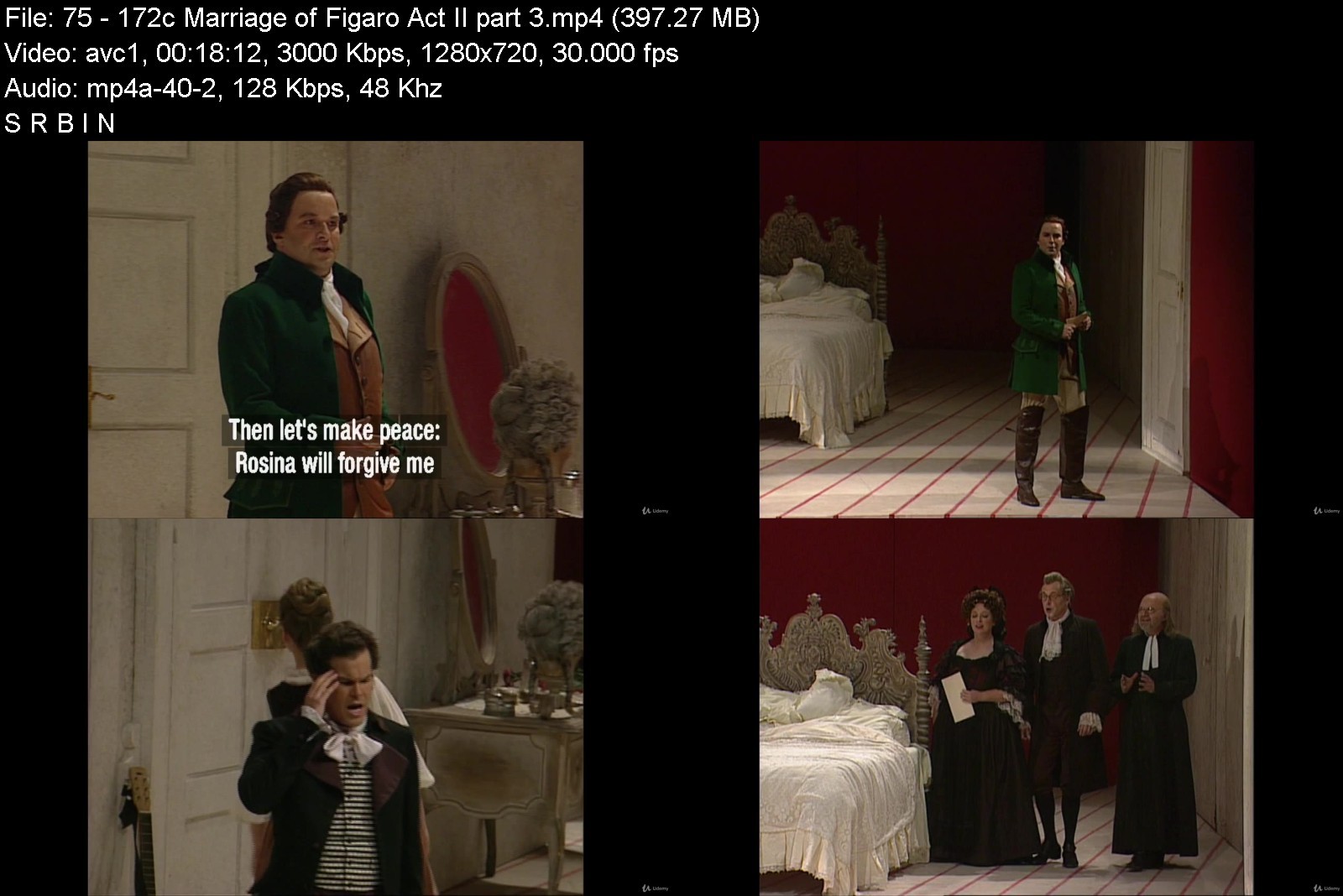
Lecture 75 17.2c Marriage of Figaro, Act II, part 3
Lecture 76 17.3 Marriage of Figaro, epilogue
Section 18: Transition Beethoven
Lecture 77 18.1 Transition Beethoven
Lecture 78 18.2 Introduction to Beethoven's Symphony No. 5
Lecture 79 18.3 Beethoven's Fifth, Movement I
Lecture 80 18.4 Beethoven's Fifth, Movement II
Section 19: Beethoven, Part 2
Lecture 81 19.1 Beethoven's Fifth Symphony, Movement III
Lecture 82 19.2 Beethoven's Fifth Symphony, Movement IV, part 1
Lecture 83 19.3 Beethoven's Fifth Symphony, Movement IV, part 2
Lecture 84 19.4 Beethoven's lyrical style
Lecture 85 19.5 Beethoven's humor and conclusions
Section 20: Introduction to Romanticism
Lecture 86 20.1 Introduction to Romanticism
Lecture 87 20.2 Style features of Romanticism
Lecture 88 20.3 Schubert and Schumann Lieder
Lecture 89 20.4 Schumann and Chopin piano pieces
Section 21: Hector Berlioz and the program symphony
Lecture 90 21.1 Berlioz and the program symphony
Lecture 91 21.2 Symphonie Fantastique, Movement I
Lecture 92 21.3 Symphonie Fantastique, II, II and IV
Lecture 93 21.1 Symphonie Fantastique, V
Section 22: The miniature and character piece
Lecture 94 Lecture 22.1 Chopin and Liszt
Lecture 95 22.2 Brahms Symphony No. 3
Lecture 96 22.3 Old and new symphonic genres
Lecture 97 22.4 Tchaikovsky's Romeo and Juliet Overture
Section 23: The Emergence of nationalism; Romantic opera
Lecture 98 23.1 The Emergence of Nationalism
Lecture 99 23.2a Mussorgsky's Pictures at an Exhibition, part 1
Lecture 100 23.2b Mussorgsky's Pictures at an Exhibition, part 2
Lecture 101 23.3 Opera review
Lecture 102 23.4 The Barber of Seville: A un dottore della mia sorte
Lecture 103 23.5 Mad scene from Lucia di Lammermoor
Lecture 104 23.6 Giuseppe Verdi and Aida
Section 24: Italian and French opera; exoticism
Lecture 105 24.1 Aida: Final Scene
Lecture 106 24.2 Exoticism
Lecture 107 24.3 Bizet and Carmen
Lecture 108 24.4 Carmen: Habanera
Lecture 109 24.5 Giacomo Puccini
Lecture 110 24.6 La Boheme: Love Duet (part 1)
Lecture 111 24.7 La Boheme: Love duet (part 2)
Section 25: German opera and Richard Wagner
Lecture 112 25.1 Introduction to Richard Wagner
Lecture 113 25.2 Wagner's Ring of the Nibelungen
Lecture 114 25.3a Die Walkure Act I excerpt, part 1
Lecture 115 25.3b Die Walkure Act I excerpt, part 2
Lecture 116 25.4 Die Walküre, Act III preparation
Lecture 117 25.5 Act III opening: The Ride of the Valkyries
Lecture 118 25.6 Die Walküre, Act III, final scene: Wotan's Farewell
Section 26: Wagner's influence
Lecture 119 26.1a Tristan and Isolde, part 1
Lecture 120 26.1b Tristan and Isolde, part 2
Lecture 121 26.2 Schoenberg and Pierrot Lunaire
Lecture 122 26.3 Reactions to Wagner : Debussy
Lecture 123 26.4 Prelude to the Afternoon of a Faun
Section 27: Igor Stravinsky and Arnold Schoenberg
Lecture 124 27.1 Igor Stravinsky
Lecture 125 27.2a The Rite of Spring, part 1
Lecture 126 27.2b The Rite of Spring, part 2
Lecture 127 27.3 Schoenberg, Berg and Webern
Section 28: European Modernism
Lecture 128 28.1 European Modernism
Lecture 129 28.2 Shostakovich Symphony No. 5, IV
Lecture 130 28.3 Bela Bartok's Concerto for Orchestra
Lecture 131 28.4 Bartok's Music for Strings, Percussion and Celesta
Section 29: Music in America
Lecture 132 29.1 The American Scene
Lecture 133 29.2 Charles Ives
Lecture 134 29.3 Putnam's Camp, Redding, Connecticut
Lecture 135 29.4 The Unanswered Question
Lecture 136 29.5 The Ultra-Modernists
Section 30: Copland and the American scene; Gershwin and jazz elements
Lecture 137 30.1 Aaron Copland
Lecture 138 30.2 Copland's Appalachian Spring
Lecture 139 30.3a Elements of Jazz in concert music, part 1
Lecture 140 30.3b Elements of Jazz in concert music, part 2
Lecture 141 30.3c Elements of Jazz in concert music, part 3
Section 31: The American Sound; Ultra-moderism-the next generation
Lecture 142 31.1 The American Sound
Lecture 143 31.3 Post-Modernism
Section 32: Music in the postmodern age: electronic music; minimalism and beyond
Lecture 144 32.1 Electronic music, part 1
Lecture 145 32.2 Electronic music, part 2
Lecture 146 32.3 Minimalism and beyond
Lecture 147 32.4 Sound Masses - Penderecki and Ligeti
Lecture 148 32.5 In Conclusion
This course is intended for the beginner, although many students with classical music history training have reported that they too have benefitted from the class.


adventuresinclassicalkdj8q.jpg


Download from RapidGator


Download from Keep2Share



Zurück
Oben Unten