• Regeln für den Video-Bereich:

    In den Börsenbereich gehören nur Angebote die bereits den Allgemeinen Regeln entsprechen.

    Einteilung

    - Folgende Formate gehören in die angegeben Bereiche:
    - Filme: Encodierte Filme von BluRay, DVD, R5, TV, Screener sowie Telesyncs im Format DivX, XviD und x264.
    - DVD: Filme im Format DVD5, DVD9 und HD2DVD.
    - HD: Encodierte Filme mit der Auflösung 720p oder darüber von BluRay, DVD, R5, TV, Screener sowie Telesyncs im Format x264.
    - 3D: Encodierte Filme von BluRay, die in einem 3D Format vorliegen. Dies gilt auch für Dokus, Animation usw.
    - Serien: Cartoon/Zeichentrick, Anime, Tutorials, Dokumentationen, Konzerte/Musik, Sonstiges sind demnach in die entsprechenden Bereiche einzuordnen, auch wenn sie beispielsweise im High Definition-Format oder als DVD5/DVD9/HD2DVD vorliegen. Ausnahme 3D.
    - Bereich Englisch: Englische Releases gehören immer in diesen Bereich.
    - Bereich Talk: Der Bereich, in dem über die Releases diskutiert werden kann, darf, soll und erwünscht ist.


    Angebot/Beitrag erstellen

    - Ein Beitrag darf erst dann erstellt werden, wenn der Upload bei mindestens einem OCH komplett ist. Platzhalter sind untersagt.
    - Bei einem Scenerelease hat der Threadtitel ausschließlich aus dem originalen, unveränderten Releasenamen zu bestehen. Es dürfen keine Veränderungen wie z.B. Sterne, kleine Buchstaben o.ä. vorgenommen werden. Ausnahme Serienbörse:
    - Bei einem Sammelthread für eine Staffel entfällt aus dem Releasename natürlich der Name der Folge. Beispiel: Die Simpsons S21 German DVDRip XviD - ITG
    - Dementsprechend sind also u.a. verboten: Erweiterungen wie "Tipp", "empfehlenswert", "only", "reup", usw. / jegliche andere Zusatzinformation oder Ergänzung, welche nicht in obiger Beschreibung zu finden ist.

    Aufbau des Angebots und Threadtitel

    Der Titel nach folgendem Muster erstellt zu werden. <Name> [3D] [Staffel] [German] <Jahr> <Tonspur> [DL] [Auflösung] <Quelle> <Codec> - <Group>
    Beispiel: The Dark Knight German 2008 AC3 DVDRip XviD - iND
    Beispiel: The Dark Knight 2008 DTS DL BDRip x264 - iND
    Beispiel: The Dark Knight 2008 AC3 DL BDRip XviD - iND
    Beispiel: The Dark Knight German 2008 AC3 720p BluRay x264 iND
    Beispiel: The Dark Knight 2008 DTS DL 1080p BluRay x264 iND
    Beispiel: Die Simpsons S01 German AC3 DVDRip XviD iND
    Beispiel: Die Simpsons S20 German AC3 720p BluRay x264 iND
    Beispiel: Sword Art Online II Ger Sub 2014 AAC 1080p WEBRip x264 - peppermint
    Entsprechend sind also u.a. verboten: Sonderzeichen wie Klammern, Sterne, Ausrufezeichen, Unterstriche, Anführungszeichen / Erweiterungen wie "Tipp", "empfehlenswert", "only", "reup", usw. / jegliche andere Zusatzinformation oder Ergänzung, welche nicht in obiger Beschreibung zu finden ist
    Ausnahmen hiervon können in den Bereichen geregelt sein.

    Die Beiträge sollen wie folgt aufgebaut werden:
    Überschrift entspricht dem Threadtitel
    Cover
    kurze Inhaltsbeschreibung
    Format, Größe, Dauer sind gut lesbar für Downloader außerhalb des Spoilers zu vermerken
    Nfo sind immer Anzugeben und selbige immer im Spoiler in Textform.
    Sind keine Nfo vorhanden z.B. Eigenpublikationen, sind im Spoiler folgende Dateiinformationen zusätzlich anzugeben :
    Quelle
    Video (Auflösung und Bitrate)
    Ton (Sprache, Format und Bitrate der einzelnen Spuren)
    Untertitel (sofern vorhanden)
    Hosterangabe in Textform außerhalb eines Spoiler mit allen enthaltenen Hostern.
    Bei SD kann auf diese zusätzlichen Dateiinformationen verzichtet werden.

    Alle benötigten Passwörter sind, sofern vorhanden, in Textform im Angebot anzugeben.
    Spoiler im Spoiler mit Kommentaren :"Schon Bedankt?" sind unerwünscht.


    Releases

    - Sind Retail-Release verfügbar, sind alle anderen Variationen untersagt. Ausnahmen: Alle deutschen Retail-Release sind CUT, in diesem Fall sind dubbed UNCUT-Release zulässig.
    - Im Serien-Bereich gilt speziell: Wenn ein Retail vor Abschluss einer laufenden Staffel erscheint, darf diese Staffel noch zu Ende gebracht werden.62
    - Gleiche Releases sind unbedingt zusammenzufassen. Das bedeutet, es ist zwingend erforderlich, vor dem Erstellen eines Themas per Suchfunktion zu überprüfen, ob bereits ein Beitrag mit demselben Release besteht. Ist dies der Fall, ist der bereits vorhandene Beitrag zu verwenden.
    - P2P und Scene Releases dürfen nicht verändert oder gar unter einem iND Tag eingestellt werden.


    Support, Diskussionen und Suche

    - Supportanfragen sind entweder per PN oder im Bereich Talk zu stellen.
    - Diskussionen und Bewertungen sind im Talk Bereich zu führen. Fragen an die Uploader haben ausschließlich via PN zu erfolgen, und sind in den Angeboten untersagt.
    - Anfragen zu Upload-Wünschen sind nur im Bereich Suche Video erlaubt. Antworten dürfen nur auf Angebote von MyBoerse.bz verlinkt werden.


    Verbote

    - Untersagt sind mehrere Formate in einem einzigen Angebotsthread, wie beispielsweise das gleichzeitige Anbieten von DivX/XviD, 720p und 1080p in einem Thread. Pro Format, Release und Auflösung ist ein eigener Thread zu eröffnen.
    - Grundsätzlich ebenso verboten sind Dupes. Uploader haben sich an geeigneter Stelle darüber zu informieren, ob es sich bei einem Release um ein Dupe handelt.
    - Gefakte, nur teilweise lauffähige oder unvollständige Angebote sind untersagt. Dies gilt auch für eigene Publikationen, die augenscheinlich nicht selbst von z.B. einer DVD gerippt wurden. Laufende Serien, bei denen noch nicht alle Folgen verfügbar sind, dürfen erstellt und regelmäßig geupdatet werden.
    - Untersagt sind Angebote, welche nur und ausschließlich in einer anderen Sprache als deutsch oder englisch vorliegen. Ausnahmen sind VORHER mit den Moderatoren zu klären.


    Verstoß gegen die Regeln

    - Angebote oder Beiträge, die gegen die Forenregeln verstoßen, sind über den "Melden"-Button im Beitrag zu melden.
  • Bitte registriere dich zunächst um Beiträge zu verfassen und externe Links aufzurufen.

*** Bestes IPTV *** bester Preis *** gratis Test ***


Englische Tutorials

Ielts Speaking | Prepare For Band 7+ | Native Speaker Models

htmxkzb6aflw3sbxg75ft29kqc.jpg


Ielts Speaking | Prepare For Band 7+ | Native Speaker Models
MP4 | Video: h264, 1280x720 | Audio: AAC, 44.1 KHz
Language: English | Size: 7.68 GB | Duration: 9h 56m

Gain confidence. Sound natural. Use native speaker model answers to prepare for Band 7 and higher in your IELTS Speaking


What you'll learn
How to start thinking "I can answer these questions!" by generating ideas that will be relevant for all topics in your IELTS speaking exam
How to explain your ideas fluently by finding, learning and practicing natural English vocabulary
How to sound like a native speaker by imitating the pronunciation and accent of 3 speaking mentors
How to show the examiner appropriate and accurate grammar by mastering the same grammar native speakers use when they speak English
How to develop true, deep confidence by practising consistently and giving yourself feedback at home without a teacher
Requirements
An intermediate level of English - watch some of the free videos and check you can understand :)
You must be able to record yourself speaking (on your phone, computer or recording device)
You should have at least 4 weeks until your exam (or be able to dedicate several hours a day to practising)

Description
IELTS SPEAKING - PREPARE FOR BAND 7+ WITH NATIVE SPEAKER MODELSGain confidence. Sound natural. Use native speaker model answers to prepare for Band 7 and higher in your IELTS Speaking.The aim of this course is to help you feel ready for your IELTS Speaking exam.When you work with this course, you will feel more relaxed, better prepared to speak and more certain that you can answer all the questions in your exam.Learning from native speaker models will help you to do this.In this course, you'll learn:How native speakers do the IELTS speaking exam to Band 7+ levelandHow you can practice to become more like a native speaker in your examThat's exactly what students in India, the USA, Thailand, Brazil and many other places are already finding in this course:Chiara Ricci - 4.5 Star ReviewI found this course really useful and interesting at the same time !! I think it will help me so much in my IELTS speaking !! Thank you so much for your effort !! Great teacher !!Pasavin Patel - 5 Star ReviewThanks Sam and other Sir This course very helpful for all ielts student. All Sir techniques very nice and helpful in speaking module in IELTS exam.I'm Sam, and this is my ninth year of preparing students for speaking exams.In my experience, it's very common if you're feeling:Unhappy because you know that you make mistakes when you speakUncertain about what you need to do to improve your levelWorried about not getting your target bandscoreAnd it can be very hard to find the right way to practice, especially if you are at home and you don't have a teacher to correct you.In this course, you'll find model answers, guided lessons and practice activities to improve your IELTS Speaking bandscore.*** 3 native speaker models so you can see examples of genuine, natural English speakers doing the exam ****** 35+ lessons to help you understand how you can copy these models to get excellent IELTS Speaking bandscores ****** 35+ practice activities so you can work on your weaknesses, give yourself feedback, and improve your speaking bandscore ***The reviews for this course are generally outstanding - you can see that most of them are 4 and 5 stars.Everyone who writes a review or sends me a message gets an offer of my help if they are finding something tricky.But the Udemy reviews are not the only people who have learnt from these techniques.Countless other students got their university places, moved country and changed their lives after they used these same activities when I taught in highschools and universities in Europe.I'm a selective teacher. I choose my techniques carefully based on what I know from experience produces good results in the IELTS exam.So in this course you will not find:Quick tipsVocab listsScripted videosInstead, you will find:Activities you can use to give yourself feedback - most of which you can do in less than 15 minutes, so your preparation time is well spent.Lessons that will prepare you to explain your life, your opinions and your ideas using English that sounds normal, so you can get a bandscore of 7 or more.Videos of native English speakers doing the exam spontaneously, like you will have to, so you know you have a great model of natural English to follow.Getting good feedback and taking action to improve your speaking is the fundamental problem of preparing for the IELTS Speaking exam.When you don't have a teacher, it can seem almost impossible.And if you're exam is getting closer and closer, there can be a lot of pressure.In this course, you will follow the models, learn from the lessons and practice with activities so you feel ready to get band 7 or more in your IELTS Speaking.You can start the course now by clicking "Buy Now" at the top of this page. (Next to where it says "30 day money back guarantee").See you in the course!
Who this course is for
If you need Band 7 or more in your IELTS Speaking,If you are preparing at home without a teacher,If you are looking for a guide in your speaking preparation,If you are dedicated to practising your speaking consistently,If you need to practise alone because you can't get a speaking mentor or partner


ieltsspeakingpreparefipk13.jpg


Download from RapidGator


Download from Keep2Share



Aprende Unity 2D Creando Dos Juegos

fsme3smfjdb1pldtga6ni5mk3d.jpg


Aprende Unity 2D Creando Dos Juegos
MP4 | Video: h264, 1280x720 | Audio: AAC, 44.1 KHz
Language: Español | Size: 7.97 GB | Duration: 16h 59m

El motor 2D por excelencia.


What you'll learn
Crear proyectos en Unity.
Animar con Animation y Animator las herramientas de animación 2D de Unity.
Mover por medio de transforms y por Rigidbody ,el sistema de físicas de unity.
Crearemos un juego de plataformas con tilesets y otro de lucha con IA enemiga.
Crearemos barras dinámicas de vida.
Creación de menús.
Implementación de sonidos y música.
Sistema de particulas
Serialización de variables
Crear ejecutables
Buscar e importar recursos para nuestros juegos , gratuitos y de pago.
Construir mundos y escenas 2D.
Hacer la cámara dinamica con el personaje .
Textos dinámicos para hacer marcadores de puntos .
Codificación de C# para unity de manera práctica.
Requirements
Ninguna , recomendable tener algo de experiencia en programación seria lo ideal.

Description
Bienvenidos al curso de Unity 2D para principiantes e intermedios . Vamos a realizar dos juegos sencillos para aprender las mecánicas de juego existentes en la programación de videojuegos 2D con Unity.Unity es un motor que usa como lenguaje de programación C# . Aprenderemos sobre la marcha lo que hay que saber para introducirnos y hasta crear dos juegos completos de dos formas distintas : -Rigidbody2D : Usando las físicas de unity . -Transform : La propiedad que se encarga de la posición de los objetos en la escena ya sea 2D o 3D. Tematicas que veremos en este curso tan variadas como las siguientes : -Creación de proyectos . -Animar por medio del animation y el animator que van de la mano en las animaciones 2D -Mover por medio de transform y por medio de Rigidbody . -IA sencilla por medio de código , como un personaje puede ejecutar aleatoriamente acciones. -Barras de vida . -Crear menús. -Audio . -Sistema de particulas. -Serializar variables. -Crear un ejecutable de nuestro juego. -Buscar recursos tanto gratuitos como de pago para nuestros proyectos en assets store y en otras páginas. -Construir mundos 2D por medio de los tilesets -Mover cámara con el jugador -Textos dinámicos -Crear un Manager de Juego.-Y más cosas. Empezaremos creando un juego de plataformas donde hacemos una pequeña introducción al scripting. Como es un archivo típico de Unity y como vamos a codificar en él . Después se explicará todo el código , además de todo lo que se esta haciendo. Es un curso práctico donde la teoría la hacemos sobre la marcha , donde el objetivo es que el alumno aprenda a codificar divirtiendose y creando juegos . Cuando acabe será capaz de adentrarse en cualquier lenguaje entendiendo porque se usa cada estructura de datos además de como se usa. Después de hacer el primer juego el segundo es mucho más sencillo en algunos aspectos e introducimos aspectos de programación más avanzados pero explicados poco a poco y para cualquier persona.
Who this course is for
Programadores.,Artistas que quieran dar vida a sus obras con unity.,Futuros desarrolladores 2D.,Interesados en crear videojuegos 2D con Unity.


aprendeunity2dcreandoztj20.jpg


Download from RapidGator


Download from Keep2Share



Gaia - Bend and Stretch with Nora Day

18a279bendandstretchwgmjmu.jpg


Gaia - Bend and Stretch with Nora Day
MP4 | Video: h264, 1920x1080 | Audio: AAC, 44.1 KHz, 2 Ch
Genre: eLearning | Language: English + srt | Duration: 10 Lessons (4h 15m) | Size: 6.7 GB

This series will bring a fresh range of motion to daily activity. Through guided stretches and breathwork, you will focus on flexibility in your hamstrings, low back, side body, and upper body. When the body moves with ease, the mind flows with ease. The connection between a calm mind and a bendy body are gracefully balanced to work hand in hand.


bendandstretchwithnorx1jyj.jpg


Download from RapidGator


Download from Keep2Share



BeachBody - 645 - Week 9

6a5boxarthorizontaltmhgjae.jpg


BeachBody - 645 - Week 9
MP4 | Video: h264, 1920x1080 | Audio: AAC, 44.1 KHz, 2 Ch
Genre: eLearning | Language: English | Duration: 6 Lessons (4h 35m) | Size: 7.1 GB

Is 645 right for me?
Commitment is the key to success. Lock in, and get to work 6 days a week, 45 minutes a day, to reach your peak in 13 weeks. 645 combines strength training, cardio, and an active warm-up that will leave you feeling strong and energized. With next-level coaching cues, and a focus on fundamental, powerful moves, Super Trainer Amoila Cesar can help get your body ready to take on everything.

Equipment Required
Power Loops, Dumbbells

What are the workouts like?
Each week features 4 full-body strength workouts, 1 mobility workout, and 1 cardio workout, all with a 10-minute active warm-up that will prepare your body for the work to come. The 13 weeks are broken into 4 stages: The first three are 4 weeks each, while week 13 is a Performance Week where you'll reach your peak. In each stage, the moves, intensity, and volume change weekly and end with a Deload Week where your intensity stays the same, but with less volume. This is to help with recovery and start the new stage fresh and ready. Amoila's goal is to put you on a straight path to finishing each stage, and the entire program, without crawling across the finish line


6a5week94rk2c.jpg


Download from RapidGator


Download from Keep2Share


ITProTV - LPIC-2 Linux Engineer (202-450)

2f1caca8b832a7c296668j2kpv.png


ITProTV - LPIC-2 Linux Engineer (202-450)
MP4 | Video: h264, 1920x1080 | Audio: AAC, 44.1 KHz, 2 Ch
Genre: eLearning | Language: English | Duration: 44 Lessons (12h 55m) | Size: 10 GB


The LPIC-2 Linux Engineer (202-450) course is designed for IT Professionals who are seeking the LPIC-2 certification

The LPIC-2 Linux Engineer (202-450) course is designed for IT Professionals who are seeking the LPIC-2 certification. The course covers skills required of any intermediate to advanced systems administrator who is tasked with supporting Linux in a production environment. Topics covered configuring Linux to act as a web server, name server, email server, file server, or VPN server. This course is accompanied by the 201-450 course which combine to cover the LPIC-2 exam.


lpic2linuxengineer2027qksj.jpg


Download from RapidGator


Download from Keep2Share



CBTNuggets - Configuring Windows Server Hybrid Advanced Services (AZ-801)

sab0jenxuyumnspfigwgbm4j6e.png


CBTNuggets - Configuring Windows Server Hybrid Advanced Services (AZ-801)
Released 30/06/2022
MP4 | Video: h264, 1920x1080 | Audio: AAC, 44.1 KHz, 2 Ch
Genre: eLearning | Language: English | Duration: 161 Lessons (24h 25m) | Size: 18.6 GB


This entry-level Configuring Windows Server Hybrid Advanced Services training covers the objectives in the AZ-801 exam, which is one of two exams required to earn the Windows Server Hybrid Administrator Associate certification

The AZ-801 is the second exam you need to pass in order to earn the Windows Server Hybrid Administrator Associate certification, and prove that you know how to perform more advanced management and configuration tasks. The entire Windows Server Hybrid Administrator Associate certification is about server management and administration, but the AZ-801 covers less common tasks or more specialized responsibilities in security, high availability and disaster recovery.
For anyone who manages IT training, this Microsoft training can be used for AZ-801 exam prep, onboarding new systems administrators, individual or team training plans, or as a Microsoft reference resource.
AZ-801 Exam: What You Need to Know
This Windows Server Hybrid Administrator Associate training maps to the AZ-801 Windows Server exam objectives, and covers topics such as
Securing Windows Server on-premises and hybrid infrastructures
Implementing and managing high availability on Windows Servers
Implementing disaster recovery
Migrating servers and workloads
Monitoring and troubleshooting environments running Windows Server
Who Should Take AZ-801 Training?
This Windows Server Hybrid Advanced Services training is considered associate-level Microsoft training, which means it was designed for systems administrators. This Windows Server skills course is valuable for new IT professionals with at least a year of experience with server administration tools and experienced systems administrators looking to validate their Microsoft skills.
New or aspiring systems administrators. If you're trying to land your first job as a systems administrator, the AZ-801 is a great way to show that you're ready to take on specialized tasks in server administration. Knowing how to migrate servers, for example, isn't something you'll need to do on a daily basis, but this AZ-801 training makes sure you know more advanced aspects of managing and administering Windows Server servers in a hybrid environment.
Experienced systems administrators. If you've been working as a systems administrator for several years already, the AZ-801 is how you demonstrate all that specialized knowledge you've picked up over the years. There are lots of server management tasks it's assumed you know how to do, but by taking this Windows Server Hybrid Administrator Associate training, you're proving that you know how to manage failover clustering, for instance, or how to protect virtual machines with Hyper-V replicas.


configuringwindowssermyjm3.jpg


Download from RapidGator


Download from Keep2Share



Hacking Ético Desde Cero

zdkt58biwhrub9w3ihcrcmakjb.jpg


Hacking Ético Desde Cero
Última actualización: 6/2022
MP4 | Video: h264, 1280x720 | Audio: AAC, 44.1 KHz
Language: Español | Size: 23.01 GB | Duration: 24h 15m

APRENDE Hacking Ético y Ciberseguridad, conviértete en un profesional del Hacking Ético


What you'll learn
Las técnicas de Hacking Ético más utilizadas en entornos profesionales
Las técnicas de Hacking más relevantes
Los fundamentos avanzados de la Ciberseguridad ofensiva
Hacking desde cero
Requirements
una computadora
tenacidad
ganas de aprender

Description
Curso desde 0 de Hacking Ético y CiberseguridadEn este curso aprenderás las bases del hacking y cada sección llevara practicas con sus herramientas implementadas se presentarán técnicas de Hacking relacionadas con el acceso a credenciales y movimientos laterales dentro de la infraestructura de una organización, lo que nos dará paso al siguiente tema, donde se introducirán algunas de las técnicas y herramientas más relevantes para la realización de entestar y Hacking Ético profesional de aplicaciones web. Por último, terminaremos hablando sobre técnicas de detección y evasión de defensas en entornos reales y post-explotación avanzada.Este curso va dirigido a todas aquellas personas que tengan conocimientos básicos sobre Hacking Ético y Ciberseguridad y quieran llevar sus bases al siguiente nivel, entendiendo desde cero las técnicas de Hacking Ético más importantes que se utilizan en un entorno profesional.Después de terminar este curso tendrás todos los conocimientos necesarios para realizar una Auditoría de seguridad o Hacking Ético profesional en una gran organización. Además, si tu interés es el ámbito de la Ciberseguridad defensiva, con este curso podrás obtener todas las intuiciones necesarias que necesitas para conocer las técnicas de ataque más utilizadas en la actualidad y diseñar defensas efectivas para ellas.Después de hacer el curso de hacker desde cero, ya contaras con un amplio conocimiento para especializarte en alguna de las áreas más importantes del área de seguridad informática, podrás determinar si deseas encaminarte en el mundo de la criptografía, esteganografía, desarrollo de herramientas de detección de vulnerabilidades tempranas o de Dia Cero, tendrás el conocimiento necesario para corregir vulnerabilidades de alguno de los softwares más importante , podrás hacer más robusta la red de la empresa en que trabajas o simplemente mejorar la red de tu hogar para así no ser víctima de hackers de sombrero negro.
Overview

Section 1: Introducción

Lecture 1 Introducción

Section 2: HACKING BASICO

Lecture 2 INTRO BASICO

Lecture 3 Parte 2

Section 3: FOOTPRINTING

Lecture 4 TEORIA

Lecture 5 PRACTICA

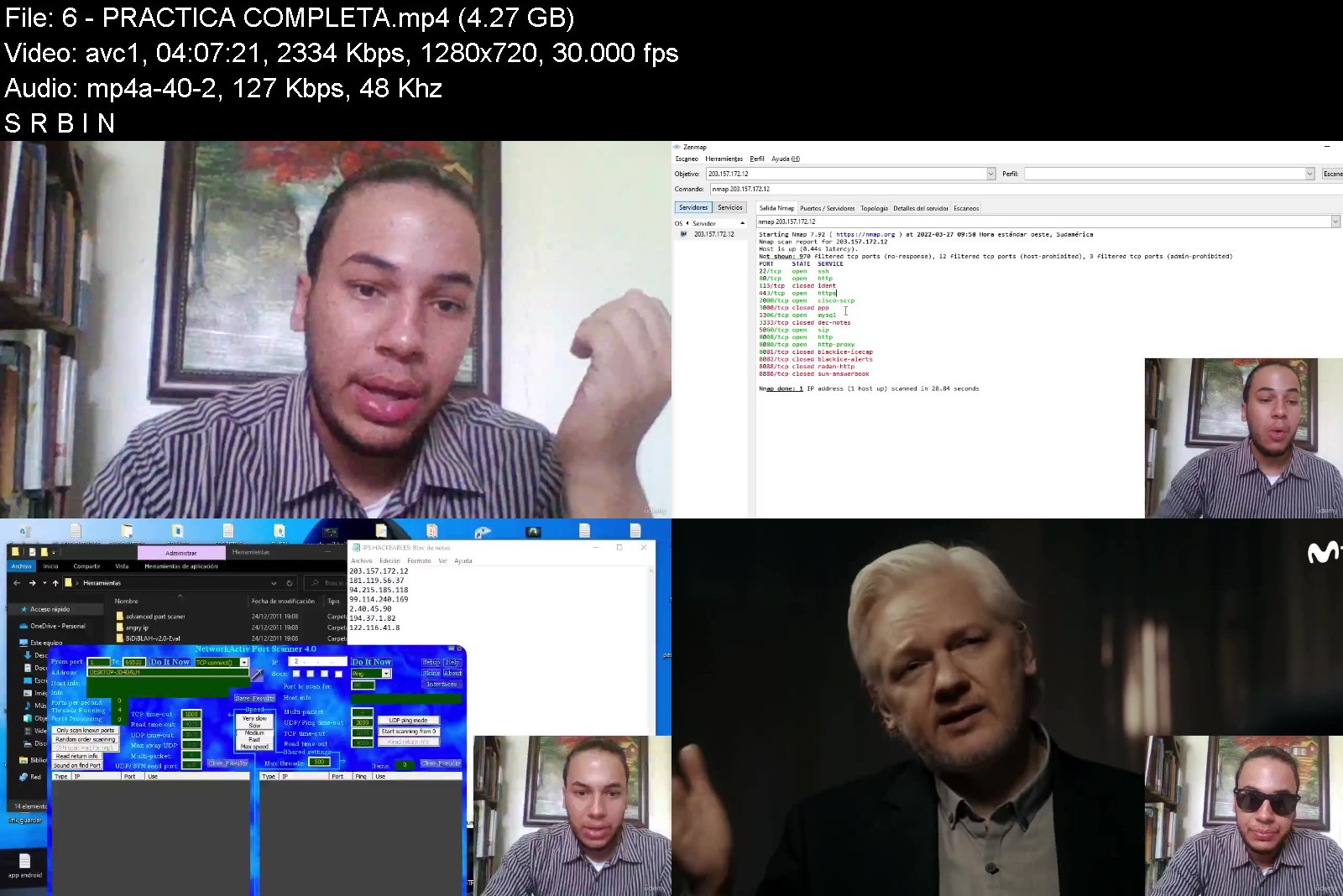
Lecture 6 PRACTICA COMPLETA

Section 4: SCANNING

Lecture 7 TEORIA

Lecture 8 PRACTICA

Lecture 9 PRACKTICA EXTENSA

Section 5: ANONIMATO Y PRIVACIDAD

Lecture 10 TEORIA

Lecture 11 PRACTICA

Section 6: ENUMERACION

Lecture 12 TEORIA

Lecture 13 PRACTICA

Section 7: GANANDO ACCESO

Lecture 14 ACCESO DE HACKING

Section 8: ESCALANDO PRIVILEGIOS

Lecture 15 privilegios hacks

Section 9: HARDENING

Lecture 16 FASE FINAL

Section 10: INGENIERIA SOCIAL

Lecture 17 phishing

Section 11: CONCLUCION

Lecture 18 el final

Section 12: DEEP WEB

Lecture 19 DARK 1

Lecture 20 ACCESO DE DARK

Section 13: HACKEAR PAGINAS WEB

Lecture 21 Web Hacking

Section 14: IDS e IPS

Lecture 22 LOS IDS SECURITY

Lecture 23 IDS extra practico

Section 15: ESPIONAJE DIGITAL

Lecture 24 Spionaje hacking

Lecture 25 Espionaje de la Informacion

Lecture 26 DIGITAL HACK SPIONAJE

Section 16: HACKING DE CAMARAS WEBCAM

Lecture 27 Hackeando cámaras de todo el Mundo

Section 17: HACK3AR R3DES S0CIALES Y CONTRAMEDIDAS

Lecture 28 Hacking con termux

Lecture 29 Hack3ar Wh@tsapp

Lecture 30 H@ck3ar Fac3book

Lecture 31 H@ack3@r 1nstagr@m

hackers,principiantes,expertos en hacking


hackingeticodesdecerox5j9f.jpg


Download from RapidGator


Download from Keep2Share



ATtiny microcontroller development for Arduino programmers

a759672212e9rknh.jpg


ATtiny microcontroller development for Arduino programmers
Published 07/2022
MP4 | Video: h264, 1280x720 | Audio: AAC, 44.1 KHz, 2 Ch
Genre: eLearning | Language: English + srt | Duration: 109 lectures (6h 39m) | Size: 6 GB


A practical guide for the development with the microcontrollers ATtiny 24/44/84 and 25/45/85


What you'll learn
What is an ATtiny and which variants are available
Technical data and pinout discussion
Effect of CPU clock speed and power supply
Power saving mode Deepsleep and interrupts
Brown-out detection and CPU clock setting with fuses
Apply hardware settings with Arduino IDE and PlatformIO (Fuses)
Source Code Creation with C++
Configuring and setting up Visual Studio Code with PlatformIO and Arduino IDE
Get to know different ATtiny cores and sources of supply
Create Arduino ISP DIY Shield for flashing
Use USB ISP Flasher
Use different upload methods with different IDEs
LED control with PWM
Use of WS2812b and FastLED with ATtiny
RTC module and shift register usage with ATtiny
Evaluation of humidity sensor and Deepsleep
Requirements
First experiences in Arduino development (millis, pinMode, data types) advantageous
Basics C++ in the Arduino environment
With the online simulators a lot can be simulated, but you have a greater learning success if you rebuild the practical examples with the hardware components
Everything about ATtiny is taught in this course
Description
ATtinys are low-cost microcontrollers that impress with their small form factor and low power consumption (~4-8µA during DeepSleep). The ATtinys can be programmed easily and quickly in the familiar Arduino environment (IDE and C++), so you have a cheap alternative to the Arduinos and ESPs. The ATtinys can be operated with a button battery CR2032 and have enough memory for common DIY projects.
For the whole course the ATtinys 25/24, 44/45 and 84 as well as the Digispark ATtiny85 are used.
What we go through in the course
Basics of Atmel ATtiny microcontrollers.
Getting to know different components like transistors, OLED displays, shift registers and much more.
Getting to know different upload variants for flashing the ATtinys
Use of Visual Studio Code with PlatformIO or Arduino IDE
Set hardware configurations like CPU clock frequency, brown-out detection etc.
Use of digital-analog GPIOs and PWM controls
Praxisbeispiel: Digital dice with random number and LEDs
Praxisbeispiel: Digital dice with WS2812b and FastLED
Praxisbeispiel: Binary clock with RTC Module and Shift Register
Praxisbeispiel: Plant monitor and Deepsleep with CR2032 Battery
Praxisbeispiel: Plant monitor with OLED
Praxisbeispiel: Tones (creating own Melody) as circuit board pendan
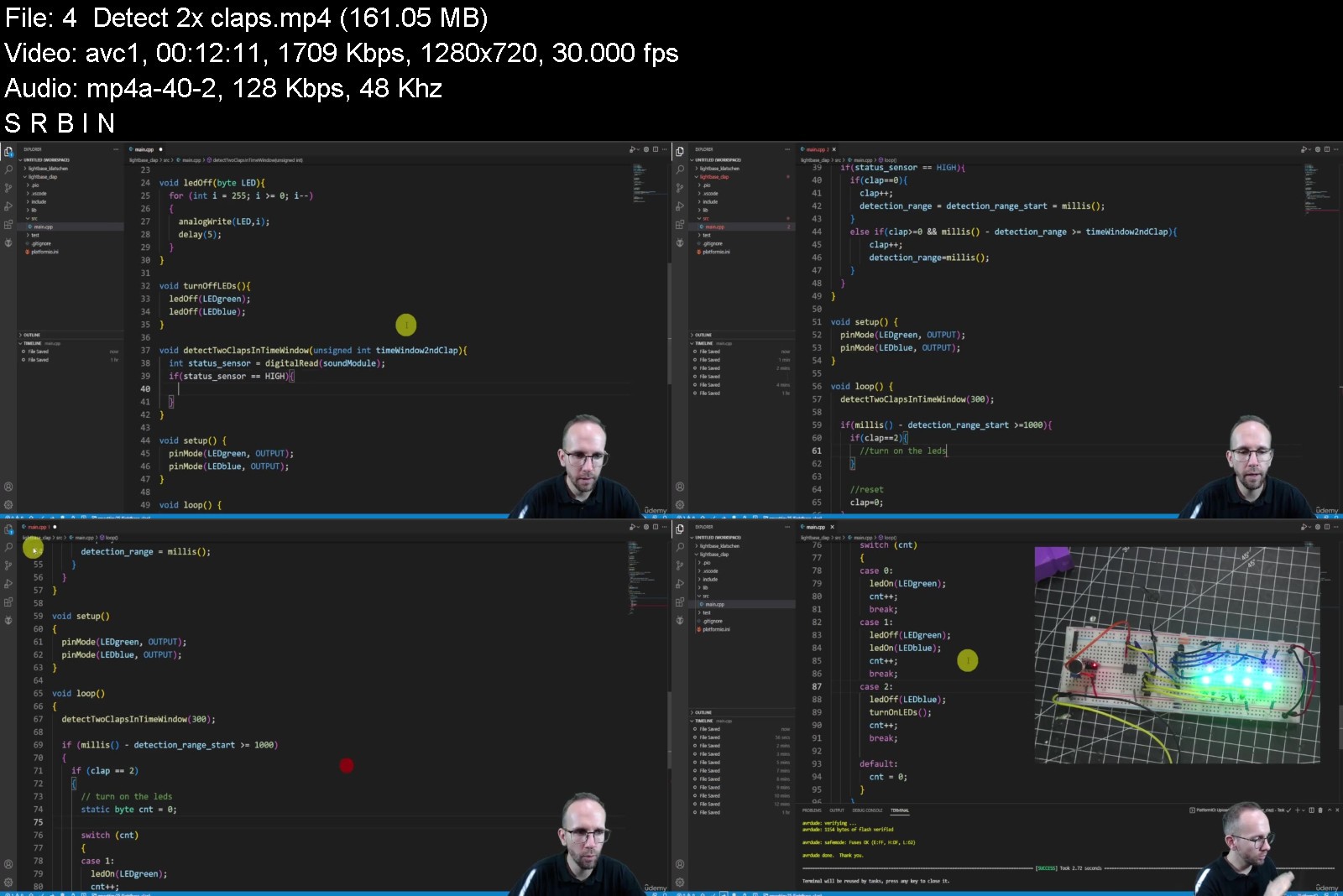
Praxisbeispiel: Transistor circuit with reedswitch and clap detector
Praxisbeispiel: Temperature sensor with OLED 0,96" at Digispark ATtiny85
Praxisbeispiel: DIY Rubber Ducky with Digispark ATtiny85
My approach in the course
No (ok, only very few) slides/Powerpoint but more projects. We start in the basics immediately with a practical example. You can also try out the theory immediately with the ATtinys and thereby understand it better.
The practical projects are developed together in step-by-step instructions.
In this context, together means that I demonstrate the code, depending on the task, and you can follow the execution or rebuild your own way.
All codes are available for download on the platform, so you can get to the result without frustration.
No lengthy explanations or theory monologues, we start right away in the basics chapter.
Benefit from my years of experience and get the key skills in microcontroller development.
Get this course right now and you can start right away.
See you in class
Markus Edenhauser
Who this course is for
Anyone who wants to deepen their knowledge of low-power, small form factor microcontrollers.
Developers who are interested in using low-cost microcontrollers for their projects.
All those who want to understand, apply and write their own practical projects with microcontrollers.
All those who want to learn more about microcontrollers with limited hardware resources


attinymicrocontrollerbhk0n.jpg


Download from RapidGator


Download from Keep2Share

 
Postnatal Yoga: The Yoga Of Motherhood

wzp95oer5psxen3xjmkcfo1jtm.jpg


Postnatal Yoga: The Yoga Of Motherhood
Published 7/2022
MP4 | Video: h264, 1280x720 | Audio: AAC, 44.1 KHz
Language: English | Size: 10.15 GB | Duration: 7h 51m

Integrate the principles of Yoga & Ayurveda everyday to ensure a smooth, healthy, and joyful transition into Motherhood


What you'll learn
Learn about the most common physical and emotional challenges that new mothers experience.
Learn how to address these common conditions using the various tools of Yoga & Ayurveda
Learn how to strengthen the pelvic floor after delivery
Learn about postnatal nutrition from an Ayurvedic perspective
Dive deeper into pranayama practice as they will be introduced to Kumbhaka along with Kapalabhati and Bastrika pranayam techniques
Explore the benefits of massage for Baby
Explore Pawanmuktasana Part 2: The Digestive Group
Explore the benefits of Pawanmuktasana for baby
Explore a few of very powerful yogic cleaning techniques (shatkarma) that will improve digestion and help quickly tone and strengthen the abdomen
Learn how to incorporate all the tools of yoga and create sequences that are more therapeutic in nature
Requirements
It is highly recommended that students complete our Prenatal Yoga Course prior to commencing this course as this information builds upon and compliments the teachings that were shared in Module one.
Having said that, all are welcome.

Description
Learn how to nurture Mother's mind body and soul so she can become truly present during this sacred time and share her beautiful energy with Baby. We discuss the real life issues that arise during this post partum period and we explore the various tools of Yoga and Ayurveda that will*ease some of the challenges. Students will learn how to incorporate all elements of yoga including asana, pranayama, meditation, yoga nidra, nutrition, and positive thinking into daily life so Mother can remain peaceful, calm and grounded in every moment and experience a smooth and speedy healing process. Students will be introduced to specific asana, pranayama, and kriya techniques that help tone the core, stimulate digestion and increase energy. Lastly, we will explore how to integrate baby into all the above so eventually, everything will become YOGA and Mommy and baby will be healthy, happy, and able to develop an incredibly strong bond. This course has been designed for new mothers, existing yoga teachers, and those who have a new mother in their life whom they love and support. It is also appropriate for anyone who would like to learn the foundations from which you can develop a complete yogic practice that incorporates all elements of yoga including asana, pranayama, meditation, yoga nidra, nutrition, and positive thinking.This course is a Yoga Alliance approved continuing education course and counts towards 30 contact hours. Existing Yoga teachers will be able to satisfy their 3 year CEC requirements.What you will receive:A comprehensive self paced, Online Prenatal Yoga Course offering a balanced mix of theory and practical lessons; 8+ Hours of video and audio content.A mix of multi media delivery: Video, audio, and PDF downloadsCertificate upon completion which existing yoga teachers can apply towards their 3 year continuing education requirements for Yoga Alliance MembershipHere's what you will learn:The yoga of motherhoodGeneral guidelines for developing a safe postnatal asana practiceThe post partum recoveryRe-activating the pelvic floorPost natal yoga therapy for common conditionsPost partum depression and mental healthDiastasis RectusProlapseNutrition based on Ayurvedic PrinciplesThe 5 postnatal posture groupsPawanmuktasana Part 2: The Digestive GroupPost Natal Asana Classes that will fire up the coreHow to incorporate baby into your practicesBenefits of Infant massageBenefits of Pawanmuktasana for babyPranayama & Kriya Cleansing Techniques
Overview
Section 1: Introduction
Lecture 1 Welcome
Lecture 2 My Personal Expereinces
Section 2: The Fundamentals
Lecture 3 General Guidelines for Postnatal Yoga
Lecture 4 The Pelvic Floor (Prenatal Yoga Course Content/Refresher)
Lecture 5 The Postnatal Recovery
Lecture 6 The Yoga of Motherhood
Lecture 7 Post Partum Nutrition: An Ayurvedic Perspective
Section 3: Post Natal Yoga Therapy
Lecture 8 Common Conditions
Lecture 9 General Backpain (Prenatal Yoga Couse content)
Lecture 10 Sciatica and Piriformis Syndrome (Prenatal Course Content)
Lecture 11 Breastfeeding Issues
Lecture 12 Diastasis Recti
Lecture 13 Prolaps
Lecture 14 Mental Heath: Postpartum Depression
Section 4: Kriyas, Pranayama, Asana
Lecture 15 Kriya Practices
Lecture 16 Pranayama Lecture
Lecture 17 Nadi Shodhana Pranayam
Lecture 18 Kapalabhati Pranayam
Lecture 19 Bastrika Pranayam
Lecture 20 Ujjayi Pranayam
Lecture 21 Sheetali & Sheekari
Lecture 22 Bhramari Pranayam (Prenatal Yoga Course Content)
Lecture 23 5 Postnatal Posture Groups
Lecture 24 Pawanmuktasana Part 2: Digestive Group
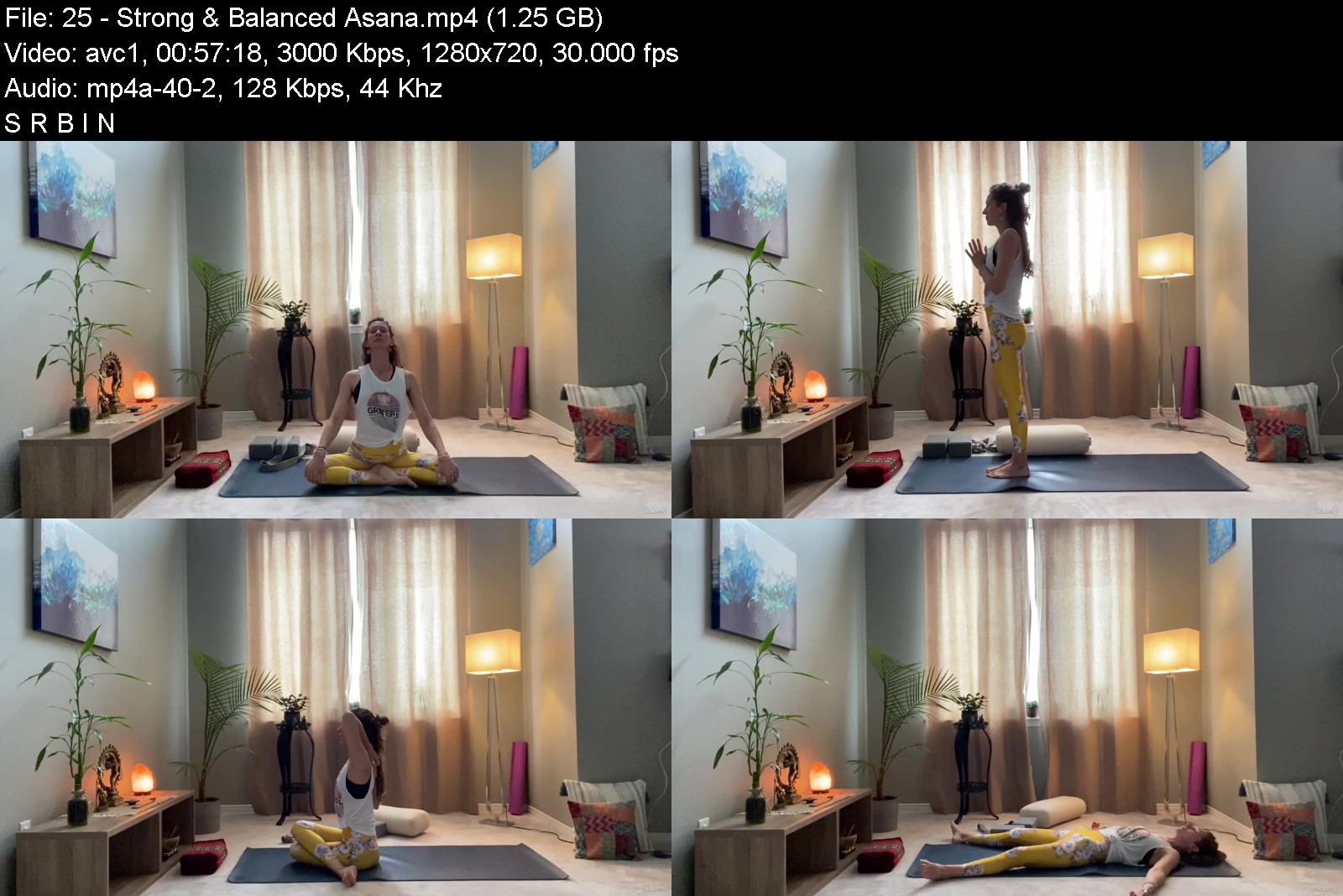
Lecture 25 Strong & Balanced Asana
Lecture 26 Strong Core Asana
Lecture 27 Putting Everything Together As It Relates to Sequencing
Section 5: Incorporating Baby
Lecture 28 Mom and Baby Asana
Lecture 29 Pawanmuktasana for Baby
Lecture 30 Benefits of Baby Massage
Section 6: Yoga Nidra & Meditation
Lecture 31 Yoga Nidra
Section 7: Conclusion
Lecture 32 Conclusion
This course will greatly appeal to New Mothers who wish to start a post natal yoga practice that honors the healing process yet incorporates very powerful methods to reignite the inner core energy and fire.,Existing yoga teachers will highly benefit if they wish to learn how to support new mothers in their postpartum journey.,Those who wish to learn about the common conditions experienced by Mother after birth and and those who wish to learn how to support the new mother so she can have a smooth, healthy and joyful transition into Motherhood.


postnatalyogatheyogaovvkfj.jpg


Download from RapidGator


Download from Keep2Share


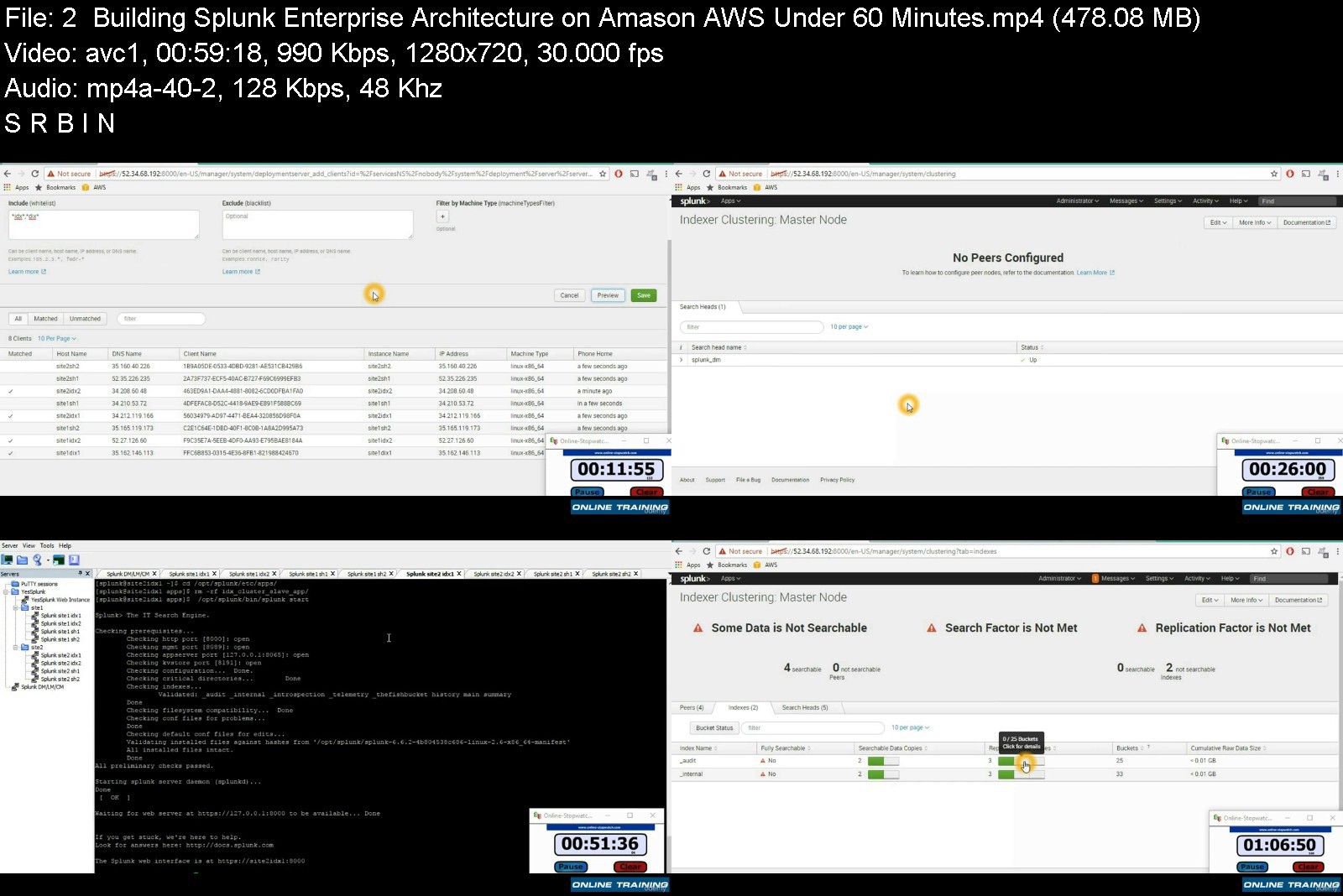
The Complete Splunk course from Zero to Hero 2022

fvjoxvjhcy3bmeh6266ji01k79.jpg


The Complete Splunk course from Zero to Hero 2022
Published 07/2022
Genre: eLearning | MP4 | Video: h264, 1280x720 | Audio: AAC, 48.0 KHz
Language: English | Size: 5.8 GB | Duration: 186 lectures • 15h 35m


What you'll learn
Set up a working Splunk environment
Create meaningful reports and dashboards in Splunk
Build datasets, data models, and other knowledge objects
Prepare for the Splunk Enterprise 8.x Certified Admin exam!
Master all aspects of Splunk configuration files
Users, roles, and authentication
Learn how to deploy Splunk in different environments and with different architectures
and much more...
Requirements
Computer with Internet Connection
Understand how to install software on Linux and Windows

Description
Have you heard about the power of having Splunk on your resume?
The best course for learning Splunk, the leader in real-time monitoring, operational intelligence, log management, and SIEM (security information and event management). Your instructor is Adam Frisbee, a university instructor, a Splunk Certified Administrator and a Splunk geek.
Whether you've inherited a Splunk environment, are building one from scratch, or are simply curious about Splunk, this course was designed specifically for you!
We'll cover it all, from installing Splunk for the first time to architecting advanced distributed Splunk environments for large enterprises. We'll talk about search head clustering, heavy forwarders, indexer clustering, configuration files, authentication (yes, even with LDAP), and much more.
I look forward to working with you in this course, and in future courses!
This is the #1 place to learn by watching instructor lead demonstrations on Splunk. Don't take another course that is bogged down with long lectures and endless PowerPoint slides. Take one that covers the majority of the course via recorded demonstrations and is built for visual learners! Enjoy over 15 demonstration lecture style modules that teach you Splunk while driving on a Splunk instance. This course is designed to take someone who has never heard of Splunk and provide them with the knowledge they need to pass the Splunk Core Certified Power User exam!
Learn on Splunk 8.2.0!
Build strong foundational skills you need to pass the Splunk power user certification.
Learn by watching demonstrations for over 75% of the course!
Download your own data and practice on your own instance of Splunk.
Learn over 25 commands!
Understand Splunks data pipeline and SIEM functionality.
Gain confidence in how to craft strong searches, build visualizations, and understand the key components of Splunk.
This course will cover all the key topics you need to pass the exam!
I hope you continue to take what you have learned here and move on to learning more advanced topics that Splunk has to offer!
Who this course is for
Anyone who has inherited a Splunk environment and wants to rock it!
Have you been tasked with setting up Splunk but aren't sure where to start?
Do you want to participate in the big data and machine learning boom?
Individuals who are looking to have solid foundation in Splunk
Data scientists
Anyone who wants to make a lot of money by boosting their resume with Splunk knowledge and experience


thecompletesplunkcourbej61.jpg


Download from RapidGator


Download from Keep2Share

 
Mulesoft Certified Developer - Level 2 - Preparation Course

9ixakmj6yncmivsoqlqfq09k1f.jpg


Mulesoft Certified Developer - Level 2 - Preparation Course
Published 7/2022
MP4 | Video: h264, 1280x720 | Audio: AAC, 44.1 KHz
Language: English | Size: 6.92 GB | Duration: 17h 34m

Learn concepts and practice for the MCD - Level 2 exam with hands-on exercises


What you'll learn
100% Readiness for MuleSoft Certified Developer - Level 2 exam
MuleSoft Production-Ready Application Development & Integration
Custom API Policy Development
Custom MuleSoft Connector Development
Implement effective Logging and Tracing
Async Processing with VM and Anypoint MQ Connector
Compensating transactions for partially failed Scatter-gather
Secure vs Safe Properties, OAuth, mTLS, Digital Certificates
Client-Side vs Server-Side Caching
API Gateway Security and Fault Tolerance
At the end of this course, you will gain the confidence to clear the certification
Requirements
Should have an understanding of APIs, Integration
Should have completed the "Anypoint Platform Development: Fundamentals" course
Good to have basic Maven Knowledge. (Maven is briefly covered in this course)

Description
A MuleSoft Certification can take your career to a whole new level. Learn, practice, and get certified on MCD Level 2 with hands-on exercises and practice tests.A MuleSoft Certified Developer - Level 2 resource should be able to work on production-ready Mule applications by managing non-functional requirements like monitoring, reliability, performance, and security.The course covers all the topics of MCD - Level 2 certification and can be taken by any MuleSoft professional. We will learn all the concepts, do hands-on exercises, and test knowledge through practice exams.I will present every topic to you in a simple, visual, and easy way.we will first understand the topic by going through animated slideswe will do practical hands-on exercises for every topicthe course is designed in a way that you can do 90% of the hands-on exercises using trial accountswe provide a GitHub repository and downloadable material with starter/solution code snippetstest your knowledge through the Practice TestsPlease watch the Preview/Promotional Video for a full list of topics that will be covered as part of this course.Note -Auto-generated English Captions are available in all course videosJoin the MCD - Level 2 private Slack community for any topic request/discussionPractice tests are kept on HOLD
Overview
Section 1: Section 0 - Setting up Local System and Backend Services
Lecture 1 Course Overview
Lecture 2 Slack & LinkedIn
Lecture 3 Best 1080p Video Quality
Lecture 4 GitHub Repository
Lecture 5 Welcome to Section 0
Lecture 6 HANDS-ON 0.1 - Setup your computer
Lecture 7 Introducing the Course Usecase
Lecture 8 HANDS-ON 0.2 - Setup Anypoint Platform Account
Lecture 9 HANDS-ON 0.3 - Setup RAML Specification
Lecture 10 HANDS-ON 0.4 - Setup API Manager
Lecture 11 HANDS-ON 0.5 - PART A - Setup Local Mavena and Anypoint Studio
Lecture 12 HANDS-ON 0.5 - PART B - Setup System APIs
Lecture 13 HANDS-ON 0.6 - Setup Developer Portal
Section 2: Section 1 - Project Structure, Deployment Strategy & Development Best Practises
Lecture 14 Welcome to Section 1
Lecture 15 API Lifecycle
Lecture 16 HANDS-ON 1.1 - OAS Definiton
Lecture 17 API Manager, API Gateway (Proxy vs Basic Endpoint)
Lecture 18 HANDS-ON 1.2 - Add API Instance and Policy
Lecture 19 APIKit Router Internal Flow
Lecture 20 HANDS-ON 1.3 - Import API from Exchange to Studio and Test it
Lecture 21 API Autodiscovery
Lecture 22 HANDS-ON 1.4 - API Autodiscovery
Lecture 23 MuleSoft Coding Conventions
Lecture 24 HANDS-ON 1.5 - MuleSoft Coding Conventions
Lecture 25 Security - Cryptography
Lecture 26 Security - Digital Certificates
Lecture 27 One Way vs Two Way SSL
Lecture 28 CloudHub Architecture
Lecture 29 JKS vs PKCS12
Lecture 30 HANDS-ON 1.6 - One Way TLS
Lecture 31 Parameterize Mule App Configurations
Lecture 32 HANDS-ON 1.7 - Configuration Property File
Lecture 33 HANDS-ON 1.8 - Environmnet Specific Property FIles
Lecture 34 Secure and Safe Properties
Lecture 35 HANDS-ON 1.9 - Secure and Safe Properties
Lecture 36 Maven Basics
Lecture 37 Maven Resource Filtering
Lecture 38 HANDS-ON 1.10 - Maven Resource Filtering
Lecture 39 Build Redundancy
Lecture 40 HANDS-ON 1.11 - Parent POM
Lecture 41 HANDS-ON 1.12 - Master BOM
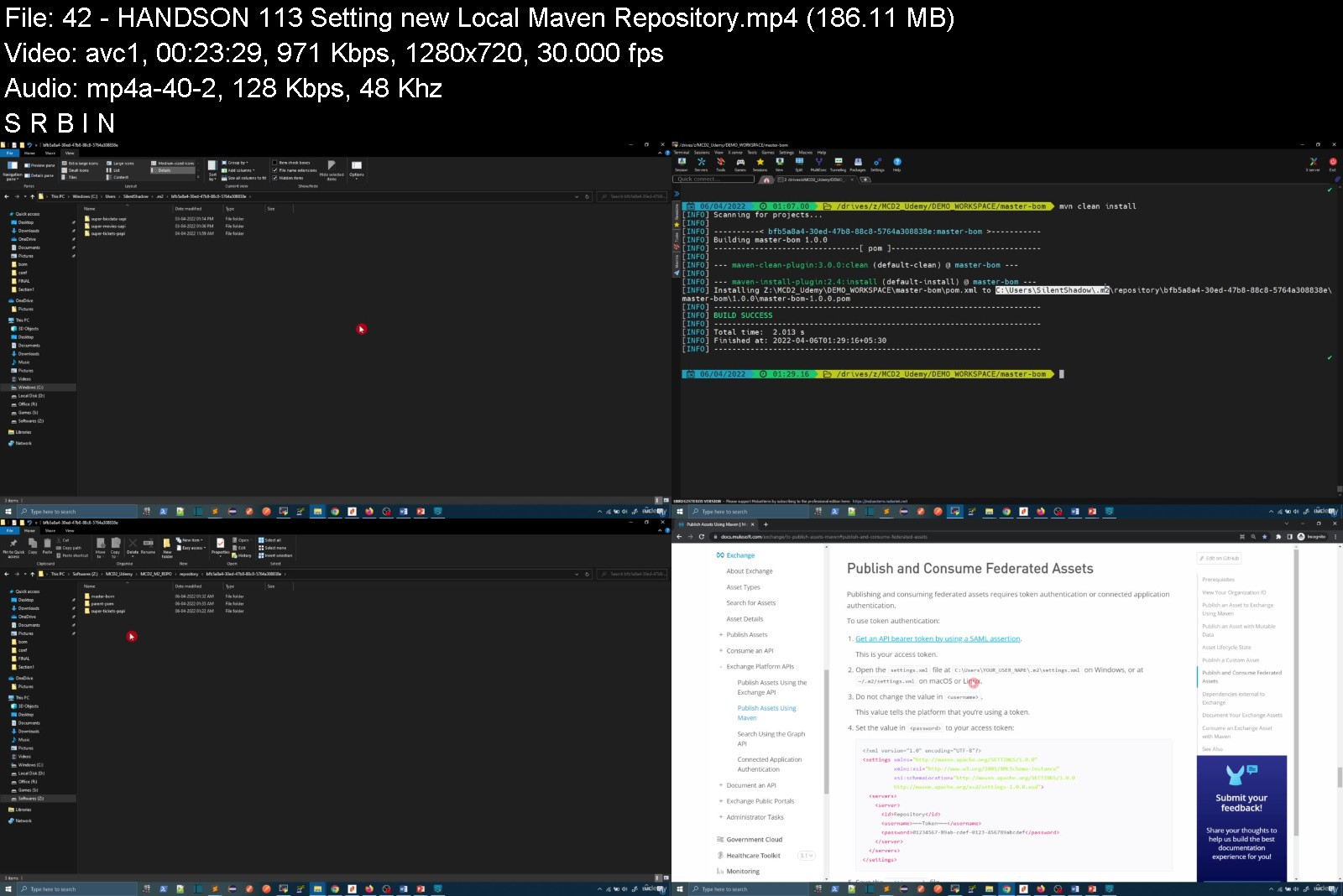
Lecture 42 HANDS-ON 1.13 - Setting new Local Maven Repository
Lecture 43 HANDS-ON 1.14 - Connected App
Lecture 44 CloudHub Deployment using Maven
Lecture 45 HANDS-ON 1.15 - CloudHub Deployment using Maven
Lecture 46 HANDS-ON 1.16 - Visualizer
Lecture 47 End of Section 1 & Check Certification Topics
Lecture 48 Feedback
Section 3: Section 2 - Mule Integration - API Development, Error Handling, Caching Strategy
Lecture 49 Welcome to Section 2
Lecture 50 REST Connect
Lecture 51 HANDS-ON 2.1 - REST Connect
Lecture 52 HANDS-ON 2.2 - Fetch Access Credentials for APIs
Lecture 53 HANDS-ON 2.3 - Non-functional Requirement - Timeout
Lecture 54 OAuth 2.0 Basics
Lecture 55 Configure OAuth in HTTP Request Connector
Lecture 56 HANDS-ON 2.4 - Configure OAuth in HTTP Request Connector
Lecture 57 HANDS-ON 2.5 - DEBUG Logs for HTTP Message Logger
Lecture 58 HANDS-ON 2.6 - Dataweave Transformation Logic
Lecture 59 HANDS-ON 2.7 - Global Error Handling
Lecture 60 Parallel Processing
Lecture 61 HANDS-ON 2.8 - Scatter-Gather
Lecture 62 HANDS-ON 2.9 - Scatter-Gather Failed & Success Routes
Lecture 63 HANDS-ON 2.10 - Compensation Logic
Lecture 64 HTTP Errors and Retry Options
Lecture 65 HANDS-ON 2.11 - Until Successful Scope with Transient & Permanent Errors
Lecture 66 Caching - Client Side vs Server Side & Object Store Basics
Lecture 67 HANDS-ON 2.12 - Client Side Caching using Cache Scope
Lecture 68 API Caching Policy
Lecture 69 HANDS-ON 2.13 Server Side Caching & Visualizer
Lecture 70 End of Section 2 & Check Certification Topics
Lecture 71 Feedback
Section 4: Section 3 - Asynchronous Processing, Logs, Tracing, Correlation ID & Validation
Lecture 72 Welcome to Section 3
Lecture 73 HTTP Callback
Lecture 74 HANDS-ON 3.1 - Configure HTTP Callback Flow
Lecture 75 HANDS-ON 3.2 - Register HTTP Callback with External Service
Lecture 76 Asynchronous Processing
Lecture 77 HANDS-ON 3.3 - VM Publish Message
Lecture 78 HANDS-ON 3.4 - VM Listen Message
Lecture 79 HANDS-ON 3.5 - VM Redelivery Policy
Lecture 80 HANDS-ON 3.6 - VM DLQ
Lecture 81 Anypoint MQ
Lecture 82 HANDS-ON 3.7 - Anypoint MQ Configuration
Lecture 83 HANDS-ON 3.8 - Anypoint MQ Publish Message
Lecture 84 Acknowledgement Modes
Lecture 85 HANDS-ON 3.9 - Anypoint MQ Subscriber
Lecture 86 HANDS-ON 3.10 - Anypoint MQ - NACK
Lecture 87 Anypoint MQ Circuit Breaker
Lecture 88 HANDS-ON 3.11 - Anypoint MQ Circuit Breaker
Lecture 89 Correlation ID
Lecture 90 HANDS-ON 3.12 - Trace Correlation ID across Mule Applications
Lecture 91 Logging & Tracing Module
Lecture 92 HANDS-ON 3.13 - Tracing Correlation ID across Anypoint MQ Subscriber
Lecture 93 HANDS-ON 3.14 - Mapped Diagnostic Context (MDC)
Lecture 94 Validation Module
Lecture 95 HANDS-ON 3.15 - Validation Module
Lecture 96 HANDS-ON 3.16 - JSON Schema Validation
Lecture 97 HANDS-ON 3.17 - XML Schema Validation
Lecture 98 End of Section 3 & Check Certification Topics
Lecture 99 Feedback
Section 5: Section 4 - Mule Application Health Checks and Custom Connector Development
Lecture 100 Welcome to Section 4
Lecture 101 Health Endpoint - Liveness & Readiness
Lecture 102 HANDS-ON 4.1 - Configure Health Endpoints
Lecture 103 Shared Library
Lecture 104 HANDS-ON 4.2 - Create a new Shared Library
Lecture 105 HANDS-ON 4.3 - Configure Shared Library in Mule App
Lecture 106 Mule XML SDK Concepts
Lecture 107 HANDS-ON 4.4 - Generate XML SDK Project
Lecture 108 HANDS-ON 4.5 - XML SDK - Business Logic
Lecture 109 HANDS-ON 4.6 - Configure XML SDK Connector in Mule App
Lecture 110 HANDS-ON 4.7 - Deploy XML SDK Connector to Exchange
Lecture 111 API Monitoring
Lecture 112 HANDS-ON 4.8 - External API Monitoring
Lecture 113 End of Section 4 & Check Certification Topics
Lecture 114 Feedback
Section 6: Section 5 - Custom API Policy Development, Offline Policies Management
Lecture 115 Welcome to Section 5
Lecture 116 Custom API Policy
Lecture 117 HANDS-ON 5.1 - Generate API Policy Project Skeleton
Lecture 118 HANDS-ON 5.2 - Custom API Policy Business Logic
Lecture 119 HANDS-ON 5.3 - Apply Online Policy
Lecture 120 Offline Policies
Lecture 121 HANDS-ON 5.4 - Offline Policies in Anypoint Studio
Lecture 122 HANDS-ON 5.5 - API Policy with Handle Bars
Lecture 123 End of Section 5 & Check Certification Topics
Lecture 124 Feedback
Section 7: Section 6 - Consuming SOAP Web Services using TLS Certificates
Lecture 125 Welcome to Section 6
Lecture 126 Consume SOAP Webservice with TLS certificates
Lecture 127 Generate Keys and Certificates
Lecture 128 Notes - JKS - Create Keys & Certificates
Lecture 129 Notes - PKCS12 - Create Keys & Certificates
Lecture 130 HANDS-ON 6.1 - Consume SOAP Service on PLAIN HTTP Protocol
Lecture 131 HANDS-ON 6.2 - Consume SOAP Service using One-Way-TLS
Lecture 132 HANDS-ON 6.3 - Consume SOAP Service using Two-Way-TLS
Lecture 133 End of Section 6 & Check Certification Topics
Lecture 134 Feedback
Section 8: Section 7 - MUnit Testing
Lecture 135 Welcome to Section 7
Lecture 136 MUnit Basics
Lecture 137 HANDS-ON 7.1 - Understanding Mule App used for MUnit Testing
Lecture 138 HANDS-ON 7.2 - Configure MUnit for a Mule App and Add a Startup Test
Lecture 139 HANDS-ON 7.3 - MUnit - Set Event
Lecture 140 HANDS-ON 7.4 - MUnit - Assert that
Lecture 141 HANDS-ON 7.5 - MUnit - Mock when
Lecture 142 HANDS-ON 7.6 - MUnit - Verify call
Lecture 143 HANDS-ON 7.7 - MUnit - Spy scope
Lecture 144 HANDS-ON 7.8 - MUnit - Refactoring
Lecture 145 HANDS-ON 7.9 - MUnit - Error Testing
Lecture 146 MUnit Maven Plugin
Lecture 147 HANDS-ON 7.10 - MUnit Maven Commands - Failure
Lecture 148 MUnit Recorder
Lecture 149 HANDS-ON 7.11 - MUnit Recorder
Lecture 150 End of Section 7 & Check Certification Topics
Lecture 151 Feedback
Section 9: Additional Topics
Lecture 152 HTTPS API Proxy
Lecture 153 HANDS-ON A-1: HTTPS API Proxy
Section 10: Practice Exam
Lecture 154 IMPORTANT Update
MuleSoft Developers, Architects, Technical Leads,Anyone who wants to excel in MuleSoft Production Development & Integration,Anyone who is preparing to take the MuleSoft Certified Developer - Level 2 exam


mulesoftcertifieddevez2j72.jpg


Download from RapidGator


Download from Keep2Share



Genetic Algorithms, Vaes & Gans In Dnns- An Introduction

yeczwr8mjkak5qkbwemlz6zjt3.jpg


Genetic Algorithms, Vaes & Gans In Dnns- An Introduction
Last updated 7/2022
MP4 | Video: h264, 1280x720 | Audio: AAC, 44.1 KHz
Language: English | Size: 5.97 GB | Duration: 5h 1m

Genetic Algorithms, Variational AutoEncoders, RL, Generative Adversarial Networks & Bayesian Statistics in Deep Learning


What you'll learn
Introduction to Genetic Algorithms
Implementation of Genetic Algorithms in Python
Generative Adversarial Networks & Variational Auto-encoders (VAEs)
Introduction to Statistical Inference using Bayesian Networks
Genetic Algorithms for Hyper- Parameters Optimisation
Introduction to Reinforcement Learning & Implementation in Python
Requirements
No prior experience required

Description
This course will provide a prospect for participants to establish or progress their considerate on the Genetic Algorithms, GANs and Variational Auto- encoders and their implementation in Python framework. This course encompasses algorithm processes, approaches, and application dimensions.Genetic algorithm which reflects the process of natural selection though selection of fittest individuals is explained thoroughly. Further its implementation in Python Library is exhibited step- wise. Similarly, Generative Adversarial Networks, or GANs for short, are introduced as an approach to generative modelling. Generative modelling is explained as an unsupervised learning task to generate or output new examples that plausibly could have been drawn from the original dataset. Both the Generator and Discriminator modules are explained in Depth. The two models are explained together in a zero-sum game, adversarial, until the discriminator model is fooled about half the time, meaning the generator model is generating plausible examples.The course introduces elements of the research process within quantitative, qualitative, and mixed methods domains. Participants will use these underpinnings to begin to critically understand design thinking and its large-scale optimization. They would be able to develop an understanding to formulate a research question and answer it by framing an effective research methodology based on suitable methodologies. Furthermore, they would learn to derive meaningful inferences and to put them together in the form of a quality research paper. In the last few years, deep learning based generative models have gained more and more interest due to (and implying) some amazing improvements in the field. Relying on huge amount of data, well-designed networks architectures and smart training techniques, deep generative models have shown an incredible ability to produce highly realistic pieces of content of various kind, such as images, texts and sounds. Among these deep generative models, two major families stand out and deserve a special attention: Generative Adversarial Networks (GANs) and Variational Autoencoders (VAEs).The key topics covered in this course are;1. An Introduction to Genetic Algorithms.2. Implementation of Genetic Algorithms in Python using case examples. 3. Framing a hypothesis based on the nature of the study.4. An Introduction to Generative Adversarial Networks (GANs). 5. Implementations of GANs in Python. 6. Meta-Analysis & Large Scale Graph Mining.7. Design Thinking Using Immersion and Sense-Making.8. An Introduction to Reinforcement Learning Algorithms in Deep Learning. 9. An Introduction Bayesian Statistical Inferences. 10. An Introduction to Autoencoders.11. Concept of latent space in Variational Auto- Encoders (VAEs).12. Regularisation and to generate new data from VAEs.
Overview
Section 1: Genetic Algorithms- An Introduction
Lecture 1 Introduction to Genetic Algorithms
Lecture 2 Basic Components of Genetic Algorithm
Lecture 3 NLP IN CUTTING EDGE RESEARCH
Section 2: Novel Search in Genetic Algorithms (GAs)
Lecture 4 Novelty Search in GAs
Section 3: PyGAD- Python Library for Genetic Algorithms
Lecture 5 PyGAD for Genetic Algorithms- Python Package
Section 4: Implementation of Genetic Algorithms
Lecture 6 Python Implementation of Genetic Algorithms
Section 5: Fundamentals of Variational Auto- Encoders (VAEs)
Lecture 7 Building Blocks of Variational Auto- Encoders
Section 6: Introduction to Generative Adversarial Networks (GANs)
Lecture 8 What are GANs- Part I
Lecture 9 What are GANs- Part II
Lecture 10 How GANs work?
Section 7: Python Implementation of GANs
Lecture 11 Implementation of GANs in Python Framework
Section 8: Introduction to Bayesian Statistical Inference
Lecture 12 Bayesian Networks
Section 9: Introduction to Reinforcement Learning
Lecture 13 Fundamentals of Reinforcement Learning- Part I
Lecture 14 Fundamentals of Reinforcement Learning- Part II
Section 10: Research Algorithms- Research Dimensions
Lecture 15 Optimization through Graph Theory In Deep Learning
Lecture 16 How to use large scale graphs using Google analytics
Lecture 17 Understanding The Research Terminology & Research Process
Lecture 18 Research Ethics and Integrity
Lecture 19 Research Thinking From Creativity to Innovation
Lecture 20 Qualitative Research and Methods
Lecture 21 Quantitative Research and its Types
Lecture 22 Random, Stratified, Systematic and Clustered Sampling Techniques
Lecture 23 Mixed Methods and their research implications
Lecture 24 Why use RCTs for Trials in Research
Section 11: Publishing Research: Research Paper Writing
Lecture 25 Advanced Research Techniques including machine learning approaches
Lecture 26 Why systematic Review and Meta Analysis is important for Evidence based studies
Lecture 27 How a research topic is to be selected
Lecture 28 Selection of a Research Journals for Publishing
Lecture 29 How to prepare a paper/ manuscript for publication?
Lecture 30 Students would learn about Informed Consent & Competitive Interests
Lecture 31 Moving Averages, Dynamic Moving Averages and Momentum
Lecture 32 Why its imperative to understand disruptive innovation cycle
Lecture 33 Key differences between different hashing algorithms
Section 12: Graph Neural Networks
Lecture 34 Introduction to GNNs
Lecture 35 Large Language Algorithms
Lecture 36 Transformer Algorithms for NLP
Section 13: Kernel Algorithms
Lecture 37 Introduction to Kernel Algorithms
Computer science, engineering and research students involved in basic and applied modelling using Algorithms,Beginners who want to keep themselves abreast with leading algorithms


geneticalgorithmsvaesq9j63.jpg


Download from RapidGator


Download from Keep2Share

 
Zurück
Oben Unten