• Regeln für den Video-Bereich:

    In den Börsenbereich gehören nur Angebote die bereits den Allgemeinen Regeln entsprechen.

    Einteilung

    - Folgende Formate gehören in die angegeben Bereiche:
    - Filme: Encodierte Filme von BluRay, DVD, R5, TV, Screener sowie Telesyncs im Format DivX, XviD und x264.
    - DVD: Filme im Format DVD5, DVD9 und HD2DVD.
    - HD: Encodierte Filme mit der Auflösung 720p oder darüber von BluRay, DVD, R5, TV, Screener sowie Telesyncs im Format x264.
    - 3D: Encodierte Filme von BluRay, die in einem 3D Format vorliegen. Dies gilt auch für Dokus, Animation usw.
    - Serien: Cartoon/Zeichentrick, Anime, Tutorials, Dokumentationen, Konzerte/Musik, Sonstiges sind demnach in die entsprechenden Bereiche einzuordnen, auch wenn sie beispielsweise im High Definition-Format oder als DVD5/DVD9/HD2DVD vorliegen. Ausnahme 3D.
    - Bereich Englisch: Englische Releases gehören immer in diesen Bereich.
    - Bereich Talk: Der Bereich, in dem über die Releases diskutiert werden kann, darf, soll und erwünscht ist.


    Angebot/Beitrag erstellen

    - Ein Beitrag darf erst dann erstellt werden, wenn der Upload bei mindestens einem OCH komplett ist. Platzhalter sind untersagt.
    - Bei einem Scenerelease hat der Threadtitel ausschließlich aus dem originalen, unveränderten Releasenamen zu bestehen. Es dürfen keine Veränderungen wie z.B. Sterne, kleine Buchstaben o.ä. vorgenommen werden. Ausnahme Serienbörse:
    - Bei einem Sammelthread für eine Staffel entfällt aus dem Releasename natürlich der Name der Folge. Beispiel: Die Simpsons S21 German DVDRip XviD - ITG
    - Dementsprechend sind also u.a. verboten: Erweiterungen wie "Tipp", "empfehlenswert", "only", "reup", usw. / jegliche andere Zusatzinformation oder Ergänzung, welche nicht in obiger Beschreibung zu finden ist.

    Aufbau des Angebots und Threadtitel

    Der Titel nach folgendem Muster erstellt zu werden. <Name> [3D] [Staffel] [German] <Jahr> <Tonspur> [DL] [Auflösung] <Quelle> <Codec> - <Group>
    Beispiel: The Dark Knight German 2008 AC3 DVDRip XviD - iND
    Beispiel: The Dark Knight 2008 DTS DL BDRip x264 - iND
    Beispiel: The Dark Knight 2008 AC3 DL BDRip XviD - iND
    Beispiel: The Dark Knight German 2008 AC3 720p BluRay x264 iND
    Beispiel: The Dark Knight 2008 DTS DL 1080p BluRay x264 iND
    Beispiel: Die Simpsons S01 German AC3 DVDRip XviD iND
    Beispiel: Die Simpsons S20 German AC3 720p BluRay x264 iND
    Beispiel: Sword Art Online II Ger Sub 2014 AAC 1080p WEBRip x264 - peppermint
    Entsprechend sind also u.a. verboten: Sonderzeichen wie Klammern, Sterne, Ausrufezeichen, Unterstriche, Anführungszeichen / Erweiterungen wie "Tipp", "empfehlenswert", "only", "reup", usw. / jegliche andere Zusatzinformation oder Ergänzung, welche nicht in obiger Beschreibung zu finden ist
    Ausnahmen hiervon können in den Bereichen geregelt sein.

    Die Beiträge sollen wie folgt aufgebaut werden:
    Überschrift entspricht dem Threadtitel
    Cover
    kurze Inhaltsbeschreibung
    Format, Größe, Dauer sind gut lesbar für Downloader außerhalb des Spoilers zu vermerken
    Nfo sind immer Anzugeben und selbige immer im Spoiler in Textform.
    Sind keine Nfo vorhanden z.B. Eigenpublikationen, sind im Spoiler folgende Dateiinformationen zusätzlich anzugeben :
    Quelle
    Video (Auflösung und Bitrate)
    Ton (Sprache, Format und Bitrate der einzelnen Spuren)
    Untertitel (sofern vorhanden)
    Hosterangabe in Textform außerhalb eines Spoiler mit allen enthaltenen Hostern.
    Bei SD kann auf diese zusätzlichen Dateiinformationen verzichtet werden.

    Alle benötigten Passwörter sind, sofern vorhanden, in Textform im Angebot anzugeben.
    Spoiler im Spoiler mit Kommentaren :"Schon Bedankt?" sind unerwünscht.


    Releases

    - Sind Retail-Release verfügbar, sind alle anderen Variationen untersagt. Ausnahmen: Alle deutschen Retail-Release sind CUT, in diesem Fall sind dubbed UNCUT-Release zulässig.
    - Im Serien-Bereich gilt speziell: Wenn ein Retail vor Abschluss einer laufenden Staffel erscheint, darf diese Staffel noch zu Ende gebracht werden.62
    - Gleiche Releases sind unbedingt zusammenzufassen. Das bedeutet, es ist zwingend erforderlich, vor dem Erstellen eines Themas per Suchfunktion zu überprüfen, ob bereits ein Beitrag mit demselben Release besteht. Ist dies der Fall, ist der bereits vorhandene Beitrag zu verwenden.
    - P2P und Scene Releases dürfen nicht verändert oder gar unter einem iND Tag eingestellt werden.


    Support, Diskussionen und Suche

    - Supportanfragen sind entweder per PN oder im Bereich Talk zu stellen.
    - Diskussionen und Bewertungen sind im Talk Bereich zu führen. Fragen an die Uploader haben ausschließlich via PN zu erfolgen, und sind in den Angeboten untersagt.
    - Anfragen zu Upload-Wünschen sind nur im Bereich Suche Video erlaubt. Antworten dürfen nur auf Angebote von MyBoerse.bz verlinkt werden.


    Verbote

    - Untersagt sind mehrere Formate in einem einzigen Angebotsthread, wie beispielsweise das gleichzeitige Anbieten von DivX/XviD, 720p und 1080p in einem Thread. Pro Format, Release und Auflösung ist ein eigener Thread zu eröffnen.
    - Grundsätzlich ebenso verboten sind Dupes. Uploader haben sich an geeigneter Stelle darüber zu informieren, ob es sich bei einem Release um ein Dupe handelt.
    - Gefakte, nur teilweise lauffähige oder unvollständige Angebote sind untersagt. Dies gilt auch für eigene Publikationen, die augenscheinlich nicht selbst von z.B. einer DVD gerippt wurden. Laufende Serien, bei denen noch nicht alle Folgen verfügbar sind, dürfen erstellt und regelmäßig geupdatet werden.
    - Untersagt sind Angebote, welche nur und ausschließlich in einer anderen Sprache als deutsch oder englisch vorliegen. Ausnahmen sind VORHER mit den Moderatoren zu klären.


    Verstoß gegen die Regeln

    - Angebote oder Beiträge, die gegen die Forenregeln verstoßen, sind über den "Melden"-Button im Beitrag zu melden.
  • Bitte registriere dich zunächst um Beiträge zu verfassen und externe Links aufzurufen.

*** Bestes IPTV *** bester Preis *** gratis Test ***


Englische Tutorials

e9a71e4e-21df-46fb-aa74-4ac1e3393dcd.png

Running Spring Boot in Production
LinkedIn Learning
Duration: 4h 54m | .MP4 1280x720, 30 fps(r) | AAC, 48000 Hz, 2ch | 4.81 GB
Genre: eLearning | Language: English​

If you know all about developing a Spring Boot application, but aren't sure about putting your app into production, then this course is for you. Production is where your Spring Boot applications live after being developed. In this course, instructor Michael D. Rodgers, Jr., explains the main options available to deploy your application to production, so you can choose the one that best suits your needs. Michael walks you through the Spring Boot configurations that you must have for production, including environmental profiles, Spring Profiles, the Spring Boot Actuator, and more. He introduces options for packaging your Spring Boot app for production, including WAR, JAR, AWS Elastic Beanstalk, and more. Michael steps through production deployments with AWS, as well as how you can use GitHub to automate with AWS. Plus, he goes over deployments and automation with Azure.
Homepage
Screenshots


00c39e1a-a6b2-4311-96b1-06d640191f84.png

Satellite Internet and Communications: Fundamentals
MP4 | Video: h264, 1280x720 | Audio: AAC, 44.1 KHz, 2 Ch
Skill Level: Beginner | Genre: eLearning | Language: English + srt | Duration: 43m | Size: 97.6 MB

As the need to be connected becomes increasingly necessary in the modern world, satellite internet and communications have become a key part of global telecommunications infrastructure. Unlike cellular service, satellite communications services can provide service anywhere on earth, including hard-to-reach and underserved areas. In this course, Ryan Hu covers the fundamentals of modern satellite communications and the new opportunities this technology makes possible. He explores the principles, architectures, and emerging technologies of satellite communications and networks with easy-to-understand, real-world examples. If you've ever wondered how satellite and internet communications work, join Ryan to learn about the future trends for next-generation telecommunications.
Homepage


ee238388-80af-415a-ba4a-a7c786b57084.png

The 7 Basic Tools of Quality
MP4 | Video: h264, 1280x720 | Audio: AAC, 44.1 KHz
Language: English | Size: 304 MB | Duration: 52m
Learn about these powerful statistical tools aimed at improving the quality of your processes and products.​

What you'll learn
Quality
Quality tools
Statistics
Quantitative tools
Data Analytics
Analysis
Root Cause Analysis
Process mapping
Requirements
No
Description
The pursuit of quality within organisations is more important today than ever before. As organisations develop, innovate and grow, ensuring their processes and products maintain the highest level of quality is crucial to their success. To ensure this quality can be achieved, there are a number of tools available to organisations and their staff.
The 7 basic quality tools are mainly statistical in nature, and enable you to gain a greater insight into what is happening within your organisation and your key processes. This insight will enable you to launch quality based projects aimed at improving your offering to internal and external customers and improve your overall operation.
In this course, we will look at
- Quality. What is quality, its importance and purpose?
- The basic tools of quality. We will cover process map, check sheet, histogram, pareto chart, fishbone diagram, 5 whys and run chart.
- A case study of a real life example of the delivery of these tools within an organisation.
At the end of this course, you will be able to deliver these tools in a range of projects to ensure quality based decisions can be made using the right data analysis and insight. This analysis and insight can be given by these tools - which is why they are so crucial in the journey to quality.
Who this course is for
Business Leaders
Business Improvement Consultants
Team Leaders / Managers
Operational Leaders
Business Professionals
Analysts
Graduates
Screenshots


5e7f173f-ee50-4c85-8db7-5324f137d3fe.png

The python Mega Course 2022: Build professional crypto Alert
MP4 | Video: h264, 1280x720 | Audio: AAC, 44.1 KHz
Language: English | Size: 3.45 GB | Duration: 7h 4m
Entry in Python as beginner, exit as Image recognition, Selenium Web driver, opencv2,mysql,Postgresql,googleauth EXPERT​

What you'll learn
Selenium Web testing learners
Beginner and advanced Python learners
People that want to automate boring tasks on web applications
People that want to dive into web scraping
People that want to create the own trading strategy without paying thousands of dollars fees to trading - crypto platforms
Improve the own crypto - stock investment strategy by studying old data trends
Make automatically the login in a crypto platform and invest immediately for the crypto without make the login by hands
People that want to learn how image recognition works
People that want to create professional trading crypto alerts
People that want to create professional items pricing alerts
People that want to create professional stock alerts
Create and mantain a mySql Db
Create , edit and mantain a remote Postgres Db, check when you overload the max allowed capacity and cancel eventually some rows
Override the check of the image check puzzle window by moving the slider, with the package opencv2
Override an email verification check window by checking the content of your email inbox and look for the current verification code
Deploy a python application to a remote server through GitHub
Requirements
No prior programming experience is required, I will teach you everything from the beginning
Description
Basic Python Language features explained from the beginning
OOP Concepts - Classes and objects explained with real life examples
Selenium WebDriver framework explained in detail
Fill the input fields out
ActionChains to move a slider
More Web element detections strategies for a better web scraping strategy
Explicit WebWait strategy to wait for the Web elements without losing performances
MySQl - Postgres db interaction
all queries needed for the project explained in detail
cancellation of the oldest rows in case the remote db is full
OpenCV2 for detailed image pixel analysis
Filter out the relevant pixels of a given image
Detect the edges and the x-y coordinates of the edges
Detect the distance between two edges to shift a slider of the correct amount
Numpy arrays management
Python App development on Heroku Remote Host Provider
Installation of the relevant packages to make the Linux remote host running properly
Deployment of the Python App directly from GitHub environment
Take a screenshot on the remote host machine to analyze in real time the flow of the applications , save that screenshot to a cloud provider
Build a Real crypto alert python application to scrape crypto - stocks market
Get in real time the all crypto - value pairs
Store those values in a database (MySQl,Postgres)
Pull all the values in the past
Decide , for each crypto wheter it's the moment to invest or not according to a complete customable strategy
Send the crypto alert notification on a Telegram Account
Trade automatically a crypto without human intervention
login to Pionex
by ovverriding the puzzle shifting authorization check window
by overriding the email verification code window (Google Restful APIs)
click the crypto for which the algorithm decides to invest
invest money on that crypto with 0.05% fees !
Typical recruiters questions to apply to python and web testing positions
Final developing challenge for you
Entire source code is provided
Who this course is for
Beginner Python developers that want to discover the power of this language !
People that want to understand images recognition mechanism
People that wish to apply for a web testing position
People that want to understand how mysql and postgres databases work
Professional traders that want to understand the trend of crypto,stocks market in real time
Professional traders that want to trade with lowest fees in the market
Professional traders that want to develop easily an app trading automatically after the decision tree is met
Screenshots


The 2022 Complete Basics Guide to Computers-Start to Finish

449423807e59vcklp.jpg


The 2022 Complete Basics Guide to Computers-Start to Finish
MP4 | Video: h264, 1280x720 | Audio: AAC, 44.1 KHz, 2 Ch
Genre: eLearning | Language: English + srt | Duration: 43 lectures (6h 52m) | Size: 7.33 GB

How to Use a Computer - What You Actually Need to Know


What you'll learn
That You CAN Learn How To Use A Computer And It Doesn't Have To Be Hard
Ensure Your Dignity And Sense Of Pride In This Increasingly Technological World
Find Many Practical Applications And Uses For Computers
How-to Stop Computers From Giving You Problems
Increased Confidence To Get The Information You Need From A Computer When You Need It
Increased Confidence To Stay Connected With Family And Friend Via Computers
Ability To Stand On Your Own Two Feet In Regards To Computers
Requirements
Access To A Computer
Can Watch Videos (Headphones/Speakers Needed)
If You're A Visual Learner (Pictures, Guides And Demonstrations Used) Or A Logical Thinker (Examples And Direct Comparisons Used) Then This Is For You
Description
The Complete Basics Guide to Computers From Start to Finish is about giving you the exact ABC's that you need to know to have future success with computers. Given here are future proof concepts as they are fundamentals that will stand the test of time. Also there are present day how-tos, given with examples and comparisons, so that you understand how to look at the different aspects of computers. Computer use becomes as easy as tying your shoes.
Each chapter of the course is laid out step-by-step so nothing is given too fast. It's made up of video lessons, helpful tips and tracks, resources, guides, and quizzes. We will make plenty of real world examples and comparisons as we go along.
Our overall mindset will be one of common sense. What we really need to know, how to use it and where, will be forefront as we take a look at each part. The goal is so it just makes sense.
Included within are
35+ high definition video lessons that we go through together.
In-depth walkthroughs showing my computer screen.
17 downloadable learning aids.
Quizzes to validate knowledge.
Information given with real world examples.
Comprehensive how-tos that remove computer problems.
My top tips to make things easier.
Certificate of completion.
Who this course is for
This Is For Anyone Looking To Gain An Understanding Of The Language Of Computers So Daily Use Becomes Easy. You Will Walk Through The Course With Your Course Instructor Until You Know How To Use A Computer.


the2022completebasicswvjvp.jpg


Download from RapidGator


Download from NitroFlare


Download from UploadGig



Google Workspace (G Suite) Admin - The Complete Course

x5won1cwghokwobfjnev0wwjxn.jpg


Google Workspace (G Suite) Admin - The Complete Course
MP4 | Video: h264, 1280x720 | Audio: AAC, 44.1 KHz
Language: English | Size: 12.0 GB | Duration: 36h 45m

The only course that you need to properly deploy and manage G Suite for your organization!


What you'll learn
Setup your Google Workspace Admin Console and configure the required DNS records such as MX, SPF, DKIM, and DMARC
Users, groups, OU, and resources provisioning, management, and integration with your Active Directory server
Understand the various settings and controls in the Admin Console
Apply Google's recommended security practices and recommendations through 2SV, SSO, and their security guides
Services and apps settings and management based on OU level, and domain level
Implement various email routing and compliance scenarios and setups
Implement device management policies and manage company owned devices and work profiles
Monitor your domain and services health and usage through the various reports in the Admin Console
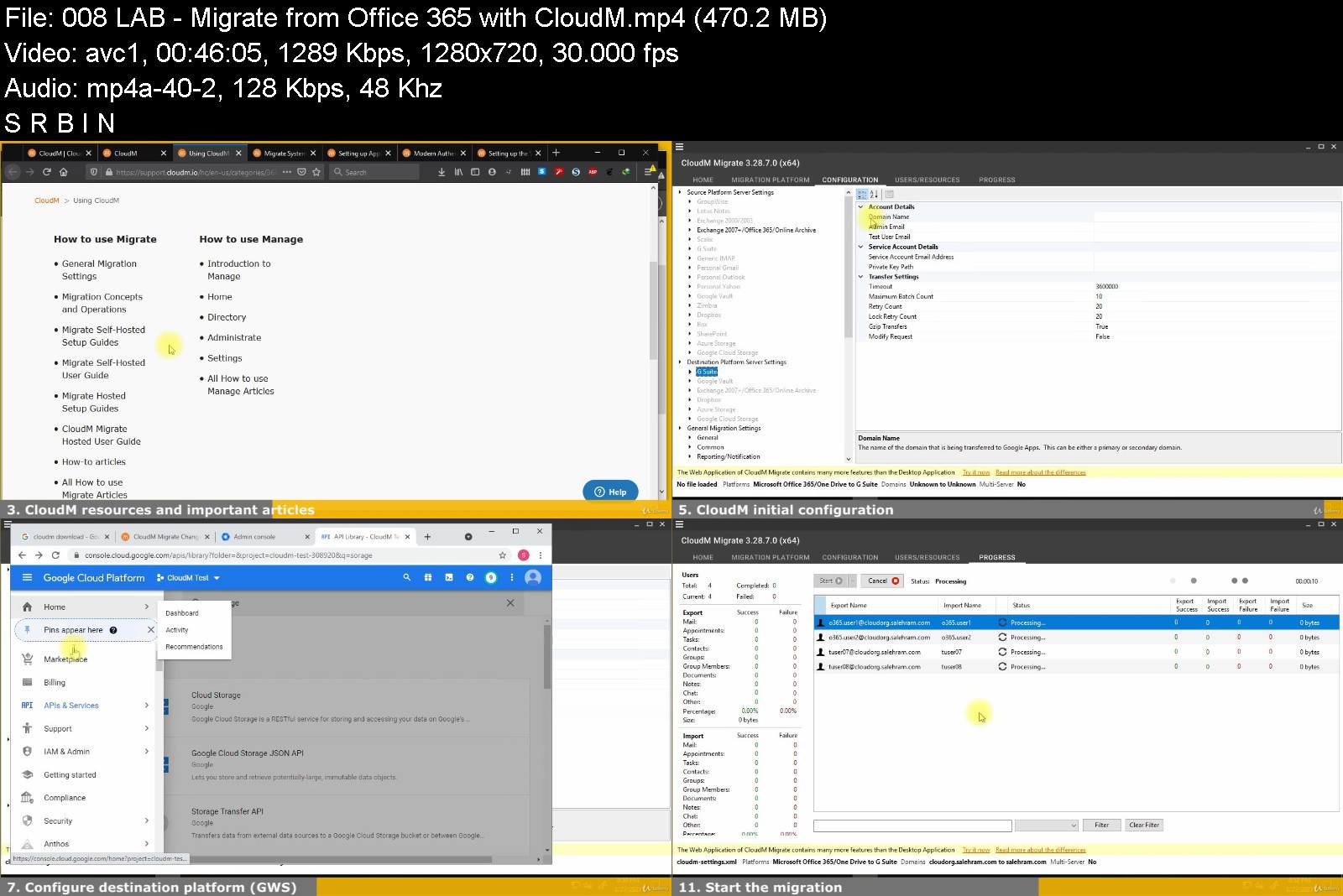
Email and data migration, using DMS, GSMME, and GSMMO
Data protection and compliance using DLP rules, and third party tools as well
Requirements
You should have knowledge on some basic IT concepts and some cloud concepts
You need to have an active domain name to be able to create your own Google Workspace Admin Console

Description
***
IMPORTANT: G Suite is now Google Workspace! The content and course will change to be aligned with these new changes from Google! The actual tools and how things work did not change, but some features and the branding and the look & feel will definitely change!
***
Do you have an existing G Suite domain that you are managing, or planning to deploy G Suite for your organization? Are you looking for resources to help you perform the administration and management tasks on your G Suite domain? Well then, you have found the best resource for that!
In this detailed and comprehensive course and guide, I take you through the details and steps to be able to deploy and manage G Suite for your organization effectively and easily.
This course is for anyone who is a beginner or advanced in G Suite, and for anyone who is looking to explore what is G Suite or is planning to deploy it. I'll share my 7 years experience in G Suite with you, and I'll bring out many real life scenarios that happened with me, to help you with your G Suite administration tasks and activities. I've deployed projects for customers with users ranging from less than 10 up to thousands of users per organization!
By the end of this course, you will be able to completely manage, deploy, or expand our G Suite domain. I will have most of the actvities covered including
New account setup and what are the requirements for that
DNS records requirements and setup (MX, SPF, DKIM, and DMARC)
User provisioning scenarios and tools (such as using GCDS, CSV file upload, GAM, and the API)
Organizational structure, buildings and resources setup and management
Groups settings and types
Services settings, permissions, and control based on OU level and groups membership
Admin roles and admin privileges delegation
Security best practices and recommendations (password management, 2SV, SSO)
Device management and policies
Reports and audit details
Email routing settings and compliance rules
Chrome management and policies
Also...
If you are looking to get a good starting point to prepare and get familiar with the Google Cloud Professional Collaboration Engineer certification, then this course will put you on the road to get the core and bulk of information that you need for preparing and passing that exam, you will need to take some more external resources and you will be all set to take the exam..
Who this course is for
Existing Google Workspace administrators
Administrators who want to get started with Google Workspace
Peope who are interested in learning something new!


googleworkspacegsuite6gjoo.jpg


Download from RapidGator


Download from NitroFlare


Download from UploadGig



Econ 101: The Complete Intro to Economics For Beginners

u0galxljctvh2asw33bawxgkmx.jpg


Econ 101: The Complete Intro to Economics For Beginners
MP4 | Video: h264, 1280x720 | Audio: AAC, 44.1 KHz
Language: English | Size: 5.13 GB | Duration: 4h 26m

Economics 101: Economics Made Easy For You! Become an Economics Pro With This Course


What you'll learn
Learn From A Top Rated Instructor Who Has Been Teaching On Udemy Since 2013 and Taught Over 100,000 Students!
Discuss Economics Intelligently
Resources and Scarcity
Macro Economics
Micro Economics
Consumer Behavior
Pricing Decisions
Game Theory
Interest Rates
Exchange Rates
Inflation
Supply and Demand
Monopolies and Oligopolies
Perfect Competition
And Much More!
Requirements
None! Beginners and Novices welcome, you will learn everything you need in this course
Commitment to learning

Description
Does The Study of Economics Seem Daunting?
Have You Ever Wondered About Game Theory?
Do You Wonder How Businesses Make Pricing Decisions?
Are You A Business Student or Graduate Who Wants To Learn More?
Do You Get Lost When People Start Talking About Interest Rates, Market Growth, Supply and Demand?
If You Answered "Yes" To Any Of The Above, Look No Further. This Is The Course For You!
*** Updated in January 2022 with new content! ***
Enroll today and join the 100,000+ successful students I have taught as a Top Rated Udemy instructor!
Three reasons to TAKE THIS COURSE right now
You get lifetime access to lectures, including all new lectures, assignments, quizzes and downloads
You can ask me questions and see me respond to every single one of them thoroughly!
You will are being taught by a professional with a proven track record of success!
Bonus reason: Udemy has a 30 day 100% money back guarantee if for some reason you don't enjoy the course!
Recent Review
Brad O. says "Fantastic course on micro economics. It's such a fascinating topic, but seems like it could be daunting. Chris makes it easy to understand, fun even. You really see how micro economics applies to everything in life. I especially loved learning about game theory."
Why You Should Take This Course With Me
Have you ever wanted to fully grasp the world of Economics, but didn't know where to start? Have you wanted to develop a better understanding of what makes the financial world go around, and why people, businesses and countries make decisions? Most likely there's an economic reason, and you have come to the right place to learn everything you will need to know. By the end of this course you will be an economics pro!
What We Do In The Course:
Learn the basic fundamentals of economics, why people make certain choices
Learn about production levels and optimization
Learn about supply and demand
Learn about capitalism and the free market model
Learn about monopolies and how the dynamics change
Apply these microeconomic theories to real world situations
Learn about macroeconomics
Learn about interest rates and recessions
Apply macroeconomic theories to real world situations
And Much More!!!
At any point if you have a question, please feel free to ask through the course forum, I'd be happy to answer any and all questions.
***CLICK "BUY NOW" AND LEARN ECONOMICS WITH EASE! ***
About The Instructor
Chris Benjamin, MBA & CFO is a seasoned professional with over 25 years experience in accounting, finance, financial reporting, small business and CRM systems. Having spent the first 10 years of my career in corporate settings with both large and small companies, I learned a lot about the accounting process, managing accounting departments, financial reporting, external reporting to board of directors and the Securities and Exchange Commission, and working with external auditors.
The following 10+ years I decided to go into CFO Consulting, working with growing companies and bringing CFO level experience to companies. I help implement proper best business practices in accounting and finance, consult on implementation of accounting systems, implementing accounting procedures, while also still fulfilling the CFO roll for many of my clients which includes financial reporting, auditing, working with investors, financial analysis and much more.
Thank you for signing up for this course on Udemy. I look forward to being your instructor for this course and many more!
Chris Benjamin, Instructor, CFO & MBA
Who this course is for
Economics Students
Business Students
Business Professionals
Consultants
Management


econ101thecompleteint9hjbi.jpg


Download from RapidGator


Download from NitroFlare


Download from UploadGig



TTC - Understanding Your Inner Genius

40190mrkw4.jpg


TTC - Understanding Your Inner Genius
MP4 | Video: h264, 1280x720 | Audio: AAC, 44.1 KHz, 2 Ch
Genre: eLearning | Language: English | Duration: 9 Lessons (3h 6m) | Size: 2.63 GB

Around age six, you may have started hearing the adults around you taking notice of your academic skills and passing judgment on your intelligence, perhaps making comments that influenced your feelings about yourself, affected your problem-solving skills in high school, influenced your course of study in college, and pointed you toward joining a specific career. In fact, studies have shown that by first grade, you would have decided which subjects were likely to be your best-based solely on your gender and the cultural cues you had absorbed. That is just how early we set our ideas about our intelligence and abilities.
Fortunately, recent research reveals a much broader spectrum of intelligence than had been imagined in generations past. This same research has helped in the development of scientifically sound methods of improving your cognition and intelligence throughout your lifespan. In Understanding Your Inner Genius, created in partnership with Scientific American, presenter Laura Helmuth reveals the latest scientific thinking on genius and intelligence-from the making of a genius, to the increase of worldwide IQ scores, and the mysteries of acquired savantism. With Dr. Helmuth as your guide, you'll explore the groundbreaking work conducted by distinguished psychologists, psychiatrists, neuroscientists, and educators. With exhilarating myth-busting and more than a bit of controversy, scientific studies point the way to increasing the intellect-no matter what happened in first grade.
Children and Intelligence
An entire industry supports parents who want to spot their babies' talents and increase their intelligence. The advice is limitless-from suggestions about which months to conceive, to the appropriate times of day to read to your little one in the womb, to exactly which toys to use and how to use them. But not all methods of spotting and nurturing talent are effective. In fact, as you'll learn in Understanding Your Inner Genius, it is not even clear that parents can "supercharge" their babies to boost long-term abilities.
Among the many scientists you'll meet in this course is Dr. David Barner, a psychology professor at the University of California and an expert in the development of math education. Dr. Barner wanted to help his own preschooler learn math and love it, so he worked with her every day for months using flash cards, videos, games, and comic books. In the end, while he thoroughly enjoyed the time spent with his daughter, she developed a distaste for math! Her true passion? Reading.
All healthy, able-bodied babies sit and walk in their own time without any parental help. Similarly, we all start learning automatically from the moment we're born, if not before; our brains are made for it. But it's also normal for parents to want to help their children in their intellectual development. In this course, you'll learn the results of scientific studies that point parents in these directions
Encourage Your Child to Try New Tasks. The greater variety of tasks they are exposed to, the easier it will be for them to find their own passion, in addition to learning new skills.
Praise Your Child for Persistence and Resilience. If you only praise your child for having the right answer, they can easily assume that the wrong answer means failure. What's much more important in the long-term is your child's ability to keep trying different ways to solve problems.
Watch Yourself. How do you react when you can't find your keys, or you've misplaced an important invitation? These are important opportunities to show your child that you value persistence and resilience in your own life.
In general, actions always speak louder than words to children. Model for your child that the world always presents great opportunity for learning. Try new skills yourself, and don't worry about being successful. This will not only encourage intellectual development and a growth mindset in your child, but your own intelligence will also benefit.
Retaining and Improving Your Intelligence
Whether you were class valedictorian or a low performer on standardized tests in school, one of your main concerns as you age will be maintaining your cognition. The news is very encouraging. Not only have scientists identified specific activities you can use to help your brain, but study after study has revealed that the older brain is more plastic than was previously believed and retains a great ability to make new neural connections. As you will see, the familiar adage, "Old dogs can't learn new tricks," is no longer applicable to the way we understand intelligence today.
Learning new skills and working puzzles are both great ways to keep your mind active and have a lot of fun. But scientists warn that many companies market mind-exercising products with strong claims about their effectiveness-claims that have not been backed up by scientific studies.
What does work? Research shows you can best maintain a mental edge as you age through
Physical Exercise. Brain scans after fitness training showed that even relatively short exercise interventions can begin to restore some of the losses in brain volume associated with normal aging. One study found that exercising an hour a day for three days a week increased the volume of the hippocampus-a part of the brain that is crucial for memory-in older adults over the course of a year.
Having a Positive Attitude. Individuals who are optimistic are more likely to age successfully, maintaining a sense of well-being and life satisfaction in the face of challenges.
Social Engagement. Those who routinely engage with others are more likely to take advantage of opportunities to learn and experience new things.
Intelligence Myths
What we know about development and how we learn changes constantly as research continues in the fields of neuroscience and education. No matter how good our intentions, if we're basing our teaching methods on fallacies, we'll never achieve our goals, for ourselves or for our children.
What do we know about the brain and how we learn best? In Understanding Your Inner Genius, you'll be surprised to discover the myths that many, if not most, of us take as fact
"Left brain" people are rational, and "right brain" people are intuitive and artistic. The truth is that humans use both hemispheres of the brain for all cognitive functions, and brain-imaging studies show no evidence of the right hemisphere as a locus of creativity.
Male and female brains differ in ways that dictate learning abilities. There are no meaningful distinctions between male and female brains or intelligence-and the distinctions that do appear are usually due to conditioning rather than innate difference.
Some students are visual learners, and some are aural learners. Although the public seems to have accepted this dichotomy, it has never been validated by scientific studies.
Acceleration-the practice of skipping grades or compressing the curriculum-is bad for children, hurts them socially, and creates knowledge gaps. Education researchers believe acceleration should be considered much more frequently for students who are advanced relative to their age peers.
If you still believe some of these myths, don't worry. Understanding Your Inner Genius will introduce you to the new, scientifically valid concepts that take the place of these myths-concepts you can use to your advantage when educating your children, your students, or yourself.
What Will You Learn?
Learn benefits of a growth mindset
Discover predictive limitations of the IQ test
Find out how to identify and nurture giftedness


understandingyourinnexrj5g.jpg


Download from RapidGator


Download from NitroFlare


Download from UploadGig


 
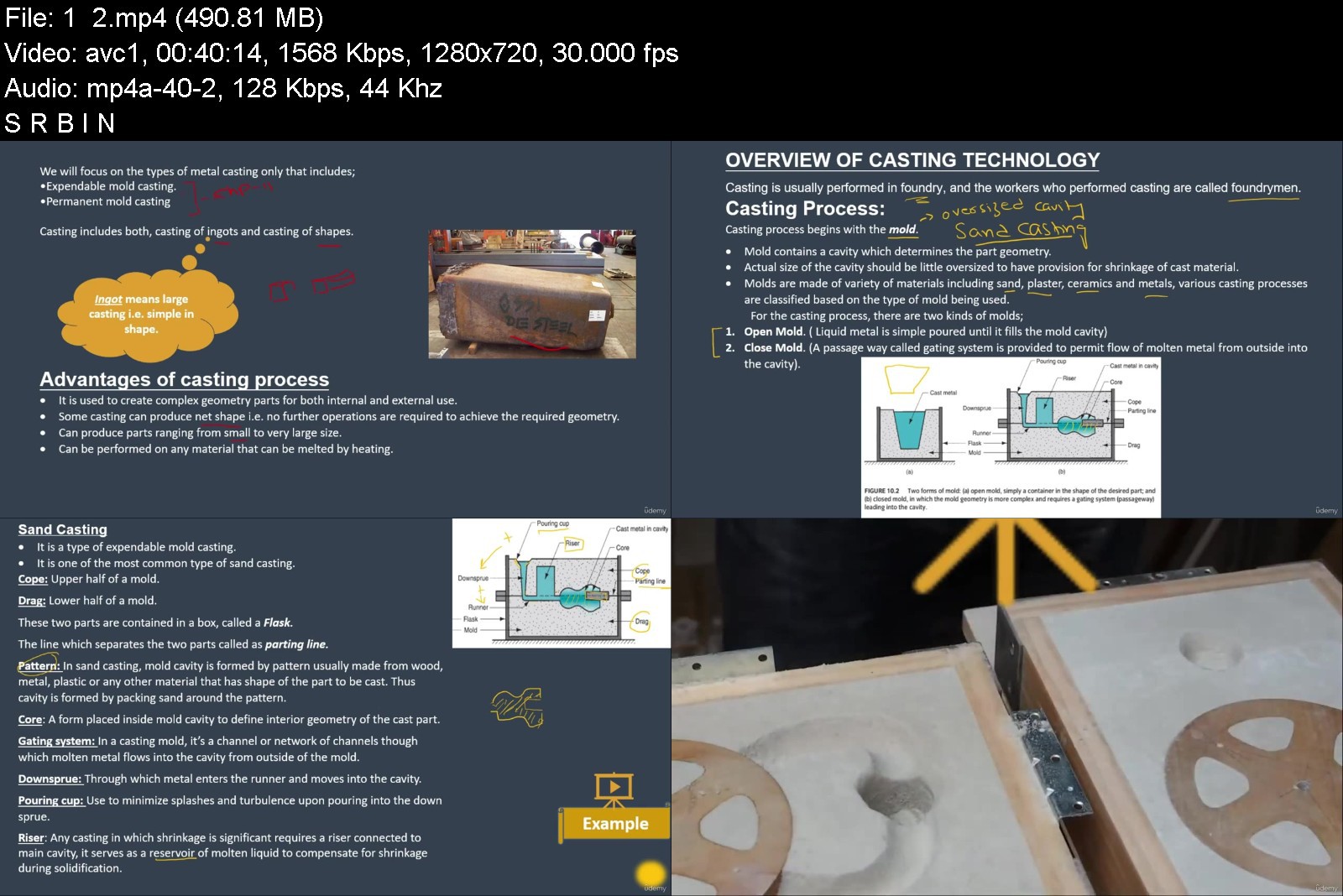
Fundamentals of Manufacturing Materials, Processes & Systems 2022

oijkr7h6d6zja08pqv0pimjkv2.jpg


Fundamentals of Manufacturing Materials, Processes & Systems 2022
Genre: eLearning | MP4 | Video: h264, 1280x720 | Audio: AAC, 44.1 KHz
Language: English | Size: 7.21 GB | Duration: 17h 58m


What you'll learn
Discuss in detail the manufacturing processes of metallic and plastic parts.
Compare between different types of metal forming processes and differentiate between their output product.
Describe different types of joining process and introduce the concept of sustainable manufacturing.
Recognize, understand and develop working knowledge of broad range of manufacturing processes that are used in the industry.
To compare the existing technologies used in casting, shaping, forming, property enhancing, joining and assembly process.
To learn how component can be manufactured in sustainable manner and learn about the environmental hazards of different manufacturing processes.
Apply appropriate manufacturing processes for a product and determine its parameters.
Analyze process dynamics and performance of different manufacturing processes.

Description
This course provides an introduction to the manufacturing processes that are used in industry to manufacture products that are widely used in daily life.
Introduction to Manufacturing: Types of manufacturing industries, materials used in manufacturing and properties of materials, different processing operation.
Sand Casting
Introduction: Sand casting, molding, heating, pouring, solidification, and cooling. Pattern: making, material, types, construction, pattern allowances.
Core: making, types, sand conditioning, testing of the sand, molding process, tools and equipment, molding machines, different types of casting, cleaning and finishing of castings, an inspection of castings.
Permanent Mold Casting (PMC): Introduction, types of PMC, gravity die casting, and its types. Pressure die casting, Centrifugal casting, and their types. Furnaces used in PMC.
Metal Forming
Fundamentals, Types, hot, warm, and cold working.
Bulk Deformation Processes
Rolling; rolled products, rolling types: flat, shape, thread, gear, ring rolling, and rolling mill configurations.
Forging; open die, impression die, press, upset, roll, net shape, isothermal forging and swaging.
Extrusion; solid & hollow shapes, direct & indirect, hot & cold, continuous & discrete, impact extrusion, hydrostatic.
Drawing; bar, wire, tube drawing and its types tike tube sinking, fixed mandrel, floating plug.
Other metal forming processes; roll extrusion, riveting, staking, peening, coining, hubbing, burnishing.
Sheet metal forming processes: Shearing operations: slitting, blanking, piercing, cutoff, parting, dinking, slotting, perforating, notching, semi-notching, lancing, nibbling, trimming, shaving, fine blanking. Bending operations: V bending, edge bending, flanging, curling, hemming, seaming. Drawing operations like deep and shallow drawing, embossing.
Welding Processes: Classification, Fusion welding and its types such as oxyfuel gas welding and oxygen torch cutting, arc welding (shielded metal, flux-cored, gas metal, submerged, gas tungsten, plasma, stud welding, Arc cutting), resistance welding (spot, seam and projection. Heating, pressure, current control and power supply for resistance welding).
Solid-state welding and its types include diffusion welding, friction welding, and ultrasonic welding.
Other welding processes: Forge, Roll, Friction, Explosion, Thermic, Electron beam, Laser welding and cutting, Brazing and Soldering.
Fabrication of Plastics: Casting, Blow molding and its types, Compression molding, Transfer molding, Cold molding, Injection molding: Injection molding machine, mold design, and construction, types of mold, cooling and ejection of mold, Reaction injection molding, Welding of plastics.
In the end, there are videos that are videos related to the course for better understanding.
Course Outline
Introduction to Manufacturing
Lecture 1
Introduction to Manufacturing Processes
What is manufacturing
Manufacturing Industries
Manufacturing Products
Production Quantity and Product variety
Materials in Manufacturing
Manufacturing Processes (Processing operations and Assembly operations)
Sand Casting
Lecture 2
Overview of casting technologies
Difference between casting and molding
Advantages and Disadvantages of casting processes
Casting Processes (Expendable mold casting and permanent mold casting)
Lecture 3
Sand casting and Engineering analysis of sand casting y sand
Pouring and Engineering Analysis of Pouring
Flow rate and time required to fill the mold
Fluidity
Solidification and Cooling
Lecture 4
Solidification of pure metals and alloys (Alloys and Eutectic Alloys)
Solidification time and Shrinkage
Directional Solidification
Lecture 5
Riser Design with Exercise Problems.
Lecture 6
Pattern for casting
Materials used for pattern
Types of pattern
Mold making and Classification of sand molds
What is foundry sand?
Lecture 7
Buoyancy Force
Metal casting processes
Shell molding
Advantages and Disadvantages of Shell molding
Vacuum molding
Advantages and Disadvantages of Vacuum molding
Expanded Polystyrene Casting
Advantages and Disadvantages of Expanded Polystyrene Casting
Investment casting
Plaster and Ceramic Mold casting
Permanent Mold Casting (PMC)
Lecture 8
Types of pattern allowance (Shrinkage and contraction allowance, Draft allowance, Machining allowance, and Distortion allowance)
Permanent mold casting and its Applications.
Slush casting
Low-pressure casting
Vacuum permanent mold casting
Die casting (Hot and cold chamber die casting)
Advantages and Limitations
Centrifugal casting and Semi centrifugal casting
Lecture 9
Furnaces
Cupolas Furnace
Direct Fuel Fired Furnace
Crucible Furnace
Electric Arc Furnace
Induction Furnace
Metal Forming
Lecture 10
Fundamentals of metal forming
Types of deformation processes of metal
Bulk deformation (Rolling, Forging, Extrusion, Wire Drawing)
Sheet metal working
Stress-Strain Curve
Derivation of the relation between stress and strain
Flow stress and Average flow stress
The temperature in metal forming (Cold working and Hot-working)
Recrystallization
Iso thermal forming (recovery and Grain growth)
Strain rate Sensitivity
Lecture 11
Introduction of rolling
Shapes used for rolling
Types of rolling
Working of the rolling process
Analysis of the rolling
Rolling mills
No-Slip Point for rolling
Flatness control and rolling defect
Lecture 12
Numerical Problems related to the rolling process
Lecture 13
Introduction to forging
Classification of forging
Types of forging
Analysis of the forging
Barreling effect in forging
Open Die forging and its practices
Impression Die forging and its practices
Advantages and Limitations of Impression Die forging
Fleshless forging
Forging Press and Forging Hammers
Lecture 14
Numerical Problems related to the forging process
Lecture 15
Introduction to the extrusion process
Classification of extrusion
Direct and Indirect extrusion
Hot and Cold extrusion
Direct and Continuous extrusion
Analysis of the extrusion process
Effect of friction on extrusion
Extrusion Dies and Orifice
Extrusion press and other extrusion processes
Lecture 16
Numerical Problems related to the extrusion process
Introduction to Drawing
Difference between drawing and wire drawing
Bar Drawing
Wire Drawing
Features of Draw Die
Preparation of the work
Analysis of the drawing process
Sheet metal forming processes
Lecture 17
Introduction to sheet metal cutting process
Characteristics of Edges
Types of sheet metal cutting
Shearing
Blanking and Punching
Clearance in Sheet metal cutting
Analysis of sheet metal cutting processes
Numerical Problems related to the sheet metal cutting process
Lecture 18
Introduction of sheet metal bending process
Types of sheet metal bending
Analysis of the sheet metal bending process
Numerical Problems related to the sheet metal bending process
Spring Back
Lecture 19
Introduction to the drawing process
Mechanics of drawing
Stages of deformation
Analysis of the drawing process
Tests of Drawing Feasibility
Blank force and blank size determination
Numerical Problems related to the drawing process
Lecture 20
Other drawing processes (Redrawing, Reverse Drawing and Drawing without Blank holder)
Defects in Drawing
The operation performed with metal tooling
Ironing
Coining & Embossing
Lancing & Twisting
The operation performed with flexible Rubber tooling
Guerin and Hydro forming process
Lecture 21
Numerical Problems related to the other drawing processes
Welding Processes
Lecture 22
Fundamentals of welding
Difference between joining and welding
Advantages and Disadvantages of Welding
History of welding
Types of the welding process
Components used for welding process (Filler material, Flux, and Electrolyte)
Consumable and Non-consumable electrolyte
Welding positions
Welding Electrode Nomenclature
Type of Weld Joints (Butt joint, Corner Joint, Lap joint, Tee Joint, Edge Joint)
Types of Weld (Filler Weld, Groove Weld, Plug weld or slot weld, Spot and Seam weld, Flange and Surface Weld)
Features of Fusion Welded Joints
Physics of welding (Power Density and Numerical of Power Density)
Heat Balance in Fusion Welding
Welding as Commercial Operation
Automation in Welding (Machine, Automatic and Robotic)
Welding Safety
Lecture 23
Welding Categories (Fusion Welding, Solid State Welding, Soldering and Brazing)
Arc Welding
Arc Shielding
The power source in Arc welding
Types of Arc Welding (Shielding metal arc welding, Gas Metal Arc Welding, Flux Cored Arc Welding, Submerged Arc Welding,
Gas Tungsten welding
Plasma arc welding
Lecture 24
Oxyfuel arc welding
Oxyacetylene welding
Resistance welding
Spot Welding
Resistance seam welding
Resistance projection welding
Energy beam welding (Electron beam welding, Laser beam welding)
Numerical Problems related to the welding processes
Lecture 25
Numerical Problems Related to the welding processes
Lecture 26
Solid-state welding
Types of solid-state welding
(Diffusion welding, Friction welding, and Ultrasonic welding)
Welding Defects of Solid State Welding
Brazing and Soldering
Fabrication of Plastics
Lecture 27
Plastics
Type of Plastics
Properties of polymer melt (Viscosity and Viscoelasticity)
Extrusion process for Plastics in detail
Extruder Screw
Feed Section
Compression Section
Metering Section
Process Parameters
Solid and Hollow Profiles
Wire and Tube coating
Defects in the extrusion process
Lecture 28
Injection molding for Plastics in detail
Clamping
Injection
Cooling
Ejection
Application and Material
Advantages and Disadvantages
Lecture 29
Blow Molding
Extrusion Blow Molding
Injection Blow Molding
Stretched Blow Molding
Compression Molding
Transfer Molding (A pot transfer molding and B plunger-type transfer molding)
OZIS Academy is the best platform for struggling students and professionals who want to improve their skills for the workfield as it provides a large no of quality and detailed courses. We offer courses from brilliant Ph.D. Professors from prestigious Universities who are experts in their relative fields. We have a team of well-experienced, full-time faculty and dedicated staff including talented retired and working University professors. Our mission is to impart most qualitative education by the way of systematic methodical and scientific approaches.
Visit our WEBSITE to get limited-time FREE & DISCOUNT COUPONS for our Udemy Courses
Who this course is for
ll concepts are introduced slowly and gradually, but comfort with thinking analytically will be helpful.
Engineering students and professionals who want to level up their skills.
Engineers in Mechanical, Manufacturing, Industrial, Electrical and other related fields looking for a way out of traditional processes for their projects and products.
Anyone starting their career in the manufacturing and production world.


fundamentalsofmanufacnak68.jpg


Download from RapidGator


Download from NitroFlare


Download from UploadGig



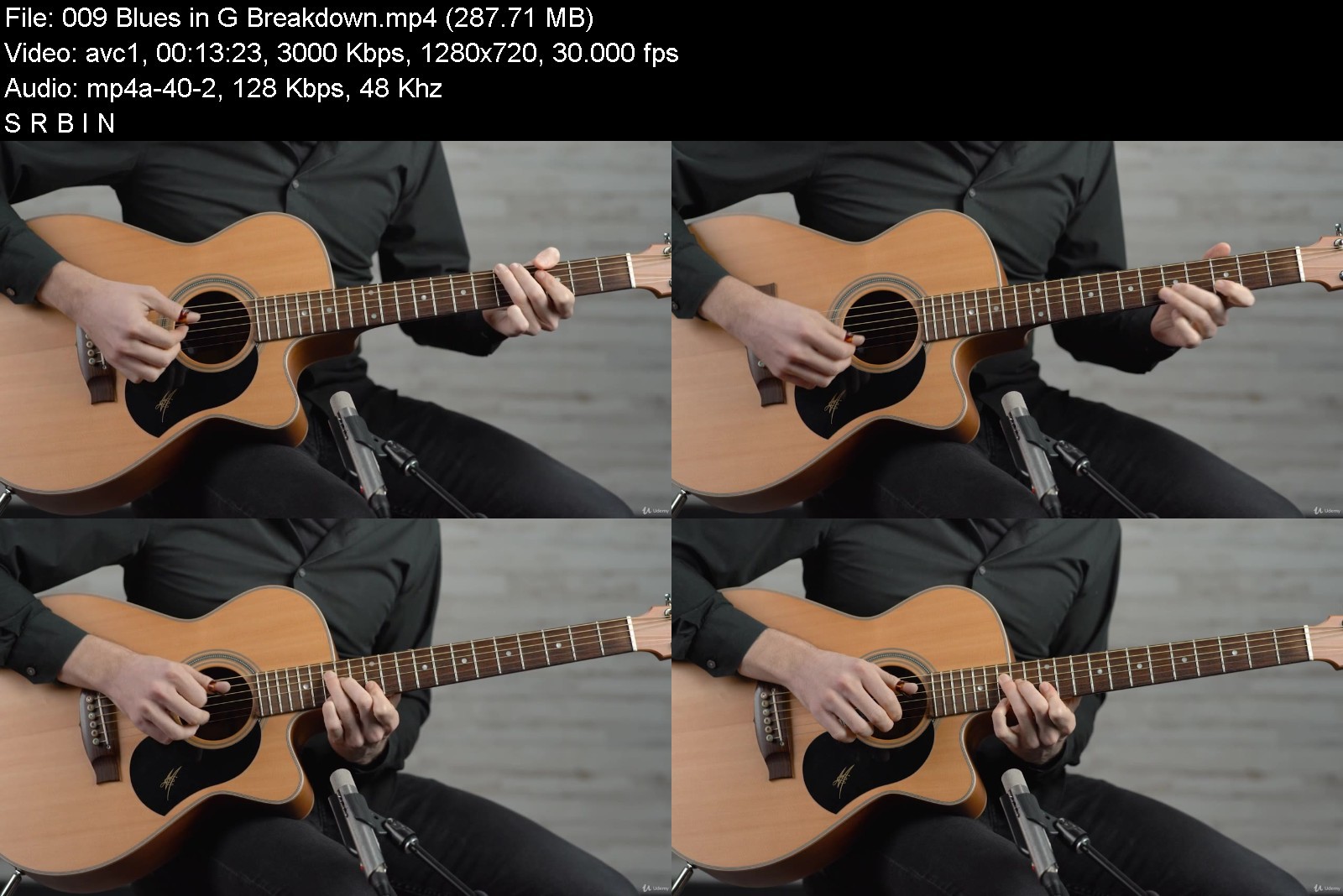
Complete Fingerstyle Guitar - Advanced Fingerpicking

mvosgxgnyr41fkfyxvpqqspj2c.jpg


Complete Fingerstyle Guitar - Advanced Fingerpicking
MP4 | Video: h264, 1280x720 | Audio: AAC, 44.1 KHz
Language: English | Size: 8.68 GB | Duration: 6h 57m

Advanced Fingerpicking Guitar Lessons: Step-by-step Fingerstyle Guitar with Joe Robinson


What you'll learn
Intermediate Fingerstyle Guitar
Fingerpicking
Requirements
Basic Music Knowledge

Description
Want to learn Fingerstyle guitar from a world-renowned fingerpicking guitarist? Join me, Joe Robinson, award-winning guitarist, touring musician and singer-songwriter in Complete Fingerstyle Guitar Lessons - Advanced Fingerpicking. I have lived and worked in Nashville for a decade and I've toured with some incredible musicians such as Eric Johnson, Robben Ford, Steve Vai and my mentor Tommy Emmanuel. I've grown to love passing on my experience and knowledge to others who want to level-up their guitar skills. If you have a passion for playing, want to know more about Fingerstyle, and already have a solid knowledge of the guitar, this course is perfect for you!
In this advanced course, I'll take you beyond the fretboard in so many ways. Not only will you learn new techniques and be able to play full Fingerstyle songs, I'll also explore expert ways to keep your practice consistent. In addition, I'll even dive into songwriting and share my experiences from writing several studio albums. I can't wait for you to join me in this course and take your Fingerstyle skills to the next level. You will be amazed at what you can accomplish in this course with the right attitude! I can't wait to hear from you inside the course!
Who this course is for
Advanced Guitarists who want to take the Fingerstyle Guitar Skills to the next level


completefingerstyleguzbj2a.jpg


Download from RapidGator


Download from NitroFlare


Download from UploadGig


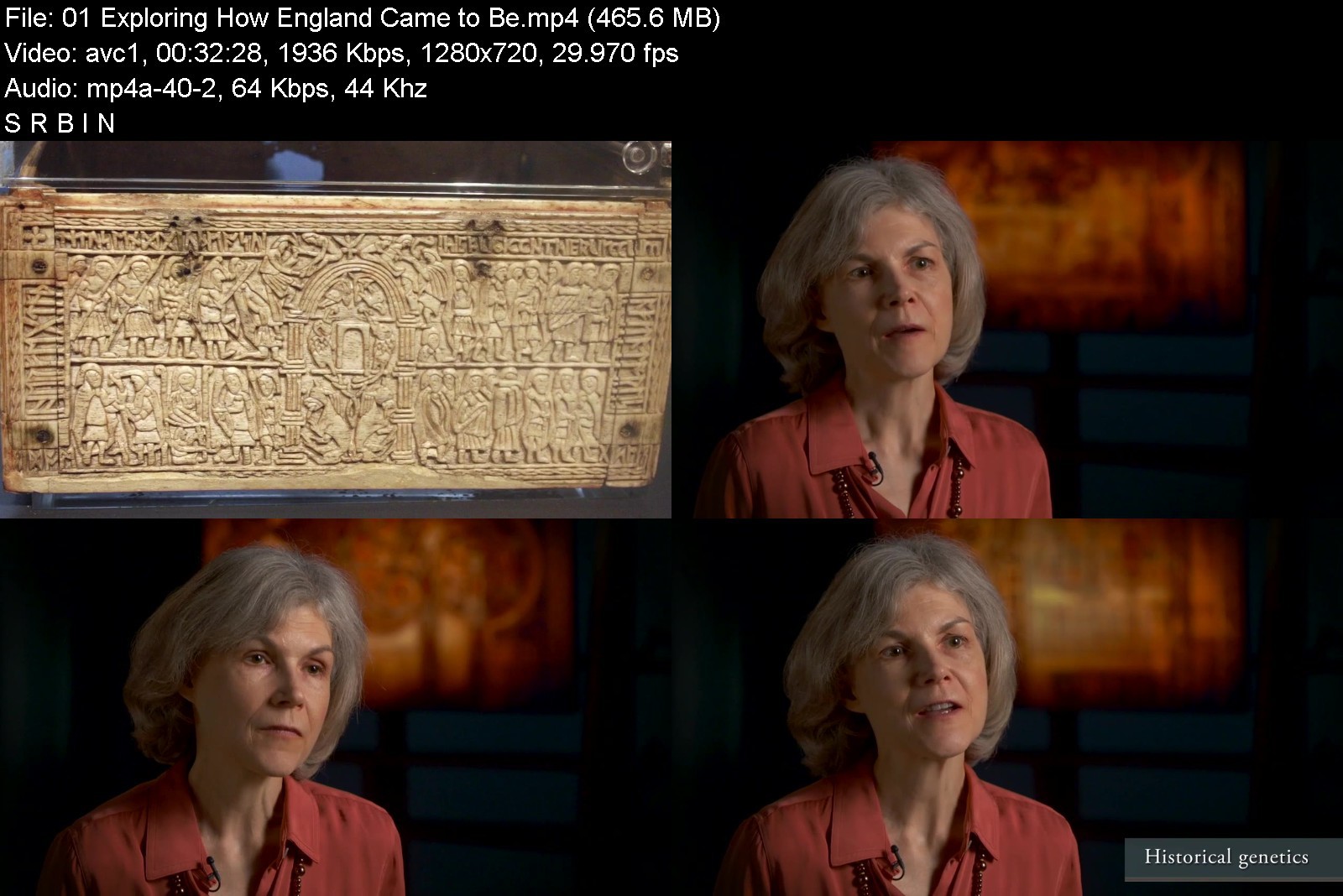
TTC - England: From the Fall of Rome to the Norman Conquest

3014054ke3.jpg


TTC - England: From the Fall of Rome to the Norman Conquest
MP4 | Video: h264, 1280x720 | Audio: AAC, 44.1 KHz, 2 Ch
Genre: eLearning | Language: English | Duration: 24 Lessons (12h 3m) | Size: 10.3 GB

King Arthur. Alfred the Great. Sutton Hoo. Beowulf. We recognize these and other names from England before 1066, but the history of this wild and diverse land is shrouded in myth and legend. From the fall of Rome in the 4th century to the invasion of the Normans in the 11th century, England offers an incredible story of social, cultural, religious, and political change. This captivating tale can help us answer one of the great questions of history: How did this small island, far from the centers of Western civilization, become the great and powerful nation we know from the history books?
England: From the Fall of Rome to the Norman Conquest takes you back to the rugged landscape of the premodern and early medieval British Isles. Over the course of 24 sweeping lectures, Professor Jennifer Paxton, of The Catholic University of America, surveys the forging of a great nation from the raw materials of warring kingdoms and migrating peoples. From Germanic tribes to Viking invasions to Irish missionaries, she brings to life an underexamined time and place.
As you will discover, the trends driving England in the first millennium are remarkably similar to our world today. Waves of migration and inter-mixing disrupted the status quo and built a cohesive new Anglo-Saxon identity. Political vacuums were filled by war and stabilized by a legal system underpinned by property and contracts. And economic prosperity created a golden age of arts and literature.
When the Romans arrived on the shores of southern England, they believed they had reached the edge of the Roman Empire, a place of little consequence. When they left in the 5th century, the island of Britain contained a number of small political groups and a wide variety of ethnicities. The Romans perhaps would have been shocked to see how the Anglo-Saxons who emerged from the ruins of Roman England would come to dominate Britain for the next six centuries-and they readied England to become a powerhouse on the world's stage.
The Anglo-Saxons left a remarkable legacy in the arts, law, and language, but our understanding of who the Anglo-Saxons were and how they became a united people has changed dramatically in recent years. By using texts, artifacts, and DNA evidence, Professor Paxton reconstructs their astonishing story and the world they built. The year 1066 is one of the most consequential turning points in world history, but it was only possible because of the story that came before, a story told in England: From the Fall of Rome to the Norman Conquest.
Discover What Forged a United England
This epic story begins with the fall of Roman Britain and the rise of a new group of Germanic migrants from continental Europe. While generations of schoolchildren learned that the Germanic tribes were the Angles, the Saxons, and the Jutes, the true story of the waves of migration is much less straightforward than most historical accounts present.
Not only does Professor Paxton provide a mix of written and archaeological evidence for the island's changing demographics, but she also spends considerable time studying the effect of these migrations on the local population. How did newcomers assimilate? How did the social dynamic within England evolve? As you consider these and other complex facets of this period, you will
Meet the Brittons who populated England during the decline of Rome.
Discover how invasions-from the Romans, the Vikings, the Danes, and the Normans-built a diverse tapestry of people and languages.
See how the emerging Anglo-Saxon population coalesced around seven main kingdoms.
Explore England's conversion to Christianity thanks to Gregory the Great from the continent and missionaries from Ireland.
As you travel through time, you will watch as England is transformed from a hodgepodge of peoples and cultures into an Anglo-Saxon nation of warriors forged in battle and ready to take on the world. But England did not cover the island of Britain in its entirety. The story of how England came to be is also the story of how Wales and Scotland developed their own unique identities-a process you will see throughout this course.
Delve into the Myths of Great Leaders
Today, Anglo-Saxon England exists as something of a myth, the land of King Arthur and Beowulf, a people whose legendary influence survives in the epic work of J. R. R. Tolkien. Thanks to modern archaeology and cutting-edge DNA analysis, historians are able to pierce the veil of mystery and tell the real story of England before 1066 like never before.
Professor Paxton takes you into everyday life in medieval England. By examining archaeological sites such as the cemetery at Sutton Hoo, she shows you the instruments of battle, the manuscripts of the monasteries, and the evidence for and against the England described by early historians.
In addition to gaining a flavor of daily life, you will meet some of the larger-than-life figures from Anglo-Saxon England-both real and mythic. For instance, many know the legend of King Arthur and the court of Camelot, but was Arthur based on a historical figure? Dip into the writings of the monk Gildas for clues about the inspiration for Arthur.
One of the most fascinating figures you will meet is Alfred the Great, who did as much as anyone to unite England and defend the island against invasion from the Vikings. As is often the case with great leaders, the conflicts over succession led to a tumultuous century. The culmination of this political instability was the Norman Conquest of 1066. Your course ends with an analysis of the Battle of Hastings and its consequences.
Reflect on the Legacy of the Anglo-Saxons
No exploration of Anglo-Saxon England would be complete without a deep-dive into the era's magnificent art and literature. Professor Paxton surveys the golden age of Anglo-Saxon art, which included everything from metal engraving to textiles, as well as ornately decorated manuscripts like the Lindisfarne Gospels. She also reviews the myths and literature of the era. The most famous text is the epic poem Beowulf. Not only will you learn about the work and its composition, you will gain insight into the culture of war and honor that inspired it.
What is the ultimate legacy of the Anglo-Saxons? Looking back, you will witness the centuries of expansion and warfare, the rise and fall of rulers and kingdoms, and the sacrifices and schemes of saints and sinners. This civilization ultimately shows us a world transformed, and by the end of this course you will understand the turning points that shaped a province on the periphery of the Roman Empire into a thriving medieval kingdom-and ultimately, the nation of England.
England: From the Fall of Rome to the Norman Conquest is an epic story of an epic period in history. Presented in sweeping detail, this survey of Anglo-Saxon England is a grand achievement.
What Will You Learn?
Delve into six centuries of English history before 1066
Explore the people and kingdoms of England after the fall of Rome
See how Germanic migrations created the Anglo-Saxon world
Learn how Alfred the Great united England and fought the Vikings
Reflect on the Norman Conquest and the legacy of the Anglo-Saxons


englandfromthefallofra3kzn.jpg


Download from RapidGator


Download from NitroFlare


Download from UploadGig



Pearson - Java SE 11 Developer (1Z0-819)

showcovera7k3a.jpg


Pearson - Java SE 11 Developer (1Z0-819)
MP4 | Video: h264, 1280x720 | Audio: AAC, 44.1 KHz, 2 Ch
Genre: eLearning | Language: English | Duration: 176 Lessons (18h 6m) | Size: 27.5 GB

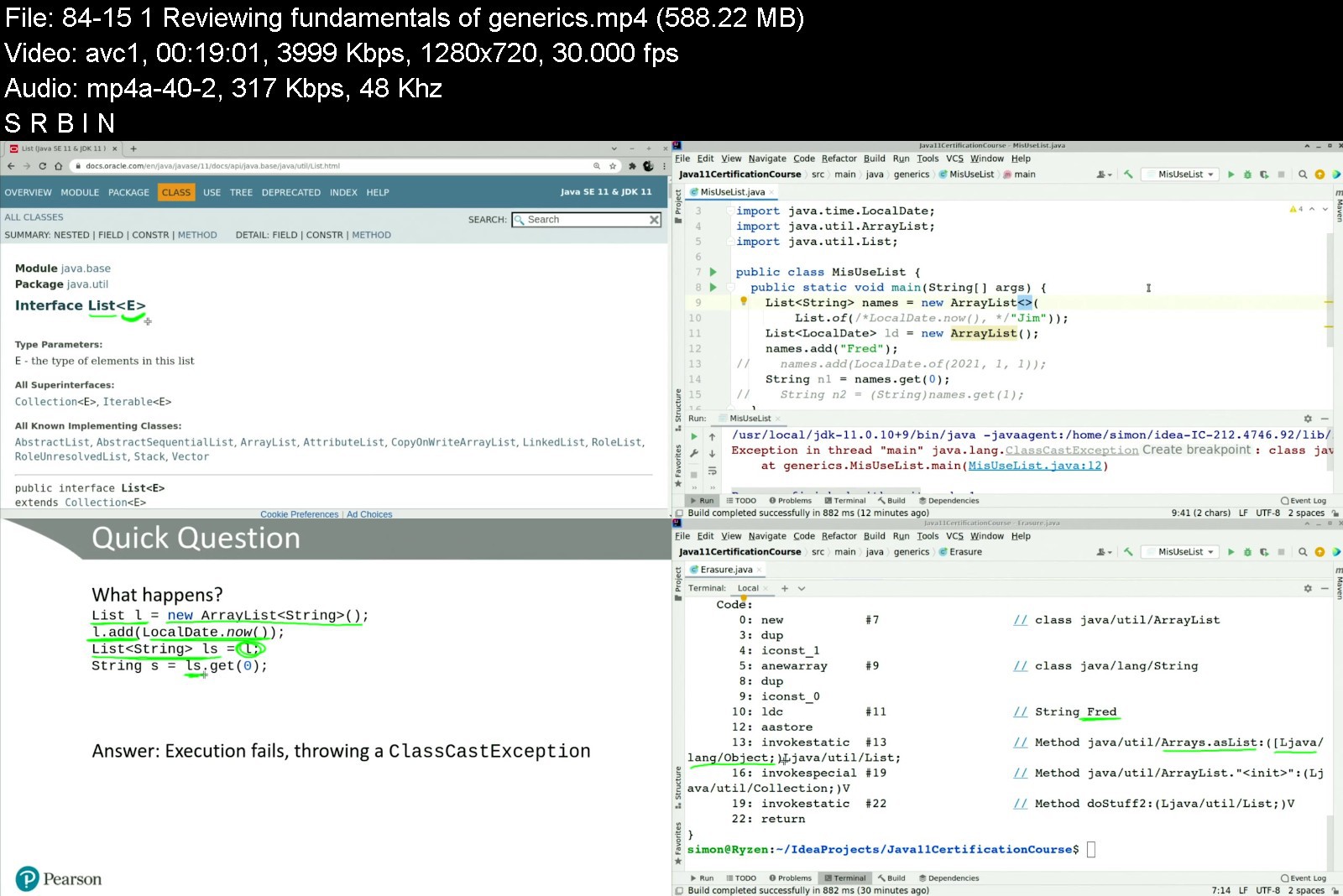
An intensive study resource designed to guide you in best practices for exam success on the Java SE 11 Developer (1Z0-819) exam.
The Oracle Certified Professional: Java SE 11 Developer exam is the industry standard certification for Java programming skills. Java SE 11 Developer (1Z0-819) Complete Video Course is designed to make you successful in your Java certification exam journey. This over 20-hour video course focuses on exam key concepts and helps you hone your Java programming skills, so you are not only prepared to take the exam but become a better Java programmer.
This study resource is fast-paced and focuses on elucidating both key concepts and difficult and unfamiliar topics. Each lesson is reinforced with clear instruction and focused discussions to help ensure a full understanding of the material, maximizing the potential of passing the exam.
At the end of each lesson, there is a "Question Deep Dive" section that is modelled after the real exam format so you can familiarize yourself with how questions may appear on the exam as well as gain confidence before you take the test.
Topics include
Working with Java data types
Controlling Program Flow and Exception Handling
Java Object-Oriented Approach
Working with Arrays and Collections
Working with Streams and Lambda Expressions
Java Platform Module System
Concurrency
Database Applications with JDBC, and Java IO
Annotations, Localization, and Secure Coding in Java SE Application
About the Instructor
Simon Roberts started his computing career as a programmer in the early 1980s and built several of his own microprocessor-based computers. He moved to Sun Microsystems, Inc. in mid-1995, and almost immediately became Sun's lead Java instructor in the United Kingdom. In 1998, Simon moved to Colorado, where he still lives. While at Sun, he created the Sun Certified Programmer, Developer, and Architect certifications, and worked in teams on several other certifications. He wrote three books on Java, including two certification study guides: One covering the Programmer and Developer exams, and one on the Architect exam. He left Sun in 2004 and became an independent instructor, architect, and software engineer.
Skill Level
Intermediate to Advanced
Learn How To
Work with Java date types
Control Program flow and exception handling
Understand Java object-oriented approach
Work with Java arrays and collections
Work with streams and lambda expressions
Understand Java platform module system
Create and manage concurrency
Work with java.nio.file API
Who Should Take This Course
Anyone preparing for the Java Certification exam.
Anyone wishing to take their Java education to the next level.
Course Requirements
You have been learning Java and can build working examples using most of Java's key features.
You are building your familiarity with Java 11 and want to take that to a more rigorous level.
You have at least a few months working with Java.
The exam's objectives are very broad, and the coverage is quite deep in places. You should feel ready to embark on a learning journey that goes into this depth. Your enthusiasm and drive to succeed are the most important requirements for this course.


javase11developer1z08i0jxs.jpg


Download from RapidGator


Download from NitroFlare


Download from UploadGig



Zurück
Oben Unten