



• Regeln für den Video-Bereich:

    In den Börsenbereich gehören nur Angebote die bereits den Allgemeinen Regeln entsprechen.

    Einteilung

    - Folgende Formate gehören in die angegeben Bereiche:
    - Filme: Encodierte Filme von BluRay, DVD, R5, TV, Screener sowie Telesyncs im Format DivX, XviD und x264.
    - DVD: Filme im Format DVD5, DVD9 und HD2DVD.
    - HD: Encodierte Filme mit der Auflösung 720p oder darüber von BluRay, DVD, R5, TV, Screener sowie Telesyncs im Format x264.
    - 3D: Encodierte Filme von BluRay, die in einem 3D Format vorliegen. Dies gilt auch für Dokus, Animation usw.
    - Serien: Cartoon/Zeichentrick, Anime, Tutorials, Dokumentationen, Konzerte/Musik, Sonstiges sind demnach in die entsprechenden Bereiche einzuordnen, auch wenn sie beispielsweise im High Definition-Format oder als DVD5/DVD9/HD2DVD vorliegen. Ausnahme 3D.
    - Bereich Englisch: Englische Releases gehören immer in diesen Bereich.
    - Bereich Talk: Der Bereich, in dem über die Releases diskutiert werden kann, darf, soll und erwünscht ist.


    Angebot/Beitrag erstellen

    - Ein Beitrag darf erst dann erstellt werden, wenn der Upload bei mindestens einem OCH komplett ist. Platzhalter sind untersagt.
    - Bei einem Scenerelease hat der Threadtitel ausschließlich aus dem originalen, unveränderten Releasenamen zu bestehen. Es dürfen keine Veränderungen wie z.B. Sterne, kleine Buchstaben o.ä. vorgenommen werden. Ausnahme Serienbörse:
    - Bei einem Sammelthread für eine Staffel entfällt aus dem Releasename natürlich der Name der Folge. Beispiel: Die Simpsons S21 German DVDRip XviD - ITG
    - Dementsprechend sind also u.a. verboten: Erweiterungen wie "Tipp", "empfehlenswert", "only", "reup", usw. / jegliche andere Zusatzinformation oder Ergänzung, welche nicht in obiger Beschreibung zu finden ist.

    Aufbau des Angebots und Threadtitel

    Der Titel nach folgendem Muster erstellt zu werden. <Name> [3D] [Staffel] [German] <Jahr> <Tonspur> [DL] [Auflösung] <Quelle> <Codec> - <Group>
    Beispiel: The Dark Knight German 2008 AC3 DVDRip XviD - iND
    Beispiel: The Dark Knight 2008 DTS DL BDRip x264 - iND
    Beispiel: The Dark Knight 2008 AC3 DL BDRip XviD - iND
    Beispiel: The Dark Knight German 2008 AC3 720p BluRay x264 iND
    Beispiel: The Dark Knight 2008 DTS DL 1080p BluRay x264 iND
    Beispiel: Die Simpsons S01 German AC3 DVDRip XviD iND
    Beispiel: Die Simpsons S20 German AC3 720p BluRay x264 iND
    Beispiel: Sword Art Online II Ger Sub 2014 AAC 1080p WEBRip x264 - peppermint
    Entsprechend sind also u.a. verboten: Sonderzeichen wie Klammern, Sterne, Ausrufezeichen, Unterstriche, Anführungszeichen / Erweiterungen wie "Tipp", "empfehlenswert", "only", "reup", usw. / jegliche andere Zusatzinformation oder Ergänzung, welche nicht in obiger Beschreibung zu finden ist
    Ausnahmen hiervon können in den Bereichen geregelt sein.

    Die Beiträge sollen wie folgt aufgebaut werden:
    Überschrift entspricht dem Threadtitel
    Cover
    kurze Inhaltsbeschreibung
    Format, Größe, Dauer sind gut lesbar für Downloader außerhalb des Spoilers zu vermerken
    Nfo sind immer Anzugeben und selbige immer im Spoiler in Textform.
    Sind keine Nfo vorhanden z.B. Eigenpublikationen, sind im Spoiler folgende Dateiinformationen zusätzlich anzugeben :
    Quelle
    Video (Auflösung und Bitrate)
    Ton (Sprache, Format und Bitrate der einzelnen Spuren)
    Untertitel (sofern vorhanden)
    Hosterangabe in Textform außerhalb eines Spoiler mit allen enthaltenen Hostern.
    Bei SD kann auf diese zusätzlichen Dateiinformationen verzichtet werden.

    Alle benötigten Passwörter sind, sofern vorhanden, in Textform im Angebot anzugeben.
    Spoiler im Spoiler mit Kommentaren :"Schon Bedankt?" sind unerwünscht.


    Releases

    - Sind Retail-Release verfügbar, sind alle anderen Variationen untersagt. Ausnahmen: Alle deutschen Retail-Release sind CUT, in diesem Fall sind dubbed UNCUT-Release zulässig.
    - Im Serien-Bereich gilt speziell: Wenn ein Retail vor Abschluss einer laufenden Staffel erscheint, darf diese Staffel noch zu Ende gebracht werden.62
    - Gleiche Releases sind unbedingt zusammenzufassen. Das bedeutet, es ist zwingend erforderlich, vor dem Erstellen eines Themas per Suchfunktion zu überprüfen, ob bereits ein Beitrag mit demselben Release besteht. Ist dies der Fall, ist der bereits vorhandene Beitrag zu verwenden.
    - P2P und Scene Releases dürfen nicht verändert oder gar unter einem iND Tag eingestellt werden.


    Support, Diskussionen und Suche

    - Supportanfragen sind entweder per PN oder im Bereich Talk zu stellen.
    - Diskussionen und Bewertungen sind im Talk Bereich zu führen. Fragen an die Uploader haben ausschließlich via PN zu erfolgen, und sind in den Angeboten untersagt.
    - Anfragen zu Upload-Wünschen sind nur im Bereich Suche Video erlaubt. Antworten dürfen nur auf Angebote von MyBoerse.bz verlinkt werden.


    Verbote

    - Untersagt sind mehrere Formate in einem einzigen Angebotsthread, wie beispielsweise das gleichzeitige Anbieten von DivX/XviD, 720p und 1080p in einem Thread. Pro Format, Release und Auflösung ist ein eigener Thread zu eröffnen.
    - Grundsätzlich ebenso verboten sind Dupes. Uploader haben sich an geeigneter Stelle darüber zu informieren, ob es sich bei einem Release um ein Dupe handelt.
    - Gefakte, nur teilweise lauffähige oder unvollständige Angebote sind untersagt. Dies gilt auch für eigene Publikationen, die augenscheinlich nicht selbst von z.B. einer DVD gerippt wurden. Laufende Serien, bei denen noch nicht alle Folgen verfügbar sind, dürfen erstellt und regelmäßig geupdatet werden.
    - Untersagt sind Angebote, welche nur und ausschließlich in einer anderen Sprache als deutsch oder englisch vorliegen. Ausnahmen sind VORHER mit den Moderatoren zu klären.


    Verstoß gegen die Regeln

    - Angebote oder Beiträge, die gegen die Forenregeln verstoßen, sind über den "Melden"-Button im Beitrag zu melden.
  • Bitte registriere dich zunächst um Beiträge zu verfassen und externe Links aufzurufen.

*** Bestes IPTV *** bester Preis *** gratis Test ***


Englische Tutorials

90af6fa267defe32ed80a28f3d28f361.jpg

Sales Made Easy For Everyone - Sell Just Anything To Anyone!
MP4 | Video: h264, 1280x720 | Audio: AAC, 44.1 KHz
Language: English | Size: 8.03 GB | Duration: 6h 39m
Practical Basic Sales Skills, Sales Strategies and Sales Techniques for Beginners, Entrepreneurs, Startup & B2B Sales.​

What you'll learn
"Sales is a learnable thing" and once you are AWARE of the rules of the game, you will stop committing silly mistakes.
This online course keeping in mind the fundamentals of traditional sales methods as well as the online sales funnel strategy for every entrepreneurs.
This course will cover both traditional sales systems and the prevailing online sales methods
Create optimal mindset for sales success so that you stop making unconscious mistakes and more naturally do things that lead to more sales
Uncover what your prospects actually WANT to Buy so that selling becomes easier and more enjoyable
Discover your ideal and most profitable next clients so that you waste less time pitching the wrong people
Sell the way your prospects naturally buy so that you encounter less resistance and close more sales
Establish a solid sales process so you can consistently make sales and always know what to do next
Determine which metrics to pay attention to so you know how to create maximum improvement with the least amount of effort
Use peak performance secrets so that you can exponentially grow your sales skills and income
Understand your prospect's true mind so that you can deliver a razor sharp sales message and avoid turning your prospect off
In short you will learn specifically why, what, when, where and exactly how to sell more, sell faster, avoid unnecessary stress and learn to love what you do.
Requirements
No prerequisites. An absolute beginner can start this course.
Open mind
Willingness to apply the techniques rather than just watching the videos
Description
A sales process is a set of repeatable steps that a sales person takes to take a prospective buyer from the early stage of awareness to a closed sale. Typically, a sales process consists of 5-7 steps: Prospecting, Preparation, Approach, Presentation, Handling objections, Closing, and Follow-up.
Professional selling involves a series of seven distinct steps.
Prospecting is finding and qualifying potential customers. Qualifying is the process of determining whether a potential customer has a need or want that the company can fulfill, and whether the potential client can afford the product.
Preparation involves preparing for the initial contact with a potential customer. You will need to collect and study relevant information, such as product descriptions, prices, and competitor information. You will also need to develop your initial sales presentation.
Approach is the first face-to-face interaction you will have with the potential customer. In the premium approach, you give your prospect a gift at the beginning of the interaction. It may be a pen, a novelty item or company calendar, for example. Another method is the question approach, in which you ask a question to get the prospect interested. For example, 'Would you have a problem making a 15% annual return on an investment?' You may also use the product approach, in which you give the prospect a sample to review. The idea behind all of these approaches is to get the prospect involved in the interaction quickly.
Presentation is actively listening to the needs and wants of the potential customer and demonstrating how your product can meet those needs and wants.
Handling objections is an important part of the process. Objections can be useful because they tell the salesperson what to focus upon in addressing a prospect's concerns. Successful salespeople learn how to overcome objections through preparation and having the right information at hand to address them.
Closing involves identifying closing signals from the prospect that indicate it's decision time. There are different approaches to closing. In the alternative choice close, you assume the sale and offer the prospect a choice such as, 'Will this be a cash or credit transaction?' An extra inducement close involves you offering something extra to get the buyer to agree, such as a discount or a free product. In the standing room only close, you inform the prospect that time is of the essence because some impending event, such as a price increase, will change the terms of the offer.
Follow-up is building a long-term relationship with your customer for purposes of repeat sales. For example, you make contact with the customer sometime after the sale and make sure the product was received and is in good condition. Again, the idea is not to sell at this stage, but to create a solid relationship for future sales.
This course will give you extensive knowledge about the whole sales process.
Who this course is for
Everyone irrespective of whichever field you are in requires an understanding of sales principles to be successful.
Beginning & Intermediate level sales people
Experienced sales people who aren't getting the results they want
Advanced sales people who need a refresher
IT and digital marketing professionals to be successful in their interactions and career.
Screenshots










2ae0c2762e4c51ae06e7c1c20b121497.png

Become a video game developer with Gamemaker Studio 2.3
MP4 | Video: h264, 1280x720 | Audio: AAC, 44.1 KHz, 2 Ch
Genre: eLearning | Language: English + srt | Duration: 142 lectures (17h 40m) | Size: 10.5 GB

The all you need to know course for beginners
What you'll learn
What is the indie gaming (development)
Is making video games for you?
What roles can you have as a developer?
A quick overview of the gaming industry
An Introduction into GameMaker Studio 2.3 (with a comic)
Make 6 short video games in GameMaker Studio 2
Roleplay like an indie developer
Understand how programming and game design work
Structure you own video game from scratch
Requirements
GameMaker Studio 2, ( free trail also possible)
No futher skills needed
Description
This Udemy course is geared towards beginners and gives you all the informations needed to make good decisions when starting as an indie developer or even when joining the industry as a contractor or employee.
The course is split into 3 parts
The gaming industry - how does it look like and what kind of role can you have in there.
GameMaker Studio 2.3 - Essentail guide how to use effectivly the programm and programming basics
Make six games - This part is where we together make small video games with GameMaker Studio 2. After these games you can call yourself an indie devloper because making games should feel at that point natural to you. The endgoal is that you see the whole process of making video games and what kind of role you think suits your needs the best.
Who this course is for
Beginners who like to see how making video games is like
People who would like start as an solo developer, be part of an indie developement team or want to join the gaming industry
Everybody who wants to enter the video gaming industry
Everybody who wants to learn GameMaker language
Everybody who wants sell their games
Homepage


2ae0c2762e4c51ae06e7c1c20b121497.png

MATLAB Parallel programming on GPUs, Cores and CPUs
MP4 | Video: h264, 1280x720 | Audio: AAC, 44.1 KHz, 2 Ch
Genre: eLearning | Language: English + srt | Duration: 23 lectures (3h 22m) | Size: 1.6 GB

With practical examples on every parallel programming concept including training NN and deep learning model
What you'll learn
Run Deep learning models in parallel on GPUs
Learn the difference between cores, CPUs and GPUs
Learn the concept of multi-threading in MATLAB with examples
Learn the concept of multi-workers in MATLAB with examples
measuring the performance of each parallel computing code
Learn how to convert your code to parallel computing to increase the performance
Run MATLAB files and functions in the background
Using GPUs to execute and Run MATLAB functions (Excellent performance)
Requirements
MATLAB basics
Description
This course helps students, researchers and anyone using the MATLAB decreasing the execution time they take to execute a program
All computers todays and the laptops have multi-cores and GPUs. But not all users use the to run or execute the programs in parallel.
The purpose of the course is to fill this gap. Is to teach you with practical examples how to use all resources in your computer and also how to monitor them.
The course is divided into many sections
The first is an introduction to the hardware of the CPUs, cores and GPUs. It is better to understand the basic components of these items to be able to get the best utilization when you use them.
The second section is explaining two concepts. The multi-threading and the multi-workers. The first is a built in mechanism to run some functions in parallel using many cores but we can't control the number of cores and the way that the functions executes. The second one (multi-workers) is used to run any function on multiple cores but here we can controls the number of cores to optimize the program execution. Also, I explained some examples and measured the performance parameters to differentiate between the two concepts.
The third sections is the GPU section. In the section, I explained how to run any function on the GPUs to make use of the hundred or thousands cores that the GPUs have. There are some notations to get the best results and I explained all of these notations with examples.
Deep learning and neural networks: in this section you will learn how to train any neural network in parallel on GPUs or multi-cores. And also how to run the training process in the background in order to be able to use the MATLAB while it is running.
Who this course is for
Students, researchers and engineers
Homepage


a25648cd622033100e6964415d257751.jpg

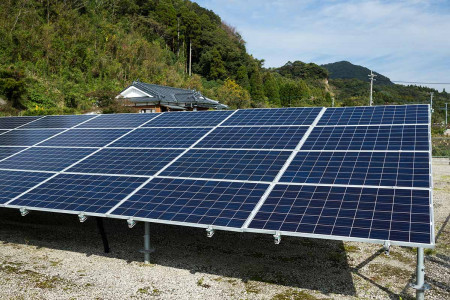
Solar Energy Systems: Configuration, Wiring & Grounding
MP4 | Video: h264, 1280x720 | Audio: AAC, 44.1 KHz, 2 Ch
Genre: eLearning | Language: English + srt | Duration: 27 lectures (1h 38m) | Size: 1.86 GB

Learn everything about the Wiring & Configuration options for your Solar Array, explained by the Energy Engineer
What you'll learn
Your PV Solar Array Configuration Options: The changes in voltage, amperage and power output
The Protective Equipment: Direct Current breakers, Fuses and how they work
Wiring and Connectors: PV Combiner Boxes, Single Contact PV Connectors & MC4 connectors
Grounding and it's Importance: Grounding Rods & PV grounding connections and the o
Requirements
No prior knowledge required: You will learn everything you need to know.
This course is part of a larger set of courses for Grid Tied Solar Energy Systems: You might be interested in the other sections as well!
Description
Hello Solar Energy Enthusiast!
My goal is to make sure you will enjoy this course! Since you are reading this, it means you are looking for a reliable source of information related to Grid-Tied Solar Energy Systems: Through this course, I will share with you my extensive knowledge and experience.
And lucky you! Through this course you will get a condensed version of all the fundamentals you need to be aware of. I have included several short multiple choice questions, through which you can self-test whether you have absorbed the knowledge adequately throughout the course. And to spice it up, we will also take numerous virtual excursions to websites of manufacturers of different components of a solar system. Through this approach, we make sure that we bridge the following gaps
We make sure that you get the relevant and unbiased knowledge from an experienced professional
You have the possibility to test your knowledge and freely browse through the content of the course as per your preferences
We will bridge the gap between theory & real-life examples by reviewing numerous product options which you might come across as you will be shopping for your system components
I am glad you are interested in this course: It will teach you all the relevant knowledge, without any 'fluff', and includes several brief multiple-choice questions to test your knowledge.
I have created this course for you, fueled by my academic background in Renewable Energy Engineering and extensive field experience in the design and installation of PV Energy Systems. You are getting a very good deal: I will summarize for you all that I have learned over the years, and all you have to do is push the button and starting soaking up the information. Lucky you!
During this course, we will review and learn about the following topics
Module-to-module configuration options
A review of the voltage, amperage and power values
Series versus Parallel wiring
The differences between cell & module configurations
Module versus Photo Voltaic[PV] cell voltages
PV array power output and voltages
Online solar PV calculator examples
Overcast & Partial shading conditions
Bypass diodes and wiring options
The effect of voltage fluctuations on power output
Watthours & Amphours
Battery charging calculations & examples
The principles of Alternating Current[AC] versus Direct Current[DC]
AC frequency and the effective versus peak voltage
DC versus AC appliances
The American Wire Gauge[AWG] and it's origins
The AWG chart and gauge steps
Wire drawing principles: How it's made
The Metric Wire system
AWG-to-Metric wire size conversion and vise versa
PV single contact solar connectors & MC4 connectors
Solar crimping tools and their advantages
Solar PV junction boxes
Bypass diodes in junction boxes & where to find the specifications
The Ingress Protection[IP] rating system
Fuses, their operation principles and design ratings
Solar PV breakers & Arc Extinguishing Chambers[AEC's]
Instantaneous versus Slow Tripping Current rating
The characteristics and components of DC breakers
DC Arc's and how they are being extinguished
Examples of DC circuit breaker models
PV Solar Combiner Boxes and configuration examples
Examples of 'plug & play' PV combiner boxes
Earth & Grounding: The operating principles
Grounding rods and how they protect you and your system
The location of grounding holes in your PV modules
The main outline of this course is as follows
Configuration
Series & Parallel
Cell versus Module
Series versus Parallel
Partial shading
Voltage & Current
Amphours & Watthours
AC & DC
Wiring
Wires & Connectors
AWG versus Metric
Connectors
Junction Boxes
Breakers & Fuses
Fuses
Breakers
Combiner Boxes
Grounding
Take action now! Educate yourself by staring this course, so that you will be able to make well-informed decisions for your system. TIP: Udemy offers a very generous refund policy in case the course content turns out different than expected.
See you soon!
Jesse
Jesse Gorter
Renewable an Sustainable Energy Engineer, Master of Engineering
Mechanical Engineer, Energy Technology, Bachelor of Engineering
Who this course is for
Home Owners
Students
Property Managers
Installation Technicians
Design and Sales Specialists
Homepage


8710ab2f7b816330db2bafc5e5d1ca3e.jpg

Animated 3D Building Scene in Blender
MP4 | Video: h264, 1280x720 | Audio: AAC, 44.1 KHz, 2 Ch
Genre: eLearning | Language: English + srt | Duration: 47 lectures (4h 49m) | Size: 3 GB

Create an animated 3D Low Poly scene in Blender together
What you'll learn
This course is meant for artists who like to grow in their workflow
Beginners
Artists who want to learn to bring their assets alive.
Game Developers who wish to expand their Skill Set.
Requirements
Mac or PC capable of running Blender. Course is suitable for beginners, so there are no 3D skill requirements.
Description
So you chose to learn Blender, and that is a great choice. Blender is a super powerful 3D application. More and more people are using it, and it is an excellent time for you to jump on this train. You can create so much by using Blender. I know it can be intimidating if you open it for the first time. The goal of this course is to get you more confident using Blender. After this course, you should be ready to take more advanced blender courses and continue your 3D journey.
I like teaching and creating something cool at the same time. This course is no exception. Together we are going to create this 3D scene in Blender from scratch. And at the end of the course, we will animate the scene.
I will use Blender throughout all of the course. You don't need any other software to finish the course.
I made the main course as detailed as I could so this course is suitable for beginners. But if you never used Blender, I would recommend watching my beginners course first. I added this beginner course at the beginning of the main course. You will learn the basics, and then you will be ready to start the main course. If you have some experience with Blender, you can skip the beginner course and start the main course right away.
If something is unclear, or if you are stuck at some point, feel free to leave me a comment. I will try to help you as fast as I can.
Who this course is for
This course is meant for artists who would like to learn Blender 3D.
Homepage


08c297180f0ba1da38a44fca4e2aea59.jpg

Amazon affiliated marketing by WordPress Website with SEO
MP4 | Video: h264, 1280x720 | Audio: AAC, 44.1 KHz, 2 Ch
Genre: eLearning | Language: English + srt | Duration: 30 lectures (3h 30m) | Size: 1.68 GB

Earn while learning and creating website by selecting branded stores in cheap rates
What you'll learn
Domain Selection
Keyword Selection
Affiliated Market
WordPress Website making
SEO for WordPress Website
Creating Backlinks
Requirements
Device with an Internet to learn
Description
Learn creating Domain, Hosting website and creating E-Commerce Store using WordPress. Explore the idea with SEO and Rank your website to earn Passive Income by Building an Amazon Affiliate website with lot's of light weight plugging's and oceanWS Theme, without any Coding.
Learn Domain Selection, KeyWord Selection and creating Do-Follow Backlinks to increase Rank and Domain authority of your website.
By taking this course not only will you be able to build a complete Amazon Affiliated e-commerce website, but you'll also learn how to populate it with millions of top rated Amazon products and Rank high in Google. You'll learn to create sales and earn a generous commission on each sale.
Let's go through a quick overview of exactly what you will learn in this course
Section 1
Includes an introduction to the Course with finding a best Deal for Domain and Hosting server purchase.
Section 2
Introduction to WordPress site maker and admin view. Installing SSL cert and oceanWp theme for your site.
With creating amazon store and first post.
Section 3
Very Important, what we should avoid to do.
Section 4
In this section we will learn What to build for a Good Website i.e. keyword Selection and their importance. Adding Rank Math SEO plugin and Google site plugin for analytics and Google search results.
Section 5
What are backlinks, what is difference between DoFollow and NpFollow links and above all what are techniques to get DoFollow links.
Section 6
It's a site maintenance section, where we check where we need to go for site updates, backup and how to connect our site deployment server via a SFTP.
Who this course is for
Affiliated marketers
SEO learners
Anyone who want to learn WordPress website creation
Homepage


e5cb99e27a192c74b4db674dca185e25.jpg

Be Aware of Data Science
MP4 | Video: h264, 1280x720 | Audio: AAC, 44.1 KHz, 2 Ch
Genre: eLearning | Language: English + srt | Duration: 59 lectures (6h 3m) | Size: 5.67 GB

Take the first step into the world of Data Science with Data Science experts
What you'll learn
Learn how data science turns data into valuable information.
Understand what cognitive biases are and how data science helps us fight them.
Know what spurious correlation is and how we can avoid it.
Learn how to conduct a data-driven business experiment that verifies whether a change creates a positive impact.
Realize how Big Data brings unpurposed data collections and how we need to address these.
Make decisions about which of the four essential data science approaches to utilize.
Discover who data scientists are and what it would take for you to become one.
Recognize how Data Science creates scientific models through experimentation and observation.
Remember basic methods of data science such as descriptive statistics of correlation measure.
Obtain a strong intuition behind what a Machine Learning model does.
Discover why a data science model simplifies human decision-making.
Requirements
Just a motivation to learn new concepts. This course is really meant for anyone, even if you are an absolute beginner to the topic of Data Science.
Description
Understanding how we can derive valuable information from the data has become an everyday expectation. Previously, organizations looked up to data scientists. Nowadays, organizations liberate data science. Everyone can contribute to the efforts of turning data into valuable information. Thus, even if your aspirations are not to be a data scientist, open yourself the door to these projects by gaining so-necessary intuitive understanding. With this course, you can take the first step into the world of data science! This course will explain how data science models create value from the absolute basics even if you feel like a complete beginner to the topic.
Three data scientists deliver the course, with cumulative 15 years of professional and academic experience. Hence, we won't repeat the textbooks. We will uncover a valuable bit of this lucrative field with every lecture and take you closer to your desired future role around data science projects. We do not teach programming aspects of the field. Instead, we entirely focus on data science's conceptual understanding. As practice shows, real-world projects tremendously benefit by incorporating practitioners with thorough, intuitive knowledge.
Over 6 hours of content, consisting of top-notch video lectures, state-of-the-art assignments, and intuitive learning stories from the real world. The narrative will be straightforward to consume. Instead of boring you with lengthy definitions, the course will enlighten you through dozens of relatable examples. We will put ourselves in the shoes of ice cream vendors, environmentalists examining deer migrations, researchers wondering whether storks bring babies, and much more! After the course, you will be aware of the basic principles, approaches, and methods that allow organizations to turn their datasets into valuable and actionable knowledge!
The course structure follows an intuitive learning path! Here is an outline of chapters and a showcase of questions that we will answer
Chapter 1: "Defining data science". We start our journey by defining data science from multiple perspectives. Why are data so valuable? What is the goal of data science? In which ways can a data science model be biased?
Chapter 2: "Disciplines of Data Science". We continue by exploring individual disciplines that together create data science - such as statistics, big data, or machine learning. What is the difference between artificial intelligence and machine learning? Who is a data scientist, and what skills does s/he need? Why do data science use cases appear so complex?
Chapter 3: "Describing and exploring data". We tackle descriptive and exploratory data science approaches and discover how these can create valuable information. What is a correlation, and when is it spurious? What are outliers, and why can they bias our perceptions? Why should we always study measures of spread?
Section 4: "Inference and predictive models". Herein, we focus on inferential and predictive approaches. Is Machine Learning our only option when creating a predictive model? How can we verify whether a new sales campaign is successful using statistical inference?
Section 5: "Bonus section". We provide personal tips on growing into data science, recommended reading lists, and more!
We bring real-life examples through easy-to-consume narratives instead of boring definitions. These stories cover the most critical learnings in the course, and the story-like description will make it easier to remember and take away. Example
"Do storks bring babies?" story will teach us a key difference among correlation, causation, and spurious correlation.
"Are we seeing a dog or a wolf?" story will explain why it is crucial to not blindly trust a Machine Learning model as it might learn unfortunate patterns.
"Is the mushroom edible?" case will show a project that might be a complete failure simply because of a biased dataset that we use.
"Which house is the right one?" story will explain why we frequently want to rely on Machine Learning if we want to discover some complex, multi-dimensional patterns in our data.
"I love the yellow walkman!" is a case from 20 years ago, when a large manufacturer was considering launching a new product. If they relied on what people say instead of what data say, they would have a distorted view of reality!
"Don't trust the HIPPO!" is a showcase of what is, unfortunately, happening in many organizations worldwide. People tend to trust the Highest Paid Person's Opinion instead of trusting what the data says.
The course is interactive! Here is what you will meet
Assignments in which you can practice the learned concepts and apply your creative and critical thinking.
Quizzes on which you can demonstrate that you have gained the knowledge from the course.
You can take away many handouts and even print them for your future reference!
Shareable materials that you can use in your daily work to convey a vital Data Science message.
Reference and valuable links to valuable materials and powerful examples of Data Science in action.
Important reminder: This course does not teach the programming aspects of the field. Instead, it covers the conceptual and business learnings.
Who this course is for
Anyone interested in data science.
Students at college who want to pursue a career in data science.
Technical professionals from data-related disciplines who feel like they lack formal education in data science.
Software engineers, BI specialists and reporting analysts who are considering a switch in their career towards data science.
Anyone preparing for a job interview to a department that works a lot with the data.
Anyone who would like to implement data science more in their daily operations.
Homepage


0279bb56322a3e529694c31cde5afd13.jpg

Blender 3.0 Modelling Course for Beginners
MP4 | Video: h264, 1280x720 | Audio: AAC, 44.1 KHz, 2 Ch
Genre: eLearning | Language: English + srt | Duration: 46 lectures (17h 18m) | Size: 16.5 GB

Learn to model hard surface robot characters in Blender
What you'll learn
Blender Modelling Tools
Blender Hard Surface Character Modelling
UV Unwrapping Robotic Characters
How to render within Blender
Requirements
You should have Blender 3.0 installed on your computer.
Description
Have you wanted to learn Blender and not know where to start?
Then I welcome you to Nexttut's Blender 3.0 Modelling Course for Beginners.
WHY SHOULD YOU LEARN FROM ME
My name is Alejandro Aguilar, and I have been working in 3D art for about 7 years. I have worked on numerous projects, from mobile games to video production. My area of work focuses on understanding 3D at a technical level, so that I can then teach you in an easy-to-understand way.
BENEFITS
By the end of this course you will be able to model hard surface robot type characters in Blender.
WHAT WILL I LEARN
● Blender Hard Surface Character Modelling.
● UV Unwrapping Robotic Characters
● How to render within Blender.
COURSE PROJECTS
In this course we will be making a robotic character. We will start by opening Blender and discussing what we will be working on for the course. Next we will block out the shapes that we need in order to create our character and go over the tools and model out each piece in detail. Then, we will finalise the modelling, fixing anything that needs a second pass, and prepare to unwrap our prop. We'll begin going over how to unwrap our model and discuss the importance of unwrapping. After this we will go over how to create textures and apply materials to our robot. Afterwards, we will use modifiers to push our character to a more high poly finish in a non-destructive manner. By the end of the course, we will have our robot fully modelled, textured, and rendered within Blender. We'll make a render of the character and finish the course.
IS THIS COURSE RIGHT FOR ME
This course is for you if you are a blender beginner and want to learn Blender modelling to model simple hard surface robotic kind of characters rather than complex organic characters.
WHO IS NOT THE IDEAL STUDENT
This course is not for advanced blender users, or who want to learn organic modelling.
WHAT SHOULD I KNOW OR HAVE FOR THE COURSE
● A basic understanding of computers and know how to open a 3D Program.
● You should have Blender 3.0 installed on your computer.
JOIN ME NOW
If you want to learn how to use Blender 3.0, join me now and take your skills to the next level. Don't forget that investing in yourself will benefit you for the rest of your life! Hope to see you in the course!
Who this course is for
This course is for you if you are a blender beginner and want to learn Blender modelling to model simple hard surface robotic kind of characters rather than complex organic characters
Homepage


b4bb546c6dfb41a6d4261b22c6d78a20.jpg

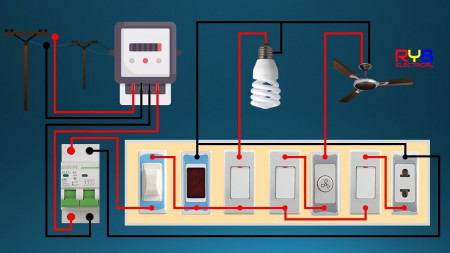
How To Wire a House
MP4 | Video: h264, 1280x720 | Audio: AAC, 44.1 KHz, 2 Ch
Genre: eLearning | Language: English | Duration: 28 lectures (1h 36m) | Size: 1.95 GB

For you DIYers who want to learn to wire Your own home
What you'll learn
How To Install A Home Electrical System, or, How to wire up their own house
Requirements
The desire to wire up your own home. And a house to wire up.
Description
Many people dream of building their own home. Or perhaps you have a desire for a tiny house and want to do as much of the work yourself as possible. Like most things, doing the basic wiring in a house is not difficult, but you do need to be educated on some of the tricks and best practices methods we professional electricians use.
Caleb Massey is a licensed master electrician with over a decade of experience on custom homes. He brings his expertise to this course so that you will be able to competently install your own wiring in your own home building project.
This course will walk you through the tools, materials and process of rough wiring your house. If you begin to understand the principles then you could apply them to a garage or shed as well.
As always, if there is something you are not sure of consult a local, professional electrician for guidance. This course will not make you a qualified electrician, but it will vastly increase your knowledge of the trade.
Also, this course will not teach you about installing services. Services are more technical and involve the local power company. I do provide a tour of a standard meter disconnect set up, but ultimately we focus on just the house itself.
Who this course is for
Anyone who has the desire to do hands on work to install their own wiring for their home. In the process you will save labor costs and have the satisfaction of knowing you truly did it yourself.
Homepage


b8085859c1244de71f5f16047c069c7e.png

ITProTV - LPIC-2 Linux Engineer (201-450)
MP4 | Video: h264, 1920x1080 | Audio: AAC, 44.1 KHz, 2 Ch
Genre: eLearning | Language: English | Duration: 33 Lessons (10h 15m) | Size: 7.8 GB

Advanced tools and skills for Linux engineers
The LPIC-2 Linux Engineer (201-450) course is designed for IT Professionals who are seeking the LPIC-2 certification. The course covers skills required of any intermediate to advanced systems administrator who is tasked with supporting Linux in a production environment. Topics covered include: capacity planning, kernel maintenance, startup and recovery methods, advanced storage configurations, network connectivity, and systems maintenance. This course is accompanied by the 202-450 course which combine to cover the LPIC-2 exam.
Homepage


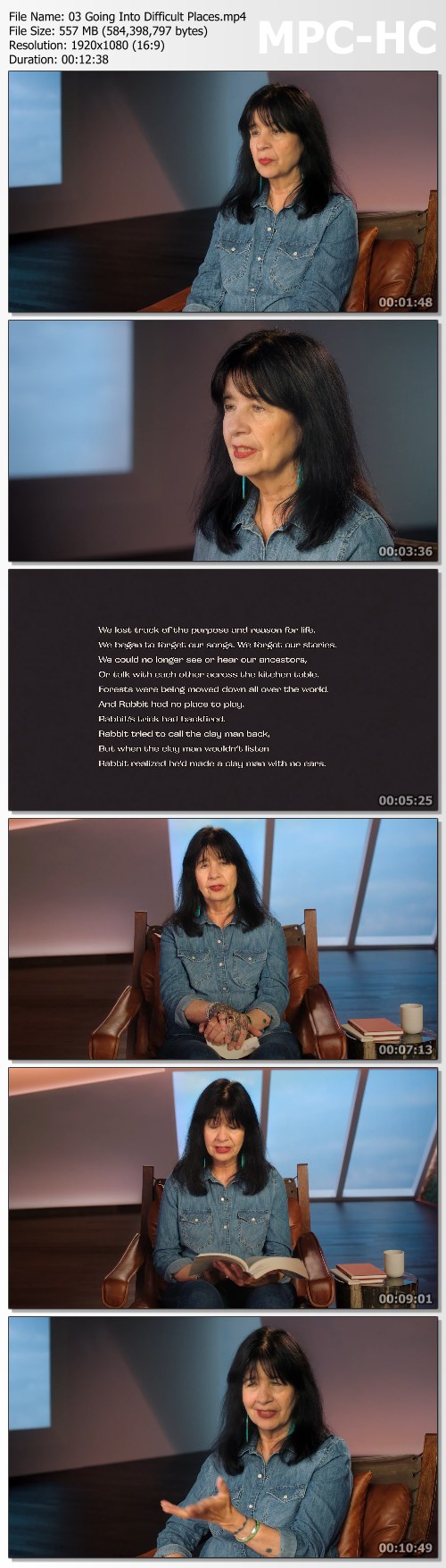
Joy Harjo Teaches Poetic Thinking - MasterClass

5d53057b55b43fa778082015ac57c53f.jpg

MasterClass - Joy Harjo Teaches Poetic Thinking
MP4 | Video: h264, 1920x1080 | Audio: AAC, 44.1 KHz, 2 Ch
Genre: eLearning | Language: English | Duration: 10 Lessons (2h 3m) | Size: 5.47 GB​
As the first Native American U.S. Poet Laureate, Joy Harjo has written poetry that explores her personal experiences, the history of her ancestors, and social change. Now she's teaching you how to find the language to express yourself and approach your art with deeper motivation. Explore rhythm in art, navigate the world of revisions, and unlock your innate creativity to help you express your unique stories.

Browse Lesson Plan
1. Meet Your Instructor
2. Listening Comes Before Writing
3. Going Into Difficult Places
4. Unblocking Creativity
5. Imagery and Form
6. Writing and Revising
7. Honoring the Source
8. Poetry Ancestors
9. Mapping Representation
10. Playing With Song and Poetry

Instructor(s): Joy Harjo
Class Length: 10 video lessons (2 hrs 3 min)
Category: Writing

Homepage:

Screenshots
50a2680d5fb31068feae4a5dae073509.jpg


Link Download
Extract files with WinRar 5 or Latest !
 
8191b7230f12b5ca90fe2ee90c47dceb.jpg

Causes of World War 1 (1914 - 1918)
MP4 | Video: h264, 1280x720 | Audio: AAC, 44.1 KHz
Language: English | Size: 169 MB | Duration: 34m
Learn the pre-1914 situation and how the great powers caused the war
What you'll learn​

An academic-oriented analysis of the Causes of World War 1
Causes of the First World War of 1914-1918
Nationalism, Patriotism and Public Opinion in the States before World War 1
German nationalism and how it caused the War of 1914
Britain's contributions to the outbreak of World War 1
How Austria-Hungary contributed to the outbreak of the War
The contributions of French revanchism to the outbreak of the War
Russian mobilisation and the World War
The role of Serbia in causing World War 1
The absence of a pro-peace International Organisation in 1914
Requirements
Understanding the basic English Language
The 1914 World Map (Download online & print the map)
The European Maps of 1800, 1815, 1848, 1870/71 and 1900 (Optional)
Interested in learning History
Earphones / Headphones for listening to the course
Description
N.B. INTERESTED STUDENTS, PLEASE TAKE NOTE
This course is still in beta mode
Captions will be properly edited in English
More lectures are to be added for Part C (Currently in the post-production phase)
Some lectures with poor audio quality will also be replaced
After all the modules and videos of this course have been uploaded, you are going to learn about the major causes of the First World War of 1914 to 1918.
Here is what you will learn
A. WHAT WAS WORLD WAR 1 OR WW1 DEFINITION?
This video will be replaced by a better video
B. A BRIEF HISTORICAL BACKGROUND OF SOME EUROPEAN STATES BEFORE 1914
The German lecture will be replaced by another good-quality audio-video. The other lectures are ready.
Germany and the German Empire
Britain and the British Empire
France and the French Empire
Austria-Hungary or the Austro-Hungarian Empire, The Dual Monarchy
Russia and the Russian Empire
The Kingdom of Italy
Serbia
Turkey, The Ottoman Empire
C. THE MAJOR CAUSES OF WW1 (LECTURES TO BE ADDED)
N.B MOST LECTURES FOR THIS SECTION HAVE NOT BEEN UPLOADED YET. STILL IN THE POST-PRODUCTION PHASE
1 - The Alliance System
You will learn about the bilateral and multilateral alliances in Europe before 1914 and how they caused the war in 1914. Bilateral alliances included the Dual Alliance, the Entente Cordiale or Anglo-France Alliance, and the Anglo-Russian Entente. The multilateral alliances included the Tripple Entente and the Triple Alliance.
2 - Economic competition amongst the Great Powers
In this section, you will learn about the rise of Germany and the economic rivalries or economic competition amongst the great powers before 1914.
3 - Militarism: The Arms Race
You will learn about how the increase of armaments before 1914 contributed to the worsening of relations in Europe.
4 - Imperialism - Competition for overseas territory after 1905: The Tangier Crisis / The First Moroccan Crisis (1905-1906) and The Algeciras Conference (1906)
You will understand how the 1st Moroccan Crisis divided the great powers
5 - Militarism: The Naval Race
In this part, you will understand the Anglo-German naval race and how it caused the war
6 - Balkan Nationalism: Bosnian Crisis: Austrian annexation of Bosnia and Herzegovina (1908)
Here you will learn about how the Bosnian Crisis was a direct cause of the First World War
7 - Imperialism - Competition for overseas territory after 1905: The Second Moroccan Crisis/ Agadir Crisis (1911)
In this part, you will understand how the Anglo-France Alliance or Entente Cordiale was strengthened against Germany.
8 - Balkan Nationalism: The Balkan Wars (1912-1913)
You will learn about the fall of the Ottoman Empire and the rise of the Balkan States like Serbia. This had direct and indirect effects.
9 - Balkan Nationalism - The Sarajevo Incident
This was the assassination of Archduke Franz Ferdinand of Austria in June 1914. This was a turning point in European History.
10 - The July Crisis
In July 1914, after the Sarajevo incident, the great powers were not able to ensure peace in Europe. You will learn about the events of July 1914 and how they caused the war in 1914.
11 - Militarism: The Existence of War Plans
The European states had war plans that were created in preparation for war against enemy states. In this section, you will learn how plans like the Schlieffen Plan (Germany) and Plan 17 (France's Plan XVII) led to the outbreak of War in 1914.
12 - Militarism: Military Leaders and Their Influence
Here you will learn of how some European military leaders are to blame for the 1914 war.
13 - Poor Diplomacy - There was no organization to promote peace and discourage wars
You will learn about how the absence of an International Organization like the United Nations is to blame for the war in 1914
Bonus
There are practice questions after most of the lectures. These will allow you to master this topic by critically analyzing History.
D. HOW NATIONALISM, PATRIOTISM, AND PUBLIC OPINION CAUSED WW1
N.B Videos for this section have been uploaded
Here you will learn about how Nationalism, Patriotism, and Public Opinion in the following states caused the War
Germany
Britain
Austria-Hungary
France
Russia
Serbia
E. CONCLUSION
Video not yet uploaded
Who this course is for
Anyone who wants an Academic Analysis of the Causes of the First World War
Undergraduate History students
Any student studying the Causes of World War 1
Graduate and Post-Graduate History Students
Cambridge History Students
Anyone who wants to learn the Causes of World War 1


Zurück
Oben Unten