• Regeln für den Video-Bereich:

    In den Börsenbereich gehören nur Angebote die bereits den Allgemeinen Regeln entsprechen.

    Einteilung

    - Folgende Formate gehören in die angegeben Bereiche:
    - Filme: Encodierte Filme von BluRay, DVD, R5, TV, Screener sowie Telesyncs im Format DivX, XviD und x264.
    - DVD: Filme im Format DVD5, DVD9 und HD2DVD.
    - HD: Encodierte Filme mit der Auflösung 720p oder darüber von BluRay, DVD, R5, TV, Screener sowie Telesyncs im Format x264.
    - 3D: Encodierte Filme von BluRay, die in einem 3D Format vorliegen. Dies gilt auch für Dokus, Animation usw.
    - Serien: Cartoon/Zeichentrick, Anime, Tutorials, Dokumentationen, Konzerte/Musik, Sonstiges sind demnach in die entsprechenden Bereiche einzuordnen, auch wenn sie beispielsweise im High Definition-Format oder als DVD5/DVD9/HD2DVD vorliegen. Ausnahme 3D.
    - Bereich Englisch: Englische Releases gehören immer in diesen Bereich.
    - Bereich Talk: Der Bereich, in dem über die Releases diskutiert werden kann, darf, soll und erwünscht ist.


    Angebot/Beitrag erstellen

    - Ein Beitrag darf erst dann erstellt werden, wenn der Upload bei mindestens einem OCH komplett ist. Platzhalter sind untersagt.
    - Bei einem Scenerelease hat der Threadtitel ausschließlich aus dem originalen, unveränderten Releasenamen zu bestehen. Es dürfen keine Veränderungen wie z.B. Sterne, kleine Buchstaben o.ä. vorgenommen werden. Ausnahme Serienbörse:
    - Bei einem Sammelthread für eine Staffel entfällt aus dem Releasename natürlich der Name der Folge. Beispiel: Die Simpsons S21 German DVDRip XviD - ITG
    - Dementsprechend sind also u.a. verboten: Erweiterungen wie "Tipp", "empfehlenswert", "only", "reup", usw. / jegliche andere Zusatzinformation oder Ergänzung, welche nicht in obiger Beschreibung zu finden ist.

    Aufbau des Angebots und Threadtitel

    Der Titel nach folgendem Muster erstellt zu werden. <Name> [3D] [Staffel] [German] <Jahr> <Tonspur> [DL] [Auflösung] <Quelle> <Codec> - <Group>
    Beispiel: The Dark Knight German 2008 AC3 DVDRip XviD - iND
    Beispiel: The Dark Knight 2008 DTS DL BDRip x264 - iND
    Beispiel: The Dark Knight 2008 AC3 DL BDRip XviD - iND
    Beispiel: The Dark Knight German 2008 AC3 720p BluRay x264 iND
    Beispiel: The Dark Knight 2008 DTS DL 1080p BluRay x264 iND
    Beispiel: Die Simpsons S01 German AC3 DVDRip XviD iND
    Beispiel: Die Simpsons S20 German AC3 720p BluRay x264 iND
    Beispiel: Sword Art Online II Ger Sub 2014 AAC 1080p WEBRip x264 - peppermint
    Entsprechend sind also u.a. verboten: Sonderzeichen wie Klammern, Sterne, Ausrufezeichen, Unterstriche, Anführungszeichen / Erweiterungen wie "Tipp", "empfehlenswert", "only", "reup", usw. / jegliche andere Zusatzinformation oder Ergänzung, welche nicht in obiger Beschreibung zu finden ist
    Ausnahmen hiervon können in den Bereichen geregelt sein.

    Die Beiträge sollen wie folgt aufgebaut werden:
    Überschrift entspricht dem Threadtitel
    Cover
    kurze Inhaltsbeschreibung
    Format, Größe, Dauer sind gut lesbar für Downloader außerhalb des Spoilers zu vermerken
    Nfo sind immer Anzugeben und selbige immer im Spoiler in Textform.
    Sind keine Nfo vorhanden z.B. Eigenpublikationen, sind im Spoiler folgende Dateiinformationen zusätzlich anzugeben :
    Quelle
    Video (Auflösung und Bitrate)
    Ton (Sprache, Format und Bitrate der einzelnen Spuren)
    Untertitel (sofern vorhanden)
    Hosterangabe in Textform außerhalb eines Spoiler mit allen enthaltenen Hostern.
    Bei SD kann auf diese zusätzlichen Dateiinformationen verzichtet werden.

    Alle benötigten Passwörter sind, sofern vorhanden, in Textform im Angebot anzugeben.
    Spoiler im Spoiler mit Kommentaren :"Schon Bedankt?" sind unerwünscht.


    Releases

    - Sind Retail-Release verfügbar, sind alle anderen Variationen untersagt. Ausnahmen: Alle deutschen Retail-Release sind CUT, in diesem Fall sind dubbed UNCUT-Release zulässig.
    - Im Serien-Bereich gilt speziell: Wenn ein Retail vor Abschluss einer laufenden Staffel erscheint, darf diese Staffel noch zu Ende gebracht werden.62
    - Gleiche Releases sind unbedingt zusammenzufassen. Das bedeutet, es ist zwingend erforderlich, vor dem Erstellen eines Themas per Suchfunktion zu überprüfen, ob bereits ein Beitrag mit demselben Release besteht. Ist dies der Fall, ist der bereits vorhandene Beitrag zu verwenden.
    - P2P und Scene Releases dürfen nicht verändert oder gar unter einem iND Tag eingestellt werden.


    Support, Diskussionen und Suche

    - Supportanfragen sind entweder per PN oder im Bereich Talk zu stellen.
    - Diskussionen und Bewertungen sind im Talk Bereich zu führen. Fragen an die Uploader haben ausschließlich via PN zu erfolgen, und sind in den Angeboten untersagt.
    - Anfragen zu Upload-Wünschen sind nur im Bereich Suche Video erlaubt. Antworten dürfen nur auf Angebote von MyBoerse.bz verlinkt werden.


    Verbote

    - Untersagt sind mehrere Formate in einem einzigen Angebotsthread, wie beispielsweise das gleichzeitige Anbieten von DivX/XviD, 720p und 1080p in einem Thread. Pro Format, Release und Auflösung ist ein eigener Thread zu eröffnen.
    - Grundsätzlich ebenso verboten sind Dupes. Uploader haben sich an geeigneter Stelle darüber zu informieren, ob es sich bei einem Release um ein Dupe handelt.
    - Gefakte, nur teilweise lauffähige oder unvollständige Angebote sind untersagt. Dies gilt auch für eigene Publikationen, die augenscheinlich nicht selbst von z.B. einer DVD gerippt wurden. Laufende Serien, bei denen noch nicht alle Folgen verfügbar sind, dürfen erstellt und regelmäßig geupdatet werden.
    - Untersagt sind Angebote, welche nur und ausschließlich in einer anderen Sprache als deutsch oder englisch vorliegen. Ausnahmen sind VORHER mit den Moderatoren zu klären.


    Verstoß gegen die Regeln

    - Angebote oder Beiträge, die gegen die Forenregeln verstoßen, sind über den "Melden"-Button im Beitrag zu melden.
  • Bitte registriere dich zunächst um Beiträge zu verfassen und externe Links aufzurufen.


Englische Tutorials

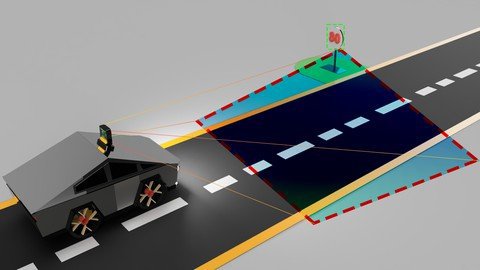
Autonomous Car:Deep Learning & Computer Vision for Beginners
5mukashsmtyhxfsxncgp6i6kvi.jpg


Autonomous Car:Deep Learning & Computer Vision for Beginners
Genre: eLearning | MP4 | Video: h264, 1280x720 | Audio: AAC, 48.0 KHz
Language: English | Size: 5.92 GB | Duration: 5h 46m

Build your Own Self Driving Car using Image Processing and Artificial Neural Intelligence Techniques with Raspberry Pi


What you'll learn
Build your own Self Driving Car (Mini-Tesla)
Learn (Divide and Conquer Approach) of solving complex problems i.e. Detection -> (Localization + Classification)
Segment Lane Lines using Computer Vision techniques i.e. Canny Edge detection & Color Thresholding
Localize objects in images based on specific shapes using Algorithms i.e. ShapeApproxPoly and HoughCircles
Estimate Straight Line Trajectories Using Hough Lines and Curved Lanes using Custom Algo.
Learn about Artificial Neural Networks and why Convolutional Neural Network are best for classification in Images.
Learn to identify the right Algorithm in OpenCV and how to tweak it to your requirements
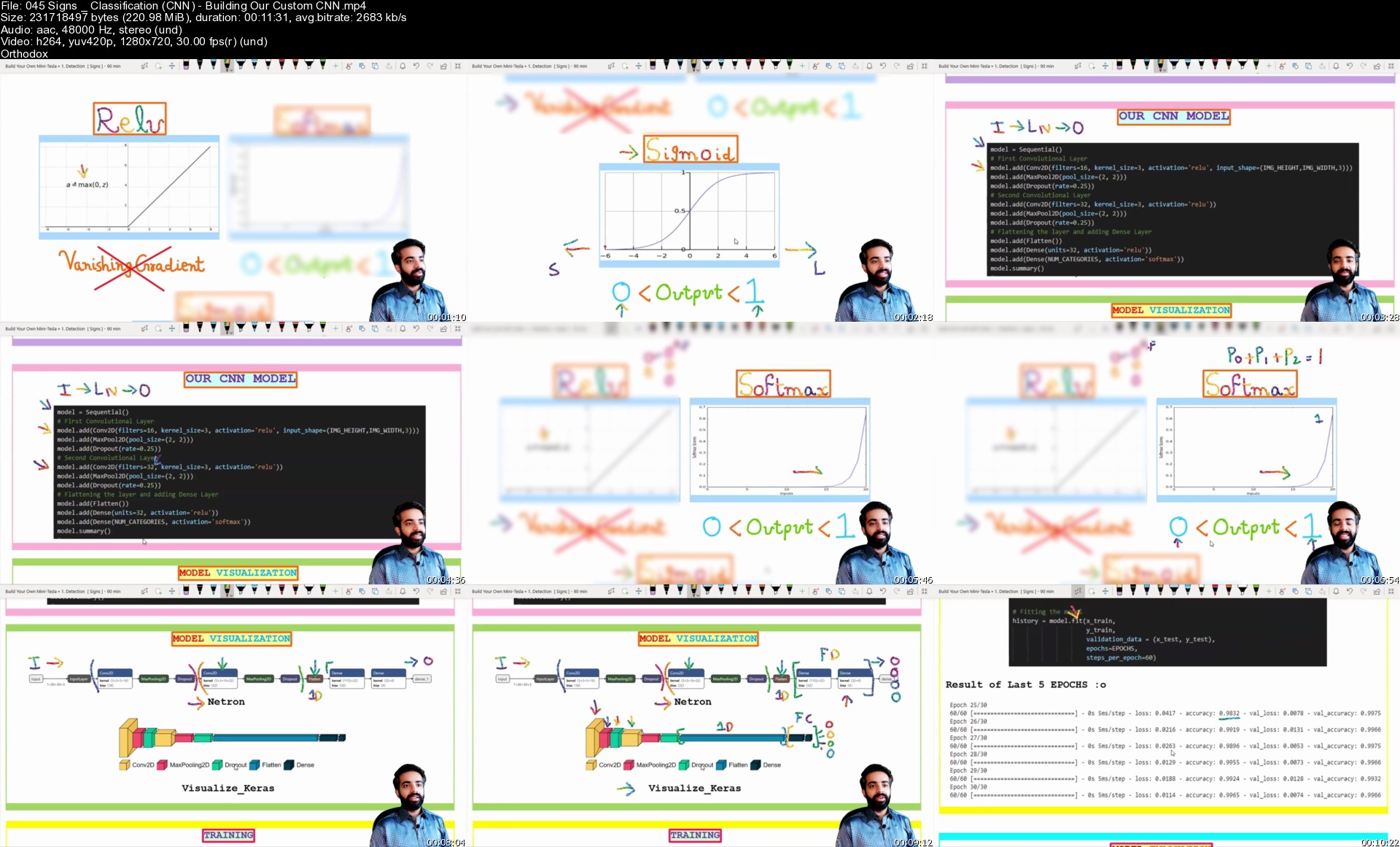
Build, Train and deploy Custom CNN model (Deep Learning) for classifying Signs.
Profile/Time your program using cProfile in Python
Compare S.O.A Tracking techniques available in OpenCV and identify most suitable for project requirements
Optimize your Code using simple but very effective IP techniques and threading
Make SDV Navigate Autonomously in Custom Track and also obey road speed limits
Understand how to extract actionable data from images
Gain all the knowledge required to enter to more advance versions of (SDV series) upcoming courses to come... :)
Brief Overview of SSD for Sign Detection and why its not the solution for every Object Det. problem


Description
This is course is involves both the hardware and the software part for building your custom car

Topics Which Will be Covered in the Course are

Hardware Part :

Raspberry Pi Setup with Raspbian

Raspberry pi and Laptop VNC Setup

Hardware GPIO Programming

Led Controlling with Python Code

Motor Control

Camera Interfacing Video Feed

Software Part :

Video Processing Pipeline setup

Lane Detection with Computer Vision Techniques

Sign Detection using Artificial Deep Neural Network

Sign Tracking using Optical Flow

Control

Course Flow (Self-Driving [Development Stage])

We will quickly get our car running on Raspberry Pi by utilizing 3D models ( provided in the repository) and car parts bought from links provided by instructors. After that, we will interface raspberry Pi with Motors and the camera to get started with Serious programming.

Then by understanding the concept of self-drive and how it will transform our near future in the field of transportation and the environment. Then we will perform a case study of a renowned brand in self-driving (Tesla) ;).After that, we will put forward our proposal of which (autonomous driving level) self-driving vehicle do we want to build.

The core development portion of the course will be divide into two parts. In each of this portion and their subsection, we will look into different approaches. program them and perform an analysis. In the case of multiple approaches for each section, we will do a comparative analysis to sort out which approach best suits our project requirements.

1) Detection: responsible for extracting the most information about the environment around the SDV

Here we will understand how to tackle a large problem by breaking it down into smaller more manageable problems e.g in the case of Detection. we will divide it into 4 targets

a) Segmentation

b) Estimation

c) Cleaning

d) Data extraction

2) Control: actions will be performed based on the information provided by the detection module.

Starting by defining the targets of this module and then implementation of these targets such as

a) Lane Following

b) Obeying Road Speed Limits

In the end, we will combine all the individual components to bring our Self Driving (Mini - Tesla) to life. Then a Final Track run along with analysis will be performed to understand its achievement and shortcoming.

We will conclude by describing areas of improvement and possible features in the future version of the Self-driving (Mini-Tesla)

Hardware Requirements

Raspberrypi 3b or greater

Geared Dc motors 12V (single)

12V lipo Battery

Base of car + steering mechanism

Software Requirements

Python 3.6

Opencv 4.2

TensorFlow

Motivated mind for a huge programming Project


Who this course is for:
Beginner Programmers looking for an exciting project in the upcoming domains
Enthusiastic students wanting to get their feet wet in multidisciplinary projects
Engineers wanting to embark in the fields of Computer Vision, Artificial Intelligence and Robotics
Self Driving Cars Enthusiasts looking to build one of their own


Homepage
045signsclassificatiop0j88.jpg


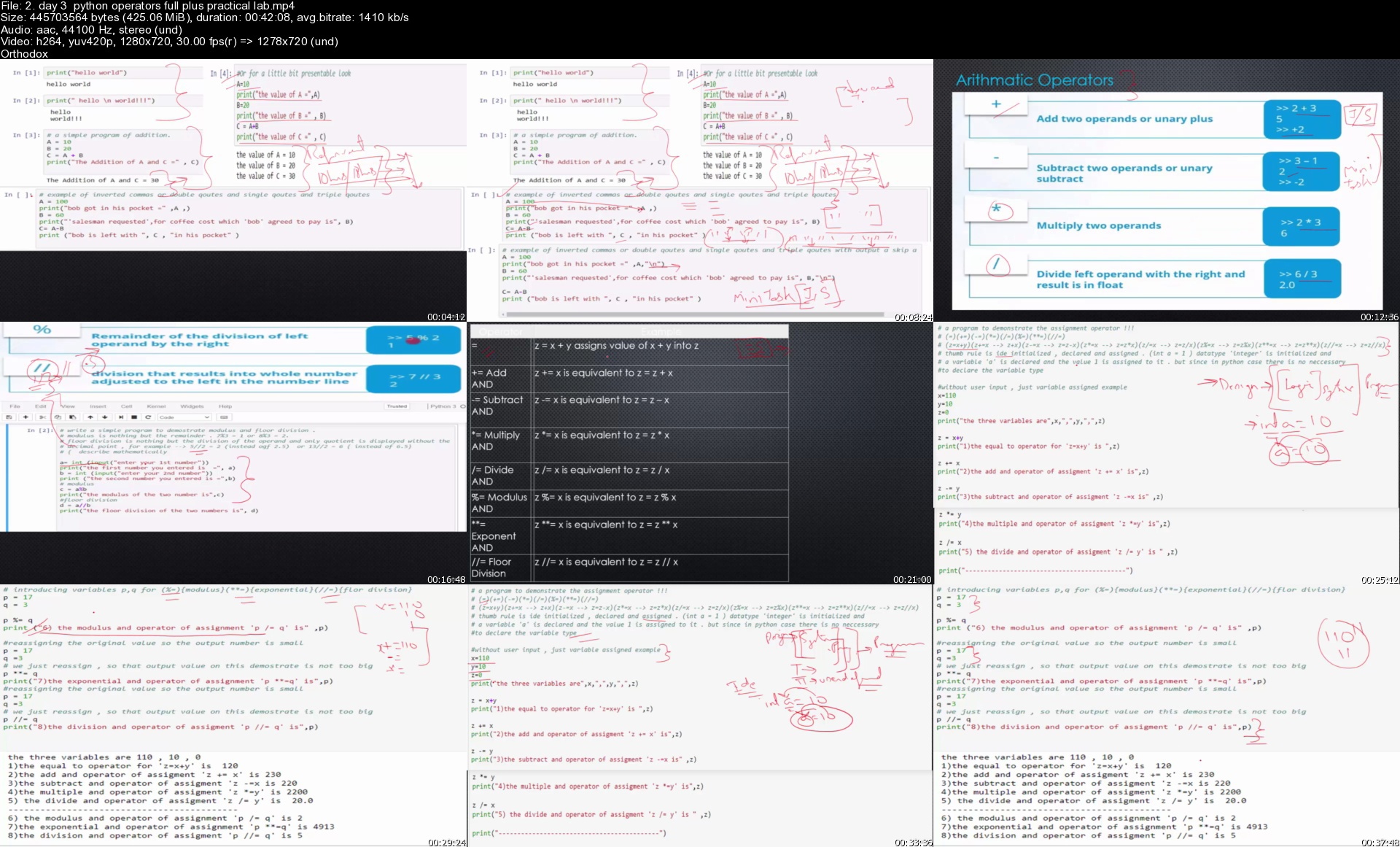
45 Days Python Masterclass With Competitive Programming Mit

uxfjx4nncenoycljbd0lmnoj3h.jpg


45 Days Python Masterclass With Competitive Programming Mit
Genre: eLearning | MP4 | Video: h264, 1280x720 | Audio: AAC, 44.1 KHz
Language: English | Size: 26.2 GB | Duration: 51h 16m

WINNERMaster Class of python with all the never before seen insights and learn the class A level programming strategies.


What you'll learn
FULL PYTHON WITH COMPETITIVE PROGRAMMING


Description
Complete the 45 days, well-designed master class with 500+ problems and logic with the secret of designing logic and algorithms in a well-designed course where everything is explained and then the practical lab is covered followed by the competitive problems to put you in elite.

4x maximum knowledge

4x cheaper course

4x better understandable logic ways

4x ultra-premium course with award-winning

Learn and master programming in terms of designing, that is syntax plus logical equals programming and the secrets of python and all the foundation taught in most advanced strategy level to keep you ahead of the rat race. Gear yourself with the course to be among the elite programmers taught you by world-famous covert operative and MIT doctorate in advanced intelligent systems and artificial intelligence.

Once you acquire the foundation in most vivid explanation combined with binaural beats of beta waves to alpha wave switching in between the course, tailored designed for immense concentration and letting you not get disturbed by the outer side world, the course is preferred to be heard by headphones. When you start the course, the knowledge flow sync of the course takes anywhere from 7 seconds to 11 seconds to get synced with your brain to get you started with the topic you are on, and combined with the teaching strategy and mythology, you are sure to be on the road to becoming elite programmers and still enjoy the course while you are training your mind, focus and knowledge.

This course will keep you and gear you up for the future of any of the emerging technologies of python from artificial intelligence to massive intelligence systems or web technologies to full-stack development or from programming to design and architect or GUI to application design and coding or from visualization to business intelligence or from machine learning to data science or learning python for fun to anyways from turning to an elite programmer to any of your future career or keen of interest or your choice of career.


Who this course is for:
ANYONE WITH INTREST TO LEARN SECRETS ALONG WITH BECOMING EITE PYTHONAIRE


Homepage

2.day3pythonoperatorstzjjp.jpg


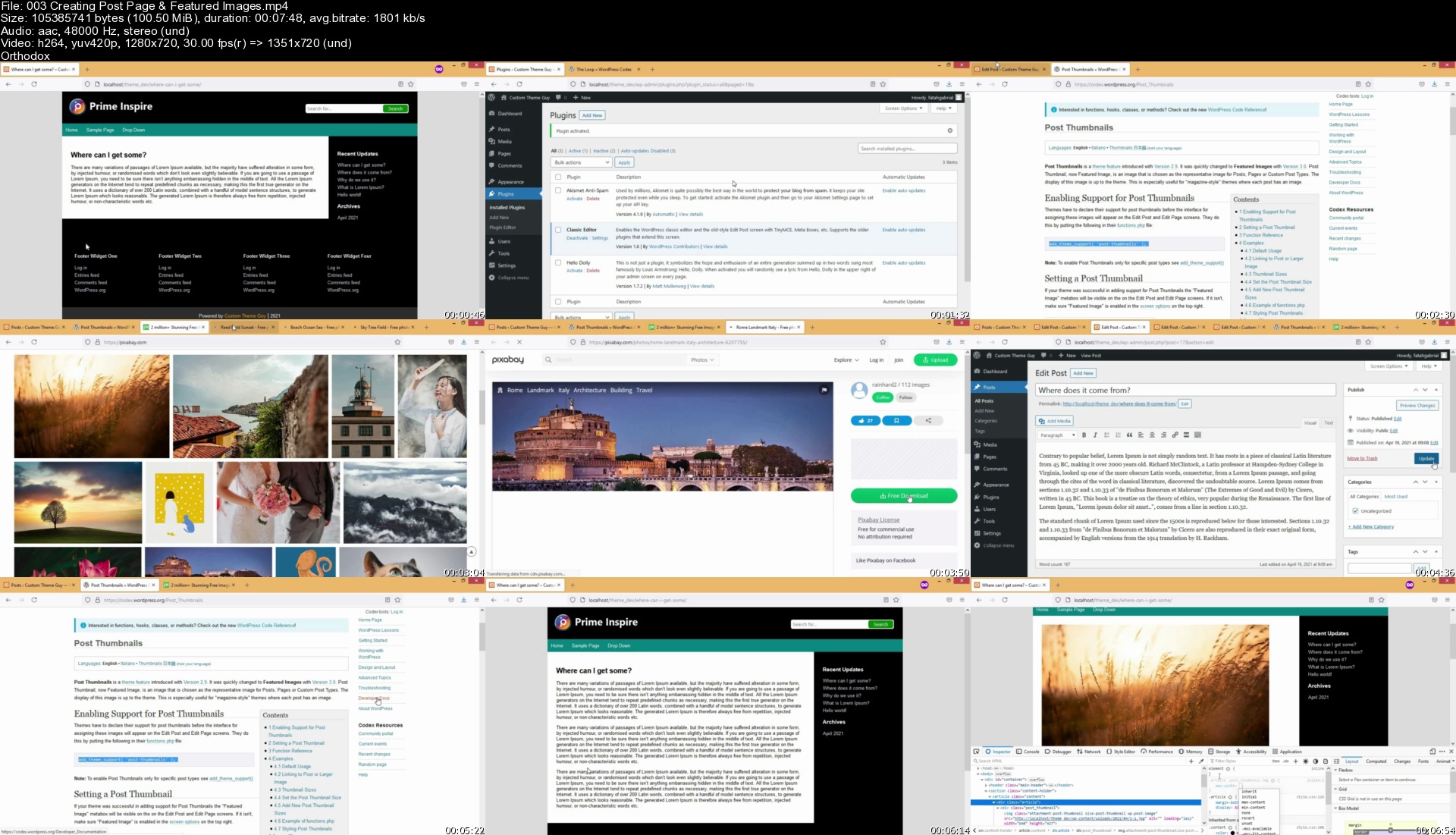
WordPress Theme Development Course with Bootstrap 5 (2021)

3kcuiyrwfqb9gdw4qm3a1ogkfc.jpg


WordPress Theme Development Course with Bootstrap 5 (2021)
MP4 | Video: h264, 1280x720 | Audio: AAC, 44.1 KHz, 2 Ch
Genre: eLearning | Language: English + srt | Duration: 81 lectures (8h 39m) | Size: 5.3 GB

Learn to Build the Fastest & Advanced Custom WordPress Theme from scratch with Bootstrap 5, ACF, & Custom Post Type

What you'll learn:
Build Custom WordPress Themes from Scratch
Integrated Bootstrap 5 within WordPress Theme
Optimize WordPress Theme for Maximum Speed & Load Time
Learn Different Type of Hooks, Filters and Actions
Learn to Add Custom Logo for WordPress Themes
Build Optimized Search Engine within for WordPress Site
Register & Integrate Bootstrap 5 Navigation System
Learn to Create Posts, Pages, Custom Page Templates
Create Custom Widgets for Your WordPress Theme
Learn to Add Advanced Custom Fields for Posts and Pages
Learn to Add Custom Post Type for Post and Pages

Requirements
You need to know basics of HTML5 & CSS3
You need to know basics of Bootstrap
You need to know basics of PHP & MySQL


Description
Hey guys welcome, first of all I would like to thank you guys for choosing my course "WordPress Theme Development with Bootstrap 5 (2021)". It's a great pleasure for me to teach this awesome course on how to build WordPress Themes from Scratch.

I have built this course keeping all beginners in mind, which make this course the most advanced way and the easiest way how you can build fast, secure and reliable WordPress Themes.

The primary focus on this course is to help you understand how WordPress themes work, and to help you build any kind of theme you like.

Before you can enroll for this course, you need to have some prior skills in PHP and MySQL, this will help you to easily build themes. You also need some prior skills in HTML5, CSS, CSS3 and some JavaScript and jQuery.

Along the course we will cover how you can build a simple plan first and get a basic and minimal theme setup. The first part of the course covers the basic stuffs.

In the second part is where the real fun begins, we will learn how we can create and setup a custom theme which works with Bootstrap 5 (Latest CSS framework).

We will create default pages, front pages, posts, comments, page templates and much more. We will also see how we can create custom Bootstrap 5 Menu's which will work flawlessly with our theme.

The we will get into adding Advanced custom fields to our Page templates, posts, and we will also earn how we can create custom post types.

With the help of ACF (Advanced Custom Fields), we will learn how we can add custom fields to our custom post types. We will use all the learning resources we can via the official WordPress website and build the most advanced WordPress theme.

The WordPress Theme which we build is going to be the fastest WordPress theme you have ever seen. I have made sure that we do not use any kind of customization plugins like Page builders and stuff, which will basically slow down our site. Instead we will build everything from scratch.

Finally, we will run a simple test via the GT Metrix to test out WordPress Theme, to check how fast can our WordPress Theme load in Real Time.

I hope you guys would enjoy the course, as much as I have enjoyed building this course for you. If you do have any questions or queries along the lessons, you can always post it in the Q and A section of the Course.

I will do my best to resolve any issues you face, or any queries you have as soon as possible. So let's get started. See you in the course.

Who this course is for
Anyone who wants to learn to Build Custom WordPress Themes
Anyone interested to learn to Speedup your WordPress Site
Anyone who wants to improve their skills in WordPress Theme Development
Anyone interested to learn WordPress Theme Development from Scratch

Homepage

003creatingpostpagefeirkyc.jpg


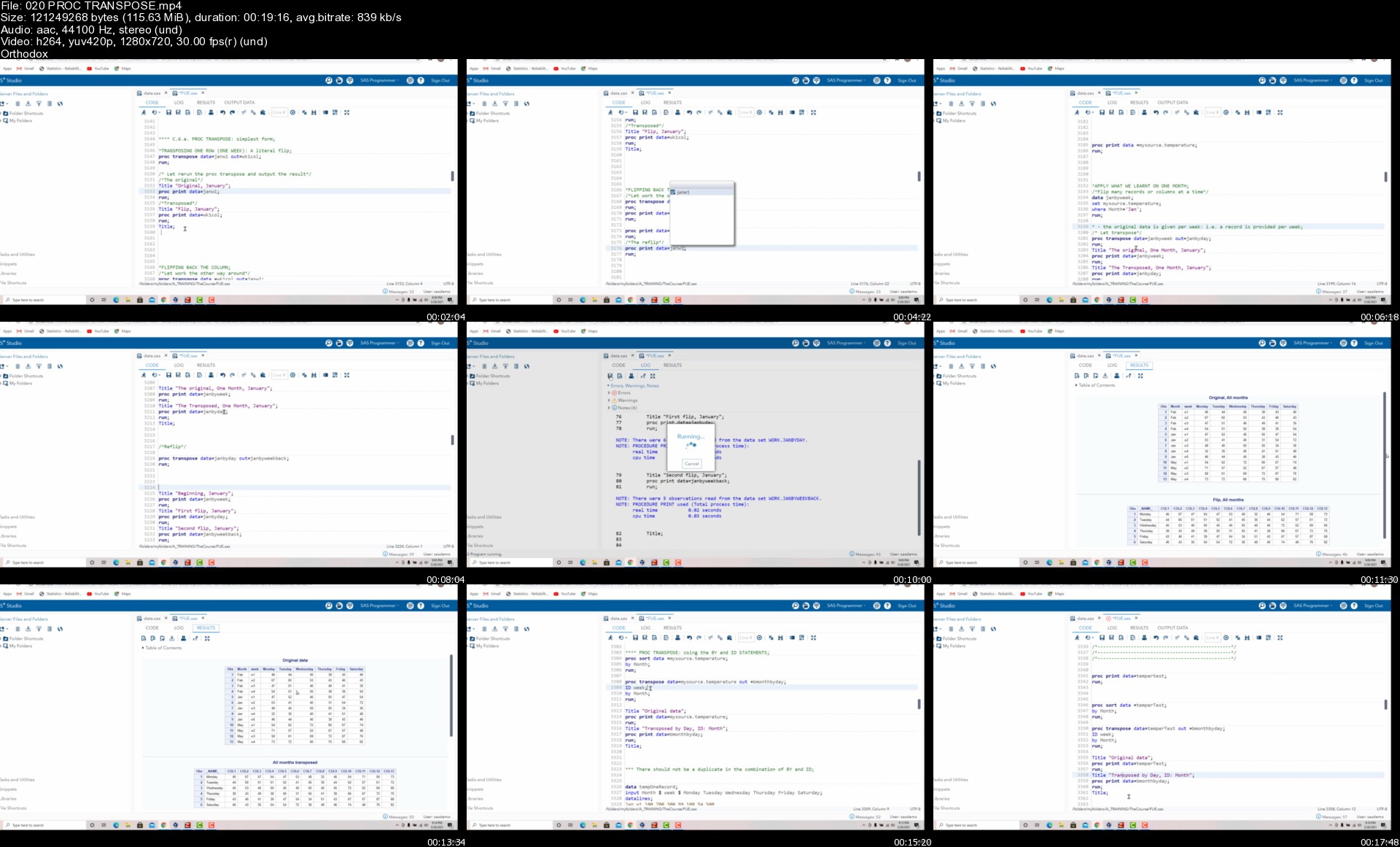
The Complete SAS Programming reference

qy0qk23elefd09xlx3odbumjsl.jpg


The Complete SAS Programming reference
Genre: eLearning | MP4 | Video: h264, 1280x720 | Audio: AAC, 44.1 KHz
Language: English | Size: 6.60 GB | Duration: 15h 29m

SAS Programming from A to Z


What you'll learn
Learn the main components that make up SAS Programming language including DATA STEP, PROC STEPS, PROC SQL, and MACROS.
Every step will be covered to help you become fully functional including: reading from various sources, manipulating, reporting, and exporting
DATA STEP for manipulating data: concatenating, merging, subsetting/supersetting, variable assignment, conditional/Loops, Arrays
PROC STEPS: descriptive stats (PROC MEANS, PROC FREQ), reporting (PROC TABULATE), transposing data, formatting data, Importing/Exporting, inferential stats
Essential features of PROC SQL: Aggregate functions, Filtering, Joins, subqueries, Concatenating, similarities and differences with Oracle/MS SQL
How SAS processes data behind the scene: PROGRAM DATA VECTOR (PDV)
Essential elements of MACROS: the HOW and WHY of macros creation, the HOW and WHY of macros quoting


Description
In designing this course, we tried to incorporate the current state of affairs (--- in the INTERNET AGE---) when it comes to learning a programming language, where the sheer amount of resources

at our disposal can be both a curse and a blessing. This is no less true for SAS programming. There are more than enough resources for anyone embarking

on the goal of learning or upgrading their skills in SAS to rely on: (1) SAS particularly extensive documentation about all of their products, (2) the dynamically active community of programmers and users and their contributions; (3) the no less important arrays of courses (paid or not) offered, (4) and even the ability to learn from people next to us. We believe that none of these options is either the definitive solution, nor worthless.

However, for a learner, especially those with no prior knowledge about the programming, making the right choices can be both stressful and/or costly.

So we designed this course in a way to allow you to see the forest from steps/far away or from above so to help you build a contextual self-awareness before you step into it. Once, you have a sense of how your achievement will look like when you get there, we are convinced that (1) the journey will be less stressful, (2) any prior investment you have made or any investment you will make on that front will add value to this one. If you follow through our offer and give it a real try, many of the resources, you have found confusing before will likely start to sound valuable for you. In order to balance the need to help you get a complete picture of SAS programming and not make your journey endless, we put a serious emphasis on the WHY: why SAS does something the way it does; we go to the essential elements of each SAS component, so that you learn more than just the mechanics of making it work when you need it.

For example, in preparing the lesson about MACROS, we made sure to answer the following questions, among other things:

- Why do we need macros?

- how do we create macros (the different methods)

- why do we need different methods to create macros? how do the different methods compare?

- and when it comes to these tools, we let you know upfront that there are limitations (don't even know why we find the need to repeat this to you--- everybody knows that there is no such thing as a perfect/bugs free tool when it comes to POGRAMMING). So expect errors and work to fix them; any error you manage to fix yourself is one more stair on your stairways to professional experience. Don't be afraid of carefully reading your log, then your code again before you throw the towel; the most elementary errors (simple syntax errors, typos...) are the ones that will stick with you the longest in your journey. We highlighted some of those limitations (ex.: macro quoting).

At a high level, here is what we cover:

Part I: SAS Programming components

Lesson 1: DATA STEP

Lesson 2: PROC STEPS

Lesson 3: PROC SQL

Lesson 4: MACROS

******

Part II: SAS Programming Structure

Lesson 1: STEPS and STATEMENTS

Lesson 2: More on DATA STEP

******

Part III: Reading data into SAS

Lesson 1: Reading from various sources

Lesson 2: Reading using INPUT STYLES (raw data)

******

Part IV: SAS Program Data Vector (PDV)

Lesson: PDV

As you can see, we cover most SAS components/programming elements. For each lesson, we start with a few basic notions and expand in level of difficulty throughout the lesson.

Whether you intend to prepare SAS based certification (without going through the usual painful memorization exercise) or list this language on your resume, we are convinced that this course will helps you achieve your goals. A lot of practice exercises were included; they are targeted mostly at people who are acquiring this course with certification (base SAS) in mind.


Who this course is for:
Beginners who are looking for one-stop-shop source to help them navigate the often confusing resources available out there
Intermediates who have made some efforts in learning SAS programming, but who still often struggle making sense of many SAS notions
Individuals who want to list SAS on their resumes confidently


Homepage

020proctransposeskmj3o.jpg


The Complete Python Network Programming Course for 2021

ia5gmb4r48gicodaoen7k0akzl.jpg


The Complete Python Network Programming Course for 2021
Genre: eLearning | MP4 | Video: h264, 1280x720 | Audio: AAC, 48.0 KHz
Language: English | Size: 11.4 GB | Duration: 11h 47m

Learn Network Programming with the Full Featured Python Libraries


What you'll learn
Python basics and applying them to real world projects.
Extract information to any web location with Python
Network and HTTP Programming
TCP/UDP/IP Networks and Interfaces
IPv4 and IPv6 Internet Protocols
Using Sockets to connect servers and clients
Web Scraping with BeautifulSoup and Scrapy
Extracting Emails and Email Protocols with POP3 and IMAP
Interacting with web APIs


Description
Welcome the the Python Networking Course. Here you'll learn how to use Python for network programming, extract data in different formats over the web and request and retrieve web resources. You'll adopt variety of protocols, and you'll modify systems over the web with DNS and IP networking. We will start from the very basics with python 3.9 installations and continue to the advanced networking topics.

We will cover socket programming and develop practical client-to-server applications with API . The applications generated code will be endorsed through current web frameworks.

The Python Networking course is a great reference for computer science students, system administrators and experienced Python developers who are looking to expand their knowledge with Python Network Programming libraries. Even though the course is perfect for advanced programmers, prior experience with Python is not recommended. There are two section covering all Python basics.

Python network programming provides a broad exploration of the basic principles of the network. Python supports network programming and provides plenty of key libraries. You will also learn how to use powerful GUI applications to monitor your traffic such as Wireshark. It as a diagnostic tool for protocol research and network programming. We will also see how we can interact with Python's Wireshark with the pyshark module.

Socket Programming introduces the basics of sockets and the principles of UDP and TCP through examples involving the socket module with the IPv4 and IPv6 protocols. We will also cover asynchronous and non-blocking programming and HTTPS and TLS for the secure transport of data.

HTTP network programming covers the HTTP protocol and core Python modules such as the standard urllib library and the REST API connection request package. It also covers HTTP authentication mechanisms and how we can manage them through the request module. The Application Programming Interface in Action covers how to use Python to extract data from the major data formats on the web: HTML, XML, and JSON. A

Reaching email data by exploring Python modules that facilitate communication with email servers using the SMTP, POP3, and IMAP protocols. Practical code examples in Python 3.7 will illustrate most of the concepts.

Web Scraping with BeautifulSoup and Scrapy covers how to extract content from a web page by automating the information retrieval process using scraping techniques to automatically retrieve data from the web. We will cover some of the more powerful tools that we can find in Python 3.9, with a focus on BeautifulSoup and Scrapy.


Who this course is for:
Beginner Python Developers
Software Test Engineers
Everyone with the Desire to Learn Python for Networking
Employees in Software Companies
Computer Science/ Software Engineering Students


Homepage

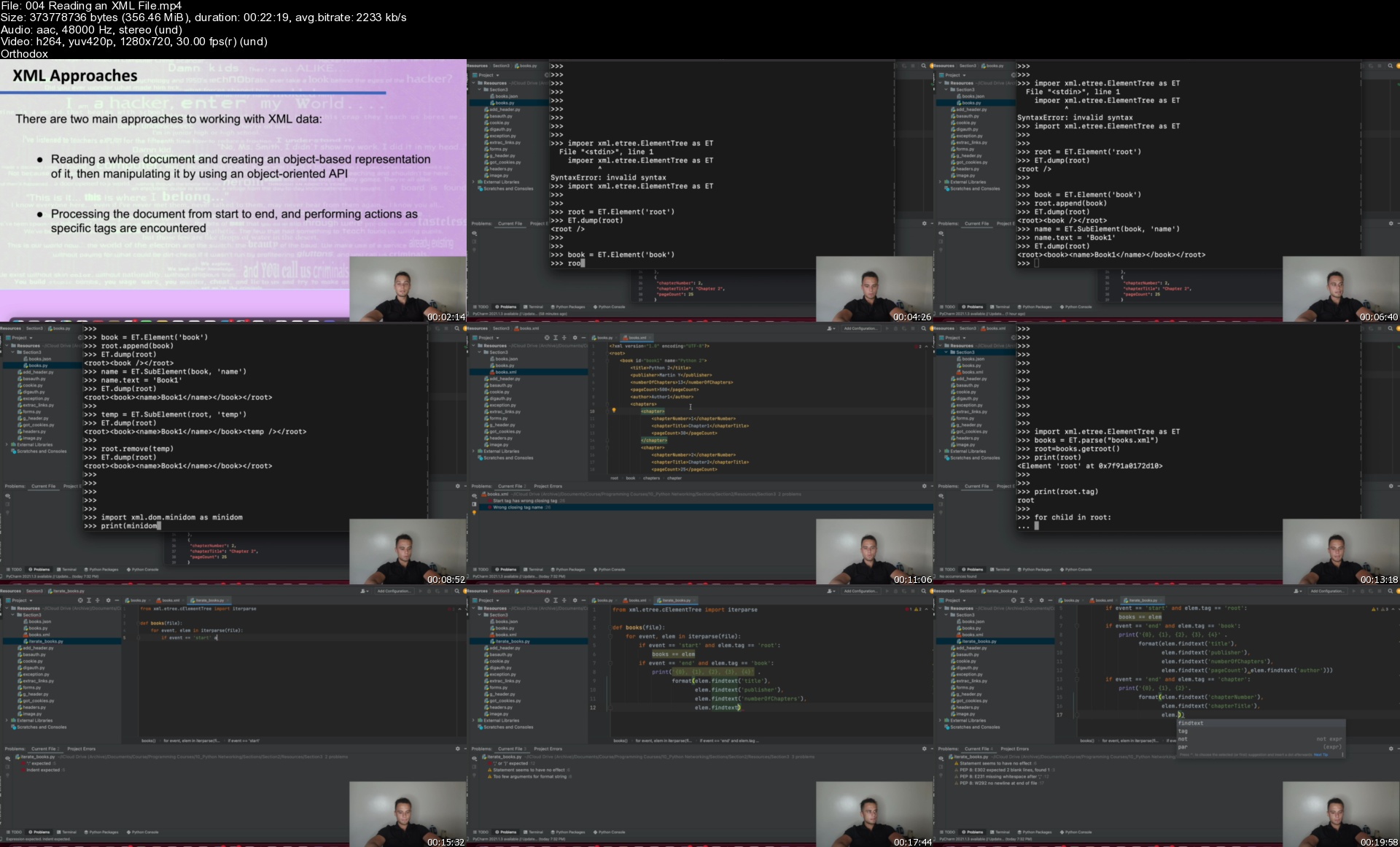
004readinganxmlfileslyjm0.jpg


The Complete iOS 14 / iOS 13 Developer Course - and SwiftUI

jibi3yiterfmc8cuf4yhudjj8o.jpg


The Complete iOS 14 / iOS 13 Developer Course - and SwiftUI
MP4 | Video: AVC 1920 x 1080 | Audio: AAC 48 Khz 2ch | Duration: 37:16:29 | 22.91 GB
Genre: eLearning | Language: English

Learn iOS 14 development with Swift 5 + Xcode 12. Build apps, games (Instagram, Foursquare, and more), and also discover SwiftUI

About This Video

One year web hosting from Eco Webhosting
Get 300$ worth of visuals to use in your app design
Pass and get CCA Certification participation for Swift Level 1 and Swift Level 2 for free
In Detail

Do you know why application development with Swift is gaining a huge popularity?

The reason being programming in Swift will bring down the cost of software development, the speed of implementation, and the possibility of further innovation.

In this course, you are going to write real-life example apps, games, clones, and much more. You will learn and practice all details of Swift 5 and iOS development during these projects and challenges and will also get introduced to SwiftUI.

The topics that will be covered are Swift 5 beginner to advanced techniques, layout, push notifications, Parse, Firebase, Cocoapods, OneSignal, maps, core data, JSON and API, Back4App servers, social media development, ML, augmented reality, games with Sprite Kit, SwiftUI, design essentials with Adobe XD, widgets, and app storage.

You are also going to work on projects such as Art Book, Catch the Kenny, Currency Converter, Travel Book, Foursquare Clone, Instagram Clone, Snapchat Clone, Angry Bird Clone, Image Recognition App, and so much more. We are going to cover both Firebase and Parse with their latest and most updated versions!

By the end of the course, you will be able to write and design a real app and upload it to the AppStore at the end of this course. When you finish this course, you will be able to understand how you can write any iOS app you want.

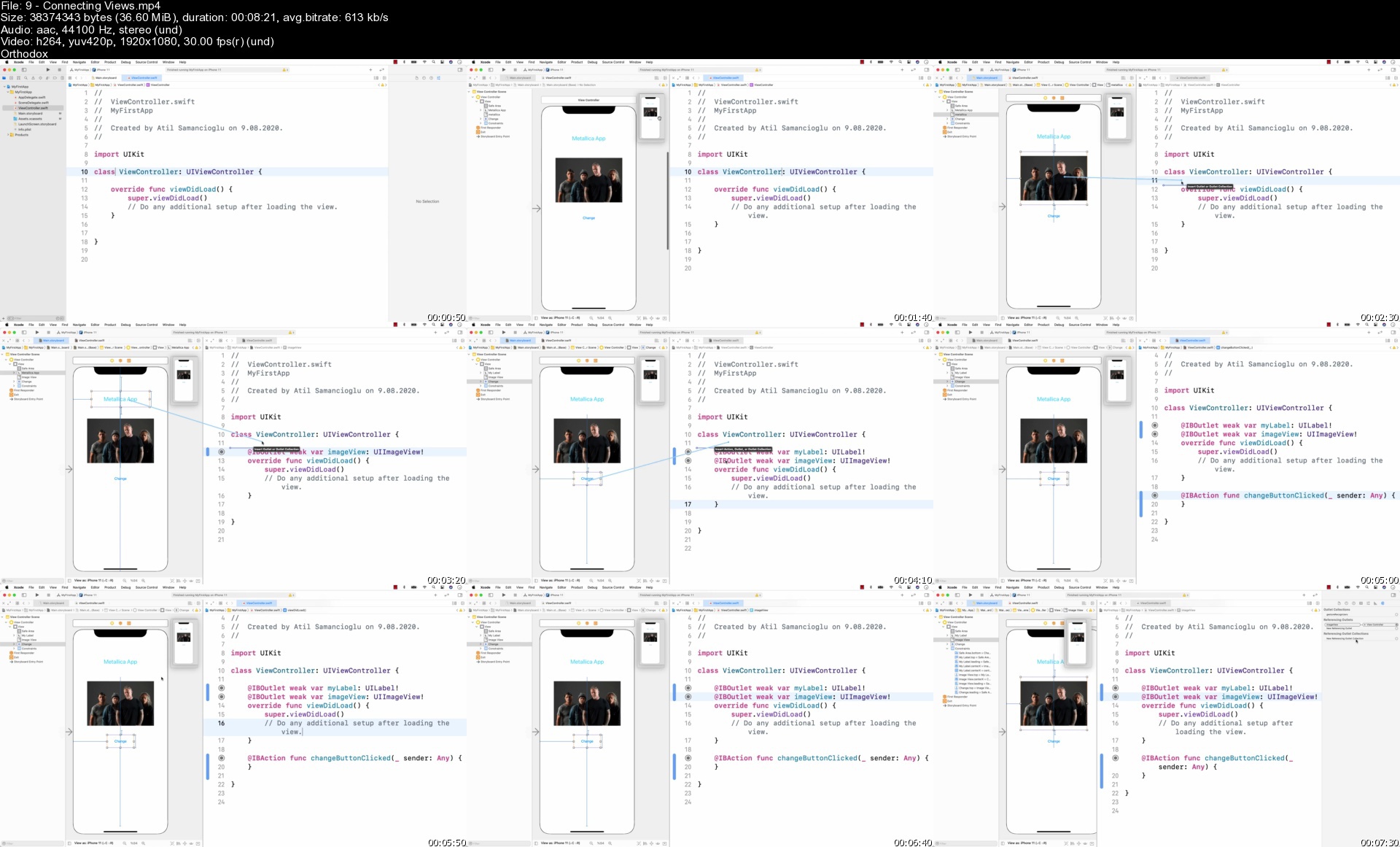
9connectingviewssuokci.jpg


The Art of Doing: Video Game Creation With Python and Pygame

v5bqab4kvvnjg3530ciiojfju5.jpg


The Art of Doing: Video Game Creation With Python and Pygame
MP4 | Video: h264, 1280x720 | Audio: AAC, 44.1 KHz, 2 Ch
Genre: eLearning | Language: English + srt | Duration: 91 lectures (17h 8m) | Size: 7.6 GB

From simple games using single images to complex games using classes and 100 sprites, this course will cover it all!

What you'll learn:
Fundamentals of the Pygame library and overall video game design.
The use of Classes and Inheritance to make complex code more organized and efficient.
How to create surfaces, blit images, render text, handle user input, and detect collisions.
How to work with sprites, sprite groups, and more robust collision methods.
How to create our own tile map and read a tile map to design a game level.
How to use 2 dimensional vectors to handle complex platformer motion such as running and jumping under gravity and friction.
How to add custom character animations using sprite sheets to help make our games really come to life.
How to use collision masks to have pixel perfect collisions when needed.
Create 7 awesome games in total! 4 that are very beginner friendly, 2 that are intermediate, and 1 that is advanced.

Requirements
Basic Python/computer science understanding.
Students should understand basic things like variables, lists, loops, and conditionals as I wont really spend time teaching these concepts but rather showing how to use them in larger projects.
In the second half of the course we will be switching to using classes extensively. I will spend some time reviewing and teaching the topics of classes and inheritance but prior knowledge may be helpful.


Description
Have you learned the fundamentals of Python and then asked yourself; what's next?

If so, consider taking this course which will start you on your journey to making your own playable, fun, and rather addicting video games using Python and the Pygame library.

So often, when students ask for advice they are told to, "Go build something" or "Get involved on a project" but have no idea what projects to build or get involved in.

This course will set you on your way! In this course I will walk you though, step by step, on how to to design the layout and the functionality of 7 unique, engaging, and most importantly, FUN games. By the end of this course, I promise that you will be coming up with your own game ideas and feel confident enough in your abilities to create them.

In my experience teaching computer science, students tend to flourish under the basics but hit a wall when we approach object oriented programming. The shift to using Classes as a way to structure code is difficult and often times students don't have enough exposure to meaningful examples of how to use Classes to help make complex code more efficient. I believe by the end of this course, you will understand how to use classes.

This course is designed in such a way that NO KNOWLEDGE OF CLASSES is needed to start! We will begin by learning the fundamentals of the Pygame library and video game design concepts as we move onto making 4 very fun arcade style games.

Feed the Dragon: Using your arrow keys, move the dragon up and down, trying to eat as many gold coins as you can. The more coins you eat, the faster you move!

Click the Clown: Using your mouse, click the clown on your screen as he moves in random directions. With each click, he moves faster and faster!

Snake: Relive the glory days of cellphone gaming circa 2000 with the classic Snake style game!

Burger Dog: Feed a hungry pup burgers that are falling from the sky. Time your speed boosts just right to catch those burgers that are just out of reach!

We will then review/teach concepts of classes and inheritance in Python as they are crucial tools to help us take our games to the next level using Sprites and Sprite Groups. We will spend some time learning more intermediate concepts such as how to use sprites, sprite groups, and various sprite collision detection methods as we move onto making 2 intermediate level games.

Monster Wrangler: A heroic Knight must wrangle various monsters on the screen. Be careful to collect the right type of monster; collect the wrong one and you will be punished!

Space Invaders: Who doesn't love space invaders???? Save civilization from wave after wave of impending aliens slowly (and then quickly) creeping across and down the screen in that classic Space Invader motion!

The third portion of this course will focus on more advanced topics such as creating a tile map and using/reading it to create more complex level designs, using 2 dimensional vectors to aid with more complex player movement such as running and jumping under forces of friction and gravity, and adding character animations to make our games really come to life! We will use these more advanced concepts as well as all of our previous knowledge to make one last game that will be a great final project for you to show off!

Zombie Knight: It's dark, spooky, and the zombies have risen!!! In this classic style platformer, you a trusty Knight must survive night after night of zombie attacks. Jump from platform to platform. Use portals to teleport across the level. Attack zombies with your trusty sword to kill them....BUT, you must remember; zombies can always rise from the dead! Finish them off for good by stomping on them once you kill them with your sword! Most importantly, collect valuable rubies and prevent more zombies from rising!

I'm really proud of this class. I really believe it not only is a great learning experience but it is also A LOT OF FUN! I hope you consider joining and taking part in the learning.

Who this course is for
Beginner Python developers curious about video game design and the Pygame library.
Beginner Python developers looking to strengthen their understanding of Classes and how they can be used in larger projects.
Beginner Python developers who have a love for classic style arcade games.

Homepage

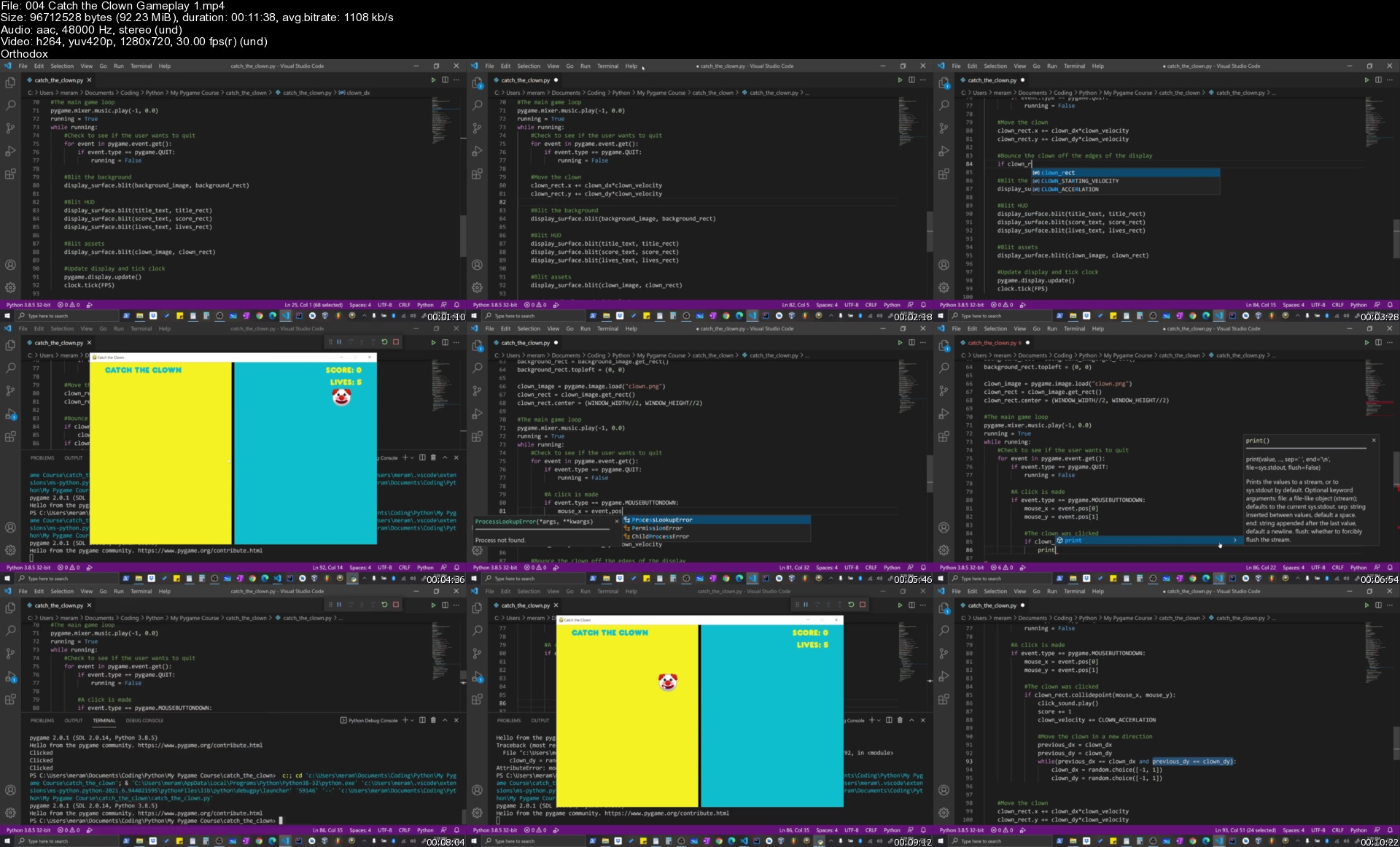
004catchtheclowngamepbek92.jpg


Systematically Attacking The Back

bvpbhw3v9yhzmjbdv6olm30j0s.jpg


Systematically Attacking The Back
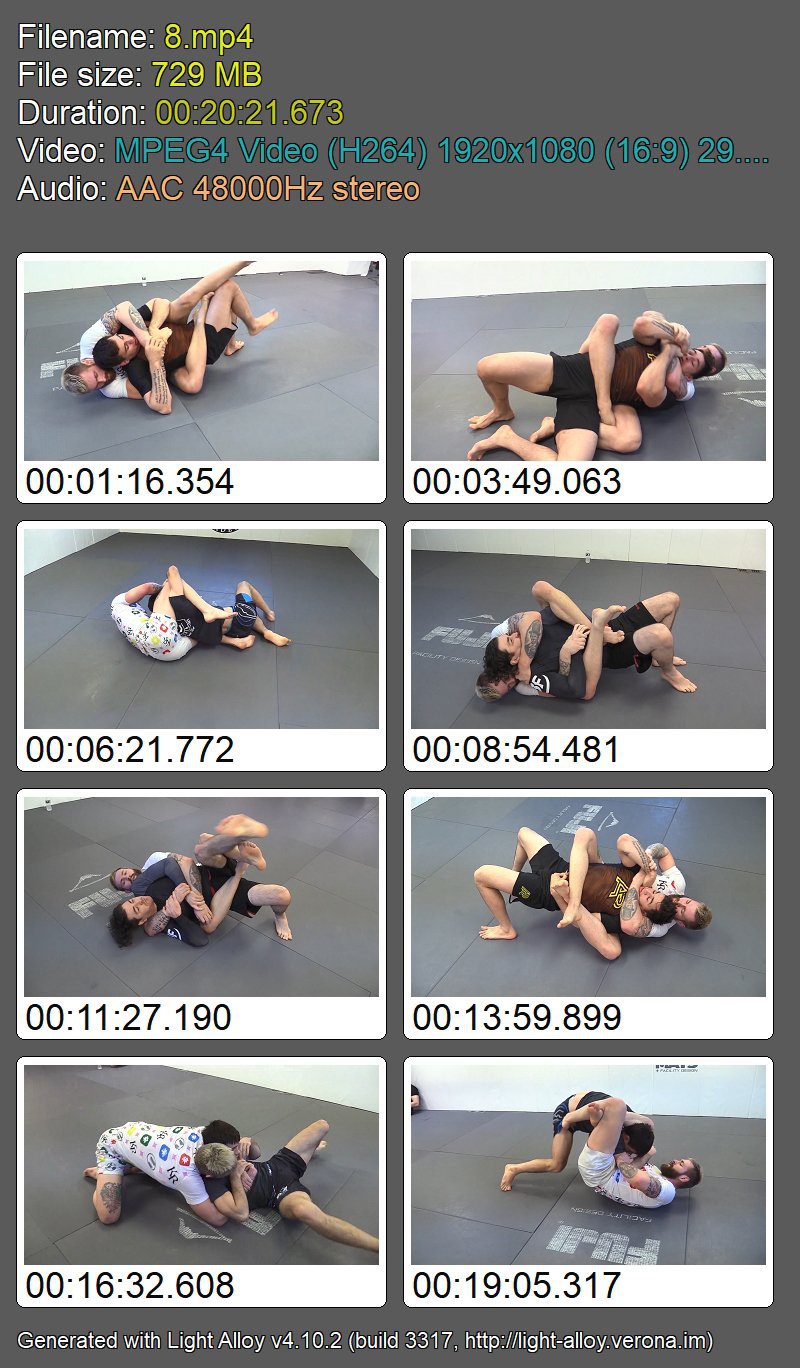
Gordon Ryan | Duration: 7h 31m | Video: H264 1920x1080 | Audio: AAC 48 kHz 2ch | 13,5 GB | Language: English

Gordon Ryan teaches every detail behind his signature submission system, including the rear naked strangle that he has used to submit some of the best on Earth.

• Watch Gordon break down gym footage to talk you through the techniques and system in real-time.
• Learn the back attack system developed together by Gordon and his coach, Professor John Danaher, to create Gordon's one-of-a-kind combos of strangles, arm locks, triangles, and more.
• Gordon is fresh off of ADCC 2019, where he won double gold and strangled five elite black belts with these exact details.
• Gordon Ryan has used this system nearly exclusively the last few years, including dozens of submission wins as a black belt.
• Know More. Win More.

Homepage

ale4lyejmku30qjmhlz3tzgkw7.jpg


Linkedin Learning Penetration Testing Essential Training-XQZT

228918856_01-01-build_a_foundation_in_penetration_testing_c.jpg


Linkedin Learning Penetration Testing Essential Training-XQZT | MKV | 454.85 MiB

278 kb/s 1280x720 | AAC 2 CH eng


NFO:
File List:

File: linkedin.learning.penetration.testing.essential.training-xqzt-sample.mkv
Size: 2403295 bytes (2.29 MiB), duration: 00:01:09, avg.bitrate: 279 kb/s
Audio: aac, 48000 Hz, stereo (eng)
Video: h264, yuv420p, 1280x720, 30.00 fps(r) (eng)
Subtitles: eng


Download ( Size: 454.85 MiB ):
Filehosts: Nitroflare, Rapidgator


oHeopzn.png

1 Link/s
C38023318B.png


5hSo1Ay.png

1 Link/s
CC3DB1D616.png


Linkedin Learning Java Exception Handling-XQZT

228920421_04-04-solution_handle_an_arithmeticexception_c.jpg


Linkedin Learning Java Exception Handling-XQZT | MKV | 202.70 MiB

701 kb/s 1280x800 | AAC 160 kb/s 2 CH eng


NFO:
File List:

File: 01.01-why_bother_with_exception_handling.mkv
Size: 4310216 bytes (4.11 MiB), duration: 00:00:49, avg.bitrate: 704 kb/s
Audio: aac, 48000 Hz, stereo (eng)
Video: h264, yuv420p, 1280x800, 30.00 fps(r) (eng)
Subtitles: eng


Download ( Size: 202.70 MiB ):
Filehosts: Nitroflare, Rapidgator


oHeopzn.png

1 Link/s
F650AFA2A8.png


5hSo1Ay.png

1 Link/s
576F1EDEBA.png


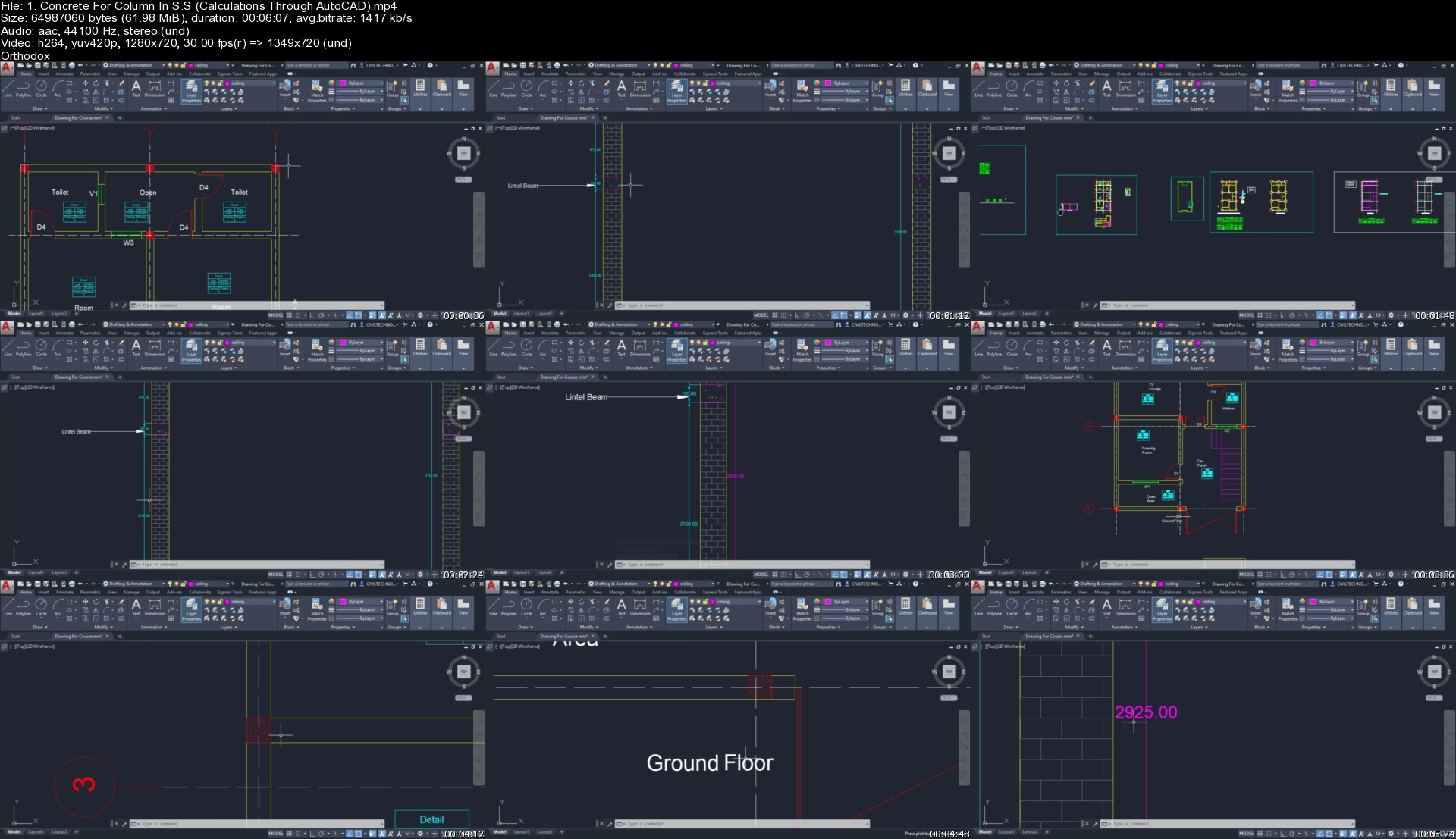
Quantity Surveying Building Estimation With Cad And Excel (updated 6/2021)

kfqxkrylvvmcwnomertvxypjz3.jpg


Quantity Surveying Building Estimation With Cad And Excel (updated 6/2021)
MP4 | Video: h264, 1280x720 | Audio: AAC, 44.1 KHz
Language: English | Size: 13.0 GB | Duration: 24h 49m


What you'll learn
Estimation Of Complete Project Through Auto-cad And Excel
Estimation Of Complete Project Through PDF Files/Hard Copy
Bar bending Schedule Of Foundation,Columns,Beams,Slab,Stairs, In Excel
How to Find Material Like Cement,Sand,Coarse Aggregates,Bricks
Complete Material Statement In Excel
Rate Analysis For Different Works Like ,Excavation, P.C.C, R.C.C, Masonry, Tiles, Plaster, Paint In Excel
Will Learn How to Create B.O.Q Of Project
Mode Of Payments To Contractor
Interim Payment In Excel
Microsoft Excel For Beginners
Auto-cad 2020 For Beginners

Requirements
• To have the Auto Cad And M.S Excel installed in your computer.
• To have the minimum understanding for Civil Quantity/Estimation
• To have a minimum understanding of construction processes.


Description
Complete Updated Course Last Update 06/2021

Welcome to Quantity Surveying /Building Estimation online training course. it is focused on practical application of Estimation using Auto Cad & M.S Excel

This course is a field oriented course and contains real examples and a full fledge real project for better understanding

After successful completion of this course, you will be able to Estimate Any Building Project (From Foundation To Finishing)

Major Topics That We Will Learn In This Course:

Quantity Of Substructure (Isolated Footing) Through AutoCAD

Excavation Quantity

Formwork Calculations

Concrete Quantity

Quantity Of Sloped Footing Through AutoCAD

Excavation Quantity

Formwork Calculations

Concrete Quantity

Quantity Of Raft Foundation Through AutoCAD

Excavation Quantity

Formwork Calculations

Concrete Quantity

Quantity Of Different Items In Superstructure Through AutoCAD

Column In S.S (Formwork, Concrete)

Grade Beams (Formwork ,Concrete )

Slab On Grade (Formwork , Concrete)

Lintel And Top Beam (Formwork , Concrete)

Slab (Concrete And Formwork)

Brick Works

Plaster Works

Tile And Marble Works

Paint Works

Quantity Of Substructure (Isolated Footing) Manual Calculations PDF File Or Hard Copy Of Drawings

Excavation Quantity

Formwork Calculations

Concrete Quantity

Quantity Of Different Items In Superstructure Through PDF File, Manual Calculations

Column In S.S (Formwork ,Concrete)

Grade Beams (Formwork ,Concrete )

Slab On Grade (Formwork , Concrete)

Lintel And Top Beam (Formwork , Concrete)

Slab (Concrete And Formwork)

Brick Works

Plaster Works

Tile And Marble Works

Paint Works

Bar bending Schedule:

Bar-bending Schedule Of Isolated Footing

Bar-Bending Schedule Of Raft Foundation

Bar-bending Schedule Of Column Necks And Columns

Bar-bending Schedule Of Beams

Bar-bending Schedule Of Stairs

Bar Bending Schedule Of Slab

Bar-Bending Schedule Of Two Way Slab

Rate Analysis Of Different Works:

Rate Analysis For Excavation

Rate Analysis For Plain Cement Concrete (P.C.C)

Rate Analysis For Reinforcement Concrete (Column Beam And Slab)

Rate Analysis For Masonry Work

Rate Analysis For Plaster Work

Rate Analysis For Tile Work

Rate Analysis For Paint Work

Material Statement :

Material Statement In Excel

Bill Of Quantity (B.O.Q)

Bill Of Quantity For A Project According To CSI Codes

Mode Of Payments To Contractor

Interim Payment

Advance Payment

Secured Advance

Petty Advance

Mobilization Advance

Procedure To Create Interim Payment In Excel From Scratch.

Excel Training For Beginners

As Excel Is Important For This Course So I Have Add Basic Training And Formulas For Those Who Are Beginners In Excel

Auto-cad Training

As Auto-cad Is Also Essential For This Course So I Have Also Included Auto-cad Training For Those Who Are Beginner In Auto-cad


Who this course is for:
• Site Engineers
• Civil Engineers
• Fresh Engineers.
• Quantity Surveyors
• Those who wants to pursue a career as a Quantity Surveyor/ Estimator
• Civil Engineering Students


Homepage

1.concreteforcolumnino1kqj.jpg


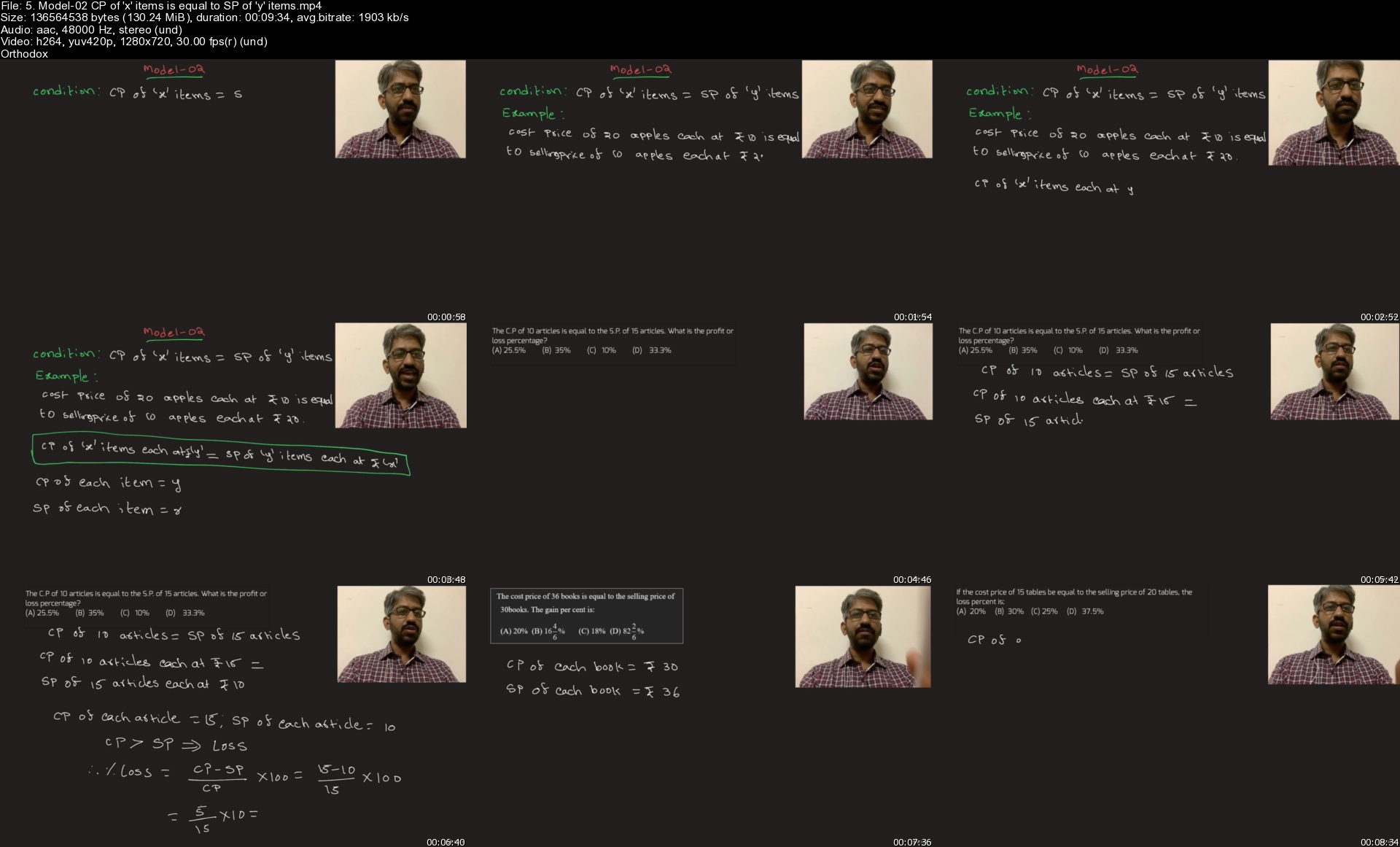
Udemy - Quantitative Aptitude for competitive Examinations

wv08hnr7h8ahaue0h1brokkjsy.jpg


Udemy - Quantitative Aptitude for competitive Examinations
Created by Exam Ekalavya, Uday | Last updated 6/2021
Duration: 25h 43m | 12 sections | 158 lectures | Video: 1280x720, 44 KHz | 13.8 GB
Genre: eLearning | Language: English + Sub

General Aptitude for SSC exams, RRB-NTPC, IBPS clerk exams, Campus placements. Suitable for TCS-NQT also!


What you'll learn
Quantitative aptitude useful for all competitive examinations
Analytical approach with good number of tips and tricks
More than 600 solved examples with detailed explanations

Requirements
Basic mathematics

Description
Salient features of the course:
1. Organization of chapters into models.
2. In depth discussion of every topic from basics.
3. Concept explanation with simple examples.
4. More than 400 solved examples
5.Tips and tricks with logical explanation.
6. Basic level to advanced level solved problems.
\n
Course Objective:
The course "Quantitative Aptitude for Competitive Examinations"is unique in concept coverage and explanation of every topic. We believe that along with understanding a concept, practice plays a major role in competitive examinations, campus placement exams and prepared this tailor made practice oriented course on aptitude.
\n
About the teacher:
Mr. Udaya Bhaskar is an experienced and qualified faculty with over 16 years of university level teaching experience. He trained thousands of students across the country, in both technical and non-technical competitive examinations. His teaching experience and analytical ability is reflected in this course.
\n
Topics covered in this course:
1. Number System
2. Algebraic simplification
3. LCM and HCF
4. Averages
5. Simple Interest
6. Compound Interest
7. Ratios and Proportions
8. Allegations and Mixtures
9. Profit and loss
10. Percentages
11. Time and work
12. Pipes and cistern
13. Time and distance
14. Boats and streams
\n
Learning outcomes:
On successful completion of the course, the student masters arithmetic aptitude with analytical approach and sufficient practice in order to have a greater confidence level to face any competitive examination.

Who this course is for:Aspirants of Bank jobs, Government Jobs, CRT(Campus Placements), GATE, CAT and all other competitive exams

5.model02cpofxitemsisv0jo4.jpg


Zurück
Oben Unten