• Regeln für den Video-Bereich:

    In den Börsenbereich gehören nur Angebote die bereits den Allgemeinen Regeln entsprechen.

    Einteilung

    - Folgende Formate gehören in die angegeben Bereiche:
    - Filme: Encodierte Filme von BluRay, DVD, R5, TV, Screener sowie Telesyncs im Format DivX, XviD und x264.
    - DVD: Filme im Format DVD5, DVD9 und HD2DVD.
    - HD: Encodierte Filme mit der Auflösung 720p oder darüber von BluRay, DVD, R5, TV, Screener sowie Telesyncs im Format x264.
    - 3D: Encodierte Filme von BluRay, die in einem 3D Format vorliegen. Dies gilt auch für Dokus, Animation usw.
    - Serien: Cartoon/Zeichentrick, Anime, Tutorials, Dokumentationen, Konzerte/Musik, Sonstiges sind demnach in die entsprechenden Bereiche einzuordnen, auch wenn sie beispielsweise im High Definition-Format oder als DVD5/DVD9/HD2DVD vorliegen. Ausnahme 3D.
    - Bereich Englisch: Englische Releases gehören immer in diesen Bereich.
    - Bereich Talk: Der Bereich, in dem über die Releases diskutiert werden kann, darf, soll und erwünscht ist.


    Angebot/Beitrag erstellen

    - Ein Beitrag darf erst dann erstellt werden, wenn der Upload bei mindestens einem OCH komplett ist. Platzhalter sind untersagt.
    - Bei einem Scenerelease hat der Threadtitel ausschließlich aus dem originalen, unveränderten Releasenamen zu bestehen. Es dürfen keine Veränderungen wie z.B. Sterne, kleine Buchstaben o.ä. vorgenommen werden. Ausnahme Serienbörse:
    - Bei einem Sammelthread für eine Staffel entfällt aus dem Releasename natürlich der Name der Folge. Beispiel: Die Simpsons S21 German DVDRip XviD - ITG
    - Dementsprechend sind also u.a. verboten: Erweiterungen wie "Tipp", "empfehlenswert", "only", "reup", usw. / jegliche andere Zusatzinformation oder Ergänzung, welche nicht in obiger Beschreibung zu finden ist.

    Aufbau des Angebots und Threadtitel

    Der Titel nach folgendem Muster erstellt zu werden. <Name> [3D] [Staffel] [German] <Jahr> <Tonspur> [DL] [Auflösung] <Quelle> <Codec> - <Group>
    Beispiel: The Dark Knight German 2008 AC3 DVDRip XviD - iND
    Beispiel: The Dark Knight 2008 DTS DL BDRip x264 - iND
    Beispiel: The Dark Knight 2008 AC3 DL BDRip XviD - iND
    Beispiel: The Dark Knight German 2008 AC3 720p BluRay x264 iND
    Beispiel: The Dark Knight 2008 DTS DL 1080p BluRay x264 iND
    Beispiel: Die Simpsons S01 German AC3 DVDRip XviD iND
    Beispiel: Die Simpsons S20 German AC3 720p BluRay x264 iND
    Beispiel: Sword Art Online II Ger Sub 2014 AAC 1080p WEBRip x264 - peppermint
    Entsprechend sind also u.a. verboten: Sonderzeichen wie Klammern, Sterne, Ausrufezeichen, Unterstriche, Anführungszeichen / Erweiterungen wie "Tipp", "empfehlenswert", "only", "reup", usw. / jegliche andere Zusatzinformation oder Ergänzung, welche nicht in obiger Beschreibung zu finden ist
    Ausnahmen hiervon können in den Bereichen geregelt sein.

    Die Beiträge sollen wie folgt aufgebaut werden:
    Überschrift entspricht dem Threadtitel
    Cover
    kurze Inhaltsbeschreibung
    Format, Größe, Dauer sind gut lesbar für Downloader außerhalb des Spoilers zu vermerken
    Nfo sind immer Anzugeben und selbige immer im Spoiler in Textform.
    Sind keine Nfo vorhanden z.B. Eigenpublikationen, sind im Spoiler folgende Dateiinformationen zusätzlich anzugeben :
    Quelle
    Video (Auflösung und Bitrate)
    Ton (Sprache, Format und Bitrate der einzelnen Spuren)
    Untertitel (sofern vorhanden)
    Hosterangabe in Textform außerhalb eines Spoiler mit allen enthaltenen Hostern.
    Bei SD kann auf diese zusätzlichen Dateiinformationen verzichtet werden.

    Alle benötigten Passwörter sind, sofern vorhanden, in Textform im Angebot anzugeben.
    Spoiler im Spoiler mit Kommentaren :"Schon Bedankt?" sind unerwünscht.


    Releases

    - Sind Retail-Release verfügbar, sind alle anderen Variationen untersagt. Ausnahmen: Alle deutschen Retail-Release sind CUT, in diesem Fall sind dubbed UNCUT-Release zulässig.
    - Im Serien-Bereich gilt speziell: Wenn ein Retail vor Abschluss einer laufenden Staffel erscheint, darf diese Staffel noch zu Ende gebracht werden.62
    - Gleiche Releases sind unbedingt zusammenzufassen. Das bedeutet, es ist zwingend erforderlich, vor dem Erstellen eines Themas per Suchfunktion zu überprüfen, ob bereits ein Beitrag mit demselben Release besteht. Ist dies der Fall, ist der bereits vorhandene Beitrag zu verwenden.
    - P2P und Scene Releases dürfen nicht verändert oder gar unter einem iND Tag eingestellt werden.


    Support, Diskussionen und Suche

    - Supportanfragen sind entweder per PN oder im Bereich Talk zu stellen.
    - Diskussionen und Bewertungen sind im Talk Bereich zu führen. Fragen an die Uploader haben ausschließlich via PN zu erfolgen, und sind in den Angeboten untersagt.
    - Anfragen zu Upload-Wünschen sind nur im Bereich Suche Video erlaubt. Antworten dürfen nur auf Angebote von MyBoerse.bz verlinkt werden.


    Verbote

    - Untersagt sind mehrere Formate in einem einzigen Angebotsthread, wie beispielsweise das gleichzeitige Anbieten von DivX/XviD, 720p und 1080p in einem Thread. Pro Format, Release und Auflösung ist ein eigener Thread zu eröffnen.
    - Grundsätzlich ebenso verboten sind Dupes. Uploader haben sich an geeigneter Stelle darüber zu informieren, ob es sich bei einem Release um ein Dupe handelt.
    - Gefakte, nur teilweise lauffähige oder unvollständige Angebote sind untersagt. Dies gilt auch für eigene Publikationen, die augenscheinlich nicht selbst von z.B. einer DVD gerippt wurden. Laufende Serien, bei denen noch nicht alle Folgen verfügbar sind, dürfen erstellt und regelmäßig geupdatet werden.
    - Untersagt sind Angebote, welche nur und ausschließlich in einer anderen Sprache als deutsch oder englisch vorliegen. Ausnahmen sind VORHER mit den Moderatoren zu klären.


    Verstoß gegen die Regeln

    - Angebote oder Beiträge, die gegen die Forenregeln verstoßen, sind über den "Melden"-Button im Beitrag zu melden.
  • Bitte registriere dich zunächst um Beiträge zu verfassen und externe Links aufzurufen.

++ Premium IPTV ++ 7000 Live Sender ++ UHD Qualität ++ Mediathek mit 18.000 Inhalten ++


VenneTV


Englische Tutorials

Packt The Complete Intermediate Android Masterclass-XQZT

219052926_07-04-showing_boards_on_recyclerview-part_3_c.jpg


Packt The Complete Intermediate Android Masterclass-XQZT | MKV | 6.08 GiB

835 kb/s 1920x1080 | AAC 2 CH eng


NFO:
File List:

File: packt.the.complete.intermediate.android.masterclass-xqzt-sample.mkv
Size: 5183359 bytes (4.94 MiB), duration: 00:00:49, avg.bitrate: 846 kb/s
Audio: aac, 48000 Hz, stereo (eng)
Video: h264, yuv420p, 1920x1080, 30.00 fps(r) (eng)


Download ( Size: 6.08 GiB ):
Filehosts: Nitroflare, Rapidgator


oHeopzn.png

4 Link/s
2157026DD9.png


5hSo1Ay.png

4 Link/s
A474DEB8B6.png


Linkedin Learning Learning Data Analytics Part 2 Extending and Applying Core Knowledge-XQZT

219057421_05-04-visualizing_pivot_tables_c.jpg


Linkedin Learning Learning Data Analytics Part 2 Extending and Applying Core Knowledge-XQZT | MKV | 756.69 MiB

543 kb/s 1280x720 | AAC 2 CH eng


NFO:
File List:

File: linkedin.learning.learning.data.analytics.part.2.extending.and.applying.core.knowledge-xqzt-sample.mkv
Size: 4684032 bytes (4.47 MiB), duration: 00:01:09, avg.bitrate: 543 kb/s
Audio: aac, 48000 Hz, stereo (eng)
Video: h264, yuv420p, 1280x720, 30.00 fps(r) (eng)
Subtitles: eng


Download ( Size: 756.69 MiB ):
Filehosts: Nitroflare, Rapidgator


oHeopzn.png

1 Link/s
C08EF86EA5.png


5hSo1Ay.png

1 Link/s
45D5548AD7.png


Packt Lean Management Just-In-Time Training and Certification-XQZT

219060902_08-03-what_are_the_disadvantages_of_just-in-time_system_c.jpg


Packt Lean Management Just-In-Time Training and Certification-XQZT | MKV | 1.49 GiB

791 kb/s 1280x720 | AAC 2 CH eng


NFO:
File List:

File: packt.lean.management.just-in-time.training.and.certification-xqzt-sample.mkv
Size: 6054931 bytes (5.77 MiB), duration: 00:01:01, avg.bitrate: 794 kb/s
Audio: aac, 48000 Hz, stereo (eng)
Video: h264, yuv420p, 1280x720, 25.00 fps(r) (eng)


Download ( Size: 1.49 GiB ):
Filehosts: Nitroflare, Rapidgator


oHeopzn.png

2 Link/s
41F08AB11D.png


5hSo1Ay.png

2 Link/s
6A8181B01F.png


Watercolor Painting Course with Aaron Blaise Gift

r7sdlfsmtqgeglpr40zly6akat.jpg


Watercolor Painting Course with Aaron Blaise Gift
MP4 | Video: h264, yuv420p, 1920x1080 | Audio: aac, 48000 Hz | Duration: 16h 12min | File Size: 6.35 GB
Genre: eLearning | Language: English

Learn how to paint in water colors with Aaron Blaise! In this BRAND NEW course, animator and artist Aaron Blaise ("Brother Bear", "Aladdin", "The Lion King") takes you through his approach to one of his favorite traditional art mediums. Aaron has been painting in watercolor for over 40 Years! Watch as Aaron creates over a dozen original images right in front of you and explains his process. He takes it from the very beginning and teaches you the way he was taught. Then guides you each step of the way.

Topics include:

Getting Started with Watercolor
Different paints, papers & brushes - And when to use them.
Studio Painting
Using the "white" of the paper.
Color Theory & Approach
Glazing & Wash Techniques
Using Frisket
Basic & Advanced Tips
& Much More!
PLUS you'll also get a bundle of bonus material including:
High-Res Copies of every image that Aaron creates in the course.
Reference Photos

Aaron has an engaging, entertaining and approachable teaching style that people really love. If you want to know how to paint with watercolors. This is the course for you! Whether you are a beginner or an experienced artist these fun and engaging videos will teach you something new!

Homepage

vid02supplylists9pkm8.jpg


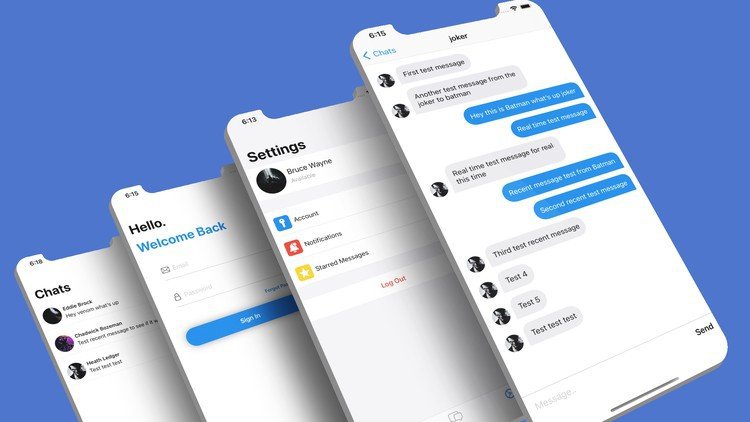
SwiftUI Chat App | MVVM | Cloud Firestore | iOS 14 | Swift 5

zlvalbhct5dcmy1fvphkclejjj.jpg


SwiftUI Chat App | MVVM | Cloud Firestore | iOS 14 | Swift 5
MP4 | Video: h264, 1280x720 | Audio: AAC, 44.1 KHz, 2 Ch
Genre: eLearning | Language: English + srt | Duration: 51 lectures (10h 1m) | Size: 9.8 GB

Real Time Chat Application Like WhatsApp Built With SwiftUI & Cloud Firestore

What you'll learn:
Build A Real Time Chat App With SwiftUI
MVVM Architecture
User Status Updates
Firebase Authentication

Requirements
Some knowledge of Xcode and Swift is preferred, but not required
Mac Computer


Description
What are we building?

In this course, you will learn how to build a real time chat application using Firestore and SwiftUI, ready to be published on the App Store. This app includes features like private messaging, user status updates, user authentication and so much more!

Throughout the process, you will develop high level programming, app design and app development skills. We will go all the way from the basics of SwiftUI and iOS development, to advanced techniques that will teach you the skills you need to build production ready, scalable mobile applications.

Why take this course?

Learning advanced development skills should be taught using real world examples. This course will teach you how to build a fully functional messaging app, that's completely ready to integrate into any one of your iOS Applications. You will be learning advanced front and backend development skills, from a real life professional developer. You will learn how to code like a pro, writing clean, scalable and maintainable code. This also makes for a great project to add to your portfolio, which you can use to show off to potential employers if you're trying to become a pro.

Prior Experience?

Some programming and basic Xcode experience is preferred. The course will move a little fast if you're a complete beginner, but you will pick things up along the way.

What will you learn?

How to build a real time messaging app with SwiftUI & Cloud Firestore

Private messaging & user status updates

How to Implement Model View ViewModel (MVVM) architecture

User Authentication With Firebase & SwiftUI

How to build a complex User Interface with SwiftUI

Advanced level back end engineering

How to communicate with a database (read/write)

How to monitor events in a database

How to upload images to Firebase

How to structure data for optimum performance

How to programmatically construct views and controllers

How to parse incoming JSON data from database

Swift Package Manager

How to implement custom subclasses for clean and reusable code

Who this course is for
All levels of iOS developers

Homepage

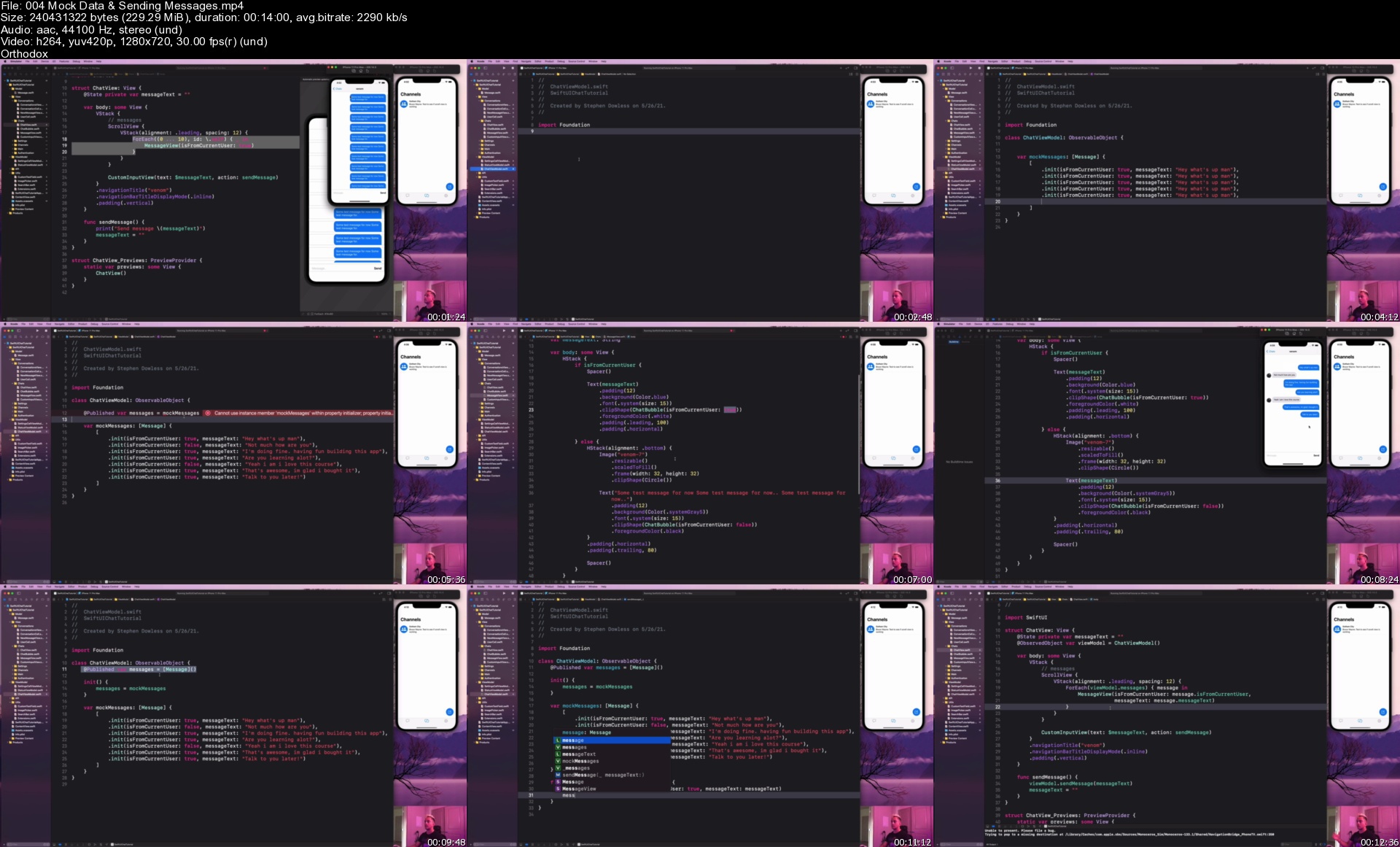
004mockdatasendingmesyljsp.jpg


Learn Machine Learning And Data Science With Python In 2021

jwizq7xkqqivb11rrxvqflikbq.jpg


Learn Machine Learning And Data Science With Python In 2021
Genre: eLearning | MP4 | Video: h264, 1280x720 | Audio: AAC, 48.0 KHz
Language: English | Size: 5.51 GB | Duration: 15h 38m

Learn Importance of Machine Learning With All Libraries Like Numpy, Pandas, Matplotlib, Sklearn


What you'll learn
Learn About Machine Learning Algorithms
Improve your data science and coding resume
Create robust data science medk


Description
ecause of new computing technologies, machine learning today is not like machine learning of the past. It was born from pattern recognition and the theory that computers can learn without being programmed to perform specific tasks; researchers interested in artificial intelligence wanted to see if computers could learn from data. The iterative aspect of machine learning is important because as models are exposed to new data, they are able to independently adapt. They learn from previous computations to produce reliable, repeatable decisions and results. It's a science that's not new - but one that has gained fresh momentum.

While many machine learning algorithms have been around for a long time, the ability to automatically apply complex mathematical calculations to big data - over and over, faster and faster - is a recent development. Here are a few widely publicized examples of machine learning applications you may be familiar with:

The heavily hyped, self-driving Google car? The essence of machine learning.

Online recommendation offers such as those from Amazon and Netflix? Machine learning applications for everyday life.

Knowing what customers are saying about you on Twitter? Machine learning combined with linguistic rule creation.

Fraud detection? One of the more obvious, important uses in our world today.


Who this course is for:


Homepage

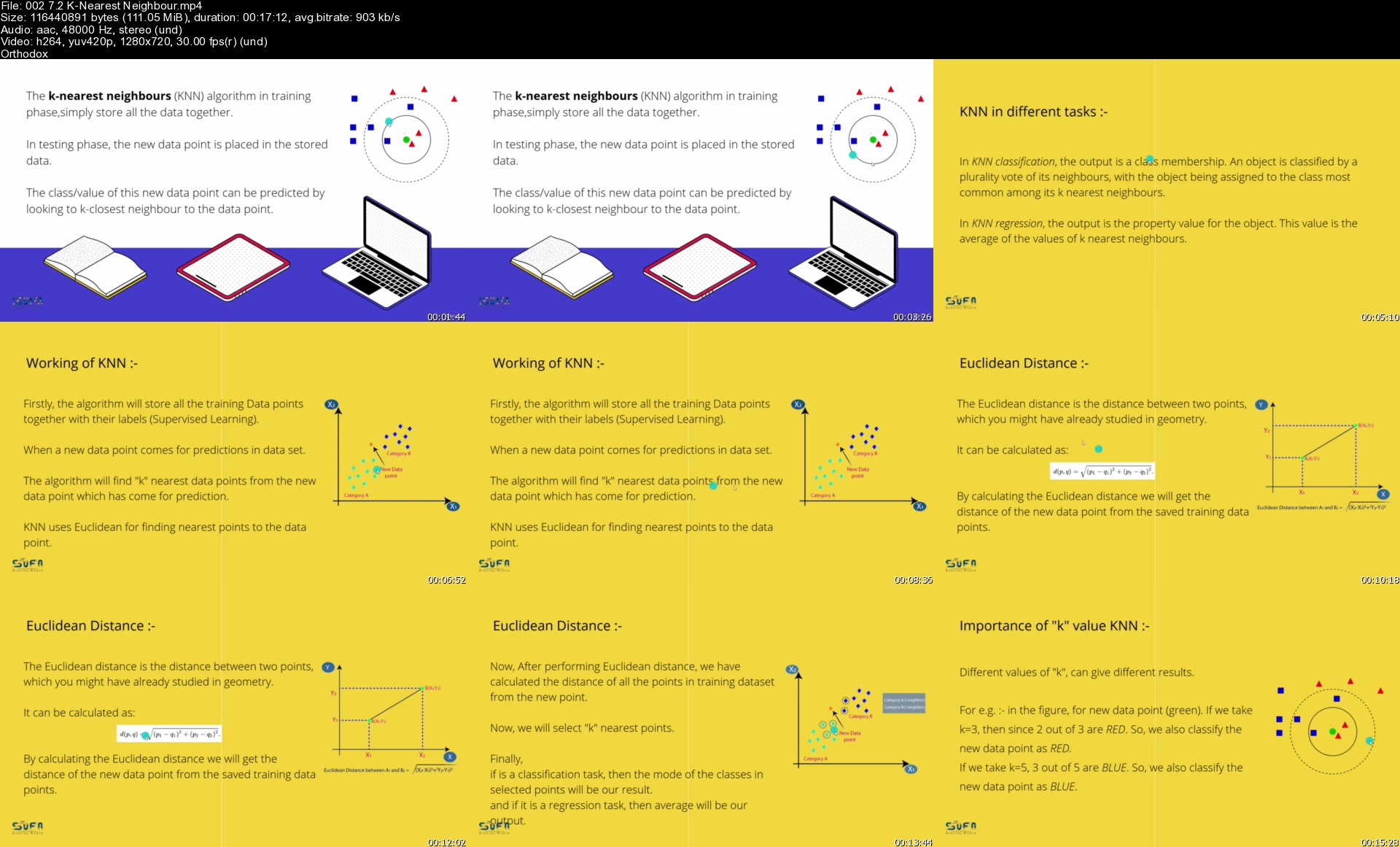
0027.2knearestneighbomhjgy.jpg


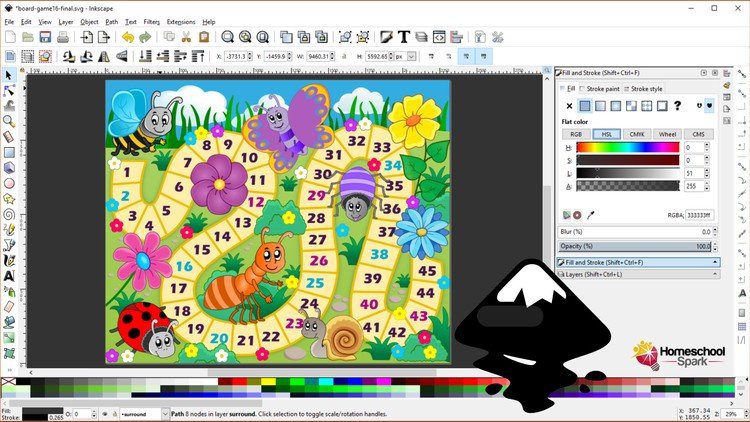
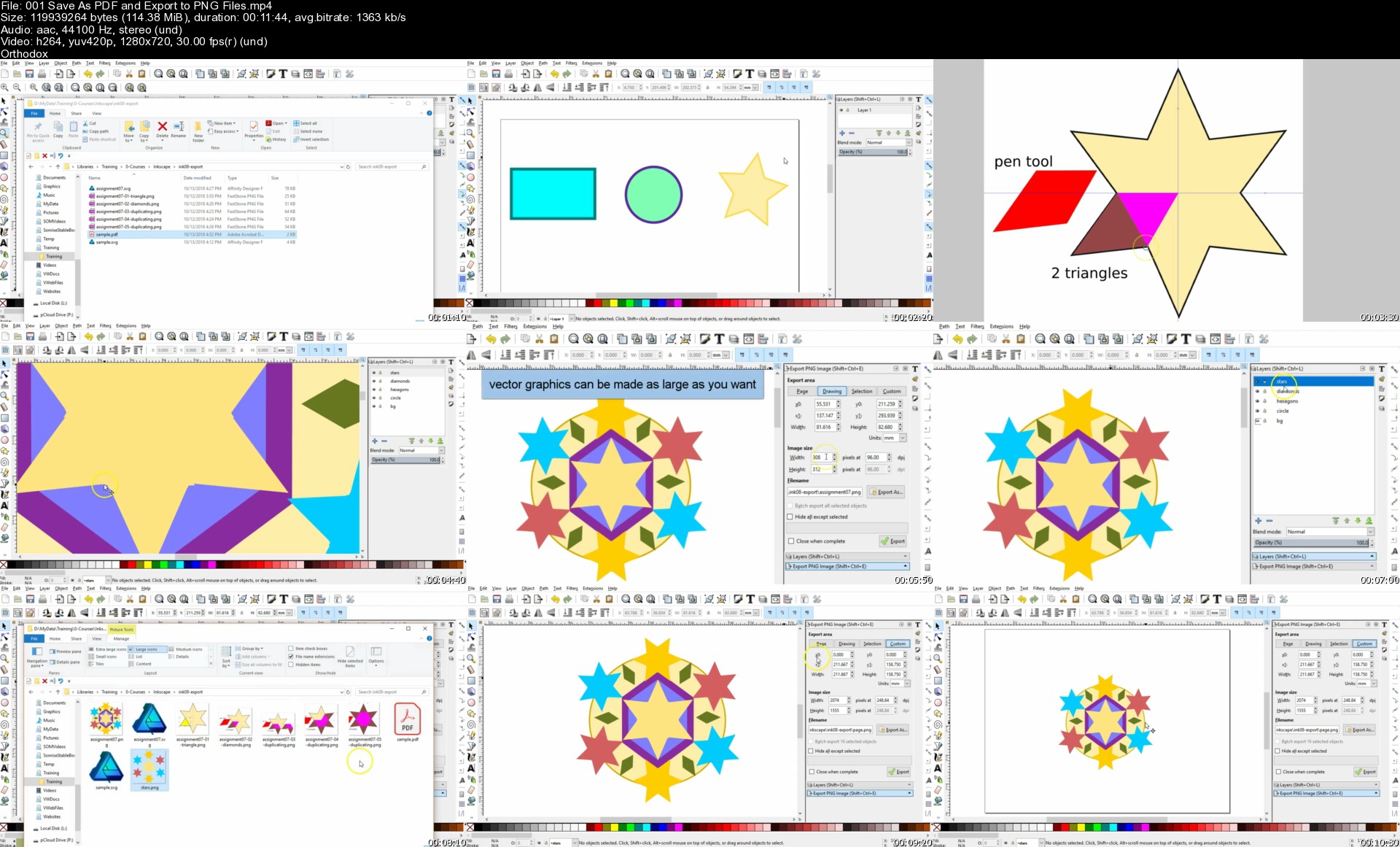
Inkscape Adventure, Master the Free Vector Graphics Software

92y3yvoesetktxbnsdd3ignjjj.jpg


Inkscape Adventure, Master the Free Vector Graphics Software
MP4 | Video: h264, 1280x720 | Audio: AAC, 44.1 KHz, 2 Ch
Genre: eLearning | Language: English + srt | Duration: 130 lectures (11h 16m) | Size: 7 GB

Learn Inkscape with thorough, detailed instruction, and perfect your skills by creating fun projects

What you'll learn:
Master the basic tools and concepts essential to vector graphics
The pen and node tools will no longer be mysterious or frustrating
Become familiar with all the tools and features of Inkscape
The skills and concepts learned will carry over to other vector programs such as Illustrator
Gain the skills and confidence to create original vector graphics

Requirements
General familiarity with computer software such as saving and opening files
A desire to learn vector graphics


Description
This course gives you the best of both worlds - thorough step-by-step instruction on Inkscape's tools and features as well as hands-on, practical assignments for you to complete. The progressive assignments help you master the concepts taught in the video lessons.

The course culminates with a major project - the creation of a colorful layout for a fictional board game. This project is approached one element at a time with students creating their own copy of the design.

While the pen and node tools are the most important to master, as they are the heart of vector graphics; every tool in the Inkscape toolbar is covered in this course. Additional lessons explain the most commonly used operations such as: path operations, bitmap tracing, cloning, tiled clones, clipping, masking, patterns, offsets, and live path effects. Several filters and extensions are demonstrated as well.

If GIMP is the Photoshop of free software, then Inkscape is the free equivalent of Adobe Illustrator. Inkscape was designed to create scalable vector graphics. These images may be used for print, web design, social media, game characters, animation frames, and so forth.

The skills acquired learning Inkscape will be useful even if you eventually transition to another vector graphics program such as Adobe Illustrator or Corel Draw. The core functionality of all these programs is quite similar.

Inkscape works on Windows, Mac OS X, and Linux, and it's free. The course videos use version 0.92 of the software, but if you have a prior or more recent version, you should be fine. Inkscape is very slow to make significant changes. The basic interface has remained the same for many years.

Updated 05/2020 to include information about the new version, Inkscape 1. The current videos are still relevant. Inkscape changes very slowly, and the interface remains nearly identical in version 1.

Who this course is for
Students young or old who want to learn to create computer graphics using vector software
The course and assignments contain wholesome material, nothing objectionable to younger students

Homepage

001saveaspdfandexport3jk9z.jpg


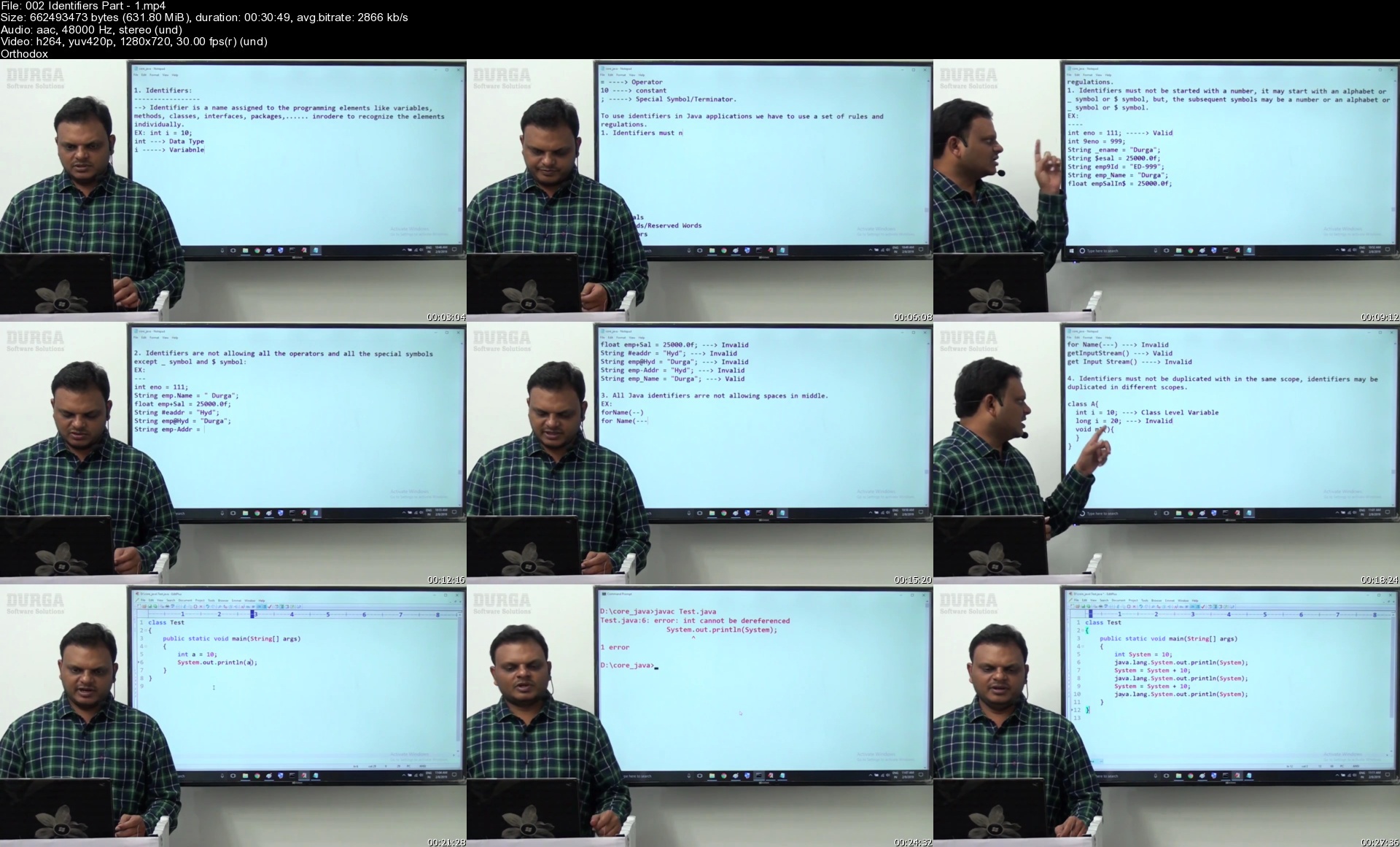
Complete Core Java In Simple Way

jmy6fcjmeag9a5uhewwxw7pk30.jpg


Complete Core Java In Simple Way
MP4 | Video: h264, 1280x720 | Audio: AAC, 44.1 KHz, 2 Ch
Genre: eLearning | Language: English + srt | Duration: 501 lectures (100h 23m) | Size: 125 GB

Direct Class Room Videos to get complete knowledge on java

What you'll learn:
Students can get complete in-depth knowledge on java concepts like language fundamentals, operators, flow control, oops concepts etc

Requirements
Basic Idea on Computer


Description
Benefits of this course:

---------------------------

1. This Course will provide completeness on every topic.

2. This Course will make you to Strong on Theoretically and Pro grammatically.

3. This Course will provide Good Platform for the Advanced Technologies and Frameworks like Jdbc, Servlets, Jsps, Hibernate, JPA, Spring,..

4. This Course includes almost all the interview Questions and Answers as part of the Course internally.

5. This Course will provide Downloadable Material for all the above specified topics.

Syllabus:

----------

1. Introduction:

-------------------

1. Java History Part-1

2. Java History Part-2

3. Java History Part-3

4. Differences between Java and Others : Static Vs Dynamic

5. Differences between Java and Others : Pre-Processor Part-1

6. Differences between Java and Others : Pre-Processor Part-2

7. Differences between Java and Others : Platform Dependent VS Platform Independent Part-1

8. Differences between Java and Others : Platform Dependent VS Platform Independent Part-2

9. Differences between Java and Others :pointers Part-1

10. Differences between Java and Others :pointers Part-2

11. Differences between Java and Others :Multiple Inheritance

12. Differences between Java and Others :Operator Overloading

13. Differences between Java and Others :Destructors

14.Differences between Java and Others :Call By Value Vs CallBy Reference

15.Differences between Java and Others :Memory Allocation

16.Java Features Part-1

17.Java Features Part-2

18.Java Naming Conventions

19.Java Programming Format : Comment Section Part-1

20.Java Programming Format : Comment Section Part-2

21.Java Programming Format : Comment Section Part-3

22.Java Programming Format : Package Section

23.Java Programming Format : Import Section

24.Java Programming Format : Classes / Interfaces Section and Main Class Section

2.Steps to Prepare First Java Application

--------------------------------------------------

25.Steps to Prepare First Java Application Installation Part-1

26.Steps to Prepare First Java Application Installation Part-2

27.Steps to Prepare First Java Application: Editor Instanllation

28.Steps to Prepare First Java Application: Write Java Program

29.Steps to Prepare First Java Application: Save Java File

30.Steps to Prepare First Java Application: Compilation Part-1

31.Steps to Prepare First Java Application: Compilation Part-2

32.Steps to Prepare First Java Application: Execution Part - 1

33.Steps to Prepare First Java Application: Execution Part - 2

34.Steps to Prepare Java Application with Eclipse IDE

3. Language Fundamentals

--------------------------------

35.Tokens Inroduction

36.Identifiers Part - 1

37.Identifiers Part - 2

38.Literals

39.Number Systems Part-1

40.Number Systems Part-2

41.Keywords and Reserved Words

42.Operators Introduction

43.Arithmetic Operators

44.Increment And Decrement Operators - 1

45.Increment And Decrement Operators - 2

46. Assignment & Comparision & Boolean Logical Operators

47.Bitwise Logical Operators

48.Ternary Operator

49.Short-Circuit Operators Part-1

50.Short-Circuit Operators Part-2

51.Data Types Part-1

52.Data Types Part-2

53.Type Casting :Implicit Type Casting Part - 1

54.Type Casting :Implicit Type CastingPart - 2

55.Type Casting :Implicit Type Casting Part - 3

56.Type Casting :Explicit Type Casting Part-1

57.Type Casting :Explicit Type Casting Part-2

58.Type Casting :Explicit Type Casting Part-3

59.Java Statements : Introduction[2]

60.Java Statements : Conditional Statements:if Part-1

61.Java Statements : Conditional Statements:if Part-2

62. Java Statements : Conditional Statements:if Part-3

63. Java Statements : Conditional Statements:if Part-4

64. Java Statements : Conditional Statements:if Part-5

65. Java Statements : Conditional Statements:switch Part-1

66. Java Statements : Conditional Statements:switch Part-2

67. Java Statements : Conditional Statements:switch Part-3

68. Java Statements : Iterative Statements:for loop Part-1

69. Java Statements : Iterative Statements:for loop Part-2

70. Java Statements : Iterative Statements:for loop Part-3

71. Java Statements : Iterative Statements:for Part-4

72. Java Statements : Iterative Statements:for Part-5

73. Java Statements : Iterative Statements:for and for-Each Part-5

74. Java Statements : Iterative Statements:while loop

75. Java Statements : Iterative Statements:do-while loop

76. Java Statements : Transfer Statements : break part-1

77. Java Statements : Transfer Statements : break part-2

78. Java Statements : Transfer Statements : continue

4.Patterns

------------

79. Patterns Examples Part-1

80. Patterns Examples Part-2

81. Patterns Examples Part-3

82. Patterns Examples Part-4

83. Patterns Examples Part-5

84. Patterns Examples Part-6

Object Oriented Programming:

------------------------------------

1. OOPS Introduction : Unstructered Vs Structered Programming Languages

2. OOPS Introduction : Structered Vs Object Oriented Programming Languages

3. OOPS Introduction : Aspect Oriented Programming Languages

4. OOPS Features : Object Based Vs Object Oriented Programming Languages

5. OOPS Features : Class Vs Object

6. OOPS Features : Encapsulation Vs Abstraction

7. OOPS Features : Inheritance

8. OOPS Features : Polymorphism

9. OOPS Features : Message Passing

10.OOPS Containers : Class : Syntax

11.OOPS Containers : Class : Access Modifiers Part-1

12.OOPS Containers : Class : Access Modifiers Part-2

13.OOPS Containers : Class : Access Modifiers Part-3

14.OOPS Containers : Class : class, className, extends, implements keywords

15.OOPS Containers : Class : Possible Syntaxes of Classes

16.OOPS Containers : Class : Procedure to use classes in Java

17.OOPS Containers : Class : Internal flow in Class Utilization

18.OOPS Containers : Class : More than one class in Single Java Appl

19.OOPS Containers : Concrete Methods Vs Abstract Methods

20.OOPS : Containers: Abstract Classes Part-1

21.OOPS : Containers: Abstract Classes Part-2

22.OOPS : Containers: Interfaces Part-1

23.OOPS : Containers: Interfaces Part-2

24.OOPS : Containers: Interfaces Part-3

25.OOPS : Methods In Java : Method Syntax Part-1

26.OOPS : Methods In Java : Method Syntax Part-2

27.OOPS : Methods In Java : Method Syntax Part-3

28.OOPS : Methods In Java : Method Signature and Prototype

29.OOPS : Methods In Java : Var-Arg Method Part-1

30.OOPS : Methods in Java : Var-Arg Method Part-2

31.OOPS : Procedure To Create Objects Part-1

32.OOPS : Procedure To Create Objects Part-2

33.OOPS : Procedure To Create Objects Part-3

34.OOPS : Procedure To Create Objects Part-4

35.OOPS : hashCode() and toString() methods Part-1

36.OOPS : hashCode() and toString() methods Part-2

37.OOPS : Immutable Objects Vs Mutable Objects Part-1

38.OOPS : Immutable Objects Vs Mutable Objects Part-2

39.OOPS : User defined Immutable Class

40.OOPS : Object Vs Instance

41.OOPS : Constructors : Introduction Part-1

42.OOPS : Constructors : Introduction Part-2

43.OOPS : Constructors : Default Constructor

44.OOPS : Constructors : User Defined Constructors Part-1

45.OOPS : Constructors : User Defined Constructors Part-2

46.OOPS : Constructors : User Defined Constructors Part-3

47.OOPS : Constructors : User Defined Constructors Part-4

48.OOPS : Constructors : Constructor Overloading

49.OOPS : Instance Context : Instance Variable

50.OOPS : Instance Context : Instance Methods

51.OOPS : Instance Context : Instance Block and Instance Flow

52.OOPS : Instance Context : Instance Instance Flow

53.OOPS : 'this' keyword : To refer current class Variables Part-1

54.OOPS : 'this' keyword : To refer current class Variables Part-2

55.OOPS : 'this' keyword : To refer current class Methods

56.OOPS : 'this' keyword : To refer current class Constructors Part-1

57.OOPS : 'this' keyword : To refer current class Constructors Part-2

58.OOPS : 'this' keyword : To return current class Object

59.OOPS : 'static' keyword: Static Variable Part-1

60.OOPS : 'static' keyword: Static Variable Part-2

61.OOPS : 'static' keyword: Static Variable Part-3

62.OOPS : 'static' keyword: Static Variable Part-4

63.OOPS : 'static' keyword: Static Method Part-1

64.OOPS : 'static' keyword: Static Method Part-2

65.OOPS : 'static' keyword: Static Method Part-3

66.OOPS : 'static' keyword: Static Block Part-1

67.OOPS : 'static' keyword: Static Block Part-2

68.OOPS : 'static' keyword: Static Anonymous Inner class

69.OOPS : 'static' keyword: Static Import

70.OOPS : 'static' keyword: Static Context Part-1

71.OOPS : 'static' keyword: Static Context Part-2

72.OOPS : 'static' keyword: Static Context and Instance Context Part-1

73.OOPS : 'static' keyword: Static Context and Instance Context Part-2

74.OOPS : Class.forName() method internal functionality

75.OOPS : newInstance() method internal functionality

76.OOPS : Utilizations of Class.forName() and newInstance() methods

77.OOPS : Factory Methods

78.OOPS : Singleton classes Part - 1

79.OOPS : Singleton classes Part-2

80.OOPS : final keyword : final variable

81.OOPS : final keyword : final methods and final classes

82.OOPS : 'public static final' Convension for constant variables

83.OOPS : enum keyword part-1

84.OOPS : enum Keyword Part-2

85.OOPS : enum keyword Part-3

86.OOPS : main() method : Introduction

87.OOPS : main() method : Why 'public' is required

88.OOPS : main() method : Why 'static' is required

89.OOPS : main() method : Why 'void' is required

90.OOPS : main() method : Why 'parameter' is required

91.OOPS : main() method : Why 'String[]' as parameter is required

92.OOPS : main() method : List of valid and Invalid Syntaxes of main() method

93.OOPS : main() method : More than one main() in Single Java Application

94.OOPS : main() method : main() method Overloading and Overriding

95.OOPS : main() method : main() method in Inheritance

96.OOPS : Relationships in Java: Introduction

97.OOPS : Relationships in Java: Associations: One-To-One Association through Constructor Dependency Injection

98.OOPS : Relationships in Java: Associations: One-To-One Association through setter method Dependency Injection Part-1

99.OOPS : Relationships in Java: Associations: One-To-One Association through setter method Dependency Injection Part-2

100.OOPS : Relationships in Java: Associations: One-To-Many Association through Constructor Dependency Injection

101.OOPS : Relationships : Associations : One-To-Many Association through setter Dependency Injection

102.OOPS : Relationships : Associations : One-To-Many Association Internal Data Representation

103.OOPS : Relationships in Java: Associations: Many-To-One Association through Constructor Dependency Injection

104.OOPS : Relationships in Java: Associations: Many-To-One Association through setter Dependency Injection

105.OOPS : Relationships in Java: Associations: Many-To-Many Association through Constructor Dependency Injection

106.OOPS : Relationships in Java : Associations : Many-To-Many Association through Setter Method Dependency InjectionPart-1

107.OOPS : Relationships in Java : Associations : Many-To-Many Association through Setter Method Dependency Injection Part-2

108.OOPS : Relationships in Java : Associations : Composition Vs Aggregation

109.OOPS : Relationships in Java : Inheritance : Introduction Part-1

110.OOPS : Relationships in Java : Inheritance : Introduction Part-2

111.OOPS : Relationships in Java : Inheritance : Types of Inheritance Part-1

112.OOPS : Relationships in Java : Inheritance : Types of Inheritance Part-2

113.OOPS : Relationships in Java : Inheritance : Types of Inheritance Part-3

114.OOPS : Relationships in Java : Inheritance : Types of Inheritance Part-4

115.OOPS : Relationships in Java : Inheritance : Static Context in Inheritance Part-1

116.OOPS : Relationships in Java : Inheritance : Static Context in Inheritance Part-2

117.OOPS : Relationships in Java : Inheritance : Instance Context in Inheritance Part-1

118.OOPS : Relationships in Java : Inheritance : Instance Context in Inheritance Part-2

119.OOPS : Relationships in Java : Inheritance : Instance Context in Inheritance Part-3

120.OOPS : Relationships in Java : Inheritance : Static Context and Instance Context Mix in Inheritance Part-1

121.OOPS : Relationships in Java : Inheritance : Static Context and Instance Context Mix in Inheritance Part-2

122.OOPS : Relationships in Java : Inheritance : Super Keyword Part- 1

123.OOPS : Relationships in Java : Inheritance : Super Keyword Part-2

124.OOPS : Relationships in Java : Inheritance : Super Keyword Part-3

125.OOPS : Relationships in Java : Inheritance : Super Keyword Part-4

126.OOPS : Relationships in Java : Inheritance : Super Keyword Part-5

127.OOPS : Relationships in Java : Inheritance : Super Keyword Part-6

128.OOPS : Relationships in Java : Inheritance : Class Level Type Casting: Upcasting Part-1

129.OOPS : Relationships in Java : Inheritance : Class Level Type Casting: Upcasting Part-2

130.OOPS : Relationships in Java : Inheritance : Class Level Type Casting: Downcasting Part-1

131.OOPS : Relationships in Java : Inheritance : Class Level Type Casting: Downcasting Part-2

132.OOPS : Relationships in Java : USES-A Relationship

133.OOPS : Polymorphism : Introduction

134.OOPS : Polymorphism : Method Overloading Part-1

135.OOPS : Polymorphism : Method Overloading Part-2

136.OOPS : Polymorphism : Method Overloading Part-3

137.OOPS : Polymorphism : Method Overriding Part-1

138.OOPS : Polymorphism : Method Overriding Part-2

139.OOPS : Polymorphism : Method Overriding Part-3

140.OOPS : Polymorphism : Method Overriding Part-4

141.OOPS : Polymorphism : Method Overriding Part-5

142.OOPS : Polymorphism : Rules and Regulations for Method Overriding Part-1

143.OOPS : Polymorphism : Rules and Regulations for Method Overriding Part-2

144.OOPS : Polymorphism : Rules and Regulations for Method Overriding Part-3

145.OOPS : Polymorphism : Rules and Regulations for Method Overriding Part-4

146.OOPS : Polymorphism : Rules and Regulations for Method Overriding Part-5

147.OOPS : Polymorphism : Rules and Regulations for Method Overriding Part-6

148.OOPS : Abstract Methods and Abstract classes Introduction

149.OOPS : Concrete Method Vs Abstract Method

150.OOPS : Concreate class Vs Abstract Class

151.OOPS : Abstract Class Part-1

152.OOPS : Abstract Class Part-2

153.OOPS : Abstract Class Part-3

154.OOPS : Abstract Class Part-4

155.OOPS : Abstract Class Part-5

156.OOPS : Interfaces Part-1

157.OOPS : Interfaces Part-2

158.OOPS : Interfaces Part-3

159.OOPS : Interfaces Part-4

160.OOPS : Interfaces Part-5

161.OOPS : Interfaces Part-6

162.OOPS : Interfaces Part-7

163.OOPS : Syntaxes between classes, abstract classes and Interfaces Part-1

164.OOPS : Syntaxes between classes, abstract classes and Interfaces Part-2

165.OOPS : Syntaxes between classes, abstract classes and Interfaces Part-3

166.OOPS : Differences between classes, abstract classes and Interfaces

167.OOPS : Marker Interfaces : Serializable

168.OOPS : Marker Interfaces : Cloneable

169.OOPS : Adapter Classes Part-1

170.OOPS : Adapter Classes Part-2

171.OOPS : Adapter Classes Part-3

172.OOPS : Object Cloning: Introduction Part-1

173.OOPS : Object Cloning: Introduction Part-2

174.OOPS : Object Cloning: Introduction Part-3

175.OOPS : Object Cloning: Shallow Cloning Part-1

176.OOPS : Object Cloning: Shallow Cloning Part-2

177.OOPS : Object Cloning: Deep Cloning Part-1

178.OOPS : Object Cloning: Deep Cloning Part-2

179.OOPS : instanceof Operator Part-1

180.OOPS : instanceof Operator Part-2

Wrapper Classes

=====

1.Introduction Part-1

2.Introduction Part-2

3.Types of Conversions

4.Conversions from Primitive Type to Object Type

5.Conversions from Object Type to Primitive Type

6.Conversions from String Type to Object Type

7.Conversions from Object Type to String Type

8.Conversions from Primitive Type to String Type

9.Conversions from String Type to Primitive Type

InnerClasses

====

1. Introduction

2. Types of Inner Classes

3. Member Inner class Part-1

4. Member Inner class Part-2

Who this course is for
Academic Students who are having Java Course in their Curriculum
Software Professionals who are very fancy about Java Programming

Homepage

002identifierspart1snkkfs.jpg


[links]https://rapidgator.net/file/409a760834714868eedd528038e469a5/Complete_Core_Java_In_Simple_Way.part001.rar.html


[/links]

 
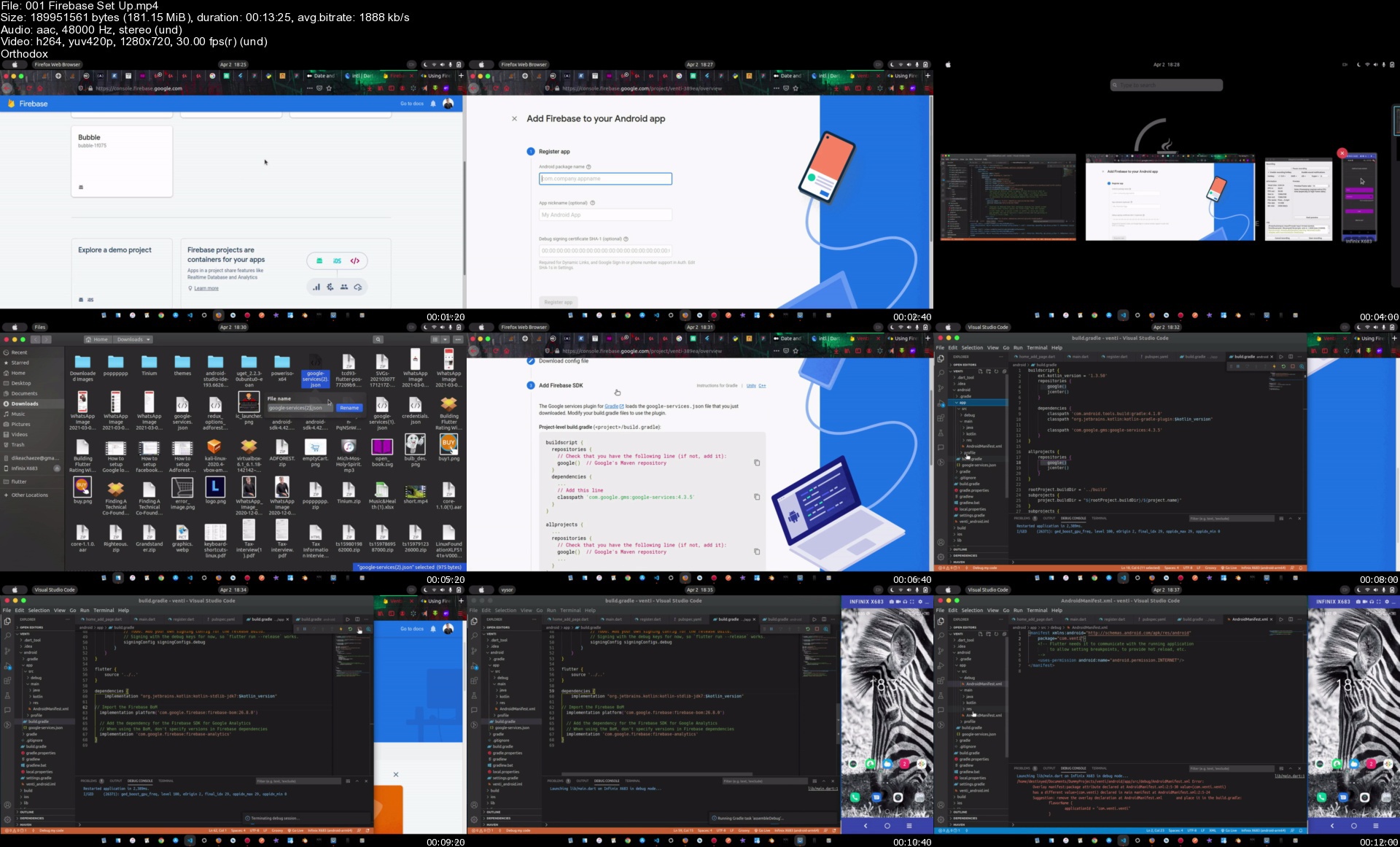
Build an Event Application with Flutter and Firebase[2021]

cbvnms1xl51h8l10lib9obfj1s.jpg


Build an Event Application with Flutter and Firebase[2021]
MP4 | Video: h264, 1280x720 | Audio: AAC, 44.1 KHz, 2 Ch
Genre: eLearning | Language: English + srt | Duration: 24 lectures (7h 4m) | Size: 5.27 GB

Developing for mobile application can be frustrating, and Flutter is Google's UI framework to make mobile development

What you'll learn:
Building Mobile Apps with Flutter and Firebase
Use Flutter Local Notification like a pro
Firebase Authentication and Cloud Firestore

Requirements
Basic Flutter and Dart knowledge
Basic Computer Skill


Description
Have you ever tried to create an Android app with Flutter and Firebase? If so, this course, Build an Event Application with Flutter and Firebase[2021], is the perfect course for you. In this course you'll learn how to build an Event Application with Flutter and Firebase, the new mobile UI framework and Service developed by Google. First, you'll explore how to build an Event Application with Flutter. Next, you'll build a user interface and add Countdown date, send SMS and local notification. Finally, you'll discover how to create and setup a complete database and authentication using Firebase Firestore and Firebase Authentication respectively. When you're finished with this course, you'll have a foundational knowledge of Flutter and Firebase that will help you as you move forward to build great and successful mobile apps with Flutter for Front-end and Firebase for Back-end. Listed below are the things you will learn from this course and more of it...

Things you will learn:

Building Building UI with Flutter

Adding interactivity

Sending SMS and local notification to users

Using date picker to format and display time and date

Connecting Flutter application to Firebase

Authentication and Storing users data(create, read, delete, update) with Firebase

Uploading Project to GitHub

Knowing how to secure and minify you Flutter application

Uploading your Flutter application to Google Play store

ETC.

ENJOY! DESTINY ED CARES

Who this course is for
Flutter Beginneers
Flutter Developers
Native developers who want to take on Flutter
Those who are eager to learn how to us flutter and firebase
Computer science students
IT students
Graduates

Homepage

001firebasesetups3ok6o.jpg


Appium - Mobile App Automation in Python (Basics + Advance)

u6hwchjd37gbz8wo9gm8op4jjj.jpg


Appium - Mobile App Automation in Python (Basics + Advance)
MP4 | Video: h264, 1280x720 | Audio: AAC, 44.1 KHz, 2 Ch
Genre: eLearning | Language: English + srt | Duration: 165 lectures (21h 14m) | Size: 9.4 GB

Appium Mobile Automation - InDepth training on Mobile apps automation for IOS and Android using Appium on Real Devices

What you'll learn:
By the end of the course you will be as much trained to automate any mobile based Native, Hybrid & Web application using Appium
Many frameworks including PyTest, Data Driven, Keyword driven, Page Object Model, Behave BDD covered in depth
Many Live projects and real time examples covered
Learn Automation on both Android and IOS aps in Depth

Requirements
No prior Python / coding knowledge required as everything is taught from the scratch
All topics are covered in detailed with live programming in the lectures which will make you feel as in you are studying in a live class room


Description
Appium with Python - Biggest course to Master Mobile automation testing for IOS and Android on Live Projects

As the mobile market is growing so there's a demand of Mobile application testers increasing like anything across the Globe.

Appium: supports Mobile application testing on Native, Hybrid & WebApps for Iphone, Ipads & Android real device and Emulators / Simulators.

These are the unique Appium with Python training tutorials in market that will help you in learning Mobile apps automation testing for IOS and Android in very simple way

I have covered examples on both Simulators / Emulators and Real IOS & Android Devices.

Not just the video lectures you will see the entire coding part done step by step and the lectures are explained in a very detailed and practical approach is taken in every example by the trainer.

Major frameworks covered like: PyTest, Data Driven, Keyword Driven, Hybrid, Page Object Model on Live projects

Once done with the course you will surely be able to justify 2-3 years of your current experience with Appium

Complete Python is covered from scratch, so if you are a beginner then you need not to worry about the programming part. Detailed installation of Appium and all native tools are covered from scratch. Since Appium is open source so you need not to purchase any licence to automate Mobile Applications.

During the course you will get my complete support in your queries and live projects

Who this course is for
Manual Testers who wants to switch to Automation testing and Learn mobile apps testing
Automation testers who wants to enhance their current skills
Test Managers
Selenium Testers who wants to Learn Mobile Apps testing

Homepage

002contactsappaddingavsjo2.jpg


Packt Become a Kano Analysis Specialist-XQZT

219140206_01-05-case_study-ethans_introduction_c.jpg


Packt Become a Kano Analysis Specialist-XQZT | MKV | 699.98 MiB

1 906 kb/s 1920x1080 | AAC 2 CH eng


NFO:
File List:

File: packt.become.a.kano.analysis.specialist-xqzt-sample.mkv
Size: 14539601 bytes (13.87 MiB), duration: 00:01:01, avg.bitrate: 1907 kb/s
Audio: aac, 48000 Hz, stereo (eng)
Video: h264, yuv420p, 1920x1080, 30.00 fps(r) (eng)


Download ( Size: 699.98 MiB ):
Filehosts: Nitroflare, Rapidgator


oHeopzn.png

1 Link/s
7FA665CAAA.png


5hSo1Ay.png

1 Link/s
88639F5B3E.png


Linkedin Learning Node Authentication-XQZT

219232318_05-03-prepare_passport-js_for_github_oauth2_c.jpg


Linkedin Learning Node Authentication-XQZT | MKV | 569.56 MiB

232 kb/s 1280x720 | AAC 2 CH eng


NFO:
File List:

File: linkedin.learning.node.authentication-xqzt-sample.mkv
Size: 2029591 bytes (1.94 MiB), duration: 00:01:10, avg.bitrate: 232 kb/s
Audio: aac, 48000 Hz, stereo (eng)
Video: h264, yuv420p, 1280x720, 15.00 fps(r) (eng)


Download ( Size: 569.56 MiB ):
Filehosts: Nitroflare, Rapidgator


oHeopzn.png

1 Link/s
DB597CF247.png


5hSo1Ay.png

1 Link/s
1ECCC1A79E.png


Zurück
Oben Unten