• Regeln für den Video-Bereich:

    In den Börsenbereich gehören nur Angebote die bereits den Allgemeinen Regeln entsprechen.

    Einteilung

    - Folgende Formate gehören in die angegeben Bereiche:
    - Filme: Encodierte Filme von BluRay, DVD, R5, TV, Screener sowie Telesyncs im Format DivX, XviD und x264.
    - DVD: Filme im Format DVD5, DVD9 und HD2DVD.
    - HD: Encodierte Filme mit der Auflösung 720p oder darüber von BluRay, DVD, R5, TV, Screener sowie Telesyncs im Format x264.
    - 3D: Encodierte Filme von BluRay, die in einem 3D Format vorliegen. Dies gilt auch für Dokus, Animation usw.
    - Serien: Cartoon/Zeichentrick, Anime, Tutorials, Dokumentationen, Konzerte/Musik, Sonstiges sind demnach in die entsprechenden Bereiche einzuordnen, auch wenn sie beispielsweise im High Definition-Format oder als DVD5/DVD9/HD2DVD vorliegen. Ausnahme 3D.
    - Bereich Englisch: Englische Releases gehören immer in diesen Bereich.
    - Bereich Talk: Der Bereich, in dem über die Releases diskutiert werden kann, darf, soll und erwünscht ist.


    Angebot/Beitrag erstellen

    - Ein Beitrag darf erst dann erstellt werden, wenn der Upload bei mindestens einem OCH komplett ist. Platzhalter sind untersagt.
    - Bei einem Scenerelease hat der Threadtitel ausschließlich aus dem originalen, unveränderten Releasenamen zu bestehen. Es dürfen keine Veränderungen wie z.B. Sterne, kleine Buchstaben o.ä. vorgenommen werden. Ausnahme Serienbörse:
    - Bei einem Sammelthread für eine Staffel entfällt aus dem Releasename natürlich der Name der Folge. Beispiel: Die Simpsons S21 German DVDRip XviD - ITG
    - Dementsprechend sind also u.a. verboten: Erweiterungen wie "Tipp", "empfehlenswert", "only", "reup", usw. / jegliche andere Zusatzinformation oder Ergänzung, welche nicht in obiger Beschreibung zu finden ist.

    Aufbau des Angebots und Threadtitel

    Der Titel nach folgendem Muster erstellt zu werden. <Name> [3D] [Staffel] [German] <Jahr> <Tonspur> [DL] [Auflösung] <Quelle> <Codec> - <Group>
    Beispiel: The Dark Knight German 2008 AC3 DVDRip XviD - iND
    Beispiel: The Dark Knight 2008 DTS DL BDRip x264 - iND
    Beispiel: The Dark Knight 2008 AC3 DL BDRip XviD - iND
    Beispiel: The Dark Knight German 2008 AC3 720p BluRay x264 iND
    Beispiel: The Dark Knight 2008 DTS DL 1080p BluRay x264 iND
    Beispiel: Die Simpsons S01 German AC3 DVDRip XviD iND
    Beispiel: Die Simpsons S20 German AC3 720p BluRay x264 iND
    Beispiel: Sword Art Online II Ger Sub 2014 AAC 1080p WEBRip x264 - peppermint
    Entsprechend sind also u.a. verboten: Sonderzeichen wie Klammern, Sterne, Ausrufezeichen, Unterstriche, Anführungszeichen / Erweiterungen wie "Tipp", "empfehlenswert", "only", "reup", usw. / jegliche andere Zusatzinformation oder Ergänzung, welche nicht in obiger Beschreibung zu finden ist
    Ausnahmen hiervon können in den Bereichen geregelt sein.

    Die Beiträge sollen wie folgt aufgebaut werden:
    Überschrift entspricht dem Threadtitel
    Cover
    kurze Inhaltsbeschreibung
    Format, Größe, Dauer sind gut lesbar für Downloader außerhalb des Spoilers zu vermerken
    Nfo sind immer Anzugeben und selbige immer im Spoiler in Textform.
    Sind keine Nfo vorhanden z.B. Eigenpublikationen, sind im Spoiler folgende Dateiinformationen zusätzlich anzugeben :
    Quelle
    Video (Auflösung und Bitrate)
    Ton (Sprache, Format und Bitrate der einzelnen Spuren)
    Untertitel (sofern vorhanden)
    Hosterangabe in Textform außerhalb eines Spoiler mit allen enthaltenen Hostern.
    Bei SD kann auf diese zusätzlichen Dateiinformationen verzichtet werden.

    Alle benötigten Passwörter sind, sofern vorhanden, in Textform im Angebot anzugeben.
    Spoiler im Spoiler mit Kommentaren :"Schon Bedankt?" sind unerwünscht.


    Releases

    - Sind Retail-Release verfügbar, sind alle anderen Variationen untersagt. Ausnahmen: Alle deutschen Retail-Release sind CUT, in diesem Fall sind dubbed UNCUT-Release zulässig.
    - Im Serien-Bereich gilt speziell: Wenn ein Retail vor Abschluss einer laufenden Staffel erscheint, darf diese Staffel noch zu Ende gebracht werden.62
    - Gleiche Releases sind unbedingt zusammenzufassen. Das bedeutet, es ist zwingend erforderlich, vor dem Erstellen eines Themas per Suchfunktion zu überprüfen, ob bereits ein Beitrag mit demselben Release besteht. Ist dies der Fall, ist der bereits vorhandene Beitrag zu verwenden.
    - P2P und Scene Releases dürfen nicht verändert oder gar unter einem iND Tag eingestellt werden.


    Support, Diskussionen und Suche

    - Supportanfragen sind entweder per PN oder im Bereich Talk zu stellen.
    - Diskussionen und Bewertungen sind im Talk Bereich zu führen. Fragen an die Uploader haben ausschließlich via PN zu erfolgen, und sind in den Angeboten untersagt.
    - Anfragen zu Upload-Wünschen sind nur im Bereich Suche Video erlaubt. Antworten dürfen nur auf Angebote von MyBoerse.bz verlinkt werden.


    Verbote

    - Untersagt sind mehrere Formate in einem einzigen Angebotsthread, wie beispielsweise das gleichzeitige Anbieten von DivX/XviD, 720p und 1080p in einem Thread. Pro Format, Release und Auflösung ist ein eigener Thread zu eröffnen.
    - Grundsätzlich ebenso verboten sind Dupes. Uploader haben sich an geeigneter Stelle darüber zu informieren, ob es sich bei einem Release um ein Dupe handelt.
    - Gefakte, nur teilweise lauffähige oder unvollständige Angebote sind untersagt. Dies gilt auch für eigene Publikationen, die augenscheinlich nicht selbst von z.B. einer DVD gerippt wurden. Laufende Serien, bei denen noch nicht alle Folgen verfügbar sind, dürfen erstellt und regelmäßig geupdatet werden.
    - Untersagt sind Angebote, welche nur und ausschließlich in einer anderen Sprache als deutsch oder englisch vorliegen. Ausnahmen sind VORHER mit den Moderatoren zu klären.


    Verstoß gegen die Regeln

    - Angebote oder Beiträge, die gegen die Forenregeln verstoßen, sind über den "Melden"-Button im Beitrag zu melden.
  • Bitte registriere dich zunächst um Beiträge zu verfassen und externe Links aufzurufen.

++ Premium IPTV ++ 7000 Live Sender ++ UHD Qualität ++ Mediathek mit 18.000 Inhalten ++


VenneTV


Englische Tutorials

One Hour Ads - Cody Burch Digital

7fcc5778372cc187c2374642aaadaef4.png

Cody Burch - One Hour Ads | 1.31 GB​
I made this course to help people learn the process I used to create high-converting funnels in any niche, in an hour or less.
The videos are short, punchy and all you need to know about funnel marketing.

Hey my name is Cody
I made this course to help people learn the process I used to create high-converting funnels in any niche, in an hour or less.
The videos are short, punchy and all you need to know about funnel marketing.

HOmepage:

Screenshots
4ce8650bd02b441bf01995a83b10e7bf.jpg


Link Download
​
Extract files with WinRar 5 or Latest !

 
Yengub - Case Study

7e93c58015cefa615476561f6c3316f4.jpg

Yengub - Case Study | 2.85 GB​
Copy the strategies that generated my one product store hundreds of thousands in profit within three months. From product research, dark psychology to Facebook Ads, you get to see it all. We will walk through day 0 of testing to day 90 of scaling.

Gain A Massive Competitive Edge In The Marketplace
Learn concepts and strategies that make a real impact on the results of your dropshipping business. Very much like learning a new language which opens up new ways of understanding the world, my case study will open up new forms of understanding business, marketing, and drop shipping, thus taking your results to new heights.
- The Dark Psychology Strategies Of Dropshipping
- Understanding Customer Flow For Aggressive Scaling
- How To Cloak China Tracking Numbers
- Apps & My Tactics To Increase Average Order Value, Trust, & Conversion Rate
- Building My High Converting Product Page Live
- Custom Creatives, EcomVids, The Process & My Review
- Product Research Strategy & How I Found The Product
- Facebook Testing & "Momentum" Scaling Strategy, Mindset, & Numbers
- Store Automation & Operations
- And Much More.

Homepage:

Screenshots
3eb063791680367c99b17be94ed01147.jpg


Link Download
​
Extract files with WinRar 5 or Latest !

 
Alex Becker - Iron Blueprint (Update 1)

aac91f87e478d08a265455f15bb205b0.jpg

Alex Becker - Iron Blueprint (Update 1) | 315 MB + 16.29 GB​
The IRON blueprint is a private coaching where I clone the exact funnels, copywriting and ads I use to scale my businesses to your business.
This group is ONLY for successful business owners already making a substantial income.

Homepage:

Screenshots
95d99d6dbd6cc2e92133531b574498f0.jpg


Link Download
​
Extract files with WinRar 5 or Latest !

 
Gusten Sun - FullTime Funnel Designer (Update 1)

f4364aae661c8fcfdb959b382d967bd9.png

Gusten Sun - FullTime Funnel Designer (Update 1) | 5.63 GB + 10.76 GB​
Fulltime Funnel Designer: "The ONLY Step-by-Step Course on How To Successfully Start & Grow A 6 Figure Funnel Agency"
...without ANY previous experience, any tech skills, any photoshop or coding required. And NO, we don't cold call, cold email or send out proposals...

Fulltime Funnel Designer is everything I wished I had when I got started on my Funnel Agency journey.
Had I known then what I know now, I would've been able to save so much money and time in the process.
Fulltime Funnel Designer teaches you everything you need to know to grow your Funnel Agency to 10k/m from scratch. even if you're not a techy person or don't know design well yet.

90 Day Accountability Checklist
- Perfect Niche Planner
- Positioning Like A Pro
- Signature Blueprint Builder
- Create a Clear Elevator Pitch
- The Relevance Story Script
- Predictable Profit Ladder
- The Ultimate Freedom Calculator
- Get 14 Days FREE of Clickfunnels & Import Your First Template
- Launch This Simple Funnel In 10 Minutes (24H Challenge)
- The Funnel Launch Checklist
- How To Add Your Domain To Clickfunnels
- How To Create Products and Upsells
- How To Integrate Your Email Autoresponder
- How To Integrate Your Calendar + Application
- Zapier - The Automation Shortcut

Funnel Clients Secrets Masterclass
- The Automated Client Onboarding Funnel
- The Portfolio Closing Funnel
- How To Create Funnel Mockups For Social Media Posts
- The Exact DM Scripts I Use To Close Clients
- The 7 Elements of a Converting Profile Funnel
- How to Design Your Cover Photo For Conversions
- My Funnel Design Vault (Find Design Inspiration)
- How to Get More Leads & Clients Organically
- What Text to Post Along With Your Funnel Designs
- Real Life DM-Closing Series #1 - Closed after 3 Weeks of Follow Up
- Real Clients Case-Studies #2 - Easiest Close I've Ever Done

7 Figure Funnel Roadmaps - Part 1
7 Figure Funnel Roadmaps - Part 2

My Unique Process of Creating Converting Offers
- These 10 Pillars Will Make or Break Your Offer
- Understanding The 3 Reasons People Don't Buy
- How To Overcome Objections Through StorySelling
- How To Create Converting Offers for Info-Products
- How To Create Converting Offers for Service Providers
- How To Upgrade The Quality of a Current Offer

How To Write Compelling Sales Copy That Converts (The 9P's)
- The Problem - Part 1
- The Painpoints - Part 2
- The Promise - Part 3
- The Proof - Part 4
- The Product - Part 5
- The Persona - Part 6
- The Price - Part 7
- The Process - Part 8
- The Priority - Part 9

Why and When To Use Canva
- Understanding The Canva Editor
- How I Design Images In Canva
- How To Create Layers in Canva
- How To Design Great Background Images
- How I Create Digital 3D Product Mockups
- How To Add Blobs To Your Backgrounds
- Why and When To Use Sketch
- Understanding The Sketch Editor
- How To Create Gradient Designs
- How To Create Perfect Shadows
- How To Mask Images
- How To Design Modern Shapes
- How To Recolor Any Image or Icon
- How To Edit Illustrations in Sketch
- How To Create Background Patterns
- How To Create Icons in Sketch
- How To Create Beautiful Imagery
- How To Create Wider Sections
- How To Use Custom Fonts in Clickfunnels
- How To Create Multi-Color Bold Headlines
- How To Create Beautiful Button Shadows
- How To Design Gradient Buttons
- How To Create FAQ Dropdown Sections
- Adding Shadows in Clickfunnels
- Bigger Image Size & Overflow
- Section Overflow, Layers & Visibility
- Where I Find Illustrations
- Where I Find Icons
- Where I Find Fonts
- Where I Find Brand Colors
- Where I Find Great Background Images

1.1 Abandoned Cart Email Sequence - The Roadmap
- 1.2 Abandoned Cart Email Sequence - The Integration
- 1.3 Abandoned Cart Email Sequence - The Emails & Copy
- 2.1 Webinar Email Sequence - The Roadmap
- 2.2 Webinar Email Sequence - The Integration
- 2.3 Webinar Email Sequence - The Emails & Copy
- 3.1 Optin Email Sequence - The Roadmap
- 3.2 Optin Email Sequence - The Integration
- 3.3 Optin Email Sequence - The Emails & Copy
- 4.1 Launch Email Sequence - The Roadmap
- 4.2 Launch Email Sequence - The Integration
- 4.3 Launch Email Sequence - The Emails & Copy
- Newsletter Email Profits
- Back-end Profit Maximization
- The Storytelling Formula

Productivity Profits
- Weekly Success Planner
- 90 Day Accountability Tracker
- The Client Tracker
- The Freedom Calculator
- Your Positioning Statement
- The Sales Message Builder
- The VSL Builder
- Yearly Planner
- Offer Creation System
- The Storytelling Formula
- And many many more.

Lead Funnels
- High Ticket Funnels
- Website Funnels
- Local Business Funnels
- E-Commerce Funnels
- Event Funnels
- Webinar Funnels
- Low-Ticket Funnels

Homepage:

Screenshots
cd2662a91884e564c07745572e77b5a1.jpg


Link Download
​
Extract files with WinRar 5 or Latest !

 
Marty Marion - Intensive Positioning Blueprint Program 2020 (Update 1)

18e7a9b618d86839a3381976412631d4.jpg

Marty Marion - Intensive Positioning Blueprint Program 2020 (Update 1) | 736 MB + 9.23 GB​
World's #1 Brand Positioning & Competitive Advantage Expert Reveals What Your Competitors Don't Want You To Know.

Learn From Real Life Madison Avenue Agency 'Mad Man' Marty Marion:
The Insider Secrets, Strategies & Tactics That Only The World's Top Brands and Agencies Had Access To UNTIL NOW!
Learn in 3-Minutes Why You Must Master Positioning Now!

Learn The Positioning Secrets Your Competitors Don't Want You To Know!
THE POSITIONING BLUEPRINT VIDEO COURSE:
Positioning Science is the most powerful strategy in any marketer's toolkit by far. My Intensive Positioning Blueprint Videos (16 videos with more than 20 hours of advanced training) are uniquely created for agencies, brand owners, consultants and marketers in every niche.
As the creator of The Positioning MatrixTM - the world's first mathematical model for creating a brand's positioning platform - I literally 'wrote the book' on competitive advantage strategy to take massive market share away from your competitors, totally dominate your category and explode your revenue. AND I TEACH IT ALL IN MY INTENSIVE POSITIONING BLUEPRINT VIDEO COURSE.
Positioning is the science behind every leading brand in every category. It's the reason why EVERY leader in their category IS the leader in that category.
Positioning is how you totally control consumer and client 'buying decisions' about your brand, agency or service in your favor and away from your competitors.
Positioning Is The Foundation For ALL Messaging Across ALL Marketing Channels
Positioning is the FIRST step in creating any brand and all messaging and marketing, across all channels.
You must create your Positioning Platform FIRST, and then you can effectively craft all of your branding elements and messages.
My Intensive Positioning Blueprint Videos will teach you every aspect of how to do this and win.
c0542c69099fb6dcc2b83922a56ab4e8.jpg
INTENSIVE POSITIONING BLUEPRINT PROGRAM VIDEO LESSONS:
8f5d030c1770cfef4eae203b2efb6318.png
YOU GET ALL THIS AND MORE:
16 Full-Length Videos (20+ Hours) of Real Tactical Coaching, Not Just Teaching
In 16 highly detailed training video lessons (over 20 hours of advanced training) by Marty Marion, you will get a full course on positioning and de-positioning, with strategies and tactics, and immediately actionable steps for your agency or brand, and for your clients. I will both teach and train you to understand and to be able to implement the critical aspects of positioning and de-positioning for competitive advantage. These are no-fluff intensive training lessons based on my 40-years of BIG AGENCY and multi-billion dollar client experience.

Homepage:

Screenshots
bc2f4372f4ab0adca46a4d613f19813a.jpg


Link Download
​
Extract files with WinRar 5 or Latest !

 
TTC - World War II: Battlefield Europe

psdriwhasbysprkcyutlt7wj7v.jpg


TTC - World War II: Battlefield Europe
Duration: 11h 22m | Video: .MP4 1280x720, 30 fps(r) | Audio: AAC, 48000 Hz, 2ch | Size: 9.56 GB
Genre: eLearning | Language: English

In more ways that you can imagine, today's geopolitical climate is a product of World War II. The United States, France, Germany, Russia, and Britain-all of these world powers and their sense of place in the 21st century were profoundly shaped by the most savage, sweeping war in human history.

The topic of World War II's European Theater is so vast that it requires an expert historian to make sense of it all. How was the war in Europe fought over the course of seven long, arduous years? What led to Germany's early sustained gains, and what eventually stymied its advances? Why did the war in Europe unfold the way it did, and what socio-economic factors led to Germany's unconditional surrender after millions of lives were lost?

For award-winning Professor David R. Stone of the U.S. Naval War College, it all boils down to a matter of strategy. Strategic choices-political ones, economic ones, military ones-are the organizing principles that can help any of us make sense of the war in Europe. "Political and military leaders had to make hard decisions," Professor Stone says. "We can learn a lot by looking at those choices."

World War II: Battlefield Europe is Professor Stone's expansive 24-lecture exploration of the 20th century's defining conflict. Designed in partnership with HISTORY® and using a distinctly European perspective (in which the United States is a supporting player instead of a main character), this course provides a fresh lens through which to study the European Theater's major battles, larger-than-life personalities, twists of fate, and tales of intrigue. You'll uncover the strategic decisions behind U-boat assaults, urban bombing campaigns, Operation Barbarossa, D-Day, the Battle of the Bulge, the invasion of Italy, the French resistance, the fall of Berlin, V-2 rockets, and so much more. By the end of the last lecture, you'll better understand why the war in Europe unfolded the way it did-and why its legacy resonates for all players down to this very day.

While World War II had two theaters of combat, the European Theater of 1939 to 1945 was the violent core of this global conflict between the forces of totalitarianism and those of freedom. It was on the European continent where Nazi Germany began its project of expansion and murder. It was on the European continent where Allied and Axis forces clashed at Stalingrad, el-Alamein, Anzio, and Normandy. And it was on the European continent where Nazi Germany was ultimately defeated and the stage was set for the Cold War that would consume the post-war world.

Strategic Looks at Epic Battles

In developing World War II: Battlefield Europe, Professor Stone came up with the conservative estimate that there are over 300,000 books and 30,000 scholarly articles dealing with World War II. It's a conflict that's so enormous, no one can master it all at once.

That's why these lectures dig deep into the European Theater of war, and specifically the real-life military and political strategies behind some of the war's most definitive battles.

The Battle of Britain: From the second half of 1940 through most of 1941, the British Royal Air Force and its German equivalent, the Luftwaffe, waged a desperate struggle for control of the skies over England. Dubbed the Battle of Britain by Winston Churchill, the fight raises a number of important strategic questions, including whether Germany's shift from attacking the RAF to bombing British cities (which appealed to Hitler's desire to make Britain suffer) might have cost the Nazis their chance at victory.
The Battle of Stalingrad: While Stalingrad (known today as the city of Volgograd) was one of World War II's most decisive battles, the regional industrial center in the southeastern section of European Russia wasn't important in itself. But the city sits where the Volga River takes a big swing westward as it flows south into the Caspian Sea, which meant the Germans couldn't let the city remain in Soviet hands as it was too big a threat to the flank of their push to grab the oil fields around the Azerbaijani city of Baku.
The D-Day Invasion: Training for war is, naturally, serious business. It was even more so for the Allied invasion of Europe. Two months before the landing at Utah Beach, 750 American soldiers died at Slapton Sands in southwest England during a training exercise, which was attacked by the Germans. Because a number of the dead Americans had been briefed on the D-Day invasion plans, their bodies had to be recovered to ensure they hadn't been captured and the plan wasn't compromised.
The Battle of the Atlantic: What finally turned the tide in favor of Allied submarines and sea forces? Much of the eventual victory was due to technological developments, including better sonar and radar with which to find enemy subs; a forward-firing battery of depth charges known as "the hedgehog"; and a torpedo known as "Fido" (deliberately called a mine to be misleading to the enemy), which could track submerged submarines and, more important, could be dropped from Allied aircraft.
Provocative Questions, Illuminating Answers

A large part of military strategy isn't just executing plans, but learning lessons from both victory and defeat. Professor Stone contextualizes the defining moments of World War II by illustrating what the various armies on the European continent took away from their clashes.

For example, after the Soviet victory at the Battle of Moscow in 1941, Hitler, who'd always had trouble taking the advice of military professionals, fired his army commander-in-chief and made himself the German army's supreme commander. Stalin, on the other hand, came to the right conclusion: Civilian leaders should trust military professionals to make the decisions they're not competent to make.

Throughout World War II: Battlefield Europe, you'll get the opportunity to explore challenging and provocative questions about why the European Theater turned out the way it did. Using military and historical expertise, Professor Stone uncovers answers to these and other long-simmering issues.

How did European anti-Semitism evolve from a belief system rooted in religion to one rooted in race and biology?
What kept other European powers from re-engaging Germany and stopping Hitler long before he grew too powerful?
Why did Hitler break his non-aggression pact with the Soviet Union-and what made him think such a radical move would work?
Could the Allied forces have done anything to stop, or even just to slow down, the horrors of the Holocaust?
Why, with Berlin under siege and German defeat inevitable, did Hitler keep fighting-and why did his army let him do it?
A Definitive Learning Experience

World War II: Battlefield Europe puts you in the heat of battle alongside an award-winning military historian. In his role as Professor of Strategy and Policy at the U.S. Naval War College, Professor Stone is adept at helping laypeople understand the secret mechanics of warfare: how decisions are made, how forces move, and how battles are won (and lost).

In addition to Professor Stone's brilliant scholarship, these lectures are powered by HISTORY's extensive, high-quality coverage of World War II. Strategic maps, photographs, film footage, and illustrated recreations make this course a definitive learning experience unlike anything The Great Courses has ever before produced.

"Informed citizens need to understand their history," says Professor Stone. With its profound effect on the world for decades following the conflict, World War II is a central part of that history.

Homepage

10rooseveltisolationiefke6.jpg


TTC - The Real History of Secret Societies

e2pyzrubsfsvlpx4ygxskf2kxy.jpg


TTC - The Real History of Secret Societies
Duration: 12h 40m | Video: .MP4 1280x720, 30 fps(r) | Audio: AAC, 44100Hz, 2ch | Size: 10.6 GB
Genre: eLearning | Language: English

The first rule of this course is you don't talk about this course. The second rule of this course is YOU DON'T TALK ABOUT THIS COURSE.Welcome to The Real History of Secret Societies, a historical look at the true-life groups which, if you believe the myths, are the unspoken power behind some of the world's major turning points, from controlling the British crown to holding back the electric car and keeping Martians and Atlantis under wraps.

Prepare yourself. In this course, brought to you in partnership with HISTORY®, you will be visiting some of history's deepest rabbit-holes, across centuries and continents, in search of secret societies in all their varieties. You will journey to some very dark places and, frankly, some odd and sometimes silly ones as well. During 24 eye-opening lectures, Dr. Richard B. Spence, professor of history at the University of Idaho, guides you through the always fascinating, often mystifying-and sometimes disturbing-world of brotherhoods, sisterhoods, orders, cults, and cabals that have influenced human culture from ancient times to the present.

Not-So-Secret Societies

Despite the name, "secret" societies have permeated popular culture and become symbols of wonder, mystique, and rumormongering. Thanks to phenomena like Dan Brown's best-selling novels, hit movies such as Skull and Bones, or hit songs by Madonna, the idea of secret societies has become utterly mainstream, allowing the general population to think they know about the most important parts of this clandestine underworld.

However, the commonly known groups barely scratch the surface of the number of real-life secret societies that exist. In fact, if one didn't know better, one might think the popularization of a few groups is a conspiracy, in of itself, to cover up for the many that are never acknowledged.

With help from the archives of HISTORY, Professor Spence leaves no society uncovered, and will open your eyes to the history and evolution of factions you think you know, introducing you to fascinating and illuminating stories and insights. Consider:

The Illuminati-A group so pervasive in popular culture that their name has become synonymous with any generic conspiratorial group-noted throughout literature in everything from Mary Shelley's 1818 novel Frankenstein to Marvel comic books. There are a variety of global groups which considered themselves Illuminati-or at least affiliated with them-but the Illuminati initially took root with a young lawyer who was obsessed with secrecy, rank and order, and creating a New World Order that echoed the promises of communism.
The Shriners-Founded by a wealthy New York Freemason, named William Florence, who enlisted a group of well-heeled masons to establish Mecca Temple, the first lodge of the Mystic Shrine. Exclusivity added to the mystique, growing the membership of The Ancient Arabic Order of the Nobles of the Mystic Shrine to hundreds of thousands over time. They adopted a motto of "Fun and Fellowship," and they are known for wearing red fezzes and seen riding small bikes or cars in parades, though they also founded a number of children's hospitals.
The Freemasons-A group known for secret rings and handshakes, subtle symbology, dangerous initiation rituals, and a complicated hierarchy. You'd think with all this secrecy and protection of the group, the last place you'd find them is being parodied on The Simpsons. But the truth is that they are a hard organization to keep hushed up because there has never been just a single school of Freemasonry; many variations exist and they don't play by the same rules.
Professor Spence also looks at groups who have become so ubiquitous in our history that it's impossible to think of them as being secret, such as the Ku Klux Klan, the Mafia, the IRA, or the Nazi Party. But as Professor Spence explains, these were the groups which began to organize behind closed doors, and their original, secret-or at least exclusive-status was likely an impetus in the group's successfulness and omnipresence. After all, half the power and draw of a secret society stems from the fact that everyone (secretly) wants to join one.

Myth and Reality
The time period from 1890-1930 is known as a "golden age of fraternalism," when hundreds of lodges, mystical orders, and fraternal organizations came into existence in the United States. During this time, America accounted for more than half of the world's Freemasons. And, millions of Americans were affiliated with lesser-known, oath-bound orders such as Odd Fellows, Red Men, Woodmen of the World, Knights of Columbus, B'nai B'rith, Elks, Owls, Eagles, and the Moose.

Some groups were organized to promote fellowship, mutual aid, or political and social causes during a trying time for the U.S. economy. Other groups took advantage of desperate times to turn groups of humans against each other, encouraging supremacy or separatism. Still, others simply came into existence for solely self-serving reasons and were not considered legitimate, yet their stories and reputations endure. Consider these groups:

U. S. Secret and Civil Service Society, Self-Supporting Branch-Founded by Arthur Rochford Manby to "combat nameless evils that regular authorities couldn't, or wouldn't, handle." This society was a cover for Manby to receive money, deeds, and mortgages from his followers in order to partake in bootlegging, extortion, fraud, robbery, and murder for hire. It also solidified the secret society mantra of "join or die," as Manby preyed on well-to-do citizens and then showed the new initiates how broken oaths of silence or obedience would result in a beheading.
The Learned Elders of Zion-A super-secret group of Jewish leaders purported to be bent on world domination through subverting the morals of non-Jews and by taking control of the press and the economy. Henry Ford fueled the fire of the Elders by paying for 500,000 copies of The Protocols of the Elders of Zion to be printed and distributed in the United States in a fit of anti-Semitism. This guide was also taught by German school teachers after the Nazi's came to power. The real history? This group never existed and the Protocols were a hoax.
The Priory of Sion-An uber-secret society claiming to be the restoration of an order ****** back to the First Crusade in the 11th century that was created to protect the bloodline of Jesus and Mary Magdalene. The society's objective was supposedly to restore a descendant as the ruler of a unified Europe. However, it was nothing more than the concoction of a career con man, who had developed a complete pseudo-history that was picked up and repurposed by the likes of Leonardo da Vinci; Victor Hugo; Claude Debussy; and most recently, Dan Brown.
Secret societies, real or not, were often a mirror of their times, in some cases, reflecting exclusionary practices with religious, racist, or classist overtones. In other cases, they could be considered America's first social welfare system, as many groups established programs to bridge the very divides caused by others.

But as much as these societies echoed the consciousness of America, they were fundamentally un-American. As Professor Spence points out, John F. Kennedy said in 1961: "The very word 'secrecy' is repugnant in a free and open society; and we are as a people inherently and historically opposed to secret societies, to secret oaths, and to secret proceedings."

A Personal Connection to History

Professor Spence opens each lecture with a story-a specific glimpse at another time, another place, and a real person or group who is connected in some way to the secret society being examined. This approach introduces you to these societies from both the inside-out and on a personal level. You'll also get unprecedented access to images, photographs, and more, provided by HISTORY, which give you a true picture of what these societies looked like and how they were organized.

As you uncover secret and often now-defunct societies from around the world-including Ancient Greece, Japan, Korea, Ireland, Russia, France, Germany, and more-you'll feel like you are there with them, whispering in underground meeting rooms or conspiring around a table in Bavaria. You'll get to know the founders, leaders, and famous and influential members associated with these groups. And you'll follow many of the well-known clandestine conspiracies back to their roots, through their uprising, their unearthing, and into the new secret societies that almost always sprang up to take their place.

Secret societies have attracted some of history's most brilliant, and some of its most evil, minds. Often demonized by their enemies, many secret societies have become the stuff of myths and conspiracy theories. Why do they exist? And when they are invented or imagined, why would someone pretend they exist? What do secret societies believe? Who do they recruit? Most important, what influence do they have? Buckle up and get ready to find out.

10themedievalcatharssfuk97.jpg


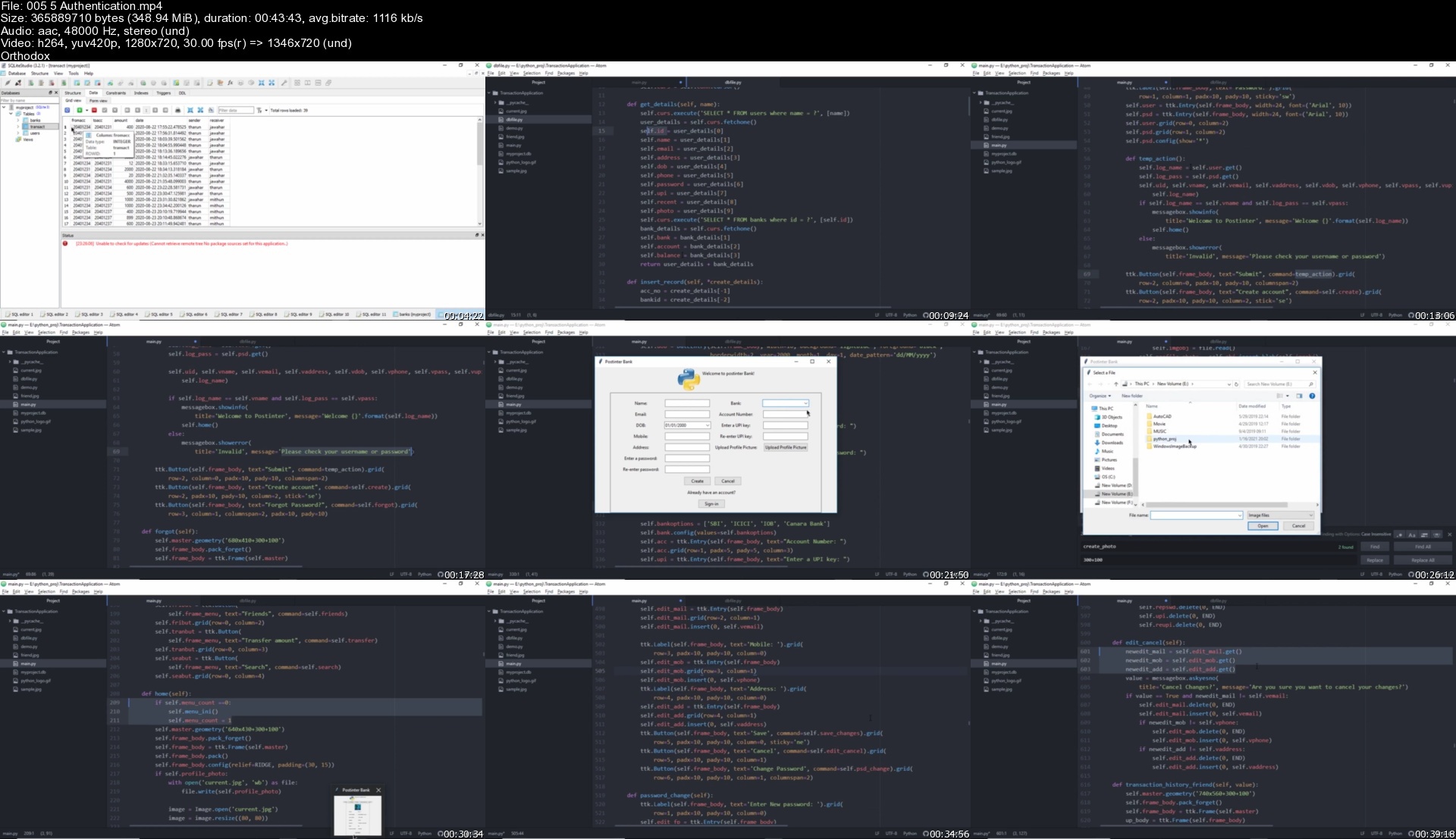
Learn Python By Doing: Real World Projects Masterclass 2021

7i3c6gsqdhzg0jxwadmgnd9kec.jpg


Learn Python By Doing: Real World Projects Masterclass 2021
Genre: eLearning | MP4 | Video: h264, 1280x720 | Audio: AAC, 48.0 KHz
Language: English | Size: 9.23 GB | Duration: 19h

Go From Beginner To Expert In Python Web Development: Step By Step Develop Real Django Applications with SQLite, Tkinter


What you'll learn
Understand how to useframeworks like Django will save you a ton of time in web development
Improve your web development and coding resume
Be able to connect Django to databases
Learn how to use Python in Web Development
Understand various Django Functions
Become a professional Python Developer
Tkinter


Description
The most appealing characteristic of Python is that it is an interpreted language. Interpreted languages are the programming languages that do not need to be compiled to run. An interpreter can run python code on any kind of computer, by itself. This means the programmer can quickly see the results, if or when they need to modify the code. On the flip side, this also means that Python is slower than a compiled language like C. And that is because it is not running on a machine code directly.

Because Python is an interpreted language, testing small snippets of code and moving them between different platforms is quite simple. Since Python is compatible with most of the operating systems, it is used universally, in a variety of applications.

Python is considered a beginners' programming language. As it is a high-level language, a programmer can focus on what to do instead of how to do it. This is one of the major reasons why writing programs in Python takes less time than in other programming languages.

Because Python is similar to English, many find it easier to learn than other programming languages. Developers can read and remember the Python syntaxes much easier than other programming languages.

Since Python supports scripting as well, it can be used to build large, commercial applications. The main factor behind Python's popularity in the IT world is its reliability. Being a high-level programming language, Python lets the user focus on the core functioning of the application. Meanwhile, the common programming tasks are handled by the language itself.

Now you can probably see why Python is one of the most favored programming languages by developers, data scientists, software engineers, and hackers! And the key factors behind its diverse userbase are flexibility, versatility, and object-oriented features. This is also why Python is used in complex fields like Machine Learning (ML) and Data Science (DS).


Homepage

0055authenticationsmukit.jpg


TTC - The Pagan World: Ancient Religions Before Christianity

s2fwfa9w7auusyzlokln2irk40.jpg


TTC - The Pagan World: Ancient Religions Before Christianity
Duration: 12h 40m | Video: .MP4 1280x720, 30 fps(r) | Audio: AAC, 44100Hz, 2ch | Size: 10.6 GB
Genre: eLearning | Language: English

At home and on the battlefield, the leaders of ancient Rome knew their world was filled with signs from the gods, messages they needed to obey if they wanted success. Yes, they developed a well-oiled political and military machine, but they never made big decisions or went to battle without their priests and diviners.

As the famous Roman historian Livy put it: "This city was established with auspices. Who does not know that in war or peace at home or on military campaign all our affairs are conducted with auspices?" What were these auspices so crucial to the affairs of an empire? Auspices-from the Latin, meaning "one who looks at birds"-were signs from the gods revealed in the patterns of bird flight, as interpreted by the augur, a priest.

When we think about the Roman Empire, we tend to visualize massive armies conquering and plundering the peoples of the Mediterranean world. In fact, many have attributed the empire's 1,000-year reign directly to their well-organized military might. But that's not what the Romans thought; Roman leaders consistently ascribed the foundation of their success directly to their superior skills in religious practices.

In The Pagan World: Ancient Religions before Christianity, you will meet the fascinating, polytheistic peoples of the ancient Mediterranean and beyond, their many gods and goddesses, and their public and private worship practices, as you come to better understand the foundational role religion played in their lives. Professor Hans-Friedrich Mueller, of Union College in Schenectady, New York, makes this ancient world come alive in 24 lectures brimming with captivating stories and intriguing personalities, as well as artifacts, illustrations, and detailed quotes and descriptions from a treasure trove of original sources.

Fascinating Picture of Ancient Polytheistic Life

In the ancient Mediterranean world, religion was not separate from daily life. To the contrary, religion was daily life. These polytheists believed they had a strict contract with their deities: If they took care of their gods, their gods would take care of them. That meant following numerous rules and regulations that circumscribed almost all aspects of life both inside and outside the home. Consequently, their religion makes a wonderful lens through which to achieve a deeper understanding of their world.

Unlike modern religions that describe and even compel specific behavior between individuals, these gods weren't as interested in policing morality. So, what about care for fellow humans? Or limits on sexual activity? Or even faith itself? Often these were not major concerns. Where the state took an interest, appropriate laws were passed and enforced. But the gods themselves traditionally judged these mortals primarily by the quantity and quality of their worship.

Those rules became the foundation of the state religion because leaders knew they could not be successful if their subjects were displeasing the gods. Consequently, they built extraordinary temples to honor their many deities, brought food and wine to them, sacrificed animals for them, and held sacred meals in the gods' names-anything and everything to keep them happy.

Architecture, particularly remnants of temples, provide one source of our knowledge about these peoples and their practices-from the sanctuaries of Asklepios and Apollo to the Parthenon to the Caves of Mithras, and beyond. Professor Mueller, a scholar of Greek, Latin, and ancient history, is passionate about this period of history. In The Pagan World: Ancient Religions before Christianity, he discusses these extraordinary temple constructions and gives detailed descriptions from primary sources of intriguing personalities, including:

Art-Statuary, friezes, painting, mosaics, and vases throughout the Roman Empire;
Inscriptions-Pyramid texts and coffin texts found in Egypt ; and
Literature-Writings of philosophers, historians, and politicians, such as Cicero, Euripides, Homer, Lucretius, Livy, Ovid, Plato, Sophocles, and the Rigveda (a text that would become an integral part of Hinduism).
The Benefits of Divination

The many gods of this ancient world were everywhere, with spirits inhabiting every crack and crevice of life. Names of the many gods included:

Vesta, goddess of the family hearth;
Venus, goddess of sex;
Mars, god of the agricultural and military fields;
Maia, goddess of nature;
Limentinus, god of the threshold; and
Cardea, goddess of the door hinges.
Who could interpret the signs from all these deities? Even the common person could understand some. For example, did someone sneeze? Did the sacrificial animal walk willingly to the altar? If not, the gods were not interested. Did the altar burn brightly or did the flame sputter, full of smoke? Did the chickens eat greedily before the battle? Did Jupiter cause thunder and lightning in the midst of a political assembly . on a sunny day? These and other portents were viewed as a serious form of communication between humanity and the divine.

In addition, the Roman Empire had a panoply of priests, pontiffs, and augurs to interpret signs and hired Etruscan haruspices who were specially trained to "read" the entrails of sacrificed animals, particularly the livers. This was crucial; knowing how to compare what was seen inside the sacrificial animal to what was seen out in the world brought mortals and their gods into communion.

But the leadership didn't always agree on the interpretation of signs. And at this intersection of religion and politics, there were definite benefits of divination. The difficulty of interpreting portents and signs provided a forum for discussion and debate. Those conversations fostered creative approaches to a range of possible solutions. Rather than divide society, religious debate helped move people toward consensus.

Acceptance of Other Religions

It may feel like the modern, technology-driven world of today invented globalism. But the ancient peoples of the Near East, Greece, Asia Minor, and the entire Mediterranean had already created globalism as they traded with one another, spoke with each other, borrowed (and stole) ideas, and knew each other's cultures well. And nowhere is this more apparent than in religious practices.

For example, Roman leadership took a pragmatic position toward the unfamiliar faiths they incorporated into their territory. The newly conquered were allowed to practice their former religion-as long as their worship did not clash with the state-sanctioned religion or Roman rule. Conquest also led to rich innovations within religion as Roman society incorporated new gods and practices from the religions of their conquered peoples, including:

Worship of the Greek gods (with new Latin names);
The cult of Isis, which originated in Egypt and spread throughout the empire;
The cult of Mithras, which originated in Persia and was particularly popular among the Roman soldiers; and
Manichaeism, which also originated in Persia and addressed the duality of good and evil.
Rome did not accept all religions, however; they would not tolerate practices that went directly against the law of the land. Consequently, problems were bound to arise between the authority of the state and the worshippers of Bacchus, Druids, Jews, and Christians-something history has since proved.

We know that Christianity, Judaism, and Islam still exist in the present day-but so do some ancient, polytheistic religions, at least in some forms. Not only has there been some resurgence in the interest and practice of pagan and polytheistic religions in modern times, but the Rigveda, a collection of hymns from this ancient period, eventually became one of the four sacred texts of Hinduism-one of the most populous and influential religions of the world today. Monotheism may have become predominant in much of the world, but ancient practices and beliefs live on in our culture and many others-in stories and myths as well as in practice and faith.

09cultsandmysteryreliwmjvj.jpg


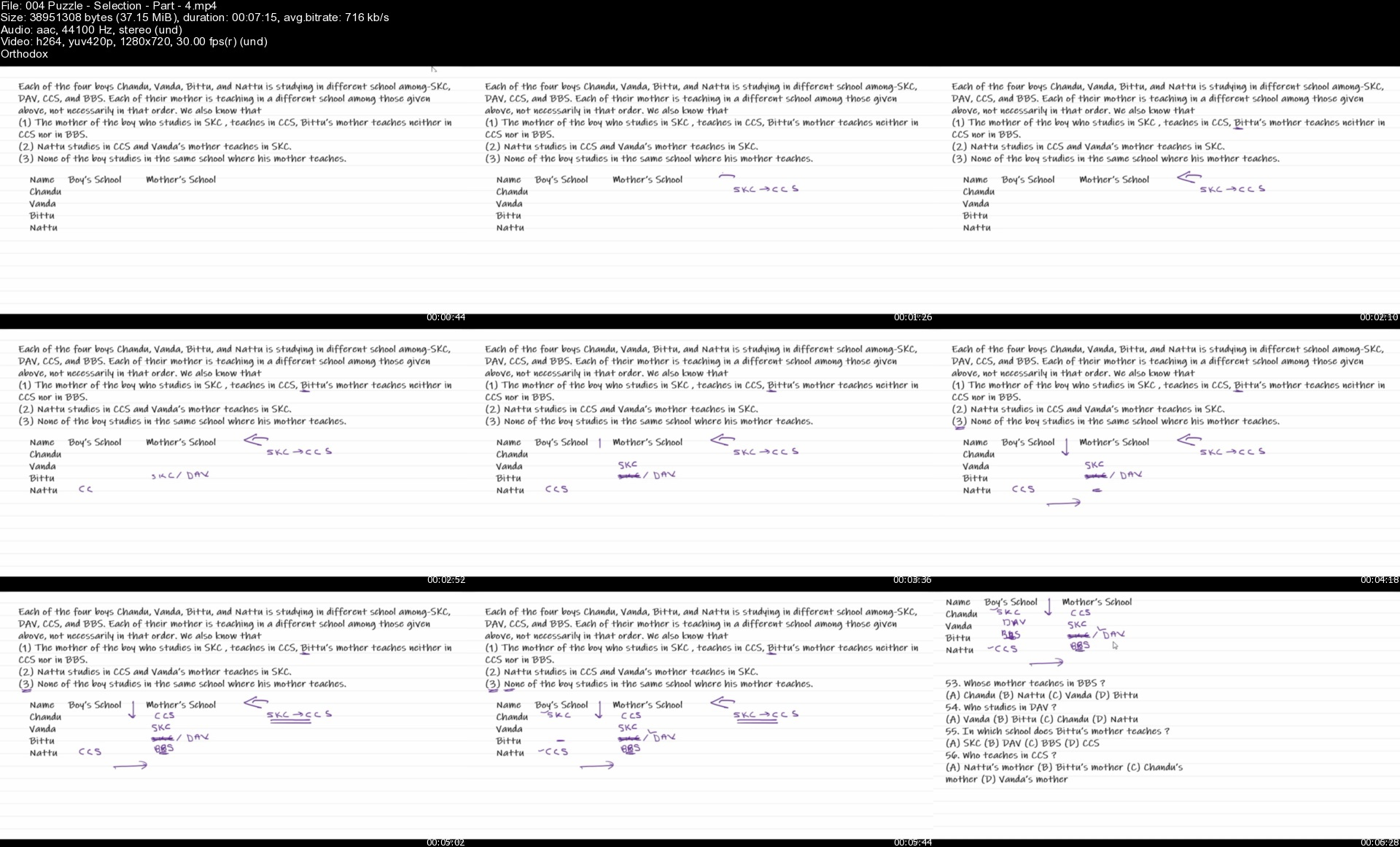
Reasoning Ability Mastery | Logical Reasoning Course 2021

rsozf2exxll15vjjb4fuh6qjnn.jpg


Reasoning Ability Mastery | Logical Reasoning Course 2021
MP4 | Video: h264, 1280x720 | Audio: AAC, 44.1 KHz, 2 Ch
Genre: eLearning | Language: English | Duration: 88 lectures (19h 56m) | Size: 6.21 GB

Learn all the concepts & tricks in easiest possible way.

What you'll learn:
Reasoning Ability for campus placement exams.
Reasoning concepts, tricks & smart approach to solve the questions faster.
Reasoning for MBA CET, SNAP, CMAT & different MBA entrance exams.
Reasoning for government recruitment exams, CSAT, IBPS etc

Requirements
No requirement, anyone eager to learn will enjoy the course.


Description
Reasoning Ability Mastery - Logical Reasoning course is designed with a weekly schedule plan, so , if you are self disciplined & motivated to learn, you will learn so many things in smartest & fastest possible way.

Just like Quantitative Aptitude, Reasoning ability forms one important part of many entrance exams, and in fact if you practice properly, this section will give you more marks in the exam and can turn out to be a huge score booster.The course is surely going to be helpful for engineering students preparing for campus placement aptitude tests or for aptitude section of GATE or for students preparing for different exams like CSAT, MAH MBA CET, SNAP, NMAT etc.

The Course Language- The course is taught in the right mixture of English & Hindi to make concepts & tricks easy to understand & make students comfortable to learn all the topics. All PDF notes & questions are in English though.

Content-

Module 1. Blood Relations

Module 2. Direction Sense

Module 3. Coding - Decoding

Module 4. Number Series

Module 5. Symbols & Operations

Module 6. Puzzle - Comparison & Selection

Module 7. Puzzle - Seating Arrangement

Module 8. Syllogism

Module 9. Input - Output

Module 10. Data Sufficiency

Module 11. Clocks

Module 12. Calendars

Apart from above mentioned modules, additional content is updated from time to time.

Students doubts are welcome, and we try our level best to revert to your doubts and queries within 24 hours.

Who this course is for
Students preparing for Campus placement aptitude tests
Students preparing for different MBA entrance exams.
Students prearing for different governement recruitment exams like CSAT, IBPS etc

Homepage

004puzzleselectionparx0jp1.jpg


Complete Cyber Security, Ethical Hacking - Nano Degree

lbbzvn9egwvbwepohezy3p0kx9.jpg


Complete Cyber Security, Ethical Hacking - Nano Degree
MP4 | Video: h264, 1280x720 | Audio: AAC, 44100 Hz
Language: English | Size: 5.53 GB | Duration: 10h 10m


What you'll learn
Cyber security and its industrial practice
Ethical Hacking
Web Security
Network Security
Cryptography
Kali Linux & Metasploit
Requirements
An open mind with computer and internet connection

Description
*** This elaborated course on Udemy is the only one where you get to practice your skill on cybersecurity ***

Cybersecurity refers to the body of technologies, processes, and practices designed to protect networks, devices, programs, and data from attack, damage, or unauthorized access. Cybersecurity may also be referred to as information technology security.

Cybersecurity doesn't involve just businesses and the government. Your computer, tablet, and cellphone probably contain information that hackers and other criminals would love to have, like other people's email addresses, names, and birthdates. Suppose, for example, a hacker had access to your contact information. He could then send an email or text message to everyone you know, using your name, encouraging them to click on a link containing malware, like "Hey Jane, I thought you'd love this! Click here."

This course is designed in a way to give you an insight into all the aspects of cybersecurity and at the same time, we make sure that you get the hands-on experience. The course consists of ********, Web Security, Cryptography, Network Security, Malware, Operating System Security, Social Engineering, Memory attacks, Zero-Day attacks. We will deal with the theory and will then move to the practical part.

The course will have some hacking challenges as assignments. Those will be unlocked over the period of the course. It is a self-paced course for you to take onto. But we recommend spending at least 6-8 hours per week on the course. You can always ask the questions in the forum and that will be answered by the experts. After every few weeks, there will be live QNA sections regarding the course which you can attend and ask any question that you have to the instructor.

Job scenarios in Cybersecurity

Cybersecurity is very obviously a job sector of the future. Official estimates put job growth in the sector at 37% per year at least through 2022 - and that is probably conservative. At the start of this year there were an estimated half million cybersecurity jobs unfilled in the U.S. alone.

Even entry-level pay is about $10,000 better than the national median salary, and those who reach the C suite are getting into the $500,000 range.

That's the good news. It's also the bad news, for society. Because the main reason it is a job of the future is because the cyber risks of a connected world keep expanding and getting more threatening.

It's now so last year - even last five years - to refer to the Internet of Things (IoT). It is now, or soon will be, the Internet of Everything (IoE). Encryption guru, author, blogger and CTO at IBM Resilient Bruce Schneier calls it Internet+ (short for Internet+Things+Us) in his most recent book, "Click Here to Kill Everybody."

It is a world where pretty much everything and everybody - individuals, companies, governments, critical infrastructure - are increasingly dependent on connected systems, networks, and devices.

Is the curriculum of the course fixed?

The course is updated based on the changing technology in that field. This makes sure that you keep your cybersecurity knowledge updated. Also every now and then all the students will participate in CTF competitions which are hacking competitions and the instructor will help in sharing the details about the challenges and how one should approach them.

The course is a nano degree for Cyber Security where the student will go through various challenges, assignments, quizzes.


Who this course is for:
Computer Science students
Anyone who is looking to start their carrier in cyber security
Anyone who wants to learn Ethical Hacking
Industrial Professionals who wants to learn and implement security models in their organization


Homepage

38.insufficientloggintejdh.jpg


Complete Web Development 2021 From Absolute Basics

g81qxqpczwjmw1geueomt7uj05.jpg


Complete Web Development 2021 From Absolute Basics
Genre: eLearning | MP4 | Video: h264, 1280x720 | Audio: AAC, 48.0 KHz
Language: English | Size: 6.70 GB | Duration: 12h 41m

Become full stack Web Developer and learn MODERN technologies like JavaScript ES2020, HTML, CSS & More!


What you'll learn
You will master both frontend and backend web development
You will learn the latest technologies such as JavaScript ES2020 and many more!
You will be able to create not only simple websites but also dynamic web applications
You will be able to deploy the created application online in the Heroku cloud
You will master VSCode - the most popular editor for developers
You will master communication with the modern MongoDB database
You will solve interesting tasks during the course - with my help if you need to
You will be able to secure web applications by logging in, authorizing access to a resource, hashing passwords and more.


Description
Welcome to the new complete Full Stack Web Development course after which you will become a Web Developer - you will be able to create websites and dynamic web applications run in a web browser.

You don't need any prior programming knowledge. As an instructor, I will guide you through everything step by step and use my skills of good explaining and teaching to make you feel really comfortable.

What you will learn in the course:

HTML - the basic language for creating web pages

CSS - a language to give nice look and feel to web pages, such as colors

JavaScript - programming language to add interaction to the page and make it dynamic

Node.js, which is a fantastic technology for creating fully dynamic websites using JavaScript (one language for frontend and backend!)

Express Js - framework for Node.js

EJS - template language for HTML for applications based on Node.js

MongoDB - non-relational database for building dynamic web applications

Visual Studio Code editor (free)

In the course, you will create not only websites yourself, but also a dynamic web application

You will learn how to create a cloud application

And many others

After the premiere (May 2021), the course will be updated with new modules

The course starts with the absolute basics and gradually goes on using knowledge from previous lessons. In this course, you will also create several websites and web applications from scratch, from a blank file on your local computer, to filling it with code, to a working cloud application. You will be allowed to use the applications in your portfolio.

At the end, the highlight of the show - an application for self-writing in Node, Express, MongoDB, HTML, CSS and JavaScript. In addition to the knowledge already known, you will also learn about other issues such as securing the application against hacker attacks, not displaying online error messages, logging in, authorizing access to the resource, filtering out dangerous characters from the values entered by the user, encrypting passwords in the database, etc. The application will be used to ask questions and provide answers by logged in users. You will implement a session-based login system, registration system and more. You will write everything from A to Z, from a simple HTML and CSS website template to a dynamic application based on Node and MongoDB. Of course, there will be help if needed: tips and files for the lesson, as well as the entire application for download in a zip file.

After completing this course, you will fully understand Web Development and be able to fluently create web pages and dynamic web applications

This high-quality course is built so as not to waste your time as a student, so that you will feel the comfort of creating websites and web applications as soon as possible. The course is carefully planned and prepared. The course is mainly based on on-screen coding (except for the introductory lessons) showing practical examples with good clear explanations. Thanks to this, you will always have the fastest and deepest understanding of the issue. In many areas, especially in programming, practice is the most important. Hence, there are also many tasks for doing yourself - help is also available when needed.

I encourage you to enroll in this great course if you want to start your career as a Web Developer. I am absolutely sure that you will be very satisfied after completing this course. Even if you hesitate, remember that on Udemy, you are guaranteed a 30-day money-back upon request without any questions. Therefore, you do not risk completing anything and you have a lot to gain. So click the course enrollment button and start your Web Development journey now!


Who this course is for:
People who want to learn how to create websites
People who want to learn how to create cloud-based web applications
People who want to work as a Web Developer


Homepage

002whatisinternetandh10kaa.jpg


Zurück
Oben Unten