


• Regeln für den Video-Bereich:

    In den Börsenbereich gehören nur Angebote die bereits den Allgemeinen Regeln entsprechen.

    Einteilung

    - Folgende Formate gehören in die angegeben Bereiche:
    - Filme: Encodierte Filme von BluRay, DVD, R5, TV, Screener sowie Telesyncs im Format DivX, XviD und x264.
    - DVD: Filme im Format DVD5, DVD9 und HD2DVD.
    - HD: Encodierte Filme mit der Auflösung 720p oder darüber von BluRay, DVD, R5, TV, Screener sowie Telesyncs im Format x264.
    - 3D: Encodierte Filme von BluRay, die in einem 3D Format vorliegen. Dies gilt auch für Dokus, Animation usw.
    - Serien: Cartoon/Zeichentrick, Anime, Tutorials, Dokumentationen, Konzerte/Musik, Sonstiges sind demnach in die entsprechenden Bereiche einzuordnen, auch wenn sie beispielsweise im High Definition-Format oder als DVD5/DVD9/HD2DVD vorliegen. Ausnahme 3D.
    - Bereich Englisch: Englische Releases gehören immer in diesen Bereich.
    - Bereich Talk: Der Bereich, in dem über die Releases diskutiert werden kann, darf, soll und erwünscht ist.


    Angebot/Beitrag erstellen

    - Ein Beitrag darf erst dann erstellt werden, wenn der Upload bei mindestens einem OCH komplett ist. Platzhalter sind untersagt.
    - Bei einem Scenerelease hat der Threadtitel ausschließlich aus dem originalen, unveränderten Releasenamen zu bestehen. Es dürfen keine Veränderungen wie z.B. Sterne, kleine Buchstaben o.ä. vorgenommen werden. Ausnahme Serienbörse:
    - Bei einem Sammelthread für eine Staffel entfällt aus dem Releasename natürlich der Name der Folge. Beispiel: Die Simpsons S21 German DVDRip XviD - ITG
    - Dementsprechend sind also u.a. verboten: Erweiterungen wie "Tipp", "empfehlenswert", "only", "reup", usw. / jegliche andere Zusatzinformation oder Ergänzung, welche nicht in obiger Beschreibung zu finden ist.

    Aufbau des Angebots und Threadtitel

    Der Titel nach folgendem Muster erstellt zu werden. <Name> [3D] [Staffel] [German] <Jahr> <Tonspur> [DL] [Auflösung] <Quelle> <Codec> - <Group>
    Beispiel: The Dark Knight German 2008 AC3 DVDRip XviD - iND
    Beispiel: The Dark Knight 2008 DTS DL BDRip x264 - iND
    Beispiel: The Dark Knight 2008 AC3 DL BDRip XviD - iND
    Beispiel: The Dark Knight German 2008 AC3 720p BluRay x264 iND
    Beispiel: The Dark Knight 2008 DTS DL 1080p BluRay x264 iND
    Beispiel: Die Simpsons S01 German AC3 DVDRip XviD iND
    Beispiel: Die Simpsons S20 German AC3 720p BluRay x264 iND
    Beispiel: Sword Art Online II Ger Sub 2014 AAC 1080p WEBRip x264 - peppermint
    Entsprechend sind also u.a. verboten: Sonderzeichen wie Klammern, Sterne, Ausrufezeichen, Unterstriche, Anführungszeichen / Erweiterungen wie "Tipp", "empfehlenswert", "only", "reup", usw. / jegliche andere Zusatzinformation oder Ergänzung, welche nicht in obiger Beschreibung zu finden ist
    Ausnahmen hiervon können in den Bereichen geregelt sein.

    Die Beiträge sollen wie folgt aufgebaut werden:
    Überschrift entspricht dem Threadtitel
    Cover
    kurze Inhaltsbeschreibung
    Format, Größe, Dauer sind gut lesbar für Downloader außerhalb des Spoilers zu vermerken
    Nfo sind immer Anzugeben und selbige immer im Spoiler in Textform.
    Sind keine Nfo vorhanden z.B. Eigenpublikationen, sind im Spoiler folgende Dateiinformationen zusätzlich anzugeben :
    Quelle
    Video (Auflösung und Bitrate)
    Ton (Sprache, Format und Bitrate der einzelnen Spuren)
    Untertitel (sofern vorhanden)
    Hosterangabe in Textform außerhalb eines Spoiler mit allen enthaltenen Hostern.
    Bei SD kann auf diese zusätzlichen Dateiinformationen verzichtet werden.

    Alle benötigten Passwörter sind, sofern vorhanden, in Textform im Angebot anzugeben.
    Spoiler im Spoiler mit Kommentaren :"Schon Bedankt?" sind unerwünscht.


    Releases

    - Sind Retail-Release verfügbar, sind alle anderen Variationen untersagt. Ausnahmen: Alle deutschen Retail-Release sind CUT, in diesem Fall sind dubbed UNCUT-Release zulässig.
    - Im Serien-Bereich gilt speziell: Wenn ein Retail vor Abschluss einer laufenden Staffel erscheint, darf diese Staffel noch zu Ende gebracht werden.62
    - Gleiche Releases sind unbedingt zusammenzufassen. Das bedeutet, es ist zwingend erforderlich, vor dem Erstellen eines Themas per Suchfunktion zu überprüfen, ob bereits ein Beitrag mit demselben Release besteht. Ist dies der Fall, ist der bereits vorhandene Beitrag zu verwenden.
    - P2P und Scene Releases dürfen nicht verändert oder gar unter einem iND Tag eingestellt werden.


    Support, Diskussionen und Suche

    - Supportanfragen sind entweder per PN oder im Bereich Talk zu stellen.
    - Diskussionen und Bewertungen sind im Talk Bereich zu führen. Fragen an die Uploader haben ausschließlich via PN zu erfolgen, und sind in den Angeboten untersagt.
    - Anfragen zu Upload-Wünschen sind nur im Bereich Suche Video erlaubt. Antworten dürfen nur auf Angebote von MyBoerse.bz verlinkt werden.


    Verbote

    - Untersagt sind mehrere Formate in einem einzigen Angebotsthread, wie beispielsweise das gleichzeitige Anbieten von DivX/XviD, 720p und 1080p in einem Thread. Pro Format, Release und Auflösung ist ein eigener Thread zu eröffnen.
    - Grundsätzlich ebenso verboten sind Dupes. Uploader haben sich an geeigneter Stelle darüber zu informieren, ob es sich bei einem Release um ein Dupe handelt.
    - Gefakte, nur teilweise lauffähige oder unvollständige Angebote sind untersagt. Dies gilt auch für eigene Publikationen, die augenscheinlich nicht selbst von z.B. einer DVD gerippt wurden. Laufende Serien, bei denen noch nicht alle Folgen verfügbar sind, dürfen erstellt und regelmäßig geupdatet werden.
    - Untersagt sind Angebote, welche nur und ausschließlich in einer anderen Sprache als deutsch oder englisch vorliegen. Ausnahmen sind VORHER mit den Moderatoren zu klären.


    Verstoß gegen die Regeln

    - Angebote oder Beiträge, die gegen die Forenregeln verstoßen, sind über den "Melden"-Button im Beitrag zu melden.
  • Bitte registriere dich zunächst um Beiträge zu verfassen und externe Links aufzurufen.

++ Premium IPTV ++ 7000 Live Sender ++ UHD Qualität ++ Mediathek mit 18.000 Inhalten ++


VenneTV


Englische Tutorials

TensorFlow Developer Certificate in 2021: Zero to Mastery (Updated 05/2021)
hvdcfvmllrcwn5vnzprhgxxkow.jpg


TensorFlow Developer Certificate in 2021: Zero to Mastery (Updated 05/2021)
MP4 | Video: h264, 1280x720 | Audio: AAC, 44.1 KHz, 2 Ch
Genre: eLearning | Language: English + srt | Duration: 348 lectures (51h 4m) | Size: 26.7 GB

Pass the TensorFlow Developer Certification Exam by Google. Become an AI, Machine Learning, and Deep Learning expert!

What you'll learn:
Learn to pass Google's official TensorFlow Developer Certificate exam (and add it to your resume)
Build TensorFlow models using Computer Vision, Convolutional Neural Networks and Natural Language Processing
Complete access to ALL interactive notebooks and ALL course slides as downloadable guides
Increase your skills in Machine Learning and Deep Learning, to test your abilities with the TensorFlow assessment exam
Understand how to integrate Machine Learning into tools and applications
Learn to build all types of Machine Learning Models using the latest TensorFlow 2
Build image recognition, object detection, text recognition algorithms with deep neural networks and convolutional neural networks
Using real-world images in different shapes and sizes to visualize the journey of an image through convolutions to understand how a computer "sees" information, plot loss and accuracy
Applying Deep Learning for Time Series Forecasting
Gain the skills you need to become a TensorFlow Certified Developer
Be recognized as a top candidate for recruiters seeking TensorFlow developers

Requirements
Mac / Windows / Linux - all operating systems work with this course!
No previous TensorFlow knowledge required. Basic understanding of Machine Learning is helpful


Description
Just launched with all modern best practices for working with TensorFlow and passing the TensorFlow Developer Certificate exam! Join a live online community of over 500,000+ students and a course taught by a TensorFlow certified expert. This course will take you from absolute beginner with TensorFlow, to becoming part of Google's TensorFlow Certification Network.

TensorFlow experts earn up to $204,000 USD a year, with the average salary hovering around $148,000 USD according to 2021 statistics. By passing this certificate, which is officially recognized by Google, you will be joining the growing Machine Learning industry and becoming a top paid TensorFlow developer! If you pass the exam, you will also be part of Google's TensorFlow Developer Network where recruiters are able to find you.

The goal of this course is to teach you all the skills necessary for you to go and pass this exam and get your TensorFlow Certification from Google so you can display it on your resume, LinkedIn, Github and other social media platforms to truly make you stand out.

Here is a full course breakdown of everything we will teach (yes, it's very comprehensive, but don't be intimidated, as we will teach you everything from scratch!):

This course will be very hands on and project based. You won't just be staring at us teach, but you will actually get to experiment, do exercises, and build machine learning models and projects to mimic real life scenarios. Most importantly, we will show you what the TensorFlow exam will look like for you. By the end of it all, you will develop skillsets needed to develop modern deep learning solutions that big tech companies encounter.

0 - TensorFlow Fundamentals

Introduction to tensors (creating tensors)

Getting information from tensors (tensor attributes)

Manipulating tensors (tensor operations)

Tensors and NumPy

Using @tf.function (a way to speed up your regular Python functions)

Using GPUs with TensorFlow

1 - Neural Network Regression with TensorFlow

Build TensorFlow sequential models with multiple layers

Prepare data for use with a machine learning model

Learn the different components which make up a deep learning model (loss function, architecture, optimization function)

Learn how to diagnose a regression problem (predicting a number) and build a neural network for it

2 - Neural Network Classification with TensorFlow

Learn how to diagnose a classification problem (predicting whether something is one thing or another)

Build, compile & train machine learning classification models using TensorFlow

Build and train models for binary and multi-class classification

Plot modelling performance metrics against each other

Match input (training data shape) and output shapes (prediction data target)

3 - Computer Vision and Convolutional Neural Networks with TensorFlow

Build convolutional neural networks with Conv2D and pooling layers

Learn how to diagnose different kinds of computer vision problems

Learn to how to build computer vision neural networks

Learn how to use real-world images with your computer vision models

4 - Transfer Learning with TensorFlow Part 1: Feature Extraction

Learn how to use pre-trained models to extract features from your own data

Learn how to use TensorFlow Hub for pre-trained models

Learn how to use TensorBoard to compare the performance of several different models

5 - Transfer Learning with TensorFlow Part 2: Fine-tuning

Learn how to setup and run several machine learning experiments

Learn how to use data augmentation to increase the diversity of your training data

Learn how to fine-tune a pre-trained model to your own custom problem

Learn how to use Callbacks to add functionality to your model during training

6 - Transfer Learning with TensorFlow Part 3: Scaling Up (Food Vision mini)

Learn how to scale up an existing model

Learn to how evaluate your machine learning models by finding the most wrong predictions

Beat the original Food101 paper using only 10% of the data

7 - Milestone Project 1: Food Vision

Combine everything you've learned in the previous 6 notebooks to build Food Vision: a computer vision model able to classify 101 different kinds of foods. Our model well and truly beats the original Food101 paper.

8 - NLP Fundamentals in TensorFlow

Learn to:

Preprocess natural language text to be used with a neural network

Create word embeddings (numerical representations of text) with TensorFlow

Build neural networks capable of binary and multi-class classification using:

RNNs (recurrent neural networks)

LSTMs (long short-term memory cells)

GRUs (gated recurrent units)

CNNs

Learn how to evaluate your NLP models

9 - Milestone Project 2: SkimLit

Replicate a the model which powers the PubMed 200k paper to classify different sequences in PubMed medical abstracts (which can help researchers read through medical abstracts faster)

10 - Time Series fundamentals in TensorFlow

Learn how to diagnose a time series problem (building a model to make predictions based on data across time, e.g. predicting the stock price of AAPL tomorrow)

Prepare data for time series neural networks (features and labels)

Understanding and using different time series evaluation methods

MAE - mean absolute error

Build time series forecasting models with TensorFlow

RNNs (recurrent neural networks)

CNNs (convolutional neural networks)

11 - Milestone Project 3: (Surprise)

If you've read this far, you are probably interested in the course. This last project will be good.. we promise you, so see you inside the course ;)

TensorFlow is growing in popularity and more and more job openings are appearing for this specialized knowledge. As a matter of fact, TensorFlow is outgrowing other popular ML tools like PyTorch in job market. Google, Airbnb, Uber, DeepMind, Intel, IBM, Twitter, and many others are currently powered by TensorFlow. There is a reason these big tech companies are using this technology and you will find out all about the power that TensorFlow gives developers.

We guarantee you this is the most comprehensive online course on passing the TensorFlow Developer Certificate to qualify you as a TensorFlow expert. So why wait? Make yourself stand out by becoming a Google Certified Developer and advance your career.

See you inside the course!

Who this course is for
Anyone who wants to pass the TensorFlow Developer exam so they can join Google's Certificate Network and display their certificate and badges on their resume, GitHub, and social media platforms including LinkedIn, making it easy to share their level of TensorFlow expertise with the world
Students, developers, and data scientists who want to demonstrate practical machine learning skills through the building and training of models using TensorFlow
Anyone looking to expand their knowledge when it comes to AI, Machine Learning and Deep Learning
Anyone looking to master building ML models with the latest version of TensorFlow

Homepage
007buildinganendtoendj4jsc.jpg


Master Web Design in Adobe XD

0083eca6swkv9.jpg


Master Web Design in Adobe XD
Duration: 7h 26m | 77 Lessons | Video: 1280x720, 44kHz | 5.1 GB
Genre: eLearning | Language: English | Level: All

Create beautiful and responsive website designs in Adobe XD. This course will show you how you can design a beautiful website from scratch without any previous experience. Here's what's included:

essential exercises that will teach you how to work like a professional;
a complete web design project, from start to finish, both the desktop version and the responsive version;
how to prepare the design for coding;
how to understand what clients want & how to help them achieve their goals;
UI & UX principles that will help you design any website, no matter the style or client.
I made this course for anyone interested in web design - from beginners to professionals, from designers to coders, from business owners to someone who's looking to start a new career or earn some money.

Adobe XD is the next big thing in terms of design tools. It makes you look like a professional designer even if you're just a beginner. Start right now and take your designs to another level. At the end of this course, you'll have a beautiful project for your portfolio, but also a deep understanding of what makes a website design successful.

05exercisepracticeyou88joo.jpg


NestJS - Building Real Project API From Scratch

ujrplb0wpvbkrofcml6fi7fk87.jpg


NestJS - Building Real Project API From Scratch
MP4 | Video: h264, 1280x720 | Audio: AAC, 44.1 KHz, 2 Ch
Genre: eLearning | Language: English + srt | Duration: 39 lectures (7h 59m) | Size: 5.32 GB

Improve your NestJS skills with this series while developing an API for real application

What you'll learn:
Build real project with NestJS
Write high quality code in NestJS
Create reusable modules and services in NestJS

Requirements
A computer on which you can install software (Windows, MacOS, or Linux)
Javascript knowledge is required


Description
In this course we will build a Medium clone API using NestJS, Typescript, Typeorm and PostgreSQL. This course is fully focused on fast and deep dive into creation of API for real application with NestJS. We will start from scratch and step by step you will get close to finished real application. You will deeply understand how to structure your application, build reusable and understandable modules and services and split code into smaller chunks of code. We will write code together in efficient way to make it pure and avoid data complexity.

For each lesson you'll get source code of the lesson, so it's easy to see the progress and get a working app on any lesson you want.

What you will learn in this course:

Structure and configure project

Write high quality code with NestJS on real project

Create reusable modules, controllers and services

Implementing authentication

Deeply understand NestJS design patterns

No prior knowledge except of Javascript is needed (because I will teach you everything from basics) but if you have experience with any of this (Angular/NodeJS/Express/Typescript/Typeorm/PostgreSQL) it will be easier for you to go through this course.

If you are feeling like you learned NodeJS but you still still missing knowledge of how to build your own real application this course is what you need. This course is fully focused on creating the application without getting deep into basic knowledge of NodeJS!

Who this course is for
This course is for you if you want to develop API for real project from beginning to the end
This course is for everyone who is interested in learning developing with NestJS
This course is for you if you want to improve you knowledge of NestJS or backend development

Homepage

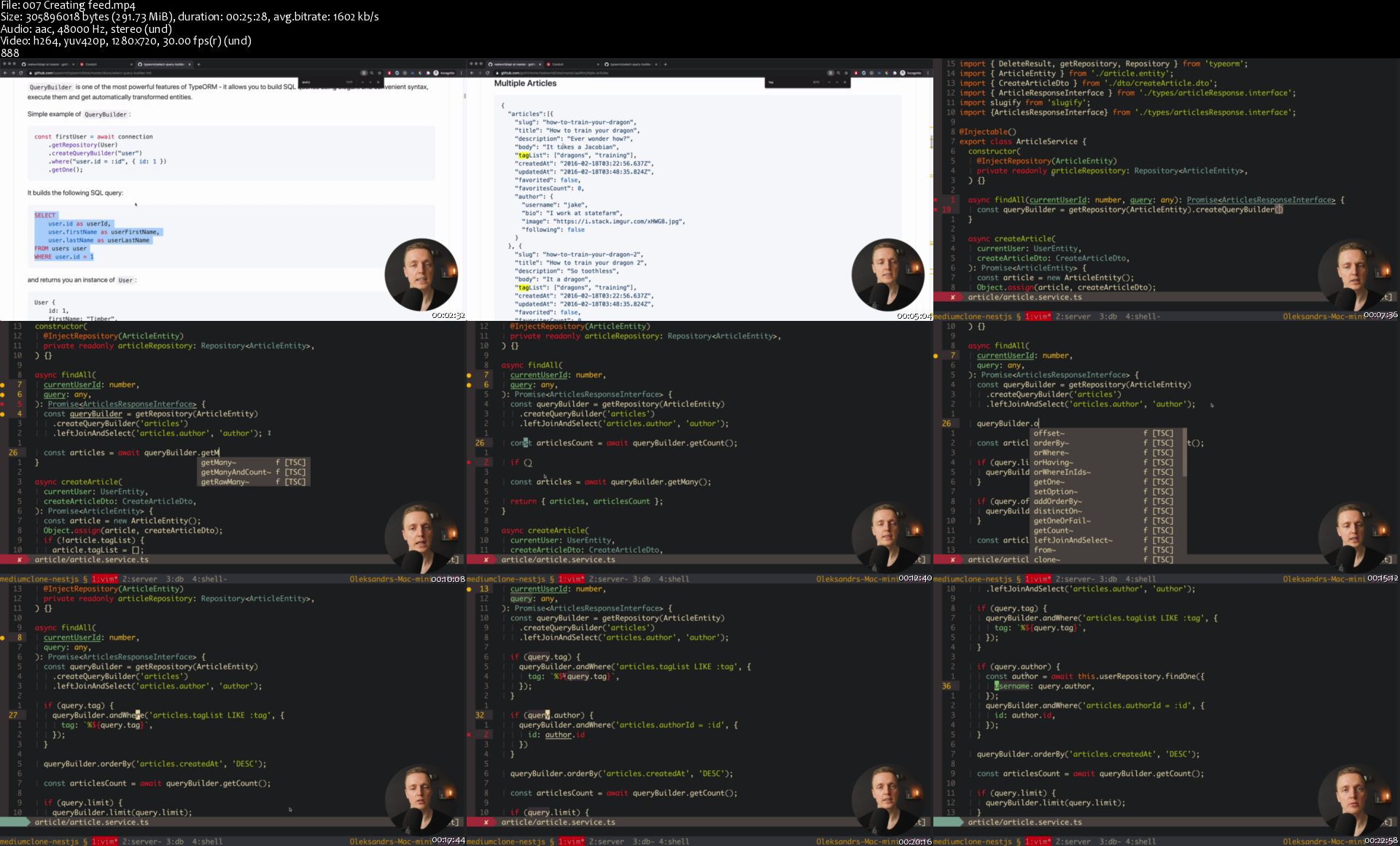
007creatingfeedsl4kxz.jpg


TTC - Money Management Skills

21jnj3b79n4ovvqs8jhvqphjin.jpg


TTC - Money Management Skills
Duration: 6h 12m | Video: .MP4 1280x720, 30 fps(r) | Audio: AAC, 44100Hz, 2ch | Size: 5.21 GB
Genre: eLearning | Language: English

Money management can be intimidating, but the good news is that the newest research into the human brain can help us understand why we make mistakes and how we can create an effective plan to meet our financial goals. Learning to navigate complex financial markets and create good financial habits is essential to the all-important goal of gaining control over our financial future.

Money management requires knowledge of financial products, investment and risk theory, and essential tax rules. But it also requires an understanding of how we as fallible humans make mistakes. These lectures will go beyond the advice of a traditional money management course and delve into the emerging science of financial decision-making. With this course, you'll learn how to overcome your brain's programming and avoid following your emotions down the wrong financial path.

The goal of money management is to maximize our happiness at every stage of our lives. Whether you are a novice investor or a seasoned pro, a young person getting started in life or a Baby Boomer contemplating retirement, Money Management Skills is an excellent primer for creating financial security. Taught by financial expert and Texas Tech University professor Michael Finke, these 12 practical lectures will boost your confidence around money management. This is not a course for big investors looking for the next hot stock. Rather, these lectures are for regular people who want to make sound financial decisions without obsessing over the daily changes in the market.

For most of us, a few basic principles of money management can help us get our financial houses in order, answering such questions as:

What are the optimal uses of credit and debt?
Is home ownership actually a good investment?
How much insurance do I really need?
Where should I invest my money?
What should I do to prepare for retirement?
Money Management Skills takes you on a tour of some of the most widely available financial products, from mutual funds to life insurance to college savings accounts. Professor Finke offers evidence-based guidance for building a financial strategy using these products. When you complete the course, you will have all the important information you need to manage your finances-as well as being aware of psychological pitfalls to avoid.

Manage Money for Every Stage of Your Life

After reviewing the psychology of decision-making-and how our instincts often steer us wrong when it comes to loss aversion, risk tolerance, and information overload-Professor Finke explains the "life cycle theory" of financial planning. This eye-opening theory offers a framework for making financial decisions based on the different stages of your life, and it will give you an entirely new perspective on money management.

The goal is simple: to get the most out of your money across time. There is a time in all of our lives where we should be borrowing more and saving less, and a time when we should be saving more and borrowing less. As he teases out the implications of this framework, Professor Finke introduces you to the range of financial products and tools at your disposal, including:

liquid assets,
stocks and bonds,
mutual funds,
credit,
mortgages,
insurance, and
estate planning.
You'll receive a comprehensive overview of these options, as well as general guidance about the principles of taxation, building a credit history, analyzing your tolerance for risk, choosing a retirement age, and much more. Professor Finke ties it all together with the most up-to-date financial data and trends.

Create Your Long-Term Financial Plan

The tricky thing about financial management is that our instincts are often unreliable. Scientific evidence suggests that humans are hard-wired to make emotional decisions that prevent us from making good decisions under stress. For instance, we might be tempted to sell stock when the market falls, or we might overestimate certain risks while ignoring greater threats. The key to sound money management is to develop patience and discipline for the long haul.

Money Management Skills gives you a rational blueprint for setting financial goals, managing debt responsibly, setting aside money for retirement, taking advantage of tax benefits, navigating end-of-life issues, and much more. You'll discover a host of basic rules of thumb, such as:

Education is one of the most valuable investments you can make for yourself or your children.
Choose passive, low-expense mutual or index funds for long-term investing, and be sure to diversify your portfolio.
Term life insurance is a great value, but depending on your tolerance for risk, comprehensive auto insurance might not be such a good deal.
Retiring just a few years later can leave you with significantly more money to spend annually during your retirement.
While everyone's life is different, the information and sound advice in this course will empower you to create your own financial plan to reach your goals. Professor Finke provides a worry-free approach to handling all aspects of money management.

Homepage

02managingmoneywithlimbkc7.jpg


Machine Learning with PyTorch

wkojhemg78iylysrmmglw9xj27.jpg


Machine Learning with PyTorch
MP4 | Video: h264, 1280x720 | Audio: AAC, 48000 Hz, 2 Ch
Language: English | Size: 8.26 GB | Duration: 6h 49m

Learn the main concepts and techniques used in modern machine learning and deep neural networks through numerous examples written in PyTorch

Overview
This course begins with the basic concepts of machine and deep learning. Subsequently, you gain a reasonable familiarity with the main features of PyTorch and learn how it can be applied to some popular problem domains.

Learn How To
Apply various machine and deep learning techniques
Understand the difference between various machine and deep learning libraries
Create classifiers
Enhance an existing classifier

Homepage

000030.2installingtheuckjt.jpg


Java Data Structures and Algorithms Masterclass

awibo6zulso47oyyitddr1hkmi.jpg


Java Data Structures and Algorithms Masterclass
MP4 | Video: h264, 1280x720 | Audio: AAC, 44.1 KHz, 2 Ch
Genre: eLearning | Language: English + srt | Duration: 385 lectures (44h 42m) | Size: 10.2 GB

Data Structures and Algorithms from Zero to Hero and Crack Top Companies 100+ Interview questions (Java Coding)

What you'll learn:
Learn, implement, and use different Data Structures
Learn, implement and use different Algorithms
Become a better developer by mastering computer science fundamentals
Learn everything you need to ace difficult coding interviews
Cracking the Coding Interview with 100+ questions with explanations
Time and Space Complexity of Data Structures and Algorithms
Recursion
Big O
Dynamic Programming
Divide and Conquer Algorithms
Graph Algorithms
Greedy Algorithms

Requirements
Basic Java Programming skills


Description
Welcome to the Java Data Structures and Algorithms Masterclass, the most modern, and the most complete Data Structures and Algorithms in Java course on the internet.

At 44+ hours, this is the most comprehensive course online to help you ace your coding interviews and learn about Data Structures and Algorithms in Java. You will see 100+ Interview Questions done at the top technology companies such as Apple,Amazon, Google and Microsoft and how to face Interviews with comprehensive visual explanatory video materials which will bring you closer towards landing the tech job of your dreams!

Learning Java is one of the fastest ways to improve your career prospects as it is one of the most in demand tech skills! This course will help you in better understanding every detail of Data Structures and how algorithms are implemented in high level programming language.

We'll take you step-by-step through engaging video tutorials and teach you everything you need to succeed as a professional programmer.

After finishing this course, you will be able to:

Learn basic algorithmic techniques such as greedy algorithms, binary search, sorting and dynamic programming to solve programming challenges.

Learn the strengths and weaknesses of a variety of data structures, so you can choose the best data structure for your data and applications

Learn many of the algorithms commonly used to sort data, so your applications will perform efficiently when sorting large datasets

Learn how to apply graph and string algorithms to solve real-world challenges: finding shortest paths on huge maps and assembling genomes from millions of pieces.

Why this course is so special and different from any other resource available online?

This course will take you from very beginning to a very complex and advanced topics in understanding Data Structures and Algorithms!

You will get video lectures explaining concepts clearly with comprehensive visual explanations throughout the course.

You will also see Interview Questions done at the top technology companies such as Apple,Amazon, Google and Microsoft.

I cover everything you need to know about technical interview process!

So whether you are interested in learning the top programming language in the world in-depth and interested in learning the fundamental Algorithms, Data Structures and performance analysis that make up the core foundational skillset of every accomplished programmer/designer or software architect and is excited to ace your next technical interview this is the course for you!

And this is what you get by signing up today:

Lifetime access to 44+ hours of HD quality videos. No monthly subscription. Learn at your own pace, whenever you want

Friendly and fast support in the course Q&A whenever you have questions or get stuck

FULL money back guarantee for 30 days!

This course is designed to help you to achieve your career goals. Whether you are looking to get more into Data Structures and Algorithms , increase your earning potential or just want a job with more freedom, this is the right course for you!

The topics that are covered in this course.

Section 1 - Introduction

What are Data Structures?

What is an algorithm?

Why are Data Structures and Algorithms important?

Types of Data Structures

Types of Algorithms

Section 2 - Recursion

What is Recursion?

Why do we need recursion?

How Recursion works?

Recursive vs Iterative Solutions

When to use/avoid Recursion?

How to write Recursion in 3 steps?

How to find Fibonacci numbers using Recursion?

Section 3 - Cracking Recursion Interview Questions

Question 1 - Sum of Digits

Question 2 - Power

Question 3 - Greatest Common Divisor

Question 4 - Decimal To Binary

Section 4 - Bonus CHALLENGING Recursion Problems (Exercises)

power

factorial

productofArray

recursiveRange

fib

reverse

isPalindrome

someRecursive

flatten

captalizeFirst

nestedEvenSum

capitalizeWords

stringifyNumbers

collectStrings

Section 5 - Big O Notation

Analogy and Time Complexity

Big O, Big Theta and Big Omega

Time complexity examples

Space Complexity

Drop the Constants and the non dominant terms

Add vs Multiply

How to measure the codes using Big O?

How to find time complexity for Recursive calls?

How to measure Recursive Algorithms that make multiple calls?

Section 6 - Top 10 Big O Interview Questions (Amazon, Facebook, Apple and Microsoft)

Product and Sum

Print Pairs

Print Unordered Pairs

Print Unordered Pairs 2 Arrays

Print Unordered Pairs 2 Arrays 100000 Units

Reverse

O(N) Equivalents

Factorial Complexity

Fibonacci Complexity

Powers of 2

Section 7 - Arrays

What is an Array?

Types of Array

Arrays in Memory

Create an Array

Insertion Operation

Traversal Operation

Accessing an element of Array

Searching for an element in Array

Deleting an element from Array

Time and Space complexity of One Dimensional Array

One Dimensional Array Practice

Create Two Dimensional Array

Insertion - Two Dimensional Array

Accessing an element of Two Dimensional Array

Traversal - Two Dimensional Array

Searching for an element in Two Dimensional Array

Deletion - Two Dimensional Array

Time and Space complexity of Two Dimensional Array

When to use/avoid array

Section 8 - Cracking Array Interview Questions (Amazon, Facebook, Apple and Microsoft)

Question 1 - Missing Number

Question 2 - Pairs

Question 3 - Finding a number in an Array

Question 4 - Max product of two int

Question 5 - Is Unique

Question 6 - Permutation

Question 7 - Rotate Matrix

Section 9 - CHALLENGING Array Problems (Exercises)

Middle Function

2D Lists

Best Score

Missing Number

Duplicate Number

Pairs

Section 10 - Linked List

What is a Linked List?

Linked List vs Arrays

Types of Linked List

Linked List in the Memory

Creation of Singly Linked List

Insertion in Singly Linked List in Memory

Insertion in Singly Linked List Algorithm

Insertion Method in Singly Linked List

Traversal of Singly Linked List

Search for a value in Single Linked List

Deletion of node from Singly Linked List

Deletion Method in Singly Linked List

Deletion of entire Singly Linked List

Time and Space Complexity of Singly Linked List

Section 11 - Circular Singly Linked List

Creation of Circular Singly Linked List

Insertion in Circular Singly Linked List

Insertion Algorithm in Circular Singly Linked List

Insertion method in Circular Singly Linked List

Traversal of Circular Singly Linked List

Searching a node in Circular Singly Linked List

Deletion of a node from Circular Singly Linked List

Deletion Algorithm in Circular Singly Linked List

Method in Circular Singly Linked List

Deletion of entire Circular Singly Linked List

Time and Space Complexity of Circular Singly Linked List

Section 12 - Doubly Linked List

Creation of Doubly Linked List

Insertion in Doubly Linked List

Insertion Algorithm in Doubly Linked List

Insertion Method in Doubly Linked List

Traversal of Doubly Linked List

Reverse Traversal of Doubly Linked List

Searching for a node in Doubly Linked List

Deletion of a node in Doubly Linked List

Deletion Algorithm in Doubly Linked List

Deletion Method in Doubly Linked List

Deletion of entire Doubly Linked List

Time and Space Complexity of Doubly Linked List

Section 13 - Circular Doubly Linked List

Creation of Circular Doubly Linked List

Insertion in Circular Doubly Linked List

Insertion Algorithm in Circular Doubly Linked List

Insertion Method in Circular Doubly Linked List

Traversal of Circular Doubly Linked List

Reverse Traversal of Circular Doubly Linked List

Search for a node in Circular Doubly Linked List

Delete a node from Circular Doubly Linked List

Deletion Algorithm in Circular Doubly Linked List

Deletion Method in Circular Doubly Linked List

Entire Circular Doubly Linked List

Time and Space Complexity of Circular Doubly Linked List

Time Complexity of Linked List vs Arrays

Section 14 - Cracking Linked List Interview Questions (Amazon, Facebook, Apple and Microsoft)

Linked List Class

Question 1 - Remove Dups

Question 2 - Return Kth to Last

Question 3 - Partition

Question 4 - Sum Linked Lists

Question 5 - Intersection

Section 15 - Stack

What is a Stack?

What and Why of Stack?

Stack Operations

Stack using Array vs Linked List

Stack Operations using Array (Create, isEmpty, isFull)

Stack Operations using Array (Push, Pop, Peek, Delete)

Time and Space Complexity of Stack using Array

Stack Operations using Linked List

Stack methods - Push , Pop, Peek, Delete and isEmpty using Linked List

Time and Space Complexity of Stack using Linked List

When to Use/Avoid Stack

Stack Quiz

Section 16 - Queue

What is a Queue?

Linear Queue Operations using Array

Create, isFull, isEmpty and enQueue methods using Linear Queue Array

Dequeue, Peek and Delete Methods using Linear Queue Array

Time and Space Complexity of Linear Queue using Array

Why Circular Queue?

Circular Queue Operations using Array

Create, Enqueue, isFull and isEmpty Methods in Circular Queue using Array

Dequeue, Peek and Delete Methods in Circular Queue using Array

Time and Space Complexity of Circular Queue using Array

Queue Operations using Linked List

Create, Enqueue and isEmpty Methods in Queue using Linked List

Dequeue, Peek and Delete Methods in Queue using Linked List

Time and Space Complexity of Queue using Linked List

Array vs Linked List Implementation

When to Use/Avoid Queue?

Section 17 - Cracking Stack and Queue Interview Questions (Amazon,Facebook, Apple, Microsoft)

Question 1 - Three in One

Question 2 - Stack Minimum

Question 3 - Stack of Plates

Question 4 - Queue via Stacks

Question 5 - Animal Shelter

Section 18 - Tree / Binary Tree

What is a Tree?

Why Tree?

Tree Terminology

How to create a basic tree in Java?

Binary Tree

Types of Binary Tree

Binary Tree Representation

Create Binary Tree (Linked List)

PreOrder Traversal Binary Tree (Linked List)

InOrder Traversal Binary Tree (Linked List)

PostOrder Traversal Binary Tree (Linked List)

LevelOrder Traversal Binary Tree (Linked List)

Searching for a node in Binary Tree (Linked List)

Inserting a node in Binary Tree (Linked List)

Delete a node from Binary Tree (Linked List)

Delete entire Binary Tree (Linked List)

Create Binary Tree (Array)

Insert a value Binary Tree (Array)

Search for a node in Binary Tree (Array)

PreOrder Traversal Binary Tree (Array)

InOrder Traversal Binary Tree (Array)

PostOrder Traversal Binary Tree (Array)

Level Order Traversal Binary Tree (Array)

Delete a node from Binary Tree (Array)

Entire Binary Tree (Array)

Linked List vs Python List Binary Tree

Section 19 - Binary Search Tree

What is a Binary Search Tree? Why do we need it?

Create a Binary Search Tree

Insert a node to BST

Traverse BST

Search in BST

Delete a node from BST

Delete entire BST

Time and Space complexity of BST

Section 20 - AVL Tree

What is an AVL Tree?

Why AVL Tree?

Common Operations on AVL Trees

Insert a node in AVL (Left Left Condition)

Insert a node in AVL (Left Right Condition)

Insert a node in AVL (Right Right Condition)

Insert a node in AVL (Right Left Condition)

Insert a node in AVL (all together)

Insert a node in AVL (method)

Delete a node from AVL (LL, LR, RR, RL)

Delete a node from AVL (all together)

Delete a node from AVL (method)

Delete entire AVL

Time and Space complexity of AVL Tree

Section 21 - Binary Heap

What is Binary Heap? Why do we need it?

Common operations (Creation, Peek, sizeofheap) on Binary Heap

Insert a node in Binary Heap

Extract a node from Binary Heap

Delete entire Binary Heap

Time and space complexity of Binary Heap

Section 22 - Trie

What is a Trie? Why do we need it?

Common Operations on Trie (Creation)

Insert a string in Trie

Search for a string in Trie

Delete a string from Trie

Practical use of Trie

Section 23 - Hashing

What is Hashing? Why do we need it?

Hashing Terminology

Hash Functions

Types of Collision Resolution Techniques

Hash Table is Full

Pros and Cons of Resolution Techniques

Practical Use of Hashing

Hashing vs Other Data structures

Section 24 - Sort Algorithms

What is Sorting?

Types of Sorting

Sorting Terminologies

Bubble Sort

Selection Sort

Insertion Sort

Bucket Sort

Merge Sort

Quick Sort

Heap Sort

Comparison of Sorting Algorithms

Section 25 - Searching Algorithms

Introduction to Searching Algorithms

Linear Search

Linear Search in Python

Binary Search

Binary Search in Python

Time Complexity of Binary Search

Section 26 - Graph Algorithms

What is a Graph? Why Graph?

Graph Terminology

Types of Graph

Graph Representation

Graph in Java using Adjacency Matrix

Graph in Java using Adjacency List

Section 27 - Graph Traversal

Breadth First Search Algorithm (BFS)

Breadth First Search Algorithm (BFS) in Java - Adjacency Matrix

Breadth First Search Algorithm (BFS) in Java - Adjacency List

Time Complexity of Breadth First Search (BFS) Algorithm

Depth First Search (DFS) Algorithm

Depth First Search (DFS) Algorithm in Java - Adjacency List

Depth First Search (DFS) Algorithm in Java - Adjacency Matrix

Time Complexity of Depth First Search (DFS) Algorithm

BFS Traversal vs DFS Traversal

Section 28 - Topological Sort

What is Topological Sort?

Topological Sort Algorithm

Topological Sort using Adjacency List

Topological Sort using Adjacency Matrix

Time and Space Complexity of Topological Sort

Section 29 - Single Source Shortest Path Problem

SWhat is Single Source Shortest Path Problem?

Breadth First Search (BFS) for Single Source Shortest Path Problem (SSSPP)

BFS for SSSPP in Java using Adjacency List

BFS for SSSPP in Java using Adjacency Matrix

Time and Space Complexity of BFS for SSSPP

Why does BFS not work with Weighted Graph?

Why does DFS not work for SSSP?

Section 30 - Dijkstra's Algorithm

Dijkstra's Algorithm for SSSPP

Dijkstra's Algorithm in Java - 1

Dijkstra's Algorithm in Java - 2

Dijkstra's Algorithm with Negative Cycle

Section 31 - Bellman Ford Algorithm

Bellman Ford Algorithm

Bellman Ford Algorithm with negative cycle

Why does Bellman Ford run V-1 times?

Bellman Ford in Python

BFS vs Dijkstra vs Bellman Ford

Section 32 - All Pairs Shortest Path Problem

All pairs shortest path problem

Dry run for All pair shortest path

Section 33 - Floyd Warshall

Floyd Warshall Algorithm

Why Floyd Warshall?

Floyd Warshall with negative cycle,

Floyd Warshall in Java,

BFS vs Dijkstra vs Bellman Ford vs Floyd Warshall,

Section 34 - Minimum Spanning Tree

Minimum Spanning Tree,

Disjoint Set,

Disjoint Set in Java,

Section 35 - Kruskal's and Prim's Algorithms

Kruskal Algorithm,

Kruskal Algorithm in Python,

Prim's Algorithm,

Prim's Algorithm in Python,

Prim's vs Kruskal

Section 36 - Cracking Graph and Tree Interview Questions (Amazon,Facebook, Apple, Microsoft)

Section 37 - Greedy Algorithms

What is Greedy Algorithm?

Well known Greedy Algorithms

Activity Selection Problem

Activity Selection Problem in Python

Coin Change Problem

Coin Change Problem in Python

Fractional Knapsack Problem

Fractional Knapsack Problem in Python

Section 38 - Divide and Conquer Algorithms

What is a Divide and Conquer Algorithm?

Common Divide and Conquer algorithms

How to solve Fibonacci series using Divide and Conquer approach?

Number Factor

Number Factor in Java

House Robber

House Robber Problem in Java

Convert one string to another

Convert One String to another in Java

Zero One Knapsack problem

Zero One Knapsack problem in Java

Longest Common Sequence Problem

Longest Common Subsequence in Java

Longest Palindromic Subsequence Problem

Longest Palindromic Subsequence in Java

Minimum cost to reach the Last cell problem

Minimum Cost to reach the Last Cell in 2D array using Java

Number of Ways to reach the Last Cell with given Cost

Number of Ways to reach the Last Cell with given Cost in Java

Section 39 - Dynamic Programming

What is Dynamic Programming? (Overlapping property)

Where does the name of DC come from?

Top Down with Memoization

Bottom Up with Tabulation

Top Down vs Bottom Up

Is Merge Sort Dynamic Programming?

Number Factor Problem using Dynamic Programming

Number Factor : Top Down and Bottom Up

House Robber Problem using Dynamic Programming

House Robber : Top Down and Bottom Up

Convert one string to another using Dynamic Programming

Convert String using Bottom Up

Zero One Knapsack using Dynamic Programming

Zero One Knapsack - Top Down

Zero One Knapsack - Bottom Up

Section 40 - CHALLENGING Dynamic Programming Problems

Longest repeated Subsequence Length problem

Longest Common Subsequence Length problem

Longest Common Subsequence problem

Diff Utility

Shortest Common Subsequence problem

Length of Longest Palindromic Subsequence

Subset Sum Problem

Egg Dropping Puzzle

Maximum Length Chain of Pairs

Section 41 - A Recipe for Problem Solving

Introduction

Step 1 - Understand the problem

Step 2 - Examples

Step 3 - Break it Down

Step 4 - Solve or Simplify

Step 5 - Look Back and Refactor

Section 41 - Wild West

Who this course is for
Anybody interested in learning more about data structures and algorithms or the technical interview process!
Self-taught programmers who have a basic knowledge in Java and want to be professional in Data Structure and Algorithm and begin interviewing in tech positions!
Students currently studying computer science and want supplementary material on Data Structure and Algorithm and interview preparation for after graduation!
Professional programmers who need practice for upcoming coding interviews.

Homepage

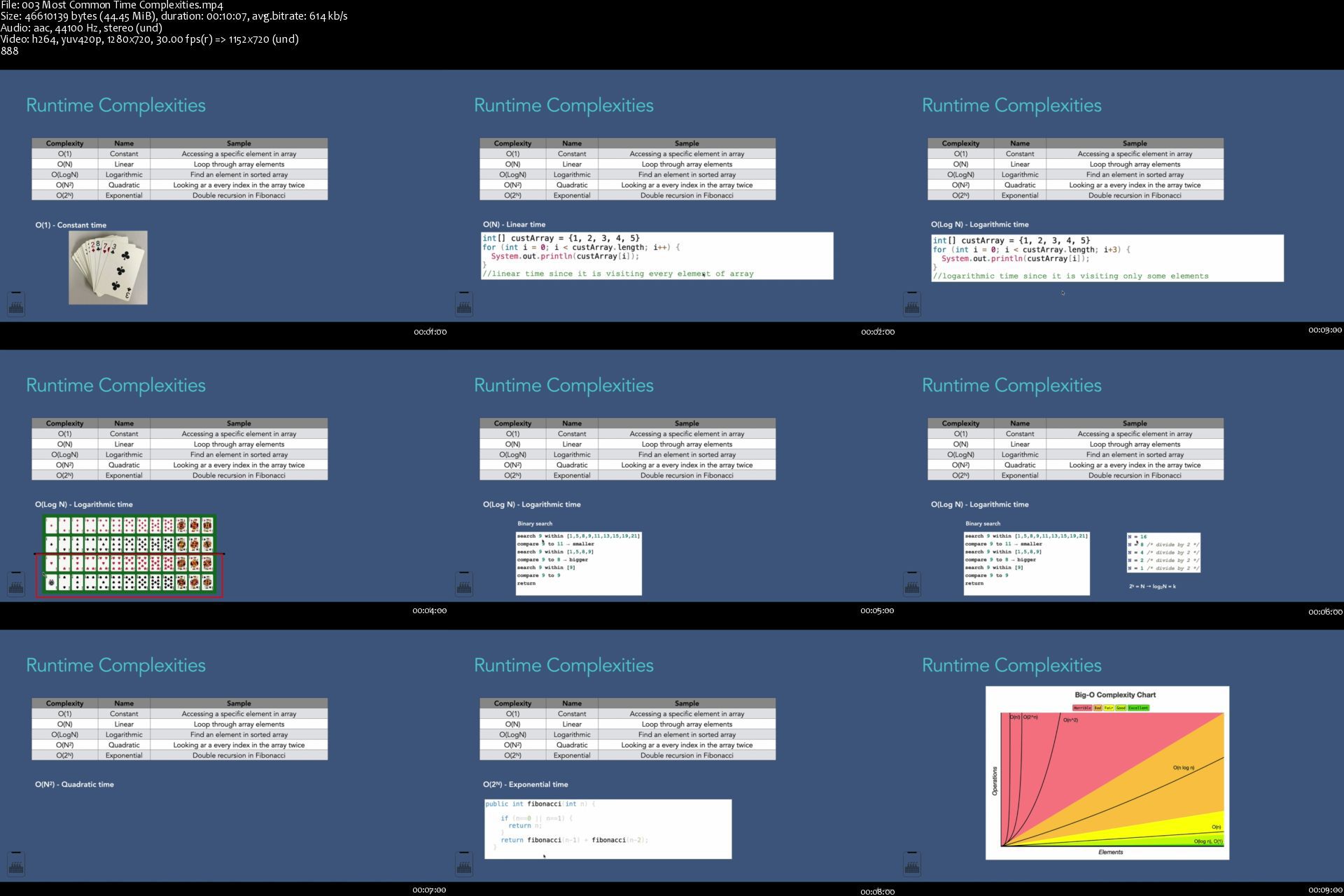
003mostcommontimecomp71j2w.jpg


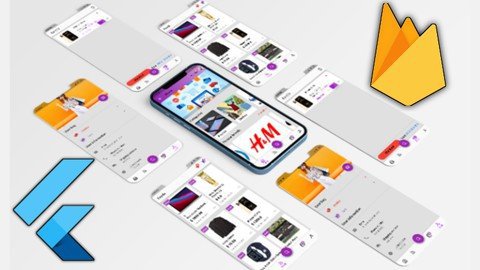
Flutter with Firebase Build a Store app from scratch

kngbiw8njyi9l6axsdejuiakmi.jpg


Flutter with Firebase Build a Store app from scratch
Genre: eLearning | MP4 | Video: h264, 1280x720 | Audio: AAC, 44.1 KHz
Language: English | VTT | Size: 5.20 GB | Duration: 8h 11m

Flutter Full Store app with firebase can be used in real life.


What you'll learn
This Flutter course a complete guide that helps in learning and building a fully functioning Flutter application with Firebase.
Teaching how to write Clean-code and avoid Boilerplate code
This course you how to make new designs and styles for your UI
Clear state management in a very detailed manner
Introduce new widgets and how to use them correctly


Description
Course prerequisites:

Basic knowledge in programming to get started

Basic knowledge in Flutter

Concepts are explained clearly. You will always learn what you're building and why, and then how to do it.

How this course can be of help:

Gaining more knowledge in flutter and firebase

Learn how to make an online shopping application simply

What's in the course:

Complex UI done simply

State management

Firebase

Clean-code and avoid Boilerplate code

Styles for UI

State Management: setState, lifting state up via callbacks, global access, scoped access with Provider and ChangeNotifier

Navigation

Dart

Forms, input handling and validation

Managing and updating packages

Databases and Cloud Firestore

ListViews and multiple UI states

Firebase Authentication

Firebase Firestore

Firebase Storage

Dart Programming Language - Fundamentals and intermediate topics

How to understand Flutter Mobile Development by building apps incrementally.

How to design, build, debug Flutter Android and iOS Apps

How to get Flutter apps to communicate with a realtime database - Firestore

How to build robust apps with Flutter

Flutter AppBar

Flutter Material Design

Flutter Row and Column

Flutter ListView Builder

Course structure:

approximately 8 hours of content and updated regally

Requirements:

Windows application development

Mac application development

Access to a computer with an internet connection.

and you are ready for the journey

Love learning about applying cutting-edge algorithms to practical cases!

What Should I Expect After this Course?:

The ability to build a fully functional shopping application with a firebase

new information regarding flutter


Homepage

006finishingthebrandsf8kp1.jpg


NCBI Mastery- A Beginner's Guide to Bioinformatics

zf9bjqzghg6p6zlk8d0ckq7kxb.jpg


NCBI Mastery- A Beginner's Guide to Bioinformatics
MP4 | Video: h264, 1280x720 | Audio: AAC, 44.1 KHz, 2 Ch
Genre: eLearning | Language: English + srt | Duration: 124 lectures (14h 11m) | Size: 6.9 GB

A complete and Upto Date NCBI Video Guide

What you'll learn:
Basic Bioinformatics
National centre for biotechnology information
NCBI Databases and Tools
Nucleotide database
Gene databases
Protein database
Genome browser
Genome assembly database
Genome reference consortium
SNP and variation database
DbSNP, and DbVar database
Clinivar, medgen and omim database
Sequence read archive database
Bioproject and biosample database
Biosystem database
Gene expression omnibus database
NCBI Blast tools
Basic local alignment search tools
Multiple sequence alignment
Phylogeny tree
Pubchem database
Pubmed database
Taxonomy database

Requirements
Basic biology knowledge
Basic biochemistry knowledge
Basic genetics knowledge
Basic molecular biology knowledge
Computer
Internet


Description
Hello folks! Welcome to the brand new version of NCBI Mastery: A Beginner's Guide to Bioinformatics Course, Udemy's most popular introductory bioinformatics curriculum. Aren't you curious to know recent advances in bioinformatics? Do you wish to use bioinformatics tools and databases in your research? If yes, then you have landed in the right place.

This course talks about NCBI, The National Center for Biotechnology Information (NCBI) which is a public and primary database maintained by the National Library of Medicine (NLM), a government organization that is under the control of the US govt. It contains genes, genetic information, proteins, and many more. Each data is stored in a different database like gene is stored in gene database which is hosted by NCBI. There are multiple databases in NCBI which is nothing but for categorizing the data.

As the graphical user interface of various databases of NCBI and features gets updated in NCBI, we will update our courses accordingly which is an added advantage for you. So, we are way different from the YouTube videos which usually have an older version of the NCBI databases. Therefore, think of it as a subscription to a never-ending supply of bioinformatics knowledge regarding NCBI.

Throughout the course, we will cover tons of tools and databases of NCBI like:

· mRNA Sequence Retrieval

· mRNA Sequence Analysis

· Gene Database

· FASTA Format

· Genbank Format

· Genbank Database

· RefSeq Database

· HomoloGene Database

· ORF Finder

· Genome Database

· Genome Data Viewer

· Genome Assembly

· Genome Reference Consortium

· SNP Database (dbSNP)

· dbVar Database

· ClinVar Database

· OMIM Database

· MedGen Database

· GTR Database

· BioSystems Database

· Bio Project Database

· BioSample Database

· SRA Database

· Geo Database

· Geo Dataset

· Geo Profiles

· Geo Samples

· Protein Database

· MMDB

· Cd-search

· Protein Blast

· Nucleotide Blast

· Blastx

· tblastn

· Primer Blast

· MSA Using Cobalt

· Phylogeny Tree

· PubChem

· PubMed

· Taxonomy

If you have any queries, please do not hesitate to contact me. I prepared this course as I have the aspiration for research and I suggest NCBI and its tools are necessary for researchers all over the world. So, sign up for the course and see how fun, exciting, and rewarding the bioinformatics tools are.

Who this course is for
Students and teachers interested in bioinformatics
Students and teachers interested in genomics
Students and teachers interested in proteomics
Students and teachers interested in biology
Students and teachers interested in zoology
Students and teachers interested in botany
Students and teachers interested in biotechnology
Students and teachers interested in biochemistry
Students and teachers interested in genetics
Students and teachers interested in molecular biologyy
Students and teachers interested in immunology
Students and teachers interested in microbiology

Homepage

002mmdbsb0j90.jpg


ITPro.TV - Cisco Certified DevNet Associate (200-901)

tfs6cmsxw7inxsonozdglkokj2.png


ITPro.TV - Cisco Certified DevNet Associate (200-901)
MP4 | Video: h264, 1920x1080 | Audio: AAC, 44100 Hz, 2 Ch
Language: English | Size: 11.5 GB | Duration: 15h 44m

The Cisco Certified DevNet Associate (200-901) show is produced to help the software developer, networking professional and IT professional to achieve the latest Cisco certification offer, the Cisco Certified DevNet Associate certification. It will help you to learn about the core Cisco platforms used, Cisco Programmability strategies, working with applications and working with APIs. Though there are no formal prerequisites for the exam, it is recommended that you have one or more years of hands-on experience in developing and maintaining applications.

Homepage

courseviewitprotv11s58jxe.jpg


Introduction to Microsoft Power BI (Video)

kvk52oxhvgxrbsgbbw8m8twk0r.jpg


Introduction to Microsoft Power BI (Video)
h264, yuv420p, 1280x720 | ENGLISH, 48000 Hz, 2channels | 7h 42mn | 11 GB

The Sneak Peek program provides early access to Pearson video products and is exclusively available to Safari subscribers. Content for titles in this program is made available throughout the development cycle, so products may not be complete, edited, or finalized, including video post-production editing.

7+ Hours of Video Instruction

Discover how you can use Power BI to help your organization to become more data driven. Whether you are new to analytics or have been stuck preparing and delivering data using legacy BI tools, this video shows you how to use Microsoft Power BI with confidence.

In this video, learn ways to import data from various sources as well as how to transform and cleanse data prior to loading it to a report-ready, self-service-enabled data model. Create visualizations in the Power BI Desktop and then secure, share, and collaborate using the various features in the Power BI service.

Using his years of experience teaching Power BI to a variety of learners, Microsoft Certified Trainer Chris Sorensen explains the core concepts of Power BI to expose you to the most widely used features and functions in Power BI. He carefully explains the "why" behind using those features, not just the "how." In his engaging style grounded in real-world scenarios, Chris gives you the confidence to navigate and build effective Power BI solutions, quickly and effectively. Build good habits and develop in your career as a business analyst or data-driven business user.

About the Instructor

Chris Sorensen CPA, CGA, is the Founder and President of Iteration Insights, a tech-enabled data analytics solutions provider based in Calgary, Alberta. In his career, he has led numerous Analytics projects in more than 15 industries across small to enterprise-sized organizations.

He is a Microsoft Certified Data Analyst Associate and Microsoft Certified Trainer with a combined 20+ years of industry-solution delivery and teaching experience. He has evangelized both Excel and Power BI with Microsoft since July 2015 and is the author of the Microsoft Press Exam Ref 70-779 Analyzing and Visualizing Data with Microsoft Excel and co-author of Data Analysis Fundamentals with Excel (Video) published by Microsoft Press.

Skill Level

Beginner-Intermediate

Learn How To

Import and transform data in Power Query Editor
Build a data model that supports self-service analysis
Develop reports and visualizations using the Power BI Desktop
Enhance the experience in the Power BI Service
Secure, share, and collaborate on dashboards and reports using the Power BI Service

Who Should Take This Course

Organizations increasingly expect employees to deliver data-driven insights as part of their job. This is almost everyone in an organization, including:

Business users who need to level up their data knowledge and experience with business intelligence (BI) tools Business analysts who need to work on end-to-end data analysis with Microsoft Power BI and develop best practices for building and sharing reports and visualizations IT professionals or analysts who use Excel or other BI tools to analyze data and want to learn the foundations of how to deliver compelling, easy to maintain solutions using Power BI

Course Requirements

Power BI Desktop installed on your machine
Access the Power BI service
Familiarity with Excel or data tables would be an asset

2.4loaddatafromfiles1qnjy5.jpg


GCSE French Revision Course

szizzasl7ju6jjucehtbytojg6.jpg


GCSE French Revision Course
Genre: eLearning | MP4 | Video: h264, 1280x720 | Audio: AAC, 48.0 KHz
Language: English | VTT | Size: 7.78 GB | Duration: 6h 16m

The perfect revision companion, a GCSE French online course that walks you through grammar and conjugation


What you'll learn
French GCSE Curriculum
GCSE French Assessment Objectives 1 - 4
AO1 French Listening for GCSE
AO2 French Speaking for GCSE
AO3 French Reading for GCSE
AO4 French Writing for GCSE
French Conjugation
French Grammar
French GCSE Vocab Tips
French GCSE Exam Tips


Description
Are you looking for an online GCSE French course to support your classroom study and help you prepare for exam success?

Bonjour et Bienvenue to our comprehensive and easy to follow French GSCE on-demand course. I will be your tutor and guide as we cover all the key areas of revision and provide the skills you'll need to pass your exams.

The content in our course has been developed for all levels of student with lessons ranging from what is a verb to rare structures used by top students. The lessons are easily signposted, so you will know what parts are designed for you. And whether you are aiming for foundation or higher, you will find everything you need to know in this course.

By simply watching along at home you will be building your confidence, understanding and knowledge of the French language specifically for this year's GCSE syllabus. Our students say they feel more able to follow along and happier contributing in their French classes at School, more organised in their revision and ready for their exams.

I have been tutoring GCSE students for over ten years, I am a registered exam invigilator and I am a French!

I have used all of this experience to develop a French GCSE course that:

Will help you realise French isn't that difficult.

Will guide you through everything you need to know,

Answers commonly asked questions,

Highlights areas students usually struggle with, providing lots of tips and importantly how to avoid mistakes .

.and in addition to the hours of video content you have unlimited access to, I have created downloadable material and quizzes, so you can follow along and test your new skills after each lesson.

I believe video is the perfect format for GCSE students who need to squeeze a lot of revision into very little time. You can access our course content on-the-go, online or via an app, so literally anywhere and on any device - it's like having a tutor in your pocket!

Plus, we all learn in different ways. Some students retain information better when they listen, some when they read and a lot of us find it easier to write things down - so our video and downloadable content is designed to engage with every type of learner

You can use this course in the way that suites you. Build your knowledge and skills step by step or jump directly into particular modules to hone your skills. You can also review lessons as many times as you like to ensure you've understood each learning outcome.

And I speak French with the explanations in English so you can easily follow and understand the lessons.

I am very excited about helping you prepare to pass your GCSE exams and hope you are ready to start learning and growing in confidence with me.

Sign up now to gain lots of practical tips, technics and valuable knowledge to master your French GCSE.

Bonnes vidéos et bon courage!


Who this course is for:
GCSE students
IGCSE students
Adult learners
KS3 (Key stage 3) & KS4 (Key stage 4) students


Homepage

001generalitiesmoduleuxjth.jpg


Digital Figure Painting - Iliya Mirochnik (Week 1 - 8)

jj7ixuhllbs3caeeffwna00kaw.jpg


Digital Figure Painting - Iliya Mirochnik (Week 1 - 8)
MP4 | Video: h264, yuv420p, 1920x1080 | Audio: aac, 48000 Hz | Duration: 23h :39mins | Size File: 11.4 GB
Genre: eLearning | Language: English

Week 1: Monochromatic Portrait with a Soft Round Brush With Iliya Mirochnik
In this session, Iliya Mirochnik will paint a monochromatic portrait in photoshop, using only a soft round brush. He will show you how to complete the artwork while achieving the parameters of this week.

2h 54m 51s

Week 2: Monochromatic Portrait with a Hard Round Brush With Iliya Mirochnik
In this session, Iliya Mirochnik will paint a monochromatic portrait in photoshop, using only a hard round brush. He will show you how to complete the artwork while achieving the parameters of this week.

2h 56m 27s

Week 3: Limited Palette Painting with a Round Brush With Iliya Mirochnik
In this session, Iliya Mirochnik will paint limited palette color painting with a round brush. He will show you how to complete the artwork while achieving the parameters of this week.

2h 58m 54s

Week 4: Monochromatic Underpainting with Textured Brushes With Iliya Mirochnik
In this session, NMA instructor Iliya Mirochnik will paint day one of a two-day painting using an indirect painting method in Photoshop. This session will be focused on making a monochromatic underpainting with a variety of textured brushes.

2h 52m 39s

Week 5: Color Blend Layers over a Monochromatic Painting With Iliya Mirochnik
In this session, Iliya Mirochnik will paint day two of a two-day painting using an indirect painting method in Photoshop. This session will be focused on making color blend layers to give a monochromatic painting color.

3h 3m 14s

Week 6: Colored Portrait with the Mixer Brush Tool With Iliya Mirochnik
In this session, Iliya Mirochnik will paint a color portrait in Photoshop. This session will focus on using multiple brushes with the Mixer Brush Tool to obtain a painterly effect digitally.

2h 57m 11s

Week 7: Painting with the Fill Tool With Iliya Mirochnik
In this session, Iliya Mirochnik will be painting in color using the Fill Tool. This session will focus on using Clip Studio to create a painting using a variety of shapes and opacities.

3h 35s

Week 8: Figure and Background with the Fill Tool With Iliya Mirochnik
In this session, NMA instructor Iliya Mirochnik will be painting a figure and background using the Fill Tool. This session will focus on using Clip Studio to create a painting using a variety of shapes and opacities.

2h 55m 23s

Homepage

week3limitedpalettepajvkpm.jpg


Zurück
Oben Unten