• Regeln für den Video-Bereich:

    In den Börsenbereich gehören nur Angebote die bereits den Allgemeinen Regeln entsprechen.

    Einteilung

    - Folgende Formate gehören in die angegeben Bereiche:
    - Filme: Encodierte Filme von BluRay, DVD, R5, TV, Screener sowie Telesyncs im Format DivX, XviD und x264.
    - DVD: Filme im Format DVD5, DVD9 und HD2DVD.
    - HD: Encodierte Filme mit der Auflösung 720p oder darüber von BluRay, DVD, R5, TV, Screener sowie Telesyncs im Format x264.
    - 3D: Encodierte Filme von BluRay, die in einem 3D Format vorliegen. Dies gilt auch für Dokus, Animation usw.
    - Serien: Cartoon/Zeichentrick, Anime, Tutorials, Dokumentationen, Konzerte/Musik, Sonstiges sind demnach in die entsprechenden Bereiche einzuordnen, auch wenn sie beispielsweise im High Definition-Format oder als DVD5/DVD9/HD2DVD vorliegen. Ausnahme 3D.
    - Bereich Englisch: Englische Releases gehören immer in diesen Bereich.
    - Bereich Talk: Der Bereich, in dem über die Releases diskutiert werden kann, darf, soll und erwünscht ist.


    Angebot/Beitrag erstellen

    - Ein Beitrag darf erst dann erstellt werden, wenn der Upload bei mindestens einem OCH komplett ist. Platzhalter sind untersagt.
    - Bei einem Scenerelease hat der Threadtitel ausschließlich aus dem originalen, unveränderten Releasenamen zu bestehen. Es dürfen keine Veränderungen wie z.B. Sterne, kleine Buchstaben o.ä. vorgenommen werden. Ausnahme Serienbörse:
    - Bei einem Sammelthread für eine Staffel entfällt aus dem Releasename natürlich der Name der Folge. Beispiel: Die Simpsons S21 German DVDRip XviD - ITG
    - Dementsprechend sind also u.a. verboten: Erweiterungen wie "Tipp", "empfehlenswert", "only", "reup", usw. / jegliche andere Zusatzinformation oder Ergänzung, welche nicht in obiger Beschreibung zu finden ist.

    Aufbau des Angebots und Threadtitel

    Der Titel nach folgendem Muster erstellt zu werden. <Name> [3D] [Staffel] [German] <Jahr> <Tonspur> [DL] [Auflösung] <Quelle> <Codec> - <Group>
    Beispiel: The Dark Knight German 2008 AC3 DVDRip XviD - iND
    Beispiel: The Dark Knight 2008 DTS DL BDRip x264 - iND
    Beispiel: The Dark Knight 2008 AC3 DL BDRip XviD - iND
    Beispiel: The Dark Knight German 2008 AC3 720p BluRay x264 iND
    Beispiel: The Dark Knight 2008 DTS DL 1080p BluRay x264 iND
    Beispiel: Die Simpsons S01 German AC3 DVDRip XviD iND
    Beispiel: Die Simpsons S20 German AC3 720p BluRay x264 iND
    Beispiel: Sword Art Online II Ger Sub 2014 AAC 1080p WEBRip x264 - peppermint
    Entsprechend sind also u.a. verboten: Sonderzeichen wie Klammern, Sterne, Ausrufezeichen, Unterstriche, Anführungszeichen / Erweiterungen wie "Tipp", "empfehlenswert", "only", "reup", usw. / jegliche andere Zusatzinformation oder Ergänzung, welche nicht in obiger Beschreibung zu finden ist
    Ausnahmen hiervon können in den Bereichen geregelt sein.

    Die Beiträge sollen wie folgt aufgebaut werden:
    Überschrift entspricht dem Threadtitel
    Cover
    kurze Inhaltsbeschreibung
    Format, Größe, Dauer sind gut lesbar für Downloader außerhalb des Spoilers zu vermerken
    Nfo sind immer Anzugeben und selbige immer im Spoiler in Textform.
    Sind keine Nfo vorhanden z.B. Eigenpublikationen, sind im Spoiler folgende Dateiinformationen zusätzlich anzugeben :
    Quelle
    Video (Auflösung und Bitrate)
    Ton (Sprache, Format und Bitrate der einzelnen Spuren)
    Untertitel (sofern vorhanden)
    Hosterangabe in Textform außerhalb eines Spoiler mit allen enthaltenen Hostern.
    Bei SD kann auf diese zusätzlichen Dateiinformationen verzichtet werden.

    Alle benötigten Passwörter sind, sofern vorhanden, in Textform im Angebot anzugeben.
    Spoiler im Spoiler mit Kommentaren :"Schon Bedankt?" sind unerwünscht.


    Releases

    - Sind Retail-Release verfügbar, sind alle anderen Variationen untersagt. Ausnahmen: Alle deutschen Retail-Release sind CUT, in diesem Fall sind dubbed UNCUT-Release zulässig.
    - Im Serien-Bereich gilt speziell: Wenn ein Retail vor Abschluss einer laufenden Staffel erscheint, darf diese Staffel noch zu Ende gebracht werden.62
    - Gleiche Releases sind unbedingt zusammenzufassen. Das bedeutet, es ist zwingend erforderlich, vor dem Erstellen eines Themas per Suchfunktion zu überprüfen, ob bereits ein Beitrag mit demselben Release besteht. Ist dies der Fall, ist der bereits vorhandene Beitrag zu verwenden.
    - P2P und Scene Releases dürfen nicht verändert oder gar unter einem iND Tag eingestellt werden.


    Support, Diskussionen und Suche

    - Supportanfragen sind entweder per PN oder im Bereich Talk zu stellen.
    - Diskussionen und Bewertungen sind im Talk Bereich zu führen. Fragen an die Uploader haben ausschließlich via PN zu erfolgen, und sind in den Angeboten untersagt.
    - Anfragen zu Upload-Wünschen sind nur im Bereich Suche Video erlaubt. Antworten dürfen nur auf Angebote von MyBoerse.bz verlinkt werden.


    Verbote

    - Untersagt sind mehrere Formate in einem einzigen Angebotsthread, wie beispielsweise das gleichzeitige Anbieten von DivX/XviD, 720p und 1080p in einem Thread. Pro Format, Release und Auflösung ist ein eigener Thread zu eröffnen.
    - Grundsätzlich ebenso verboten sind Dupes. Uploader haben sich an geeigneter Stelle darüber zu informieren, ob es sich bei einem Release um ein Dupe handelt.
    - Gefakte, nur teilweise lauffähige oder unvollständige Angebote sind untersagt. Dies gilt auch für eigene Publikationen, die augenscheinlich nicht selbst von z.B. einer DVD gerippt wurden. Laufende Serien, bei denen noch nicht alle Folgen verfügbar sind, dürfen erstellt und regelmäßig geupdatet werden.
    - Untersagt sind Angebote, welche nur und ausschließlich in einer anderen Sprache als deutsch oder englisch vorliegen. Ausnahmen sind VORHER mit den Moderatoren zu klären.


    Verstoß gegen die Regeln

    - Angebote oder Beiträge, die gegen die Forenregeln verstoßen, sind über den "Melden"-Button im Beitrag zu melden.
  • Bitte registriere dich zunächst um Beiträge zu verfassen und externe Links aufzurufen.

++ Premium IPTV ++ 7000 Live Sender ++ UHD Qualität ++ Mediathek mit 18.000 Inhalten ++


VenneTV


Englische Tutorials

Master 3D Environments in Blender: Learn to create epic large-scale Environments

ixksozn2o7qpl2wjtux1j40k6j.jpg


Master 3D Environments in Blender: Learn to create epic large-scale Environments
Martin Klekner | Duration: 6h 36m | Video: H264 2560x1440 | Audio: AAC 48 kHz 2ch | 10,96 GB | Language: English + .srt

Want to create large-scale 3D landscapes in Blender but don't know how?

Everything you need to learn in ONE place

In this course, you will learn every important workflow for landscape creation in Blender, without the use of any paid add-ons or assets.

You will learn how to create mountains, oceans, forests, deserts, clouds and weather effects. No need to search for online videos describing particular techniques or workflows - you will learn all the important steps of environment creation in one course.

Homepage

jmulnysxuofxnhvwdg1xg76kq1.jpg


GRE Complete Prep | Math, Verbal, Writing

phkegjirwdxc9y3lbhrqg2tkqh.jpg


GRE Complete Prep | Math, Verbal, Writing
MP4 | Video: h264, 1280x720 | Audio: AAC, 44.1 KHz, 2 Ch
Genre: eLearning | Language: English + srt | Duration: 122 lectures (23h 9m) | Size: 14 GB

Learn everything you MUST know to ace the GRE - complete prep for all math, verbal, and writing sections

What you'll learn:
Students will learn how to master the most difficult GRE topics through high-yield lectures and plenty of examples.
Math Principles
Algebra
Geometry
Statistics
Probability
Quantitative Comparison
Data Interpretation
Reading Comprehension
Text Completion
Sentence Equivalence
Issue Task Essay
Argument Task Essay

Requirements
None.


Description
In this course presented by Subeezy and designed by a Harvard-trained educator who aced the GRE, you will be taught everything you need to know in order to perform well on the GRE.

Who is this course for?

This course is a MUST for those seeking a HIGH SCORE the GRE. Many students who have taken this course have scored above 320 on the new GRE. Regardless of your current proficiency in math, verbal reasoning, and writing, you will be taught everything from the basics to advanced concepts and strategies.

Quantitative Comparison

From the basics of what digits and numbers are to solving complicated algebra and geometry problems, you will develop the necessary skills to boost your GRE score, regardless of your current proficiency at math. Whether you remember very little about math or majored in mathematics in college, you will be guided from A to Z on what you need to know for the GRE. We simulate real GRE-style questions, including quantitative comparison and data interpretation.

Verbal Reasoning

In this course, we explore in-depth how to tackle the different verbal reasoning questions, including reading comprehension problems and the different types of passages you may encounter (including argument structure passages), text completion problems, and sentence equivalence problems. Performing well on the verbal reasoning section is not all about vocabulary! There are specific strategies to answer these questions correctly, and we will guide you step-by-step on how to solve even the most daunting questions.

Analytical Writing

We lay out everything that is expected from you for the 2 essays - the Issue Task and Argument Task. We have lessons diving into exactly what is required from you and how you should construct your essays for the best chance of earning a 5 on the writing section. Just like with Verbal Reasoning, there is a science to approaching the Analytical Writing section and we will guide you step-by-step on how to raise your score.

With over 20 hours of lecture material covering all math, verbal, and writing sections and hundreds of practice problems worked out step-by-step, you will complete this course feeling confident about taking the GRE. You will not find a higher-yield GRE test prep course for a better price anywhere! With Subeezy, admission to your dream school is closer than ever. Happy Studying!

Meet the instructor!

Gerald earned his medical degree (M.D.) after earning his masters of education (Ed.M) from Harvard University. He has consistently performed well on many standardized admission tests including the GRE, MCAT, USMLE, and more. He has since helped thousands of students learn how to similarly perform well on these standardized examinations through countless hours of tutoring and creating an online educational platform, Subeezy.

What people are saying about Subeezy

"Best GRE Prep class I've ever taken! If you want a score of 165+, take this course. He covers everything you need to know in an easy to understand format, and in less time than other programs. I HIGHLY recommend it!" - Michael C.

"Easy to understand, calming voice of the instructor" - Ritesh D.

"This was an incredible course! The lectures made the subjects easy to understand and I was able to focus on areas I previously struggled with." - Gin G.

"Helpful practice activities" - Cheryl G.

"Knowledgeable instructor and engaging delivery!" - Fawzah S.

Learn even more!

For those interested in learning everything you need for the SAT, ACT, GMAT, and more - be sure to check out the other Subeezy courses!

Who this course is for
Anyone taking the GRE.

Homepage

3.trianglesssyjhb.jpg


Digital Marketing & SEO Training (beginner to advanced) 2021

00814a12hlkwd.jpg


Digital Marketing & SEO Training (beginner to advanced) 2021
Duration: 33h 41m | .MP4 1280x720, 30 fps(r) | AAC, 44100 Hz, 2ch | 16.5 GB
Genre: eLearning | Language: English

Learn how to do Digital Marketing, SEO, PPC, Social Media, Content Marketing, Video Advertising, Email Marketing, Blogs.


What you'll learn
End-to-end knowledge of Digital Marketing & SEO
Become a top Digital Marketing Specialist/Manager
What is Digital Marketing
Digital Marketing Scope
Digital Marketing Terminologies
Google Updates
Social Media Marketing
Websites and basic Web Design
WordPress Website Creation
SEO (Search Engine Optimization) - overview, why it is needed, how it works
Components of SEO
On-page and Off-page SEO Factors
Technical & Content SEO
Main elements of Technical SEO
Title and Meta tags, Header tags optimization
Google Search Console, Bing Webmaster
Blog set-up for Blogger and WordPress
Off-page SEO, Blogger Posting
Google Analytics and Google Tag Manager
Keywords Research
SEO Tools & SEO Reporting
Content Marketing and Posting
Local Business Listing in Google My Business and Bing Places for Business
Client Emails
Google Ads, Facebook Ads, Twitter Ads, LinkedIn Ads
Google Ads - Text & Search Ads, Display Ads, YouTube Ads, Smart Campaigns
Microsoft Advertising including Yahoo Ads
Facebook Marketing - Organic posts and Paid Marketing
Creating & Promoting company page on Facebook, LinkedIn
Handling Twitter handle
Posting on Quora, Medium, EzineArticle, wikiHow
Content Marketing Platforms
Video Marketing

Requirements
Enthusiasm and determination to make your mark on the world!

Description
Digital Marketing is the advertising, networking or positioning of a brand, marketing of products and services online through technology. In essence, digital marketing refers to all online activities such as websites, social media and search engine optimization.

Digital will continue to change the face of marketing for many years to come. Those who succeed will need knowledge of the consumer and how today digital marketing and analytics is at the heart of marketing today. Aspiring marketers need to understand the digital consumer and how the tools of digital work in practice, as well as the latest frameworks to plan, implement and evaluate digital marketing activity.

In simple words, Digital marketing is marketing that takes place via Internet-connected devices. Email marketing, content marketing, social media marketing, and many other facets of digital marketing are essential for today's entrepreneurs.

Digital marketers spend their time studying how people relate to one another online, creating content for online consumption, and mastering digital mediums. As you get more comfortable with marketing in the digital space, your readership, viewership, and sales will likely grow.

SEO stands for Search Engine Optimization. SEO is the process of improving the quality and quantity of website traffic to a website and a web page's ranking on search engines such as Google and Bing.

This Digital Marketing & SEO course by Uplatz will prepare you for a successful career with a comprehensive take on digital marketing and a strong emphasis on the application of theory to practice, in subject areas such as online advertising, social media, content marketing, analytics, consumer psychology and digital advertising. It has been designed for students who are interested in fields such as marketing, media, management and social sciences, as well as professionals working in marketing across public, private and voluntary sectors seeking specialist knowledge and career development.

Embedding an understanding of digital marketing strategies, dynamics and platforms, you will take the knowledge and skills developed on the course and apply them to a variety of practice based, real-life learning will complement theory. You will also learn how to run paid media campaigns and ads on Google, Bing, Facebook, LinkedIn, and Twitter. Besides other topics, this Digital Marketing course covers social media marketing, video advertising, content marketing, blogging, and the like.

This Digital Marketing & SEO course will also help you to gain knowledge on how to complete a competitive analysis on a webpage, develop a solid approach for achieving a productive and successful relationship with your client, create influencer relationships and collaborations and analyze data to see which content gets the most shares, create a final report of your findings and recommendations for SEO and present your recommendations to your client. The practical SEO training part of the course shows you how to increase traffic to your website and improve your conversion rate. Some of the key objectives of learning SEO skills are:

Improve your website optimization strategy

Enhance your SEO keyword research

Conduct a competitor keyword analysis

Build a SEO measurement framework

Improve your landing page optimization

Develop your off page SEO tactics

Digital Marketing & SEO - Course Syllabus

What is Digital Marketing

Digital Marketing Scope

Digital Marketing Terminology

What is Google Update

List of key Google Updates

Social Media Marketing introduction

Various types of websites

What to see in a website

Basic webpage designing

Creation of a website

Website core structure

What is SEO (Search Engine Optimization)

Why businesses need SEO

Components of SEO

On-page SEO

On-page on-site SEO factors

Google Search Console

Yahoo & Bing Webmaster tools

Title tags, Meta tags, Header tags optimization

Blog setup for Blogger and WordPress

Blogger-posting

Off-page-SEO

WordPress website creation

Google Analytics introduction

Google Analytics Goal report

Google Tag Manager and eCommerce

Google-analytics-Vs-GA4

htaccess File

SEO Tools introduction

Keywords Research

Off-page optimization introduction

Article Guest Posts

Off-page Activities

Technical-SEO

Local Business Listing introduction

Google and Bing local listing

SEO reporting

Client emails

Google Ads - introduction, search ads, display ads, shopping ads, YouTube ads, app promotion, smart campaigns, tips & tricks

Yahoo Ads

Social Media Marketing

Facebook - introduction, groups, company page, widget, Facebook ads and paid campaigns

LinkedIn - introduction, account creation, company page creation

Twitter marketing

Why Content Marketing

Quora

Medium

EzineArticle

wikiHow


Who this course is for:
Digital Marketing Executives
SEO Specialists & Analysts
Digital Marketing Managers
Digital Marketing Paid Media Executives
Newbies and beginners aspiring for a career in Digital Marketing
Anyone who wants to become a Marketing Specialist
Social Media Marketing Executives
Ads Campaign Managers
Entrepreneurs and self-employed individuals who wish to do online marketing for their own business
Digital Marketing Specialists, eCommerce
SEO Consultants & Strategists
Content Marketers
Advertising Managers
Marketing Analysts & Consultants
Marketing Assistants
Head of Digital Marketing and Automation
Account Managers Digital Marketing
Brand Specialists
Email Marketing Specialists
Content Managers
Technical & Content SEO Specialists

More Info

5.googleupdatepart4se3kdb.jpg


Data Scraping & Data Mining from Beginner to Pro with Python

00814cfb1tkz4.jpg


Data Scraping & Data Mining from Beginner to Pro with Python
MP4 | h264, 1280x720 | Lang: English | Audio: aac, 44100 Hz | 13h 53m | 8.52 GB


What you'll learn
The introduction and importance of Data Scraping or Web Scraping.
Why is it such a popular field nowadays?
All the essential concepts from the beginning with clear unfolding with examples in Python.
Practical explanation and live coding with Python.
Every theoretical explanation that'll be followed by practical implementation.
Browser working and communication with the server.
Requests as well as responses to and from the server.
Parsing the data in response from the server.
Difference between Synchronous and Asynchronous requests.
Different tools that are used for data scraping, namely: Requests, BS4, Scrapy, Selenium.
Comprehensive comparison between Requests, BS4, Scrapy, and Selenium.
Replicating requests using the Python Requests Module for getting the data from the server.
Using BS4 for parsing the response data from the server.
The understanding of BS4 parsers functions for getting the data out of the HTML.
Using Scrapy for writing the spiders for crawling websites and extracting data.
Using Selenium for understanding the automation and control of the web flows.

Requirements
Basic understanding of HTML tags.
Familiarity with Python.
No prior knowledge of data scraping is needed. You start right from the basics and then gradually build your knowledge of the subject.
A willingness to learn and practice.
Since we teach by practical implementations, practice is a must thing to do.

Description
Comprehensive Course Description:

Data scraping is the technique of extracting data from the internet. Data scraping is used for getting the data available on different websites and APIs. This also involves automating the web flows for extracting the data from different web pages.

The course 'Data Scraping and Data Mining from Beginner to Professional' is crafted to cover the topics that result in the development of the most in-demand skills in the workplace. These topics will help you understand the concepts and methodologies with regard to Python. The course is:

Easy to understand.

Imaginative and descriptive.

Comprehensive.

Practical with live coding.

Full of quizzes with solutions.

Rich with state-of-the-art and updated knowledge of this field.

This course is designed for beginners. We'll spend sufficient time to lay a solid groundwork for newbies. Then, we will go far deep gradually with a lot of practical implementations where every step will be explained in detail.

As this course is essentially a compilation of all the basics, you will move ahead at a steady rate. You will experience more than what you have learned. At the end of every concept, we will be assigning you Home Work/assignments/activities/quizzes along with solutions. They will assess / (further build) your learning based on the previous data scraping and data mining concepts and methods. Most of these activities are designed to get you up and running with implementations.

The 4 hands-on projects included in this course are the most important part of this course. These projects allow you to experiment for yourself with trial and error. You will learn from your mistakes. Importantly, you will understand the potential gaps that may exist between theory and practice.

Data Scraping is undoubtedly a rewarding career that allows you to solve some of the most interesting real-world problems. You will be rewarded with a fabulous salary package, too. With a core understanding of Data Scraping, you can fine-tune your workplace skills and ensure emerging career growth.

So, without further delay, get started with this course and pursue the knowledge that can sharpen your skills.

Teaching is our passion:

We strive to create updated and workplace-relevant online tutorials that could help you in understanding the concepts adequately. Our aim is to create a strong basic understanding for our students before moving onward to the advanced version. We have added enough exercises into the course. You will be able to grasp the concepts easily, and you will be inspired to think for yourself in regard to the right solution and implement it. High-quality video content, descriptive course material, assessment questions, course notes, and handouts are some of the perks of this course. Please approach our friendly team in case of any queries, and we assure you we will respond as quickly as possible.

Course Content:

The comprehensive and engaging course consists of the following topics:

1. Introduction:

a. Intro

i. Why Data Scraping?

ii. Applications of Data Scraping

iii. Introduction of Instructor

iv. Introduction to Course, Scraping, Tools

v. Projects Overview

2. Requests Module:

a. Getting Started with Requests Module

i. Introduction to Python Requests and Installations

ii. Going Through the Documentation

b. Extracting Data

i. Sending a request to the server

ii. Getting a response from the server

iii. Parsing the data

iv. Controlling pagination

v. Understanding Ajax populated data

vi. Parsing Ajax response data

3. Beautiful Soup (BS4):

a. Getting Started with Beautiful Soup

i. Introduction to Beautiful Soup

ii. Going Through the Documentation

b. Hands-on with BS4 Parser

i. Extracting data using BS4 parser

ii. Developing an understanding of BS4 parser functions

iii. Attributes of tags

iv. Multi-valued attributes of tags

v. Merge data from two different requests.

c. Project

i. Building movie recommender system by getting live data from IMDB

4. CSS Selectors:

a. Getting Started with CSS Selectors

i. Introduction to CSS Selectors

b. Hands-on with the CSS Selectors

i. Descendants, Id, Class-based selection

ii. Nested Tags, ID Tags, Class Tags based selection

iii. Coma Separator, Universal Selectors based selection

iv. Sibling Notations, Direct Child based selection

v. Child Selectors based selection

vi. Negations, Attributes based selection

vii. Attributes, Attributes values-based selection

viii. Attributes Wild Cards values-based selection

5. Scrapy:

a. Getting Started with Scrapy

i. Introduction to Scrapy

ii. Going through the documentation

b. Hands-on with Scrapy

i. Developing the understanding of Spider flow.

ii. Creating our Scrapy project and understanding the framework

iii. Writing Spiders from scratch.

iv. Understanding the Response object along with all its param including url, status, headers, body, request, meta, flags, certificate, ip_address, copy, replace, urljoin, follow, follow_all.

v. Working on Scrapy shell.

vi. Understanding request flow in Scrapy.

vii. Applying CSS selectors to Scrapy response for getting data.

viii. Extracting nested data from the website.

ix. Combine Data from multiple callbacks.

c. Projects

i. Scraping IMDB

ii. Getting products information from HUGO BOSS

6. Selenium:

a. Getting started with Selenium

i. Introduction to Selenium

b. Hands-on with Scrapy

i. Configuring the web driver.

ii. Parse response and extract the required data

iii. Automating website flow

iv. Navigating the website with form filling

c. Project

i. Language translation system using deepL website

After completing this information-packed course successfully, you will be able to:

Implement any project from scratch that requires Data Scraping knowledge.

Relate the concepts and practical aspects of Data Scraping with real-world problems.

Know the theory and practical aspects of Data Scraping concepts.

Gather data from websites in the smartest way.


Who this course is for:

People who are quite beginners and know absolutely nothing about Data Scraping.

People who want to make smart solutions.

People who want to learn Data Scraping with real data.

People who love to learn theory and then implement it using Python.


Who this course is for:
People who are quite beginners and know absolutely nothing about Data Scraping.
People who want to make smart solutions.
People who want to learn Data Scraping with real data.
People who love to learn theory and then implement it using Python.
People who want to learn Data Scraping along with its implementation in realistic projects.
Data Scientists.
Machine learning experts.
Drop Shippers.


Homepage

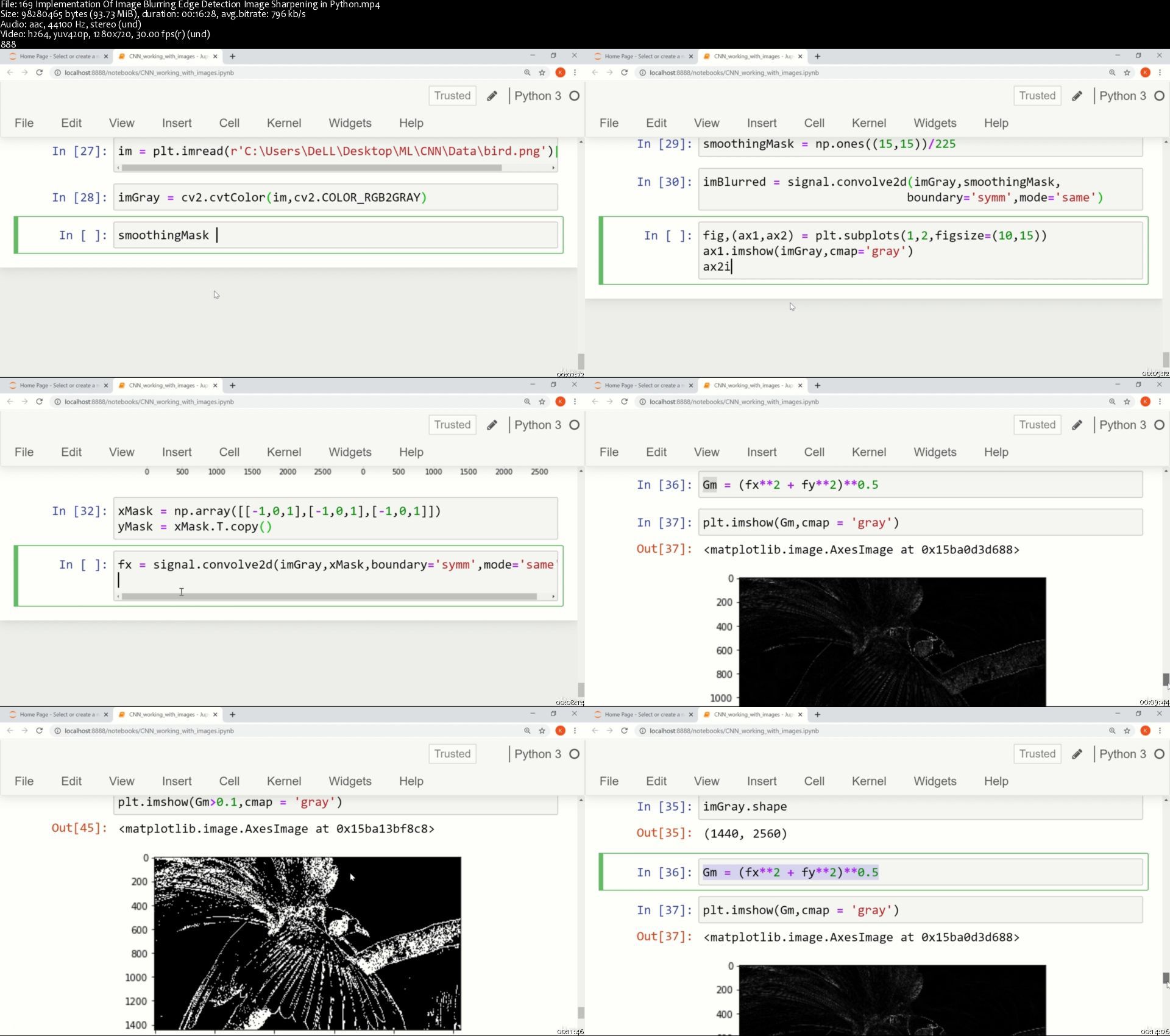
119extractingdatasc2kyy.jpg


Computer Vision-Theory & Projects in Python for Beginners

00814c9cgzjf3.jpg


Computer Vision-Theory & Projects in Python for Beginners
MP4 | h264, 1280x720 | Lang: English | Audio: aac, 44100 Hz | 26h 59m | 10.6 GB

Computer Vision-Become an ace of Computer Vision, Detect Shapes and Create Apps using Python, OpenCV, TensorFlow, etc.


What you'll learn
• The introduction and importance of Computer Vision (CV).
• Why is CV such a popular field nowadays?
• The fundamental concepts from the absolute beginning with comprehensive unfolding with examples in Python.
• Practical explanation and live coding with Python.
• The concept of colored and black and white images with practice.
• Deep details of Computer Vision with examples of every concept from scratch.
• TensorFlow (Deep learning framework by Google).
• The use and applications of state-of-the-art Computer Vision (with implementations in state-of-the-art framework Numpy and TensorFlow).
• Theory and implementation of Panoramic images.
• Geometric transformations.
• Image Filtering with implementation in Python.
• Edge Detection, Shape Detection, and Corner Detection.
• Object Tracking and Object detection.
• 3D images.
• Building your own applications for change detection in the live feed of cameras by using Computer Vision Techniques using Python.
• Developing a complete project to make a very intelligent and efficient DVR using Python.

Requirements
• No prior knowledge is needed. You will start from the basics and slowly build your knowledge in computer vision.
• A willingness to learn and practice.
• Knowledge of Python will be a plus.
• Since we teach by practical implementations, practice is a must.

Description
Comprehensive Course Description:

Computer vision (CV), a subfield of computer science, focuses on replicating the complex functionalities of the human visual system. In the CV process, real-world images and videos are captured, processed, and analyzed to allow machines to extract contextual, useful information from the physical world.

Until recently, computer vision functioned in a limited capacity. But due to the recent innovations in artificial intelligence and deep learning, this field has made great leaps. Today, CV surpasses humans in most routine tasks connected with detecting and labeling objects.

The high-quality content of the Mastering Computer Vision from the Absolute Beginning Using Python course presents you with a great opportunity to learn and become an expert. You will learn the core concepts of the CV field. This course will also help you to understand the digital imaging process and identify the key application areas of CV. The course is:

· Easy to understand.

· Descriptive.

· Comprehensive.

· Practical with live coding.

· Rich with state of the art and updated knowledge of this field.

Although this course is a compilation of all the basic concepts of CV, you are encouraged to step up and experience more than what you learn. Your understanding of every concept is tested at the end of each section. The Homework assignments/tasks/activities/quizzes along with solutions will assess your learning. Several of these activities are focused on coding so that you are ready to run with implementations.

The two hands-on projects in the last section-Change Detection in CCTV Cameras (Real-time) and Smart DVRs (Real-time)-make up the most important learning element of this course. They will help you sharpen your practical skills. Successful completion of these two projects will help you enrich your portfolio and kick-start your career in the CV field.

The course tutorials are divided into 320+ videos along with detailed code notebooks. The videos are available in HD, and the total runtime of the videos is 27 hours+.

Now is the perfect time to learn computer vision. Get started with this best-in-class course without any further delay!

Teaching is our passion:

In this course, we apply the proven learning by doing methodology. We build the interest of learners first. We start from the basics and focus on helping you understand each concept clearly. The explanation of each theoretical concept is followed by practical implementation. We then encourage you to create something new out of your learning.

Our aim is to help you master the basic concepts of CV before moving onward to advanced concepts. The course material includes online videos, course notes, hands-on exercises, project work, quizzes, and handouts. We also offer you learning support. You can approach our team in case of any queries, and we respond in quick time.

Course Content:

The comprehensive course consists of the following topics:

1. Introduction

a. Intro

i. What is computer vision?

2. Image Transformations

a. Introduction to images

i. Image data structure

ii. Color images

iii. Grayscale images

iv. Color spaces

v. Color space transformations in OpenCV

vi. Image segmentation using Color space transformations

b. 2D geometric transformations

i. Scaling

ii. Rotation

iii. Shear

iv. Reflection

v. Translation

vi. Affine transformation

vii. Projective geometry

viii. Affine transformation as a matrix

ix. Application of SVD (Optional)

x. Projective transformation (Homography)

c. Geometric transformation estimation

i. Estimating affine transformation

ii. Estimating Homography

iii. Direct linear transform (DLT)

iv. Building panoramas with manual key-point selection

3. Image Filtering and Morphology

a. Image Filtering

i. Low pass filter

ii. High pass filter

iii. Band pass filter

iv. Image smoothing

v. Image sharpening

vi. Image gradients

vii. Gaussian filter

viii. Derivative of Gaussians

b. Morphology

i. Image Binarization

ii. Image Dilation

iii. Image Erosion

iv. Image Thinning and skeletonization

v. Image Opening and closing

4. Shape Detection

a. Edge Detection

i. Definition of edge

ii. Naïve edge detector

iii. Canny edge detector

1. Efficient gradient computations

2. Non-maxima suppression using gradient directions

3. Multilevel thresholding- hysteresis thresholding

b. Geometric Shape detection

i. RANSAC

ii. Line detection through RANSAC

iii. Multiple lines detection through RANSAC

iv. Circle detection through RANSAC

v. Parametric shape detection through RANSAC

vi. Hough transformation (HT)

vii. Line detection through HT

viii. Multiple lines detection through HT

ix. Circle detection through HT

x. Parametric shape detection through HT

xi. Estimating affine transformation through RANSAC

xii. Non-parametric shapes and generalized Hough transformation

5. Key Point Detection and Matching

a. Corner detection (Key point detection)

i. Defining Corner

ii. Naïve corner detector

iii. Harris corner detector

1. Continuous directions

2. Tayler approximation

3. Structure tensor

4. Variance approximation

5. Multi-scale detection

b. Project: Building automatic panoramas

i. Automatic key point detection

ii. Scale assignment

iii. Rotation assignment

iv. Feature extraction (SIFT)

v. Feature matching

vi. Image stitching

6. Motion

a. Optical Flow, Global Flow

i. Brightness constancy assumption

ii. Linear approximation

iii. Lucas-Kanade method

iv. Global flow

v. Motion segmentation

b. Object Tracking

i. Histogram based tracking

ii. KLT tracker

iii. Multiple object tracking

iv. Trackers comparisons

7. Object detection

a. Classical approaches

i. Sliding window

ii. Scale space

iii. Rotation space

iv. Limitations

b. Deep learning approaches

i. YOLO a case study

8. 3D computer vision

a. 3D reconstruction

i. Two camera setups

ii. Key point matching

iii. Triangulation and structure computation

b. Applications

i. Mocap

ii. 3D Animations

9. Projects

a. Change detection in CCTV cameras (Real-time)

b. Smart DVRs (Real-time)

After completing this course successfully, you will be able to:

· Relate the concepts and theories in computer vision with real-world problems.

· Implement any project from scratch that requires computer vision knowledge.

· Know the theoretical and practical aspects of computer vision concepts.


Who this course is for:

· Learners who are absolute beginners and know nothing about Computer Vision.

· People who want to make smart solutions.

· People who want to learn computer vision with real data.

· People who love to learn theory and then implement it using Python.

· People who want to learn computer vision along with its implementation in realistic projects.

· Data Scientists.

· Machine learning experts.


Who this course is for:
• Learners who are absolute beginners and know nothing about Computer Vision.
• People who want to make smart solutions.
• People who want to learn computer vision with real data.
• People who love to learn theory and then implement it using Python.
• People who want to learn computer vision along with its implementation in realistic projects.
• Data Scientists.
• Machine learning experts.


169implementationofimokkkw.jpg


The Swag Academy - The FOREX Blueprint

789c3f1e296543d6db6abd7b4b6cf997.jpg

The Swag Academy - The FOREX Blueprint | 12.8 GB​
Start Your Day Trading Journey!
Our courses are strategically designed to educate you in a higher capacity than we do on YouTube so that you have the confidence and knowledge needed to start day trading. This is NOT a get rich quick scheme and we are in NO way guaranteeing profits. I kindly ask that you please close the browser if you're looking for one. If you're also struggling with money, please keep your capital and continue to learn for free on my YouTube channel as our goal is to never make your situation harder. But if neither applies and you have money you're comfortable with risking and want to be apart of Swaggy's community, let's get started!

The Swag Academy is the home of the #1 Forex YouTube Channel in the world. Our valued educational course: The Blueprint, is jam-packed with an infinite value ranging from: brokerage information, general information on how taxes can be applied to your trading, applying risk management and psychology to your trading, and a deep fundamental analysis section. This academy is for you if you're looking to understand how to day trade. Yes, a beginner can take this course because this step-by-step course can be taught universally. We are in no way guaranteeing profits. We're just trying to help you understand what day trading is and how you can potentially trade!

Inside The FOREX Blueprint
If you came from my YouTube channel, you kind of have a sense of how I trade. With our complete FOREX Day Trading Blueprint, we believe we cover everything in a deeper format! As we stated above, we feel like we've added everything our brain could think of that'll help you understand as much about day trading as possible.

Inside of The Download you will find:
Series 1 - Beginner Traders
Series 2 - Intermediate Traders
Series 3 - Advanced Traders
FOREX Blueprint
FOREX Blueprint Community

HOmepage:

Screenshots
5e38bf88201ee56f8f16e132556adc8b.jpg


Link Download
​
Extract files with WinRar 5 or Latest !
 
Cisco Certified DevNet Associate DEVASC 200-901

0081531519k2c.jpg


Cisco Certified DevNet Associate DEVASC 200-901
English | 2021 | h264, yuv420p, 1280x720 | 44100 Hz, 2channels | Duration: 15h 19min | 25.72 GB

The Cisco Certified DevNet Associate DEVASC 200-901 Complete Video Course correlates directly to the DEVASC 200-901 exam blueprint, which lays out the skills needed to operate within the current world of infrastructure automation and programmability, while also preparing them for a successful exam experience.

The Cisco Certified DevNet Associate DEVASC 200-901 Complete Video Course is designed to allow people from both a networking and programming background to jump right in. Each of the 31 lessons directly maps to the exam blueprint and covers the core technologies and concepts needed for exam success. In addition, many of the labs and demonstrations will show you simple and practical uses of infrastructure programmability techniques.

Whether you are preparing for the DEVASC 200-901 exam, or simply looking to expand your understanding of concepts and strategies for operating your infrastructure effectively in the ever-changing digital landscape, this course will provide practical tools and techniques to support your career and exam aspirations. Through theory overviews and hands-on demonstrations, Chris Jackson explains both the basics and intricacies of automation and programmability in an easy to understand way.

Topics include:

Module 1: Software Development and Design
Module 2: Python Fundamentals for DEVASC
Module 3: Understanding and Using APIs
Module 4: Application Deployment and Security
Module 5: Network Fundamentals
Module 6: Infrastructure and Automation
Module 7: Developing on Cisco Platforms

About the Instructor

Chris Jackson, CCIEx2 (RS, SEC) #6256, is a Distinguished Architect working in the Cisco Global Strategy Organization. He is also the author of Network Security Auditing (CiscoPress, 2010), CCNA Cloud CLDADM 210-455 Official Cert Guide (CiscoPress, 2016), and Cisco Certified DevNet Associate DEVASC 200-901 Official Cert Guide (CiscoPress, 2020). Chris is focused on DevOps, Security, Automation, Cloud, and helping Cisco and customers better leverage the business transformational aspects these technologies provide. He holds dual CCIEs in security and routing and switching, CISA, CISSP, ITIL v3, seven SANS certifications, and a bachelor's degree in business administration.

Skill Level
Beginner/Intermediate
Learn How To
Program Cisco infrastructure devices
Implement DevOps automation
Create a more agile and flexible IT environment
Study and prepare for DEVASC exam success
Who Should Take This Course

This course is intended for anyone wanting to achieve the Cisco DevNet Associate certification, or anyone who has IT infrastructure and would like to learn how to use emerging technologies to automate and simplify operations.

Course Requirements
Basic understanding of networking infrastructure equipment
Computer literacy, PC operating system knowledge, and Internet knowledge
Hands-on experience with the Python programming language
Lesson Descriptions

Module 1, "Software Development and Design," introduces key software development methods, like waterfall and agile, and also discusses two common software design patterns MVC and Observer. This module will cover basic Linux BASH usage to make sure that you understand how to find your way around the terminal and the many command line tools you will need to be familiar with. Software version control systems are introduced, as well as how to use the ever-popular git version control platform. This module ends with an introduction to conducting code reviews and understanding of what Test-Driven development is and how to use it to streamline your code writing efforts.

Module 2, "Python Fundamentals for DEVASC," provides an overview of Python from its syntax to working with variables and data types. We will also review program logic through the use of conditionals and loops to control program flow and branching logic. Next, we discuss Object-Oriented Programing and the use of techniques like classes, methods, and inheritance. We then cover the use of Python modules, as well as listing out key modules you might want to use in your programs to extend Pythons capabilities. Then, we explore Python testing with the UnitTest module. Finally, we discuss the various ways you can input data into your Python program, parse the data, and provide error handling in your code.

Module 3, "Understanding and Using APIs," begins with understanding what an API is and the common way APIs are used. Next, we cover the essentials of REST APIs, including URL construction, methods, headers, return codes, data-formats, architectural constraints, and various tools used for working with REST APIs. Lastly, you see how to make REST API calls in Python.

Module 4, "Application Deployment and Security," defines current application deployment models and their characteristics. Then, we discuss what DevOps is as well as tools and techniques used in building continuous integration and deployment pipelines. Next, we explore Docker, how to use it, and build container-based applications. Then, we finish with understanding application security requirements and the importance of building applications with a security-focused mindset. Additionally, this module discusses the Open Web Application Security Project (OWASP)'s top ten, which is a list that highlights the ten most common security vulnerabilities that you need to combat.

Module 5, "Network Fundamentals," presents several key networking concepts including networking reference models (OSI and TCP/IP); and foundational switching and routing concepts like Ethernet technologies, MAC addresses, VLANs, as well as IPv4 and IPv6 addressing. In addition, this module covers several protocols and technologies that are critical to networking, like DHCP, DNS, NAT, SNMP, and NTP. The module finishes with a focus on troubleshooting application connectivity issues by understanding application constraints and how to read Layer 2 and Layer 3 networking diagrams.

Module 6, "Infrastructure and Automation," introduces the value of automation to your operational model. We then explore several infrastructure automation concepts including controller versus device-level management; infrastructure as code; continuous integration/continuous delivery pipelines; and automation tools and frameworks such as Ansible, Puppet, and Chef. Then we introduce key model-driven programmability concepts and protocols through an overview of YANG, YANG data models, NETCONF, and RESTCONF. Finally, we will explore a few Cisco-related products used in infrastructure automation such as Cisco NSO, Cisco CML, and pyATS.

Module 7, "Developing on Cisco Platforms," starts with an overview of key software development like SDKs and how to use them to automate Cisco infrastructure platforms. Next, we discuss the Cisco Campus and Wan networking Platforms and their APIs, including examples of how to interact with the APIs and demonstrations on how they work in practical terms. We then do the same for Cisco Data Center portfolio and Cisco Compute Management Platforms and their associated APIs. The Cisco Collaboration platforms are next, and we end with the Cisco Security platforms and their associated APIs along with how to use them.

1ciscocertifieddevnet1pj30.jpg


WPF in C# for Beginners Windows Presentation Foundation XAML (Updated 3/2021)

00819e5100knf.jpg


WPF in C# for Beginners Windows Presentation Foundation XAML
Duration: 63h 26m | .MP4 1280x720, 30 fps(r) | AAC, 44100 Hz, 2ch | 35.1 GB
Genre: eLearning | Language: English

Easily Learn WPF in C# to Design Real Apps , MVVM , SQL in WPF for beginners , XAML & Windows Presentation Foundation


What you'll learn
5 Courses in One + 63 Hours+ Many Projects , Beginners, Interm, Advance , Pro, SQL in WPF , MVVM in WPF
Create Windows Apps by C# in WPF & XAML , MVVM , SQL Server in WPF
Build Notepad and Diary App in WPF & C#
Learn to design pro GUI for Apps in XAML
WPF common controls and properties like: Button, Menu, Image, Slider, Checkbox.
Using C# code in WPF to: Enable, Hide, Change text, color and .
MDI and SDI projects
Using Image , Open file & Save file dialog
Resource, Events, Binding & Text file in WPF
WPF panels: Grid, Stack, Canvas, Dock, Wrap
Using Menu control for create pro WPF Apps
Style, Trigger and Template in WPF
Using SQL in WPF to create database Apps
Using Toolbar, Ribbon, ListView, StatusBar, ContextMenu, Tab control in WPF

Requirements
General Knowledge in Visual Studio and C#

Description
Hi There!

With my 20 years programming skills I'm with you to share my knowledge with you.

So

If you try you will learn using WPF in C# to create C# Apps!

If you are beginners or student looking for a tutorial to create WPF App in C# in simplest way!


I started from beginning and show you how to :

5 Courses in One + 58 Hours + 22 Projects

Create Windows Apps by C# in WPF & XAML

Build Notepad and Diary project in WPF & C#

Learn to design pro GUI for Apps in XAML

WPF common controls and properties like: Button, Menu, Image, Slider, Checkbox.

Using C# code in WPF to: Enable, Hide, Change text, color and .

MDI and SDI projects

Using Image , Open file & Save file dialog

Resource, Events, Binding & Text file in WPF

WPF panels: Grid, Stack, Canvas, Dock, Wrap

Using Menu control for create pro WPF Apps

Working with files and folders in C# and WPF

Create custom control with Template

Create notepad app in WPF

Create Diary App in C# and WPF with save and search options

How to design Pro main window for WPF Apps

Style, Triggers in WPF

SQL in WPF to create database Apps

MVVM for beginners

and.

Don't hesitate to start learning WPF in C#!

Every thing will be discussed with sample project and you will have lot of fun within my course.

Say Hi WPF in C# world and let's go !!!


Who this course is for:
Any one who wants to create WPF Application and Want to leave Windows form!

More Info

3.introductiontoxamlse5k9s.jpg


The Complete Machine Learning 2021 : 10 Real World Projects

oxqoboaiprtynhpifgi6azgjqs.jpg


The Complete Machine Learning 2021 : 10 Real World Projects
MP4 | h264, 1280x720 | Lang: English | Audio: aac, 48000 Hz | 34h 24m | 14.6 GB


What you'll learn
Python
Machine Learning
Statistics
Data Science
NLP
Requirements
Motivation to Learn

Description
Data Scientist has been ranked the number one job on Glassdoor and the average salary of a data scientist is over $120,000 in the United States according to Indeed! Data Science is a rewarding career that allows you to solve some of the world's most interesting problems!

This course is designed for both beginners with some programming experience or experienced developers looking to make the jump to Data Science!

This course is made to give you all the required knowledge at the beginning of your journey, so that you don't have to go back and look at the topics again at any other place. This course is the ultimate destination with all the knowledge, tips and trick you would require to start your career.

It gives detailed guide on the Data science process involved and Machine Learning algorithms. All the algorithms are covered in detail so that the learner gains good understanding of the concepts. Although Machine Learning involves use of pre-developed algorithms one needs to have a clear understanding of what goes behind the scene to actually convert a good model to a great model.

Our exotic journey will include the concepts of:

Comparison between Artificial intelligence, Machine Learning, Deep Learning and Neural Network.

What is data science and its need.

The need for machine Learning and introduction to NLP (Natural Language Processing).

The different types of Machine Learning - Supervised and Unsupervised Learning.

Hands-on learning of Python from beginner level so that even a non-programmer can begin the journey of Data science with ease.

All the important libraries you would need to work on Machine learning lifecycle.

Full-fledged course on Statistics so that you don't have to take another course for statistics, we cover it all.

Data cleaning and exploratory Data analysis with all the real life tips and tricks to give you an edge from someone who has just the introductory knowledge which is usually not provided in a beginner course.

All the mathematics behind the complex Machine learning algorithms provided in a simple language to make it easy to understand and work on in future.

Hands-on practice on more than 20 different Datasets to give you a quick start and learning advantage of working on different datasets and problems.

More that 20 assignments and assessments allow you to evaluate and improve yourself on the go.

Total 10 beginner to Advance level projects so that you can test your skills.


Who this course is for:
Beginner
Intermediate
Advanced


Homepage
053datavisualizationushkgs.jpg


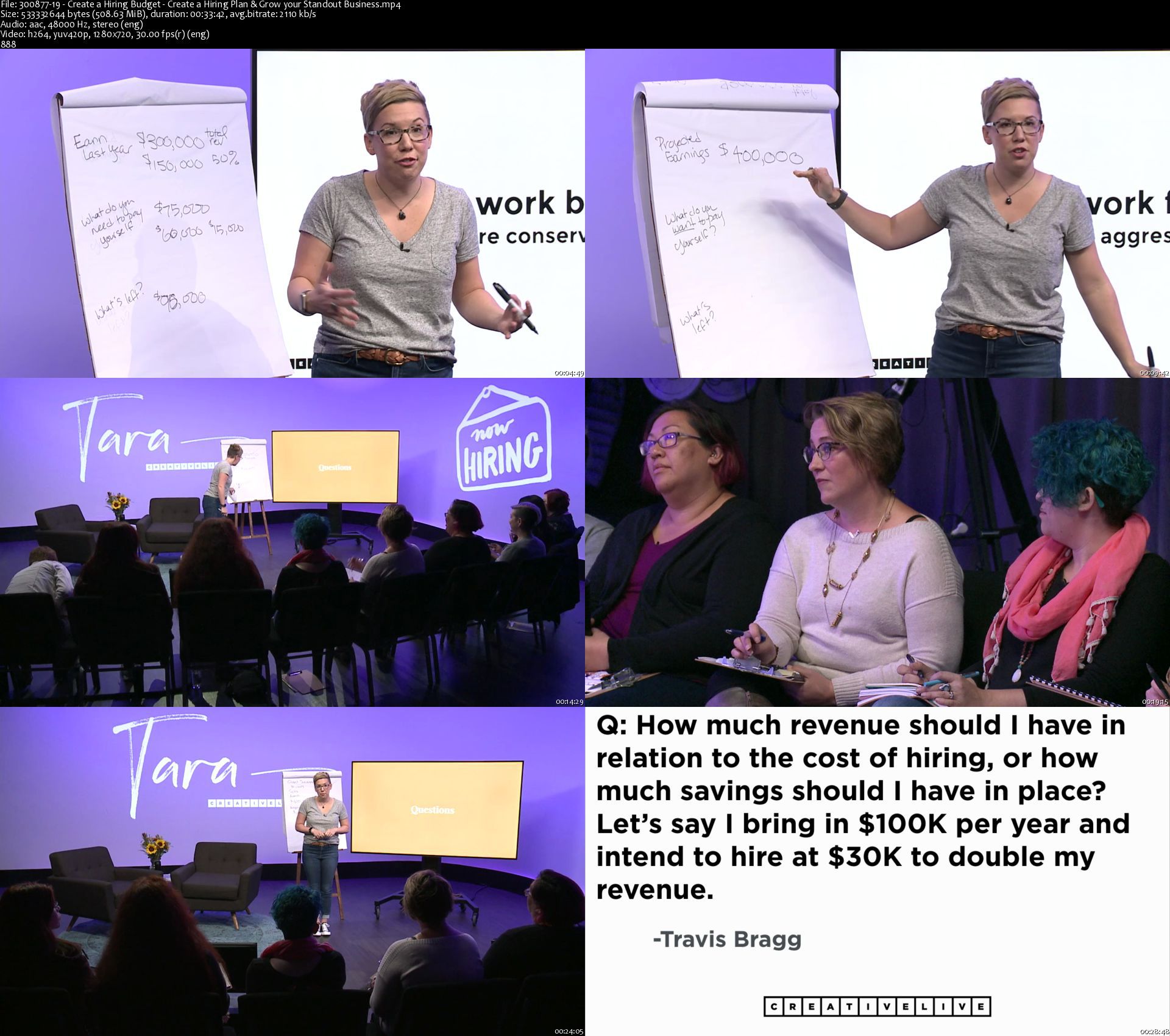
Create a Hiring Plan & Grow your Standout Business

nckv8chzp799esyzejtaah9kcx.jpg


Create a Hiring Plan & Grow your Standout Business
Duration: 9h40m| Video: .MP4 1280x720, 30 fps(r) | Audio: AAC, 48000 Hz, 2ch | Size: 7.9 GB
Genre: eLearning | Language: English + subtitles

Prevent Yourself From Burning Out And Hire The Right People To Grow Your Business
Are you too damn busy? Your business can't run-let alone grow-without all the hard work you put into it on a daily basis.

What's worse, you don't have the time to hire anyone, you're not making the money you need to hire anyone, and you don't see how anyone else could do the work you do.

If you keep at it this way it's just a matter of time before you burn out. You will end up closing up shop, not because the business wasn't working but simply because it wore you down. You had something and couldn't make it last because you just couldn't do it all.

There is also the problem that if you hire the wrong people you will be wasting time and money on a series of hires that don't alleviate your stress.

Set up your business to be the best place to work-even for yourself.

Finally, retire from being "too busy" and once and for all streamline your operations and systematize your workflow.

By the end of this class, you will be able to:

Describe your company culture and why it makes for a great place to work
Streamline your business operations, focusing only on what really counts
Systematize your workflow so that you never have to reinvent the wheel
Create a plan for fulfilling the roles every business needs to succeed
Identify who you want to hire and when
Craft a job description that brings in the right folks

Homepage

30087719createahiringyajzf.jpg


CBAP - IIBA Certified Business Analysis Professional Course

tp6hkgjphlqij5ptr5au2mgkow.jpg


CBAP - IIBA Certified Business Analysis Professional Course
MP4 | h264, 1280x720 | Lang: English | Audio: aac, 44100 Hz | 13h 49m | 5.26 GB


What you'll learn
Business analysis planning and monitoring
Elicitation and collaboration
Requirements life cycle management
Strategy analysis
Requirements analysis and design definition
Business intelligence perspective
Business architecture perspective
Business process management perspective
Requirements
Eager to learn & inspire to become business Analyst

Description
CBAP® (Certified Business Analysis Professional) training & certification is perfect for professionals with comprehensive experience in business analysis. CBAP are the credentials awarded by IIBA® (International Institute of Business Analysis). This program offers expertise in understanding business necessities and endorsing similar solutions that fetch maximum revenues. CBAP offers profound understanding about worldwide acknowledged ideologies of business analysis, in addition to real-world knowledge of business notions that are useful on-the-job. CBAP® certification is treasured by many establishments and are identifying this qualification and seeking individuals with business analysis skill.

CBAP® is the most widespread business analysis course globally, and it is affiliated with the 2016 release of CBAP® by IIBA. It will empower you to nurture the skills to be skilful in business analysis, while also qualifying you with IIBA-CBAP® exam at the first go. Equipped with this course, you will build proficiency in the six knowledge areas defined in BABOK® Guide Version 3: Those Six areas are - business analysis planning & monitoring, elicitation, requirements management & communication, enterprise analysis, requirements analysis and solution assessment & validation. CBAP® credentials are sought-after ones and they have the potential of high level of acknowledgment at work place along with significant amount of growth professionally and monetarily. CBAP® requires 7500 hours of Business Analysis experience.

A CBAP® certified professional becomes an elite member of the business analysis community and is recognized as an expert who can identify the business requirements of an organization to determine business solutions. CBAP recipients are senior Business Analysts who possess the ability and proficiency to perform business analysis work on projects of different complexities. Many companies are identifying the CBAP designation and the value and expertise these professionals carry to their organizations.

Benefits of IIBA Certification (CBAP®)

The certification provides a prospect to the professionals to get into the leading group of Business Analysts. Apart from receiving professional acknowledgment, the certificate promises career growth and hike in salary. Many organizations have begun to identify the certified CBAP® and are even paying big money for the services rendered by a CBAP® certified professional.


Who this course is for:
IT professionals
Business Architects
Business Systems Analysts
Data Analysts
Enterprise Analysts
Management Consultants
Process Analysts
Product Managers
Product Owners
Requirements Engineers
Systems Analysts


Homepage

5.assessenterpriselimvbkff.jpg


CCBA-IIBA Certification Preparation Course

ajivubmjmjijqfvrpiwxxbokvs.jpg


CCBA-IIBA Certification Preparation Course
MP4 | h264, 1280x720 | Lang: English | Audio: aac, 48000 Hz | 13h 48m | 5.25 GB


What you'll learn
Demonstrate knowledge of the skills necessary to be an effective member of the business analysis community
Implement business analysis practices as outlined in the Business Analysis Body of Knowledge® (BABOK® ) Guide
Deliver more reliable, higher quality results with increased efficiency and consistency
Demonstrate your commitment to the field of business analysis
Business analysis key concepts
Business Analysis Planning and Monitoring
Business Analysis Core Concept Model
Elicitation and collaboration
Requirements Lifecycle Management
Solution evaluation
Requirements
Eager to learn & inspire to become business Analyst

Description
Certification of Competency in Business Analysis (CCBA®) training course covers the basic skillsets essential for business analyst professionals based on the industry standards and yardsticks of the International Institute of Business Analysis (IIBA®).

CCBA® certified professional will become expert in distinguishing the needs of a business so that the most appropriate solutions can be acknowledged and implemented to produce consistent results with increased competence and steadiness.

CCBA® certification preparation course is intended for business analysts and practitioners who wish to be recognized as connoisseurs skilled at steering Business Analyst activities. Business analysts follow a specialized approach towards understanding the procedures, policies and structure of an organization by employing conventional set of methods in order to recommend the best possible solutions that drive the organization to achieve its goals.

Guiding business analysis activities include grasping the business processes to govern how they function to attain their purpose, and realizing which capabilities the organization requires to successfully provide its services to the peripheral participant. This incorporates the elucidation of organizational goals, how the goals are associated to objective, finding out the best way forward to act in order to fulfil these objectives, and also defining the interactions between different business units with its internal as well as external participants.

By the end of this CCBA® training, you will:

Acquire the knowledge and skills required to pass the CCBA® certification exam

Understand Business Analysis Key and core Concepts Model (BACCM)

Acquire cutting-edge knowledge of classifying, defining, assessing and finishing various elements of business analysis tasks.

Be able to achieve 30 business analysis tasks in 6 knowledge areas.

Understand 50 business analysis tools and techniques.

Benefits of IIBA Certification (CCBA®)

Upon Completion of this Course, you will achieve following: -

Defining training and professional development standards

Demonstrates to customers, competitors, suppliers, staff and investors that you use industry-standard business analysis practices.

Demonstrates to your investors that your business is run effectively.

Defining and maintaining the Business Analysis Body of Knowledge Guide


Who this course is for:
Individuals with an ECBA™ designation
Product Managers
Non-BA consultants
Trainers
Project Manager
Testers
Quality Assurance (QA) professionals
Change/Transformation Managers
IT Professionals


Homepage

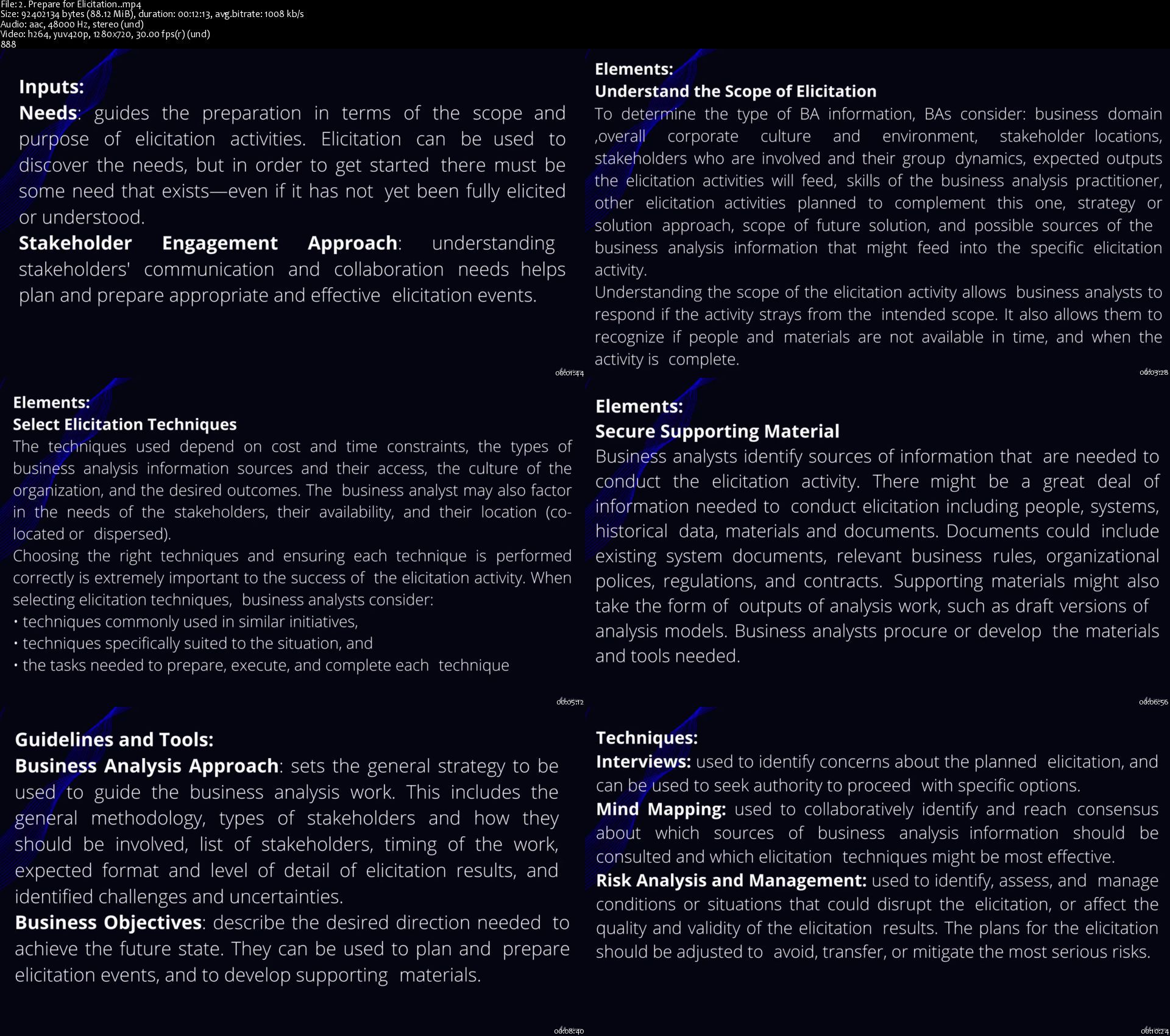
2.prepareforelicitatiytkd5.jpg


Zurück
Oben Unten