• Regeln für den Video-Bereich:

    In den Börsenbereich gehören nur Angebote die bereits den Allgemeinen Regeln entsprechen.

    Einteilung

    - Folgende Formate gehören in die angegeben Bereiche:
    - Filme: Encodierte Filme von BluRay, DVD, R5, TV, Screener sowie Telesyncs im Format DivX, XviD und x264.
    - DVD: Filme im Format DVD5, DVD9 und HD2DVD.
    - HD: Encodierte Filme mit der Auflösung 720p oder darüber von BluRay, DVD, R5, TV, Screener sowie Telesyncs im Format x264.
    - 3D: Encodierte Filme von BluRay, die in einem 3D Format vorliegen. Dies gilt auch für Dokus, Animation usw.
    - Serien: Cartoon/Zeichentrick, Anime, Tutorials, Dokumentationen, Konzerte/Musik, Sonstiges sind demnach in die entsprechenden Bereiche einzuordnen, auch wenn sie beispielsweise im High Definition-Format oder als DVD5/DVD9/HD2DVD vorliegen. Ausnahme 3D.
    - Bereich Englisch: Englische Releases gehören immer in diesen Bereich.
    - Bereich Talk: Der Bereich, in dem über die Releases diskutiert werden kann, darf, soll und erwünscht ist.


    Angebot/Beitrag erstellen

    - Ein Beitrag darf erst dann erstellt werden, wenn der Upload bei mindestens einem OCH komplett ist. Platzhalter sind untersagt.
    - Bei einem Scenerelease hat der Threadtitel ausschließlich aus dem originalen, unveränderten Releasenamen zu bestehen. Es dürfen keine Veränderungen wie z.B. Sterne, kleine Buchstaben o.ä. vorgenommen werden. Ausnahme Serienbörse:
    - Bei einem Sammelthread für eine Staffel entfällt aus dem Releasename natürlich der Name der Folge. Beispiel: Die Simpsons S21 German DVDRip XviD - ITG
    - Dementsprechend sind also u.a. verboten: Erweiterungen wie "Tipp", "empfehlenswert", "only", "reup", usw. / jegliche andere Zusatzinformation oder Ergänzung, welche nicht in obiger Beschreibung zu finden ist.

    Aufbau des Angebots und Threadtitel

    Der Titel nach folgendem Muster erstellt zu werden. <Name> [3D] [Staffel] [German] <Jahr> <Tonspur> [DL] [Auflösung] <Quelle> <Codec> - <Group>
    Beispiel: The Dark Knight German 2008 AC3 DVDRip XviD - iND
    Beispiel: The Dark Knight 2008 DTS DL BDRip x264 - iND
    Beispiel: The Dark Knight 2008 AC3 DL BDRip XviD - iND
    Beispiel: The Dark Knight German 2008 AC3 720p BluRay x264 iND
    Beispiel: The Dark Knight 2008 DTS DL 1080p BluRay x264 iND
    Beispiel: Die Simpsons S01 German AC3 DVDRip XviD iND
    Beispiel: Die Simpsons S20 German AC3 720p BluRay x264 iND
    Beispiel: Sword Art Online II Ger Sub 2014 AAC 1080p WEBRip x264 - peppermint
    Entsprechend sind also u.a. verboten: Sonderzeichen wie Klammern, Sterne, Ausrufezeichen, Unterstriche, Anführungszeichen / Erweiterungen wie "Tipp", "empfehlenswert", "only", "reup", usw. / jegliche andere Zusatzinformation oder Ergänzung, welche nicht in obiger Beschreibung zu finden ist
    Ausnahmen hiervon können in den Bereichen geregelt sein.

    Die Beiträge sollen wie folgt aufgebaut werden:
    Überschrift entspricht dem Threadtitel
    Cover
    kurze Inhaltsbeschreibung
    Format, Größe, Dauer sind gut lesbar für Downloader außerhalb des Spoilers zu vermerken
    Nfo sind immer Anzugeben und selbige immer im Spoiler in Textform.
    Sind keine Nfo vorhanden z.B. Eigenpublikationen, sind im Spoiler folgende Dateiinformationen zusätzlich anzugeben :
    Quelle
    Video (Auflösung und Bitrate)
    Ton (Sprache, Format und Bitrate der einzelnen Spuren)
    Untertitel (sofern vorhanden)
    Hosterangabe in Textform außerhalb eines Spoiler mit allen enthaltenen Hostern.
    Bei SD kann auf diese zusätzlichen Dateiinformationen verzichtet werden.

    Alle benötigten Passwörter sind, sofern vorhanden, in Textform im Angebot anzugeben.
    Spoiler im Spoiler mit Kommentaren :"Schon Bedankt?" sind unerwünscht.


    Releases

    - Sind Retail-Release verfügbar, sind alle anderen Variationen untersagt. Ausnahmen: Alle deutschen Retail-Release sind CUT, in diesem Fall sind dubbed UNCUT-Release zulässig.
    - Im Serien-Bereich gilt speziell: Wenn ein Retail vor Abschluss einer laufenden Staffel erscheint, darf diese Staffel noch zu Ende gebracht werden.62
    - Gleiche Releases sind unbedingt zusammenzufassen. Das bedeutet, es ist zwingend erforderlich, vor dem Erstellen eines Themas per Suchfunktion zu überprüfen, ob bereits ein Beitrag mit demselben Release besteht. Ist dies der Fall, ist der bereits vorhandene Beitrag zu verwenden.
    - P2P und Scene Releases dürfen nicht verändert oder gar unter einem iND Tag eingestellt werden.


    Support, Diskussionen und Suche

    - Supportanfragen sind entweder per PN oder im Bereich Talk zu stellen.
    - Diskussionen und Bewertungen sind im Talk Bereich zu führen. Fragen an die Uploader haben ausschließlich via PN zu erfolgen, und sind in den Angeboten untersagt.
    - Anfragen zu Upload-Wünschen sind nur im Bereich Suche Video erlaubt. Antworten dürfen nur auf Angebote von MyBoerse.bz verlinkt werden.


    Verbote

    - Untersagt sind mehrere Formate in einem einzigen Angebotsthread, wie beispielsweise das gleichzeitige Anbieten von DivX/XviD, 720p und 1080p in einem Thread. Pro Format, Release und Auflösung ist ein eigener Thread zu eröffnen.
    - Grundsätzlich ebenso verboten sind Dupes. Uploader haben sich an geeigneter Stelle darüber zu informieren, ob es sich bei einem Release um ein Dupe handelt.
    - Gefakte, nur teilweise lauffähige oder unvollständige Angebote sind untersagt. Dies gilt auch für eigene Publikationen, die augenscheinlich nicht selbst von z.B. einer DVD gerippt wurden. Laufende Serien, bei denen noch nicht alle Folgen verfügbar sind, dürfen erstellt und regelmäßig geupdatet werden.
    - Untersagt sind Angebote, welche nur und ausschließlich in einer anderen Sprache als deutsch oder englisch vorliegen. Ausnahmen sind VORHER mit den Moderatoren zu klären.


    Verstoß gegen die Regeln

    - Angebote oder Beiträge, die gegen die Forenregeln verstoßen, sind über den "Melden"-Button im Beitrag zu melden.
  • Bitte registriere dich zunächst um Beiträge zu verfassen und externe Links aufzurufen.

++ Premium IPTV ++ 7000 Live Sender ++ UHD Qualität ++ Mediathek mit 18.000 Inhalten ++


VenneTV


Englische Tutorials

hacking/Website Hacking/ Penetration Testing &Bounty Hunting

007ea8b2qkjf7.jpg


hacking/Website Hacking/ Penetration Testing &Bounty Hunting
Duration: 10h 20m | .MP4 1280x720, 30 fps(r) | AAC, 44100 Hz, 2ch | 6.86 GB
Genre: eLearning | Language: English

Website Hacking / Penetration Testing & Bug Bounty Hunting


What you'll learn
90+ Videos to take you from a beginner to advanced in website hacking.
Become a bug bounty hunters & discover bug bounty bugs!
Exploit these vulnerabilities to hack into web servers.
Advanced post exploitation - hack other websites on the same server, dump the database, privilege escalation..etc
Create a hacking lab & needed software (on Windows, OS X and Linux).
Discover, exploit and mitigate a number of dangerous web vulnerabilities.
Bypass security & advanced exploitation of these vulnerabilities.
Bypass security & filters.
Gain full control over target server using SQL injections.
Intercept requests using a proxy.
Adopt SQL queries to discover and exploit SQL injections in secure pages.
Learn linux commands and how to interact with the terminal.
Understand how websites & web applications work.
Gather sensitive information about websites.
Discover emails & sensitive data associated with a specific website.
Discover unpublished directories & files associated with a target website.
Find all subdomains associated with a website.
Find all websites hosted on the same server as the target website.
Exploit advanced file upload vulnerabilities & gain full control over the target website.
Exploit advanced code execution vulnerabilities & gain full control over the target website.
Exploit local file inclusion vulnerabilities to to get a shell.
Exploit advanced remote file inclusion vulnerabilities & gain full control over the target website.
Exploit advanced local file inclusion vulnerabilities & gain full control over the target website.
Discover, fix, and exploit SQL injection vulnerabilities.

Requirements
No Linux, programming or hacking knowledge required.
Computer with a minimum of 4GB ram/memory.
Operating System: Windows / OS X / Linux.


Description
Discovery, Exploitation & Mitigation - In this section you will learn how to discover, exploit and mitigate a large number of vulnerabilities, this section is divided into a number of sub-sections, each covering a specific vulnerability, firstly you will learn what is that vulnerability and what does it allow us to do, then you will learn how to exploit this vulnerability and bypass security, and finally we will analyse the code causing this vulnerability and see how to fix it, the following vulnerabilities are covered in the course:

File upload - This vulnerability allow attackers to upload executable files on the target web server, exploiting these vulnerabilities properly gives you full control over the target website.

Code Execution - This vulnerability allow users to execute system code on the target web server, this can be used to execute malicious code and get a reverse shell access which gives the attacker full control over the target web server.

Local File Inclusion - This vulnerability can be used to read any file on the target server, so it can be exploited to read sensitive files, we will not stop at that though, you will learn two methods to exploit this vulnerability to get a reverse shell connection which gives you full control over the target web server.

Remote File Inclusion - This vulnerability can be used to load remote files, exploiting this vulnerability properly gives you full control over the target web server.

SQL Injection - This is one of the most dangerous vulnerabilities, it is everywhere and can be exploited to do all of the things the above vulnerabilities allow us to do and more, so it allows you to login as admin without knowing the password, access the database and get all data stored there such as usernames, passwords, credit cards ..etc, read/write files and even get a reverse shell access which gives you full control over the target server!

Cross Site Scripting (XSS) - This vulnerability can be used to inject javascript code in vulnerable pages, we won't stop at that, you will learn how to steal credentials from users (such as facebook or youtube passwords) and even gain full access to their computer.

Insecure Session Management - In this section you will learn how to exploit insecure session management in web applications and login to other user accounts without knowing their password, you'll also learn how to discover and exploit CSRF (Cross Site Request Forgery) vulnerabilities to force users to change their password, or submit any request you want.


Who this course is for:
all

More Info

007eb1778wjzr.jpg


Develop Selenium framework with C# and Specflow BDD

bhnjg859fp7ujnhhabhri4qjc4.jpg


Develop Selenium framework with C# and Specflow BDD
Genre: eLearning | MP4 | Video: h264, 1280x720 | Audio: aac, 48000 Hz
Language: English | Size: 6.05 GB | Duration: 7h 39m


What you'll learn
Build automation framework using Selenium + C# + Specflow
Requirements
Basic computer knowledge is required
Software Testig concepts
This is basic course, but it teaches everything with building Framework

Description
This course teaches from basic about Selenium, C# & Specflow.

But how this course if different. Normally Instructor teaches individual concepts but NOT how to work in real works i.e. with frameworks.

This course not only teaches to develop framework but every concepts would be taught by developing a framework. As more and more you advance is course, you will able to understand how we are creating libraries, functions, writing test cases, updated test cases in framework, as it is done in real projects and companies.


Who this course is for:
Any Software Tester who wants to learn Selenium + C# + Specflow


Homepage

017webelementsandlocamfk6m.jpg


Data Science with Python Certification Training with Project

007eae1fhek2w.jpg


Data Science with Python Certification Training with Project
Genre: eLearning | MP4 | Video: h264, 1280x720 | Audio: aac, 44100 Hz
Language: English | VTT | Size: 20.1 GB | Duration: 44h 33m


What you'll learn
End-to-end knowledge of Data Science
Prepare for a career path as Data Scientist / Consultant
Overview of Python programming and its application in Data Science
Detailed level programming in Python - Loops, Tuples, Dictionary, List, Functions & Modules, etc.
Decision-making and Regular Expressions
Introduction to Data Science Libraries
Components of Python Ecosystem
Analysing Data using Numpy and Pandas
Data Visualisation with Matplotlib
Three-Dimensional Plotting with Matplotlib
Data Visualisation with Seaborn
Introduction to Statistical Analysis - Math and Statistics
Terminologies & Categories of Statistics, Correlation, Mean, Median, Mode, Quartile
Data Science Methodology - From Problem to Approach, From Requirements to Collection, From Understanding to Preparation
Data Science Methodology - From Modeling to Evaluation, From Deployment to Feedback
Introduction to Machine Learning
Types of Machine Learning - Supervised, Unsupervised, Reinforcement
Regression Analysis - Linear Regression, Multiple Linear Regression, Polynomial Regression
Implementing Linear Regression, Multiple Linear Regression, Polynomial Regression
Classification, Classification algorithms, Logistic Regression
Decision Tree, Implementing Decision Tree, Support Vector Machine (SVM), Implementing SVM
Clustering, Clustering Algorithms, K-Means Clustering, Hierarchical Clustering
Agglomerative & Divisive Hierarchical clustering
Implementation of Agglomerative Hierarchical Clustering
Association Rule Learning
Apriori algorithm - working and implementation

Requirements
Enthusiasm and determination to make your mark on the world!

Description
Data Science with Python Programming - Course Syllabus

1. Introduction to Data Science

Introduction to Data Science

Python in Data Science

Why is Data Science so Important?

Application of Data Science

What will you learn in this course?

2. Introduction to Python Programming

What is Python Programming?

History of Python Programming

Features of Python Programming

Application of Python Programming

Setup of Python Programming

Getting started with the first Python program

3. Variables and Data Types

What is a variable?

Declaration of variable

Variable assignment

Data types in Python

Checking Data type

Data types Conversion

Python programs for Variables and Data types

4. Python Identifiers, Keywords, Reading Input, Output Formatting

What is an Identifier?

Keywords

Reading Input

Taking multiple inputs from user

Output Formatting

Python end parameter

5. Operators in Python

Operators and types of operators

- Arithmetic Operators

- Relational Operators

- Assignment Operators

- Logical Operators

- Membership Operators

- Identity Operators

- Bitwise Operators

Python programs for all types of operators

6. Decision Making

Introduction to Decision making

Types of decision making statements

Introduction, syntax, flowchart and programs for

- if statement

- if.else statement

- nested if

elif statement

7. Loops

Introduction to Loops

Types of loops

- for loop

- while loop

- nested loop

Loop Control Statements

Break, continue and pass statement

Python programs for all types of loops

8. Lists

Python Lists

Accessing Values in Lists

Updating Lists

Deleting List Elements

Basic List Operations

Built-in List Functions and Methods for list

9. Tuples and Dictionary

Python Tuple

Accessing, Deleting Tuple Elements

Basic Tuples Operations

Built-in Tuple Functions & methods

Difference between List and Tuple

Python Dictionary

Accessing, Updating, Deleting Dictionary Elements

Built-in Functions and Methods for Dictionary

10. Functions and Modules

What is a Function?

Defining a Function and Calling a Function

Ways to write a function

Types of functions

Anonymous Functions

Recursive function

What is a module?

Creating a module

import Statement

Locating modules

11. Working with Files

Opening and Closing Files

The open Function

The file Object Attributes

The close() Method

Reading and Writing Files

More Operations on Files

12. Regular Expression

What is a Regular Expression?

Metacharacters

match() function

search() function

re.match() vs re.search()

findall() function

split() function

sub() function

13. Introduction to Python Data Science Libraries

Data Science Libraries

Libraries for Data Processing and Modeling

- Pandas

- Numpy

- SciPy

- Scikit-learn

Libraries for Data Visualization

- Matplotlib

- Seaborn

- Plotly

14. Components of Python Ecosystem

Components of Python Ecosystem

Using Pre-packaged Python Distribution: Anaconda

Jupyter Notebook

15. Analysing Data using Numpy and Pandas

Analysing Data using Numpy & Pandas

What is numpy? Why use numpy?

Installation of numpy

Examples of numpy

What is 'pandas'?

Key features of pandas

Python Pandas - Environment Setup

Pandas - Data Structure with example

Data Analysis using Pandas

16. Data Visualisation with Matplotlib

Data Visualisation with Matplotlib

- What is Data Visualisation?

- Introduction to Matplotlib

- Installation of Matplotlib

Types of data visualization charts/plots

- Line chart, Scatter plot

- Bar chart, Histogram

- Area Plot, Pie chart

- Boxplot, Contour plot

17. Three-Dimensional Plotting with Matplotlib

Three-Dimensional Plotting with Matplotlib

- 3D Line Plot

- 3D Scatter Plot

- 3D Contour Plot

- 3D Surface Plot

18. Data Visualisation with Seaborn

Introduction to seaborn

Seaborn Functionalities

Installing seaborn

Different categories of plot in Seaborn

Exploring Seaborn Plots

19. Introduction to Statistical Analysis

What is Statistical Analysis?

Introduction to Math and Statistics for Data Science

Terminologies in Statistics - Statistics for Data Science

Categories in Statistics

Correlation

Mean, Median, and Mode

Quartile

20. Data Science Methodology (Part-1)

Module 1: From Problem to Approach

Business Understanding

Analytic Approach

Module 2: From Requirements to Collection

Data Requirements

Data Collection

Module 3: From Understanding to Preparation

Data Understanding

Data Preparation

21. Data Science Methodology (Part-2)

Module 4: From Modeling to Evaluation

Modeling

Evaluation

Module 5: From Deployment to Feedback

Deployment

Feedback

Summary

22. Introduction to Machine Learning and its Types

What is a Machine Learning?

Need for Machine Learning

Application of Machine Learning

Types of Machine Learning

- Supervised learning

- Unsupervised learning

- Reinforcement learning

23. Regression Analysis

Regression Analysis

Linear Regression

Implementing Linear Regression

Multiple Linear Regression

Implementing Multiple Linear Regression

Polynomial Regression

Implementing Polynomial Regression

24. Classification

What is Classification?

Classification algorithms

Logistic Regression

Implementing Logistic Regression

Decision Tree

Implementing Decision Tree

Support Vector Machine (SVM)

Implementing SVM

25. Clustering

What is Clustering?

Clustering Algorithms

K-Means Clustering

How does K-Means Clustering work?

Implementing K-Means Clustering

Hierarchical Clustering

Agglomerative Hierarchical clustering

How does Agglomerative Hierarchical clustering Work?

Divisive Hierarchical Clustering

Implementation of Agglomerative Hierarchical Clustering

26. Association Rule Learning

Association Rule Learning

Apriori algorithm

Working of Apriori algorithm

Implementation of Apriori algorithm


Who this course is for:
Data Scientists
Data Analysts / Data Consultants
Senior Data Scientists / Data Analytics Consultants
Newbies and beginners aspiring for a career in Data Science
Data Engineers
Machine Learning Engineers
Software Engineers and Programmers
Python Developers
Data Science Managers
Machine Learning / Data Science SMEs
Digital Data Analysts
Anyone interested in Data Science, Data Analytics, Data Engineering


Homepage

007eae203xkmn.jpg


Build Online Learning Management System Using PHP (2021)

c4yacrcrehsrfdrhjmrpjunkdk.jpg


Build Online Learning Management System Using PHP (2021)
MP4 | Video: h264, 1280x720 | Audio: AAC, 44.1 KHz, 2 Ch
Genre: eLearning | Language: English + .srt | Duration: 103 lectures (13h) | Size: 6.16 GB

Do you intend to learn or want to run online learning management platform business, then this is the best course for you

What you'll learn:
Be able to build any web app you want using codeigniter
Be able to build complete Udemi clone web application
Build fully-fledged web apps for your startup or business
Work as a freelance PHP developer
Craft a portfolio of web apps to apply for seniour developer jobs
Learn to use PHP Framework
Have a new PHP Skill that would increase income
Learn best way to use AJAX
Understands how youtube, vimeo API works
Build a Multi-linqual Web Application
How to run online course business
Build complete email verrification system with ease
Learn how to automatically calculate video lenght with API's
Create a simple quiz management system to evaluate your students
Real time ajax chat without refreshing your page
Standard and mature internal messaging system.
Learn how to add products to cart using PHP Framework

Requirements
Little knowledge of PHP, though not neccessary becase I'll teach you everything you need to know
Little knowledge of CSS will be an advantage
Zeal to learn PHP Framework
Computer System - Windows/Mac
I'll walk you through, step-by-step how to setup PHP CodeIgniter


Description
Please READ all the points before proceeding

Please watch the preview video and ensure you are satisfy with my accent and my English before enrolling for the course.

Please do not take the course if you are not ready to learn how to build complete learning management system like this platform.

Please note that The objective of this course is learn PHP CodeIgniter framework by building your own complete learning system through learning by practical.

Also, note that there is going to be assignments, quizzes, and evaluations.

Please read the Pre-requisites before joining the course.

If you are still with me lets continue

Building dynamic websites is not an easy challenge and requires time and effort dedicated to coding every bit and piece of the website, which is why anytime there is a new tool that promises to ease the woes of coding, developers always jump at the chance to try it.

PHP Framework (CodeIgniter) is a simple open-source framework that makes it the coding tasks easier by providing a faster way to set up a PHP website from the ground-up. This tool with a small framework ensures that developers can design websites that are light, fast and dynamic.

So, for any developer that wants to become a server-side master, this is a tool that they should definitely have in their toolkit. But, it's not always easy to find a course that is clear and concise and targets exactly what you are looking for!

This is why we have designed this course with an aim teach you everything you need know about PHP Framework (CodeIgniter) with real world project (Building Standard and Most School Management System) using a no-fluff and clear approach at the topic at hand, this tutorial will breakdown CodeIgniter into simple and easy to learn videos so as to be able to build any real world application on PHP Framework (CodeIgniter).

At the end of this course, you will have not only learnt the PHP Framework (CodeIgniter), but you will actually be able to start building your own projects from scratch. In addition to knowledge, this course will also give you the practical hands-on experience and the confidence to start coding your own websites by building school system.

The course will start at the very beginning with a detailed introduction into the PHP Framework (CodeIgniter) from there moving on to installing the framework. From there you will become familiar with the framework, and start building your own LMS.

Join us today as we learn PHP Framework (CodeIgniter) together by building real world software and be free from some authors who claim to teach you a particular programming language but only teach you basis and some copy and paste projects which at the end cannot take you to anywhere.

Learning management system

A learning management system (LMS) is a software application for the administration, documentation, tracking, reporting, automation and delivery of educational courses, training programs, or learning and development programs. The learning management system concept emerged directly from e-Learning

Benefits of Learning Management System

1. Organizes eLearning content in one location.
Instead of having your eLearning content spread out over different hard drives and devices, you can store all of your eLearning materials in one location. This reduces the risk of losing important data and makes it easier to create your eLearning course. Every member of your eLearning team can also access the information if you're using a cloud-based Learning Management System, thanks to the fact that it's all stored on the remote server. This makes Learning Management Systems a natural fit for online collaboration.

2. Provides unlimited access to eLearning materials.
Once you upload your eLearning course materials onto the LMS and publish them, your audience has unlimited access to the information they need. Even those who are on the go can login to the eLearning platform via their smartphones and tablets, so that they don't have to wait until their next online training session to develop skills and perfect work-related tasks. This is one of the main reasons why a LMS is essential for global audiences in different time zones.

3. Easily tracks learner progress and performance.
The best Learning Management System gives you the ability to keep track of learner progress and ensure that they are meeting their performance milestones.

4. Reduces Learning and Development costs.
A Learning Management System gives you the power to completely do away with instructor travel costs, online training site rentals, and printed eLearning materials. Your online learners can carry out all of their training online, which means that you can save a sizable sum on your Learning and Development budget. For example, you won't have to worry about printing out 500 manuals and booking a hotel room for your instructor, because all the information your online learners require is right in the LMS.

5. Reduces Learning and Development time.
A Learning Management System can even reduce online training times, thanks to the fact that it gives online learners only the information they need in a direct and organized manner. Instead of having to sit through a lengthy half-hour online training course, online learners can simply click on the online modules they need and absorb the knowledge in a fraction of the time. They can also assess their understanding by taking online exams or quizzes, participate in interactive scenarios and simulations, and watch eLearning videos that highlight complex processes or tasks.

6. Quickly and conveniently expands eLearning courses.
If you want to add additional online modules to your eLearning course in order to update information based on new trends or scientific evidence, you can simply login to the Learning Management System and make the necessary modifications without redoing your entire eLearning course. All of the content is in one location, which allows you to change only the master eLearning course and then deploy it to all of your online learners. This is in stark contrast to a traditional course, where you would have to send every member of your audience an updated manual or updated handouts.

From Beginner to Expert PHP Framework (CodeIgniter) Developer

We know that you're here because you value your time. If you wanted to watch someone program for hours and hours without explaining what they're doing, you'd be on YouTube.

By getting this course, you can be rest assured that the course is carefully thought out and edited. There are beautiful animations that explain all the difficult concepts and we're always on hand to answer student questions.

So by the end of the course, you'll completely understand:

PHP Framework (CodeIgniter) to level of building your own software especially LMS.

Learn how work with API's (Youtube, Vimeo and many others)

Learn how to create add-on to your existing projects

How to use Ajax, jQuery effectively

Build complete LMS

How to create secure email verification system

Software Design: How to organise and format code for readability and how to implement the Model *View* Controller (MVC) design pattern.

Control Structures: Using If/*Else clauses, Switch statements and logic to control the flow of execution.

Concepts of Object Oriented Programming (OOP): The type system, variables, functions and methods, inheritance, classes and protocols.

Don't waste your time

Don't waste another minute of your precious life on poor quality videos on YouTube or instructors who you can't understand or teachers who have no real world in-person teaching experience. Your time is precious. Take this course and find out why everybody is raving about it and why many students rated my courses 5 stars!

Don't waste your money

Inside this course, you're getting exactly the same course materials and curriculum as our 16 weeks in-person programming bootcamp. Save loads of money by getting this course and do it at your own pace!

Those that will benefit from this course :

If you have never programmed before, then take this course to learn

If you know how to code, but are new to programming, then take this course to build web Apps.

If you are a developer, then take this course to see how much time you can save building real world software - Complete Udemy Clone

If you've tried PHP Framework (CodeIgniter) before, then take this course to get a comprehensive curriculum that covers all the important aspects of PHP Framework (CodeIgniter) development

Entrepreneurs Who Want to Build Web Apps with Single Codebase

Managers and Program Managers Who Want to Learn How to Build Complete Hospital Management System.

Anyone wanting to learn to code in a practical way

Anyone who wants to kick start a career or hobby developing apps

This is the only course on this platform where students can drop their desired features and both the students and the instructor will develop it together. This is also a course where more features will be added by the instructor and each section will be released everyday.

Join us NOW as we build this awesome software together using one of the best PHP Framework (CodeIgniter) !

Who this course is for
Beginner developer want to learn more about PHP Framework
Professional who want to add more to their knowledge
Those who want to know how to build udemi clone
Developers who want to be PHP Framework expert.
Beginner Codeigniter developers curious about how to build school system
Business men/women who want to go into onine course business
Those who want to increase their daily revenue
Freelance who want to increase thier skills
Developers who want to write code like a professional

Homepage

1.showingwhatwearebuildk97.jpg


Advanced CSS For Web Developers

vaixparooubx3yngvrqmw1cka7.jpg


Advanced CSS For Web Developers
MP4 | Video: h264, 1280x720 | Audio: AAC, 44.1 KHz, 2 Ch
Genre: eLearning | Language: English + .srt | Duration: 105 lectures (10h 33m) | Size: 5.7 GB

The most comprehensive program to learn and master modern CSS development

What you'll learn:
Learn the fundamentals of CSS from ground up
Learn everything about modern web development using CSS

Requirements
It is a beginner's course perfect for new developers who just have basic knowledge of HTML


Description
Learn Advanced CSS to create beautiful websites in no time!

Every developer knows that the HTML is the backbone of the web content - but its close counterpart CSS or Cascading Style Sheets is equally important as well. Often CSS is used to style, format & present web content.

It is a very powerful language that can make web content beautiful, customized CMS, add animation & so on. Not only this, but the web developers proficient in Advanced CSS are also in demand & get a high paying salary.

Though CSS might be incredibly powerful, it is also popular for being a tricky technology to learn, and even harder to get a stronghold.

But it is not true when you are ready to give your time & learn it step-by-step. Considering this, we have curated this course that will help you learn advanced CSS without any hassle.

Why you should learn CSS?

CSS is a cornerstone programming language of the internet

It is very powerful

Heavily used alongside HTML & JavaScript

Important for front-end web development

Can add transitions & animations

Helps in creating mobile-friendly websites

Why you should take this course?

It is a perfect course curated for any programmer seeking to learn the advanced concepts of CSS. All its sections are carefully crafted by an expert for giving you an in-depth understanding of advanced CSS. It covers both basics as well as advanced concepts ensuring a complete understanding of various aspects of CSS programming language.

This course includes:

Introduction to CSS, developer tools, custom CSS properties

Typography- font classification, font MIME types, web fonts & variable fonts

Text clipping, text transformation, text transitions & animations

Responsive text

Basic to advanced list styles

Pure CSS accordions, CSS slider, CSS forms

Graphics- colors, backgrounds, gradients, borders, filters, responsiveness

Layout- content box vs border box, box model layout, clearfix, Flexbox, Grid

Transitions & animations

Multiple & asynchronous transitions

2D & 3D transforms

Basic, Sprite & SVG animations

Real-time projects on HTML & CSS, and so much more

Get started with this Advanced CSS course right away to learn one of the cornerstone programming languages of the internet!!

Who this course is for
Any one who wants to learn HTML and CSS comprehensively will find this course very useful

Homepage

2.floatspositioningsf2kf0.jpg


Azure Kubernetes Service with Azure DevOps and Terraform

kto6fzvx32hzetvgtyz8zzpkra.jpg


Azure Kubernetes Service with Azure DevOps and Terraform
Genre: eLearning | MP4 | Video: h264, 1280x720 | Audio: aac, 44100 Hz
Language: English | SRT | Size: 11.3 GB | Duration: 27h 29m


What you'll learn
You will learn to build Azure AKS Production grade clusters using Azure AKS CLI
You will learn terraform from basics and create terraform manifests for provisioning Azure AKS Production grade clusters
You will learn to provision Azure AKS Clusters using Terraform and Azure DevOps.
You will learn 30+ kubernetes concepts and use 21 Azure Services in combination with Azure AKS
You will implement DevOps concepts with Azure DevOps Continuous Integration Pipelines and Continuous Deliver Pipelines also called Release Pipelines
You will write Azure DevOps CI Pipelines from scratch using Starter Pipelines
You will write kubernetes manifests with confidence after going through live template writing sections
You will learn Kubernetes Fundamentals in both imperative and declarative approaches
You will learn writing & deploying k8s manifests for storage concepts like storage class, persistent volume claim pvc, mysql
You will learn to switch from native Azure Disks to Azure MySQL Database using k8s external name service
You will learn writing and deploying load balancer k8s manifests for Azure Standard Load Balancer
You will learn writing ingress k8s manifests by enabling features like context path based routing, domain name based routing, SSL with LetsEncrypt and External DNS.
You will learn writing k8s manifests for Azure Virtual Nodes (serverless) and do mixed mode workload deployments in both Azure Linux NodePools and Virtual Nodes.
You will learn using ACR - Azure Container Registry in combination with AKS in 3 ways (ACR Attach, using Service Principal, on Virtual Nodes)
You will learn to enable Autoscaling features like HPA & Cluster Autoscaler
You will learn Docker fundamentals by implementing usecases like download image from Docker Hub and run on local desktop and build an image locally, test and push to Docker Hub.
You will master many kubectl commands over the process
You will learn to integrate Azure AKS with Azure Active Directory for AKS Admins to be created managed in Azure Active Directory
You will learn Kubernetes RBAC concepts like role, role-binding, cluster role, cluster role binding in combination with Azure AD for Azure AKS granular level access control
Requirements
You must have an Azure Cloud account to follow with me for hands-on activities.
You dont need to have any basic Docker or kubernetes knowledge to start this course.

Description
******* Course Overview *******

Welcome to this Amazing course on Azure AKS Kubernetes - Masterclass | Azure DevOps, Terraform. Below is the list of modules covered in this course.

Course Modules

Create Azure AKS Cluster using Azure Portal

Docker Fundamentals

Imperative Method: Kubernetes Fundamentals using kubectl

Declarative Method: Kubernetes Fundamentals using YAML

Azure Disks for AKS Storage

Custom Storage Class, PVC, and PV

AKS default Storage class, PVC and PV

User Management Web Application Deployment with MySQL as storage using Storage Class, PVC, and PV

Azure MySQL for AKS Storage

Kubernetes Secrets

Azure Files for AKS Storage

Ingress Basics

Ingress Context path based Routing

Azure DNS Zones - Delegate domain from AWS to Azure

Ingress and External DNS with Azure DNS Zones

Ingress Domain Name based Routing with External DNS

Ingress SSL with LetsEncrypt

Kubernetes Requests & Limits

Kubernetes Namespaces

Kubernetes Namespaces - Imperative

Kubernetes Namespaces - Limit Range

Kubernetes Namespaces - Resource Quota

Azure Virtual Nodes for AKS

Azure Virtual Nodes Basics

Azure AKS Virtual Nodes Mixed Mode Deployments

Azure Container Registry for AKS

Integrate Azure Container Registry ACR with AKS

Azure AKS Pull Docker Images from ACR using Service Principal

Pull Docker Images from ACR using Service Principal and Run on Azure Virtual Nodes

Azure DevOps with AKS Cluster

Azure DevOps - Build and Push Docker Image to Azure Container Registry

Azure DevOps - Build, Push to ACR and Deploy to AKS

Azure DevOps - Create Starter Pipeline

Azure DevOps - Release Pipelines

Azure AKS - Enable HTTP Application Routing AddOn

Azure AKS Authentication with Azure AD and Kubernetes RBAC

Azure AKS Cluster Access with Multiple Clusters

Azure AD Integration with Azure AKS for Authentication

Kubernetes RBAC Role & Role Binding with Azure AD on AKS

Kubernetes RBAC Cluster Role & Role Binding with AD on AKS

Azure AKS Cluster Autoscaling

Azure AKS - Cluster Autoscaler

Azure AKS - Horizontal Pod Autoscaler HPA

Azure AKS Production Grade Cluster Design using AZ AKS CLI

Create Azure AKS Cluster using AZ AKS CLI

Create Azure AKS Linux, Windows, and Virtual Node Pools

Deploy Apps to Azure AKS Linux, Windows, and Virtual Node Pools

Provision Azure AKS Clusters using Terraform

Terraform Command Basics

Terraform Language Basics

Provision AKS Cluster using Terraform

Create AKS Cluster Linux and Windows Node Pools

Create an Azure AKS Cluster using Custom Virtual Network

Provision Azure AKS using Terraform & Azure DevOps

Azure Services Covered

Azure Kubernetes Service

Azure Disks

Azure Files

Azure MySQL Database

Azure Storage Accounts

Azure Cloud Shell

Azure Load Balancer

Azure DNS Zones

Azure Container Registries ACR

Azure Container Registries ACR with Azure Service Principal

Azure DevOps - Build Pipelines with ACR & Github Repositories

Azure DevOps - Release Pipelines with AKS

Azure Public IP Address

Azure Standard Load Balancer

Azure Virtual Networks

Azure Active Directory

Azure Container Instances - Virtual Nodes

Azure AKS Windows and Linux User NodePools

Azure Managed Service Identity - MSI

Azure Virtual Machine Scale Sets

Azure Log Analytics Workspaces for Azure Monitor

Kubernetes Concepts Covered

Kubernetes Architecture

Pods

ReplicaSets

Deployments

Services - Load Balancer Service

Services - Cluster IP Service

Services - External Name Service

Services - Ingress Service

Services - Ingress SSL & SSL Redirect

Services - Ingress & External DNS

Services - Domain Name based Routing

Imperative - with kubectl

Declarative - Declarative with YAML

Secrets

Init Containers

Requests & Limits

Namespaces - Imperative

Namespaces - Limit Range

Namespaces - Resource Quota

Storage Classes

Persistent Volumes

Persistent Volume Claims

Services - Load Balancers

Annotations

HPA - Horizontal Pod Autoscaler

CA - Cluster Autoscaler

Config Maps

RBAC - Role & Role Bindings

RBAC - Cluster Role & Cluster Role Bindings

Virtual Kubelet

Secrets - Image Pull Secrets

Each of my courses come with

Amazing Hands-on Step By Step Learning Experiences

Real Implementation Experience

Friendly Support in the Q&A section

30 Day "No Questions Asked" Money Back Guarantee!


Who this course is for:
Azure Architects or Sysadmins or Developers who are planning to master Azure Kubernetes Service (AKS) for running applications on Kubernetes
Any beginner who is interested in learning kubernetes on cloud using Azure AKS.
Any beginner who is interested in learning Azure DevOps, Terraform to provision Azure Kubernetes Clusters


Homepage

001introductionssckip.jpg


Mobile Video Journalism: iPhone Video Course for Journalists

skelqobfjpfelzu7tkrekr8jk5.jpg


Mobile Video Journalism: iPhone Video Course for Journalists
Genre: eLearning | MP4 | Video: h264, 1280x720 | Audio: aac, 48000 Hz
Language: English | SRT | Size: 6.73 GB | Duration: 6h 42m


What you'll learn
Best practices for producing, filming, and editing mobile video
How to use the Filmic Pro app to capture broadcast-quality smartphone video
How to develop a mobile video story from start to finish
Master storyboarding techniques and mobile video story forms
Produce a portfolio of mobile videos with 10 projects
Develop in-depth interviewing techniques that deliver great results
How to edit a branded video on a mobile device for quick publishing
The basics of editing on iMovie (and other video apps)
How to deliver for a polished, professional look to your video stories
The secrets to creating social video that resonates with a mobile audience!
Requirements
No previous experience is required
You will need a late-model smartphone (iOS or Android)
Some apps we show are paid, but are not expensive. Many are free.

Description
Mobile Video Journalism Course - Android and iPhone video production workflows.

"Robb is an excellent instructor. He knows his subject matter and teaches each module clearly. I highly recommend his course. Enroll now!"
- Jayson Guerrero ★★★★★

This comprehensive Mobile Journalism Masterclass was originally developed to train CNN journalists in 2014 and it is updated frequently with new tutorials. It has been used to train thousands of reporters and uses proven distance learning techniques.

This course will teach you the methods that produce professional-looking video packages every time.

This instructor has more than 1,000 ★★★★★ reviews on his Smart Film School courses.

The lessons in this course were developed from the experiences of training thousands of broadcast journalists how to tell stories with their mobile phones. Get the same training that professional broadcasters use.

"Robb is very clear and straightforward in his teaching, and I appreciate the way his lectures are backed up with slide or text reviews. Production quality is professional. Highly recommended!"

- Stephen Box ★★★★★

This step-by-step class teaches all aspects of video production: From interviewing to editing.


What you'll learn:

Best practices for producing, filming, and editing mobile video

How to use the Filmic Pro app to capture broadcast-quality video

How to develop a mobile video story from start to finish

Master storyboarding, script writing and story forms

Produce a portfolio of mobile videos with the included story projects

Develop in-depth interviewing techniques that deliver great results

Produce and edit a branded video on a mobile device for quick publishing

The basics of editing on iMovie (and other video apps)

How to deliver for a polished, professional look to your mobile video stories

The secrets to creating video that resonates with a mobile audience!

You will learn how to produce professional video in this course.

"I am a mobile journalism educator and professional. I took Robb's course to gain additional training and found out how little I actually knew! Robb's course is great for, both, beginners and advanced mobile journalists."

- Len Clark, University of Notre Dame ★★★★★

No previous video production experience is required.

"The instructor's language is easy to catch up with, all explanations are deep yet easy to understand even for a beginner."

- Priyag Kurup ★★★★★

There are more than 25,000 happy students enrolled in Smart Film School courses including field reporters from Reuters video, CNN and The New York Times.

I encourage you to read the five-star reviews from real people, just like you.

Enroll today.

NOTE: An instructor-led, diploma version of this video course content is used by more than 50 universities and professional media organizations - details at the Smart Film School web site.


Who this course is for:
Journalists
Media students
Mobile journalism trainers
Social Media teams
Communications teams
Social media teams
Journalism instructors
Correspondents
Broadcasters


Homepage

003mobilereportingdur2sj31.jpg


Media Composer 2020 Essential Training: 110 Fundamentals 2

007eb276nikys.jpg


Media Composer 2020 Essential Training: 110 Fundamentals 2
Duration: 9h 20m | .MP4 1280x720, 30 fps(r) | AAC, 48000 Hz, 2ch | 14.7 GB
Genre: eLearning | Language: English

Learn to import, edit, refine, and output video using Avid Media Composer. This course is the second part of a two-part, start-to-finish, project-based training series designed to get you up to speed on the Media Composer environment in context of the Avid Everywhere model. Maxim Jago -an Avid Certified Instructor with 20 years of experience-focuses on getting users comfortable with each aspect of the editing process-from preparation and organization, to editing and trimming video, to audio mixing and effects, to media management and output. You can also learn creative techniques for retiming footage, tracking and blurring objects, creating precise mattes, and more. Each technique within the post-production workflow is explained thoroughly and concisely, using real-world examples from a documentary-style promotional project.This course is an official companion to Media Composer 101: Media Composer Fundamentals I, the introductory book from Avid. In each chapter, Maxim expands on the lessons and exercises found in the book. Together, these resources can help novice users quickly start leveraging this powerful software.This course was created by Maxim Jago. We are pleased to host this training in our library.

More Info

007eb275ywjtp.jpg


Media Composer 2020 Essential Training: 101 Fundamentals 1

007eb2f0mdj8c.jpg


Media Composer 2020 Essential Training: 101 Fundamentals 1
Duration: 9h 35m | .MP4 1280x720, 30 fps(r) | AAC, 48000 Hz, 2ch | 6.12 GB
Genre: eLearning | Language: English

Get up and running with Media Composer, the feature-rich video editing software from Avid. In this project-based course, the first installment in a two-part series, learn how to approach each aspect of the editing process with Media Composer 2020. After familiarizing you with the software's interface, Maxim Jago-an Avid Certified Instructor with 20 years of experience-demonstrates how to create a brand-new project and import media. He then helps you get comfortable with each stage of the editing workflow. Learn how to prepare the timeline for editing, add audio and effects, create titles, manage media, export a video sequence, and much more. Maxim thoroughly explains each technique within the post-production workflow, using real-world examples along the way.This course is an official companion to Media Composer 101: Media Composer Fundamentals I, the introductory book from Avid. In each chapter, Maxim expands on the lessons and exercises found in the book. Together, these resources can help novice users quickly start leveraging this powerful software.This course was created by Maxim Jago. We are pleased to host this training in our library.

More Info

007eb2efhlknw.jpg


Linear Algebra for Machine Learning

wjfxrsnht0fxd6ontnoevh3kah.jpg


Linear Algebra for Machine Learning
MP4 | Video: h264, 1280x720 | Audio: AAC, 44.1 KHz, 2 Ch
Genre: eLearning | Language: English | Duration: 58 Lessons (6h 32m) | Size: 15 GB

Overview

Linear Algebra for Machine Learning LiveLessons provides you with an understanding of the theory and practice of linear algebra, with a focus on machine learning applications.

About the Instructor

Jon Krohn is Chief Data Scientist at the machine learning company untapt. He authored the book Deep Learning Illustrated (Addison-Wesley, 2020), an instant #1 bestseller that has been translated into six languages. Jon is renowned for his compelling lectures, which he offers in-person at Columbia University and New York University, as well as online via O'Reilly, YouTube, and the Super Data Science Podcast. Jon holds a PhD from Oxford and has been publishing on machine learning in leading academic journals since 2010; his papers have been cited over a thousand times.

Skill Level
Intermediate
Learn How To
Appreciate the role of algebra in machine and deep learning
Understand the fundamentals of linear algebra, a ubiquitous approach for solving for unknowns within high-dimensional spaces
Develop a geometric intuition of what's going on beneath the hood of machine learning algorithms, including those used for deep learning
Be able to more intimately grasp the details of machine learning papers as well as all of the other subjects that underlie ML, including calculus, statistics, and optimization algorithms
Manipulate tensors of all dimensionalities including scalars, vectors, and matrices, in all of the leading Python tensor libraries: NumPy, TensorFlow, and PyTorch
Reduce the dimensionality of complex spaces down to their most informative elements with techniques such as eigendecomposition (eigenvectors and eigenvalues), singular value decomposition, and principal components analysis
Who Should Take This Course
Users of high-level software libraries (e.g., scikit-learn, Keras, TensorFlow) to train or deploy machine learning algorithms who would now like to understand the fundamentals underlying the abstractions, enabling them to expand their capabilities
Software developers who would like to develop a firm foundation for the deployment of machine learning algorithms into production systems
Data scientists who would like to reinforce their understanding of the subjects at the core of their professional discipline
Data analysts or AI enthusiasts who would like to become a data scientist or data/ML engineer and are keen to deeply understand from the ground up the field they're entering (very wise!)
Course Requirements
Mathematics: Familiarity with secondary school-level mathematics will make the course easier to follow. If you are comfortable dealing with quantitative information-such as understanding charts and rearranging simple equations-then you should be well-prepared to follow along with all of the mathematics.
Programming: All code demos are in Python so experience with it or another object-oriented programming language would be helpful for following along with the hands-on examples.
Lesson Descriptions

Lesson 1: Orientation to Linear Algebra
In Lesson 1, Jon starts with a definition of linear algebra. He then shows you how to use it to solve for unknowns in a system of linear equations. Next, he discusses why linear algebra is so crucial in modern machine learning, including deep learning. Finally, he finishes up with a brief history of algebra and some comprehension exercises.

Lesson 2: Data Structures for Algebra
Lesson 2 focuses on tensors, the fundamental data structure of linear algebra. Jon starts off with zero-dimensional scalar tensors. Then, he covers one-dimensional vector tensors, including the topics of transposition, norms, and unit vectors, as well as the bases for orthogonal and orthonormal vectors. The lesson wraps up with two-dimensional matrix tensors and higher-dimensional n tensors and a few exercises.

Lesson 3: Common Tensor Operations
Lesson 3 is about common tensor operations, including transposition, basic tensor arithmetic, reduction, and the dot product. It finishes up with exercises.

Lesson 4: Solving Linear Systems
In Lesson 4 you take a brief break from hands-on code demos to learn how to solve systems of linear systems by hand. The focus is on substitution and elimination strategies. The lesson finishes with exercises to reinforce those concepts.

Lesson 5: Matrix Multiplication
Lesson 5 is about matrix multiplication. Matrix-by-vector multiplication is covered first, followed by matrix-by-matrix multiplication. Next, the concepts of symmetric and identity matrices are discussed, followed by exercises that show their relevance to matrix multiplication. Finally, Jon wraps up with an explanation of the critical role of matrix multiplication in machine learning and deep learning applications.

Lesson 6: Special Matrices and Matrix Operations
Lesson 6 covers a number of special matrices and special matrix operations that are essential to machine learning. These include the Frobenius norm, matrix inversion, diagonal matrices, orthogonal matrices, and the trace operator.

Lesson 7: Eigenvectors and Eigenvalues
Lesson 7 begins with Jon discussing what the eigenconcept is all about. He follows this with some exercises to warm you up for playing around with eigenvectors in Python, including high-dimensional eigenvectors.

Lesson 8: Matrix Determinants and Decomposition
Jon begins Lesson 8 by illustrating how to calculate the determinant of a 2 x 2 matrix as well as the determinant for larger matrices. This prepares you for being able to work on some exercises on determinants on your own. The second half of the lesson discusses the relationship between determinants and eigenvalues and provides an overview of the broad range of eigendecomposition applications in the real world.

Lesson 9: Machine Learning with Linear Algebra
In Lesson 9 Jon helps you tie together many of the concepts you have been introduced to previously to power many useful machine learning applications. You learn singular value decomposition to compress a media file, the Moore-Penrose pseudoinverse to form a regression, and principal component analysis to break down a dataset into its most influential components. Finally, Jon provides you with resources for your further study of linear algebra.

502.2scalarss5rjiy.jpg


Data Science & Machine Learning(Theory+Projects)A-Z 90 HOURS

xn2kkdz4agzbrwtxuszpb24kw9.jpg


Data Science & Machine Learning(Theory+Projects)A-Z 90 HOURS
MP4 | Video: h264, 1280x720 | Audio: AAC, 44.1 KHz, 2 Ch
Genre: eLearning | Language: English + .srt | Duration: 628 lectures (90h 10m) | Size: 30 GB

Mastering Data Science & Machine Learning using Python-A to Z-Learn Statistics, Preprocessing & Reinforcement Learning

What you'll learn:
Key data science and machine learning concepts right from the beginning with a complete unfolding with examples in Python.
Essential Concepts and Algorithms in Machine Learning
Python for Data Science and Data Analysis
Data Understanding and Data Visualization with Python
Probability and Statistics in Python
Feature Engineering and Dimensionality Reduction with Python
Artificial Neural Networks with Python
Convolutional Neural Networks with Python
Recurrent Neural Networks with Python
Reinforcement Learning
Detailed Explanation and Live Coding with Python
Building your own AI applications.

Requirements
• No prior knowledge is needed. You will start with the basic concepts and gradually build your knowledge of the subject.
• Enthusiasm and willingness to learn and practice.


Description
Comprehensive Course Description:

Electrification was, without a doubt, the greatest engineering marvel of the 20th century. The electric motor was invented way back in 1821, and the electrical circuit was mathematically analyzed in 1827. But factory electrification, household electrification, and railway electrification all started slowly several decades later.

Fast forward to today. It's the same story with Artificial Intelligence (AI). The field of AI was formally founded in 1956. But it's only now-more than six decades later-that AI is expected to revolutionize the way humanity will live and work in the coming decades.

Data science is a large field of study that covers data systems and processes. These systems and processes are aimed at maintaining data sets as well as getting meaning out of them. Machine Learning (ML), a branch of AI, is the concept that systems can automatically learn and adapt from experience without human intervention. ML, essentially, aims to equip machines with independent learning techniques.

Data Science & Machine Learning Full Course in 90 Hours is exhaustive and covers various topics in both these fields in great detail.

Data science specialists use a combination of algorithms, applications, principles, and tools to gain a real sense of random data clusters. You are probably aware that organizations worldwide are generating exponential amounts of data. So, monitoring and storing all this data becomes very difficult. This is where data science plays a vital role by focusing on data modeling and data warehousing.

Both AI and ML are important to data scientists because they can work equally well in both with ease. The expertise of these skilled professionals allows them to switch roles quickly, too. And in the life cycle of a data science project, this can be a critical factor.

What makes this Data Science and Machine Learning course unique?

This learning by doing course provides you with not only a solid theoretical foundation but also practical hands-on training in data science and machine learning. At the end of this course, you will be equipped with the knowledge of all the essential concepts you need to excel as a Data Science professional.

When you take a quick look at the different sections of this all-inclusive course, you may think of these sections as being independent. But that's not the case. These sections are interlinked and almost sequential. While it's true that the course is divided into multiple sections, it's also true that each section is an independent concept, or you can view it as a course on its own.

We have deliberately arranged these sections in a sequence. The reason for this is each subsequent section builds upon the sections you have completed. This framework enables you to explore more independent concepts easily.

Data Science & Machine Learning Full Course in 90 HOURS is crafted to teach you the most in-demand skills in the real world. This course aims to help you understand all the data science and machine learning concepts and methodologies with regards to Python. The course is:

· Comfortably paced.

· Easy to understand.

· Descriptive and expressive.

· Exhaustive.

· Practical with live coding.

· Rich with the most advanced and recently discovered models and breakthroughs by the champions in the AI universe.

This course is designed for beginners, but we will explore complex concepts gradually.

You will find this course interesting, and you will move ahead easily, as it is a compilation of all the basics. You will make quick progress and experience more than what you have learned. At the end of every subsection, you are assigned Home Work/exercises/activities to assess / further strengthen your learning. All this assessment is based on the previous concepts and methods you have learned. Several of these assessment tasks will be coding based, as the main aim is to get you up and proceed to implementations.

Data Science is doubtless a rewarding career. You get to resolve some of the most interesting data issues and earn a handsome salary package for your efforts. After you finish Data Science & Machine Learning Full Course in 90 HOURS, you will be able to easily tackle real-world problems and ensure steady career growth.

Unlike other courses, this comprehensive course is not expensive. In fact, you can learn all the concepts and methodologies of Data Science and Machine Learning at a fraction of the cost. Our tutorials are divided into 700+ brief HD videos along with detailed code notebooks.

Enroll in this course and start your learning journey in Data Science and Machine Learning. This course really simplifies all the complex concepts for you. You will not find an easier course that inspires you as much along your learning journey.

Teaching is our passion:

We work meticulously to create online tutorials with instructors who are willing to share their expertise and help you in understanding all the concepts. The aim is to create a strong basic understanding for you before you move onward to the advanced version. Detailed course notes, high-quality video content, learning assessment questions, meaningful course material, and subject-related handouts are some of the perks of this course. You are also assured of the support of a dedicated instructor every step of the way. You can approach our team in case of any queries.

Course content:

1. Python for Data Science and Data Analysis

a. You start with problem-solving and finish with fancy indexing and plots in Matplotlib.

b. No prior knowledge in any computer science language is assumed.

c. Great fun with Python language.

d. Reasonable treatment of data science packages (NumPy, Pandas, Matplotlib, Seaborn, and Sklearn).

e. After this course, you will be a competent Python programmer as well as a reasonable expert of data science packages (NumPy, Pandas, Matplotlib).

f. This section is designed to teach you programming in general also. Therefore, shifting from this language to any other language after this section is not difficult.

2. Data Understanding and Data Visualization with Python

a. This section deals with the in-depth treatment of data science packages both for data manipulation as well as data visualization.

b. While Section 1 focuses more on Python language, this section focuses completely on data science packages and their efficient use.

c. The packages covered in this section include NumPy, Pandas, Matplotlib, Seaborn, Bokeh, Plotly, and Folium.

d. As far as we know, this is the most comprehensive section on data understanding and visualization among the available ones.

e. Further, this section is designed to reduce the dependency on core Python language to be treated independently, as well.

f. 2D and 3D visualizations, interactive visualizations, and geographic maps are also covered.

g. Proceeding in data science with being able to effectively play with the data using famous packages makes progress much worse, and this section addresses this concern.

3. Mastering Probability and Statistics in Python

a. Obviously, concepts in data science are not new. In fact, it is also believed that data science is merely a renamed version of Probability and Statistics. Well, without being biased to that extent, we will say that the practical nature of applications was uncovered earlier even though the theory traces back to Probability and Statistics.

b. One way or the other, knowing Probability and Statistics makes a significant theoretical as well as practical difference.

c. Most of the courses on Probability and Statistics, however, fail to link the data science practices and theory by merely focusing on the axiomatic treatment of the subject.

d. We build this section by keeping the practical needs of data science in mind as well as the importance of theory.

e. Wherever important, we deliberately explain and show the relationships by derivations and even through Python Code.

f. This section builds a very sound basis for understanding the classical concepts in data science as well as its more recent generalizations.

g. We start with the very basics of Probability, go through inference and estimations, link famous machine learning techniques with conditional probability, and finally, show that Deep Neural Networks indeed learn a probability function eventually.

4. Machine Learning Crash Course

a. Although several concepts, or even all, fall under the umbrella of Probability and Statistics, it turns out that most of the concepts have made their own practical place, mostly derived through engineering, with the name of Machine Learning. For example, the term "overfitting" is now referring to the area of machine learning.

b. Machine Learning brings its own set of practices to reach the demands of automation. Hence, mastering these concepts becomes inevitable.

c. This section is actually a quick walkthrough of the concepts in Machine Learning and focuses on all the theoretical as well as practical concepts.

d. We mostly cover applications using the Sklearn Python package and build machine learning pipelines in this section.

e. We also elaborate on more advanced areas of machine learning, which we later present as separate sections.

5. Feature Engineering and Dimensionality Reduction with Python

a. Knowing the sections you have covered thus far certainly brings you a huge clarity of the field. But there is still one thing that brings the improvements in the results with a reasonable margin, and that is data preprocessing or data preparation.

b. Most of the data science today relies on preparing the data suitable for machine learning models. An effective way of data preparation, most of the time, becomes a game-changer.

c. This section focuses on data preparation for machine learning models.

d. We build this section to provide an understanding of why selecting features and transforming features are important.

e. We also discuss practical issues with real data, like missing values and non-numeric data.

f. We discuss the performance improvements both in terms of execution time as well as the accuracy of the models.

g. We explain the required mathematical background in a simple way.

h. Finally, all the concepts are made more easily understandable by coding relevant examples in Python.

6. Artificial Neural Networks with Python

a. With the availability of a huge quantity of data as well as computation power, a relatively old machine learning model, Artificial Neural Network turns out to be the game-changer in data science.

b. Artificial Neural Network can approximate almost any pattern in the data. Further, it has a much greater data utilization capacity as compared to the more classical methods.

c. With the recent rise of ANNs, a lot of practical techniques are also discovered, particularly for ANNs.

d. Also, working with a large amount of data brings its own challenges for learning algorithms.

e. In this section, we address all these concerns and cover ANNs in depth.

f. We also introduce another framework, "TensorFlow," for working in ANNs.

g. With this section in hand, you can now target much larger machine learning problems.

7. Convolutional Neural Networks with Python

a. ANNs, in its most basic form, is not that suitable for image data and for the problems in computer vision.

b. Convolutional Neural Networks (CNNs) are considered a game-changer in the field of computer vision. CNNs are not limited to images only. You'll find them everywhere now, from audio processing to more advanced reinforcement learning (i.e., Resnets in AlphaZero). So, the understanding of CNNs becomes inevitable in all the fields of data science. Even most of the Recurrent Neural Networks (RNNs) rely on CNNs nowadays.

c. In this section, you will to learn about:

i. The significance of CNNs in data science.

ii. The reasons to shift to CNNs from hand engineering (classical computer vision).

iii. The major concepts from the absolute beginning with complete unfolding with examples in Python.

iv. Practical explanation and live coding with Python.

v. Evolution of CNNs - LeNet (1990s) to MobileNets (2020s).

vi. Intricate details of CNNs including examples of training CNNs.

vii. TensorFlow (Google's deep learning framework).

viii. The use and applications of CNNs (with implementations in framework TensorFlow) that are more recent and advanced in terms of accuracy and efficiency.

ix. The use and applications of pre-trained CNNs (with implementations in framework TensorFlow) for transfer learning on your own dataset.

x. Building your own applications for Human Face-Verification and Neural Style Transfer.

8. Recurrent Neural Networks with Python

a. In this section, you will learn about:

i. The significance of Recurrent Neural Networks (RNNs) in data science.

ii. The reasons to shift to RNNs from classical sequence models.

iii. The important concepts from the absolute beginning with comprehensive unfolding with examples in Python.

iv. Practical explanation and live coding with Python.

v. Intricate details of RNNs with examples and derivations.

vi. The use and applications of RNNs (with implementations in framework TensorFlow) that are more recent and advanced.

vii. Building your own applications for automatic text generation as well as for stock price prediction.

9. Reinforcement Learning

a. The training data is not always available, and the learner may have to learn through experience. This, in fact, is true in most the cases, particularly when the learner is acting in an uncertain and non-stationary environment.

b. The learner needs to act in real-time and, hence, has to decide its action in real- time in response to the environment (a self-driving car, for example).

c. Reinforcement Learning (RL) brings its own challenges, and their solutions sometimes are much different than the solutions offered by supervised as well as unsupervised learning.

d. Large scale RL problems do require the knowledge of ANNs to model the problem.

e. Reinforcement Learning is considered as game-changer in the field of data science, particularly after observing the winnings of CHESS and GO against human champions. However, RL is not restricted to games only. RL is everywhere now, ranging from Recommender Systems to more advanced applications in stock prediction. So, an understanding of RL becomes inevitable in all the fields of data science.

f. In this section, you will learn about:

i. The importance of Reinforcement Learning (RL) in data science.

ii. The key concepts from the absolute beginning with complete unfolding with examples in Python.

iii. Practical explanation and live coding with Python.

iv. Applications of Probability Theory.

v. Markov Decision Processes.

After completing this course successfully, you will be able to:

· Relate the concepts, principles, and theories in Data Science & Machine Learning.

· Understand the methodology of Data Science & Machine Learning using real datasets.


Who this course is for:

· People who want to become perfect in their data speak.

· People who want to learn Data Science & Machine Learning with real datasets in Data Science.

· People from a non-engineering background who want to enter the Data Science field.

· People who want to enter the Machine Learning field.

· Individuals who are passionate about numbers and programming.

· People who want to learn Data Science & Machine Learning along with its implementation in realistic projects.

· Data Scientists.

· Business Analysts.

Who this course is for
• People who want to enter the Machine Learning field.
• People who want to become perfect in their data speak.
• People who want to learn Data Science & Machine Learning along with its implementation in realistic projects.
• People who want to learn Data Science & Machine Learning with real datasets in Data Science.
• People from a non-engineering background who want to enter the Data Science field.
• Individuals who are passionate about numbers and programming.
• Beginners in Data Science field.
• Business Analysts.

Homepage

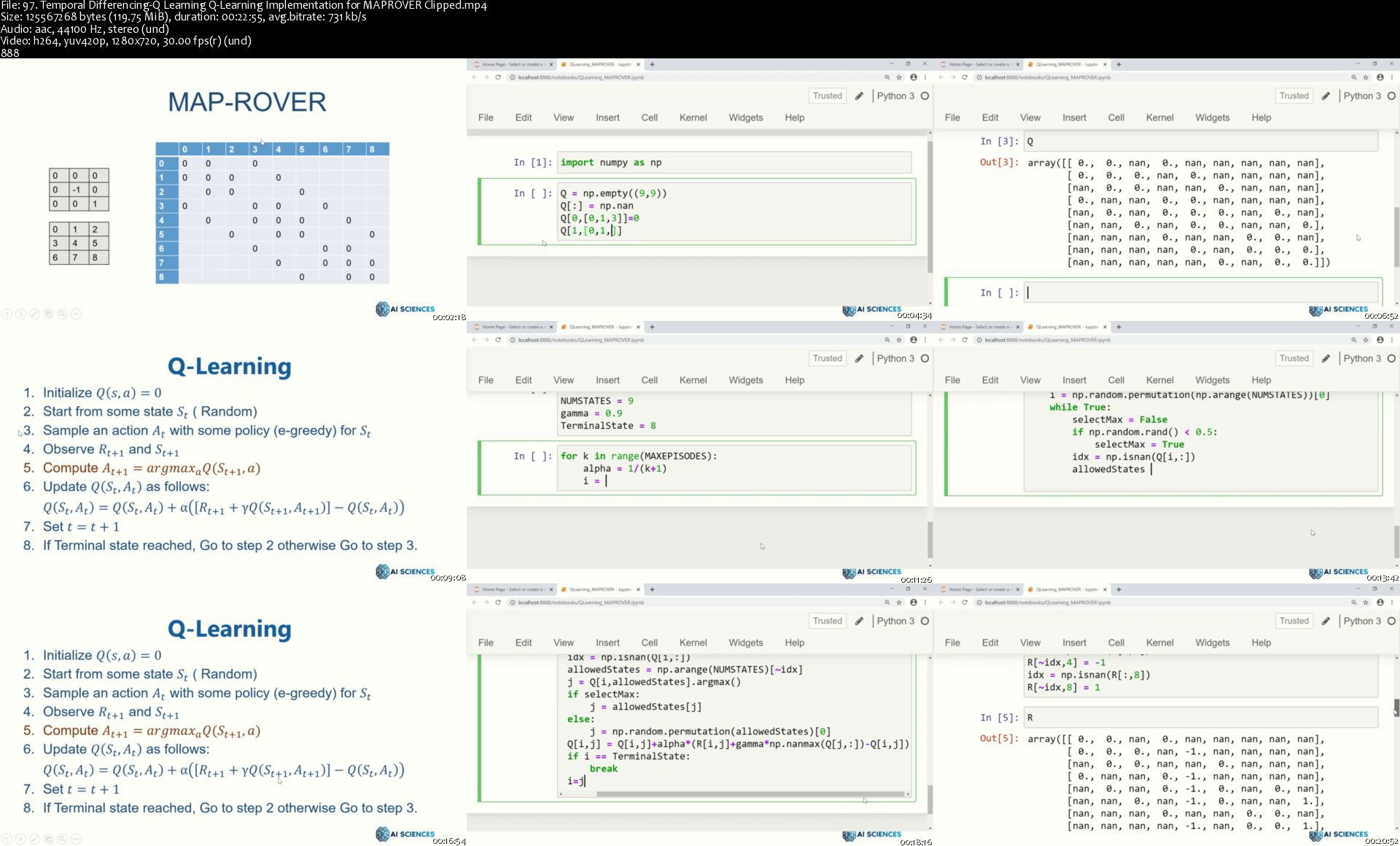
97.temporaldifferenci8rk7o.jpg


CSS Demystified Start writing CSS with confidence

nqbckkamo4bc9baydizk45sjj4.jpg


CSS Demystified Start writing CSS with confidence
MP4 | Video: h264, 1920x1080 | Audio: AAC, 44.1 KHz, 2 Ch
Genre: eLearning | Language: English | Duration: 177 Lessons (20h 45m) | Size: 8.42 GB

By unravelling CSS, you can stop wasting your time, start making progress, and take that next step forward as a developer. CSS seems easy at first, but the deeper into it you get, the more complicated it becomes
We all reach a point where CSS starts to frustrate us.
Whether it's

Struggling to get a layout to behave.
Running into issues with positioning.
Making small changes that end up having unintended consequences.
Often we end up trying to fix problems by adding more and more code on top and hoping for the best.

That leads to fragile code and hours of wasted time while you try to get things to work properly

As frustrating as CSS can seem though, it doesn't have to be that way.

CSS is based on rules and logic (even if it doesn't always feel that way). Instead of fighting with CSS, if you learn about how CSS is built at its very core, and you start to work with how it's meant to work, it can actually be a lot of fun.

Learn to embrace CSS
CSS is an essential language for putting a website together, but it's often ignored in favor of the latest JS framework.

CSS is often seen as simple language because it has a simple syntax and then it's pooped on because it doesn't behave like other languages.

CSS is it's own language though, and in this course, we're going to learn to embrace it for what it is, take advantage of its differences, and really start to understand what the heck is going on with CSS.

This course is about diving in and really understanding how CSS is meant to work.

We'll be exploring why it's different from other languages and how to change our mindset to work with it properly.

The course will be broken down into three weeks, and is a combination of:

Theory and slides, all through video lessons
Exercises to put the theory into practice
Challenges to reinforce what you've learned
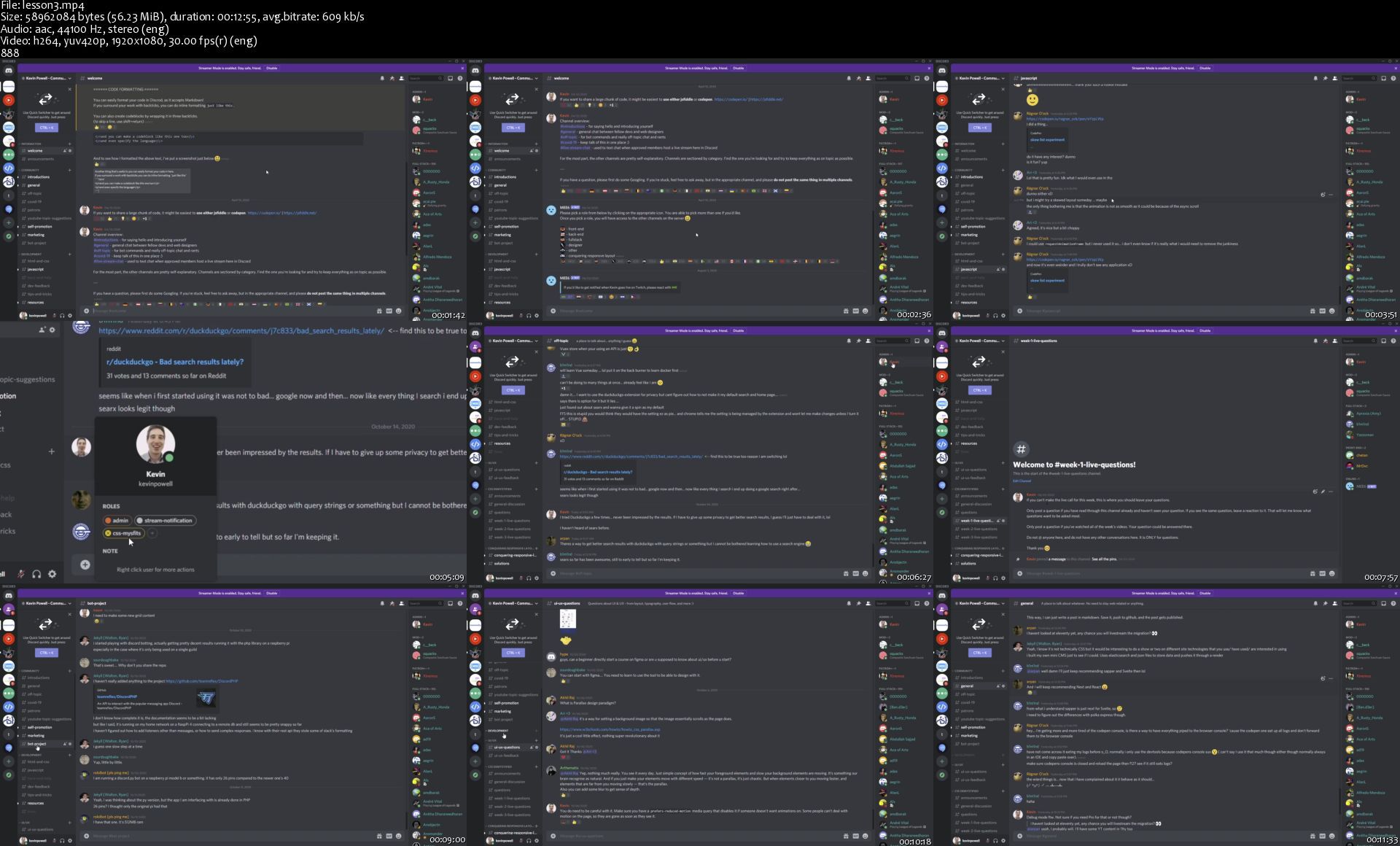
Access to private Discord channels to ask questions
Live training and Q&A sessions for each module in the course
A full-page build to reinforce what we learned through the first two modules
A 3-page site to put everything we've learned into practice

Homepage

lesson3slvjib.jpg


Zurück
Oben Unten