0daytutorial
MyBoerse.bz Pro Member
Enarsi (300-410) V1.1 Video Training Series (2023 Blueprint)
Published 8/2023
MP4 | Video: h264, 1280x720 | Audio: AAC, 44.1 KHz
Language: English | Size: 5.48 GB | Duration: 12h 48m
Get ready to CRUSH your Cisco CCNP ENARSI (300-410) v1.1 exam! Designed for the new (2023) ENARSI (300-410) blueprint.
What you'll learn
Layer 3 techniques for route redistribution and route filtering
Policy-based Routing theory and configuration
VRF-lite theory and configuration
Troubleshooting and configuring EIGRP, OSPF, and BGP
VPN technologies, including MPLS and DMVPN
Enterprise network security techniques and troubleshooting
Network service troubleshooting
Cisco DNA Center overview and live demo
Requirements
Although there are no official prerequisites required to take the ENARSI exam, it is recommended that you have a foundational understanding of basic networking concepts
Network simulator, emulator, or physical equipment (optional)
Description
** Get Ready to Crush Your Cisco CCNP ENARSI (300-410) v1.1 Exam **Passing Cisco's ENARSI exam bit itself earns you your Cisco Certified Specialist in Enterprise Advanced Infrastructure Implementation certification.Also, you can combine the ENARSI exam with the ENCOR exam to earn the coveted CCNP Enterprise certification. In fact, among our students, ENARSI is by far the most popular CCNP Enterprise concentration exam.This course is designed to prepare you for version 1.1 of the exam, which is the version of the 300-410 exam as of Sept. 20, 2023.Guiding you through your journey is award-winning instructor and CCIEx2 Lifetime Emeritus #7945 Kevin Wallace. Kevin is a 2x Distinguished Speaker at Cisco Live and has written multiple Cisco Press books, including the ROUTE Official Cert Guide, the predecessor to ENCOR. Also, joining Kevin is CCNP Charles Judd.Animations, demonstrations, memory aids, and real-life stories all come together in this course to create the connective tissue you need to understand the interrelationships between all of the topics on the ENARSI v1.1 exam blueprint.You'll validate your learning with quiz questions following each lesson. Then challenge yourself with a comprehensive practice exam after completing the course.What You'll Get:12.5 hours of instruction from Kevin Wallace, CCIEx2 Lifetime Emeritus #7945 and CCNP Charles Judd covering every topic on Cisco's ENARSI (300-410) v1.1 exam blueprintLesson quizzes to confirm your understanding of each topicA comprehensive practice exam to reveal any weak spots you might have before taking the "real thing"Hands-On Labs:Sprinkled through the course are hands-on labs, based on Cisco Modeling Labs (CML).You'll download .yaml files to import into either your copy of CML or a no-cost reservable version of CML running in Cisco's DevNet Sandbox.Each lab also has an accompanying video that explains what you'll be doing in the lab and then walks you through a complete solution.What Other Students Are Saying:"With the bottom of my heart I recommend this course is an absolute must for passing the CCNP ENCOR 350-401 exam." - Demetrio"This course is an absolute must for passing the CCNP ENCOR 350-401 exam. It teaches everything you need to know for the exam as well as preparing you for the real-world workplace. Best value for the money out there. I recommended this course to anyone who wants to excel professionally in the networking profession." - Kim Sarge Hunter"Fantastic class with one of the best Cisco teachers I have encountered." - Bob R."The instructor explains the subjects very well, and it's the easiest I've found out of all the courses I've watched." - Michael R."Great course. Kevin Wallace is the best teacher I've found when it comes to Cisco training." - Greg L."Kevin is the best! Clear and detailed explanations, useful quizzes, everything you need to pass the exam." - Mirko S."Honestly, this course was probably the best course I have personally taken on Udemy." -Deric C.Who this Course is for:Cisco CCNP Enterprise certification candidatesCisco Cisco Certified Specialist in Enterprise Advanced Infrastructure Implementation candidatesIT pros desiring to update their skillsWhat is primarily taught in your course: CCNP Enterprise
Overview
Section 1: Welcome to the Course!
Lecture 1 0.0.0 Course Introduction
Lecture 2 0.1.0 Performing Lab Exercises
Section 2: Module 1 - Layer 3 Technologies: Introduction
Lecture 3 1.0.0 Layer 3 Technologies
Section 3: Module 1 - Lesson 1: Route Redistribution
Lecture 4 1.1.0 Lesson 1: Route Redistribution
Lecture 5 1.1.1 Administrative Distance
Lecture 6 1.1.2 Route Redistribution Fundamentals
Lecture 7 1.1.3 Mutual Route Redistribution Configuration
Lecture 8 1.1.4 Route Redistribution with Route Maps
Lecture 9 1.1.5 Resolving Route Redistribution Issues
Lecture 10 1.1.6 Redistributing IPv6 Routes
Lecture 11 1.1.7 LAB: Route Redistribution Issues
Section 4: Module 1 - Lesson 2: Policy-Based Routing (PBR)
Lecture 12 1.2.0 Lesson 2: Policy-Based Routing (PBR)
Lecture 13 1.2.1 PBR Fundamentals
Lecture 14 1.2.2 PBR Configuration
Section 5: Module 1 - Lesson 3: VRF-light
Lecture 15 1.3.0 Lesson 3: VRF-lite
Lecture 16 1.3.1 VRF-light Theory
Lecture 17 1.3.2 VRF-lite Configuration
Section 6: Module 1 - Layer 3 Technologies: Summary
Lecture 18 1.4.0 Module 1 Summary
Section 7: Module 2 - Troubleshooting Routing Protocols: Introduction
Lecture 19 2.0.0 Troubleshooting Routing Protocols
Section 8: Module 2 - Lesson 1: Troubleshooting EIGRP
Lecture 20 2.1.0 Lesson 1: Troubleshooting EIGRP
Lecture 21 2.1.1 Review of EIGRP Fundamentals
Lecture 22 2.1.2 EIGRP Timers
Lecture 23 2.1.3 EIGRP Metric Calculation
Lecture 24 2.1.4 EIGRP Path Selection
Lecture 25 2.1.5 EIGRP Feasibility Condition
Lecture 26 2.1.6 EIGRP's Query Process
Lecture 27 2.1.7 EIGRP for IPv4 - Traditional Configuration
Lecture 28 2.1.8 EIGRP Stub Routing
Lecture 29 2.1.9 EIGRP Load Balancing
Lecture 30 2.1.10 EIGRP Route Summarization
Lecture 31 2.1.11 EIGRP for IPv6 - Traditional Configuration
Lecture 32 2.1.12 Named EIGRP Configuration.mov
Lecture 33 2.1.13 EIGRP Authentication
Lecture 34 2.1.14 LAB - Troubleshooting EIGRP
Section 9: Module 2 - Lesson 2: Troubleshooting OSPF
Lecture 35 2.2.0 Lesson 2: Troubleshooting OSPF
Lecture 36 2.2.1 Review of OSPF Fundamentals
Lecture 37 2.2.2 OSPF Timers
Lecture 38 2.2.3 OSPF Metric Calculation
Lecture 39 2.2.4 OSPF Network Types
Lecture 40 2.2.5 OSPF LSAs and Area Types
Lecture 41 2.2.6 OSPFv2 Configuration
Lecture 42 2.2.7 OSPF Virtual Links
Lecture 43 2.2.8 OSPF Route Summarization
Lecture 44 2.2.9 OSPFv3 Traditional Configuration
Lecture 45 2.2.10 OSPFv3 Address Families Configuration
Lecture 46 2.2.11 OSPF Authentication
Lecture 47 2.2.12 LAB - Troubleshooting OSPF
Section 10: Module 2 - Lesson 3: Troubleshooting BGP
Lecture 48 2.3.0 Lesson 3: Troubleshooting BGP
Lecture 49 2.3.1 Review of BGP Fundamentals
Lecture 50 2.3.2 BGP States and Timers
Lecture 51 2.3.3 Neighbor Formation
Lecture 52 2.3.4 BGP Path Selection
Lecture 53 2.3.5 BGP Synchronization
Lecture 54 2.3.6 IPv4 and IPv6 Address Families
Lecture 55 2.3.7 BGP Peer Groups
Lecture 56 2.3.8 BGP Multihop
Lecture 57 2.3.9 BGP Route Reflectors
Lecture 58 2.3.10 BGP Route Summarization
Lecture 59 2.3.11 Influencing Path Selection
Lecture 60 2.3.12 LAB - BGP Troubleshooting
Section 11: Module 2 - Troubleshooting Routing Protocols: Summary
Lecture 61 2.4.0 Module 2 Summary
Section 12: Module 3 - Virtual Private Network (VPN) Technologies: Introduction
Lecture 62 3.0.0 Virtual Private Network (VPN) Technologies
Section 13: Module 3 - Lesson 1: MPLS Operation
Lecture 63 3.1.0 Lesson 1: MPLS Operation
Lecture 64 3.1.1 MPLS Overview
Lecture 65 3.1.2 MPLS Layer 3 VPN
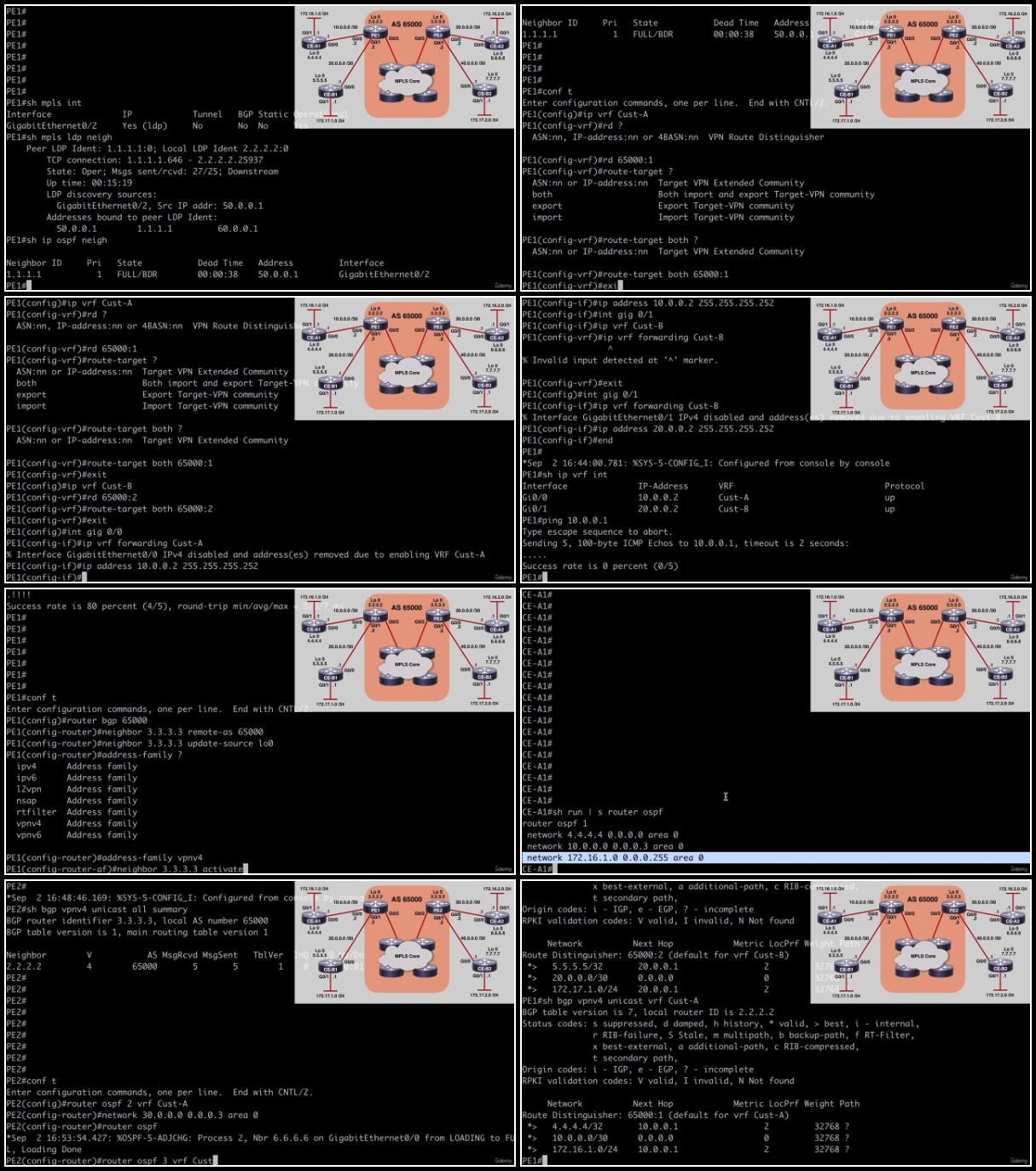
Lecture 66 3.1.3 VRF-Aware Routing with MPLS Layer 3 VPN Configuration
Section 14: Module 3 - Lesson 2: DMVPN Operation and Configuration
Lecture 67 3.2.0 Lesson 2: DMVPN Operation and Configuration
Lecture 68 3.2.1 DMVPN Overview
Lecture 69 3.2.2 DMVPN Configuration
Section 15: Module 3 - Virtual Private Network (VPN) Technologies: Summary
Lecture 70 3.3.0 Module 3 Summary
Section 16: Module 4 - Enterprise Network Security: Introduction
Lecture 71 4.0.0 Enterprise Network Security
Section 17: Module 4 - Lesson 1: AAA Troubleshooting
Lecture 72 4.1.0 Lesson 1: AAA Troubleshooting
Lecture 73 4.1.1 Local Database
Lecture 74 4.1.2 TACACS+
Lecture 75 4.1.3 RADIUS
Section 18: Module 4 - Lesson 2: Router Security Troubleshooting
Lecture 76 4.2.0 Lesson 2: Router Security Troubleshooting
Lecture 77 4.2.1 IPv4 ACLs
Lecture 78 4.2.2 IPv6 Traffic Filters
Lecture 79 4.2.3 uRPF
Lecture 80 4.2.4 CoPP
Lecture 81 4.2.5 IPv6 RA Guard
Lecture 82 4.2.6 DHCPv6 Guard
Lecture 83 4.2.7 IPv6 Neighbor Discovery Inspection/Snooping
Lecture 84 4.2.8 IPv6 Source Guard
Lecture 85 4.2.9 LAB - IPv4 ACL Troubleshooting
Section 19: Module 4 - Enterprise Network Security: Summary
Lecture 86 4.3.0 Module 4 Summary
Section 20: Module 5 - Network Service Troubleshooting: Introduction
Lecture 87 5.0.0 Network Service Troubleshooting
Section 21: Module 5 - Lesson 1: Device Management Troubleshooting
Lecture 88 5.1.0 Lesson 1: Device Management Troubleshooting
Lecture 89 5.1.1 Console and VTY Lines
Lecture 90 5.1.2 Remote Access Protocols
Lecture 91 5.1.3 File Transfer Protocols
Section 22: Module 5 - Lesson 2: SNMP Troubleshooting
Lecture 92 5.2.0 Lesson 2: SNMP Troubleshooting
Lecture 93 5.2.1 SNMPv2
Lecture 94 5.2.2 SNMPv3
Section 23: Module 5 - Lesson 3: Log Information
Lecture 95 5.3.0 Lesson 3: Log Information
Lecture 96 5.3.1 Syslog Log Entries
Lecture 97 5.3.2 Debug Output
Lecture 98 5.3.3 Conditional Debug Output
Section 24: Module 5 - Lesson 4: DHCP Troubleshooting
Lecture 99 5.4.0 Lesson 4: DHCP Troubleshooting
Lecture 100 5.4.1 DHCP Client
Lecture 101 5.4.2 Cisco IOS DHCP Server
Lecture 102 5.4.3 DHCP Relay Agent
Lecture 103 5.4.4 LAB - DHCP Troubleshooting
Section 25: Module 5 - Lesson 5: IP SLA Troubleshooting
Lecture 104 5.5.0 Lesson 5: IP SLA Troubleshooting
Lecture 105 5.5.1 Jitter Measurements
Lecture 106 5.5.2 Tracking Objects
Section 26: Module 5 - Lesson 6: NetFlow Troubleshooting
Lecture 107 5.6.0 Lesson 6: NetFlow Troubleshooting
Lecture 108 5.6.1 NetFlow version 5
Lecture 109 5.6.2 NetFlow version 9
Lecture 110 5.6.3 Flexible NetFlow
Section 27: Module 5 - Lesson 7: Cisco DNA Center as a Troubleshooting Tool
Lecture 111 5.7.0 Lesson 7: Cisco DNA Center as a Troubleshooting Tool
Lecture 112 5.7.1 Network and Device Health Monitoring
Lecture 113 5.7.2 Connectivity Monitoring
Lecture 114 5.7.3 Statistics Monitoring
Section 28: Module 5 - Network Service Troubleshooting: Summary
Lecture 115 5.8.0 Module 5 Summary
Section 29: Module 6 - Exam Preparation
Lecture 116 6.0.0 Exam Preparation
Lecture 117 6.1.0 How to Register for the Exam
Lecture 118 6.2.0 Study Strategies
Lecture 119 6.3.0 What to do on Exam Day
Lecture 120 6.4.0 Next Steps
Section 30: ENARSI v1.1 (300-410) Practice Exam
Lecture 121 Download ENARSI v1.1 (300-410) Practice Exam
ENARSI (300-410) exam candidates,Cisco CCNP Enterprise certification candidates,Cisco CCIE Enterprise Infrastructure certification candidates,Current CCNP certified students who want to re-certify,IT professionals desiring to update their skills