


AgentofHeart
MyBoerse.bz Pro Member

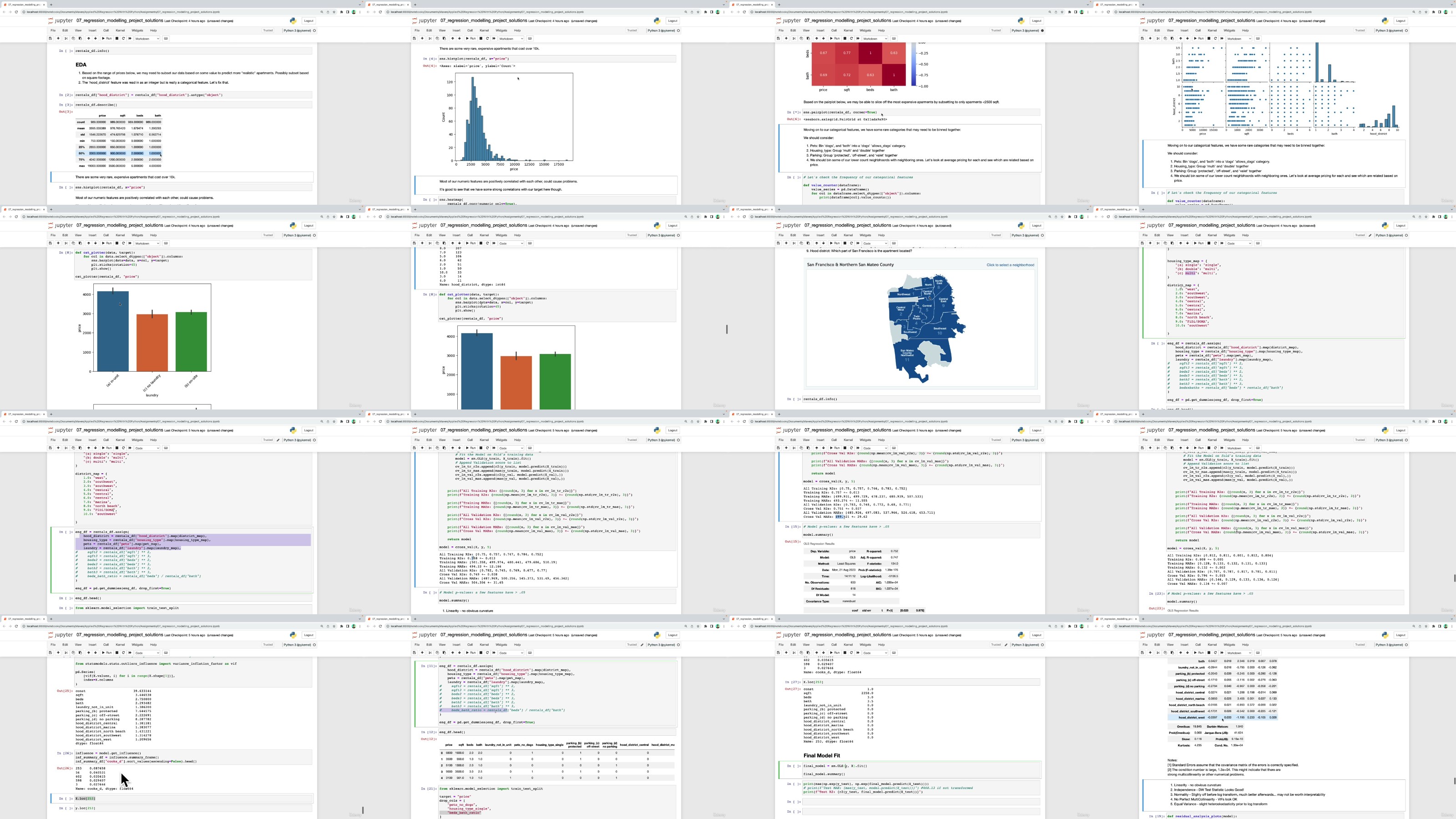
Data Science In Python: Regression & Forecasting
Published 8/2023
MP4 | Video: h264, 1280x720 | Audio: AAC, 44.1 KHz
Language: English | Size: 3.19 GB | Duration: 8h 31m
What you'll learn
Master the machine learning foundations for regression analysis in Python
Perform exploratory data analysis on model features, the target, and relationships between them
Build and interpret simple and multiple linear regression models with Statsmodels and Scikit-Learn
Evaluate model performance using tools like hypothesis tests, residual plots, and mean error metrics
Diagnose and fix violations to the assumptions of linear regression models
Tune and test your models with data splitting, validation and cross validation, and model scoring
Leverage regularized regression algorithms to improve test model performance & accuracy
Employ time series analysis techniques to identify trends & seasonality, perform decomposition, and forecast future values
Requirements
We strongly recommend taking our Data Prep & EDA course first
Jupyter Notebooks (free download, we'll walk through the install)
Familiarity with base Python and Pandas is recommended, but not required
Description
This is a hands-on, project-based course designed to help you master the foundations for regression analysis in Python.We'll start by reviewing the data science workflow, discussing the primary goals & types of regression analysis, and do a deep dive into the regression modeling steps we'll be using throughout the course.You'll learn to perform exploratory data analysis, fit simple & multiple linear regression models, and build an intuition for interpreting models and evaluating their performance using tools like hypothesis tests, residual plots, and error metrics. We'll also review the assumptions of linear regression, and learn how to diagnose and fix each one.From there, we'll cover the model testing & validation steps that help ensure our models perform well on new, unseen data, including the concepts of data splitting, tuning, and model selection. You'll also learn how to improve model performance by leveraging feature engineering techniques and regularized regression algorithms.Throughout the course, you'll play the role of Associate Data Scientist for Maven Consulting Group on a team that focuses on pricing strategy for their clients. Using the skills you learn throughout the course, you'll use Python to explore their data and build regression models to help firms accurately predict prices and understand the variables that impact them.Last but not least, you'll get an introduction to time series analysis & forecasting techniques. You'll learn to analyze trends & seasonality, perform decomposition, and forecast future values.COURSE OUTLINE:Intro to Data ScienceIntroduce the fields of data science and machine learning, review essential skills, and introduce each phase of the data science workflowRegression 101Review the basics of regression, including key terms, the types and goals of regression analysis, and the regression modeling workflowPre-Modeling Data Prep & EDARecap the data prep & EDA steps required to perform modeling, including key techniques to explore the target, features, and their relationshipsSimple Linear RegressionBuild simple linear regression models in Python and learn about the metrics and statistical tests that help evaluate their quality and outputMultiple Linear RegressionBuild multiple linear regression models in Python and evaluate the model fit, perform variable selection, and compare models using error metricsModel AssumptionsReview the assumptions of linear regression models that need to be met to ensure that the model's predictions and interpretation are validModel Testing & ValidationTest model performance by splitting data, tuning the model with the train & validation data, selecting the best model, and scoring it on the test dataFeature EngineeringApply feature engineering techniques for regression models, including dummy variables, interaction terms, binning, and moreRegularized RegressionIntroduce regularized regression techniques, which are alternatives to linear regression, including Ridge, Lasso, and Elastic Net regressionTime Series AnalysisLearn methods for exploring time series data and how to perform time series forecasting using linear regression and Facebook Prophet__________Ready to dive in? Join today and get immediate, LIFETIME access to the following:8.5 hours of high-quality video14 homework assignments10 quizzes3 projectsData Science in Python: Regression ebook (230+ pages)Downloadable project files & solutionsExpert support and Q&A forum30-day Udemy satisfaction guaranteeIf you're an aspiring data scientist looking for an introduction to the world of regression modeling with Python, this is the course for you.Happy learning!-Chris Bruehl (Data Science Expert & Lead Python Instructor, Maven Analytics)
Overview
Section 1: Getting Started
Lecture 1 Course Introduction
Lecture 2 About This Series
Lecture 3 Course Structure & Outline
Lecture 4 READ ME: Important Notes for New Students
Lecture 5 DOWNLOAD: Course Resources
Lecture 6 Introducing the Course Project
Lecture 7 Setting Expectations
Lecture 8 Jupyter Installation & Launch
Section 2: Intro to Data Science
Lecture 9 What is Data Science?
Lecture 10 Data Science Skillset
Lecture 11 What is Machine Learning?
Lecture 12 Common Machine Learning Algorithms
Lecture 13 Data Science Workflow
Lecture 14 Step 1: Scoping a Project
Lecture 15 Step 2: Gathering Data
Lecture 16 Step 3: Cleaning Data
Lecture 17 Step 4: Exploring Data
Lecture 18 Step 5: Modeling Data
Lecture 19 Step 6: Sharing Insights
Lecture 20 Regression Modeling
Lecture 21 Key Takeaways
Section 3: Regression 101
Lecture 22 Regression 101
Lecture 23 Goals of Regression
Lecture 24 Types of Regression
Lecture 25 Regression Modeling Workflow
Lecture 26 Key Takeaways
Section 4: Pre-Modeling Data Prep & EDA
Lecture 27 EDA for Regression
Lecture 28 Exploring the Target
Lecture 29 Exploring the Features
Lecture 30 ASSIGNMENT: Exploring the Target & Features
Lecture 31 SOLUTION: Exploring the Target & Features
Lecture 32 Linear Relationships & Correlation
Lecture 33 Linear Relationships in Python
Lecture 34 Feature-Target Relationships
Lecture 35 Feature-Feature Relationships
Lecture 36 PRO TIP: Pairplots & Lmplots
Lecture 37 ASSIGNMENT: Exploring Relationships
Lecture 38 SOLUTION: Exploring Relationships
Lecture 39 Preparing For Modeling
Lecture 40 Key Takeaways
Section 5: Simple Linear Regression
Lecture 41 Simple Linear Regression
Lecture 42 The Linear Regression Model
Lecture 43 Least Squared Error
Lecture 44 Linear Regression in Python
Lecture 45 Linear Regression in Statsmodels
Lecture 46 Interpreting the Model
Lecture 47 Making Predictions
Lecture 48 R-Squared
Lecture 49 Hypothesis Tests
Lecture 50 The F-Test
Lecture 51 Coefficient Estimates & P-Values
Lecture 52 Residual Plots
Lecture 53 CASE STUDY: Modeling Health Insurance Prices
Lecture 54 ASSIGNMENT: Simple Linear Regression
Lecture 55 SOLUTION: Simple Linear Regression
Lecture 56 Key Takeaways
Section 6: Multiple Linear Regression
Lecture 57 Multiple Linear Regression Equation
Lecture 58 Fitting a Multiple Linear Regression
Lecture 59 Interpreting Multiple Linear Regression Models
Lecture 60 Variable Selection
Lecture 61 ASSIGNMENT: Multiple Linear Regression
Lecture 62 SOLUTION: Multiple Linear Regression
Lecture 63 Mean Error Metrics
Lecture 64 DEMO: Mean Error Metrics
Lecture 65 Adjusted R-Squared
Lecture 66 ASSIGNMENT: Mean Error Metrics
Lecture 67 SOLUTION: Mean Error Metrics
Lecture 68 Key Takeaways
Section 7: Model Assumptions
Lecture 69 Assumptions of Linear Regression
Lecture 70 Linearity
Lecture 71 Independence of Errors
Lecture 72 Normality of Errors
Lecture 73 DEMO: Normality of Errors
Lecture 74 PRO TIP: Interpreting Transformed Targets
Lecture 75 No Perfect Multicollinearity
Lecture 76 Equal Variance of Errors
Lecture 77 Outliers, Leverage & Influence
Lecture 78 RECAP: Assumptions of Linear Regression
Lecture 79 ASSIGNMENT: Model Assumptions
Lecture 80 SOLUTION: Model Assumptions
Lecture 81 Key Takeaways
Section 8: Model Testing & Validation
Lecture 82 Model Scoring Steps
Lecture 83 Data Splitting
Lecture 84 Overfitting & Underfitting
Lecture 85 The Bias-Variance Tradeoff
Lecture 86 Validation Data
Lecture 87 Model Tuning
Lecture 88 Model Scoring
Lecture 89 Cross Validation
Lecture 90 Simple vs. Cross Validation
Lecture 91 ASSIGNMENT: Model Testing & Validation
Lecture 92 SOLUTION: Model Testing & Validation
Lecture 93 Key Takeaways
Section 9: Feature Engineering
Lecture 94 Intro To Feature Engineering
Lecture 95 Feature Engineering Techniques
Lecture 96 Polynomial Terms
Lecture 97 Combining Features
Lecture 98 Interaction Terms
Lecture 99 Categorical Features
Lecture 100 Dummy Variables
Lecture 101 DEMO: Dummy Variables
Lecture 102 Binning Categorical Data
Lecture 103 Binning Numeric Data
Lecture 104 DEMO: Additional Feature Engineering Ideas
Lecture 105 ASSIGNMENT: Feature Engineering
Lecture 106 SOLUTION: Feature Engineering
Lecture 107 Key Takeaways
Section 10: Project 1: San Francisco Rent Prices
Lecture 108 Project Brief
Lecture 109 Solution Walkthrough
Section 11: Regularized Regression
Lecture 110 Intro to Regularized Regression
Lecture 111 Ridge Regression
Lecture 112 Standardization
Lecture 113 Fitting a Ridge Regression Model
Lecture 114 DEMO: Fitting a Ridge Regression
Lecture 115 PRO TIP: RidgeCV
Lecture 116 ASSIGNMENT: Ridge Regression
Lecture 117 SOLUTION: Ridge Regression
Lecture 118 Lasso Regression
Lecture 119 PRO TIP: LassoCV
Lecture 120 ASSIGNMENT: Lasso Regression
Lecture 121 SOLUTION: Lasso Regression
Lecture 122 Elastic Net Regression
Lecture 123 DEMO: Fitting an Elastic Net Regression
Lecture 124 PRO TIP: ElasticNetCV
Lecture 125 ASSIGNMENT: Elastic Net Regression
Lecture 126 SOLUTION: Elastic Net Regression
Lecture 127 RECAP: Regularized Regression Models
Lecture 128 PREVIEW: Tree Based Models
Lecture 129 Key Takeaways
Section 12: Project 1: San Francisco Rent Prices (Continued)
Lecture 130 Project Brief
Lecture 131 Solution Walkthrough
Section 13: Time Series Analysis
Lecture 132 Intro to Time Series
Lecture 133 Moving Averages
Lecture 134 DEMO: Moving Averages
Lecture 135 Exponential Smoothing
Lecture 136 ASSIGNMENT: Smoothing
Lecture 137 SOLUTION: Smoothing
Lecture 138 Decomposition
Lecture 139 DEMO: Decomposition
Lecture 140 PRO TIP: Autocorrelation Chart
Lecture 141 ASSIGNMENT: Decomposition
Lecture 142 SOLUTION: Decomposition
Lecture 143 Forecasting
Lecture 144 Linear Regression With Trend & Season
Lecture 145 DEMO: Linear Regression With Trend & Season
Lecture 146 Facebook Prophet
Lecture 147 ASSIGNMENT: Forecasting
Lecture 148 SOLUTION: Forecasting
Lecture 149 Key Takeaways
Section 14: Project 2: Electricity Consumption
Lecture 150 Project Brief
Lecture 151 Solution Walkthrough
Section 15: Next Steps
Lecture 152 EXTRA LESSON
Data analysts or BI experts looking to transition into a data science role,Python users who want to build the core skills for applying regression models in Python,Anyone interested in learning one of the most popular open source programming languages in the world