• Regeln für den Dokumente-Bereich:

    In den Börsenbereich gehören nur Angebote die bereits den Allgemeinen Regeln entsprechen.

    Allgemeines:

    Nicht erlaubt im Dokumente-Bereich sind:

    - indizierte Titel (inkl. Comics)
    - extremistische Werke, Zeitschriften und Comics (egal, welche Richtung)
    - jegliche Art von Pornographie
    - Anleitungen zu kriminellen Handlungen, gleich welcher Art
    - sadistische, menschenverachtende oder ähnliche Werke

    Nutzt den "Bedanken"-Button, bei Sammelthreads führen jegliche Kommentare, positiv wie negativ, sehr schnell zu einer Unübersichtlichkeit des Threads. Downmeldungen sind an den Uploader zu richten

    Vor dem Einstellen zu beachten:

    - Suchfunktion

    Vergewissert euch, dass es euer Dokument noch nicht im Board gibt, Doppelposts werden kommentarlos gelöscht. Ist es schon vorhanden, tragt es als Mirror im bestehenden Post ein.

    - Threadtitel

    Idealerweise ist sofort zu erkennen um was es sich handelt. Verseht euren Titel mit den relevanten Informationen, das hilft euch und damit auch uns und allen Suchenden erheblich weiter.

    Beispiel: [Thriller] Dan Brown - Inferno oder bei Magazinen:

    Computerbild - 14/2014 (es muss ersichtlich sein, um welche Ausgabe und welches Magazin es sich handelt)

    Folgende Präfixe stehen im Unterforum "Unterhaltung" zur Verfügung:

    [Humor]
    [Drama]
    [Erotik]
    [Fantasy]
    [Krimi]
    [Roman]
    [Thriller]
    [Horror]
    [Science Fiction]

    Inhalt des Beitrags:

    Folgende Pflichtangaben gilt es einzuhalten:

    - Autor
    - Titel
    - Präfix
    - Cover
    - Genre
    - Inhaltsbeschreibung
    - enthaltene Formate
    - Gesamtgröße des Downloads
    - Hoster
    - ggf. Passwort

    Nicht erlaubt sind alle Dateien, die den Download unnötig aufblähen um eine Affiliategrenze zu erreichen, wie zB. mp3-files, übergroße Bilder, etc.

    Ebenso nicht erlaubt sind sämtliche Dateien mit DRM, persönlichen Daten, etc., diese werden kommentarlos zu eurem eigenem Schutz gelöscht.

    Achtet bitte bei der Konvertierung der Formate auf die Lesbarkeit, ein epub, was nur einfach durch Calibre gejagt wird um ein PDF zu erhalten, ist zu 99% eben nicht lesbar. Wenn ihr es nicht könnt, dann lasst es besser oder lest euch ein, wie man es richtig macht.


    Unterforum Comics:

    Threadtitel:

    Ähnlich, wie bei Unterhaltung und Magazinen, sollte der Titel alle relevanten Informationen enthalten, hier bitte

    - den Titel des Comics
    - den Verlag (einige Comics sind in verschiedenen Verlagen erschienen)
    - das Erscheinungsjahr

    Erlaubt sind folgende Formate:

    - CBR
    - CBZ

    Grundsätzlich gilt: jede Version eines Comics erhält einen eigenen Thread, Ersteller eines Comics können ihre Bände gerne mit dem Zusatz (Original-Release) versehen.

    Bei Unsicherheiten zur korrekten Benennung bitte die Informationen von www.comicguide.de nutzen.

    Inhalt des Beitrags:

    Pflichtangaben hier sind:

    - Titel des Bandes und ggf. Nummer
    - Cover
    - falls bekannt technische Daten (DPI, Breite, Speicherqualität)
    - Größe des Downloads
    - Hoster
    - ggf. Passwort
    - falls bekannt Releasenamen
  • Bitte registriere dich zunächst um Beiträge zu verfassen und externe Links aufzurufen.

++ Premium IPTV ++ 7000 Live Sender ++ UHD Qualität ++ Mediathek mit 18.000 Inhalten ++


VenneTV


Collection Download Ebooks Best Seller Updated Daily

af3290562f6a972fd0a20d6a3b4419b7.webp

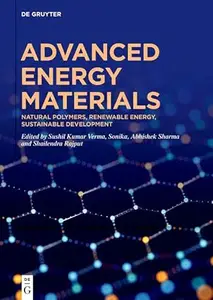
Advanced Energy Materials
by Sushil Kumar Verma, Sonika Gupta, Shailendra Rajput

English | 2025 | ISBN: 3111288900 | 292 pages | True PDF EPUB | 24.02 MB

The global transition toward renewable energy is imperative for a sustainable future. As the demand for cleaner and more efficient energy sources grows, the role of advanced materials, particularly sustainable and natural polymers, has become increasingly significant. These materials offer innovative solutions for improving energy generation, storage, and efficiency while reducing environmental impact. From lightweight composites enhancing wind turbine performance to biodegradable polymers optimizing energy storage devices, sustainable materials are reshaping the landscape of energy technology. The book explores the transformative potential of bio-based and eco-friendly materials in various renewable energy applications. Through in-depth discussions, the book highlights key advancements in polymer science, including biodegradable materials for solar panels, bio-based catalysts for bioenergy production, and self-healing coatings for energy devices. Additionally, it delves into innovative recycling methods and resource management strategies that enhance the lifecycle of renewable technologies.


Uploady


UploadCloud


FreeDL


Links are Interchangeable - Single Extraction
 
7b39d1ee74866f5fad6cf8f7d66c2fd5.webp

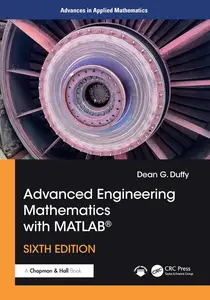
Advanced Engineering Mathematics with MATLAB®
English | 2026 | ISBN: 1041018584 | 662 Pages | PDF EPUB (True) | 77 MB
In the five previous editions of Advanced Engineering Mathematics with MATLAB®, the author presented a text firmly grounded in mathematics that engineers and scientists must understand and know how to use. Tapping into decades of teaching at the US Navy Academy and the US Military Academy and serving for twenty-five years at (NASA) Goddard Space Flight, he combines teaching and practical experience that is rare among authors of advanced engineering mathematics books.


Uploady


UploadCloud


FreeDL


Links are Interchangeable - Single Extraction
 
e0afc628854c9847927746382c564839.webp


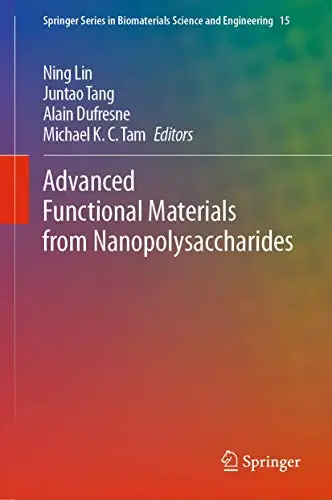
Advanced Functional Materials from Nanopolysaccharides by Ning Lin
English | EPUB | 2019 | 434 Pages | ISBN : 9811509123 | 106.5 MB

This book describes the latest research on nanopolysaccharides in the development of functional materials, from their preparation, properties and functional modifications to the architecture of diverse functional materials. Polysaccharide-based nanoparticles, including nanocellulose, nanochitin, and nanostarch have attracted interest in the field of nanoscience, nanotechnology, and materials science that encompasses various industrial sectors, such as biomedicine, catalyst, coating, energy, optical materials, environmental materials, construction materials, and antibacterial materials.
This book establishes a fundamental framework, highlighting the architecture strategies of typical functional systems based on nanopolysaccharides and integrated analysis of their significant influence and properties to various functional behaviors of materials, to help readers to fully understand the fundamental features of nanopolysaccharides and functional materials. Addressing the potential for practical applications, the book also covers the related industrial interests and reports on highly valued products from nanopolysaccharides, providing ideas for future studies in the area. Intended both for academics and professionals who are interested in nanopolysaccharides, it is also a valuable resource for postgraduate students, researchers, and engineers involved in R&D of natural polymers, nanotechnology, and functional materials.
[/b]


Uploady


UploadCloud


FreeDL


Links are Interchangeable - Single Extraction
 
866e3a1dd99c7334e851626b2c7475ef.webp

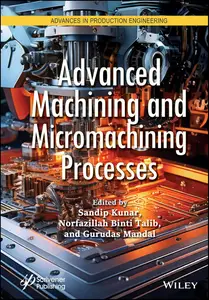
Advanced Machining and Micromachining Processes (Advances in Production Engineering) by Sandip Kunar, Norfazillah Binti Talib, Gurudas Mandal
English | April 1, 2025 | ISBN: 1394301693 | 592 pages | MOBI | 27 Mb
This book offers a comprehensive overview of the fundamentals, principles, and latest innovations in advanced machine and micromachining processes.

Businesses are continually seeking innovative advanced machining and micromachining techniques that optimize efficiency while reducing environmental harm. This growing competitive pressure has spurred the development of sophisticated design and production concepts. Modern machining and micromachining methods have evolved to accommodate the use of newer materials across diverse applications, while ensuring precise machining accuracy.
The primary aim of this book is to explore and analyze various approaches in modern machining and micromachining processes, with a focus on their effectiveness and application in successful product development. Consequently, the book emphasizes an industrial engineering perspective.
This book covers a range of advanced machining and micromachining processes that can be utilized by the manufacturing industry to enhance productivity and contribute to socioeconomic development. Additionally, it highlights ongoing research projects in the field and provides insights into the latest advancements in advanced machining and micromachining techniques.
The 31 chapters in the book cover the following subjects: abrasive jet machining; water jet machining; principles of electro discharge machining; wire-electro discharge machining; laser beam machining; plasma arc machining; ion beam machining; electrochemical machining; ultrasonic machining; electron beam machining; electrochemical grinding; photochemical machining process; abrasive-assisted micromachining; abrasive water jet micromachining; electro discharge machining; electrochemical micromachining; ultrasonic micromachining; laser surface modification techniques; ion beam processes; glass workpiece micromachining using electrochemical discharge machining; abrasive water jet machining; ultrasonic vibration-assisted micromachining; laser micromachining's role in improving tool wear resistance; stress; and surface roughness in high-strength alloys; abrasive flow finishing process; elastic emission machining; magnetic abrasive finishing process; genetic algorithm for multi-objective optimization in machining; machining of Titanium Grade-2 and P-20 tool steel; and wet bulk micromachining in MEMS fabrication.
Audience
The book is intended for a wide audience including mechanical, manufacturing, biomedical, and industrial engineers and R&D researchers involved in advanced machining and micromachining technology.


Uploady


UploadCloud


FreeDL


Links are Interchangeable - Single Extraction
 
f6de98a9d4d4ac2c323c946295cf020b.webp

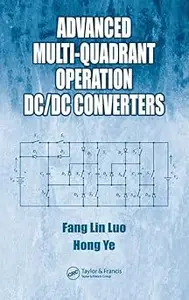
Fang Lin Luo, "Advanced Multi-Quadrant Operation DC/DC Converters"
English | ISBN: 0849372399 | 2005 | 216 pages | PDF | 2 MB
There are several families of DC/DC converters comprising hundreds of different topologies. Sorting through the various properties and characteristics is obviously a daunting task. Culled from the pages of the groundbreaking Advanced DC/DC Converters, this book provides a focused, concise overview of more than 50 topologies of multi-quadrant converters. All aspects of these topologies are illustrated through designs developed by the authors through the years. The book begins with multiple-quadrant converters followed by switched component (SC and SI) converters, multiple-lift push-pull switched-capacitor converters, and finally, multiple-quadrant soft-switching converters.


Uploady


UploadCloud


FreeDL


Links are Interchangeable - Single Extraction
 
ab3d29bccc0947ab7975f4db0f38fc93.webp

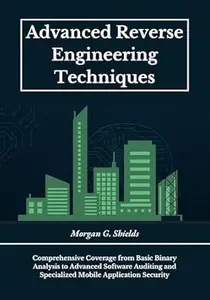
Advanced Reverse Engineering Techniques: Comprehensive Coverage from Basic Binary Analysis to Advanced Software Auditing and Specialized Mobile Application Security
English | April 14, 2025 | ASIN: B0F4XFQ48N | 224 pages | Epub | 289.42 KB
Decode the Hidden Layers of Software and Fortify Your Digital Defenses

Step into the world of reverse engineering and threat analysis with a hands-on guide tailored for cybersecurity professionals, analysts, and ethical hackers who demand real-world skills in uncovering vulnerabilities and understanding how modern threats operate.
Reverse Engineering & Threat Analysis for Security Professionals is your comprehensive playbook for dissecting software, identifying weaknesses, and staying ahead of cyber adversaries. Whether you're a beginner eager to explore the foundations or an experienced analyst ready to deepen your skills, this book walks you through the entire process-from disassembling binaries to patching vulnerabilities and customizing cutting-edge tools like Ghidra and radare2. You'll explore both static and dynamic analysis techniques, unpack firmware and mobile threats, and understand how to automate and scale your efforts with Python.
Written in an accessible, tutorial-based style, this book goes beyond theory. You'll build real-world muscle memory through step-by-step walkthroughs, up-to-date code examples, and insider strategies that are actually used in the field. Gain a deeper appreciation for the structure of software systems-and learn how attackers exploit them and how defenders can strike back.
What You'll Learn Inside:
Master Static and Dynamic Analysis: Break down binaries and debug like a pro using real malware samples and secure lab environments.
Hands-On Exploit Development: Learn how common vulnerabilities like buffer overflows and format strings are identified, exploited, and mitigated.
Automate with Python & Integrate with Tools: Build scripts to speed up repetitive tasks and extend reverse engineering tools like Ghidra and radare2.
Explore Firmware, IoT & Mobile Security: Dive into advanced targets including embedded systems and Android/iOS platforms.
Real-World Case Studies & Methodologies: Learn from detailed breakdowns of real incidents, threat models, and software audits.
Whether you're preparing for a cybersecurity career, enhancing your red/blue team toolkit, or just passionate about how software works-this book is your essential guide to modern reverse engineering and threat analysis. Grab your copy now and level up your security game.


Uploady


UploadCloud


Links are Interchangeable - Single Extraction
 
e29e74aaeb1f07b5705a305e486fc631.webp

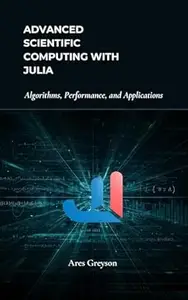
Advanced Scientific Computing with Julia: Algorithms, Performance, and Applications
English | January 3, 2025 | ASIN: B0DS91L4FQ | 255 pages | Epub | 329.74 KB
Overview of the Technology

Unlock the power of Julia for cutting-edge scientific computing. This comprehensive guide, Advanced Scientific Computing with Julia: Algorithms, Performance, and Applications, provides a deep dive into the Julia programming language, empowering scientists, engineers, data scientists, and researchers to tackle complex computational problems with unprecedented speed and efficiency.
Bridging the gap between high-level expressiveness and low-level performance, Julia offers a unique solution to the "two-language problem" prevalent in scientific workflows. This book systematically explores Julia's core features, advanced programming techniques, and its extensive ecosystem of scientific computing packages, enabling you to write concise, readable, and lightning-fast code.
This book covers
-Comprehensive Coverage: From fundamental syntax and data structures to advanced topics like metaprogramming, parallel computing, and interfacing with C/Fortran, this book provides a complete and structured learning experience.
-Emphasis on Performance: Learn how to write highly optimized Julia code by understanding its just-in-time (JIT) compilation, type system, and memory management. Discover practical techniques for benchmarking, profiling, and achieving near-C performance.
-Algorithm Implementation and Analysis: Explore the implementation and analysis of key numerical algorithms, including linear algebra routines, differential equation solvers, optimization methods, and more. Gain insights into algorithm performance and best practices for numerical computation.
-Scientific Computing Applications: Discover how Julia excels in various scientific domains through detailed case studies and practical examples. Explore applications in modeling physical systems (N-body simulations), data analysis and machine learning (linear regression), and large-scale scientific simulations (agent-based models).
-Parallel and Distributed Computing: Harness the power of multi-core processors, distributed clusters, and GPUs with Julia's robust support for parallel and distributed computing. Learn how to use multi-threading, Distributed.jl, and CUDA.jl to accelerate your computations.
-Interoperability with C/Fortran: Seamlessly integrate with existing high-performance libraries written in C and Fortran, leveraging established codebases and maximizing performance.
-Practical Examples and Code Samples: Each chapter is filled with clear and concise code examples, practical exercises, and real-world applications, allowing you to quickly apply what you learn.
-Focus on Modern Best Practices: Learn how to write maintainable, testable, and efficient Julia code using modern software development practices.
Who should read this book:
-Scientists and engineers seeking a powerful and efficient tool for numerical computation and simulation.
-Data scientists and machine learning practitioners looking for a high-performance language for data analysis and model development.
-Students and researchers interested in learning a cutting-edge language for scientific computing.
-Experienced programmers from other languages who want to explore Julia's unique capabilities.
Whether you are a seasoned scientist or a budding programmer, Advanced Scientific Computing with Julia will equip you with the knowledge and skills to leverage the full potential of Julia for your scientific computing endeavors. Dive into the world of high-performance computing with a language designed for the future of scientific discovery.


Uploady


UploadCloud


Links are Interchangeable - Single Extraction

 
e29e74aaeb1f07b5705a305e486fc631.webp

Advanced Scientific Computing with Julia: Algorithms, Performance, and Applications
English | January 3, 2025 | ASIN: B0DS91L4FQ | 255 pages | Epub | 329.74 KB
Overview of the Technology

Unlock the power of Julia for cutting-edge scientific computing. This comprehensive guide, Advanced Scientific Computing with Julia: Algorithms, Performance, and Applications, provides a deep dive into the Julia programming language, empowering scientists, engineers, data scientists, and researchers to tackle complex computational problems with unprecedented speed and efficiency.
Bridging the gap between high-level expressiveness and low-level performance, Julia offers a unique solution to the "two-language problem" prevalent in scientific workflows. This book systematically explores Julia's core features, advanced programming techniques, and its extensive ecosystem of scientific computing packages, enabling you to write concise, readable, and lightning-fast code.
This book covers
-Comprehensive Coverage: From fundamental syntax and data structures to advanced topics like metaprogramming, parallel computing, and interfacing with C/Fortran, this book provides a complete and structured learning experience.
-Emphasis on Performance: Learn how to write highly optimized Julia code by understanding its just-in-time (JIT) compilation, type system, and memory management. Discover practical techniques for benchmarking, profiling, and achieving near-C performance.
-Algorithm Implementation and Analysis: Explore the implementation and analysis of key numerical algorithms, including linear algebra routines, differential equation solvers, optimization methods, and more. Gain insights into algorithm performance and best practices for numerical computation.
-Scientific Computing Applications: Discover how Julia excels in various scientific domains through detailed case studies and practical examples. Explore applications in modeling physical systems (N-body simulations), data analysis and machine learning (linear regression), and large-scale scientific simulations (agent-based models).
-Parallel and Distributed Computing: Harness the power of multi-core processors, distributed clusters, and GPUs with Julia's robust support for parallel and distributed computing. Learn how to use multi-threading, Distributed.jl, and CUDA.jl to accelerate your computations.
-Interoperability with C/Fortran: Seamlessly integrate with existing high-performance libraries written in C and Fortran, leveraging established codebases and maximizing performance.
-Practical Examples and Code Samples: Each chapter is filled with clear and concise code examples, practical exercises, and real-world applications, allowing you to quickly apply what you learn.
-Focus on Modern Best Practices: Learn how to write maintainable, testable, and efficient Julia code using modern software development practices.
Who should read this book:
-Scientists and engineers seeking a powerful and efficient tool for numerical computation and simulation.
-Data scientists and machine learning practitioners looking for a high-performance language for data analysis and model development.
-Students and researchers interested in learning a cutting-edge language for scientific computing.
-Experienced programmers from other languages who want to explore Julia's unique capabilities.
Whether you are a seasoned scientist or a budding programmer, Advanced Scientific Computing with Julia will equip you with the knowledge and skills to leverage the full potential of Julia for your scientific computing endeavors. Dive into the world of high-performance computing with a language designed for the future of scientific discovery.


Uploady


UploadCloud


Links are Interchangeable - Single Extraction

 
ae4dc52a3841860dbb4aaee62b03e7b7.webp


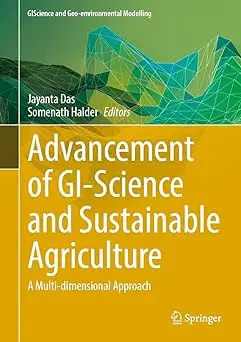
Advancement of GI-Science and Sustainable Agriculture: A Multi-dimensional Approach by Jayanta Das, Somenath Halder
English | EPUB (True) | 2023 | 355 Pages | ISBN : 303136824X | 139.9 MB

This book describes the contributing aspects of contemporary developments related to sustainable agricultural resources and assessment of sustainable agriculture in developing nations. The issues like food crisis and declining agro-productivity, post-pandemic food security, zonation and mapping technique viewing food crisis, biotechnology and sustainable agricultural, scaling hunger indices, health hazard and food crisis, changing climate and food availability, consumer load and fertilizer usage, growing demand and increasing usage of harmful chemical in agro-fields are regarded as serious concerns. Thereafter, the scope of sustainable agricultural potentiality (SAP) modeling, amidst the arena of deforestation and encroachment of new cultivable land, impact of pandemic on sustainable agriculture, using wastewater as non-sustainable agricultural practice, applying geospatial techniques on extreme weather susceptibility and agro-production, soil erosion and poor agricultural production, questioning shifting cultivation on the issue of sustainability, meteorological drought and irrigational gaps, occupational mobility and loss of agricultural heritage, farm-excreta burning and air quality index (AQI), GI-Science and sustainable agro-management, community preparedness in food crisis management, multi-criteria hunger index (MCHI), climate change declining sustainable agro-production are worth some.
Almost the entire world has recently suffered from several natural and human-induced problems, among which food crisis and unsustainable agriculture throw significant challenges to human society. Contrastingly, if modern technology and means, with advanced monitoring and calibration methodology and policy guidance, can help, it will undoubtedly reduce half of the world's problems and ensure the future survival of human society. In addition, this approach also can minimize the other partially linked problems, like climate change and food shortage, livelihood crisis, environmental refugees, international trade balance, global food supply chain interruption, the ever-expanding gap between rich and poor, and so on. Therefore, properly nurturing the knowledge on the application of GI-Science for an agriculturally sustainable society and their monitoring and management can curtail the gap between science, policy, and the ground-level scenario concerned.
[/b]


Uploady


UploadCloud


FreeDL


Links are Interchangeable - Single Extraction

 
83f5c66da55edd8a544321b5aae16808.webp

Advances in bioprotection of plants against diseases (Burleigh Dodds Series in Agricultural Science, 158) by Professor Shashi Sharma, Dr Minshad Ansari, Angela Records
English | July 22, 2025 | ISBN: 1801467285 | 408 pages | True PDF,EPUB | 30 Mb
The bioprotectants market was estimated to be worth $5.5 billion in 2022, with this figure set to rise to over $11 billion by 2027. With more than 1000 products on the market, a greater understanding of how individual species/strains function as bioprotection agents is required.

Advances in bioprotection of plants against diseases considers recent advances in techniques used to identify and develop fungal and bacterial bioprotection agents, including Clonostachys rosea, Phytium oligandrum and Actinomycetes. The book also includes a variety of case studies which detail the successful implementation of bioprotection agents to control diseases in a variety of crops, including grapes, cereals and potatoes.
This book builds on and adds to the successful recent title published by Burleigh Dodds Science: Microbial bioprotectants for plant disease management (2021).


Uploady


UploadCloud


FreeDL


Links are Interchangeable - Single Extraction

 
8e0f880db2a72cbbcfc1ab41500b675d.webp


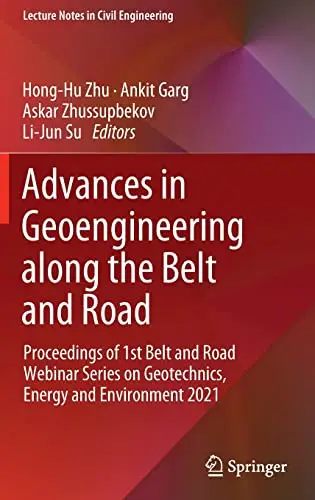
Advances in Geoengineering along the Belt and Road: Proceedings of 1st Belt and Road Webinar Series on Geotechnics, Energy and Environment 2021 by Hong-Hu Zhu
English | EPUB | 2022 | 365 Pages | ISBN : 9811699623 | 100.1 MB

This book is a compilation of selected papers from the 1st Belt and Road Webinar Series on Geotechnics, Energy and Environment, March - May 2021. The book comprises selected research related to advances in geo-environmental engineering. Topics covered include rock mechanics, sustainable materials, frozen soils, geotechnical innovations in megacities. The research is related to the sustainable infrastructure development for countries in China's Belt and Road Initiative. The contents of the volume will prove useful to researchers and professionals working in geotechnical and geological engineering domains.
[/b]


Uploady


UploadCloud


FreeDL


Links are Interchangeable - Single Extraction

 
44dc908d96b226d4a32687b1a82e4a76.webp


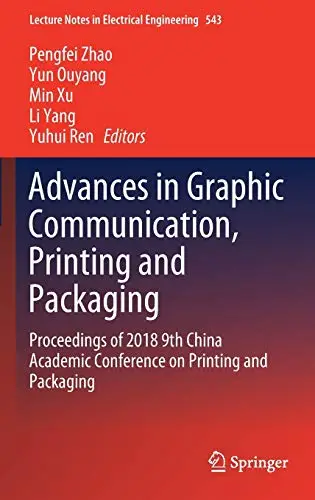
Advances in Graphic Communication, Printing and Packaging: Proceedings of 2018 9th China Academic Conference on Printing by Pengfei Zhao
English | EPUB | 2019 | 1030 Pages | ISBN : 9811336628 | 143.8 MB

This book includes a selection of reviewed papers presented at the 9th China Academic Conference on Printing and Packaging, which was held in November 2018 in Shandong, China. The conference was jointly organized by the China Academy of Printing Technology and Qilu University of Technology (Shandong Academy of Sciences). With 8 keynote talks and over 200 presented papers on graphic communication and packaging technologies, the conference attracted more than 300 scientists.
The proceedings cover the recent findings in color science and technology, image processing technology, digital media technology, mechanical engineering and numerical control, materials and detection, digital process management technology in printing and packaging, and other technologies. As such, the book is of interest to university researchers, R&D engineers and graduate students in the field of graphic arts, packaging, color science, image science, material science, computer science, digital media, and network technology.
[/b]


Uploady


UploadCloud


FreeDL


Links are Interchangeable - Single Extraction
 
Zurück
Oben Unten