



• Regeln für den Dokumente-Bereich:

    In den Börsenbereich gehören nur Angebote die bereits den Allgemeinen Regeln entsprechen.

    Allgemeines:

    Nicht erlaubt im Dokumente-Bereich sind:

    - indizierte Titel (inkl. Comics)
    - extremistische Werke, Zeitschriften und Comics (egal, welche Richtung)
    - jegliche Art von Pornographie
    - Anleitungen zu kriminellen Handlungen, gleich welcher Art
    - sadistische, menschenverachtende oder ähnliche Werke

    Nutzt den "Bedanken"-Button, bei Sammelthreads führen jegliche Kommentare, positiv wie negativ, sehr schnell zu einer Unübersichtlichkeit des Threads. Downmeldungen sind an den Uploader zu richten

    Vor dem Einstellen zu beachten:

    - Suchfunktion

    Vergewissert euch, dass es euer Dokument noch nicht im Board gibt, Doppelposts werden kommentarlos gelöscht. Ist es schon vorhanden, tragt es als Mirror im bestehenden Post ein.

    - Threadtitel

    Idealerweise ist sofort zu erkennen um was es sich handelt. Verseht euren Titel mit den relevanten Informationen, das hilft euch und damit auch uns und allen Suchenden erheblich weiter.

    Beispiel: [Thriller] Dan Brown - Inferno oder bei Magazinen:

    Computerbild - 14/2014 (es muss ersichtlich sein, um welche Ausgabe und welches Magazin es sich handelt)

    Folgende Präfixe stehen im Unterforum "Unterhaltung" zur Verfügung:

    [Humor]
    [Drama]
    [Erotik]
    [Fantasy]
    [Krimi]
    [Roman]
    [Thriller]
    [Horror]
    [Science Fiction]

    Inhalt des Beitrags:

    Folgende Pflichtangaben gilt es einzuhalten:

    - Autor
    - Titel
    - Präfix
    - Cover
    - Genre
    - Inhaltsbeschreibung
    - enthaltene Formate
    - Gesamtgröße des Downloads
    - Hoster
    - ggf. Passwort

    Nicht erlaubt sind alle Dateien, die den Download unnötig aufblähen um eine Affiliategrenze zu erreichen, wie zB. mp3-files, übergroße Bilder, etc.

    Ebenso nicht erlaubt sind sämtliche Dateien mit DRM, persönlichen Daten, etc., diese werden kommentarlos zu eurem eigenem Schutz gelöscht.

    Achtet bitte bei der Konvertierung der Formate auf die Lesbarkeit, ein epub, was nur einfach durch Calibre gejagt wird um ein PDF zu erhalten, ist zu 99% eben nicht lesbar. Wenn ihr es nicht könnt, dann lasst es besser oder lest euch ein, wie man es richtig macht.


    Unterforum Comics:

    Threadtitel:

    Ähnlich, wie bei Unterhaltung und Magazinen, sollte der Titel alle relevanten Informationen enthalten, hier bitte

    - den Titel des Comics
    - den Verlag (einige Comics sind in verschiedenen Verlagen erschienen)
    - das Erscheinungsjahr

    Erlaubt sind folgende Formate:

    - CBR
    - CBZ

    Grundsätzlich gilt: jede Version eines Comics erhält einen eigenen Thread, Ersteller eines Comics können ihre Bände gerne mit dem Zusatz (Original-Release) versehen.

    Bei Unsicherheiten zur korrekten Benennung bitte die Informationen von www.comicguide.de nutzen.

    Inhalt des Beitrags:

    Pflichtangaben hier sind:

    - Titel des Bandes und ggf. Nummer
    - Cover
    - falls bekannt technische Daten (DPI, Breite, Speicherqualität)
    - Größe des Downloads
    - Hoster
    - ggf. Passwort
    - falls bekannt Releasenamen
  • Bitte registriere dich zunächst um Beiträge zu verfassen und externe Links aufzurufen.

++ Premium IPTV ++ 7000 Live Sender ++ UHD Qualität ++ Mediathek mit 18.000 Inhalten ++


VenneTV


Collection Download Ebooks Best Seller Updated Daily

d87cde17cd13e3b6c250d3757ff2080e.webp

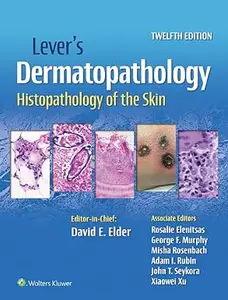
Lever's Dermatopathology
by David E. Elder;Rosalie Elenitsas;George F. Murphy;Misha Rosenbach;Adam I. Rubin;John T. Seykora;Xiaowei Xu;

English | 2023 | ISBN: 1975174496 | 1500 pages | True EPUB | 746.69 MB

Used by generations of physicians who encounter patients with dermatological diseases, Lever's Dermatopathology: Histopathology of the Skin comprehensively covers skin disease in which histopathology plays an important role in diagnosis. The updated 12th Edition, edited by Drs. David E. Elder, Rosalie Elenitsas, George F. Murphy, Misha Rosenbach, Adam I. Rubin, John T. Seykora, and Xiaowei Xu, maintains the proven, clinicopathologic classification of cutaneous disease while incorporating a "primer" on pattern-algorithm diagnosis. It features larger images throughout, as well as thoroughly revised content with new diseases and new information on pathophysiology and molecular pathogenesis-all in an easy-to-navigate, highly readable format.
More than 2,000 larger, full-color illustrations, including photomicrographs and clinical photographs, help you visualize and make the most of the clinical diagnostic process
Clinical Summaries provide a concise clinical review before presenting histologic features, and Principles of Management sections summarize today's complex treatment modalities in one convenient place
Ultrastructural, immunohistochemical, and molecular techniques are discussed where they have value in identifying particular diseases
Numerous tables summarize or compare and contrast similar groups of diseases
A chapter dedicated to algorithmic classification of skin diseases according to histologic pattern features helps you develop a differential diagnosis for unknown cases
An outstanding resource for dermatopathologists, pathologists, and dermatologists in training, practice, and teaching
Enrich Your eBook Reading Experience
Read directly on your preferred device(s), such as computer, tablet, or smartphone.
Easily convert to audiobook, powering your content with natural language text-to-speech.


UploadCloud

Fileaxa


Links are Interchangeable - Single Extraction

 
fe6bf51ea713cd89b31c5c67cecc32f3.webp

Leveraging and Assessing Student Thinking
by Stacey Pylman, Rachel Moquin
English | 2025 | ISBN: 3031897137 | 148 Pages | True ePUB | 7.4 MB

This book is a compilation of teaching theories and strategies for eliciting and interpreting student thinking to adapt to educational settings.
Medical education is no longer about simply providing students with knowledge, as it was in Flexner's day. Modern medical education is focused on shaping how students understand, define, and move the practice of medicine forward. Modern medical schools focus on building student's ability to reason clinically and develop their own identity as professionals while integrating those pieces of their identity with their emerging content knowledge.
This level of high-quality education requires medical educators to understand their learners and see their learners as more than repositories for knowledge. A medical educator must understand who the learner is, what the learner already knows, and what misunderstandings the learner has. Hence, educators must learn to be skilled not simply at conveying information, but rather at eliciting student thinking and understanding to discern what and how to best teach the learner. Faculty often think of teaching this way as complex and time-consuming. However, in this manual we reveal that once the theoretical underpinnings of why leveraging and assessing student thinking matters are understood, educators can enact the theory by building specific teaching skills.
This manual is written by authors steeped in educational theory and with a background in teacher education. Other manuals and book chapters have looked at active learning and rubrics which are part of learner-centered instruction. This manual is the first of its kind to help medical educators practice what it means to teach in a learner-centered way by leveraging student thinking.
The manual is written using educational theory and literature, includes vignettes for illustrative purpose, and provides practical steps in enacting strategies to elicit student thinking. In the first section of this manual, we define the practices of eliciting and interpreting student thinking and explain why student thinking matters, introduce readers to gradual release theories of learning, and showcase the benefits of using students' experiences, background, and prior knowledge. In the second section of the manual, we explain in further detail how to leverage and assess student thinking. We describe, illustrate with vignettes, and provide step by step guides on the skills of questioning, giving feedback, debriefing clinical experiences, analyzing student work, and assessing student thinking and understanding in the medical education context.


UploadCloud

Fileaxa


Links are Interchangeable - Single Extraction

 
86bdec005d91ae4548cd169882beea7d.webp

Leveraging and Assessing Student Thinking
by Stacey Pylman, Rachel Moquin
English | 2025 | ISBN: 3031897137 | 148 Pages | True PDF | 6.7 MB

This book is a compilation of teaching theories and strategies for eliciting and interpreting student thinking to adapt to educational settings.
Medical education is no longer about simply providing students with knowledge, as it was in Flexner's day. Modern medical education is focused on shaping how students understand, define, and move the practice of medicine forward. Modern medical schools focus on building student's ability to reason clinically and develop their own identity as professionals while integrating those pieces of their identity with their emerging content knowledge.
This level of high-quality education requires medical educators to understand their learners and see their learners as more than repositories for knowledge. A medical educator must understand who the learner is, what the learner already knows, and what misunderstandings the learner has. Hence, educators must learn to be skilled not simply at conveying information, but rather at eliciting student thinking and understanding to discern what and how to best teach the learner. Faculty often think of teaching this way as complex and time-consuming. However, in this manual we reveal that once the theoretical underpinnings of why leveraging and assessing student thinking matters are understood, educators can enact the theory by building specific teaching skills.
This manual is written by authors steeped in educational theory and with a background in teacher education. Other manuals and book chapters have looked at active learning and rubrics which are part of learner-centered instruction. This manual is the first of its kind to help medical educators practice what it means to teach in a learner-centered way by leveraging student thinking.
The manual is written using educational theory and literature, includes vignettes for illustrative purpose, and provides practical steps in enacting strategies to elicit student thinking. In the first section of this manual, we define the practices of eliciting and interpreting student thinking and explain why student thinking matters, introduce readers to gradual release theories of learning, and showcase the benefits of using students' experiences, background, and prior knowledge. In the second section of the manual, we explain in further detail how to leverage and assess student thinking. We describe, illustrate with vignettes, and provide step by step guides on the skills of questioning, giving feedback, debriefing clinical experiences, analyzing student work, and assessing student thinking and understanding in the medical education context.


UploadCloud

Fileaxa


Links are Interchangeable - Single Extraction
 
df5c5074dbfaa2684dec1154738ec797.webp

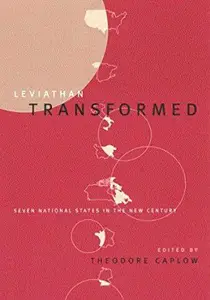
Leviathan Transformed : Seven National States in the New Century By Theodore Caplow
2002 | 230 Pages | ISBN: 0773523030 | PDF | 1 MB
The authors, using these goals as a checklist, found that each of the seven states performs well in some areas and badly in others. They discovered that all states approached these goals in a style shaped by their own history and, in particular, by how they have been affected by the troubles of the twentieth century. Their investigations offer a new, informative way of looking at these nation states and detail the social and political conditions in each state. Contributors include Theodore Caplow, Salustiano Del Campo (Royal Academy of Political and Social Science, Madrid), Nikolai Genov (Bulgaria Academy of Sciences), Karl-Otto Hondrich (Goethe University), Simon Langlois (Université de Laval), Alberto Martinelli (University of Milan), and Henri Mendras (OFCE, Paris).


UploadCloud

Fileaxa


Links are Interchangeable - Single Extraction
 
1988372cbac102ad797371461a0590bf.webp

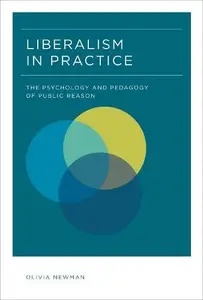
Liberalism in Practice : The Psychology and Pedagogy of Public Reason By Olivia Newman
2015 | 217 Pages | ISBN: 0262028794 | EPUB | 1 MB
At the core of liberal theory is the idea -- found in thinkers from Hobbes to Rawls -- that the consent of the governed is key to establishing political legitimacy. But in a diverse liberal polity like the United States, disagreement runs deep, and a segment of the population will simply regard the regime as illegitimate. In Liberalism in Practice, Olivia Newman argues that if citizens were to approach politics in the spirit of public reason, couching arguments in terms that others can reasonably accept, institutional and political legitimacy would be enhanced. Liberal theory has relied on the assumption of a unified self, that individuals are unified around a single set of goals, beliefs, attitudes, and aptitudes. Drawing on empirical findings in psychology, Newman argues instead that we are complex creatures whose dispositions and traits develop differently in different domains; we hold different moral commitments in different parts of our lives. She argues further that this domain differentiation allows us to be good liberal citizens in the public domain while remaining true to private commitments and beliefs in other domains. Newman proposes that educational and institutional arrangements can use this capacity for differentiation to teach public reason without overwhelming conflicting commitments. The psychology and pedagogy of public reason proposed by Newman move beyond John Rawls's strictly political liberalism toward what Newman terms practical liberalism. Although we cannot resolve every philosophical problem bedeviling theories of liberalism, we can enjoy the myriad benefits of liberalism in practice.


UploadCloud

Fileaxa


Links are Interchangeable - Single Extraction
 
5da85580db15b774ea71d9c755f68c9a.webp

Liberating Kosovo : Coercive Diplomacy and U. S. Intervention By David L. Phillips; Nicholas Burns
2012 | 256 Pages | ISBN: 0262018446 | EPUB | 1 MB
A compelling account of the diplomatic and military actions that led to Kosovo's independence and their implications for future U.S. and UN interventions. Kosovo, after its incorporation into the Serbian Republic of Yugoslavia, became increasingly restive during the 1990s as Yugoslavia plunged into internal war and Kosovo's ethnic Albanian residents (Kosovars) sought autonomy. In March 1999, NATO forces began airstrikes against targets in Kosovo and Serbia in an effort to protect Kosovars against persecution. The bombing campaign ended in June 1999, and Kosovo was placed under transitional UN administration while negotiations on its status ensued. Kosovo eventually declared independence in 2008. Despite internal political tension and economic problems, the new nation has been recognized by many other countries and most of its inhabitants welcome its separation from Serbia. In Liberating Kosovo, David Phillips offers a compelling account of the negotiations and military actions that culminated in Kosovo's independence. Drawing on his own participation in the diplomatic process and interviews with leading participants, Phillips chronicles Slobodan Milosevic's rise to power, the sufferings of the Kosovars, and the events that led to the disintegration of Yugoslavia. He analyzes how NATO, the United Nations, and the United States employed diplomacy, aerial bombing, and peacekeeping forces to set in motion the process that led to independence for Kosovo. He also offers important insights into a critical issue in contemporary international politics: how and when the United States, other nations, and NGOs should act to prevent ethnic cleansing and severe human-rights abuses.


UploadCloud

Fileaxa


Links are Interchangeable - Single Extraction
 
d716eebb4428ca3f44356e1e5009f8a8.webp

Licht - Metapher der Erkenntnis:
Das strahlende, blendende und erkennende Licht in der abendländischen Philosophiegeschichte

Deutsch | 2025 | ISBN: 3662712954 | 305 Pages | PDF (True) | 8 MB

Das Licht als Metapher der Erkenntnis gehört zur abendländischen Tradition der Bildsprache allgemein, insbesondere aber in der Philosophie. Die Erfahrung eines neuen Gedankens, einer neuen Idee oder einer neuen Erkenntnis haben wir, vielleicht mangels eigener sprachlicher Begrifflichkeit, für genau diesen geistigen Vorgang in eine Metapher übertragen, indem wir mit der Vorstellung arbeiten, die sinnliche Wahrnehmung der physischen Erscheinung des Lichts sei vergleichbar mit der geistigen Wahrnehmung eines neuen Gedankens. Durch das Licht sehen wir die Welt und die Dinge in ihr, durch den Geist erkennen wir Weltzusammenhänge, Arten des Seins, Wahrheiten, Kategorien, Strukturen, Hierarchien, was auch immer. Das Hauptanliegen dieses Buches ist es, die Lichtmetapher in ihrer philosophisch-historischen Bedeutung - exemplarisch - aufzuarbeiten, indem es die Philosophiegeschichte nach der Verwendung der Lichtmetapher durchforstet. Wer (1) hat wozu (2) mit welcher philosophischen Aussage (3) die Lichtmetapher benutzt? Das Buch regt so zum Nachdenken über diese Aussagen an und den Diskurs über die Lichtmetapher und die Intelligibilität des Denkens.


Fileaxa


Links are Interchangeable - Single Extraction

 
e66c5c216bf73cea427a4e01c079c332.webp

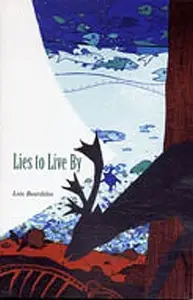
Lies to Live By By Lois Beardslee
2003 | 152 Pages | ISBN: 0870136631 | PDF | 1 MB
Lies To Live By brings together two selections of stories by Ojibwe storyteller Lois Beardslee. "Lies to Live By," a series of interdependent tales, reflects the storyteller's role in interpreting traditional stories for contemporary audiences, while preserving traditions based not in mysticism but in pragmatism. In "Calm Days," three generations--the narrator, her grandfather, and her son--spend a week together on a remote island during the course of which they demonstrate the continuity of Ojibwe life. Together these stories weave the contemporary and the traditional to show how cultural diversity can be preserved even as cultural boundaries are transcended.


UploadCloud

Fileaxa


Links are Interchangeable - Single Extraction

 
d7efe00052b2fae3a10badc8a30a9e35.webp

Life Above the Clouds: Philosophy in the Films of Terrence Malick
by Steven DeLay
English | 2023 | ISBN: 1438492111 | 426 Pages | True ePUB | 3.1 MB

The definitive philosophical exploration of the work of pioneering filmmaker Terrence Malick.
Leaving a promising career in academic philosophy to embark on a career in film, American director Terrence Malick has created cinematic works of art that are also deeply philosophical. His contribution to philosophy through a half century of filmmaking has become the focus of increasing scholarly attention. Inviting the reader along a journey of reflections at the intersection of film, art, and philosophy, Life Above the Clouds brings together an international team of contributors to present the most current and definitive statement of the filmmaker's work. Accessibly written and exploring films such as Badlands, Days of Heaven, The Thin Red Line, The New World, The Tree of Life, To the Wonder, Knight of Cups, Song to Song, and A Hidden Life, the nineteen essays herein will be of interest not only to scholars and students of philosophy, theology, film studies, and aesthetics, but also to anyone with a true love of film.


UploadCloud

Fileaxa


Links are Interchangeable - Single Extraction
 
2946ee752f4908a4e514e37bb4520e6b.webp

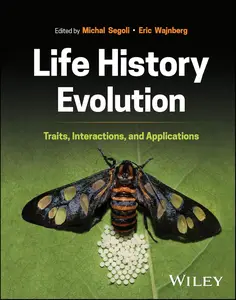
Life History Evolution: Traits, Interactions, and Applications by Michal Segoli, Eric Wajnberg
English | February 3, 2025 | ISBN: 1394185723 | 496 pages | MOBI | 14 Mb
Provides a timely and authoritative account of Life History Evolution by a multidisciplinary team of scholars and researchers from around the world

Life History Evolution: Traits, Interactions, and Applications presents a cutting-edge synthesis of the mechanisms driving life history strategies that span the breadth of taxa, from bacteria to humans. Integrating classical and contemporary perspectives, this comprehensive volume addresses how organisms evolve traits in response to diverse ecological pressures. Editors Michal Segoli and Eric Wajnberg bring together leading experts to explore the intersection of evolutionary biology, ecology, and applied research, focusing on the evolving complexity of life history traits and their implications.
In-depth yet accessible chapters cover a broad spectrum of life history traits, from classical traits of lifespan and reproduction to more complex interactions like social behaviour, predator-prey dynamics, and human-induced evolutionary processes. The contributing authors explain essential concepts, identify critical knowledge gaps, discuss future research directions, and demonstrate the relevance of life history evolution in addressing climate change, species invasion, pollution, and more.
Providing a well-balanced understanding of life history traits and their implications, Life History Evolution:Incorporates recent advances in evolutionary theory, including eco-evolutionary feedback loops and anthropogenic impactsOffers diverse perspectives and original research from leading experts in fields such as evolutionary biology, ecology, entomology, zoology, agriculture, and veterinary medicineDiscusses life history evolution in the context of co-evolved interactions such as predator-prey, parasite-host, plant-herbivore, and endosymbiont-host relationshipsProvides an overview of the foundational theory, recent developments, and current thinking in the fieldFeatures numerous case studies that highlight real-world applications in biological control, wildlife management, climate change adaptation, and othersRevealing how life history traits shape the evolutionary strategies of organisms, Life History Evolution: Traits, Interactions, and Applications is an essential resource for undergraduate and graduate students, researchers, industry professionals, and policymakers in ecological science. It is an ideal textbook for courses in evolutionary ecology, evolutionary biology, conservation biology, environmental science, and environmental management.


UploadCloud

Fileaxa


Links are Interchangeable - Single Extraction

 
e42c061ca3ba293264978b9fb74b29f1.webp

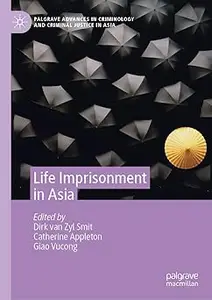
Dirk van Zyl Smit, "Life Imprisonment in Asia "
English | ISBN: 9811946639 | 2022 | 376 pages | EPUB | 3 MB
Life imprisonment is the punishment most often imposed worldwide for what societies regard as the most serious offences. Yet, in Asia the phenomenon has never been studied systematically. Life Imprisonment in Asia fills this major gap. It brings together thirteen new essays on life imprisonment in key jurisdictions in the region. Each chapter consolidates what is known about the law and practice of life imprisonment in the jurisdiction and then explores aspects of the imposition or implementation of life sentences that the authors regard as particularly problematic. In some instances, the main issue is the imposition of life sentences by the courts and their relationship to the death penalty. In others, the focus is on the treatment of life sentenced prisoners. In many instances, the most prominent question is whether life sentenced prisoners should be released and, if so, according to what processes. In the overview chapter, the editors place the complex picture that emerges of life imprisonment in Asia in a global context and point to reforms urgently required to ensure that Asian life sentences meet international human rights standards.

Life Imprisonment in Asia should be read by everyone who has an interest in just punishments for serious offences, not only in Asia, but throughout the world. It will be an invaluable tool for lawyers, criminologists, policy makers and penal reform advocates in the region and beyond.
Read more


UploadCloud

Fileaxa


Links are Interchangeable - Single Extraction
 
b70890fbad6e905a2f5d5c69678644c6.webp

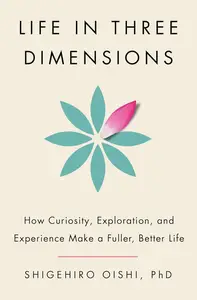
Life in Three Dimensions: How Curiosity, Exploration, and Experience Make a Fuller, Better Life by Shigehiro Oishi
English | February 4, 2025 | ISBN: 0385550391 | 256 pages | MOBI | 0.90 Mb
A NEXT BIG IDEA CLUB MUST-READ BOOK

* From one of our foremost psychologists, a trailblazing book that turns the idea of a good life on its head and urges us to embrace the transformative power of variety and experience
"Dr. Oishi's enthusiasm for a big and bold existence is infectious" -The Wall Street Journal
"Life in Three Dimensions will give you new insights into the many ways to live well, including advice on how to pick the one most likely to be right for you." -Jonathan Haidt, author of The Anxious Generation
For many people, a good life is a stable life, a comfortable life that follows a well-trodden path. This is the case for Shigehiro Oishi's father, who has lived in a small mountain town in Japan for his entire life, putting his family's needs above his own, like his father and grandfather before him. But is a happy life, or even a meaningful life, the only path to a good life?
In Life in Three Dimensions, Shige Oishi enters into a debate that has animated psychology since 1984, when Ed Diener (Oishi's mentor) published a paper that launched happiness studies. A rival followed in 1989 with a model of a good life that focused on purpose and meaning instead. In recent years, Shige Oishi's award-winning work has proposed a third dimension to a good life: psychological richness, a concept that prioritizes curiosity, exploration, and a variety of experiences that help us grow as people.
Life in Three Dimensions explores the shortcomings of happiness and meaning as guides to a good life, pointing to complacency and regret as a "happiness trap" and narrowness and misplaced loyalty as a "meaning trap." Psychological richness, Oishi proposes, balances the other two, offering insight and growth spurred by embracing uncertainty and challenges.
In a lively style, drawing on a generation of psychological studies and on examples from famous people, books and film, Oishi introduces a new path to a fuller, more satisfying life with fewer regrets.


UploadCloud

Fileaxa


Links are Interchangeable - Single Extraction
 
Zurück
Oben Unten