• Regeln für den Dokumente-Bereich:

    In den Börsenbereich gehören nur Angebote die bereits den Allgemeinen Regeln entsprechen.

    Allgemeines:

    Nicht erlaubt im Dokumente-Bereich sind:

    - indizierte Titel (inkl. Comics)
    - extremistische Werke, Zeitschriften und Comics (egal, welche Richtung)
    - jegliche Art von Pornographie
    - Anleitungen zu kriminellen Handlungen, gleich welcher Art
    - sadistische, menschenverachtende oder ähnliche Werke

    Nutzt den "Bedanken"-Button, bei Sammelthreads führen jegliche Kommentare, positiv wie negativ, sehr schnell zu einer Unübersichtlichkeit des Threads. Downmeldungen sind an den Uploader zu richten

    Vor dem Einstellen zu beachten:

    - Suchfunktion

    Vergewissert euch, dass es euer Dokument noch nicht im Board gibt, Doppelposts werden kommentarlos gelöscht. Ist es schon vorhanden, tragt es als Mirror im bestehenden Post ein.

    - Threadtitel

    Idealerweise ist sofort zu erkennen um was es sich handelt. Verseht euren Titel mit den relevanten Informationen, das hilft euch und damit auch uns und allen Suchenden erheblich weiter.

    Beispiel: [Thriller] Dan Brown - Inferno oder bei Magazinen:

    Computerbild - 14/2014 (es muss ersichtlich sein, um welche Ausgabe und welches Magazin es sich handelt)

    Folgende Präfixe stehen im Unterforum "Unterhaltung" zur Verfügung:

    [Humor]
    [Drama]
    [Erotik]
    [Fantasy]
    [Krimi]
    [Roman]
    [Thriller]
    [Horror]
    [Science Fiction]

    Inhalt des Beitrags:

    Folgende Pflichtangaben gilt es einzuhalten:

    - Autor
    - Titel
    - Präfix
    - Cover
    - Genre
    - Inhaltsbeschreibung
    - enthaltene Formate
    - Gesamtgröße des Downloads
    - Hoster
    - ggf. Passwort

    Nicht erlaubt sind alle Dateien, die den Download unnötig aufblähen um eine Affiliategrenze zu erreichen, wie zB. mp3-files, übergroße Bilder, etc.

    Ebenso nicht erlaubt sind sämtliche Dateien mit DRM, persönlichen Daten, etc., diese werden kommentarlos zu eurem eigenem Schutz gelöscht.

    Achtet bitte bei der Konvertierung der Formate auf die Lesbarkeit, ein epub, was nur einfach durch Calibre gejagt wird um ein PDF zu erhalten, ist zu 99% eben nicht lesbar. Wenn ihr es nicht könnt, dann lasst es besser oder lest euch ein, wie man es richtig macht.


    Unterforum Comics:

    Threadtitel:

    Ähnlich, wie bei Unterhaltung und Magazinen, sollte der Titel alle relevanten Informationen enthalten, hier bitte

    - den Titel des Comics
    - den Verlag (einige Comics sind in verschiedenen Verlagen erschienen)
    - das Erscheinungsjahr

    Erlaubt sind folgende Formate:

    - CBR
    - CBZ

    Grundsätzlich gilt: jede Version eines Comics erhält einen eigenen Thread, Ersteller eines Comics können ihre Bände gerne mit dem Zusatz (Original-Release) versehen.

    Bei Unsicherheiten zur korrekten Benennung bitte die Informationen von www.comicguide.de nutzen.

    Inhalt des Beitrags:

    Pflichtangaben hier sind:

    - Titel des Bandes und ggf. Nummer
    - Cover
    - falls bekannt technische Daten (DPI, Breite, Speicherqualität)
    - Größe des Downloads
    - Hoster
    - ggf. Passwort
    - falls bekannt Releasenamen
  • Bitte registriere dich zunächst um Beiträge zu verfassen und externe Links aufzurufen.

++ Premium IPTV ++ 7000 Live Sender ++ UHD Qualität ++ Mediathek mit 18.000 Inhalten ++


VenneTV


Collection Download Ebooks Best Seller Updated Daily

72085f35cf6b3fd4da7ab3e8740f0c3d.webp

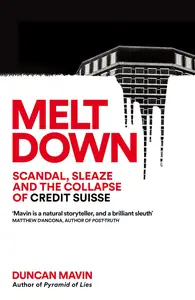
Meltdown by Duncan Mavin
English | ISBN: 1035037467 | PDF | 2.00 Mb
In a world where your hiding places are suddenly exposed, where do you put your skeletons? This is more than the story of Credit Suisse, a bank that failed; it's an investigation into greed, lies and unrelenting human ambition.

Credit Suisse was a 166-year-old bastion of Swiss banking. When it folded in March 2023, it sent shockwaves through the world of high finance.
Why was such a big bank allowed to fail?
Who was responsible?
And ultimately, could it have been avoided?
From international financial journalist and author of the bestselling Pyramid of Lies, Duncan Mavin, Meltdown is the fascinating history of one of the biggest financial institutions of our times, which forces you to ask the in a modern world of free knowledge and information, will big banks ever be allowed to survive again? And, more importantly, should they be?


Fileaxa


Links are Interchangeable - Single Extraction
 
433d4f897c633657c609a6187142ad6c.webp

Memoirs of a Leavisite : The Decline and Fall of Cambridge English By David Ellis
2013 | 180 Pages | ISBN: 1846318890 | EPUB | 1 MB
In the second half of the last century, the teaching of English literature was very much influenced and, in some places, entirely dominated by the ideas of F. R. Leavis. What was it like to be taught by this iconic figure? How and why did one become a Leavisite? In this unique book, part memoir, part study of Leavis, David Ellis takes himself as representative of that pool of lower middle class grammar school pupils from which Leavisites were largely recruited, and explores the beliefs of both the Leavises, their lasting impact on him and why ultimately they were doomed to failure. At the heart of this book are questions about what English should and can be that are by no means finally settled.


Fileaxa


Links are Interchangeable - Single Extraction
 
2079e185637190caba0a718ac2ff5ecb.webp

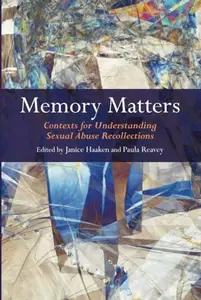
Memory Matters : Contexts for Understanding Sexual Abuse Recollections By Janice Haaken; Paula Reavey
2009 | 249 Pages | ISBN: 0415444918 | EPUB | 1 MB
This book is grounded in the debates of the 1980s and 1990s that surrounded recollections of childhood sexual abuse, particularly those that emerged in the context of psychotherapy. When growing numbers of therapists claimed that they were recovering deeply repressed memories of early sexual violations in their female clients, a wave of alarmed critics countered that therapists were implanting the very memories they were discovering. In looking back at this volatile and heated controversy, Memory Matters takes up disturbing questions that linger concerning memory, sexuality, and childhood. Beginning with a re-analysis of cases from the recovered memory era, the volume goes on to offer fresh perspectives on recollections of childhood sexual abuse. Informed by feminist and critical perspectives within psychology, contributing authors introduce examples from their own qualitative research on processes of remembering. They offer rich examples from a wide range of applied settings, from the courts, psychotherapy, institutions for the disabled, to self-help groups and the media. A shared set of questions is addressed by each of the authors to create a dialogue with the reader on recurring motifs. Memory Matters is an ideal resource for advanced undergraduate and postgraduate students in the social sciences and legal studies, as well as practitioners in the fields of mental health, crisis services, and the law. Scholarly and accessible in tone, the book also offers helpful insights for professionals working with childhood memory.


Fileaxa


Links are Interchangeable - Single Extraction
 
81d15e42eb000343705b8aedcef5db09.webp

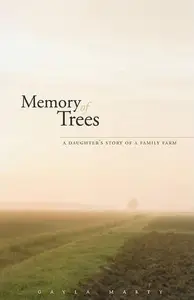
Memory of Trees : A Daughter's Story of a Family Farm By Gayla Marty
2010 | 256 Pages | ISBN: 081666689X | PDF | 1 MB
Memory of Trees is a multigenerational story of Gayla Marty's family farm near Rush City, Minnesota. Cleared from woodlands by her great-grandfather Jacob in the 1880s, the farm passed to her father, Gordon, and his brother, Gaylon. Hewing to a conservative Swedish Baptist faith, the two brothers worked the farm, raising their families in side-by-side houses. As the years go by, the families grow--and slowly grow apart. Uncle Gaylon, more doctrinaire in his faith, rails against the permissiveness of Gayla's parents. Financial tensions arise as well when the farm economy weakens and none of the children is willing or able to take over. Gayla is encouraged to leave for college, international travel, and city life, but the farm remains essential to her sense of self, even after the family decides to sell the land. When Gaylon has an accident on a tractor, Gayla becomes driven to reconnect with him and to find out why she and her uncle--once so close but now estranged--were the only two members of the family who had resisted selling the land. Guided by vivid images of the farm's many beautiful trees, she pores over sacred and classical works as well as layers of her own memory to understand the forces that have transformed the American landscape and culture in the last half of the twentieth century. Beneath the belief in land as a giver of life and blessing, she discovers a powerful anxiety born of human uprootedness and loss. Movingly written, Memory of Trees will resonate for many with attachments to small towns or farms, whether they continue to work the land or, like so many, have left for a different life.


Fileaxa


Links are Interchangeable - Single Extraction
 
fc3fd78f46411b955b48d646d2f6e0bd.webp

Memory, History, and Autobiography in Early Modern Towns in East and West By Vanessa Harding; Kōichi Watanabe
2015 | 148 Pages | ISBN: 1443877654 | PDF | 1 MB
Between the sixteenth and the nineteenth centuries, in both Western Europe and East Asia, towns and cities helped to shape the individual consciousness, against the background of a more traditional society in which collective values remained strong. Towns were centres of stimulus, challenge, and opportunity for residents and visitors, and the identity of the town itself, its character and history, became a strong theme in the formation of the individual. Writing and the circulation of texts played an important part in this process. Towns created artefacts, rituals, and memories that embodied their history and identity, but individuals positioned themselves and their families in the town histories as they wrote them. The seven essays in this volume range in focus from Renaissance Venice to nineteenth-century Edo (Tokyo), and from capital cities (Seoul, London) to provincial towns in France, England, and Japan. They explore the interaction of self, family, and social group and the construction of collective memory, examining autobiographies, letters and "exchange diaries", family narratives, and urban histories and collections. Together, they challenge the long-prevailing historiography that contrasts the emergence of the individual in European societies with the persistently traditionalist and collective character of East Asian societies in the Early Modern period.


Fileaxa


Links are Interchangeable - Single Extraction
 
ad1fe1d645ffb84b0648f00a1e2e3aa0.webp

Memory, Narrative and the Great War : Rifleman Patrick MacGill and the Construction of Wartime Experience By David Taylor
2013 | 241 Pages | ISBN: 1846318718 | EPUB | 1 MB
Memory, Narrative and the Great War provides a detailed examination of the varied and complex war writings of a relatively marginal figure, Patrick MacGill, within a general framework of our current pre-occupation with blood, mud and suffering. In particular, it seeks to explain how his interpretation of war shifted from the heroic wartime autobiographical trilogy, with its emphasis on 'the romance of the rifleman' to the pessimistic and guilt-ridden interpretations in his post-war novel, Fear!, and play, Suspense. Through an exploration of the way in which war-time experiences were remembered (and re-remembered) and retold in strikingly different narratives, and using insights from cognitive psychology, it is argued that there is no contradiction between these two seemingly opposing views. Instead it is argued that, given the present orientation and problem-solving nature of both memory and narrative, the different interpretations are both 'true' in the sense that they throw light on the ongoing way in which MacGill came to terms with his experiences of war. This in turn has implications for broader interpretations of the Great War, which has increasingly be seen in terms of futile suffering, not least because of the eloquent testimony of ex-Great War soldiers, reflecting on their experiences many years after the event. Without suggesting that such testimony is invalid, it is argued that this is one view but not the only view of the war. Rather wartime memory and narrative is more akin to an ever-changing kaleidoscope, in which pieces of memory take on different (but equally valid) shapes as they are shaken with the passing of time.


Fileaxa


Links are Interchangeable - Single Extraction
 
2a5ec7d89ddd1dea17672b2253255325.webp

Men without Maps: Some Gay Males of the Generation before Stonewall by John Ibson
English | October 22, 2019 | ISBN: 022665608X | 176 pages | PDF | 3.68 Mb
For many men of various sexual inclinations, the Second World War offered an unprecedented release from the constraints of civilian life. However, when they returned home they had to face the harsh realities of a restrictive society. Men Without Maps continues the story of these men, whom John Ibson first gave voice to in The Mourning After. Here he uncovers the experiences of men after World War II who had same-sex desires but few, if any, direct, affirmative models of how to build identities and relationships. Though heterosexual men had plenty of cultural maps-provided by their parents, social institutions, and nearly every engine of popular culture-in the years before Pride parades, social organizations for queer persons, or publications devoted to them, gay men lacked such guides. In his survey of the years from shortly before the war up to the gay rights movement of the late 1960s and early '70s, Ibson considers male couples, who balanced domestic contentment with exterior repression, as well as single men, whose solitary lives illuminate unexplored aspects of the queer experience. Men Without Maps shows how, in spite of the obstacles they faced, midcentury gay men found ways to assemble their lives and senses of self at a time of limited social acceptance.


Fileaxa


Links are Interchangeable - Single Extraction
 
0aec86e25794273f31fd2d18e1552e19.webp

Menschen wie ein Buch lesen: Wie Sie die Gefühle, Gedanken, Absichten und Verhaltensweisen von Menschen analysieren, verstehen und vorhersagen können (German Edition) by Patrick King
German | May 19, 2021 | ISBN: 1647432731 | 310 pages | PDF | 0.72 Mb
Lernen Sie Menschen zu lesen, Körpersprache zu entschlüsseln, Lügen zu erkennen und die menschliche Natur zu verstehen.

Ist es möglich, Menschen zu analysieren, ohne dass sie auch nur ein Wort sagen? Ja, das ist es. Lernen Sie, wie Sie "Gedanken lesen" und tiefe Verbindungen knüpfen können.
Wie Sie in die Köpfe der Menschen eindringen, ohne dass sie es merken.
'Menschen wie ein Buch lesen' ist kein normales Buch über Körpersprache oder Mimik. Ja, es beinhaltet all diese Dinge, sowie neue Techniken, wie Sie Lügen in Ihrem Alltag aufdecken können, aber in diesem Buch geht es mehr darum, die menschliche Psychologie und Natur zu verstehen.
Unsere Erfahrungen und unserer Vergangenheit machen uns zu dem, was wir sind, und dies leitet unsere Gewohnheiten und Verhaltensweisen mehr als alles andere. Teile dieses Buches lesen sich wie das interessanteste und anwendbarste Psychologie-
Lehrbuch, das Sie je gelesen haben. Werfen Sie einen Blick in sich selbst und andere!
Verstehen Sie die subtilen Signale, die Sie aussenden, und steigern Sie Ihre emotionale Intelligenz.
Patrick King ist ein internationaler Bestseller-Autor und Coach für soziale Kompetenzen. Seine Schriften schöpfen aus einer Vielzahl von Quellen, von wissenschaftlicher Forschung, akademischer Erfahrung, Coaching und Erfahrungen aus dem wirklichen Leben.
Lernen Sie die Schlüssel, wie Sie andere beeinflussen und überzeugen können.
- Was uns die Gliedmaßen von Menschen über ihre Emotionen verraten können.
- Warum Lügenerkennung nicht so zuverlässig ist, wenn man den Kontext ignoriert.
- Persönlichkeitsanalyse als Mittel zum Verständnis der Motivation.
- Das meiste mit der geringsten Menge an Informationen ableiten.
- Arten von Augenkontakt, die Sie verwenden und vermeiden sollten.
Finden Sie Abkürzungen, um schnelle und tiefe Verbindungen zu Fremden aufzubauen.


Fileaxa


Links are Interchangeable - Single Extraction

 
6396cbb9e5c41a0368375b56c5acad8e.webp

Mental Health Matters : A Practical Guide to Identifying and Understanding Mental Health Issues in Primary Schools By Paula Nagel
2016 | 153 Pages | ISBN: 1472921402 | EPUB | 1 MB
Teachers have a responsibility to support the mental health of children in their care. Current statistics show a significant rise in mental health difficulties in children and young people, and new legislation urges schools to consider whether continuing disruptive behaviour might be the result of an unmet need. However, this is not an area that is universally addressed in teacher training programmes or books. Using real life case studies, this book supports all teachers and school staff in understanding and identifying the early signs of mental health difficulties, and explains how to bring about appropriate early interventions.


Fileaxa


Links are Interchangeable - Single Extraction

 
480ad83405ccc1524a580f5e0b51f8f7.webp

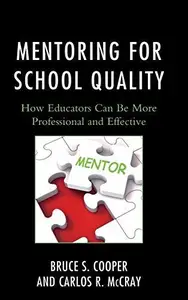
Mentoring for School Quality : How Educators Can Be More Professional and Effective By Bruce S., Cooper; Carlos R. McCray
2015 | 141 Pages | ISBN: 1475817991 | EPUB | 1 MB
Making Mentoring Work should help educators to mentor or to be mentored effectively in our schools. We all have had mentors, those key adults from family, work, or schools who have assisted us in learning and becoming good adults, skilled and able professionals, and contributing member of community and society. Although it's not easy, it does occur, is doable, and this book seeks to help everyone - educators, in particular -- both to be mentored and to be a mentor. In fact, the authors believe and show that everyone needs mentoring and many have the capacity, knowledge, and savvy to be a helpful mentor to others in their field, school, and world.


Fileaxa


Links are Interchangeable - Single Extraction

 
fa3ca6d4be6753204f38df99833ff375.webp

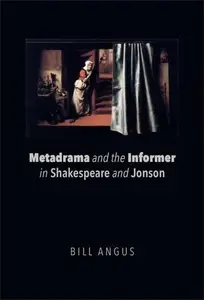
Metadrama and the Informer in Shakespeare and Jonson By Bill Angus
2016 | 241 Pages | ISBN: 1474415113 | EPUB | 1 MB
Have you ever wondered what was really going on in the inner-plays, secret overhearing, and tacit observations of early modern drama? Taking on the shadowy figure of the early modern informer, this book argues that far more than mere artistic experimentation is happening here. In case studies of metadramatic plays, and the devices which Shakespeare and Jonson constantly revisit, this book offers critical insight into intrinsic connections between informers and authors, discovering an uneasy sense of common practice at the core of the metadrama, which drives both its self-awareness and its paranoia. Drama is most self-revealing at these moments where it reflects upon its own dramatic register: where it is most metadramatic. To understand their metadrama is therefore to understand these most seminal authors in a new way.


Fileaxa


Links are Interchangeable - Single Extraction

 
155526ceb49e88d3bfe3b096368684ac.webp

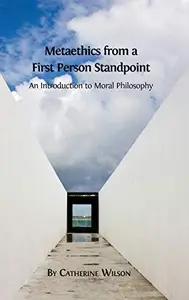
Metaethics from a First Person Standpoint : An Introduction to Moral Philosophy By Catherine Wilson
2016 | 134 Pages | ISBN: 1783741996 | PDF | 1 MB
Metaethics from a First Person Standpoint addresses in a novel format the major topics and themes of contemporary metaethics, the study of the analysis of moral thought and judgement. Metathetics is less concerned with what practices are right or wrong than with what we mean by 'right' and 'wrong.'Looking at a wide spectrum of topics including moral language, realism and anti-realism, reasons and motives, relativism, and moral progress, this book engages students and general readers in order to enhance their understanding of morality and moral discourse as cultural practices. Catherine Wilson innovatively employs a first-person narrator to report step-by-step an individual's reflections, beginning from a position of radical scepticism, on the possibility of objective moral knowledge. The reader is invited to follow along with this reasoning, and to challenge or agree with each major point. Incrementally, the narrator is led to certain definite conclusions about 'oughts' and norms in connection with self-interest, prudence, social norms, and finally morality. Scepticism is overcome, and the narrator arrives at a good understanding of how moral knowledge and moral progress are possible, though frequently long in coming. Accessibly written, Metaethics from a First Person Standpoint presupposes no prior training in philosophy and is a must-read for philosophers, students and general readers interested in gaining a better understanding of morality as a personal philosophical quest.


Fileaxa


Links are Interchangeable - Single Extraction

 
Zurück
Oben Unten