• Regeln für den Dokumente-Bereich:

    In den Börsenbereich gehören nur Angebote die bereits den Allgemeinen Regeln entsprechen.

    Allgemeines:

    Nicht erlaubt im Dokumente-Bereich sind:

    - indizierte Titel (inkl. Comics)
    - extremistische Werke, Zeitschriften und Comics (egal, welche Richtung)
    - jegliche Art von Pornographie
    - Anleitungen zu kriminellen Handlungen, gleich welcher Art
    - sadistische, menschenverachtende oder ähnliche Werke

    Nutzt den "Bedanken"-Button, bei Sammelthreads führen jegliche Kommentare, positiv wie negativ, sehr schnell zu einer Unübersichtlichkeit des Threads. Downmeldungen sind an den Uploader zu richten

    Vor dem Einstellen zu beachten:

    - Suchfunktion

    Vergewissert euch, dass es euer Dokument noch nicht im Board gibt, Doppelposts werden kommentarlos gelöscht. Ist es schon vorhanden, tragt es als Mirror im bestehenden Post ein.

    - Threadtitel

    Idealerweise ist sofort zu erkennen um was es sich handelt. Verseht euren Titel mit den relevanten Informationen, das hilft euch und damit auch uns und allen Suchenden erheblich weiter.

    Beispiel: [Thriller] Dan Brown - Inferno oder bei Magazinen:

    Computerbild - 14/2014 (es muss ersichtlich sein, um welche Ausgabe und welches Magazin es sich handelt)

    Folgende Präfixe stehen im Unterforum "Unterhaltung" zur Verfügung:

    [Humor]
    [Drama]
    [Erotik]
    [Fantasy]
    [Krimi]
    [Roman]
    [Thriller]
    [Horror]
    [Science Fiction]

    Inhalt des Beitrags:

    Folgende Pflichtangaben gilt es einzuhalten:

    - Autor
    - Titel
    - Präfix
    - Cover
    - Genre
    - Inhaltsbeschreibung
    - enthaltene Formate
    - Gesamtgröße des Downloads
    - Hoster
    - ggf. Passwort

    Nicht erlaubt sind alle Dateien, die den Download unnötig aufblähen um eine Affiliategrenze zu erreichen, wie zB. mp3-files, übergroße Bilder, etc.

    Ebenso nicht erlaubt sind sämtliche Dateien mit DRM, persönlichen Daten, etc., diese werden kommentarlos zu eurem eigenem Schutz gelöscht.

    Achtet bitte bei der Konvertierung der Formate auf die Lesbarkeit, ein epub, was nur einfach durch Calibre gejagt wird um ein PDF zu erhalten, ist zu 99% eben nicht lesbar. Wenn ihr es nicht könnt, dann lasst es besser oder lest euch ein, wie man es richtig macht.


    Unterforum Comics:

    Threadtitel:

    Ähnlich, wie bei Unterhaltung und Magazinen, sollte der Titel alle relevanten Informationen enthalten, hier bitte

    - den Titel des Comics
    - den Verlag (einige Comics sind in verschiedenen Verlagen erschienen)
    - das Erscheinungsjahr

    Erlaubt sind folgende Formate:

    - CBR
    - CBZ

    Grundsätzlich gilt: jede Version eines Comics erhält einen eigenen Thread, Ersteller eines Comics können ihre Bände gerne mit dem Zusatz (Original-Release) versehen.

    Bei Unsicherheiten zur korrekten Benennung bitte die Informationen von www.comicguide.de nutzen.

    Inhalt des Beitrags:

    Pflichtangaben hier sind:

    - Titel des Bandes und ggf. Nummer
    - Cover
    - falls bekannt technische Daten (DPI, Breite, Speicherqualität)
    - Größe des Downloads
    - Hoster
    - ggf. Passwort
    - falls bekannt Releasenamen
  • Bitte registriere dich zunächst um Beiträge zu verfassen und externe Links aufzurufen.

++ Premium IPTV ++ 7000 Live Sender ++ UHD Qualität ++ Mediathek mit 18.000 Inhalten ++


VenneTV


Collection Download Ebooks Best Seller Updated Daily

acca5f5e143b0773516eab18292b2ea9.webp

Exam Ref DP-600 Implementing Analytics Solutions Using Microsoft Fabric by Daniil Maslyuk, Johnny Winter, Stepan Resl
English | August 4, 2024 | ISBN: 0135336023 | 336 pages | MOBI | 35 Mb
Prepare for Microsoft Exam DP-600 and demonstrate your real-world mastery of Microsoft Fabric analytics solution development. Designed for working Fabric analytics engineers, this Exam Ref focuses on the critical thinking and decision-making acumen needed for success at the Microsoft Certified Solutions Associate level.

Focus on the expertise measured by these objectives:plan, implement, and manage a solution for data analyticsPrepare and serve dataImplement and manage semantic modelsExplore and analyze dataThis Microsoft Exam Ref:Organizes its coverage by exam objectivesFeatures strategic, what-if scenarios to challenge youAssumes you want to validate your ability to design and build diverse Microsoft Fabric analytics solutionsAbout the Exam
Exam DP-600 focuses on knowledge needed to implement and plan a data analytics environment; manage an analytics development lifecycle; create objects in a lakehouse or warehouse; copy data, transform data, and optimize performance; implement, design, and build semantic models; optimize enterprise-scale semantic models; perform exploratory analytics; query data by using SQL.
About Microsoft Certification
Passing this exam fulfills your requirements for Microsoft Certified: Fabric Analytics Engineer Associate credential, demonstrating your readiness to design, build, test, and maintain Microsoft Fabric data analytics solutions, and partner with other professionals and clients to implement them.
See full details at: microsoft.com/learn


AusFile


Fileaxa


Links are Interchangeable - Single Extraction
 
fa1e274696feaeef17ada91d5ea20619.webp

Excitons in Semiconductors
English | 2025 | ISBN: 3031872770 | 300 Pages | PDF EPUB (True) | 44 MB
This book explores fundamental and experimental aspects of excitons in semiconductors. It begins with an introduction to crystal lattice, band structure of solids, effective mass theory, and holes. It then explores the binding energy of various excitons and their complexes (such as trions and biexcitons) in different dimensions within the framework of effective mass approximation, discusses the absorption and emission of photons during their creation and recombination processes providing experimental examples in photo-absorption and photoluminescence (PL) spectroscopy. Theoretical foundations for calculating the dielectric function associated with excitons along with the concept of 'exciton-polaritons' are introduced. The book also examines the interaction between excitons and phonons, which is illustrated with experimental findings. Further, it discusses the effects of magnetic field on the energy eigenstates of excitons, and talks about polarization-resolved spectroscopy under magnetic field for identifying excitons and obtaining deeper insight of the excitonic structure as well as the semiconductor band structure. Lastly, it delves into the manybody effects i.e. Bose-Einstein condensation of excitons and excitonic Mott transition, presenting recent experimental findings and potential applications.


AusFile


Fileaxa


Links are Interchangeable - Single Extraction
 
78ec72f59f8a291ec4d6f8b8ad0e3def.webp

Exercise Science For Dummies by Steve Glass, Brian Hatzel, Rick Albrecht
English | May 6th, 2025 | ISBN: 1394323891 | 368 pages | True EPUB | 5.58 MB
A comprehensive guide to the science of movement

Exercise Science For Dummies covers must-know information about the how and why to body movement. This useful primer covers content found in a typical introduction course in this topic area-which includes the likes of exercise physiology, biomechanics, and more. With current and helpful guidance, this book includes information on wearable technology, fitness programming across the lifespan, exercise as medicine, and the 101 on human performance, including prevention and care of injuries.
With Exercise Science For Dummies, you'll:
* Discover the science behind movement and exercise
* Know the powerful connection between the mind and body
* Understand exercise as a form of medicine
* Explore fitness across the lifespan
Exercise Science For Dummies is a great guide for kinesiology and exercise science majors, coaches and personal trainers, athletes, and anyone who would like to know more about movement.


AusFile


Fileaxa


Links are Interchangeable - Single Extraction
 
743868e4aad6a5474127f1ade55aa3b3.webp

Exiled Scholars in Western Academia: Refugees or Intellectuals?: Reflections on the Paradox of Inclusion and Exclusion by Alfred Babo, Sayed Hassan Akhlaq
English | April 10, 2025 | ISBN: 3031837746 | 330 pages | PDF, EPUB | 20 Mb
This volume focuses on the experiences of refugee scholars in Western academia through first-hand narratives that move between dominant humanitarianism and the academic establishment. It provides an intellectual view of this humanitarian industry from a refugee perspective, alongside stories of the refugee scholars' contribution to the production of knowledge in the West. Contributors discuss their unique experiences and reflect on the changing nature of knowledge production, transfer, and exchange in a world increasingly affected by forced migration. Such reflections are not new. However, in this volume they explore how personal life difficulties and/or successes, mixed with emotional distress and cultural adjustments, could be framed into a scholarly analysis of academia in exile. In today's globalized world, the term "refugee" often evokes both sympathy and criticism, leaving refugee scholars in Western universities to ponder the ambivalent nature of their identity. This duality of identity creates new opportunities for rethinking concepts such as humanitarianism, indigenization, asylum, diversity equity and integration, scholar activism, and the transnational production of knowledge in the universities of the twenty-first century. Assembling scholars from around the world working in political sciences, international studies, anthropology, law, philosophy, and the humanities, this volume addresses both the geopolitical predicaments and the intellectual contributions of exiled academics in our troubled times.


AusFile


Fileaxa


Links are Interchangeable - Single Extraction
 
f98e8a6faba368db01b79caeeaa46039.webp

Emma Gooch, "Experiencing Childhood in Ancient Athens: Material Culture, Iconography, Burials, and Social Identity in the 9th to 4th "
English | ISBN: 0198949138 | 2025 | 362 pages | PDF | 62 MB
Experiencing Childhood in Ancient Athens uses literary sources and archaeological and iconographic evidence to investigate children's identities throughout the ninth to fourth centuries BCE in Athens and Attica, the city's surrounding hinterland. The book presents detailed analyses of mentions of children in ancient sources, scenes showing children on Geometric, black-figure, red-figure and white-ground painted pottery, and carved marble grave markers, as well as child burials. Examples of each are thoroughly catalogued and extensively illustrated. The analyses conducted identify material cultures of children and childhood - objects used by children themselves, and objects used when caring for children - that can be used to investigate children's identities in houses and in society across the extended life course, so in life and after death.

The research presented compares the range of objects associated with children at different times and in different contexts to suggest how children's identities - and how Athenian society conceptualised them and childhood - changed throughout the Geometric, Archaic and Classical periods, as the Greek polis system was established and Athenian democracy developed. The evidence considered suggests childhood became an increasingly distinct stage in the ancient Greek life course throughout the period 900 to 323 BCE but it also demonstrates that children did not necessarily became more prominent in Attic society as a consequence. It suggests that children's identities, and the symbolism of them, in many ways remained constant; with children always prized for the stability and continuity they represented but appreciated for their role in perpetuating society with increasing frequency over time and more when society was under threat.
Ultimately, the author suggests major socio-political change impacted children's experiences of childhood and what it meant to be a child in ancient Athens primarily because of how it affected the agency of their family members, especially the women responsible for caring for them: warfare and political transformation concentrated in the Classical period gave women more agency to influence the range of material culture made for children, making characterisations of them in art at once more realistic and more common, even when other evidence suggests children were in fact probably less visible in society.
Read more


AusFile


Fileaxa


Links are Interchangeable - Single Extraction
 
b1a6a1132ff9389d068552d25412b8f4.webp


Experimental Robotics: The 13th International Symposium on Experimental Robotics By Jaydev P. Desai, Gregory Dudek, Oussama Khatib, Vijay Kumar
English | PDF | 2013 | 966 Pages | ISBN : 3319000640 | 105.3 MB

The International Symposium on Experimental Robotics (ISER) is a series of bi-annual meetings, which are organized, in a rotating fashion around North America, Europe and Asia/Oceania. The goal of ISER is to provide a forum for research in robotics that focuses on novelty of theoretical contributions validated by experimental results. The meetings are conceived to bring together, in a small group setting, researchers from around the world who are in the forefront of experimental robotics research.
This unique reference presents the latest advances across the various fields of robotics, with ideas that are not only conceived conceptually but also explored experimentally. It collects robotics contributions on the current developments and new directions in the field of experimental robotics, which are based on the papers presented at the 13the ISER held in Québec City, Canada, at the Fairmont Le Château Frontenac, on June 18-21, 2012. This present thirteenth edition of Experimental Robotics edited by Jaydev P. Desai, Gregory Dudek, Oussama Khatib, and Vijay Kumar offers a collection of a broad range of topics in field and human-centered robotics.
[/b]


AusFile


Fileaxa


Links are Interchangeable - Single Extraction
 
13ce8fe89f6dcf104c344e0bd7aac454.webp


Experimenting on a Small Planet: A History of Scientific Discoveries, a Future of Climate Change and Global Warming, Third, Updated and Enlarged, Edition by William W. Hay
English | PDF (True) | 2021 | 1000 Pages | ISBN : 3030763382 | 100.2 MB

This book is a thorough introduction to climate science and global change. The author is a geologist who has spent much of his life investigating the climate of Earth from a time when it was warm and dinosaurs roamed the land, to today's changing climate. Bill Hay takes you on a journey to understand how the climate system works. He explores how humans are unintentionally conducting a grand uncontrolled experiment which is leading to unanticipated changes. We follow the twisting path of seemingly unrelated discoveries in physics, chemistry, biology, geology, and even mathematics to learn how they led to our present knowledge of how our planet works. He explains why the weather is becoming increasingly chaotic as our planet warms at a rate far faster than at any time in its geologic past. He speculates on possible future outcomes, and suggests that nature itself may make some unexpected course corrections. Although the book is written for the layman with little knowledge of science or mathematics, it includes information from many diverse fields to provide even those actively working in the field of climatology with a broader view of this developing drama. Experimenting on a Small Planet is a must read for anyone having more than a casual interest in global warming and climate change - one of the most important and challenging issues of our time. This new edition includes actual data from climate science into 2021. Numerous Powerpoint slides can be downloaded to allow lecturers and teachers to more effectively use the book as a basis for climate change education.
[/b]


AusFile


Fileaxa


Links are Interchangeable - Single Extraction
 
27785d10498bad7b845fbbcc29097c97.webp

Explainable AI in Health Informatics (Computational Intelligence Methods and Applications) by Rajanikanth Aluvalu, Mayuri Mehta, Patrick Siarry
English | July 8, 2024 | ISBN: 9819737044 | 293 pages | MOBI | 10 Mb
This book provides a comprehensive review of the latest research in the area of explainable artificial intelligence (XAI) in health informatics. It focuses on how explainable AI models can work together with humans to assist them in decision-making, leading to improved diagnosis and prognosis in healthcare. This book includes a collection of techniques and systems of XAI in health informatics and gives a wider perspective about the impact created by them. The book covers the different aspects, such as robotics, informatics, drugs, patients, etc., related to XAI in healthcare.

The book is suitable for both beginners and advanced AI practitioners, including students, academicians, researchers, and industry professionals. It serves as an excellent reference for undergraduate and graduate-level courses on AI for medicine/healthcare or XAI for medicine/healthcare. Medical institutions can also utilize this book as reference material and provide tutorials to medical professionals on how the XAI techniques can contribute to trustworthy diagnosis and prediction of the diseases.


AusFile


Fileaxa


Links are Interchangeable - Single Extraction
 
9181981e5c2d5b275b79f7c2fc08f6cd.webp

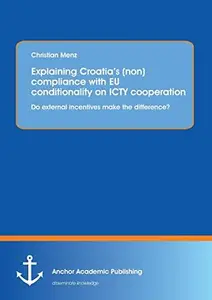
Explaining Croatia's (non)compliance with EU conditionality on ICTY cooperation: Do external incentives make the difference?: Do external incentives make the difference? By Christian Menz
2013 | 67 Pages | ISBN: 3954891832 | PDF | 1 MB
For the positive experience with tying progress in negotiations with progress in reform in Central and Eastern Europe, the European Union made its membership offer to the Western Balkans countries conditional on specific democratic principles, most notably (full) cooperation with the International Criminal Tribunal for the former Yugoslavia (ICTY). Yet, although EU membership is regarded as highly attractive both for political elites and the general public in the region, the erratic record of compliance with ICTY-related EU conditionality in Croatia since 2000 raises questions about the EU's ability to provide for 'rule transfer' and 'norm diffusion' in the current enlargement round and poses a puzzle to scholars of international relations and EU enlargement alike. My findings suggest that EU conditionality was rather inconsistently applied toward Croatia. Two main conclusions can be made from this. First, individual member states have gained in influence over enlargement policy that leads to a more politicized use of the conditionality tool undermining its effectiveness. Second, it illustrates the need to place politics in time and to go beyond purely rationalist explanations. Auszug aus dem Text Text Sample: Kapitel 2.2, Empirical findings on (non)compliance with EU conditionality: In the subsequent paragraph the main empirical findings on (non)compliance with EU conditionality will be discussed. In this way, potential gaps in research and starting points for future studies are identified. Taking into account that the effectiveness of EU conditionality may differ across different issue areas and stages of the enlargement process (cf. Sedelmeier 2006: 6), it turns out to be useful to distinguish between 'democratic conditionality' and 'acquis conditionality'. 2.2.1, Compliance with democratic conditionality: Concerning democratic conditionality, domestic adoption costs and credible threats (exclusion, suspension of negotiations) and promises (association, membership) have been identified as the key variables for rule adoption (cf. Morlino/Magen 2009b: 253; Schimmelfennig/Sedelmeier 2005c: 211; Youngs 2009). By contrast, the inconsistent use of conditionality and the apparent lack of a determined timetable for future accession may decrease both incentives and credibility, which seems to have decelerated rule adoption in the WB (cf. Pridham 2007: 459; Sebastian 2008: 5-6; Vachudova 2005: 252). The fact that certain conditions (such as compliance with minority rights and the Dayton Peace Accord, ICTY cooperation) are not part of the acquis may imply a lack of determinacy and legitimacy of EU conditionality. However, at least for the field of minority protection it was shown that it did not matter for compliance whether rules were also binding for EU member states, even though the EU's demands differed considerably between candidate states (e.g. Kelley 2004a; Schimmelfennig et al. 2003: 515; Schimmelfennig/Sedelmeier 2005c: 214-215; Schwellnus 2005). Rather it appears that in the case of minority rights the gap in membership legislation could be offset by concrete demands in official EU documentations and the consistent way the member states insisted on full compliance as a precondition for membership (cf. Schimmelfennig 2005a: 119-121; for a more critical assessment see Sasse 2005). Yet large material and symbolic benefits and high credibility alone do not provide for compliance with democratic conditionality. Rather, one has to take into account domestic adoption costs, too (cf. Ethier 2003: 117; Leeds 1999). In an analysis of the effects of membership incentives on compliance with EU conditionality in East and South East Europe, Schimmelfennig identified the party system as a crucial independent variable for external influence on domestic rule adoption (2005b: 855-857, 2007: 132-135). In an 'anti-liberal" party constellation adoption costs will be prohibitive, whereas in a 'mixed" constellation liberal parties adopt democratic rules which raise the costs for subsequent anti-liberal coalitions to reverse course. Regarding 'liberal" party constellations, Schimmelfennig found that norm compliance depended on the issue area: if it was not contested, conditionality was unnecessary and the external actor could create a 'virtuous circle" (cf. 2005b: 856, 2007: 133- 134). However, if the norm was contested (e.g. in the case of minority issues in Latvia and Estonia), conditionality had to be applied and, at least in the case of CEE countries, ultimately proved successful (Schimmelfennig 2005b: 835-837, 2007: 133-134). Similarly, if domestic veto players were confronted with low or negative costs, normative pressure and efficient assistance proved sufficient for rule adoption in 'low-politics' areas, e.g. rather technocratic reforms of the judicial system (cf. Morlino/Magen 2009b: 234). On the other hand, given moderate adoption costs, high incentives and credible conditionality proved to be sufficient for the EU to manipulate the target government's costs-benefits calculations in favor of rule adoption (cf. Schimmelfennig/Sedelmeier 2005c: 222). In autocratic and authoritarian states, however, thorough democratic reforms would imply exorbitant (power) costs to the incumbent regime. Additionally, in more fragile democracies the EU might 'lock-in' democratic reforms: in times when reform-friendly liberal democratic forces form the government, EU rules are adopted which leaves subsequent authoritarian or populist governments with a fait accompli and implies extra-costs to revoke reforms (cf. Schimmelfennig/Sedelmeier 2005c: 222; Schimmelfennig 2007: 135). Yet it is contested whether such 'lock-in'-effects can be fully explained within purely rationalist argumentation, since it may have been due to persuasion or socialization effects that rather authoritarian forces preserved democratic rules and institutions once they reached power(cf. Börzel/Risse 2009: 15-16; Checkel 2005a: 809). Yet conditionality and external incentives can also work indirectly through the empowerment of domestic 'change agents' and the relative weakening of veto-players (cf. Morlino/Magen 2009: 31). Change agents or 'norm entrepreneurs', be they state or social actors, direct attention to democratic rules and, as a political strategy, change the way certain norms are perceived and talked about (cf. Finnemore/Sikking 1998: 897-899). This 'framing' aims at mobilizing public pressure in order to raise costs of reform-recalcitrant elites and redefines identities and interests of domestic decision-makers and the broader public via processes of persuasion and social learning (Johnson 2006). In order to be successful, however, the public must be perceptive for ideas of democratic change in specific issue areas (or even ready to overthrow the regime) and the government/autocracy must not be sufficiently consolidated to suppress or marginalize democratic opposition (cf. Schimmelfennig/Sedelmeier 2005c: 214). To promote ist external governance the EU sometimes also delegated command and control as well as consultancy tasks to other international organizations, e.g. to the OSCE in the WB (with regard to the setup of the Stability Pact in 1999). Apart from that, there areb also cases of 'parallel conditionality" (Schimmelfennig/Sedelmeier 2005b: 15) when the EU's leverage on domestic rule adoption is enhanced by other external actors, such as the US and NATO in the Balkans (cf. Schimmelfennig 2005: 22 for CEE). Kapitel 2.2.2, Compliance with acquis conditionality: In contrast to political conditions for membership, acquis conditionality does not directly affect the fundamental institutions of political power and therefore does not directly threaten the political survival of the target government. As concerns acquis conditionality, according to the empirical results of Schimmelfennig and Sedelmeier, a credible membership perspective and dependence of accession on (full) compliance with specific rules turned out as the key factors for rule adoption in CEE, whereas adoption costs and veto players mattered only with regard to the timing of rule adoption (cf. 2004: 673, 2005c: 210-211, 226; see also Hofer 2008: 175-180). As soon as aquis conditionality was applied in a certain issue area, formerly 'patchy and selective" rule adoption has been detected to increase considerably, which is 'a consistent feature across countries and issue areas" in CEE (Schimmelfennig/Sedelmeier 2005c: 215). As has been found for CEE, once the membership perspective has become credible, the target government apparently rather considered the aggregate benefits of membership than the benefits in particular issue areas in ist cost-benefit-calculations (cf. Schimmelfennig/Sedelmeier 2005c: 215-216). Therefore, Schimmelfennig and Sedelmeier argue that in this case domestic power costs and the domestic veto player structure will rather delay than impede rule adoption while no systematic effect on the likelihood of rule adoption could be identified (cf. 2005c: 216). Another important domestic variable is the institutional and administrative capacity as the government might simply lack the resources to effectively manage and coordinate large bureaucracies or to sufficiently command (and/or socialize) veto-players within the state apparatus which will affect especially rule implementation. External incentives, however, fall short to explain instances of rule adoption when external incentives were low or absent (cf. Grabbe 2006: 201; Schimmelfennig/Sedelmeier 2005c: 220). Moreover, during the transition, domestic reformers both in the CEE and in the Balkans have been looking for external templates for the modification or invention of domestic rules (cf. Grabbe 2001: 1014). However, little knowledge exists about which factors facilitate or obstruct the internal and/or external diffusion of European ideas: '[l]esson-drawing and/or mimicry is probably the least researched area [...] with regard to Europeanization" [emphasis in the original] (Börzel/Risse 2009: 13). Incentive-based strategies aim at modifying behavior which makes them effective when it comes to the imposition of institutions and formal adoption of norms. Thereby they help to lock-in domestic reforms. However, mere conditionality policies are unable to cause genuine implementation and internalization of norms ('real change') and may even provoke counterproductive effects, when monitoring and the threat to be punished crowd out integrity and intrinsic motivation (cf. Morlino/Magen 2009b: 255; Richter 2009b: 111; Schimmelfennig 2005b: 831). A similar point is made with regard to a possible subsequent slowdown of compliance and implementation or outright reversal of norms once states have gained membership status (cf. Falkner/Treib 2008; Grabbe 2006: 204; Schimmelfennig/Sedelmeier 2004: 676; Treib/Falkner 2008: 165). However, recent findings of enduring compliance among new member states after their accession with both acquis and less formalized EU rules challenge the fundamental role of conditionality for compliance that dominates the rational choice literature (Epstein 2008b; Falkner/Treiber 2008; Pridham 2008; Schimmelfennig/Trauner 2009). Rather, it seems that strategic bargaining mechanisms must be accompanied and complemented by other means of socialization such as shaming and normative suasion to promote domestic change and provide for long-term democratization effects (see Checkel 2001: 563, 2005: 803; Kelley 2004b; Richter 2009b: 97, 106; Schimmelfennig 2003: 281-287). Biographische Informationen Christian Menz, born in 1984, holds a Bachelor's degree in Public Policy and Governance from the University of Passau and an M.A. in Social Policy from the University of Bremen. His academic expertise on EU enlargement, international politics and security policies is backed up by strong practical insight gained through a one-year stay at University of Ljubljana/Slovenia as well as various summer schools in Hungary, Serbia, Poland and Croatia. Besides, he completed several extended internships in anti-corruption, EU politics and regional integration in Latin America, Germany and Bulgaria. In Lent term 2012 he was a visiting student at the London School of Economics and Political Science.


AusFile


Fileaxa


Links are Interchangeable - Single Extraction

 
2f04c659f5f55bf73c7c746163d5b938.webp

Facebook Marketing for E-commerce: The Ultimate Guide to Driving Traffic, Boosting Sales, and Cultivating Customer Loyalty for Online Retailers by Chris Kirton
English | August 5, 2024 | ISBN: N/A | ASIN: B0DC8VD8R1 | 171 pages | EPUB | 0.25 Mb
Unlock the Secrets to E-Commerce Success with Facebook Marketing!

Struggling to drive traffic, boost sales, and build lasting customer relationships for your online store? Are you overwhelmed by the ever-evolving Facebook advertising landscape? You're not alone. Many online retailers face these challenges, but the solution is here. "Facebook Marketing for E-commerce: The Ultimate Guide to Driving Traffic, Boosting Sales, and Cultivating Customer Loyalty for Online Retailers" is your go-to resource for mastering Facebook marketing and transforming your e-commerce business.
About This Book:Comprehensive Strategies: Learn proven tactics for creating high-impact Facebook ads that drive targeted traffic to your online store.Boost Sales Effectively: Discover innovative techniques to optimize your ad campaigns for increased conversions and higher sales.Cultivate Customer Loyalty: Build and maintain strong relationships with your customers through effective retargeting and engagement strategies.Optimize Your Ad Spend: Get practical advice on managing your budget and maximizing ROI from your Facebook advertising efforts.Stay Ahead of Trends: Stay updated with the latest trends and tools in Facebook marketing to keep your e-commerce business competitive.Easy-to-Follow Tips: Benefit from actionable insights and step-by-step guidance, designed for both beginners and experienced marketers.Real-World Examples: Gain inspiration from case studies and real-world examples that showcase successful Facebook marketing campaigns.


AusFile


Fileaxa


Links are Interchangeable - Single Extraction

 
0af5d7ea6e87544936af4d31ad1f5ce0.webp


Facial-Oral Tract Therapy (F.O.T.T.): For Eating, Swallowing, Nonverbal Communication and Speech by Ricki Nusser-Müller-Busch
English | EPUB | 2021 | 331 Pages | ISBN : 3030516369 | 135.6 MB

The book offers a comprehensive approach to the assessment and treatment of disturbances in facial expression, oral movement, swallowing, breathing, voice and speech production caused by developmental and acquired neurological conditions. The principles outlined are used in patients with different etiologies (e.g. stroke, tumors, traumas).
F.O.T. T., developed by Kay Coombes, is a hands-on approach based on an understanding of neurological functions and the way we learn from experience. The approach aims to give the patient experience of physiological posture and movement using facial-oral functions in normal activities of daily living (ADL). Rather than mere "exercises", F.O.T.T involves meaningful activities aiming to promote participation, according to ICF criteria.
Four main areas are covered: nutrition, oral hygiene, nonverbal communication and speech. Each chapter summarises the problems of severely ill patients and shows the clinical reasoning behind the solutions offered. Separate chapters discuss tracheostomy management and the training of the carers involved, including relatives. The chapter authors are experienced specialists (physio-, occupational- and speech-language therapists and physicians), whose contributions aim to provide interdisciplinary perspectives and translate latest research into clinical practice.
[/b]


AusFile


Fileaxa


Links are Interchangeable - Single Extraction

 
32c18e7a4859c29e209c252470d22d68.webp

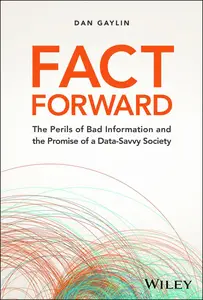
Fact Forward: The Perils of Bad Information and the Promise of a Data-Savvy Society by Dan Gaylin
English | April 8th, 2025 | ISBN: 139421989X | 288 pages | True EPUB | 5.34 MB
Solutions to increase trust and empower better decision making in a data-rich world

Fact Forward: The Perils of Bad Information and the Promise of a Data-Savvy Society explores how a growing deluge of data has led to a data-rich world with abundant new opportunities and a precipitous decline in trust due to the problems we face in producing, communicating, and consuming data. This book takes readers on a journey through the data ecosystem, showing how data producers, data consumers, and data disseminators all have a role to play in creating a more data-savvy society.
Written by Dan Gaylin, president and CEO of NORC at the University of Chicago, a leading research organization in the field of social science and data science, this book demonstrates the urgent need for:
* greater transparency on the part of data producers
* increased data literacy on the part of data communicators and data consumers
* a societal commitment to data education and infrastructure
Fact Forward: The Perils of Bad Information and the Promise of a Data-Savvy Society earns a well-deserved spot on the bookshelves of leaders across industries and all individuals who want to build a better society and world by improving the way we present, analyze, and make use of data.


AusFile


Fileaxa


Links are Interchangeable - Single Extraction

 
Zurück
Oben Unten