• Regeln für den Dokumente-Bereich:

    In den Börsenbereich gehören nur Angebote die bereits den Allgemeinen Regeln entsprechen.

    Allgemeines:

    Nicht erlaubt im Dokumente-Bereich sind:

    - indizierte Titel (inkl. Comics)
    - extremistische Werke, Zeitschriften und Comics (egal, welche Richtung)
    - jegliche Art von Pornographie
    - Anleitungen zu kriminellen Handlungen, gleich welcher Art
    - sadistische, menschenverachtende oder ähnliche Werke

    Nutzt den "Bedanken"-Button, bei Sammelthreads führen jegliche Kommentare, positiv wie negativ, sehr schnell zu einer Unübersichtlichkeit des Threads. Downmeldungen sind an den Uploader zu richten

    Vor dem Einstellen zu beachten:

    - Suchfunktion

    Vergewissert euch, dass es euer Dokument noch nicht im Board gibt, Doppelposts werden kommentarlos gelöscht. Ist es schon vorhanden, tragt es als Mirror im bestehenden Post ein.

    - Threadtitel

    Idealerweise ist sofort zu erkennen um was es sich handelt. Verseht euren Titel mit den relevanten Informationen, das hilft euch und damit auch uns und allen Suchenden erheblich weiter.

    Beispiel: [Thriller] Dan Brown - Inferno oder bei Magazinen:

    Computerbild - 14/2014 (es muss ersichtlich sein, um welche Ausgabe und welches Magazin es sich handelt)

    Folgende Präfixe stehen im Unterforum "Unterhaltung" zur Verfügung:

    [Humor]
    [Drama]
    [Erotik]
    [Fantasy]
    [Krimi]
    [Roman]
    [Thriller]
    [Horror]
    [Science Fiction]

    Inhalt des Beitrags:

    Folgende Pflichtangaben gilt es einzuhalten:

    - Autor
    - Titel
    - Präfix
    - Cover
    - Genre
    - Inhaltsbeschreibung
    - enthaltene Formate
    - Gesamtgröße des Downloads
    - Hoster
    - ggf. Passwort

    Nicht erlaubt sind alle Dateien, die den Download unnötig aufblähen um eine Affiliategrenze zu erreichen, wie zB. mp3-files, übergroße Bilder, etc.

    Ebenso nicht erlaubt sind sämtliche Dateien mit DRM, persönlichen Daten, etc., diese werden kommentarlos zu eurem eigenem Schutz gelöscht.

    Achtet bitte bei der Konvertierung der Formate auf die Lesbarkeit, ein epub, was nur einfach durch Calibre gejagt wird um ein PDF zu erhalten, ist zu 99% eben nicht lesbar. Wenn ihr es nicht könnt, dann lasst es besser oder lest euch ein, wie man es richtig macht.


    Unterforum Comics:

    Threadtitel:

    Ähnlich, wie bei Unterhaltung und Magazinen, sollte der Titel alle relevanten Informationen enthalten, hier bitte

    - den Titel des Comics
    - den Verlag (einige Comics sind in verschiedenen Verlagen erschienen)
    - das Erscheinungsjahr

    Erlaubt sind folgende Formate:

    - CBR
    - CBZ

    Grundsätzlich gilt: jede Version eines Comics erhält einen eigenen Thread, Ersteller eines Comics können ihre Bände gerne mit dem Zusatz (Original-Release) versehen.

    Bei Unsicherheiten zur korrekten Benennung bitte die Informationen von www.comicguide.de nutzen.

    Inhalt des Beitrags:

    Pflichtangaben hier sind:

    - Titel des Bandes und ggf. Nummer
    - Cover
    - falls bekannt technische Daten (DPI, Breite, Speicherqualität)
    - Größe des Downloads
    - Hoster
    - ggf. Passwort
    - falls bekannt Releasenamen
  • Bitte registriere dich zunächst um Beiträge zu verfassen und externe Links aufzurufen.

++ Premium IPTV ++ 7000 Live Sender ++ UHD Qualität ++ Mediathek mit 18.000 Inhalten ++


VenneTV


Collection Download Ebooks Best Seller Updated Daily

4bb41b3c084d1789c5b8f3d52b8e39d6.webp

What Democrats Talk about When They Talk about God : Religious Communication in Democratic Party Politics By David Weiss; James T. Petre; Allison J. Ainsworth; Samuel Boerboom; Daniel D. Gross; Paul Haridakis; Christina M. Knopf; Lenore Langsdorf; Sara Ann Mehltretter; Jeffrey L. Morrow
2010 | 193 Pages | ISBN: 0739138278 | EPUB | 1 MB
What Democrats Talk about When They Talk about God is a collection of essays on the religious communication of members of the Democratic Party, past and present-in office, while campaigning, and in their public and private writing. While many books on the market address issues at the intersection of church and state, none to date have focused exclusively on Democrats as important participants in the dialogue about religion and politics.


AusFile


Fileaxa


Links are Interchangeable - Single Extraction
 
cb50cf1ed551e41c34332da1f74e4943.webp

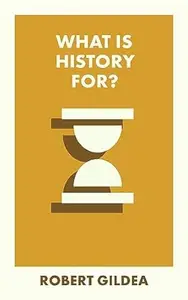
What Is History For?: Analysing welfare policy and practice
by Robert Gildea
English | 2024 | ISBN: 1529230519 | 180 Pages | PDF | 6.87 MB

"History", suggests Robert Gildea, "is a battlefield." Questions of power, rights, identity and nationhood always have an ancient and modern historical dimension and countries still go to war over their interpretation of history. Yet accounts of history are just as prone to fabrication as fake news, so how can we tell good history from bad? How can history be critical, learning from the past and righting wrongs, rather than divisive, such as riding roughshod over the rights of others?
In this passionately argued book, Gildea suggests that the more people who really understand what good history entails, the more likely history is to triumph over myth. He sees positive signs in public history, citizen historians and community projects, among other developments. And he debunks claims that 'you cannot rewrite history', arguing that good history that's attuned to its times must be rewritten time and again.


AusFile


Fileaxa


Links are Interchangeable - Single Extraction
 
324ec23c01a73e6ffee29fffdb86c5c4.webp

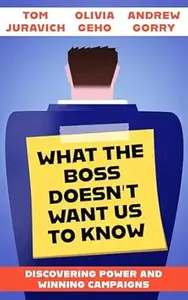
What the Boss Doesn't Want Us to Know: Discovering Power and Winning Campaigns
by Tom Juravich, Olivia Geho
English | 2025 | ASIN: B0D8NHXTQ5 | 200 Pages | True ePUB | 6.23 MB

After the labor movement faded away in the lives of most Americans, organizing is back!
Workers are organizing at Starbucks, Amazon, Apple, and Google, to name just a few. But it's going to take more than picket signs and marches in front of stores and corporate headquarters to win real union contracts with real protections for these workers. To beat these firms and others like them, workers and their unions will need to learn much more about their adversaries to identify key vulnerabilities and build effective campaigns to win. What the Boss Doesn't Want Us to Know is the first volume to teach the basics of conducting this research and how to use it to build winning campaigns. It explores how to identify corporate decision-makers, profit centers, growth plans, and secondary targets and the kinds of power that activists can use to beat even global giants.
What the Boss Doesn't Want Us to Know is for more than just professional researchers and campaigners. This book offers up a radical new practice for investigating employers. The authors propose a member-based, democratic approach to corporate research that will train an army of rank-and-file researchers to investigate and beat the firms that control so much of our lives. This approach has already been successfully utilized with NewsGuild of New York at the New York Times, Reuters, Gannett, the United Food and Commercial Workers at Tyson Foods, workers at Google (the Alphabet Workers Union), Apple retail workers, the Association of Flight Attendants at Delta Air Lines, and Trader Joe's United. The lessons contained in this book hold great promise to supercharge the new organizing wave currently sweeping across America.


AusFile


Fileaxa


Links are Interchangeable - Single Extraction
 
2177fcfdd1cec4e5995ae7ba7502039b.webp

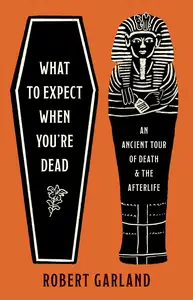
What to Expect When You're Dead: An Ancient Tour of Death and the Afterlife by Robert Garland
English | April 8th, 2025 | ISBN: 0691266174 | 344 pages | True EPUB | 15.45 MB
An entertaining and enlightening book about how ancient peoples dealt with death-and what we might learn from them

A lively story of death, What to Expect When You're Dead explores the fascinating death-related beliefs and practices of a wide range of ancient cultures and traditions-Mesopotamian, Egyptian, Hindu, Jewish, Zoroastrian, Etruscan, Greek, Roman, Early Christian, and Islamic. By drawing on the latest scholarship on ancient archaeology, art, literature, and funerary inscriptions, Robert Garland invites readers to put themselves in the sandals of ancient peoples and to imagine their mental state moment by moment as they sought-in ways that turn out to be remarkably similar to ours-to assist the dead on their journey to the next world and to understand life's greatest mystery.
What to Expect When You're Dead chronicles the ways ancient peoples answered questions such as: How to achieve a good death and afterlife? What's the best way to dispose of a body? Do the dead face a postmortem judgement-and where do they end up? Do the dead have bodies in the afterlife-and can they eat, drink, and have sex? And what can the living do to stay on good terms with the nonliving?
Filled with intriguing stories and frequent humor, What to Expect When You're Dead will be a morbidly delicious treat for every reader alive.


AusFile


Fileaxa


Links are Interchangeable - Single Extraction
 
9e0891f7be3ea39c0bfe9aaf94d3bf95.webp

Aubrey Sampson, "What We Find in the Dark: Loss, Hope, and God's Presence in Grief"
English | ISBN: 1641583126 | 2025 | 208 pages | EPUB | 3 MB
None of us is exempt from loss. We lose what we expected, what we thought we believed, our sense of security or identity. We lose friendships. We lose people we love.

What do we do with the disruption, disorientation, and devastation of loss? How do we survive unpredictable grief, ongoing suffering, and the questions about God that happen in the dark nights of our lives? In What We Find in the Dark, author and pastor Aubrey Sampson writes through the illness and death of her best friend, offering raw, real, and fought-for spiritual wisdom and practical insights for loss, grief, and doubt. What We Find in the Dark not only helps us locate ourselves on the journey of loss but gives honesty, hope, and direction for what's ahead.
Read more


AusFile


Fileaxa


Links are Interchangeable - Single Extraction
 
6502dc4dca9e83ac8a975d7e2245e49f.webp

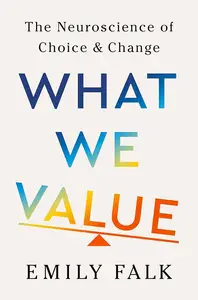
What We Value: The Neuroscience of Choice and Change by Emily Falk
English | April 8th, 2025 | ISBN: 1324037091 | 304 pages | True EPUB | 1.91 MB
A neuroscientist reveals the hidden calculations that shape our daily decisions-and how to make more fulfilling, impactful choices in our work, relationships, and lives.

With so many competing priorities pulling us in different directions every day-family, friends, work, our health-it can feel difficult to make decisions that are aligned with what we care about most. Especially in the moment, we often default to the immediate demand, the path of least resistance, the worn old habit we wanted to change. In What We Value, pioneering scholar Emily Falk reveals how we can transform our relationship with the daily decisions that define our lives-opening pathways to make more purposeful, fulfilling choices; more successfully change our behavior; and influence others to see differently-by thinking like neuroscientists.
Drawing on her own award-winning research, Falk introduces readers to a new paradigm for understanding why we, and those around us, do what we do. This is the value calculation: the often-subconscious mechanism by which the brain computes our everyday choices. By learning how it works, Falk shows, we can learn to work more strategically with it-whether we want to embrace new activities and behaviors, connect more meaningfully with others, or become more effective leaders in our organizations and communities. With captivating stories of star comedians, journalists, sports legends, and more, Falk demonstrates how we can change what we think just by changing what we think about; get less defensive by connecting with our core values; and seed innovation by seeking out different perspectives.
Whether deciding on something as small as what to eat for lunch or as big as what career to pursue, we can have more agency and flexibility than we might think. What We Value is a groundbreaking guide to finding new possibilities in our choices-and the lives we ultimately make with them.


AusFile


Fileaxa


Links are Interchangeable - Single Extraction

 
96797b11464e125823f5ed82d978dadf.webp

What's Public about Public Higher Ed? : Halting Higher Education's Decline in the Court of Public Opinion By Stephen M. Gavazzi; E. Gordon Gee
2021 | 231 Pages | ISBN: 1421442523 | EPUB | 1 MB
Exploring the current state of relationships between public universities, government leaders, and the citizens who elect them, this book offers insight into how to repair the growing rift between higher education and its public. Higher education gets a bad rap these days. The public perception is that there is a growing rift between public universities and the elected officials who support them. InWhat's Public about Public Higher Ed?, Stephen M. Gavazzi and E. Gordon Gee explore the reality of that supposed divide, offering qualitative and quantitative evidence of why it's happened and what can be done about it. Critical problems, Gavazzi and Gee argue, have arisen because higher education leaders often assumed that what was good for universities was good for the public at large. For example, many public institutions have placed more emphasis on research at the expense of teaching, learning, and outreach. This university-centric viewpoint has contributed significantly to the disconnect between our nation's public universities and the representatives of the people they are supposed to be serving. But this gulf can only be bridged, the authors insist, if people at the universities take the time to really listen to what the citizens of their states are asking of them. Gavazzi and Gee draw on never-before-gathered survey data on public sentiment regarding higher education. Collected from citizens residing in the four most populous states--California, Florida, New York, and Texas--plus Ohio and West Virginia, the authors' home states, this data reflects critical issues, including how universities spend taxpayer money, the pursuit of national rankings, student financial aid, and the interplay of international activities versus efforts to create "closer to home" impact. An unflinching, no-holds-barred exploration of what citizens really think about their public universities, What's Public about Public Higher Ed?also places special emphasis on the events of 2020--including the COVID-19 pandemic and the worst racial unrest seen in half a century--as major inflection points for understanding the implications of the survey's findings.


AusFile


Fileaxa


Links are Interchangeable - Single Extraction
 
f333074807b767eaecf338e3956dbeb7.webp

Where I Come From By Vijay Agnew
2003 | 308 Pages | ISBN: 0889204144 | PDF | 1 MB
"Where do you come from?" When Vijay Agnew first immigrated to Canada people would often ask her "Where do you come from?" She thought it a simple, straightforward question, and would answer in the same simple, straightforward manner, by telling them where she had been born and where she grew up. But over the years she learned that many so-called third-world people resent being asked this question, because it implies that having a different skin colour (which is what usually prompts the question) makes a person an outsider and not really Canadian. This realization inspired her to look more closely at the question -- and the answer. The result is this book. Where I Come From is a reflective memoir of an immigrant professor's life in a Canadian university. It covers the period from 1967, when Canada was opened up to third-world immigrants, to the present. The book illustrates the ways in which identity is socially constructed by tracing some of the labels that were applied to the author at various stages during her thirty years in Canada -- "foreign student," "Indian woman," "immigrant," "Indian feminist," and "third-world woman." She shows how each of these names has affected her relationships with other people and contributed to making her the woman she is now perceived to be: a feminist, anti-racist, activist professor. This multilayered story reveals the complex ways in which race, class, and gender intersect in an immigrant woman's life, and engages readers in a conversation that narrows the distance between them, showing not only what is different, but what is shared.


AusFile


Fileaxa


Links are Interchangeable - Single Extraction

 
a27a9c0f4af1ebdec7d94b8aeb7d4c8d.webp

White Supremacy: From Eugenics to Great Replacement
by Gavin Evans
English | 2024 | ISBN: 1915563046 | 192 Pages | ePUB | 0.18 MB

Buffalo, New York, 2022. Ten black people murdered. The killer, 18-year-old Payton Gendron, says he was driven by ''Great Replacement'' - the conspiracy theory that a Jewish-led elite is replacing white people with black and brown people. This, and a spate of similar hate crimes, begs the question: what are the origins of such behaviour? Gavin Evans traces the historical roots of white supremacy. He begins in the 19th century with Charles Darwin and his cousin Francis Galton''s race-based theories before looking at the spread of eugenics ideas throughout the UK, Europe and the United States, their Holocaust-prompted decline after the Second World War, and their revival in a different guise through the promotion of race science from the late 20th century. Evans also examines the hatching of ''Great Replacement'' conspiratorial ideas in the 21st century - and their expression via alt-right forums to the minds of troubled young men with access to assault rifles. White Supremacy breaks new ground in showing the links between mainstream ''Replacement Theory'' and the terrorist version cited by far-right killers. It also traces the thread between these ideas and the race science promoted both by the far right and establishment figures. It looks at what these ideas have in common with those promoted by, for example, the founder of eugenics.


AusFile


Fileaxa


Links are Interchangeable - Single Extraction

 
b4465afc549dcfaa7973ad7b251eaf44.webp

Joyce D. Goodfriend, "Who Should Rule at Home?: Confronting the Elite in British New York City"
English | ISBN: 1501764578 | 2022 | 312 pages | PDF | 4 MB
In Who Should Rule at Home? Joyce D. Goodfriend argues that the high-ranking gentlemen who figure so prominently in most accounts of New York City's evolution from 1664, when the English captured the small Dutch outpost of New Amsterdam, to the eve of American independence in 1776 were far from invincible and that the degree of cultural power they held has been exaggerated. The urban elite experienced challenges to its cultural authority at different times, from different groups, and in a variety of settings.

Goodfriend illuminates the conflicts that pitted the privileged few against the socially anonymous many who mobilized their modest resources to creatively resist domination. Critics of orthodox religious practice took to heart the message of spiritual rebirth brought to New York City by the famed evangelist George Whitefield and were empowered to make independent religious choices. Wives deserted husbands and took charge of their own futures. Indentured servants complained or simply ran away. Enslaved women and men carved out spaces where they could control their own lives and salvage their dignity. Impoverished individuals, including prostitutes, chose not to bow to the dictates of the elite, even though it meant being cut off from the sources of charity. Among those who confronted the elite were descendants of the early Dutch settlers; by clinging to their native language and traditional faith they preserved a crucial sense of autonomy.
Read more


AusFile


Fileaxa


Links are Interchangeable - Single Extraction

 
942adfd5a15f86577189d4115cff525d.webp

Who the F*ck is Michael?!: An Israeli Air Force Chief's Uncompromising Code for Achieving Greatness by Elyezer Shkedy
English | April 8th, 2025 | ISBN: 1632281155 | 440 pages | True EPUB | 1.99 MB
This bestseller has sold over 30,000 copies in its Hebrew edition and was the most-read book by Israeli military personnel in 2022.

General (Ret.) Elyezer Shkedy was the fifteenth commander of the Israeli Air Force. During his service, Shkedy commanded numerous strategic operations, including the now-famous Operation Orchard airstrike on the Syrian nuclear reactor. After retiring from active duty, Shkedy became the CEO of the Israeli flag carrier airline El Al-the largest airline in the country. Today, he volunteers as chairman and leader of over fifteen educational and social non-governmental organizations, and is the president of I Belong Israel, where he speaks about the importance of tolerance, leadership, and personal values.
In his debut bestselling book, Who The F*ck is Michael?!, Shkedy distills over one hundred inspiring life stories and lessons on leadership, success, excellence, and the importance of hard work and personal responsibility, in what quickly became a staple reading material for companies, officers, and countless individuals nationwide. Since its original release in 2022, the book has been nominated for countless prizes and won a Golden Book Award in Israel.


AusFile


Fileaxa


Links are Interchangeable - Single Extraction

 
6a32636ed63cc1a25b4418a9cbee2ee1.webp

Who's Afraid of Agatha Christie By Ahmed Fagih
2000 | 90 Pages | ISBN: 0710306326 | EPUB | 1 MB
First Published in 2000. Who's of Afraid of Agatha Christie and Other Stories exemplifies Fagih's characteristic mixing of illusion and reality. his complexity of style. and penchant for lyrical writing. Translated from Arabic.


AusFile


Fileaxa


Links are Interchangeable - Single Extraction

 
Zurück
Oben Unten