• Regeln für den Dokumente-Bereich:

    In den Börsenbereich gehören nur Angebote die bereits den Allgemeinen Regeln entsprechen.

    Allgemeines:

    Nicht erlaubt im Dokumente-Bereich sind:

    - indizierte Titel (inkl. Comics)
    - extremistische Werke, Zeitschriften und Comics (egal, welche Richtung)
    - jegliche Art von Pornographie
    - Anleitungen zu kriminellen Handlungen, gleich welcher Art
    - sadistische, menschenverachtende oder ähnliche Werke

    Nutzt den "Bedanken"-Button, bei Sammelthreads führen jegliche Kommentare, positiv wie negativ, sehr schnell zu einer Unübersichtlichkeit des Threads. Downmeldungen sind an den Uploader zu richten

    Vor dem Einstellen zu beachten:

    - Suchfunktion

    Vergewissert euch, dass es euer Dokument noch nicht im Board gibt, Doppelposts werden kommentarlos gelöscht. Ist es schon vorhanden, tragt es als Mirror im bestehenden Post ein.

    - Threadtitel

    Idealerweise ist sofort zu erkennen um was es sich handelt. Verseht euren Titel mit den relevanten Informationen, das hilft euch und damit auch uns und allen Suchenden erheblich weiter.

    Beispiel: [Thriller] Dan Brown - Inferno oder bei Magazinen:

    Computerbild - 14/2014 (es muss ersichtlich sein, um welche Ausgabe und welches Magazin es sich handelt)

    Folgende Präfixe stehen im Unterforum "Unterhaltung" zur Verfügung:

    [Humor]
    [Drama]
    [Erotik]
    [Fantasy]
    [Krimi]
    [Roman]
    [Thriller]
    [Horror]
    [Science Fiction]

    Inhalt des Beitrags:

    Folgende Pflichtangaben gilt es einzuhalten:

    - Autor
    - Titel
    - Präfix
    - Cover
    - Genre
    - Inhaltsbeschreibung
    - enthaltene Formate
    - Gesamtgröße des Downloads
    - Hoster
    - ggf. Passwort

    Nicht erlaubt sind alle Dateien, die den Download unnötig aufblähen um eine Affiliategrenze zu erreichen, wie zB. mp3-files, übergroße Bilder, etc.

    Ebenso nicht erlaubt sind sämtliche Dateien mit DRM, persönlichen Daten, etc., diese werden kommentarlos zu eurem eigenem Schutz gelöscht.

    Achtet bitte bei der Konvertierung der Formate auf die Lesbarkeit, ein epub, was nur einfach durch Calibre gejagt wird um ein PDF zu erhalten, ist zu 99% eben nicht lesbar. Wenn ihr es nicht könnt, dann lasst es besser oder lest euch ein, wie man es richtig macht.


    Unterforum Comics:

    Threadtitel:

    Ähnlich, wie bei Unterhaltung und Magazinen, sollte der Titel alle relevanten Informationen enthalten, hier bitte

    - den Titel des Comics
    - den Verlag (einige Comics sind in verschiedenen Verlagen erschienen)
    - das Erscheinungsjahr

    Erlaubt sind folgende Formate:

    - CBR
    - CBZ

    Grundsätzlich gilt: jede Version eines Comics erhält einen eigenen Thread, Ersteller eines Comics können ihre Bände gerne mit dem Zusatz (Original-Release) versehen.

    Bei Unsicherheiten zur korrekten Benennung bitte die Informationen von www.comicguide.de nutzen.

    Inhalt des Beitrags:

    Pflichtangaben hier sind:

    - Titel des Bandes und ggf. Nummer
    - Cover
    - falls bekannt technische Daten (DPI, Breite, Speicherqualität)
    - Größe des Downloads
    - Hoster
    - ggf. Passwort
    - falls bekannt Releasenamen
  • Bitte registriere dich zunächst um Beiträge zu verfassen und externe Links aufzurufen.

++ Premium IPTV ++ 7000 Live Sender ++ UHD Qualität ++ Mediathek mit 18.000 Inhalten ++


VenneTV


Collection Download Ebooks Best Seller Updated Daily

4390807aa9f86e6feb647b986405adcd.webp

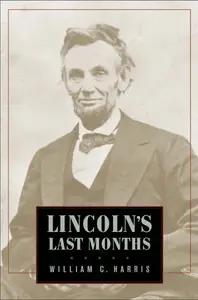
William C. Harris, "Lincoln's Last Months"
English | 2004 | pages: 316 | ISBN: 0674011996 | PDF | 0,9 mb
Lincoln Prize winner William C. Harris turns to the last months of Abraham Lincoln's life in an attempt to penetrate this central figure of the Civil War, and arguably America's greatest president. Beginning with the presidential campaign of 1864 and ending with his shocking assassination, Lincoln's ability to master the daunting affairs of state during the final nine months of his life proved critical to his apotheosis as savior and saint of the nation.

In the fall of 1864, an exhausted president pursued the seemingly intractable end of the Civil War. After four years at the helm, Lincoln was struggling to save his presidency in an election that he almost lost because of military stalemate and his commitment to restore the Union without slavery. Lincoln's victory in the election not only ensured the success of his agenda but led to his transformation from a cautious, often hesitant president into a distinguished statesman. He moved quickly to defuse destructive partisan divisions and to secure the adoption of the Thirteenth Amendment. And he skillfully advanced peace terms that did not involve the unconditional surrender of Confederate armies. Throughout this period of great trials, he managed to resist political pressure from Democrats and radical Republicans and from those seeking patronage and profit. By expanding the context of Lincoln's last months beyond the battlefield, Harris shows how the events of 1864-65 tested the president's life and leadership and how he ultimately emerged victorious, and became Father Abraham to a nation.


AusFile


Fileaxa


Links are Interchangeable - Single Extraction
 
e2ac22237291774cd3792114023e0276.webp

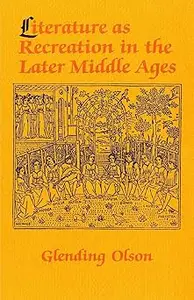
Glending Olson, "Literature as Recreation in the Later Middle Ages"
English | ISBN: 150174674X | 2019 | 246 pages | PDF | 19 MB
This book studies attitudes toward secular literature during the later Middle Ages. Exploring two related medieval justifications of literary pleasure―one finding hygienic or therapeutic value in entertainment, and another stressing the psychological and ethical rewards of taking time out from work in order to refresh oneself―Glending Olson reveals that, contrary to much recent opinion, many medieval writers and thinkers accepted delight and enjoyment as valid goals of literature without always demanding moral profit as well.

Drawing on a vast amount of primary material, including contemporary medical manuscripts and printed texts, Olson discusses theatrics, humanist literary criticism, prologues to romances and fabliaux, and Chaucer's Canterbury Tales. He offers an extended examination of the framing story of Boccaccio's
Read more


AusFile


Fileaxa


Links are Interchangeable - Single Extraction
 
f613b6e5a018e5eefd285aaa589dea83.webp

Christian Jones, "Literature, Spoken Language and Speaking Skills in Second Language Learning"
English | ISBN: 1108460798 | 2022 | 266 pages | PDF | 5 MB
The use of literature in second language teaching has been advocated for a number of years, yet despite this there have only been a limited number of studies which have sought to investigate its effects. Fewer still have focused on its potential effects as a model of spoken language or as a vehicle to develop speaking skills. Drawing upon multiple research studies, this volume fills that gap to explore how literature is used to develop speaking skills in second language learners. The volume is divided into two sections: literature and spoken language and literature and speaking skills. The first section focuses on studies exploring the use of literature to raise awareness of spoken language features, whilst the second investigates its potential as a vehicle to develop speaking skills. Each section contains studies with different designs and in various contexts including China, Japan and the UK. The research designs used mean that the chapters contain clear implications for classroom pedagogy and research in different contexts.

Read more


AusFile


Fileaxa


Links are Interchangeable - Single Extraction
 
2575b0318b032a8be82338a45d4a33a2.webp

Liturgik: Herausgegeben:Schlag, Thomas; Klie, Thomas By Julia Koll
2020 | 141 Pages | ISBN: 3170340980 | PDF | 1 MB
Über Liturgie - als rituelles Handeln des Glaubens - wurde zu allen Zeiten des Christentums aus theologischen oder kulturellen Gründen diskutiert. Und das ist auch heute so: Veränderte Perspektiven auf die lange Geschichte der christlichen Liturgie fördern neue Erkenntnisse zutage; besondere Gottesdienstformen werden aus biographischen oder gesellschaftlichen Anlässen heraus entwickelt; themen- oder zielgruppenorientierte Formate gewinnen an Popularität.Das Kompendium zeichnet die historische Entwicklung der Liturgie nach und erörtert, welche Bedeutung die empirischen Erkenntnisse der letzten Jahrzehnte für die Liturgieforschung haben. Gegenwärtige liturgische Entwicklungen und Fragestellungen werden aufgezeigt. Das Selbstverständnis der Liturgik und Liturgiewissenschaft wird entfaltet im Blick auf ihre Beziehung zur Praktischen und zur Systematischen Theologie sowie zu den kultur- und gesellschaftswissenschaftlichen Bezugswissenschaften wie Kommunikationswissenschaft, Semiotik, Rezeptions- und Ritualwissenschaft.


AusFile


Fileaxa


Links are Interchangeable - Single Extraction
 
9cdf2590d9af5fda2cc64de6633defd3.webp

Location, Localization, and Localizability: Location-awareness Technology for Wireless Networks by Yunhao Liu, Zheng Yang
English | July 12, 2024 | ISBN: 9819731755 | 221 pages | MOBI | 13 Mb
Time flies since the debut of this book. In the past ten years, localization technology has evolved from small saplings into towering trees. Robots and drones with autonomous positioning and navigation capabilities, once considered unreachable fantasies, have gradually become a reality. However, while we are being amazed at the groundbreaking changes brought about by technology, as researchers, we still need to remain acutely attentive to the current limitations of localization. Some significant challenges still impede the widespread deployment. For example, traditional Wi-Fi fingerprint-based wireless localization, due to various challenges in fingerprint database collection and maintenance, has remained stay in the laboratory, and even when using smartphones for localization in malls, we still cannot achieve the outdoor GPS-like experience. The list goes on and on.

Against this backdrop, the reissue of this book aims to more comprehensively reflect the latest developments in localization technology. We have added introductions to emerging technologies such as passive high-precision localization based on wireless signal CSl and autonomous localization for smart devices. Additionally, we have integrated and further streamlined technical chapters that now appear outdated adapting to the pace of the times.
This book aims to provide a comprehensive and in-depth view of location-awareness technology in today's popular wireless networks. However, the obvious diversity of networks, from short-range Bluetooth to long-range telecommunication networks, makes it very challenging to organize materials. Although general principles exist, the implementation differs from network to network and application to application.
The book can serve as a guidebook for the technicians and practitioners in the industry of location systems. They can expect to obtain a comprehensive understanding of the field, in order to compare and select localization solutions fulfilling various application requirements. Abundant references in the book open up a broader domain for advanced study. In addition, the book is tailored toward a textbook for college researchers and graduate students.


AusFile


Fileaxa


Links are Interchangeable - Single Extraction
 
224dea40fea18c969d1fc53dbbc0244c.webp

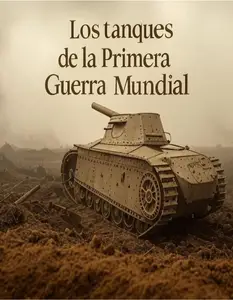
Los tanques de la Primera Guerra Mundial : Historia y legado de la guerra de tanques durante la Gran Guerra (Spanish Edition) by Charles River Editors
Spanish | February 16, 2025 | ISBN: N/A | ASIN: B0DXGWWDZQ | 81 pages | EPUB | 12 Mb
Varios ejércitos habían coqueteado con el concepto de tanque antes de la Primera Guerra Mundial, pero los avances en las técnicas metalúrgicas (que permitieron un blindaje adecuadamente sólido y relativamente ligero) y en la ingeniería mecánica (que permitió la construcción de un potente motor capaz de impulsar semejante mole) hicieron finalmente posible su desarrollo y despliegue, al igual que el desarrollo de las orugas (inicialmente para uso agrícola en tractores). Fueron los británicos (a instancias de Winston Churchill) los pioneros de la "nave terrestre", pero los franceses no tardaron en seguirles con sus propios diseños. Irónicamente, Alemania, que posteriormente se haría famosa por los panzers y la guerra relámpago, adoptó tarde la idea. Durante la Primera Guerra Mundial, los alemanes siguieron recurriendo a otras técnicas y produjeron menos de dos docenas de modelos para el campo de batalla.

Los carros de combate de la Primera Guerra Mundial, por revolucionarios (e inicialmente aterradores) que fueran, tenían sus limitaciones. Un tanque estándar consumía literalmente su propio peso en piezas de repuesto, y eran dolorosamente lentos en comparación con iteraciones más modernas. Además, estaban poco armados -normalmente con ametralladoras o cañones ligeros como mucho- y algunos modelos mal diseñados tendían a "zanjarse", a veces irremediablemente, en trincheras más anchas. Sin embargo, como bastión móvil para que la infantería se refugiara detrás en el avance, y como arma psicológica, eran significativos.
El tanque más emblemático de la Primera Guerra Mundial, el Mark I (que posteriormente pasó por varias iteraciones, aunque sólo los Mark I-IV vieron combate durante la guerra), fue empleado por varios ejércitos. El Mark I fue producido por un comité gubernamental especialmente diseñado para la ocasión, con la plena cooperación de todos los servicios y de la industria británica, lo que dio como resultado un conjunto cohesionado y práctico. Con más de 9 metros de largo y un peso de poco menos de 30 toneladas, el Mark I se presentaba en dos versiones: una "macho" (armada con cañones de torreta montados en los laterales) y una "hembra" que no llevaba los cañones. Tripulado por 8 hombres, podía alcanzar la poco espectacular velocidad de 6 kilómetros por hora, y su tanque de 60 galones le daba un radio de acción de poco menos de 24 kilómetros gracias a su sediento motor Daimler-Knight de 6 cilindros en línea y 16 litros de gasolina, que generaba 105 caballos de potencia. El armamento del tanque era de dos cañones ligeros de 6 libras para el macho, más tres ametralladoras Hotchkiss .303, mientras que la versión hembra llevaba cuatro ametralladoras Vickers .303 en lugar de artillería y una ametralladora Hotchkiss .303. Los Mark I-IV, de los que se fabricaron más de 2.000 modelos para la acción bélica, prestaron servicio en el Somme, Fleurs-Corciette y Amiens en el frente occidental, y durante las dos batallas de Gaza en el norte de África contra las fuerzas turcas.
Los tanques británicos sufrieron una serie de problemas, entre ellos el desarrollo de balas perforantes por parte de los alemanes en la última parte de la guerra, y debido a fallos mecánicos o a la acción enemiga, sólo un tercio de ellos solían alcanzar las posiciones enemigas. Sin embargo, las que llegaban tan lejos casi siempre contribuían significativamente a la victoria final. Se encargaron un millar para uso británico posterior, pero el final del conflicto paralizó la producción bélica.
Las primeras incursiones francesas en el diseño de carros de combate no fueron un éxito rotundo. A diferencia de los esfuerzos concertados de las Fuerzas Armadas británicas y las diversas empresas privadas implicadas en la producción, los franceses trabajaron al principio con objetivos contrapuestos, lo que produjo una serie de primeros esfuerzos poco brillantes que adolecían de algunos defectos graves de diseño.


AusFile


Fileaxa


Links are Interchangeable - Single Extraction
 
2d576e7adb340fcfa7e09be1ac48ff94.webp

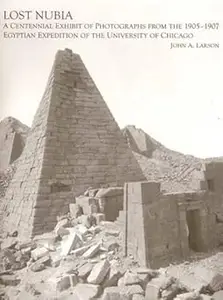
John A. Larson, "Lost Nubia: A Centennial Exhibit of Photographs from the 1905-1907 Egyptian Expedition of the University of Chicago"
English | 2006 | pages: 129 | ISBN: 1885923457 | PDF | 10,5 mb
Lost Nubia: A Centennial Exhibit of Photographs from the 1905-1907 Egyptian Expedition of the University of Chicago is the catalogue for the inaugural exhibit in the Marshall and Doris Holleb Family Special Exhibits Gallery of the Oriental Institute Museum. Curated by John A Larson, Oriental Institute Museum Archivist, the exhibit of fifty-two historic photographs from the Oriental Institute Archives was selected as a temporary accompaniment to the new permanent installation of objects from ancient Nubia. These photographic images document some of the archaeological sites in Nubia that have disappeared under the waters of Lake Nasser and a few places that are so remote that few tourists have ever seen them. These documentary images, taken during the consecutive winter field seasons of 1905-1906 and 1906-1907, represent just a small part of a corpus of nearly 1,200 black-and-white negatives that were made by the Egyptian Expedition of the University of Chicago, under the direction of James Henry Breasted. The original glass-plate field negatives for the first season of the expedition, 1905-1907, were made by German photographer Friedrich Koch. For the expedition's second field season up the Nile (1906-1907) Breasted decided to supplement the professional glass-plate photography of Horst Schliephack with a second camera that used roll-film. The smaller-format film negatives were used to take ethnographic photographs, as well as candid photographs of the expedition members at work.


AusFile


Fileaxa


Links are Interchangeable - Single Extraction
 
503a4c3b8254989aefae13911f0d715b.webp

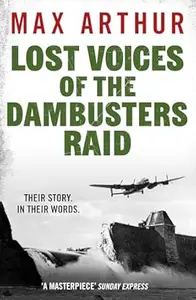
Lost Voices of the Dambusters Raid
by Max Arthur
English | 2025 | ISBN: 1804369853 | 332 Pages | True ePUB | 0.98 MB

The Dambusters raid was one of the most iconic missions of the Second World War.
Three dams along Germany's Ruhr Valley, which powered the nation's industrial war effort, were the target. To overcome the torpedo nets and other defences, Barnes Wallis invented the 'bouncing' bomb to skim along the surface of the reservoirs before breaching the dam walls.
617 Squadron was chosen to deliver them. On the night of 16-17 May 1943, nineteen specially modified Lancaster bombers left Britain. Weeks of training under absolute secrecy were put to the test.
Here, acclaimed oral historian Max Arthur has gathered together the voices of the Lancaster crews as well as the German civilians who endured the attack, compiling a unique picture of how the mission unfolded, and the devastation it caused.
'A masterpiece of concise storytelling' Sunday Express


AusFile


Fileaxa


Links are Interchangeable - Single Extraction
 
56770139d194b22ecaeec8b33146a52d.webp

Love and Strange Horses By Nathalie Handal
2010 | 102 Pages | ISBN: 0822960605 | PDF | 1 MB
"Trembles with belonging (and longing) and love and sex." --The New York Times "Nathalie Handal's Love and Strange Horses is riddled with provocative incantations that verge on a conjuring solidly based in this world and beyond. There's a subtle singing locked inside each poem that raises the stakes. This cosmopolitan voice belongs to the human family, and it luxuriates in crossing necessary borders. The pages are lit with scintillations that transport the reader to pithy zones of thought and pleasure." --Yusef Komunyakaa Nathalie Handal is an award-winning poet, playwright, and writer. She is the author of two previous poetry collections: The NeverField and The Lives of Rain. Handal is the editor of The Poetry of Arab Women: A Contemporary Anthology, winner of the PEN Oakland/Josephine Miles Award, and coeditor of Language for a New Century: Contemporary Poetry from the Middle East, Asia & Beyond. Her work has appeared in numerous anthologies and publications including Ploughshares, Crab Orchard Review, and the Literary Review. She was named an honored finalist for the 2009 Gift of Freedom Award.


AusFile


Fileaxa


Links are Interchangeable - Single Extraction
 
99d14177674f757cd0d7a371be6b7860.webp

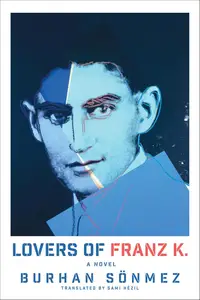
Lovers of Franz K.: A Novel by Burhan Sönmez, translated by Sami Hêzil
English | April 1, 2025 | ISBN: 1635425379 | True EPUB | 144 pages | 0.7 MB
An inventive literary obituary for Kafka, this thriller of love and revenge brings the Cold War to life, from Paris and Istanbul to West Berlin and Tel Aviv.

Amid the student protests in 1960s Europe, Kafka's best friend, Max Brod, becomes a target of their ire: Against the dying writer's wishes, he had published texts that never should have been part of his legacy. After Brod is injured in an attempted assassination, assailant Ferdy Kaplan is captured and questioned by Commissioner Müller of the West Berlin police.
As his interrogation progresses, through dialogues in the police station, the courtroom, and the prison, Kaplan's background is revealed piece by piece, from the love story between him and his childhood friend Amalya, to their shared passion for Kafka, which leads them to join a radical group. But when a shocking discovery is made about the person who ultimately set Brod's attempted murder in motion, Kaplan and Müller agree to work together to expose the truth.
In this gripping, thought-provoking tribute to Kafka, Burhan Sönmez vividly recreates a key period of history when the Berlin Wall divided Europe, and women were fighting for freedom and against tradition, adopting Jean Seberg's iconic short haircut from Breathless. More than a typical mystery, Lovers of Franz K. is a brilliant exploration of the value of books, and the issues of anti-Semitism, immigration, and violence that recur in Kafka's life and writings.


AusFile


Fileaxa


Links are Interchangeable - Single Extraction
 
45a7de1b521cad83ff33d6e85cce977d.webp

Loving Life: The Morality of Self-Interest and the Facts that Support It By Craig Biddle
2002 | 162 Pages | ISBN: 0971373701 | PDF | 1 MB
Loving Life demonstrates that morality is a matter not of divine revelation or social convention or personal opinion -- but, rather, of the factual requirements of human life and happiness. Biddle shows how a true morality is derived logically from observable facts, what in essence such a morality demands, and why it is a matter of pure self-interest.


AusFile


Fileaxa


Links are Interchangeable - Single Extraction
 
659cf866b704823d66e3598731b8de09.webp

Low Carb Food Content List - With Carbohydrate Nutritional Information: What to Enjoy & What to Avoid - Tips On Low Carb Shopping Eating Out & More by HR Research Alliance
English | June 20, 2024 | ISBN: N/A | ASIN: B0D7PSWPK8 | 40 pages | EPUB | 0.75 Mb
This comprehensive guide emphasizes the reduction of carb intake while increasing the consumption of proteins and fats. It covers the following key areas:

Introduction to Low Carb DietsFocuses on reducing carbohydrates from foods like sugary snacks, pasta, and bread, while increasing proteins and fats from meats, fish, eggs, vegetables, fruits, nuts, and seeds.Benefits of a Low Carb LifestyleWeight Loss: Lowering insulin levels to help the body burn stored fat.Blood Sugar Control: Stabilizing blood sugar, beneficial for diabetes and insulin resistance.Heart Health: Improving HDL cholesterol and decreasing triglycerides.Reduced Hunger and Cravings: Promoting satiety with high-protein and high-fat foods.Mental Clarity and Energy: Many report improved mental clarity and steady energy levels.Types of Carbohydrates and Their Health ImpactSimple Carbohydrates: Sugars causing quick energy spikes; should be limited.Complex Carbohydrates: Found in grains and starchy vegetables; provide sustained energy but affect blood sugar.Fiber: Found in vegetables, fruits, nuts, and seeds; essential for digestive health without spiking blood sugar.Low Carb Foods to EnjoyVegetables: Leafy greens, cruciferous veggies, and other low-carb options.Proteins: Meat, poultry, fish, seafood, and eggs.Healthy Fats: Avocado, olive oil, coconut oil, butter, and ghee.Dairy Products: Cheese, Greek yogurt, heavy cream.Nuts and Seeds: Almonds, walnuts, chia seeds, flaxseeds.Berries: Strawberries, raspberries, blackberries.Beverages: Water, herbal teas, black coffee.Snacks: Vegetable sticks, cheese sticks, nuts, seeds, boiled eggs.Foods to Limit or AvoidGrains and Starches: Bread, pasta, rice, cereals.Sugary Foods and Beverages: Sweets, pastries, soda, fruit juice.High Carb Vegetables: Potatoes, corn, peas, butternut squash.Legumes: Beans and lentils.Fruits: Bananas, grapes, mangoes, pineapple.Processed Foods: Snack foods, frozen meals, fast food.Alcoholic Beverages: Beer, sweet wines, cocktails.Importance of Meal PlanningTips for Effective Meal Planning: Plan ahead, batch cook, incorporate variety, use a shopping list, and prep ingredients.Managing Sugar CravingsTips: Stay hydrated, eat regularly, include healthy fats and proteins, get enough sleep, stay busy.Strategy Tips: Plan ahead, portion control, balance your meal, choose quality carbs, practice mindful eating.Tips for Dining OutStrategies: Research menu, ask for modifications, focus on protein and vegetables, be wary of hidden carbs.Grocery Shopping TipsStrategies: Make a weekly meal plan, create a detailed shopping list, check labels and ingredients, shop the perimeter, stock up on low-carb staples, buy in bulk, look for fresh and seasonal produce, consider frozen and canned options, avoid processed low-carb products.Sample Low-Carb Meal Plans7-Day Sample Plan: Daily meal plan ideas for breakfast, lunch, dinner, and snacks, ensuring variety and balanced nutrition.Lists of Fruits and VegetablesFruits: Approximate carbohydrate content per 100 grams for 50 fruits.Vegetables: Approximate carbohydrate content per 100 grams for 50 vegetables.List of High Carb Foods to limit or avoid.
This guide is designed to provide valuable insights and practical tips for anyone looking to adopt or maintain a low-carb diet, ensuring a healthy, balanced, and sustainable approach to nutrition.


AusFile


Fileaxa


Links are Interchangeable - Single Extraction

 
Zurück
Oben Unten