• Regeln für den Dokumente-Bereich:

    In den Börsenbereich gehören nur Angebote die bereits den Allgemeinen Regeln entsprechen.

    Allgemeines:

    Nicht erlaubt im Dokumente-Bereich sind:

    - indizierte Titel (inkl. Comics)
    - extremistische Werke, Zeitschriften und Comics (egal, welche Richtung)
    - jegliche Art von Pornographie
    - Anleitungen zu kriminellen Handlungen, gleich welcher Art
    - sadistische, menschenverachtende oder ähnliche Werke

    Nutzt den "Bedanken"-Button, bei Sammelthreads führen jegliche Kommentare, positiv wie negativ, sehr schnell zu einer Unübersichtlichkeit des Threads. Downmeldungen sind an den Uploader zu richten

    Vor dem Einstellen zu beachten:

    - Suchfunktion

    Vergewissert euch, dass es euer Dokument noch nicht im Board gibt, Doppelposts werden kommentarlos gelöscht. Ist es schon vorhanden, tragt es als Mirror im bestehenden Post ein.

    - Threadtitel

    Idealerweise ist sofort zu erkennen um was es sich handelt. Verseht euren Titel mit den relevanten Informationen, das hilft euch und damit auch uns und allen Suchenden erheblich weiter.

    Beispiel: [Thriller] Dan Brown - Inferno oder bei Magazinen:

    Computerbild - 14/2014 (es muss ersichtlich sein, um welche Ausgabe und welches Magazin es sich handelt)

    Folgende Präfixe stehen im Unterforum "Unterhaltung" zur Verfügung:

    [Humor]
    [Drama]
    [Erotik]
    [Fantasy]
    [Krimi]
    [Roman]
    [Thriller]
    [Horror]
    [Science Fiction]

    Inhalt des Beitrags:

    Folgende Pflichtangaben gilt es einzuhalten:

    - Autor
    - Titel
    - Präfix
    - Cover
    - Genre
    - Inhaltsbeschreibung
    - enthaltene Formate
    - Gesamtgröße des Downloads
    - Hoster
    - ggf. Passwort

    Nicht erlaubt sind alle Dateien, die den Download unnötig aufblähen um eine Affiliategrenze zu erreichen, wie zB. mp3-files, übergroße Bilder, etc.

    Ebenso nicht erlaubt sind sämtliche Dateien mit DRM, persönlichen Daten, etc., diese werden kommentarlos zu eurem eigenem Schutz gelöscht.

    Achtet bitte bei der Konvertierung der Formate auf die Lesbarkeit, ein epub, was nur einfach durch Calibre gejagt wird um ein PDF zu erhalten, ist zu 99% eben nicht lesbar. Wenn ihr es nicht könnt, dann lasst es besser oder lest euch ein, wie man es richtig macht.


    Unterforum Comics:

    Threadtitel:

    Ähnlich, wie bei Unterhaltung und Magazinen, sollte der Titel alle relevanten Informationen enthalten, hier bitte

    - den Titel des Comics
    - den Verlag (einige Comics sind in verschiedenen Verlagen erschienen)
    - das Erscheinungsjahr

    Erlaubt sind folgende Formate:

    - CBR
    - CBZ

    Grundsätzlich gilt: jede Version eines Comics erhält einen eigenen Thread, Ersteller eines Comics können ihre Bände gerne mit dem Zusatz (Original-Release) versehen.

    Bei Unsicherheiten zur korrekten Benennung bitte die Informationen von www.comicguide.de nutzen.

    Inhalt des Beitrags:

    Pflichtangaben hier sind:

    - Titel des Bandes und ggf. Nummer
    - Cover
    - falls bekannt technische Daten (DPI, Breite, Speicherqualität)
    - Größe des Downloads
    - Hoster
    - ggf. Passwort
    - falls bekannt Releasenamen
  • Bitte registriere dich zunächst um Beiträge zu verfassen und externe Links aufzurufen.

++ Premium IPTV ++ 7000 Live Sender ++ UHD Qualität ++ Mediathek mit 18.000 Inhalten ++


VenneTV


Collection Download Ebooks Best Seller Updated Daily

bbff11661d96286529a23e5a73643c0a.webp

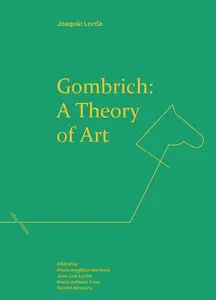
Gombrich: a Theory of Art (Refractions) by Joaquín Lorda, translated by Tim Nicholson
English | November 22, 2023 | ISBN: 1399512579, 9781399512596, 9781399512602 | True EPUB/PDF | 607 pages | 1.7/5.6 MB
This is the first English translation of Gombrich: una teoría del arte, by Joaquín Lorda, originally published in 1991.

Lorda was considered to be one of Gombrich's best students and this book presents an extensive, expansive and holistic analysis of Gombrich's thought. It is structured around a set of key ideas and themes: Science, Joke, Play and Rhetoric. Lorda provides in-depth analysis of Gombrich's engagement with figures such as Huizinga, Freud, Hegel, and Popper.
While there has been extensive secondary literature on Gombrich, this is the first book to provide a systematic analysis of his ideas and theoretical frameworks, taking into account the entirety of his writings. This major work of scholarship sheds new light on Gombrich as a thinker and turns Gombrich's ideas into a workable theory of art that can be used as an instrument to examine both the history of art and architecture and its current practice.


Fileaxa


Links are Interchangeable - Single Extraction
 
5f1730b480320b1d9c205654a424a582.webp

Good-bye to All That: An Autobiography (Penguin Modern Classics) by Robert Graves
English | May 1, 2014 | ASIN: B00GJ8A7VO, ISBN: 0141392665, 0141184590, 9780141395272 | True AZW3 | 288 pages | 0.5 MB
An autobiographical work that describes firsthand the great tectonic shifts in English society following the First World War, Robert Graves's Goodbye to All That is a matchless evocation of the Great War's haunting legacy, published in Penguin Modern Classics.

In 1929 Robert Graves went to live abroad permanently, vowing 'never to make England my home again'. This is his superb account of his life up until that 'bitter leave-taking': from his childhood and desperately unhappy school days at Charterhouse, to his time serving as a young officer in the First World War that was to haunt him throughout his life. It also contains memorable encounters with fellow writers and poets, including Siegfried Sassoon and Thomas Hardy, and covers his increasingly unhappy marriage to Nancy Nicholson. Goodbye to All That, with its vivid, harrowing descriptions of the Western Front, is a classic war document, and also has immense value as one of the most candid self-portraits of an artist ever written.


Fileaxa


Links are Interchangeable - Single Extraction
 
8f8eaa1841cc519c08547a662132bb57.webp

Gott und Volk: Religion und Kirche in der Demokratie. Vox Populi - Vox Dei? By Leisner, Walter
2008 | 167 Pages | ISBN: 342812801X | PDF | 1 MB
Die Demokratie wird heute weiterhin als alternativlose Staatsform gesehen. Zwar ist an ihr Vieles unklar, rechtlich wie politisch, doch eines bleibt unverrückbar ihre Grundlage: Die notwendige Rückführbarkeit aller Macht auf (irgendwelche) Ausdrucksformen des Volkswillens, Wahlen und Abstimmungen. Das letzte Wort auf Erden steht dem Volke zu. Und wie steht dies zum Wort des allmächtigen Schöpfergottes aller monotheistischen Religionen, in allen christlichen Kirchen? Ist vielleicht gar Volkes Wort Gottes Wort, die Kirche ein demokratisches Instrument - Vox Populi vox Dei? Muss daher heute "die Kirche demokratisiert werden", so wie früher der Staat verkirchlicht werden sollte? Oder müssen da eben doch zwei Rechte sein: Gott und seine Kirche - das Volk und seine Demokratie?Diese letztere These soll hier begründet und es soll gezeigt werden, wie der eine Mensch Bürger dieser beiden Reiche ist und bleiben kann. Sie müssen sich nicht nur kennen, sondern anerkennen, nicht abgrenzen, sondern zusammenwirken, in vertieftem, gegenseitigem Verständnis, das ihre Unterschiede anerkannt und betont, daraus Nähe werden lässt. Dies verlangt Bewegungen, Regungen - und dazu nun Anregungen, aus der Sicht von Geschichte, Recht und Religion.Aus dem Vorwort


Fileaxa


Links are Interchangeable - Single Extraction
 
adcf1a4972db50b55797af868ddebccf.webp

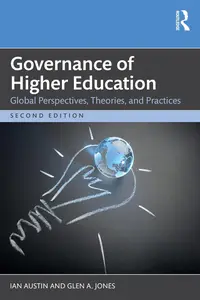
Governance of Higher Education by Ian Austin, Glen A. Jones
English | August 1, 2024 | ISBN: 1032255129 | 268 pages | PDF | 17 Mb
The new edition of Governance of Higher Education explores the work of traditional and contemporary higher education scholarship, providing readers with an understanding of the assumptions, historical traditions, and paradigms that have shaped the scholarship on governance worldwide.

Updated throughout to reflect current higher education governance research and with expanded discussion of key theories and new relevant concepts, this book brings together vast and disparate writings, including frameworks drawn from a wide range of disciplines and newly bolstered case studies. Coverage includes the structures of governance, cultures and practices, the collegial tradition, as well as newfound critique of outdated organizational theory, leadership concepts, quality assurance and accountability, and system governance. Furthermore, this work synthesizes the significant theoretical, conceptual, and empirical scholarship to advance research and practice of governance.
As universities across the globe face a myriad of challenges and multiple stakeholder demands, Governance of Higher Education offers scholars, practitioners, and higher education graduate students an essential resource for advancing research and the practice of governance.


Fileaxa


Links are Interchangeable - Single Extraction
 
baea5144eae6b8efb3a801f3280134a9.webp

Walter Bisang, "Grammaticalization Scenarios from Europe and Asia "
English | ISBN: 3110559374 | 2020 | 670 pages | EPUB | 4 MB
This volume intends to fill the gap in the grammaticalization studies setting as its goal the systematic description of grammaticalization processes in genealogically and structurally diverse languages. To address the problem of the limitations of the secondary sources for grammaticalization studies, the editors rely on sketches of grammaticalization phenomena from experts in individual languages guided by a typological questionnaire.


Fileaxa


Links are Interchangeable - Single Extraction
 
b89fac2f655cecc4102ad1a8ad147a2a.webp

Christopher C. Fennell, "Grappling with Monuments of Oppression "
English | ISBN: 1032735155 | 2024 | 252 pages | EPUB | 9 MB
Grappling with Monuments of Oppression provides a timely analysis of the diverse approaches being used around the world to confront colonial and imperial monuments and to promote social equity.

Presenting 12 interdisciplinary, international case studies, this volume explores the ways in which the materiality of social domination can be combated. With contributions from activists, scholars, artists, and policymakers, the book envisions the theme of restorative justice in heritage and archaeology as encompassing initiatives for the reconciliation of past societal transgressions using processes that are multivocal, dialogic, historically informed, community-based, negotiated, and transformative. Arguing that monuments to historical figures who engaged in oppressive regimes provide rich opportunities for dialogue and negotiation, chapters within the book demonstrate that, by confronting these monuments, citizens can envision new ways to address the context and significance of the figures they memorialize and the many people who were targets of their oppression. Contributors to the book also provide a toolkit of methods and strategies for addressing the continuing structures of social domination.
Read more


Fileaxa


Links are Interchangeable - Single Extraction
 
d4bd34a85c04155da5e0b91cdeb04834.webp

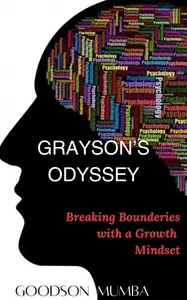
GRAYSON'S ODYSSEY: BREAKING BOUNDARIES WITH A GROWTH MINDSET by Goodson Mumba
English | July 16, 2024 | ISBN: N/A | ASIN: B0D3B6YTH9 | 94 pages | EPUB | 0.85 Mb
"Grayson's Odyssey: Breaking Boundaries with a Growth Mindset" is a riveting journey of transformation and perseverance. In a world that often glorifies innate talent, Grayson's story stands out as a powerful testament to the limitless potential of a growth mindset. This book chronicles the highs and lows of Grayson's path, illustrating how embracing challenges and learning from failures can lead to extraordinary success.

Through Grayson's experiences, readers will discover practical strategies to cultivate resilience, overcome obstacles, and continuously push beyond their comfort zones. Whether you are a student, professional, or someone seeking personal development, this book provides a blueprint for unlocking your potential and achieving greatness.
Join Grayson on an inspiring odyssey that will challenge your perceptions, ignite your ambition, and empower you to break your own boundaries. "Grayson's Odyssey" is not just a story-it's a call to action for anyone ready to embark on their own journey of growth and transformation.


Fileaxa


Links are Interchangeable - Single Extraction
 
8c5229eda78be10dce5b31d4d9cf7e41.webp

Eric Grove - Great Battles of the Royal Navy
Bramley Books | 1998 | ISBN: 185833845X | English | 264 pages | PDF | 146.97 MB
This book describes and illustrates over 20 of the greatest Royal Navy sea battles from the age of sail to the Falklands. Examples include the Armada, Cape Pessaro. Quiberon Bay, Aboukir and Trafalgar. It is illustrated with battle maps and archive photographs, with over 120 colour paintings and scenes from the Gun Room collection at the Royal Naval College, Dartmouth.


Fileaxa


Links are Interchangeable - Single Extraction
 
48b9a4a3417a67f863444b6a37c42a25.webp

Great Escapes during the World Wars: The History of the Most Legendary Prisoner Breakouts in World War I and World War II by Charles River Editors
English | September 2, 2024 | ISBN: N/A | ASIN: B0DFYV36YD | 164 pages | EPUB | 8.61 Mb
War has always led to prisoners. In ancient times, many were turned into slaves by the victorious armies, while in medieval Europe, they were often returned to their families in return for a ransom, leading to fortune or poverty depending upon which side one was on. By the Napoleonic era, as armies grew in size and professionalism, many were kept in camps for the duration of the fighting, their captors not wanting to restore their enemies' manpower while the fate of nations hung in the balance.

In the first half of the 20th century, war was fought on a global and industrial scale. Millions of men were flung into the grinder of World War I and World War II, leading to commensurately huge numbers of prisoners of war (POWs). Camps were built to hold thousands of captives, with their own barracks blocks, parade grounds, and even farms. In World War I, there were several fronts in the war - Britain, France, Belgium, and Germany faced each other on the Western Front, fought mostly in northeast France and Belgium, while Germany and Austria Hungary faced Russia on the Eastern Front, where much of the war was fought in East Prussia and what is now Poland. The Italians and Austrians fought in the region of northeast Italy, and the Austrians and Bulgarians faced Serbia and then later an Allied army based in Salonica in the Balkans. The Ottomans faced Russia in northeast Anatolia, the British and Allied forces in the Mesopotamian campaign (mainly in today's Iraq), the British in Palestine, and the Allies at Gallipoli.
During the 20th century's two major global wars, prisoners were taken across the world, and prisoners of war were typically comprised of two classes: officers and other ranks. Officers were often treated well, as there was still a sort of aristocratic courtesy among officers, particularly among the Germans, British, French, and somewhat less so for the Russians, Italians, and Turks. Concepts such as honor still held considerable currency, and bravery was greatly admired. Enemy officers as a class often had more in common with each other than with the millions of draftees in their armies, so enlisted men as POWs generally were not as well treated.
Regardless of rank though, throughout the war, many of these men did not sit idle. Many spent their time preparing elaborate escape plans in the hopes of returning to their home nations and back to the fight. Following World War I, several books were published giving romantic accounts of successful escapes. For example, the wildly popular film The Great Escape (1963), has been a main factor in how the public views prisoners of war, and while that film was based on a book that details a mass escape of British and Allied prisoners from a World War II German prison camp for aviators, Stalag Luft III, a real escape from a German prisoner camp in World War I inspired the 1944 great escape from Stalag Luft III.
The greatest number of successful escapes was made by Allied troops in Europe, including soldiers left behind after the fall of France and airmen shot down in bombing raids, but escapes happened across the world, from Canadian trains to German castles, and from the mountains of Italy to the wilds of Australia. Axis as well as Allied troops made their bids for freedom, keeping both sides on their toes. Everybody was looking to make the next great escape.
The Second World War was full of escape stories, some bold, some tragic, and most filled with courage and ingenuity. There were moments of foolishness, like the story of an Italian on the run in Australia who was caught ordering red wine with a heavy accent. But there were also incredible feats, such as the covert construction of a glider in a Colditz loft. On all sides, people sought to return to the war or to help others to do so. Their stories were not only part of the overall struggle, they added a very human dimension to a war with a scope so large that it still defies imagination.


Fileaxa


Links are Interchangeable - Single Extraction

 
47f03409aa4e95d95493da8ecaf7b198.webp

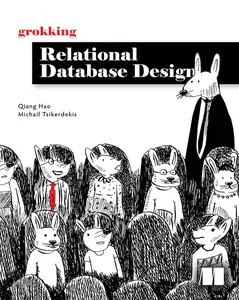
Grokking Relational Database Design
English | 2025 | ISBN: 1633437418 | 320 Pages | EPUB | 24 MB
Data is the backbone of computer science, and databases are the main way that data is stored, exchanged, manipulated, and managed. Whether you're a software developer, a data scientist, or an enthusiastic business user looking to up your data analysis skills, it pays to learn how to create and query relational databases like MySQL, SQL Server, PostgreSQL, and Oracle. Grokking Relational Database Design will get you started!


Fileaxa


Links are Interchangeable - Single Extraction

 
ea673efd126f977f09f6f6a64c7b0753.webp

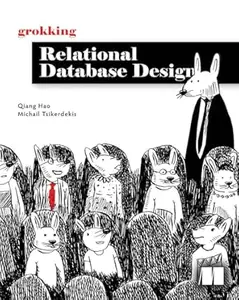
Grokking Relational Database Design
by Qiang Hao and Michail Tsikerdekis

English | 2025 | ISBN: 1633437418 | 282 pages | True PDF | 30.99 MB

A friendly illustrated guide to designing and implementing your first database.
Grokking Relational Database Design makes the principles of designing relational databases approachable and engaging. Everything in this book is reinforced by hands-on exercises and examples.
In Grokking Relational Database Design, you'll learn how to:
* Query and create databases using Structured Query Language (SQL)
* Design databases from scratch
* Implement and optimize database designs
* Take advantage of generative AI when designing databases
A well-constructed database is easy to understand, query, manage, and scale when your app needs to grow. In Grokking Relational Database Design you'll learn the basics of relational database design including how to name fields and tables, which data to store where, how to eliminate repetition, good practices for data collection and hygiene, and much more. You won't need a computer science degree or in-depth knowledge of programming-the book's practical examples and down-to-earth definitions are beginner-friendly.
Purchase of the print book includes a free eBook in PDF and ePub formats from Manning Publications.
About the technology
Almost every business uses a relational database system. Whether you're a software developer, an analyst creating reports and dashboards, or a business user just trying to pull the latest numbers, it pays to understand how a relational database operates. This friendly, easy-to-follow book guides you from square one through the basics of relational database design.
About the book
Grokking Relational Database Design introduces the core skills you need to assemble and query tables using SQL. The clear explanations, intuitive illustrations, and hands-on projects make database theory come to life, even if you can't tell a primary key from an inner join. As you go, you'll design, implement, and optimize a database for an e-commerce application and explore how generative AI simplifies the mundane tasks of database designs.
What's inside
* Define entities and their relationships
* Minimize anomalies and redundancy
* Use SQL to implement your designs
* Security, scalability, and performance


Fileaxa


Links are Interchangeable - Single Extraction

 
3dde0b7ab43fed750b7a2ead4344b1aa.webp


Group Cell Architecture for Cooperative Communications by Xiaofeng Tao , Qimei Cui , Xiaodong Xu , Ping Zhang
English | PDF (True) | 2012 | 99 Pages | ISBN : 1461443180 | 4.3 MB

Driven by the increasing demand for capacity and Quality of Service in wireless cellular networks and motivated by the distributed antenna system, the authors proposed a cooperative communication architecture-Group Cell architecture, which was initially brought forward in 2001. Years later, Coordinated Multiple-Point Transmission and Reception (CoMP) for LTE-Advanced was put forward in April 2008, as a tool to improve the coverage of cells having high data rates, the cell-edge throughput and/or to increase system throughput. This book mainly focuses on the Group Cell architecture with multi-cell generalized coordination, Contrast Analysis between Group Cell architecture and CoMP, Capacity Analysis, Slide Handover Strategy, Power Allocation schemes of Group Cell architecture to mitigate the inter-cell interference and maximize system capacity and the trial network implementation and performance evaluations of Group Cell architecture.
[/b]


Fileaxa


Links are Interchangeable - Single Extraction

 
Zurück
Oben Unten