• Regeln für den Dokumente-Bereich:

    In den Börsenbereich gehören nur Angebote die bereits den Allgemeinen Regeln entsprechen.

    Allgemeines:

    Nicht erlaubt im Dokumente-Bereich sind:

    - indizierte Titel (inkl. Comics)
    - extremistische Werke, Zeitschriften und Comics (egal, welche Richtung)
    - jegliche Art von Pornographie
    - Anleitungen zu kriminellen Handlungen, gleich welcher Art
    - sadistische, menschenverachtende oder ähnliche Werke

    Nutzt den "Bedanken"-Button, bei Sammelthreads führen jegliche Kommentare, positiv wie negativ, sehr schnell zu einer Unübersichtlichkeit des Threads. Downmeldungen sind an den Uploader zu richten

    Vor dem Einstellen zu beachten:

    - Suchfunktion

    Vergewissert euch, dass es euer Dokument noch nicht im Board gibt, Doppelposts werden kommentarlos gelöscht. Ist es schon vorhanden, tragt es als Mirror im bestehenden Post ein.

    - Threadtitel

    Idealerweise ist sofort zu erkennen um was es sich handelt. Verseht euren Titel mit den relevanten Informationen, das hilft euch und damit auch uns und allen Suchenden erheblich weiter.

    Beispiel: [Thriller] Dan Brown - Inferno oder bei Magazinen:

    Computerbild - 14/2014 (es muss ersichtlich sein, um welche Ausgabe und welches Magazin es sich handelt)

    Folgende Präfixe stehen im Unterforum "Unterhaltung" zur Verfügung:

    [Humor]
    [Drama]
    [Erotik]
    [Fantasy]
    [Krimi]
    [Roman]
    [Thriller]
    [Horror]
    [Science Fiction]

    Inhalt des Beitrags:

    Folgende Pflichtangaben gilt es einzuhalten:

    - Autor
    - Titel
    - Präfix
    - Cover
    - Genre
    - Inhaltsbeschreibung
    - enthaltene Formate
    - Gesamtgröße des Downloads
    - Hoster
    - ggf. Passwort

    Nicht erlaubt sind alle Dateien, die den Download unnötig aufblähen um eine Affiliategrenze zu erreichen, wie zB. mp3-files, übergroße Bilder, etc.

    Ebenso nicht erlaubt sind sämtliche Dateien mit DRM, persönlichen Daten, etc., diese werden kommentarlos zu eurem eigenem Schutz gelöscht.

    Achtet bitte bei der Konvertierung der Formate auf die Lesbarkeit, ein epub, was nur einfach durch Calibre gejagt wird um ein PDF zu erhalten, ist zu 99% eben nicht lesbar. Wenn ihr es nicht könnt, dann lasst es besser oder lest euch ein, wie man es richtig macht.


    Unterforum Comics:

    Threadtitel:

    Ähnlich, wie bei Unterhaltung und Magazinen, sollte der Titel alle relevanten Informationen enthalten, hier bitte

    - den Titel des Comics
    - den Verlag (einige Comics sind in verschiedenen Verlagen erschienen)
    - das Erscheinungsjahr

    Erlaubt sind folgende Formate:

    - CBR
    - CBZ

    Grundsätzlich gilt: jede Version eines Comics erhält einen eigenen Thread, Ersteller eines Comics können ihre Bände gerne mit dem Zusatz (Original-Release) versehen.

    Bei Unsicherheiten zur korrekten Benennung bitte die Informationen von www.comicguide.de nutzen.

    Inhalt des Beitrags:

    Pflichtangaben hier sind:

    - Titel des Bandes und ggf. Nummer
    - Cover
    - falls bekannt technische Daten (DPI, Breite, Speicherqualität)
    - Größe des Downloads
    - Hoster
    - ggf. Passwort
    - falls bekannt Releasenamen
  • Bitte registriere dich zunächst um Beiträge zu verfassen und externe Links aufzurufen.


Collection Download Ebooks Best Seller Updated Daily

8a41208fd65c795963461a37a7d650f3.webp

Volume 10, Tome I: Kierkegaard's Influence on Theology: German Protestant Theology By Jon Stewart
2016 | 415 Pages | ISBN: 1409444783 | EPUB | 1 MB
Kierkegaard has always enjoyed a rich reception in the fields of theology and religious studies. This reception might seem obvious given that he is one of the most important Christian writers of the nineteenth century, but Kierkegaard was by no means a straightforward theologian in any traditional sense. He had no enduring interest in some of the main fields of theology such as church history or biblical studies, and he was strikingly silent on many key Christian dogmas. Moreover, he harbored a degree of animosity towards the university theologians and churchmen of his own day. Despite this, he has been a source of inspiration for numerous religious writers from different denominations and traditions. Tome I is dedicated to the reception of Kierkegaard among German Protestant theologians and religious thinkers. The writings of some of these figures turned out to be instrumental for Kierkegaard's breakthrough internationally shortly after the turn of the twentieth century. Leading figures of the movement of 'dialectical theology' such as Karl Barth, Emil Brunner, Paul Tillich and Rudolf Bultmann spawned a steadily growing awareness of and interest in Kierkegaard's thought among generations of German theology students. Emanuel Hirsch was greatly influenced by Kierkegaard and proved instrumental in disseminating his thought by producing the first complete German edition of Kierkegaard's published works. Both Barth and Hirsch established unique ways of reading and appropriating Kierkegaard, which to a certain degree determined the direction and course of Kierkegaard studies right up to our own times.


Fileaxa


Links are Interchangeable - Single Extraction

 
c976a06b1a8dab0dd0078df230776866.webp

Volume 10, Tome II: Kierkegaard's Influence on Theology: Anglophone and Scandinavian Protestant Theology By Jon Stewart
2016 | 353 Pages | ISBN: 1409444791 | EPUB | 1 MB
Kierkegaard has always enjoyed a rich reception in the fields of theology and religious studies. This reception might seem obvious given that he is one of the most important Christian writers of the nineteenth century, but Kierkegaard was by no means a straightforward theologian in any traditional sense. He had no enduring interest in some of the main fields of theology such as church history or biblical studies, and he was strikingly silent on many key Christian dogmas. Moreover, he harbored a degree of animosity towards the university theologians and churchmen of his own day. Despite this, he has been a source of inspiration for numerous religious writers from different denominations and traditions. Tome II is dedicated to tracing Kierkegaard's influence in Anglophone and Scandinavian Protestant religious thought. Kierkegaard has been a provocative force in the English-speaking world since the early twentieth century, inspiring almost contradictory receptions. In Britain, before World War I, the few literati who were familiar with his work tended to assimilate Kierkegaard to the heroic individualism of Ibsen and Nietzsche. In the United States knowledge of Kierkegaard was introduced by Scandinavian immigrants who brought with them a picture of the Dane as much more sympathetic to traditional Christianity. The interpretation of Kierkegaard in Britain and America during the early and mid-twentieth century generally reflected the sensibilities of the particular theological interpreter. Anglican theologians generally found Kierkegaard to be too one-sided in his critique of reason and culture, while theologians hailing from the Reformed tradition often saw him as an insightful harbinger of neo-orthodoxy. The second part of Tome II is dedicated to the Kierkegaard reception in Scandinavian theology, featuring articles on Norwegian and Swedish theologians influenced by Kierkegaard.


Fileaxa


Links are Interchangeable - Single Extraction

 
4f3a852af7e102c6e4f89de96a99673a.webp

Volume 10, Tome III: Kierkegaard's Influence on Theology: Catholic and Jewish Theology By Jon Stewart
2016 | 358 Pages | ISBN: 1409444805 | EPUB | 1 MB
Kierkegaard has always enjoyed a rich reception in the fields of theology and religious studies. This reception might seem obvious given that he is one of the most important Christian writers of the nineteenth century, but Kierkegaard was by no means a straightforward theologian in any traditional sense. He had no enduring interest in some of the main fields of theology such as church history or biblical studies, and he was strikingly silent on many key Christian dogmas. Moreover, he harbored a degree of animosity towards the university theologians and churchmen of his own day. Despite this, he has been a source of inspiration for numerous religious writers from different denominations and traditions. Tome III explores the reception of Kierkegaard's thought in the Catholic and Jewish theological traditions. In the 1920s Kierkegaard's intellectual and spiritual legacy became widely discussed in the Catholic Hochland Circle, whose members included Theodor Haecker, Romano Guardini, Alois Dempf and Peter Wust. Another key figure of the mid-war years was the prolific Jesuit author Erich Przywara. During and especially after World War II Kierkegaard's ideas found an echo in the works of several trend-setting Catholic theologians of the day such as Hans Urs von Balthasar, Henri de Lubac and the popular spiritual author Thomas Merton. The second part of Tome III focuses on the reception of Kierkegaard's thought in the Jewish theological tradition, introducing the reader to authors who significantly shaped Jewish religious thought both in the United States and in Israel. These theologians represent a variety of religious and political backgrounds: the spiritual world of Hasidism, Modern Orthodox Judaism of Mithnaggedic origin, and Modern Religious Zionism.


Fileaxa


Links are Interchangeable - Single Extraction
 
81af432abda20752a7b025672dd50f07.webp

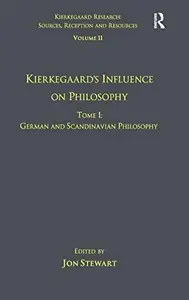
Volume 11, Tome I: Kierkegaard's Influence on Philosophy: German and Scandinavian Philosophy By Jon Stewart
2016 | 492 Pages | ISBN: 1409442853 | EPUB | 1 MB
Kierkegaard's relation to the field of philosophy is a particularly complex and disputed one. He rejected the model of philosophical inquiry that was mainstream in his day and was careful to have his pseudonymous authors repeatedly disassociate themselves from philosophy. But although it seems clear that Kierkegaard never regarded himself as a philosopher, there can be no doubt that his writings contain philosophical ideas and insights and have been profoundly influential in a number of different philosophical traditions. The present volume documents these different traditions of the philosophical reception of Kierkegaard's thought and the articles featured demonstrate the vast reach of Kierkegaard's writings in philosophical contexts that were often quite different from his own. Tome I is dedicated to exploring the reception of Kierkegaard in Germanophone and Scandinavian philosophy. Kierkegaard has been a major influence for such different philosophical projects as phenomenology, hermeneutics, dialogical thinking, critical theory, Marxism, logical positivism and ordinary language philosophy. Similarly in Denmark and Norway Kierkegaard's writings have been more or less constantly discussed by important philosophers, despite the later dominance of analytic philosophy in these countries. The present tome features articles on the leading Germanophone and Scandinavian philosophers influenced by Kierkegaard's thought.


Fileaxa


Links are Interchangeable - Single Extraction

 
5d6ea73551352d0c0ab7afd038d61fa8.webp

Volume 11, Tome II: Kierkegaard's Influence on Philosophy: Francophone Philosophy By Jon Stewart
2016 | 421 Pages | ISBN: 1409446387 | EPUB | 1 MB
Kierkegaard's relation to the field of philosophy is a particularly complex and disputed one. He rejected the model of philosophical inquiry that was mainstream in his day and was careful to have his pseudonymous authors repeatedly disassociate themselves from philosophy. But although it seems clear that Kierkegaard never regarded himself as a philosopher, there can be no doubt that his writings contain philosophical ideas and insights and have been profoundly influential in a number of different philosophical traditions. The tomes in this volume seek to document the different traditions of the philosophical reception of Kierkegaard's thought and the articles demonstrate the reach of Kierkegaard's writings in philosophical contexts that were often different from his own. The present volume attempts to document these different traditions of the philosophical reception of Kierkegaard's thought. The articles featured here aim to demonstrate the vast reach of Kierkegaard's writings in philosophical contexts that were often quite different from his own. Tome II is dedicated to exploring Kierkegaard's influence on Francophone philosophy. The French intellectual tradition squares well with Kierkegaard's eclectic profile since its leading figures are often difficult to classify unambiguously as philosophers, theologians, literary critics or simply writers. Kierkegaard's thinking was highly influential for many generations of French philosophers right up to the present. It was not just existentialism that tried to co-opt Kierkegaard for its own purposes; he has also been influential in the context of almost every modern school of French thought: phenomenology, feminism, structuralism, post-structuralism, semiotics, and deconstruction.


Fileaxa


Links are Interchangeable - Single Extraction
 
29f3aece9d5e73956bcbacb7eafa103d.webp

Volume 11, Tome III: Kierkegaard's Influence on Philosophy: Anglophone Philosophy By Jon Stewart
2016 | 378 Pages | ISBN: 1409440559 | EPUB | 1 MB
Kierkegaard's relation to the field of philosophy is a particularly complex and disputed one. He rejected the model of philosophical inquiry that was mainstream in his day and was careful to have his pseudonymous authors repeatedly disassociate themselves from philosophy. But although it seems clear that Kierkegaard never regarded himself as a philosopher, there can be no doubt that his writings contain philosophical ideas and insights and have been profoundly influential in a number of different philosophical traditions.The present volume attempts to document these different traditions of the philosophical reception of Kierkegaard's thought. Tome III traces Kierkegaard's influence on Anglophone philosophy. It has long been thought that Kierkegaard played no role in this tradition, which for years was dominated by analytic philosophy. In this environment it was common to dismiss Kierkegaard along with the then current European philosophers who were influenced by him. However, a closer look reveals that in fact there were several thinkers in the US, Canada and Great Britain who were inspired by Kierkegaard even during the heyday of analytic philosophy. Today it can be said that Kierkegaard has made some serious inroads into mainstream Anglophone philosophy, with many authors seeking inspiration in his works for current discussions concerning ethics, personal identity, philosophy of religion, and philosophical anthropology.


Fileaxa


Links are Interchangeable - Single Extraction
 
ff5336aebe3783f431f0439bcc070b25.webp

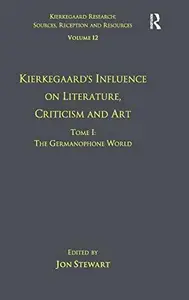
Volume 12, Tome I: Kierkegaard's Influence on Literature, Criticism and Art: The Germanophone World By Jon Stewart
2016 | 270 Pages | ISBN: 1409456110 | EPUB | 1 MB
While Kierkegaard is primarily known as a philosopher or religious thinker, his writings have also been used extensively by literary writers, critics and artists worldwide who have been attracted to his creative mixing of genres, his complex use of pseudonyms, his rhetoric and literary style, and his rich images, parables, and allegories. The goal of the present volume is to document this influence in different language groups and traditions. Tome I explores Kierkegaard's influence on literature and art in the Germanophone world. He was an important source of inspiration for German writers such as Theodor Fontane, Thomas Mann, Rainer Maria Rilke, Alfred Andersch, and Martin Walser. Kierkegaard's influence was particularly strong in Austria during the generation of modernist authors such as Rudolf Kassner, Karl Kraus, Robert Musil, and Hermann Broch. Due presumably in part to the German translations of Kierkegaard in the Austrian cultural journal Der Brenner, Kierkegaard continued to be used by later figures such as the novelist and playwright, Thomas Bernhard. His thought was also appropriated in Switzerland through the works of Max Frisch and Friedrich Dürrenmatt. The famous Czech author Franz Kafka identified personally with Kierkegaard's love story with Regine Olsen and made use of his reflections on this and other topics.


Fileaxa


Links are Interchangeable - Single Extraction
 
994a2c56da2e28d75ca5380bf7d928e5.webp

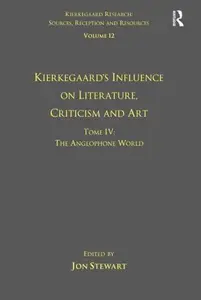
Volume 12, Tome IV: Kierkegaard's Influence on Literature, Criticism and Art: The Anglophone World By Jon Stewart
2016 | 243 Pages | ISBN: 140945763X | EPUB | 1 MB
While Kierkegaard is primarily known as a philosopher or religious thinker, his writings have also been used extensively by literary writers, critics and artists. This use can be traced in the work of major cultural figures not just in Denmark and Scandinavia but also in the wider world. They have been attracted to his creative mixing of genres, his complex use of pseudonyms, his rhetoric and literary style, and his rich images, parables, and allegories. The present volume documents this influence in the different language groups and traditions. Tome IV examines Kierkegaard's surprisingly extensive influence in the Anglophone world of literature and art, particularly in the United States. His thought appears in the work of the novelists Walker Percy, James Baldwin, Flannery O'Connor, William Styron, Don Delillo, and Louise Erdrich. He has also been used by the famous American literary critics, George Steiner and Harold Bloom. The American composer Samuel Barber made use of Kierkegaard in his musical works. Kierkegaard has also exercised an influence on British and Irish letters. W.H. Auden sought in Kierkegaard ideas for his poetic works, and the contemporary English novelist David Lodge has written a novel Therapy, in which Kierkegaard plays an important role. Cryptic traces of Kierkegaard can also be found in the work of the famous Irish writer James Joyce.


Fileaxa


Links are Interchangeable - Single Extraction
 
6a6eab58f23dd78365a571cd461a12e2.webp

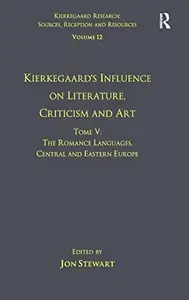
Volume 12, Tome V: Kierkegaard's Influence on Literature, Criticism and Art: The Romance Languages, Central and Eastern Europe By Jon Stewart
2016 | 201 Pages | ISBN: 1409465144 | EPUB | 1 MB
While Kierkegaard is primarily known as a philosopher or religious thinker, his writings have also been used extensively by literary writers, critics and artists. This use can be traced in the work of major cultural figures not just in Denmark and Scandinavia but also in the wider world. They have been attracted to his creative mixing of genres, his complex use of pseudonyms, his rhetoric and literary style, and his rich images, parables, and allegories. The present volume documents this influence in the different language groups and traditions. Tome V treats the work of a heterogeneous group of writers from the Romance languages and from Central and Eastern Europe. Kierkegaard has been particularly important for Spanish literature: the Argentine writers Jorge Luis Borges, Leonardo Castellani, and Ernesto Sábato, the Mexican writer Carlos Fuentes, and the Spanish essayist and philosopher María Zambrano were all inspired to varying degrees by him. The Dane also appears in the work of Romanian writer Max Blecher, while the Portuguese author Fernando Pessoa was almost certainly inspired by Kierkegaard's use of pseudonyms. Kierkegaard has also influenced diverse literary figures from Central and Eastern Europe. His influence appears in the novels of the contemporary Hungarian authors Péter Nadas and Péter Esterházy, the work of the Russian writer and literary critic, Mikhail Bakhtin, the Polish writer Witold Gombrowicz and the Czech novelist Ivan Klíma. Tome V also examines how Kierkegaard's treatment of the story of Abraham and Isaac in Fear and Trembling interested the Polish-born Israeli novelist Pinhas Sadeh.


Fileaxa


Links are Interchangeable - Single Extraction
 
41ce1322d90eb7041a6795fc995ef0fc.webp

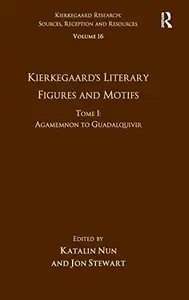
Volume 16, Tome I: Kierkegaard's Literary Figures and Motifs: Agamemnon to Guadalquivir By Katalin Nun; Jon Stewart
2016 | 296 Pages | ISBN: 1472441362 | EPUB | 1 MB
While Kierkegaard is perhaps known best as a religious thinker and philosopher, there is an unmistakable literary element in his writings. He often explains complex concepts and ideas by using literary figures and motifs that he could assume his readers would have some familiarity with. This dimension of his thought has served to make his writings far more popular than those of other philosophers and theologians, but at the same time it has made their interpretation more complex. Kierkegaard readers are generally aware of his interest in figures such as Faust or the Wandering Jew, but they rarely have a full appreciation of the vast extent of his use of characters from different literary periods and traditions. The present volume is dedicated to the treatment of the variety of literary figures and motifs used by Kierkegaard. The volume is arranged alphabetically by name, with Tome I covering figures and motifs from Agamemnon to Guadalquivir.


Fileaxa


Links are Interchangeable - Single Extraction
 
f43ea9b5e566022cbe542b64a6cecf15.webp

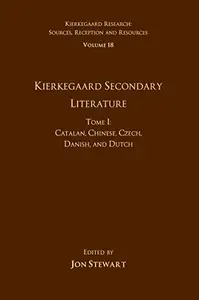
Volume 18, Tome I: Kierkegaard Secondary Literature: Catalan, Chinese, Czech, Danish, and Dutch By Jon Stewart
2016 | 290 Pages | ISBN: 1472476220 | EPUB | 1 MB
In recent years interest in the thought of Kierkegaard has grown dramatically, and with it the body of secondary literature has expanded so quickly that it has become impossible for even the most conscientious scholar to keep pace. The problem of the explosion of secondary literature is made more acute by the fact that much of what is written about Kierkegaard appears in languages that most Kierkegaard scholars do not know. Kierkegaard has become a global phenomenon, and new research traditions have emerged in different languages, countries and regions. The present volume is dedicated to trying to help to resolve these two problems in Kierkegaard studies. Its purpose is, first, to provide book reviews of some of the leading monographic studies in the Kierkegaard secondary literature so as to assist the community of scholars to become familiar with the works that they have not read for themselves. The aim is thus to offer students and scholars of Kierkegaard a comprehensive survey of works that have played a more or less significant role in the research. Second, the present volume also tries to make accessible many works in the Kierkegaard secondary literature that are written in different languages and thus to give a glimpse into various and lesser-known research traditions. The six tomes of the present volume present reviews of works written in Catalan, Chinese, Czech, Danish, Dutch, English, Finnish, French, Galician, German, Greek, Hebrew, Hungarian, Italian, Japanese, Norwegian, Polish, Portuguese, Romanian, Russian, Slovak, Spanish, and Swedish.


Fileaxa


Links are Interchangeable - Single Extraction
 
d4a85ccdb67e8c0908acbe8bc8e1101f.webp

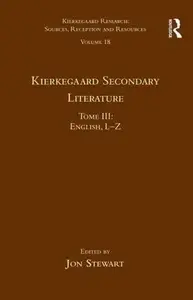
Volume 18, Tome III: Kierkegaard Secondary Literature: English L-Z By Jon Stewart
2017 | 438 Pages | ISBN: 1472477413 | EPUB | 1 MB
In recent years interest in the thought of Kierkegaard has grown dramatically, and with it the body of secondary literature has expanded so quickly that it has become impossible for even the most conscientious scholar to keep pace. The problem of the explosion of secondary literature is made more acute by the fact that much of what is written about Kierkegaard appears in languages that most Kierkegaard scholars do not know. Kierkegaard has become a global phenomenon, and new research traditions have emerged in different languages, countries and regions. The present volume is dedicated to trying to help to resolve these two problems in Kierkegaard studies. Its purpose is, first, to provide book reviews of some of the leading monographic studies in the Kierkegaard secondary literature so as to assist the community of scholars to become familiar with the works that they have not read for themselves. The aim is thus to offer students and scholars of Kierkegaard a comprehensive survey of works that have played a more or less significant role in the research. Second, the present volume also tries to make accessible many works in the Kierkegaard secondary literature that are written in different languages and thus to give a glimpse into various and lesser-known research traditions. The six tomes of the present volume present reviews of works written in Catalan, Chinese, Czech, Danish, Dutch, English, Finnish, French, Galician, German, Greek, Hebrew, Hungarian, Italian, Japanese, Norwegian, Polish, Portuguese, Romanian, Russian, Slovak, Spanish, and Swedish.


Fileaxa


Links are Interchangeable - Single Extraction
 
Zurück
Oben Unten