• Regeln für den Dokumente-Bereich:

    In den Börsenbereich gehören nur Angebote die bereits den Allgemeinen Regeln entsprechen.

    Allgemeines:

    Nicht erlaubt im Dokumente-Bereich sind:

    - indizierte Titel (inkl. Comics)
    - extremistische Werke, Zeitschriften und Comics (egal, welche Richtung)
    - jegliche Art von Pornographie
    - Anleitungen zu kriminellen Handlungen, gleich welcher Art
    - sadistische, menschenverachtende oder ähnliche Werke

    Nutzt den "Bedanken"-Button, bei Sammelthreads führen jegliche Kommentare, positiv wie negativ, sehr schnell zu einer Unübersichtlichkeit des Threads. Downmeldungen sind an den Uploader zu richten

    Vor dem Einstellen zu beachten:

    - Suchfunktion

    Vergewissert euch, dass es euer Dokument noch nicht im Board gibt, Doppelposts werden kommentarlos gelöscht. Ist es schon vorhanden, tragt es als Mirror im bestehenden Post ein.

    - Threadtitel

    Idealerweise ist sofort zu erkennen um was es sich handelt. Verseht euren Titel mit den relevanten Informationen, das hilft euch und damit auch uns und allen Suchenden erheblich weiter.

    Beispiel: [Thriller] Dan Brown - Inferno oder bei Magazinen:

    Computerbild - 14/2014 (es muss ersichtlich sein, um welche Ausgabe und welches Magazin es sich handelt)

    Folgende Präfixe stehen im Unterforum "Unterhaltung" zur Verfügung:

    [Humor]
    [Drama]
    [Erotik]
    [Fantasy]
    [Krimi]
    [Roman]
    [Thriller]
    [Horror]
    [Science Fiction]

    Inhalt des Beitrags:

    Folgende Pflichtangaben gilt es einzuhalten:

    - Autor
    - Titel
    - Präfix
    - Cover
    - Genre
    - Inhaltsbeschreibung
    - enthaltene Formate
    - Gesamtgröße des Downloads
    - Hoster
    - ggf. Passwort

    Nicht erlaubt sind alle Dateien, die den Download unnötig aufblähen um eine Affiliategrenze zu erreichen, wie zB. mp3-files, übergroße Bilder, etc.

    Ebenso nicht erlaubt sind sämtliche Dateien mit DRM, persönlichen Daten, etc., diese werden kommentarlos zu eurem eigenem Schutz gelöscht.

    Achtet bitte bei der Konvertierung der Formate auf die Lesbarkeit, ein epub, was nur einfach durch Calibre gejagt wird um ein PDF zu erhalten, ist zu 99% eben nicht lesbar. Wenn ihr es nicht könnt, dann lasst es besser oder lest euch ein, wie man es richtig macht.


    Unterforum Comics:

    Threadtitel:

    Ähnlich, wie bei Unterhaltung und Magazinen, sollte der Titel alle relevanten Informationen enthalten, hier bitte

    - den Titel des Comics
    - den Verlag (einige Comics sind in verschiedenen Verlagen erschienen)
    - das Erscheinungsjahr

    Erlaubt sind folgende Formate:

    - CBR
    - CBZ

    Grundsätzlich gilt: jede Version eines Comics erhält einen eigenen Thread, Ersteller eines Comics können ihre Bände gerne mit dem Zusatz (Original-Release) versehen.

    Bei Unsicherheiten zur korrekten Benennung bitte die Informationen von www.comicguide.de nutzen.

    Inhalt des Beitrags:

    Pflichtangaben hier sind:

    - Titel des Bandes und ggf. Nummer
    - Cover
    - falls bekannt technische Daten (DPI, Breite, Speicherqualität)
    - Größe des Downloads
    - Hoster
    - ggf. Passwort
    - falls bekannt Releasenamen
  • Bitte registriere dich zunächst um Beiträge zu verfassen und externe Links aufzurufen.

++ Premium IPTV ++ 7000 Live Sender ++ UHD Qualität ++ Mediathek mit 18.000 Inhalten ++


VenneTV


Collection Download Ebooks Best Seller Updated Daily

b27bcdbe5159c70d0a775e3806603dae.webp

Janice Morphet, "How Europe Shapes British Public Policy"
English | 2013 | ISBN: 1447300467 | EPUB | pages: 288 | 0.5 mb
Britain's relationship with the European Union (EU) is frequently viewed as simple by the media and politicians. In ways - never really explained - the EU has managed to 'take away' Britain's sovereign powers and has the ability to determine much of its legislation. The history of how this has occurred is never discussed, unlike other countries in Europe.How Europe shapes British public policy examines the development of the EU as a sectarian issue in the UK. It discusses the effects of disengagement through the political practices of policy making and the implications that this has had for depoliticisation in government and the civil service. It considers the effects of EU membership in shaping key policy areas - trade and privatisation, the single market and the environment, and subsidiarity in the development and implementation of devolved and decentralised governance.This book gives new and essential insights for students and practitioners of politics, governance and international relations.


Fileaxa


Links are Interchangeable - Single Extraction
 
bf04dbd491f800677fce11253664f6c0.webp

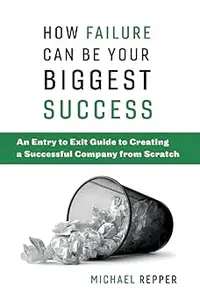
Michael Repper, "How Failure Can Be Your Biggest Success: An Entry to Exit Guide to Creating a Successful Company from Scratch "
English | ISBN: 1543932282 | 2018 | 224 pages | EPUB | 458 KB
The history of business is long. From the start of the first public company on the New York Stock Exchange in 1792 until now, the way in which companies do business has been well documented. Substantial works have been written about the strategies of successful businesses and the growth of a corporation; this book is not one of them. My goal for this book is to explain to the reader the potential failures involved in starting a business by using my own experience, not just from the standpoint of the financial and operational view, but taking an overall approach from business concept to the eventual sale of my company for a 5time EBIT return. Throughout this text I will discuss my approach and the thoughts I had before, during, and after I started my company, including how my business almost went bankrupt, and how I eventually turned it around to prepare it for sale. I will discuss my mistakes in selecting partners because I was too scared to do it myself, and my errors in agreeing to contracts that limited my ability to control the company I built, and finally, how I was able to take back control, establish growth, remove one of my partners, and then structure the sale of the company to eventually allow myself the financial freedom that I set out to achieve by starting the company in the first place. As a reader of this book. I hope that you will learn how an idea can become a company, how a company can become a burden if not structured correctly, and how a vision for a company can be a horrible thing if you don't have the skills to implement it properly or the personnel with the same passion for success as yourself. Using my personal experiences building a company, I will detail what decisions are necessary to be successful and how to financially structure your company not only to make money but to reduce risk and eliminate the unpredictability of sales cycles. I will share with you how to evaluate sales functions, secure capital, build an operations process, establish your accounting processes, utilize the power of marketing to build your company's presence, and ultimately avoid the pitfalls I made during my company's life cycle. To do this I will walk you through all the mistakes I made while building my company, detailing my biggest concerns and many sleepless nights worried about making payroll, paying interest on credit lines, and stressing over the families of the employees that left jobs to follow me in making my dream of starting a company a reality. I will be straight with you as to what mistakes really cost me money and what I did to overcome them. I am not interested in savvy business language and detailed financials. While they will be integral in helping you successfully run your business and we will discuss them as areas of opportunity, I want to give it to you straight. Businesses don't run on numbers, they run on people. They run on everyday decisions. Financials and analysis are the results of your decisions, not the path to evaluating the future. I want to take you through the pitfalls of the daily items you will deal with as a business owner, which, if not handled correctly, will cause you significant loss, loss you can't afford when you're starting a business from scratch and you have everything on the line.

Read more


Fileaxa


Links are Interchangeable - Single Extraction

 
f2976c9bee9083dd76df2834129f4cfb.webp

How I Magically Unstuck My Life in Thirty Crazy Days with Bob Proctor Book 3 by Sandy Gallagher
English | February 11th, 2025 | ISBN: 1722506490 | 154 pages | True EPUB | 1.25 MB
We've all felt stuck-trapped in a place where options seem endless, yet none lead forward. In a world filled with choices but lacking direction, getting unstuck can feel impossible.

Help is here. In How I Magically Unstuck My Life in Thirty Crazy Days, inspirational leader Sandy Gallagher blends wisdom from her mentor, the late Bob Proctor, with a compelling fictional story that reveals twelve transformative life lessons. Through the journey of Chloe, a young journalist at a personal and professional impasse, Gallagher shows readers how to break free from limitations and unleash their true potential.
In this final installment of Gallagher's trilogy, Chloe faces her greatest challenge yet: her mentor, Sarah Garner, reveals she is battling advanced cancer and asks Chloe to take over the PG Institute. Shocked but determined, Chloe rises to the challenge, stepping into a role she never imagined and carrying Sarah's vision forward.
Set against the lush backdrop of Kentucky's horse country, this inspiring parable is a guide for anyone seeking to break free from life's blockages. Gallagher's story is both a call to action and a testament to the power of courage, resilience, and the unstoppable spirit within us all.


Fileaxa


Links are Interchangeable - Single Extraction

 
5d677dc0cad33932246882eb1dcc60aa.webp

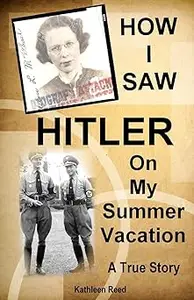
Kathleen Reed, "How I Saw Hitler on my Summer Vacation A True Story: 1938: A Fearless Female's Adventures in Pre WWII Europe"
English | ISBN: 0983819629 | 2012 | 156 pages | AZW3 | 2 MB
In 1938, high-spirited Helen McPhail sails the SS Normandie to a Europe displaying signs of change due to Hitler's increasing demands for power. Thirty years old and single, she savors the excitement of visiting nine countries by rail, from museums and nightclubs in Paris, to a dogsled ride in the Alps!

The trip is carefully planned, but total surprises keep cropping up. She loses her hotel reservations to German soldiers - twice! Did her travel agent know the uncertainty of making a hotel reservation on the eve of the annual Nazi Party Rally? She was taken to Nazi Headquarters in Salzburg! How does one spend a black night in Austria? She becomes entangled in circumstances that are fascinating, frustrating, and romantic! (Listening to Hungarian music can be treacherous!)
As Helen joyfully hops from country to country, more than one handsome man longs for her to stay. Join her on the streets of Paris, amidst throngs of frantic people who are trying to leave Europe. Be an eye-witness to a Paris where taxis and drivers are commandeered to military service, as France prepares for war on the eve of the Munich Conference. Why is the RMS Queen Mary distanced off shore, instead of waiting at the dock?
Read more


Fileaxa


Links are Interchangeable - Single Extraction

 
93f8b1d68080e5748000029126b0002a.webp

Leonard L Lynn, "How Japan Innovates: A Comparison With The U.s. In The Case Of Oxygen Steelmaking"
English | 2019 | ISBN: 036702005X, 0865319006 | EPUB | pages: 211 | 0.6 mb
The speed with which the Japanese have adopted new industrial technology has been a major factor in their economic success, raising the question of how they have been able to carry out technological change so quickly and so smoothly, often outstripping their U.S. competitors.


Fileaxa


Links are Interchangeable - Single Extraction

 
8a73eb262c2218b72cbb977e35af51be.webp

How Migrants Choose Their Destinations (Routledge Advances in European Politics) by Dominika Pszczółkowska
English | April 24, 2024 | ISBN: 1032466626 | 218 pages | PDF | 12 Mb
This book reveals how decisions regarding where to migrate are made, what factors are considered, how these change over time and why some destinations are more attractive to certain categories of people.

Based on rich existent, and new data, the book explains the destination choices of Polish migrants to the four most frequently chosen destinations countries: the UK, Ireland, Germany and the Netherlands. Examined through a sophisticated theoretical framework allowing for the incorporation of factors resulting from several fields - economics, public policies, demography - and migration theories, it paints a nuanced and balanced picture of European migration.
This book will be of key interest to scholars and students of migration studies, Central and Eastern European politics, and more broadly to sociology, political science, social geography and international relations.


Fileaxa


Links are Interchangeable - Single Extraction

 
cb775f7a3bbaa0f5bf6fb526cd8944a7.webp

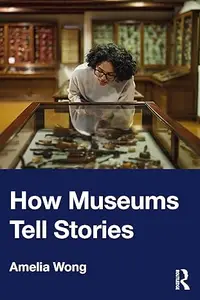
How Museums Tell Stories
English | 2025 | ISBN: 0367540576 | 134 Pages | PDF EPUB (True) | 3.2 MB
Story―in life and in museums―is a phenomenon that emerges as people perceive, represent, and interpret the qualities of tellability and narrativity in relation to stimuli. Tellability is noteworthiness: it attracts our attention. Narrativity is a set of elements that enables us to perceive a story is being or could be told. The book discusses how and why these qualities are so present in museums, and how they enable physical institutions to tell stories in many forms, at many scales, in many styles of representation, and to varying degrees. Drawing on conceptions of narrative from literary theory, film, psychology, and cognitive science, Wong offers a shared vocabulary for understanding and analyzing how story manifests in museums at the level of objects, collections, exhibitions, and space.


Fileaxa


Links are Interchangeable - Single Extraction

 
a2e04b904476edb7bfb4a74f9122874f.webp

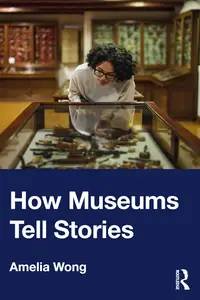
How Museums Tell Stories by Amelia Wong
English | March 27, 2025 | ISBN: 0367540576 | 134 pages | PDF | 1.64 Mb
How Museums Tell Stories explains how museums "work" as a form of media that narrates stories intentionally and unintentionally.

Story―in life and in museums―is a phenomenon that emerges as people perceive, represent, and interpret the qualities of tellability and narrativity in relation to stimuli. Tellability is noteworthiness: it attracts our attention. Narrativity is a set of elements that enables us to perceive a story is being or could be told. The book discusses how and why these qualities are so present in museums, and how they enable physical institutions to tell stories in many forms, at many scales, in many styles of representation, and to varying degrees. Drawing on conceptions of narrative from literary theory, film, psychology, and cognitive science, Wong offers a shared vocabulary for understanding and analyzing how story manifests in museums at the level of objects, collections, exhibitions, and space.
How Museums Tell Stories will be essential reading for researchers and students interested in how and why museums engage audiences, as well as museum and cultural heritage practitioners seeking concepts and analytical tools for approaching and evaluating their work more critically and conscientiously.


Fileaxa


Links are Interchangeable - Single Extraction

 
cc3b0cbd7ae12cc9716315ba7e3f1bbd.webp

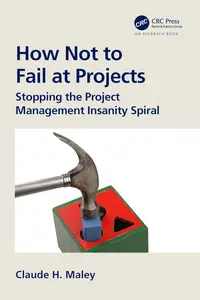
How Not to Fail at Projects by Claude H. Maley
English | June 3, 2024 | ISBN: 1032744502 | 83 pages | MOBI | 3.13 Mb
They say that repeating the same thing and expecting a different result is insanity. This book aims to analyze the reasons for failure in project management. It is filled with stories, anecdotes and satires that highlight how organizations and project managers fall into an "insanity spiral". It provides seven Sanity Checks designed to keep project managers from repeating the same mistakes and to help them become project champions:The first sanity check is how and when to appoint a project manager. This first sanity check may be familiar and may well bring back memories of starting a career in project management.The second sanity check is the comprehension of why a project is needed. It helps to overcome the misunderstanding that many have on the nature of projects and its management.The third sanity check is the understanding of the unknown and emphasizes the importance of risk management.The fourth sanity check is capturing who needs what. It is about the constant pursuit to satisfy a host of individuals and at times the, sometimes seemingly, unsurmountable quest to secure resources for a project.The fifth sanity check is who does what. It also deals with satisfying stakeholders and obtaining resources.The sixth sanity check is outside assistance. It is all about breaking the us versus them syndrome when outsourcing in a project.The seventh and most important sanity check is engaging the efforts of others as it deals with people―the lifeblood of any organization.The book concludes with a chapter on composing and building powerful microservices. With the exponential growth of IoT devices, microservices are being developed and deployed on resource-constrained but resource-intensive devices in order to provide people-centric applications. The book discusses the challenges of these applications. Finally, the book looks at the role of microservices in smart environments and upcoming trends including ubiquitous yet disappearing microservices.


Fileaxa


Links are Interchangeable - Single Extraction

 
5c8c9ea605e34282bd06eb6d9db19c8a.webp

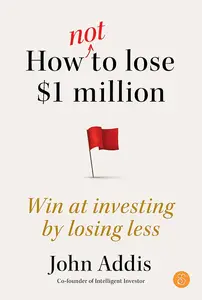
How Not to Lose $1 Million: Win at investing by losing less by John Addis
English | September 9, 2024 | ISBN: 1923186035 | 192 pages | PDF | 1.67 Mb
John Addis believes that most people probably shouldn' t be managing their own money. However, if you do, or want to, this book will help you to get better at it by avoiding the traps. The key lesson in the book is that successful investors don' t concentrate on picking winners; instead they work on minimising risk and learning from losses. John shares some of the mistakes he has made over his three decades of investing and, with the benefit of hindsight, the reasons why he made them. These include falling in love with a stock or a charismatic CEO, selling too soon as a stock continues to soar, misunderstanding the business model and not responding to obvious red flags. How not to lose $1 million is neatly structured into four categories:

* stocks he bought but shouldn' t have
* stocks he bought but sold too soon
* stocks he bought but sold too late
* stocks he should have bought but didn' t. John' s engaging storytelling makes his review of the stocks he invested in entertaining and enlightening. The value of this book is in the lessons investors can learn for their future investing success.


Fileaxa


Links are Interchangeable - Single Extraction
 
5becd675889d091746d21b1b7a071840.webp

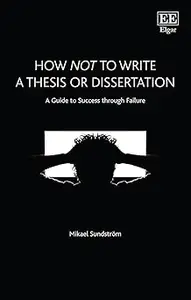
Mikael Sundström, "How Not to Write a Thesis or Dissertation: A Guide to Success through Failure"
English | ISBN: 1789900506 | 2020 | 192 pages | PDF | 3 MB
If you thought a book about thesis writing would make for wearisome reading, think again! In seven entertaining and enlightening chapters, Mikael Sundstrom sheds light on the trials and tribulations of academic writing, offering guidance on how to become a doyen of academic disaster - and, more importantly, how to avoid that fate.

Prepare to consider your academic writing in a whole new way. Guiding readers through the many stages of thesis writing, this dynamic book provides a comprehensive and rigorous methodology that encompasses the crucial aspects of the dreaded dissertation. It follows the writing process, from drafting the research question and composing the first line, to constructing an impressive argument and finishing a thesis with finesse. Featuring concrete tips on academic penmanship and regular 'How Not to Fail' boxes, Sundstrom identifies the potential pitfalls that lead to dissertation disaster - and expertly lays out a path to success.
Read more


Fileaxa


Links are Interchangeable - Single Extraction

 
32094556a991c3dbd995eb80b87158de.webp

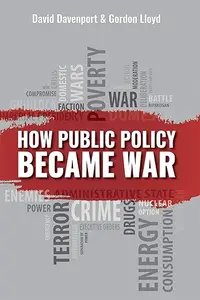
David Davenport, Gordon Lloyd, "How Public Policy Became War"
English | 2019 | ISBN: 0817922644 | EPUB | pages: 176 | 0.5 mb
President Franklin Roosevelt's New Deal is widely understood as a turning point in American history. Roosevelt's decisions of 1933 reset the balance of power away from Congress and the states toward a strong executive branch. They shifted the federal government away from the Founders' vision of deliberation and moderation toward war and action. Modern-day presidents have declared war on everything from poverty and drugs to crime and terror. Exploring the consequences of these ill-defined (and never-ending) wars, this book calls for a re-examination of this destructive approach to governance.


Fileaxa


Links are Interchangeable - Single Extraction
 
Zurück
Oben Unten