• Regeln für den Dokumente-Bereich:

    In den Börsenbereich gehören nur Angebote die bereits den Allgemeinen Regeln entsprechen.

    Allgemeines:

    Nicht erlaubt im Dokumente-Bereich sind:

    - indizierte Titel (inkl. Comics)
    - extremistische Werke, Zeitschriften und Comics (egal, welche Richtung)
    - jegliche Art von Pornographie
    - Anleitungen zu kriminellen Handlungen, gleich welcher Art
    - sadistische, menschenverachtende oder ähnliche Werke

    Nutzt den "Bedanken"-Button, bei Sammelthreads führen jegliche Kommentare, positiv wie negativ, sehr schnell zu einer Unübersichtlichkeit des Threads. Downmeldungen sind an den Uploader zu richten

    Vor dem Einstellen zu beachten:

    - Suchfunktion

    Vergewissert euch, dass es euer Dokument noch nicht im Board gibt, Doppelposts werden kommentarlos gelöscht. Ist es schon vorhanden, tragt es als Mirror im bestehenden Post ein.

    - Threadtitel

    Idealerweise ist sofort zu erkennen um was es sich handelt. Verseht euren Titel mit den relevanten Informationen, das hilft euch und damit auch uns und allen Suchenden erheblich weiter.

    Beispiel: [Thriller] Dan Brown - Inferno oder bei Magazinen:

    Computerbild - 14/2014 (es muss ersichtlich sein, um welche Ausgabe und welches Magazin es sich handelt)

    Folgende Präfixe stehen im Unterforum "Unterhaltung" zur Verfügung:

    [Humor]
    [Drama]
    [Erotik]
    [Fantasy]
    [Krimi]
    [Roman]
    [Thriller]
    [Horror]
    [Science Fiction]

    Inhalt des Beitrags:

    Folgende Pflichtangaben gilt es einzuhalten:

    - Autor
    - Titel
    - Präfix
    - Cover
    - Genre
    - Inhaltsbeschreibung
    - enthaltene Formate
    - Gesamtgröße des Downloads
    - Hoster
    - ggf. Passwort

    Nicht erlaubt sind alle Dateien, die den Download unnötig aufblähen um eine Affiliategrenze zu erreichen, wie zB. mp3-files, übergroße Bilder, etc.

    Ebenso nicht erlaubt sind sämtliche Dateien mit DRM, persönlichen Daten, etc., diese werden kommentarlos zu eurem eigenem Schutz gelöscht.

    Achtet bitte bei der Konvertierung der Formate auf die Lesbarkeit, ein epub, was nur einfach durch Calibre gejagt wird um ein PDF zu erhalten, ist zu 99% eben nicht lesbar. Wenn ihr es nicht könnt, dann lasst es besser oder lest euch ein, wie man es richtig macht.


    Unterforum Comics:

    Threadtitel:

    Ähnlich, wie bei Unterhaltung und Magazinen, sollte der Titel alle relevanten Informationen enthalten, hier bitte

    - den Titel des Comics
    - den Verlag (einige Comics sind in verschiedenen Verlagen erschienen)
    - das Erscheinungsjahr

    Erlaubt sind folgende Formate:

    - CBR
    - CBZ

    Grundsätzlich gilt: jede Version eines Comics erhält einen eigenen Thread, Ersteller eines Comics können ihre Bände gerne mit dem Zusatz (Original-Release) versehen.

    Bei Unsicherheiten zur korrekten Benennung bitte die Informationen von www.comicguide.de nutzen.

    Inhalt des Beitrags:

    Pflichtangaben hier sind:

    - Titel des Bandes und ggf. Nummer
    - Cover
    - falls bekannt technische Daten (DPI, Breite, Speicherqualität)
    - Größe des Downloads
    - Hoster
    - ggf. Passwort
    - falls bekannt Releasenamen
  • Bitte registriere dich zunächst um Beiträge zu verfassen und externe Links aufzurufen.

++ Premium IPTV ++ 7000 Live Sender ++ UHD Qualität ++ Mediathek mit 18.000 Inhalten ++


VenneTV


Collection Download Ebooks Best Seller Updated Daily

5306803d6010980cf7beca0db82c390b.webp

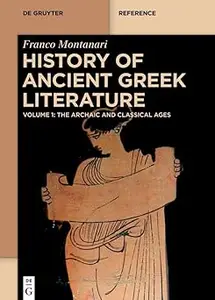
Franco Montanari, "History of Ancient Greek Literature: Volume 1: The Archaic and Classical Ages. Volume 2: The Hellenistic Age and the Rom Ed 2"
English | ISBN: 3110419920 | 2022 | 1211 pages | EPUB | 4 MB
Spanning over 1100+ pages, this two-volume work offers the most comprehensive and up-to-date history of ancient Greek literature from Homer to Late Antiquity. Its clear structure and detailed presentation of Greek authors and their works as well as literary genres and phenomena makes it an indispensable reference work for all those interested in Greek Antiquity.


Fileaxa


Links are Interchangeable - Single Extraction
 
66c8d02fd6b9c83e2baf05bcaa7c116b.webp

History of Finance Capital in America (Perspectives in Economic and Social History) by Go Tian Kang
English | April 23, 2024 | ISBN: 1032727853 | 322 pages | PDF | 2.20 Mb
Go details through institutional analysis how major financial institutions (including banks and insurance companies), industries, and the U.S. government behaved and linked with each other during the Great Depression and interwar period.

Drawing on data that has not been widely used since the late thirties - including congressional hearings, financial data, and government reports concerning economic concentration in the Depression era - Go presents a general picture of American finance capital on the eve of World War II. He details the emergence of important new financial‑industrial powers in the 1920s that challenged the Wall Street's established order on the eve of Great Depression, the response of the Wall Street's finance capital to the challenge, and its renewed dominance as well as the growing community of interests between finance and industry under the Depression. He also points out the role of Wall Street's finance capital in financing the Reconstruction Finance Corporation in 1932, the New Deal, and the emerging war economy.
With its coverage of primary sources, this book will interest researchers and advanced undergraduate students taking American history, political science, and institutional economics.


Fileaxa


Links are Interchangeable - Single Extraction
 
2717f1423a32cc2a3531d833c6ca5d47.webp

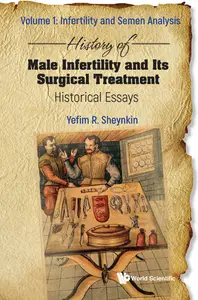
History of Male Infertility and Its Surgical Treatment: Historical Essays (in 2 Volumes)
English | 2025 | ISBN: 9811289387 | 1278 Pages | PDF (True) | 50 MB
Infertility in men has been a longstanding issue throughout history. In the past, infertility was commonly thought to be solely the fault of females, while the complex history of male infertility was often overlooked. Currently, there is limited literature on the subject, with only a few review articles and introductory chapters in textbooks or specialized books discussing the clinical features of male infertility, but failing to address its historical, societal, cultural, political, and philosophical implications. This book aims to fill this gap and offer readers a comprehensive historical perspective on the development of male infertility into a clinical entity.


Fileaxa


Links are Interchangeable - Single Extraction
 
fa472f637e789fb7851ca95b58f1c8bd.webp

Reinhold Aris, "History of Political Thought in Germany 1789-1815: From 1789 to 1815"
English | 2013 | ISBN: 0714615463 | EPUB | pages: 416 | 0.5 mb
First Published in 1965. This study deals with the history of political thought in Germany from 1789 to 1815. It is the story of a nation awaking from a long sleep, commencing to think for itself, to modernize its institutions, to formulate its ideas of the pattern of society and the duties of the State. Modern German literature begins with Klopstock and Lessing. German political thinking comes even later, for it is the child of the French Revolution.


Fileaxa


Links are Interchangeable - Single Extraction
 
0a5527104ec286db15480605dbea4c29.webp

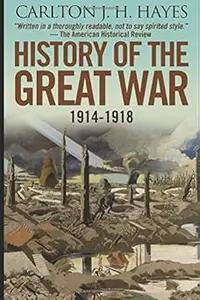
Carlton J. H. Hayes, "History of the Great War, 1914-1918"
English | ISBN: 1520900317 | 2017 | 535 pages | AZW | 571 KB
The First World War was not just fought in the muddy fields of France and Belgium on the Western Front.

It was a truly worldwide conflict.
Through the course of fifteen chapters, Carlton J. H. Hayes uncovers the complex causes, events and results of this infamous war that defined the twentieth century.
Rather than simply focusing on the famous battles of Verdun, the Somme, Ypres, Passchendaele, and the Marne, Hayes exposes the battles and conflicts that occurred on the Eastern Front, in the Balkans, in the Near East between the Ottoman and British Empires, in Africa and the Far East, and in the seas of the Atlantic and the Pacific.
Hayes orders the book chronologically so that the developments of the conflict across the world can be seen year by year. This work reveals the complex politics of both the Allied Powers and the Central Powers as each individual nation had aims and desires which they wanted to support while continuing to fight their common enemies.
As the Western Front began to be tied down in trench warfare the various other fronts around the world were also in conflict.
With the Anglo-French failures at the Dardanelles and on Gallipoli, the escalating U-boat raids in the Atlantic, Bulgaria's conquest of Serbia and the crumbling of the Russian Empire on the East Front, it looked as though the Central Powers were close to victory.
Yet, in the end, the Allied forces did overcome the Central Powers and Hayes provides a thorough analysis of why and how they were able to do this.
"The magnitude, complication, deep-seated causes, intricate relations and numerous and far-reaching results of the struggle gave opportunity and unclear treatment. Yet the author has produced a work notable for good proportion and balance, for coherence and lucidity, for a just measure of relative values and for a penetrating perception of the truth." Earl E. Sperry,
Read more


Fileaxa


Links are Interchangeable - Single Extraction
 
066271d1c512a56a4830137dbde53646.webp

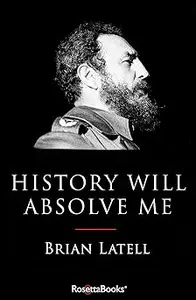
Brian Latell, "History Will Absolve Me: Fidel Castro"
English | 2016 | ASIN: B07NMGDC9C | EPUB | pages: 123 | 0.3 mb
The CIA analyst who tracked Castro for decades explores the mind and motivations of the man who governed Cuba for nearly half a century.

On trial in Santiago for leading a bloody assault on the city's Moncada garrison, young revolutionary leader Fidel Castro uttered a phrase in court that would come to serve as a rallying cry for his 26th of July Movement and his regime thereafter: "History will absolve me."
Despite the fact that his methods resulted in great loss of life on both sides, Castro never wavered in his belief that in the final reckoning his life's work would be vindicated-his violence necessary in bringing a new government to Cuba and a new political model to the developing world.
For decades, CIA analyst Brian Latell tracked Castro relentlessly-getting to know his habits, his fears, and the passions that drove him. In this book, the author of After Fidel and Castro's Secret steps from the shadows to paint a complex and nuanced portrait of the man he came to know better than any other intelligence target-revealing the mind and motivations of one of the most mercurial, passionate, and dominating leaders of the twentieth century.
"One of America's foremost Cuba analysts." -George J.Tenet, former CIA director


Fileaxa


Links are Interchangeable - Single Extraction
 
4744b59c718754296dbbb35d444ee2d3.webp

Juan Carlos Bayo Julve, Barry Taylor, "Història De Jacob Xalabín / History of Yakub Celebi: With an Introduction and Notes"
English, Catalan | 2015 | ISBN: 9004302697 | PDF | pages: 236 | 1.1 mb
The Història de Jacob Xalabín, an anonymous novel written in Catalan c.1400, focuses on the figure of the Ottoman prince Yakub Çelebi, son of Murad I and half-brother of Bayezid I. It ends with the first detailed account of the battle of Kosovo of 1389, which left a lasting mark on the history of the Balkans.

This text, mixing historical and fictional elements, is one of the earliest depictions in Western Literature of the rising Ottoman empire. Because of this, it is most relevant for Mediterranean studies and debates about orientalism. Juan Carlos Bayo has prepared a new critical edition of this novel, with an introduction and notes, and Barry Taylor offers its first translation ever into the English language. The volume is completed with an appendix of texts and documents on the Turkish connections of the Crown of Aragon.


Fileaxa


Links are Interchangeable - Single Extraction
 
a0ea7329b8c0edca5fed20a98c22733e.webp

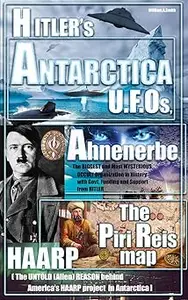
William.A Smith, "Hitler: Hitler's ANTARCTICA UFOs, the Ahnenerbe Society, the Piri Reis Map, HAARP and other Mysteries "
English |ASIN : B011A7DEOA | 2015 | pages | AZW | 1045 KB
Read on your PC, Mac, Smart phone, Tablet or Kindle device.

Hitler's life and his belief in super humans or a superior race is well known, but the extends to which he and his Third Reich went to find these in reality is less known and mind boggling. Hitler believed in the 'Hollow Earth' theory where according to legends were inhabited by a human race far superior than normal humans on earth. He intended to seek their help and use their superior technology.
So that on every front, from stealth technology to nuclear power Hitler's push for scientific success fueled by the Nazi dream of a Global Reich - a German Empire lasting a thousand years could be a reality. Hitler believed there was an opening to this 'Hollow Earth' in the unexplored Antarctica, thus the Fuhrer (Hitler) had sent expeditions to the South pole (aka Antarctica) for the very same purpose. Also he had other intentions like to exploit the vast natural resources of this unexplored continent (the sixth continent bigger than Europe, is rich in Uranium which could really help him fuel-up his super-planes) and also set-up a safe base there.
The Ahnenerbe was an occult society formed by Hitler's highest ranking officials whose secret intentions was to explore the reality in religions and myths around the world. The idea was to combine the ancient super knowledge to current scientific knowledge and to make the Third Reich 'the Untouchables'. Even now, the secret services of leading powers hunt for Ahnenerbe's secrets. It is of no doubt that they attained great unknown knowledge and sadly also destroyed some of it (mainly books, they literally burned them on a mass scale) before it could be disclosed to the world. But many records of their quest for ancient knowledge are still hidden out there to be found and benefited from.
According to Ahnenerbe, there were people and civilizations much before the current records of the beginning of humans, who attained much more knowledge and advancements in every fields than the so called ' Modern men ' today. But somehow these civilizations got wiped out completely due to some natural calamity, and thus we humans had to start again from scratch.
Hitler's Ahnenerbe also believed humans were not alone in this gigantic universe consisting of millions of planets and solar systems (stars). They believed a higher knowledge were locked and hidden away in various parts of the world in the form of ancient manuscripts, carvings, books, etc. And the people who could lay their hands and join the pieces of this 'forgotten ancient puzzle' (scattered all around the world) could be the new super powers and could rule the world.
Americans have always been interested in the 'techno-magical' legacy of Germany. Consequently when they defeated Germany in World War 2, they were eager to attain all the German secret knowledge.
But the allies were shocked to discover that thousands of highly qualified Third Reich specialists had vanished and weren't listed as dead. Over a 100 German submarines had also vanished, never to be found. The rumor was that these scientists were shifted to Antarctica along with their huge labs and machinery in these missing submarines. Thus America had to make sure that they had completely won over Germany and will not be sadly surprised by an attack with German Super-Weapons, which they may not be able to even respond. So the US military plans a secret expedition to Antarctica code named ' Operation High jump '.
Suddenly the inexplicable occurs; the expedition, designed to last 6 months, is quickly aborted after two months, leaving the Antarctic coast deserted. It was an actual retreat.
(Note: We present
Read more


Fileaxa


Links are Interchangeable - Single Extraction

 
08d679686ed17d49dc59eff89e783b3c.webp

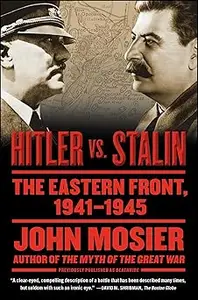
John Mosier, "Hitler vs. Stalin: The Eastern Front, 1941-1945"
English | ISBN: 141657350X | 2011 | 480 pages | MOBI | 1114 KB
Originally published as Deathride, this is the true story of the Eastern Front in World War II, emphasizing how close Germany came to winning and the USSR to losing; the severity of the Soviet losses, which have been minimized due to Soviet propaganda; and the importance of the Allied invasions of North Africa and Sicily, among other factors, in forcing Hitler to re-deploy troops, saving the Soviets from disaster.

The German invasion of the Soviet Union on June 22, 1941, began a war that lasted nearly four years and created by far the bloodiest theater in World War II. In the conventional narrative of this war, Hitler was defeated by Stalin because, like Napoleon, he underestimated the size and resources of his enemy. In fact, says historian John Mosier, Hitler came very close to winning and lost only because of the intervention of the western Allies. Stalin's great triumph was not winning the war, but establishing the prevailing interpretation of the war. The Great Patriotic War, as it is known in Russia, would eventually prove fatal, setting in motion events that would culminate in the collapse of the Soviet Union.
Mosier argues that the Soviet losses in World War II were unsustainable and would eventually have led to defeat. The Soviet Union had only twice the population of Germany at the time, but it was suffering a casualty rate more than two and a half times the German rate. Because Stalin had a notorious habit of imprisoning or killing anyone who brought him bad news (and often their families as well), Soviet battlefield reports were fantasies, and the battle plans Soviet generals developed seldom responded to actual circumstances. In this respect the Soviets waged war as they did everything else: through propaganda rather than actual achievement. What saved Stalin was the Allied decision to open the Mediterranean theater. Once the Allies threatened Italy, Hitler was forced to withdraw his best troops from the eastern front and redeploy them. In addition, the Allies provided heavy vehicles that the Soviets desperately needed and were unable to manufacture themselves. It was not the resources of the Soviet Union that defeated Hitler but the resources of the West.
In this provocative revisionist analysis of the war between Hitler and Stalin, Mosier provides a dramatic, vigorous narrative of events as he shows how most previous histories accepted Stalin's lies and distortions to produce a false sense of Soviet triumph. This
Read more


Fileaxa


Links are Interchangeable - Single Extraction

 
58155042b20f04389edb3241852a26d1.webp

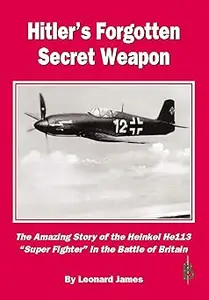
Leonard James, "Hitler's Forgotten Secret Weapon"
English | ASIN : B0051HA7L4 | 2011 | 96 pages | EPUB | 475 KB
The last great untold story of World War II, the career of Hitler's "Super Fighter" intended to destroy the RAF in the Battle of Britain and why it never succeeded.

The super-secret Heinkel He113 fighter was designed to be a high-speed, high-altitude fighter that could outperform, outgun and outfight any other aircraft in the world when it entered service with the Luftwaffe in 1940. Hitler's airforce commander, Hermann Goring declared that the Spitfire was "so much scrap metal". As the Battle of Britain opened the RAF issued directives to pilots about the new Superjaegar, or Super Fighter, and squadrons of these aircraft were met in combat over the Channel.
Yet all was not what it seemed. There was a fatal flaw at the heart of the Superjaegar Projekt that meant that the aircraft would never achieve its potential and so would become Hitler's forgotten secret weapon.
In this fascinating book the author traces the development of the He113 Wonder Fighter from the drawing board at Heinkel to the war torn skies over Britain in the fateful summer of 1940.
About the Author
Rupert Matthews has written over 150 books for different ✅Publishers, achieving significant sales in a variety of markets both in the UK and abroad. His works have been translated into 19 languages and have been shortlisted for a number of awards. Rupert has been a freelance writer for 20 years, working in-house at a major book ✅Publisher before going freelance.
Read more


Fileaxa


Links are Interchangeable - Single Extraction

 
e81945832445767c88c94763062729a6.webp

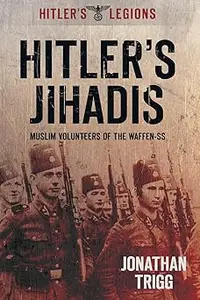
Jonathan Trigg, "Hitler's Jihadis: Muslim Volunteers of the Waffen-SS "
English | ISBN: 0752465864 | 2012 | 224 pages | EPUB | 3 MB
The story of tens of thousands of Muslims from as far away as India who volunteered to wear the SS double lightning flashes and serve alongside their erstwhile conquerors

As the West finds itself embroiled in conflict with radical Islam, it is fascinating to hear the echoes of militant Islam from World War II. This history gives insight into the prewar politics that inspired these Islamic volunteers, who for the most part did not survive. Those who did survive the war and the bloody retribution that followed saw the reputation of the units in which they served berated as militarily inept and castigated for atrocities against unarmed civilians. Firsthand accounts and official records peel away the propaganda to reveal the complexity that lies at the heart of the story of Hitler's most unlikely "Aryans."
Read more


Fileaxa


Links are Interchangeable - Single Extraction

 
50270f13108579f37a9cf0be83017648.webp

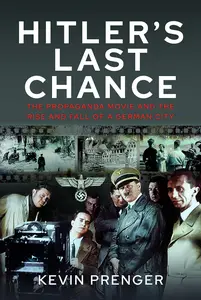
Hitler's Last Chance: Kolberg: The Propaganda Movie and the Rise and Fall of a German City by Kevin Prenger
English | March 23, 2023 | ISBN: 1399072978 | 192 pages | EPUB | 0.24 Mb
The war in Europe was reaching its cataclysmic final months with Germany surrounded on all sides. Most of Hitler's forces had been driven from Poland by the Red Army and the Soviets were poised a short distance from Berlin, while the Western allies, having repulsed the Führer's Ardennes offensive, were preparing to cross the Rhine.

More than ever Hitler needed his people to stiffen their resolve for the coming onslaught. To demonstrate what will be expected of the German people, and what they could achieve if they refused to acknowledge defeat, a major feature film would be shown, featuring the legendary place which held out against Napoleon when he invaded Prussia in 1806 - the city of Kolberg.
After crushing the Prussian Army in 1806, French forces swept into the Prussian province of Pomerania. One by one most Prussian fortresses surrendered, mostly without offering any resistance, but Kolberg stood firm. The small and weakly-fortified city held out for almost four months despite being surrounded by Napoleon's forces, with Major von Gneisenau organising a citizen's militia to aid the army in its defence. Though much of the city was blasted into ruin, Kolberg remained in Prussian hands until the war with France ended with the signing of the Peace of Tilsit, by which time its defence had become legendary.
Even though the Third Reich was literally entering its death-throes, in attempting to reproduce the siege of Kolberg on film, thousands of experts, extras and horses were taken from the war effort by the Reich Minister of Propaganda, Joseph Goebbels. The film's emphasis was to show how civilians and the military can work together to save Germany - just as Kolberg had been saved from the French. The result has been stated to be the most expensive feature film ever made in Germany.
This book examines the dramatic conditions under which the film was produced, and the scale of the resources needed to do so, followed by its first showing on 30 January 1945. All Goebbels' efforts, though, were to no avail, as the film never went on general release. A month later, as the author reveals, Kolberg found itself under siege once again, but this time, after bitter house-to-house fighting, it fell to the Soviets in just two weeks.


Fileaxa


Links are Interchangeable - Single Extraction

 
Zurück
Oben Unten