• Regeln für den Dokumente-Bereich:

    In den Börsenbereich gehören nur Angebote die bereits den Allgemeinen Regeln entsprechen.

    Allgemeines:

    Nicht erlaubt im Dokumente-Bereich sind:

    - indizierte Titel (inkl. Comics)
    - extremistische Werke, Zeitschriften und Comics (egal, welche Richtung)
    - jegliche Art von Pornographie
    - Anleitungen zu kriminellen Handlungen, gleich welcher Art
    - sadistische, menschenverachtende oder ähnliche Werke

    Nutzt den "Bedanken"-Button, bei Sammelthreads führen jegliche Kommentare, positiv wie negativ, sehr schnell zu einer Unübersichtlichkeit des Threads. Downmeldungen sind an den Uploader zu richten

    Vor dem Einstellen zu beachten:

    - Suchfunktion

    Vergewissert euch, dass es euer Dokument noch nicht im Board gibt, Doppelposts werden kommentarlos gelöscht. Ist es schon vorhanden, tragt es als Mirror im bestehenden Post ein.

    - Threadtitel

    Idealerweise ist sofort zu erkennen um was es sich handelt. Verseht euren Titel mit den relevanten Informationen, das hilft euch und damit auch uns und allen Suchenden erheblich weiter.

    Beispiel: [Thriller] Dan Brown - Inferno oder bei Magazinen:

    Computerbild - 14/2014 (es muss ersichtlich sein, um welche Ausgabe und welches Magazin es sich handelt)

    Folgende Präfixe stehen im Unterforum "Unterhaltung" zur Verfügung:

    [Humor]
    [Drama]
    [Erotik]
    [Fantasy]
    [Krimi]
    [Roman]
    [Thriller]
    [Horror]
    [Science Fiction]

    Inhalt des Beitrags:

    Folgende Pflichtangaben gilt es einzuhalten:

    - Autor
    - Titel
    - Präfix
    - Cover
    - Genre
    - Inhaltsbeschreibung
    - enthaltene Formate
    - Gesamtgröße des Downloads
    - Hoster
    - ggf. Passwort

    Nicht erlaubt sind alle Dateien, die den Download unnötig aufblähen um eine Affiliategrenze zu erreichen, wie zB. mp3-files, übergroße Bilder, etc.

    Ebenso nicht erlaubt sind sämtliche Dateien mit DRM, persönlichen Daten, etc., diese werden kommentarlos zu eurem eigenem Schutz gelöscht.

    Achtet bitte bei der Konvertierung der Formate auf die Lesbarkeit, ein epub, was nur einfach durch Calibre gejagt wird um ein PDF zu erhalten, ist zu 99% eben nicht lesbar. Wenn ihr es nicht könnt, dann lasst es besser oder lest euch ein, wie man es richtig macht.


    Unterforum Comics:

    Threadtitel:

    Ähnlich, wie bei Unterhaltung und Magazinen, sollte der Titel alle relevanten Informationen enthalten, hier bitte

    - den Titel des Comics
    - den Verlag (einige Comics sind in verschiedenen Verlagen erschienen)
    - das Erscheinungsjahr

    Erlaubt sind folgende Formate:

    - CBR
    - CBZ

    Grundsätzlich gilt: jede Version eines Comics erhält einen eigenen Thread, Ersteller eines Comics können ihre Bände gerne mit dem Zusatz (Original-Release) versehen.

    Bei Unsicherheiten zur korrekten Benennung bitte die Informationen von www.comicguide.de nutzen.

    Inhalt des Beitrags:

    Pflichtangaben hier sind:

    - Titel des Bandes und ggf. Nummer
    - Cover
    - falls bekannt technische Daten (DPI, Breite, Speicherqualität)
    - Größe des Downloads
    - Hoster
    - ggf. Passwort
    - falls bekannt Releasenamen
  • Bitte registriere dich zunächst um Beiträge zu verfassen und externe Links aufzurufen.

++ Premium IPTV ++ 7000 Live Sender ++ UHD Qualität ++ Mediathek mit 18.000 Inhalten ++


VenneTV


Collection Download Ebooks Best Seller Updated Daily

b63cdd2fc9343a30b45e9a945a47520f.webp

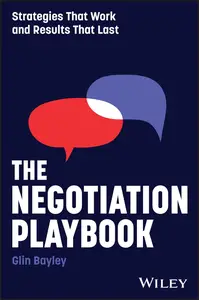
The Negotiation Playbook: Strategies That Work and Results That Last by Glin Bayley
English | October 7, 2024 | ISBN: 1394284683 | 304 pages | PDF | 1.49 Mb
Every negotiation is an opportunity ― to connect, collaborate and create value

If you want better business outcomes, you need the confidence and skill to ask for what you want ― and get it. The Negotiation Playbook: Strategies That Work and Results That Last shares tactics and tools to boost your communication skills for more powerful persuasion and more creative problem-solving. Backed by insights from behavioural psychology, this playbook reveals the what, why, when, where and how behind skilful negotiation.
Author and negotiation specialist Glin Bayley shows you how to develop more meaningful business relationships in every encounter. With The Value Method™ for negotiation, you'll discover a five-part framework you can use to generate more successes and better profits. More than this, you'll learn how to collaborate with stakeholders in a way that generates real, positive impact beyond the bottom line.
The Negotiation Playbook shows you how to:Identify and strengthen your own personal negotiation styleAnalyse the data, understand the value you bring to the table and leverage your positionDevelop the agility you need to adapt your approach and solve problems creatively and intuitivelyStrengthen your ability to influence, by seeing and hearing things that others missCreate a strategic plan for any negotiation
For anyone who needs to lead, collaborate, bargain, pitch, present or sell, this book offers powerful guidance to achieve long-term sustainable success. The Negotiation Playbook will help you transform your day-to-day challenges ― in business and in life ― into opportunities for shared rewards.


Fileaxa


Links are Interchangeable - Single Extraction

 
f8d13dc9681538e1695c46bd56bf77e0.webp

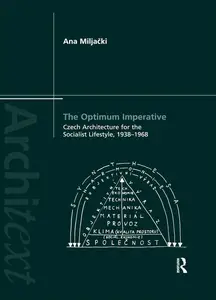
The Optimum Imperative: Czech Architecture for the Socialist Lifestyle, 1938-1968 (Architext) by Ana Miljacki
English | February 2, 2017 | ISBN: 1138208175, 0367595427 | True PDF | 310 pages | 12.7 MB
The Optimum Imperative examines architecture's multiple entanglements within the problematics of Socialist lifestyle in postwar Czechoslovakia.

Situated in the period loosely bracketed by the signing of the Munich accords in 1938, which affected Czechoslovakia's entrance into World War II, and the Warsaw Pact troops' occupation of Prague in 1968, the book investigates three decades of Czech architecture, highlighting a diverse cast of protagonists. Key among them are the theorist and architect Karel Honzík and a small group of his colleagues in the Club for the Study of Consumption; the award-winning Czechoslovak Pavilion at the 1958 World Expo in Brussels; and SIAL, a group of architects from Liberec that emerged from the national network of Stavoprojekt offices during the reform years, only to be subsumed back into it in the wake of Czechoslovak normalization. This episodic approach enables a long view of the way that the project of constructing Socialism was made disciplinarily specific for architecture, through the constant interpretation of Socialist lifestyle, both as a narrative framework and as a historical goal.
Without sanitizing history of its absurd contortions in discourse and in daily life, the book takes as its subject the complex and dynamic relationships between Cold War politics, state power, disciplinary legitimating narratives, and Czech architects' optimism for Socialism. It proposes that these key dimensions of practicing architecture and building Socialism were intertwined, and even commensurate at times, through the framework of Socialist lifestyle.


Fileaxa


Links are Interchangeable - Single Extraction

 
0655ccecf4616b590811f7d05273f060.webp

The Oxford History of Protestant Dissenting Traditions, Volume II: The Long Eighteenth Century c. 1689-c. 1828 by Andrew Thompson
English | August 21, 2018 | ISBN: 9780198702245 | 488 pages | MOBI | 3.41 Mb
The five-volume Oxford History of Dissenting Protestant Traditions series is governed by a motif of migration ('out-of-England'). It first traces organized church traditions that arose in England as Dissenters distanced themselves from a state church defined by diocesan episcopacy, the Book of Common Prayer, the Thirty-Nine Articles, and royal supremacy, but then follows those traditions as they spread beyond England -and also traces newer traditions that emerged downstream in other parts of the world from earlier forms of Dissent. Secondly, it does the same for the doctrines, church practices, stances toward state and society, attitudes toward Scripture, and characteristic patterns of organization that also originated in earlier English Dissent, but that have often defined a trajectory of influence independent ecclesiastical organizations.

The Oxford History of Protestant Dissenting Traditions, Volume II charts the development of protestant Dissent between the passing of the Toleration Act (1689) and the repealing of the Test and Corporation Acts (1828). The long eighteenth century was a period in which Dissenters slowly moved from a position of being a persecuted minority to achieving a degree of acceptance and, eventually, full political rights. The first part of the volume considers the history of various dissenting traditions inside England. There are separate chapters devoted to Presbyterians, Congregationalists, Baptists and Quakers-the denominations that traced their history before this period-and also to Methodists, who emerged as one of the denominations of 'New Dissent' during the eighteenth century. The second part explores that ways in which these traditions developed outside England. It considers the complexities of being a Dissenter in Wales and Ireland, where the state church was Episcopalian, as well as in Scotland, where it was Presbyterian. It also looks at the development of Dissent across the Atlantic, where the relationship between church and state was rather looser. Part three is devoted to revivalist movements and their impact, with a particular emphasis on the importance of missionary societies for spreading protestant Christianity from the late eighteenth century onwards. The fourth part looks at Dissenters' relationship to the British state and their involvement in the campaigns to abolish the slave trade. The final part discusses how Dissenters lived: the theology they developed and their attitudes towards scripture; the importance of both sermons and singing; their involvement in education and print culture and the ways in which they expressed their faith materially through their buildings.


Fileaxa


Links are Interchangeable - Single Extraction
 
77fd16954d4325e961ac2b322266b234.webp

The Power of the Badge: Sheriffs and Inequality in the United States by Emily M. Farris, Mirya R. Holman
English | September 5, 2024 | ISBN: 0226834492, 0226834514 | True EPUB | 304 pages | 1.4 MB
A sobering exploration of the near unchecked power of sheriffs in the United States.

Across the United States, more than 3,000 sheriffs occupy a unique position in the US political and legal systems. Elected by voters-usually in low-visibility, noncompetitive elections-sheriffs oversee more than a third of law enforcement employees and control almost all local jails. They have the power to both set and administer policies, and they can imprison, harm, and even kill members of their communities. Yet, they enjoy a degree of autonomy not seen by other political officeholders.
The Power of the Badge offers an unprecedented, data-rich look into the politics of the office and its effects on local communities. Emily M. Farris and Mirya R. Holman draw on two surveys of sheriffs taken nearly a decade apart, as well as election data, case studies, and administrative data to show how a volatile combination of authority and autonomy has created an environment where sheriffs rarely change; elections seldom create meaningful accountability; employees, budgets, and jails can be used for political gains; marginalized populations can be punished; and reforms fail. Farris and Holman also track the increasingly close linkages between sheriffs and right-wing radical groups in an era of high partisanship and intra-federal conflict.


Fileaxa


Links are Interchangeable - Single Extraction

 
ee6fb364a66828443c54279470b0680e.webp

The President's Kill List: Assassination and US Foreign Policy since 1945
English | 2024 | ISBN: 1399519506 | 400 Pages | PDF | 3 MB
From Fidel Castro to Qassem Soleimani, the US government has been involved in an array of assassinations and assassination attempts against foreign leaders and officials. The President's Kill List reveals how the US government has relied on a variety of methods, from the use of poison to the delivery of sniper rifles, and from employing hitmen to simply laying the groundwork for local actors to do the deed themselves. It shows not only how policymakers decided on assassination but also the level of Presidential control over these decisions. Tracing the history of the US government's approach to assassination, the book analyses the evolution of assassination policies and, for the first time, reveals how successive administrations - through private justifications and public legitimations ensured assassination remained an available tool.


Fileaxa


Links are Interchangeable - Single Extraction

 
20d492bbc3e052043b485e2cde37f3e8.webp

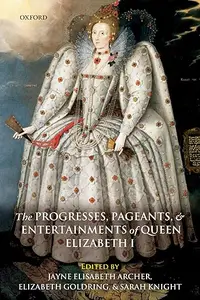
Jayne Elisabeth Archer, Sarah S. Knight, "The Progresses, Pageants, and Entertainments of Queen Elizabeth I"
English | 2007 | pages: 325 | ISBN: 0199291578, 0199673756 | PDF | 4,6 mb
More than any other English monarch before or since, Queen Elizabeth I used her annual progresses to shape her royal persona and to bolster her popularity and authority. During the spring and summer, accompanied by her court, Elizabeth toured southern England, the Midlands, and parts of the West Country, staying with private and civic hosts, and at the universities of Oxford and Cambridge. The progresses provided hosts with unique opportunities to impress and influence the Queen, and became occasions for magnificent and ingenious entertainments and pageants, drawing on the skills of architects, artists, and craftsmen, as well as dramatic performances, formal orations, poetic recitations, parades, masques, dances, and bear baiting.

The Progresses, Pageants, and Entertainments of Queen Elizabeth I is an interdisciplinary essay collection, drawing together new and innovative work by experts in literary studies, history, theatre and performance studies, art history, and antiquarian studies. As such, it will make a unique and timely contribution to research on the culture and history of Elizabethan England. Chapters include examinations of some of the principal Elizabethan progress entertainments, including the coronation pageant Veritas temporis filia (1559), Kenilworth (1575), Norwich (1578), Cowdray (1591), Bisham (1592), and Harefield (1602), while other chapters consider the themes raised by these events, including the ritual of gift-giving; the conduct of government whilst on progress; the significance of the visual arts in the entertainments; regional identity and militarism; elite and learned women as hosts; the circulation and publication of entertainment and pageant texts; the afterlife of the Elizabethan progresses, including their reappropriation in Caroline England and the documenting of Elizabeth's reign by late eighteenth- and early nineteenth-century antiquarians such as John Nichols, who went on to compile the monumental The Progresses of Queen Elizabeth (1788-1823).


Fileaxa


Links are Interchangeable - Single Extraction

 
d6e320451c87c87de811cae2875f9084.webp

The Roots of Pelvic Floor Yoga: Women Releasing Shame and Reclaiming Confidence, Freedom, and Radiance from the Inside Out. by Heather Dolson
English | May 28, 2023 | ISBN: N/A | ASIN: B0C6L166T2 | 207 pages | EPUB | 59 Mb
Are you ready to unlock the secrets to pelvic floor health, sensuality, and sexuality?

In "The Roots of Pelvic Floor Yoga" author, seasoned nurse, and yoga instructor, Heather Dolson, will take you on a transformative journey exploring the intricate history of body shaming in women as Dolson weaves a narrative that transcends time and societal norms.
This isn't just a book; it's a manifesto for reclaiming your body and embracing a newfound sense of self.
Discover the power within with practical, evidence-based instructions on seamlessly integrating pelvic floor yoga into your daily life. Dolson takes you by the hand, guiding you through stretches and breathing practices that not only strengthen your pelvic floor muscles but also liberate your spirit.
Say goodbye to taboos and hello to aliberated, confident you. "The Roots of Pelvic Floor Yoga" encourages you to embrace your sexuality, dispel shame, and take control of your pelvic well-being. This isn't just about physical health; it's about revitalizing your relationship with your own sensuality.
Inside the pages, you'll find:
* Empowering Instruction: Practical and accessible guidance to seamlessly incorporate pelvic floor yoga into your daily routine with real pictures.
* Historical Insight: Dive deep into the rich history of body shaming in women, understanding the roots to break free from its grip.
* Sexual Liberation: Embrace a new narrative that encourages you to celebrate your sexuality, breaking free from societal constraints.
* Tools for Empowerment: Equip yourself with the knowledge and tools needed to seize control of your pelvic health, fostering a sense of well-being.
"The Roots of Pelvic Floor Yoga" isn't just a book; it's your passport to healing, empowerment, and a renewed connection with your body. Take the first step towards a future where confidence and self-love reign supreme.


Fileaxa


Links are Interchangeable - Single Extraction
 
145cad7d65dee4eb8bb054044f81d569.webp

The Rough Guide to Wales: Travel Guide with eBook (Rough Guides Main Series) by Rough Guides
English | July 16, 2024 | ISBN: 1839059974 | 472 pages | MOBI | 55 Mb
This Wales guidebook is perfect for independent travellers planning a longer trip. It features all of the must-see sights and a wide range of off-the-beaten-track places. It also provides detailed practical information on preparing for a trip and what to do on the ground. And this Wales travel guidebook is printed on paper from responsible sources, and verified to meet the FSC's strict environmental and social standards.

This Wales guidebook covers: Cardiff and southeast Wales, Southwest Wales, The Brecon Beacons and Powys, The Cambrian coast, The Dee Valley and around, Snowdonia and the Llŷn, The north coast and Anglesey.
Inside this Wales travel book, you'll find:A wide range of sights - Rough Guides experts have hand-picked places for travellers with different needs and desires: off-the-beaten-track adventures, family activities or chilled-out breaksItinerary examples - created for different time frames or types of tripPractical information - how to get to Wales, all about public transport, food and drink, shopping, travelling with children, sports and outdoor activities, tips for travellers with disabilities and moreAuthor picks and things not to miss in Wales - Conwy, Cadair Idris, The Gower Peninsula, Adventure Parc Snowdonia, Wacky Llanwrtyd Wells, Ffestiniog Railway, St Davids Cathedral, Mawddach Trail, Carreg Cennen Castle, Pembrokeshire Coast Path, Snowdon, Tryfan, Edward I's Iron Ring, Cardiff, Brecon Beacons, Male Voice Choirs, Wye Valley, Industrial Heritage, Hay-on-Wye, Abergavenny's Food, Zip-wire Madness, AberglasneyInsider recommendations - tips on how to beat the crowds, save time and money, and find the best local spotsWhen to go to Wales - high season, low season, climate information and festivalsWhere to go - a clear introduction to Wales with key places and a handy overviewExtensive coverage of regions, places and experiences - regional highlights, sights and places for different types of travellers, with experiences matching different needsPlaces to eat, drink and stay - hand-picked restaurants, cafes, bars and hotelsPractical info at each site - hours of operation, websites, transit tips, chargesColour-coded mapping - with keys and legends listing sites categorised as highlights, eating, accommodation, shopping, drinking and nightlifeBackground information for connoisseurs - history, culture, art, architecture, film, books, religion, diversityEssential Welsh dictionary and glossary of local termsFree download of the eBook - available after purchase of the printed guidebook to WalesFully updated post-COVID-19The guide provides a comprehensive and rich selection of places to see and things to do in Wales, as well as great planning tools. It's the perfect companion, both ahead of your trip and on the ground.


Fileaxa


Links are Interchangeable - Single Extraction
 
86277b3a26f85b2171ab1cb31d8bf485.webp

William E. Marsden, "The School Textbook: History, Geography and Social Studies "
English | ISBN: 0713002212 | 2001 | 320 pages | PDF | 34 MB
A study of the school textbook grounded in historical and comparative perspectives. The approach is broadly chronological, revealing changes in the theory and practice of textbook production and use. The book focuses largely on three associated subjects - geography, history and social studies.


Fileaxa


Links are Interchangeable - Single Extraction

 
65323d6e736d1a642fdcfede4a1f3fae.webp

Rhiannon Purdie, Nicola Royan, "The Scots and Medieval Arthurian Legend"
English | 2005 | pages: 170 | ISBN: 1843840367 | PDF | 0,7 mb
Scotland's importance in Arthurian legend is undeniable: it was the traditional homeland of key figures such as Gawain; its landscape is still dotted with Arthurian associations, and many modern attempts to locate a historical Arthur end up in Scotland. Nevertheless, Scotland's complex relationship with Arthurian legend has been surprisingly neglected, and this volume is the first to be dedicated to it. The essays cover the period between the appearance in ca. 1136 of Geoffrey of Monmouth's Historia Regum Britanniae and the accession of James VI to the English throne as James I in 1603 - five centuries of precarious Scottish independence during which the relationship of the Scots and the English, as refracted through Arthurian legend, is at its most turbulent and changeable.

The approaches are both literary and historical, covering such topics as the direct responses of early Scottish historians to the challenges set by Geoffrey's work, Arthurian literature written in Scots, the circulation of other Arthurian material in Scotland, and the portrayal of Scotland and the Scots in English and French Arthurian texts.
Table of Contents
Introduction: `Tartan Arthur?' [with Nicola Royan] -
Introduction: `Tartan Arthur?' [with Rhiannon Purdie] - Nicola Royan
Where does Britain end? The Reception of Geoffrey of Monmouth in Scotland and Wales - Juliette Wood
The Testimony of Writing: Pierre de Langtoft and the Appeals to History, 1291-1306 - Thea Summerfield
The Fine Art of Faint Praise in Older Scots Historiography - Nicola Royan
The Roman de Fergus Parody or Pastiche?/I> - Tony Hunt
Lancelot of the Laik: Sources, Genre and Reception - Elizabeth Archibald
Sir Lamwell in Scotland - Priscilla Bawcutt
The Search for Scottishness in Golagros and Gawane -
`Of an Uncouthe Stede': the Scottish Knight in Middle English Arthurian Romances -
Dead Butchers and Fiend-like Queens: Literary and Political History in The Misfortunes of Arthur and Macbeth - Andrew King
Reinventing Arthur: Reresentations of the Matter of Britain in Medieval Scotland and Catalonia - Sergi Mainer


Fileaxa


Links are Interchangeable - Single Extraction
 
a5df8c5372bdff3b65f8440f3d3f4fa7.webp

The Seven Wonders of the Ancient World: Science, Engineering and Technology by Michael Denis Higgins
English | May 15, 2023 | ISBN: 0197648142 | 360 pages | MOBI | 120 Mb
Michael Higgins broadens our understanding of the Seven Wonders of the Ancient World by bringing science, engineering, and technology together with ancient documentation and archaeological findings.

The Seven Wonders of the Ancient World (Pyramids of Giza, Hanging Gardens of Babylon, Statue of Zeus at Olympia, Temple of Artemis at Ephesus, Colossus of Rhodes, and the Pharos Lighthouse at Alexandria) have been a source of fascination for more than two thousand years. Even though six of the Wonders are now gone, historians and archaeologists have attempted to explain how and why these ancient monuments were created. However, never before have these attempts been synthesized with the contributions of science, engineering, and technology.
In The Seven Wonders of the Ancient World, Michael Higgins combines scientific research together with ancient documentation and archaeological findings to present a rich, multi-layered portrait of each monument. To build a Wonder took advanced social organization and wealth generated by agriculture and trade, both of which depended on regional geography and climate. It also took natural resources, as well as an understanding of the environment where the Wonder would stand. Even the natural processes often responsible for a Wonder's destruction sometimes contributed to the preservation of its ruins. These and other topics are accessibly explored in this book. After using science, engineering, and technology to answer key questions about the Wonders, Higgins speculates on how we could recreate these ancient monuments and make new wonders that could withstand environmental changes and natural disasters for the next two thousand years.


Fileaxa


Links are Interchangeable - Single Extraction
 
658e98a9b43cb4f67296075138a72ae4.webp

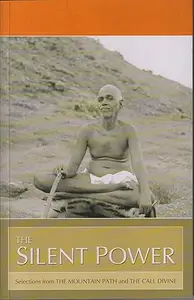
Selections, "The Silent Power"
English | 2004 | pages: 239 | ISBN: 8188225495 | PDF | 0,6 mb
The Silent Power contains selectiions from The Mountain Path and The Call Divine. Besides the writings on Sri Maharshi and his beloved Arunachala, a few other interesting Articles on various topics have been included. The Maharshi's teachings flow out of his own original teachings, realisations of truth, and to that extent he stands solitary as Product Description Ramana was a silent Teacher, if there was one. It would be more appropriate to call him the Silent One, for teaching denotes duality, the teacher and taught, while Ramana was, as a devotee wrote, the Pure Non-dual Essence. His most direct and profound teaching was transmitted in silence. However, how many were there that could immediately hear or experience the unspoken, the unwritten word? Devotees and visitors asked questions and out of his boundless compassion Bhagavan answered them in his own inimitable way, as the following excerpts will show. It was in 1911 that the first westerner, Frank Humphreys, then a policeman stationed in India, discovered Sri Ramana and wrote articles about him which were first published in The International Psychic Gazette in 1913. However, Sri Ramana only became relatively well known in and out of India after 1934 when Paul Brunton, having first visited Sri Ramana in January 1931, published the book A Search in Secret India, which became very popular. Resulting visitors included Paramahansa Yogananda, Somerset Maugham (whose 1944 novel The Razor's Edge models its spiritual guru after Sri Ramana), Mercedes de Acosta, Julian P. Johnson, and Arthur Osborne. Sri Ramana's relative fame spread throughout the 1940s. However, even as his fame spread, Sri Ramana was noted for his belief in the power of silence and his relatively sparse use of speech, as well as his lack of concern for fame or criticism.His lifestyle remained that of a renunciate. This work contains almost everything written by Bhagavan Sri Ramana Maharshi. His inspired compositions, and a number of translations from ancient Advaitic texts, representing the essence of his teachings. They fall into two categories-those which exemplify the path of surrender through love and devotion to the Divine, and those which are more doctrinal. The first group includes the Five Hymns to Sri Arunachala of which the first poem, The Marital Garland Of Letters "is among the most profound and moving poems in any language" and expresses the attitude of the soul aspiring for union with God. Sri Bhagavan has affirmed that seekers who study these works are certain to attain the bliss of liberation. the peaks of Arunachal itself. The reward which waits for those who practice the techniique advocated by the Maharshi is nothing less than nirvana itself. Those who think that the nirvana of the sage is a kind of never ending boredom should spend a few months in his society. The experience will correct their mistake and make good their ignorance.


Fileaxa


Links are Interchangeable - Single Extraction
 
Zurück
Oben Unten