


• Regeln für den Dokumente-Bereich:

    In den Börsenbereich gehören nur Angebote die bereits den Allgemeinen Regeln entsprechen.

    Allgemeines:

    Nicht erlaubt im Dokumente-Bereich sind:

    - indizierte Titel (inkl. Comics)
    - extremistische Werke, Zeitschriften und Comics (egal, welche Richtung)
    - jegliche Art von Pornographie
    - Anleitungen zu kriminellen Handlungen, gleich welcher Art
    - sadistische, menschenverachtende oder ähnliche Werke

    Nutzt den "Bedanken"-Button, bei Sammelthreads führen jegliche Kommentare, positiv wie negativ, sehr schnell zu einer Unübersichtlichkeit des Threads. Downmeldungen sind an den Uploader zu richten

    Vor dem Einstellen zu beachten:

    - Suchfunktion

    Vergewissert euch, dass es euer Dokument noch nicht im Board gibt, Doppelposts werden kommentarlos gelöscht. Ist es schon vorhanden, tragt es als Mirror im bestehenden Post ein.

    - Threadtitel

    Idealerweise ist sofort zu erkennen um was es sich handelt. Verseht euren Titel mit den relevanten Informationen, das hilft euch und damit auch uns und allen Suchenden erheblich weiter.

    Beispiel: [Thriller] Dan Brown - Inferno oder bei Magazinen:

    Computerbild - 14/2014 (es muss ersichtlich sein, um welche Ausgabe und welches Magazin es sich handelt)

    Folgende Präfixe stehen im Unterforum "Unterhaltung" zur Verfügung:

    [Humor]
    [Drama]
    [Erotik]
    [Fantasy]
    [Krimi]
    [Roman]
    [Thriller]
    [Horror]
    [Science Fiction]

    Inhalt des Beitrags:

    Folgende Pflichtangaben gilt es einzuhalten:

    - Autor
    - Titel
    - Präfix
    - Cover
    - Genre
    - Inhaltsbeschreibung
    - enthaltene Formate
    - Gesamtgröße des Downloads
    - Hoster
    - ggf. Passwort

    Nicht erlaubt sind alle Dateien, die den Download unnötig aufblähen um eine Affiliategrenze zu erreichen, wie zB. mp3-files, übergroße Bilder, etc.

    Ebenso nicht erlaubt sind sämtliche Dateien mit DRM, persönlichen Daten, etc., diese werden kommentarlos zu eurem eigenem Schutz gelöscht.

    Achtet bitte bei der Konvertierung der Formate auf die Lesbarkeit, ein epub, was nur einfach durch Calibre gejagt wird um ein PDF zu erhalten, ist zu 99% eben nicht lesbar. Wenn ihr es nicht könnt, dann lasst es besser oder lest euch ein, wie man es richtig macht.


    Unterforum Comics:

    Threadtitel:

    Ähnlich, wie bei Unterhaltung und Magazinen, sollte der Titel alle relevanten Informationen enthalten, hier bitte

    - den Titel des Comics
    - den Verlag (einige Comics sind in verschiedenen Verlagen erschienen)
    - das Erscheinungsjahr

    Erlaubt sind folgende Formate:

    - CBR
    - CBZ

    Grundsätzlich gilt: jede Version eines Comics erhält einen eigenen Thread, Ersteller eines Comics können ihre Bände gerne mit dem Zusatz (Original-Release) versehen.

    Bei Unsicherheiten zur korrekten Benennung bitte die Informationen von www.comicguide.de nutzen.

    Inhalt des Beitrags:

    Pflichtangaben hier sind:

    - Titel des Bandes und ggf. Nummer
    - Cover
    - falls bekannt technische Daten (DPI, Breite, Speicherqualität)
    - Größe des Downloads
    - Hoster
    - ggf. Passwort
    - falls bekannt Releasenamen
  • Bitte registriere dich zunächst um Beiträge zu verfassen und externe Links aufzurufen.

++ Premium IPTV ++ 7000 Live Sender ++ UHD Qualität ++ Mediathek mit 18.000 Inhalten ++


VenneTV


Collection Download Ebooks Best Seller Updated Daily

3fb5b40ea0fcddbb96886f73242d878e.webp

The Academic Profession in Europe: New Tasks and New Challenges By Prof. Barbara M. Kehm, Ulrich Teichler (auth.), Barbara M. Kehm, Ulrich Teichler (eds.)
2013 | 202 Pages | ISBN: 940074613X | PDF | 3 MB
This book is the first of several with the results of a collaborative European project supported by the European Science Foundation on changes in the academic profession in Europe (EUROAC). It provides a short description of the ESF EUROHESC programme and the particular forms of international collaborative research projects which are funded under the umbrella of this programme. It then outlines the EUROAC project. This project has chosen three foci (governance, professionalisation, academic careers) to analyse changes in the work of the academic profession. The first results in the form of in-depth literature reviews constitute the content of the book. These eight literature reviews about the state of the art of existing research feature the various dimensions of the overall theme. A particular emphasis is put on factors leading to changes in the work tasks of the academic profession in Europe and how the academic profession is coping with these new challenges.Thus, the book provides a state of the art account of existing research about the following themes: main results of previous studies on the academic profession; the academic profession and their interaction with new higher education professionals; professional identities in higher education; extending work tasks: civic mission and sustainable development; academic careers in academic markets; the changing role of academics in the face of rising managerialism; the influence of quality assurance, governance, and relevance on the satisfaction of the academic profession.


Links are Interchangeable - Single Extraction

 
552563c2fcf10927698497b3e7689602.webp

Eve Zyzik, "The Acquisition of Spanish: A Research Overview in Multilingual Learning Contexts "
English | ISBN: 1032214902 | 2024 | 180 pages | PDF | 14 MB
As the first text to present, in one place, a comprehensive and systematic overview of Spanish Language Acquisition research, The Acquisition of Spanish: A Research Overview in Multilingual Learning Contexts discusses a range of theoretical perspectives that outline issues surrounding language learning and the gaps in its research and teaching. Drawing on classic and current empirical studies on learner cohorts at different proficiency stages all over the world, the authors aim to bring bi-/multilingualism to the forefront to provide the reader with a deeper conceptual understanding of the challenges faced by different groups of Spanish learners in various learning contexts.

Eve Zyzik and Melissa A. Bowles expertly synthesize and analyze a range of linguistic features and factors affecting learning, connecting these insights from Spanish to key theoretical and applied questions in SLA research more broadly. The text concludes with observations about research methodology, indicating the gaps in the literature and setting an agenda for future work in Spanish SLA to move the field forward.
Read more


Links are Interchangeable - Single Extraction

 
1b0e729efd117e9f8c3982d8770c0144.webp

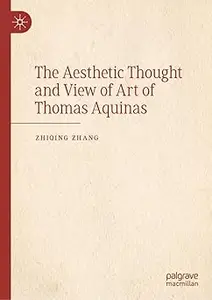
Zhiqing Zhang, "The Aesthetic Thought and View of Art of Thomas Aquinas"
English | ISBN: 9819768985 | 2024 | 144 pages | EPUB, PDF | 478 KB + 3 MB
This book examines Aquinas's aesthetic thought and view of art within the broader context of medieval aesthetics and the history of aesthetic development, emphasizing its profound influence on later aesthetics. The book not only elaborates on Aquinas's efforts to establish coherence between faith and reason, the transcendent and empirical, as well as its significance, but also discusses the main contents and characteristics of Aquinas's aesthetic thought from the three aspects of the ontology of beauty, the theory of form, and the theory of experience. By examining Aquinas's aesthetic thought and view of art in relation to modern aesthetics and twentieth-century aesthetics, this book reveals the immense vitality of Aquinas's aesthetic thought.


Links are Interchangeable - Single Extraction

 
45f99d35b1d585cdf9fecfb41049f51f.webp

The Age of Coal: A History of Europe, 1750 to the Present
by FRANZ-JOSEF BRÜGGEMEIER

English | 2024 | ISBN: 0192896938 | 379 pages | True PDF | 17.05 MB

In Europe, coal was by far the most important source of energy from the beginning of industrialisation until well after the Second World War. It was indispensable in shaping the modern world, and in altering our understanding of time and space. Used foundationally in organic chemistry, coal helped to create the multitude of colours, medicines, and man-made products which still shape our daily lives. Without coal, the First and Second World Wars would have looked very different, and in the peace conferences after both wars, the control of this resource was of central importance. At its height, coal mining in Europe employed almost two and a half million people, mostly men, who had often migrated over vast distances to find work in this booming industry, despite the difficulties and dangers. As a result of the capitalist model of the industry, mining saw significant labour organization and strikes. The use of coal, however, created environmental problems. During and after industrialisation, the demand for energy multiplied, and coal was the only resource that could satisfy this increasing demand, despite the high levels of CO2 emission. In contemporary society, world-wide attempts are being made to reduce these emissions, but while in Europe, coal mining and use has declined, world-wide its production and consumption have reached new heights. Even in Europe, coal's major legacy persists: society's dependence on vast amounts of easily available, transportable, and affordable energy. Franz-Josef Brüggemeier uses modern Europe's reliance on coal to tell a wide-ranging story of how energy can shape a society.


Links are Interchangeable - Single Extraction
 
573e1cb82be4739205a7bc0bdc97f94b.webp

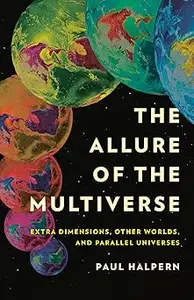
Paul Halpern, "The Allure of the Multiverse: Extra Dimensions, Other Worlds, and Parallel Universes"
English | ISBN: 154160217X | 2024 | 320 pages | AZW3 | 3 MB
"A rich and rewarding history of one of the most astounding ideas in physics and astronomy" (Marcia Bartusiak) - that the universe we know isn't the only one

Our books, our movies-our imaginations-are obsessed with extra dimensions, alternate timelines, and the sense that all we see might not be all there is. In short, we can't stop thinking about the multiverse. As it turns out, physicists are similarly captivated.
In The Allure of the Multiverse, physicist Paul Halpern tells the epic story of how science became besotted with the multiverse, and the controversies that ensued. The questions that brought scientists to this point are big and deep: Is reality such that anything can happen, must happen? How does quantum mechanics "choose" the outcomes of its apparently random processes? And why is the universe habitable? Each question quickly leads to the multiverse. Drawing on centuries of disputation and deep vision, from luminaries like Nietzsche, Einstein, and the creators of the Marvel Cinematic Universe, Halpern reveals the multiplicity of multiverses that scientists have imagined to make sense of our reality. Whether we live in one of many different possible universes, or simply the only one there is, might never be certain. But Halpern shows one thing for sure: how stimulating it can be to try to find out.
Read more


Links are Interchangeable - Single Extraction

 
d3b748a8403d0b4c1f467d26b616cce8.webp

The American Civil War and the Wars of the Industrial Revolution By Brian Holden Reid, John Keegan
1999 | 224 Pages | ISBN: 0304352306 | EPUB | 2 MB
The Civil War was the bloodiest in America's history, comprising 149 engagements of importance and 2200 skirmishes. The author narrates the history of the war and also describes how such factors as generalship, staff work, organization, intelligence and logistics affect the shape and decisions of the battlefield. He looks at the strengths, and weaknesses of the opposing sides - the North's industrial strength and the South's material shortages, for example - and the effect of new weapons on tactics. He explores the crucial role of the industrial revolution on the course of 19th-century warfare, first in the Crimean War, then in Prussia's wars with Austria and France, and most dramatically in the American Civil War.


Links are Interchangeable - Single Extraction
 
de95a4055e9fb07585055edd636b2be6.webp

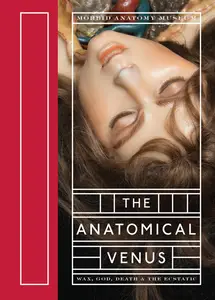
The Anatomical Venus: Wax, God, Death & the Ecstatic by Joanna Ebenstein
English | May 24, 2016 | ISBN: 1938922913, ASIN: B01N1XCO0W | True AZW3/PDF | 224 pages | 117/66.8 MB
Of all the artifacts from the history of medicine, the Anatomical Venus―with its heady mixture of beauty, eroticism and death―is the most seductive. These life-sized dissectible wax women reclining on moth-eaten velvet cushions―with glass eyes, strings of pearls, and golden tiaras crowning their real human hair―were created in eighteenth-century Florence as the centerpiece of the first truly public science museum. Conceived as a means to teach human anatomy, the Venus also tacitly communicated the relationship between the human body and a divinely created cosmos; between art and science, nature and mankind. Today, she both intrigues and confounds, troubling our neat categorical divides between life and death, body and soul, effigy and pedagogy, entertainment and education, kitsch and art.

The first book of its kind, The Anatomical Venus, by Morbid Anatomy Museum cofounder Joanna Ebenstein, features over 250 images―many never before published―gathered by its author from around the world. Its extensively researched text explores the Anatomical Venus within her historical and cultural context in order to reveal the shifting attitudes toward death and the body that today render such spectacles strange. It reflects on connections between death and wax, the tradition of life-sized simulacra and preserved beautiful women, the phenomenon of women in glass boxes in fairground displays, and ideas of the ecstatic, the sublime and the uncanny.


Links are Interchangeable - Single Extraction
 
b192c1c71afda1c0b5f54c0ad374f7fb.webp

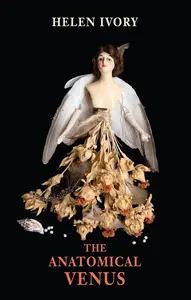
The Anatomical Venus by Helen Ivory
English | May 23, 2019 | ISBN: 1780374690 | True EPUB | 64 pages | 0.2 MB
An Anatomical Venus - which gives this book its title - was an eighteenth-century anatomical wax sculpture of an idealised woman, a heady mix of eroticism, death and biological verisimilitude. Venus could be opened up and pulled apart by all the men who studied her. She would give up her secrets the first time of asking.

Helen Ivory's new collection The Anatomical Venus examines how women have been portrayed as 'other'; as witches; as hysterics with wandering wombs and as beautiful corpses cast in wax, or on mortuary slabs in TV box sets. A hanged woman addresses the author of the Malleus Maleficarum, a woman diagnosed with 'Housewife Psychosis' recounts her dreams to Freud, and a sex robot has the ear of her keeper. The Anatomical Venus imagines the lives of women sketched in asylum notes and pictures others shut inside cabinets of curiosity.


Links are Interchangeable - Single Extraction

 
4966d27a480879dd28c4ea72e0a11709.webp

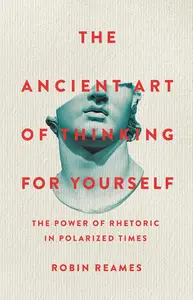
The Ancient Art of Thinking For Yourself: The Power of Rhetoric in Polarized Times by Robin Reames
English | March 19, 2024 | ISBN: 1541603974 | 304 pages | PDF | 7.48 Mb
How rhetoric-the art of persuasion-can help us navigate an age of misinformation, conspiracy theories, and political acrimony

The discipline of rhetoric was the keystone of Western education for over two thousand years. Only recently has its perceived importance faded.
In this book, renowned rhetorical scholar Robin Reames argues that, in today's polarized political climate, we should all care deeply about learning rhetoric. Drawing on examples ranging from the destructive ancient Greek demagogue Alcibiades to modern-day conspiracists like Alex Jones, Reames breaks down the major techniques of rhetoric, pulling back the curtain on how politicians, journalists, and "journalists" convince us to believe what we believe-and to talk, vote, and act accordingly. Understanding these techniques helps us avoid being manipulated by authority figures who don't have our best interests at heart. It also grants us rare insight into the values that shape our own beliefs. Learning rhetoric, Reames argues, doesn't teach us what to think but how to think-allowing us to understand our own and others' ideological commitments in a completely new way.
Thoughtful, nuanced, and leavened with dry humor, The Ancient Art of Thinking for Yourself offers an antidote to our polarized, post-truth world.


Links are Interchangeable - Single Extraction
 
5049e2ea7af6b32c4fb93206d8b8d23c.webp

The Ancient Language of Sacred Sound: The Acoustic Science of the Divine, 2nd Edition by David Elkington
English | April 6th, 2021 | ISBN: 1644111659 | 432 pages | True EPUB | 6.20 MB
* Details how sacred sites resonate at the same frequencies as both the Earth and the alpha waves of the human brain

* Shows how human writing in its original hieroglyphic form was a direct response to the divine sound patterns of sacred sites
* Explains how ancient hero myths from around the world relate to divine acoustic science and formed the source of religion
The Earth resonates at an extremely low frequency. Known as "the Schumann Resonance," this natural rhythm of the Earth precisely corresponds with the human brain's alpha wave frequencies-the frequency at which we enter into and come out of sleep as well as the frequency of deep meditation, inspiration, and problem solving. Sound experiments reveal that sacred sites and structures like stupas, pyramids, and cathedrals also resonate at these special frequencies when activated by chanting and singing. Did our ancestors build their sacred sites according to the rhythms of the Earth?
Exploring the acoustic connections between the Earth, the human brain, and sacred spaces, David Elkington shows how humanity maintained a direct line of communication with Mother Earth and the Divine through the construction of sacred sites, such as Stonehenge, Newgrange, Machu Picchu, Chartres Cathedral, and the pyramids of both Egypt and Mexico. He reveals how human writing in its original hieroglyphic form was a direct response to the divine sound patterns of sacred sites, showing how, for example, recognizable hieroglyphs appear in sand patterns when the sacred frequencies of the Great Pyramid are activated.
Looking at ancient hero legends-those about the bringers of important knowledge or language-Elkington explains how these myths form the source of ancient religion and have a unique mythological resonance, as do the sites associated with them. The author then reveals how religion, including Christianity, is an ancient language of acoustic science given expression by the world's sacred sites and shows that power places played a profound role in the development of human civilization.


Links are Interchangeable - Single Extraction
 
f6bea517d796ca6b8cfcfd49138eceba.webp

The Ansible Workshop: Hands-On Learning For Rapid Mastery by Aymen El Amri
English | January 17, 2024 | ISBN: N/A | ASIN: B0CSPNTPWS | 376 pages | EPUB | 3.81 Mb
In "The Ansible Workshop," you will deep dive into the world of Ansible, the amazing automation tool that converts complex IT tasks into a set of easy, simple-to-repeat steps. This guide is your roadmap to mastering Ansible, whether you are a novice just starting to use Ansible or an intermediate user who has already used Ansible and is looking for additional information and tricks to enhance your skills.

To start with, we will unwrap the essence of Ansible. You will explore what Ansible is, its declarative vs imperative automation approach, and dive into its architecture that exposes Ansible's inner workings. This is basically building the foundation for everything shown henceforth.
At its core, Ansible is configuration management and application deployment. You will learn how to use ad-hoc commands and playbooks to automate server configurations and application deployment. We will cover creating simple playbooks and developing advanced ones, giving you the tools required to manage multiple scenarios and orchestrate complex tasks.
In today's dynamic containerized environment, the integration of Ansible with Docker and Kubernetes is crucial. You will learn how to build, tag, and push Docker images, as well as manage Docker containers, networks, and volumes, and even orchestrate Docker using Ansible. For the fans of Kubernetes out there, we dive into deploying and managing Kubernetes clusters using Ansible and Kubespray, then we explore how to deploy your workloads to Kubernetes using Ansible.
This guide provides comprehensive coverage of each and every minute part of Ansible:Inventory: know and make use of advanced inventories.Facts: How to locate and utilize Ansible facts.Vaults: The art of managing sensitive data in a better way.Blocks: Managing errors gracefully, using Ansible blocks.Modules and plugins: Expanding the horizon of Ansible.Filters: Using Ansible filters for data transformation.Roles: Running many playbooks through Ansible roles.Collections: Discovering and using collections of Ansible.Ansible Galaxy: Everything about Ansible Galaxy and how it can be used, explained.Developing your modules: Briefing on how one can develop their Ansible module.Develop custom filters: Learn how to develop your own Ansible filters.Integrate other tools with Ansible (e.g. Kubernetes, Docker, ChatGPT, or whatever).And much more!Every concept is supported by examples from real-world use and best practices. You will find out how to use IDEs for better writing playbooks, debugging, and optimizing Ansible performance. We also cover how to create custom modules and filters - including a special module leveraging generative AI (ChatGPT).


Links are Interchangeable - Single Extraction
 
Zurück
Oben Unten