




• Regeln für den Dokumente-Bereich:

    In den Börsenbereich gehören nur Angebote die bereits den Allgemeinen Regeln entsprechen.

    Allgemeines:

    Nicht erlaubt im Dokumente-Bereich sind:

    - indizierte Titel (inkl. Comics)
    - extremistische Werke, Zeitschriften und Comics (egal, welche Richtung)
    - jegliche Art von Pornographie
    - Anleitungen zu kriminellen Handlungen, gleich welcher Art
    - sadistische, menschenverachtende oder ähnliche Werke

    Nutzt den "Bedanken"-Button, bei Sammelthreads führen jegliche Kommentare, positiv wie negativ, sehr schnell zu einer Unübersichtlichkeit des Threads. Downmeldungen sind an den Uploader zu richten

    Vor dem Einstellen zu beachten:

    - Suchfunktion

    Vergewissert euch, dass es euer Dokument noch nicht im Board gibt, Doppelposts werden kommentarlos gelöscht. Ist es schon vorhanden, tragt es als Mirror im bestehenden Post ein.

    - Threadtitel

    Idealerweise ist sofort zu erkennen um was es sich handelt. Verseht euren Titel mit den relevanten Informationen, das hilft euch und damit auch uns und allen Suchenden erheblich weiter.

    Beispiel: [Thriller] Dan Brown - Inferno oder bei Magazinen:

    Computerbild - 14/2014 (es muss ersichtlich sein, um welche Ausgabe und welches Magazin es sich handelt)

    Folgende Präfixe stehen im Unterforum "Unterhaltung" zur Verfügung:

    [Humor]
    [Drama]
    [Erotik]
    [Fantasy]
    [Krimi]
    [Roman]
    [Thriller]
    [Horror]
    [Science Fiction]

    Inhalt des Beitrags:

    Folgende Pflichtangaben gilt es einzuhalten:

    - Autor
    - Titel
    - Präfix
    - Cover
    - Genre
    - Inhaltsbeschreibung
    - enthaltene Formate
    - Gesamtgröße des Downloads
    - Hoster
    - ggf. Passwort

    Nicht erlaubt sind alle Dateien, die den Download unnötig aufblähen um eine Affiliategrenze zu erreichen, wie zB. mp3-files, übergroße Bilder, etc.

    Ebenso nicht erlaubt sind sämtliche Dateien mit DRM, persönlichen Daten, etc., diese werden kommentarlos zu eurem eigenem Schutz gelöscht.

    Achtet bitte bei der Konvertierung der Formate auf die Lesbarkeit, ein epub, was nur einfach durch Calibre gejagt wird um ein PDF zu erhalten, ist zu 99% eben nicht lesbar. Wenn ihr es nicht könnt, dann lasst es besser oder lest euch ein, wie man es richtig macht.


    Unterforum Comics:

    Threadtitel:

    Ähnlich, wie bei Unterhaltung und Magazinen, sollte der Titel alle relevanten Informationen enthalten, hier bitte

    - den Titel des Comics
    - den Verlag (einige Comics sind in verschiedenen Verlagen erschienen)
    - das Erscheinungsjahr

    Erlaubt sind folgende Formate:

    - CBR
    - CBZ

    Grundsätzlich gilt: jede Version eines Comics erhält einen eigenen Thread, Ersteller eines Comics können ihre Bände gerne mit dem Zusatz (Original-Release) versehen.

    Bei Unsicherheiten zur korrekten Benennung bitte die Informationen von www.comicguide.de nutzen.

    Inhalt des Beitrags:

    Pflichtangaben hier sind:

    - Titel des Bandes und ggf. Nummer
    - Cover
    - falls bekannt technische Daten (DPI, Breite, Speicherqualität)
    - Größe des Downloads
    - Hoster
    - ggf. Passwort
    - falls bekannt Releasenamen
  • Bitte registriere dich zunächst um Beiträge zu verfassen und externe Links aufzurufen.

++ Premium IPTV ++ 7000 Live Sender ++ UHD Qualität ++ Mediathek mit 18.000 Inhalten ++


VenneTV


Collection Download Ebooks Best Seller Updated Daily

444a285e9be8b0e57c884b4332f10383.webp

Project Azorian: The History of the CIA Operation to Recover a Sunken Soviet Submarine by Charles River Editors
English | February 11, 2025 | ISBN: N/A | ASIN: B0DWWG6XCB | 73 pages | EPUB | 5.87 Mb
It takes a special type of person to serve in a nation's navy, especially on long voyages that separate men and women from their loved ones, and no service is both loved and hated as that aboard submarines, for very few people ever serve on them on a whim. For one thing, the psychological impact of being trapped for long periods underwater in tight, cramped quarters is more than many people can stand. Also, submarine service is uncharacteristically hazardous; after all, if a surface vessel is sunk, the crew has a reasonable chance of escaping death in lifeboats or being rescued out of the water by another ship. Conversely, if a submarine is badly damaged while submerged, the crew's chances of survival are at best remote.

Given that there's such little margin for error in a submersible, many submarine losses remain sources of intrigue and mystery, and few rival the disappearance of the Soviet submarine K-129 in 1968. The Cold War was in high gear, and under the waters of the world's oceans, Soviet and American submarines were in intense competition, pushing the boundaries of new technologies. Some of these submarines carried nuclear missiles that carried more destructive power than all the bombs dropped by the U.S. Army Air Force throughout World War II, including the nuclear bombs dropped on Hiroshima and Nagasaki. Other submarines, the hunter-killers, were designed to find and destroy these missile-carrying submarines. All of these submarines engaged in their activities while aiming to avoid detection by the other side, establishing a clandestine conflict that was carried out far from the gaze of the public but still strategically vital. If either side could gain a notable advantage, it could abruptly change the fragile balance of power.
Both sides lost submarines in the 1960s, but when the Soviets lost K-129 in 1968, it triggered one of the most interesting episodes of the Cold War, and something that reads like the Description of a techno-thriller. A race developed between the Americans and Soviets to locate the wreck, and when the Americans found it, they realized the submarine sunk in one of the deepest parts of the ocean, far beyond the depths at which conventional divers or submarines could operate. As a result, the CIA, aided by eccentric billionaire Howard Hughes, clandestinely began a lengthy and incredibly expensive project to build equipment that might allow them to recover and examine parts of the sunken submarine.
That operation, Project Azarian, is still controversial over 50 years later.


AusFile


Fileaxa


Links are Interchangeable - Single Extraction

 
f51c307e0f42f1cf7136ac1bb5ba7d53.webp

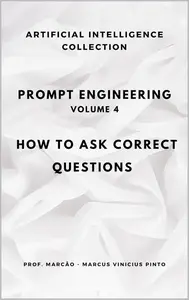
PROMPT ENGINEERING: HOW TO ASK CORRECT QUESTIONS by MARCUS PINTO
English | October 18, 2024 | ISBN: N/A | ASIN: B0DKBL2C85 | 84 pages | EPUB | 1.17 Mb
In the information age, the ability to ask the right questions has become an essential skill. In the interaction with artificial intelligence, this ability becomes even more critical. Prompt Engineering - Volume 4: How to Ask Correct Questions, part of the collection Artificial Intelligence: The Power of Data, published on Amazon, explores in depth the process of building effective prompts - that is, how we structure our requests to get the best results from AI systems. This book guides the reader through a clear and practical journey on how to master the art of interacting with intelligent machines.

Not only does this book teach you how to craft the right questions, but it also offers deep insights into how clarity, specificity, and iteration can completely transform the quality of your interactions with artificial intelligence. Filled with practical examples, helpful tips, and detailed guidelines, the content is accessible to both beginners and more advanced professionals.
Key Topics Covered:
- Fundamentals of building effective prompts for AI.
- The importance of clarity in requests and how to avoid ambiguity.
- Interpreting responses and creating feedback loops for continuous learning.
- How to iterate and enhance prompts effectively.
- Ethical and responsible issues in the use of prompts.
- Language model training strategies and performance tuning.
- Advanced data pre-processing techniques, including tokenization and stemming.
What you will learn:
- Mastering the creation of clear and direct questions to get more accurate answers from the AI.
- Interpreting AI responses in a way that continuously improves its interactions with models.
- To improve your skills in constructing prompts in an iterative and reflective manner.
- To avoid common pitfalls in prompt formulation and to apply the best methods to maximize the efficiency of AI models.
- To use data strategically to train and optimize language models.
Target audience:
- Technology professionals and AI developers.
- Data scientists and data analysts.
- Innovation leaders and business managers.
- Technology and data science students and faculty.
- Tech enthusiasts who want to explore the field of AI
Don't miss the opportunity to delve deeper into one of the most crucial aspects of AI - and remember, this is just one volume in the Artificial Intelligence: The Power of Data collection. Also explore the other books in the series to continue expanding your expertise in this fascinating and ever-evolving field.
About the author.
Prof. Marcão, with extensive experience in information technology and marketing, works as a business consultant, career mentor and content producer. Author of more than 100 books, he uses innovative methodologies for efficient projects, contributing to information architecture.


AusFile


Fileaxa


Links are Interchangeable - Single Extraction

 
85829576cb7901514d0869eb249c3e61.webp

Proof Theory by Kurt Schütte
English | PDF | 1977 | 309 Pages | ISBN : 364266475X | 21.3 MB
This book was originally intended to be the second edition of the book "Beweis theorie" (Grundlehren der mathematischen Wissenschaften, Band 103, Springer 1960), but in fact has been completely rewritten. As well as classical predicate logic we also treat intuitionistic predicate logic. The sentential calculus properties of classical formal and semiformal systems are treated using positive and negative parts of formulas as in the book "Beweistheorie". In a similar way we use right and left parts of formulas for intuitionistic predicate logic. We introduce the theory of functionals of finite types in order to present the Gi:idel interpretation of pure number theory. Instead of ramified type theory, type-free logic and the associated formalization of parts of analysis which we treated in the book "Beweistheorie", we have developed simple classical type theory and predicative analysis in a systematic way. Finally we have given consistency proofs for systems of lI~-analysis following the work of G. Takeuti. In order to do this we have introduced a constni'ctive system of notation for ordinals which goes far beyond the notation system in "Beweistheorie".

[/b]


AusFile


Fileaxa


Links are Interchangeable - Single Extraction
 
4c68fc79cc8d7f5cdda9a28a15bb17d0.webp

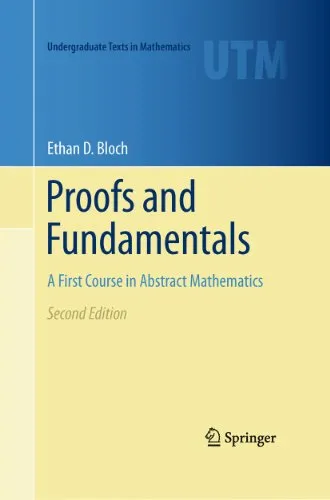
Proofs and Fundamentals: A First Course in Abstract Mathematics by Ethan D. Bloch
English | PDF (True) | 2011 | 378 Pages | ISBN : 1441971262 | 4.6 MB
"Proofs and Fundamentals: A First Course in Abstract Mathematics" 2nd edition is designed as a "transition" course to introduce undergraduates to the writing of rigorous mathematical proofs, and to such fundamental mathematical ideas as sets, functions, relations, and cardinality. The text serves as a bridge between computational courses such as calculus, and more theoretical, proofs-oriented courses such as linear algebra, abstract algebra and real analysis. This 3-part work carefully balances Proofs, Fundamentals, and Extras. Part 1 presents logic and basic proof techniques; Part 2 thoroughly covers fundamental material such as sets, functions and relations; and Part 3 introduces a variety of extra topics such as groups, combinatorics and sequences. A gentle, friendly style is used, in which motivation and informal discussion play a key role, and yet high standards in rigor and in writing are never compromised. New to the second edition: 1) A new section about the foundations ofset theory has been added at the end of the chapter about sets. This section includes a very informal discussion of the Zermelo- Fraenkel Axioms for set theory. We do not make use of these axioms subsequently in the text, but it is valuable for any mathematician to be aware that an axiomatic basis for set theory exists. Also included in this new section is a slightly expanded discussion of the Axiom of Choice, and new discussion of Zorn's Lemma, which is used later in the text. 2) The chapter about the cardinality of sets has been rearranged and expanded. There is a new section at the start of the chapter that summarizes various properties of the set of natural numbers; these properties play important roles subsequently in the chapter. The sections on induction and recursion have been slightly expanded, and have been relocated to an earlier place in the chapter (following the new section), both because they are more concrete than the material found in the other sections of the chapter, and because ideas from the sections on induction and recursion are used in the other sections. Next comes the section on the cardinality of sets (which was originally the first section of the chapter); this section gained proofs of the Schroeder-Bernstein theorem and the Trichotomy Law for Sets, and lost most of the material about finite and countable sets, which has now been moved to a new section devoted to those two types of sets. The chapter concludes with the section on the cardinality of the number systems. 3) The chapter on the construction of the natural numbers, integers and rational numbers from the Peano Postulates was removed entirely. That material was originally included to provide the needed background about the number systems, particularly for the discussion of the cardinality of sets, but it was always somewhat out of place given the level and scope of this text. The background material about the natural numbers needed for the cardinality of sets has now been summarized in a new section at the start of that chapter, making the chapter both self-contained and more accessible than it previously was. 4) The section on families of sets has been thoroughly revised, with the focus being on families of sets in general, not necessarily thought of as indexed. 5) A new section about the convergence of sequences has been added to the chapter on selected topics. This new section, which treats a topic from real analysis, adds some diversity to the chapter, which had hitherto contained selected topics of only an algebraic or combinatorial nature. 6) A new section called ``You Are the Professor'' has been added to the end of the last chapter. This new section, which includes a number of attempted proofs taken from actual homework exercises submitted by students, offers the reader the opportunity to solidify her facility for writing proofs by critiquing these submissions as if she were the instructor for the course. 7) All known errors have been corrected. 8) Many minor adjustments of wording have been made throughout the text, with the hope of improving the exposition.

[/b]


AusFile


Fileaxa


Links are Interchangeable - Single Extraction

 
375c659761f8efa99f254405409a7048.webp

Propagation Engineering in Wireless Communications by Abdollah Ghasemi , Ali Abedi , Farshid Ghasemi
English | PDF (True) | 2016 | 461 Pages | ISBN : 3319327828 | 10.5 MB
This book covers the basic principles for understanding radio wave propagation for common frequency bands used in radio-communications. This includes achievements and developments in propagation models for wireless communication. This book is intended to bridge the gap between the theoretical calculations and approaches to the applied procedures needed for radio links design in a proper manner. The authors emphasize propagation engineering by giving fundamental information and explain the use of basic principles together with technical achievements. This new edition includes additional information on radio wave propagation in guided media and technical issues for fiber optics cable networks with several examples and problems. This book also includes a solution manual - with 90 solved examples distributed throughout the chapters - and 158 problems including practical values and assumptions.

[/b]


AusFile


Fileaxa


Links are Interchangeable - Single Extraction
 
cd7337a2fb9b98ba79901f01b6c09093.webp

Lisi Krall, "Proving Up: Domesticating Land in U.S. History"
English | 2010 | pages: 155 | ISBN: 1438430795 | PDF | 0,9 mb
Uses the interdisciplinary approach of evolutionary economics to explore the history of land domestication in the United States.

On July 9, 1920, William Krall, a coal miner in Wyoming, was shot by his neighbor in a dispute over water as he attempted to "prove up" and gain title to his homestead. Attempting to understand her grandfather's passion and determination for making his own 160 acres of land in dry, sagebrush country led Professor Lisi Krall on a unique journey through the interconnections of economy, culture, and land in the history of the United States. She tells the story of the domestication of land in the United States, a story that hinges on the market economy and the agrarian and wilderness ethos as foundational land institutions. Drawing on institutional or evolutionary economics, Proving Up explores in detail the rich and ever-changing intermingling of culture, economic, and material conditions through American history. Untangling the complicated history of Americans' experiences with nature, Krall provides a critical focus and a timely contribution to the current debate surrounding our relationship to land and nature.


AusFile


Fileaxa


Links are Interchangeable - Single Extraction

 
62774ed719ba0c3c947c75f24b4349cc.webp

PsychMapping in Sport, Exercise, and Performance: An Applied Approach by Alexander T Latinjak
English | November 12, 2024 | ISBN: 1032592559 | 272 pages | MOBI | 6.21 Mb
Understanding why we act the way we do is key to fostering success. This book introduces PsychMapping, a unique model that visually and philosophically guides readers through the complexities of human behaviour. The holistic approach reveals how different psychological aspects interact and influence each other.

The chapters follow the logic of the PsychMapping model, a map of all the key aspects in sport, exercise, and performance psychology. Each chapter is an opportunity for self-reflection and a perfect introduction for anyone interested in exploring the psychological aspects of human behaviour. Packed with practical experiences and real-world case studies, the book applies theories to life, making complex concepts accessible and actionable. A standout feature for professionals is the detailed self-reflection exercise, designed to enhance applied practice.
PsychMapping in Sport, Exercise, and Performance is enriching for students, practitioners, and anyone eager to explore the psychological aspects of human behaviour.


AusFile


Fileaxa


Links are Interchangeable - Single Extraction

 
96e227a10d45cb0ffbd1ffc232a1f2b0.webp

Bert Marco Schuldes, "Psychoaktive Pflanzen. Mehr als 65 Pflanzen mit anregender, euphorisierender, beruhigender, sexuell erregender oder halluzinogener Wirkung"
Deutsch | 2011 | pages: 124 | ISBN: 3925817646 | PDF | 0,6 mb


AusFile


Fileaxa


Links are Interchangeable - Single Extraction

 
23566c94407ca7aad5ddd596e34661b6.webp

Psychology of UX Design: Psychological laws and effects | Gamification | Biases (English Edition) by Alok Kumar
English | July 24, 2024 | ISBN: 9365891647 | 232 pages | PDF converted | 7.60 Mb
Description

Understanding how users think, feel, and interact with digital products is crucial for creating designs that not only look good but also deliver exceptional user satisfaction. This book will help designers learn the fundamentals of design through the lenses of psychology, gamification, and biases. It includes numerous examples from actual mobile apps and websites, both Indian and global, allowing readers to connect the dots and deeply understand the psychological reasons behind various designs.
Readers will understand how Fitt's law, Hick's law, and Miller's law shape layouts and decisions. They will also learn to use Gestalt principles for intuitive interfaces. You will discover how user behavior is influenced by the Zeigarnik effect, Halo effect, and Goal Gradient effect. The book will help you discover tips and tricks for gamifying your product, leading to better user acquisition and retention. Readers will learn about key biases that can impact design decisions. Featuring examples from well-known brands like Myntra, LinkedIn, Airbnb, MakeMyTrip, Swiggy, Zepto, Amazon, Flipkart, Walmart, and many more, this book connects with the products you use daily, helping you apply similar insights to your designs.
Non-designers will also benefit from this book, as it provides valuable insights into the thought processes behind the design of physical and digital products, enabling them to observe and appreciate the design elements in their surroundings.
Key Features
● Learn design with examples from booming startups and digital products.
● Learn how the fundamentals of psychology help enhance design and process.
● Learn gamification with the product's examples you use everyday.
What you will learn
● Understand the psychological reasons behind every design.
● Predict user behavior and make informed design decisions.
● Motivate users to perform specific tasks.
● Apply gamification theories to enhance user adoption.
● Avoid biases during design development and review.
Who this book is for
This book is intended for UX designers, UI designers, graphic designers, product managers, and any other designers interested in understanding their audience better.
Table of Contents
Section I - Psychology Laws
1. Fitt's Law
2. Hick's Law
3. Miller's Law
4. Jakob's Law
5. Tesler's Law
6. Gestalt's Law
7. Doherty Threshold
Section II - Psychological Effects
8. Zeigarnik Effect
9. Storytelling Effect
10. Halo Effect
11. Goal Gradient Effect
12. Picture Superiority Effect
13. Von Restorff Effect
Section III - Gamification
14. Gamification in UX Design
Section IV - Biases
15. Biases in UX Design


AusFile


Fileaxa


Links are Interchangeable - Single Extraction

 
e0968b4cd422e122109103b55dbff0ed.webp

PUBLIC ADMINISTRATION: THEORY, POLICY AND PRACTICE, FOR MODERN GOVERNANCE by Goodson Mumba
English | July 23, 2024 | ISBN: N/A | ASIN: B0DB1KZPK7 | 274 pages | EPUB | 1.06 Mb
Public administration is the lifeblood of governance, driving the implementation of policies and the delivery of public services that shape the lives of citizens. "Public Administration: Theory, Policy, and Practice for Modern Governance" offers an insightful and comprehensive exploration of this dynamic field, blending theoretical foundations with practical applications to provide a holistic understanding of public administration.

This book is an essential guide for students, scholars, practitioners, and anyone interested in the workings of public administration. It covers a wide range of topics, from the historical evolution of the field and key theories to contemporary challenges such as digital governance, social equity, and crisis management. Each chapter delves deep into core concepts, presents contemporary debates, and highlights real-world applications, enriched with case studies and best practices.
Key features include:
- Comprehensive Coverage: In-depth exploration of public administration's past, present, and future.
- Practical Insights: Real-world examples and case studies illustrating the application of principles in diverse contexts.
- Current Trends and Future Directions: Examination of emerging trends, innovative practices, and the future trajectory of public administration.
- Interdisciplinary Approach: Integration of insights from political science, economics, sociology, and management.
- Engaging and Accessible: Clear explanations, illustrative examples, and thought-provoking questions designed to stimulate critical thinking and discussion.
Join us in this exploration of public administration, and gain the knowledge and inspiration needed to navigate and shape the evolving landscape of governance. Whether you are beginning your studies, seeking deeper insights, or navigating the complexities of governance as a practitioner, this book is your trusted companion and guide.
Discover how effective, equitable, and resilient governance can serve the needs of all citizens and contribute to the well-being of our global society.


AusFile


Fileaxa


Links are Interchangeable - Single Extraction

 
5b63556f4c15f2a4299a4d5d7e06d9db.webp

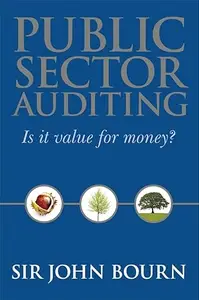
Sir John Bourn, "Public Sector Auditing: Is it Value for Money?"
English | 2007 | pages: 429 | ISBN: 047005722X | PDF | 3,2 mb
Drawing on 20 years of experience as Comptroller and Auditor General, and head of the United Kingdom National Audit Office, Public Sector Auditing: Is it Value for Money? is Sir John Bourn's own account of the role and influence value for money auditing has in holding governments to account and in helping public bodies improve the ways in which they deliver services.

Key features include:
- In-depth case studies from UK, US, Canada, China, India and Australia;
- Detailed analysis of complex areas of public expenditure such as health, education, privatisation, regulation, defence and IT;
- Examples of how auditing can promote positive outcomes rather than negative post mortems.
This book is relevant for people working in both the public and private sectors, and should be essential reading for the staff of public sector audit institutions around the world, as well as commercial accountancy firms and students of accountancy, politics, economics and public management.


AusFile


Fileaxa


Links are Interchangeable - Single Extraction

 
0f608a0461220ba671faa6d28123eed3.webp

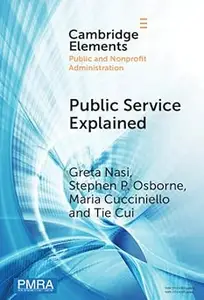
Greta Nasi, "Public Service Explained: The Role of Citizens in Value Creation "
English | ISBN: 100953291X | 2024 | 74 pages | PDF | 15 MB
This Cambridge Element aims to advance theory by investigating the nature of participation in public service delivery. It situates itself under the theory of Public Service Logic to advocate for a strategic orientation to participation as an element of value creation in public services. It introduces the concept of participation and discusses the motives, incentives, and tools to engage citizens in public service delivery processes. Then, it frames citizens' participation under the approach public service ecosystem to capture the dynamic relationships among citizens, other actors, processes, and structures that may contribute to determining value in public service delivery. It presents the dynamics of value creation and destruction in public service. The Element concludes with implications for research and practice. This title is also available as Open Access on Cambridge Core.

Read more


AusFile


Fileaxa


Links are Interchangeable - Single Extraction
 
Zurück
Oben Unten