• Regeln für den Dokumente-Bereich:

    In den Börsenbereich gehören nur Angebote die bereits den Allgemeinen Regeln entsprechen.

    Allgemeines:

    Nicht erlaubt im Dokumente-Bereich sind:

    - indizierte Titel (inkl. Comics)
    - extremistische Werke, Zeitschriften und Comics (egal, welche Richtung)
    - jegliche Art von Pornographie
    - Anleitungen zu kriminellen Handlungen, gleich welcher Art
    - sadistische, menschenverachtende oder ähnliche Werke

    Nutzt den "Bedanken"-Button, bei Sammelthreads führen jegliche Kommentare, positiv wie negativ, sehr schnell zu einer Unübersichtlichkeit des Threads. Downmeldungen sind an den Uploader zu richten

    Vor dem Einstellen zu beachten:

    - Suchfunktion

    Vergewissert euch, dass es euer Dokument noch nicht im Board gibt, Doppelposts werden kommentarlos gelöscht. Ist es schon vorhanden, tragt es als Mirror im bestehenden Post ein.

    - Threadtitel

    Idealerweise ist sofort zu erkennen um was es sich handelt. Verseht euren Titel mit den relevanten Informationen, das hilft euch und damit auch uns und allen Suchenden erheblich weiter.

    Beispiel: [Thriller] Dan Brown - Inferno oder bei Magazinen:

    Computerbild - 14/2014 (es muss ersichtlich sein, um welche Ausgabe und welches Magazin es sich handelt)

    Folgende Präfixe stehen im Unterforum "Unterhaltung" zur Verfügung:

    [Humor]
    [Drama]
    [Erotik]
    [Fantasy]
    [Krimi]
    [Roman]
    [Thriller]
    [Horror]
    [Science Fiction]

    Inhalt des Beitrags:

    Folgende Pflichtangaben gilt es einzuhalten:

    - Autor
    - Titel
    - Präfix
    - Cover
    - Genre
    - Inhaltsbeschreibung
    - enthaltene Formate
    - Gesamtgröße des Downloads
    - Hoster
    - ggf. Passwort

    Nicht erlaubt sind alle Dateien, die den Download unnötig aufblähen um eine Affiliategrenze zu erreichen, wie zB. mp3-files, übergroße Bilder, etc.

    Ebenso nicht erlaubt sind sämtliche Dateien mit DRM, persönlichen Daten, etc., diese werden kommentarlos zu eurem eigenem Schutz gelöscht.

    Achtet bitte bei der Konvertierung der Formate auf die Lesbarkeit, ein epub, was nur einfach durch Calibre gejagt wird um ein PDF zu erhalten, ist zu 99% eben nicht lesbar. Wenn ihr es nicht könnt, dann lasst es besser oder lest euch ein, wie man es richtig macht.


    Unterforum Comics:

    Threadtitel:

    Ähnlich, wie bei Unterhaltung und Magazinen, sollte der Titel alle relevanten Informationen enthalten, hier bitte

    - den Titel des Comics
    - den Verlag (einige Comics sind in verschiedenen Verlagen erschienen)
    - das Erscheinungsjahr

    Erlaubt sind folgende Formate:

    - CBR
    - CBZ

    Grundsätzlich gilt: jede Version eines Comics erhält einen eigenen Thread, Ersteller eines Comics können ihre Bände gerne mit dem Zusatz (Original-Release) versehen.

    Bei Unsicherheiten zur korrekten Benennung bitte die Informationen von www.comicguide.de nutzen.

    Inhalt des Beitrags:

    Pflichtangaben hier sind:

    - Titel des Bandes und ggf. Nummer
    - Cover
    - falls bekannt technische Daten (DPI, Breite, Speicherqualität)
    - Größe des Downloads
    - Hoster
    - ggf. Passwort
    - falls bekannt Releasenamen
  • Bitte registriere dich zunächst um Beiträge zu verfassen und externe Links aufzurufen.

++ Premium IPTV ++ 7000 Live Sender ++ UHD Qualität ++ Mediathek mit 18.000 Inhalten ++


VenneTV


Collection Download Ebooks Best Seller Updated Daily

65d6e91366a18862f1f596e1a828f23b.webp

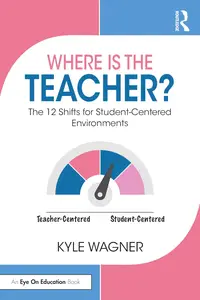
Where Is the Teacher? by Kyle Wagner
English | August 1, 2024 | ISBN: 1032484713 | 298 pages | PDF | 83 Mb
**** today can learn more from a five-minute YouTube video or AI chatbot than they can from a full day of lectures. So what then is our role as classroom teachers?

In this groundbreaking book, seasoned educator Kyle Wagner explains the new role of the teacher in the 4th industrial revolution. You will learn how to shift from being a deliverer of content, to a thoughtful designer and facilitator of student-centered learning experiences who gently guides from behind the scenes. Kyle, a veteran co-learning experience designer, former classroom teacher, and school leader, unpacks each of the 12 shifts required to build these student-centered environments. Chapters cover how to shift from a content-based to inquiry-based approach; develop relevant, interdisciplinary skills; cultivate meaningful student reflection; curate beautiful, real-world work; facilitate student-led discussion; and more.
Through stories from real student-centered classrooms around each shift, and anecdotes from the author's experience teaching and leading micro-academies, you will come away ready to unleash student creativity, build thoughtful inquirers, and develop self-directed learners within your own context.


Fileaxa


Links are Interchangeable - Single Extraction

 
2d91ad54a1f38efc6b6ce7f1b9ec7ead.webp

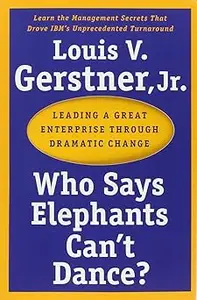
Louis. V. Gerstner, "Who Says Elephants Can't Dance"
English | ISBN: 0060523808 | 2003 | 304 pages | AZW3 | 981 KB
Who Says Elephants Can't Dance? sums up Lou Gerstner's historic business achievement, bringing IBM back from the brink of insolvency to lead the computer business once again.Offering a unique case study drawn from decades of experience at some of America's top companies - McKinsey, American Express, RJR Nabisco - Gerstner's insights into management and leadership are applicable to any business, at any level. Ranging from strategy to public relations, from finance to organization, Gerstner reveals the lessons of a lifetime running highly successful companies.


Fileaxa


Links are Interchangeable - Single Extraction

 
b52d66c37d88c586b3c632828510df7c.webp

Victor Schlatter, "Who Told You That You Were Naked: From the Fall of Adam to the Rise of the Antichrist"
English | 2006 | pages: 160 | ISBN: 0768423570 | PDF | 0,4 mb
The gnawing question, Who Told You That You Were Naked? Fell a bit more heavily than the forbidden fruit from that tree of knowledge of good and evil. As Victor Schlatter follows the fallout from that fatal bite, we find two streams of destiny flowing all the way into the 21 st century. The first was the Hebraic bedrock on which the Judeo-Christian standards were once founded; the challenger is the worldview of the ancient Greeks, which has formatted the mindset of the Western world-the very mindset that has become so familiar to the self-centered culture that swirls around us today. No less probing than it was in the Garden that dripped with dew and daisies, Who is it that has been whispering that all may not be well as we stand stripped of our humanistic self-confidence in a society that has long since forgotten how to blush?


Fileaxa


Links are Interchangeable - Single Extraction
 
c4661b3964c40a78da342cf762bfd512.webp

Who Wants To Be A Millionaire? The Ultimate Challenge By Celador
2000 | 320 Pages | ISBN: 0752271911 | PDF | 191 MB
'More suspense than a red-hot thriller - agonising and compulsive.' TV Times 'This quiz is more of a phenomenon than a mere success story.' Daily Telegraph Here's the perfect fix for all the addicted viewers who yell out the answers (correct or otherwise!) when 'Who Wants To Be A Millionaire?' is on TV and especially those who bit their nails down over Who Wants To Be A Millionaire? The Quiz Book! For not only have the question masters crafted 1,000 more exclusive tormenting teasers for Who Wants To Be A Millionaire? The Ultimate Challenge but the inclusion of the Fastest Finger First qualifier and a new improved Ask The Audience lifeline guarantees that players will be tested to their absolute limits!


Fileaxa


Links are Interchangeable - Single Extraction
 
1d3f848dbd8c02b73aeb8779ac781aea.webp

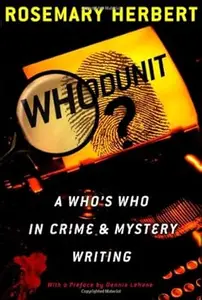
Rosemary Herbert, "Whodunit?: A Who's Who in Crime and Mystery Writing"
English | 2003 | pages: 256 | ISBN: 019515763X | PDF | 20,2 mb
Who populates the pages of crime and mystery writing? Who are the characters we willingly follow into the mystery genre's uneasy imaginative territory? And who created those characters in the first place? What life experience and expertise informs their work? What are the sources of their themes, regional accents, and even the axes that some grind? Why do some wish to give us a good laugh, while others seem hell-bent on making us shudder?

Whodunit? answers these questions and more. Here mystery expert Rosemary Herbert brings together enlightening and entertaining information on hundreds of classic and contemporary characters and authors. Some-such as P.D. James, Ian Rankin, Sherlock Holmes, and Kinsey Millhone-appear in individual entries. Still more keep company in articles about characters we admire, such as the Clerical Sleuth, and in pieces about those we love to hate, including the Femme Fatale and Con Artist. There is even an article on a figure that haunts so many great works of mystery -The Corpse.
Drawing on the Edgar Award-nominated volume The Oxford Companion to Crime & Mystery Writing, Herbert has added 101 new entries on the hottest new names in works ranging from puzzling whodunits to chilling crime novels.


Fileaxa


Links are Interchangeable - Single Extraction

 
5f727cebeb67548b767667bd2424e179.webp

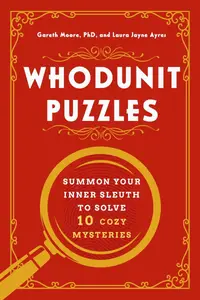
Whodunit Puzzles: Summon Your Inner Sleuth to Solve 10 Cozy Mysteries by Gareth Moore, Laura Jayne Ayres
English | September 17, 2024 | ISBN: 1682689352 | 224 pages | MOBI | 28 Mb
Complete more than 80 brainteasers to deduce whodunit in this fiendishly fun collection inspired by the work of Agatha Christie.

Mischief is afoot, but you can stop it by solving this townful of mysteries. Agnes Whitstable, renowned amateur detective in the sleepy village of Bishop's End, guides you through ten of her most intriguing cases: murders, thefts, and forgeries, encountering plenty of shady characters along the way. Each chapter contains a crime to solve, and each puzzle reveals a clue to crack the crime. All kinds of puzzles―from ciphers, cryptograms, and mazes to spot-the-difference, sudoku, and word searches―will challenge your wits, so put the kettle on and sharpen a pencil and your powers of observation. As with any good mystery, some people and locations appear more than once, offering details that may come in handy for later cases, and Detective Reports will put your memory to the test. If you encounter a red herring or hit a dead end, the puzzle key at the back has all the answers.


Fileaxa


Links are Interchangeable - Single Extraction
 
d48a3a82572f345aecbcd2c4c443ba12.webp

Why Alanis Morissette Matters by Megan Volpert
English | March 4, 2025 | ISBN: 1477330879 | 136 pages | EPUB | 0.83 Mb
The first critical biography of iconic musician Alanis Morissette, creator of Jagged Little Pill.

The 1990s hardly saw a bigger hit than Jagged Little Pill. Alanis Morissette's defining album won Grammys, dominated the Billboard charts, and sold more than 30 million copies worldwide. It left a deep mark on the psyches of countless listeners. Three decades later, Megan Volpert checks in with Morissette, probing her rich and varied post-JLP career and bearing feminist witness to the existential anger that ties her recent work to enduring classics like "You Oughta Know," "One Hand in My Pocket," and "Ironic."
Why Alanis Morissette Matters builds a bridge from Jagged Little Pill to the fascinating life and subtle intellect of its creator, exploring how the artist's philosophical interests and personal journey are reflected in each track. Morissette's struggles with censorship, mental health challenges, and Catholicism; her queer allyship, spiritual skepticism, zealous fandom, and philanthropic passions-all are carefully observed by a critic whose own life was touched by Jagged Little Pill. In the album's wake, Morissette has evolved as an artist and global citizen. With sensitivity and a profound love for the music, Volpert guides readers through the case for Morissette's enduring cultural relevance and creative impact.


Fileaxa


Links are Interchangeable - Single Extraction
 
d63123f8e0c0a2574a9ffa069b0aac42.webp

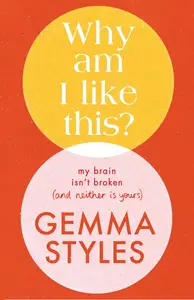
Why Am I Like This?: My Brain Isn't Broken (and Neither Is Yours) by Gemma Styles
English | November 19, 2024 | ASIN: B0D9384277 | 326 pages | EPUB | 2.12 Mb
Why do I feel so overwhelmed? Why did I say that embarrassing thing? Is everyone else achieving more than me? What can I actually do to make a difference? Am I the only one feeling this way?

In her internationally bestselling debut book-which draws on her own experience with mental health issues and neurodivergence-writer, podcaster, and advocate Gemma Styles captures the voice of her generation as she gets curious about how we tick in order to better understand and navigate the unique pressures of life today.
In the face of unprecedented levels of loneliness, burnout, and insecurity, and referencing the insight of experts and brand new research,Why Am I Like This?shows that by harnessing the power of curiosity and compassion, we can start to feel more hopeful, connected, and at peace with ourselves and each other. From how we communicate, to our ambitions and self-image,Gemma paints a picture of mental health in the digital age, including her own journey and ADHD diagnosis to highlight the ways in which women's mental health in particular is often overlooked or trivialized.
A thought-provoking, vulnerable, and engaging conversation on mental health, societal norms, and personal expectations from Gen Z's favorite big sister.


Fileaxa


Links are Interchangeable - Single Extraction

 
547a2024f1a2d110b22f762495a33e0a.webp

Why America Didn't Become Great Again
English | 2025 | ISBN: 103275253X | 432 Pages | EPUB (True) | 0.8 MB
The period from the late 1970s to 2020s became the best of times for America's corporate class. As profits grew along with the wealth and income that they delivered for their stockholders and management, their goal was to set new rules for the rest of us to live by with a clear class agenda. Institutions have been organized, government policies reoriented, and economists, journalists, and politicians recruited, funded, and promoted. And so it has not been the best of times for working families, as inequality, stagnant wages, debt, and ever longer working hours became their fate. This book critically analyzes those who very deliberately set out to implement policies enacted at the state and federal level in order to redistribute wealth and income upwards and change the balance of power in the United States in response to the class, gender, and racial challenges that resulted in compressed income and wealth differentials before the 1980s.


Fileaxa


Links are Interchangeable - Single Extraction
 
8f53bbc47dccfe4e0f3221ab3b0e87f1.webp

Why America Didn't Become Great Again by Robert Chernomas, Ian Hudson
English | April 22, 2025 | ISBN: 103275253X | 288 pages | PDF | 3.42 Mb
Examining the conditions that not only blocked attempts to make America great again but also actively made the country worse, Why America Didn't Become Great Again identifies those organizations, institutions, politicians, and prominent characters in the forefront of the economic and social policies - ultimately asking who is responsible.

The period from the late 1970s to 2020s became the best of times for America's corporate class. As profits grew along with the wealth and income that they delivered for their stockholders and management, their goal was to set new rules for the rest of us to live by with a clear class agenda. Institutions have been organized, government policies reoriented, and economists, journalists, and politicians recruited, funded, and promoted. And so it has not been the best of times for working families, as inequality, stagnant wages, debt, and ever longer working hours became their fate. This book critically analyzes those who very deliberately set out to implement policies enacted at the state and federal level in order to redistribute wealth and income upwards and change the balance of power in the United States in response to the class, gender, and racial challenges that resulted in compressed income and wealth differentials before the 1980s.
An essential book on contemporary inequality in America, Why America Didn't Become Great Again surveys the past near half century that resulted in American economic instability and inequality, environmental crisis, a crumbling physical and harmful social infrastructure, among the very worst health outcomes, child poverty, food insecurity, and social mobility of the industrialized countries culminating in a Trump regime and the road to further ruin.


Fileaxa


Links are Interchangeable - Single Extraction

 
6df80a7a5c444ab622aec85074c44d3f.webp

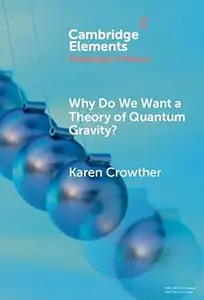
Karen Crowther, "Why Do We Want a Theory of Quantum Gravity? "
English | ISBN: 1009548085 | 2025 | 75 pages | PDF | 3 MB
The search for a new scientific theory is typically prompted by an encounter with something in the world that cannot be explained by current theories. This is not the case for the search for a theory of quantum gravity, which has been primarily motivated by theoretical and philosophical concerns. This Element introduces some of the motivations for seeking a theory of quantum gravity, with the aim of instigating a more critical perspective on how they are used in defining and constraining the theory sought. These motivations include unification, incompatibilities between general relativity and quantum field theory, consistency, singularity resolution, and results from black hole thermodynamics.


Fileaxa


Links are Interchangeable - Single Extraction

 
da55ae65570c3b4560e32f620d22cf21.webp

Why Machines Will Never Rule the World: Artificial Intelligence without Fear
by Landgrebe, Jobst, Smith, Barry

English | 2025 | ISBN: 1032941405 | 434 pages | True PDF EPUB | 10 MB

This is a revised and expanded second edition of Why Machines Will Never Rule the World. Its core argument remains the same: that an artificial intelligence (AI) that could equal or exceed human intelligence - sometimes called 'artificial general intelligence' (AGI) - is for mathematical reasons impossible. It offers two specific reasons for this claim: Human intelligence is a capability of the human brain and central nervous system, which is a complex dynamic system. Systems of this sort cannot be modelled mathematically in a way that allows them to operate inside a computer. In supporting their claim, the authors, Jobst Landgrebe and Barry Smith, marshal evidence from mathematics, physics, computer science, philosophy, linguistics, biology, and anthropology, setting up their book around three central questions: What are the essential marks of human intelligence? What is it that researchers try to do when they attempt to achieve 'Artificial Intelligence' (AI)? And why, after more than 50 years, are our interactions with AI, for example when on the telephone with our bank's computers, still so unsatisfactory? The first edition was published the same week that ChatGPT was unleashed onto the world. This second edition shows how the arguments in the book apply already to Large Language Models such as ChatGPT. This new edition also brings up to date the arguments relating to the limits of AI, showing why AI systems are best viewed as pieces of mathematics, which cannot think, feel, or will. They also demolish the idea that, with the help of AI, we could 'solve physics' in a way that would allow us to create, in the cloud, a perfect simulation of reality in which we could enjoy digital immortality. Such ideas reveal a lack of understanding of physics, mathematics, human biology, and computers. There is still, as the authors demonstrate in an updated final chapter, a great deal that AI can achieve which will benefit humanity. But these benefits will be achieved without the aid of systems that are more powerful than humans, which are as impossible as AI systems that are intrinsically 'evil' or able to 'will' a takeover of human society. Key Changes to the Second Edition Shows how the arguments of the first edition apply also to new Large Language Models. Adds a treatment of human practical intelligence - of knowing how vs. knowing that - a topic that is ignored by the AI community. Demonstrates why 'AI ethics' should be relabelled as 'ethics of human uses of AI'. Adds a new chapter showing the essential limitations of physics, providing a thorough grounding for the arguments of the book. Demolishes the idea that we might already be living in a simulation.


Fileaxa


Links are Interchangeable - Single Extraction
 
Zurück
Oben Unten