• Regeln für den Dokumente-Bereich:

    In den Börsenbereich gehören nur Angebote die bereits den Allgemeinen Regeln entsprechen.

    Allgemeines:

    Nicht erlaubt im Dokumente-Bereich sind:

    - indizierte Titel (inkl. Comics)
    - extremistische Werke, Zeitschriften und Comics (egal, welche Richtung)
    - jegliche Art von Pornographie
    - Anleitungen zu kriminellen Handlungen, gleich welcher Art
    - sadistische, menschenverachtende oder ähnliche Werke

    Nutzt den "Bedanken"-Button, bei Sammelthreads führen jegliche Kommentare, positiv wie negativ, sehr schnell zu einer Unübersichtlichkeit des Threads. Downmeldungen sind an den Uploader zu richten

    Vor dem Einstellen zu beachten:

    - Suchfunktion

    Vergewissert euch, dass es euer Dokument noch nicht im Board gibt, Doppelposts werden kommentarlos gelöscht. Ist es schon vorhanden, tragt es als Mirror im bestehenden Post ein.

    - Threadtitel

    Idealerweise ist sofort zu erkennen um was es sich handelt. Verseht euren Titel mit den relevanten Informationen, das hilft euch und damit auch uns und allen Suchenden erheblich weiter.

    Beispiel: [Thriller] Dan Brown - Inferno oder bei Magazinen:

    Computerbild - 14/2014 (es muss ersichtlich sein, um welche Ausgabe und welches Magazin es sich handelt)

    Folgende Präfixe stehen im Unterforum "Unterhaltung" zur Verfügung:

    [Humor]
    [Drama]
    [Erotik]
    [Fantasy]
    [Krimi]
    [Roman]
    [Thriller]
    [Horror]
    [Science Fiction]

    Inhalt des Beitrags:

    Folgende Pflichtangaben gilt es einzuhalten:

    - Autor
    - Titel
    - Präfix
    - Cover
    - Genre
    - Inhaltsbeschreibung
    - enthaltene Formate
    - Gesamtgröße des Downloads
    - Hoster
    - ggf. Passwort

    Nicht erlaubt sind alle Dateien, die den Download unnötig aufblähen um eine Affiliategrenze zu erreichen, wie zB. mp3-files, übergroße Bilder, etc.

    Ebenso nicht erlaubt sind sämtliche Dateien mit DRM, persönlichen Daten, etc., diese werden kommentarlos zu eurem eigenem Schutz gelöscht.

    Achtet bitte bei der Konvertierung der Formate auf die Lesbarkeit, ein epub, was nur einfach durch Calibre gejagt wird um ein PDF zu erhalten, ist zu 99% eben nicht lesbar. Wenn ihr es nicht könnt, dann lasst es besser oder lest euch ein, wie man es richtig macht.


    Unterforum Comics:

    Threadtitel:

    Ähnlich, wie bei Unterhaltung und Magazinen, sollte der Titel alle relevanten Informationen enthalten, hier bitte

    - den Titel des Comics
    - den Verlag (einige Comics sind in verschiedenen Verlagen erschienen)
    - das Erscheinungsjahr

    Erlaubt sind folgende Formate:

    - CBR
    - CBZ

    Grundsätzlich gilt: jede Version eines Comics erhält einen eigenen Thread, Ersteller eines Comics können ihre Bände gerne mit dem Zusatz (Original-Release) versehen.

    Bei Unsicherheiten zur korrekten Benennung bitte die Informationen von www.comicguide.de nutzen.

    Inhalt des Beitrags:

    Pflichtangaben hier sind:

    - Titel des Bandes und ggf. Nummer
    - Cover
    - falls bekannt technische Daten (DPI, Breite, Speicherqualität)
    - Größe des Downloads
    - Hoster
    - ggf. Passwort
    - falls bekannt Releasenamen
  • Bitte registriere dich zunächst um Beiträge zu verfassen und externe Links aufzurufen.

++ Premium IPTV ++ 7000 Live Sender ++ UHD Qualität ++ Mediathek mit 18.000 Inhalten ++


VenneTV


Collection Download Ebooks Best Seller Updated Daily

83d7c1b27b725d9edaa66443c5553136.webp

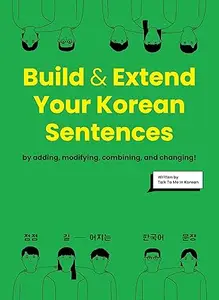
Talk To Me In Korean, "Build & Extend Your Korean Sentences: A Comprehensive Guide to Understanding Korean Sentence Structures and Writing Longer Sentences for Beginners and Intermediate Learners, with Writing and Grammar Exercises, Vocabulary Lists, and Speaking Practices"
English | 2021 | ASIN: B098KK9JWX | PDF | pages: 276 | 6.2 mb
Get a better understanding of Korean sentence structures, and write more flexible and progressively longer Korean sentences with confidence!

Book contents:
- 30 commonly used Korean sentence structures for beginners and intermediate learners, which get progressively longer and more complex throughout the book
- Verb conjugation practice, extension practice, and speaking practice for each sentence structure
- Korean Language Basics for previewing grammar points that are used in the book
- Key vocabulary lists
- Free MP3 audio files, recorded by native speakers (can be downloaded from the TTMIK official website or mobile app)


Fileaxa


Links are Interchangeable - Single Extraction
 
afcd3af6490579a7b3a1f38982757fe9.webp

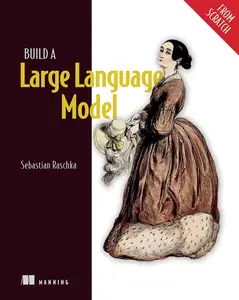
Build a Large Language Model (From Scratch) by Sebastian Raschka
English | October 29, 2024 | ISBN: 1633437167 | 368 pages | PDF | 6.53 Mb
Learn how to create, train, and tweak large language models (LLMs) by building one from the ground up!

In Build a Large Language Model (from Scratch) bestselling author Sebastian Raschka guides you step by step through creating your own LLM. Each stage is explained with clear text, diagrams, and examples. You'll go from the initial design and creation, to pretraining on a general corpus, and on to fine-tuning for specific tasks.
Build a Large Language Model (from Scratch) teaches you how to:
* Plan and code all the parts of an LLM
* Prepare a dataset suitable for LLM training
* Fine-tune LLMs for text classification and with your own data
* Use human feedback to ensure your LLM follows instructions
* Load pretrained weights into an LLM
Build a Large Language Model (from Scratch) takes you inside the AI black box to tinker with the internal systems that power generative AI. As you work through each key stage of LLM creation, you'll develop an in-depth understanding of how LLMs work, their limitations, and their customization methods. Your LLM can be developed on an ordinary laptop, and used as your own personal assistant.
Purchase of the print book includes a free eBook in PDF and ePub formats from Manning Publications.
About the technology
Physicist Richard P. Feynman reportedly said, "I don't understand anything I can't build." Based on this same powerful principle, bestselling author Sebastian Raschka guides you step by step as you build a GPT-style LLM that you can run on your laptop. This is an engaging book that covers each stage of the process, from planning and coding to training and fine-tuning.
About the book
Build a Large Language Model (From Scratch) is a practical and eminently-satisfying hands-on journey into the foundations of generative AI. Without relying on any existing LLM libraries, you'll code a base model, evolve it into a text classifier, and ultimately create a chatbot that can follow your conversational instructions. And you'll really understand it because you built it yourself!
What's inside
* Plan and code an LLM comparable to GPT-2
* Load pretrained weights
* Construct a complete training pipeline
* Fine-tune your LLM for text classification
* Develop LLMs that follow human instructions
About the reader
Readers need intermediate Python skills and some knowledge of machine learning. The LLM you create will run on any modern laptop and can optionally utilize GPUs.
About the author
Sebastian Raschka is a Staff Research Engineer at Lightning AI, where he works on LLM research and develops open-source software.
The technical editor on this book was David Caswell.
Table of Contents
1 Understanding large language models
2 Working with text data
3 Coding attention mechanisms
4 Implementing a GPT model from scratch to generate text
5 Pretraining on unlabeled data
6 Fine-tuning for classification
7 Fine-tuning to follow instructions
A Introduction to PyTorch
B References and further reading
C Exercise solutions
D Adding bells and whistles to the training loop
E Parameter-efficient fine-tuning with LoRA


Fileaxa


Links are Interchangeable - Single Extraction

 
af3ff852126089b90e39693b77acaf50.webp

Build a Large Language Model (From Scratch) by Sebastian Raschka
English | October 29, 2024 | ISBN: 1633437167 | 368 pages | MOBI | 13 Mb
Learn how to create, train, and tweak large language models (LLMs) by building one from the ground up!

In Build a Large Language Model (from Scratch) bestselling author Sebastian Raschka guides you step by step through creating your own LLM. Each stage is explained with clear text, diagrams, and examples. You'll go from the initial design and creation, to pretraining on a general corpus, and on to fine-tuning for specific tasks.
Build a Large Language Model (from Scratch) teaches you how to:
* Plan and code all the parts of an LLM
* Prepare a dataset suitable for LLM training
* Fine-tune LLMs for text classification and with your own data
* Use human feedback to ensure your LLM follows instructions
* Load pretrained weights into an LLM
Build a Large Language Model (from Scratch) takes you inside the AI black box to tinker with the internal systems that power generative AI. As you work through each key stage of LLM creation, you'll develop an in-depth understanding of how LLMs work, their limitations, and their customization methods. Your LLM can be developed on an ordinary laptop, and used as your own personal assistant.
Purchase of the print book includes a free eBook in PDF and ePub formats from Manning Publications.
About the technology
Physicist Richard P. Feynman reportedly said, "I don't understand anything I can't build." Based on this same powerful principle, bestselling author Sebastian Raschka guides you step by step as you build a GPT-style LLM that you can run on your laptop. This is an engaging book that covers each stage of the process, from planning and coding to training and fine-tuning.
About the book
Build a Large Language Model (From Scratch) is a practical and eminently-satisfying hands-on journey into the foundations of generative AI. Without relying on any existing LLM libraries, you'll code a base model, evolve it into a text classifier, and ultimately create a chatbot that can follow your conversational instructions. And you'll really understand it because you built it yourself!
What's inside
* Plan and code an LLM comparable to GPT-2
* Load pretrained weights
* Construct a complete training pipeline
* Fine-tune your LLM for text classification
* Develop LLMs that follow human instructions
About the reader
Readers need intermediate Python skills and some knowledge of machine learning. The LLM you create will run on any modern laptop and can optionally utilize GPUs.
About the author
Sebastian Raschka is a Staff Research Engineer at Lightning AI, where he works on LLM research and develops open-source software.
The technical editor on this book was David Caswell.
Table of Contents
1 Understanding large language models
2 Working with text data
3 Coding attention mechanisms
4 Implementing a GPT model from scratch to generate text
5 Pretraining on unlabeled data
6 Fine-tuning for classification
7 Fine-tuning to follow instructions
A Introduction to PyTorch
B References and further reading
C Exercise solutions
D Adding bells and whistles to the training loop
E Parameter-efficient fine-tuning with LoRA


Fileaxa


Links are Interchangeable - Single Extraction

 
64c423e32d4595ff49ea6794ab69b567.webp

Build a Large Language Model (From Scratch) by Sebastian Raschka
English | October 29, 2024 | ISBN: 1633437167 | 368 pages | EPUB | 13 Mb
Learn how to create, train, and tweak large language models (LLMs) by building one from the ground up!

In Build a Large Language Model (from Scratch) bestselling author Sebastian Raschka guides you step by step through creating your own LLM. Each stage is explained with clear text, diagrams, and examples. You'll go from the initial design and creation, to pretraining on a general corpus, and on to fine-tuning for specific tasks.
Build a Large Language Model (from Scratch) teaches you how to:
* Plan and code all the parts of an LLM
* Prepare a dataset suitable for LLM training
* Fine-tune LLMs for text classification and with your own data
* Use human feedback to ensure your LLM follows instructions
* Load pretrained weights into an LLM
Build a Large Language Model (from Scratch) takes you inside the AI black box to tinker with the internal systems that power generative AI. As you work through each key stage of LLM creation, you'll develop an in-depth understanding of how LLMs work, their limitations, and their customization methods. Your LLM can be developed on an ordinary laptop, and used as your own personal assistant.
Purchase of the print book includes a free eBook in PDF and ePub formats from Manning Publications.
About the technology
Physicist Richard P. Feynman reportedly said, "I don't understand anything I can't build." Based on this same powerful principle, bestselling author Sebastian Raschka guides you step by step as you build a GPT-style LLM that you can run on your laptop. This is an engaging book that covers each stage of the process, from planning and coding to training and fine-tuning.
About the book
Build a Large Language Model (From Scratch) is a practical and eminently-satisfying hands-on journey into the foundations of generative AI. Without relying on any existing LLM libraries, you'll code a base model, evolve it into a text classifier, and ultimately create a chatbot that can follow your conversational instructions. And you'll really understand it because you built it yourself!
What's inside
* Plan and code an LLM comparable to GPT-2
* Load pretrained weights
* Construct a complete training pipeline
* Fine-tune your LLM for text classification
* Develop LLMs that follow human instructions
About the reader
Readers need intermediate Python skills and some knowledge of machine learning. The LLM you create will run on any modern laptop and can optionally utilize GPUs.
About the author
Sebastian Raschka is a Staff Research Engineer at Lightning AI, where he works on LLM research and develops open-source software.
The technical editor on this book was David Caswell.
Table of Contents
1 Understanding large language models
2 Working with text data
3 Coding attention mechanisms
4 Implementing a GPT model from scratch to generate text
5 Pretraining on unlabeled data
6 Fine-tuning for classification
7 Fine-tuning to follow instructions
A Introduction to PyTorch
B References and further reading
C Exercise solutions
D Adding bells and whistles to the training loop
E Parameter-efficient fine-tuning with LoRA


Fileaxa


Links are Interchangeable - Single Extraction

 
f5a375814951eff564aea41cf379d765.webp

Build a Large Language Model (From Scratch) by Sebastian Raschka
English | October 29, 2024 | ISBN: 1633437167 | 368 pages | PDF | 66 Mb
Learn how to create, train, and tweak large language models (LLMs) by building one from the ground up!

In Build a Large Language Model (from Scratch) bestselling author Sebastian Raschka guides you step by step through creating your own LLM. Each stage is explained with clear text, diagrams, and examples. You'll go from the initial design and creation, to pretraining on a general corpus, and on to fine-tuning for specific tasks.
Build a Large Language Model (from Scratch) teaches you how to:
* Plan and code all the parts of an LLM
* Prepare a dataset suitable for LLM training
* Fine-tune LLMs for text classification and with your own data
* Use human feedback to ensure your LLM follows instructions
* Load pretrained weights into an LLM
Build a Large Language Model (from Scratch) takes you inside the AI black box to tinker with the internal systems that power generative AI. As you work through each key stage of LLM creation, you'll develop an in-depth understanding of how LLMs work, their limitations, and their customization methods. Your LLM can be developed on an ordinary laptop, and used as your own personal assistant.
Purchase of the print book includes a free eBook in PDF and ePub formats from Manning Publications.
About the technology
Physicist Richard P. Feynman reportedly said, "I don't understand anything I can't build." Based on this same powerful principle, bestselling author Sebastian Raschka guides you step by step as you build a GPT-style LLM that you can run on your laptop. This is an engaging book that covers each stage of the process, from planning and coding to training and fine-tuning.
About the book
Build a Large Language Model (From Scratch) is a practical and eminently-satisfying hands-on journey into the foundations of generative AI. Without relying on any existing LLM libraries, you'll code a base model, evolve it into a text classifier, and ultimately create a chatbot that can follow your conversational instructions. And you'll really understand it because you built it yourself!
What's inside
* Plan and code an LLM comparable to GPT-2
* Load pretrained weights
* Construct a complete training pipeline
* Fine-tune your LLM for text classification
* Develop LLMs that follow human instructions
About the reader
Readers need intermediate Python skills and some knowledge of machine learning. The LLM you create will run on any modern laptop and can optionally utilize GPUs.
About the author
Sebastian Raschka is a Staff Research Engineer at Lightning AI, where he works on LLM research and develops open-source software.
The technical editor on this book was David Caswell.
Table of Contents
1 Understanding large language models
2 Working with text data
3 Coding attention mechanisms
4 Implementing a GPT model from scratch to generate text
5 Pretraining on unlabeled data
6 Fine-tuning for classification
7 Fine-tuning to follow instructions
A Introduction to PyTorch
B References and further reading
C Exercise solutions
D Adding bells and whistles to the training loop
E Parameter-efficient fine-tuning with LoRA


Fileaxa


Links are Interchangeable - Single Extraction

 
c1ecc9da20fd0fe0382438cf5eacf2b4.webp

Build a Large Language Model (From Scratch) by Sebastian Raschka
English | October 29, 2024 | ISBN: 1633437167 | 368 pages | PDF | 33 Mb
Learn how to create, train, and tweak large language models (LLMs) by building one from the ground up!

In Build a Large Language Model (from Scratch) bestselling author Sebastian Raschka guides you step by step through creating your own LLM. Each stage is explained with clear text, diagrams, and examples. You'll go from the initial design and creation, to pretraining on a general corpus, and on to fine-tuning for specific tasks.
Build a Large Language Model (from Scratch) teaches you how to:
* Plan and code all the parts of an LLM
* Prepare a dataset suitable for LLM training
* Fine-tune LLMs for text classification and with your own data
* Use human feedback to ensure your LLM follows instructions
* Load pretrained weights into an LLM
Build a Large Language Model (from Scratch) takes you inside the AI black box to tinker with the internal systems that power generative AI. As you work through each key stage of LLM creation, you'll develop an in-depth understanding of how LLMs work, their limitations, and their customization methods. Your LLM can be developed on an ordinary laptop, and used as your own personal assistant.
Purchase of the print book includes a free eBook in PDF and ePub formats from Manning Publications.
About the technology
Physicist Richard P. Feynman reportedly said, "I don't understand anything I can't build." Based on this same powerful principle, bestselling author Sebastian Raschka guides you step by step as you build a GPT-style LLM that you can run on your laptop. This is an engaging book that covers each stage of the process, from planning and coding to training and fine-tuning.
About the book
Build a Large Language Model (From Scratch) is a practical and eminently-satisfying hands-on journey into the foundations of generative AI. Without relying on any existing LLM libraries, you'll code a base model, evolve it into a text classifier, and ultimately create a chatbot that can follow your conversational instructions. And you'll really understand it because you built it yourself!
What's inside
* Plan and code an LLM comparable to GPT-2
* Load pretrained weights
* Construct a complete training pipeline
* Fine-tune your LLM for text classification
* Develop LLMs that follow human instructions
About the reader
Readers need intermediate Python skills and some knowledge of machine learning. The LLM you create will run on any modern laptop and can optionally utilize GPUs.
About the author
Sebastian Raschka is a Staff Research Engineer at Lightning AI, where he works on LLM research and develops open-source software.
The technical editor on this book was David Caswell.
Table of Contents
1 Understanding large language models
2 Working with text data
3 Coding attention mechanisms
4 Implementing a GPT model from scratch to generate text
5 Pretraining on unlabeled data
6 Fine-tuning for classification
7 Fine-tuning to follow instructions
A Introduction to PyTorch
B References and further reading
C Exercise solutions
D Adding bells and whistles to the training loop
E Parameter-efficient fine-tuning with LoRA


Fileaxa


Links are Interchangeable - Single Extraction

 
5f137de15af0b6e0c8e09dcf07e2610b.webp

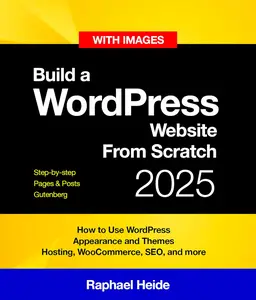
Build a WordPress Website From Scratch 2025:
Step-by-step, How to Use WordPress Appearance and Themes Hosting, WooCommerce, SEO, and more

English | 2024 | ASIN : B0DPXXVKFH | 260 Pages | MOBI | 5 MB

The difference of this book is that it does not require any prior knowledge in web programming, because WordPress allows anyone to create their own website without the need to know how to program. WordPress offers simplified methods to create complete websites with management done through a control panel. The book explains step by step how to use these features and how to customize the site according to the preferences of the reader. With no code (but if you want some code, the sky is the limit.)


Fileaxa


Links are Interchangeable - Single Extraction
 
b5e294901573cfaa4e5a538017c4da0c.webp

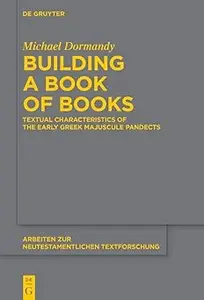
Michael Dormandy, "Building a Book of Books: Textual Characteristics of the Early Greek Majuscule Pandects "
English | ISBN: 3110994577 | 2024 | 392 pages | EPUB, PDF | 5 MB + 3 MB
This book analyses how the early Greek whole-Bible manuscripts (pandects) change and preserve the text. Dormandy refutes the method based on singular readings and so investigates all the ways in which each pandect differs from the initial text, both changes introduced by its own scribe and by the scribes of earlier manuscripts. He surveys sample chapters in John, Romans, Revelation, Sirach and Judges (including discussing the "new finds" of Sinaiticus). Dormandy's observations of Codex Ephraemi challenge accepted transcriptions. Dormandy argues that Sinaiticus and Vaticanus may plausibly have been made in response to commissions by Constantine and Constans. Dormandy concludes that generally, across all the Biblical books considered, the pandects preserve the initial text well. Transcriptional and linguistic variations are more common than harmonisations or changes of content. The more precise profiles of each manuscript vary between Biblical books. The pandects thus create bibliographic unity from textual diversity. This shows their significance in the history of the Christian Bible: they reflect in bibliographic form the hermeneutical move to consider all the books of the Christian Bible as one corpus.

Read more


Fileaxa


Links are Interchangeable - Single Extraction

 
2f2a9923cfd1f032c0a7be42d00d8b5c.webp

Building a Five-Star Relationship with Your Horse: Using the Five Domains of Animal Welfare
English | 2025 | ISBN: 1032488743 | 150 Pages | PDF EPUB (True) | 24 MB
The Five Domains of Animal Welfare, when applied to horses, can act as a safe, reliable source of advice and information for conscientious owners, and also a benchmark by which the practices of the more experienced can be measured, scrutinised and held to account. They provide standards to be met rather than levels to be tolerated.


Fileaxa


Links are Interchangeable - Single Extraction

 
b822113ad7fbbeab2978627845fe07c1.webp

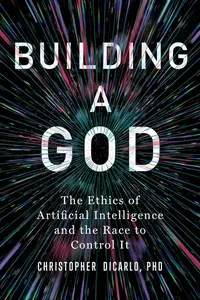
Building a God
by Christopher DiCarlo

English | January 21, 2025 | ISBN: 1493085891 | 405 Pages | True epub | 6,62 MB

Renowned ethicist provides essential guide to successfully navigating the future AI landscape
In Building a God, Christopher DiCarlo explores the profound implications of artificial intelligence surpassing human intelligence-a destiny that seems not just possible, but inevitable. At this critical crossroad in our evolutionary history, DiCarlo, a renowned ethicist in AI, delves into the ethical mazes and technological quandaries of our future interactions with superior AI entities.
From healthcare enhancements to the risks of digital manipulation, this book scrutinizes AI's dual potential to elevate or devastate humanity. DiCarlo advocates for robust global governance of AI, proposing visionary policies to safeguard our society.
AI will positively impact our lives in myriad ways: from healthcare to education, manufacturing to sustainability, AI-powered tools will improve productivity and add ease to the most massive global industries and to our own personal daily routines alike. But, we have already witnessed the tip of the iceberg when it comes to the risks of this new technology: AI algorithms can manipulate human behavior, spread disinformation, shape public opinion, and impact democratic processes. Sophisticated technologies such as GPT-4, Dall-E 2, and video Deepfakes allow users to create, distort, and alter information. Perhaps more troubling is the foundational lack of transparency in both the utilization and design of AI models.
What ethical precepts should be determined for AI, and by whom? And what will happen if rogue abusers decide not to comply with such ethical guidelines? How should we enforce these precepts? Should the UN develop a Charter or Accord which all member states agree to and sign off on? Should governments develop a form of international regulative body similar to the International Atomic Energy Agency (IAEA) which regulates not only the use of nuclear energy, but nuclear weaponry as well?
In this incisive and cogent meditation on the future of AI, DiCarlo argues for the ethical governance of AI by identifying the key components, obstacles, and points of progress gained so far by the global community, and by putting forth thoughtful and measured policies to regulate this dangerous technology.
eBook Details:
Christopher DiCarlo
405 Pages
9 - 10 Hours to read
125k Total words
Release Date: January 21, 2025
ISBN-13: 9781493085897
ISBN-10: 1493085891
Language: English
Format: epub
✅File Size: 6,62 MB


Fileaxa


Links are Interchangeable - Single Extraction
 
a486e0bf13e8fbb48a9fcac71492c656.webp

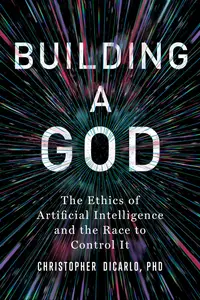
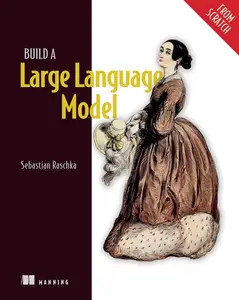
Building a God: The Ethics of Artificial Intelligence and the Race to Control It by Christopher DiCarlo
English | January 21st, 2025 | ISBN: 1493085883 | 376 pages | True EPUB (Retail Copy) | 7.60 MB
Renowned ethicist provides essential guide to successfully navigating the future AI landscape

In Building a God, Christopher DiCarlo explores the profound implications of artificial intelligence surpassing human intelligence-a destiny that seems not just possible, but inevitable. At this critical crossroad in our evolutionary history, DiCarlo, a renowned ethicist in AI, delves into the ethical mazes and technological quandaries of our future interactions with superior AI entities.
From healthcare enhancements to the risks of digital manipulation, this book scrutinizes AI's dual potential to elevate or devastate humanity. DiCarlo advocates for robust global governance of AI, proposing visionary policies to safeguard our society.
AI will positively impact our lives in myriad ways: from healthcare to education, manufacturing to sustainability, AI-powered tools will improve productivity and add ease to the most massive global industries and to our own personal daily routines alike. But, we have already witnessed the tip of the iceberg when it comes to the risks of this new technology: AI algorithms can manipulate human behavior, spread disinformation, shape public opinion, and impact democratic processes. Sophisticated technologies such as GPT-4, Dall-E 2, and video Deepfakes allow users to create, distort, and alter information. Perhaps more troubling is the foundational lack of transparency in both the utilization and design of AI models.
What ethical precepts should be determined for AI, and by whom? And what will happen if rogue abusers decide not to comply with such ethical guidelines? How should we enforce these precepts? Should the UN develop a Charter or Accord which all member states agree to and sign off on? Should governments develop a form of international regulative body similar to the International Atomic Energy Agency (IAEA) which regulates not only the use of nuclear energy, but nuclear weaponry as well?
In this incisive and cogent meditation on the future of AI, DiCarlo argues for the ethical governance of AI by identifying the key components, obstacles, and points of progress gained so far by the global community, and by putting forth thoughtful and measured policies to regulate this dangerous technology.


Fileaxa


Links are Interchangeable - Single Extraction
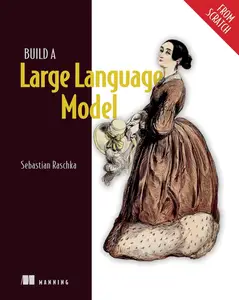
 
f7727dce66b8a55088d7bcf3857b5e12.webp

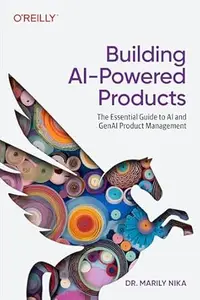
Building AI-Powered Products: The Essential Guide to AI and GenAI Product Management
English | 2025 | ISBN: 1098152700 | 252 Pages | EPUB | 10 MB
Drawing from her experience at Google and Meta, Dr. Marily Nika delivers the definitive guide for product managers building AI-powered products. Packed with smart strategies, actionable tools, and real-world examples, this book breaks down the complex world of AI into a playbook for driving innovation, solving user problems, and unlocking business growth.


Fileaxa


Links are Interchangeable - Single Extraction
 
Zurück
Oben Unten