• Regeln für den Dokumente-Bereich:

    In den Börsenbereich gehören nur Angebote die bereits den Allgemeinen Regeln entsprechen.

    Allgemeines:

    Nicht erlaubt im Dokumente-Bereich sind:

    - indizierte Titel (inkl. Comics)
    - extremistische Werke, Zeitschriften und Comics (egal, welche Richtung)
    - jegliche Art von Pornographie
    - Anleitungen zu kriminellen Handlungen, gleich welcher Art
    - sadistische, menschenverachtende oder ähnliche Werke

    Nutzt den "Bedanken"-Button, bei Sammelthreads führen jegliche Kommentare, positiv wie negativ, sehr schnell zu einer Unübersichtlichkeit des Threads. Downmeldungen sind an den Uploader zu richten

    Vor dem Einstellen zu beachten:

    - Suchfunktion

    Vergewissert euch, dass es euer Dokument noch nicht im Board gibt, Doppelposts werden kommentarlos gelöscht. Ist es schon vorhanden, tragt es als Mirror im bestehenden Post ein.

    - Threadtitel

    Idealerweise ist sofort zu erkennen um was es sich handelt. Verseht euren Titel mit den relevanten Informationen, das hilft euch und damit auch uns und allen Suchenden erheblich weiter.

    Beispiel: [Thriller] Dan Brown - Inferno oder bei Magazinen:

    Computerbild - 14/2014 (es muss ersichtlich sein, um welche Ausgabe und welches Magazin es sich handelt)

    Folgende Präfixe stehen im Unterforum "Unterhaltung" zur Verfügung:

    [Humor]
    [Drama]
    [Erotik]
    [Fantasy]
    [Krimi]
    [Roman]
    [Thriller]
    [Horror]
    [Science Fiction]

    Inhalt des Beitrags:

    Folgende Pflichtangaben gilt es einzuhalten:

    - Autor
    - Titel
    - Präfix
    - Cover
    - Genre
    - Inhaltsbeschreibung
    - enthaltene Formate
    - Gesamtgröße des Downloads
    - Hoster
    - ggf. Passwort

    Nicht erlaubt sind alle Dateien, die den Download unnötig aufblähen um eine Affiliategrenze zu erreichen, wie zB. mp3-files, übergroße Bilder, etc.

    Ebenso nicht erlaubt sind sämtliche Dateien mit DRM, persönlichen Daten, etc., diese werden kommentarlos zu eurem eigenem Schutz gelöscht.

    Achtet bitte bei der Konvertierung der Formate auf die Lesbarkeit, ein epub, was nur einfach durch Calibre gejagt wird um ein PDF zu erhalten, ist zu 99% eben nicht lesbar. Wenn ihr es nicht könnt, dann lasst es besser oder lest euch ein, wie man es richtig macht.


    Unterforum Comics:

    Threadtitel:

    Ähnlich, wie bei Unterhaltung und Magazinen, sollte der Titel alle relevanten Informationen enthalten, hier bitte

    - den Titel des Comics
    - den Verlag (einige Comics sind in verschiedenen Verlagen erschienen)
    - das Erscheinungsjahr

    Erlaubt sind folgende Formate:

    - CBR
    - CBZ

    Grundsätzlich gilt: jede Version eines Comics erhält einen eigenen Thread, Ersteller eines Comics können ihre Bände gerne mit dem Zusatz (Original-Release) versehen.

    Bei Unsicherheiten zur korrekten Benennung bitte die Informationen von www.comicguide.de nutzen.

    Inhalt des Beitrags:

    Pflichtangaben hier sind:

    - Titel des Bandes und ggf. Nummer
    - Cover
    - falls bekannt technische Daten (DPI, Breite, Speicherqualität)
    - Größe des Downloads
    - Hoster
    - ggf. Passwort
    - falls bekannt Releasenamen
  • Bitte registriere dich zunächst um Beiträge zu verfassen und externe Links aufzurufen.

++ Premium IPTV ++ 7000 Live Sender ++ UHD Qualität ++ Mediathek mit 18.000 Inhalten ++


VenneTV


Collection Download Ebooks Best Seller Updated Daily

c5fc6197a9b86ebbbbf902a922688d66.webp

Oscar Kugelstadt, "What? I Can Do That?: Growing Up in Nazi Germany"
English | ISBN: 1469183900 | 2012 | 200 pages | EPUB | 4 MB
Book by Kugelstadt, Oscar


Links are Interchangeable - Single Extraction
 
6a79f1646f5d45f486165b0c59c1a74a.webp

What I Saw: Reports from Berlin, 1920-33 by Joseph Roth, translated by Michael Hofmann
English | 22 April 2011 | ISBN: 1847081975 | True EPUB | 288 pages | 5.3 MB
In 1920, Joseph Roth, the most renowned German correspondent of his age, arrived in Berlin, the capital of the Weimar Republic. He produced a series of impressionistic and political writings that influenced an entire generation of writers, including Thomas Mann and the young Christopher Isherwood.

Roth, like no other German writer of his time, ventured beyond Berlin's official veneer to the heart of the city, chronicling the lives of its forgotten inhabitants - the Jewish immigrants, the criminals, the bathhouse denizens, and the nameless dead who filled the morgues. Warning early on of the threat posed by the Nazis, Roth evoked a landscape of moral bankruptcy and debauched beauty, creating in the process an unforgettable portrait of a city.


Links are Interchangeable - Single Extraction
 
f75b85553ad5b5b59ba55b2a5b1a837c.webp

O. Carter Snead, "What It Means to Be Human: The Case for the Body in Public Bioethics"
English | ISBN: 0674987721 | 2020 | 336 pages | PDF | 2 MB
One of the Wall Street Journal's Top Ten Books of the Year

A leading expert on public bioethics advocates for a new conception of human identity in American law and policy.
The natural limits of the human body make us vulnerable and therefore dependent, throughout our lives, on others. Yet American law and policy disregard these stubborn facts, with statutes and judicial decisions that presume people to be autonomous, defined by their capacity to choose. As legal scholar O. Carter Snead points out, this individualistic ideology captures important truths about human freedom, but it also means that we have no obligations to each other unless we actively, voluntarily embrace them. Under such circumstances, the neediest must rely on charitable care. When it is not forthcoming, law and policy cannot adequately respond.
Read more


Links are Interchangeable - Single Extraction
 
1c29a2d6013bcfae74c75640d48efaf1.webp

Fawaz A. Gerges, "What Really Went Wrong: The West and the Failure of Democracy in the Middle East"
English | ISBN: 0300259573 | 2024 | 336 pages | AZW3 | 659 KB
An ambitious revisionist history of the modern Middle East

What Really Went Wrong offers a fresh and incisive assessment of American foreign policy's impact on the history and politics of the modern Middle East. Looking at flashpoints in Iranian, Egyptian, Syrian, and Lebanese history, Fawaz A. Gerges shows how postwar U.S. leaders made a devil's pact with potentates, autocrats, and strongmen around the world. Washington sought to tame assertive nationalists and to protect repressive Middle Eastern regimes in return for compliance with American hegemonic designs and uninterrupted flows of cheap oil.
The book takes a counterfactual approach, asking readers to consider how the political trajectories of these countries and, by extension, the entire region may have differed had U.S. foreign policy privileged the nationalist aspirations of patriotic and independent Middle Eastern leaders and people. Gerges argues that rather than focusing on rolling back communism, extracting oil, and pursuing interventionist and imperial policies in Iran, Egypt, and beyond, postwar U.S. leaders should have allowed the Middle East greater autonomy in charting its own political and economic development. In so doing, the contemporary Middle East may have had better prospects for stability, prosperity, peace, and democracy.
Read more


Links are Interchangeable - Single Extraction
 
2d373865c1d1a2bdc445ec38c20bd46a.webp

What a Way to Go by Bella Mackie
English | 12 Sept. 2024 | ISBN: 0008365954 | True EPUB | 384 pages | 0.6 MB
'I was immensely grateful that despite the gruesome way my husband died, he'd done it with his clothes on.'

Anthony Wistern is wealthy beyond imagination. Fragrant wife, gaggle of photogenic children, French chateau, Cotswold manor, plethora of mistresses, penchant for cutting moral corners, tick tick tick tick tick tick.
Unfortunately for him, he's also dead. Suddenly poised to inherit his fortune, each member of the family falls under suspicion.
And that's when everything comes crashing down...


Links are Interchangeable - Single Extraction
 
da192a9e9d528a8792cee5e4de2821e1.webp

What's Cooking in the Kremlin: From Rasputin to Putin, How Russia Built an Empire with a Knife and Fork by Witold Szablowski, Antonia Lloyd-Jones
English | November 7, 2023 | ISBN: 0143137182 | 384 pages | PDF | 8.94 Mb
A New York Times Editors' Choice

"Entertaining . . . A heady mix of propaganda and paranoia . . . [Szabłowski writes] sensitively . . . not just about food but also its terrible absence." -The New York Times Book Review
"Riveting-a delicious odyssey full of history,humor, and jaw-dropping stories. If you want to understand the making of modern Russia, read this book." -Daniel Stone, bestselling author of The Food Explorer
A high-spirited, eye-opening, appetite-whetting culinary travel adventure that tells the story of the last hundred years of Russian power through food, by an award-winning Polish journalist who's beenpraised by both Timothy Snyder and Bill Buford
In the gonzo spirit of Anthony Bourdain and Hunter S. Thompson, Witold Szabłowski has tracked down-and broken bread with-people whose stories of working in Kremlin kitchens impart a surprising flavor to our understanding of one of the world's superpowers.
In revealing what Tsar Nicholas II's and Lenin's favorite meals were, why Stalin's cook taught Gorbachev's cook to sing to his dough, how Stalin had a food tester while he was starving the Ukrainians during the Great Famine, what the recipe was for the first soup flown into outer space, why Brezhnev hated caviar, what was served to the Soviet Union's leaders at the very moment they decided the USSR should cease to exist, and whether Putin's grandfather really did cook for Lenin and Stalin,Szabłowski has written a fascinating oral history-complete with recipes and photos-of Russia's evolution fromculinary indifference to decadence, famine to feasts, and of the Kremlin's Olympics-style preoccupation with food as an expression of the country's global standing.
Traveling across Stalin's Georgia, the war fronts of Afghanistan, the nuclear wastelands of Chornobyl, and even to a besieged steelworks plant in Mariupol-often with one-of-a-kind access to locales forbidden to foreign eyes, and with a rousing sense of adventure and an inimitable ability to get people to spill the tea-he shows that a century after the revolution, Russia still uses food as an instrument of war and feeds its people on propaganda.


Links are Interchangeable - Single Extraction
 
b68757bfdd95754965c49649f171187a.webp

What's For Dinner?: 350+Recipes That Answer the Age-Old Questions Home Cooks Face the Most (Taste of Home Quick & Easy) by Taste of Home
English | September 10th, 2024 | ISBN: 9798889770510 | 320 pages | True EPUB | 65.42 MB
"What's for dinner?"

It's a question family cooks have faced (and dreaded) for decades. Now it's easier than ever to solve this mealtime quandary thanks to "What's for Dinner?" from the pros at Taste of Home.
Half the work of preparing dinner is deciding what to make, so we've answered that question for you with 358 dinner ideas that are ideal for busy weeknights and weekend menus alike. Featuring hundreds of half-hour dishes as well as 5-ingredient favorites, slow-cooked specialties and other easy entrees, this kitchen companion transforms ho-hum dinner staples into extraordinary eats.
You'll even discover a bonus chapter of 10-minute sides and desserts, no-fuss serving suggestions that round out main courses and five At-a-Glance Icons to help you find the perfect dinner any night of the week. Say goodbye to mealtime monotony and relish incredible new tastes any night of the week. It's a snap with "What's for Dinner?" from Taste of Home.
SELLING POINTS:
* 358 Family-Friendly Recipes perfect for any night of the week-many ready in just 30-minutes or less.
* Bonus Chapter of 10-minute sides and desserts helps you round out meals quickly and easily.
* 5 At-a-Glance Icons spotlight recipes made in 30-minutes, call for 5 ingredients, are made in the slow cooker, utilize an air fryer or come together in an Instant Pot.
* A Clip-and-Keep List of Pantry Staples helps stock your cabinets with the ingredients needed to whip up hearty meals.
* Serving Suggestions offer effortless ideas to round out entrees and help you set memorable menus on the table even on your busiest nights.


Links are Interchangeable - Single Extraction
 
cf69f2f3340ebc69086754408fad8a32.webp

What's Gaby Cooking: Grilling All the Things by Gaby Dalkin, Matt Armendariz
English | May 21, 2024 | ISBN: 1419771825 | 256 pages | MOBI | 68 Mb
An instant New York Times bestseller -What's Gaby Cooking: Grilling All the Things is a healthy grilling book for every kind of griller-from first-timer to seasoned pro-from New York Times bestselling author Gaby Dalkin.

If you've ever been intimidated by the idea of grilling, bestselling author Gaby Dalkin is here to help you conquer your fears and become a backyard pro. From the perfect steak to cedar-plank fish to pizza and fruits and veggies and everything in between, Dalkin reveals her secrets for marinating, spicing, and grilling anything you can think of.
And of course, she'll talk grill mechanics: the difference between grills (gas and charcoal), smokers, pizza ovens, and the cooking techniques that go along with each, so readers are prepared to choose the best equipment for any recipe and get started.
With 100 recipes to cover every part of the meal, including appetizers, seafood, meat and poultry, vegetables, and desserts, there will be super-quick high-heat recipes to get dinner on the table ASAP and more low and slow "project" recipes that take some time and work well for weekend parties. In traditional Dalkin fashion, there will be menus, timelines, and hosting tips to really set the mood.
What's Gaby Cooking: Grilling All the Things is for all beginner grillers, women who are ready to step out of the kitchen and take over the grill, and anyone who just wants to cook outside more.
Includes Color Photographs by Matt Armandariz
What's Gaby Cooking series
What's Gaby Cooking: Everyday California Food
What's Gaby Cooking: Eat What You Want
What's Gaby Cooking: Take it Easy, Recipes for Zero Stress and Deliciousness
What's Gaby Cooking: Grilling All the Things


Links are Interchangeable - Single Extraction

 
1fc0da42efb57f7b70d26949434e0231.webp

Katie Kawa, "What's Gender Identity? (What's the Issue?)"
English | 2019 | ISBN: 1534532188, 1534532366 | EPUB | pages: 24 | 4.9 mb
Gender identity is a concept that young people are talking about in increasingly open ways, and they need resources to help them better understand this complex topic. This sensitive and age-appropriate overview of gender identity features helpful definitions and explanations, an introduction to the use of preferred pronouns, and tips for talking to both peers and adults about this topic. Fact boxes and graphic organizers supplement the carefully researched main text, and full-color photographs make this topic more accessible and relatable for young readers. As they explore the informative narrative, they're encouraged to develop empathy and an appreciation for diversity.


Links are Interchangeable - Single Extraction

 
5347d39451977176b6ea7332bb7994c4.webp

Nick Cohen, "What's Left?: How the Left Lost its Way"
English | 2007 | ISBN: 0007229704, Hardcover | EPUB | pages: 256 | 0.5 mb
From the much-loved, witty and excoriating voice of journalist Nick Cohen, a powerful and irreverent dissection of the agonies, idiocies and compromises of mainstream liberal thought.

Nick Cohen comes from the Left. While growing up, his mother would search the supermarket shelves for politically reputable citrus fruit and despair. When, at the age of 13, he found out that his kind and thoughtful English teacher voted Conservative, he nearly fell off his chair: 'To be good, you had to be on the Left.'
Today he's no less confused. When he looks around him, in the aftermath of the invasion of Iraq, he sees a community of Left-leaning liberals standing on their heads. Why is it that apologies for a militant Islam that stands for everything the liberal-Left is against come from a section of the Left? After the American and British wars in Bosnia and Kosovo against Slobodan Milosevic's ethnic cleansers, why were men and women of the Left denying the existence of Serb concentration camps? Why is Palestine a cause for the liberal-Left, but not, for instance, China, the Sudan, Zimbabwe or North Korea? Why can't those who say they support the Palestinian cause tell you what type of Palestine they would like to see? After the 9/11 attacks on New York and Washington why were you as likely to read that a sinister conspiracy of Jews controlled American or British foreign policy in a liberal literary journal as in a neo-Nazi rag? It's easy to know what the Left is fighting against - the evils of Bush and corporations - but what and, more to the point, who are they fighting for?
As he tours the follies of the Left, Nick Cohen asks us to reconsider what it means to be liberal in this confused and topsy-turvy time. With the angry satire of Swift, he reclaims the values of democracy and solidarity that united the movement against fascism, and asks: What's Left?


Links are Interchangeable - Single Extraction

 
0a00a654724895173408367592500a8f.webp

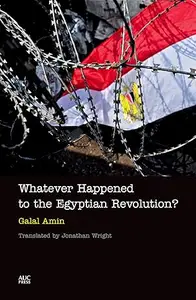
Jonathan Wright, "Whatever Happened to the Egyptian Revolution?"
English | 2013 | ISBN: 9774165896 | EPUB | pages: 296 | 0.7 mb
In his latest exploration of the Egyptian malaise, Galal Amin first looks at the events of the months preceding the Revolution of 25 January 2011, pointing out the most important factors behind popular discontent. He then follows the ups and downs (mainly the downs) of the Revolution: the causes of rising hopes and expectations, mingled with successive disappointments, sometimes verging on despair, not least in the case of the presidential elections, when the Egyptian people were invited to choose between a rock and a hard place. This is followed by an outline of a possible brighter future for Egypt, based on a more balanced and faster growing economy, and a more democratic and equitable society, within a truly independent, modern, and secular state.

The story of what happened to the 2011 Revolution may be a sad one, but if viewed within the larger context of Egypt's economic and social developments of the last century, on which the author's previous books threw very useful light, it can be regarded as one important step forward toward a much better future.


Links are Interchangeable - Single Extraction

 
f44f4cab7d91e8dc8aee162028ada2c7.webp

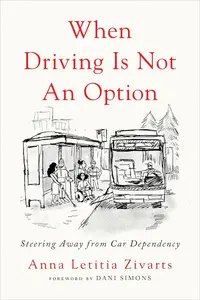
When Driving Is Not an Option: Steering Away from Car Dependency by Anna Letitia Zivarts
English | May 9, 2024 | ISBN: 1642833150 | EPUB | 240 pages | 1.1 MB
One third of people living in the United States do not have a driver license. Because the majority of involuntary nondrivers are disabled, lower income, unhoused, formerly incarcerated, undocumented immigrants, ****, young people, and the elderly, they are largely invisible. The consequence of this invisibility is a mobility system designed almost exclusively for drivers. This system has human-health, environmental, and quality-of-life costs for everyone, not just for those excluded from it. If we're serious about addressing climate change and inequality, we must address our transportation system.

In When Driving is Not an Option disability advocate Anna Letitia Zivarts shines a light on the number of people in the US who cannot drive and explains how improving our transportation system with nondrivers in mind will create a better quality of life for everyone.
Drawing from interviews with involuntary nondrivers from around the US and from her own experience, Zivarts explains how nondrivers get around and the changes necessary to make our communities more accessible. These changes include improving sidewalk connectivity; providing reliable and affordable transit and paratransit; creating more options for biking, scooting, and wheeling; building more affordable and accessible housing; and the understanding the unrecognized burden of asking and paying for rides.
Zivarts shows that it is critical to include people who can't drive in transportation planning decisions. She outlines steps that organizations can take to include and promote leadership of those who are most impacted-and too often excluded-by transportation systems designed by and run by people who can drive. The book ends with a checklist of actions that you, as an individual living in a car-dependent society, can take in your own life to help all of us move beyond automobility.
When the needs of involuntary nondrivers are viewed as essential to how we design our transportation systems and our communities, not only will we be able to more easily get where we need to go, but the changes will lead to healthier, climate-friendly communities for everyone.


Links are Interchangeable - Single Extraction

 
Zurück
Oben Unten